
Showing 65 items matching "evening post"
-
 Ballarat Heritage Services
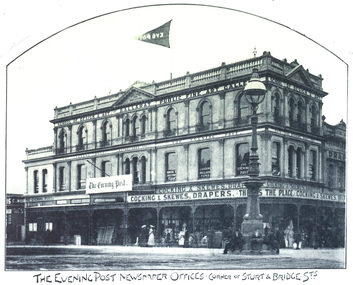
Photograph - Image, Ballarat Evening Post, c1895, c1895
... Ballarat Evening Post, c1895...ballarat evening post...Black and white image of the offices of the Ballarat Evening Post newspaper which was situated on the corner of Sturt Street and Bridge Street, Ballarat....Ballarat Evening Post, c1895 Photograph Image ...Black and white image of the offices of the Ballarat Evening Post newspaper which was situated on the corner of Sturt Street and Bridge Street, Ballarat.ballarat evening post, newspaper, school of design and art, sturt street, bridge stret -
 Bendigo Historical Society Inc.
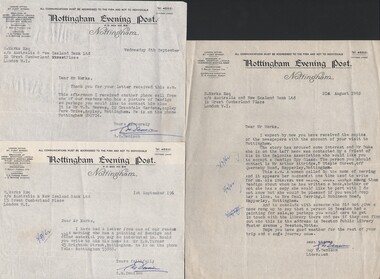
Document - HARRY BIGGS COLLECTION: NOTTINGHAM EVENING POST, !962 - 63
... HARRY BIGGS COLLECTION: NOTTINGHAM EVENING POST...(a) Three letters typed on Nottingham Evening Post Letterhead, all sent to Mr. H. Marks. c/o Australia and New Zealand Bank Ltd., 15 Great Cumberland Place, London, W1, from Guy M. ...Total $135 Document HARRY BIGGS COLLECTION: NOTTINGHAM EVENING POST ...(a) Three letters typed on Nottingham Evening Post Letterhead, all sent to Mr. H. Marks. c/o Australia and New Zealand Bank Ltd., 15 Great Cumberland Place, London, W1, from Guy M. Denison, Librarian. They are all concerning a picture of Bendigo (The boxer?). (b) Invoice, from the Jockey Club 7/7/1993, Items bought (at auction?) - Tin $25, Folder $65, Horse Racing Set $45. Total $135person, individual, bendigo, h. marks. guy m. denison, nottingham, bendigo -
 Federation University Historical Collection
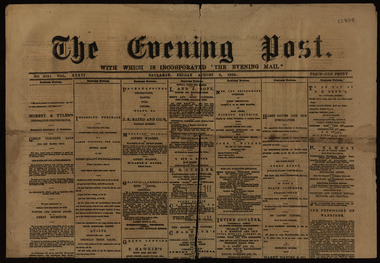
Newspaper, The Evening Post, 03/08/1883
... The Evening Post...ballarat argus expedition mallee bill riponshire council Irvine Coulter John King broadsheet; 4 pages; price one penny; folded in two; The Evening Post Newspaper Newspaper ...broadsheet; 4 pages; price one penny; folded in two;ballarat, argus expedition, mallee bill, riponshire council, irvine coulter, john king -
 Unions Ballarat
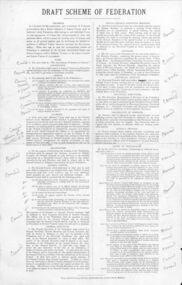
Leaflets, pamphlets, periodicals, newspapers, cuttings and roneoed material retained by the Council, 1891-1962
... ...evening post...Evening Echo, Ballarat, 1915, No. 6673, September 57. Evening Post, Ballarat, 1889, Vol 38, No. 6326, March 58. ...Evening Echo, Ballarat, 1915, No. 6673, September 57. Evening Post, Ballarat, 1889, Vol 38, No. 6326, March 58. ...TBATBATwo boxes, paper. 1. Anti-Hanging Committee - regarding hanging. 1962. 2. Ballarat Banking Co. Ltd. Chairman's address and 145th report. August 1954. 3. Country Municipal Association circular regarding conference on centralisation, Ballarat. 22 November 1916. 4. Geelong Town Band's weekly performance programme. n.d. 5. Ironmasters' Association of Victoria rules and regulations agreed upon at the General Iron Trades' Conference, Melbourne. 1891. 6. Melbourne Eight Hours Anniversary programme. 1901. 7. Museum of Applied Science of Victoria, on gas from our brown coal. n.d. 8. New Australian Trade Unionist Committee regarding rally to protect shooting of Polish workers. 195-? 9. Circular from Ballarat Trades and Labour Council to Ironmoulders' Society regarding the Congress. 1891. 10. List of subjects to be discussed at Congress. 11. Circular from Melbourne Trades Hall Council regarding financial help for Congress. 1891. 12. Reports of Standing Orders Committee appointed by the Congress, 23-29 April 1891. 13. Trade Mark Committee report. 14. Committee on Federation report. 15. Draft scheme of Federation (Australasian Federation of Labor). 16. Draft scheme of Federation (Australasian Federation of Labor) to the Labour Councils and Unions of Australasia. (2 copies.) 17. Asian and Pacific Regions Peace Conference, Peking, October 1962. Report on Peking, Melbourne. 1962. (2 copies). 18. Australian Bureau of Census and Statistics. Labour and Industrial Statistics, Melbourne. 1911. 19. Australia. Laws, Statutes, etc Trade Marks Bill, 1905. Workers' Trade Marks. Melbourne, 1905. 20. Australian Council of Trade Unions. Agenda paper for ... Congress, 1953. Melbourne, 1953. 21. Australian Labor Party. Work of the Labor government. Melbourne, 1928. 22. Australian Textile Union, Victorian Branch. Wages Sheet. Melbourne, 1953? 23. Baker, W.A. The Commonwealth Basic Wage. 1907-1953. Sydney, 1953? 24. Building Workers' Industrial Union. Building Workers support your convention. n.p. 1954? 25. Carters' and Drivers' Union. Committee of Management. Important to members of Carters and Drivers' Union. Melbourne, 1936. 26. Dougherty, Tom. Santamaria unmasked. Melbourne, 1954? 27. Eight Hours' Anniversary Sports Programme, 1893. Ballarat 1893. 28. Eight Hours' Anniversary Programme, 1894. Ballarat, 1894. 29. Fadden, Arthur W. The menace of political banking. Sydney, 1945. 30. Federated Clerks' Union, Victoria Branch. The Fennessy Story. The Braun Story. n.p., 1954. 31. Federated Clerks' Union, Victoria Branch. Manifesto, n.p., 1955. 32. Greater Ballarat Association. Seventeenth annual report. Ballarat, 1954. 33. Langridge, H.E. Employers in the Labor Party. Melbourne, 1914. 34. Metal Trades Federation. National Conference of Federal Council and delegates from State branches. Sydney, 1960. 35. Municipal Association of Victoria. Arbitration aware regarding employment of members of the Municipal Officers Association of Australia. Melbourne, 1950. 36. Municipality of the Town of Ballarat East. Annual report, 1919. Ballarat, 1919. 37. Plumbers and Gasfitters Employees' Association of Australia. Melbourne Branch. Why did Menzies abdicate when he had a working majority and 18 months to go? Melbourne, 1955? 38. Plumbers and Gasfitters Employees Union of Australia, Melbourne Branch. Who are the wreckers in the Australian Labor Party? Melbourne, 1955. 39. Spence, W.G. The ethics of New Unionism. Sydney, 1892. (42 copies) 40. Trades Hall Council, Melbourne. Statement of accounts, 1959. Melbourne, 1959. 41. Universal Business Directories (Australia) Pty. Ltd. Home edition for Ballarat. Melbourne, 1954. 42. Victoria, Apprenticeship Commission. Twenty-seventh annual report. Melbourne, 1956. 43. Victorian Labor College. Labor Colleges. Melbourne 191? (3 copies) 44. W.F. Williams. An appeal to the workers of Victoria. n.p., 19?? 45. Workers' Industrial Union of Australia. Preamble, classification and rules. Melbourne 1919? 46. ACTU Bulletin, 1955, Vol 2, No. 2 47. Amalgamated Engineering Union monthly journal, 1954, No. 3. March 48. American Economist, (New York), 1893, Vol 12, No 12, September 49. Australian Worker, (Sydney), 1955, Vol 64, No. 10, May; No. 15, September (held by ANU and at Trove online) 50. Building Workers' Organiser, official organ of the Building Trades Federation, 1954, June 51. Bulletin issued by the Economic Information Service, Melbourne. No. 2 1954, Nos. 10, September; 13 August; 1956, No 14, January 52. Ballarat Courier, 1890, Vol 46, No. 7096, April 53. Ballarat Star, 1888, Vol 33, No. 95, April 54. The Clerk, official journal of Federated Clerks' Union, Victorian Branch, 1955, Vol 10, No. 2, February/March 55. Common Cause, official journal of the Miners' Federation of Australia 1954 Vol 19, No. 10, March; No. 12, April 1955 Vol 20, No. 12, April; No. 19, May 1955 Vol 20, No. 23, June; No 28 July 1955 Vol 20, No. 29, August 1956 Vol 21, No. 17, May 56. Evening Echo, Ballarat, 1915, No. 6673, September 57. Evening Post, Ballarat, 1889, Vol 38, No. 6326, March 58. Industrial Herald, published by Labor Press, Geelong 1952 Vol 34, No. 35, June 1954 Vol 36, No. 20, March; No. 23, April 1954 No. 36, July; No. 39 July 1958 Vol 40, No. 19, March 59. Labor Call, published by Industrial Printing and Publicity Co., Melbourne. 1953, Vol 46, No. 2417, September 60. Labor Supplement. 1952, November 1954, February; March 61. Light, Ballarat diocesan journal. 1955, September. 62. Locomotive journal, published by the Australian Federated Union of Locomotive Enginemen. 1954, Vol. 16, No. 4, January. 63. People's Tribune Supplement, ed. by E.E. Jones, Melbourne. 1886, Vol 5, No. 20, April. 64. Railways' Union Gazette, published by J.D. Michie, Melbourne. 1919, June, Frank Byett in memoriam edition. 65. Rehab News issued by Central Ex-Servicemen's Office, Melbourne. 1946, Vol 2, No. 30, May. 66. Sheet Metal Workers, official organ of the Sheet Metal Working, Agricultural Implement and Stovemaking Union of Australia, Sydney. 1954, No. 107, February. 67. Socialist Comment, Socialist Party of Australia, Melbourne. 1937, No. 2, February. 68. Tocsin, A.L.P. Victorian Branch. 1955?, No. 2, October; No. 4, December. 1956, No. 5, February. 69. Tribune, CPA Sydney. 1965, No. 958, August. 70. UN World, published by Egbert White, New York. 1948, Vol 2, No. 11, December. 71. Miscellaneous newspaper cuttings. Posters 72. Eight Hours' Anniversary, Ballarat, 22 April 1892. 73. Eight Hours' Anniversary, Ballarat, 21 April 1894. 74. Eight Hours' Anniversary, Ballarat, 21 April 1913. 75A. Eight Hours' Anniversary, Ballarat, 3 April 1922. 75B. Electoral Rolls, persons entitled to be enrolled and to vote, 1922. 76. Progress, prospectus of debentures to publish a daily Labour paper to be called "Progress". 1904, Vol 1, No. 1, December. Cards 87. Smoke night social 88. Bi-election 89. How to vote card Roneoed material 77. Circular letter regarding new morning newspaper. n.d. 78. Circular letter from Trades Hall Council, Melbourne. 21 March 1955. 79. Article, History of the recent ALP dispute. n.d. 80. Article: What is freemasonry (from Ballarat St. Patrick's Gazette, October 1854). (2 copies) 81. Information summary of HRH Duke of Edinburgh's study conference on the human problems of industrial communities. ALP Broadcasts from Station 3KZ 82. Incentive payments by Norman A. Gibbs. 17 August 1953. 83. Escalating wages by F.J. Riley. 25 February 1954. 84. Margins by F.J. Riley. 4 March 1954. 85. Freezing margins by F.J. Riley. 17 March 1954. 86. The struggle across the Ages (No. 2) by F.J. Riley. 7 May 1954. ballarat trades and labour council, ballarat trades hall, unions, anti-hanging committee, hanging, ballarat banking co. ltd., country municipal association, geelong town band, ironmasters' association of victoria, general iron trades' conference, museum of applied science of victoria, new australian trade unionist committee, ironmoulders' society, melbourne trades hall council, btlc, intercolonial trades and labor union congress, 7th., trade mark committee report, committee on federation report, australasian federation of labor, asian and pacific regions peace conference, australian bureau of census and statistics, abs, australian bureau of statistics, trade marks bill, actu, australian council of trade unions, australian labor party, alp, australian textile union, w.a. baker, building workers' industrial union, carters and drivers' union, tom dougherty, eight hours' anniversary sports programme, labour and industrial statistics, workers' trade marks, building workers, santamaria, arthur w. fadden, federated clerks' union, fennessy, braun, greater ballarat association, h.e. langridge, metal trades federation, municipal association of victoria, ballarat east, plumbers and gasfitters employees' union of australia, menzies, w.g. spence, new unionism, universal business directories, victoria apprenticeship commission, victorian labor college, w.f. williams, workers' industrial union of australia. preamble, classification and rules. melbourne, 1919?, amalgamated engineering union, american economist, australian worker, building workers' organiser, building trades federation, economic information service, the courier, ballarat star, the clerk, common cause, miners' federation of australia, evening echo, evening post, industrial herald, labor call, labor supplement, light journal, locomotive journal, australian federated union of locomotive enginemen, people's tribune supplement, railways union gazette, frank hyett, rehab news, central ex-servicemen's office, sheet metal worker, sheet metal working, agricultural implement and stovemaking union of australia, socialist comment, tocsin, tribune, un world, eight hour anniversary, electoral rolls, progress, freemasonry, st patrick's gazette, hrh duke of edinburgh, incentive payments, wages, f.j. riley -
 Tennis Australia
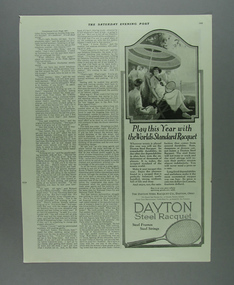
Page from Magazine, 14-Jun-24
... Pages 149-150 of the Saturday Evening Post, featuring an advertisement for Dayton Steel Racquets. ...Tennis Pages 149-150 of the Saturday Evening Post, featuring an advertisement for Dayton Steel Racquets. ...Pages 149-150 of the Saturday Evening Post, featuring an advertisement for Dayton Steel Racquets. Materials: Paper, Inktennis -
 Bendigo Historical Society Inc.
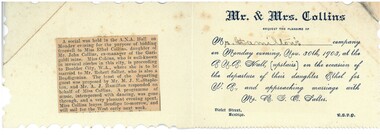
Document - HAMILTON COLLECTION: INVITATION, 30/11/1903
... Newspaper report of the evening posted inside the invitation....Newspaper report of the evening posted inside the invitation. Document HAMILTON COLLECTION: INVITATION ...Document. Invitation to a Social Evening at the ANA Hall 30/11/03 to Mr Hamilton to attend to farewell Miss Ethel Collins, who was departing for W.A. to marry Mr Robert Salter. Newspaper report of the evening posted inside the invitation.performing arts, elocution, invitation -
 Bendigo Historical Society Inc.
Magazine - LYDIA CHANCELLOR COLLECTION: SHORT STORIES
... Contains short stories from various magazines - 'Womans's Day with Woman,' 'The Australian Women's Day,' 'Woman's Realm,' 'Woman's Illustrated,''The Saturday Evening Post,' 'Woman's Journal' and 'Woman's Home Journal.' 1950s.'...Contains short stories from various magazines - 'Womans's Day with Woman,' 'The Australian Women's Day,' 'Woman's Realm,' 'Woman's Illustrated,''The Saturday Evening Post,' 'Woman's Journal' and 'Woman's Home Journal.' 1950s.' ...A cardboard folder covered with red striped paper. Contains short stories from various magazines - 'Womans's Day with Woman,' 'The Australian Women's Day,' 'Woman's Realm,' 'Woman's Illustrated,''The Saturday Evening Post,' 'Woman's Journal' and 'Woman's Home Journal.' 1950s.'entertainment, short stories, lydia chancellor, collection, short stories, stories, literature, magazines, entertainment, reading -
 Bendigo Historical Society Inc.
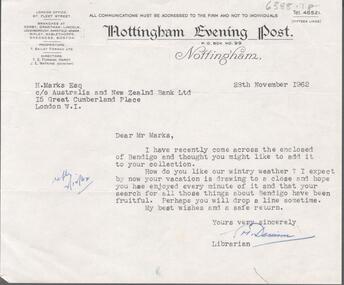
Letter - Bendigo the Racehorse, 17th Fabruary 1968
... One page letter from Nottingham Evening Post, Nottingham, to H. Marks, c/- Australia and New Zealand Bank Ltd., 15 Great Cumberland Place, London., 28th November, 1962, re 'enclosed of Bendigo' (presumably print of Bendigo, the racehorse) from Denison, Librarian. ...One page letter from Nottingham Evening Post, Nottingham, to H. Marks, c/- Australia and New Zealand Bank Ltd., 15 Great Cumberland Place, London., 28th November, 1962, re 'enclosed of Bendigo' (presumably print of Bendigo, the racehorse) from Denison, Librarian. ...William Abednego Thompson (11 October 1811 – 23 August 1880), also known as Bendigo Thompson, was an English bare-knuckle boxer who won the heavyweight championship of England from James Burke on 12 February 1839.[3] He was inducted into The Ring magazine Hall of Fame in 1955, the International Boxing Hall of Fame in 1991[3] and the Bare Knuckle Boxing Hall of Fame in 2011. His nickname of "Bendigo" lives on in the name of a city and creek in Australia. (Wikipedia)One page letter from Nottingham Evening Post, Nottingham, to H. Marks, c/- Australia and New Zealand Bank Ltd., 15 Great Cumberland Place, London., 28th November, 1962, re 'enclosed of Bendigo' (presumably print of Bendigo, the racehorse) from Denison, Librarian. Written in pen on left hand side 'reply 2/12/62'.abednego thompson, william thompson, naming of bendigo, harold curnow, racehorse -
 Clunes Museum
Document - NEWSPAPER ARTICLES, CLUNES RIOT
... NEWSPAPER ARTICLES ABOUT CLUNES RIOT (PHOTOCOPIES) .1 BALLARAT COURIER '100 YEARS AGO TOMORROW THEY RIOTED IN CLUNES' 8/12/1973 .2 THE EVENING POST BALLARAT 10/12/1873 'THE TOWN IS QUIET' .3 10/12/1873 'MINERS, WIVES AND CHILDREN RESISTING THE INTRODUCTION OF CHINESE LABOR .4 VIC. ...LOCAL HISTORY, CLUNES RIOT CLUNES RIOT NEWSPAPER ARTICLES LOCAL MINING HISTORY NEWSPAPER ARTICLES ABOUT CLUNES RIOT (PHOTOCOPIES) .1 BALLARAT COURIER '100 YEARS AGO TOMORROW THEY RIOTED IN CLUNES' 8/12/1973 .2 THE EVENING POST BALLARAT 10/12/1873 'THE TOWN IS QUIET' .3 10/12/1873 'MINERS, WIVES AND CHILDREN RESISTING THE INTRODUCTION OF CHINESE LABOR .4 VIC. ...LOCAL HISTORY, CLUNES RIOTNEWSPAPER ARTICLES ABOUT CLUNES RIOT (PHOTOCOPIES) .1 BALLARAT COURIER '100 YEARS AGO TOMORROW THEY RIOTED IN CLUNES' 8/12/1973 .2 THE EVENING POST BALLARAT 10/12/1873 'THE TOWN IS QUIET' .3 10/12/1873 'MINERS, WIVES AND CHILDREN RESISTING THE INTRODUCTION OF CHINESE LABOR .4 VIC. PARLIAMENT NOTICE TAKEN FROM BALLARAT POST 11/12/1873clunes riot newspaper articles, local mining history -
 Coal Creek Community Park & Museum
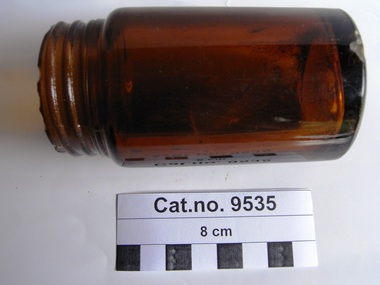
Domestic object - Glass Bottle, c. 1913-1957
... TROVE : The Canberra Times, A.C.T., Friday 12 April 1957, page 11, Advertising.......patent Medicines , Powders............Kruschen Salts 4/-. TROVE : Evening Post, Thursday June 16, 1927. p.8. Advertising... ...TROVE : The Canberra Times, A.C.T., Friday 12 April 1957, page 11, Advertising.......patent Medicines , Powders............Kruschen Salts 4/-. TROVE : Evening Post, Thursday June 16, 1927. p.8. Advertising... ...TROVE : The Sun, Sydney, NSW, Sun 9 February 1913 page 12, Advertising ....11 doz. Kruschen Salts A Life Stirrer...Usual Price 1/8...Reduced to 1/4. TROVE : The Canberra Times, A.C.T., Friday 12 April 1957, page 11, Advertising.......patent Medicines , Powders............Kruschen Salts 4/-. TROVE : Evening Post, Thursday June 16, 1927. p.8. Advertising... Kruschen Salts prevent constipation and rheumatism. Manufactured by E. Griffiths Hughs Ltd. Manchester England (Est. 1756).Amber glass jar for screw top with embossed text on base.'KRUSCHEN SALTS'. 'Y' near lip of neck.kruschen, salts, amber glass -
![V&A Gallery of Fashion / [by] Wilcox and Lister (eds)](/media/collectors/550653872162f11fb04854aa/items/5ed04f95dcf9cd08346bd8c0/item-media/5ed050a9dcf9cd08346be871/item-fit-380x285.jpg?cb=6) Kew Historical Society Inc
Kew Historical Society IncBook, V & A Publishing, V&A Gallery of Fashion, 2016
... This concise volume perfectly encapsulates the collection, from rare seventeenth-century gowns and exquisite eighteenth- century bodices to 1930s evening wear, post-war couture and show-stopping ensembles by contemporary designers. ...This concise volume perfectly encapsulates the collection, from rare seventeenth-century gowns and exquisite eighteenth- century bodices to 1930s evening wear, post-war couture and show-stopping ensembles by contemporary designers. ...EXHIBITION CATALOGUES & SPECIFIC COLLECTIONS. Spanning four centuries, the V&A's Fashion Collection is the most comprehensive in the world, housing unrivaled collections of dress,accessories, shoes and hats from the 17th century to the present day. This thoroughly revised and redesigned edition shows the collection, from rare eighteenth-century gowns and exquisite bodices to 1930s evening wear, post-war couture, and showstopping ensembles by contemporary designers. Among the designers featured are Charles Frederick Worth, Madeleine Vionnet, Coco Chanel, Cristobal Balenciaga, Christian Dior, Mary Quant, Stephen Jones, Vivienne Westwood, and Alexander McQueen.176 pages : illustrations (chiefly colour) ; 27 cm.non-fictionEXHIBITION CATALOGUES & SPECIFIC COLLECTIONS. Spanning four centuries, the V&A's Fashion Collection is the most comprehensive in the world, housing unrivaled collections of dress,accessories, shoes and hats from the 17th century to the present day. This thoroughly revised and redesigned edition shows the collection, from rare eighteenth-century gowns and exquisite bodices to 1930s evening wear, post-war couture, and showstopping ensembles by contemporary designers. Among the designers featured are Charles Frederick Worth, Madeleine Vionnet, Coco Chanel, Cristobal Balenciaga, Christian Dior, Mary Quant, Stephen Jones, Vivienne Westwood, and Alexander McQueen.fashion design - history - exhibitions., fashion - history - pictorial works., victoria and albert museum -- catalogs. -
 City of Moorabbin Historical Society (Operating the Box Cottage Museum)
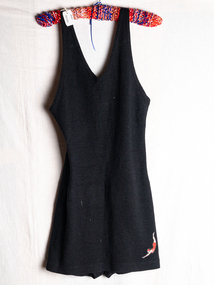
Clothing - Clothing, men's swim costume wool, 'Jantzen', 1930
... National magazines such as Esquire, the Saturday Evening Post, Life, and Colliers published advertisements illustrated by George Petty. 2010 Jantzen has achieved new levels of success this decade through social media, attracting thousands of fans around the world who share their own memories about their favorite Jantzen suits throughout the decades Early settlers and market gardeners established their families in Moorabbin Shire c1900 and after World War 1 soldiers were assisted to purchase land near the railway line. ...National magazines such as Esquire, the Saturday Evening Post, Life, and Colliers published advertisements illustrated by George Petty. 2010 Jantzen has achieved new levels of success this decade through social media, attracting thousands of fans around the world who share their own memories about their favorite Jantzen suits throughout the decades Early settlers and market gardeners established their families in Moorabbin Shire c1900 and after World War 1 soldiers were assisted to purchase land near the railway line. ...In 1910, Portland Knitting Company began in downtown Portland, Oregon, with a few hand-knitting machines above a tiny retail store. Little did founders Carl Jantzen, Roy and John Zehntbauer know that they would achieve both fame and controversy as swimwear pioneers. Producing a wool suit for a rowing team they began offering "bathing suits" in their catalog. Knit on sweater cuff machines, the suits became popular with swimmers. The demand increased for those "Jantzens" and the company name was changed in 1918 to Jantzen Knitting Mills. The suits were made of 100% pure virgin wool. Matching stockings and stocking cap completed the costume of the day. Early advertisements guaranteed the famous rib-stitch "gives that wonderful fit". c1930 Jantzen catalogs featured upcoming movie stars, including Loretta Young, Joan Blondell, Ginger Rogers, and Dick Powell. National magazines such as Esquire, the Saturday Evening Post, Life, and Colliers published advertisements illustrated by George Petty. 2010 Jantzen has achieved new levels of success this decade through social media, attracting thousands of fans around the world who share their own memories about their favorite Jantzen suits throughout the decades Early settlers and market gardeners established their families in Moorabbin Shire c1900 and after World War 1 soldiers were assisted to purchase land near the railway line. By 1930 the population had grown with new families who had other occupations - office workers in Melbourne, tradesmen, teachers, etc - and they raised their families in Bentleigh, McKinnon, Ormond, Moorabbin and Cheltenham.Early settlers and market gardeners established their families in Moorabbin Shire c1900 and after World War 1 soldiers were assisted to purchase land near the railway line. By 1930 the population had grown with new families who had other occupations - office workers in Melbourne, tradesmen, teachers, etc - and they raised their families in Bentleigh, McKinnon, Ormond, Moorabbin and Cheltenham. Clothing, men's swim costume wool, 'Jantzen' c1930 clothing, brighton, moorabbin, pioneers, market gardeners, early settlers, moorabbin shire, bentleigh, mckinnon, dairy farms, fruit orchards, swimwear -
Old Colonists' Association of Ballarat Inc.
Ceremonial object - Trowel, William Bennett, Silver Trowel, c1887
... Under the foundation stone is deposited a copy of the constitution and rules of the association, the names of the officers, and a complete list of the names of ail the members to date; also a copy each of The Star, Courier, Evening Post, and the Advertiser, local newspapers. ...Under the foundation stone is deposited a copy of the constitution and rules of the association, the names of the officers, and a complete list of the names of ail the members to date; also a copy each of The Star, Courier, Evening Post, and the Advertiser, local newspapers. ...The silver trowel was used for the laying of the foundation stone of the Ballarat Old Colonists' Hall. It was donated to the Old Colonists' Associaiton in 1906. The Old Colonists' Association minutes noted 'Mrs Murray handed to the Secretary the silver trowel presented to the late President on the occasion of the laying of the foundation stone of the Hall.' The silver trowel was used for the laying of the foundation stone of the Ballarat Old Colonists' Hall. It was donated to the Old Colonists' Associaiton in 1906. The Old Colonists' Association minutes noted 'Mrs Murray handed to the Secretary the silver trowel presented to the late President on the occasion of the laying of the foundation stone of the Hall.' "THE OLD COLONISTS' HALL. The foundation-stone of the building to be erected by the Old Identities’ Association, in Lydiard street, was next laid with the usual ceremonies. This was immediately adjoining the foundation-stone of the Mining Exchange building. Mr J. Graham presented Mr Murray with a silver trowel, bearing the following inscription:—“ Queen Victoria’s Jubilee. Presented to J. P. Murray, Esq., president of the Old Colonists’ Association, on the occasion of his laying the foundation stone of their new hall, Ballarat, 21st June, 1887.” Mr Graham said he thought the pioneers of such a city were quite right in erecting a building that would be a home for them while they lived, and a memorial of them when they were no more. Mr J. Fraser, secretary, read the followin'- report:— “Mr Chairman, ladies, and gentlemen,—The bottle about to be deposited under this foundation contains documents in which are written particulars of the founding of the Old Colonists' Association at Ballarat; its financial and numerical position at the present time, the names of its officers and committee of management for the current term: a complete list of the names of its members, a copy of the rules and regulations of the association: copies of The Star, Evening Star, Courier, and Ballarat Advertiser newspapers, programme of to-day's proceedings as far as they relate to the laying of the foundation-stone, together with a brief summary of the aims and objects of this philanthropic institution. That the nature of these objects are considered worthy of encouragement and support is amply proved when we see on the Association's roll of membership the names of so many of our most prominent citizens and public men, "and from the fact that the Government of the colony have recognised the just claim of the old colonists'of Ballarat to be placed in possession of this valuable and central site, upon which to erect a building that will, be a credit to them and an ornament to the city, and which will enable them to still further extend the sphere of their benevolence and usefulness iu this district. The following is a copy of the signed and sealed memorial document:—*The foundation-stone of the hall of the Old Colonists’ Association of Ballarat; was laid on Her Majesty Queen Victoria's Jubilee Day,- Tuesday, 21st June, 1887, by John Paul Murray, Esq., J.P., president of the association. Under the foundation stone is deposited a copy of the constitution and rules of the association, the names of the officers, and a complete list of the names of ail the members to date; also a copy each of The Star, Courier, Evening Post, and the Advertiser, local newspapers. At this date the association numbers 319 members—accumulated funds, £203 10s 3d. The land upon which the hall is to he erected was granted by the Government to the association for that, purpose. (Signed) John P. Murray, President; W. B. Perry, Samuel Delpratt, Vice-presidents; Daniel Fern, Treasurer; John Fraser, Secretary. Committee—J. W. Graham, J. W. Lee, James M'Merkin, Andrew Lister, James Ward. Trustees—J. W. Graham, Wm. Irwin, John M'Cafferty ” Mr Murray said he was proud to lay the foundation stone of this building. The association was started in I883, and he might say they were a purely philanthropic institution. They formed an association whose creed was to assist one another in every shape and form. They had now 319 members, and were daily increasing in number.-. They were very fairly off as regarded their financial position. With respect to the objects of the association, they were to form a bond of brotherhood among those whose past experience in commercial or in mining pursuits so intimately associated them with the early history of the goldfields; men, to whose indomitable energy and perseverance Ballarat and other mining centres in the colony were so largely indebted for their development and commercial prosperity. Some of whose names were also closely identified with the memorable and sanguinary struggle 'for freedom and constitutional liberty in 1883. Their object was, further, to gather together within one fold those who survive those stirring times, to meet occasionally in friendly and social intercourse; to relieve their brethren who were overtaken by sickness or affliction; to provide the shelter of a home for those Pioneers of the goldfields whom the reverses of fortune had deprived of the means of procuring the comforts of life in their declining years; to assist the widow and succor the orphan; to mutually cheer and support each other in their temporary troubles and vicissitudes as they journeyed onward to the grave; and lastly, to tender a tribute of respect to the memory of a departed brother, by following his remains to their final resting place. Such were some of the principal objects of the “ Old Colonists' Association.” It was an institution for the good of their fellow man, and he hoped it would be successful, he hoped that the young people who came after them would appreciate what the Old Colonists had left them. He hoped they would all assist in making the institution one that would he worthy of the place. He would hand a small donation to the secretary, and hoped others would do the same. (Cheers.) The secretary, amid cheering, announced that the cheque handed over by Mr Murray was for £2O. Archdeacon Julius, who was asked to speak, said nothing could have been more fitting than the laying of the foundation-stone of the Old Identities’ Association on the Queen's Jubilee. They were a link between the past of 50 years gone by and today. Many of them remembered well enough perhaps the time when it took a man five and twenty minutes to light his pipe with tinder and steel, and when the small boys went, up the chimneys to sweep them. (Laughter.) They were building something now that people would look upon in years to come, and speak of in connection with the Old Colonists, if the young men were' half as good as their fathers they would be uncommon good fellows, and he did not think they would be. (Laughter, and interjection.) ''An old fellow said it was very true, and he knew it. (Laughter.) The Old Identities would agree with him to a man. (Laughter.) If the young men walked in their steps Ballarat in another 50 years would be 50 percent, better than it was now. There was not a man there that wished that more strongly, than 'he’ did. The Old Identities were laying this stone on the jubilee day of Her Majesty, and there never sat on the throne a worthier or nobler Queen than she who held her jubilee that day. There was not a man present, whatever his views of government may be, who did not say “God bless our Queen.” (Cheers.) The proceedings closed with the singing of the National Anthem and cheers for the Queen. (Ballarat Star, 23 June 1887)Silver trowel used during the laying of a foundation Stone for the Ballarat Old Colonists' Association building in Lydiard Street North, Ballarat.ballarat old colonists' association, ballarat old colonists' club, trowel, silver trowel, foundation stone, mrs j. murray, william bennett, j. fraser, john murray, w. lee, william irwin, john m'cafferty, john mccafferty -
 Federation University Historical Collection
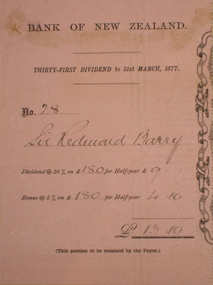
Print - Scrapbook, Ballarat School of Mines Invoice Scrapbook, 1875-1879, 1875-1879
... Evans - account to School of Mines * 31/1/1876 - Proprietors of the Evening Post - account to School of Mines * 10/2/1876 - Petty cash receipt from W. ...Evans - account to School of Mines * 31/1/1876 - Proprietors of the Evening Post - account to School of Mines * 10/2/1876 - Petty cash receipt from W. ...Quarter leather bound scrap book with pasted in invoices which were sent to the Ballarat School of Mines.Ballarat School of Mines Invoice Scrapbook, with many invoices made out to the Ballarat School of Mines stuck into the book (most folded over). * 01/12/1875 - 31/12/1875 - Annual account of all sums of Money for subscriptions to the Ballarat School of Mines * 31/12/1875 - Charles J. Evans - printer * 1875 - William Gooch - for Argus newspaper * 13/01/1876 - M.D. Hamilton - salary payment * 14/01/1876 - receipt for two shillings and sixpence from M.D. Hamilton * 31/1/1876 - account to R.J. Vale * 1/2/1876 - Caxton printing works - account to James Curtis * 4/12/1876 - Ballarat Gas company - receipt from J.W.Robertson * 29/1/1876 - Permewan Hunt and company - account to Hon. W.H.Barnard *28/1/1876 - Osborn, Cushing and company - account to Hon. W.H.Barnard * 7/10/1875 - Geo. H. Bliss and company - account to Hon.N.H. Barnard * 31/12/1875 - I. Longstaff - Druggist * 1875 - A. M. Leirnan * 9/12/1876 - Petty cash - M. Hamilton * 15/12/1875 - reimbursement to W.D. Barnard * 31/1/1876 - "Ballarat Star" newspaper account - Rob Wreford * 12/4/1876 - Geelong Gas company - receipt for 2 pounds and ten shillings - A.B. Langlands * 27/1/1876 - Geelong Gas company - account to School of Mines * 1/2/1876 - Cornell and King - Chemists - account to School of Mines * 10/2/1876 - Salary payment slip to M.D. Hamilton for 8 pounds 6 shillings and 8 pence * January 1876 - Stansfield and Robson, Importers - account to School of Mines * January 1876 - Stansfield and Robson - School of Mines - Dr. A.M.Leisman - account * 31/1/1876 - Charles J. Evans - account to School of Mines * 31/1/1876 - Proprietors of the Evening Post - account to School of Mines * 10/2/1876 - Petty cash receipt from W. Barnard * 1/2/1876 - Bateman, Clark and Company - account to School of Mines * 8/3/1876 - Salary payment to M.D. Hamilton from School of Mines Ballarat *1/3/1876 - William Johnson - Chemist - account to School of Mines Ballarat * 28/2/1876 - Cornell and King - Chemists - account to School of Mines Ballarat * 2/1876 - Hugh Gray and Son - Instrument makers - account from School of Mines * 28/2/1876 - J. Longstaff - druggist * 11/3/1876 - Fidelity Guarantee of Alfred B.Burne for 100 pounds from Victoria Life Insurance Co. *10/3/1876 - Petty cash slip from W.H. Barnard * 4/3/1876 - account from Alfred B. Burne * 15/3/1876 - personal expenses account from I.W. Jonan * 27/3/1876 - account from John Victor * 25/3/1876 - account from C.W. Thomas * 27/3/1876 - account from W. Schmidt - Lecturer * 25/3/1876 - account from Joseph Flude * 29/6/1876 - account from J. Thomas * 30/6/1876 - receipt from W.M. Barnard * 1/4/1876 - receipt from Joseph Flude * 1/3/1876 - account from William Blomeley, Iron and Brass Founder * 31/3/1876 - account from A.H. King, Iron Merchant * 31/3/1876 - account from W.M. Gooch, Newsagent * 13/4/1876 - salary payment to M.D. Hamilton * 12/4/1876 - Petty cash receipt * 13/4/1876 - List of subscriptions received from Alfred B. Burne (collector) (John P. Hanson, Comm. Bank of Aust., T.A. Wanliss, Andrew Cant, B. Hepburn, R. Lewis, Sovereign Hill Mining Co., Buninyong Shire Council, Union Bank Aust. Francis Taylor) * 15/2/1876 - account from Battersea Works London * 2/5/1876 - account from Charles J. Evans Lithographic Printer etc. * 11/5/1876 - salary slip to M.D. Hamilton * 30/4/1876 - subscriptions received from Alfred B. Bruce (M.P. Whiteside, S. Steele, J. Usher, Charles Walker, W.H. Bougghen, W.V. Jenkins, A.M. Gransfield, Hon. Henry Cuthbert, Aust. Bank, Borough Council, Thomas Bath, Rev. William Henderson, James Smith, S. Hamburger) * 30/4/1876 - account from The Ballarat Star Newspaper * 7/6/1876 - account from Ballarat Gas Company * 11/5/1876 - petty cash account from M.J. Barnard * 9/5/1876 - receipt from M.D. Hamilton * 6/5/1876 - account from M.D. Barnard * 4/1876 - account from W.M. Gooch - News and Advertising agents * 22/4/1876 - account from Broadbent Bros and Co. - Railway Carriers etc * 1/6/1876 - account from Bateman, Clark, and Co. * 31/5/1876 - account from J. Longstaff - Druggist * 16/2/1876 account from A.M. Leiman * 6/1876 - account from R.T. Vale - Newsagent * 31/5/1876 - receipt from Sir Redmond Barry for one shilling * 1/6/1876 - account from F.W. Niven - Stationer etc. * 31/5/1876 - account to The Ballarat Star and The Miner newspapers * 31/5/1876 - account from Stansfield and Robson, Importers * 31/5/1876 - account from The Evening Post * 8/6/1876 - Salary slip fro M.D. Hamilton * 1/6/1876 - account to J. McHutchison, Bookbinder * 1/6/1876 - account from A.H. King - Iron Merchant * 1/6/1876 - account from Cornell and King - Chemists * 31/5/1876 - account from W.M. Gooch - Advertising agent * 8/6/1876 - petty cash receipt from M.D. Barnard * 31/5/1876 - List of subscriptions from Alfred B. Bruce (T.J. Kerr, Jacob Showman, J.L. Thompson, W.J. Clarke, R.C. Baih, L. Ballhausen, James Coghlan, Parade Gold mining Co., A. Williams, Sung Hung Fat, A. Dimmock Esq.M.D., Bank Victoria, Reform Co., Gilbert, James Ward, James Stewart, Ian Kwong Yick 7/6/1876 - account to Alfred White - Custom House Agent 30/6/1876 - receipt from John Victor for twelve pounds 10 shillings 29/7/1876 - receipt from A.M. Barnard 26/6/1876 - receipt from Joseph Flude 4/6/1876 - receipt from E.S. Schmidt 22/6/1876 - receipt from John W. Tail 19/6/1876 - receipt from Jonathan Butterworth 3/7/1876 - receipt from Joseph Hurde 1/7/1876 - account from Henry Richards Caselli - Architect and Building Surveyor 30/6/1876 - account from J. Scovell - Cabinet Maker 14/7/1876 - account from H.R. Caselli - Architect and Building Surveyor 20/7/1876 - payslip to M.D. Hamilton 1/7/1876 - account from Henry Brind - Chemist 6/1876 - account from W.M. Gooch - News and Advertising Agent 21/7/1876 - account from W.D. Hamilton 26/6/1876 - account from Parkinson and co. - City Nightmen and van proprietors 19/7/1876 - petty cash receipt from M.D.Barnard 30/6/1876 - account of subscriptions received - J.A. Anderson, A. Anderson, John Osborne, J. Noble Wilson, Bateman and Clarke, National bank of Aust., James Lory, F. Atkins 27/7/1876 - account from H. Hunt - Builder 26/7/1876 - account to G. Leitch and co. 1/8/1876 - receipt to The National Insurance Co. of Aust., Ltd. 1/8/1876 - receipt from Victoria Fire and Marine Insurance Company 1/8/1876 - account to The Victoria Lime and Cement Co. 1/8/1876 - receipt from Ballarat Gas Company 1/8/1876 - account from Charles J. Evans, Printer 1/8/1876 - account from Cornell and King - Druggists and Chemists 8/8/1876 account from Cornell and King - Druggists and Chemists 5/6/1876 to 22/9/1876 - account to A.N. Lennan 11/8/1876 - receipt from W.D. Hamilton 16/9/1876 - receipt from Geelong Gas Company 7/8/1876 - account to the Geelong Gas Company 1/8/1876 - account to Bateman, Clark and Co. 31/7/1876 - account from The Ballarat Star and of The Miner 10/8/1876 - salary slip to M.D. Hamilton 1/7/1876 to 31/7/1876 - list of subscriptions from Alfred B. Burne - P. Channey, P. Pakenhagen, John Price, Ballarat Gas Co., L.E. Brann, A.H. King, M. O"Ferrall, John Foord 19/7/1876 to 10/8/1876 - Petty cash receipt from M.N. Barnard 7/ 1876 - account to W. M. Gooch - General News and Advertising agent 1/7/1876 - account to Stansfield and Robson - Importers in Oils, colours, window glass, etc. 17/8/1876 - account to Lermes Lamurk 4/8/1876 - account to James Allen "Camperdown Chronicle" general printing office from W.H. Barnard 6/9/1876 - account to Henry Masham 1/9/1876 - account to A.H. King - Iron Merchant, Furnishing and General Ironmonger 22/9/1876 - travelling expenses account from R.D. Ellery 25/9/1876 - receipt from M. Schmidt 15/9/1876 - receipt from M.D. Hamilton 1/9/1876 - account to James Curtis - Caxton Printing Works 25/8/1876 - account from William McCulloch and Co., General Carriers 18/8/1876 - account to G. Leitch and Co. 14/9/1876 - payment slip to M.D. Hamilton 10/8/1876 - petty cash account from M.H. Barnard 25/9/1876 - receipt from John Victor 25/9/1876? - receipt from M.H.Barnard 6/10/1876 - receipt from Joseph Fude 12/10/1876 - receipt from M.D. Hamilton 30/9/1876 - receipt from Joseph Fude 1/10/1876 - account to A.M. Lennan 12/10/1876 - salary slip to M.D. Hamilton 30/9/1876 - account from Ballarat Star Newspaper Office 12/10/1876 - petty cash account - M.H. Barnard 30/9/1876 - account to J. McHutchison - Bookbinder 1/8/1876 - account from Ballarat Gas Company 1/11/1876 - receipt from Ballarat Gas Company 1/11/1876 - account to Charles J. Evans - Lithographic Printer 1/11/1876 - account from Cornell and King - Chemists 9/1876 - account from W.M. Gooch - General news and advertising agent 10/1876 - account from J. and J. McDonald - Plumbers and gas fitters 13/10/1876 to 9/11/1876 - petty cash statement from M.H. Barnard 14/11/1876 - receipt from M.D. Hamilton 11/9/1876 - account from A.M. Lennan 9/11/1876 - Salary slip to M.D. Hamilton 12/10/1876 - Expenses account received by M.H. Barnard 1/11/1876 - account from J. Longstaff - Druggist 10/1876 - account from Parkinson and Co. - City Nightmen and van proprietors 6/12/1876 - account from Emanuel Steinfield, Importer of Furniture etc. 13/11/1876 - account The Geelong Gas Company 31/11/1876 - account from The Ballarat Star Newspaper office 28/11/1876 - account from R.T. Vale - bookseller, stationer and news agent 28/11/1876 - acount from John Slater and co. 1/12/1876 - account from J. Doig and co., Tinsmiths, Gasfitters etc. 14/12/1876 - Salary slip to M.D. Hamilton 14/12/1876 - receipt from M.D. Hamilton for one pound one shilling and ninepence 1/11/1876 to 31/12/1876 - petty cash statement 15/12/1876 - statement of travelling expenses for A.B. Barnes 23/12/1876 - receipt from John Victor 21/2/1877 - receipt from C.M.Thomas 23/12/1876 - receipt from Joseph Flude 29/12/1876 - receipt from Lecturer - S.Schmidt 30/12/1876 - receipt from Joseph Flude 1876 - receipt from Joseph Flude 12/1/1877 - statement of refund to W.H. Barnard 11/1/1877 - Salary slip to M.D.Hamilton 8/1/1877 - petty cash statement 18/1/1877 - receipt for Ballarat Gas company 2/1/1877 - account from Eyres Brothers - Furnishing and general ironmongers 19/12/1876 - statement from W.H. Barnard - registrar 1/1/1877 - account from Bateman, Clark and company 11/121876 - account from Parkinson and co. - City nightmen 31/12/1876 - account from Ballarat Star Newspaper office 25/1/1877 - account from J. McHutchison, Bookbinder 3/2/1877 - account from J. McHutchison, Bookbinder 1/2/1877 - account from Cornell and King - Chemists 1/2/1877 - account from Stansfield J. Robson - Importers in oils, colours, window glass etc. 1/2/1877 - account from Charles J. Evans - Bookbinder etc. 12/12/1876 - account from W. Gooch - General news and advertising agent 2/1/1877 - account from proprietors of the Evening Post 14/2/1877 - account from John F.Paten - Printer, Publisher and Bookseller "Avoca Mail" 2/2/1877 - account from T. Longstaff - wholesale and retail druggist 8/81877 - salary slip for M.D. Hamilton 21/1/1877 - account from Ballarat Star Newspaper office 9/2/1877 - account for petty cash from W.H. Barnard 7/2/1877 - account from S.C. Steele - Ballarat Fine Art Gallery 13/2/1877 account from R.T. Vale - Bookseller, Stationer and News Agent 8/2/1877 - account from Joseph Flude 13/1/1877 - account from William Johnson, Chemist 9/1877 - account to J. Flude from William Johnson, Chemist, 3 accounts 2/11/1876 to 23/1/1877 - account from A.N. Leiman 1/3/1877 - account from Bateman, Clark and company 8/3/1877 - salaray payment to M.D. Hamilton 8/3/1877 - salary payment to J. Ashley 9/3/1877 - statement from Post Office Ballarat (one shilling - for the first years rent of telegraph line on school premises) 1/2/1877 - statement from Mining and commercial stationer - J.W. Niven Dec.1876 to 15/2/1877 - account from R.T. Vale - Bookseller, Stationer, and News agent 1/1877 - statement from C.W. Thomas 8/3/1877 - petty cash account from W.H. Barnard 9/3/1877 - account from R. Gibbings - Livery and Letting Stables and carriage repository 28/2/1877 - account from Charles J. Evans - Stationer, Lithographic printer etc. 9/3/1877 - receipt from M.D. Hamilton 31/3/1877 - account from Ballarat Star and The Miner 2/1877 - receipt from Joseph Flude 8/3/1877 - receipt from F.J. Ashley 28/3/1877 salary statement from John Victor 28/4/1877 - salary statement from John A. Sharp 28/3/1877 - receipt from Joseph Flude 26/3/1877 - receipt from T.Schmidt - Lecturer 12/3/1877 - receipt from C.H. Walker 6/4/1877 - account from Mr. Ellery 27/4/1877 - account from A. M. Leiman 31/3/1877 - account from W.M. Gooch, General news and advertising agent 6/3/1877 - statement from London Remittances 12/4/1877 - salary payment to M.D. Hamilton 1877 - receipt from W.H. Barnard 1/4/1877 - account from Parkinson and company, City nightmen and van proprietors 5/4/1877 - account from William McCulloch and company, General carriers 11/4/1877 - account from S. Steele, Draper 31/3/1877 - account from Charles J. Evans, Stationer etc. 1/4/1877 - account from James Curtis - Caxton Printing Works 4/1877 - receipt from W.H. Barnard 8/3/1877 to 12/4/1877 - petty cash receipt from W.H.Barnard 12/4/1877 - receipt from C. Flude 31/3/1877 - receipt for Sir Redmond Barry for 13 pounds 10 shillings 1/1877 - receipt from Alphonse Ausaldie 1/3/1877 - 30/4/1877 - account from Joseph Flude 9/5/1877 - account from Henry Costin - Machinery Merchant 31/1/1877 to 3/5/1877 - Ballarat Gas Company 13/6/1877 - receipt to Ballarat Gas Company 9/5/1877 - salary slip to M.D. Hamilton 11/5/1877 - account for stationary from C. Flude, Registrar 23/3/1877 - account from Edmund Donelly 1/5/1877 - account from Charles J. Evans, Stationer etc. 9/4/1877 - account from W.M. Gooch, News and advertising agent 30/4/1877 - account from The Ballarat Star and The Miner 13/4/1877 - account from T. Longstaff, wholesale and retail druggist 30/4/1877 - account from Echuca railway station 1/5/1877 - account from Cornell and King, Chemists 11/5/1877 - salaray slip for C. Flude 11/5/1877 - petty cash account to the Registrar, W.H. Barnard 2/5/1877 - account from William McCulloch and co.,general carriers 5/1877 - account from William Willis and co. Locksmiths etc. 1/5/1877 - account from Joseph Flude 6/6/1877 - account from Henry Morham 31/5/1877 - account from Charles J. Evans, Stationer and Printer etc. 14/6/1877 - salary payment to M.D. Hamilton 15/6/1877 - salary payment to C. Flude 15/6/1877 - receipt from M.D. Hamilton 1/6/1877 - account from James Curtis, Caxton Printing Works 31/1/1877 - Ballarat Gas company account 23/8/1877 - receipt from Ballarat Gas company 15/6/1877 - receipt from The National Insurance Company of Aust., Ballarat Branch 1/6/1877 - account from The Ballarat Courier 3/1877 - receipt from L.M. Cook 1/6/1877 - account from J.McHutchison, Bookbinder 10/5/1877 to 14/6/1877 - petty cash account 17/5/1877 - account from William McCulloch and co., general carriers 15/6/1877 - account from T. Longstaff, Wholesale and retail Druggist 1/5/1877 - account from H. Hunt, Builder 4/1877 - receipt from John Victor 3/7/1877 - receipt from J.Alex Sharp 15/6/1877 - receipt from Sir Redmond Barry to Revenue and Pay Office 26/6/1877 - receipt from M. Shaw, Lecturer 25/6/1877 - receipt from Joseph Flude 23/6/1877 - receipt from S.Schmidt 6/1877 - account from W.M. Gooch, general news and advertising agent for Argus newspapers 6/1877 - account from the Proprietors of the Evening Post 21/6/1877 - account from John F. Paten, "Avoca Mail" and general printing office 14/6/1877 - account from Ballarat Star and The Miner Newspaper office 30/6/1877 - account from Ballarat Star Newspaper office 2/7/1877 - account from R.T. Vale, News Agent 19/6/1877 account for railway fare and personal expenses 23/5/1877 - account from William Johnson, Chemist 1/7/1877 - account from Henry Brind, Chemist and Family Pharmacist 2/7/1877 - account from Cornell and King, Druggists and Chemists 12/7/1877 - salary slip to M.D. Hamilton 14/7/1877 - salary slip to C. Flude 14/6/1877 - 12/7/1877 petty cash account from W.H. Barnard 16/6/1877 - account from William McMulloch and Co., general carriers 1/7/187 - account from Parkinson and Co., City Nightmen and Van Proprietors 1/6/1877 to 30/6/1877 - account from Joseph Flude 1/8/1877 - receipt to Victoria Fire and Marine Insurance Company 21/7/1877 - account to Brush and Drummond, Importers and Manufacturing Jewellers 11/7/1877 - account from Charles J. Evans, Printer etc. 31/7/1877 - account from The Ballarat Star Newspaper Office 1/8/1877 - account from James Curtis, Caxton Printing Works 7/71877 - account from W.M. Gooch, Advertising Agent 7/1877 - account from Hugh Gray and Son, Mechanists and Philosophical Instrument Makers 13/8/1877 - account from Ballarat Gas Company redmond barry, joseph flude, hall of commerce, george crocker, ballarat star, the miner, bank of new zealand, daniel brophy, james curtis, caxton printing works, mcdonald plumbers and gas fitters, mcvitty and co, j. mchutchison, bookbinder, niven, john warrington rogers, henry bland, rivett henry bland, telegraphy, ellery, r.t. vale, richard vale, w. johnson analytical chemist st kilda, judge warrington rogers, art gallery of ballarat, henry richards caselli, h. hunt, ballarat school of mines botanical gardens, henry caselli, charles flude, ballarat star news, john armstrong -
 City of Melbourne Libraries
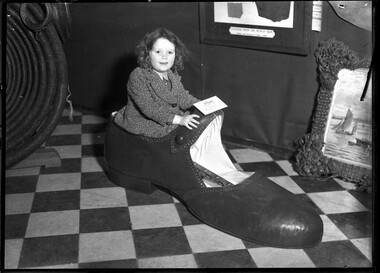
Photograph, Bull, Hugh Jones, 1897-1993, Leather Exhibition, Melbourne Town Hall
... In 1900 she married Edwin Allen, a senior leader-writer for the Wellington Evening Post, and they moved to Australia in 1903 when Edwin Allen took up the post of foreign affairs leader-writer and parliamentary man for the Melbourne Argus. ...In 1900 she married Edwin Allen, a senior leader-writer for the Wellington Evening Post, and they moved to Australia in 1903 when Edwin Allen took up the post of foreign affairs leader-writer and parliamentary man for the Melbourne Argus. ...Photographer notations on slide: At the Leather Exhib. at T. Hall Melb 1933 Age Published: Age (Melbourne, Vic.: 1854- ), 1933 THE EXHIBITS. (1933, September 20). The Age (Melbourne, Vic. : 1854 - 1954), p. 16. Retrieved January 25, 2026, from http://nla.gov.au/nla.news-article205109730 Published title: THE EXHIBITS. A COMPREHENSIVE RANGE. Curios, Novelties, Working Displays Published Caption: ONE OF THE NOVELTIES – AN OUTSIZE IN SHOES Research by Project Volunteer, Louise McKenzie: Our photo is dated 20 September 1933, and shows a happy, chubby-faced young girl sitting in a very over-sized girl’s shoe. It is labelled – “Shoe, An Out Size, loaned by Messrs Blackman & Rose”. (1) It is an effective way to capture the attention of the readership and alert them to the Melbourne Leather Show 1933. This show was designed to be a drawcard of extraordinary proportion, and there is no doubt that this leather exhibition was a really big deal for Melbourne. It completely took over the Melbourne Town Hall, and was open from 10.30 am until 10.30 pm. It seemed to contain something for everyone – the military, the man about town, the home handyman, the housewife, the child, the sporting types, the domestic workers, the outdoor enthusiasts, the horseracing fans, car enthusiasts, those wishing to show off the latest fashion – both men and women - and those just intrigued by a lot of fascinating and wide ranging exhibits. One of the most comprehensive descriptions of the Exhibition accompanies the photograph, and is worth quoting in full: “PROMINENT among exhibits which first attract attention in the foyer of the Town Hall is a comprehensive display of leather articles used by the defence forces. A conspicuous legend states that leather plays an important part in national defence, being used for saddlery, tool containers, holdalls, range-finding, surveying and signalling equipment, explosives factories, harness accoutrement, bandsmen's equipment and clothing. Three models of horses and several figures of soldiers wearing leather equipment illustrate the lesson, and a great range of leather goods used in military training and work variegate the display. Nearby are Texas cowboy, buckjumping and breaking-in saddles; whips, a walking stick, made of leather and numerous other curios. The general exhibition occupies the whole floor space of the main Town Hall, and is subdivided by partitions running most of the length of the hall. A bewildering variety, of leather goods presses for close and leisured inspection. Here and there operatives in charge of working machinery give practical demonstrations of factory processes in the production of footwear. Polishing materials are well represented. One attractive exhibit includes two bush huts constructed of leather, with wattle bark for roofing. Opossums, rosellas and a kookaburra add touches of bush realism. Adjacent exhibits include bags, fishing boots, leggings, leather covers in all colours. Factory Processes. One exhibitor has installed an automatic cinema apparatus and screen, which projects various factory processes in making a shoe, the operator being shown at work. Elsewhere an interesting exhibit depicts the five stages in the manufacture of sole leather, and the tanning materials employed. "Very handsome effects are achieved in the interior appointments of motor cars, which are attended by figures of smart chauffeurs in leather coats. Motor-trimming leather is said to be more durable and hygienic than fabric materials, and cheaper. The neat finish of the material, its excellent appearance, certainly make a very favourable impression. It takes the hides of three beasts to cover the cushions, squabs and door panels of a full-sized sedan, while to finish the entire interior, including quarter-panels and head linings would take four or even five. Special Exhibits. Amongst the special sections the display arranged by the handicrafts and home industries- committee of the Country Women's Association of Victoria is a notable one. In all there are about 130 entries which are in four classifications, viz., hand-tooled or embossed leathers, suede, hand-made gloves and undecorated leather. The glove section attracted the most numerous entries, a number being the work of members and craft subscribers of the Country Women's Association. In the leathercraft competition, organised by the Country Women's Association, the judges yesterday awarded the first prize for bookbinding (the only prize given in this division) to Miss M. Alston, of South Yarra. There is also a creditable display of exhibits submitted by boys of the orthopaedic section of the Children's Hospital at Frankston. Amongst the novelties on view in other portions of the exhibition were the following: — Leather coats worn by Sir C. Kingsford Smith on his Atlantic flight. Model Wellington boot, Phar Lap's saddle. Melbourne Cup winner's saddle. Longest whip in world, 108 feet long. (33 metres) [See our photo, to left of Girl in Shoe] Diminutive shoes. Pair of shoes 65 years old. Pair of men's working boots 75 years old. Larwood's, Tate’s and Pataudi’s cricket boots. [Three internationally revered cricketers of the day] (2) Picture frame made of leather bought 63 years ago. [See our photo, to right of Girl in Shoe] Leather frame, powder bowl, &c. Saddle used by world's champion buckjumper in U.S.A. Mexican cowboy outfit. Miniature saddle and bridle. A fireman's helmet made of sole leather. (3) Sample of the leather hat worn by porters at the Billingsgate Fish Market, London. (4) From South Australia there have been obtained sets of harness for donkeys, goats and camels, the equipment being displayed to good advantage on stuffed representations of the animals mentioned. Close to the platform is a glass case containing snow shoes and coats which have been used in Antarctic exploration work. Trade Display. Amongst the trade exhibits may be seen in operation a slipper turn shoe sewing machine, with heeling and channelling facilities, and the various stages in the production of ladies' sandals are shown. There is a wide contrast between sole leather of varying degrees of thickness on view in one stall and the choice samples of ladies' footwear in another — footwear, by the way, which could almost be used as ornaments, so dainty in colour and production are they. Again, there are displays of upholstering leathers of such soft texture that they could he readily mistaken for some of the finest cloth. Those who may be particularly interested in the production of chamois leather may gain an insight into the materials and chemicals used in the "working up” of this variety of leather. Supplies of glace kid (5) are tastefully arranged, and there may also be seen bags of all shapes and sizes, including satchels, suit cases and "sporting" cases, and bags for tennis players and golfers. Further variety is given to the exhibition by the display of antique hides, brightly coloured, with punching balls, boxing gloves and batsman's pads. There are crocodile skins and snake skins so cleverly "Worked up" that one could be almost pardoned for betraying an affection for such unpopular creatures.” “ Another wonderful article on this Exhibition, published the same day in one of the opposition daily newspapers, The Argus, is in the weekly article “Women to Women”, entitled “A Great Victorian Industry: Many Uses for Leather”. This weekly column was penned by Vesta, and she writes, with much purpose: “Yesterday afternoon I paid a hurried visit to the Leather Exhibition now being held in the Melbourne Town Hall and I was disappointed to find that the early visitors to the main exhibition were almost all men. Women, I think, should make a point of seeing every exhibition of our great industries, for women are the buyers of household requisites and goods for their own use and their tastes, and opinion influence also, to a large extent, the purchases of men. So, the welfare of industries is more or less in their hands and it becomes a duty for them to inform themselves fully of the extent and the quality of the manufacturing that is done here. The value of the output of the Australian boot and shoe factories alone was in 1930-31, the latest year for which the figures are given, Stg 3,750,000. Fully two thirds of that amount must have been spent by women on boots and shoes for themselves and their children. In a host of other directions, in the purchase of handbags, travelling bags, belts and straps, cushions, furniture coverings, purses, notebooks, spectacle cases, their annual expenditure must be very high. Their interest, therefore, in this industry is practical, and their support of it should be governed by knowledge of comparable values and qualities of the goods they buy. From the point of view of women, however, the exhibition itself is rather disappointing. There is an amazing collection of good stuff on show, but most of it is not displayed in a fashion that attracts attention. I was surprised, for example, at the range and quality of the leathers displayed, the suppleness of the finer qualities, and the varied range of colours and designs. But they are shown in such a fashion that if one set out deliberately to look for them it would be quite easy to miss most of them.” …It was surprising, too, that no one seemed to have taken advantage of the present fashion of wearing coloured gloves, or the cult of glove making, which the Country Women’s Association has fostered so successfully. Outside the collection of chamois leathers I saw no skins which were suitable to glove making. (6) However, it is perhaps a little unfair to be highly critical of the exhibition, inasmuch as it is the first of its kind. The material is there, undoubtedly, for a splendid show of every phase of this enterprising industry, and I am confident that experience will prove to those concerned that it will be worth while next time to devote a great deal of attention of the method of display.” With further research, it transpires that “Vera” is in fact NZ born Stella May Allen (nee Henderson) (1871-1962), a journalist, the first woman in NZ to begin a law course, in 1890-91). She later worked at a law firm while she completed her degree. Study of the law had always been open to women in NZ, but its practice was still barred to them. Her case “…led to amending legislation in 1896 allowing women to practise as barristers or solicitors. However, on gaining her LL.B. in November 1897 she did not apply for admission to the Bar. Instead, she became the Wellington-based correspondent and leader-writer for the Lyttelton Times. Her appointment, the first for a woman, was not welcomed by the all-male Press Gallery, and special permission had to be obtained from a subcommittee of the House before her presence was accepted. In 1900 she married Edwin Allen, a senior leader-writer for the Wellington Evening Post, and they moved to Australia in 1903 when Edwin Allen took up the post of foreign affairs leader-writer and parliamentary man for the Melbourne Argus. As Patricia Keep notes in her excellent entry of Stella Allan in the Australian Dictionary of Biography: “In 1907 The Argus commissioned her to write a series of articles on the first Australian Women's Work Exhibition held in October. They aroused much interest and next year The Argus invited her to join its full-time staff and begin a weekly section on the particular interests of women. She adopted the nom de plume 'Vesta' and called the column 'Women to Women'. Her work was unique in an Australian daily paper at that time. Her pages extended to cover every aspect of women's affairs, children's interests and community welfare, and 'Vesta' became a household word for authoritative information and advice on such matters. An excellent needlewoman and first-rate cook herself, she thoroughly tutored her staff in the work and needs of women in both country and city, as well as providing the usual training for cadet journalists. She conducted interviews and also visited the country to see at first hand the results of bushfires, mouse plagues, droughts and floods. In 1910 she was one of three women foundation members of the Australian Journalists' Association. “…she found time to become deeply involved in community affairs. She was an original committee-member of the Victorian Association of Crèches and of the Free Kindergarten Union of Victoria, and had much to do with the early days of the Victorian Bush Nursing Association, the Baby Health Centres Association and the Queen Victoria Hospital. She was a member of the National Council of Women, first in New Zealand and then in Melbourne, and of the Country Women's Association from its inception. … in 1924 she was appointed substitute delegate for Australia to the fifth assembly of the League of Nations at Geneva and was a delegate to the second Pan Pacific Women's Conference in Hawaii in 1930. A meeting held in the Melbourne Town Hall in 1938 by representatives of all the main Victorian women's organizations paid special tribute to her work and influence. She retired next year to England where she continued to write for the Argus, contributing articles on the experiences of women and children in wartime.” It is little wonder that “Vesta” was unafraid to take to task both the women of Victoria, and those who created the exhibition! One item which appears to have gone unnoticed, or at least unreported, is a framed article in the background of the photo of the chubby girl in the shoe. The display frame is labelled “Leather from the Human Skin, Tanned and Dressed by French artists.” The exhibition was certainly a cabinet of curiosities! A charming article in The Argus is a nice note on which to end. It gives a quick history and overview of the Australian leather industry and its unprecedented, and possibly unexpected, development and success, and states with pride: “Though Victoria is the largest leather producer in the Commonwealth all tanners in the Commonwealth can look back with pride on the long march of progress.” Footnotes: (1) “Blackman and Rose”. Messrs Blackman and Rose were shoe manufacturers, from 1927 located at 200 Noone Street, Clifton Hill. The Melbourne Circle describes their building as a “fine-looking building in the Federation ‘blood and bandage’ style.” It was built around 1912 for Puttifoot and Bloom, boot manufacturers, and today the building is apartments. (2) These cricketers were household names in the day: Tate: Maurice Tate, “English cricketer of the 1920s and 1930s, and leader of England’s Test bowling attack for a long time during this period. The founder of modern seam bowling. “ Larwood: Harold Larwood, “English right-arm fast bowler and the main exponent of the bowling style known as “bodyline”. Used to considerable effect in the 1932-33 Test series in Australia. Pataudi: Iftikhar A K Pataudi, “an Indian prince who in the 1930s played Test cricket for England, and in the 1940s played Test cricket for India (as Captain) – the only test cricketer to have played for both India and England. (3) “sole” leather “… is the thickest and most resistant material existing in the tanning industry … made from vegetable tanned leathers, usually bovine butts, processed in a special way to make them the hardest type of leather in existence.” (4) The hats worn by porters at Billingsgate Fish Market were also known as a “Bobbin” and look quite squat and rather unsophisticated. They were made of wood and tarred leather, with a “flat, hardened top designed to support large rectangular boxes of fish. The upturned brim protected the porter’s head against fish juice draining from the boxes of fish which would be carried on top of the hat. Some hats featured a small drain hole at the rear to allow this collected juice to drain down the back of the carrier. The hats were made using the ‘cuir bouilli’ technique. The leather was immersed in water which was heated until the leather began to shrink. It was then removed and put on a wooden former. The leather was stitched together to make the hat while still wet, and then held in place until dry.” (See article and photo on the London Museum website) (5) Glace kid – described on the Boston Museum of Fine Arts’ Cameo database as “A smooth glossy leather originally prepared from goat or sheepskin. Early glace kid had a shiny surface that was originally prepared by tawing the skin in a mixture of alum, table salt, flour, and egg yolk. Today, glace kid is prepared from many types of vegetable or chrome tanned leathers. The smooth polished surface is obtained mechanically by shaving, glazing, ironing, and/or rolling the dry leather.” (6) In the 1930s, Melbourne’s glovemaking industry was characterised by local manufacturing, with key producers like Simpson’s Gloves Pty Ltd in Richmond and the Stagg Glove Company in Clifton Hill leading the market. These factories produced high-quality leather gloves, handbags, and specialty gear, often employing a clear gendered division of labour and training young, local women. Museum Victoria holds the Simpson’s Gloves Collection, comprising over 1200 items, and the University of Melbourne Archives holds the company’s business records. References: THE EXHIBITS. (1933, September 20). The Age (Melbourne, Vic. : 1854 - 1954), p. 16. Retrieved January 25, 2026, from http://nla.gov.au/nla.news-article205109730 EXPORT LEATHER. (1929, September 17). The Argus (Melbourne, Vic. : 1848 - 1957), p. 17. Retrieved January 19, 2026, from http://nla.gov.au/nla.news-article4037647 LEATHER EXHIBITION (1933, September 18). The Argus (Melbourne, Vic. : 1848 - 1957), p. 10. Retrieved January 19, 2026, from http://nla.gov.au/nla.news-article11693362 (1933, September 23). The Argus (Melbourne, Vic. : 1848 - 1957), p. 21. Retrieved January 19, 2026, from http://nla.gov.au/nla.news-page522766 WOMEN TO WOMEN (1933, September 20). The Argus (Melbourne, Vic. : 1848 - 1957), p. 13. Retrieved January 19, 2026, from http://nla.gov.au/nla.news-article11694034 Australian Dictionary of Biography, Stella May Allan (1871–1962) https://adb.anu.edu.au/biography/allan-stella-may-4998 WOMEN TO WOMEN (1930, January 22). The Argus (Melbourne, Vic. : 1848 - 1957), p. 13. Retrieved January 19, 2026, from http://nla.gov.au/nla.news-article4063888 Museums Victoria, Simpson’s Gloves, 486-496 Victoria Street, North Richmond, VIC, Australia https://collections.museumsvictoria.com.au/articles/2702 The Argus. (1927, October 31). The Argus (Melbourne, Vic. : 1848 - 1957), p. 20. Retrieved February 7, 2026, from http://nla.gov.au/nla.news-article3888451 Melbourne Circle: stories from the suburbs: “Boots and all in Clifton Hill” https://melbournecircle.net/2015/11/20/bootmakers-of-clifton-hill/ Wikipedia, Maurice Tate, https://en.wikipedia.org/wiki/Maurice_Tate Wikipedia, Harold Larwood, https://en.wikipedia.org/wiki/Harold_Larwood Wikipedia, Iftikhar Ali Khan Pataudi, https://en.wikipedia.org/wiki/Iftikhar_Ali_Khan_Pataudi Buy Leather Online Italy, Sole leather: https://buyleatheronline.com/en/blog/outsole-and-insole-leather-n7 London Museum, Porters hats, https://www.londonmuseum.org.uk/collections/v/object-731122/hat-porters-hat/ Cameo Database, Museum of Fine Arts, Boston, Glace Kid, https://cameo.mfa.org/wiki/Glac%C3%A9_kid VICTORIAN LEATHER HAS WON RENOWN (1937, September 22). The Argus (Melbourne, Vic. : 1848 - 1957), p. 31 (March of Progress Supplement). Retrieved February 7, 2026, from http://nla.gov.au/nla.news-article1108704 Photographer notations on slide: "At the Leather Exhib. at T. Hall Melb 1933 Age B5".displays, melbourne town hall, leather, children, shoes, 1930-1939, industry, hats, gloves -
 Flagstaff Hill Maritime Museum and Village
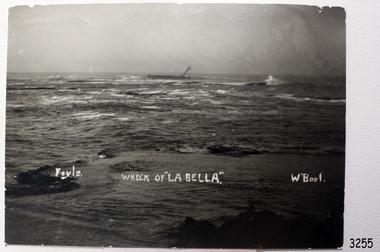
Photograph, Foyle Photographic Studio, Wreck of La Bella, about 11/11/1905
... evening mist. (On its only other visit to Warrnambool a year earlier the master had gone to shore to find a tow. He returned to the ship to find the crew drunk and unwilling to take up their posts, even though the ship was dragging its anchors and in a dangerous position.) ...evening mist. (On its only other visit to Warrnambool a year earlier the master had gone to shore to find a tow. He returned to the ship to find the crew drunk and unwilling to take up their posts, even though the ship was dragging its anchors and in a dangerous position.) ...The photograph shows the wreck of La Bella in Lady Bay, Warrnambool, Australia. It was probably taken on 11th November 1905, the morning after she was wrecked. “Foyle” written on the photograph is the name of Foyle’s Photographic studio. At the time of the photograph the studio was owned by both Charles and Lilian Foyle (sometimes known as Lillian or Lily), either of whom could have taken this photograph. They also worked together at a later date on the photographs, sketches and paintings of the famous and historical Pioneers’ Honour Board, which is currently on view in the Warrnambool Library. Foyles Photography was the studio of James Charles Foyle. He owned “Foyle’s Photo Card Studios” in Liebig St , Warrnambool, which operated between 1889 – 1919 . A letter to the editor (by Mr Edward Vidler) in the Melbourne Argus, 3rd August, 1907, mentions that in that year Warrnambool would celebrate its 60th anniversary of its proclamation as a town, and that talented local artist Miss Lily Foyle would paint 200 portraits in watercolour of the pioneers who settled in the district prior to 1860. The Pioneer Honour Board can still be seen on display in the Warrnambool Library. In the Warrnambool Standard, Dec. 1917, “Mr Foyle’s studio was awarded contract to decorate rail cars on newly opened Trans-Continental railway, assisted by his sister, Miss Findlay.” The subject of the painting, La Bella, has its own tragic story. Read on for further details … On November 10th, 1905, the Norwegian-built barquentine La Bella approached Warrnambool at the end of her 37 day voyage. She was carrying a cargo of timber from Lyttleton, New Zealand, in heavy seas and evening mist. (On its only other visit to Warrnambool a year earlier the master had gone to shore to find a tow. He returned to the ship to find the crew drunk and unwilling to take up their posts, even though the ship was dragging its anchors and in a dangerous position.) As Captain Mylius steered La Bella to Lady Bay Channel the ship was tossed onto its side by heavy breakers and ran aground on what is now known as La Bella Reef. The sea was so rough that it wrenched a one-and-a- half ton anchor from the vessel. Several attempts were made by parties of volunteers in lifeboats to rescue the stricken sailors, but the rough conditions made this difficult for the boats to get close enough to the ship and the parties had to return to shore. The La Bella’s crew became exhausted and sailors were being washed overboard, one by one. By sunrise only five of the twelve crew still clung to the wreck. A local fisherman, 25 year old William Ferrier, rowed his small dingy through the heavy seas and managed to rescue the captain, whilst the volunteer lifeboat crew rescued a further three sailors, returning to shore. Ferrier made a final attempt at rescue and was able to reach its stern as the conditions eased slightly, saving the last remaining, terrified sailor just before the ship broke up and sank. William Ferrier became a national hero as news of the daring rescue spread. He was awarded the Silver Medal for bravery by the Royal Humane Society and was honoured by the Prime Minister and the Governor. He was presented with several other awards for his daring rescue. Ferrier’s rescue efforts are one of the most heroic in Victoria’s shipwreck history. The wreck now lies in 13m of water and is home to an abundance of marine life. Flagstaff Hill’s La Bella Collection includes a rail holder from La Bella, a photograph of William Ferrier with four of the five men rescued, a rail holder from the ship and the letter from the Prime Minister and other Members of Parliament that was sent to William Ferrier to commend him for his bravery. La Bella has been protected under the Commonwealth Historic Shipwrecks Act (1976) as a Historic Shipwreck since 23 April 1982 (VHR S401). It is archaeologically significant as the remains of an international and inter-colonial passenger and cargo ship. Flagstaff Hill’s collection of artefacts from the La Bella is of historical and archaeological significance because of its association with the La Bella, which is on the Victorian Heritage Register, and because of the relationship between the objects. The collection represents aspects of Victorian history, and the letter to William Ferrier demonstrates how important his rescue efforts were to Victoria and Australia. Black and white photograph of the wreck of the sailing ship La Bella in the bay at Warrnambool. The photograph shows the ship lying on its side in rough sea, with mast and rope rigging hanging loosely. Several large rocks are also visible. The photograph is a rectangle shape, mounted on heavy card, with slightly ragged edges. The photographer’s name, a title for the photograph and the location are hand written in white along the bottom third of the photograph. The back of the photograph is blank. Printed in white hand writing “Foyle”, “WRECK OF “LA BELLA”, “W’Bool”foyle, la bella, william ferrier, lady bay, lifeboats, lilian foyle, lillian foyle, charles foyle, james foyle, royal humane society medal, flagstaff hill, warrnambool, shipwrecked coast, flagstaff hill, flagstaff hill maritime museum, maritime museum, shipwreck coast, flagstaff hill maritime village -
 Federation University Historical Collection
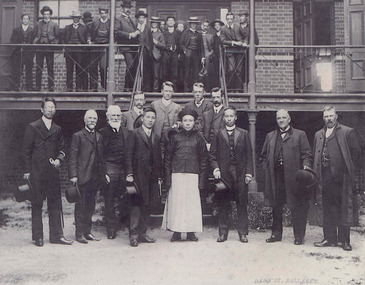
Photograph, Visit of the Chinese Commissioner to the Ballarat School of Mines, 13 November 1906, 23/11/1906 (exact)
... post I have the pleasure in forwarding for your Excellency's kind acceptance (and one for Mr. When) copies of the photograph taken of your recent visit to the School of Mines. I trust they will serve a pleasing memento of what, I hope, was a pleasant visit to our Golden City. Yours Faithfully Fredk Martell Director' The visit was reported in the Ballarat Star in 14 November 1906:- The Chinese Imperial Commissioner, Hwang Hon Cheng, who recently arrived in Victoria on behalf of the Chinese Government, paid a visit to Ballarat last evening, and was entertained by his fellow countrymen at a dinner at the Bow Leong rooms, Main street. ...post I have the pleasure in forwarding for your Excellency's kind acceptance (and one for Mr. When) copies of the photograph taken of your recent visit to the School of Mines. I trust they will serve a pleasing memento of what, I hope, was a pleasant visit to our Golden City. Yours Faithfully Fredk Martell Director' The visit was reported in the Ballarat Star in 14 November 1906:- The Chinese Imperial Commissioner, Hwang Hon Cheng, who recently arrived in Victoria on behalf of the Chinese Government, paid a visit to Ballarat last evening, and was entertained by his fellow countrymen at a dinner at the Bow Leong rooms, Main street. ...The Chinese Imperial Commissioner, Hwang How Cheng, visited Australia at the request of the Chinese Emperor for the purpose of establishing Chinese consulates in the Commonwealth. He visited Ballarat at the request of Ballarat’s Chinese community. The newspaper reported that it was hoped the Commissioner would visit the Ballarat School of Mines “where the knowledge he would get would probably be of the utmost usefulness in the development of the great resources of China.” The Commissioner was accompanied by interpreter Ah Ket (Melbourne barrister and solicitor), and met by members of Ballarat’s Chinese community, including Dr Wong Chock Son. Apparently the Chinese Commissioner wanted to visit SMB because of its international fame relating to education in mining. From the SMB Letter book (Cat. No. 436) comes the following which suggests the Commissioner was based in Adelaide) '17th November 1906 His Excellency, Hwang How Cheng Chinese Commission Adelaide May it please your Excellency By this post I have the pleasure in forwarding for your Excellency's kind acceptance (and one for Mr. When) copies of the photograph taken of your recent visit to the School of Mines. I trust they will serve a pleasing memento of what, I hope, was a pleasant visit to our Golden City. Yours Faithfully Fredk Martell Director' The visit was reported in the Ballarat Star in 14 November 1906:- The Chinese Imperial Commissioner, Hwang Hon Cheng, who recently arrived in Victoria on behalf of the Chinese Government, paid a visit to Ballarat last evening, and was entertained by his fellow countrymen at a dinner at the Bow Leong rooms, Main street. The commissioner, who came up by the express, was accompanied by his secretary and Mr Ah Ket, the well-known Chinese barrister, of Melbourne; but some disappointment was expressed by the fact that he did not wear his official robes, being attired in the more sombre European dress. Mr W. D. M’Kee presided at the dinner, on the invitation of the Bow Leong Society, and in addition to representative Chinese residents, three were also present the mayor of the city (Cr. J. J. Brokenshire), Crs. R. Pearse, G. Crocker (City), J. R. Elsworth, A. Mackenzie, J. A. M’Neil, A. Levy, G. Bunting, F. Penhalluriack (Town), Col. Williams, Mr. J. Gent, Messrs. F. J. Martell (director of the School of Mines), A. W. Hager (president of the Orphan Asylum), A. Kenny (superintendent), R. G. Fitzgerald (clerk of courts at Ballarat East), J. Trethowan, A. A. Buley, Serg Dalton, and others. Apologies were received from the mayor of the town Revs. J. West Lau, Dr Cairns, Hon. J. Y. M’Donald, L. Lederman, C. C. Shoppee and others. The gathering was a very cordial one, and the hospitality of the Chinese was greatly appreciated. After the loyal toasts, “The King” and “The Emperor of China,” had been honoured, the chairman extended a hearty welcome on behalf of the society and others to the commissioner. Mr M’Kee said he was privileged to speak in behalf of the Chinese. There was a warm feeling of friendship between them and himself, and his services were always at their command. If he were in China he would desire that a similar compliment would be extended to him. They were all pleased the Emperor of China had sent the commissioner to establish consulates in Australia with a view of the empire understanding the feelings of Australasia better than they did at present. He hoped the commissioner would have opportunity of visiting some of their industries, as they desired him to gain all the scientific and practical knowledge of those industries that he could. The toast of “The Commissioner” was proposed by Col. Williams who expressed pleasure at the visit of a gentleman of education and attainments to look into the condition of the scions of China in Australia. He hoped the commissioner would carry away a correct impression. In Australia they had nothing to conceal; they hoped to be understood. (Applause.) No intelligent man had the temerity to condescend to patronise China, one of the richest countries in the world, with a civilisation dating back thousands of years. In the matter of population alone it was equal to one-third of the world. They heard a lot about the “awakening of China.” They hoped it would be humane, just, and considerate if it had power. He hoped the commissioner would be satisfied with what he saw. The law of filial relation to the children was strictly observed in China, and he did not know whether it would not be a good thing if they had a little more of that religion here. It would be a fair thing to tell the commissioner that while he might inquire into the labour laws, the basis of these laws was not a desire to oppress but to enable every man to obtain the same conditions they expected from their own people. If he gained that impression he felt they would be fairly treated. (Applause.) Mayor Brokenshire supported the toast. They had, he said, in the Chinese a most law-abiding people. Their behaviour was an example to the British citizens. They were quiet, inoffensive men, and they toiled hard, even on Sundays. (Laughter.) Mr Ah Ket; That is what the government does with the railway employees. (Laughter.) The Commissioner replied through Mr Ah Ket, who in a graceful speech acknowledged the toast. The commissioner had, he said been delighted with what he had seen of the country – he believed it to be one of the finest in the world – and he greatly appreciated the hospitality extended to him. (Applause.) The Chairman proposed the toast of “The health of Mr Ah Ket,” and paid a tribute to his ability. It was satisfactory to see that he had risen to such a position, and it might be that in the future he would be asked to occupy a position on the bench. (Applause.) Mr Ah Ket, in response, said he had not come prepared to make a speech. He had come to Ballarat to have a quiet evening with his friends, and as soon as he arrived he had been whirled away in a motor car to a place where he found an aggregation of East and West. He was pleased to see them commingled at the festive board. That suggested the idea that East and West could meet together without friction. Misunderstandings arose only because men were superficial. If they threw off outer garments they would know each other better. He looked forward to the time when nations would understand each other. It was by an interchange of visits that such things could be accomplished, and nations would then live at peace with each other. (Applause.) Other toasts were also honored. Twelve men pose for a photograph on the stairs of a building at the Ballarat School of Mines. Back row left to right: A.D. Gilchrist (Prof. of Engineering), B. Whittington (Mathematics, Physics), Thomas S. Hart (Prof. of Geology and Mining), J.M. Sutherland (Electrical Engineering) Front row left to right: Dr Wong Chock Son (Ballarat), Fred. J. Martell, Alfred Mica Smith, Ah Ket esq (Melbourne Barrister), His Excellency Hwang How Cheng (Chinese Commissioner), Wen Esq (Secretary), Alderman Grase (mayor of Brisbane), Grase Esq (Ballarat).ballarat school of mines, alfred mica smith, fred martell, j m sutherland, a d gilchrist, b whittington, thomas hart, wong chock son, ah ket, hwang how cheng, chinese, chinese commissioner, international, new classrooms, administration building, a building -
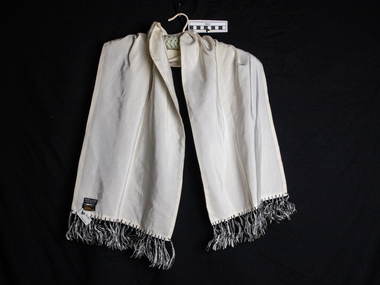 City of Moorabbin Historical Society (Operating the Box Cottage Museum)
Clothing,Man's White 'Silk' Dress Scarf, c1960
... clothing, evening wear, dinner suits, formal wear, scarves, collars winged, tailcoats, bow ties, cheltenham, brighton, moorabbin, pioneers, dressmaking, market gardeners, early settlers, craftwork , bentleigh, maynard dennis, post world war 2 estates ,...This Man's White 'Silk' Dress Scarf, with a black and white silk fringe, was worn with a dress suit as part of the formal wear for men in City of Moorabbin c 1960 for special occasions, events and ceremonies This Man's White 'Silk' Dress Scarf was worn with a dress suit as part of the formal wear for men in City of Moorabbin c 1960 for special occasions, events and ceremonies clothing, evening wear, dinner suits, formal wear, scarves, collars winged, tailcoats, bow ties, cheltenham, brighton, moorabbin, pioneers, dressmaking, market gardeners, early settlers, craftwork , bentleigh, maynard dennis, post world war 2 estates , Tootal Scarf / Wash as Silk / Men's Wear Centre / Smythes / 115 Glenhuntly Rd E'wick Man's White 'Silk' Dress Scarf with a black and white silk fringe . ...This Man's White 'Silk' Dress Scarf, with a black and white silk fringe, was worn with a dress suit as part of the formal wear for men in City of Moorabbin c 1960 for special occasions, events and ceremonies This Man's White 'Silk' Dress Scarf was worn with a dress suit as part of the formal wear for men in City of Moorabbin c 1960 for special occasions, events and ceremonies Man's White 'Silk' Dress Scarf with a black and white silk fringe . Tootal Scarf / Wash as Silk / Men's Wear Centre / Smythes / 115 Glenhuntly Rd E'wick clothing, evening wear, dinner suits, formal wear, scarves, collars winged, tailcoats, bow ties, cheltenham, brighton, moorabbin, pioneers, dressmaking, market gardeners, early settlers, craftwork , bentleigh, maynard dennis, post world war 2 estates , -
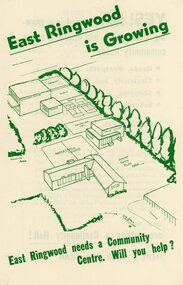 Ringwood and District Historical Society
Pamphlet, East Ringwood is Growing
... Evening Assisting to organise a Fete, Bazaar or Barbecue Running or organising a Street Stall Making a cash Donation for .... enclosed herewith. Support your local Traders. G.V. Birtchnell, Variety Box J.E. and A.M. Bould, T Conn, Butcher E Edwards, Greengrocer B.J. Hall, East Ringwood Pharmacy Hampson's Newsagency & General Store Mayford Pty Ltd R.L. and B. C Mullins, Eastwood Lending Library and Milk Bar A.R. Page, Ringwood East Store and Post...Evening Assisting to organise a Fete, Bazaar or Barbecue Running or organising a Street Stall Making a cash Donation for .... enclosed herewith. Support your local Traders. G.V. Birtchnell, Variety Box J.E. and A.M. Bould, T Conn, Butcher E Edwards, Greengrocer B.J. Hall, East Ringwood Pharmacy Hampson's Newsagency & General Store Mayford Pty Ltd R.L. and B. C Mullins, Eastwood Lending Library and Milk Bar A.R. Page, Ringwood East Store and Post ...A pamphlet from the Ringwood East Progress Association asking for assistance in raising funds for a Community Centre with a Public Hall. How to help: Fill in the form by raising funds by: Running a Card Evening Assisting to organise a Fete, Bazaar or Barbecue Running or organising a Street Stall Making a cash Donation for .... enclosed herewith. Support your local Traders. G.V. Birtchnell, Variety Box J.E. and A.M. Bould, T Conn, Butcher E Edwards, Greengrocer B.J. Hall, East Ringwood Pharmacy Hampson's Newsagency & General Store Mayford Pty Ltd R.L. and B. C Mullins, Eastwood Lending Library and Milk Bar A.R. Page, Ringwood East Store and Post Office K.W. L. and M.A. Whyte, Milk Bar, Delicatessen, Licensed Real Estate Agent. M.E. and G.R. Withers -
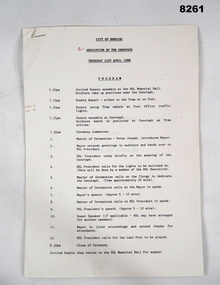 Bendigo Military Museum
Programme - CENOTAPH DEDICATION 1988, C. April 1988
... evening beginning at 7.00pm with guests preparing to move to the Cenotaph, Ceremony beginning at 7.30pm through to close at 8.30pm and then guests returning to the RSL Memorial Hall for Supper. Page 2 is as per "Inscriptions & markings. Page 3 is a listing of happenings, Master of ceremonies - Mr Peter Joseph. Greeting by Mayor Cr. Colin Nankervis, The meaning of the Cenotaph - RSL President, Switching on the lights, Dedication of the Cenotaph, His Worship the Mayor Cr Colin Nankervis, Mr max O' Haloran RSL President. Last Post...evening beginning at 7.00pm with guests preparing to move to the Cenotaph, Ceremony beginning at 7.30pm through to close at 8.30pm and then guests returning to the RSL Memorial Hall for Supper. Page 2 is as per "Inscriptions & markings. Page 3 is a listing of happenings, Master of ceremonies - Mr Peter Joseph. Greeting by Mayor Cr. Colin Nankervis, The meaning of the Cenotaph - RSL President, Switching on the lights, Dedication of the Cenotaph, His Worship the Mayor Cr Colin Nankervis, Mr max O' Haloran RSL President. Last Post ...This is the seventh in a series beginning with Cat No 8255 showing the progress towards the Restoration of the Bendigo Cenotaph over the Bendigo Creek. Page 1 gives a timeline of the evening beginning at 7.00pm with guests preparing to move to the Cenotaph, Ceremony beginning at 7.30pm through to close at 8.30pm and then guests returning to the RSL Memorial Hall for Supper. Page 2 is as per "Inscriptions & markings. Page 3 is a listing of happenings, Master of ceremonies - Mr Peter Joseph. Greeting by Mayor Cr. Colin Nankervis, The meaning of the Cenotaph - RSL President, Switching on the lights, Dedication of the Cenotaph, His Worship the Mayor Cr Colin Nankervis, Mr max O' Haloran RSL President. Last Post. Pages 4 - 5 are the Prayers & Readings, Prayers of Remembrance, Lords Prayer given by the following Churches. Rev. Canon A.G. Austin (Anglican) R.L. Faulkner (Uniting), Capt P. Wright (Salvation Army), Rev I. Porter (President Ministers Fraternal) Fr. T. Pearson O.F.M (Catholic)Program, 5 pages, white paper, all text in black print, stapled together top LH corner.Main point, "City of Bendigo - Dedication of the Cenotaph - Thursday 21st April 1988".brsl, smirsl, cenotaph, bendigo -
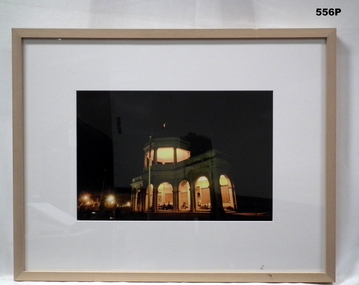 Bendigo Military Museum
Photograph - SOLDIERS MEMORIAL, FRAMED, Post 2000
... Evening performance of a band on the Portico of Soldiers Memorial Institute post 2000....Evening performance of a band on the Portico of Soldiers Memorial Institute post 2000. brsl smirsl Photograph Bendigo RSL and Soldiers Memorial Institute Hall Pall Mall. ...Evening performance of a band on the Portico of Soldiers Memorial Institute post 2000.Bendigo RSL and Soldiers Memorial Institute Hall Pall Mall. Colour night time photograph of Bendigo Soldiers Memorial Institute Hall. White cardboard border surrounds photograph, light wooden frame, glass protection.brsl, smirsl, photograph -
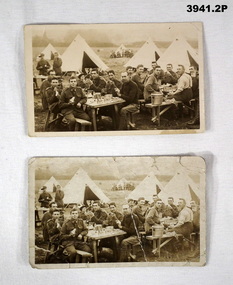 Bendigo Military Museum
Postcard - POSTCARDS WW1, 1) & .2) 7.10.1917
... Boys from the 59th Battalion messing one evening after doing a good days work at ____ ____ bayonet fighting, bombing and other modes of modern warfare. Jimmy” .1) & .2) Post ...Item relates to James Worland MILLS No 3441, 59th Battalion. James on on the first table left sitting at RHS of table on the left of 2 other men. Refer Cat No 169P for his service details..1) & .2) Post card photos, sepia, showing soldiers eating at 2 tables with tents in the background..1) On rear in pencil: “The Hungry 59th Battalion at mess after a hard days work Hurdcott England 7.10.17” .2) On rear in pencil: “Hurdcott England Oct 7 1917 Taken about a week ago. Boys from the 59th Battalion messing one evening after doing a good days work at ____ ____ bayonet fighting, bombing and other modes of modern warfare. Jimmy”postcards, 59th -
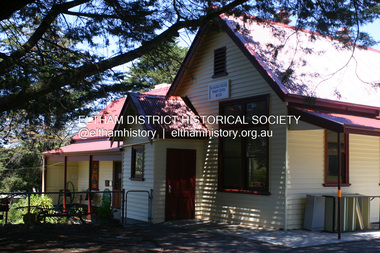 Eltham District Historical Society Inc
Photograph - Digital Photograph, Alan King, Original Kangaroo Ground Primary School No. 2105 building, Eltham-Yarra Glen Road, Kangaroo Ground, 28 December 2007
... evening classes there in winter. At one stage, a corner of the room was curtained off for the schoolmaster’s living space, and the platform, which was used for sleeping, was also the pulpit during church services. Teacher Andrew Ross also took church services when the minister was unable to attend, which happened frequently as he had long distances to travel on the bad roads. In 1857 the school building was also used as the Court of Petty Sessions, and from 1854 until 1858, it served as a post...evening classes there in winter. At one stage, a corner of the room was curtained off for the schoolmaster’s living space, and the platform, which was used for sleeping, was also the pulpit during church services. Teacher Andrew Ross also took church services when the minister was unable to attend, which happened frequently as he had long distances to travel on the bad roads. In 1857 the school building was also used as the Court of Petty Sessions, and from 1854 until 1858, it served as a post ...Kangaroo Ground's first school began in 1851 with 22 pupils from the district's ten families. It was a single room school located further south on the site, which also served as a Presbyterian church. The first teacher was Andrew Ross. The school building was used as a Post Office between 1854 and 1858 and during 1857 also served as a Court of Petty Sessions. With a growing farming community, a new building was warranted and the original Sate School No. 352 was closed and a new building, State School No. 2105 was oipened October 1, 1878. A residence for Head Teacher Henry Wallace School was erected in 1879 attached to the left of the school building. That residence is now home to the Andrew Ross Museum, which opened in 1993. Covered under Heritage Overlay, Nillumbik Planning Scheme. Published: Nillumbik Now and Then / Marguerite Marshall 2008; photographs Alan King with Marguerite Marshall.; p35 In a corner of the Kangaroo Ground Primary School playground stands an old weatherboard building. This structure, attached to the former teacher’s weatherboard residence facing Main Road, first served as a school in 1878. The former residence, built in 1879, houses the Andrew Ross Museum, which opened in 1993. It is named after the school’s first teacher,1 who also founded The Evelyn Observer newspaper, which began on the site in 1873. Later the printing presses were moved to brick newspaper offices by the Kangaroo Ground Hotel, which became the Shire of Eltham offices. However Kangaroo Ground’s first school began in 1851 for 22 pupils from the district’s ten families, in a slab building further south on this site. Andrew Harkness and other settlers campaigned for the building, which was built on half an acre (0.2ha) donated by local farmer, James Donaldson. Builder was Samuel Furphy, father of the novelist Joseph.2 The single room measuring 30 feet x 18 feet (9m x 5.5m), was unlined and the green slabs shrank, allowing the wind and rain entry through cracks except when they were stuffed with paper.3 The building served as a Presbyterian church as well as a school, where fees were 18 pence a week for education. Young men also attended evening classes there in winter. At one stage, a corner of the room was curtained off for the schoolmaster’s living space, and the platform, which was used for sleeping, was also the pulpit during church services. Teacher Andrew Ross also took church services when the minister was unable to attend, which happened frequently as he had long distances to travel on the bad roads. In 1857 the school building was also used as the Court of Petty Sessions, and from 1854 until 1858, it served as a post office. During the gold rush fossickers on their way to the Caledonia Diggings at Queenstown (now St Andrews) prospected the district, but did not remain long, as the fields were not rich in gold. But the farming community grew, until by 1878 the population warranted the building of State School No 2105 – the present one-roomed tongue-and-groove lined building measuring 49 feet x 18 feet (15m x 5.5m), to accommodate 60 children. The old school, No 352, was closed, and the new one opened on October 1, with Henry Wallace as head teacher, assisted by work mistress Annie Johnston. Early teachers included Messrs Smith, Hamilton and Prosser, with sewing teachers Misses Sweeney, Limerock and Oliver. In the early 1920s a small room was built on the front veranda of the teacher’s residence, and used as a State Savings Bank agency until about 1934. In 1928 the schoolroom’s three-tiered floor was replaced by a flat floor and teacher’s platform (which has since been removed). A half-glassed partition wall then divided the large room into two rooms in which the old style form-type desks were replaced with dual desks. The small playground, surrounded by pine trees and a picket fence, was extended in 1931 with an additional acre or so (0.4 ha) of land. During World War Two the school faced closure because of a fall to seven in the enrolment, but by 1946 it had increased again to 45. Mr Eric Morgan was head teacher and Mrs Margaret Banks was assistant head teacher, a position she held for ten years. In 1955, under the head teacher Mr V Gardiner, who taught there for 13 years, the school won a prize for the best-kept garden and school ground in the inspectorate. A district subdivision increased the enrolment in 1968 to 65 and a bus service was established. After the hall which had been used for lessons was demolished late that year, the pupils met in the original fire brigade meeting room (now the tennis club, diagonally opposite the general store). The new school building with a storeroom and staffroom was built in 1974.This collection of almost 130 photos about places and people within the Shire of Nillumbik, an urban and rural municipality in Melbourne's north, contributes to an understanding of the history of the Shire. Published in 2008 immediately prior to the Black Saturday bushfires of February 7, 2009, it documents sites that were impacted, and in some cases destroyed by the fires. It includes photographs taken especially for the publication, creating a unique time capsule representing the Shire in the early 21st century. It remains the most recent comprehenesive publication devoted to the Shire's history connecting local residents to the past. nillumbik now and then (marshall-king) collection, kangaroo ground, andrew ross museum, eltham-yarra glen road, kangaroo ground primary school no. 2105, kangaroo ground state school, state school no. 2105 -
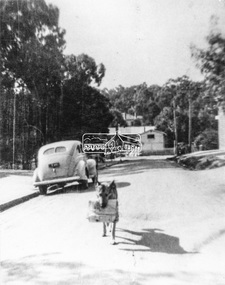 Eltham District Historical Society Inc
Negative - Photograph, Were Street, Montmorency, c.1948
... Mr. and Mrs Musselwhite ran the post office and owned Jack (the Alsatian dog) which was trained to go down to the railway station each day about 3pm and collect the daily parcel of evening newspapers, delivered by train, and take the bundle up to the newsagency. ...Mr. and Mrs Musselwhite ran the post office and owned Jack (the Alsatian dog) which was trained to go down to the railway station each day about 3pm and collect the daily parcel of evening newspapers, delivered by train, and take the bundle up to the newsagency. ...Black and white photograph depicting a dog (named Jack) carrying newspaper delivery from the railway station up Were Street (to the Post Office). Mr. and Mrs Musselwhite ran the post office and owned Jack (the Alsatian dog) which was trained to go down to the railway station each day about 3pm and collect the daily parcel of evening newspapers, delivered by train, and take the bundle up to the newsagency. It is believed the Musselwhite's ran the Post Office from the mid 1930s to circa 1950.This photo forms part of a collection of photographs gathered by the Shire of Eltham for their centenary project book," Pioneers and Painters: 100 years of the Shire of Eltham" by Alan Marshall (1971). The collection of over 500 images is held in partnership between Eltham District Historical Society and Yarra Plenty Regional Library (Eltham Library) and is now formally known as 'The Shire of Eltham Pioneers Photograph Collection.' It is significant in being the first community sourced collection representing the places and people of the Shire's first one hundred years.Digital image 4 x 5 inch B&W Negsepp, shire of eltham pioneers photograph collection, montmorency, were street, musselwhite, newsagent, alsatian (dog), jack (dog), montmorency railway station, shopping centre, were street shops -
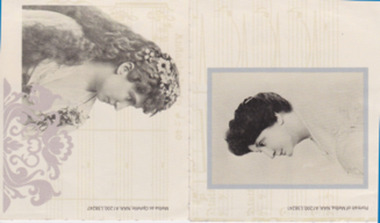 Warrnambool and District Historical Society Inc.
Functional object - Dame Nellie Melba Postage Stamp booklet, 10/05/2011
... evening bag displayed in WAG exhibition dame nellie melba nellie melba stamps NAA:A1200. L38241 NAA:A1200.L38247 Dame Nellie Melba 1861-1931. 3 out of 4 colored stamps in 'booklet' 60c Australia. Self adhesive, rippled edge. Light cream paper, water marked. Music staffs. B/W drawn. Mauve floral emblem. 'Melba as Ophelle'. On reverse Portrait of Melba Functional object Dame Nellie Melba Postage Stamp booklet Australia Post ...Stamps created to celebrate the life of Dame Nellie MelbaSupplement other Melba artifacts - evening bag displayed in WAG exhibitionDame Nellie Melba 1861-1931. 3 out of 4 colored stamps in 'booklet' 60c Australia. Self adhesive, rippled edge. Light cream paper, water marked. Music staffs. B/W drawn. Mauve floral emblem. 'Melba as Ophelle'. On reverse Portrait of Melba NAA:A1200. L38241 NAA:A1200.L38247dame nellie melba, nellie melba, stamps -
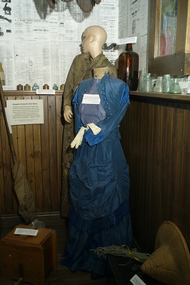 Andrew Ross Museum
Evening Gown, Circa 1870
... Believed to have belonged to Annie Maria Victoria Margareta Bisley, mother of Dorothy Wills, a post mistress/store keeper at Kangaroo Ground during the 1950's-60's Lady's blue taffeta skirt and jacket trimmed with fringe/tassels/sleeve inserts. Evening ...Believed to have belonged to Annie Maria Victoria Margareta Bisley, mother of Dorothy Wills, a post mistress/store keeper at Kangaroo Ground during the 1950's-60'sLady's blue taffeta skirt and jacket trimmed with fringe/tassels/sleeve inserts. -
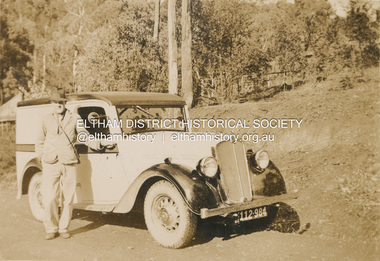 Eltham District Historical Society Inc
Photograph, Lester Neil Ingram with his Morris Ten Series II delivery van, c.1942
... posted to 1 Embarkation Depot at Ascot Vale, Victoria, and attached to R.A.F. UK. Lester embarked from Australia December 2, 1942 and arrived at 11 Personnel Despatch and Reception Depot on January 13, 1943. On March 9 he was transferred to 10 Operational Training Unit, Group No. 91, Bomber Command, R.A.F. Lester’s service file reveals that on the evening...posted to 1 Embarkation Depot at Ascot Vale, Victoria, and attached to R.A.F. UK. Lester embarked from Australia December 2, 1942 and arrived at 11 Personnel Despatch and Reception Depot on January 13, 1943. On March 9 he was transferred to 10 Operational Training Unit, Group No. 91, Bomber Command, R.A.F. Lester’s service file reveals that on the evening ...The van is a Morris Ten Series II which was manufactured 1935-1937. The numeral only Victorian Registration plate 112-984 was part of the sequence of numeral only plates issued 1910-1939. Lester Neil Ingram was born at Kew, 8 November 1911, the son of John and Ada (Key) Ingram of Research. According to Electoral Roll records, in 1903, John Ingram was a farmer at Lancefield, his wife Ada, a milliner. By 1906, John Ingram was a baker at Research and from about 1912, an orchardist. The family moved to Anglesea River sometime between 1937 and 1942. A sheet metal worker by trade, Lester had run the bakery business for 14 years, his father retired, and was working as a baker at Anglesea when he enlisted in the R.A.A.F. on 5 December 1941 at Melbourne. Previously he had worked as a baker at Research (1937). He undertook training as Aircrew at No. 4 Initial Training School at Victor Harbour, South Australia, followed by No. 1 Wireless Air Gunners School at Ballarat, Victoria, and No. 3 Bombing and Gunnery School, West Sale, Victoria. On October 15, 1942 Lester qualified as an Air Gunner, promoted to Sergeant, and was posted to 1 Embarkation Depot at Ascot Vale, Victoria, and attached to R.A.F. UK. Lester embarked from Australia December 2, 1942 and arrived at 11 Personnel Despatch and Reception Depot on January 13, 1943. On March 9 he was transferred to 10 Operational Training Unit, Group No. 91, Bomber Command, R.A.F. Lester’s service file reveals that on the evening of 22 April 1943, Lester was a member of the aircrew of Whitley V bomber, N.1374. The airframe had run 1,127 hours. A full moon was just rising. The flight was non-operational, its purpose a dual conversion on type mission flown by a student pilot with almost two hours completed at night on similar flights. They had just changed aircraft as their previous aircraft had become unserviceable. The pilot had accepted the aircraft, which was technically unserviceable as the NCO in charge of flight had not completed the inspection paperwork correctly. The aircraft had undergone a major engine repair the day before. The aircraft took off at 2348 hours from R.A.F. Abington. It was reported that the aircraft take-off was quite normal and after climbing to 800 feet it passed out of view of the ground observers. A few seconds later the aircraft crashed, and it was reported that the sound of the engines seemed to become desynchronised. The crash occurred one and a half miles northwest of Longworth, Berkshire and the aircraft destroyed by fire. It carried a crew of five. Lester is commemorated on the Eltham Roll of Honour Board, which was commissioned by the Eltham War Memorial Trust to be hung in the Eltham Infant Welfare Centre, part of complex of buildings that form the Eltham War Memorial. The Honour Roll is presently (2023) hanging in the Eltham Library Community Gallery space. Lester was remembered with the following notices published in The Argus newspaper, Saturday 22 April 1944, p2: INGRAM. —In treasured memories you are with me still. Sgt. Lester Neil Ingram, killed, aircraft accident, England, April 22, 1943. (Mother and father.) INGRAM. —In proud and ever loving memory of Lester, 410236, Sgt. L. N. Ingram, R.A.A.F., air crash England, April 22, 1943. —Per ardua ad astra. (Ellen Peake and family.) [“Per ardua ad astra” is a Latin phrase meaning “through adversity to the stars” or “through struggle to the stars” which was the motto of the Royal Air Force and other Commonwealth air forces such as the Royal Australian Air Force.] And from his fiancé Ellen, in The Argus, Wednesday, 5 May 1943, p2: INGRAM. —On April 22 (result of aircraft accident near Lodgeworth Village, Berks, England), Sgt. Lester Neil Ingram, R.A.A.F., fiance of Ellen. -Treasured memories till we meet again. Lester is buried at Brookwood Military Cemetery, Surrey, United Kingdom, Grave 4. 1. 11. INGRAM, Flt. Sgt. LESTER NEIL, 410236. R.A.A.F. 22nd April 1943. Age 31. Son of John and Ada Ingram, of Anglesea, Victoria, Australia. He gave his life For freedom’s cause ◊ ◊ ◊ LEST WE FORGET “They shall grow not old, as we that are left grow old; Age shall not weary them, nor the years condemn. At the going down of the sun and in the morning We will remember them.”On reverse "Lester Ingram"112-984 (victorian registration), lester neil ingram, morris ten series ii, bakery, delivery van, pam thoonen (nee ingram) collection -
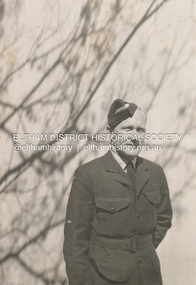 Eltham District Historical Society Inc
Photograph, Leading Aircraftsman, Lester Neil Ingram, RAAF, c.1943
... posted to 1 Embarkation Depot at Ascot Vale, Victoria, and attached to R.A.F. UK. Lester embarked from Australia December 2, 1942 and arrived at 11 Personnel Despatch and Reception Depot on January 13, 1943. On March 9 he was transferred to 10 Operational Training Unit, Group No. 91, Bomber Command, R.A.F. Lester’s service file reveals that on the evening...posted to 1 Embarkation Depot at Ascot Vale, Victoria, and attached to R.A.F. UK. Lester embarked from Australia December 2, 1942 and arrived at 11 Personnel Despatch and Reception Depot on January 13, 1943. On March 9 he was transferred to 10 Operational Training Unit, Group No. 91, Bomber Command, R.A.F. Lester’s service file reveals that on the evening ...Lester Neil Ingram was born at Kew, 8 November 1911, the son of John and Ada (Key) Ingram of Research. According to Electoral Roll records, in 1903, John Ingram was a farmer at Lancefield, his wife Ada, a milliner. By 1906, John Ingram was a baker at Research and from about 1912, an orchardist. The family moved to Anglesea River sometime between 1943 and 1949. A sheet metal worker by trade, Lester had run the bakery business for 14 years, his father retired, and was working as a baker at Anglesea when he enlisted in the R.A.A.F. on 5 December 1941 at Melbourne. Previously he had worked as a baker at Research (1937). He undertook training as Aircrew at No. 4 Initial Training School at Victor Harbour, South Australia, followed by No. 1 Wireless Air Gunners School at Ballarat, Victoria, and No. 3 Bombing and Gunnery School, West Sale, Victoria. On October 15, 1942 Lester qualified as an Air Gunner, promoted to Sergeant, and was posted to 1 Embarkation Depot at Ascot Vale, Victoria, and attached to R.A.F. UK. Lester embarked from Australia December 2, 1942 and arrived at 11 Personnel Despatch and Reception Depot on January 13, 1943. On March 9 he was transferred to 10 Operational Training Unit, Group No. 91, Bomber Command, R.A.F. Lester’s service file reveals that on the evening of 22 April 1943, Lester was a member of the aircrew of Whitley V bomber, N.1374. The airframe had run 1,127 hours. A full moon was just rising. The flight was non-operational, its purpose a dual conversion on type mission flown by a student pilot with almost two hours completed at night on similar flights. They had just changed aircraft as their previous aircraft had become unserviceable. The pilot had accepted the aircraft, which was technically unserviceable as the NCO in charge of flight had not completed the inspection paperwork correctly. The aircraft had undergone a major engine repair the day before. The aircraft took off at 2348 hours from R.A.F. Abington. It was reported that the aircraft take-off was quite normal and after climbing to 800 feet it passed out of view of the ground observers. A few seconds later the aircraft crashed, and it was reported that the sound of the engines seemed to become desynchronised. The crash occurred one and a half miles northwest of Longworth, Berkshire and the aircraft destroyed by fire. It carried a crew of five. Lester is commemorated on the Eltham Roll of Honour Board, which was commissioned by the Eltham War Memorial Trust to be hung in the Eltham Infant Welfare Centre, part of complex of buildings that form the Eltham War Memorial. The Honour Roll is presently (2023) hanging in the Eltham Library Community Gallery space. Lester was remembered with the following notices published in The Argus newspaper, Saturday 22 April 1944, p2: INGRAM. —In treasured memories you are with me still. Sgt. Lester Neil Ingram, killed, aircraft accident, England, April 22, 1943. (Mother and father.) INGRAM. —In proud and ever loving memory of Lester, 410236, Sgt. L. N. Ingram, R.A.A.F., air crash England, April 22, 1943. —Per ardua ad astra. (Ellen Peake and family.) [“Per ardua ad astra” is a Latin phrase meaning “through adversity to the stars” or “through struggle to the stars” which was the motto of the Royal Air Force and other Commonwealth air forces such as the Royal Australian Air Force.] And from his fiancé Ellen, in The Argus, Wednesday, 5 May 1943, p2: INGRAM. —On April 22 (result of aircraft accident near Lodgeworth Village, Berks, England), Sgt. Lester Neil Ingram, R.A.A.F., fiance of Ellen. -Treasured memories till we meet again. Lester is buried at Brookwood Military Cemetery, Surrey, United Kingdom, Grave 4. 1. 11. INGRAM, Flt. Sgt. LESTER NEIL, 410236. R.A.A.F. 22nd April 1943. Age 31. Son of John and Ada Ingram, of Anglesea, Victoria, Australia. He gave his life For freedom’s cause ◊ ◊ ◊ LEST WE FORGET “They shall grow not old, as we that are left grow old; Age shall not weary them, nor the years condemn. At the going down of the sun and in the morning We will remember them.”On reverse "Lester Ingram"lester neil ingram, baker, eltham, honour board, raaf, research (vic.), roll of honour, pam thoonen (nee ingram) collection -
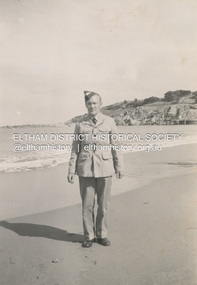 Eltham District Historical Society Inc
Photograph, Leading Aircraftsman, Lester Neil Ingram, RAAF, c.1943
... posted to 1 Embarkation Depot at Ascot Vale, Victoria, and attached to R.A.F. UK. Lester embarked from Australia December 2, 1942 and arrived at 11 Personnel Despatch and Reception Depot on January 13, 1943. On March 9 he was transferred to 10 Operational Training Unit, Group No. 91, Bomber Command, R.A.F. Lester’s service file reveals that on the evening...posted to 1 Embarkation Depot at Ascot Vale, Victoria, and attached to R.A.F. UK. Lester embarked from Australia December 2, 1942 and arrived at 11 Personnel Despatch and Reception Depot on January 13, 1943. On March 9 he was transferred to 10 Operational Training Unit, Group No. 91, Bomber Command, R.A.F. Lester’s service file reveals that on the evening ...Lester Neil Ingram was born at Kew, 8 November 1911, the son of John and Ada (Key) Ingram of Research. According to Electoral Roll records, in 1903, John Ingram was a farmer at Lancefield, his wife Ada, a milliner. By 1906, John Ingram was a baker at Research and from about 1912, an orchardist. The family moved to Anglesea River sometime between 1943 and 1949. A sheet metal worker by trade, Lester had run the bakery business for 14 years, his father retired, and was working as a baker at Anglesea when he enlisted in the R.A.A.F. on 5 December 1941 at Melbourne. Previously he had worked as a baker at Research (1937). He undertook training as Aircrew at No. 4 Initial Training School at Victor Harbour, South Australia, followed by No. 1 Wireless Air Gunners School at Ballarat, Victoria, and No. 3 Bombing and Gunnery School, West Sale, Victoria. On October 15, 1942 Lester qualified as an Air Gunner, promoted to Sergeant, and was posted to 1 Embarkation Depot at Ascot Vale, Victoria, and attached to R.A.F. UK. Lester embarked from Australia December 2, 1942 and arrived at 11 Personnel Despatch and Reception Depot on January 13, 1943. On March 9 he was transferred to 10 Operational Training Unit, Group No. 91, Bomber Command, R.A.F. Lester’s service file reveals that on the evening of 22 April 1943, Lester was a member of the aircrew of Whitley V bomber, N.1374. The airframe had run 1,127 hours. A full moon was just rising. The flight was non-operational, its purpose a dual conversion on type mission flown by a student pilot with almost two hours completed at night on similar flights. They had just changed aircraft as their previous aircraft had become unserviceable. The pilot had accepted the aircraft, which was technically unserviceable as the NCO in charge of flight had not completed the inspection paperwork correctly. The aircraft had undergone a major engine repair the day before. The aircraft took off at 2348 hours from R.A.F. Abington. It was reported that the aircraft take-off was quite normal and after climbing to 800 feet it passed out of view of the ground observers. A few seconds later the aircraft crashed, and it was reported that the sound of the engines seemed to become desynchronised. The crash occurred one and a half miles northwest of Longworth, Berkshire and the aircraft destroyed by fire. It carried a crew of five. Lester is commemorated on the Eltham Roll of Honour Board, which was commissioned by the Eltham War Memorial Trust to be hung in the Eltham Infant Welfare Centre, part of complex of buildings that form the Eltham War Memorial. The Honour Roll is presently (2023) hanging in the Eltham Library Community Gallery space. Lester was remembered with the following notices published in The Argus newspaper, Saturday 22 April 1944, p2: INGRAM. —In treasured memories you are with me still. Sgt. Lester Neil Ingram, killed, aircraft accident, England, April 22, 1943. (Mother and father.) INGRAM. —In proud and ever loving memory of Lester, 410236, Sgt. L. N. Ingram, R.A.A.F., air crash England, April 22, 1943. —Per ardua ad astra. (Ellen Peake and family.) [“Per ardua ad astra” is a Latin phrase meaning “through adversity to the stars” or “through struggle to the stars” which was the motto of the Royal Air Force and other Commonwealth air forces such as the Royal Australian Air Force.] And from his fiancé Ellen, in The Argus, Wednesday, 5 May 1943, p2: INGRAM. —On April 22 (result of aircraft accident near Lodgeworth Village, Berks, England), Sgt. Lester Neil Ingram, R.A.A.F., fiance of Ellen. -Treasured memories till we meet again. Lester is buried at Brookwood Military Cemetery, Surrey, United Kingdom, Grave 4. 1. 11. INGRAM, Flt. Sgt. LESTER NEIL, 410236. R.A.A.F. 22nd April 1943. Age 31. Son of John and Ada Ingram, of Anglesea, Victoria, Australia. He gave his life For freedom’s cause ◊ ◊ ◊ LEST WE FORGET “They shall grow not old, as we that are left grow old; Age shall not weary them, nor the years condemn. At the going down of the sun and in the morning We will remember them.”On reverse "Lester Ingram"lester neil ingram, baker, eltham, honour board, raaf, research (vic.), roll of honour, pam thoonen (nee ingram) collection -
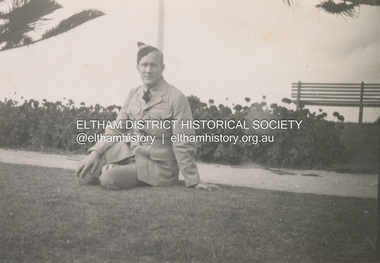 Eltham District Historical Society Inc
Photograph, Leading Aircraftsman, Lester Neil Ingram, RAAF, c.1943
... posted to 1 Embarkation Depot at Ascot Vale, Victoria, and attached to R.A.F. UK. Lester embarked from Australia December 2, 1942 and arrived at 11 Personnel Despatch and Reception Depot on January 13, 1943. On March 9 he was transferred to 10 Operational Training Unit, Group No. 91, Bomber Command, R.A.F. Lester’s service file reveals that on the evening...posted to 1 Embarkation Depot at Ascot Vale, Victoria, and attached to R.A.F. UK. Lester embarked from Australia December 2, 1942 and arrived at 11 Personnel Despatch and Reception Depot on January 13, 1943. On March 9 he was transferred to 10 Operational Training Unit, Group No. 91, Bomber Command, R.A.F. Lester’s service file reveals that on the evening ...Lester Neil Ingram was born at Kew, 8 November 1911, the son of John and Ada (Key) Ingram of Research. According to Electoral Roll records, in 1903, John Ingram was a farmer at Lancefield, his wife Ada, a milliner. By 1906, John Ingram was a baker at Research and from about 1912, an orchardist. The family moved to Anglesea River sometime between 1943 and 1949. A sheet metal worker by trade, Lester had run the bakery business for 14 years, his father retired, and was working as a baker at Anglesea when he enlisted in the R.A.A.F. on 5 December 1941 at Melbourne. Previously he had worked as a baker at Research (1937). He undertook training as Aircrew at No. 4 Initial Training School at Victor Harbour, South Australia, followed by No. 1 Wireless Air Gunners School at Ballarat, Victoria, and No. 3 Bombing and Gunnery School, West Sale, Victoria. On October 15, 1942 Lester qualified as an Air Gunner, promoted to Sergeant, and was posted to 1 Embarkation Depot at Ascot Vale, Victoria, and attached to R.A.F. UK. Lester embarked from Australia December 2, 1942 and arrived at 11 Personnel Despatch and Reception Depot on January 13, 1943. On March 9 he was transferred to 10 Operational Training Unit, Group No. 91, Bomber Command, R.A.F. Lester’s service file reveals that on the evening of 22 April 1943, Lester was a member of the aircrew of Whitley V bomber, N.1374. The airframe had run 1,127 hours. A full moon was just rising. The flight was non-operational, its purpose a dual conversion on type mission flown by a student pilot with almost two hours completed at night on similar flights. They had just changed aircraft as their previous aircraft had become unserviceable. The pilot had accepted the aircraft, which was technically unserviceable as the NCO in charge of flight had not completed the inspection paperwork correctly. The aircraft had undergone a major engine repair the day before. The aircraft took off at 2348 hours from R.A.F. Abington. It was reported that the aircraft take-off was quite normal and after climbing to 800 feet it passed out of view of the ground observers. A few seconds later the aircraft crashed, and it was reported that the sound of the engines seemed to become desynchronised. The crash occurred one and a half miles northwest of Longworth, Berkshire and the aircraft destroyed by fire. It carried a crew of five. Lester is commemorated on the Eltham Roll of Honour Board, which was commissioned by the Eltham War Memorial Trust to be hung in the Eltham Infant Welfare Centre, part of complex of buildings that form the Eltham War Memorial. The Honour Roll is presently (2023) hanging in the Eltham Library Community Gallery space. Lester was remembered with the following notices published in The Argus newspaper, Saturday 22 April 1944, p2: INGRAM. —In treasured memories you are with me still. Sgt. Lester Neil Ingram, killed, aircraft accident, England, April 22, 1943. (Mother and father.) INGRAM. —In proud and ever loving memory of Lester, 410236, Sgt. L. N. Ingram, R.A.A.F., air crash England, April 22, 1943. —Per ardua ad astra. (Ellen Peake and family.) [“Per ardua ad astra” is a Latin phrase meaning “through adversity to the stars” or “through struggle to the stars” which was the motto of the Royal Air Force and other Commonwealth air forces such as the Royal Australian Air Force.] And from his fiancé Ellen, in The Argus, Wednesday, 5 May 1943, p2: INGRAM. —On April 22 (result of aircraft accident near Lodgeworth Village, Berks, England), Sgt. Lester Neil Ingram, R.A.A.F., fiance of Ellen. -Treasured memories till we meet again. Lester is buried at Brookwood Military Cemetery, Surrey, United Kingdom, Grave 4. 1. 11. INGRAM, Flt. Sgt. LESTER NEIL, 410236. R.A.A.F. 22nd April 1943. Age 31. Son of John and Ada Ingram, of Anglesea, Victoria, Australia. He gave his life For freedom’s cause ◊ ◊ ◊ LEST WE FORGET “They shall grow not old, as we that are left grow old; Age shall not weary them, nor the years condemn. At the going down of the sun and in the morning We will remember them.”On reverse "Lester Ingram"lester neil ingram, baker, eltham, honour board, raaf, research (vic.), roll of honour, pam thoonen (nee ingram) collection
