
Showing 6 items matching "factions - political"
-
 Unions Ballarat
The Australian political almanac, Wilson, Peter, 2002
... ...factions - political...A series of essays in which the authors critiqued the current government (i.e. the Howard Coalition Government), political trends and factions....A series of essays in which the authors critiqued the current government (i.e. the Howard Coalition Government), political trends and factions. Relevant to Australian politics and the former Howard Coalition Government. btlc ballarat trades and labour council ballarat trades hall politics coalition government liberal party australia national party prime minister government factions - political parliament elections Front cover: title and editor's name. ...A series of essays in which the authors critiqued the current government (i.e. the Howard Coalition Government), political trends and factions.Relevant to Australian politics and the former Howard Coalition Government.Paper; book. Front cover: white background; red, blue, black and white photographs of Natasha Stott-Despoja, Peter Costello, John Howard, Bob Carr, Simon Crean, Bob Brown; blue, grey, black and white lettering.Front cover: title and editor's name.btlc, ballarat trades and labour council, ballarat trades hall, politics, coalition government, liberal party australia, national party, prime minister, government, factions - political, parliament, elections -
 Flagstaff Hill Maritime Museum and Village
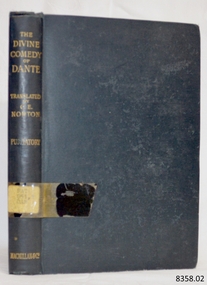
Book - Poem, Dante Alighieri, The Divine Comedy of Dante Alighieri ( Book 2 Purgatory), 1891
... Dante aligned himself with the White Guelphs, a political faction that opposed the overreach of Pope Boniface VIII. ...Dante aligned himself with the White Guelphs, a political faction that opposed the overreach of Pope Boniface VIII. ...The Divine Comedy is a 14th-century epic poem that serves as a profound allegory of the soul's journey toward God. It is divided into three parts (Inferno, Purgatorio, and Paradiso). In book two, Purgatory follows Dante and his guide, the Roman poet Virgil, as they leave the horrors of Hell behind and climb Mount Purgatory. While Hell is structured as a funnel descending into the earth, Purgatory is a massive mountain in the Southern Hemisphere consisting of seven terraces, each representing one of the Seven Deadly Sins (Pride, Envy, Wrath, Sloth, Avarice, Gluttony, and Lust).The Divine Comedy of Dante Alighieri ( Book 2 Purgatory) Author: Dante Alighieri Translated by C E Norton Publisher: Macmillan And Co Date: 1891 fictionThe Divine Comedy is a 14th-century epic poem that serves as a profound allegory of the soul's journey toward God. It is divided into three parts (Inferno, Purgatorio, and Paradiso). In book two, Purgatory follows Dante and his guide, the Roman poet Virgil, as they leave the horrors of Hell behind and climb Mount Purgatory. While Hell is structured as a funnel descending into the earth, Purgatory is a massive mountain in the Southern Hemisphere consisting of seven terraces, each representing one of the Seven Deadly Sins (Pride, Envy, Wrath, Sloth, Avarice, Gluttony, and Lust).flagstaff hil, warrnambool, flagstaff hill maritime museum, maritime museum, shipwreck coast, flagstaff hill maritime village, great ocean road, book, pattison collection, warrnambool library, warrnambool mechanics’ institute, ralph eric pattison, corangamite regional library service, warrnambool city librarian, mechanics’ institute library, victorian library board, warrnambool books and records, warrnambool children’s library, the divine comedy of dante alighieri ( book 2 purgatory), dante alighieri, c e norton -
 Flagstaff Hill Maritime Museum and Village
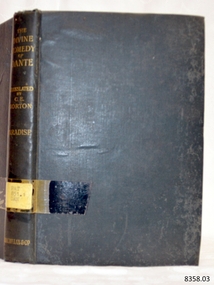
Book - Poem, Dante Alighieri, The Divine Comedy of Dante Alighieri ( Book 3 Paradise ), 1891
... Dante aligned himself with the White Guelphs, a political faction that opposed the overreach of Pope Boniface VIII. ...Dante aligned himself with the White Guelphs, a political faction that opposed the overreach of Pope Boniface VIII. ...The Divine Comedy is a 14th-century epic poem that serves as a profound allegory of the soul's journey toward God. It is divided into three parts (Inferno, Purgatorio, and Paradiso). In book two, Purgatory follows Dante and his guide, the Roman poet Virgil, as they leave the horrors of Hell behind and climb Mount Purgatory. While Hell is structured as a funnel descending into the earth, Purgatory is a massive mountain in the Southern Hemisphere consisting of seven terraces, each representing one of the Seven Deadly Sins (Pride, Envy, Wrath, Sloth, Avarice, Gluttony, and Lust).The Divine Comedy of Dante Alighieri ( Book 3 Paradise ) Author: Dante Alighieri Translated by C E Norton Publisher: Macmillan And Co Date: 1892fictionThe Divine Comedy is a 14th-century epic poem that serves as a profound allegory of the soul's journey toward God. It is divided into three parts (Inferno, Purgatorio, and Paradiso). In book two, Purgatory follows Dante and his guide, the Roman poet Virgil, as they leave the horrors of Hell behind and climb Mount Purgatory. While Hell is structured as a funnel descending into the earth, Purgatory is a massive mountain in the Southern Hemisphere consisting of seven terraces, each representing one of the Seven Deadly Sins (Pride, Envy, Wrath, Sloth, Avarice, Gluttony, and Lust).flagstaff hil, warrnambool, flagstaff hill maritime museum, maritime museum, shipwreck coast, flagstaff hill maritime village, great ocean road, book, pattison collection, warrnambool library, warrnambool mechanics’ institute, ralph eric pattison, corangamite regional library service, warrnambool city librarian, mechanics’ institute library, victorian library board, warrnambool books and records, warrnambool children’s library, the divine comedy of dante alighieri ( book 2 purgatory), dante alighieri, c e norton -
Sunshine and District Historical Society Incorporated
Archive (collection) - Commissioner Mr Alexander Alex George Gillon Collection
... politically motivated projects that had contributed to the crisis. He focused on the financial auditing and restoring the City's finances. He did this by; A full forensic audit of council accounts. Reconstruction of the budget from the ground up. Introduction of modern accounting controls. Tightening of procurement and tendering rules. Re‑establishment of long‑term capital works planning. Removal or reassignment of staff involved in irregular practices. He replaced the faction...politically motivated projects that had contributed to the crisis. He focused on the financial auditing and restoring the City's finances. He did this by; A full forensic audit of council accounts. Reconstruction of the budget from the ground up. Introduction of modern accounting controls. Tightening of procurement and tendering rules. Re‑establishment of long‑term capital works planning. Removal or reassignment of staff involved in irregular practices. He replaced the faction ...Large collection of Commissioner Mr Alexander Alex George Gillon documents when he was a commissioner for the City of Sunshine. This collection has been split into separate catalog numbers and is stored in various different location as per the individual catalog numberscity of sunshine, alexander "alex" george gilloncity of sunshine, alexander "alex" george gillon -
Unions Ballarat
The great Labor schism : a retrospective, 2005
... Includes interference by the Groupers, Bob Santamaria and other characters. btlc ballarat trades hall ballarat trades and labour council alp australian labor council 1955 dlp democratic labor party alp factions politics government b.a. santamaria peter love brian coster paul strangio catholic church communism Title and names of editors on the front cover. ...A collection of chapters by different historians and writers; the book is about the 1955 split in the Australian Labor Party (ALP) and its longer-term effects.Significant to the history of the ALP around 1955 and subsequent formation of the DLP. Includes interference by the Groupers, Bob Santamaria and other characters.Paper; book. Blue and white cover with red and black writing.Title and names of editors on the front cover.btlc, ballarat trades hall, ballarat trades and labour council, alp, australian labor council, 1955, dlp, democratic labor party, alp factions, politics, government, b.a. santamaria, peter love, brian coster, paul strangio, catholic church, communism -
 Flagstaff Hill Maritime Museum and Village
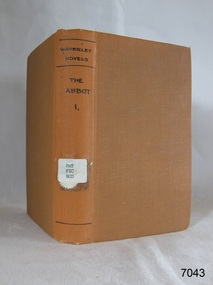
Book - Fictional stories, Sir Walter Scott, Waverley Novels Vol 20 The Abbot- 1 (Sequel to the Monastery), 1837
... political crisis that ends with her defeat and flight to England. Like the other novels in the Waverley series it mixes historical events with fictional characters: Roland Græme, the Avenel household, and the mysterious “Abbot” figure are woven into the real struggle between Protestant and Catholic factions in Scotland. ...The subject volume “The Abbot- 1 (Sequel to the Monastery) Vol 20” published by Fisher Son & Co (1837) is part of a collected edition of Sir Walter Scott's works, containing stories from the "Tales of My Landlord" series. "Tales of My Landlord" forms a key subset of Scott's Waverley Novels, presented as fictional tales gathered by characters like Peter Pattieson from the landlord of the Wallace “Inn at Gandercleugh”. The series spans multiple books across four sub-series, including “The Black Dwarf” (1707 setting), “Old Mortality” (1679–1689), “The Heart of Midlothian” (1736), “The Bride of Lammermoor” (1709–1711), “A Legend of Montrose” (1644–1645), “Count Robert of Paris” (1097), and “Castle Dangerous” (1307). Vol 46 in the 1838 Fisher edition reprints later entries like “Count Robert of Paris” or “Castle Dangerous” from the fourth series, as these stories originally appeared in Scott's Magnum Opus collected volume editions, the first from 1816. With the influential 48-volume “Magnum Opus” edition from 1829–1833 by Robert Cadell, serving as the basis for later collected published sets like Fisher's. The Abbot is Walter Scott’s sequel to The Monastery, set in 1567–1568 during the turmoil around Mary, Queen of Scots. The story follows Roland Græme and other characters around Lochleven Castle, where Mary is imprisoned, and builds toward her escape attempt and the political crisis that ends with her defeat and flight to England. Like the other novels in the Waverley series it mixes historical events with fictional characters: Roland Græme, the Avenel household, and the mysterious “Abbot” figure are woven into the real struggle between Protestant and Catholic factions in Scotland. A central thread is Roland’s divided loyalties, his attraction to both the Catholic and Protestant worlds, and his involvement in helping Mary’s cause. The climax comes with Mary’s attempted escape from Lochleven, the fighting that follows, and her eventual loss of power in Scotland.Waverley Novels Vol 20 The Abbot- 1 Vol 20 (Sequel to the Monastery), Light brown hardcover lettering in black text. Author: Sir Walter Scott Publisher: Fisher Son & Co Date: 1837fictionThe subject volume “The Abbot- 1 (Sequel to the Monastery) Vol 20” published by Fisher Son & Co (1837) is part of a collected edition of Sir Walter Scott's works, containing stories from the "Tales of My Landlord" series. "Tales of My Landlord" forms a key subset of Scott's Waverley Novels, presented as fictional tales gathered by characters like Peter Pattieson from the landlord of the Wallace “Inn at Gandercleugh”. The series spans multiple books across four sub-series, including “The Black Dwarf” (1707 setting), “Old Mortality” (1679–1689), “The Heart of Midlothian” (1736), “The Bride of Lammermoor” (1709–1711), “A Legend of Montrose” (1644–1645), “Count Robert of Paris” (1097), and “Castle Dangerous” (1307). Vol 46 in the 1838 Fisher edition reprints later entries like “Count Robert of Paris” or “Castle Dangerous” from the fourth series, as these stories originally appeared in Scott's Magnum Opus collected volume editions, the first from 1816. With the influential 48-volume “Magnum Opus” edition from 1829–1833 by Robert Cadell, serving as the basis for later collected published sets like Fisher's. The Abbot is Walter Scott’s sequel to The Monastery, set in 1567–1568 during the turmoil around Mary, Queen of Scots. The story follows Roland Græme and other characters around Lochleven Castle, where Mary is imprisoned, and builds toward her escape attempt and the political crisis that ends with her defeat and flight to England. Like the other novels in the Waverley series it mixes historical events with fictional characters: Roland Græme, the Avenel household, and the mysterious “Abbot” figure are woven into the real struggle between Protestant and Catholic factions in Scotland. A central thread is Roland’s divided loyalties, his attraction to both the Catholic and Protestant worlds, and his involvement in helping Mary’s cause. The climax comes with Mary’s attempted escape from Lochleven, the fighting that follows, and her eventual loss of power in Scotland. warrnambool, shipwrecked-coast, flagstaff-hill, flagstaff-hill-maritime-museum, maritime-museum, shipwreck-coast, flagstaff-hill-maritime-village, shipwrecked-artefact, book, waverley novels vol 46 tales of my landlord, sir walter scott, pattison collection, warrnambool library, warrnambool mechanics’ institute, ralph eric pattison, corangamite regional library service, warrnambool city librarian, mechanics’ institute library, victorian library board, warrnambool books and records, warrnambool children’s library
