
Showing 9 items matching "faraway places"
-
 Thompson's Foundry Band Inc. (Castlemaine)
Sheet Music, Faraway Places
... Faraway Places...Faraway Places Sheet Music ... -
Moorabbin Air Museum
Book - Rockets - technical history, Express to the Stars
... Faraway places...Rockets - technical history Faraway places In times past How a rocket works Rockets in flight Construction of a rocket On & off the pad Instrumentation The firing range Rocket sounding Messengers of destruction The rocket plane Towards the stars Extending man's dominion Theoretical and practical overview of rocketry circa 1962 Express to the Stars Book Rockets - technical history ...Theoretical and practical overview of rocketry circa 1962non-fictionTheoretical and practical overview of rocketry circa 1962faraway places, in times past, how a rocket works, rockets in flight, construction of a rocket, on & off the pad, instrumentation, the firing range, rocket sounding, messengers of destruction, the rocket plane, towards the stars, extending man's dominion -
 Wodonga & District Historical Society Inc
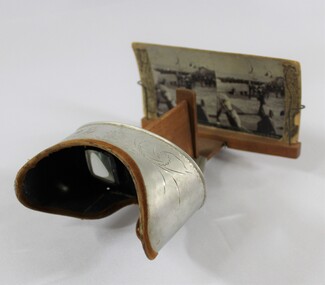
Leisure object - Stereoscope - late 1800s - early 1900s
... A popular form of entertainment among the middle classes in Europe and America, people could use a stereoscope to view images of real faraway places, or fantastical magic scenes. The first patented stereo viewer was invented by Sir Charles Wheatstone in 1838, and remained a favoured leisure activity until the advent of cinema in the 1930s. ...A popular form of entertainment among the middle classes in Europe and America, people could use a stereoscope to view images of real faraway places, or fantastical magic scenes. The first patented stereo viewer was invented by Sir Charles Wheatstone in 1838, and remained a favoured leisure activity until the advent of cinema in the 1930s. ...In the 1800s, the stereoscope was the only way to view with world in 3-D. A viewer would look through the lenses of the stereoscope's eyepiece to a card called a stereograph. On the stereograph, two of the same image were printed side by side, which when viewed through the stereograph transformed the one dimensional images into relatively life-like representations. A popular form of entertainment among the middle classes in Europe and America, people could use a stereoscope to view images of real faraway places, or fantastical magic scenes. The first patented stereo viewer was invented by Sir Charles Wheatstone in 1838, and remained a favoured leisure activity until the advent of cinema in the 1930s. This object contributes to our understanding of social life, leisure and entertainment in early twentieth century Wodonga, as well as providing interpretative capacity for themes including local history and social history. A wooden stereoscope with a cardboard 'view' of a streetscape.stereoscope, stereographs, entertainment, fun, leisure -
 Wodonga & District Historical Society Inc
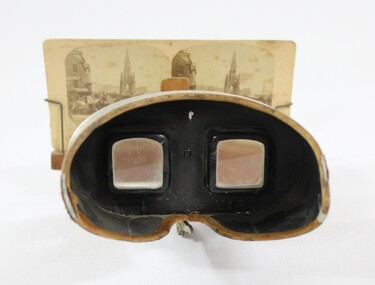
Leisure object - Stereoscope - late 1800s - early 1900s
... A popular form of entertainment among the middle classes in Europe and America, people could use a stereoscope to view images of real faraway places, or fantastical magic scenes. The first patented stereo viewer was invented by Sir Charles Wheatstone in 1838, and remained a favoured leisure activity until the advent of cinema in the 1930s. ...A popular form of entertainment among the middle classes in Europe and America, people could use a stereoscope to view images of real faraway places, or fantastical magic scenes. The first patented stereo viewer was invented by Sir Charles Wheatstone in 1838, and remained a favoured leisure activity until the advent of cinema in the 1930s. ...In the 1800s, the stereoscope was the only way to view with world in 3-D. A viewer would look through the lenses of the stereoscope's eyepiece to a card called a stereograph. On the stereograph, two of the same image were printed side by side, which when viewed through the stereograph transformed the one dimensional images into relatively life-like representations. A popular form of entertainment among the middle classes in Europe and America, people could use a stereoscope to view images of real faraway places, or fantastical magic scenes. The first patented stereo viewer was invented by Sir Charles Wheatstone in 1838, and remained a favoured leisure activity until the advent of cinema in the 1930s. This object contributes to our understanding of social life, leisure and entertainment in early twentieth century Wodonga, as well as providing interpretative capacity for themes including local history and social history.A wooden stereoscope with a cardboard 'view' of a streetscape.stereoscope, stereographs, entertainment, fun, leisure -
 Wodonga & District Historical Society Inc
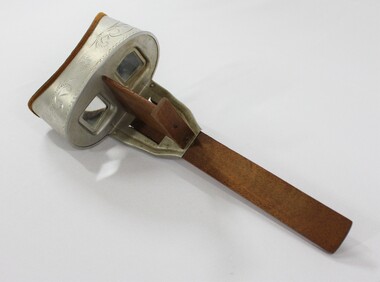
Leisure object - Stereoscope - late 1800s - early 1900s
... A popular form of entertainment among the middle classes in Europe and America, people could use a stereoscope to view images of real faraway places, or fantastical magic scenes. The first patented stereo viewer was invented by Sir Charles Wheatstone in 1838, and remained a favoured leisure activity until the advent of cinema in the 1930s. ...A popular form of entertainment among the middle classes in Europe and America, people could use a stereoscope to view images of real faraway places, or fantastical magic scenes. The first patented stereo viewer was invented by Sir Charles Wheatstone in 1838, and remained a favoured leisure activity until the advent of cinema in the 1930s. ...In the 1800s, the stereoscope was the only way to view with world in 3-D. A viewer would look through the lenses of the stereoscope's eyepiece to a card called a stereograph. On the stereograph, two of the same image were printed side by side, which when viewed through the stereograph transformed the one dimensional images into relatively life-like representations. A popular form of entertainment among the middle classes in Europe and America, people could use a stereoscope to view images of real faraway places, or fantastical magic scenes. The first patented stereo viewer was invented by Sir Charles Wheatstone in 1838, and remained a favoured leisure activity until the advent of cinema in the 1930s. This object contributes to our understanding of social life, leisure and entertainment in early twentieth century Wodonga, as well as providing interpretative capacity for themes including local history and social history.A wooden stereoscope with a cardboard 'view' of a streetscape.stereoscope, stereographs, entertainment, fun, leisure -
 Wodonga & District Historical Society Inc
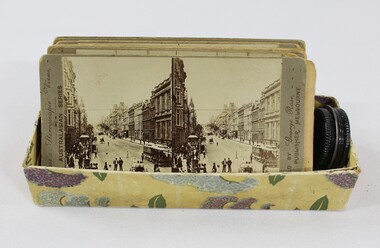
Card - Stereoscope Cards - late 1800s - early 1900s
... A popular form of entertainment among the middle classes in Europe and America, people could use a stereoscope to view images of real faraway places, or fantastical magic scenes. The first patented stereo viewer was invented by Sir Charles Wheatstone in 1838, and remained a favoured leisure activity until the advent of cinema in the 1930s. ...A popular form of entertainment among the middle classes in Europe and America, people could use a stereoscope to view images of real faraway places, or fantastical magic scenes. The first patented stereo viewer was invented by Sir Charles Wheatstone in 1838, and remained a favoured leisure activity until the advent of cinema in the 1930s. ...In the 1800s, the stereoscope was the only way to view with world in 3-D. A viewer would look through the lenses of the stereoscope's eyepiece to a card called a stereograph. On the stereograph, two of the same image were printed side by side, which when viewed through the stereograph transformed the one dimensional images into relatively life-like representations. A popular form of entertainment among the middle classes in Europe and America, people could use a stereoscope to view images of real faraway places, or fantastical magic scenes. The first patented stereo viewer was invented by Sir Charles Wheatstone in 1838, and remained a favoured leisure activity until the advent of cinema in the 1930s. This object contributes to our understanding of social life, leisure and entertainment in early twentieth century Wodonga, as well as providing interpretative capacity for themes including local history and social history. A cardboard box full of stereoscope cards showing street views and landscape scenery. stereoscope, stereographs, entertainment, fun, leisure -
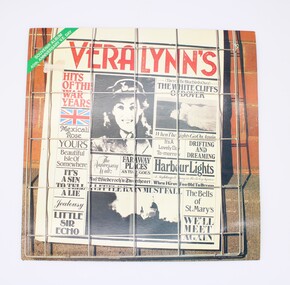 Shepparton RSL Sub Branch
Case, Vinyl Record, Hits of the War Years, 1985
... Auf Wiederseh'n Sweetheart 6. Faraway Places 7. Little Sir Echo 8. Mexican Rose 9. ...Auf Wiederseh'n Sweetheart 6. Faraway Places 7. Little Sir Echo 8. Mexican Rose 9. ...Vera Lynn was a popular artist during the Second World War, known for her wholesome and romantic songs. This record was released on the 40th anniversary of the end of the Second World War and contains twenty songs that were popular during the period, especially with serving troops. Vera Lynn was supposedly fondly referred to as the "Forces' Sweetheart." The record contains the following songs: SIDE ONE 1. (There'll be Bluebirds over) The White Cliffs of Dover 2. Harbour Lights 3. As Time Goes By 4. Beautiful Isle of Somewhere 5. Auf Wiederseh'n Sweetheart 6. Faraway Places 7. Little Sir Echo 8. Mexican Rose 9. A Nightingale Sang In Berkeley Square 10. Jealousy SIDE TWO 1. It's a Lovely Day To-morrow 2. The Bells of St. Mary's 3. A Little Rain Must Fall 4. The Anniversary Waltz 5. Yours 6. When I Grow Too Old To Dream 7. It's A Sin to Tell A Lie 8. When The Lights Go On Again 9. Drifting And Dreaming 10. We'll Meet AgainThough not rare, as a mass produced product, this record is representative of the music that was well-known during the 1940s both on the home front and by serving troops. Its release as an anniversary edition speaks to the enduring memory of the period and for some community members who lived through the Second World War, has strong social significance and ability to recall memories of the wartime period. Glossy square-shaped card sleeve printed in colour with combination of text and black and white photographs arranged as though a newspaper page. From top left corner: green stripe, red album title, union jack, photograph of a young servicewoman, photograph of the Cliffs of Dover, photograph of St Mary's and various song titles in various serif fonts. Newspaper-style page set behind metal square fencing upon brick fence, simulating a newspaper being sold. Reverse features pastel-toned photograph of Vera Lynn, with smaller collage-style image of the newspaper-style text on front, below which are song titles for Side One and Side Two in a numbered list. vera lynn, music, wartime, second world war, world war ii, world war 2, musicians, anniversary -
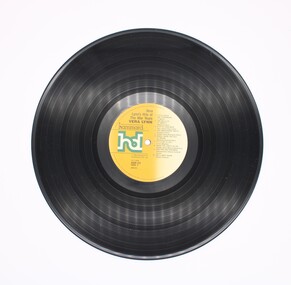 Shepparton RSL Sub Branch
Vinyl Record, Hits of the War Years, 1985
... Auf Wiederseh'n Sweetheart 6. Faraway Places 7. Little Sir Echo 8. Mexican Rose 9. ...Auf Wiederseh'n Sweetheart 6. Faraway Places 7. Little Sir Echo 8. Mexican Rose 9. ...Vera Lynn was a popular artist during the Second World War, known for her wholesome and romantic songs. This record was released on the 40th anniversary of the end of the Second World War and contains twenty songs that were popular during the period, especially with serving troops. Vera Lynn was supposedly fondly referred to as the "Forces' Sweetheart." The record contains the following songs: SIDE ONE 1. (There'll be Bluebirds over) The White Cliffs of Dover 2. Harbour Lights 3. As Time Goes By 4. Beautiful Isle of Somewhere 5. Auf Wiederseh'n Sweetheart 6. Faraway Places 7. Little Sir Echo 8. Mexican Rose 9. A Nightingale Sang In Berkeley Square 10. Jealousy SIDE TWO 1. It's a Lovely Day To-morrow 2. The Bells of St. Mary's 3. A Little Rain Must Fall 4. The Anniversary Waltz 5. Yours 6. When I Grow Too Old To Dream 7. It's A Sin to Tell A Lie 8. When The Lights Go On Again 9. Drifting And Dreaming 10. We'll Meet AgainThough not rare, as a mass produced product, this record is representative of the music that was well-known during the 1940s both on the home front and by serving troops. Its release as an anniversary edition speaks to the enduring memory of the period and for some community members who lived through the Second World War, has strong social significance and ability to recall memories of the wartime period. Flat disc, black in colour, with an inscribed, modulated spiral groove across diameter. Centre has adhesive paper label bearing information about the songs on each side and artist/copyright information. Label is Mustard yellow to white in ombre fade effect. Centre of disk has round hole through which the disk is attached to a machine. Disc contained within plastic sleeve, fused on three sides.vera lynn, music, wartime, second world war, world war ii, world war 2, musicians, anniversary, phonograph, vinyl record, gramophone record -
Dandenong & District Historical Society
Book, The Lasting Impact of Waverley Riding School
... As riders gained experience, there were more and more varied horses and ponies to ride, residential holidays on site and in faraway places, day rides, gymkhanas and Royal Melbourne Shows. ...As riders gained experience, there were more and more varied horses and ponies to ride, residential holidays on site and in faraway places, day rides, gymkhanas and Royal Melbourne Shows. ...non-fiction
