
Showing 16 items matching "feeding chair"
-
 Flagstaff Hill Maritime Museum and Village
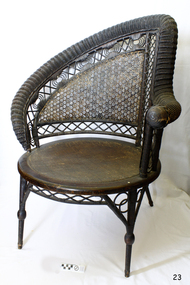
Furniture - Chair, 1855-1900
... ...feeding chair...Nurse wicker chair, wood, cane and rattan with round rushed seat. The one left arm being that to support the infant during feeding. 1870s-1890s. ...The wicker nursing chair is a fine example of late 19th century light weight domestic furniture that today are very collectible items and quite rare and valuable. flagstaff hill warrnambool flagstaff hill maritime museum shipwreck coast great ocean road 19th century furniture rolled serpentine wicker work cane armchair classic wicker furniture victorian style furniture domestic furniture late 19th century heywood-wakefield company feeding chair nursing chair mother's chair nursery furniture Nurse wicker chair, wood, cane and rattan with round rushed seat. ...Heywood & Wakefield Furniture Co: The Heywood-Wakefield Company is an American furniture manufacturer established in 1897 that went on to become a major presence in the US. Its older products are considered collectibles and have been featured on television antique programs. The Heywood brothers established themselves in 1826, as furniture makers and the Wakefield Company began in 1855 as a separate company. Both firms produced wicker and rattan furniture, and as these products became increasingly popular towards the end of the century, they became serious rivals. In 1897 the companies merged as Heywood Brothers & Wakefield Company (this name was changed to Heywood-Wakefield Company in 1921), purchasing Washburn-Heywood Chair Company in 1916, Oregon Chair Company in 1920, and Lloyd Manufacturing Company in 1921. While its wooden furniture plant in Gardner, Massachusetts closed in 1979, a branch in Menominee, Michigan continued to manufacture metal outdoor seats, auditorium seats, and school furniture. The Heywood-Wakefield Company Complex in Gardner was added to the National Historic Register in 1983. The South Beach Furniture Company acquired the rights to the name in 1994 and reproduces its wooden furniture. Both founding companies produced wicker and rattan furniture in the late 19th century. The wicker styles drew on the Aesthetic Movement and Japanese influences simpler designs arose in the wake of the Arts and Crafts Movement. The merged entity stayed abreast of wicker furniture trends by hiring designers such as Paul Frankl and Donald Deskey during the 1920s. Its furniture was exhibited at the 1933 Century of Progress exhibition and the 1964 New York World's Fair. During the 1930s and 1940s, Heywood-Wakefield began producing furniture using sleek designs based on French Art Deco.The chair has social significance at a local level, because it illustrates the level of material support the Warrnambool community gave to Flagstaff Hill when the village and Museum was established. The wicker nursing chair is a fine example of late 19th century light weight domestic furniture that today are very collectible items and quite rare and valuable.Nurse wicker chair, wood, cane and rattan with round rushed seat. The one left arm being that to support the infant during feeding. 1870s-1890s. Believed to have been made by Heywood Brothers & Wakefield Company, USA. flagstaff hill, warrnambool, flagstaff hill maritime museum, shipwreck coast, great ocean road, 19th century furniture, rolled serpentine wicker work, cane armchair, classic wicker furniture, victorian style furniture, domestic furniture late 19th century, heywood-wakefield company, feeding chair, nursing chair, mother's chair, nursery furniture -
 Marysville & District Historical Society
THE TRIANGLE NEWS-VOL 41 NO 6-FEBRUARY 21 2014
... chair...murrindindi shire council...advertise your regional tourism event for free...adventurous cooks...black spur caravan park...advertisements...chainsaw carving event...marysville golf report...daytime netball...veterans football...super 8's cricket at marysville...alexandra district hospital display...close the gap...payment of rate instalment...marysville real estate...thank you from family picnic and fun day youth fundraiser...australian government mobile service centre assistance...temporary road closure darwin st...fire prevention irrigation systems...fallons bus service alexandra marysville route service...position vacant parks & gardens officer...marysville branch liberal party agm...marysville skate park...need for feed...marysville victoria australia made in marysville art craft and produce co op marysville central marysville and district lions welcome erin morrison to the triangle news team what's on when in february & march marsyville walks without hills marysville p.s. parents club agm marysville sub branch rsl agm the committee of management of the gallipoli park precinct marysville community market creative triangle marysville & district historical society resignation of mary kenealy buxton ridge vineyard wine tasting church notices the annual motorhome event at buxton world day of prayer national live theatre-warhorse mayor's chair murrindindi shire council advertise your regional tourism event for free adventurous cooks black spur caravan park advertisements chainsaw carving event marysville golf report daytime netball veterans football super 8's cricket at marysville alexandra district hospital display close the gap payment of rate instalment marysville real estate thank you from family picnic and fun day youth fundraiser australian government mobile service centre assistance temporary road closure darwin st fire prevention irrigation systems fallons bus service alexandra marysville route service position vacant parks & gardens officer marysville branch liberal party agm marysville skate park need for feed lions club of pakenham free disposal of greenwaste councillor comment intrepid triangle bushwalkers irish band saoirse el kanah marysville cultural community irish andrew sisters news from the gallipoli park precinct committee of management scarecrow competition buxton progress assocn rock 'n roll night at buxton hall marysville fire brigade news marysville region really long lunch the last of the yarra track stopping places book gallipoli park world's greatest shave THE TRIANGLE NEWS-VOL 41 NO 6-FEBRUARY 21 2014 ...marysville, victoria, australia, made in marysville art craft and produce co op, marysville central, marysville and district lions welcome erin morrison to the triangle news team, what's on when in february & march, marsyville walks without hills, marysville p.s. parents club agm, marysville sub branch rsl agm, the committee of management of the gallipoli park precinct, marysville community market, creative triangle, marysville & district historical society, resignation of mary kenealy, buxton ridge vineyard wine tasting, church notices, the annual motorhome event at buxton, world day of prayer, national live theatre-warhorse, mayor's chair, murrindindi shire council, advertise your regional tourism event for free, adventurous cooks, black spur caravan park, advertisements, chainsaw carving event, marysville golf report, daytime netball, veterans football, super 8's cricket at marysville, alexandra district hospital display, close the gap, payment of rate instalment, marysville real estate, thank you from family picnic and fun day youth fundraiser, australian government mobile service centre assistance, temporary road closure darwin st, fire prevention irrigation systems, fallons bus service alexandra marysville route service, position vacant parks & gardens officer, marysville branch liberal party agm, marysville skate park, need for feed, lions club of pakenham, free disposal of greenwaste, councillor comment, intrepid triangle bushwalkers, irish band saoirse, el kanah, marysville cultural community, irish andrew sisters, news from the gallipoli park precinct committee of management, scarecrow competition, buxton progress assocn, rock 'n roll night at buxton hall, marysville fire brigade news, marysville region really long lunch, the last of the yarra track stopping places book, gallipoli park, world's greatest shave -
Marysville & District Historical Society
THE TRIANGLE NEWS-VOL 41 NO 7-FEBRUARY 28 2014
... chair...advertise your regional tourism event for free...councillor comment...yea pool closed saturday 1 march...advertisements...daytime netball...nar-be-thong history book...narbethong progress assocn...veterans football...national live theatre-warhorse...marysville cultural community...marysville real estate...temporary road closure darwin st...fire prevention irrigation systems...fallons bus service alexandra marysville route service...buxton hotel chinese night every wednesday in march...labour day office closures...community upgrade regeneration burns in central highlands and west gippsland...need for feed...marysville victoria australia mayor joins with collingwood leadership team collingwood football club triangle news what's on when in march marysville p.s. parents club agm marysville sub branch rsl agm the committee of management of the gallipoli park precinct marysville community market creative triangle marysville golf report world day of prayer church notices triangle community dinner el kanah breakfast for all men new beginnings-guest speakers and dinner mayor's chair advertise your regional tourism event for free councillor comment yea pool closed saturday 1 march advertisements daytime netball nar-be-thong history book narbethong progress assocn veterans football national live theatre-warhorse marysville cultural community marysville real estate temporary road closure darwin st fire prevention irrigation systems fallons bus service alexandra marysville route service buxton hotel chinese night every wednesday in march labour day office closures community upgrade regeneration burns in central highlands and west gippsland need for feed lions club of pakenham marysville preschool long day care and kindergarten intrepid triangle bushwalkers irish band saoirse murrindindi shire tempts tree changers the michael rodger act to d-feet mnd get rid of green waste on clean up australia day free disposal of green waste murrindindi bushfire community meeting maurice blackburn lawyers buxton progress assocn rock 'n roll night at buxton hall the upper room restaurant new asian menu marysville beer & platter garden regional victorian living expo expressions of interest marysville region really long lunch THE TRIANGLE NEWS-VOL 41 NO 7-FEBRUARY 28 2014 ...marysville, victoria, australia, mayor joins with collingwood leadership team, collingwood football club, triangle news, what's on when in march, marysville p.s. parents club agm, marysville sub branch rsl agm, the committee of management of the gallipoli park precinct, marysville community market, creative triangle, marysville golf report, world day of prayer, church notices, triangle community dinner, el kanah, breakfast for all men, new beginnings-guest speakers and dinner, mayor's chair, advertise your regional tourism event for free, councillor comment, yea pool closed saturday 1 march, advertisements, daytime netball, nar-be-thong history book, narbethong progress assocn, veterans football, national live theatre-warhorse, marysville cultural community, marysville real estate, temporary road closure darwin st, fire prevention irrigation systems, fallons bus service alexandra marysville route service, buxton hotel chinese night every wednesday in march, labour day office closures, community upgrade regeneration burns in central highlands and west gippsland, need for feed, lions club of pakenham, marysville preschool long day care and kindergarten, intrepid triangle bushwalkers, irish band saoirse, murrindindi shire tempts tree changers, the michael rodger act to d-feet mnd, get rid of green waste on clean up australia day, free disposal of green waste, murrindindi bushfire community meeting, maurice blackburn lawyers, buxton progress assocn, rock 'n roll night at buxton hall, the upper room restaurant new asian menu, marysville beer & platter garden, regional victorian living expo, expressions of interest, marysville region really long lunch -
Marysville & District Historical Society
THE TRIANGLE NEWS-VOL 36 NO 7-MARCH 6 2009
... chair...heartfelt thanks...marysville & district lions club...local community recovery reference groups...budding gardeners...marysville update...bruce ackerman...fire related enquiries...other help...dr margaret miller...advertisements...the victorian bushfire case management service...work for farmers...marysville & triangle community social bbq...deputy commissioner to meet residents...marysville golf club...need for feed...marysville victoria australia tips from a bushfire survivor marysville medical clinic news deadline disclaimer narby free range eggs water tanks black saturday bushfires maroondah highway & black spur closed think local buy local murrindindi shire council phoenix taskforce marysville community golf and bowls club triangle advertisers mayor's chair heartfelt thanks marysville & district lions club local community recovery reference groups budding gardeners marysville update bruce ackerman fire related enquiries other help dr margaret miller advertisements the victorian bushfire case management service work for farmers marysville & triangle community social bbq deputy commissioner to meet residents marysville golf club need for feed bushfire benefit country music festival marysville concert series marysville country club THE TRIANGLE NEWS-VOL 36 NO 7-MARCH 6 2009 ...marysville, victoria, australia, tips from a bushfire survivor, marysville medical clinic news, deadline, disclaimer, narby free range eggs, water tanks, black saturday bushfires, maroondah highway & black spur closed, think local buy local, murrindindi shire council, phoenix taskforce, marysville community golf and bowls club, triangle advertisers, mayor's chair, heartfelt thanks, marysville & district lions club, local community recovery reference groups, budding gardeners, marysville update, bruce ackerman, fire related enquiries, other help, dr margaret miller, advertisements, the victorian bushfire case management service, work for farmers, marysville & triangle community social bbq, deputy commissioner to meet residents, marysville golf club, need for feed, bushfire benefit, country music festival, marysville concert series, marysville country club -
Marysville & District Historical Society
THE TRIANGLE NEWS-VOL 36 NO 8-MARCH 13 2009
... chair...the victorian bushfire recovery & reconstruction authority...christine nixon...marysville golf & bowls club...cafe culture series...free concert...sausage sizzle...marysville golf course...need for feed...marysville victoria australia the final hurrah buxton firefighters what's on when at the golf course buxton hotel concert deadline disclaimer narby free range eggs mmt inc lake mountain mystic mountains tourism update on community health black saturday bushfires mt cathedral baptist church service disaster relief assistance australian scholarships group -asg members triangle advertisers portable community hub dhs help where it is needed bikes & helmets sunshine coaches school uniforms dylan's buggy shane warne foundation bushfire relief fund marysville bowlers advertisements other help dr margaret miller fire related enquiries the victorian bushfire case management service meeting reports bushfire clean up mayor's chair the victorian bushfire recovery & reconstruction authority christine nixon marysville golf & bowls club cafe culture series free concert sausage sizzle marysville golf course need for feed bushfire benefit country music festival brewer's choice marysville & triangle social bbq councillor comment funeral services church notice mops st thomas church pets service marysville & triangle development group -matdg marysville real estate THE TRIANGLE NEWS-VOL 36 NO 8-MARCH 13 2009 ...marysville, victoria, australia, the final hurrah, buxton firefighters, what's on when at the golf course, buxton hotel concert, deadline, disclaimer, narby free range eggs, mmt inc, lake mountain, mystic mountains tourism, update on community health, black saturday bushfires, mt cathedral baptist church service, disaster relief assistance, australian scholarships group -asg members, triangle advertisers, portable community hub, dhs, help where it is needed, bikes & helmets, sunshine coaches, school uniforms, dylan's buggy, shane warne foundation bushfire relief fund, marysville bowlers, advertisements, other help, dr margaret miller, fire related enquiries, the victorian bushfire case management service, meeting reports, bushfire clean up, mayor's chair, the victorian bushfire recovery & reconstruction authority, christine nixon, marysville golf & bowls club, cafe culture series, free concert, sausage sizzle, marysville golf course, need for feed, bushfire benefit, country music festival, brewer's choice, marysville & triangle social bbq, councillor comment, funeral services, church notice, mops, st thomas church pets service, marysville & triangle development group -matdg, marysville real estate -
 City of Moorabbin Historical Society (Operating the Box Cottage Museum)
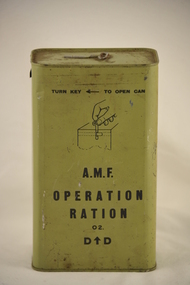
Container - World War 1939-45 Ration pack, c1940
... chair of physiology and pharmacology at Adelaide University, which he was to hold until 1957. During the Depression he studied the dietary patterns of five hundred families receiving relief. 1940 Hicks was appointed temporary captain, Australian Military Forces, and performed part-time duty as catering supervisor. Moved to Melbourne as chief inspector of catering, he began a campaign for applying scientific principles to the feeding...chair of physiology and pharmacology at Adelaide University, which he was to hold until 1957. During the Depression he studied the dietary patterns of five hundred families receiving relief. 1940 Hicks was appointed temporary captain, Australian Military Forces, and performed part-time duty as catering supervisor. Moved to Melbourne as chief inspector of catering, he began a campaign for applying scientific principles to the feeding ...AMF Operational Ration This ration pack was developed by Sir Stanton Hicks. It contained three meals, each waterproofed (a vital consideration for the tropics), which offered a balanced selection of meat, vegetables, fruit and vitamin supplements. Before the development of this ration pack, Australian soldiers were supplied with quantities of preserved food that were difficult for a man to carry and divide, and which often did not provide a nourishing diet. Sir Cedric Stanton Hicks (1892-1976), university professor and army catering officer, was born on 2 June 1892 at Mosgiel, New Zealand. University of Otago (B.Sc., N.Z., 1914; M.Sc. Hons, 1915; M.B., Ch.B., 1923) 1916-18 Hicks served as a non-commissioned officer in the New Zealand Expeditionary Force and he assisted Professor J. K. H. Inglis in the synthesis and production of Chloramine-T for use against meningitis among the troops. Hicks was appointed government analyst in 1918. On a Fellowship 1923, he travelled to England and studied at Trinity College, Cambridge (Ph.D., 1926) and caried out research in Switzerland, Germany and the United States of America. 1927 he was appointed to the new chair of physiology and pharmacology at Adelaide University, which he was to hold until 1957. During the Depression he studied the dietary patterns of five hundred families receiving relief. 1940 Hicks was appointed temporary captain, Australian Military Forces, and performed part-time duty as catering supervisor. Moved to Melbourne as chief inspector of catering, he began a campaign for applying scientific principles to the feeding of troops. 1943 the Australian Army Catering Corps was formed. Hicks altered the basis of the allowance for military rations from a monetary to a nutrient entitlement, improved the pay and promotion opportunities of cooks, established schools of cooking and catering, devised new methods for preparing food, supported the service's adoption of the Wiles steam-cooker, and designed jungle-patrol, emergency and air-drop rations. His 'Who Called the Cook a Bastard?' (Sydney, 1972) gave an account of his experiences in military catering.Men from most families in the City of Moorabbin area served in the Australian Military Forces during World War 2.A tin container , khaki colour, used for the storage of a food ration item for a soldier serving in the Australian Military Forces World War 11.TURN KEY ← TO OPEN CAN / diagram of key / A.M.F. / OPERATION/ RATION/ 02 / D↑Dworld war 11, australian military forces, sir cedric stanton hicks, army catering corps, soldier rations, food supplys, australian diggers, food preservation -
 Ringwood and District Historical Society
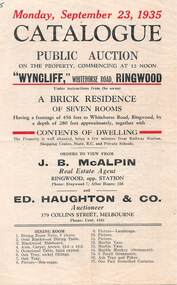
Flyer - Catalogue, Public Auction - Brick Residence and Contents of Dwelling, "Wyncliff", Whitehorse Road, Ringwood. 1935
... .; Grass Catcher; 8 Pieces Garden Tools; Barrow; Quantity of Timber; Quantity of Flower Pots; Quantity of Wire; 4 Egg & 1 Fowl Crates Feed Room; 1 Gallon Demijohn Feed Room; Quantity of Shelving Feed Room; Quantity of Cement, Lime; Six Small Doors; Roll of Perforated Cardboard; Boot Rack; Coat Rack; 3 Automatic Sanitary Disinfectant; Pair Neck Straps and Rope; One Chimney Top & 3 Vent Bks.; Desk; Large Pump; Large Safe; Pair Sliding Door Rollers & Fittings; Two Wooden Doors; Box Sundries; Wooden Frame and Glass; 2 Vienna Chairs; Delivery Cart; Five Boxes Tiles; Quantity Agricultural Pipes; Wooden Bench; Wood Horse; Earthenware Drain Pipe; Wooden Tool Box; New Brass Spray "Rego"; Two Wood Planes. ....; Grass Catcher; 8 Pieces Garden Tools; Barrow; Quantity of Timber; Quantity of Flower Pots; Quantity of Wire; 4 Egg & 1 Fowl Crates Feed Room; 1 Gallon Demijohn Feed Room; Quantity of Shelving Feed Room; Quantity of Cement, Lime; Six Small Doors; Roll of Perforated Cardboard; Boot Rack; Coat Rack; 3 Automatic Sanitary Disinfectant; Pair Neck Straps and Rope; One Chimney Top & 3 Vent Bks.; Desk; Large Pump; Large Safe; Pair Sliding Door Rollers & Fittings; Two Wooden Doors; Box Sundries; Wooden Frame and Glass; 2 Vienna Chairs; Delivery Cart; Five Boxes Tiles; Quantity Agricultural Pipes; Wooden Bench; Wood Horse; Earthenware Drain Pipe; Wooden Tool Box; New Brass Spray "Rego"; Two Wood Planes. ...Double-sided A5 size advertisement for public auction under instructions from the owner on Monday, September 23, 1935 on the property - seven room brick residence with frontage 456 feet by approximately 280 feet and contentents of dwelling fully listed over 4 pages. Agent - J.B. McAlpin, Ringwood, opp. station. Phone Ringwood 7; after houres 236. Auctioneer - ED. Haughton & Co., 379 Collins Street, Melbourne. Phone Central 4101.Contents of Dwelling List - includes: DINING ROOM - Dining Room Suite - 6 pieces; Oval Blackwood Dining Table; Blackwood Sideboard; Axminster Carpet, Occasional Table hand carved; Oak Trays; Seascape, Landscape and other Pictures; 2 Marble Vases; Marble Monkey and 3 other Small Ornaments; Ash Tray and Poker; One Pair Stencilled Curtains. Two Large Vases, 1 with floral design; Salad Bowl and Servers; One Dozen Dessert Knives; Nine Stainless Teaspoons (new); Plated Vases; Plated Jam Dishes; Plated Cream Bowl; Silver Plated Cake Dish; One Pair Plated Shell Butter Dishes; Lino Border. LOUNGE ROOM - 2 Pictures and 1 pair with Circular Frames; Floral Jardinere and Pot Plant; Cabinet Gramophone "Singola"; Records; Player Piano "Cable"; Piano Stool; 31 Rolls; Roll Cabinet; Quantity of Music; Music Case, Leather; Portable Gramophone "Decca"; Floral Design Jardinere; Wicker Occasional Table; 2 Wicker Chairs; Cane Lounge Settee; Blackwood Bookcase; 9 Volumes Universal Encyclopedia; 10 Vols Children's Encyclopedia; Floral Vase; Black and Gold Vase; One pair Plated Vases; Ash Pan; Lino Border (Lounge Room); One Carpet, green 13.6 x 10.6; One Cushion; Hall Stand; Pedestal; Floral Design Jardinere; Painting on Canvas (Landscape); Hall Runner Carpet 25 feet; Hall Lino 29ft 5 in.; Five Door Mats (small). FIRST BEDROOM - Arm Chair (Leather); English Oak Dressing Table; English Oak Wash Stand Marble Top; Toilet Set (Four pieces); Silk Fire Screen; Blackwood Occasional Table; Black and Gold Vase; Pair China Vases; Pair Glass Vases; Single Glass Vase; One Kewpie Lavender Bag; Bedroom Lino 15.6 x 13.6. SECOND BEDROOM - Arm Chair (Leather); Dressing Table; Wash Stand; 3 Piece Toilet Set; One Vase (Pink Cameo Design); Two Ornaments (one round); Bedroom Lino 13.5 x 12.10; 3 Pictures; 2 Pairs Curtains (applique, stenc'ld); Pair Curtain Poles. THIRD BEDROOM - Lino approx 14ft x 10ft; Two Green Mohair Mats; Pair Pictures (White frames); One Picture ("The Mourners"); Picture ("The Wanderer Found"); Small Picture; Wicker Chair. FOURTH BEDROOM - Duchess Chest 5 drawers; Corner Wardrobe and Curtains; One Single Bed & Wire Mattress; Single Bedding; Lino on floor 14ft x 6ft 6in.; Occasional Table; 3 Pictures; Two Door Mats; Hall Runner (Carpet) 21ft. BREAKFAST ROOM - Two Wicker Chairs; Cushion; Brown Cushion; Four Vienna Chairs; Jardinere; Kerb (Wooden). 3 Pictures; Oil Painting (Canvas); 2 Pictures; Lino 14ft x 14ft; Brown Table Cover; Fruit Set; Robur Tea Pot; Plaque; China Biscuit Barrel; Glass Fruit Bowl; Pair Pickle Jars and Stand; Wooden Inkstand; Pair Ash Trays; Two Marble Vases; Glass Vase; Electric Jug and Electric Toaster (practically new); Picture; Cushion; Pair Lace Curtains; Curtain Rod; Three Lace Curtains; Brass Curtain Rods (3); Lino in Vestibule 10ft x 8 ft; Lino in Kitchen 12.6 x8.6; Coal Scuttle; Two Small Tables (1 Baize Cover). STORE ROOM - Briquette Grate; Three Coir Mats (one new); Three Small Door Mats (new); Glass Fire Screen; 2 Alm Pot Stands; Steel Pot Stand; Lady's Bicycle; 2 Electric Radiators (one large); White Cabinet; Stretcher Bed; Large Cot with Wire Mattress; Kerb; Fender and Irons; Lino on floor 12ft x 12ft; Lino in Storeroom 6ft x 6ft; Three Large Window Blinds; Clothes Horse; Dressmaker's Fitting Stand; Dressmaker's Bust; Window Display Bust; Blouse Stand; Small Display Stand; Meat Cover (Metal); Leather Portmantau; Leather Kit Bag; Four Large Wooden Drawers; Picnic Basket; Mattress, Bolster and Pillow; Cot Quilt; One Long-handled Feather Duster; Feather Duster; Wicker Lounge; Cane Soiled Linen Basket; One New Washing Tub; Copper Preserving Pan; Lino in Laundry 8 x 6 approx; Carpet Sweeper; Small Jardinere; 2 Shopping Baskets; Kitchen Safe; Kitchen Table; Three Buckets; 1 Horse Rub patent (prac new); Wooden Pot Plant Stand; Bird Cage and Stand; Pair Steps; Pair Small Steps; Metal Meat Safe; Wooden Safe; Hand worked Table Cover; Pair Poplin Silk Curtains (new); Leather Table Centre. VERANDAH - 12ft Shelving with doors; 35ft Shelving; Wooden Stand; Axe Stand (wooden); Nine feet Wooden Shop Fittings; Small Filing Cabinet; Three Window Frames & Glass; 38 Pot Plants Fernery; 9 Hanging Baskets Fernery; Electric Shop Sgn Storeroom; 2 Small Electric Shop Signs Storeroom; 2 Garden Sprays; Doll's Pram and Doll; Two Boxes Paint and Slate; Crystal Radio Set; New Canvas Blind & Roller 6ft.; Electric Light Reflectors (two); Two pieces of Painted Baize; Small Vice; Sprinkler; One Gallon Tin of Spray Oil; 2 Packets of "Aresto"; Two Hurricane Lamps; One Pair Spring Balance Scales; Small Pair Spring Balance Scales. WASH HOUSE - Pair Heavy Tracers (2); Pair Reins; Back Band; One Tug; Pair Hames; One Pair Neck Bands (2); Four Manger Balls; Pair Knee Pads; Kicking Strap complete; Leather Head Stall; Collar Pad; Knife Board and Tin Polish; Fork Cleaner; Foot Spray Pump. TOOL SHED - One Stewart Horse Clipper; Approx 120ft Ribbed Hose; 100ft ½in Hose; Child's Scooter; Tin Box; Ferret Box; One Tool Box; Tomato Hoe; Sprinkler; Two Large Augers; Large Watering Can; Medium Watering Can; Small Watering Can; Wooden Tool Chest; Rope, Tackle and two Pulleys; Six pieces of Lino; Three Small Canvas Blinds; Lawn Mower 14in.; Lawn Mower 12in.; Grass Catcher; 8 Pieces Garden Tools; Barrow; Quantity of Timber; Quantity of Flower Pots; Quantity of Wire; 4 Egg & 1 Fowl Crates Feed Room; 1 Gallon Demijohn Feed Room; Quantity of Shelving Feed Room; Quantity of Cement, Lime; Six Small Doors; Roll of Perforated Cardboard; Boot Rack; Coat Rack; 3 Automatic Sanitary Disinfectant; Pair Neck Straps and Rope; One Chimney Top & 3 Vent Bks.; Desk; Large Pump; Large Safe; Pair Sliding Door Rollers & Fittings; Two Wooden Doors; Box Sundries; Wooden Frame and Glass; 2 Vienna Chairs; Delivery Cart; Five Boxes Tiles; Quantity Agricultural Pipes; Wooden Bench; Wood Horse; Earthenware Drain Pipe; Wooden Tool Box; New Brass Spray "Rego"; Two Wood Planes. YARD - Pair Hedge Clippers; Box Containing 2 prs Secateurs & Punch; Box Tools seven pieces; Box Sundries; Lawn Weeder and Seed Sower; Box Tools 6 pieces; Two Saws; Bundle Files; Three Braces; Box of 13 pieces Gimlets etc.; Five Spanners; Box Tools 4 pieces; Four Coal Chisels; Box 7 pieces of Tools; Box of 5 pieces of Tools; Box of Docket Books; One Printing set; Large Figure Printing Set; Small Figure Printing set; Price Ticket Box; Air Brush Writing Set Complete; Six Shelves & Brackets, one Hat Rack, in store room; Box of Three Hammers; Two Boot Lasts; Tin of Polishing Oil; Box of Gardening Sundries; 2 Bicycle Pumps Saddle & Clips; One Covered Baking Dish; 200 c.p. Globe (Vestibule); Two "Dimolite" Fittings; Set of Five Canisters; Earthernware Jar; Two shopping Cases; Dinner Set 11 pieces; Box of Sundry Tins; Alm Fish Pan and Drainer; Two Ventilators; Knife Board & 3 Bread Saws; Soap Box and Jewel Case; Three Glass Articles. OFFICE FURNITURE - Steel Safe (Office Safe); Office Table five drawers; Cabinet 8 drawers; Cupboard three shelves; Selves 2ft3in x 1ft6in; Cheque Protector; Remington Typewriter; Typewriter Adjustable Table; Burroughs Bookkeeping Machine and Stand Complete; Small Office Table; Glass Show Case3ft9 x 2ft.; Four Sheets M. Glass; Five Sheets P. Glass; Gent's Overcoat new; Boy's Pullover New; Small Show Case; Duplicator (complete); Webster's Dictionary; Family doctor's Book. Two Dictionaries; Bundle of Three Books; Art Decorating Book; Bundle of Three Books; Bundle of Three Books; Two Books (Children's); (Multiple) Bundles each containing Three Books; Leather Riding Whip; Tort-shell Inkstand & Calendar; Tort-shell Folding Letter Rack; Water Filter; Thermos Flask and Case; Two Waste Paper Baskets. -
 Northern District School of Nursing. Managed by Bendigo Historical Society Inc.
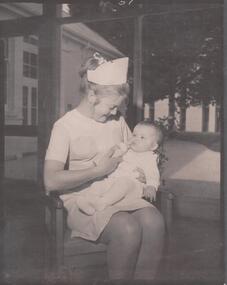
Photograph - School 78 - Student Nurse Cathryn Lillie bottle feeding Baby Susan Dixon 1971
... feeding baby Susan Dixon. Nurse Lillee was a model for the new uniform introduced in 1971 Nursing History Nursing Training 7014-51 stamped on back. Name of nurse and date on back Black and White proof photo - Trainee nurse sitting in chair with baby with bottle in her hand. ...School 78 - 1971 - Lister House - First year nurse Cathryn Lillie bottle feeding baby Susan Dixon. Nurse Lillee was a model for the new uniform introduced in 1971Black and White proof photo - Trainee nurse sitting in chair with baby with bottle in her hand. Sitting in front of large window7014-51 stamped on back. Name of nurse and date on backnursing history, nursing training -
 Royal District Nursing Service (now known as Bolton Clarke)
Photograph - Photograph, sepia, c.1892
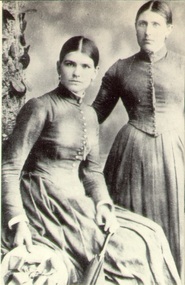
... feeding mugs, and air-cushions as well as providing blankets and clean bed linen, and nightdresses as necessary. From its inception the Society was at the forefront of health care and liaised with doctors. They provided high quality nursing care to a range of people, often in destitute situations, some lying on rags on the floor as they had no bed, others with just a bed and maybe a thin blanket, a chair and nothing else. ...This is the first photograph taken of Trained nurses, who worked with the Melbourne District Nursing Society (MDNS) and has been kept in their Archives (now RDNS) since that time. The photograph, taken about 1892, records the uniforms worn by MDNS Nurses in that era, and records images of Nurse Kennedy, who commenced with the Society at the end of 1891, and worked in the Western District of the CBD until the end of 1893; and Lucy Smith who worked in the Eastern District of the CBD between April 1892 - June 1893 when she left to get married. Nurse Smith trained at the Nightingale Training School for Nurses at St. Thomas's Hospital in London, the first professional nursing school in the world and as such she was given the position of the first 'Head Nurse' at MDNS. Though Florence Nightingale never worked at St. Thomas’s she did form the curriculum for the nurses training and received regular reports regarding the probationers, as well as receiving the nurses in her home during the latter part of their training. According to Lucy's family she met Florence Nightingale. The photograph shows two of the three Trained nurses employed by MDNS at that time. All Nurses employed by MDNS from its inception in 1885 were trained and received their qualification in a Hospital, but in those times were called 'Nurse'. In Melbourne in 1885 it was recognized that skilled nursing was needed in the inner city to care for the sick poor in their own homes. On the 17th of February a meeting was held with prominent Melbourne citizens, five gentlemen and fourteen ladies. ‘Dr. Caffyn and Rev. Charles Strong explained the objects and scope of District nursing Societies that had been formed in other towns’ in UK. On that day the Melbourne District Nursing Society (MDNS) was founded, the first District Nursing Society in Australia. Subsequent meetings were held to form a Committee and to draw up a Code of Rules of the Society. It was decided only nurses who had attended a Nurses Training School and were fully qualified would be employed by the Society, and that the Nurses would keep a daily journal of their work. After interviewing several candidates, the first Trained Nurse, Mrs. Ferguson, was employed with a salary of £100 per annum and commenced work on the 1st of May 1885. She was employed for three months initially, but this was soon extended, “on the understanding she will make arrangements to live in the more immediate vicinity of her district”. A doctor was consulted before any person was seen. In rotation, a member of the Superintendence Sub-Committee supervised the Nurse’s visits and could assist to alleviate some of the poor social conditions they found. Though only Trained nurses were employed, the term ’Nurse’ was used in those days. Lady Janet Clarke, a philanthropist, was one of the first two Vice-presidents and President from 1888 until 1908 (except when overseas); she was a driving force in the Society. She held the first fund raiser for the Society at her home ‘Cliveden’ and went on to help organize many functions where she, along with Committee members, manned the stalls to raise funds. She also took her turn to accompany the Nurse, and was noted for her kindness and benevolence. Over the years the Committee, which was made up of 80% ladies, worked tirelessly for the Society; many Auxiliaries were formed. A second Trained nurse, Mrs. Joanna Cannon, was employed in late 1885, with a trial period of six months which was extended. She and Mrs Ferguson were the stalwarts of the Society in the early years, Nurse Cannon remaining with the Society for four years and Nurse Ferguson for five years, though both had a short break due to the heaviness of the work. Nurse’s salaries were reduced to account for the cost of uniforms, and again in later years when establishments were rented by the Society and the nurses could now live in the Nurses Home. The two Nurses worked in the now CBD, ie from Spencer Street to Spring Street and from Victoria Parade to Flinders Street. At that time they walked the streets and lane ways amid the slums of inner Melbourne carrying their nursing bags containing lotion, ointments, powders, liniment, bandages, dressings, a case of spirits, and the Nurse's own clean apron, soap and small towel. They supplied equipment on loan, such as earthenware hot water bottles, splints, urinals, bed pans, bed cradles, feeding mugs, and air-cushions as well as providing blankets and clean bed linen, and nightdresses as necessary. From its inception the Society was at the forefront of health care and liaised with doctors. They provided high quality nursing care to a range of people, often in destitute situations, some lying on rags on the floor as they had no bed, others with just a bed and maybe a thin blanket, a chair and nothing else. Their ages ranged from babes, children, adults to the elderly. The Nurses gave medications as ordered, dressed wounds e.g. to the injured, and surgical cases, and to those with leg ulcers; attended to patients with ‘surgical ailments’ such as ‘hip disease’; gave care to those with acute illnesses such as bronchitis, pleurisy, pneumonia, measles, and scarlet fever, as well as those with chronic illnesses such as consumption (tuberculosis), heart disease, arthritis, cancer, debility, neuritis and paralysis. They educated their patients, and their Carers, in the curing and prevention of disease; teaching the importance of hygiene, cleanliness, ventilation and good nutrition. They taught them, by verbal instruction and demonstration, how to make poultices, to make and apply bandages, apply medical appliances such as splints; and the Nurses supplied milk, beef tea and cooked soup when needed. As the work increased a third Trained nurse was employed but this was arduous work, particularly in the heat of summer and many Nurses only remained with the Society for several months. In 1891 the first Nurses Home was rented for 1 year at £65 per annum at 66 Cardigan Street, Carlton; Nurses wages were now £60 per annum. A Doctor gave lectures from the Home to the public on the understanding and prevention of diseases. The Society decided to commence a Midwifery Service and Nurse Fowler, who had previously worked for the Society, was re-employed as their first trained Midwife. She began home births in August 1893 giving them Ante Natal care, taking midwifery bundles and providing clothes for the babe and mother as needed. Following birth, she gave Post-natal care to the mother and babe twice a day for three days and then daily for a week, and longer if required. She resigned after twelve months and Nurse Wilkie was appointed to the position. As well as walking, the nurses used Public transport in the limited areas it ran, though a taxi was used by the Nurses and Midwife in emergencies and at night. Late in 1891 the Society moved to larger rented premises at 49 Drummond Street and in 1902 moved to 188 Leicester Street, Carlton Sepia Photograph of two Melbourne District Nursing Society (MDNS), Trained nurses; on the left is Nurse Kennedy (sitting) and to the right Nurse Lucy Smith (standing). They are wearing the MDNS uniform of a long grey frock. Over this they are wearing a grey long sleeve jacket with self buttons down the centre. The jacket forms a V at the waist. Nurse Kennedy has a round visage with her central parted dark hair drawn back. She is wearing ear rings and holds the top of a closed umbrella in her left hand, the feral rests on the ground. She has a straw hat in her right hand. Nurse Smith has a long visage; is wearing ear rings and her central parted dark hair is drawn back. Her right arm is extended holding the back of the chair on which Nurse Kennedy sits. melbourne district nursing society, mdns, mdns uniforms, mdns first 'head nurse', rdns, royal district nursing service, trained nurse kennedy, trained nurse lucy smith -
 Royal District Nursing Service (now known as Bolton Clarke)
Certificate - Photograph, colour, Melbourne District Nursing Society certificate of employment, 08.07.1913
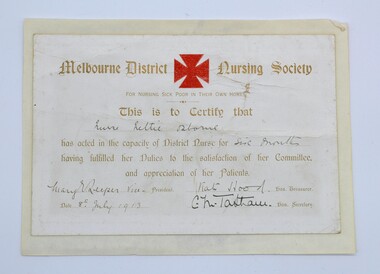
... feeding mugs, and air-cushions as well as providing blankets and clean bed linen, and nightdresses as necessary. They provided nursing care to a range of people, often in destitute situations, some lying on rags on the floor as they had no bed, others with just a bed and maybe a thin blanket, a chair and nothing else. ...This Certificate was presented to Trained nurse, known as 'Nurse' in those days, Nettie Osborne on completion of six months employment with Melbourne District Nursing Society (MDNS). This is the only example of a MDNS Nurses certificate in the RDNS collection. In 1913 the MDNS Nurses had their board and residence, uniforms, bicycles and laundry expenses provided. Newly employed Nurses were paid £50 a year for her first six months. At the end of a year her salary was increased by £5, and later she earned £60 a year. .Following the founding of the Melbourne District Nursing Society (MDNS) in February 1885 to care for the sick poor in Melbourne, subsequent meetings were held to form a Committee and to draw up a Code of Rules of the Society. It was decided that only nurses who had attended a Hospital Nurses Training School and were fully qualified would be employed by the Society. After interviewing several candidates, it was on the first of May 1885 when the first Trained nurse, known as 'Nurse' in those days, Mrs. Ferguson, was employed by MDNS with a salary of £100 per annum. She was employed for three months initially, but this was soon extended, "on the understanding she will make arrangements to live in the more immediate vicinity of her district". A Doctor agreed to assist the Nurse with advice at any time. In rotation, a member of the Superintendence Sub-Committee supervised the Nurse’s visits and could assist to alleviate some poor social conditions they found. A second Nurse, Mrs. Joanna Cannon was employed by MDNS six months later, with a trial period of six months which was extended. They were the stalwarts of the Society in the early years, Nurse Cannon remaining with the Society for four years and Nurse Ferguson for five years, though both had a short break due to illness through the heaviness of the work. Nurses salaries were reduced to account for the cost of uniforms, and then when establishments were rented by the Society and the Nurses could now live in the Nurses Home. The Nurses worked in the now CBD, ie from Spencer Street to Spring Street and from Victoria Parade to Flinders Street. From its inception the Society was at the forefront of health care. They liaised with Doctors and provided high quality trained nursing care; educated their patients in the curing and prevention of disease; teaching the importance of cleanliness, fresh air and good nutrition, both by verbal instruction and demonstration, even supplying soup and milk when needed. At that time they walked the streets and lane ways amid the slums of inner Melbourne carrying their nursing bag containing lotion, ointments, powders, liniment, bandages, dressings, a case of spirits, and the Nurse's own clean apron, soap and small towel. They supplied equipment on loan, such as earthenware hot water bottles, splints, urinals, bed pans, bed cradles, feeding mugs, and air-cushions as well as providing blankets and clean bed linen, and nightdresses as necessary. They provided nursing care to a range of people, often in destitute situations, some lying on rags on the floor as they had no bed, others with just a bed and maybe a thin blanket, a chair and nothing else. Their ages ranged from babes, children, adults to the elderly. The Nurses gave medications as ordered, dressed wounds e.g. to the injured, and surgical cases, and to those with leg ulcers; attended to patients with ‘surgical ailments’ such as ‘hip disease’; gave care to those with acute illnesses such as bronchitis, pleurisy, pneumonia, measles, and scarlet fever, as well as those with chronic illnesses such as consumption (tuberculosis), heart disease, arthritis, cancer, debility, neuritis and paralysis. As the work increased a third Nurse was employed but this was arduous work, particularly in the heat of summer and many nurses only remained with the Society for several months. A Trained Midwife was employed in August 1893. The work was arduous, particularly in the heat of summer. Permission to use bicycles was given to the Nurses in 1898 and the Society decided to purchase their own in 1903. A business man offered ‘new free wheel’ bicycles at £13 each which included maintenance for one year. Bells and wooden frames were added, at a cost of £5 per frame, so the Nurses could carry extra equipment. Nurses’ bags were strapped to the handlebars. Soup was made for those in need 2-3 times a week and if patients could not arrange to have it collected the soup was delivered by the Nurses on their bicycles. The use of bicycles caused a change in uniform, with white pith helmets, and veils covering them and tied under their chin, now being used; straw hats were worn in summer. Over the years the Nurses complained that their veils became wet in the rain and asked for a change of uniform but this did not occur until 1921. Bicycles continued to be used in inner areas until 1945. Public transport was also used over the years, in conjunction with a Motor Auxiliary from 1929 to 1971. MDNS began with its own small fleet of vehicles in the early 1950s which gradually expanded into a full fleet.The coloured Certificate is made of white paper attached to a buff card forming a boarder. It is in gold print on the white background which has a thin gold border. In large bold script are the words "Melbourne District Nursing Society" In between the words "District" and "Nursing" is a red Maltese cross which extends above and below the writing. Underneath this, in smaller capital letters, are the words "For Nursing Sick Poor In Their Own Homes"/. Below this in bold script are the words "This is to Certify that"/. Under this, written in black handwriting, is "Nurse Nettie Osborne"/; below this in script is "has acted in the capacity of District Nurse", then in black handwriting the words "Six Months"/. The next two lines read "having fulfilled her Duties to the satisfaction of her Committee, /"and appreciation of her Patients". The Certificate is signed in black by Mary Leeper, Vice President; Kate Hood; Hon. Treasurer; C.M. Tatham Hon. Secretary, and has Date; 8th July 1913 in black handwriting. On paper attached with tape to the back of the Certificate, is a copy of a photograph of two unidentified people. [Possibly Nettie and her husband]. Some small marks, and in one area a small area of cracking is seen on the white background of the certificate.certificates, mdns, melbourne district nursing society, rdns, royal district nursing service, nurse nettie osborne -
 Royal District Nursing Service (now known as Bolton Clarke)
Photograph - Digital image, 1905
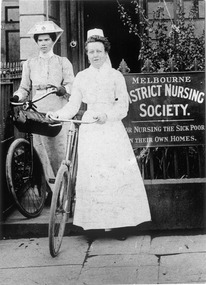
... feeding mugs, and air-cushions as well as providing blankets and clean bed linen, and nightdresses as necessary. Trained midwives began home births in August 1893 taking midwifery bundles and providing clothes for the babe as needed. The Nurses provided nursing care to a range of people, often in destitute situations, some lying on rags on the floor as they had no bed, others with just a bed and maybe a thin blanket, a chair and nothing else. ...The Sister-in-Charge, Florence Lee-Archer, and a Trained nurse (Nurse) are about to leave the Melbourne District Nursing Society (MDNS) Nurses Home at No. 5 Royal Terrace, Nicholson Street, Fitzroy to visit patients. The MDNS moved into these larger premises at No. 5 Royal Terrace, Nicholson Street, Fitzroy in May 1904. This establishment was their Headquarters as well as the Nurses Home. Sister-in-Charge Florence Lee-Archer and five Trained nurses, known as 'Nurse' in those days, were employed by MDNS at that time to visit and give nursing care to the poor in their own homes. In 1885, 50 years after Melbourne was founded, it was recognized that nursing care was needed for the sick poor in inner Melbourne. The Melbourne District Nursing Society (MDNS) was founded in February 1885 with one Trained nurse, called 'Nurse' in those days, and a second employed six months later, working in the now CBD, ie from Spencer Street to Spring Street and from Victoria Parade to Flinders Street. From its inception the Society was at the forefront of health care and liaised with Doctors. They provided high quality nursing care; educated their patients in the curing and prevention of disease and teaching the importance of cleanliness, fresh air and good nutrition, both by verbal instruction and demonstration, even supplying soup and milk when needed. At that time they walked the streets and lane ways amid the slums of inner Melbourne carrying their nursing bag containing lotion, ointments, powders, liniment, bandages, dressings, a case of spirits, and the Nurse's own clean apron, soap and small towel. They supplied equipment on loan, such as earthenware hot water bottles, splints, urinals, bed pans, bed cradles, feeding mugs, and air-cushions as well as providing blankets and clean bed linen, and nightdresses as necessary. Trained midwives began home births in August 1893 taking midwifery bundles and providing clothes for the babe as needed. The Nurses provided nursing care to a range of people, often in destitute situations, some lying on rags on the floor as they had no bed, others with just a bed and maybe a thin blanket, a chair and nothing else. Their ages ranged from babes, children, adults to the elderly. The Nurses gave medications as ordered, dressed wounds e.g. to the injured, and surgical cases, and to those with leg ulcers; attended to patients with ‘surgical ailments’ such as ‘hip disease’; gave care to those with acute illnesses such as bronchitis, pleurisy, pneumonia, measles, and scarlet fever, as well as those with chronic illnesses such as consumption (tuberculosis), heart disease, arthritis, cancer, debility, neuritis and paralysis. The Nurses were becoming exhausted, particularly in the heat of summer. Permission to use bicycles was given to them in 1898 and the Society decided to purchase their own in 1903. A business man offered ‘new free wheel’ bicycles at £13 each, which included maintenance for one year. Bells and wooden frames were added at a cost of £5 per frame so the Nurses could carry extra equipment. Nurses bags were strapped to the handlebars. Soup was made for those in need 2-3 times a week, and if patients could not arrange to have it collected, the soup was delivered by the Nurses on their bicycles. Their use caused a change in uniform, with white pith helmets, and veils covering them and tied under their chins, now being used and straw hats in summer. In 1904 the Society relocated to rented premises at 5 Royal Terrace, Nicholson Street in Fitzroy. In 1913 a nurse had her ‘board and residence, uniforms, bicycles and laundry expenses’ provided and was paid £50 a year for her first six months. At the end of a year her salary was increased by £5, and later she earned £60 a year. Over the years the Nurses complained their veils became wet in the rain and asked for a change of uniform, but this did not occur until 1921.Digital Image showing, on the right, Melbourne District Nursing Society (MDNS) Sister-in-Charge Florence Lee-Archer wearing a long white uniform and white cap with long white tail (veil) seen hanging from its rear. On her left, is a MDNS Trained nurse (Nurse) wearing a long grey uniform with white collar and cuffs, and wearing a pale colour straw hat with Maltese cross in the centre of the white hatband. The hat is held on by a veil over the hat and tied under her chin. They are standing by their bicycles, the front wheels and handlebars seen; the Nurse has a nursing bag attached to the handlebars of her bicycle. Behind them and to their right, a black sign with the words 'Melbourne District Nursing Society - For Nursing the Sick Poor in their Own Homes' written in white capital letters can be seen attached to the metal spiked fence. Behind this are some shrubs and part of a building in the rear.Melbourne District Nursing Society - For Nursing The Sick Poor In Their Own Homes.melbourne district nursing society, mdns, mdns headquarters, mdns matron, rdns, royal district nursing service, sister florence lee-archer -
 Royal District Nursing Service (now known as Bolton Clarke)
Photograph - Digital image, c.1920
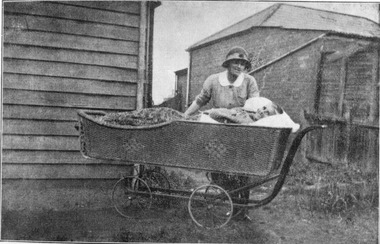
... feeding mugs, and air-cushions as well as providing blankets and clean bed linen, and nightdresses as necessary. From its inception the Society was at the forefront of health care and liaised with Doctors. They provided high quality nursing care to a range of people, often in destitute situations, some lying on rags on the floor as they had no bed, others with just a bed and maybe a thin blanket, a chair and nothing else. ...This digital image is taken at the home of a Melbourne District Nursing Society (MDNS) patient, and depicts a MDNS Sister attending to a lady who is lying in a wicker bed pram in the rear garden of her home. The wicker bed pram enabled the lady to enjoy fresh air and to be moved about easily. The image shows the MDNS uniform of a grey cotton frock with white collar, and a grey brimmed hat with a red Maltese cross in the centre of the hatband. In 1885, 50 years after Melbourne was founded, it was recognized that nursing care was needed for the sick poor in inner Melbourne. The Melbourne District Nursing Society (MDNS) was founded in February 1885 with one Trained nurse, known as 'Nurse' in those days, and a second employed six months later,. The two Nurses worked in the now CBD, ie from Spencer Street to Spring Street and from Victoria Parade to Flinders Street. At that time they walked the streets and lane ways amid the slums of inner Melbourne carrying their nursing bags containing lotion, ointments, powders, liniment, bandages, dressings, a case of spirits, and the Nurse's own clean apron, soap and small towel. They supplied equipment on loan, such as earthenware hot water bottles, splints, urinals, bed pans, bed cradles, feeding mugs, and air-cushions as well as providing blankets and clean bed linen, and nightdresses as necessary. From its inception the Society was at the forefront of health care and liaised with Doctors. They provided high quality nursing care to a range of people, often in destitute situations, some lying on rags on the floor as they had no bed, others with just a bed and maybe a thin blanket, a chair and nothing else. Their ages ranged from babes, children, adults to the elderly. The Nurses gave medications as ordered, dressed wounds e.g. to the injured, and surgical cases, and to those with leg ulcers; attended to patients with ‘surgical ailments’ such as ‘hip disease’; gave care to those with acute illnesses such as bronchitis, pleurisy, pneumonia, measles, and scarlet fever, as well as those with chronic illnesses such as consumption (tuberculosis), heart disease, arthritis, cancer, debility, neuritis and paralysis. This image shows a Melbourne District Nursing Society (MDNS) Trained nurse (Sister) wearing a grey uniform with white collar, and a grey brimmed hat, which has a hatband with Maltese cross applied, standing behind and attending an elderly lady patient laying in a wicker bed pram outside her home. The Sister has her right hand resting on the pram and is looking down at the lady, and the lady, who has short grey hair, is smiling and looking toward the camera. Her body is covered with a floral cover. To the left, part of the horizontal weatherboards of a wooden house can be seen, and to the right and rear, a brick, tiled hip roof, building can be seen. The wicker bed pram has four spoked wheels and a metal frame that bends up to form a handle on its right hand side.melbourne district nursing society, mdns, mdns nurses, mdns patient care, mdns uniforms, rdns, royal district nursing service -
 Royal District Nursing Service (now known as Bolton Clarke)
Photograph - Photograph, black and white, c.1890
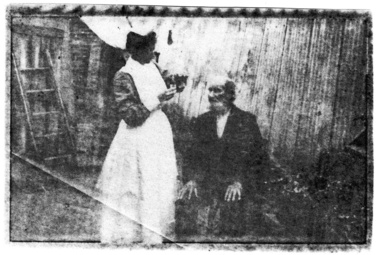
... feeding mugs, and air-cushions as well as providing blankets and clean bed linen, and nightdresses and clothes as necessary. From its inception the Society was at the forefront of health care and liaised with Doctors. They provided high quality nursing care to a range of people, often in destitute situations, some lying on rags on the floor as they had no bed, others with just a bed and maybe a thin blanket, a chair and nothing else. ...This 1890s photograph shows the early uniform worn by Melbourne District Nursing Society (MDNS) Trained nurses, (known as 'Nurse', in those days), when visiting patients to administer nursing care.The Nurse is speaking with a patient who is sitting in his back garden. It shows the style of clothing and the rear of a weatherboard house of that era. In Melbourne in 1885 it was recognized that skilled nursing was needed in the inner city to care for the sick poor in their own homes. On the 17th of February a meeting was held with prominent Melbourne citizens, five gentlemen and fourteen ladies. ‘Dr. Caffyn and Rev. Charles Strong explained the objects and scope of District nursing Societies that had been formed in other towns’ in UK. On that day the Melbourne District Nursing Society (MDNS) was founded, the first District Nursing Society in Australia. Subsequent meetings were held to form a Committee and to draw up a Code of Rules of the Society. It was decided only nurses who had attended a Nurses Training School and were fully qualified would be employed by the Society, and that the nurses would keep a daily journal of their work. After interviewing several candidates, the first Trained Nurse (Nurse), Mrs. Ferguson, was employed with a salary of £100 per annum and commenced work on the 1st of May 1885. She was employed for three months initially, but this was soon extended, “on the understanding she will make arrangements to live in the more immediate vicinity of her district”. A Doctor was consulted before any person was seen. In rotation, a member of the Superintendence Sub-Committee supervised the Nurse’s visits and could assist to alleviate some of the poor social conditions they found. Though only Trained nurses were employed, the term ’Nurse’ was used in those days. Lady Janet Clarke, a philanthropist, was one of the first two Vice-presidents and President from 1888 until 1908 (except when overseas); she was a driving force in the Society. She held the first fund raiser for the Society at her home ‘Cliveden’ and went on to help organize many functions where she, along with Committee members, manned the stalls to raise funds. She also took her turn to accompany the Nurse, and was noted for her kindness and benevolence. Over the years the Committee, which was made up of 80% ladies, worked tirelessly for the Society; many Auxiliaries were formed. A second Trained nurse, Mrs. Joanna Cannon, was employed in late 1885, with a trial period of six months which was extended. She and Mrs Ferguson were the stalwarts of the Society in the early years, Nurse Cannon remaining with the Society for four years and Nurse Ferguson for five years, though both had a short break due to the heaviness of the work. Nurse’s salaries were reduced to account for the cost of uniforms, and again in later years when establishments were rented by the Society and the nurses could now live in the Nurses Home. The two Nurses worked in the now CBD, ie from Spencer Street to Spring Street and from Victoria Parade to Flinders Street. At that time they walked the streets and lane ways amid the slums of inner Melbourne carrying their nursing bags containing lotion, ointments, powders, liniment, bandages, dressings, a case of spirits, and the Nurse's own clean apron, soap and small towel. They supplied equipment on loan, such as earthenware hot water bottles, splints, urinals, bed pans, bed cradles, feeding mugs, and air-cushions as well as providing blankets and clean bed linen, and nightdresses and clothes as necessary. From its inception the Society was at the forefront of health care and liaised with Doctors. They provided high quality nursing care to a range of people, often in destitute situations, some lying on rags on the floor as they had no bed, others with just a bed and maybe a thin blanket, a chair and nothing else. Their ages ranged from babes, children, adults to the elderly. The Nurses gave medications as ordered, dressed wounds e.g. to the injured, and surgical cases, and to those with leg ulcers; attended to patients with ‘surgical ailments’ such as ‘hip disease’; gave care to those with acute illnesses such as bronchitis, pleurisy, pneumonia, measles, and scarlet fever, as well as those with chronic illnesses such as consumption (tuberculosis), heart disease, arthritis, cancer, debility, neuritis and paralysis. They educated their patients, and their Carers, in the curing and prevention of disease; teaching the importance of hygiene, cleanliness, ventilation and good nutrition. They taught them, by verbal instruction and demonstration, how to make poultices, to make and apply bandages, apply medical appliances such as splints; and the Nurses supplied milk, beef tea and cooked soup when needed. As the work increased a third Nurse was employed but this was arduous work, particularly in the heat of summer and many Nurses only remained with the Society for several months. Black and white photograph of a Melbourne District Nursing Society (MDNS) Trained nurse (Nurse) wearing a white apron over her grey full length uniform, and wearing a white cap. She is standing and looking down at a man dressed in a white shirt and dark jacket and pants. He is sitting outside the rear of a weatherboard house, the boards of the house are applied vertically. A wooden ladder leans against another wooden building.melbourne district nursing society, mdns uniforms, rdns, royal district nursing service, mdns -
 Royal District Nursing Service (now known as Bolton Clarke)
Photograph - Photograph, black and white, c.1890
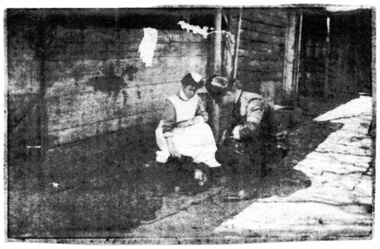
... feeding mugs, and air-cushions as well as providing blankets and clean bed linen, and nightdresses as necessary. They provided nursing care to a range of people, often in destitute situations, some lying on rags on the floor as they had no bed, others with just a bed and maybe a thin blanket, a chair and nothing else. ...This photograph shows a Melbourne District Nursing Society (MDNS) Trained nurse, 'Nurse' in the 1890s who is giving care to a patient who has collapsed in the street. It depicts the type of conditions the Nurses faced in that era and the uniform she wore It shows the help the Nurses received from the Police in that era and also the style of uniform worn by the police. In 1885 it was recognized that nursing care was needed for the sick poor in inner Melbourne. The Melbourne District Nursing Society (MDNS) was founded in February of that year, the first District Nursing Society in Australia, and it was decided only Nurses who had attended a Hospital Nurses Training School and were fully qualified would be employed by the Society. In those days even though they were trained they were called 'Nurse'. The Society began with one Nurse, and a second employed six months later, working in the now CBD, ie from Spencer Street to Spring Street and from Victoria Parade to Flinders Street. From its inception the Society was at the forefront of health care and liaised with Doctors. They provided high quality nursing care; educated their patients in the curing and prevention of disease; teaching the importance of cleanliness and good nutrition, both by verbal instruction and demonstration, even supplying soup and milk when needed. At that time they walked the streets and lane ways amid the slums of inner Melbourne carrying their nursing bag containing lotion, ointments, powders, liniment, bandages, dressings, a case of spirits, and the Nurse's own clean apron, soap and small towel. They supplied equipment on loan, such as earthenware hot water bottles, splints, urinals, bed pans, bed cradles, feeding mugs, and air-cushions as well as providing blankets and clean bed linen, and nightdresses as necessary. They provided nursing care to a range of people, often in destitute situations, some lying on rags on the floor as they had no bed, others with just a bed and maybe a thin blanket, a chair and nothing else. Their ages ranged from babes, children, adults to the elderly. The Nurses gave medications as ordered by a Doctor, dressed wounds e.g. to the injured, and surgical cases, and to those with leg ulcers; attended to patients with ‘surgical ailments’ such as ‘hip disease’; gave care to those with acute illnesses such as bronchitis, pleurisy, pneumonia, measles, and scarlet fever, as well as those with chronic illnesses such as consumption (tuberculosis), heart disease, arthritis, cancer, debility, neuritis and paralysis. They educated their patients, and their Carers, in the curing and prevention of disease; teaching the importance of hygiene, cleanliness, ventilation and good nutrition. They taught them, by verbal instruction and demonstration, how to make poultices, to make and apply bandages, apply medical appliances such as splints; and the Nurses supplied milk, beef tea and cooked soup when needed. As the work increased a third Nurse was employed but this was arduous work, particularly in the heat of summer and many Nurses only remained with the Society for several months. Black and white photograph of a Melbourne District Nursing Society (MDNS) Trained nurse, known as 'Nurse' in those days, wearing a white apron over her full length grey uniform with white collar seen; she is wearing a white cap. She is sitting on a step at the front of a weatherboard house attending to a man, who is dressed in dark clothing and is wearing a brimmed hat. He is lying on his side on the pavement with his head close to the Nurse and his face turned towards the road . A policeman, wearing his dark uniform and helmet, is kneeling beside the man. mdns, melbourne district nursing society, mdns uniforms, rdns, royal district nursing service, nursing care -
 Royal District Nursing Service (now known as Bolton Clarke)
Photograph - Photograph, black and white, c.1985
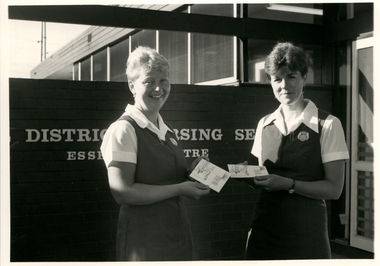
... feeding mugs, and air-cushions as well as providing blankets and clean bed linen, and nightdresses as necessary. From its inception the Society was at the forefront of health care and liaised with Doctors. They provided high quality nursing care to a range of people, often in destitute situations, some lying on rags on the floor as they had no bed, others with just a bed and maybe a thin blanket, a chair and nothing else. ...The RDNS Sisters are both holding the 1st day Cover Envelope issued by the Australian Postal Department in 1985 to commemorate the founding of the Melbourne District Nursing Society on the 17th of February 1885. A stamp is in the right hand top corner of the envelope. The main body of the stamp is pale blue. On the top of the stamp, written in deeper blue/grey, are the words "Centenary of District Nursing Services 1985" Below this, and to the right, is a pale bone colour original sign on a metal fence which reads, in white capital letters, "Melbourne District Nursing Society" Standing on the left in the foreground is a MDNS Trained nurse (Nurse) in her long grey uniform frock with white collar, cuffs and belt. She is wearing a grey helmet style hat which has a white hat band with a red Maltese cross in the centre. Her black shoes can also be seen. She is holding a bicycle; only the front wheel and part of the frame and the handlebars, which have a brown nursing bag strapped to them, can be seen, The nursing bag and handlebars cover part of the MDNS sign. At the bottom of the stamp, on a strip of white background, are the words in capital letters "Australia 33c". Below the stamp is a rectangular1st mark. On the left half of the envelope are some sketches of several two storey buildings either side of a set of steps. Some adults and children are standing on the steps as well as in the foreground; some are sketched and others dressed in various coloured clothing. In the foreground right in front of steps, stands a lady with her hair drawn up and wearing along grey frock and white apron; partly seen against her right side is a small child dressed in brown. Sister Willie Fleming is the Supervisor of the RDNS Sunshine Centre and Sister Phillipa Kariko is Supervisor of Essendon Centre. They are wearing their RDNS uniforms of white short sleeve blouses under royal blue V neck tunic style frocks. The RDNS insignia is round and has royal blue writing on a white background. In Melbourne in 1885 it was recognized that skilled nursing was needed to care for the sick poor in their own homes. On the 17th of February a meeting was held with prominent Melbourne citizens, five gentlemen and fourteen ladies. ‘Dr. Caffyn and Rev. Charles Strong explained the objects and scope of District Nursing Societies that had been formed in towns in UK’. On that day the Melbourne District Nursing Society (MDNS) was founded, the first District Nursing Service in Australia. Subsequent meetings were held to form a Committee and to draw up a Code of Rules of the Society. It was decided only nurses who had attended a Nurses Training School at a Hospital and were fully qualified would be employed by the Society, and that the Nurses would keep a daily journal of their work. After interviewing several candidates, the first Nurse, Mrs. Ferguson, was employed with a salary of £100 per annum and commenced work on the 1st of May 1885. She was employed for three months initially, but this was soon extended, “on the understanding she will make arrangements to live in the more immediate vicinity of her district”. A Doctor was consulted before any person was seen. In rotation, a member of the Superintendence Sub-Committee supervised the Nurse’s visits and could assist to alleviate some of the poor social conditions they found. Though only Trained nurses were employed, the term ’Nurse’ was used in those days, not the term ‘Sister’ that is used these days. A second Trained nurse, Mrs. Joanna Cannon, was employed in late 1885, with a trial period of six months which was extended. The two Nurses worked in the now CBD, ie from Spencer Street to Spring Street and from Victoria Parade to Flinders Street. At that time they walked the streets and lane ways amid the slums of inner Melbourne carrying their nursing bags containing lotion, ointments, powders, liniment, bandages, dressings, a case of spirits, and the Nurse's own clean apron, soap and small towel. They supplied equipment on loan, such as earthenware hot water bottles, splints, urinals, bed pans, bed cradles, feeding mugs, and air-cushions as well as providing blankets and clean bed linen, and nightdresses as necessary. From its inception the Society was at the forefront of health care and liaised with Doctors. They provided high quality nursing care to a range of people, often in destitute situations, some lying on rags on the floor as they had no bed, others with just a bed and maybe a thin blanket, a chair and nothing else. Their ages ranged from babes, children, adults to the elderly. The Nurses gave medications as ordered, dressed wounds e.g. to the injured, and surgical cases, and to those with leg ulcers; attended to patients with ‘surgical ailments’ such as ‘hip disease’; gave care to those with acute illnesses such as bronchitis, pleurisy, pneumonia, measles, and scarlet fever, as well as those with chronic illnesses such as consumption (tuberculosis), heart disease, arthritis, cancer, debility, neuritis and paralysis. They educated their patients, and their carers, in the curing and prevention of disease; teaching the importance of hygiene, cleanliness, ventilation and good nutrition. They taught them, by verbal instruction and demonstration, how to make poultices, to make and apply bandages, apply medical appliances such as splints; and the Nurses supplied milk, beef tea and they cooked soup when needed. As the work increased a third Nurse was employed but this was arduous work, particularly in the heat of summer and many Nurses only remained with the Society for several months. A Midwifery Service commenced in August 1893 with Nurse Fowler the first trained Midwife. She had previously worked with the Society carrying out General nursing. The Society expanded its areas using public transport and with the Society purchasing bicycles in 1903, before procuring its first cars to cope with the influx of patients during the Spanish influenza epidemic in 1919, though these were sold in 1927 due to their poor condition..A Motor Auxiliary was formed in 1929 to take Sisters to patients, and some Sisters used their own cars; even a motorcycle was used by one Sister in 1933. All these forms of transport were intermingled and in the early 1950s, and now as Melbourne District Nursing Service, seven Ford Prefect cars were bought followed by twelve Ford Anglia vehicles in 1955. Having received Royal patronage; the now Royal District Nursing Service (RDNS) had its own fleet of Holden vehicles by the mid 1960s and the Motor Auxiliary ceased operating in 1971 as by then all staff employed were required to have a driving licence. Seat-belts had been introduced to Victoria in 1959 and District fitted them to their cars from 1962, even though they did not become compulsory until 1970. The Holden vehicles were replaced with grey Holden Torana vehicles. After several years the fleet was changed to white Toyota Corolla vehicles. The Melways Directory of maps was introduced in 1966, which was a boon to the Sisters, though it was a few years before it went beyond Seville, so a large paper map was used by the Sisters visiting patients in the areas passed Seville. By 2009 there were 598 cars in the fleet and the Sisters travelled 9 million 200,000 kilometres – this is equivalent to 12 trips to the moon and back. Over its years of expansion the RDNS Trained nurses (Sisters), continued to visit patients in their homes and gave best practice care in many fields of nursing, and to people of many cultures. Initial visits not only assessed the specific nursing situation but the situation as a whole. Their patients ranged in age from babes, children, adults to the elderly and referrals were taken from Hospitals, General Practitioners and allied Health facilities. Some of the care the Sisters provided is as follows: – Post-Natal care given to mother and babe, Wound Care following various types of surgery, accidents, burns, cancer, leg ulcers etc. Supervising and teaching Diabetic Care, including teaching and supervising people with Diabetes to administer their own Insulin, and administering Insulin to those unable to give their own injections. Administering other injections and setting up weekly medication boxes. The Sisters performed Catheterizations on adults suffering from conditions such as Quadriplegia, Paraplegia, Multiple Sclerosis (MS), Motor Neurone Disease (MND) and Guillan-Barre Syndrome, and when required at school on children for e.g. those with Spina Bifida. The Sisters visited those requiring Cystic Fibrosis support and care; those requiring Haemo-Oncology care, including visiting children at school; those requiring Home Enteral Feeding care, and those requiring IV therapy at home and home Dialysis. Palliative Care was given including pain relief with the use of syringe drivers, personal care as needed, and advice and support to both patient and family. The Sisters provided Stoma management to those needing Urostomy, Ileostomy and Colostomy care and those requiring Continence care. HIV/AIDS nursing care was provided; visits to Homeless Persons were made. Personal care was given to patients ranging in age and with varying mobility problems, such as Amputees, those with MS, MND, Guillan-Barre Syndrome, Poliomyelitis, Quadriplegia, Paraplegia, Acquired Brain Injury, to those following a Cerebrovascular Accident (Stroke), those with severe Arthritis and those with a form of Dementia. When necessary the elderly were assisted with personal care and advice given on safety factors with the use of hand rails, bath or shower seats, and hand showers. Rehabilitation with an aim towards independence remained at the forefront of the Sister’s minds and when possible using aids and instruction on safe techniques enabled the person to become fully independent. All care included giving advice and support to the patient and their Carers. The Sisters liaised with the persons Doctor, Hospital and allied Health personal when necessary. On the left of the black and white photograph is Royal District Nursing Service (RDNS), Sister Willie Fleming, who has curly blonde hair, and on the right, Sister Phillipa Kariko, who has short dark hair. They are standing outside Essendon RDNS Centre.. They are both wearing their RDNS summer uniform of dark V neck tunic style frocks, with emblazoned RDNS insignia on its upper left, over short sleeve white blouses, Each are holding an envelope with writing, sketched buildings and figures on the envelopes left side, and a stamp is on the upper right corner. Below the stamp is writing in a rectangle. Behind the Sisters is a brick wall with them hiding some of the white capital letters of the words 'District Nursing Service' and 'Essendon Centre'. Windows and part of the fascia of the building is seen behind this.Handwritten informationmelbourne district nursing society, melbourne district nursing service, mdns, royal district nursing service, rdns, rdns centre, sister willie fleming, sister phillipa kariko, rdns 1st day cover centenary envelope -
 Royal District Nursing Service (now known as Bolton Clarke)
Photograph - Photograph, black and white, Barry Sutton, 1973
... feeding mugs, and air-cushions as well as providing blankets and clean bed linen, and nightdresses and clothes as necessary. The Society was at the forefront of health care and continued to liaise with Doctors as the Society expanded. The Nurses provided high quality nursing care to a range of people, often in destitute situations, some lying on rags on the floor as they had no bed, others with just a bed and maybe a thin blanket, a chair and nothing else. ...The equipment items in this photograph are loaned out to Royal District Nursing Service (RDNS) patient's to use in their homes. They are returned to RDNS and sterilized, or cleaned with disinfectant, whichever is appropriate, once they are no longer required. The material items are given to patient's as required. Many of these items are made and donated by RDNS Auxiliary members. From its inception in 1885, the two Trained nurses (Nurses) of the Melbourne District Nursing Society (MDNS) worked in the now CBD, ie from Spencer Street to Spring Street and from Victoria Parade to Flinders Street. At that time they walked the streets and lane ways amid the slums of inner Melbourne carrying their nursing bags containing lotion, ointments, powders, liniment, bandages, dressings, a case of spirits, and the Nurse's own clean apron, soap and small towel. They supplied equipment on loan, such as earthenware hot water bottles, splints, urinals, bed pans, bed cradles, feeding mugs, and air-cushions as well as providing blankets and clean bed linen, and nightdresses and clothes as necessary. The Society was at the forefront of health care and continued to liaise with Doctors as the Society expanded. The Nurses provided high quality nursing care to a range of people, often in destitute situations, some lying on rags on the floor as they had no bed, others with just a bed and maybe a thin blanket, a chair and nothing else. Their ages ranged from babes, children, adults to the elderly. The Nurses gave medications as ordered, dressed wounds e.g. to the injured, and surgical cases, and to those with leg ulcers; attended to patients with ‘surgical ailments’ such as ‘hip disease’; gave care to those with acute illnesses such as bronchitis, pleurisy, pneumonia, measles, and scarlet fever, as well as those with chronic illnesses such as consumption (tuberculosis), heart disease, arthritis, cancer, debility, neuritis and paralysis. They educated their patients, and their Carers, in the curing and prevention of disease; Over the years items were given and equipment was loaned and demonstrated to patients, and if appropriate, to their family members to enable them to care for their loved ones in their homes. The Trained nurses had the rehabilitation of their patients in the forefront of their minds to ensure they were able to live as independently as possible in their own homes. As the years passed the Trained nurses changed from being called 'Nurse' to 'Sister' and the Society changed its name. In the 1970s, now with Royal patronage, and known as Royal District Nursing Service ( RDNS), they contracted a Private and then employed, a Physiotherapist who taught RDNS Sisters the correct transferring techniques, including the use of a hoist when this became available. RDNS Sisters taught and used these techniques in patient’s homes to undertake safe transfer of the patient and to reduce physical strain on RDNS nursing staff and family members. Each RDNS Centre had a room or shed where equipment for loan was kept, and Headquarters also kept additional equipment which could be transported to Centres as required. This black and white photograph shows some of the equipment loaned, along with some to be given, to Royal District Nursing Service (RDNS) patients as required. Rear L-R - a white long nightdress with dark embroidery and buttons on the front and embroidery on the edge of the short sleeves. Next are two wooden bath seats; a square metal commode with lid and with its round legs extended to form handles on the left and right sides. A folded dark and white striped crocheted rug hangs over one of the handles. In the centre L-R, is a metal bed cradle, a metal 4 prong walking stick, bed pans, male urinal, stack of nappies with a white child's knitted jumper hanging over them, and a doona. In the front, L-R is a grey blanket, dark coloured bed socks, a sheepskin with a white smocked baby dress sitting on it, and a white babies nightgown on a clear plastic covered white bundle. A black mat sits under these items and a cream brick wall is in the background. Barry Sutton LS 47royal district nursing service, rdns, rdns equipment, rdns auxiliaries
