
Showing 256 items matching "field officer"
-
 University of Melbourne, Burnley Campus Archives
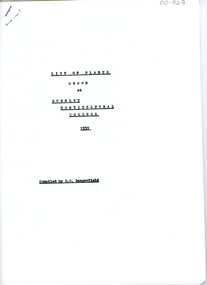
Document - Register, B.G. Dangerfield, List of Plants Grown at Burnley Horticultural College 1959, 1959 - 1960
... ...field officer...Dangerfield (Barry) Field Officer, Burnley College (2 copies). The list has a front page and an additional alphabetical ordered 22 pages. ...Dangerfield (Barry) Field Officer, Burnley College (2 copies). The list has a front page and an additional alphabetical ordered 22 pages. ...List of plants grown at Burnley Horticultural College, comp. by B.G. Dangerfield. The original register was obtained in sequence with a cache of files from Dookie. Dangerfield staff membeer 1956-1960.Typed list of plants grown at Burnley Horticultural College in 1959 compiled by B. G. Dangerfield (Barry) Field Officer, Burnley College (2 copies). The list has a front page and an additional alphabetical ordered 22 pages. Extra one page at the end "To be added to List" of removed and replanted specimens 1960-1960. The document is one sided roneod typescript.plants, burnley horticultural college, b.g. dangerfield, field officer, plant list, register -
 Vision Australia
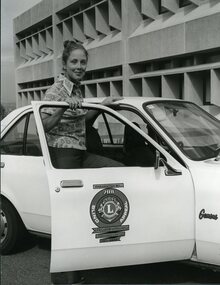
Photograph - Image, Julie Lazarus and the new RBS Field Service car
... Julie Lazarus, an RBS Field Officer, is shown entering a Gemini which has the Lions logo and "Presented by, Lions Blind Appeal, Royal Blind Society, Field Welfare Service, 747-6622" on the driver side door....Julie Lazarus, Field Welfare Officer, File: Field Services Julie Lazarus, RBS Field Officer, with car presented by Lions....Royal Blind Society of New South Wales Julie Lazarus Lions Club Julie Lazarus, Field Welfare Officer, File: Field Services Julie Lazarus, RBS Field Officer, with car presented by Lions. 2 photographs (1 B/W & 1 col.) of woman about to step inside car parked in Enfield driveway Julie Lazarus and the new RBS Field Service car Photograph Image ...To reach clients who can not come into the RBS offices in Enfield, a field service was provided. Cars were sometimes donated by charitable organisations, such as the Lions Club. Julie Lazarus, an RBS Field Officer, is shown entering a Gemini which has the Lions logo and "Presented by, Lions Blind Appeal, Royal Blind Society, Field Welfare Service, 747-6622" on the driver side door.2 photographs (1 B/W & 1 col.) of woman about to step inside car parked in Enfield drivewayJulie Lazarus, Field Welfare Officer, File: Field Services Julie Lazarus, RBS Field Officer, with car presented by Lions.royal blind society of new south wales, julie lazarus, lions club -
 Uniting Church Archives - Synod of Victoria
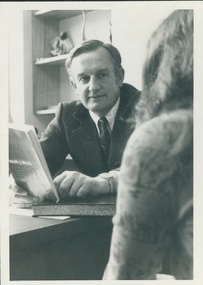
BW photo, September 1977
... Reverend Robert Patterson, ordained in 1962, Fawkner-East Coburg, DCE, South Melbourne, Board of Local Mission, Executive Secretary Division of Field Services, Research Officer, Synod Coordinating Commission, Highton-Barabool Hills; retired in 1989....Reverend Robert Patterson was ordained in 1962 and served at Fawkner-East Coburg, DCE, South Melbourne, Board of Local Mission, Executive Secretary Division of Field Services, Research Officer, Synod Coordinating Commission, Highton-Barabool Hills. ...Reverend Robert Patterson was ordained in 1962 and served at Fawkner-East Coburg, DCE, South Melbourne, Board of Local Mission, Executive Secretary Division of Field Services, Research Officer, Synod Coordinating Commission, Highton-Barabool Hills. ...Reverend Robert Patterson was ordained in 1962 and served at Fawkner-East Coburg, DCE, South Melbourne, Board of Local Mission, Executive Secretary Division of Field Services, Research Officer, Synod Coordinating Commission, Highton-Barabool Hills. He retired in 1989.Rev. Robert Patterson is seated at a desk facing someone who is sitting opposite him. Wearing a suit and tie.Bob Patterson Church and Nation 21/9/1977 page 9reverend robert patterson, ordained in 1962, fawkner-east coburg, dce, south melbourne, board of local mission, executive secretary division of field services, research officer, synod coordinating commission, highton-barabool hills; retired in 1989. -
 Federation University Historical Collection
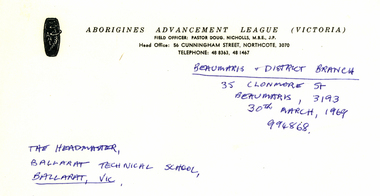
Letter - Correspondence, Mrs J. Cope, Correspondence from the Aborigines Advancement League (Victoria), 1969, 30/03/1969
... Pastor Doug Nicholls, M.B.E., J.P. was field officer for the Aborigines Advancement League (Victoria)....Pastor Doug Nicholls, M.B.E., J.P. was field officer for the Aborigines Advancement League (Victoria). ...Pastor Doug Nicholls, M.B.E., J.P. was field officer for the Aborigines Advancement League (Victoria).Quarto hand written letter on letterhead of the Correspondence from the Aborigines Advancement League (Victoria) to the headmaster of the Ballarat Technical School. The letter relates to a bursary for a student. aborigines, aboriginal, aborigines advancement league (victoria), doug nicholls, cope, muir -
 Cheese World Museum
Vacuum recorder, E.M.P. Engineers Ltd, c1960
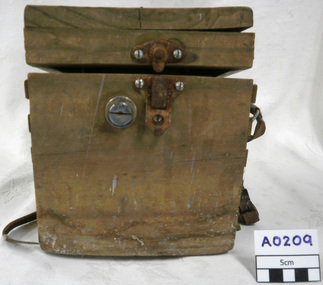
... Used by first Warrnambool Cheese and Butter Factory Company Ltd Field Officer, Bruce McLaren, for on-farm testing in the Allansford area to check the amount of suction in milking machines....Used by first Warrnambool Cheese and Butter Factory Company Ltd Field Officer, Bruce McLaren, for on-farm testing in the Allansford area to check the amount of suction in milking machines. ...Used by first Warrnambool Cheese and Butter Factory Company Ltd Field Officer, Bruce McLaren, for on-farm testing in the Allansford area to check the amount of suction in milking machines.Phillips Rurakura Vacuum Recorder in a wooden box with lid, metal hinges and fastening clip, screw adjustment and name plate on outside. Inside has a clockwork-operated recorder with pen device to roll of paper.Internal: Trade mark Empel E.M.P. Engineers Ltd PO Box 5125, Hamilton, NZ Aust. Pat. 209 510. NZ Pat. 112 486. External: Empel Phillips Ruakura Type Vacuum recorder, Makers E.M.R. Engineers Ltd. PO Box 5125, Hamilton NZ -
 Running Rabbits Military Museum operated by the Upwey Belgrave RSL Sub Branch
Hat
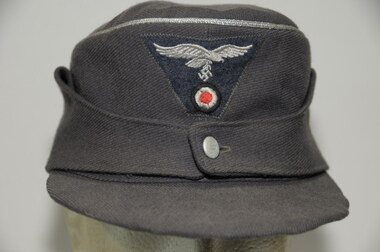
... Cap field M43 German Luftwaffe officer...Headgear WW11 General Cap field M43 German Luftwaffe officer Hat ...Cap field M43 German Luftwaffe officerheadgear, ww11, general -
 Bendigo Military Museum
Photograph - PHOTOGRAPH WW1, FRAMED, c.1917
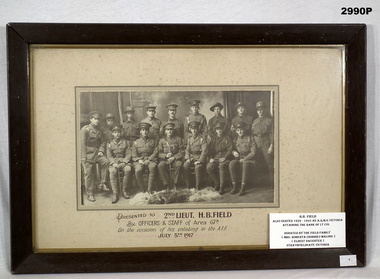
... Botton centre: “Presented to 2nd Lieut. H. B. Field by Officers & Staff of Area 67B. On the occasion of his enlisting in the AIF July 5th 1917”....Passchendaele barracks trust 67th Bn framed Botton centre: “Presented to 2nd Lieut. H. B. Field by Officers & Staff of Area 67B. On the occasion of his enlisting in the AIF July 5th 1917”. ...H.B. Field, refer Cat No 890P for his service details.Wooden frame, cream border, glass fronted, sepia group photo of officers & staff.Botton centre: “Presented to 2nd Lieut. H. B. Field by Officers & Staff of Area 67B. On the occasion of his enlisting in the AIF July 5th 1917”.passchendaele barracks trust, 67th bn, framed -
 Bendigo Military Museum
Photograph - Military Funeral, Army Headquarters Survey Regiment Personnel, Harcourt, c1960s
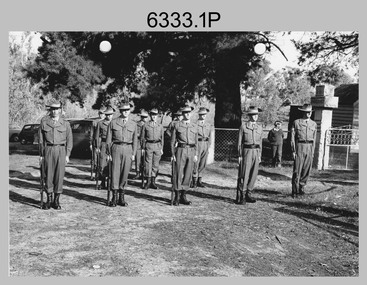
... As a senior officer of field rank (Colonel or above) led the funeral procession, it is presumed the unknown deceased soldier was also a highly ranked field officer. ...As a senior officer of field rank (Colonel or above) led the funeral procession, it is presumed the unknown deceased soldier was also a highly ranked field officer. ...This is a set of 15 black & white photographs of troops from the Army Headquarters Survey Regiment, Fortuna, Bendigo undertaking ceremonial drill at a military funeral held in Harcourt circa 1960s. As a senior officer of field rank (Colonel or above) led the funeral procession, it is presumed the unknown deceased soldier was also a highly ranked field officer. It is presumed the location of the burial was Harcourt in central Victoria, based on the inscription on the pillar at the entrance to the cemetery. This is a set of 15 black & white photographs of troops from the Army Headquarters Survey Regiment, Fortuna, Bendigo undertaking ceremonial drill at a military funeral held in Harcourt circa 1960s. The photographs were printed on photographic paper and are part of the Army Survey Regiment’s Collection. The photographs were scanned at 300 dpi. .1) to .15) - Photo, black & white, c1960s. Unidentified soldiers and civilians. No inscriptions or markings. No personnel are identified.royal australian survey corps, rasvy, army survey regiment, army svy regt, fortuna, asr -
 Bendigo Military Museum
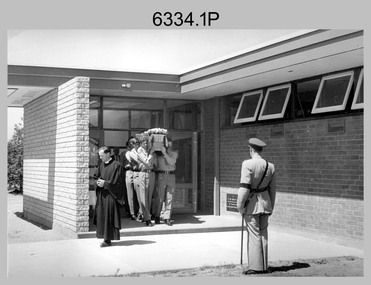
Photograph - Military Funeral, Army Headquarters Survey Regiment Personnel, Mildura, 1968
... As a senior officer of field rank (Colonel or above) led the funeral procession, it is presumed the unknown deceased soldier was also a highly ranked field officer. ...As a senior officer of field rank (Colonel or above) led the funeral procession, it is presumed the unknown deceased soldier was also a highly ranked field officer. ...This is a set of 26 black & white photographs of troops from the Army Headquarters Survey Regiment undertaking ceremonial drills at a military funeral held at Mildura in 1968. As a senior officer of field rank (Colonel or above) led the funeral procession, it is presumed the unknown deceased soldier was also a highly ranked field officer. The location of the funeral service was the Methodist Church in Merbein, based on the sign in photo .2P and the burial was held at the Midura Cemetery in northwest Victoria, based on the annotation on the back of photo .10P.This is a set of 26 black & white photographs of troops from the Army Headquarters Survey Regiment undertaking ceremonial drills at a military funeral held at Mildura in1968. The photographs were printed on photographic paper and are part of the Army Survey Regiment’s Collection. The photographs were scanned at 300 dpi. .1) to .8) - Photo, black & white, 1968. All unidentified. .9) &.10) - Photo, black & white, 1968. Front rank L to R: unidentified (x4), SPR Bob Williams, SPR John McCracken, remainder unidentified. Rear rank L to R: all unidentified. .11) to .13) - Photo, black & white, 1968. File on right: No. 4 - SPR Bob Williams, No. 5 - SPR John McCracken, remainder unidentified. File on left: all unidentified. .14) to .19) - Photo, black & white, 1968. All unidentified. .20) - Photo, black & white, 1968. Front rank L to R: all unidentified. Rear rank L to R: unidentified, SPR John McCracken, SPR Bob Williams, remainder unidentified. .21) to .26) - Photo, black & white, 1968. All unidentified. There are no annotations, except the date ‘1968’ is written on the back of photo .10P. No personnel are identified.royal australian survey corps, rasvy, army survey regiment, army svy regt, fortuna, asr -
 Uniting Church Archives - Synod of Victoria
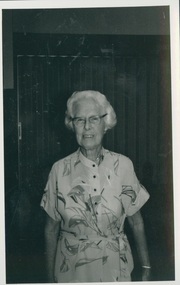
Photograph, Undated c.1970s
... Presbyterian Church Elder; field officer World Christian Action 1974....Presbyterian Church Elder; field officer World Christian Action 1974. Mrs Jean Yule, Presbyterian, Presbyterian Life, Freedom from Hunger, P.W.A., writer B & W gloss, waist length photograph of Mrs Jean Yule. ...Mrs Jean Yule O.A.M. was editor of the "Women in the Church" column of the Australian Presbyterian Life newspaper 1960 - 1975. Member of the Presbyterian Church Freedom from Hunger Victorian committee. President of the Presbyterian Women's Association (P.W.A.) 1966 - 1969. Representative to the East Asian Christian Conference. Presbyterian Church Elder; field officer World Christian Action 1974.B & W gloss, waist length photograph of Mrs Jean Yule.mrs jean yule, presbyterian, presbyterian life, freedom from hunger, p.w.a., writer -
 National Vietnam Veterans Museum (NVVM)
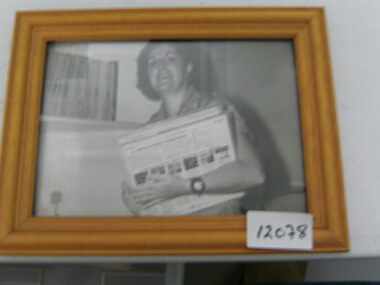
Photograph, Red Cross Girl Carmel O'Shea, 1970
... Red Cross Field Officer Carmel O'Shea was a disc jockey at the Australian Forces Radio station operated by the RAAF. ...Red Cross Field Officer Carmel O'Shea was a disc jockey at the Australian Forces Radio station operated by the RAAF. ...Red Cross Field Officer Carmel O'Shea was a disc jockey at the Australian Forces Radio station operated by the RAAF. They broadcast to all Australian forces in Phuoc Thuy Province. Miss O'Shea, who was attached to the 1st Australian Field Hospital, Vung Tau, gave this photograph to Lt Patricia Ferguson, Royal Australian Army Nursing Corps, who served at 1st Australian Field Hospital in Vietnam from 18 Feb 1970 until 05 Nov 1970. Photograph removed from frame: Young brunette woman in Red Cross uniform holding a stack of LP records under her left arm. A long line LP records on a shelf to her right.Red Cross girl Carmel O'Shea, Sth Vietnam 1970photograph, red cross, carmel o'shea, trish ferguson, patricia ferguson, radio, australian forces radio, 1st australian field hospital, 1afh -
 4th/19th Prince of Wales's Light Horse Regiment Unit History Room
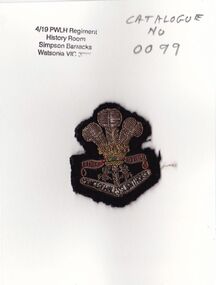
Badge, 4th/19th Prince of Wales's Light Horse Regiment, c 1965
... Unofficial badge. Worn by officers on field dress berets. 1960's - 1970's...Unofficial badge. Worn by officers on field dress berets. 1960's - 1970's Badge 4/19 PWLH Cloth beret badge of 4/19 Prince of Wales's Light Horse Regiment. ...Unofficial badge. Worn by officers on field dress berets. 1960's - 1970'sCloth beret badge of 4/19 Prince of Wales's Light Horse Regiment. Coloured metallic thread on black cloth. badge, 4/19 pwlh -
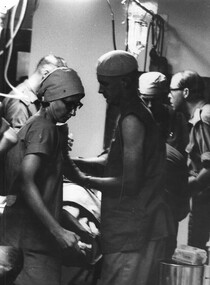 National Vietnam Veterans Museum (NVVM)
Photograph, Gibbons, Denis, Prep for Surgery 1
... A black and white photograph of Sister June Minchow, Medics Alex (Chuck) Berry and Private Peter Carey (with the 1st Australian Field Hospital) and Commanding Officer, Lt Col Mike Naughton....Photograph 1st Australian Field Hospital Sister June Minchow Alex (Chuck) Berry - Medic Pte Peter Carey - Medic Lt Col Naughton Gibbons Collection Catalogue Denis Gibbons Photographer Vietnam War Medics A black and white photograph of Sister June Minchow, Medics Alex (Chuck) Berry and Private Peter Carey (with the 1st Australian Field Hospital) and Commanding Officer, Lt Col Mike Naughton. ...Denis Gibbons (1937 – 2011) Trained with the Australian Army, before travelling to Vietnam in January 1966, Denis stayed with the 1st Australian Task Force in Nui Dat working as a photographer. For almost five years Gibbons toured with nine Australian infantry battalions, posting compelling war images from within many combat zones before being flown out in late November 1970 after sustaining injuries. The images held within the National Vietnam Veterans Museum make up the Gibbons Collection.A black and white photograph of Sister June Minchow, Medics Alex (Chuck) Berry and Private Peter Carey (with the 1st Australian Field Hospital) and Commanding Officer, Lt Col Mike Naughton.photograph, 1st australian field hospital, sister june minchow, alex (chuck) berry - medic, pte peter carey - medic, lt col naughton, gibbons collection catalogue, denis gibbons, photographer, vietnam war, medics -
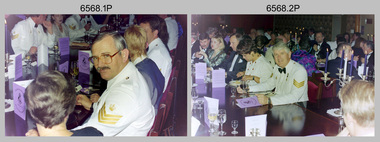 Bendigo Military Museum
Photograph - 4th Field Survey Squadron Corps Day Formal Dinner, Keswick Barracks, Adelaide SA, 1994
... This is a set of photographs of a 4th Field Survey Squadron Officers, Warrant Officers and Sergeants Corps Day Formal Dinner held at Keswick Barracks, Adelaide SA in July 1994. ...This is a set of 26 photographs of a 4th Field Survey Squadron Officer, Warrant Officer and Sergeant’s Formal Dinner held at Keswick Barracks, Adelaide SA in July 1994. ...This is a set of photographs of a 4th Field Survey Squadron Officers, Warrant Officers and Sergeants Corps Day Formal Dinner held at Keswick Barracks, Adelaide SA in July 1994. ...This is a set of photographs of a 4th Field Survey Squadron Officers, Warrant Officers and Sergeants Corps Day Formal Dinner held at Keswick Barracks, Adelaide SA in July 1994. It is apparent there were visiting personnel from the Army Survey Regiment and other unidentified units. This is a set of 26 photographs of a 4th Field Survey Squadron Officer, Warrant Officer and Sergeant’s Formal Dinner held at Keswick Barracks, Adelaide SA in July 1994. The colour photographs are on 35mm negative film and are part of the Army Survey Regiment’s Collection. The photographs were scanned at 96 dpi. .1) - Photo, colour, 1994. Facing camera – SSGT Brian Collings. .2) - Photo, colour, 1994. L to R: facing camera – John Jones, Sharon Jones, Peter ‘Jack’ Elverd, Julie Elverd, SGT Martin Evans, remainder unidentified. .3) - Photo, colour, 1994. Unidentified guests. .4) - Photo, colour, 1994. L to R: facing camera – unidentified (x2), SSGT A. Simcock, SGT Peter Hardy, unidentified, MAJ Bob Williams. .5) - Photo, colour, 1994. L to R: facing camera – unidentified (x2), SSGT Pat ‘Fuji’ Drover, unidentified guests (x2), Ian Belmont, unidentified. .6) - Photo, colour, 1994. L to R: facing camera – unidentified (x4), Allan Adsett, Judyne Adsett, unidentified, LT Andrew Caudle, unidentified. .7) - Photo, colour, 1994. L to R: facing camera – unidentified (x7), Allan Adsett. SPR Chris Pearse (steward), Eddie Jacobs (in background). .8) - Photo, colour, 1994. John Zuringer (flower in lapel) remainder unidentified. .9) - Photo, colour, 1994. L to R: facing camera – unidentified, LTCOL George Ricketts (Ret), remainder unidentified. .10) - Photo, colour, 1994. Head table facing camera L to R: unidentified (x2), OC MAJ Peter Demaine, unidentified, WO2 Peter Hammer, SSGT Lynn Johnson, DSVY-A COL Simon Lemon. .11) - Photo, colour, 1994. Food preparation. L to R: LCPL Mitch Oake, unidentified. .12) - Photo, colour, 1994. Dixie bashing. L to R: CPL Brett Parkin, remainder unidentified. .13) - Photo, colour, 1994. Locker art. .14) - Photo, colour, 1994. Dixie bashing. SPR Mark McInerney. .15) - Photo, colour, 1994. L to R: facing camera – unidentified, Bob Williams, unidentified (x3), SGT Mark Donnelly (in background). .16) - Photo, colour, 1994. L to R: facing away from camera – LTCOL George Ricketts (Ret), unidentified. Facing camera - unidentified (x9), Allan Adsett, Judyne Adsett, unidentified, LT Andrew Caudle, unidentified(x2). .17) - Photo, colour, 1994. L to R: facing away from camera – LTCOL George Ricketts (Ret), unidentified. Facing camera - unidentified (x9), Allan Adsett, Judyne Adsett. .18) - Photo, colour, 1994. Head table facing camera L to R: SSGT Lynn Johnson (edge of photo), DSVY-A COL Simon Lemon, unidentified, CAPT Chris Topovsek, unidentified in foreground, WO1 Stevo Hinic. .19) - Photo, colour, 1994. Head table facing camera L to R: unidentified, OC MAJ Peter Demaine, unidentified, WO2 Peter Hammer, unidentified (x2) in foreground. .20) - Photo, colour, 1994. L to R: facing camera – unidentified (x4), WO1 Mick Sarson, unidentified (x2). .21) - Photo, colour, 1994. L to R: facing camera – unidentified, SSGT Brian Collings, unidentified, WO2 Roger Rees, unidentified (x3), CAPT Tony Stephens. .22) - Photo, colour, 1994. L to R: facing camera – unidentified, SSGT A. Simcock. .23) - Photo, colour, 1994. L to R: facing camera – unidentified, SSGT A. Simcock, SGT Peter Hardy. .24) - Photo, colour, 1994. L to R: facing camera – Lorraine Talbot-Smith (edge of photo), WO2 Ken Talbot-Smith, unidentified, WO2 Simon ‘Andy’ Capp, unidentified, Eddie Jacobs. .25) - Photo, colour, 1994. L to R: facing camera – unidentified, SGT H. Evertz, Pat Belmont, Ian Belmont. .26) - Photo, colour, 1994. L to R: facing camera – unidentified, CAPT Tony Stephens, unidentified..1P to .26P – There are no personnel identified. ‘1994 CORPS BIRTHDAY’ annotated on negatives sleeve.royal australian survey corps, rasvy, 4 fd svy sqn -
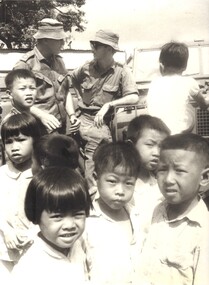 National Vietnam Veterans Museum (NVVM)
Photograph, Gibbons, Denis, Decontamination of Baria Jail
... Field Hygiene Unit...Gibbons Collection Catalogue...Health Officer...A black and white photograph of children milling about as Lt Phil Hills OC 1st Australian Task Force Health Officer, Field Hygiene Unit, Nui Dat, discusses the day's work with one of his staff as they prepare to de-louse Baria Jail following a bad outbreak of malaria and dengue fever....Photograph Lt Phil Hills 1st Australian Task Force Baria Jail Dengue Fever Malaria 1st Australian Field Hygiene Unit Gibbons Collection Catalogue Health Officer Vietnamese Children Denis Gibbons A black and white photograph of children milling about as Lt Phil Hills OC 1st Australian Task Force Health Officer, Field Hygiene Unit, Nui Dat, discusses the day's work with one of his staff as they prepare to de-louse Baria Jail following a bad outbreak of malaria and dengue fever. ...Denis Gibbons (1937 – 2011) Trained with the Australian Army, before travelling to Vietnam in January 1966, Denis stayed with the 1st Australian Task Force in Nui Dat working as a photographer. For almost five years Gibbons toured with nine Australian infantry battalions, posting compelling war images from within many combat zones before being flown out in late November 1970 after sustaining injuries. The images held within the National Vietnam Veterans Museum make up the Gibbons Collection. A black and white photograph of children milling about as Lt Phil Hills OC 1st Australian Task Force Health Officer, Field Hygiene Unit, Nui Dat, discusses the day's work with one of his staff as they prepare to de-louse Baria Jail following a bad outbreak of malaria and dengue fever.photograph, lt phil hills, 1st australian task force, baria jail, dengue fever, malaria, 1st australian field hygiene unit, gibbons collection catalogue, health officer, vietnamese children, denis gibbons -
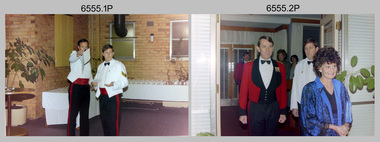 Bendigo Military Museum
Photograph - 4th Field Survey Squadron 75thAnniversary Corps Day Formal Dinner, Keswick Barracks, Adelaide SA, 1990
... This is a set of 14 photographs of a 4th Field Survey Squadron Officers, Warrant Officers and Sergeants Formal Dinner held at Keswick Barracks, Adelaide SA in 1990. ...This is a set of 14 photographs of a 4th Field Survey Squadron Officer, Warrant Officer and Sergeant’s Formal Dinner held at Keswick Barracks, Adelaide SA in 1990. ...This is a set of 14 photographs of a 4th Field Survey Squadron Officers, Warrant Officers and Sergeants Formal Dinner held at Keswick Barracks, Adelaide SA in 1990. ...This is a set of 14 photographs of a 4th Field Survey Squadron Officers, Warrant Officers and Sergeants Formal Dinner held at Keswick Barracks, Adelaide SA in 1990. This formal dinner was held to commemorate the 75th anniversary of the formation of the Royal Australian Survey Corps. It is apparent there were visiting personnel from the Army Survey Regiment and other unidentified units. See item 6556.8P for photos taken at 4th Field Survey Squadron commemorating the 75th anniversary.This is a set of 14 photographs of a 4th Field Survey Squadron Officer, Warrant Officer and Sergeant’s Formal Dinner held at Keswick Barracks, Adelaide SA in 1990. The colour photographs are on 35mm negative film and are part of the Army Survey Regiment’s Collection. The photographs were scanned at 96 dpi. .1) - Photo, colour, 1990. L to R: SSM WO1 Alan Toogood - Dining President, SGT Peter Hardy – Mr Vice. .2) - Photo, colour, 1990. Guest Arrival. L to R: unidentified officers (x2), unidentified guests (x2), SGT Peter Hardy – Mr Vice, unidentified guest. .3) - Photo, colour, 1990. Guest Arrival. L to R: unidentified guest, unidentified SNCO & senior officer, unidentified guests (x3), SGT Peter Hardy – Mr Vice. .4) - Photo, colour, 1990. Guest Arrival. L to R: unidentified guest, LTCOL George Ricketts (Ret), SSM WO1 Alan Toogood - Dining President, SGT Peter Hardy – Mr Vice. .5) - Photo, colour, 1990. Guest Arrival. L to R: LTCOL Rene van den Tol - CO Army Svy Regt, unidentified guest, SGT Peter Hardy – Mr Vice. .6) - Photo, colour, 1990. Guest Arrival. L to R: SGT Peter Hardy – Mr Vice, probably the RSM of Keswick Barracks. .7) - Photo, colour, 1990. Guest Arrival. SGT Jamie McRae and partner. .8) - Photo, colour, 1990. Guest Arrival. SGT John Zuringer and partner. .9) - Photo, colour, 1990. Head table facing camera L to R: unidentified guest, LTCOL George Ricketts (Ret), unidentified guest, SSM WO1 Alan Toogood - Dining President. Unidentified officer & guests in foreground. .10) - Photo, colour, 1990. Head table facing camera L to R: LTCOL George Ricketts (Ret), unidentified guest, SSM WO1 Alan Toogood - Dining President, OC MAJ Laurie Newton, unidentified officer & guests. Unidentified guests in foreground. .11) - Photo, colour, 1990. Facing camera right of candlesticks L to R: CAPT Danny Galbraith, unidentified guest, SGT Stu Symonds, Tracey Phillips, SGT John Zuringer. .12) - Photo, colour, 1990. Facing camera L to R: WO1 Bill Griggs, unidentified guest, SGT Steve Winner, unidentified guest, SSGT Peter Hammer, unidentified guest, LTCOL Rene van den Tol - CO Army Svy Regt, unidentified guest, SGT John Phillips. Remainder unidentified. .13) - Photo, colour, 1990. Facing camera L to R: unidentified guest, SGT Jamie McRae, unidentified guest, SGT Peter Hardy – Mr Vice. Remainder unidentified. .14) - Photo, colour, 1990. Facing camera L to R: unidentified guests, Mr Darby Munro (behind candlestick), unidentified guest, SGT Eddie Jacobs, unidentified senior officer, unidentified guest, CAPT Tony Stephens. Remainder unidentified. .1P to .14P – There are no personnel identified. ‘1990 CORPS BIRTHDAY’ annotated on negatives sleeve.royal australian survey corps, rasvy, 4 fd svy sqn -
 Federation University Historical Collection
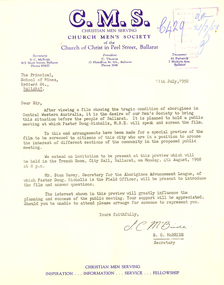
Letter - Correspondence, S.C. McBride, Letter concerning the work of Pastor Doug Nicholls and the Aborigines Advancement League, 1958, 11/07/1958
... Founding President of the League was Gordon Bryant, with Doris Blackburn as Deputy President, Stan Davey as Secretary and Douglas Nicholls as Field Officer. Early activities included lobbying for a referendum to change the Australian constitution to allow the Federal government to legislate on Aboriginal affairs, and an establishing a legal defence fund for Albert Namatjira, after he was charged with supplying liquor to an Aboriginal ward.[1] By 1967 it had moved to being fully controlled by Aboriginal people with Bill Onus as the first Aboriginal President....Founding President of the League was Gordon Bryant, with Doris Blackburn as Deputy President, Stan Davey as Secretary and Douglas Nicholls as Field Officer. Early activities included lobbying for a referendum to change the Australian constitution to allow the Federal government to legislate on Aboriginal affairs, and an establishing a legal defence fund for Albert Namatjira, after he was charged with supplying liquor to an Aboriginal ward.[1] By 1967 it had moved to being fully controlled by Aboriginal people with Bill Onus as the first Aboriginal President. doug nicholls c. thomas aborigines ballarat town hall stan davey s.c. mcbride letterhead Typed letter on Church Men's Society (C.M.S.) letterhead. ...The Church Men's Society was a part of the Church of Christ in Peel Street, Ballarat. In 1958 the President was C. Thomas, and S.C. McBride was Secretary. The Aborigines Advancement League (also known as the Aboriginal Advancement League) claims to be the oldest Aboriginal organisation in Australia. It is primarily concerned with Aboriginal welfare issues and the preservation of Aboriginal culture and heritage, and is based in Melbourne. The League was established in 1957 as a response to an enquiry by retired magistrate, Charles McLean, into the circumstances of Aboriginal Victorians. McLean was critical of conditions in the Lake Tyers and Framlingham Aboriginal Reserves. McLean recommended that persons of mixed Aboriginal and European descent be removed from the reserves. The people of Lake Tyers objected to this, and the League was formed out of their campaign. The new League drew from two already existing organisations, the Australian Aborigines League, established 1934 and the Save the Aborigines Committee, which had been established in 1955 as a response to the Warburton Ranges crisis. Founding President of the League was Gordon Bryant, with Doris Blackburn as Deputy President, Stan Davey as Secretary and Douglas Nicholls as Field Officer. Early activities included lobbying for a referendum to change the Australian constitution to allow the Federal government to legislate on Aboriginal affairs, and an establishing a legal defence fund for Albert Namatjira, after he was charged with supplying liquor to an Aboriginal ward.[1] By 1967 it had moved to being fully controlled by Aboriginal people with Bill Onus as the first Aboriginal President.Typed letter on Church Men's Society (C.M.S.) letterhead. The letter concerns a film 'showing the tragic condition of aborigines in Central Western Australia ...' The C.M.S. (Ballarat) planned to hold a public meeting in Ballarat at which Pastor Doug Nicholls, M.B.E. will speak and screen the film. doug nicholls, c. thomas, aborigines, ballarat town hall, stan davey, s.c. mcbride, letterhead -
 Bendigo Historical Society Inc.
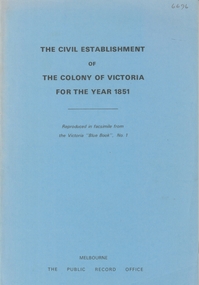
Booklet - The Civil Establishment of the Colony of Victoria for 1851
... Included positions in the fields of Government officers, Police , penal, judicial medical, ecclesiastical and education. ...Included positions in the fields of Government officers, Police , penal, judicial medical, ecclesiastical and education. ...Port Phillip was first settled in 1803 and became a part of NSW in 1836. It became it's own governing colony in 1851. This statistical book lists public servants for the colony alphabetically, their role, place of employment, and a page reference to a description of the role can be found. Included positions in the fields of Government officers, Police , penal, judicial medical, ecclesiastical and education. Includes salaries for the various positions.Blue soft cover booklet of 76 pages. Titled 'The Civil Establishment of The Colony of Victoria for the Year 1851' Reproduced in facsimile from the Victoria 'Blue Book, No,1 First published in 1976 by the Public Record Office, Melbourne. Printed by C.H.Rixon, Government Printer, Melbourne civil establishment, victoria 1851 -
 Bendigo Military Museum
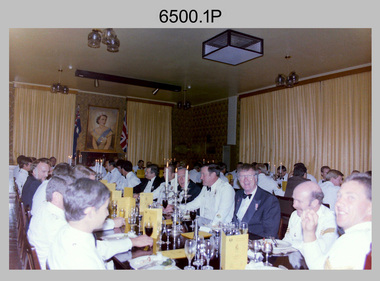
Photograph - 4th Field Survey Squadron Formal Dinner, Keswick Barracks, Adelaide SA, 1986
... This is a set of 11 photographs of a 4th Field Survey Squadron Officers, Warrant Officers and Sergeants Formal Dinner held at Keswick Barracks, Adelaide SA in 1986. ...This is a set of 11 photographs of a 4th Field Survey Squadron Officer, Warrant Officer and Sergeant’s Formal Dinner held at Keswick Barracks, Adelaide SA in 1986. ...This is a set of 11 photographs of a 4th Field Survey Squadron Officers, Warrant Officers and Sergeants Formal Dinner held at Keswick Barracks, Adelaide SA in 1986. ...This is a set of 11 photographs of a 4th Field Survey Squadron Officers, Warrant Officers and Sergeants Formal Dinner held at Keswick Barracks, Adelaide SA in 1986. On this occasion WO1 Alex ‘Darby’ Munro and WO1 Geoff Briggs were farewelled. WO1 Munro retired from the Australian Regular Army after 30 years of service. WO1 Geoff Briggs continued his service and retired in 1991. It is apparent there were visiting personnel from the Army Survey Regiment and other unidentified units. See item 6501.35P for black & white photos taken at the dinner.This is a set of 11 photographs of a 4th Field Survey Squadron Officer, Warrant Officer and Sergeant’s Formal Dinner held at Keswick Barracks, Adelaide SA in 1986. The colour photographs are on 35mm negative film and are part of the Army Survey Regiment’s Collection. The photographs were scanned at 96 dpi. .1) - Photo, colour, 1986. Facing camera L to R: unidentified, Stevo Hinic, unidentified (x3), Bob Mason - Army Svy Regt’s RSM, unidentified, John Harrison, Roger Rees, Mick Hogan. .2) - Photo, colour, 1986. Facing camera L to R: unidentified, Malcolm Hentschel, unidentified, Bob Mason - Army Svy Regt’s RSM, unidentified, John Harrison, Roger Rees, Mick Hogan. Facing away from camera L to R: unidentified (x2), George Timmins. .3) - Photo, colour, 1986. Head table facing camera L to R: Ian Rose, Jorge Gruszka (Army Svy Regt’s CO), Don Taylor - OC, Darby Munro - Tech WO, Bill Griggs - SSM, Geoff Briggs, George Ricketts, unidentified RSM Keswick Barracks. .4) - Photo, colour, 1986. Left side of table: unidentified officer. Right side of table L to R: behind candles – Phil Smalley, Bob Mills, unidentified, Bob Garritty, Ian Rose. .5) - Photo, colour, 1986. Left table facing away from camera: Russell ‘Rusty’ Williams, unidentified. Left table facing camera L to R: unidentified, Peter Imeson, Dave Stephenson, Alan Brown, Bob Rogister, Wally Chilcott, unidentified, Barry Lutwyche OAM, Neil Jones, Bob Dickkenberg. .6) - Photo, colour, 1986. Head table facing camera L to R: Jorge Gruszka - CO Army Svy Regt , Don Taylor - OC, Darby Munro - Tech WO, Bill Griggs - SSM, Geoff Briggs, George Ricketts, unidentified RSM Keswick Barracks. Wearing suit in foreground - Bob Dickkenberg. .7) - Photo, colour, 1986. Left table facing away from camera: unidentified (x3), Gary Warnest, Ross Jenkins, Bruce ‘Stretch’ Gordon, unidentified (x2). Left table facing camera L to R: Bill Tewson, Peter Imeson, Dave Stephenson, Alan Brown, Bob Rogister, Wally Chilcott. .8) - Photo, colour, 1986. Left table facing camera L to R: Alan Brown, Bob Rogister, Wally Chilcott, unidentified, Barry Lutwyche OAM, Neil Jones, Bob Dickkenberg. .9) - Photo, colour, 1986. Facing away from camera: Dave Stephenson, unidentified (x2). Facing camera L to R: unidentified, Tony Gee, Brett ‘Dutchy’ Van Leeuwen, Bruce ‘Stretch’ Gordon, Ross Jenkins, Gary Warnest, unidentified (x2), Ray Sargeant, Stu Symonds. .10) - Photo, colour, 1986. Facing away from camera: Mick Hogan, Roger Rees, unidentified. Facing camera L to R: unidentified stewards (x2), unidentified (x2), Allan Adsett, Terry Lord, unidentified, Simon Reynolds – steward, George Timmins. .11) - Photo, colour, 1986. Head table L to R: Geoff Briggs, George Ricketts, unidentified RSM Keswick Barracks. Facing away from camera: unidentified, Neil Jones, remainder unidentified. Facing camera L to R: Steve Cooper, Darcy Patrick, Russell ‘Rusty’ Williams, John Scharber, Tony Gee, Brett ‘Dutchy’ Van Leeuwen..1P to .11P – There are no personnel identified. ‘1986 Formal Dinner’ annotated on negatives sleeve.royal australian survey corps, rasvy, 4 fd svy sqn -
 Moorabbin Air Museum
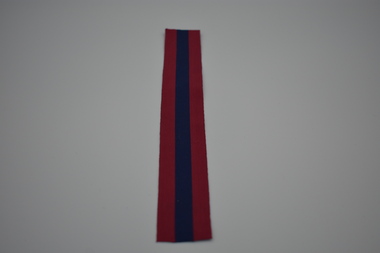
Badge (item) - Military Medal Ribbon, Distinguished Conduct Medal (DCM)
... The medal was a military decoration awarded for " gallantry in the field" to non-commissioned officers and enlisted personnel of the British Army and later, Commonwealth forces. ...The medal was a military decoration awarded for " gallantry in the field" to non-commissioned officers and enlisted personnel of the British Army and later, Commonwealth forces. ... -
 Bendigo Military Museum
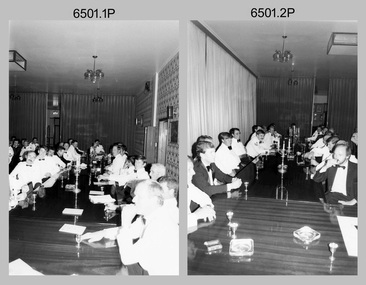
Photograph - 4th Field Survey Squadron Formal Dinner, Keswick Barracks, Adelaide SA, 1986
... This is a set of 35 photographs of a 4th Field Survey Squadron Officers, Warrant Officers and Sergeants Formal Dinner held at Keswick Barracks, Adelaide SA in 1986. ...This is a set of 35 photographs of a 4th Field Survey Squadron Officer, Warrant Officer and Sergeant’s Formal Dinner held at Keswick Barracks, Adelaide SA in 1986. ...This is a set of 35 photographs of a 4th Field Survey Squadron Officers, Warrant Officers and Sergeants Formal Dinner held at Keswick Barracks, Adelaide SA in 1986. ...This is a set of 35 photographs of a 4th Field Survey Squadron Officers, Warrant Officers and Sergeants Formal Dinner held at Keswick Barracks, Adelaide SA in 1986. On this occasion WO1 Alex ‘Darby’ Munro and WO1 Geoff Briggs were farewelled. WO1 Munro retired from the Australian Regular Army after 30 years of service. WO1 Geoff Briggs continued his service and retired in 1991. It is apparent there were visiting personnel from the Army Survey Regiment and other unidentified units. See item 6500.11P for colour photos taken at the dinner.This is a set of 35 photographs of a 4th Field Survey Squadron Officer, Warrant Officer and Sergeant’s Formal Dinner held at Keswick Barracks, Adelaide SA in 1986. The black & white photographs are on 35mm negative film and are part of the Army Survey Regiment’s Collection. The photographs were scanned at 96 dpi. .1) - Photo, black & white, 1986. Closest to camera on left: Stevo Hinic, unidentified, Malcolm Hentschel, remainder unidentified. On right L to R: Bob Norwood, Phil Smalley, Bob Mills, unidentified, Bob Garritty, Ian Rose. .2) - Photo, black & white, 1986. On left L to R: unidentified (x2), Tony Gee, Brett ‘Dutchy’ Van Leeuwen, Gary Warnest, remainder unidentified. On right L to R: Barry Lutwyche OAM, Neil Jones, Bob Dikkenberg. .3) - Photo, black & white, 1986. Stewards relax at the bar after dinner. Simon Reynolds 2nd from right, remainder unidentified. .4) - Photo, black & white, 1986. At rear L to R: unidentified, Ian Rose. Left foreground L to R: Neil Jones, Bob Dikkenberg. Head table L to R: Jorge Gruszka - CO Army Svy Regt, Don Taylor - OC (standing), Darby Munro - Tech WO, Bill Griggs - SSM, Geoff Briggs, George Ricketts, unidentified RSM Keswick Barracks, On right L to R: unidentified, (x2), Steve Cooper. .5) - Photo, black & white, 1986. Closest to camera L to R: Bob Rogister, Wally Chilcott, unidentified, Barry Lutwyche OAM, Neil Jones. .6) - Photo, black & white, 1986. Facing camera L to R: Bill Tewson, Peter Imeson, Dave Stephenson, unidentified, Alan Brown. .7) - Photo, black & white, 1986. Facing camera L to R: unidentified (x2), John Harrison, Roger Rees, Mick Hogan. Back table L to R: Tony Gee, Bruce ‘Stretch’ Gordon, Ross Jenkins, Gary Warnest, unidentified, Ray Sargeant, Bill Tewson, Stu Symonds, unidentified. .8) - Photo, black & white, 1986. Head table L to R: Don Taylor - OC (standing), Darby Munro - Tech WO Bill Griggs – SSM, Geoff Briggs. .9) & .10) - Photo, black & white, 1986. Head table L to R: Bill Griggs – SSM, Geoff Briggs. .11) - Photo, black & white, 1986. Facing camera L to R: Malcolm Hentschel, unidentified, Bob Mason - Army Svy Regt’s RSM, unidentified (x2), John Harrison. .12) - Photo, black & white, 1986. Facing camera L to R: unidentified, Stevo Hinic, unidentified, Malcolm Hentschel. .13) - Photo, black & white, 1986. Geoff Briggs delivering his speech. .14) - Photo, black & white, 1986. Head table L to R: Jorge Gruszka - CO Army Svy Regt, Don Taylor - OC (standing), Darby Munro - Tech WO, Geoff Briggs delivering his speech, George Ricketts. .15) - Photo, black & white, 1986. Geoff Briggs delivering his speech. .16) - Photo, black & white, 1986. Facing camera L to R: Peter Imeson, Dave Stephenson, unidentified, Alan Brown, Bob Rogister, Wally Chilcott, unidentified, Barry Lutwyche OAM, Neil Jones, Bob Dikkenberg. .17) - Photo, black & white, 1986. A standing ovation at the conclusion of Geoff Briggs’ lengthy speech. Bill Griggs checks his watch. .18) - Photo, black & white, 1986. Guests standing for formal toasts. Closest to camera on left: unidentified, Stevo Hinic. At back Mr Vice – Mick Hogan. On right L to R: Allan Adsett, Terry Lord, Bob Norwood, Phil ‘Fred’ Smalley, Don Maskew, unidentified, Bob Garritty. .19) - Photo, black & white, 1986. Head table L to R: Jorge Gruszka - CO Army Svy Regt, Don Taylor - OC (standing), Darby Munro - Tech WO, WO Bill Griggs – SSM, Geoff Briggs, George Ricketts. .20) - Photo, black & white, 1986. Facing camera L to R: Brett ‘Dutchy’ Van Leeuwen, Bruce ‘Stretch’ Gordon, Ross Jenkins, Gary Warnest, unidentified (x2), Ray Sargeant, Stu Symonds, unidentified. .21) - Photo, black & white, 1986. Head table departs. On left: Stu Symonds. On right L to R: WO Bill Griggs – SSM, unidentified, Darby Munro - Tech WO, Geoff Briggs, unidentified RSM Keswick Barracks, George Ricketts. .22) - Photo, black & white, 1986. Mick Hogan - Mr Vice, takes charge. .23) - Photo, black & white, 1986. L to R: Mick Hogan - Mr Vice, Brett ‘Dutchy’ Van Leeuwen. .24) - Photo, black & white, 1986. L to R: Wally Chilcott, Mick Hogan - Mr Vice. .25) - Photo, black & white, 1986. L to R: Tony Gee, Bruce ‘Stretch’ Gordon, Ross Jenkins. .26) & .27)- Photo, black & white, 1986. L to R: unidentified RSM Keswick, Ian Rose, George Ricketts, Geoff Briggs, Bill Griggs – SSM, Darby Munro - Tech WO, Steve Cooper, Jorge Gruszka - CO Army Svy Regt, Don Taylor – OC. .28) - Photo, black & white, 1986. Facing camera L to R: Stevo Hinic, unidentified, Malcolm Hentschel. .29) - Photo, black & white, 1986. Facing camera L to R: Bill Tewson, Peter Imeson, Dave Stephenson. .30) - Photo, black & white, 1986. L to R: Darby Munro, Stu Symonds. .31) - Photo, black & white, 1986. Foreground L to R: unidentified (x2), John Harrison, Roger Rees. Background L to R: unidentified, Dave Stephenson, Stu Symonds, Peter Imeson, Bill Tewson. .32) - Photo, black & white, 1986. L to R: Wally Chilcott Mick Hogan - Mr Vice, unidentified, Brett ‘Dutchy’ Van Leeuwen, Darby Munro - Tech WO delivers a toast, unidentified, Bob Dikkenberg, unidentified, Neil Jones. .33) - Photo, black & white, 1986. L to R: John Harrison, Darby Munro - Tech WO, remainder unidentified. .34) - Photo, black & white, 1986. Guests relax at the bar after dinner. .35) - Photo, black & white, 1986. Guests relax at the bar after dinner. L to R: Steve Cooper, unidentified, Stevo Hinic, Allan Adsett, John Harrison, George Ricketts, unidentified, Darby Munro - Tech WO, unidentified (x3), Geoff Briggs, unidentified, Don Taylor – OC, Bill Griggs – SSM..1P to .35P – There are no personnel identified. ‘Farewells to:- WO1 BRIGGS & WO1 MUNRO 1986’ royal australian survey corps, rasvy, 4 fd svy sqn -
 National Vietnam Veterans Museum (NVVM)
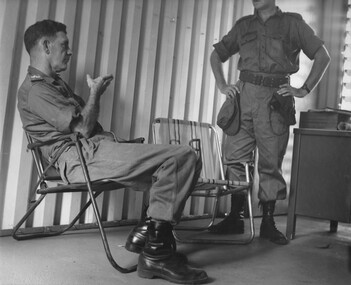
Photograph, Gibbons, Denis, Making A Point
... A black and white photograph of Maj Gen Doug Vincent Commanding Officer, Australian Force Vietnam "forcefully" makes a point to Lt Col Don Begg, Commanding Officer 1st Field Regt RAA. The talks were held in the Ist ATF Commanders office at Nui Dat, Phuoc Tuy Province, South Vietnam (circa Feb 1967)...Photograph Maj Gen Doug Vincent Lt Col Don Begg 1st Field Regt 1st ATF Base Nui Dat Phuoc Tuy Province Gibbons Collection Catalogue Australian Force Vietnam 1st Field RAA Australian Task Force Denis Gibbons A black and white photograph of Maj Gen Doug Vincent Commanding Officer, Australian Force Vietnam "forcefully" makes a point to Lt Col Don Begg, Commanding Officer 1st Field Regt RAA. ...Denis Gibbons (1937 – 2011) Trained with the Australian Army, before travelling to Vietnam in January 1966, Denis stayed with the 1st Australian Task Force in Nui Dat working as a photographer. For almost five years Gibbons toured with nine Australian infantry battalions, posting compelling war images from within many combat zones before being flown out in late November 1970 after sustaining injuries. The images held within the National Vietnam Veterans Museum make up the Gibbons Collection. A black and white photograph of Maj Gen Doug Vincent Commanding Officer, Australian Force Vietnam "forcefully" makes a point to Lt Col Don Begg, Commanding Officer 1st Field Regt RAA. The talks were held in the Ist ATF Commanders office at Nui Dat, Phuoc Tuy Province, South Vietnam (circa Feb 1967)photograph, maj gen doug vincent, lt col don begg, 1st field regt, 1st atf base, nui dat, phuoc tuy province, gibbons collection catalogue, australian force vietnam, 1st field raa, australian task force, denis gibbons -
 Federation University Historical Collection
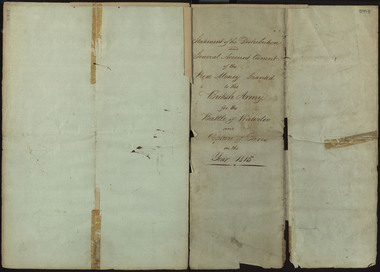
Document, Statement of the Distribution and General Account Current of the Prize Money Granted to the British Army for the Battle of Waterloo and Capture of Paris in the Year 1815, 1815
... The first class consisted of General Officers, the second of Field Officers and Colonels, the third of Captains, the fourth of Subalterns, the fifth of Serjeants and the sixth of Corporals, Drummers and Privates. ...The first class consisted of General Officers, the second of Field Officers and Colonels, the third of Captains, the fourth of Subalterns, the fifth of Serjeants and the sixth of Corporals, Drummers and Privates. ...The Napoleonic Wars were a period of conflict from 1803-1815, caused by unresolved tensions following the end of the French Revolution. Coalitions of European powers fought against Napoleon Bonaparte and the French army, who were defeated at the Battle of Waterloo on the 18th June 1815, in Belgium. The conclusion of the battle would mark a period of sustained peace for Europe, that would bring with it cultural and technological innovation. This document in illustrative of the prize money awarded to different groups of soldiers following the Capture of Paris, separated into different classes. The first class consisted of General Officers, the second of Field Officers and Colonels, the third of Captains, the fourth of Subalterns, the fifth of Serjeants and the sixth of Corporals, Drummers and Privates. The Commander in Chief of the Army also received £61, 178/3/ 5 1/2. In addition to the money given to these classes, which approximately totaled £486,246 / 18/ 1 3/4, a total of £30,000 was paid to the Bank of England and £7,204 / 16/ 7 1/4 was paid to the Chelsea Hospital, to a grand total of £558,940/ 12/ 3. This money given to the Chelsea Hospital was part of the Army Prize Money Act 1814 (54th Geo. 3 c. 86, 14th July 1814), which when passed through parliament entailed that any prize money unclaimed or forfeited would be paid to the Chelsea Hospital. The Royal Hospital Chelsea is a charitable institution which provides support to war veterans and has existed since the reign of Charles II. The document goes into further details of the payments made to specific regiments, who include members of the British cavalry and artillery, rifleman, staff corps and foreign soldiers enlisted to aid with the campaign. The award of prize money following battle was meant to serve as an incentive for aggression and victory, in addition to helping deter looting of the deceased possessions. A paper watermark '1810' on the handwritten document suggests it is an original, and therefore was probably in the possession of a battle participant, most likely of a higher rank. The provenance of the document is unknown but one possibility is through former Ballarat School of Mines staff member Hester Darby, whose parents were Ernest Darby and Leah Hynam. Her maternal line boasted a Battle of Waterloo veteran. A number of handwritten pages 48 cm. x 34.5 cm. (slightly larger than A3) which has been folded in half, and in half again. When attempts were made to tape the torn document together, one page was taped in the wrong order. The top of the third page aligns with the bottom of the fourth page, the top of the fourth page with the bottom of the third. Corrections to this have been made in the transcript. DESCRIPTION ON DISCOVERY: "BALLARAT - Copy of an historic document of prize money paid after the battle of Waterloo and capture of Paris in 1815 has been found among old papers at the Ballarat School of Mines. The full amount of prize money was stated at "£558,913 10/10." Scores of regiments had their shares varying probably, according to the numbers. The document will be retained in the School of Mines Museum, ... (Age, 21 March 1941)The paper has an 1810 watermark on the paper as well as a watermark for S&C Wise. duke of wellington, waterloo, battle of waterloo, napoleon, napoleon bonaparte, british army, paris, darby, veteran, 1815, prize money, waterloo verterans, hester darby -
 Warrnambool and District Historical Society Inc.
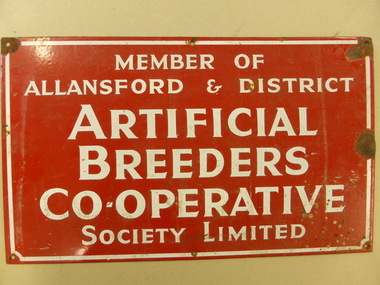
Plaque, Artificial Breeders Co-operative, Circa 1965
... The meeting was instigated through the efforts of Noel Garner, a Hopkins Point farmer, who was manager of No.1 and No.2 Warrnambool Herd Testing Associations, and Gethan Fenton, a field officer with the Warrnambool Herd Testing Association. ...The meeting was instigated through the efforts of Noel Garner, a Hopkins Point farmer, who was manager of No.1 and No.2 Warrnambool Herd Testing Associations, and Gethan Fenton, a field officer with the Warrnambool Herd Testing Association. ...The Allansford Artificial breeders was commenced in 1960 As a business its main focus was on the improvement of local herds for local farmers.As a result of 32 district farmers meeting at the Allansford Mechanics Hall, the Allansford & District Artificial Breeders Co-operative Society was formed. The subscription for membership was £7 10s. The meeting was instigated through the efforts of Noel Garner, a Hopkins Point farmer, who was manager of No.1 and No.2 Warrnambool Herd Testing Associations, and Gethan Fenton, a field officer with the Warrnambool Herd Testing Association. Bill Quinlan, who had been a herd tester under Noel Garner’s management, became the first employee of the Artificial Breeders. WCB support was available from the beginning as a room was provided behind the factory offices and the AI fees were collected by the factory from suppliers’ milk cheques. In the first 12 months Bill worked alone with some assistance from Russell Learmonth and Roger Walsh, both Kraft employees. Both factories realised the benefits of herd improvement in view of their overall increased production so membership was encouraged. Semen from the best sires in Canada and New Zealand were made available and farmers also could soon see the benefits. The initial board of directors, unlike WCB beginnings, consisted entirely of farmers. These included Michael Melican (Wangoom), Gerald Mugavin (Wollaston), Noel Garner (Hopkins Point), Jim Halford (Naringal East) and Grant Warnock (Southern Cross). Membership grew rapidly and after one year there were 164 members with another 100 joining the following year. After a year of coping alone Bill was joined by Ray Eccles from Purnim and then Pat Gleeson, later a Warrnambool car dealer. John Fitzgerald became a part-time technician. These signs were attached to the entrance gates of users. In the mid 1970s it became known as the Warrnambool Co-operative and while it maintained a strong rural and farming focus a opened a retail store in Warrnambool in Timor Street in the 1970's which became the largest trading department store in the district. By the late 1990s they had 8000 members and employed 84 full time and 120 casual staff. It met a sorry end in the 2000's.This sign is a link to a business which had a large exposure in the latter part of the 20th Century. As such it has social and historical significance. Rectangular metal sign, painted red with white text and white border around the edge. Screw holes in corners. Member of Allansford & district Artificial Breeders Co-operative Society Limited allansford artificial breeders, warrnambool co-operative society limited -
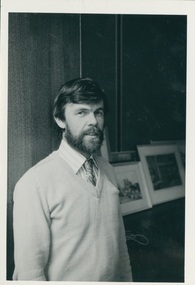 Uniting Church Archives - Synod of Victoria
Photograph, c. 1977
... B 1936 Glasgow arr in Australia 1950 Ordained 1963 First appointment Corryong 1963-1967; then went to New Town Tas 1967-1970; East Kew 1970-1976; Stated Clerk Presbyterian Assembly Of Victoria 1976-1977;Assoc Sec Synod of Victoria 1977-1980; Evangelism Officer Div Field services Synod of Vic 1981-02/87; Interim Exec Sec Field services 03/87-01/89; Presbytery Officer Western Port Presbytery 02/89- 06/95, Executive Secretary VCC 07/95...B 1936 Glasgow arr in Australia 1950 Ordained 1963 First appointment Corryong 1963-1967; then went to New Town Tas 1967-1970; East Kew 1970-1976; Stated Clerk Presbyterian Assembly Of Victoria 1976-1977;Assoc Sec Synod of Victoria 1977-1980; Evangelism Officer Div Field services Synod of Vic 1981-02/87; Interim Exec Sec Field services 03/87-01/89; Presbytery Officer Western Port Presbytery 02/89- 06/95, Executive Secretary VCC 07/95 christie-johnston, hamish; synod of victoria; western port presbytery; presbyterian minister; uniting church minister; east kew presbyterian/uniting church; stated clerk presbyterian assembly victoria B&W gloss waist length photograph of the Rev. ...B 1936 Glasgow arr in Australia 1950 Ordained 1963 First appointment Corryong 1963-1967; then went to New Town Tas 1967-1970; East Kew 1970-1976; Stated Clerk Presbyterian Assembly Of Victoria 1976-1977;Assoc Sec Synod of Victoria 1977-1980; Evangelism Officer Div Field services Synod of Vic 1981-02/87; Interim Exec Sec Field services 03/87-01/89; Presbytery Officer Western Port Presbytery 02/89- 06/95, Executive Secretary VCC 07/95B&W gloss waist length photograph of the Rev. Hamish Christie-Johnston, wearing a jumper and tie. christie-johnston, hamish; synod of victoria; western port presbytery; presbyterian minister; uniting church minister; east kew presbyterian/uniting church; stated clerk presbyterian assembly victoria -
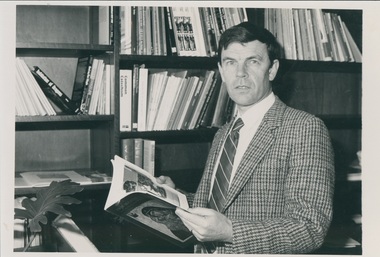 Uniting Church Archives - Synod of Victoria
Photograph, c. 1970s
... B 1936 Glasgow arr in Australia 1950 Ordained 1963 First appointment Corryong 1963-1967; then went to New Town Tas 1967-1970; East Kew 1970-1976; Stated Clerk Presbyterian Assembly Of Victoria 1976-1977;Assoc Sec Synod of Victoria 1977-1980; Evangelism Officer Div Field services Synod of Vic 1981-02/87; Interim Exec Sec Field services 03/87-01/89; Presbytery Officer Western Port Presbytery 02/89- 06/95, Executive Secretary VCC 07/95...B 1936 Glasgow arr in Australia 1950 Ordained 1963 First appointment Corryong 1963-1967; then went to New Town Tas 1967-1970; East Kew 1970-1976; Stated Clerk Presbyterian Assembly Of Victoria 1976-1977;Assoc Sec Synod of Victoria 1977-1980; Evangelism Officer Div Field services Synod of Vic 1981-02/87; Interim Exec Sec Field services 03/87-01/89; Presbytery Officer Western Port Presbytery 02/89- 06/95, Executive Secretary VCC 07/95 christie-johnston, hamish; synod of victoria; western port presbytery; presbyterian minister; uniting church minister; east kew presbyterian/uniting church; stated clerk presbyterian assembly victoria B & W waist length photograph of Rev. ...B 1936 Glasgow arr in Australia 1950 Ordained 1963 First appointment Corryong 1963-1967; then went to New Town Tas 1967-1970; East Kew 1970-1976; Stated Clerk Presbyterian Assembly Of Victoria 1976-1977;Assoc Sec Synod of Victoria 1977-1980; Evangelism Officer Div Field services Synod of Vic 1981-02/87; Interim Exec Sec Field services 03/87-01/89; Presbytery Officer Western Port Presbytery 02/89- 06/95, Executive Secretary VCC 07/95B & W waist length photograph of Rev. Hamish Christie-Johnston seated at a desk, holding an open book. christie-johnston, hamish; synod of victoria; western port presbytery; presbyterian minister; uniting church minister; east kew presbyterian/uniting church; stated clerk presbyterian assembly victoria -
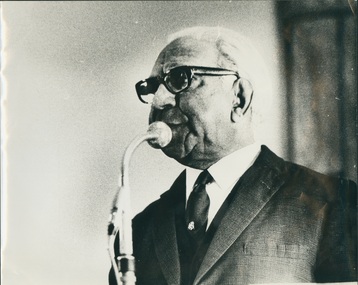 Uniting Church Archives - Synod of Victoria
B&W photo of another photo or newspaper photograph of Pastor Sir Douglas Nicholls, Undated
... In May 1957 Nicholls formed the Victorian Aborigines Advancement League with Doris Blackburn and Gordon Bryant, a Federal parliamentarian. As its paid field officer and spokesman, Nicholls contested assimilation policies and used film to raise awareness of issues. ...In May 1957 Nicholls formed the Victorian Aborigines Advancement League with Doris Blackburn and Gordon Bryant, a Federal parliamentarian. As its paid field officer and spokesman, Nicholls contested assimilation policies and used film to raise awareness of issues. ...Sir Douglas Ralph Nicholls (1906-1988), footballer, pastor, activist and governor, was born on 9 December 1906 at Cummeragunja Aboriginal mission, New South Wales, fifth child of Herbert Nicholls, seasonal worker, and his wife Florence, née Atkinson. Doug grew up at Cummeragunja, on the Murray River near Barmah, in its golden years of Aboriginal autonomy. Thomas Shadrach James gave him and other Yorta Yorta children a sound primary education, reinforcing the pride and self-assurance gained from their parents. As Doug grew, so too did the powers of the State’s Aboriginal Protection Board. Doug’s elder sister Hilda was removed about 1915. When Doug reached 14, he was moved off under the Aborigines Protection Act (1909) to find work. He took a job with dredging teams constructing levees on the Murray. Like other youths in the region Nicholls played Australian rules football, emulating kinsmen who had won local premierships since the 1890s. Doug and his brother Herbert (‘Dowie’) played with Tongala in the mid-1920s. Melbourne football beckoned, Doug trying out unsuccessfully for Carlton in 1927. He signed with the Northcote Victorian Football Association team, despite his nervousness about his Aboriginality, and was given a job with Northcote City Council. ‘Dowie’ joined him for a season. Doug was short at 5 ft 2 ins (158 cm), but muscular and lightning fast. He competed regularly during a boom in professional running, winning many heat and place prizes. In 1929 he won the Nyah and Warracknabeal gifts, earning a sash and £100 in each, together with a case of cutlery in the latter. Using his speed on the wing for Northcote, he produced great spring and agility from his compact body. The Sporting Globe reported in 1929 that ‘he flashes through packs of big men, whisks around small men . . . and attempts marks at the back of any six-footer’. In front-on clashes he was flattened only to rise again. The sole Aborigine in the VFA, he was known affectionately as the ‘flying Abo’ but called worse by his opponents’ barrackers. He competed for five seasons, being named ‘best and fairest’ twice, appearing in three association grand finals and winning in 1929. Keen to earn more than a seasonal wage, in 1931 Nicholls accepted a three-year contract with Jimmy Sharman’s travelling boxing show. The bouts matched opposites, local against tent boxer, white against black, and sometimes men of different sizes. He faced stiff competition from those who wanted to best the noted Melbourne black footballer, the crowd adding racial abuse. A far better footballer than boxer, he copped some punishment. Fighting in the Melbourne Stadium in December 1931, he was described by Truth as ‘slow and awkward’, but packing a ‘good wallop’. In 1932 Sharman, who treated his boxers fairly, released Nicholls to join the Fitzroy Victorian Football League team, which agreed to employ him as its groundsman. He played fifty-four games for Fitzroy over six seasons until knee trouble forced him out in 1937. Winning cups in 1934 and 1935, he played alongside Haydn Bunton and Wilfred (‘Chicken’) Smallhorn. Grand finals eluded him but he represented Victoria twice. Following his mother’s death, Nicholls revisited the Church of Christ chapel in Northcote, where they had worshipped together. On 17 July 1932 he experienced a conversion. He was soon baptised and witnessed openly, leading his fellow footballers to occasional church parades. Nicholls exhibited leadership qualities. William Cooper, founder of the Australian Aborigines’ League and Nicholls’ Yorta Yorta kinsman and fellow Christian, encouraged the young footballer. In February 1935 Cooper, Nicholls and others lobbied Thomas Paterson, the Commonwealth minister for the interior, over the need for Federal control of Aboriginal affairs. Nicholls attended the Day of Mourning protest for Aborigines held in Sydney on 26 January 1938, declaring: ‘after 150 years our people are still influenced and bossed by white people. I know we can proudly hold our own with others if given the chance’. When Cooper retired in November 1940 Nicholls became secretary of the AAL. On 2 June 1941 Nicholls enlisted in the Citizen Military Forces. He trained at Seymour and Bonegilla before being posted to the 29th Battalion. As Major Frank Corr’s batman, he was popular with other soldiers who tolerated his preaching and Bible reading. His army service was brief, however, and he was discharged in Melbourne on compassionate grounds on 22 January 1942. His biographer claimed that the Fitzroy police requested his return to mediate in the racial tensions developing between servicemen and the mostly respectable Aboriginal families living in crowded and dilapidated Fitzroy housing; Aboriginal people maintain that they requested his release. Nicholls began welfare work and religious services from an Aboriginal home in Gertrude Street, Fitzroy. In April 1942, ‘Dowie’ died of road accident trauma, leaving his wife, Gladys, née Bux, and three children. On 26 December 1942 at Moama Methodist Church, New South Wales, Nicholls married her, a caring gesture which developed into a loving partnership. In January 1943 he initiated ‘Aboriginal Sunday’, featuring a gum leaf orchestra and choir. By 1955 this service had moved to July and later evolved into National Aborigines and Islanders Day Observance Committee (NAIDOC) week. Ordained a Churches of Christ pastor in 1945, Nicholls conducted a vigorous ministry from a chapel in Gore Street, Fitzroy. His work survived on donations, a small honorarium, and his employment as team coach (1947) and curator at the Northcote Football Ground. In the 1950s Gladys established grocery and opportunity shops to earn income and provide services. Their house soon overflowed with people in need or visitors to Melbourne. Nicholls also hosted inspiring African American visitors such as the pianist Winifred Attwell and the singer Harry Belafonte. His ministry extended to Aboriginal country communities. Gladys taught Sunday school, undertook endless fund-raising and welfare work beside her husband, and became his greatest supporter and financial manager. They formed an Aboriginal Girls’ Hostel in 1956, for which they acted as house parents, and bought holiday units for Aborigines at Queenscliff. Persistently advocating Aboriginal rights, Nicholls protested about the impact of the Woomera rocket range on the people of the Warburton Ranges, co-ordinated the production of a concert, Out of the Dark, scripted by Jean Campbell, to rectify the omission of Aborigines from Victoria’s Commonwealth jubilee celebrations, and criticised the Victorian Aboriginal Protection Board. In 1957 when the board was transformed into the Aborigines’ Welfare Board, he and Harold Blair were appointed as Aboriginal representatives. Maintaining the stance of a political moderate, he did not bear grudges and sought to build bridges between black and white. He co-operated with any group that aided the cause, including the Council of Aboriginal Rights, whose executive were members of the Communist Party of Australia. This association attracted the attention of the Australian Security Intelligence Organization, which in 1957 began to keep a file on Nicholls. In May 1957 Nicholls formed the Victorian Aborigines Advancement League with Doris Blackburn and Gordon Bryant, a Federal parliamentarian. As its paid field officer and spokesman, Nicholls contested assimilation policies and used film to raise awareness of issues. When the Welfare Board attempted to close Lake Tyers reserve, Gippsland, he resigned in disgust and led a protest march on parliament in May 1963. The AAL also petitioned the United Nations on land rights in June, perhaps the first indigenous body to do so. He argued for new premises at 58 Cunningham Street, Northcote, opened in 1966 as the ‘Doug Nicholls Centre’. In 1958 Nicholls was a foundation member of the Federal Council for Aboriginal Advancement (Federal Council for the Advancement of Aboriginal and Torres Strait Islanders after 1964), which he served as national field officer (1961) and Victorian secretary (1962-63). While an innovator in tactics, he was alarmed by the influence of confrontational ‘black power’ politics in the AAL and resigned as a director amid turmoil on this issue in 1969, claiming the concept was a ‘bitter word’, not needed in Australia. Similar tensions in FCAATSI led him to join with Kath Walker (Oodgeroo Noonuccal) in establishing the short-lived National Tribal Council as an alternative forum. As the AAL leadership moderated their stance, he returned as president (1969-74) of the new all-Aboriginal organisation. He was also a keen patron of the National Aboriginal Sports Foundation, founded in 1969. Many honours were conferred on Nicholls: he was appointed MBE (1957) and OBE (1968) and knighted (1972). In 1962 he was named Victorian ‘Father of the Year’ and the State’s second Aboriginal justice of the peace. Crowned Melbourne’s 1973 King of Moomba, he was declared Bapu Mamus (a Torres Strait term for ‘headman’) by the NTC. On 1 December 1976 Sir Douglas was appointed Governor of South Australia, but his health deteriorated within weeks, making it difficult for him to perform his official duties. In March 1977 he hosted Queen Elizabeth during her royal tour and was appointed KCVO. He relinquished his governorship on 30 April 1977 following a stroke. Ill health continued to dog him during retirement, but he played his Nelson Eddy records, enjoyed his expanding family, and when able, ministered to the Aboriginal Church at the League’s premises. Sir Douglas Nicholls died on 4 June 1988 at Mooroopna, predeceased (1981) by his wife and survived by his five children. He was given a state funeral and buried in tribal ground at Cummeragunja cemetery. Among the many tributes to him are an oval at Northcote, handed to the AAL in 1982, a Canberra suburb gazetted in 1991, and a fellowship for Indigenous leadership established in 2003, all in his name, and a statue of Sir Doug and Lady Nicholls by Louis Laumen, unveiled in 2007 in Parliament Gardens, Melbourne. Sir Douglas Nicholls is shown speaking at a microphone; head and shoulders; dressed in a suit.Pastor Douglas Nicholls -
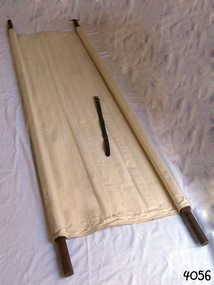 Flagstaff Hill Maritime Museum and Village
Equipment - Field Stretcher, Australian Defence Force, 1939-1942
... Officer. Flagstaff Hill Flagstaff Hill Maritime Museum and Village Warrnambool Maritime Museum Maritime Village Great Ocean Road Shipwreck Coast stretcher field stretcher First Aid military equipment medical equipment emergency equipment Dr W R Angus canvas stretcher patient transport World War II WW2 Australian Department of Defence Military Doctor medic military stretcher field gear Army stretcher litter ADF folding stretcher W.R. ...This field stretcher was the property of Dr. William Roy Angus. It was donated to Flagstaff Hill Maritime Village by the family of Doctor William Roy Angus, Surgeon and Oculist. It is part of the “W.R. Angus Collection” that includes historical medical equipment, surgical instruments, and material once belonging to Dr Edward Ryan and Dr Thomas Francis Ryan (both of Nhill, Victoria), as well as Dr Angus’ belongings. The Collection’s history spans the medical practices of the two Doctors Ryan, from 1885-1926, plus that of Dr Angus, up until 1969. W R Angus served with the Australian Department of Defence as a Surgeon Captain during World War II from 1942 to 1945, in Ballarat, Victoria, and Bonegilla, N.S.W., completing his service just before the end of the war due to suffering from a heart attack. During his convalescence, he carved an intricate and ‘most artistic’ chess set from the material used for making dentures.The stretcher is an example of portable medical and emergency equipment used by the military and emergency services in the 19th and early 20th centuries. It is significant for its connection to Dr W R Abgus, who practised medicine in the community, the Australian Army and the Flying Doctor service from the 1920s to 1960s. He was also Warrnambool's last Port Medical Officer.Medical Field Stretcher: cream coloured canvas with wooden poles through side hems and a leather strap with buckle to keep parts together when folded or rolled up. This stretcher is part of the W.R. Angus Collection.flagstaff hill, flagstaff hill maritime museum and village, warrnambool, maritime museum, maritime village, great ocean road, shipwreck coast, stretcher, field stretcher, first aid, military equipment, medical equipment, emergency equipment, dr w r angus, canvas stretcher, patient transport, world war ii, ww2, australian department of defence, military doctor, medic, military stretcher, field gear, army stretcher, litter, adf, folding stretcher, w.r. angus -
 Federation University Historical Collection
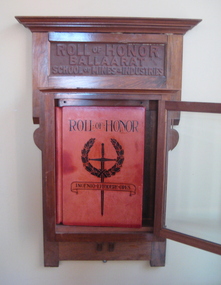
Book - Honour Board (hanging bookcase), Ballarat School of Mines Honor Book and Bookcase, c1920
... The 1920 SMb Students' Magazine said' 'Many students left Australia with the first Contingent, and since then, the School has been represented on every field where Australians have fought, from the first landing at Gallipoli to the decisive victory on the 8 August 1918.' The influence of the school was appropriately shown in the fact that at least 13 of its students were officers in the Australian Mining Corps. ...The 1920 SMb Students' Magazine said' 'Many students left Australia with the first Contingent, and since then, the School has been represented on every field where Australians have fought, from the first landing at Gallipoli to the decisive victory on the 8 August 1918.' The influence of the school was appropriately shown in the fact that at least 13 of its students were officers in the Australian Mining Corps. ...The Ballarat Technical Art School made many honour boards for schools and organisation in Victoria and interstate. Their own was made, but the names were not listed. The Ballarat School of Mines Annual Report for 1921 states: 'It has been decided, for the present, to record the names of our students who served in the warm, in an Honor Book, and to defer the erection of an Honor Board until we can feel assured that the Roll is complete. the wide spread occupations of our students has rendered it very difficult for us to secure detailed information of their service. A handsome Honor Book and Case has been designed and executed by the staff and students of the Technical Art School, and the engrossing of the names and military records will be proceeded with as soon as possible. The Technical Art School was quite busy with commissions. The SMB Annual Report of 1918 states: 'under the direction of the Art principal (Mr H.H. Smith), the work of the Art School continues to receive wide public recognition. Handsome Honor Boars have been designed and executed for the Sydney Sports' Club, the St Arnaud High School, the Birregurra State School, the Wendouree State School and the Ballarat Old Colonists' Club. The School also designed the certificates for the Young Workers' Patriotic Guild, the 'Herald" Shield for perpetual competition at the technical Schools' athletic meetings, the "Hansen" Shield for competition among the Northern District High Schools, two metal tablets for the Castlemaine high School, and a certificate for the Grampians Secondary Schools' Association. Numerous Honor Books and Mural cases have also been designed for State Schools.' Over 400 former students and staff of the Ballarat School of Mines served during World War One. The 1920 SMb Students' Magazine said' 'Many students left Australia with the first Contingent, and since then, the School has been represented on every field where Australians have fought, from the first landing at Gallipoli to the decisive victory on the 8 August 1918.' The influence of the school was appropriately shown in the fact that at least 13 of its students were officers in the Australian Mining Corps. The title page has the initials 'D.J.' which most probably stands for Donald I. Johnston, a teacher with the Ballarat Technical Art school from 1920 to 1949. The Ballarat School of Mines World War 1 Honor Book remained uncompleted for more than 90 years. The names of over 400 SMB staff and students who served their country were not inscribed until 2012, despite names, ranks and service records being compiled. A restoration project was instigated as part of the 140th anniversary of the Ballarat School of Mines in 2010. Names were inscribed into the book by Calligrapher Lyn Forrester. The University of Ballarat believed this project is important not only to SMB's history, but the families and descendants of those who served while studying or teaching at SMB. The restoration project involved names being hand written in calligraphy into the Honor Book and was funded with the assistance of the 'Restoring Community War Memorial Grant'. The memorial was designed and made by the staff and students of the Ballarat School of Mines Technical Art School under the direction of Principal Herbert H. Smith. In 1921 the Ballarat School of Mines Annual Report recorded: "It has been decided, for the present, to record the names of our students who served in the war, in an Honor Book, and to defer the erection of an Honor Board until we can feel assured that the roll is complete. The wide spread occupations of our students has rended it very difficult for us to secure detailed information of their service. A handsome Honor Book and case has been designed and executed by the staff and students of the Technical Art School, and the engrossing of the names and miliatary records will proceed with as soon as possible. The Ballarat Technical Art School and was involved with the design and manufacture of numerous WW1 memorials. When it came time to complete their own memorial, the Principal died, and the Honor Roll must have been overlooked in the confusion that ensued. There have been numerous theories about why the Honor Roll was never completed, one being that it was because the SMB Principal, Maurice Copland, literally worked himself to death organising repatriation classes for ex-soldiers who attended SMB. The Courier of 18 November 1922 said of Maurice Copland: “He put his very best into the work for the welfare of the soldiers; in fact, he did too much for the good of his physique, for he wore himself out in the services of the returned men. If ever there was a war victim the late Mr Copland was one. But for the stress of work entailed by those repatriation classes and the amount of general war work which he performed Mr Copland would probably have been with them today." Understandably, SMB was thrown into some disarray by their Principal's death and the Honor Book was not completed. The University of Ballarat would like to finally honor its SMB war veterans by completing the Honor Book and as a further mark of respect, dedicate the project to Maurice Copland. The Ballarat Technical Art School undertook many honor boards. The Ballarat School of Mines Annual Report 1918 states: "Under the direction of the Art Principal (Mr H.H. Smith), the work of the Art School continues to receive a wide public recognition. handsome Honor Boards have been designed and executed for the Sydney Sports' Club, the St Arnaud High School, the Birregurra State School, the wendouree State School and the Ballarat Old Colonists' Club. The School also designed certificates for the Young Workers' patriotic Guild, the "Herald" Shield for perpetual Competition at the Technical schools athletics meetings, the "Hansen" Shield for competition in the northern District High Schools, two metal tablets for the Castlemaine High School, and a certificate for the Grampians Secondary Schools' Association. Numerous Honor Gooks and mural cases have also been designed for State Schools." The 1920 Ballarat School of Mines Annual Report stated: Public appreciation of the High standard of design and artistic craft work produced by the students of the Art School, under the direction of the Principal (Mr Herbert H. Smith), continues to be demonstrated by the lage number of important commissions entrusted to the school, not only by the public bodies and business firms by the Education Department and public bodies all over the State." "Amongst the important local commissions received during the year was the designing and supplying of the Municipal Council's Address of Welcome Casket for presentation to His Royal Highness the Prince of Wales, the designing and supervising of a large four-light stained glass window for the Lydiard Street Methodist Church, ... and supply numerous honor books, honor boards, etc., for public institutions and school." "The School has been honored by, and has acceded to the request of the Education Department to supply designs for the title page, chapter headings and initial letters for the War Service Book which it is about to publish, Mr F. Tate, director of Education, recognising the students' work in this direction by an appreciative letter of thanks. The Education Department has also been instrumental in directing to the School applications from all parts of the State, including Melbourne, for the School to supply competitive sports shields, honor boards, books and designs for certificates, and various decorative objects. The School has therefor been responsible for much work coming to local Ballarat firms which would otherwise have found its way to Melbourne or other centres. In 2011, as the result of a 'Restoring Community War Memorials Grant' calligrapher Lynton Forrester was commissioned to record over 400 names into the honor book. A Victorian Blackwood World War I Honor Board holds a red leatherbound Ballarat School of Mines Honor Book. The book includes a title page relating to the Ballarat School of Mines and Industries. The Ballarat School of Mines Honor Book and case was not finally inscribed with names until 2012. world war one, ww1, ballarat school of mines, world war 1, world war i, honour roll, calligraphy, don johnston, honor book, honor roll, copeland, maurice copeland, honour book, roll of honour, percy coltman, arthur e. tandy, leslie coulter -
 Federation University Historical Collection
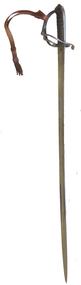
Weapon - Object, Sword, 1877
... field movements, a sword competition took place, toe first prize bring awarded to Trooper L. Whyte ; the "second to Sergeant Blight; the third, to Trooper Jenkins; and the fourth, to Trooper Orr, of Creswick. Major Sleep officiated as timekeeper. The colonel commandant complimented Captain Med-calf upon the efficiency of the troop, and officers...field movements, a sword competition took place, toe first prize bring awarded to Trooper L. Whyte ; the "second to Sergeant Blight; the third, to Trooper Jenkins; and the fourth, to Trooper Orr, of Creswick. Major Sleep officiated as timekeeper. The colonel commandant complimented Captain Med-calf upon the efficiency of the troop, and officers ...In 1862, the units of the Mounted Volunteer Corps in Victoria were formed into a single regiment known as the Victorian Volunteer Light Horse. This title changed again in 1863, to the Prince of Wales Victorian Volunteer Light Horse ( Hussars ). In 1870 a uniform was adopted that was based on the British 19th Hussars. Troops were based at various times at Geelong, Ballarat, Kyneton, Bendigo, Castlemaine and Dandenong, as well as metropolitan Melbourne. In 1885, most of the Cavalry were incorporated into a newly formed Victorian Mounted Rifles. (http://www.awm.gov.au/collection/REL/18070.001) "It is notified in the Gazette that Lieutenant Laurence Whyte, Ballarat troop Prince of Wales Light Horse, has been appointed captain, seniority to date from January 31. " (The Argus, 17 February 1883) "An official inspection of the P.W.L.H. took place in the Royal Park last evening by the colonel-commandant, assisted by Colonel Rede; Captain Medealf in command of the, troop. After bring exercised in field movements, a sword competition took place, toe first prize bring awarded to Trooper L. Whyte ; the "second to Sergeant Blight; the third, to Trooper Jenkins; and the fourth, to Trooper Orr, of Creswick. Major Sleep officiated as timekeeper. The colonel commandant complimented Captain Med-calf upon the efficiency of the troop, and officers and men afterwards dined together at Craig's hotel. (Ballarat Courier, 09 March 1877.)Silver coloured sword and scabbard with leather hand grip within the hilt. The sword was awarded to Trooper Whyte of the Prince of Wales Victorian Volunteer Light Horse (Ballarat) in 1877.. Engraved into handle "Ballarat Troop P.W.V.V.L.H Officers Trophy FIRST PRIZE WON BY Trooper Whyte AT SWORD Competition 8th March 1877" volunteer forces, sword, trooper whyte, prince of wales victorian volunteer light horse (ballarat), l. whyte, laurence whyte
