
Showing 66 items matching "flying controls"
-
 Moorabbin Air Museum
Manual (Item) - Bristol Type 170 Aircraft Mk 21 Series Ground Handling Picketing Jacking Trestling Slinging Flying Controls Landing Gear
... Bristol Type 170 Aircraft Mk 21 Series Ground Handling Picketing Jacking Trestling Slinging Flying Controls Landing Gear...Bristol Type 170 Aircraft Mk 21 Series Ground Handling Picketing Jacking Trestling Slinging Flying Controls Landing Gear...Bristol Type 170 Aircraft Mk 21 Series Ground Handling Picketing Jacking Trestling Slinging Flying Controls Landing Gear Manual Bristol Type 170 Aircraft Mk 21 Series Ground Handling Picketing Jacking Trestling Slinging Flying Controls Landing Gear ... -
Moorabbin Air Museum
Book (Item) - The Aircraft Engineer's Handbook No.1 , Airframe Structure And Controls Flying Instruments and Equipment
... The Aircraft Engineer's Handbook No.1 , Airframe Structure And Controls Flying Instruments and Equipment....The Aircraft Engineer's Handbook No.1 , Airframe Structure And Controls Flying Instruments and Equipment....Speller A.F.R.Ae.S The Aircraft Engineer's Handbook No.1 , Airframe Structure And Controls Flying Instruments and Equipment. Book The Aircraft Engineer's Handbook No.1 , Airframe Structure And Controls Flying Instruments and Equipment. ...By W,J.C. Speller A.F.R.Ae.S -
Moorabbin Air Museum
Book - Aircraft engineering, The Aircraft Engineer's Handbook No.1 , Airframe Structure And Controls Flying Instruments and Equipment
... The Aircraft Engineer's Handbook No.1 , Airframe Structure And Controls Flying Instruments and Equipment....Aircraft engineering Aircraft structure & controls General maintenance Hydrauilics Brakes wheels & tubes Instruments Compasses Automatic pilots Textbook for aircraft maintenance engineers circa 1953 Appears to be a duplicate item The Aircraft Engineer's Handbook No.1 , Airframe Structure And Controls Flying Instruments and Equipment. Book Aircraft engineering ...Textbook for aircraft maintenance engineers circa 1953Appears to be a duplicate item non-fictionTextbook for aircraft maintenance engineers circa 1953aircraft structure & controls, general maintenance, hydrauilics, brakes wheels & tubes, instruments, compasses, automatic pilots -
Moorabbin Air Museum
Book - Pilot training, A Beginners Guide to Flying
... ...Flying controls...Pilot training Aptitude Costs Checks Engines Direction Flying controls Gyros Height Take off Landing Maps Navigation Private pilot's licence Radio Safety Theory of flight VOR & ADF Weather Overview of steps involved in learning to fly, circa 1969 - 1974 A Beginners Guide to Flying Book Pilot training ...Overview of steps involved in learning to fly, circa 1969 - 1974non-fictionOverview of steps involved in learning to fly, circa 1969 - 1974aptitude, costs, checks, engines, direction, flying controls, gyros, height, take off, landing, maps, navigation, private pilot's licence, radio, safety, theory of flight, vor & adf, weather -
Moorabbin Air Museum
Book - Aeronautics, Aeronautics Volume 1
... ...Flying with automatic controls...Aeronautics Civilian flying training Class A or private pilot's licence Commercial pilot's B licence Landing precautions at unfamiliar airfields Obtaining flying instructor's certificate The Link trainer Medical examination of flying personnel Principles of flight Special licences & certificates Meteorology Learning to teach Airship & balloon pilots licencesl Air legislation Gliding& the power pilot Second class navigator's licence Medical aspects of flying Free ballooning The effect of alcohol & tobacco Flying with automatic controls Parachutes Dirigibles Air defence of Great Britain Sailplanes The modern fighter Formation flying The internal combustion engine Overview of principles & practices of flight. ...Overview of principles & practices of flight. No publication date stated, but looks to be around late 1930s/early 1940snon-fictionOverview of principles & practices of flight. No publication date stated, but looks to be around late 1930s/early 1940scivilian flying training, class a or private pilot's licence, commercial pilot's b licence, landing precautions at unfamiliar airfields, obtaining flying instructor's certificate, the link trainer, medical examination of flying personnel, principles of flight, special licences & certificates, meteorology, learning to teach, airship & balloon pilots licencesl, air legislation, gliding& the power pilot, second class navigator's licence, medical aspects of flying, free ballooning, the effect of alcohol & tobacco, flying with automatic controls, parachutes, dirigibles, air defence of great britain, sailplanes, the modern fighter, formation flying, the internal combustion engine -
 Moorabbin Air Museum
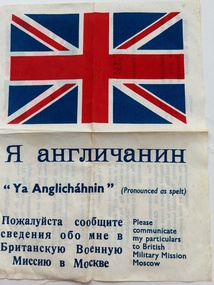
Memorabilia (Item) - RAF/SOE Blood Chit WW2 ,Complete With Original Celluloid Cover with Neck Cord, Size Approx.23cm x 18cm
... For use by British aircrews flying missions over Soviet controlled regions. Printed with the Union flag plus wording in Russian asking that the holders details be passed to the British Military Mission in Moscow. ...For use by British aircrews flying missions over Soviet controlled regions. Printed with the Union flag plus wording in Russian asking that the holders details be passed to the British Military Mission in Moscow. ... -
 Lara RSL Sub Branch
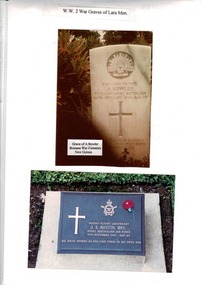
World War 2 War Graves of Lara Men, Photograph of Head Stone of grave site Pte. A. Bowler at Bomana War Cementary, New Guinea and Grave Site of Flight Lieutenant J.S. Austin DFC grave site Adelaide River, N. T
... The radar-controlled searchlights went out. Flying Officer Mick Helsham (A16-160) attacked first to act as a pathfinder and mark the target for the other Hudsons and Liberators:...The radar-controlled searchlights went out. Flying Officer Mick Helsham (A16-160) attacked first to act as a pathfinder and mark the target for the other Hudsons and Liberators: Full service records of J. ...Flt Lt J S Austin DFC, 400363. No 608 Sqn RAF, Nos 32, 13 & 2 Sqns. Stock agent of Lara, Vic; b Melbourne 15 May 1918. Died of illness 9 Nov 1943. Timor was the target for the night of 6 July, when Flight Lieutenant "Bunny" Austin (A16-207) led five Hudsons to bomb Koepang town. The next night he led back seven aircraft against the airfield at Penfoei, attacking before dawn on the 8th prior to United States Liberators bombing the runways and barracks. 75 Austin's aircraft was caught by Penfoei's master defensive searchlight, and Austin used violent evasion and switching on and off of his IFF equipment, a tactic used in Europe. The radar-controlled searchlights went out. Flying Officer Mick Helsham (A16-160) attacked first to act as a pathfinder and mark the target for the other Hudsons and Liberators:Full service records of J. S. Austin held by Lara R.S.L.Plain Sheet A4 paper with 2 photographs 1. A. Bowler W. 9.8 cm H. 13.8 cm photograph 2. J.S. Austin W. 1`5.9 cm H. 10.0 cmA4 sheet heading as: W.W. 2 War Graves of Lara Men. Note on photograph 1. Grave of A. Bowler, Bomana War Cemetery.r.a.f., graves, lara -
 Orbost & District Historical Society
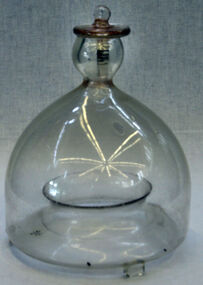
fly catcher, circa 1890
... control glassware Moulded clear glass fly catcher on small glass legs. Glass stopper. A piece of bait is suspended in the centre and the top opening is covered up with a piece of cloth and a fluid such as kerosene or similar is put in the gutter below the outer part of the dome. The flying ...Mankind has been bothered by flies ever since time began. This has led to the invention of a number of different fly traps or fly catchers.Glass fly traps were popular during the 19th and early 20th centuries. The flies, being attracted by some sweet liquid or other bait in the bottom, were unable to find their way out. This trap has small glass legs enabling it to be used standing on a flat surface such as a table. Most were suspended by wire handles. This is an example of a common domestic item no longer commonly used today.Moulded clear glass fly catcher on small glass legs. Glass stopper. A piece of bait is suspended in the centre and the top opening is covered up with a piece of cloth and a fluid such as kerosene or similar is put in the gutter below the outer part of the dome. The flying insect is drawn inside by entering the underside opening and then, when trying to leave, flies against the glass and then drops into the catching fluid below.fly-catcher pest-control glassware -
 Ringwood and District Historical Society
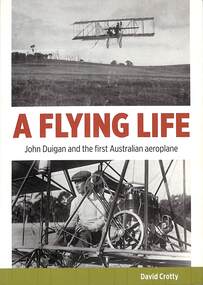
Book, A Flying Life - John Duigan and the first Australian aeroplane, 2010
... Below - John Duigan at the controls of his aircraft at Spring Plains Station, Mia Mia, Victoria, in 1911. Story of John Robertson Duigan and his flying creer, from his early years as a Melbourne school boy to his heroic activities as a pilot on the Western Front in World War One. ...About the author: Born in Melbourne, David Crotty has worked in museums since 1984. He has a long-standing interest in aviation history and has worked as a curator with the Australian War Memorial and the RAAF Museum. He is currently (2010) a curator in the History and Technology Department of Museum Victoria. Story of John Robertson Duigan and his flying creer, from his early years as a Melbourne school boy to his heroic activities as a pilot on the Western Front in World War One. He was the first Australian to fly a powered Australian-made aeroplane in Australia.Front cover: Top - Duigan's aeroplane in flight, Spring Plains Station, Mia Mia, Victoria, in 1911. Below - John Duigan at the controls of his aircraft at Spring Plains Station, Mia Mia, Victoria, in 1911. -
 Eltham District Historical Society Inc
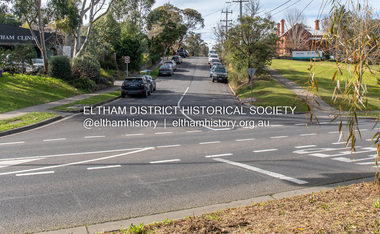
Photograph, Peter Pidgeon, Dalton Street, Eltham, 2 Aug. 2022
... Comparison photo: SEPP_0643 In April 1935 the local paper reported on a story where a schoolgirl was talking whilst on her bicycle and it started moving off, flying down Dalton Street and across the main road missing cars and the guy wires for the telephone pole and hurtled 21 feet through the air into the drained pond suffering a broken arm and shock. She was rescued unconscious by John and taken into Mrs Jarrold’s for first aid. This was not the only instance of young girls losing control...Comparison photo: SEPP_0643 In April 1935 the local paper reported on a story where a schoolgirl was talking whilst on her bicycle and it started moving off, flying down Dalton Street and across the main road missing cars and the guy wires for the telephone pole and hurtled 21 feet through the air into the drained pond suffering a broken arm and shock. She was rescued unconscious by John and taken into Mrs Jarrold’s for first aid. This was not the only instance of young girls losing control ...View looking up Dalton Street from near Main Road where the former pond was situated. The pond was drained by Council in 1932 due to concerns of mosquitoes, etc against the wishes of long standing residents such as Thekla Jarrold (39 years) and John Clark (22 years). On the right is the Eltham Primary Schoool No. 209 with the former Headmaster's residence and to the left is Eltham Clinic once the site of the Grant home. Comparison photo: SEPP_0643 In April 1935 the local paper reported on a story where a schoolgirl was talking whilst on her bicycle and it started moving off, flying down Dalton Street and across the main road missing cars and the guy wires for the telephone pole and hurtled 21 feet through the air into the drained pond suffering a broken arm and shock. She was rescued unconscious by John and taken into Mrs Jarrold’s for first aid. This was not the only instance of young girls losing control of bicycles down the hill. Part of a presentation by Peter Pidgeon to the Society, 13 August 2022 showcasing a series of photographs taken by John Henry Clark over the period 1895 to 1930. John Henry Clark was the youngest of three boys born to William Henry Clark (1823-1877) and Maria White (1843-1914). He and his brothers, William Charles Clark (1872-1945), Clement Kent Clark (1874-1912) operated a photography business (Clark Bros.) from 25 Thomas Street, Windsor near Prahran during the period c.1894 to 1914. Following death of Clement in September 1912 and their mother in 1914, the Clark Bros business appears to have dissolved, the premises demolished, and a new house was under construction in 1915. John set up business independently in 1914 operating out of 29 Moor Street, Fitzroy where he is registered in the 1914 and 1915 Electoral Rolls. By 1916 John had relocated to Eltham where he continued his practice as a photographer and took many of the early images around the district of Little Eltham. Around 1930 John changed professions and opened a small cobbler's shop in 1931 near the pond opposite Dalton Street adjacent to the Jarrold family cottage. He never married and continued his profession as a bootmaker from this little shop, maintaining a close relationship with Mrs Jarrold for the rest of their lives. His bootmaker shop remains today beside the Whitecloud cottage and is one of only three remaining shops in the area from the early 20th century.Comparative photo taken 2022 with one taken from same location over 100 years earlier by noted local photographer J.H. ClarkBorn Digitaleltham, j.h. clark photo (2022), dalton street, main road, eltham clinic, eltham primary school, headmaster's residence, state school no. 209 -
 Bendigo Military Museum
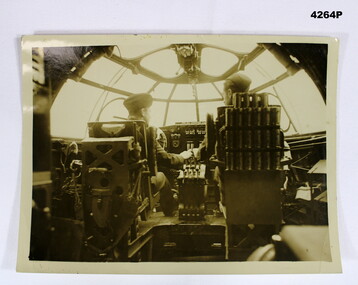
Photograph - SUNDERLAND PHOTO, The Associated Press, Post 1943
... On the rear in Brief, “ Photo shows Australian Airman on the cockpit get acquainted with the control of a Sunderland Flying Boat”. “RID%220815 (M1653)”...Refer Cat No 3627.5 for his service details. photography sunderlands On the rear in Brief, “ Photo shows Australian Airman on the cockpit get acquainted with the control of a Sunderland Flying Boat”. “RID%220815 (M1653)” Sepia tone photo showing two pilots in the cock[pit of a Sunderland Flying Boat. ...Item in the collection of Reginald Charles Allardice No 418557 RAAF. Refer Cat No 3627.5 for his service details.Sepia tone photo showing two pilots in the cock[pit of a Sunderland Flying Boat. On the rear is pasted a note typed in purple describing the photo.On the rear in Brief, “ Photo shows Australian Airman on the cockpit get acquainted with the control of a Sunderland Flying Boat”. “RID%220815 (M1653)”photography, sunderlands -
 Waverley RSL Sub Branch
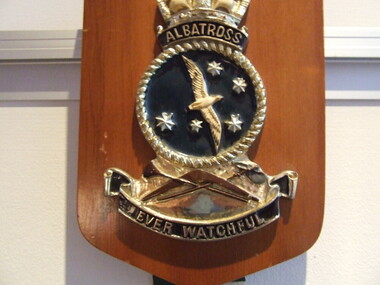
Plaque H.M.A.S. Albatross, H.M.A.S. Albatross
... controlled and operated by the RAN. The initial planning included purchase of two aircraft carriers, aircraft and establishment of shore facilities. The carriers were named HMA Ships Sydney and Melbourne, and the shore facilities were at Nowra. HMAS Albatross was commissioned in August 1948 and the 20th Carrier Air Group, comprising Sea Fury and Firefly aircraft, was brought from England to Australia by HMAS Sydney. These aircraft, operated by 805 and 816 Squadrons, disembarked to Nowra in May 1949. In November 1950, they were joined by the Carrier Air Group of 808 and 817 Squadrons, also flying...controlled and operated by the RAN. The initial planning included purchase of two aircraft carriers, aircraft and establishment of shore facilities. The carriers were named HMA Ships Sydney and Melbourne, and the shore facilities were at Nowra. HMAS Albatross was commissioned in August 1948 and the 20th Carrier Air Group, comprising Sea Fury and Firefly aircraft, was brought from England to Australia by HMAS Sydney. These aircraft, operated by 805 and 816 Squadrons, disembarked to Nowra in May 1949. In November 1950, they were joined by the Carrier Air Group of 808 and 817 Squadrons, also flying ...In July 1947, the Commonwealth Defence Council approved the formation of a Fleet Air Arm which would be controlled and operated by the RAN. The initial planning included purchase of two aircraft carriers, aircraft and establishment of shore facilities. The carriers were named HMA Ships Sydney and Melbourne, and the shore facilities were at Nowra. HMAS Albatross was commissioned in August 1948 and the 20th Carrier Air Group, comprising Sea Fury and Firefly aircraft, was brought from England to Australia by HMAS Sydney. These aircraft, operated by 805 and 816 Squadrons, disembarked to Nowra in May 1949. In November 1950, they were joined by the Carrier Air Group of 808 and 817 Squadrons, also flying Sea Furies and Fireflies. HMAS Albatross has been expanding ever since. As more capable aircraft have been acquired, so ground support facilities have had to be built. In 1955, Sea Venoms and Gannets arrived, requiring radar workshops and test facilities. More aircraft necessitated stricter standards of air traffic control and a new control tower was built in 1958. In 1964 the introduction of Wessex helicopters, with a dunking sonar capability, required a further expansion of services. In 1965, it was decided to buy American aircraft to replace the ageing British Gannets and Sea Venoms. McDonnell Douglas Skyhawks and Grumman Trackers were chosenand additional avionics facilities were built to service the complex equipment they carried. The helicopters now based at HMAS Albatross have restored to the RAN much of the anti-submarine capability lost when the Tracker squadron was disbanded in 1983. In recent years significant redevelopment has taken place, continuing the operation of HMAS Albatross and recognising its strategic importance as the sole Royal Australian Navy Air Station.Wooden Plaque 15cm x 13cm with insignia of H.M.A.S. Albatross H.M.A.S. Albatross -
 Warrnambool RSL Sub Branch
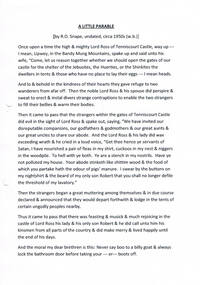
'A Little Parable'. A humourous piece written in the 1950s, about Bob's friend (and Madge's younger sister Betty's husband) LES ROSS, Reg. No. 2475, a veteran of the 5th Machine Gun Company, 18th Battalion, in the Middle East and on the Western Front and later, a fighter pilot with the Australian Flying Corps. He re-enlisted in WW2 and served in the RAAF, in northern Australia, in air traffic control. (Photos of Les courtesy of Les and Betty's son, Robert Hamilton Ross)
... Flying Corps. He re-enlisted in WW2 and served in the RAAF, in northern Australia, in air traffic control. ...Flying Corps. He re-enlisted in WW2 and served in the RAAF, in northern Australia, in air traffic control. ...snape collection -
 Geoffrey Kaye Museum of Anaesthetic History
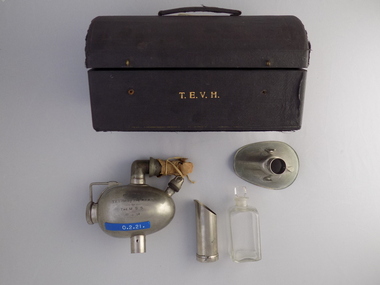
Equipment - Inhaler, Probyn Williams, Mayer & Meltzer, c. 1900
... Flying Personnel Research Committee m a consulting surgeon at the Royal Melbourne Hospital. This apparatus is transitional between Clover's and Hewitt's having Clover's narrow "ways" and compact size, but using Hewitt's ether-control lever....Flying Personnel Research Committee m a consulting surgeon at the Royal Melbourne Hospital. This apparatus is transitional between Clover's and Hewitt's having Clover's narrow "ways" and compact size, but using Hewitt's ether-control lever. hurley, thomas ernest victor probyn williams university of melbourne world war 1 wwi gallipoli australian army medical corps medical student society mayer & meltzer clover, joseph hewitt, fredrick william Printed in gold leaf on front of box: T.E.V.H. ...Hurley, Sir Thomas Ernest Victor (1888-1958) was gifted this Probyn Williams inhaler in 1914. After studying at Melbourne University, Victorian-born Hurley was a Medical Officer at the Royal Melbourne Hospital until he commenced private practice in Collins Street. He was appointed Captain Australian Army Medical Corps, AIF and served in Gallipoli with the 2nd Field Ambulance. He served in Enypt, London, and the Western Front during World War 1. He gained a Companion of the Order of St George and St Michael in 1917. Upon return to Melbourne he held positions such as surgeon to Victoria Police (1928-1956), elected to Council of the Victorian branch of the British Medical Association, member of the Charities Board of Victoria and foundation member of the Royal Australasian College of Surgeons and chaired the Flying Personnel Research Committee m a consulting surgeon at the Royal Melbourne Hospital. This apparatus is transitional between Clover's and Hewitt's having Clover's narrow "ways" and compact size, but using Hewitt's ether-control lever.Black round topped box with brass hooks [missing] at front and brass hinges at rear. The initials T.E.V.H. are printed in gold leaf on the front. There is a black fabric handle on the top. Inside the box is black padding with the manufacturer's logo printed in gold leaf. There is a square section in the base of the box for holding the square clear glass bottle for ether. The pear-shaped mask is made of metal. There is also a metal ether measure for pouring the ether. The metal inhaler is ovoid shaped. The rotating gauge has a series of numbers engraved onto the inhaler for measurement. There is an elbow joint attaching a re-breather bag, with a small amount of waxy paper remaining attached with a thin ribbon. There is a small glass bulb encased in a metal housing. Printed in gold leaf on front of box: T.E.V.H. •Printed in gold leaf on inside lid of box: MAYER & MELTZER / LONDON / MELBOURNE & CAPE TOWN •Engraved on side of inhaler: PRESENTED / TO / T.E.V. Hurley Esq.,M.D.M.S. / by / THE M.S.S. / 15.6.14. •Engraved on reverse side of inhaler: PROBYN WILLIAMS / ETHER INHALER •Moulded into connector on elbow joint: MAYER & MELTZER •Stamped into base of metal pourer: MAYER & MELTZER / LONDON •Blue sticker with white printed text on front of inhaler: O.2.21.hurley, thomas ernest victor, probyn williams, university of melbourne, world war 1, wwi, gallipoli, australian army medical corps, medical student society, mayer & meltzer, clover, joseph, hewitt, fredrick william -
 Monbulk RSL Sub Branch
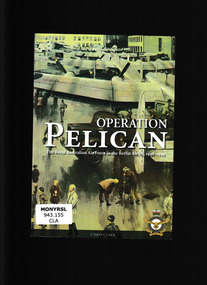
Book, Air Power Development Centre, Operation Pelican : The RAAF in the Berlin Airlift, 1948-1949, 2008
... Cold war - History Berlin airlift 1948-1949 In 1948 Britain, France and the United States of America found themselves opposed to their former wartime ally, the Soviet Union, over matters regarding control of the capital of the defeated Nazi German regime. When the Soviets imposed a blockade of the city, the Allies had no option but to begin flying in the necessities of life for the two million inhabitants of the zones under their administration. ...In 1948 Britain, France and the United States of America found themselves opposed to their former wartime ally, the Soviet Union, over matters regarding control of the capital of the defeated Nazi German regime. When the Soviets imposed a blockade of the city, the Allies had no option but to begin flying in the necessities of life for the two million inhabitants of the zones under their administration. Thus began the first large-scale humanitarian airlift in history. When Britain turned for support to its Dominion partners, the transport element of the Royal Australian Air Force had recently ceased flying a regular courier service for Australian occupation forces involved in garrisoning another defeated Axis power of World War II, Japan - this role having been handed over to a commercial airline. By September 1948 an unnumbered Australian squadron had joined other RAAF transport crews already engaged as part of the massive allied undertaking. To the Americans the fifteen-month-long operation was codenamed Vittles, while the British called it Plainfare. But to the Royal Australian Air Force personnel involved, the Berlin Airlift was known as Pelican. Here the story is told of the events that made the airlift necessary, what the undertaking entailed and the part that Australians played in it, as well as the outcome and achievements of Operation Pelican.Ill, maps, p.82.non-fictionIn 1948 Britain, France and the United States of America found themselves opposed to their former wartime ally, the Soviet Union, over matters regarding control of the capital of the defeated Nazi German regime. When the Soviets imposed a blockade of the city, the Allies had no option but to begin flying in the necessities of life for the two million inhabitants of the zones under their administration. Thus began the first large-scale humanitarian airlift in history. When Britain turned for support to its Dominion partners, the transport element of the Royal Australian Air Force had recently ceased flying a regular courier service for Australian occupation forces involved in garrisoning another defeated Axis power of World War II, Japan - this role having been handed over to a commercial airline. By September 1948 an unnumbered Australian squadron had joined other RAAF transport crews already engaged as part of the massive allied undertaking. To the Americans the fifteen-month-long operation was codenamed Vittles, while the British called it Plainfare. But to the Royal Australian Air Force personnel involved, the Berlin Airlift was known as Pelican. Here the story is told of the events that made the airlift necessary, what the undertaking entailed and the part that Australians played in it, as well as the outcome and achievements of Operation Pelican.cold war - history, berlin airlift 1948-1949 -
 National Vietnam Veterans Museum (NVVM)
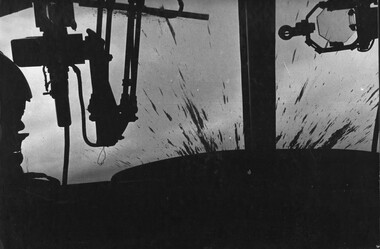
Photograph, Gibbons, Denis, The Playboys 2
... The pilot had to fight the controls to regain a normal flying attitude....The pilot had to fight the controls to regain a normal flying attitude. The Playboys 2 Photograph Gibbons, Denis ...Denis Gibbons (1937 – 2011) Trained with the Australian Army, before travelling to Vietnam in January 1966, Denis stayed with the 1st Australian Task Force in Nui Dat working as a photographer. For almost five years Gibbons toured with nine Australian infantry battalions, posting compelling war images from within many combat zones before being flown out in late November 1970 after sustaining injuries. The images held within the National Vietnam Veterans Museum make up the Gibbons Collection.A black and white photograph of a Huey Gunship from the 1st Platoon 334th Armed Helicopter with its windscreen sprayed with mud from the explosion after firing two rockets into a VietCong sampan, loaded with explosives and ammunition attempting to enter South Vietnam down the Mekong River from Cambodia. The sampan was blown to pieces with all on board being killed and the force of the explosion pushing the nose of the helicopter upwards. nearly turning the aircraft over. The pilot had to fight the controls to regain a normal flying attitude.photograph, 1st platoon, 334th armed helicopter coy, huey helicopter, the playboys, mekong river, cambodia, gibbons collection catalogue, denis gibbons, photographer, vietnam war, vietcong, sanpan -
 National Vietnam Veterans Museum (NVVM)
Book, Berent, Mark, Steel Tiger (Copy 2)
... Vietnam War 1961-1975 - Fiction One of the bravest of all, flying forward air control missions in a slow propeller-driven plane Steel Tiger (Copy 2) Book Berent, Mark ...One of the bravest of all, flying forward air control missions in a slow propeller-driven planeOne of the bravest of all, flying forward air control missions in a slow propeller-driven planevietnam war, 1961-1975 - fiction -
National Vietnam Veterans Museum (NVVM)
Photograph, Flying at low level for a troops-in-contact mission etc
... John Downing Bomb damage 3 b/w photos showing the damage to the left fuselage, elevator controls & bomb fragment from their own bomb. Flying at low level for a troops-in-contact mission etc. ...3 b/w photos showing the damage to the left fuselage, elevator controls & bomb fragment from their own bomb.john downing, bomb damage -
Moorabbin Air Museum
document (item) - John Wells Collection - see Description for details of photo collection
... INTRODUCTION SECTION 1 - Pilot's Controls and Equipment. SECTION 2 - Handling and Flying Notes for Pilot Air Publication 2031B Pilot's Notes. ...INTRODUCTION SECTION 1 - Pilot's Controls and Equipment. SECTION 2 - Handling and Flying Notes for Pilot Air Publication 2031B Pilot's Notes. ... -
 Australian Gliding Museum
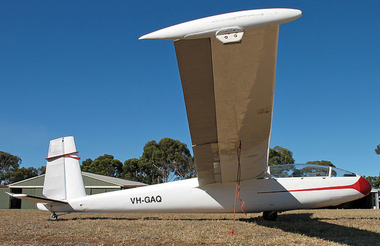
Machine - Glider – Sailplane, 1971
... The control surfaces (ailerons, flaps, elevators and rudder) are covered with aircraft fabric and painted silver. The Perspex canopy fully encloses the cockpit which is fully equipped for dual flying. ...The control surfaces (ailerons, flaps, elevators and rudder) are covered with aircraft fabric and painted silver. The Perspex canopy fully encloses the cockpit which is fully equipped for dual flying. ...The Let 13 Blanik was designed in 1956 by Karel Dlouhý of VZLÚ Letňany as a training glider. It filled that role very well and approximately 3000 have been built since production started in 1958. However, following a fatal accident involving a Blanik in Austria in 2010 that raised concerns about main spar metal fatigue, the type was grounded in Europe and America. In Australia, the extension of the life of this type of glider beyond 5000 hours / 18000 launches is dependent on compliance with directives for the inspection and modification of fatigue critical components. It is understood that VH-GAQ was built in 1971 and first registered on 14 August 1972. It is a Blanik that has been retired from service because of the metal fatigue concerns that apply to the type generally and the expense involved in complying with the applicable directives for on-going airworthiness certification. VH-GAQ was donated to the Australian Gliding Museum by the Australian Junior Gliding Club in 2010. Popular mass produced, metal, two seat sailplane. Used by many clubs in Australia in the 1970s. The Blanik VH-GAQ is a large two seat glider – sailplane of metal construction. It is finished in a white colour scheme with red detailing consisting of a red fuselage nose and adjoining red stripe along the fuselage sides to about midships. The control surfaces (ailerons, flaps, elevators and rudder) are covered with aircraft fabric and painted silver. The Perspex canopy fully encloses the cockpit which is fully equipped for dual flying. Registration VH-GAQ in black on sides of fuselage to the rearaustralian gliding, glider, sailplane, let kunovice, blanik -
 Robin Boyd Foundation
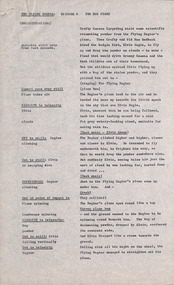
Document - Script, Robin Boyd, The Flying Dogtor. Episode 8 The Dog Fight, 1963
... The Flying Dogtor and Elvis Evil Eagle crashed mid air and the Dogtor helped Elvis gain control and rescued him. ...The Flying Dogtor and Elvis Evil Eagle crashed mid air and the Dogtor helped Elvis gain control and rescued him. ...The Flying Dogtor and Elvis Evil Eagle crashed mid air and the Dogtor helped Elvis gain control and rescued him. Thee Dogtor then tried to loosen a pile of logs that were blocking the creek and making the flood worse, but the effort sent his plane into a spin.The Flying Dogtor" series was broadcast on Australian Television Network (later becoming the Seven Network) between February and April 1964 (see item D254 for schedule).Typewritten, carbon copy, foolscap, 3 pagesPage 1: spelling correction, hand writtenthe flying dogtor, robin boyd, crawford productions, manuscript -
 Robin Boyd Foundation
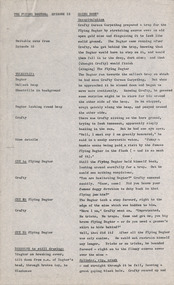
Document - Script, Robin Boyd, The Flying Dogtor. Episode 13 Going Down?, 1963
... Flying Dogtor into stepping into the mouth of an old and deep gold mineshaft. The Dogtor fell down the mineshaft, and Crafty thought that he had succeeded at last in getting rid of his enemy. He even climbed into the Dogtor's plane and tried the controls...Flying Dogtor into stepping into the mouth of an old and deep gold mineshaft. The Dogtor fell down the mineshaft, and Crafty thought that he had succeeded at last in getting rid of his enemy. He even climbed into the Dogtor's plane and tried the controls ...Crafty Carson Carpetbag tricked The Flying Dogtor into stepping into the mouth of an old and deep gold mineshaft. The Dogtor fell down the mineshaft, and Crafty thought that he had succeeded at last in getting rid of his enemy. He even climbed into the Dogtor's plane and tried the controls, planning to fly it away and keep it for himself. Meanwhile, The Flying Dogtor fell deep down the mineshaft, like a stone. The Flying Dogtor" series was broadcast on Australian Television Network (later becoming the Seven Network) between February and April 1964 (see item D254 for schedule).Typewritten, carbon copy, foolscap, 2 pagesthe flying dogtor, robin boyd, crawford productions, manuscript -
 Robin Boyd Foundation
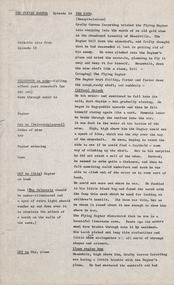
Document - Script, Robin Boyd, The Flying Dogtor. Episode 14 The Cave, 1963
... The Flying Dogtor, tricked by Crafty Carson Carpetbag into falling into an old mineshaft, wandered into an underground limestone cave and then slipped into a subterranean river. He was swept into a long dark tunnel. Meanwhile, high above him, Crafty tried to fly the Dogtor's plane away. He couldn't control...The Flying Dogtor, tricked by Crafty Carson Carpetbag into falling into an old mineshaft, wandered into an underground limestone cave and then slipped into a subterranean river. He was swept into a long dark tunnel. Meanwhile, high above him, Crafty tried to fly the Dogtor's plane away. He couldn't control ...The Flying Dogtor, tricked by Crafty Carson Carpetbag into falling into an old mineshaft, wandered into an underground limestone cave and then slipped into a subterranean river. He was swept into a long dark tunnel. Meanwhile, high above him, Crafty tried to fly the Dogtor's plane away. He couldn't control it and the plane shot up into the sky without him, rolling over and over without a pilot, without its master, The Flying Dogtor.The Flying Dogtor" series was broadcast on Australian Television Network (later becoming the Seven Network) between February and April 1964 (see item D254 for schedule).Typewritten, carbon copy, foolscap, 2 pagesPages 1 & 2: handwritten corrections on both pagesthe flying dogtor, robin boyd, crawford productions, manuscript -
 Sunshine and District Historical Society Incorporated
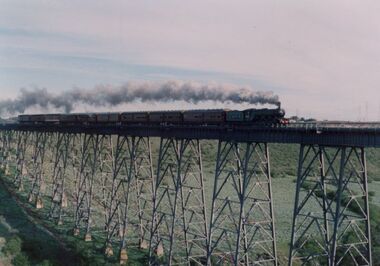
Photograph - The Flying Scotsman steam train crossing the Maribyrnong River 1989, 1989
... The Flying Scotsman steam train crossing Trestle Bridge over the Maribyrnong River During 1989 The Flying Scotsman steam train was sent to Australia for a public relations tour during this crossing it is possible that Mr Norm De Pomeroy was at the controls....Flying Scotsman Train Bridge Maribyrnong River The Flying Scotsman steam train crossing Trestle Bridge over the Maribyrnong River During 1989 The Flying Scotsman steam train was sent to Australia for a public relations tour during this crossing it is possible that Mr Norm De Pomeroy was at the controls. ...The Flying Scotsman steam train crossing Trestle Bridge over the Maribyrnong River During 1989 The Flying Scotsman steam train was sent to Australia for a public relations tour during this crossing it is possible that Mr Norm De Pomeroy was at the controls.flying scotsman, train, bridge, maribyrnong river -
 Clunes Museum
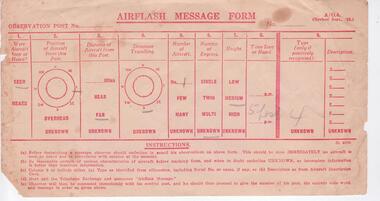
Ephemera - AIR FLASH MESSAGE FORM, 1942
... FLYING IN IMMEDIATE AREA. OBSERVER TO RECORD AND REPORT THE POSITION, DIRECTION, NUMBER OF ENGINES, HEIGHT, TIME SEEN OR HEARD AND TYPE OF AIRCRAFT TO AIRFORCE CONTROL BASE [BALLARAT] DURING 1939-1945 WORLD WAR ....FLYING IN IMMEDIATE AREA. OBSERVER TO RECORD AND REPORT THE POSITION, DIRECTION, NUMBER OF ENGINES, HEIGHT, TIME SEEN OR HEARD AND TYPE OF AIRCRAFT TO AIRFORCE CONTROL BASE [BALLARAT] DURING 1939-1945 WORLD WAR . ...MRS. ANDREW McLENNAN [ALMA] WAS AN OBSERVER FROM 1042 WHILE LIVING AT TOURELLO ESTATE, SMEATON ROAD, CLUNES.AIR FLASH MESSAGE FORM ISSUED TO NOMINATED OBSERVERS OF AIRCRAFT FLYING IN IMMEDIATE AREA. OBSERVER TO RECORD AND REPORT THE POSITION, DIRECTION, NUMBER OF ENGINES, HEIGHT, TIME SEEN OR HEARD AND TYPE OF AIRCRAFT TO AIRFORCE CONTROL BASE [BALLARAT] DURING 1939-1945 WORLD WAR .local history, document, identification, military, airforce, ww2 -
 Lake Boga Flying Boat Museum
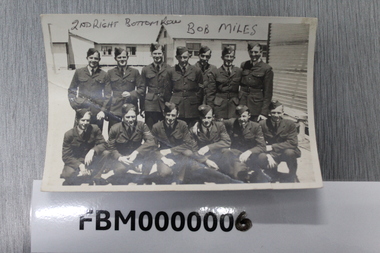
Photograph
... controlled harbors. These Catalinas were painted black for night missions and were known as the Black Cats. The Black Cat Catalina flying boats were serviced at the No 1 Flying Boat Repair Depot, Lake Boga, during World War II....controlled harbors. These Catalinas were painted black for night missions and were known as the Black Cats. The Black Cat Catalina flying boats were serviced at the No 1 Flying Boat Repair Depot, Lake Boga, during World War II. ...Bob Miles enlisted in the Royal Australian Air Force in May 1940. He trained as Fitter in 1941, then as an Air Gunner in 1942. He was in 11 Squadron and 20 Squadron. Both Squadrons flew Catalinas on special missions dropping sea mines into enemy controlled harbors. These Catalinas were painted black for night missions and were known as the Black Cats. The Black Cat Catalina flying boats were serviced at the No 1 Flying Boat Repair Depot, Lake Boga, during World War II.Corporal Bob Miles' logbook shows he was at the No 1 Flying Boat Repair Depot, Lake Boga, on February 1st - 2nd 1945 for air testing. He was in Catalina A24-304.Black and white photograph of 13 enlisted men. 2 rows of men, 7 men standing in the back row, 6 men squatting in the front row. Corrugated iron buildings in the background. Front of Photo -2ND RIGHT BOTTOM ROW BOB MILES Back of Photo - Bob Miles/2nd Right Bottom Row. 14 signatures. /HUT 73/No 2 B.A.G.S./PORT PIRIE/13-10-1941(8HRS DAY /MARCH)bob miles, catalina, wwii, lake boga, flying boat depot, black cats -
 Lake Boga Flying Boat Museum
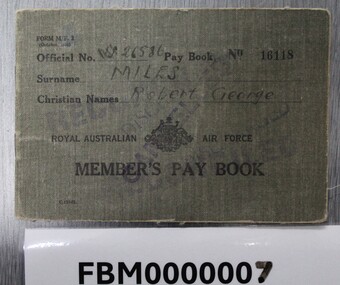
Booklet - Royal Australian Air Force Member's Pay Book - Robert George Miles
... controlled harbors. These Catalinas were painted black for night missions and were known as the Black Cats. The Black Cat Catalina flying boats were serviced at the No 1 Flying Boat Repair Depot, Lake Boga, during World War II....controlled harbors. These Catalinas were painted black for night missions and were known as the Black Cats. The Black Cat Catalina flying boats were serviced at the No 1 Flying Boat Repair Depot, Lake Boga, during World War II. ...Bob Miles enlisted in the Royal Australian Air Force in May 1940. He trained as a Fitter in 1941, then as an Air Gunner in 1942. He was in 11 Squadron and 20 Squadron. Both Squadrons flew Catalinas on special missions dropping sea mines into enemy controlled harbors. These Catalinas were painted black for night missions and were known as the Black Cats. The Black Cat Catalina flying boats were serviced at the No 1 Flying Boat Repair Depot, Lake Boga, during World War II.Corporal Bob Miles' logbook shows he was at the No 1 Flying Boat Repair Depot, Lake Boga, on February 1st - 2nd 1945 for air testing. He was in Catalina A24-304.Khaki green buckram covered RAAF Member's pay bookOfficial No. 26586 Pay Book No. 16118/Surname MILES/Christian Names Robert George/ROYAL AUSTRLAIAIN AIR FORCE/MEMBER'S PAY BOOKbob miles, wwii, catalina, black cats, no 1 flying boat repair depot -
 Lake Boga Flying Boat Museum
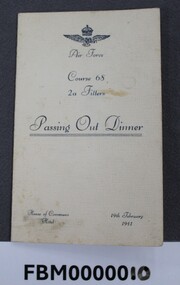
Card - Passing Out Dinner Menu
... controlled harbors. These Catalinas were painted black for night missions and were known as the Black Cats. The Black Cat Catalina flying boats were serviced at the No 1 Flying Boat Repair Depot, Lake Boga, during World War II....controlled harbors. These Catalinas were painted black for night missions and were known as the Black Cats. The Black Cat Catalina flying boats were serviced at the No 1 Flying Boat Repair Depot, Lake Boga, during World War II. ...Bob Miles enlisted in the Royal Australian Air Force in May 1940. He trained as a Fitter in 1941, then as an Air Gunner in 1942. He was in 11 Squadron and 20 Squadron. Both Squadrons flew Catalinas on special missions dropping sea mines into enemy controlled harbors. These Catalinas were painted black for night missions and were known as the Black Cats. The Black Cat Catalina flying boats were serviced at the No 1 Flying Boat Repair Depot, Lake Boga, during World War II.Corporal Bob Miles' logbook shows he was at the No 1 Flying Boat Repair Depot, Lake Boga, on February 1st - 2nd 1945 for air testing. He was in Catalina A24-304.Rectangular cream card, Navy writingFront cover: Air Force/ Course 68/ 2a Fitters/Passing Out Dinner/House of Commons Hotel/19th February 1941 Inside: Menu Rear cover: Autographs (of course participants including Bob Miles')wwii, bob miles, catalina, black cats, no 1 flying boat repair depot -
 Lake Boga Flying Boat Museum
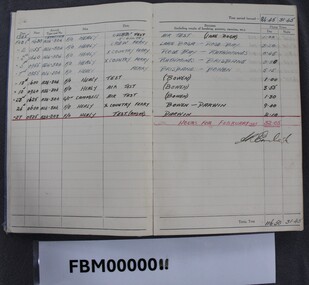
Book - Royal Australian Air Force Member's Log Book - Robert George Miles, OBSERVER'S AIR GUNNER'S AND W/T OPERATOR'S FLYING LOG BOOK
... controlled harbors. These Catalinas were painted black for night missions and were known as the Black Cats. The Black Cat Catalina flying boats were serviced at the No 1 Flying Boat Repair Depot, Lake Boga, during World War II....controlled harbors. These Catalinas were painted black for night missions and were known as the Black Cats. The Black Cat Catalina flying boats were serviced at the No 1 Flying Boat Repair Depot, Lake Boga, during World War II. ...Bob Miles enlisted in the Royal Australian Air Force in May 1940. He trained as a Fitter in 1941, then as an Air Gunner in 1942. He was in 11 Squadron and 20 Squadron. Both Squadrons flew Catalinas on special missions dropping sea mines into enemy controlled harbors. These Catalinas were painted black for night missions and were known as the Black Cats. The Black Cat Catalina flying boats were serviced at the No 1 Flying Boat Repair Depot, Lake Boga, during World War II.Corporal Bob Miles' logbook shows he was at the No 1 Flying Boat Repair Depot, Lake Boga, on February 1st - 2nd 1945 for air testing. He was in Catalina A24-304.blue cloth covered book, black writing on cover, flight entries handwritten insideFORM A.73/(June, 1933)/ROYAL AUSTRALIAN AIR FORCE/OBSERVER'S AIR GUNNER'S AND W/T OPERATO'S FLYING LOG BOOK Name 26586 MILES RGcatalina, black cats, bob miles, wwii, flying boat repair depot, lake boga, log book -
 Lake Boga Flying Boat Museum
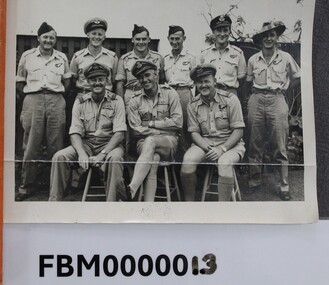
Photograph
... controlled harbors. These Catalinas were painted black for night missions and were known as the Black Cats. The Black Cat Catalina flying boats were serviced at the No 1 Flying Boat Repair Depot, Lake Boga, during World War II....controlled harbors. These Catalinas were painted black for night missions and were known as the Black Cats. The Black Cat Catalina flying boats were serviced at the No 1 Flying Boat Repair Depot, Lake Boga, during World War II. ...Bob Miles enlisted in the Royal Australian Air Force in May 1940. He trained as a Fitter in 1941, then as an Air Gunner in 1942. He was in 11 Squadron and 20 Squadron. Both Squadrons flew Catalinas on special missions dropping sea mines into enemy controlled harbors. These Catalinas were painted black for night missions and were known as the Black Cats. The Black Cat Catalina flying boats were serviced at the No 1 Flying Boat Repair Depot, Lake Boga, during World War II.Corporal Bob Miles' logbook shows he was at the No 1 Flying Boat Repair Depot, Lake Boga, on February 1st - 2nd 1945 for air testing. He was in Catalina A24-304.Black and white photograph of 6 servicemen standing, 3 seatedBack of photo: Caterlina No.20 Squadron Taken Islands/Bob Miles - 1st Row Left sidebob miles, wwii, catalina, black cats, no 1 flying boat repair depot
