
Showing 87 items matching "formation of armies"
-
 Lara RSL Sub Branch
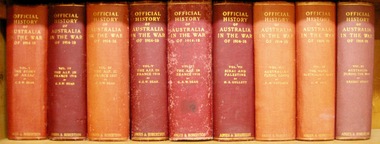
Book, Official History of Australia in the War of 1914-18 - Volume XI - Australia During the War Author Ernest Scott Professor of History at Melbourne University, 1937
... ...formation of armies...It describes the background - political, social, industrial, economic-against which the war effort of Australia was projected. australia declaration of war commonwealth cabinet war pledges of political leadeers censorship of newspapers censorship of mail blind codes internment camps hughes stress of war military organisations of australia formation of armies equipment of armies matters of policy gallipoli conscription conscription movement military service referendum act the last months of the war economy aspects of the war commonwealth taxation patriotic funds peace conference Official History of Australia in the War of 1914-18 - Volume XI - Australia During the War. ...This book deals almost entirely with occurrences within Australia. It describes the background - political, social, industrial, economic-against which the war effort of Australia was projected.This book deals almost entirely with occurrences within Australia. It describes the background - political, social, industrial, economic-against which the war effort of Australia was projected.Official History of Australia in the War of 1914-18 - Volume XI - Australia During the War. Illustrations, Photographs,australia, declaration of war, commonwealth cabinet, war pledges of political leadeers, censorship of newspapers, censorship of mail, blind codes, internment camps, hughes, stress of war, military organisations of australia, formation of armies, equipment of armies, matters of policy, gallipoli, conscription, conscription movement, military service referendum act, the last months of the war, economy aspects of the war, commonwealth taxation, patriotic funds, peace conference -
 Bendigo Military Museum
Letter - Royal Australian Survey Corps Jubilee, Department of Defence, Melbourne, 1965
... The folder about the Royal Australian Survey Corps Jubilee, contains a number of very informative letters dealing with the formation of the Army Survey Corps. There is also some history as to how the Australian Survey Corps came into being. ...The folder about the Royal Australian Survey Corps Jubilee, contains a number of very informative letters dealing with the formation of the Army Survey Corps. There is also some history as to how the Australian Survey Corps came into being. ...The folder about the Royal Australian Survey Corps Jubilee, contains a number of very informative letters dealing with the formation of the Army Survey Corps. There is also some history as to how the Australian Survey Corps came into being. One letter lists the current units of the Royal Australian Survey Corps.Foolscap size manila Folder containing a number of letters held together by an ARNOS fastener.No "91" Top right hand corner. "Royal Australian Survey Corps Jubilee" hand written on front coverroyal australian survey corps, rasvy, fortuna, army survey regiment, army svy regt, asr -
 Wangaratta RSL Sub Branch
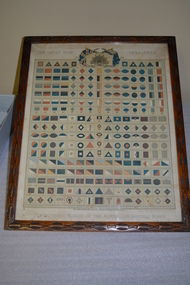
Print - Framed poster
... These colour patches identified units and formations of the Australian Army which fought during World War 1...These colour patches identified units and formations of the Australian Army which fought during World War 1 Poster is a tribute to the soldiers of WW1 WW1 Great War AIF Colours & Patches Distinguishing Badges 1914-1918 The Great War 1914-1918 Colours & Patches Distinguishing Badges of the Australian Imperial Forces Carved timber framed poster with rising sun crest with flags and columns of coloured symbols and shaped badges. ...Poster displaying WW1 Distinguishing badges colours and patches of the AIF. These colour patches identified units and formations of the Australian Army which fought during World War 1Poster is a tribute to the soldiers of WW1Carved timber framed poster with rising sun crest with flags and columns of coloured symbols and shaped badges.The Great War 1914-1918 Colours & Patches Distinguishing Badges of the Australian Imperial Forcesww1, great war, aif, colours & patches, distinguishing badges, 1914-1918 -
 Bendigo Military Museum
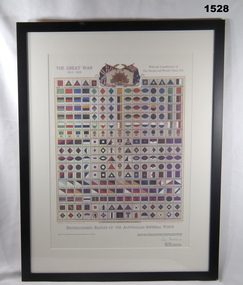
Poster - POSTER FRAMED WW1, 1981
... Note printed at lower edge of poster - "These colour patches identified units and formations of the Australian Army which fought during World War 1. ...Note printed at lower edge of poster - "These colour patches identified units and formations of the Australian Army which fought during World War 1. ...Note printed at lower edge of poster - "These colour patches identified units and formations of the Australian Army which fought during World War 1. They are reproduced for ANZAC Day 1981 as a tribute to the soldiers who wore them".Poster - paper, colour ink print of 250 colour patches of the Australian Army, Worl War One. Reproduced from the "Supplement to 'The Weekly Times' April 5, 1919" Heading to poster "THE GREAT WAR/1914 - 1918" beside Rising Sun badge framed by crossed flags (Red, White and Blue) with laurel leaves and lettering "COLOUR PATCHES". Frame - black colour paint on timber frame with glass front and cardboard backing. Mount - white colour cardboard.Information on poster in purple colour print "THE GREAT WAR/ 1914-1918". "With the Compliments of The Herald and Weekly Times Ltd". "DISTINGUISHING BADGES OF THE AUSTRALIAN IMPERIAL FORCE".framed accessories, poster, ww1, colour patches -
 National Vietnam Veterans Museum (NVVM)
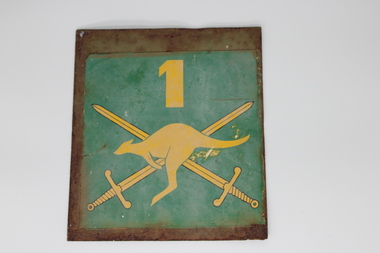
Sign - Tactical Sign
... The green with yellow kangaroo signifies the historic 1st Division Formation Sign used on Australian Army vehicles and equipment....The green with yellow kangaroo signifies the historic 1st Division Formation Sign used on Australian Army vehicles and equipment. ...A sign usually attached to vehicles, identifying the vehicle to its unit. The green with yellow kangaroo signifies the historic 1st Division Formation Sign used on Australian Army vehicles and equipment.Green metal sign with cardboard printed image of yellow kangaroo, crossed swords and the number 1. Reverse is blue with diagonal stripe and white number 70.tac sign, vehicle tac sign 70, vietnam conflict, tactical sign, vehicles, 1atf -
 4th/19th Prince of Wales's Light Horse Regiment Unit History Room
Booklet, J T Picken & Sons, Combined Operations Beach Organisation & Maintenance 1945, 1945
... The pamphlet sets out the methods by which it is proposed to organise the beaches and beach maintenance area during the landing operations of Australian Army formations....The pamphlet sets out the methods by which it is proposed to organise the beaches and beach maintenance area during the landing operations of Australian Army formations. Combined Operations Beach Organisation & Maintenance 1945 Booklet J T Picken & Sons ...Soft covered booklet originally issued as 1 Aust Corps Training Instruction No 2 of 17 Dec 1943, revised and amended in 1944. The pamphlet sets out the methods by which it is proposed to organise the beaches and beach maintenance area during the landing operations of Australian Army formations.No 1960 SECRET (GBD)world war 2, beach operations -
Frankston RSL Sub Branch
Souvenir, Tea Towels
... Souvenir tea towels made for the 40th anniversary commemoration of the formation of the Australian Women's Army Service which was formed on the 13th August 1941. ...ARMY SERVICE" below the badge. Beneath that "1941 - 1981" and the note "PURE LINEN" Souvenir tea towels made for the 40th anniversary commemoration of the formation of the Australian Women's Army Service which was formed on the 13th August 1941. ...Souvenir tea towels made for the 40th anniversary commemoration of the formation of the Australian Women's Army Service which was formed on the 13th August 1941. These tea towels are linen and are screen printed in olive green on a plain background. The tea towels feature the badge of the Australian Commonwealth Military Forces. These tea towels have the following screen printed in colour: The 'rising sun' badge of the Australian Commonwealth Military Forces with "A.W.A.S." uppermost and "40th ANNIVERSARY" above the badge and "AUSTRALIAN WOMEN'S ARMY SERVICE" below the badge. Beneath that "1941 - 1981" and the note "PURE LINEN" world war 2, ww2, awas, a.w.a.s., nurses, service, womens, women's, army, australia, -
 National Vietnam Veterans Museum (NVVM)
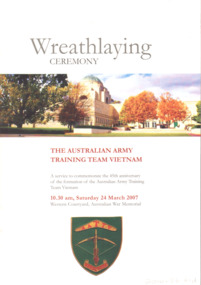
Ephemera - Wreath Laying Ceremony Program
... On an A5 glossy paper for Wreath Laying Ceremony, The Australian Army Training Team Vietnam. A service to commemorate the 45th anniversary of the formation of the Australian Army Training Team Vietnam for 10.30 am, Sunday 24 March 2007 in the Western courtyard, Australian War Memorial. ...Wreath Laying Ceremony AATTV Australian Army Training Team Vietnam (AATTV) 45th Anniversary Western Courtyard Australian War Memorial Major Ian Charles Teague Ian Teague 35803 Royal Australian Infantry Corps Australian Army Force 1st Special Air Squandron On an A5 glossy paper for Wreath Laying Ceremony, The Australian Army Training Team Vietnam. A service to commemorate the 45th anniversary of the formation of the Australian Army Training Team Vietnam for 10.30 am, Sunday 24 March 2007 in the Western courtyard, Australian War Memorial. ...On an A5 glossy paper for Wreath Laying Ceremony, The Australian Army Training Team Vietnam. A service to commemorate the 45th anniversary of the formation of the Australian Army Training Team Vietnam for 10.30 am, Sunday 24 March 2007 in the Western courtyard, Australian War Memorial. There is a coloured photograph of the War Memorial in the centre of the booklet and at the bottom of the page there is the insignia of the AATTV. The booklet is of eight pages and held together by two metal stapleswreath laying ceremony, aattv, australian army training team vietnam (aattv), 45th anniversary, western courtyard, australian war memorial, major ian charles teague, ian teague, 35803, royal australian infantry corps, australian army force, 1st special air squandron -
Frankston RSL Sub Branch
Souvenir, Tea Towels
... Souvenir tea towels made for the 40th anniversary commemoration of the formation of the Australian Women's Army Service which was formed on the 13th August 1941. ...ARMY SERVICE" around the lower part of the badge. Beneath that "13 AUGUST 1941" and the note "Hand printed in Australia" Souvenir tea towels made for the 40th anniversary commemoration of the formation of the Australian Women's Army Service which was formed on the 13th August 1941. ...Souvenir tea towels made for the 40th anniversary commemoration of the formation of the Australian Women's Army Service which was formed on the 13th August 1941. There are eight of these linen tea towels screen printed in colour on a plain background. There are blue, maroon and green examples. The tea towels feature the badge of the A.W.A.S. ASSOCIATION VIC. and the date of formation.The tea towels have the following screen printed in colour: The badge of the A.W.A.S. ASSOCIATION VIC. with "A.W.A.S." above and "AUSTRALIAN WOMEN'S ARMY SERVICE" around the lower part of the badge. Beneath that "13 AUGUST 1941" and the note "Hand printed in Australia"world war 2, ww2, women, women's, awas, a.w.a.s., australian, nurse, nursing, service, -
 Australian Commando Association - Victoria
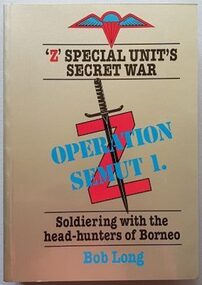
Book, Z Special Units' Secret War- Operations SEMUT 1, 1989
... Although the unit was disbanded after the war, many of the training techniques and operational procedures employed were later used during the formation of other Australian Army special forces units and they remain a model for guerrilla operations to this day....Although the unit was disbanded after the war, many of the training techniques and operational procedures employed were later used during the formation of other Australian Army special forces units and they remain a model for guerrilla operations to this day. ...An account of the operations of The Allied Intelligence Bureau (AIB) better known as ‘Z’ Special Unit. Now a scarce and highly sought after title. The author’s personal experiences with Australian Special Forces (Services Reconnaissance Department) which involved guerrilla soldiering with the head-hunters of Japanese held Borneo during World War 2. Z Special Unit an administrative support unit of (also known as Special Operations Australia (SOA) or the Services Reconnaissance Department (SRD)) was a joint Allied special forces unit formed during the Second World War to operate behind Japanese lines in South East Asia. Predominantly Australian, SRD was a specialist reconnaissance and sabotage unit that included British, Dutch, New Zealand, Timorese and Indonesian members, predominantly operating on Borneo and the islands of the former Netherlands East Indies. The unit carried out a total of 81 covert operations in the South West Pacific theatre, with parties inserted by parachute or submarine to provide intelligence and conduct guerrilla warfare. The best known of these missions were Operation Jaywick and Operation RIMAU, both of which involved raids on Japanese shipping in Singapore Harbour; the latter of which resulted in the deaths of twenty-three commandos either in action or by execution after capture. Although the unit was disbanded after the war, many of the training techniques and operational procedures employed were later used during the formation of other Australian Army special forces units and they remain a model for guerrilla operations to this day.Hard Cover with Dust Jacket – 608 pagesInscribed by author-Bob Long AK223 SEMUT 1 Borneo 1945 -
 Australian Commando Association - Victoria
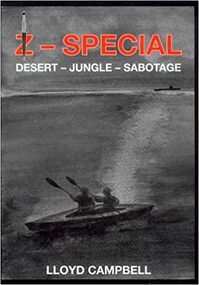
Book, Z Special- Desert-Jungle- Sabotage
... Although the unit was disbanded after the war, many of the training techniques and operational procedures employed were later used during the formation of other Australian Army special forces units and they remain a model for guerrilla operations to this day. ...Although the unit was disbanded after the war, many of the training techniques and operational procedures employed were later used during the formation of other Australian Army special forces units and they remain a model for guerrilla operations to this day. ...When Lloyd Campbell joined the AIF, he was underage and went to the Middle East with 2/17 Battalion. Later in New Guinea he made a major career change and volunteered for an unknown unit and special operations. What he had joined was the SRD – known as Z-Special Unit. Z Special Unit—also known as Special Operations Executive (SOE), Special Operations Australia (SOA) or the Services Reconnaissance Department (SRD)—was a joint Allied special forces unit formed during the Second World War to operate behind Japanese lines in South East Asia. Predominantly Australian, Z Special Unit was a specialist reconnaissance and sabotage unit that included British, Dutch, New Zealand, Timorese and Indonesian members, predominantly operating on Borneo and the islands of the former Netherlands East Indies. The unit carried out a total of 81 covert operations in the South West Pacific theatre, with parties inserted by parachute or submarine to provide intelligence and conduct guerrilla warfare. The best known of these missions were Operation Jaywick and Operation Rimau, both of which involved raids on Japanese shipping in Singapore Harbour; the latter of which resulted in the deaths of 23 commandos either in action or by execution after capture. Although the unit was disbanded after the war, many of the training techniques and operational procedures employed were later used during the formation of other Australian Army special forces units and they remain a model for guerrilla operations to this day. pp. 274, illusts, maps ww2, the australian special operations, special forces, z special unit -
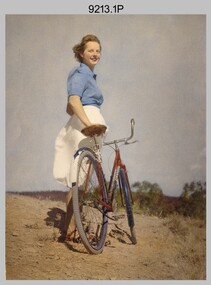 Bendigo Military Museum
Photograph - LHQ Cartographic Company Visit to Spring Gully and Castlemaine, 1943, 1944
... Added to this unlikely mixture of permanent army officers, skilled tradesmen, artists and old soldiers were the women of the Company. A decision of War Cabinet on 13 August 1941 had authorised the formation of the Australian Women's Army Service (AWAS), in order to release men from certain military duties for employment with fighting units. ...Added to this unlikely mixture of permanent army officers, skilled tradesmen, artists and old soldiers were the women of the Company. A decision of War Cabinet on 13 August 1941 had authorised the formation of the Australian Women's Army Service (AWAS), in order to release men from certain military duties for employment with fighting units. ...This is a set of four photographs of Land Headquarters (LHQ) Cartographic Company personnel taken on Christmas Day, 25 December 1943 at Spring Gully Reservoir, Bendigo and in March 1944 during a visit to Castlemaine, 37km south of Bendigo. These visits were taken during Army’s WW2 occupation of Fortuna, Bendigo. On 1 Feb 1941, a Cartographic Section was reformed as the LHQ Cartographic Company. Deputy Chief of the General Staff, Major General Sidney Rowell instructed Its OC - Major William Sarll, in the interests of security of plant and to provide against possible damage of air attack, to investigate suitable safer inland accommodation for LHQ Cartographic Company. Major William Sarll inspected many properties before finding one that would meet the requirements of the Cartographic Company. In late 1941, he came to inspect Fortuna, a rambling old mansion dating back to the gold rush, with about fifteen acres of ground in central Bendigo. On 23 March 1942, the Commonwealth of Australia, under the provisions of the National Security Act of 1939, took possession of the house, the old battery buildings and the fifteen acres of grounds. LHQ Cartographic Company moved to Bendigo on 11 Jun 1942, from Mitchell House, Melbourne. The responsibilities of this unit were map compilation, fair drawing and lithographic reproduction, including printing the work of other Units as well as their own. Added to this unlikely mixture of permanent army officers, skilled tradesmen, artists and old soldiers were the women of the Company. A decision of War Cabinet on 13 August 1941 had authorised the formation of the Australian Women's Army Service (AWAS), in order to release men from certain military duties for employment with fighting units. Originally their employment was restricted to traditional female areas and numbers were strictly limited, but the outbreak of the Pacific War in 1942 led to a broadening of employment categories and an increase in numbers. The first AWAS arrived at Fortuna on 26 November 1942 and immediately became an integral part of the unit. Seventy-five AWAS served with the Cartographic Company during the war and Major Sarll paid them a special tribute for their 'untiring efforts' in the Company's war report. Refer to Item 6099.17P for photos taken in 1942, the first year of LHQ Cartographic Company’s occupation at Fortuna, Bendigo in WW2. The Survey Corps’ occupation of Fortuna during WW2 is covered in more detail with additional historic photographs, in pages 17 to 27 of Valerie Lovejoy’s book 'Mapmakers of Fortuna – A history of the Army Survey Regiment’ ISBN: 0-646-42120-4. Other items from Rosemary (Atkinson) Bowman are: 9209.12P, 9210.16P, 99211.6P, 9212.6P, and 9214.12.This is a set of four photographs of Land Headquarters (LHQ) Cartographic Company personnel taking time off at Spring Gully, Bendigo on December 1943 and Castlemaine in March 1944, during Army’s WW2 occupation of Fortuna, Bendigo. The colour and black and white photographs are printed on photographic paper are contained in a photo album provided by the family of Rosemary (Atkinson) Bowman, a former member of RA Svy. The photographs were scanned at 600 dpi and are part of the Army Survey Regiment’s Collection. .2) - Photo, colour, 25 December 1943. Rosemary (Atkinson) Bowman at Spring Gully Reservoir, Bendigo. .2) - Photo, black & white, March 1944. Outside Cumberland Hotel, Castlemaine, L to R: Ken Taylor, Wes Runting, Bob Vincent. .3) - Photo, black & white, March 1944. Outside Cumberland Hotel, Castlemaine, L to R: Rosemary (Atkinson) Bowman, Bob Vincent. .4) - Photo, black & white, March 1944. Halfway back to Bendigo - Rosemary (Atkinson) Bowman.Some personnel are identified with dates in the photo album.royal australian survey corps, rasvy, army survey regiment, asr, fortuna -
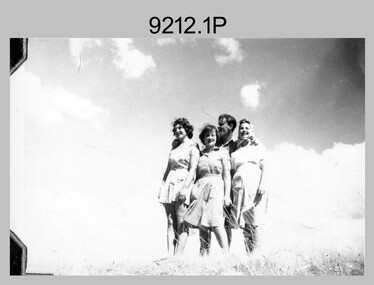 Bendigo Military Museum
Photograph - LHQ Cartographic Company Picnic, Axe Creek, Bendigo region, 1944
... Added to this unlikely mixture of permanent army officers, skilled tradesmen, artists and old soldiers were the women of the Company. A decision of War Cabinet on 13 August 1941 had authorised the formation of the Australian Women's Army Service (AWAS), in order to release men from certain military duties for employment with fighting units. ...Added to this unlikely mixture of permanent army officers, skilled tradesmen, artists and old soldiers were the women of the Company. A decision of War Cabinet on 13 August 1941 had authorised the formation of the Australian Women's Army Service (AWAS), in order to release men from certain military duties for employment with fighting units. ...This is a set of six photographs of Land Headquarters (LHQ) Cartographic Company personnel taken in 1944 at a picnic held at Axe Creek, a locality 15km SE of Bendigo, during Army’s WW2 occupation of Fortuna, Bendigo. On 1 Feb 1941, a Cartographic Section was reformed as the LHQ Cartographic Company. Deputy Chief of the General Staff, Major General Sidney Rowell instructed Its OC - Major William Sarll, in the interests of security of plant and to provide against possible damage of air attack, to investigate suitable safer inland accommodation for LHQ Cartographic Company. Major William Sarll inspected many properties before finding one that would meet the requirements of the Cartographic Company. In late 1941, he came to inspect Fortuna, a rambling old mansion dating back to the gold rush, with about fifteen acres of ground in central Bendigo. On 23 March 1942, the Commonwealth of Australia, under the provisions of the National Security Act of 1939, took possession of the house, the old battery buildings and the fifteen acres of grounds. LHQ Cartographic Company moved to Bendigo on 11 Jun 1942, from Mitchell House, Melbourne. The responsibilities of this unit were map compilation, fair drawing and lithographic reproduction, including printing the work of other Units as well as their own. Added to this unlikely mixture of permanent army officers, skilled tradesmen, artists and old soldiers were the women of the Company. A decision of War Cabinet on 13 August 1941 had authorised the formation of the Australian Women's Army Service (AWAS), in order to release men from certain military duties for employment with fighting units. Originally their employment was restricted to traditional female areas and numbers were strictly limited, but the outbreak of the Pacific War in 1942 led to a broadening of employment categories and an increase in numbers. The first AWAS arrived at Fortuna on 26 November 1942 and immediately became an integral part of the unit. Seventy-five AWAS served with the Cartographic Company during the war and Major Sarll paid them a special tribute for their 'untiring efforts' in the Company's war report. Refer to Item 6099.17P for photos taken in 1942, the first year of LHQ Cartographic Company’s occupation at Fortuna, Bendigo in WW2. The Survey Corps’ occupation of Fortuna during WW2 is covered in more detail with additional historic photographs, in pages 17 to 27 of Valerie Lovejoy’s book 'Mapmakers of Fortuna – A history of the Army Survey Regiment’ ISBN: 0-646-42120-4. Other items from Rosemary (Atkinson) Bowman are: 9209.12P, 9210.16P, 99211.6P, 9213.4P and 9214.12. This is a set of six photographs of Australian Survey Corps personnel at a picnic held at Axe Creek, a locality a locality 15km SE of Bendigo, taken in 1944 during Army’s WW2 occupation of Fortuna, Bendigo. in printed on photographic paper are contained in a photo album provided by the family of Rosemary (Atkinson) Bowman, a former member of RA Svy. The photographs were scanned at 600 dpi and are part of the Army Survey Regiment’s Collection. .1) - Photo, black & white, 1944. L to R: Ronye Bond, Margie, Phil Flood, Rosemary (Atkinson) Bowman. .2) - Photo, black & white, 1944. L to R: Rosemary (Atkinson) Bowman, Margie, Bob Vincent, ‘Noakie’, Wes Runting. .3) - Photo, black & white, 1944. Rosemary (Atkinson) Bowman. .4) - Photo, black & white, 1944. L to R: ‘Noakie’, Wes Runting. .5) - Photo, black & white, 1944. Back row L to R: Ronald ‘Stape’ Stapleton, Wes ‘JD’ Runting, Ray Jones, Centre row L to R: Ronye Bond, Peggy Priest, Rosemary (Atkinson) Bowman. At front: Noakie. .6) - Photo, black & white, 1944. L to R: Ray Jones, Ronye Bond, ‘Noakie’, Rosemary (Atkinson) Bowman, Wes ‘JD’ Runting, Ronald ‘Stape’ Stapleton.Some personnel are identified with dates in the photo album.royal australian survey corps, rasvy, army survey regiment, asr, fortuna -
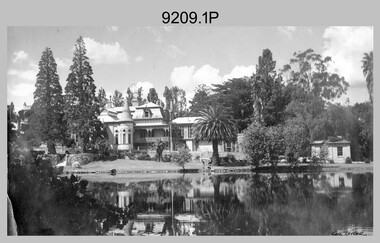 Bendigo Military Museum
Photograph - LHQ Cartographic Company Personnel and Vehicles, Fortuna, Bendigo, 1943 to 1945
... A decision of War Cabinet on 13 August 1941 had authorised the formation of the Australian Women's Army Service (AWAS), in order to release men from certain military duties for employment with fighting units. ...A decision of War Cabinet on 13 August 1941 had authorised the formation of the Australian Women's Army Service (AWAS), in order to release men from certain military duties for employment with fighting units. ...This is a set of 12 photographs taken in 1943 and 1945, during Army’s early years of occupation at Fortuna, Bendigo in WW2. The black and white photographs are contained in a photo album provided by the family of Rosemary (Atkinson) Bowman, who served in the Australian Women's Army Service (AWAS) and a former member of RA Svy. On 1 Feb 1941, a Cartographic Section was reformed as the Land Headquarters (LHQ) Cartographic Company. Deputy Chief of the General Staff, Major General Sidney Rowell instructed Its OC - Major William Sarll, in the interests of security of plant and to provide against possible damage of air attack, to investigate suitable safer inland accommodation for LHQ Cartographic Company. Major William Sarll inspected many properties before finding one that would meet the requirements of the Cartographic Company. In late 1941, he came to inspect Fortuna, a rambling old mansion dating back to the gold rush, with about fifteen acres of ground in central Bendigo. On 23 March 1942, the Commonwealth of Australia, under the provisions of the National Security Act of 1939, took possession of the house, the old battery buildings and the fifteen acres of grounds. LHQ Cartographic Company moved to Bendigo on 11 Jun 1942, from Mitchell House, Melbourne. The responsibilities of this unit were map compilation, fair drawing and lithographic reproduction, including printing the work of other Units as well as their own. A decision of War Cabinet on 13 August 1941 had authorised the formation of the Australian Women's Army Service (AWAS), in order to release men from certain military duties for employment with fighting units. Originally their employment was restricted to traditional female areas and numbers were strictly limited, but the outbreak of the Pacific War in 1942 led to a broadening of employment categories and an increase in numbers. The first AWAS arrived at Fortuna on 26 November 1942 and immediately became an integral part of the unit. Most of these women had artistic talent. Their work included fine drawing work, filling in all the topographical detail on fair copies of field sheets and pasting on names and figures, while others were drawing actual map outlines. Other sections the AWAS worked in were the duffing section, where unwanted features were painted out of the negatives before reproduction, and the retouching section where any defects in the zinc plates were corrected. The AWAS also worked on creating Army posters and other publicity material in this section. Seventy-five AWAS served with the Cartographic Company during the war. Refer to Item 6099.17P for photos taken in 1942, the first year of LHQ Cartographic Company’s occupation at Fortuna, Bendigo in WW2. The Survey Corps’ occupation of Fortuna during WW2 is covered in more detail with additional historic photographs, in pages 17 to 27 of Valerie Lovejoy’s book 'Mapmakers of Fortuna – A history of the Army Survey Regiment’ ISBN: 0-646-42120-4. Other items from Rosemary (Atkinson) Bowman are: 9210.16P, 99211.6P, 9212.6P, 9213.4P and 9214.12 This is a set of 12 photographs taken in 1943 and 1945, during Army’s early years of occupation at Fortuna, Bendigo in WW2. The black and white photographs are printed on photographic paper are contained in a photo album provided by the family of Rosemary (Atkinson) Bowman, who served in the Australian Women's Army Service (AWAS) and a former member of RA Svy. The photographs were scanned at 600 dpi and are part of the Army Survey Regiment’s Collection. .1) - Photo, black & white, 1943. LHQ Cartographic Company, Fortuna Villa, Bendigo. .2) - Photo, black & white, 1943. Ronye Bond. .3) - Photo, black & white, 1943. Rosemary (Atkinson) Bowman. .4) - Photo, black & white, 1943. Billie Hyatt. .5) - Photo, black & white, 1943. Helen Morton. .6) - Photo, black & white, 1943. Wes Runting. .7) - Photo, black & white, 1943. Ronye Bond. .8) - Photo, black & white, 1943. Rosemary (Atkinson) Bowman. .9) - Photo, black & white, 1943. Accommodation Tents L to R: Norma Lewis, Billie Hyatt, Peggy Priest, Ken Taylor, Tiny Lewis, Norma Jeffrey. .10) - Photo, black & white, 1943. Marching Contest in Bendigo’s Charing Cross. .11) - Photo, black & white, 1945. In front of Regimental Office. .12) - Photo, black & white, 1945. Part of Drive.Some personnel are identified with dates in the photo album.royal australian survey corps, rasvy, army survey regiment, asr, fortuna -
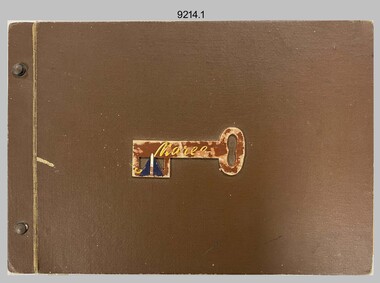 Bendigo Military Museum
Card - LHQ Cartographic Company Publications, Fortuna, Bendigo, 1943 to 1945
... Added to this unlikely mixture of permanent army officers, skilled tradesmen, artists and old soldiers were the women of the Company. A decision of War Cabinet on 13 August 1941 had authorised the formation of the Australian Women's Army Service (AWAS), in order to release men from certain military duties for employment with fighting units. ...Added to this unlikely mixture of permanent army officers, skilled tradesmen, artists and old soldiers were the women of the Company. A decision of War Cabinet on 13 August 1941 had authorised the formation of the Australian Women's Army Service (AWAS), in order to release men from certain military duties for employment with fighting units. ...This is a collection of publications produced from 1943 to 1945, during Army’s early years of occupation at Fortuna, Bendigo in WW2. The first item is a colour photograph of a photo album cover. The remaining items are publications printed on manilla card. The items are from a photo album provided by the family of Rosemary (Atkinson) Bowman, who served in the Australian Women's Army Service (AWAS) and a former member of RA Svy. On 1 Feb 1941, a Cartographic Section was reformed as the Land Headquarters (LHQ) Cartographic Company. Deputy Chief of the General Staff, Major General Sidney Rowell instructed Its OC - Major William Sarll, in the interests of security of plant and to provide against possible damage of air attack, to investigate suitable safer inland accommodation for LHQ Cartographic Company. Major William Sarll inspected many properties before finding one that would meet the requirements of the Cartographic Company. In late 1941, he came to inspect Fortuna, a rambling old mansion dating back to the gold rush, with about fifteen acres of ground in central Bendigo. On 23 March 1942, the Commonwealth of Australia, under the provisions of the National Security Act of 1939, took possession of the house, the old battery buildings and the fifteen acres of grounds. LHQ Cartographic Company moved to Bendigo on 11 Jun 1942, from Mitchell House, Melbourne. The responsibilities of this unit were map compilation, fair drawing and lithographic reproduction, including printing the work of other Units as well as their own. Added to this unlikely mixture of permanent army officers, skilled tradesmen, artists and old soldiers were the women of the Company. A decision of War Cabinet on 13 August 1941 had authorised the formation of the Australian Women's Army Service (AWAS), in order to release men from certain military duties for employment with fighting units. Originally their employment was restricted to traditional female areas and numbers were strictly limited, but the outbreak of the Pacific War in 1942 led to a broadening of employment categories and an increase in numbers. The first AWAS arrived at Fortuna on 26 November 1942 and immediately became an integral part of the unit. Most of these women had artistic talent. Their work included fine drawing work, filling in all the topographical detail on fair copies of field sheets and pasting on names and figures, while others were drawing actual map outlines. Other sections the AWAS worked in were the duffing section, where unwanted features were painted out of the negatives before reproduction, and the retouching section where any defects in the zinc plates were corrected. The AWAS also worked on creating Army posters and other publicity material in this section. Sometimes the women were employed in particularly arduous jobs. With Lieutenant Goodrich in charge, approximately twenty AWAS worked in the folding section where they spent long and arduous hours folding, collating and stapling top secret cipher and code publications. Seventy-five AWAS served with the Cartographic Company during the war and Major Sarll paid them a special tribute for their 'untiring efforts' in the Company's war report. Refer to Item 6099.17P for photos taken in 1942, the first year of LHQ Cartographic Company’s occupation at Fortuna, Bendigo in WW2. The Survey Corps’ occupation of Fortuna during WW2 is covered in more detail with additional historic photographs, in pages 17 to 27 of Valerie Lovejoy’s book 'Mapmakers of Fortuna – A history of the Army Survey Regiment’ ISBN: 0-646-42120-4. Other items from Rosemary (Atkinson) Bowman are: 9209.12P, 9210.16P, 99211.6P, 9212.6P, and 9213.4P.This is a collection of publications produced during Army’s early years of occupation at Fortuna, Bendigo in WW2. The first item is a colour photograph of a photo album cover. The remaining items are publications printed on manilla card. The items are contained in a photo album provided by the family of Rosemary (Atkinson) Bowman, a former member of RA Svy. The photographs were scanned at 600 dpi and are part of the Army Survey Regiment’s Collection. .1) – photo of album cover, brown hard textured cardboard, brown wooden key and purple and white Aust Svy Corps 2nd AIF badge. .2) – LHQ Cartographic Company Christmas Card, colour, 1943. .3) & .4) – LHQ Cartographic Company SGTs Mess Christmas Card, colour, 1943. Folded and unfolded. .5) & .6) – LHQ Cartographic Company Christmas Card, colour, 1945. Front and back. Annotated ‘From Margie’ .7) – Church of England Active Service Memento Card, colour, signed, 1943. .8) – LHQ Cartographic Company AWAS Dance Invitation, colour, dated 15th Jun 1944. Annotated ‘SPR Atkinson.’ .9) & .10) – LHQ Cartographic Company Carto Capers Musical Review Programme, colour, c1944. Front and back. .11) & .12) – LHQ Cartographic Company Christmas Dinner Menu, colour, 1943. Folded and unfolded.There are no annotations.royal australian survey corps, rasvy, army survey regiment, asr, fortuna -
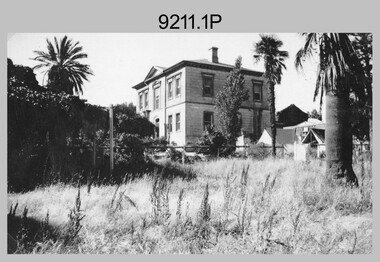 Bendigo Military Museum
Photograph - LHQ Cartographic Company AWAS Accommodation, Westend Hall, Bendigo, 1943
... A decision of War Cabinet on 13 August 1941 had authorised the formation of the Australian Women's Army Service (AWAS), in order to release men from certain military duties for employment with fighting units. ...A decision of War Cabinet on 13 August 1941 had authorised the formation of the Australian Women's Army Service (AWAS), in order to release men from certain military duties for employment with fighting units. ...This is a set of 12 photographs taken during Army’s occupation at Fortuna, Bendigo in WW2. On 1 Feb 1941, a Cartographic Section was reformed as the Land Headquarters (LHQ) Cartographic Company. Deputy Chief of the General Staff, Major General Sidney Rowell instructed Its OC - Major William Sarll, in the interests of security of plant and to provide against possible damage of air attack, to investigate suitable safer inland accommodation for LHQ Cartographic Company. Major William Sarll inspected many properties before finding one that would meet the requirements of the Cartographic Company. In late 1941, he came to inspect Fortuna, a rambling old mansion dating back to the gold rush, with about fifteen acres of ground in central Bendigo. On 23 March 1942, the Commonwealth of Australia, under the provisions of the National Security Act of 1939, took possession of the house, the old battery buildings and the fifteen acres of grounds. LHQ Cartographic Company moved to Bendigo on 11 Jun 1942, from Mitchell House, Melbourne. The responsibilities of this unit were map compilation, fair drawing and lithographic reproduction, including printing the work of other Units as well as their own. A decision of War Cabinet on 13 August 1941 had authorised the formation of the Australian Women's Army Service (AWAS), in order to release men from certain military duties for employment with fighting units. Originally their employment was restricted to traditional female areas and numbers were strictly limited, but the outbreak of the Pacific War in 1942 led to a broadening of employment categories and an increase in numbers. The first AWAS arrived at Fortuna on 26 November 1942 and immediately became an integral part of the unit. Seventy-five AWAS served with the Cartographic Company during the war and Major Sarll paid them a special tribute for their 'untiring efforts' in the Company's war report. The AWAS could not be accommodated at Fortuna, and a nearby house, Westend Hall, on the corner of Lily and Barnard Streets, provided the first barracks with Warrant Officer Durack in charge. The building, designed by Vahland and Getzchmann in 1868, has been described as the 'grandest house on the goldfields with elegant Corinthian columns supporting a balustraded portico.' The building was conveniently situated close to the front gates of Fortuna. The women appreciated their pleasant surroundings as a magazine article written a year after their arrival reveals. 'It was a stroke of luck which gave us West End Hall with its gardens and large airy rooms; and it is to Miss Durack that we must give thanks for the bright furnishings, the good food and ... the splendid atmosphere of comradeship. But not all could be accommodated in the house; some slept in tents through the freezing Bendigo winters. Local girls like Gwen McGown were able to live at home, but had to report for the Monday morning parade after which the women would march to work. Saturday afternoon was designated sports afternoon for the women. They formed teams among themselves for competitions in basketball and softball. The women participated in an active way in the recreational activities of the Company, including athletics sports days, marching contests, concerts and dances. In the later years of the war, the barracks at West End Hall were too cramped and the AWAS were transferred to Lansellstowe, a beautiful old home in Barkly Terrace built originally for Leonard Vere Lansell, the third son of George Lansell. Prior to the AWAS occupation the Army had used the spacious house as a camp hospital. Refer to Item 6099.17P for photos taken in 1942, the first year of LHQ Cartographic Company’s occupation at Fortuna, Bendigo in WW2. The Survey Corps’ occupation of Fortuna during WW2 is covered in more detail with additional historic photographs, in pages 17 to 27 of Valerie Lovejoy’s book 'Mapmakers of Fortuna – A history of the Army Survey Regiment’ ISBN: 0-646-42120-4.Other items from Rosemary (Atkinson) Bowman are: 9209.12P, 9210.16P, 9212.6P, 9213.4P and 9214.12. This is a set of four photographs of AWAS Accommodation at ‘Westend Hall’, taken in 1943 during Army’s early years of occupation at Fortuna, Bendigo in WW2. The black and white photo, graphs are printed on photographic paper are contained in a photo album provided by the family of Rosemary (Atkinson) Bowman, a former member of RA Svy. The photographs were scanned at 600 dpi and are part of the Army Survey Regiment’s Collection. .1) - Photo, black & white, 1943. AWAS Accommodation, Westend Hall. .2) - Photo, black & white, 1943. At front steps of Westend Hall. L to R: Norma Lewis, Tiny Lewis, Billie Hyatt, Norma Jeffrey, Betty Eyval, Peggy Priest. .3) - Photo, black & white, 1943. Hall and stairway inside the old barracks - Westend Hall. .4) - Photo, black & white, 1943. Recreation room inside the old barracks - Westend Hall.Some personnel are identified with dates in the photo album.royal australian survey corps, rasvy, army survey regiment, asr, fortuna -
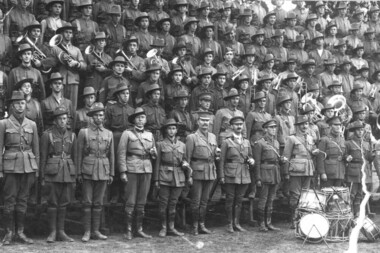 Federation University Historical Collection
Photos, 71st Infantry Band Broadmeadows Camp
... selectedversion=NBD11485892) The Ballarat phase of the battalion's history was formed as the Ballarat Volunteer Rifle Regiment on 9 August 1858 as a result of the Crimean War, coupled with the withdrawal of the British Army in 1857. In the years between its formation and the outbreak of War in 1914, the battalion went through a series of name changes as follows: Victorian Colonial Defence Force: 1858 – Ballarat Volunteer Rifle Regiment 1860 – Ballarat Volunteer Rifle Rangers 1863 – Ballarat Volunteer Rangers 1884 – 3rd Battalion, Victorian Rifles 1892 – 1st Battalion, 3rd Victorian Regiment 1898 – 3rd Battalion, Victorian Infantry Brigade Under the new Federal Government: 1901 – 3rd Battalion, Infantry Brigade Australian Army: 1903 – 7th Australian Infantry Regiment 1908 – 1st Battalion, 7th Australian Infantry Regiment 1912 – 70th Infantry (Ballarat East, Geelong and Queenscliff) 1912 – 71st Infantry (Ballarat West, Warrnambool) 1914 – 70th Infantry (Ballarat Regiment) - in Ballarat East 1914 – 71st (City of Ballarat) Infantry – in Ballarat West...selectedversion=NBD11485892) The Ballarat phase of the battalion's history was formed as the Ballarat Volunteer Rifle Regiment on 9 August 1858 as a result of the Crimean War, coupled with the withdrawal of the British Army in 1857. In the years between its formation and the outbreak of War in 1914, the battalion went through a series of name changes as follows: Victorian Colonial Defence Force: 1858 – Ballarat Volunteer Rifle Regiment 1860 – Ballarat Volunteer Rifle Rangers 1863 – Ballarat Volunteer Rangers 1884 – 3rd Battalion, Victorian Rifles 1892 – 1st Battalion, 3rd Victorian Regiment 1898 – 3rd Battalion, Victorian Infantry Brigade Under the new Federal Government: 1901 – 3rd Battalion, Infantry Brigade Australian Army: 1903 – 7th Australian Infantry Regiment 1908 – 1st Battalion, 7th Australian Infantry Regiment 1912 – 70th Infantry (Ballarat East, Geelong and Queenscliff) 1912 – 71st Infantry (Ballarat West, Warrnambool) 1914 – 70th Infantry (Ballarat Regiment) - in Ballarat East 1914 – 71st (City of Ballarat) Infantry – in Ballarat West 71st infantry band broadmeadows camp percy code code frank wright brass band percy shackles shackles 71st Infantry Band (Percy Code Bandmaster) Broadmeadows Camp 1917 .1 Large group photo of members of the band .2 Photograph of part of the band The soldier in the front holding the conductor's batton is Percy Code. ...71st Infantry Band based at the Broadmeadows Camp 1917. Percy Code write a piece of music called the 71st Infantry Quick March. (http://trove.nla.gov.au/work/31795246?selectedversion=NBD11485892) The Ballarat phase of the battalion's history was formed as the Ballarat Volunteer Rifle Regiment on 9 August 1858 as a result of the Crimean War, coupled with the withdrawal of the British Army in 1857. In the years between its formation and the outbreak of War in 1914, the battalion went through a series of name changes as follows: Victorian Colonial Defence Force: 1858 – Ballarat Volunteer Rifle Regiment 1860 – Ballarat Volunteer Rifle Rangers 1863 – Ballarat Volunteer Rangers 1884 – 3rd Battalion, Victorian Rifles 1892 – 1st Battalion, 3rd Victorian Regiment 1898 – 3rd Battalion, Victorian Infantry Brigade Under the new Federal Government: 1901 – 3rd Battalion, Infantry Brigade Australian Army: 1903 – 7th Australian Infantry Regiment 1908 – 1st Battalion, 7th Australian Infantry Regiment 1912 – 70th Infantry (Ballarat East, Geelong and Queenscliff) 1912 – 71st Infantry (Ballarat West, Warrnambool) 1914 – 70th Infantry (Ballarat Regiment) - in Ballarat East 1914 – 71st (City of Ballarat) Infantry – in Ballarat West.1 Large group photo of members of the band .2 Photograph of part of the band The soldier in the front holding the conductor's batton is Percy Code. The trombone player next to Percy Code is Jack Shackles. 71st Infantry Band (Percy Code Bandmaster) Broadmeadows Camp 191771st infantry band, broadmeadows camp, percy code, code, frank wright, brass band, percy shackles, shackles -
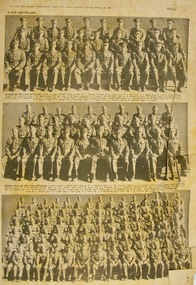 Lara RSL Sub Branch
Newspaper, 17th Australian Infantry Brigade, February 22nd 1940
... Army. First formed in 1917 during World War I, it did not see any action. Reformed during World War II, before being disbanded in 1946. Today, its name is perpetuated by the 17th Combat Service Support Brigade, which was raised as a logistics formation in May 2006. ...Army. First formed in 1917 during World War I, it did not see any action. Reformed during World War II, before being disbanded in 1946. Today, its name is perpetuated by the 17th Combat Service Support Brigade, which was raised as a logistics formation in May 2006. ...The 17th Australian Infantry Brigade was an infantry brigade in the Australian Army. First formed in 1917 during World War I, it did not see any action. Reformed during World War II, before being disbanded in 1946. Today, its name is perpetuated by the 17th Combat Service Support Brigade, which was raised as a logistics formation in May 2006. The 17th Brigade was reformed on 13 October 1939, again as part of the 6th Division, recruited from Victoria. The 17th Brigade fought in the Western Desert Campaign in Libya, the Battle of Greece, the Battle of Wau, the Salamaua-Lae campaign in Papua, and in the Aitape-Wewak campaign in New Guinea. The photographs are of national significance as they may reflect the only known photographs of individuals from WW2.4 page newspaper pictures of 17th Brigade, Second AIFThe Argus 17th Australian Infantry Brigade, Second AIF, Souvenir Supplement, Thursday, February 22, 1940 Page 1 2/5th Battalion - Picture 1 Officers of the 2/5th Battalion; Picture 2 Senior NCO's of the 2/5th Battalion; Picture 3 A Company 2/5th Battalion Page 2 B Company 2/5th Battalion; C Company 2/5th Battalion; D Company 2/5th Battalion Page 3 Headquarters 2/2nd Field Regiment 6th Divisional Artillery; 3rd Battery 2/2nd Field Regiment 6th Divisional Artillery Page 4 Officers, NCO's and men of 2/2nd Field Company, 6th Divisional Engineers; Officers NCO's and men 2/2nd Field Ambulance and 2/2nd Australian General Hospital 6th Divisional Australian Army Medical Corpsaif, army, 17th brigade, second aif, 2/5th battalion, australian army, australian infantry brigade, 2/2nd field aumbulance, 2/2nd australian general hospital, 6th divisional australian army medical corps, 6th divisional engineers -
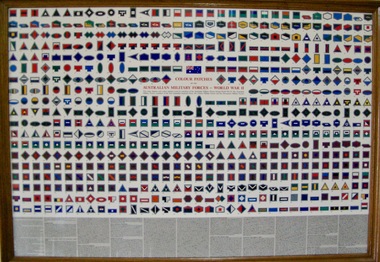 Lara RSL Sub Branch
Coloured Print, Colour Patches of the Australian Military Forces World War Two
... The use of colour patches was discontinued in 1949 when the British system of embroidered shoulder titles, formation signs and lanyards was adopted. In July 1987 colour patches were reintroduced in order to foster the Army’s heritage and are now worn on the right side of the puggaree on the slouch hat. ...The Chart displays unit colour patches worn by members of the Australian military forces during world war 2. the Australian Military forces consisted of the 2nd Australian Imperial Forces and the Permanent Military ForcesDuring the world wars and the years in between, Australian soldiers wore cloth patches of various shapes and colours on their upper sleeves to indicate to which unit or formation they belonged. The use of colour patches was discontinued in 1949 when the British system of embroidered shoulder titles, formation signs and lanyards was adopted. In July 1987 colour patches were reintroduced in order to foster the Army’s heritage and are now worn on the right side of the puggaree on the slouch hat. Coloured Print of Colour Patches of the Australian Military Forces World War TwoNumbered Colour Patches and descriptions of each patch 1 to 630 -
 Flagstaff Hill Maritime Museum and Village
Photograph - Glass plate, circa 1866
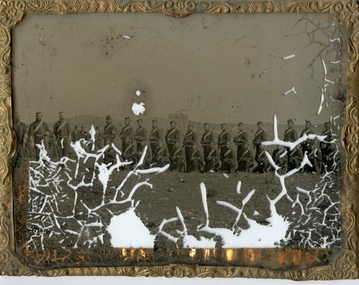
... When the Army was federated in 1901 there were eight Militia Companies in Victoria. Warrnambool and Port Fairy together were known as 8 Coy AGA (Australian Garrison Artillery). Changes to formation...When the Army was federated in 1901 there were eight Militia Companies in Victoria. Warrnambool and Port Fairy together were known as 8 Coy AGA (Australian Garrison Artillery). Changes to formation ...This glass plate photograph shows good detail of members of the Warrnambool Garrison posing for their photograph in front of a young township. There are other well-dressed citizens behind them. The three men with frogging on their sleeves were commanders were likely to be commanders. The men are facing north with Cannon Hill and the fortification area in the background. It dates from the 1860s. The firearms held appear to be 1853 pattern Lee Enfield muskets used by the British army in Crimea at this time and in Australia, rather than the later Martini Henry cartridge rifles. The uniforms match other photos of the Warrnambool Garrison Militia and Band in our Collection, taken up until the 1880s. The three storey building in the photograph is likely to be the Manifold & Bostock flour mill, built in 1854 near the ‘cutting’ in Merri Street, which was one of the main streets at the time; if one faced the building’s front from a vantage point and looked south to south-east, the hills around Flagstaff Hill and Cannon Hill would be behind that mill, and the Harbour behind the hills. This is the area of the Fortifications. The glass plate method of photography was widely used during the mid-19th to early-20th century. The donor and maker of the photograph are unknown. Around this time the citizens of Victoria were prospering from the gold rush but felt isolated and uneasy about their security in the colony. In 1854 the Volunteer Act was passed to provide some military defence. In 1858 the Warrnambool Volunteer Rifle Corps was established, disbanded in 1863, then a new Warrnambool Detachment was formed in September 1866. Legislation was passed in 1884 that replaced the volunteers’ corps with a partly paid, permanent Militia Defence Force. The batteries manning the coastal forts of Victoria were termed Garrison Artillery Companies. When the Army was federated in 1901 there were eight Militia Companies in Victoria. Warrnambool and Port Fairy together were known as 8 Coy AGA (Australian Garrison Artillery). Changes to formation and name continued into the 20th century.This photograph is a record of the very early local defence force, circa 1866. The photograph signifies the connection of the colony in Victoria to the growing need for security due to the unrest in Europe at that time. The photograph is also locally significant to the industry of the young township of Warrnambool, showing what is likely to be one of the first flour mills in the town. The photograph is also the only example of the early methods of glass plate photography in our collection. Photograph, rectangular glass plate, positive sepia image. Photograph has brass framed edges that fold over to the back, with mitred corners. The front edges are pressed with a decorative floral pattern. The photograph shows a group of thirty military men, standing or kneeling, in dark uniforms with pillbox forage caps, round-collared jackets with light buttons, light sashes worn from top left shoulder to bottom right side of waist belt, and long, straight-legged trousers. Three of these men have light braid around the buttons on the front of their jackets, light frogging on their sleeve cuffs and stripes on the outside seams of their trousers. The other twenty-seven men have plain uniforms and are holding firearms in their right hands, steadied with their left hands. Other figures are standing behind this group of soldiers, including three or four men wearing top hats, jackets and ties. In the background is a row of buildings. The central building is three stories high. Bare hills are in the far background. The foreground is uneven ground with patches of short grass. Photographer looking towards the south east and Cannon Hill, with the Warrnambool Garrison facing north, ca.1860s.flagstaff hill, warrnambool, shipwrecked coast, flagstaff hill maritime museum, maritime museum, shipwreck coast, flagstaff hill maritime village, great ocean road, glass plate, photography 19th century, colonial forces, military defence, volunteer act 1854, volunteer rifle, garrison artillery, volunteer corps, militia, militia garrison band, pillbox forage caps, helpmann, manifold and bostock, 1853 lee enfield musket, tintype, warrnambool garrison, 1860s, cannon hill, manifold & bostock, flour mill, 3-storey building -
 City of Moorabbin Historical Society (Operating the Box Cottage Museum)
Leather, luggage straps and labels c1916, 20thC
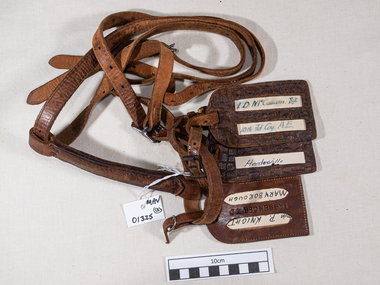
... Army. Originally formed in 1912 as a Militia formation, the brigade was re-raised in 1916 as part of the expansion of the Australian Imperial Force following the end of the Gallipoli campaign. ...Army. Originally formed in 1912 as a Militia formation, the brigade was re-raised in 1916 as part of the expansion of the Australian Imperial Force following the end of the Gallipoli campaign. ...Leather straps were commonly used to secure cases and other forms of luggage when traveling. The labels enabled easy identification when collecting luggage from transport carriages, coaches, buses and trains. 10th Field Company, Australian Engineers WW1 1914-18. The 10th Brigade was an infantry brigade of the Australian Army. Originally formed in 1912 as a Militia formation, the brigade was re-raised in 1916 as part of the expansion of the Australian Imperial Force following the end of the Gallipoli campaign. It subsequently saw service on the Western Front in France and Belgium during the First World War. After the war it was disbanded but was re-raised in 1921 as a part-time formation based in the state of Victoria. During the Second World War the brigade was used in a garrison role in Australia before being disbanded in 1942.These leather straps and labels were attached to the luggage of an Australian soldier during early 20th C who may have been a resident or relative of a resident in City of MoorabbinLeather luggage straps with metal buckles and 3 luggage address labels attached.Label 1 - L.D.McCallum Sgt / 10th Fd Coy AE Label 2 - Healesville Label 3 - Maryborough leather, straps, belts, luggage labels, tools, saddles, wallets, personal effects, horses, drays, world war 1 1914 -18, world war 2 1939-45, army, 1st aif, military, 10th field company australian engineers, western front, france, belgium, -
 Orbost & District Historical Society
Book - W W II book, Lyn Skillern, FORGOTTEN FOR TOO LONG A book of Gippslanders in Lark Force. 1941-42, 2022
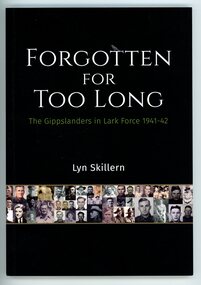
... It contains research about the formation of Lark Force by the Australian Army during World War II, together with its deployment in the Pacific (particularly Rabaul, New Britain and New Ireland). ...It contains research about the formation of Lark Force by the Australian Army during World War II, together with its deployment in the Pacific (particularly Rabaul, New Britain and New Ireland). ...This book was published in 2022 by Lyn Skillern from Leongatha. It contains research about the formation of Lark Force by the Australian Army during World War II, together with its deployment in the Pacific (particularly Rabaul, New Britain and New Ireland). This history has a Gippsland focus, with details of the men from this part of Victoria. Orbost men referred to in this book are Basil Andrew Ah Chow, Joseph William Cross, William Albert Jones, and Arthur Thomas McKenna.This book is significant because it records the service of Gippsland men in Lark Force, including those from Orbost, who served in this little known section of the Australian Army during World War II.A book of 160 pages, black cover, white and green print on black cover, many small photos of men/soldiers in a strip across the cover near the bottom. FORGOTTEN FOR TOO LONG The Gippslanders in Lark Force, 1941-42 Lyn Skillern lark force, world war ii, gippsland, orbost -
 Australian Commando Association - Victoria
Metal Uniform Embellishments of the Australian Army Post 1953 Volume 2 - Insignia for Units and Regiments
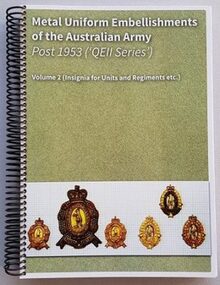
... The book provides images of the front and the back of a given (metal) insignia set for each Unit or Regiment operating within the Australian Army since 1953 (including abolished formations). Each image set, depicts the relevant hat badge, collar badges and epaulette title and/or cloth shoulder title applicable. ...The book provides images of the front and the back of a given (metal) insignia set for each Unit or Regiment operating within the Australian Army since 1953 (including abolished formations). Each image set, depicts the relevant hat badge, collar badges and epaulette title and/or cloth shoulder title applicable. ...This 305 page, full colour hard copy reference work, catalogues the series of metal uniform embellishments used by Units and Regiments of the Australian Army, from 1953 through to the date of publication. The book provides images of the front and the back of a given (metal) insignia set for each Unit or Regiment operating within the Australian Army since 1953 (including abolished formations). Each image set, depicts the relevant hat badge, collar badges and epaulette title and/or cloth shoulder title applicable. The book’s images document at least three distinctly different ‘generations’ of insignia manufacturing methods/types, including the: gilt brass and white metal items used in the 1953 to 1964 period; and anodised aluminium ‘StayBright’ insignia introduced as from 1964 and ‘BriteShine’ insignia introduced with effect from 1997 (running through to today). The full colour photographic images in the book are complimented by written descriptions which cite each item’s distinguishing characteristics… including measures of: typical weight, height, width and thickness (at a given point). A discussion of copies and faked items is also provided, including microscope resolution images of ‘tell tale’ signs to look for. The entries in this book are organised alphabetically and are consistent with those used in the Authors’ earlier publications (ie. the 614 page eBook version of Volume 1, as well as with the 236 page ‘Concise’ hard copy Editions of Volume 1). australian army insignia, post ww2 insignia and badges -
 Eltham District Historical Society Inc
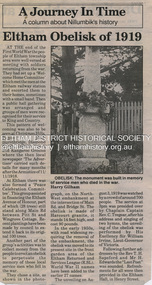
Folder, Eltham Obelisk (later Cenotaph), 1918-2018
... Handwritten notes in pencil (2 pages) by Harry Gilham, Items form the Eltham and Whittlesea Shires The Advertiser newspaper 7 June 1918 - 1919 providing a summary of the formation of the Peace Celebration Committee leading to the establishment of the Avenue of Honour and the Eltham Obelisk and seeking information in lead up to WW1 Centenary, 2013 45. Newspaper article: Memories of our heroes, Diamond Valley Leader, 25 Apr 2018 – also Veteran saluted, featuring article on Army veteran, Glen Ferrarotto. ...Army veteran, Glen Ferrarotto. Handwritten notes in pencil (2 pages) by Harry Gilham, Items form the Eltham and Whittlesea Shires The Advertiser newspaper 7 June 1918 - 1919 providing a summary of the formation of the Peace Celebration Committee leading to the establishment of the Avenue of Honour and the Eltham Obelisk Newspaper article: Obelisk honors their memory, Diamond Valley News, March 30, 1971, p11...Army veteran, Glen Ferrarotto. Handwritten notes in pencil (2 pages) by Harry Gilham, Items form the Eltham and Whittlesea Shires The Advertiser newspaper 7 June 1918 - 1919 providing a summary of the formation of the Peace Celebration Committee leading to the establishment of the Avenue of Honour and the Eltham Obelisk Newspaper article: Obelisk honors their memory, Diamond Valley News, March 30, 1971, p11 Eltham Obelisk (later Cenotaph) Folder ...The Eltham Obelisk was originally located at the corner of Bridge and Main Roads in 1919. It commemorated the memory of the Eltham Soldiers who fell in the First World War and complemented the Eltham Avenue of Honour established in 1917 to those that served. In 1943 (WW2) the local community commenced plans to establish the Eltham War Memorial, a living memorial to benefit the children as opposed to a one in stone as per the obelisk. The Eltham War Memorial Trust was established in 1945. In 1947 the Trust intended for the Obelisk to be relocated from Bridge Street and Main Road to the Garden of Remembrance which was planned as part of the Baby Health Centre which was to be the first of three buildings of the Eltham War Memorial to be built in 1951. In 1951 the Eltham RSL was invited to be represented on the Eltham War Memorial Trust. During the period of June through October 1956 the original wooden bridge over the Diamond Creek in Bridge Street was replaced with a new concrete structure. At the same time the intersection of Bridge Street at Main Road was revised necessitating the relocation of the Eltham Obelisk. It was ‘temporarily’ relocated to the front garden of the Eltham RSL Sub-Branch on Main Road for safe keeping. In 2007, a suggestion was proposed by Harry Gilham (President, EDHS) to John Cohen (ERSL) to claim a special site along with the historic Shillinglaw trees on the now vacant former Eltham Shire Office site adjacent to the Eltham War Memorial precinct for relocation of the obelisk. In 2010 following the financial collapse and sale of the Eltham RSL Sub-Branch property and amalgamation with the Montmorency Eltham RSL sub-branch, the location of the obelisk was again in immediate jeopardy and in conjunction with Nillumbik Shire Council, supported by the RSL, the obelisk was relocated in front of the Eltham War Memorial buildings in preparation for the Dawn Service on Anzac Day 2012. The new location resulted in significant impact upon the Eltham War Memorial Garden. Council’s preferred location was near the Eltham Library however that would have cost $39,000. The Eltham War Memorial Garden was subjected to further intrusion in 2014 with a proposed expansion of the War Memorial Terrace. Contents: 1. Newspaper article: Eltham, The Advertiser, 15 Nov 1918 2. Newspaper article: Eltham, The Advertiser, 18 Nov 1918 3. Newspaper article: An Obelisk at Eltham, The Advertiser, 11 Jul 1919 4. Newspaper advertisement: Unveiling of Obelisk at Eltham, The Advertiser, 1 Aug 1919 5. Newspaper article: Eltham Soldiers’ Memorial; Unveiled by Sir William Irvine, The Argus, Monday, 4 Aug 1919, p8 6. Newspaper article: Memorial to the Fallen; Unveiled at Eltham, The Age, Monday, 4th August 1919 7. Newspaper article: Eltham Memorial to Fallen Soldiers, Diamond Creek Valley Advocate, 8 Aug 1919 8. Newspaper article: Programme - Presentation of German Machine Gun at the Obelisk, Eltham on Sunday, 8th August 1920, at 3.30 P.M. 9. Newspaper article: article about presentation of a war trophy, a heavy machine gun placed beside obelisk, The Advertiser, 13 Aug 1920 10. Newspaper article: Eltham: ANZAC Services, The Advertiser, Friday, May 2, 1924 11. Newspaper article: Eltham War Memorial, The Advertiser, Oct 26, 1928 12. Newspaper article: Obelisk honors their memory, Diamond Valley News, March 30, 1971, p11 13. Newspaper article: Eltham Obelisk of 1919, Harry Gilham, August 2000 as well as draft submitted dated 22 Aug 2000 14. Newspaper article: Names renewal, thanks to Barry, Diamond Valley Leader, 18 Apr 2007, p3 with picture featuring Eltham RSL president John Haines and Gwen Rosewall 15. Handwritten note from Harry Gilham (President EDHS) to John Cohen (ERSL) regarding history of Eltham RSL site and 1947 newspaper article "Eltham War Memorial Trust "Garden of Remembrance" referencing relocation of Obelisk to the proposed Garden of Remembrance at the Baby Health Centre (Eltham War Memorial), 24 December 2000. 16. Minutes of Eltham RSL and Community Meeting held at 29 Nyora Road, Eltham, 23 June 2010 (Community meeting re closure of Eltham RSL sub-branch and relocation of the WW1 Obelisk) 17. Newspaper article: RSL branch has a fight on its hands by Alana Schetzer, Heidelberg & Valley Weekly, 3 August 2010, p7 18. Newspaper article: Locals battle state RSL over building, Diamond Valley Leader, 4 August 2010, p7 19. Newspaper article: Move war memorial: RSL, c. Dec. 2010 20. Officers' reports, 11.113/10 Relocation of Eltham RSL Cenotaph, Nillumbik Shire Council Ordinary Meeting, 21 December 2010 21. Newspaper article: New home for cenotaph; Councillors support proposal for relocation to Eltham's War Memorial Hall, Diamond Valley Leader, 12 January 2011 22. Newspaper article: CFA hot for RSL site; MP presses for 'fast-track' purchase, Diamond Valley Leader, 23 February 2011, p1 23. Email Correspondence: EDHS President to NSC General Manager Community and Leisure re RSL Obelisk (Cenotaph) proposed relocation, 24 May 2011 24. Officers' reports, OCM.091/11 Interim Relocation site for the Eltham Cenotaph, Nillumbik Shire Council Ordinary Meeting, 23 August 2011 25. Newspaper article: New home for cenotaph delights war veterans, Diamond Valley Leader, 31 August 2011, p9 26. Newsletter Extract: Eltham RSL and War Memorial, EDHS Newsletter 14 Sep 2011 27. Officers' reports, OCM.004/121 Interim Relocation of the Eltham Cenotaph, Nillumbik Shire Council Ordinary Meeting, 31 January 2012 (includes Funding agreement between NSC and Montmorency-Eltham RSL Sub-branch Inc) 28. Newspaper article: Memorial move lags, Diamond Valley Leader, 1 February 2012 29. Site history of Obelisk and Wall Memorial Hall, Montmorency-Eltham RSL, March 2012 draft 30. Open Letter to the Residents of ELTHAM and MONTMORENCY [And their Surrounding Districts]; Montmorency-Eltham RSL, 19 March 2012 (including drafts) 31. Newspaper advertisement: Open letter to the residents of Eltham and Montmorency, Montmorency Eltham RSL, Diamond Valley News, 21 March 2012 32. Newspaper advertisement: Open letter to the residents of Eltham and Montmorency, Montmorency Eltham RSL, Banyule & Nillumbik Weekly, 27 March 2012, p7 33. Newspaper article: New dawn for tribute, Diamond Valley Leader ca April 2012 34. Email (Copy): Alex Smith (MERSL Ast. Sec.) advising that contractor (Malcorp) will relocate obelisk Monday, April 2, 2012 35. Newspaper article: Memorial Moved, Banyule/Nillumbik Weekly, 10 April 2012 36. Newspaper article: Eltham cenotaph move goes 'like clockwork', Diamond Valley Leader, 11 April 2012 37. Newspaper photo: Veterans (l-r) Alan Field, Max Lowerson and John Cohen will join piper David Cretney to commemorate fallen Diggers, 2012 (standing beside relocated obelisk in front of the Eltham War Memorial complex), c. 11 April 2012 38. Advertisement, Program for Eltham Dawn Service, Diamond Valley Leader, April 2012 39. Program for Montmorency Anzac Day March 2012 (incomplete, some pages duplicated, some pages upside down). 40. Newspaper article: RSL site nets $1.8m, Diamond Valley Leader, 9 May 2012 41. OCM.076/13 Amendment C84 Eltham Cenotaph; 11. Officer's reports, Ordinary Meeting of Council Agenda, 25 June 2013, pp42-44 and Attachment; Amendment C84 Eltham Cenotaph; Citation - Eltham War Memorial (4 pages) 42. Newspaper article: Council seeks to protect cenotaph, Diamond Valley Leader, Wednesday, July 3, 2013, p5 43. Newspaper article: Future safe for war memorial, Diamond Valley Leader, Wednesday, November 13, 2013, p5 44. Handwritten notes in pencil (2 pages) by Harry Gilham, Items form the Eltham and Whittlesea Shires The Advertiser newspaper 7 June 1918 - 1919 providing a summary of the formation of the Peace Celebration Committee leading to the establishment of the Avenue of Honour and the Eltham Obelisk and seeking information in lead up to WW1 Centenary, 2013 45. Newspaper article: Memories of our heroes, Diamond Valley Leader, 25 Apr 2018 – also Veteran saluted, featuring article on Army veteran, Glen Ferrarotto. Contents: Newspaper article: Eltham Obelisk of 1919, Harry Gilham, August 2000 as well as draft submitted dated 22 Aug 2000 Newspaper article: Eltham, The Advertiser 15 Nov 1918 and 18 Nov 1918 Newspaper article: An Obelisk at Eltham, The Advertiser, 11 Jul 1919 Newspaper advertisement: Unveiling of Obelisk at Eltham, The Advertiser, 1 Aug 1919 Newspaper article: Eltham Soldiers’ Memorial; Unveiled by Sir William Irvine, The Argus, Monday, 4 Aug 1919, p8 Newspaper article: Eltham Memorial to Fallen Soldiers, Diamond Creek Valley Advocate, 8 Aug 1919 Newspaper article: Memorial to the Fallen; Unveiled at Eltham, The Age, Monday, 4th August 1919 Newspaper article: Programme - Presentation of German Machine Gun at the Obelisk, Eltham on Sunday, 8th August, 1920, at 3.30 P.M. Newspaper article: article about presentation of a war trophy, a heavy machine gun placed beside obelisk, The Advertiser, 13 Aug 1920 Newspaper article: Eltham: ANZAC Services, The Advertiser, Friday, May 2, 1924 Newspaper article: Eltham War Memorial, The Advertiser, Oct 26, 1928 Handwritten note from Harry Gilham (President EDHS) to John Cohen (ERSL) regarding history of Eltham RSL site and 1947 newspaper article "Eltham War Memorial Trust "Garden of Remembrance" referencing relocation of Obelisk to the proposed Garden of Remembrance at the Baby Health Centre (Eltham War Memorial). Officers' reports, 11.113/10 Relocation of Eltham RSL Cenotaph, Nillumbik Shire Council Ordinary Meeting, 21 December 2010 Email Correspondence: EDHS President to NSC General Manager Community and Leisure re RSL Obelisk (Cenotaph) proposed relocation, 24 May 2011 Newsletter Extract: Eltham RSL and War Memorial, EDHS Newsletter 14 Sep 2011 Officers' reports, OCM.091/11 Interim Relocation site for the Eltham Cenotaph, Nillumbik Shire Council Ordinary Meeting, 23 August 2011 Officers' reports, OCM.004/121 Interim Relocation of the Eltham Cenotaph, Nillumbik Shire Council Ordinary Meeting, 31 January 2012 (includes Funding agreement between NSC and Montmorency-Eltham RSL Sub-branch Inc) Newspaper article: Move war memorial: RSL, c.2011 Newspaper article: Memorial move lags, Diamond Valley Leader, 1 February 2012 Newspaper article: New dawn for tribute, Diamond Valley Leader ca April 2012 Open letter to the residents of Eltham and Montmorency and copies of drafts by the Montmorency Eltham RSL, no date and final version published in Diamond Valley New 21 March 2012 and Banyule & Nillumbik Weekly, 27 March, 2012 Newspaper article: RSL site nets $1.8m, Diamond Valley Leader, 9 May 2012 Newspaper article: Memorial Moved, Banyule/Nillumbik Weekly, 10 April 2012 Newspaper article: Eltham cenotaph move goes 'like clockwork', Diamond Valley Leader, 11 April 2012 Advertisement, Program for Eltham Dawn Service, Diamond Valley Leader, April 2012 Newspaper photo: Veterans (l-r) Alan Field, Max Lowerson and John Cohen will join piper David Cretney to commemorate fallen Diggers, 2012 (standing beside relocated obelisk in front of the Eltham War Memorial complex) Program for Montmorency Anzac Day March 2012 (incomplete, some pages duplicated, some pages upside down). Newspaper article: Plan to expand memorial, Diamond Valley Leader, Sep. 2004, p5 Newspaper article: Names renewal, thanks to Barry, Diamond Valley Leader, 18 Apr 2007, p3 with picture featuring Eltham RSL president John Haines and Gwen Rosewall Letter: EDHS President to Manager Community Participation, Learning and Culture, Nillumbik Shire Council regarding a proposal by the Montmorency-Eltham RSL Sub-branch to expand the area occupied by the relocated obelisk further into the Eltham War Memorial Garden of Remembrance, 18 Aug 2014 Notices of Motion, NOM.001/14 pertaining to memorials Advisory Committee and Montmorency-Eltham RSL to upgrade the Eltham War Memorial site in time for ANZAC Day 2015, Nillumbik Shire Council Ordinary Meeting, 26 August 2014 Agenda: User Groups and Stakeholders Meeting, Proposed Extension to Memorial Terrace, 11 September 2014 EDHS presentation to NSC Policy and Services meeting 9 September 2014 regarding the Montmorency-Eltham RSL proposal to expand/upgrade the Eltham War Memorial Policy and Services reports, PSD.034/14 Eltham War Memorial Building Precinct - Proposed Extension to Memorial Terrace, Nillumbik Shire Council Ordinary Meeting, 9 September 2014 Email (copy): President EDHS re Eltham War Memorial Complex, Main Road, Eltham, 15 Sep 2014 requesting Nillumbik Shire Council place a Heritage Overlay upon the Eltham War Memorial Complex Media Release: Support for cenotaph expansion, Nillumbik Shire Council, Sep 2014 Newspaper article: Council defers RSL war memorial upgrade to see consultation, Diamond Valley News, 17 Sep 2014 Letter (copy): Harry Gilham, Eltham to local press and others, 20 Sep 2014 protesting attempts by the RSL to further expand upon the area already ceded from the Eltham War Memorial for the relocated WW1 obelisk and alter the original vision for an Eltham War Memorial complex. Letter: Alan Field, President, The Eltham Veterans War Memorial Preservation Society Inc. to CEO and Councillors, Nillumbik Shire Council protesting at perceived injustices and ‘veteran bashing’ regarding their previous efforts to relocate ‘their Obelisk and Cenotaph’ to the Eltham War Memorial complex and their frustration in their attempts to further expand upon the Memorial Terrace. Areas of letter are highlighted with handwritten markups and notes. Also notes on loose card and paper with definitions of Memorial, Obelisk, Cenotaph, commentary on establishment of Eltham War Memorial, The Eltham War Memorial Trust and RSL involvement and current actions by RSL in respect to claims in the letter (written by Harry Gilham ?). Policy and Services reports, PS.038/14 Eltham War Memorial Building Precinct - proposed extension to the Eltham Cenotaph Terrace, Nillumbik Shire Council Policy and Services Committee Meeting, 14 October 2014 Newspaper article: Centenary dawn service moves to Petrie Park, Diamond Valley Leader, 22 Oct 2014 Newspaper article: Upset over upgrade; war memorial revamp plans get culled, Diamond Valley Leader, 29 Oct 2014 Newspaper article: Memories of our heroes, Diamond Valley Leader, 25 Apr 2018 – also Veteran saluted, featuring article on Army veteran, Glen Ferrarotto. Handwritten notes in pencil (2 pages) by Harry Gilham, Items form the Eltham and Whittlesea Shires The Advertiser newspaper 7 June 1918 - 1919 providing a summary of the formation of the Peace Celebration Committee leading to the establishment of the Avenue of Honour and the Eltham Obelisk Newspaper article: Obelisk honors their memory, Diamond Valley News, March 30, 1971, p11eltham cenotaph, nillumbik shire council, eltham war memorial, montmorency eltham rsl sub-branch, dawn service, cenotaph, eltham rsl sub-branch, eltham war memorial trust, garden of remembrance, harry gilham collection, john cohen, obelisk, remembrance garden, shillinglaw trees, german machine gun, war memorial, war trophy -
 Eltham District Historical Society Inc
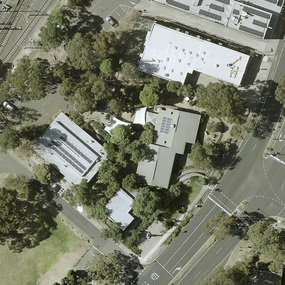
Archive Box, Eltham War Memorial
... Handwritten notes in pencil (2 pages) by Harry Gilham, Items form the Eltham and Whittlesea Shires The Advertiser newspaper 7 June 1918 - 1919 providing a summary of the formation of the Peace Celebration Committee leading to the establishment of the Avenue of Honour and the Eltham Obelisk and seeking information in lead up to WW1 Centenary, 2013 45. Newspaper article: Memories of our heroes, Diamond Valley Leader, 25 Apr 2018 – also Veteran saluted, featuring article on Army veteran, Glen Ferrarotto. ...Handwritten notes in pencil (2 pages) by Harry Gilham, Items form the Eltham and Whittlesea Shires The Advertiser newspaper 7 June 1918 - 1919 providing a summary of the formation of the Peace Celebration Committee leading to the establishment of the Avenue of Honour and the Eltham Obelisk and seeking information in lead up to WW1 Centenary, 2013 45. Newspaper article: Memories of our heroes, Diamond Valley Leader, 25 Apr 2018 – also Veteran saluted, featuring article on Army veteran, Glen Ferrarotto. ...CONTENTS: BOX 1 04585-1 04585 History • 04585-1-1 An Outline History of the Eltham War Memorial Trust by Stanley S. Addison • 04585-1-2 Stanly Addison's notes for his Outline History of the Eltham War Memorial Trust • 04585-1-3-1 Newspaper article: Eltham War Memorial Trust: Ready Now for Forward Movement; Acknowledgements £722; publication unknown, c.1946 • 04585-1-3-2 Newspaper article: Eltham War Memorial Trust: "Garden of Remembrance"; Baby Health Centre First Building, The News: The Newspaper of the City of Heidelberg and of the Shire of Eltham, 11 April 1947 • 04585-1-3-3 Newspaper: The News: The Newspaper of the City of Heidelberg and of the Shire of Eltham; Friday, December 1, 1950 • 04585-1-3-4 Newspaper article: Eltham War Memorial Trust by Stanley Addison, 1953 • 04585-1-3-5 Newspaper article: War Memorial Trust (publication unknown, n.d.) • 04581-1-4 Folder: A brief history of the Eltham War Memorial and Eltham Library, Harry Gilham, 1997-1999 • 04585-1-5 Newspaper article: Eltham's War Memorial; A Journey in Time, Nillumbik Mail, 5 July c.2001 04585-2 Eltham War Memorial Trust Minutes • 04585-2-1 Eltham War Memorial Trust Minutes, Book No. 2, 20 March 1951 to 4 June 1957 • 04585-2-2 Minute Book: Eltham War Memorial Trust Minutes, 2 July 1957 to 12 November 1973 BOX 2 04585-3 Women's Auxiliary, Eltham War Memorial Trust • 04585-3-1-1 Minute Book: Minute Book No. 1, Women's Auxiliary, Eltham War Memorial Trust, 10 May 1946 to 10 April 1952 • 04585-3-1-2 Minute Book: Minute Book No. 2, Women's Auxiliary, Eltham War Memorial Trust, 12 June 1952 to 14 June 1956 • 04585-3-1-3 Minute Book: Minute Book No. 3, Women's Auxiliary, Eltham War Memorial Trust, 12 July 1957 to 14 May 1959 • 04585-3-1-4 Minute Book: Minute Book No. 4, Women's Auxiliary, Eltham War Memorial Trust, 14 May 1959 to 12 August 1965 • 04585-3-2 Book: A favourite book of country recipes / compiled by the Women's Auxiliary of the Eltham War Memorial Trust 04585-4 04591 Eltham Easter Show and Gymkhana • 04585-4-1 Minute Book: Eltham War Memorial Trust; Easter Gymkhana Committee Minutes, 19 Nov 1954-6 Jun 1958 • 04585-4-2 Folder: Eltham War Memorial Trust; Easter Gymkhana Committee Correspondence, 19 Nov 1954-6 Jun 1958 o 04585-4-2-1 Notice from Honorary Treasurer of Easter Gymkhana Committee regarding completion of 1954 event and expression of thanks and that committee is now going into recess prior to commencement of planning for 1955 o 04585-4-2-2 Notice of Easter Gymkhana Committee Meeting, Monday 24th October, 1955 at the Shire Hall, Eltham o 04585-4-2-3 Letter from B.T. Taylor, Hon. Secretary, Eltham Easter Show Committee regarding the sale of tickets (c.1957) o 04585-4-2-4 Letter from B.T. Taylor, President, Eltham Easter Show Committee to Georges Ltd regarding the supply of The Georges Cup for the Eltham Easter Show, 11 April 1958 o 04585-4-2-5 Letter from Georges Ltd to B.T. Taylor, President, Eltham Easter Show Committee with payment for the miniatures of The Georges Cup, 6 June 1958 o 04585-4-2-6 Letter from Eltham Shire Secretary to B.T. Taylor, President, Eltham Easter Show Committee advising of new process regarding raffle, 5 May 1958 o 04585-4-2-7 Letter from Lilian Heath, Secretary, Judge Book Village Auxiliary to B.T. Taylor, Eltham Easter Show Committee, 24 May 1958 o 04585-4-2-8 Letter from Mrs R.J. Godfrey on behalf of M.A. Godfrey of Dandenong to B.T. Taylor, President, Eltham Easter Show under threat of legal action requesting replacement of cheque for £10 (second prize Open Jumping Contest), which was lost, 24 May 1958 o 04585-4-2-9 Reply by B.T. Taylor, President, Eltham Easter Show Committee to Mrs R.J. Godfrey to her letter of 24 May explaining circumstances and denying responsibility to forward a replacement cheque as it was cashed at the Golf Club Hotel; 6 June 1958 • 04585-4-3 Folder: Easter Gymkhana Committee Minutes and other associated ephemera o 04585-4-3-1 Letter: Letter of donation to Shire of Eltham Historical Society of the Easter Gymkhana Committee Minutes and other associated ephemera, J.M. Peter Bassett-Smith, 31 October 1987 o 04585-4-3-2 Souvenir Program: Free Program; Eltham Easter Gymkhana and Light Horse Show also Dog Competition, Easter Saturday 9th April, 1955 at Eltham (Lower) Park o 04585-4-3-3 Program Schedule; Eltham Easter Gymkhana and Light Horse Show also Dog Competition, Easter Saturday 9th April, 1955 at Eltham (Lower) Park o 04585-4-3-4 Program; Monster Gymkhana in aid of Hurstbridge Hall Re-Building Fund, Hurstbridge Recreation Reserve, Sunday, September 18, 1955 o 04585-4-3-5 Record Crowd Came To Eltham Gymkhana, Sporting World, Diamond Valley Local, Thursday, April 14, 1955, p8 o 04585-4-3-6 Program; Eltham Easter Gymkhana Goat Show Schedule, Easter Saturday 31st March, 1956, Eltham Park o 04585-4-3-7 Official Program; Eltham Easter Horse Show and Goat Show, Easter Saturday April 20th, 1957, Eltham Park o 04585-4-3-8 Program Schedule; Eltham Easter Horse Show and Goat Show, Easter Saturday April 20th, 1957, Eltham Park o 04585-4-3-9 Young Rider to Judge at Show, The Age, Wednesday, April 17, 1957, p8 o 04585-4-3-10 Promotional window label, Eltham Gymkhana, Easter Saturday, 20 April 1957 o 04585-4-3-11 Entry form for the Skyline Drive-In “Soap-Box” Derby, to be held along Main Road between Panorama Avenue and Bolton Street, Easter Saturday, 20 April 1957 o 04585-4-3-12 Official Program; Eltham Easter Horse Show and Goat Show, Easter Saturday, 5th April, 1958, Eltham Park o 04585-4-3-13 Brief history of the Eltham War Memorial Trust and Women's Auxiliary, Peter Bassett-Smith, 1987 o 04585-4-3-14 Summary of the Eltham War Memorial Trust Easter Gymkhana Committee Minutes (1954-1956) 04585-5 Folder: Infant Welfare Centre (1952) 04585-5-1 Newspaper article: Eltham: “Memorial Baby Health Centre Opening”; District News, The News, 14 November 1952. (Single sheet newsprint printed one side with District News for Macleod, Kinglake, Watsonia, Wattle Glen, Diamond Creek, Panton Hill, Eltham North, Lower Plenty, Research, Eltham. On reverse in handwritten purple pencil to the President, somewhat indecipherable, about an item to be hung on the walls of the beautiful building.) • 04585-5-2 Eltham War Memorial Trust, Official Opening - Baby Health Centre, 15th November 1952; Timetable of proceedings (1 page handwritten) • 04585-5-3 Eltham Baby Health Centre; Official Opening - Baby Health Centre: Address by President, 15 November 1952 (9 pages handwritten) • 04585-5-4 Newspaper article: Infant Welfare Centre as War Memorial, 15 November 1952 • 04585-5-5 Souvenir Booklet: Eltham War Memorial Trust, 1954 • 04585-5-6 Eltham War Memorial: Address by Mrs Stanley Addison at the Annual Meeting of the Infant Welfare Centre, Thursday 21st October, 1965 (4 pages typed, carbon copy) 04585-6 Roll of Honour Board (1954), Eltham War Memorial 04585-7 Eltham Pre-School (1956), Eltham War Memorial • 04585-7-1 Newspaper article: Minister to open Eltham Pre-school Tomorrow • 04585-7-2 Program; Eltham War Memorial Trust: Opening of the Second Unit of the War memorial, The Pre-school Centre, on Saturday, December 1st, 1956 at 3 p.m. • 04585-7-3 Folder: Eltham Pre-School (1956) Papers donated by Gordon Pearce, 30 Apr 2021 pertaining to Eltham Pre-school and Eltham War Memorial Trust. Gordon was a former President of the Eltham Pre-school at the time the Eltham War Memorial Trust was disbanded by Eltham Shire Council in December 1973. o Articles of the Eltham War Memorial Trust (9 A3 photocopies of original foolscap pages) o President’s Report: Eltham War Memorial Trust, Committee of Management, Dec. 1973 in which it was advised that the Committee was to be disbanded. o Letter: Gordon J.J. Pearce, President Eltham Pre-school to C.J. Bock, Chief Administrative Officer, Shire of Eltham, 21 Nov 1973 expressing disappointment at the Shire wanting to disband the Committee of Management of the Eltham War Memorial Trust o Minutes: Eltham Pre-school Committee, 26 Nov 1973 o Minutes: Eltham Pre-school Committee, 17 Dec 1973 o President’s Report: Gordon Pearce, Eltham Pre-school, 4 Feb 1974 • 04585-7-4 Newspaper clipping: A humble beginning, Diamond Valley Leader, July 26, 2006, p35 04585-8 Children’s Library (1961) / Eltham War Memorial Hall (1966) • 04585-8-1 Letter: Hon. Secretary Eltham Shire Council inviting Lieut-General The Honourable Sir Edmund Herring to attend the opening of the Children's Library. 23 Aug. 1961 • 04585-8-2 Newspaper article: Third unit of Eltham's memorial opened; Diamond Valley News, 14 Nov 1961 (Ref: SEA_74_001-055) • 04585-8-3-1 Receipt to Eltham Historical Society for hire of Eltham War Memorial Hall, 23 June 1970 • 04585-8-3-2 Receipt to Eltham Historical Society for hire of Eltham War Memorial Hall, 6 July 1970 • 04585-8-4 A brief history of the Eltham Library, Harry Gilham, c.1994 04585-9 Eltham Enlistments for the Second World War 04585-1964 • Document: Photocopy of Certificate of Title, Eltham War Memorial Trust, Lot 2, Plan of Subdivision No. 63242, Parish of Nillumbik; derived from Vol. 7073 Fol. 498, 18 May 1964 04585-1996 (Eltham Town Focus Group) Documents relating to a focus group brought together by the Shire of Nillumbik Chairman of Commissioners in 1996 to provide advice on the best long term use for the buildings and land situated between the former Eltham Shire Offices and Country Fire Authority buildings. These buildings are known as the Eltham War Memorial buildings located at 903-907 Main Road, Eltham. In May 2020, the Heritage Council Victoria did not recommend the site for inclusion in the Victorian Heritage Register. Potential impact upon the Memorial Garden because of a proposed roundabout at Dudley Street and Main Road • Notes concerning impact upon Eltham War Memorial Garden of a proposed roundabout at Dudley Street, Eltham, 20 August 1996 • Draft proposal of a roundabout at Dudley Street and Main Road showing impact upon Eltham War Memorial Garden, c. Sep. 1996 • Letter (copy): Harry Gilham, President, EDHS to Bruce Ruxton, President, Victorian RSL concerning impact upon Eltham War Memorial Garden of a proposed roundabout at Dudley Street, Eltham, 1 September 1996 • Letter: Bruce Ruxton, President, Victorian RSL to Harry Gilham, President, EDHS, 20 Sep 1996 concerning impact upon Eltham War Memorial Garden of a proposed roundabout at Dudley Street, Eltham, including copy of communication with Eltham RSL (T. Beaton, Hon Sec.) of 10 Sep 1996 • Letter: EDHS (H. Gilham, President) to Commissioners, Nillumbik Shire Council, 16 Sep 1996 advising not in support of roundabout at Dudley Street due to impact upon Eltham War Memorial Garden • Photocopy: Editorial comment, Peter Doughterty, ArtStreams Dec 1996/Jan 1997 re Commissioners push for development in activity zone of former office site and Eltham War Memorial (see EDHS_04362) • Letter: Don Cordell, Chairman of Commissioners, Nillumbik Shire Council, 10 Dec. 1996 inviting Harry Gilham to join a Focus Group to advise him, chaired by Alan Field. Includes a list of focus group members and contact details. • Minutes of Meeting, Eltham Town Focus Group, 17 Dec. 1996 04585-1997 (Eltham Town Focus Group) Documents relating to a focus group brought together by the Shire of Nillumbik Chairman of Commissioners in 1996 to provide advice on the best long term use for the buildings and land situated between the former Eltham Shire Offices and Country Fire Authority buildings. These buildings are known as the Eltham War Memorial buildings located at 903-907 Main Road, Eltham. In May 2020, the Heritage Council Victoria did not recommend the site for inclusion in the Victorian Heritage Register. Investigating condition of and future use of the Eltham War Memorial Complex and redevelopment of the site • Letter: Alan Field to Harry Gilham. 8 Jan. 1997 advising date of 18 Jan. for next meeting of Eltham Town Focus Group • Minutes of Meeting, Eltham Town Focus Group, 18 Jan. 1997 with handwritten notes by Harry Gilham • Draft Report: A Community Vision for “The Eltham War Memorial Trust” Property, Main Road, Eltham, prepared at the request of Chief Commissioner, Don Cordell, 31 Jan. 1997, along with handwritten nots by Ross McDonald and accompanying note by Harry Gilham written in 2010 upon handover of EDHS presidency 04585-2000 • Notes used by Harry Gilham at Nillumbik Council Meeting of 21 March 2000 regarding proposed sale/development of the Eltham War Memorial property 04585-2004 Material covers Eltham Major Activity Structure Plan and a proposal by Council to sell the Eltham War Memorial site for commercial use • Eltham Major Activity Structure Plan Comments Sheet; Response by Harry Gilham, 22 June 2004 • Letter from Eric Mack to the Hon. Steve Herbert, Member for Eltham regarding draft Major Activity Centre Structure Plan, 22 June 2004 • Newspaper article: Protect war memorial, Harry Gilham, President, Eltham District Historical Society; Letter, Diamond Valley Leader, June 30, 2004, p16 (Includes copy sent to paper 17 June) • Letter from Eric Mack to Nillumbik Shire Council CEO and Councillors regarding draft Major Activity Centre Structure Plan, 2004 • Copy of fax sent by John Cohen, OAM, JP to Diamond Valley News, re his support for the appeal for protection of the Eltham War Memorial 3 July 2004 • Newspaper article: Sell-off a betrayal of trust, Ken Eckersall; Letters, Diamond Valley Leader, 7 July 2004 • Newspaper article: Don't insult memory of fallen servicemen, John Cohen; Letters, Diamond Valley Leader, 7 July 2004 • Newspaper article: Up in arms against sell-off, Dave Crosswaite, Diamond Valley Leader, July 14, 2004, p5 • Copy of letter from John Cohen to President and Executive of the Eltham RSL regarding the Eltham War Memorial, 16 July 2004 • Reply to Eric Mack from the Hon. Steve Herbert, Member for Eltham regarding his letter of 22 June, 27 July, 2004 • Notice issued by Cr Greg Johnson of 11 August meeting by Council's Policy and Services Committee to consider a proposal to sell the Eltham War memorial and old shire office properties, 6 August 2004 • Minutes for the policy and Services Committee of Nillumbik Shire Council held Wednesday 11 August 2004 • Newspaper article: Shire plan 'sacrilegious' by Dave Crossthwaite, Diamond Valley Leader, Wednesday, August 19, 2004, p1 • Newspaper article: Our say on sale of land; Have you say, Diamond Valley Leader, August 18, 2004, p22 • Newspaper article: School hall is not ratepayers' worry; Have your Say, Diamond Valley Leader, August 18, 2004, p23 • Copy of letter sent by John Cohen, OAM, JP to the CEO, RSL Victoria requesting their opposition to sale of the Eltham War Memorial, 19 August 2004 • Newspaper article: Clash over land sale by Dave Crossthwaite, Diamond Valley Leader, August 25, 2004, p1 • Newspaper article: Mayor beset over arts agenda claim by Dave Crossthwaite, Diamond Valley Leader, August 25, 2004, p5 • Newspaper article: A lot of work has gone into shire structure plan; Letters, Diamond Valley Leader, August 25, 2004, p10 • Newspaper article: Public assets are not for sale; Letters, Diamond Valley Leader, August 25, 2004, p11 • Copy of letter sent by John Cohen, OAM, JP to Brigadier J.R. Deighton, State Secretary, Victorian RSL re his comments in Diamond Valley Leader regarding the Eltham War Memorial, 27 August 2004 • Handwritten notes prepared by Harry Gilham in preparation of presentation to Council pertaining to draft Eltham Major Activity Structure Plan, c. Sep. 2004 • Newspaper article: Don't let a dream stay hijacked; Letters, Diamond Valley Leader, September 1, 2004, p11 • Ordinary Meeting of Council Agenda, 15 September 2004, p55 with notes on vote for motion that any reference to the sale of the War Memorial be removed • Copy of letter sent by John Cohen, OAM, JP to Brigadier J.R. Deighton, State Secretary, Victorian RSL advising the War Memorial had been removed from the wider proposal of the Eltham Activity Centre, 16 September 2004 • Newspaper article: Future of memorial site on hold until poll by Caroline Gonzalez, Diamond Valley Leader, September 20, 2004 • Fax from Catherine Dale, CEO, Nillumbik Shire Council to John Cohen re Renovation and Maintenance of Victorian War Memorials, 6 October 2004 • Letter from Cr Tony Raunic, Mayor to Harry Gilham regarding Eltham Major Activity Centre Structure Plan advising the removal of any reference to sale of the War Memorial and detailed consultation to be held with stakeholders regarding the former Shire of Eltham Office site; 8 October 2004 • Letter from Barry Rosewall, President, Eltham RSL to John Cohen advising the sub-branch strongly opposes the sale of the Eltham War Memorial, 20 October 2004 • Fax from Bill Forrest, Interim CEO, Nillumbik Shire Council to John Cohen re Renovation and Maintenance of Victorian War Memorials, 8 November 2004 • Copy of letter from John Cohen to Bill Forrest, Interim CEO, Nillumbik Shire Council re Maintenance of Eltham War Memorial, November 2004 04585-2007 • News article: The spin starts here; Brian Murray, Nillumbik Ratepayers’ Association, Valley Views, Diamond Valley Leader, 13 June 2007 suggesting Council proposing to bring back Shire Offices to Eltham with potential loss of Eltham War Memorial • News article: War memorial fear-mongering; Harry Gilham, Heidelberg Valley Weekly, 26 June 2007 • News article: Consultation is no spin; John Cohen, Former Shire President, Valley Views, Diamond Valley Leader, 27 June 2007 • News article: Troops enlist for campaign by Fiona Willan, Diamond Valley Leader, 18 July 2007 04585-2010 • Newspaper article: Hall 'scruffy' - war vet, Diamond Valley Leader, 17 February 2010, p2 04585-2011 Cultural Significance Assessment • Cultural Heritage Significance Assessment; Civic Building Complex, 903-907 Main Road, Eltham, September 2011 DRAFT • Feedback to Nillumbik Shire Council by Eltham District Historical Society in response to September 2011 Draft Cultural Heritage Significance Assessment of the Eltham War Memorial Building Complex, 3 November 2011 • War Memorial Building Complex, 903-907 Main Road, Eltham: Cultural Significance Assessment, November 2011 prepared for Nillumbik Shire Council by Samantha Westbrooke Pty Ltd in association with Peter Mills PhD, Architectural Historian 04585-2014 Proposed extension to Cenotaph War Memorial Terrace championed by Montmorency-Eltham RSL and its impact upon the Memorial Garden and Eltham War Memorial buildings complex. • Draft Landscape Concept Plan by Henry Architects for Proposed Extension to Memorial Terrace, 14 July 2014 (Note: Senior Citizen’s Building correctly identified. Every subsequent plan incorrectly shows this building as the former Children’s Library, which was the War Memorial Hall building) • Letter: Eltham Gateway Action Group to Stuart Burdack, Shire of Nillumbik (undated) offering comment on Proposed Extension to Memorial Terrace with handwritten notes • Letter: Jim Connor, President, EDHS to Adrian Cully, Manager Community Participation, Learning and Culture, Nillumbik Shire Council, 18 Aug. 2014, encouraging Council not to support proposed extension to War Memorial Terrace due to significant impact upon the Eltham War Memorial Complex as supported by the Cultural Significance assessment conducted by Council in 2011 • Notices of Motion, NOM.001/14 pertaining to memorials Advisory Committee and Montmorency-Eltham RSL to upgrade the Eltham War Memorial site in time for ANZAC Day 2015, Nillumbik Shire Council Ordinary Meeting, 26 August 2014 • Notices of Motion, NOM.001/14 pertaining to memorials Advisory Committee and Montmorency-Eltham RSL to upgrade the Eltham War Memorial site in time for ANZAC Day 2015, Nillumbik Shire Council Ordinary Meeting, 26 August 2014 • Media Release: Support for cenotaph expansion, Nillumbik Shire Council, Sep 2014 • Eltham War Memorial Park (Stage 2), Nillumbik Shire Council, c.2014 • Email (copy): Summary of advice from Samantha Westbrooke (2 Sep. 2014) regarding proposed impact of landscaping around the cenotaph as identified in the significance assessment conducted Nov. 2011 by herself and Dr Peter Mills. • Policy and Services reports, PSD.034/14 Eltham War Memorial Building Precinct - Proposed Extension to Memorial Terrace, Nillumbik Shire Council Ordinary Meeting, 9 September 2014 • EDHS presentation to NSC Policy and Services meeting 9 September 2014 regarding the Montmorency-Eltham RSL proposal to expand/upgrade the Eltham War Memorial with handwritten notes from Harry Gilham for his submission at Council meeting • Newspaper article: Plan to expand memorial; growth in ANZAC Day services inspires RSL proposal by Megan Bailey, Diamond Valley Leader, Wednesday, September 10, 2014 • Agenda: User Groups and Stakeholders Meeting, Proposed Extension to Memorial Terrace, 11 September 2014 • Email: Jim Connor, EDHS, regarding option to seek a heritage protection overlay for the Eltham War Memorial Building complex similar to that for the cenotaph, 15 Sep. 2014 • Newspaper article: Council defers RSL war memorial upgrade to seek consultation, Diamond Valley Leader, September 17, 2014 • Letter: Harry Gilham to Local Press, 20 Sep. 2014 regarding the Eltham War Memorial and moves by the RSL to take expand the War Memorial Terrace further into the orginal Memorial Garden • Letter: Alan Field, President, The Eltham Veterans War Memorial Preservation Society Inc. to CEO and Councillors, Nillumbik Shire Council protesting at perceived injustices and ‘veteran bashing’ regarding their previous efforts to relocate ‘their Obelisk and Cenotaph’ to the Eltham War Memorial complex and their frustration in their attempts to further expand upon the Memorial Terrace. Areas of letter are highlighted with handwritten markups and notes. Also notes on loose card and paper with definitions of Memorial, Obelisk, Cenotaph, commentary on establishment of Eltham War Memorial, The Eltham War Memorial Trust and RSL involvement and current actions by RSL in respect to claims in the letter (written by Harry Gilham ?). • Newspaper article: Residents say no to memorial upgrade; Mayor says feedback will be considered at next meeting by Megan Bailey, Diamond Valley Leader, Wednesday, October 1, 2014 • Policy and Services reports, PS.038/14 Eltham War Memorial Building Precinct - proposed extension to the Eltham Cenotaph Terrace, Nillumbik Shire Council Policy and Services Committee Meeting, 14 October 2014 • Newspaper article: Centenary dawn service moves to Petrie Park; Diamond Valley Leader, October 22, 2014, p5 • Newspaper article: Upset over upgrade; war memorial plans get culled; Diamond Valley Leader, October 29, 2014, p3 • Newspaper article: Memorial to be extended; expected to be finished before ANZAC Day ceremony by Megan Bailey, Diamond Valley Leader, December 17, 2014 04585-2018 Proposal by Nillumbik Shire Council to sell off former Eltham Shire Office site and Eltham War Memorial site for commercial use and community reaction. • Newspaper article: Site of contention; Conversations, Diamond Valley Leader, September 5, 2018, p10 • Motion to Councillors: Carlotta Quinlan, Eltham Community Action Group, [October 2018] following a Community Town Hall Meeting held October 13, 2018 regarding proposed development and sale of part of 895 and 903-907 Main Road, Eltham • Things you should know about the Eltham War Memorial, author unknown, c. Oct. 2018 • Email: Greg Johnson to Sue Dyet 16 October 2018 regarding Assessment Criteria discussed at 25 September 2018 Council meeting concerning proposed development and sale of part of 895 and 903-907 Main Road, Eltham • Newspaper article: War memorial assurance; RSL involved but no-confidence motion passed on council by Brittany Shanahan, Diamond Valley Leader, October 17, 2018 • An essay addressed to the Councillors of Nillumbik Shire, October 2018: About the Eltham War Memorial and the adjacent community-owned sites in Eltham that the Council threatens to sell, Andrew Lemon Nov. 2018 • Report: Request for proposals - For the development and sale of part of 895 and 903-907 Main Road, Eltham; Prepared for Nillumbik Shire Council by Maddocks; 2 November 2018 (229 pages) • Notice: Duncan Duke, President, Montmorency Eltham RSL, to Members, 5 December 2018 – statement regarding “proposed redevelopment of the Eltham War Memorial Buildings and potential impact of the proposed redevelopment on our (sic) Cenotaph and Memorial Site.” 04585-2020 Community motions to seek Heritage Council Victoria registration of the Eltham War Memorial precinct • Eltham War Memorial Buildings: Recommendation of the Executive Director and assessment of cultural heritage significance under Part 3, Division 3 of the Heritage Act 2017; 18 May 2020 • Newspaper advertisement: Heritage Council Victoria, advising the Eltham War Memorial Buildings have been recommended NOT for inclusion in the Victorian Heritage Register; The Age, May 22, 2020, p34 • Correspondence: Eltham War Memorial Buildings; prepared by Nillumbik Shire Council for the Heritage Council Victoria; 29 May 2020 • Correspondence: Eltham War Memorial Buildings; prepared by Nillumbik Shire Council for the Heritage Council Victoria; 5 June 2020 • Submission: Eltham War Memorial Buildings; prepared by Eltham Community Action Group for the Heritage Council Victoria; 17 July 2020. Also included: o Submission: Eltham War Memorial Buildings; prepared by Catherine Johnson of Pryor Street, Eltham for the Heritage Council Victoria; 17 July 2020 o Submission: Eltham War Memorial Buildings; prepared by Andrew Barras of Silver Street, Eltham for the Heritage Council Victoria; 10 July 2020 o Submission: Eltham War Memorial Buildings; prepared by Graham Fildes of Elouera Close, Eltham for the Heritage Council Victoria; 11 July 2020 o Submission: Eltham War Memorial Buildings; prepared by Eltham District Historical Society for the Heritage Council Victoria; 17 July 2020 o Submission: Eltham War Memorial Buildings; prepared by Julie Willis of Faculty of Architecture, Building and Planning, University of Melbourne for the Heritage Council Victoria; 17 July 2020 o Submission: Eltham War Memorial Buildings; prepared by Ms Zheng Wu of Wynton Ct, Eltham for the Heritage Council Victoria; 16 July 2020 o Submission: Eltham War Memorial Buildings; prepared by Jenny Daw of Black Cameron Road, Smith Gully for the Heritage Council Victoria; 19 July 2020 o Submission: Eltham War Memorial Buildings; prepared by Eltham Pre-School for the Heritage Council Victoria; 19 July 2020 o Submission: Eltham War Memorial Buildings; prepared by Jo-Anne Barker of Treloar Ave, Eltham for the Heritage Council Victoria; 18 July 2020 o Submission: Eltham War Memorial Buildings; prepared by Prof. Hannah Lewi of Faculty of Architecture, Building and Planning, University of Melbourne for the Heritage Council Victoria; 18 July 2020 o Submission: Eltham War Memorial Buildings; prepared by Janet Boddy of Kerrie Cres, Eltham for the Heritage Council Victoria; 19 July 2020 o Submission: Eltham War Memorial Buildings; prepared by Rosemary Aitken of Kent Hughes Rd., Eltham for the Heritage Council Victoria; 18 July 2020 o Submission: Eltham War Memorial Buildings; prepared by Sue Dyet of Leonard Cres., Eltham for the Heritage Council Victoria; 19 July 2020 o Submission: Eltham War Memorial Buildings; prepared by Lynnsay Prunotto of Lavender Park Rd., Eltham for the Heritage Council Victoria; 19 July 2020 o Submission: Eltham War Memorial Buildings; prepared by Felicity Bing of Eltham Pre-School for the Heritage Council Victoria • Draft Report: Eltham War Memorial Building Complex, 903-907 Main Road, Eltham, prepared by CONTEXT, (Survey Date: Dec. 2020) Also contained in Box 2 is EDHS_04586 – Eltham Obelisk EDHS_04586 - Eltham Obelisk The Eltham Obelisk was originally located at the corner of Bridge and Main Roads in 1919. It commemorated the memory of the Eltham Soldiers who fell in the First World War and complemented the Eltham Avenue of Honour established in 1917 to those that served. In 1943 (WW2) the local community commenced plans to establish the Eltham War Memorial, a living memorial to benefit the children as opposed to a one in stone as per the obelisk. The Eltham War Memorial Trust was established in 1945. In 1947 the Trust intended for the Obelisk to be relocated from Bridge Street and Main Road to the Garden of Remembrance which was planned as part of the Baby Health Centre which was to be the first of three buildings of the Eltham War Memorial to be built in 1951. In 1951 the Eltham RSL was invited to be represented on the Eltham War Memorial Trust. During the period of Jun through October 1956 the original wooden bridge over the Diamond Creek in Bridge Street was replaced with a new concrete structure. At the same time the intersection of Bridge Street at Main Road was revised necessitating the relocation of the Eltham Obelisk. It was ‘temporarily’ relocated to the front garden of the Eltham RSL Sub-Branch on Main Road for safe keeping. In 2007, a suggestion was proposed by Harry Gilham (President, EDHS) to John Cohen (ERSL) to claim a special site along with the historic Shillinglaw trees on the now vacant former Eltham Shire Office site adjacent to the Eltham War Memorial precinct for relocation of the obelisk. In 2010 following the financial collapse and sale of the Eltham RSL Sub-Branch property and amalgamation with the Montmorency Eltham RSL sub-branch, the location of the obelisk was again in immediate jeopardy and in conjunction with Nillumbik Shire Council, supported by the RSL, the obelisk was relocated in front of the Eltham War Memorial buildings in preparation for the Dawn Service on Anzac Day 2012. The new location resulted in significant impact upon the Eltham War Memorial Garden. Council’s preferred location was near the Eltham Library however that would have cost $39,000. The Eltham War Memorial Garden was subjected to further intrusion in 2014 with a proposed expansion of the War Memorial Terrace. Contents: 1. Newspaper article: Eltham, The Advertiser, 15 Nov 1918 2. Newspaper article: Eltham, The Advertiser, 18 Nov 1918 3. Newspaper article: An Obelisk at Eltham, The Advertiser, 11 Jul 1919 4. Newspaper advertisement: Unveiling of Obelisk at Eltham, The Advertiser, 1 Aug 1919 5. Newspaper article: Eltham Soldiers’ Memorial; Unveiled by Sir William Irvine, The Argus, Monday, 4 Aug 1919, p8 6. Newspaper article: Memorial to the Fallen; Unveiled at Eltham, The Age, Monday, 4th August 1919 7. Newspaper article: Eltham Memorial to Fallen Soldiers, Diamond Creek Valley Advocate, 8 Aug 1919 8. Newspaper article: Programme - Presentation of German Machine Gun at the Obelisk, Eltham on Sunday, 8th August 1920, at 3.30 P.M. 9. Newspaper article: article about presentation of a war trophy, a heavy machine gun placed beside obelisk, The Advertiser, 13 Aug 1920 10. Newspaper article: Eltham: ANZAC Services, The Advertiser, Friday, May 2, 1924 11. Newspaper article: Eltham War Memorial, The Advertiser, Oct 26, 1928 12. Newspaper article: Obelisk honors their memory, Diamond Valley News, March 30, 1971, p11 13. Newspaper article: Eltham Obelisk of 1919, Harry Gilham, August 2000 as well as draft submitted dated 22 Aug 2000 14. Newspaper article: Names renewal, thanks to Barry, Diamond Valley Leader, 18 Apr 2007, p3 with picture featuring Eltham RSL president John Haines and Gwen Rosewall 15. Handwritten note from Harry Gilham (President EDHS) to John Cohen (ERSL) regarding history of Eltham RSL site and 1947 newspaper article "Eltham War Memorial Trust "Garden of Remembrance" referencing relocation of Obelisk to the proposed Garden of Remembrance at the Baby Health Centre (Eltham War Memorial), 24 December 2000. 16. Minutes of Eltham RSL and Community Meeting held at 29 Nyora Road, Eltham, 23 June 2010 (Community meeting re closure of Eltham RSL sub-branch and relocation of the WW1 Obelisk) 17. Newspaper article: RSL branch has a fight on its hands by Alana Schetzer, Heidelberg & Valley Weekly, 3 August 2010, p7 18. Newspaper article: Locals battle state RSL over building, Diamond Valley Leader, 4 August 2010, p7 19. Newspaper article: Move war memorial: RSL, c. Dec. 2010 20. Officers' reports, 11.113/10 Relocation of Eltham RSL Cenotaph, Nillumbik Shire Council Ordinary Meeting, 21 December 2010 21. Newspaper article: New home for cenotaph; Councillors support proposal for relocation to Eltham's War Memorial Hall, Diamond Valley Leader, 12 January 2011 22. Newspaper article: CFA hot for RSL site; MP presses for 'fast-track' purchase, Diamond Valley Leader, 23 February 2011, p1 23. Email Correspondence: EDHS President to NSC General Manager Community and Leisure re RSL Obelisk (Cenotaph) proposed relocation, 24 May 2011 24. Officers' reports, OCM.091/11 Interim Relocation site for the Eltham Cenotaph, Nillumbik Shire Council Ordinary Meeting, 23 August 2011 25. Newspaper article: New home for cenotaph delights war veterans, Diamond Valley Leader, 31 August 2011, p9 26. Newsletter Extract: Eltham RSL and War Memorial, EDHS Newsletter 14 Sep 2011 27. Officers' reports, OCM.004/121 Interim Relocation of the Eltham Cenotaph, Nillumbik Shire Council Ordinary Meeting, 31 January 2012 (includes Funding agreement between NSC and Montmorency-Eltham RSL Sub-branch Inc) 28. Newspaper article: Memorial move lags, Diamond Valley Leader, 1 February 2012 29. Site history of Obelisk and Wall Memorial Hall, Montmorency-Eltham RSL, March 2012 draft 30. Open Letter to the Residents of ELTHAM and MONTMORENCY [And their Surrounding Districts]; Montmorency-Eltham RSL, 19 March 2012 (including drafts) 31. Newspaper advertisement: Open letter to the residents of Eltham and Montmorency, Montmorency Eltham RSL, Diamond Valley News, 21 March 2012 32. Newspaper advertisement: Open letter to the residents of Eltham and Montmorency, Montmorency Eltham RSL, Banyule & Nillumbik Weekly, 27 March 2012, p7 33. Newspaper article: New dawn for tribute, Diamond Valley Leader ca April 2012 34. Email (Copy): Alex Smith (MERSL Ast. Sec.) advising that contractor (Malcorp) will relocate obelisk Monday, April 2, 2012 35. Newspaper article: Memorial Moved, Banyule/Nillumbik Weekly, 10 April 2012 36. Newspaper article: Eltham cenotaph move goes 'like clockwork', Diamond Valley Leader, 11 April 2012 37. Newspaper photo: Veterans (l-r) Alan Field, Max Lowerson and John Cohen will join piper David Cretney to commemorate fallen Diggers, 2012 (standing beside relocated obelisk in front of the Eltham War Memorial complex), c. 11 April 2012 38. Advertisement, Program for Eltham Dawn Service, Diamond Valley Leader, April 2012 39. Program for Montmorency Anzac Day March 2012 (incomplete, some pages duplicated, some pages upside down). 40. Newspaper article: RSL site nets $1.8m, Diamond Valley Leader, 9 May 2012 41. OCM.076/13 Amendment C84 Eltham Cenotaph; 11. Officer's reports, Ordinary Meeting of Council Agenda, 25 June 2013, pp42-44 and Attachment; Amendment C84 Eltham Cenotaph; Citation - Eltham War Memorial (4 pages) 42. Newspaper article: Council seeks to protect cenotaph, Diamond Valley Leader, Wednesday, July 3, 2013, p5 43. Newspaper article: Future safe for war memorial, Diamond Valley Leader, Wednesday, November 13, 2013, p5 44. Handwritten notes in pencil (2 pages) by Harry Gilham, Items form the Eltham and Whittlesea Shires The Advertiser newspaper 7 June 1918 - 1919 providing a summary of the formation of the Peace Celebration Committee leading to the establishment of the Avenue of Honour and the Eltham Obelisk and seeking information in lead up to WW1 Centenary, 2013 45. Newspaper article: Memories of our heroes, Diamond Valley Leader, 25 Apr 2018 – also Veteran saluted, featuring article on Army veteran, Glen Ferrarotto. eltham war memorial, eltham war memorial trust, eltham infant welfare centre, eltham pre school, honour roll, eltham war memorial hall, children's library, eltham obelisk -
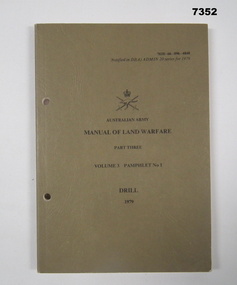 Bendigo Military Museum
Manual - LAND WARFARE, DRILL, ARMY, HEADQUARTERS TRAINING COMMAND, 3 May 1979
... formation. 5. Rifle exercises at the halt and on the march. 6. Rifle drill for funerals. 7. Pistol drill - 9mm Browning. 8. Sentry Drill. 9. Quarter guards and sentries. 10. Sword Drill. 11. Drill with the cane. 12. Drill with the pace stick. 12. Unit drill - platoon drill. 14. Unit Drill - Company drill. 15. Unit drill - non-ceremonial. Plus list of illustrations, figures and tables. Part of the collection of KEVIN JOHN HERDMAN, No. 397661. See Cat. No. 5942P for details of his service record. Drill movements Australian Army ...Manual consists of fiteen chapters related to drill movements. 1. Information for the Instructor. 2. Squad drill without arms - at the halt. 3. Marching. 4. Marching in line and changing direction and formation. 5. Rifle exercises at the halt and on the march. 6. Rifle drill for funerals. 7. Pistol drill - 9mm Browning. 8. Sentry Drill. 9. Quarter guards and sentries. 10. Sword Drill. 11. Drill with the cane. 12. Drill with the pace stick. 12. Unit drill - platoon drill. 14. Unit Drill - Company drill. 15. Unit drill - non-ceremonial. Plus list of illustrations, figures and tables. Part of the collection of KEVIN JOHN HERDMAN, No. 397661. See Cat. No. 5942P for details of his service record.Khaki coloured, textured soft covered manual with two punched holes for attaching to a ring binder. Title on front, cover in black type. Army logo in black. Pages are white in colour with black type. Black and white photographs and diagrams. Fifteen chapters. Pages glued to spine.drill movements, australian army, training manual, kevin john herdman -
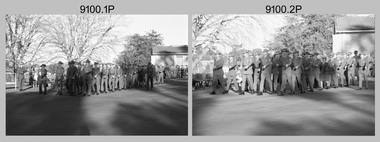 Bendigo Military Museum
Photograph - Army Survey Regiment – Corps Day Parade, Fortuna Villa, Bendigo, 1989
... This set of 25 photographs were taken at the Corps Day Parade held at the Army Survey Regiment, Bendigo on the 28th of June 1989. The Corps Day Parade was held to commemorate the 74th anniversary of the formation of the Royal Australian Survey Corps. ...This set of 25 photographs were taken at the Corps Day Parade held at the Army Survey Regiment, Bendigo on the 28th of June 1989. The Corps Day Parade was held to commemorate the 74th anniversary of the formation of the Royal Australian Survey Corps. ...This set of 25 photographs were taken at the Corps Day Parade held at the Army Survey Regiment, Bendigo on the 28th of June 1989. The Corps Day Parade was held to commemorate the 74th anniversary of the formation of the Royal Australian Survey Corps. The Parade Commander was CO LTCOL John Winzar and the Reviewing Officer was the Colonel Commandant (honorary appointment) of the Survey Corps - COL John Hillier. The guest of honour was the unidentified Mayor of Bendigo. Refer to Item 9163.13P for more photos taken at the parade.This is a set of 25 photographs of the Corps Day Parade held at the Army Survey Regiment, Fortuna, Bendigo on the 28th of June 1989. The black and white photographs are on 35mm negative film and scanned at 2400 dpi. They are part of the Army Survey Regiment’s Collection. .1) - Photo, black & white, June 1989. Cartographic Squadron marching onto parade ground, commanded by WO1 Stevo Hinic. WO1 Colin Cuskelly at left. RSM WO1 Neville Stone at far left. .2) & .3) - Photo, black & white, June 1989. Headquarters Squadron marching onto parade ground. WO2 Stuart Thaxter at far left. .4) - Photo, black & white, June 1989. Lithographic Squadron marching onto parade ground. Commanded by WO2 Rob Bogumil. Left file L to R: CPL Jim Ash, CPL Roy Hicks, CPL Rob Jones, CPL Stuart Ridge, CPL Chad Hardwick, CPL Peter Breukel, SGT Bob Garritty, SGT Steve Burke. .5) - Photo, black & white, June 1989. Lithographic Squadron marching onto parade ground. Commanded by WO2 Rob Bogumil. Centre file L to R: CPL Penny Knott, SPR Michelle Withers, LCPL Shona Hastie. Left file L to R: CPL Stuart Ridge, CPL Chad Hardwick, CPL Peter Breukel, SGT Bob Garritty, SGT Steve Burke. .6) - Photo, black & white, June 1989. Air Survey Squadron marching onto parade ground, commanded by WO1 Russell ‘Rusty’ Williams. RSM WO1 Neville Stone at far left. .7) - Photo, black & white, June 1989. RSM WO1 Neville Stone issues commands. .8) - Photo, black & white, June 1989. RSM WO1 Neville Stone hands over to 2IC MAJ Bob McHenry at left. .9) - Photo, black & white, June 1989. Officers saluting before taking posts. .10) - Photo, black & white, June 1989. Officers marching to their position to take post. 2IC MAJ Bob McHenry at far right. .11) - Photo, black & white, June 1989. The Reviewing Officer - CMDT COL John Hillier is formally greeted by an unidentified Sapper. Unidentified officer at far right. .12) & .13) - Photo, black & white, June 1989. L to R: Parade Commander - CO LTCOL John Winzar, Guest of Honour - Bendigo Lord Mayor Councillor Robin Adams, Reviewing Officer - Corps CMDT COL John Hillier. .14) - Photo, black & white, June 1989. L to R: unidentified, LT Marty Lyons, SPR Craig Kellet, unidentified, SPR Tony Jackson, unidentified, Maj Neil Taylor, CAPT John Greenwell. .15) - Photo, black & white, June 1989. L to R: unidentified officer, unidentified, LT Steve Hledik, unidentified, SGT Doug Carswell, SGT Brian Colling, SGT Paul ‘Hutch’ Hunter, SGT Graham Johnston, SSGT Rick van der Bom. .16) - Photo, black & white, June 1989. L to R: CO LTCOL John Winzar, Corps CMDT COL John Hillier, Bendigo Lord Mayor Councillor Robin Adams, unidentified (x3), SPR Jeanette Drury-Lane, unidentified (x2), SPR Peter Murphy, SPR Andy Love, WO1 Russell ‘Rusty’ Williams. .17) - Photo, black & white, June 1989. Headquarters Squadron L to R: WO2 Stuart Thaxter, WO2 Mick Flynn, unidentified (x2), RSM WO1 Neville Stone, SGT Chris Edwards, Bendigo Lord Mayor Councillor Robin Adams, CO LTCOL John Winzar, Corps CMDT COL John Hillier. Front rank L to R: unidentified, CPL Mick McConnell, SGT Trevor Poll, CPL Eric Nicholson, remainder unidentified. .18) - Photo, black & white, June 1989. Headquarters Squadron L to R: WO2 Stuart Thaxter, WO2 Mick Flynn, unidentified (x2), RSM WO1 Neville Stone, CO LTCOL John Winzar, SGT Kevin Boehm, Corps CMDT COL John Hillier, LT Craig Hersant. Front rank L to R: unidentified, CPL Mick McConnell, SGT Trevor Poll, CPL Eric Nicholson, remainder unidentified. .19) - Photo, black & white, June 1989. Lithographic Squadron front rank L to R: CPL Jim Ash, CPL Roy Hicks, CPL Rob Jones, CPL Stuart Ridge, CPL Chad Hardwick, CPL Peter Breukel, SGT Bob Garritty, unidentified officer, MAJ Terry Edwards. .20) - Photo, black & white, June 1989. Lithographic Squadron front rank L to R: CPL Jim Ash, CPL Roy Hicks, CPL Rob Jones, CPL Stuart Ridge, CPL Chad Hardwick, CPL Peter Breukel, SGT Bob Garritty, unidentified officer, Bendigo Lord Mayor Councillor Robin Adams, CO LTCOL John Winzar, LT Craig Hersant, WO2 Stuart Thaxter, WO2 Mick Flynn. .21) - Photo, black & white, June 1989. Lithographic Squadron front rank L to R: CPL Jim Ash, CPL Roy Hicks, CPL Rob Jones, Bendigo Lord Mayor Councillor Robin Adams, CO LTCOL John Winzar, CPL Chad Hardwick, CPL Peter Breukel, SGT Bob Garritty, SGT Steve Burke, unidentified officer, Corps CMDT COL John Hillier, LT Craig Hersant, MAJ Terry Edwards. .22) - Photo, black & white, June 1989. Lithographic Squadron front rank L to R: CPL Paul Baker, CPL Terry King, SPR Michelle Evans, CPL Penny Knott, SPR Michelle Withers, LCPL Shona Hastie, SSGT Keith Fenton RE – UK Exchange, Bendigo Lord Mayor Councillor Robin Adams, CO LTCOL John Winzar, LT Craig Hersant, CPL Jim Ash. .23) - Photo, black & white, June 1989. Lithographic Squadron front rank L to R: SGT Frank Lenane, CPL Terry King, SPR Michelle Evans, CPL Penny Knott, SPR Michelle Withers, LCPL Shona Hastie, SSGT Keith Fenton RE – UK Exchange, Bendigo Lord Mayor Councillor Robin Adams, Corps CMDT COL John Hillier, CO LTCOL John Winzar, LT Craig Hersant, CPL Jim Ash, CPL Roy Hicks. .24) - Photo, black & white, June 1989. Lithographic Squadron front rank L to R: unidentified, CPL Paul Baker, CPL Terry King, SPR Michelle Evans, CPL Penny Knott, SPR Michelle Withers, LCPL Shona Hastie, SSGT Keith Fenton RE – UK Exchange, Bendigo Lord Mayor Councillor Robin Adams, Corps CMDT COL John Hillier, CO LTCOL John Winzar, LT Craig Hersant, CPL Jim Ash, CPL Roy Hicks. .25) - Photo, black & white, June 1989. Lithographic Squadron front rank L to R: unidentified, CPL Paul Baker, CPL Terry King, SPR Michelle Evans, Bendigo Lord Mayor Councillor Robin Adams, Corps CMDT COL John Hillier, CO LTCOL John Winzar, LT Craig Hersant.There are no personnel identified. ‘Corps Day 28 Jun 1989’ annotated on negative sleevesroyal australian survey corps, rasvy, army survey regiment, army svy regt, fortuna -
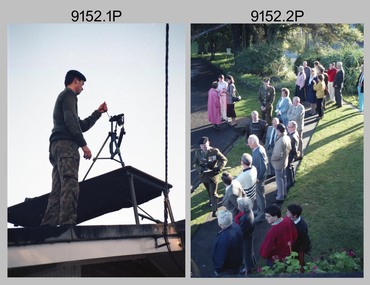 Bendigo Military Museum
Photograph - Army Survey Regiment – Corps Day Parade Set 1, Fortuna Villa, Bendigo, 1991
... This set of 31 photographs was taken at the Corps Day Parade held at the Army Survey Regiment, Bendigo on the 26th of June 1991.The Corps Day Parade was held to commemorate the 76th anniversary of the formation of the Royal Australian Survey Corps. ...This set of 31 photographs was taken at the Corps Day Parade held at the Army Survey Regiment, Bendigo on the 26th of June 1991.The Corps Day Parade was held to commemorate the 76th anniversary of the formation of the Royal Australian Survey Corps. ...This set of 31 photographs was taken at the Corps Day Parade held at the Army Survey Regiment, Bendigo on the 26th of June 1991.The Corps Day Parade was held to commemorate the 76th anniversary of the formation of the Royal Australian Survey Corps. The Reviewing officer was the Commander of the 3rd Military District BRIG P. Davies AM ADC and the Parade Host was D-SVY COL Simon Lemon. Refer to items 9154.37P for more photographs taken during the parade; and 9155.27P for photographs taken afterwards during the tour of the unit and the family BBQ.This is a set of 31 photographs of the Corps Day Parade held at the Army Survey Regiment, Fortuna, Bendigo on the 26th of June 1991. The colour photographs are on 35mm negative film and scanned at 2400 dpi. They are part of the Army Survey Regiment’s Collection. .1) - Photo, colour, 1991. Photographer on the roof of the SGTS Mess Accommodation building. .2) - Photo, colour, 1991. Guests gather at the edge of the parade ground. The RSM in the foreground and the WO1 in the background are unidentified. .3) & .4) - Photo, colour, 1991. SGT Chris ‘Charlie’ Brown stands at one corner of the parade ground behind a Wild T2 theodolite mounted with a RED2L Electric Distance Measurement (EDM) instrument. .5) & .6) - Photo, colour, 1991. CPL Steve Wegener stands at one corner of the parade ground behind a Wild T2 theodolite. .7) & .8) - Photo, colour, 1991. The right markers of each squadron take their positions under RSM WO1 Graham Ragless’s commands. .9) - Photo, colour, 1991. The Officers move to the edge of the parade ground before taking posts. SGT Chris ‘Charlie’ Brown is in the foreground behind a Wild T2 theodolite .10) to .15) - Photo, colour, 1991. Army Survey Regiment follows the 3rd MD marches onto the parade ground. RSM WO1 Graham Ragless is in the foreground. .16) - Photo, colour, 1991. Army Survey Regiment at the halt. RSM WO1 Graham Ragless is in the foreground. .17) - Photo, colour, 1991. Headquarters Squadron performs the ‘Right Dress’. .18) - Photo, colour, 1991. Cartographic Squadron performs the ‘Right Dress’. RSM WO1 Graham Ragless is in the foreground. .19) to .21) - Photo, colour, 1991. Army Survey Regiment stands at ease during RSM WO1 Graham Ragless’s handover to ADJT CAPT Geoff Ford. .22) to .24) - Photo, colour, 1991. Army Survey Regiment fixes bayonets under ADJT CAPT Geoff Ford’s commands. .25) - Photo, colour, 1991. Army Survey Regiment stands at ease during ADJT CAPT Geoff Ford’s handover to 2IC MAJ Ray Redman .26) & .27) - Photo, colour, 1991. Army Survey Regiment Officers take posts under 2IC MAJ Ray Redman’s commands. .28) & .29) - Photo, colour, 1991. Army Survey Regiment stands at attention during 2IC MAJ Ray Redman’s handover to CO LTCOL Rene van den Tol. .30) & .31) - Photo, colour, 1991. Army Survey Regiment under CO LTCOL Rene van den Tol’s command awaits arrival of the official guests.There are no personnel identified. ‘Corps Day 26 Jun 1991’ annotated on negative sleeves.royal australian survey corps, rasvy, army survey regiment, army svy regt, fortuna -
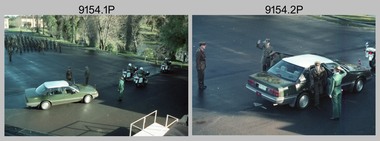 Bendigo Military Museum
Photograph - Army Survey Regiment – Corps Day Parade Set 2, Fortuna Villa, Bendigo, 1991
... This set of 37 photographs was taken at the Corps Day Parade held at the Army Survey Regiment, Bendigo on the 26th of June 1991.The Corps Day Parade was held to commemorate the 76th anniversary of the formation of the Royal Australian Survey Corps. ...This set of 37 photographs was taken at the Corps Day Parade held at the Army Survey Regiment, Bendigo on the 26th of June 1991.The Corps Day Parade was held to commemorate the 76th anniversary of the formation of the Royal Australian Survey Corps. ...This set of 37 photographs was taken at the Corps Day Parade held at the Army Survey Regiment, Bendigo on the 26th of June 1991.The Corps Day Parade was held to commemorate the 76th anniversary of the formation of the Royal Australian Survey Corps. The Reviewing officer was the Commander of the 3rd Military District BRIG P. Davies AM ADC and the Parade Host was D-SVY COL Simon Lemon. Refer to items 9152.31P for more photographs taken during the parade; and 9155.27P for photographs taken afterwards during the tour of the unit and the family BBQ.This is a set of 37 photographs of the Corps Day Parade held at the Army Survey Regiment, Fortuna, Bendigo on the 26th of June 1991. The colour photographs are on 35mm negative film and scanned at 2400 dpi. They are part of the Army Survey Regiment’s Collection. .1) - Photo, colour, 1991. Arrival of COMD 3MD. L to R: D-SVY - COL Simon Lemon, unidentified personnel, unidentified Aide-de-camp. .2) to .4) - Photo, colour, 1991. Arrival of COMD 3MD. L to R: D-SVY - COL Simon Lemon, COMD 3MD - BRIG P. Davies AM ADC, unidentified Aide-de-camp, unidentified personnel. .5) - Photo, colour, 1991. Cartographic Squadron stands at attention, under command of OC MAJ Graeme Wastell. .6) - Photo, colour, 1991. Headquarters Squadron stands at attention, under command of OC MAJ Peter Jensen. 2IC MAJ Ray Redman at left. .7) - Photo, colour, 1991. Air Survey Squadron stands at attention. L to R: LT Simon Buckpitt, WO1 Brett ‘Dutchy’ Van Leeuwen, unidentified (x2), CPL Perry Burt, SGT Sandy Craig, SGT Graeme Reany, SPR Stuart Bowd, LT Michelle Breen in foreground, unidentified, SGT Wolfgang Thun, SSGT Bruce Hammond, unidentified, SGT Paul Hopes, WO1 Russell ‘Rusty’ Williams. .8) - Photo, colour, 1991. Air Survey Squadron at attention under command of OC MAJ Peter Clark - at far left during the inspection. L to R: LT Simon Buckpitt, CO LTCOL Rene van den Tol, unidentified Aide-de-camp, LT Michelle Breen in foreground. At her right L to R: COMD 3MD - BRIG P. Davies AM ADC, SGT Graeme Reany, SPR Stuart Bowd, unidentified, SGT Wolfgang Thun, SSGT Bruce Hammond, unidentified, SGT Paul Hopes, WO1 Russell ‘Rusty’ Williams. .9) - Photo, colour, 1991. Air Survey Squadron inspection. L to R: D-SVY - COL Simon Lemon, COMD 3MD - BRIG P. Davies AM ADC, SPR Steve Linane, SPR Derek Percival. .10) & .11) - Photo, colour, 1991. Air Survey Squadron inspection. SSGT Graham Johnston at far left. L to R: CO LTCOL Rene van den Tol, unidentified Aide-de-camp, D-SVY - COL Simon Lemon, COMD 3MD - BRIG P. Davies AM ADC, SPR John ‘Docc’ Commons, unidentified (x4), SPR Jo (Innes) Thun, SGT Peter Tuddenham, SSGT Bob Garritty, SGT Martin Evans. .12) - Photo, colour, 1991. Air Survey Squadron inspection. L to R: CO LTCOL Rene van den Tol, unidentified Aide-de-camp, D-SVY - COL Simon Lemon, COMD 3MD - BRIG P. Davies AM ADC, SPR John ‘Docc’ Commons, unidentified (x4), SPR Jo (Innes) Thun, SGT Peter Tuddenham, SSGT Bob Garritty, SGT Martin Evans. Unidentified WO2 in right background. .13) & .14) - Photo, colour, 1991. SPR Peter Smyth stands on the corner of the parade ground behind an MRA-7 Tellurometer mounted on a tripod. .15) & .16) - Photo, colour, 1991. SPR Damian Nolan stands on the corner of the parade ground behind a Plane Table Board with an alidade mounted 3MD Band stands at attention during the inspection. L to R: unidentified Aide-de-camp, unidentified 3MD Band Master, D-SVY - COL Simon Lemon, COMD 3MD - BRIG P. Davies AM ADC, unidentified members of 3MD Band.on a tripod. .17) - Photo, colour, 1991. The unidentified 3MD Band Master salutes COMD 3MD - BRIG P. Davies AM ADC before the 3MD Band inspection. .18) - Photo, colour, 1991. 3MD Band stands at attention during the inspection. L to R: unidentified Aide-de-camp, unidentified 3MD Band Master, D-SVY - COL Simon Lemon, COMD 3MD - BRIG P. Davies AM ADC, unidentified members of 3MD Band. .19) - Photo, colour, 1991. Army Survey Regiment at ‘Shoulder Arms’ position in readiness for the Present Arms’ salute. CO LTCOL Rene van den Tol at front. .20) - Photo, colour, 1991. Cartographic and Air Survey Squadrons at ‘Shoulder Arms’ position in readiness for the Present Arms’ salute. CO LTCOL Rene van den Tol at front. .21) - Photo, colour, 1991. Headquarters Squadron at ‘Shoulder Arms’ position in readiness for the Present Arms’ salute. L to R: 2IC MAJ Ray Redman, MAJ Bob Williams, OC MAJ Peter Jensen. CAPT Colin Cuskelly. .22) & .23) - Photo, colour, 1991. Army Survey Regiment under CO LTCOL Rene van den Tol’s command salutes the COMD 3MD with ‘Present Arms’. .24) - Photo, colour, 1991. L to R: COMD 3MD - BRIG P. Davies AM ADC, D-SVY - COL Simon Lemon, unidentified Aide-de-camp. .25) - Photo, colour, 1991. The squadrons remove their hats in readiness for ‘Three cheers for Her Majesty the Queen’. .26) & .27) - Photo, colour, 1991. The squadrons cheer in unison to the command ‘Three cheers for Her Majesty the Queen’. .28) - Photo, colour, 1991. The unidentified padre addresses the Parade. .29) - Photo, colour, 1991. COMD 3MD - BRIG P. Davies AM ADC, addresses the Parade. .30) - Photo, colour, 1991. D-SVY - COL Simon Lemon addresses the Parade. .31) & .32) - Photo, colour, 1991. COMD 3MD - BRIG P. Davies AM ADC presents the Defence Force Service Medal with clasp to WO1 Brett ‘Dutchy’ Van Leeuwen for 20 years of efficient remunerated service. .33) - Photo, colour, 1991. The 3MD Band marches towards the front steps of Fortuna Villa. .34) - Photo, colour, 1991. The 3MD Band salutes as it marches past the official guests on the front steps of Fortuna Villa. .35) - Photo, colour, 1991. Lithographic Squadron led by OC MAJ Bob Coote marches towards the front steps of Fortuna Villa. .36) - Photo, colour, 1991. Lithographic Squadron led by OC MAJ Bob Coote salutes as it marches past the official guests on the front steps of Fortuna Villa. .37) - Photo, colour, 1991. COMD 3MD - BRIG P. Davies AM ADC salutes the passing troops. L to R: D-SVY - COL Simon Lemon, unidentified UK Liaison Officer, BRIG P. Davies AM ADC, unidentified Aide-de-camp.There are no personnel identified. ‘Corps Day 26 Jun 1991’ annotated on negative sleeves.royal australian survey corps, rasvy, army survey regiment, army svy regt, fortuna -
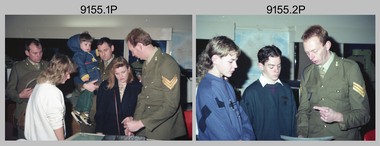 Bendigo Military Museum
Photograph - Corps Day Tour and Family BBQ, Army Survey Regiment, Fortuna Villa, Bendigo, 1991
... This set of 27 photographs was taken during the tour of the Army Survey Regiment facilities and at the family BBQ on the 26th of June 1991. These two events were held after the Corps Day Parade commemorating the 76th anniversary of the formation of the Royal Australian Survey Corps. ...This set of 27 photographs was taken during the tour of the Army Survey Regiment facilities and at the family BBQ on the 26th of June 1991. These two events were held after the Corps Day Parade commemorating the 76th anniversary of the formation of the Royal Australian Survey Corps. ...This set of 27 photographs was taken during the tour of the Army Survey Regiment facilities and at the family BBQ on the 26th of June 1991. These two events were held after the Corps Day Parade commemorating the 76th anniversary of the formation of the Royal Australian Survey Corps. Refer to items 9152.31P and 9154.37P for more photographs taken during the parade.This is a set of 27 photographs of the Corps Day Tour and Family BBQ held at the Army Survey Regiment, Fortuna, Bendigo on the 26th of June 1991. The colour photographs are on 35mm negative film and scanned at 2400 dpi. They are part of the Army Survey Regiment’s Collection. .1) - Photo, colour, 1991. Air Survey Squadron. L to R: SPR John Bragg, unidentified (x2), WO2 Allan Virtue, unidentified, SGT Paul Hopes. .2) - Photo, colour, 1991. Air Survey Squadron. L to R: unidentified (x2), SGT Paul Hopes. .3) - Photo, colour, 1991. Air Survey Squadron. L to R: unidentified, CPL Perry Burt, unidentified. .4) - Photo, colour, 1991. Cartographic Squadron. L to R: unidentified (x4), WO2 Adrian ‘Charlie’ Creedy, CPL Dan Cirsky, CPL Frank Savy, unidentified (x2). .5) - Photo, colour, 1991. Cartographic Squadron. L to R: unidentified (x2), CPL Eric Nicholson, unidentified (x2), CPL Frank Savy, unidentified. .6) - Photo, colour, 1991. Cartographic Squadron. L to R: unidentified (x4), CPL Eric Nicholson, unidentified (x3), WO1 Ken Slater. .7) - Photo, colour, 1991. Cartographic Squadron. In foreground L to R: CPL Dan Cirsky, unidentified, SPR Stewart Adrain, SPR Peter Smyth. .8) - Photo, colour, 1991. Cartographic Squadron. AUTOMAP 2 VAX 750/785 main frame computer room. System data backup tapes at left. .9) - Photo, colour, 1991. Lithographic Squadron. Optronix 5040 Laser Scanner/Plotter. .10) - Photo, colour, 1991. Lithographic Squadron. Optronix 5040 Laser Scanner/Plotter operators’ terminal. .11) - Photo, colour, 1991. Lithographic Squadron. SPR Dave Scott with visitor. .12) - Photo, colour, 1991. Lithographic Squadron. SGT Neale ‘Tex’ Houston with visitors. .13) - Photo, colour, 1991. Lithographic Squadron. SPR Andrew Morrison-Evans with visitors. .14) - Photo, colour, 1991. Lithographic Squadron. LT Ian Stoddart with RAAF visitors. SGT Neale ‘Tex’ Houston at far right. .15) - Photo, colour, 1991. Lithographic Squadron. SGT Frank Lenane with visitors. .16) - Photo, colour, 1991. Lithographic Squadron. SGT Keith Quinton with visitors. .17) - Photo, colour, 1991. Headquarters Squadron. Unidentified US Exchange Officer with visitor. .18) - Photo, colour, 1991. Headquarters Squadron. CAPT Colin Cuskelly with LTCOL Don Ridge (retired). .19) - Photo, colour, 1991. Headquarters Squadron. Unidentified visiting WO1 with visitor. .20) - Photo, colour, 1991. BBQ. Unidentified catering staff. .21) - Photo, colour, 1991. BBQ. L to R: Unidentified, Allison (Ottaway) Wooldrage, LCPL Nikki Midgley, unidentified. .22) - Photo, colour, 1991. BBQ. WO1 Stevo Hinic, CPL Geoff Webb, WO1 Brett ‘Dutchy’ Van Leeuwen seen at right. .23) - Photo, colour, 1991. BBQ. L to R: CPL Ian Bowes, unidentified, CPL Pat Drury, SPR Jeanette Drury-Lane, SGT Dave Longbottom, unidentified, unidentified, SPR Valmai Knight. .24) - Photo, colour, 1991. BBQ. L to R: SGT Chris ‘Charlie’ Brown, SPR Jeanette Drury-Lane, WO2 Mick Flynn, CPL Roy Hicks, Pam Mason, SGT Stuart Symonds, remainder unidentified. .25) - Photo, colour, 1991. BBQ. L to R: Unidentified (x3), Allison (Ottaway) Wooldrage, LCPL Nikki Midgley, unidentified (x2), SPR Ian Brown, unidentified, SGT Alex DeGrauw. .26) - Photo, colour, 1991. BBQ. L to R: CAPT Neville Stone, SPR Anthony Hesling in background, CAPT Noel ‘Nesty’ Coulthard, WO1 Stevo Hinic. .27) - Photo, colour, 1991. BBQ. L to R: MAJ Graeme Wastell, Julie Wastell.There are no personnel identified. ‘Corps Day 26 Jun 1991’ annotated on negative sleeves.royal australian survey corps, rasvy, army survey regiment, army svy regt, fortuna
