
Showing 69 items matching "fox road"
-
 Eltham District Historical Society Inc
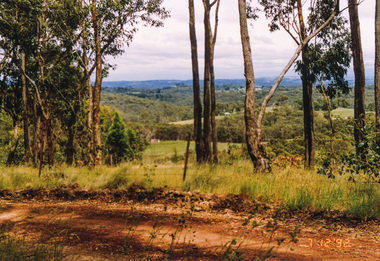
Photograph, Looking west from Fox Road, Smiths Gully, 7 December 1992, 07/12/1992
... Looking west from Fox Road, Smiths Gully, 7 December 1992......fox road...The Eltham Horse Trail: Research and Warrandyte to Kinglake: Survey of proposed route, December 1992: (3) Kangaroo Ground to Kinglake eltham horse trail (1992 survey) smiths gully fox road Colour photograph Looking west from Fox Road, Smiths Gully, 7 December 1992 Photograph ...The Eltham Horse Trail: Research and Warrandyte to Kinglake: Survey of proposed route, December 1992: (3) Kangaroo Ground to KinglakeColour photographeltham horse trail (1992 survey), smiths gully, fox road -
 Eltham District Historical Society Inc
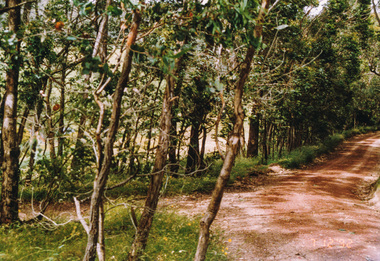
Photograph, Track to Rifle Range Road off Fox Road, Smiths Gully, 7 December 1992, 07/12/1992
... Track to Rifle Range Road off Fox Road, Smiths Gully, 7 December 1992......fox road...The Eltham Horse Trail: Research and Warrandyte to Kinglake: Survey of proposed route, December 1992: (3) Kangaroo Ground to Kinglake eltham horse trail (1992 survey) smiths gully fox road rifle range road Two colour photographs Track to Rifle Range Road off Fox Road, Smiths Gully, 7 December 1992 Photograph ...The Eltham Horse Trail: Research and Warrandyte to Kinglake: Survey of proposed route, December 1992: (3) Kangaroo Ground to KinglakeTwo colour photographseltham horse trail (1992 survey), smiths gully, fox road, rifle range road -
 Flagstaff Hill Maritime Museum and Village
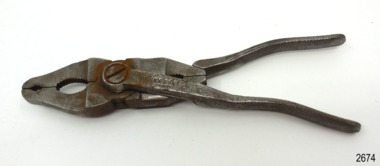
Tool - Pliers, Henry Boker, late 19th to early 20th century
... Fox & Co., of 250 Victoria Street North Melbourne, were agents for Boker tools in the 1950s. Museums Victoria has a Boker catalogue in its collection dated circa 1954. These pliers are significant as an example of hand tools used in the early 20th centry or earlier. Pliers like this would typically be used in maritime trades. flagstaff hill warrnambool shipwrecked coast flagstaff hill maritime museum maritime museum shipwreck coast flagstaff hill maritime village great ocean road pliers double headed pliers henry boker boker hand tool german tool german pliers antique pliers vintage pliers victorian pliers heinrich boker tradesmen's tools Impressed into metal "HENRY BOKER / GERMANY" Pliers, double headed. ...This unusual set of pliers was made in Germany by Henry Boker (Heinrich Boker). Boker hand tools were being produced in the 18th century in Remscheid, Germany. Boker tools were known for good quality and value for money. George A. Fox & Co., of 250 Victoria Street North Melbourne, were agents for Boker tools in the 1950s. Museums Victoria has a Boker catalogue in its collection dated circa 1954.These pliers are significant as an example of hand tools used in the early 20th centry or earlier. Pliers like this would typically be used in maritime trades.Pliers, double headed. This hand tool has two sets of jaws on its pair of handles. It was made by Henry Boker, Germany. Impressed into metal "HENRY BOKER / GERMANY"flagstaff hill, warrnambool, shipwrecked coast, flagstaff hill maritime museum, maritime museum, shipwreck coast, flagstaff hill maritime village, great ocean road, pliers, double headed pliers, henry boker, boker hand tool, german tool, german pliers, antique pliers, vintage pliers, victorian pliers, heinrich boker, tradesmen's tools -
 Federation University Historical Collection
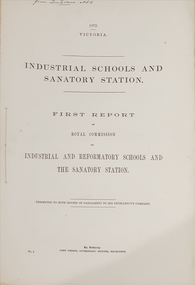
Booklet - Report, John Ferres, Government Printer, Royal Commission on Industrial and Reformatory Schools and the Sanatory Station, 1872 and 1874
... road industrial school...industrial schools commission...red hill philanthropic school...flat islands port phillip bay...pauper children...johanna margaret hill...american industrial schools...cuthbert fox...The Industrial Schools and Quarantine Station Royal Commission took place in 1872, with the final report published in 1874. quarantine industrial schools reformatory schools royal commission gavin duffy st kilda road industrial school industrial schools commission red hill philanthropic school flat islands port phillip bay pauper children johanna margaret hill american industrial schools cuthbert fox james walker pilot schooner rip captain h.h. o'neil william mccrae t.m. girdlestone william austin zeal j.a. panton Industrial Schools and Quarantine Station Royal Commission Quarantine Station Point Nepean Sanatory Station Queenscliff Point nepean philanthropic school red hill rip George Ferguson Bowen orphan asylums On front cover "From Tom Evans MLA" .1) First report of the Royal Commission on Industrial and Reformatory Schools and the Sanatory Station. 65 pages. .2) Second and final report of the Royal Commission on Industrial and Reformatory Schools and the Sanatory Station. 16 pages. ...The Industrial Schools and Quarantine Station Royal Commission took place in 1872, with the final report published in 1874..1) First report of the Royal Commission on Industrial and Reformatory Schools and the Sanatory Station. 65 pages. .2) Second and final report of the Royal Commission on Industrial and Reformatory Schools and the Sanatory Station. 16 pages. This report included defects in the system and recomendations.On front cover "From Tom Evans MLA"quarantine, industrial schools, reformatory schools, royal commission, gavin duffy, st kilda road industrial school, industrial schools commission, red hill philanthropic school, flat islands port phillip bay, pauper children, johanna margaret hill, american industrial schools, cuthbert fox, james walker, pilot schooner rip, captain h.h. o'neil, william mccrae, t.m. girdlestone, william austin zeal, j.a. panton, industrial schools and quarantine station royal commission, quarantine station point nepean, sanatory station, queenscliff, point nepean, philanthropic school red hill, rip, george ferguson bowen, orphan asylums -
 Ballarat Clarendon College
Book, John Bunyan, The pilgrim's progress and other works, c1890
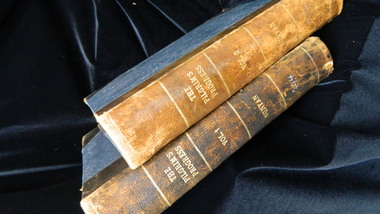
... Road, Ballarat Two volumes of the works of John Bunyan, including Pilgrim's Progress, The Holy War and To the Chief of Sinners beautifully illustrated with graved plates. Bound in half leather with gilt lettering and decoration; inter-leaved engraved plates and numerous in-text illustrations. With an engraved frontispiece and title page. Condition: The binding is generally tight and firm. The hinges are just starting but still generally firm. There is light browning and background foxing ...Personal property of Miss Elinor Morcom, pianist and school piano teacher 1957 - 60, 66-70. Two volumes of the works of John Bunyan, including Pilgrim's Progress, The Holy War and To the Chief of Sinners beautifully illustrated with graved plates. Bound in half leather with gilt lettering and decoration; inter-leaved engraved plates and numerous in-text illustrations. With an engraved frontispiece and title page. Condition: The binding is generally tight and firm. The hinges are just starting but still generally firm. There is light browning and background foxing. Handwritten on flyleaf of volume one: E Morcom, 424 Creswick Road, Ballaratelinor-morcom, music-teacher, clarendon-presbyterian-ladies-college -
 Flagstaff Hill Maritime Museum and Village
Book - Reference Travel Diary/History, Sir Francis Leopold M'Clintock, The Voyage of The 'Fox'. Fate of Sir John Franklin, 1881
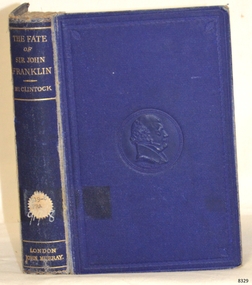
... road...book...pattison collection...warrnambool library...warrnambool mechanics’ institute...ralph eric pattison...corangamite regional library service...warrnambool city librarian...mechanics’ institute library...victorian library board...warrnambool books and records...warrnambool children’s library...The Voyage of The 'Fox...(For more information on the Pattison Collection see item 3678 Flagstaff Hill collections) https://victoriancollections.net.au/items/5580c7e72162f114d8b758db flagstaff hill warrnambool shipwrecked coast flagstaff hill maritime museum maritime museum shipwreck coast flagstaff hill maritime village great ocean road book pattison collection warrnambool library warrnambool mechanics’ institute ralph eric pattison corangamite regional library service warrnambool city librarian mechanics’ institute library victorian library board warrnambool books and records warrnambool children’s library The Voyage of The 'Fox'. ...This classic 1859 maritime narrative with the subject copy being the 1881 fifth edition details one of the most significant moments in Arctic exploration. It follows the definitive discovery of what happened to Sir John Franklin’s lost expedition. The Voyage of the 'Fox' is a first-hand travel diary and official report written by Captain Francis Leopold McClintock.The Voyage of The 'Fox'. The Fate of Sir John Franklin Author: Sir F Leopold M'Clintock Publisher: John Murray, Albemarle Street, London. Publisher to the Admiralty Date: 1881 Blue embossed hardcover with a blue spine and lettering in gold. The spine has a Library label with an inscription.non-fictionThis classic 1859 maritime narrative with the subject copy being the 1881 fifth edition details one of the most significant moments in Arctic exploration. It follows the definitive discovery of what happened to Sir John Franklin’s lost expedition. The Voyage of the 'Fox' is a first-hand travel diary and official report written by Captain Francis Leopold McClintock.flagstaff hill, warrnambool, shipwrecked coast, flagstaff hill maritime museum, maritime museum, shipwreck coast, flagstaff hill maritime village, great ocean road, book, pattison collection, warrnambool library, warrnambool mechanics’ institute, ralph eric pattison, corangamite regional library service, warrnambool city librarian, mechanics’ institute library, victorian library board, warrnambool books and records, warrnambool children’s library, the voyage of the 'fox'. the fate of sir john franklin, sir f leopold m'clintock, arctic exploration -
 Flagstaff Hill Maritime Museum and Village
Book, Reynard the Fox
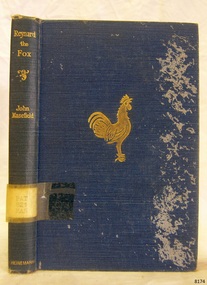
... road...book...pattison collection...warrnambool library...warrnambool mechanics’ institute...ralph eric pattison...corangamite regional library service...warrnambool city librarian...mechanics’ institute library...victorian library board...warrnambool books and records...warrnambool children’s library...reynard the fox...The Warrnambool Mechanics' Institute’s publication collection is of both local and state significance. flagstaff hill warrnambool shipwrecked coast flagstaff hill maritime museum maritime museum shipwreck coast flagstaff hill maritime village great ocean road book pattison collection warrnambool library warrnambool mechanics’ institute ralph eric pattison corangamite regional library service warrnambool city librarian mechanics’ institute library victorian library board warrnambool books and records warrnambool children’s library reynard the fox the ghost heath run john masefield The label on spine cover with typed text PAT 821 MAS Pastedown front endpaper has a sticker from Warrnambool Mechanics Institute and Free Library Front loose endpaper has a stamp from Corangamite Regional Library Service Front loose endpaper has a sticker from Warrnambool Mechanics Institute Flyleaf has a stamp from Warrnambool Mechanics Institute Reynard the Fox or The Ghost Heath Run Author: John Masefield Publisher: William Heinemann Ltd Date: 1929 Reynard the Fox Book ...This book was part of a large group of books referred to as the Pattison Collection, which belonged to the Warrnambool Public Library, part of the Warrnambool Mechanics’ Institute. About RALPH ERIC PATTISON and the ‘PATTISON COLLECTION’ The ‘Pattison Collection’ is a collection of books and records that was originally owned by the Warrnambool Mechanics’ Institute, founded in Warrnambool in 1853. By 1886 the Warrnambool Mechanics’ Institute (WMI) had grown to have a Library, Museum and Fine Arts Gallery, with a collection of “… choice productions of art and valuable specimens in almost every branch and many wonderful national curiosities are now to be seen there, including historic relics of the town and district.” It later included a School of Design. Although it was very well patronised, the WMI was led to ask the City Council to take it over in 1911 due to lack of financial support. In 1935 Ralph Pattison was appointed as City Librarian to establish and organise the Warrnambool Public Library as it was then called. Ralph Eric Pattison was born in Rockhampton, Queensland, in 1891. He married Maude Swan from Warrnambool in 1920 and they set up home in Warrnambool. In 1935 when Pattison accepted the position as City Librarian for the Warrnambool City Council his huge challenge was to make a functional library within two rooms of the Mechanics’ Institute. He tirelessly cleaned, cleared and sorted a disarrayed collection of old books, jars of preserved specimens and other items reserved for exhibition in the city’s museum. He developed and updated the library with a wide variety of books for all tastes, including reference books for students; a difficult task to fulfil during the years following the Depression. He converted all of the lower areas of the building into a library, reference room and reading room for members and the public. The books were sorted and stored using a cataloguing and card index system that he had developed himself. He also prepared the upper floor of the building and established the Art Gallery and later the Museum, a place to exhibit the many old relics that had been stored for years for this purpose. One of the treasures he found was a beautiful ancient clock, which he repaired, restored and enjoyed using in his office during the years of his service there. Ralph Pattison was described as “a meticulous gentleman whose punctuality, floorless courtesy and distinctive neat dress were hallmarks of his character, and ‘his’ clock controlled his daily routine and his opening and closing of the library’s large heavy doors to the minute.” Pattison took leave from 1942 to 1945 to serve in the Royal Australian Navy, Volunteer Reserve as Lieutenant. A few years later he converted one of the Museum’s rooms into a Children’s Library, stocking it with suitable books for the younger generation. This was an instant success. In the 1950’s he had the honour of being appointed to the Victorian Library Board and received more inspiration from the monthly conferences in Melbourne. He was sadly retired in 1959 after over 23 years of service, due to the fact that he had gone over the working age of council officers. However, he continued to take a very keen interest in the continual development of the Library until his death in 1969. THE NEW WARRNAMBOOL LIBRARY When the WMI building was pulled down in 1963 a new civic building was erected on the site and the new Warrnambool Library, on behalf of the City Council, took over all the holdings of the WMI. At this time some of the items were separated and identified as the ‘Pattison Collection’, named after Pattison. Eventually, the components of the WMI were distributed from the Warrnambool Library to various places, including the Art Gallery, Historical Society and Flagstaff Hill. Later some were even distributed to other regional branches of Corangamite Regional Library and passed to and fro. It is difficult now to trace just where all of the items have ended up. The books at Flagstaff Hill Maritime Village generally display stamps and markings from Pattison as well as a variety of other institutions including the Mechanics’ Institute itself. WARRNAMBOOL MECHANICS’ INSTITUTE Warrnambool's Mechanics' Institute (or Institution as it was sometimes called) was one of the earliest in Victoria. On 17th October 1853 a meeting was held where it was resolved to request the Lieutenant Governor of the Colony to grant land for the erection of a Mechanics' Institutes building. A committee was formed at the meeting and Richard Osburne chaired the first meeting of this committee. The land on the North West corner of Banyan and Merri Streets was granted but there were no funds to erect the building. The Formal Rights of the Warrnambool Mechanics' Institute's encompassed its aims and these were officially adopted in1859; "This Institution has for its object the diffusion of literary, scientific, and other useful knowledge amongst its members, excluding all controversial subjects, religious or political. These objects are sought to be obtained by means of a circulating library, a reading room, the establishment of classes, debates, and the occasional delivery of lectures on natural and experimental philosophy, mechanics, astronomy, chemistry, natural history, literature, and the useful and ornamental arts, particularly those which have a more immediate reference to the colony." The Warrnambool Mechanics' Institute opened its first reading room in November1884 in the National School building at the corner of Banyan and Timor Streets. The Institute was funded by member subscription, payable on a quarterly, half yearly or yearly basis. Samuel Hannaford, the Manager of the Warrnambool Bank of Australasia, was the first Honorary Secretary of the Mechanics' Institutes, and an early President and Vice-President. He also gave several of the early lectures in the Reading Room. Another early Secretary, Librarian and lecturer was Marmaduke Fisher, the teacher at the National School. Lecture topics included The Poets and Poetry of Ireland', 'The Birth and Development of the Earth', 'The Vertebrae - with Remarks on the pleasures resulting from the study of Natural History' and 'Architecture'. In 1856 the Reading Room was moved to James Hider's shop in Timor Street, and by 1864 it was located in the bookshop of Davies and Read. In the 1860's the Mechanics' Institute struggled as membership waned but in 1866, after a series of fund raising efforts, the committee was able to purchase land in Liebig Street, on a site then called Market Square, between the weighbridge and the fire station. A Mechanics' Institute building was opened at this site in August 1871. The following year four more rooms were added to the main Reading Room and in 1873 the Artisan School of Design was incorporated into the Institute. The same year Joseph Archibald established a Museum; however it deteriorated when he was transferred to Bendigo in 1877. In 1880, with Archibald's return to Warrnambool, the Museum was re-established, and in 1885 a new building was built at the back of the Institute to accommodate the re-created School of Design, the Art Gallery and the Museum. In 1887 the Museum section was moved to the former court house in Timor Street (for some time the walls of the building formed part of the TAFE cafeteria but all is now demolished)). In 1911 the Museum was transferred back to the original building and the management of the Mechanics' Institute was handed over to the Warrnambool City Council. The Museum and Art Gallery became one and housed many fine works of art, and the Library continued to grow. The building was well patronised, with records showing that at the beginning of the 20th century there were between 500 and 800 visitors. During World War One the monthly figures were in the thousands, with 3,400 people visiting in January 1915. The Museum was a much loved Institution in Warrnambool until the contents of the Museum and Art Gallery were removed to make room for the Warrnambool City Council Engineers' Department. The contents were stored but many of the items were scattered or lost. When the original building was demolished the site became occupied by the Civic Centre, which included the new City Library. (The library was temporarily located in the old Palais building in Koroit Street.) In the process of reorganisation the Collection was distributed amongst the community groups: -The new City Library took some of the historic books and some important documents, historic photographs and newspapers. -The Art Gallery kept the 19th Century art collection and some of the artefacts from the museum. -The Historic Society has some items -The State Museum has some items -Some items were destroyed -Flagstaff Hill Maritime Village has old newspapers, Government Gazettes, most of the Mechanics' Institute Library, ledgers and documents connected to the Mechanics' Institute Library, some framed and unframed art works and some photographs. The Warrnambool Mechanics' Institute Library book collection is deemed to be of great importance because it is one of the few collections in an almost intact state, and many of the books are now very rare and of great value. The Pattison Collection, along with other items at Flagstaff Hill Maritime Village, was originally part of the Warrnambool Mechanics' Institute’s collection. The Warrnambool Mechanics’ Institute Collection is primarily significant in its totality, rather than for the individual objects it contains. Its contents are highly representative of the development of Mechanics' Institute libraries across Australia, particularly Victoria. A diversity of publications and themes has been amassed, and these provide clues to our understanding of the nature of and changes in the reading habits of Victorians from the 1850s to the middle of the 20th century. The collection also highlights the Warrnambool community’s commitment to the Mechanics’ Institute, reading, literacy and learning in the regions, and proves that access to knowledge was not impeded by distance. These items help to provide a more complete picture of our community’s ideals and aspirations. The Warrnambool Mechanics Institute book collection has historical and social significance for its strong association with the Mechanics Institute movement and the important role it played in the intellectual, cultural and social development of people throughout the latter part of the nineteenth century and the early twentieth century. The collection of books is a rare example of an early lending library and its significance is enhanced by the survival of an original collection of many volumes. The Warrnambool Mechanics' Institute’s publication collection is of both local and state significance. Reynard the Fox or The Ghost Heath Run Author: John Masefield Publisher: William Heinemann Ltd Date: 1929 The label on spine cover with typed text PAT 821 MAS Pastedown front endpaper has a sticker from Warrnambool Mechanics Institute and Free Library Front loose endpaper has a stamp from Corangamite Regional Library Service Front loose endpaper has a sticker from Warrnambool Mechanics Institute Flyleaf has a stamp from Warrnambool Mechanics Institute flagstaff hill, warrnambool, shipwrecked coast, flagstaff hill maritime museum, maritime museum, shipwreck coast, flagstaff hill maritime village, great ocean road, book, pattison collection, warrnambool library, warrnambool mechanics’ institute, ralph eric pattison, corangamite regional library service, warrnambool city librarian, mechanics’ institute library, victorian library board, warrnambool books and records, warrnambool children’s library, reynard the fox, the ghost heath run, john masefield -
 Flagstaff Hill Maritime Museum and Village
Photograph - Set of shipping photographs, Late 1870's - early 1920's
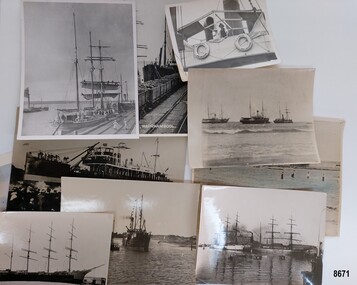
... Road...shipping...sailing ships...steamers...coastal trade...Port Fairy...Portland...Melbourne...Fred Trewartha...Frederick John Fox...Flagstaff Hill Maritime Museum and Village Warrnambool Great Ocean Road shipping sailing ships steamers coastal trade Port Fairy Portland Melbourne Fred Trewartha Frederick John Fox Trewartha photographs maritime photographs Backs of photographs - Donor's name, telephone number and address handwritten in ink Handwritten notes about ship(s)depicted Some have stamped numbers Collection of ten photographs of different sailing ships and coastal steamers. ...This set of ten photographs was donated to Flagstaff Hill Maritime Museum and Village by Fred Trewartha. Frederick John Fox Trewartha (Fred) was a well-known Warrnambool businessman. He was born in Beeac near Geelong in 1920 and came to Warrnambool with his family as a very young child. He was apprenticed to his father John, as a saddler and later opened his own shop on Raglan Parade. He then moved into working with tarpaulins and canvases for the trucking industry. Fred was keenly interested in photography (and was a member of the Warrnambool Cine Club), yachting and boat building. He kept his yacht moored at Port Fairy for many years and participated in sailing events locally and interstate. He also built boats with his sons. He had the opportunity to meet many older sailors and it's thought these photographs may have been given to him by one of these men. Fred Trewartha died in 2016 in Warrnambool.These photographs are significant because of their association with coastal trading along Victoria's West Coast in the late 19th and early 20th centuries. Some of the photographs also reflect the importance of ships to Australia in its world wide trading routes.Collection of ten photographs of different sailing ships and coastal steamers. They are different sizes and at different locations. Nine of the photos are black and white or sepia toned and tend to show the ships either moored at a dock or anchored in a bay. All the photographs have the donor's name and telephone number handwritten on the back as well as a handwritten note naming the ships in the picture.Backs of photographs - Donor's name, telephone number and address handwritten in ink Handwritten notes about ship(s)depicted Some have stamped numbersflagstaff hill maritime museum and village, warrnambool, great ocean road, shipping, sailing ships, steamers, coastal trade, port fairy, portland, melbourne, fred trewartha, frederick john fox trewartha, photographs, maritime photographs -
 Flagstaff Hill Maritime Museum and Village
Photograph - Vessel S. S. Casino in Lady Bay Warrnambool, 1920's - 1930's
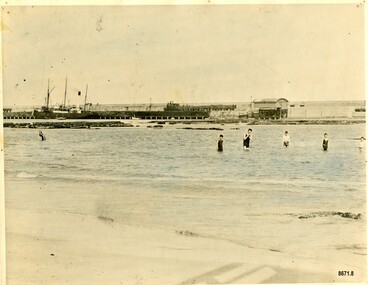
... Road...Shipwreck Coast...Lady Bay...Breakwater...Fred Trewartha...Frederick John Fox...Warrnambool Great Ocean Road Shipwreck Coast Lady Bay Breakwater Fred Trewartha Frederick John Fox Trewartha Surf Bathers Association Sea Bathing Swimming Warrnambool Beach Beach Improvement Fund Port of Warrnambool Steamships Lifeboat House Rocket House Lifeboat Crew S. ...This photograph was one of ten photographs donated to Flagstaff Hill Maritime Museum and Village by Fred Trewartha. Frederick John Fox Trewartha (Fred) was a well-known Warrnambool businessman. He was born in Beeac near Geelong in 1920 and came to Warrnambool with his family as a very young child. He was apprenticed to his father John, as a saddler and later opened his own shop on Raglan Parade. He then moved into working with tarpaulins and canvases for the trucking industry. Fred was keenly interested in photography (and was a member of the Warrnambool Cine Club), yachting and boat building. He kept his yacht moored at Port Fairy for many years and participated in sailing events locally and interstate. He also built boats with his sons. He had the opportunity to meet many older sailors and it's thought this photo (and others in the set) may have been given to him by one of these men. Fred Trewartha died in 2016 in Warrnambool. Warrnambool by the 1920's and 1930's had become a popular holiday destination with visitors arriving by steamer and train. It was during these decades that a "Surf Bathers Association" began in Warrnambool in response to the growing popularity of local sea bathing. They worked with the local council to develop a "Beach Improvement Fund" and a comprehensive plan of "Beach Improvement" which included erecting and maintaining beach boxes, building a kiosk, improving paths and roads to the beach, planting marram grass on the sand dunes, building new enclosures for vehicles and horses and generally making the beach more attractive for visitors and townspeople. The 1930's was also an era when free "Herald" Learn-to-Swim classes were being held throughout Victoria. In 1931 it was reported in "The Age" newspaper that "over the past week in Warrnambool, 250 pupils had passed through the hands of the local life saving club swimming instructors". The Port of Warrnambool - In the early years the Port of Warrnambool was a busy port. Steamships and sailing ships were frequent visitors to the port. Steam navigation companies were plentiful, carrying passengers and freighting cargo such as coal, timber, food, livestock, furniture, hardware and haberdashery between Melbourne and the ports along the southwest coast of Victoria, including Warrnambool. The carts would take their loads into the township for distribution. The Breakwater was built (using 32 ton blocks of concrete) between 1874 and 1890 to provide ships with greater protection from the Southern Ocean. The Lifeboat and Rocket House - The coastline of South West Victoria has had over 600 shipwrecks and many lost lives; even in Warrnambool’s Lady Bay there were around 16 known shipwrecks between 1850 and 1905, with eight lives lost. In 1859 the first Government-built lifeboat arrived at Warrnambool Harbour and a shed was soon built to house it, followed in 1864 by a rocket house to safely store the Rocket Rescue equipment. In 1878 the buildings were moved to the Breakwater area, and in 1910 the new Lifeboat Warrnambool arrived with its ‘self-righting’ design. For almost one hundred years the lifeboat and rocket crews, mostly local volunteers, trained regularly to maintain and improve their skills, summoned when needed by alarms, gunshots, ringing bells and foghorns. Some became local heroes but all served an important role. By the end of the 1950s the lifeboat and rescue equipment had become obsolete. The S.S. Casino was a passenger and freight steamer built in Dundee, Scotland, in 1882 for the Newcastle and Hunter River Steam Navigation Company of N.S.W. She weighed 425 tons gross with a length of 160.4 feet, beam of 24.1 feet and a depth of 10.2 feet. She had saloon accommodation for 35 people, a fore cabin for 25 more people, and she carried 300 tons of cargo. While on her delivery journey on May 30th 1882, the S.S. Casino called in at the Port of Warrnambool for coal, narrowly escaping going ashore in gale force winds due to the quick action of the pilot. At that time, still at anchor, she impressed the directors of the Belfast and Koroit Steam Navigation Company so much that they bought her immediately; she was ideal for trade along the West Coast of Victoria. (The Belfast and Koroit Steam Navigation Company was first managed by Messers. Saltau and Osburne and after the passing of Mr. Osburne, by produce merchants Messers H. Sautau and Sons, who had a hay and corn store and shipping agency on the corner of Liebig and Koroit Streets in Warrnambool. ) The S.S. Casino became “the most famous steamer to operate in Victorian waters along the West Coast” by author Jack Loney. Captain Boyd was her first Master, followed by Captain Chapman, who stayed with her from 1890 until 1924. Captain W. Robertson followed for a short term, and then Captain Middleton then took command from 1925 - 1932. An article published on Monday 11th June 1932 in The Sun News Pictorial (Melbourne) giving a detailed history of S. S. Casino said "owned by Port Fairy interests, she was an integral part of the town's development ... for a long time, her arrival in Port Fairy was an event, the townspeople going down to the wharf to see her come in". It also said "Except when the weather was bad, the Casino hugged the coast on her trips and passengers obtained wonderful views of the sandstone terraces and caves. A little time ago every member of her regular crew except one, was a Scotsman." The S.S. Casino had several mishaps during her life. One was on 3rd January 1898 when she collided with the S.S. Flinders in Apollo Bay with minor damage. Another was on 24th October 1924 when she grounded on a reef at Point Hawdon near Grey River and most of her cargo (of Christmas goods) had to be dumped into the sea. Then in February 1929 she was ‘holed’ when she struck a submerged object as she entered Lady Bay, Warrnambool. In the years following the turn of the century, the S.S. Casino remained the only regular trader with normal passenger accommodation along the West Coast. From 1882 she had made at least 2,500 voyages on the one run. On the morning of 10th July 1932, after attempting to berth at Apollo Bay jetty in heavy seas, Captain Middleton decided to take her out into the bay and wait until the seas abated. It was not realised that the anchor used to steady her as she manoeuvred to her berth had pierced her hull. She put about and headed for the beach but sank. Captain Middleton and nine others lost their lives; nine people were rescued including the two female passengers. Captain Middleton had been in charge of the S.S. Casino for seven years. He was the first ship’s Master to lose his life in a shipwreck in the West Coast trade. In June 1932, the directors of the Belfast and Koroit Steam Navigation Company had proposed to celebrate the completion of fifty years of trading by the steamer Casino in August, but tragically the Casino was wrecked only one month later (and "was only one month off completing its fifty years of valuable service between Melbourne and Portland.") Flagstaff Hill’s collection has a photograph of a portrait of Captain Chapman, a ship model of the S.S. Casino that shows both forms of power under which she sailed, steam and sail. The ship is painted green and flies three flags. The inscription across the case of the ship model, incorrectly dated, tells the sad story of the wreck of the ship and the loss of lives on July 10th 1932 at Apollo Bay. A print in the Collection shows S.S. Casino underway in the heavy sea off Point Lonsdale, another two photographs show her at the Port of Warrnambool, leaving from the Breakwater in Lady Bay and another identifies the S.S. Casino as a ship from the Belfast and Koroit Steam Navigation Company. (Belfast is the original name for the township of Port Fairy).This photograph is significant because of its association with the coastal trader S.S. Casino and its significance to trade along Victoria's West Coast in the late 19th and early 20th centuries. The wreck of the S.S. Casino is considered an important part of Victorian and Australian cultural heritage and as such has been declared and protected as an Historic Shipwreck under State and Commonwealth Law in the Commonwealth Historic Shipwrecks Act (1976). It is also significant as it shows the early years of tourism in Warrnambool and the important role the beach played in the lives of residents and visitors.A black and white photograph (with colour tinting) showing Lady Bay in Warrnambool with the Breakwater in the background. The S. S. Casino is moored at the Breakwater and the lifeboat shed and a coal train can be seen on the Breakwater. Six swimmers are standing in the water. On the back of the photograph are the donor's name and telephone number (written in black biro) and the name of the S. S. Casino and its tonnage written in blue ink. A blurred number has been stamped on plus a "M' written in pencil.Donor's name, address and phone number / "S. S. Casino" / "500 TONS" / "REG" "- - - 09 " (blurred numbers) / "M"warrnambool, great ocean road, shipwreck coast, lady bay, breakwater, fred trewartha, frederick john fox trewartha, surf bathers association, sea bathing, swimming, warrnambool beach, beach improvement fund, port of warrnambool, steamships, lifeboat house, rocket house, lifeboat crew, s. s. casino, belfast and koroit steam navigation company, saltau and osburne, captain middleton, apollo bay, apollo bay shipwreck -
 Flagstaff Hill Maritime Museum and Village
Photograph - Photograph of S. S. Eumeralla launch, 1908
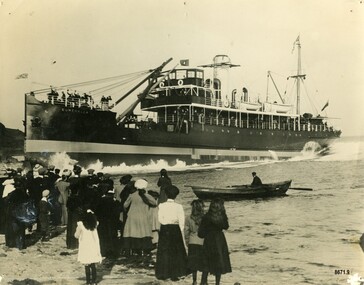
... Road...Portland...Port Fairy...Eumeralla...S. S. Eumeralla...Eumerella...Steamer Eumeralla...John McIlwraith and Company...Belfast and Koroit Steam Navigation Company...Howard Smith Ltd...Portarlington...Geelong...Melbourne...Mel Lee No. 2...Mow Lee No. 2...Tanghai...steamship...steamer...Fred Trewartha...Frederick John Fox...Road Portland Port Fairy Eumeralla S. S. Eumeralla Eumerella Steamer Eumeralla John McIlwraith and Company Belfast and Koroit Steam Navigation Company Howard Smith Ltd Portarlington Geelong Melbourne Mel Lee No. 2 Mow Lee No. 2 Tanghai steamship steamer Fred Trewartha Frederick John Fox Trewartha Name of donor, address and telephone number "S. ...This photograph was one of ten photographs donated to Flagstaff Hill Maritime Museum and Village by Fred Trewartha. Frederick John Fox Trewartha (Fred) was a well-known Warrnambool businessman. He was born in Beeac near Geelong in 1920 and came to Warrnambool with his family as a very young child. He was apprenticed to his father John, as a saddler and later opened his own shop on Raglan Parade. He then moved into working with tarpaulins and canvases for the trucking industry. Fred was keenly interested in photography (and was a member of the Warrnambool Cine Club), yachting and boat building. He kept his yacht moored at Port Fairy for many years and participated in sailing events locally and interstate. He also built boats with his sons. He had the opportunity to meet many older sailors and it's thought this photo (and others in the set) may have been given to him by one of these men. Fred Trewartha died in 2016 in Warrnambool. The Eumeralla (sometimes spelt Eumerella) was built in 1908 in Scotland by Messrs. Scott of Kinghorn on the Firth of Forth. It was a steel screw steamer and had been designed to meet the growing demand for a thoroughly up to date passenger and cargo steamer for the Melbourne to Portland service for John McIlwraith and Company in partnership with the Belfast, Koroit Steam Navigation Company and Howard Smith Company Ltd. This photograph appeared in the Leader (Melbourne) on Saturday 28th November 1908 with the headline "Launching the Eumeralla" and shows the ship being launched on October 10th, 1908, in Scotland. It was described as "Length, 190 feet; breadth, 30 feet; depth 15 feet". It went on to say it had a speed guaranteed at 11 knots and was expected in Melbourne by the following January. It could accommodate sixty saloon passengers and thirty in steerage and had electric light fitted throughout. While on the Melbourne to Portland service the Eumeralla had several mishaps. In 1909 it crashed into the breakwater at Portarlington, splintering the woodwork and leaving a gap of about 12 feet. On Saturday 9th August 1913, as it was leaving Warrnambool, it encountered heavy seas and a passenger (Frederick Mahoney) sustained fatal injuries after hitting his head on the bulwark - and the second mate was found dead after the water poured off the deck. Several other passengers were also injured. Between 1912 and 1913 it was used to carry passengers between Brisbane, Maryborough and Rockhampton before being sent back to Melbourne for an overhaul. In 1915 it was selected for the Winter service to run daily trips between Melbourne and Geelong. In 1925 it nearly sank in the Yarra (at Queens Wharf) when it developed a list and water entered the engine room. Firemen from the Eastern Hill Station, crew and wharf workers were able to stop it from sinking. Between 1928 and 1935 the Eumeralla was laid up in Hobson's Bay before being sold to a Chinese firm to be used on the short coastal run between Shanghai and Wen Chow. It was renamed "Mel Lee (Mow Lee) Number 2". It arrived on July 12th, 1935, at Tanghai (a small Chinese port to the south of Shanghai) with 400 local passengers. The population of the town turned out to welcome the new ship with a fireworks display which caused the passengers to rush across to the side of the ship nearest the scene. The steamer immediately listed to one side and sank.This photograph is significant because of its association with the coastal trader S.S. Eumeralla and its important contribution to trade along Victoria's West Coast in the early 20th century.Black and white photograph showing a crowd of people standing on a shore watching a steamer (the Eumeralla) being launched. The crew of the steamer are standing in the bow, waving at the crowd. A single oarsman is in a small rowboat nearby. On the back of the photograph, the name, address and telephone number of the donor is written in black, ballpoint pen. More writing, in cursive script (in blue ink) gives a brief description of the ship and the events depicted in the photograph.Name of donor, address and telephone number "S. S. Eumeralla / Built in Scotland / being launched/ in Scotland/ 1904"warrnambool, flagstaff hill maritime museum and village, great ocean road, portland, port fairy, eumeralla, s. s. eumeralla, eumerella, steamer eumeralla, john mcilwraith and company, belfast and koroit steam navigation company, howard smith ltd, portarlington, geelong, melbourne, mel lee no. 2, mow lee no. 2, tanghai, steamship, steamer, fred trewartha, frederick john fox trewartha -
 City of Moorabbin Historical Society (Operating the Box Cottage Museum)
Photograph, Newspaper article 1977, 'Reconstruction of Box Cottage’ 1984, 1977
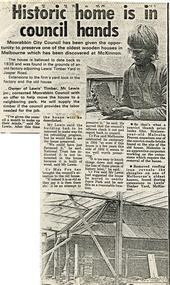
... As such, it is an invaluable resource for students and all kinds of visitors. brighton, moorabbin, highett, ormond, mckinnon, cottages, pioneers, colonial, dendy henry, box william, box elizabeth, reitman william, convicts lewis timber co. ltd., deam h, smith arthur, museums, box alonzo, moody & smith builders highett, the moorabbin standard newspaper, the leader newspaper pty ltd., fox max , lewis laurie, moorabbin city council, national trust, Written on the article ; 6/7/1977 Moorabbin Standard The Moorabbin Standard Newspaper article 6/7/1977 with 2 x black and white photographs of Box Cottage and apprentice Malcolm Proven holding a convict brick when the derelict building was discovered by Mr Laurie Lewis jnr. on the property of Lewis Timber Yard, Jasper Road, McKinnon Photograph, Newspaper article 1977, 'Reconstruction of Box Cottage’ 1984 The Moorabbin Standard Newspaper ...The original small, pioneer cottage was built in the late 1840s to early1850s, by an unknown pioneer. It was located on part of a 30 Acre allotment that was originally part of Dendy’s Special Survey granted in 1841. The doors and window sashes, (made of red deal joinery timber), as well as the brass locks and fittings, are from the original cottage, and were imported from England. The fire-place bricks are from the original cottage, and are sun-dried, (not kiln fired), and are hand-made. Convict marks can be seen on two bricks. There is a small display of external cladding shingles from the original pioneer cottage. These shingles were hand-split, and most likely made from locally collected timber The nails included in this display were used to fasten the shingles on the original cottage, and are also hand-made. The cottage was occupied by William Box and family from 1865 until 1914 when it was sold to William Reitman who resided there until 1950. The enamel nameplate, “Colonial”, on the wall of the cottage, was the name chosen for the original pioneer cottage by Mr William Reitman, when he purchased the property in around 1915, for 1200 Pounds approximately. In 1974 Mr Lewis, a timber specialist, found the dilapidated building on property he had recently purchased in Jasper Rd and suggested it be reconstructed and relocated. Moorabbin Council agreed and the cottage was rebuilt just about 250 metres from its original site. The cost of the rebuild was met by 'Victoria's 150th Committee, plus a small grant from the City of Moorabbin, and Mr Laurie Lewis donated much of the timber for the reconstruction. The re-constructed cottage plan has followed faithfully the original dimensions, and plan of the original pioneer cottage, and as many original items from that cottage’s long occupation have been incorporated. The photographs in Album 1 record the progress of the reconstruction from February 1984 to the First Public Open Day November 18th 1984The Moorabbin Standard was the local Newspaper for the City of Moorabbin during the 20th century until it was absorbed into the Leader Newspaper Group Pty Ltd. Mrs H. Deam and Mr Arthur Smith, CMHS members, kept this article to record the progress of the ‘Reconstruction’ from February 1984 to November 1984. This article 6/7/1977 notes that Mr Lewis jnr states "The National Trust is not interested in the house because it is built of wood". and that Cr Max Fox MCC states " It is too easy to knock things down and regret the loss of these pieces of history later on". Although 'Box Cottage' is a re-construction, it is an unique museum that, being located in the midst of a modern community in Ormond Victoria, can educate and demonstrate many aspects of the early settler’s way of life in Victoria. As such, it is an invaluable resource for students and all kinds of visitors. The Moorabbin Standard Newspaper article 6/7/1977 with 2 x black and white photographs of Box Cottage and apprentice Malcolm Proven holding a convict brick when the derelict building was discovered by Mr Laurie Lewis jnr. on the property of Lewis Timber Yard, Jasper Road, McKinnon Written on the article ; 6/7/1977 Moorabbin Standardbrighton, moorabbin, highett, ormond, mckinnon, cottages, pioneers, colonial, dendy henry, box william, box elizabeth, reitman william, convicts lewis timber co. ltd., deam h, smith arthur, museums, box alonzo, moody & smith builders highett, the moorabbin standard newspaper, the leader newspaper pty ltd., fox max , lewis laurie, moorabbin city council, national trust, -
 City of Moorabbin Historical Society (Operating the Box Cottage Museum)
Photograph, Newspaper article, 'Reconstruction Box Cottage' Flag Ceremony 1985, 1985
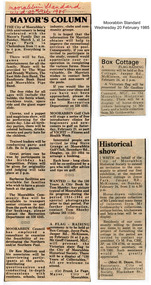
... As such, it is an invaluable resource for students and all kinds of visitors. brighton, moorabbin, highett, ormond, mckinnon, cottages, pioneers, colonial, dendy henry, box william, box elizabeth, reitman william, convicts lewis timber co. ltd., deam h, smith arthur, museums, box alonzo, moody & smith builders highett, the moorabbin standard newspaper, the leader newspaper pty ltd., fox max , lewis laurie, moorabbin city council, national trust, connard geoff mlc, lawson geoff mlc, le page frank mayor city of moorabbin australian flag victorian state flag goldworthy mr; Written on clippings a) , b) ; Moorabbin Standard / Wed. 20th Feb. 1985 3 x clippings from The Moorabbin Standard Newspaper, Wednesday 20th February 1985, reporting the Flag Raising Ceremony to be held on Sunday 24th February 1985 at Box Cottage Joyce Park, Jasper Road, McKinnon ( now Ormond). ...The original small, pioneer cottage was built in the late 1840s to early1850s, by an unknown pioneer. It was located on part of a 30 Acre allotment that was originally part of Dendy’s Special Survey granted in 1841. The doors and window sashes, (made of red deal joinery timber), as well as the brass locks and fittings, are from the original cottage, and were imported from England. The fire-place bricks are from the original cottage, and are sun-dried, (not kiln fired), and are hand-made. Convict marks can be seen on two bricks. There is a small display of external cladding shingles from the original pioneer cottage. These shingles were hand-split, and most likely made from locally collected timber The nails included in this display were used to fasten the shingles on the original cottage, and are also hand-made. The cottage was occupied by William Box and family from 1865 until 1914 when it was sold to William Reitman who resided there until 1950. The enamel nameplate, “Colonial”, on the wall of the cottage, was the name chosen for the original pioneer cottage by Mr William Reitman, when he purchased the property in around 1915, for 1200 Pounds approximately. In 1974 Mr Lewis, a timber specialist, found the dilapidated building on property he had recently purchased in Jasper Rd and suggested it be reconstructed and relocated. Moorabbin Council agreed and the cottage was rebuilt just about 250 metres from its original site. The cost of the rebuild was met by 'Victoria's 150th Committee, plus a small grant from the City of Moorabbin, and Mr Laurie Lewis donated much of the timber for the reconstruction. The re-constructed cottage plan has followed faithfully the original dimensions, and plan of the original pioneer cottage, and as many original items from that cottage’s long occupation have been incorporated. The photographs in Album 1 record the progress of the reconstruction from February 1984 to the First Public Open Day November 18th 1984 and this Flag Raising Ceremony February 24th 1985. See MAV 01017 for photographs of this event.These 3 Newspaper clippings refer to the Flag Raising Ceremony to be held on February 24th 1985 at the 'Reconstructed Box Cottage' in McKinnon. The Moorabbin Standard Newspaper was the local paper for the City of Moorabbin during the 20th Century until it was absorbed into The Leader Newspaper Group Ltd. Mrs H. Deam and Mr A. Smith, CMHS members, took kept these reports to record the progress of the ‘Reconstruction’ from February 1984 to November 1984 and this event in 1985. Although 'Box Cottage' is a re-construction, it is an unique museum that, being located in the midst of a modern community in Ormond Victoria, can educate and demonstrate many aspects of the early settler’s way of life in Victoria. As such, it is an invaluable resource for students and all kinds of visitors. 3 x clippings from The Moorabbin Standard Newspaper, Wednesday 20th February 1985, reporting the Flag Raising Ceremony to be held on Sunday 24th February 1985 at Box Cottage Joyce Park, Jasper Road, McKinnon ( now Ormond). a) Paragraph in Mayor's Column by Cr Frank Le Page, Mayor City of Moorabbin, CMHS member ; b) Letters to the Editor Section " Historical Show " by Mrs H Deam, CMHS Secretary ; c) 'What's On Section' paragraph ' Box Cottage '.Written on clippings a) , b) ; Moorabbin Standard / Wed. 20th Feb. 1985brighton, moorabbin, highett, ormond, mckinnon, cottages, pioneers, colonial, dendy henry, box william, box elizabeth, reitman william, convicts lewis timber co. ltd., deam h, smith arthur, museums, box alonzo, moody & smith builders highett, the moorabbin standard newspaper, the leader newspaper pty ltd., fox max , lewis laurie, moorabbin city council, national trust, connard geoff mlc, lawson geoff mlc,, le page frank mayor city of moorabbin, australian flag, victorian state flag, goldworthy mr; -
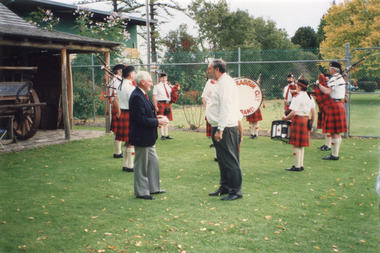 City of Moorabbin Historical Society (Operating the Box Cottage Museum)
Photograph, Colour ' Reconstruction Box Cottage' Moorabbin Pipe Band 1992, 1992
... brighton, moorabbin, highett, ormond, mckinnon, cottages, pioneers, colonial, dendy henry, box william, box elizabeth, reitman william, convicts lewis timber co. ltd., deam h, smith arthur, museums, box alonzo, moody & smith builders highett, the moorabbin standard newspaper, the leader newspaper pty ltd., fox max cr. , lewis laurie, moorabbin city council, national trust, connard geoff mlc, lawson geoff mlc, flavell robert cr. moorabbin city council, joyce park, jasper road, moorabbin pipe band,...As such, it is an invaluable resource for students and all kinds of visitors. brighton, moorabbin, highett, ormond, mckinnon, cottages, pioneers, colonial, dendy henry, box william, box elizabeth, reitman william, convicts lewis timber co. ltd., deam h, smith arthur, museums, box alonzo, moody & smith builders highett, the moorabbin standard newspaper, the leader newspaper pty ltd., fox max cr. , lewis laurie, moorabbin city council, national trust, connard geoff mlc, lawson geoff mlc, flavell robert cr. moorabbin city council, joyce park, jasper road, moorabbin pipe band, written on back ; a) Moorabbin Pipe Band / Mr Reid & Cr. ...The original small, pioneer cottage was built in the late 1840s to early1850s, by an unknown pioneer. It was located on part of a 30 Acre allotment that was originally part of Dendy’s Special Survey granted in 1841. The doors and window sashes, (made of red deal joinery timber), as well as the brass locks and fittings, are from the original cottage, and were imported from England. The fire-place bricks are from the original cottage, and are sun-dried, (not kiln fired), and are hand-made. Convict marks can be seen on two bricks. There is a small display of external cladding shingles from the original pioneer cottage. These shingles were hand-split, and most likely made from locally collected timber The nails included in this display were used to fasten the shingles on the original cottage, and are also hand-made. The cottage was occupied by William Box and family from 1865 until 1914 when it was sold to William Reitman who resided there until 1950. The enamel nameplate, “Colonial”, on the wall of the cottage, was the name chosen for the original pioneer cottage by Mr William Reitman, when he purchased the property in around 1915, for 1200 Pounds approximately. In 1974 Mr Lewis, a timber specialist, found the dilapidated building on property he had recently purchased in Jasper Rd and suggested it be reconstructed and relocated. Moorabbin Council agreed and the cottage was rebuilt just about 250 metres from its original site. The cost of the rebuild was met by 'Victoria's 150th Committee, plus a small grant from the City of Moorabbin, and Mr Laurie Lewis donated much of the timber for the reconstruction. The re-constructed cottage plan has followed faithfully the original dimensions, and plan of the original pioneer cottage, and as many original items from that cottage’s long occupation have been incorporated. The photographs in Album 1 record the progress of the reconstruction from February 1984 to the First Public Open Day November 18th 1984 and this event in 1992These 3 photographs show the 'Box Cottage' in 1992 after the 'Reconstruction' . The Moorabbin Pipe Band is shown performing at an Open Day with Cr. Flavell, Moorabbin City Council and Mr Reid CMHS. Mrs H. Deam and Mr A. Smith, CMHS members, took these photographs to record the progress of the ‘Reconstruction’ from February 1984 to November 1984 and this event in 1992 Although 'Box Cottage' is a re-construction, it is an unique museum that, being located in the midst of a modern community in Ormond Victoria, can educate and demonstrate many aspects of the early settler’s way of life in Victoria. As such, it is an invaluable resource for students and all kinds of visitors. 2 x colour photographs of The Moorabbin Pipe Band performing at an Open Day in 1992, with Cr. Flavell, Moorabbin City Council and Mr Reid CMHS , at the 'Reconstructed Box Cottage' in Joyce Park. Ormond 1 x colour photograph of the 'Reconstructed Box Cottage ' c 1992written on back ; a) Moorabbin Pipe Band / Mr Reid & Cr. Flavell / 1992 ; b) Moorabbin Pipe Band 1992 ; brighton, moorabbin, highett, ormond, mckinnon, cottages, pioneers, colonial, dendy henry, box william, box elizabeth, reitman william, convicts lewis timber co. ltd., deam h, smith arthur, museums, box alonzo, moody & smith builders highett, the moorabbin standard newspaper, the leader newspaper pty ltd., fox max cr. , lewis laurie, moorabbin city council, national trust, connard geoff mlc, lawson geoff mlc, flavell robert cr. moorabbin city council, joyce park, jasper road, moorabbin pipe band, -
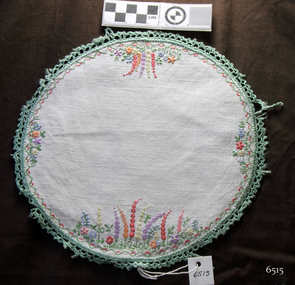 Flagstaff Hill Maritime Museum and Village
Textile - Doily, c. 1910
... Flagstaff Hill Warrnambool Flagstaff Hill Maritime Museum and Village Great Ocean Road Chamberlain family Dale family Lees Family Betty Stone Warrnambool Pioneer Warrnambool genealogy Wangoom Chamberlain Dale Lees collection glory box doily embroidery needlework crochet handmade craft manchester linen haberdashery Doily, round white cotton with embroidered fox gloves and other flowers of orange, red, yellow, purple and blue flowers with greenery and green crocheted edging. ...This doily is typical of items of household linen in popular use in the 19th and early-to-mid 20th centuries. It was a tradition for brides to have a 'glory box' containing linen and embroidered and crocheted articles to take to their new home. In the Words of donor, Betty Stone, … “These crocheted and embroidered articles cover a period of three generations- ie. Sarah (nee Chamberlain) Lees, Ann (nee Lees) Dale, and Daisy Elvena (nee Dale) Welsh. All three were accomplished needlewomen; also, both Sarah Lees (born 1844) and her daughter, Ann (b 1865) crocheted a wide variety of articles for use in their homes. A few examples of these items have survived the years.” (NOTE: For additional information please refer to my book Pioneer and Places- A History of Three Warrnambool Pioneering Families ie. Chamberlain, Dale and Lees families)This item is associated with the Warrnambool pioneer families of Chamberlain, Dale and Lees. These families are listed in the Pioneers' Register for Warrnambool Township and Shire, 1835-1900, published by A.I.G.S. Warrnambool Branch. The item is a fine example of early 20th-century needlework. Doily, round white cotton with embroidered fox gloves and other flowers of orange, red, yellow, purple and blue flowers with greenery and green crocheted edging. From the Chamberlain Dale Lees Collectionflagstaff hill, warrnambool, flagstaff hill maritime museum and village, great ocean road, chamberlain family, dale family, lees family, betty stone, warrnambool pioneer, warrnambool genealogy, wangoom, chamberlain dale lees collection, glory box, doily, embroidery, needlework, crochet, handmade, craft, manchester, linen, haberdashery -
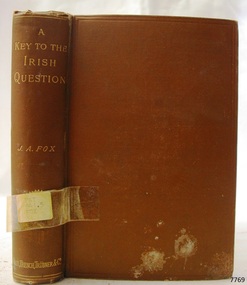 Flagstaff Hill Maritime Museum and Village
Book, A Key to The Irish Question
... Road...A Key to The Irish Question...J A Fox...Warrnambool Shipwrecked-coast Flagstaff-Hill Flagstaff-Hill-Maritime-Museum Maritime-Museum Shipwreck-coast Flagstaff-Hill-Maritime-Village Shipwrecked-artefact Book Pattison Collection Warrnambool Library Warrnambool Mechanics’ Institute Ralph Eric Pattison Corangamite Regional Library Service Warrnambool City Librarian Mechanics’ Institute Library Victorian Library Board Warrnambool books and records Warrnambool Children’s Library Great Ocean Road A Key to The Irish Question J A Fox Label on spine cover with typed text PAT 941.5 FOX Pastedown front endpaper has sticker from Warrnambool Mechanics Institute and Free Library covered by a sticker from Corangamite Regional Library Service A Key to The Irish Question. ...This item is from the ‘Pattison Collection’, a collection of books and records that was originally owned by the Warrnambool Mechanics’ Institute, which was founded in Warrnambool in 1853. By 1886 the Warrnambool Mechanics’ Institute (WMI) had grown to have a Library, Museum and Fine Arts Gallery, with a collection of “… choice productions of art, and valuable specimens in almost every branch and many wonderful national curiosities are now to be seen there, including historic relics of the town and district.” It later included a School of Design. Although it was very well patronised, the lack of financial support led the WMI in 1911 to ask the City Council to take it over. In 1935 Ralph Pattison was appointed as City Librarian to establish and organise the Warrnambool Library as it was then called. When the WMI building was pulled down in 1963 a new civic building was erected on the site and the new Warrnambool Library, on behalf of the City Council, took over all the holdings of the WMI. At this time some of the items were separated and identified as the ‘Pattison Collection’, named after Ralph Pattison. Eventually the components of the WMI were distributed from the Warrnambool Library to various places, including the Art Gallery, Historical Society and Flagstaff Hill. Later some were even distributed to other regional branches of Corangamite Regional Library and passed to and fro. It is difficult now to trace just where all of the items have ended up. The books at Flagstaff Hill Maritime Village generally display stamps and markings from Pattison as well as a variety of other institutions including the Mechanics’ Institute itself. RALPH ERIC PATTISON Ralph Eric Pattison was born in Rockhampton, Queensland, in 1891. He married Maude Swan from Warrnambool in 1920 and they set up home in Warrnambool. In 1935 Pattison accepted a position as City Librarian for the Warrnambool City Council. His huge challenge was to make a functional library within two rooms of the Mechanics’ Institute. He tirelessly cleaned, cleared and sorted a disarrayed collection of old books, jars of preserved specimens and other items reserved for exhibition in the city’s museum. He developed and updated the library with a wide variety of books for all tastes, including reference books for students; a difficult task to fulfil during the years following the Depression. He converted all of the lower area of the building into a library, reference room and reading room for members and the public. The books were sorted and stored using a cataloguing and card index system that he had developed himself. He also prepared the upper floor of the building and established the Art Gallery and later the Museum, a place to exhibit the many old relics that had been stored for years for this purpose. One of the treasures he found was a beautiful ancient clock, which he repaired, restored and enjoyed using in his office during the years of his service there. Ralph Pattison was described as “a meticulous gentleman whose punctuality, floorless courtesy and distinctive neat dress were hallmarks of his character, and ‘his’ clock controlled his daily routine, and his opening and closing of the library’s large heavy doors to the minute.” Pattison took leave during 1942 to 1945 to serve in the Royal Australian Navy, Volunteer Reserve as Lieutenant. A few years later he converted one of the Museum’s rooms into a Children’s Library, stocking it with suitable books for the younger generation. This was an instant success. In the 1950’s he had the honour of being appointed to the Victorian Library Board and received more inspiration from the monthly conferences in Melbourne. He was sadly retired in 1959 after over 23 years of service, due to the fact that he had gone over the working age of council officers. However he continued to take a very keen interest in the continual development of the Library until his death in 1969. The Pattison Collection, along with other items at Flagstaff Hill Maritime Village, was originally part of the Warrnambool Mechanics' Institute’s collection. The Warrnambool Mechanics’ Institute Collection is primarily significant in its totality, rather than for the individual objects it contains. Its contents are highly representative of the development of Mechanics' Institute libraries across Australia, particularly Victoria. A diversity of publications and themes has been amassed, and these provide clues to our understanding of the nature of and changes in the reading habits of Victorians from the 1850s to the middle of the 20th century. The collection also highlights the Warrnambool community’s commitment to the Mechanics’ Institute, reading, literacy and learning in the regions, and proves that access to knowledge was not impeded by distance. These items help to provide a more complete picture of our community’s ideals and aspirations. The Warrnambool Mechanics Institute book collection has historical and social significance for its strong association with the Mechanics Institute movement and the important role it played in the intellectual, cultural and social development of people throughout the latter part of the nineteenth century and the early twentieth century. The collection of books is a rare example of an early lending library and its significance is enhanced by the survival of an original collection of many volumes. The Warrnambool Mechanics' Institute’s publication collection is of both local and state significance. A Key to The Irish Question. Mainly complied from the Speeches and Writings of Eminent British Statesmen and Publicists, past and present. Author: J A Fox Publisher: Kegan Paul Trench Trubner & Co Date: 1890Label on spine cover with typed text PAT 941.5 FOX Pastedown front endpaper has sticker from Warrnambool Mechanics Institute and Free Library covered by a sticker from Corangamite Regional Library Service warrnambool, shipwrecked-coast, flagstaff-hill, flagstaff-hill-maritime-museum, maritime-museum, shipwreck-coast, flagstaff-hill-maritime-village, shipwrecked-artefact, book, pattison collection, warrnambool library, warrnambool mechanics’ institute, ralph eric pattison, corangamite regional library service, warrnambool city librarian, mechanics’ institute library, victorian library board, warrnambool books and records, warrnambool children’s library, great ocean road, a key to the irish question, j a fox -
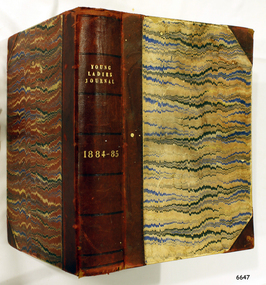 Flagstaff Hill Maritime Museum and Village
Journal - Women's Journal, Curtis Publication Company, Young Ladies Journal 1884 - 1885, ca. 1884
... Road...Shipwreck Coast...Young Ladies Journal 1884 - 1885...Young Ladies Journal...1884-1885...ladies journal...women's journal...fashion...fancy work...family reading...illustrated magazine...Purvis...C A Purvis...Edith Fox...Fox of Box Hill had an interest in land in Gheringhap. Gheringhap is a town on the Midland Highway, Victoria, 15 km northwest of Geelong, and 6.7 km southeast of Bannockburn. This is one of two journals of ladies fashion, fancy work and stories that reflect the interests of women the late 1800s. They are a useful source of historical information and include advertising and thought provoking articles . Flagstaff Hill Flagstaff Hill Maritime Museum and Village Warrnambool Maritime Museum Maritime Village Great Ocean Road ...This is one of two books donated together and believed to have belonged to the Purvis family. The books were rescued from recycling. It has the name of C A. Purvis on the front endpaper. The other book from the same donor has the inscription "C. Purvis". The inscription on the back endpaper of this book is of interest, 'Edith Fox, Gheringhap, 1879' as it is earlier than the earliest journal in the book. Perhaps it is the birth date of Edith. It is also interesting that an notice was printed in the Geelong Advertiser in 1922 stating that Edith Susan Fox of Box Hill had an interest in land in Gheringhap. Gheringhap is a town on the Midland Highway, Victoria, 15 km northwest of Geelong, and 6.7 km southeast of Bannockburn. This is one of two journals of ladies fashion, fancy work and stories that reflect the interests of women the late 1800s. They are a useful source of historical information and include advertising and thought provoking articles .Young Ladies Journal 1884 - 1885; a collection of journals in a burgundy leather-bound spine and hardcovers with a black, blue, burgundy and cram pattern. The Journal contains illustrations and articles of a wide variety including fashion, fancy work and family reading. Inscriptions are on the spine and the front and back end pages. Inserted between pages is a loose Christmas Magazine from The Sun, dated 24th Dec 1954. Published by the Curtis Publication Company, Philadelphia, Pennsylvania, Inside the front cover on the first page, handwritten in pen; "C.A. Purvis 1955" Inscription, script in black ink; "Edith Fox / Gheringhap / 1879"flagstaff hill, flagstaff hill maritime museum and village, warrnambool, maritime museum, maritime village, great ocean road, shipwreck coast, young ladies journal 1884 - 1885, young ladies journal, 1884-1885, ladies journal, women's journal, fashion, fancy work, family reading, illustrated magazine, purvis, c a purvis, edith fox, gheringhap, 1879, edith fox gheringhap 1879 -
 Flagstaff Hill Maritime Museum and Village
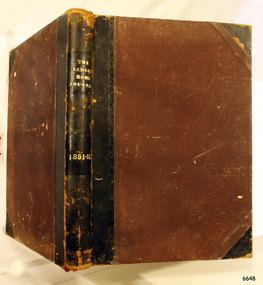
Journal - Women's Journal, Curtis Publication Company, The Ladies' Home Journal 1891-95, ca. 1891
... Road...Shipwreck Coast...Young Ladies Journal...ladies journal...women's journal...Edith Fox...Fox of Box Hill had an interest in land in Gheringhap. Gheringhap is a town on the Midland Highway, Victoria, 15 km northwest of Geelong, and 6.7 km southeast of Bannockburn. This is one of two journals of ladies' fashion, fancy work and stories that reflect the interests of the late 1800s. They are a useful source of historical information and the articles available for sale. Flagstaff Hill Flagstaff Hill Maritime Museum and Village Warrnambool Maritime Museum Maritime Village Great Ocean Road ...This is one of two books donated together and believed to have belonged to the Purvis family. The books were rescued from recycling. It has the name of C Purvis on the front endpaper. The other book from the same donor has the inscription "C. A. Purvis". The inscription on the back endpaper of the other book belonging to C. Purvis is of interest, '"Edith Fox, Gheringhap, 1879"' as it is earlier than the earliest journal in that book. Perhaps it is the birth date of Edith. It is also interesting that an notice was printed in the Geelong Advertiser in 1922 stating that Edith Susan Fox of Box Hill had an interest in land in Gheringhap. Gheringhap is a town on the Midland Highway, Victoria, 15 km northwest of Geelong, and 6.7 km southeast of Bannockburn.This is one of two journals of ladies' fashion, fancy work and stories that reflect the interests of the late 1800s. They are a useful source of historical information and the articles available for sale.The Ladies' Home Journal 1891- 95; a collection of women's journals in a burgundy hardcover book with a leather-bound spine and leather-reinforced corners. The journals are illustrated magazines and include fashion, fancy work and family reading, Published in Philadelphia, America by the Curtis Publishing Company. The binder was made by G Mercer, Geelong. A printed blue label is on the inside front cover. An inscription is on the corner of the front fly page.On spine: "THE LADIES' HOME JOURNAL" Within two concentric oval outlines "G. MERCER / GEELONG" and it nthe centre "BINDER" Handwritten in black pen and crossed out "E. F." Handwritten in blue pen "C. Purvis"flagstaff hill, flagstaff hill maritime museum and village, warrnambool, maritime museum, maritime village, great ocean road, shipwreck coast, young ladies journal, ladies journal, women's journal, edith fox, gheringhap, fashion, fancy work, family reading, illustrated magazine, curtis publishing company, philadelphia, young ladies journal 1891-95, 1891-1895, purvis, g. mercer of geelong, stationery -
 Eltham District Historical Society Inc
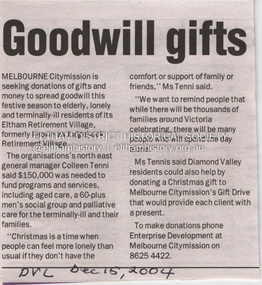
Document - Property Binder, 1120 Main Road, Eltham
... Road...Eltham...Melbourne Citymission...Eltham Retirement Village...Colleen Tenni...Eltham Villa Aged Care...Joanne Tomada....Mary Maleki...Tania Fox...Newspaper article: A home away from home, Diamond Valley Leader, 21 July 2010, Eltham Villa Aged Care, manager Joanne Tomada, co-ordinator Tania Fox. Main Road Eltham Melbourne Citymission Eltham Retirement Village Colleen Tenni Eltham Villa Aged Care Joanne Tomada. ...Newspaper article: Goodwill gifts, Diamond Valley Leader, 15 December 2004, Melbourne City Mission seeking donations for residents of Eltham Retirement Village, manager Colleen Tenni. Newspaper advertisement: Diamond Valley Leader, 25 June 2005, Eltham Villa Aged Care. Newspaper advertisement: Diamond Valley Leader 15 October 2008, Eltham Villa Aged Care, manager Joanne Tomada. Newspaper advertisement: Diamond Valley Leader, 11 November 2009, Eltham Villa. Newspaper article: A home away from home, Diamond Valley Leader, 14 March 2007, Details of Eltham Villa, manager Mary Maleki. Newspaper article: A home away from home, Diamond Valley Leader, 21 July 2010, Eltham Villa Aged Care, manager Joanne Tomada, co-ordinator Tania Fox.main road, eltham, melbourne citymission, eltham retirement village, colleen tenni, eltham villa aged care, joanne tomada., mary maleki, tania fox, judge book retirement village -
 Eltham District Historical Society Inc
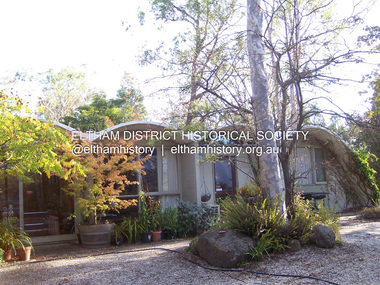
Photograph - Digital Photograph, Marguerite Marshall, Rice House, 69 Ryans Road, Eltham, 27 March 2007
... Fox: Love this house! Wish I'd known it was up for sale. Looking forward to seeing progress if possible...If I recall correctly, the concrete swag over the walk-way collapsed at some stage. Marcus Skipper: In our little green Landrover, my dad and Alister Knox drove up dirt roads...Fox: Love this house! Wish I'd known it was up for sale. Looking forward to seeing progress if possible...If I recall correctly, the concrete swag over the walk-way collapsed at some stage. Marcus Skipper: In our little green Landrover, my dad and Alister Knox drove up dirt roads ...Built in 1953, the Rice House was leading Melbourne architect Kevin Borland's first commssion and was one of two houses of its kind. The design of the shell-like structure was inspired by the Arch of Ctesiphon, built in the second century south of Baghdad. Cement with a waterproofing agent was applied in layers to a form of regularly spaced timber arches covered in hessian. This ctesiphon system was developed in the United Kingdom by engineer J.H. de Waller in 1947. Commissioned in 1951 by Harrie and Lorna Rice, after Harrie, then an art student, met Borland at The Age Small Homes Service. Borland suggested they buy land in Eltham because at that time it was the only council in Melbourne that would grant a permit for such an innovative house. Covered under Victorian Heritage. Inspired by an ancient arch in Iraq, a house stands on top of a hill in a private position, off Ryans Road, Eltham. One of only two houses of its kind, it was leading Melbourne architect Kevin Borland’s first commissioned house, which he built in 1953. The shell-like structure, partially screened by giant trees and cacti, was inspired by the Arch of Ctesiphon south of Baghdad, built in the second century.1 Cement with a waterproofing agent was applied in layers to a form of regularly spaced timber arches tightly covered by hessian. This ctesiphon system was developed in the United Kingdom by engineer J H de Waller in 1947. This house was the first of three such structures built in Victoria, of which only one other remains, although substantially altered.2 It is the Wood House and supermarket, at the corner of Cleveland Road and High Street Road, Ashwood, designed by Robin Boyd in 1952. The Rice House demonstrates Kevin Borland’s innovative and experimental work. It is an outstanding example of the post-war period of experimentation in domestic architecture in Melbourne – by Robin Boyd, Kevin Borland and others – for The Age Small Homes Service from 1947 to 1953. This was partly an expression of late-Modernism and also necessitated by the post-war shortage of building materials. In Eltham, the post-war shortage of building materials largely resulted in mud-brick houses. Examples of Borland’s public work include contributions to the Olympic Swimming Pool in Melbourne and the Preshil Junior School in Kew. After more than 50 years of living in the house, Harrie and Lorna Rice still love it. Facing north-east with large windows overlooking the garden and two courtyards, it is well lit and benefits from a through breeze. The couple commissioned the extraordinary house after Harrie, then an art student, met Borland in 1951 at The Age Small Homes Service. Harrie was so impressed by the recently graduated Borland’s enthusiasm, that he asked him to design them an interesting house for a low budget. The unusual design presented several hurdles for the young couple before they could construct it. Borland suggested that they buy land in Eltham, because at that time it had the only council in Melbourne that would allow such an innovative house. Another hurdle was to gain finance for this remarkable house. The State Savings Bank Manager refused finance on the grounds that it was ‘unliveable’ and a ‘disgrace’. Fortunately, through a family connection, the couple borrowed money from the National Bank. But they discovered years later, that the bank’s evaluation stated the two ‘concrete sheds’ were of no value! The house built in off-white concrete, consists of two sections. The main house has four arches supported by brick and concrete walls that create a series of inter-connected rooms. Inside, the ceiling follows the roofline. Originally this section was only ten square metres, because of building restrictions at the time. But in 1973 Borland added two rooms and a carport. The second structure of two arches was originally a garage and a studio for art teacher Harrie Rice. To accommodate the growing family, in the mid 1950s, Borland converted the second structure into two children’s bedrooms, a kitchenette, a bathroom and a living room. The two structures were originally linked by a covered way of suspended draped-concrete, but this collapsed in the 1980s. The design has several maintenance problems. Cracks developed where two halves of the shells were joined. Then the material sprayed over the cracks became brittle, causing leaks. Fortunately Harrie found another material he could use. The valleys between the arches collect water, requiring annual painting with a waterproof material to prevent leaking. Lorna framed the house with native and exotic plants, which provide privacy and as a bonus, the garden attracted the rare Eltham Copper Butterfly. Published: Nillumbik Now and Then / Marguerite Marshall 2008; photographs Alan King with Marguerite Marshall.; p157 Comments about the Rice House on Lost Eltham page on Facebook June 2018 https://www.facebook.com/Lost-Eltham-1535993463348408/ Kate Borland: My dad designed this house. It is the Rice house and it is being renovated to its original glory as we speak.... Katherine Fox: I remember Harry and Lorna's, there was a secret room...! And the best loo with a view as I recall. Katherine Fox: Love this house! Wish I'd known it was up for sale. Looking forward to seeing progress if possible...If I recall correctly, the concrete swag over the walk-way collapsed at some stage. Marcus Skipper: In our little green Landrover, my dad and Alister Knox drove up dirt roads, a dirt track through the bush and finally to the ridge to check out this joint in about 1960. After the war at some time, they were all together at RMIT studying building design. Alister was the only one to graduate. A situation that resulted, my father would joke, in Alister having a career wherein his qualifications exceeded his talent. World Peace had broken out and all were hip to the ‘People’s’ century. Kevin went with the Modernist’s concrete, Alister went with the peasant’s mudbrick. “If this is the future,” my dad said,”I don’t like it.” And we drove back to medieval Montsalvat.This collection of almost 130 photos about places and people within the Shire of Nillumbik, an urban and rural municipality in Melbourne's north, contributes to an understanding of the history of the Shire. Published in 2008 immediately prior to the Black Saturday bushfires of February 7, 2009, it documents sites that were impacted, and in some cases destroyed by the fires. It includes photographs taken especially for the publication, creating a unique time capsule representing the Shire in the early 21st century. It remains the most recent comprehenesive publication devoted to the Shire's history connecting local residents to the past. nillumbik now and then (marshall-king) collection, eltham, rice house, ryans road, kevin borland -
 Kiewa Valley Historical Society
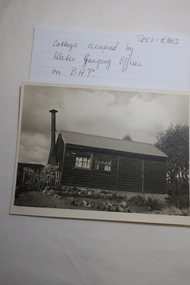
Photos - SECV Cottage and Flying Fox
... Cottage was occupied during the construction of the Kiewa Hydro Electric Scheme by the water gauging officer on the Bogong High Plains road. 2. Flying Fox was used prior to bridges being built across the Kiewa River...."Cottage occupied by Water Gauging Officer on Bogong High Plains Road." b & w, 2, "School girl (maybe Allie Coper) coming across the Kiewa River at Tawonga in a flying fox to go to the Tawonga School"...Cottage was occupied during the construction of the Kiewa Hydro Electric Scheme by the water gauging officer on the Bogong High Plains road. 2. Flying Fox was used prior to bridges being built across the Kiewa River. ...1. Cottage was occupied during the construction of the Kiewa Hydro Electric Scheme by the water gauging officer on the Bogong High Plains road. 2. Flying Fox was used prior to bridges being built across the Kiewa River.In the early days of the Kiewa Valley and during construction of the the KHES, the water gauging officer measured and recorded the flow, volume, and quality of water in the Kiewa River.b & w. 1. "Cottage occupied by Water Gauging Officer on Bogong High Plains Road." b & w, 2, "School girl (maybe Allie Coper) coming across the Kiewa River at Tawonga in a flying fox to go to the Tawonga School"Titles are on the back of both photos.water gauging officer, tawonga flying fox -
 Kiewa Valley Historical Society
Book - Reference Countryside, The Australian Countryside in Pictures, circa 1950s
... fox in its jaws. The book contains 240 pages, 300 illustrations in gravure and 25 pictures in full colour. The inside fly leaf is a colour photograph of a rural scene with dirt road running in the centre and to the left a farm house and a five bay open storage barn...fox in its jaws. The book contains 240 pages, 300 illustrations in gravure and 25 pictures in full colour. The inside fly leaf is a colour photograph of a rural scene with dirt road running in the centre and to the left a farm house and a five bay open storage barn The Australian Countryside in Pictures Book - Reference Countryside Publishers (The Herald & Weekly Times Ltd) ...This book is a "snapshot" in time (1950s) detailing life in Australia covering a time when a "man's word and handshake" were his moral and quasi legal bond, and the now relative defunct saying "smoko" (having a "time out" from work for a cigarette and tea or coffee). The book spans an era where the male was still the "head" of the family even though for a majority of families the women took on the many "male only" roles during the World War II period. This shift in the leadership of the family hierarchy is mentioned, so ever slightly, (not to offend the still predominant macho male image) in both rural and city environments. The effects of the war, and later the push for women's emancipation and equality in both family, social, workplace and political areas of life, since this book was published, is now finally resolved. However there are still some sections of the recent migrate population where this male dominance is causing a few problems.The significance of this book is not only because it was donated by Mrs C. Roper ( from the Roper Family, a pioneer Kiewa Valley and surrounding Region family - originally beef cattle graziers) but also a Kiewa Valley resident and family, experiencing the shift in the social and economical life of post World War II rural Australia. The strong heritage link to this region of many families still residing within its boundaries, is a clear affirmation of the bond that the Kiewa Valley and its Regions have upon family unity. This unity within the rural environment is something that is attracting more and more families from sometimes alienating city life.This printed coloured sketched, or painted paper sleeve of the book is freely wrapped over a dark red hard cover. Into the front of the cover is pressed a standing pose of a farmer with long sleeves rolled up over his elbows. Behind him and to the right are what appears to be three sacks of wheat and next to him is a merino sheep. To the left and down are two dogs one with a fox in its jaws. The book contains 240 pages, 300 illustrations in gravure and 25 pictures in full colour. The inside fly leaf is a colour photograph of a rural scene with dirt road running in the centre and to the left a farm house and a five bay open storage barnOn the tittle page is a signature "C Roper"country life, australian "outback", rural industries, life on the land, swag-man of the bush -
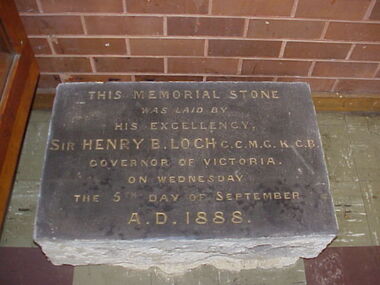 Port Melbourne Historical & Preservation Society
Ceremonial object - Foundation stone, Victorian Seamen's Institute, 1888
... Fox Hay building today). Was relocated to interior wall near the chapel doors when the new Mission building at corner of Beach Road and Swallow Street was built in 1937....Fox Hay building today). Was relocated to interior wall near the chapel doors when the new Mission building at corner of Beach Road and Swallow Street was built in 1937. ...During demolition of the 1937 Missions to Seamen building in October 1995, this stone was removed intact by developers Mirvac Victoria, and placed in the care of the PMH&PS. It is now located as part of the seawall around the car park in Beach St opposite Nott St. There is a photo of the item on the database, taken in the 1990s while the stone was stored at St Joseph's school in Stokes St..01- Cornerstone 1888, originally laid at the Victorian Seamen's Institute corner Nott and Beach Street (Fox Hay building today). Was relocated to interior wall near the chapel doors when the new Mission building at corner of Beach Road and Swallow Street was built in 1937.Engraved in gold lettering on a black background: This memorial stone was laid by His Excellenvy Sir Henry B Loch GGMGKCB, Governor of Victoria on Wednesday the 5th day of September AD 1888missions to seamen, henry b loch -
 Port Melbourne Historical & Preservation Society
Ceremonial object - Foundation stone, Victorian Seamen's Institute, 1930
... Fox Hay building today) during extensions in 1930. Was relocated to interior wall near the chapel doors when the new Mission building at corner of Beach Road and Swallow Street was built in 1937....Fox Hay building today) during extensions in 1930. Was relocated to interior wall near the chapel doors when the new Mission building at corner of Beach Road and Swallow Street was built in 1937. ...During demolition of the 1937 Missions to Seamen building in October 1995, this stone was removed intact by developers Mirvac Victoria, and placed in the care of the PMH&PS.Cornerstone originally laid at the Victorian Seamen's Institute corner Nott and Beach Street (Fox Hay building today) during extensions in 1930. Was relocated to interior wall near the chapel doors when the new Mission building at corner of Beach Road and Swallow Street was built in 1937.Engraved in gold lettering on a black background: To the glory of God and the welfare of seamen this stone was unveiled by the Most Rev. Frederick Waldeerave, Head B.D. Archbishop of Melbourne on the 23rd day of January 1930mission to seamen, frederick waldegrave -
Port Melbourne Historical & Preservation Society
Photograph - Relocated cornerstone, Seamen's Institute, Port Melbourne, 1930
... Fox Hay building today) during extensions in 1930.. Was relocated to interior wall near the chapel doors when the new Mission building at corner of Beach Road and Swallow Street was built in 1937....Fox Hay building today) during extensions in 1930.. Was relocated to interior wall near the chapel doors when the new Mission building at corner of Beach Road and Swallow Street was built in 1937. ...During demolition of the 1937 Missions to Seamen building in October 1995, this stone was removed intact by developers Mirvac Victoria, and placed in the care of the PMH&PS.Photograph taken by member Bob Gooding in September 2015 of the cornerstone Cornerstone originally laid at the Victorian Seamen's Institute corner Nott and Beach Street (Fox Hay building today) during extensions in 1930.. Was relocated to interior wall near the chapel doors when the new Mission building at corner of Beach Road and Swallow Street was built in 1937.Engraved in gold lettering on a black background: To the glory of God and the welfare of seamen this stone was unveiled by the Most Rev. Frederick Waldeerave, Head B.D. Archbishop of Melbourne on the 23rd day of January 1930mission to seamen, frederick waldegrave -
 Bendigo Historical Society Inc.
Document - CHURCHES OF BENDIGO COLLECTION: CHRIST CHURCH 100 YEARS
... Christ Church 100 years (cnr Strickland road, Barr and Fox Streets) Special centenary service Sunday 21 September 1997 at 10-30 am....Christ Church 100 years (cnr Strickland road, Barr and Fox Streets) Special centenary service Sunday 21 September 1997 at 10-30 am. ...Eleven pages document titled: Anglican Church of Australia Parish-South east Bendigo. Christ Church 100 years (cnr Strickland road, Barr and Fox Streets) Special centenary service Sunday 21 September 1997 at 10-30 am.church, church of christ, centenary -
 Victoria Police Museum
Photograph, Criminal Photograph James Duncan
... Duncan, along with James Morgan, John James, Stephen Fox and John Roberts , robbed the ship of over cash and gold nuggets at gun point while she was anchored at Hobsons Bay, off Melbourne. One of the victims of the robbery identified Duncan to police by his voice. Duncan was sentenced by the notorious Justice Redmond Barry to 15 years hard labour on the roads...Duncan, along with James Morgan, John James, Stephen Fox and John Roberts , robbed the ship of over cash and gold nuggets at gun point while she was anchored at Hobsons Bay, off Melbourne. One of the victims of the robbery identified Duncan to police by his voice. Duncan was sentenced by the notorious Justice Redmond Barry to 15 years hard labour on the roads ...James Duncan was tried for his involvement in the Nelson Robbery in 1852. The robbery of the barque 'Nelson' is one of the most notorious crimes of the 1850s. Duncan, along with James Morgan, John James, Stephen Fox and John Roberts , robbed the ship of over cash and gold nuggets at gun point while she was anchored at Hobsons Bay, off Melbourne. One of the victims of the robbery identified Duncan to police by his voice. Duncan was sentenced by the notorious Justice Redmond Barry to 15 years hard labour on the roads. Black and white photograph mounted on card.duncan, morgan, james, fox, roberts, nelson, nelson robbery, gold rush, redmond barry -
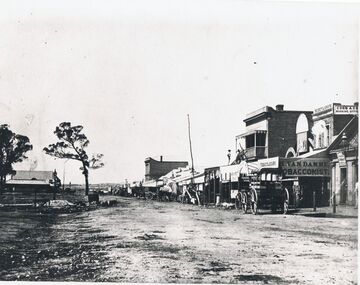 Bendigo Historical Society Inc.
Photograph - PALL MALL: BENDIGO, 1857
... PLACE Roads pall mall Black and white photograph - shops, wagons, ' Morey and Snow' saddlers ' Cobb & Co., Booking Office. ' K. Van Damme' tobacconist - tobacco & cigars. Coaches, ' Cobb * Co.,' copy of photograph ' Pall Mall looking N.E. C 1857 ( Fox ...Black and white photograph - shops, wagons, ' Morey and Snow' saddlers ' Cobb & Co., Booking Office. ' K. Van Damme' tobacconist - tobacco & cigars. Coaches, ' Cobb * Co.,' copy of photograph ' Pall Mall looking N.E. C 1857 ( Fox photo? ) J. Lerk 11.02 2000. On left of photo indistance, St.Killians, (bluestone church).place, roads, pall mall -
Glen Eira Historical Society
Newspaper - CAULFIELD ENVIRONMENT PROTECTION SOCIETY
... Road... Caulfield South... Pollution... Conservation... Recycling... Waste disposal... Living organisms... Pesticides... Environment... Flann Robert... Child Joan... Gwythr Alan... Pilley Erica... Flann Elizabeth... Bennett June... Lees Harry... Goldhar Jeffry... Hutchinson Colin... McNamara Beryl... Martin John... Davies Patricia... Composting... Conservation of Natural Resources... Alexander John C... Arden Councillor... Leschen Councillor... Fox...C.E.P.S News Caulfield Environment Protection Society Local government Caulfield Council Glenhuntly Glen Huntly Caulfield Glenhuntly Railway Station Hawthorn Road Glenhuntly Road Caulfield South Pollution Conservation Recycling Waste disposal Living organisms Pesticides Environment Flann Robert Child Joan Gwythr Alan Pilley Erica Flann Elizabeth Bennett June Lees Harry Goldhar Jeffry Hutchinson Colin McNamara Beryl Martin John Davies Patricia Composting Conservation of Natural Resources Alexander John C Arden Councillor Leschen Councillor Fox Max Community groups Parliamentary representatives Public Interest Research Group P.I.R.G. ...The file contains one item for this organisation. 1/Original copy of document titled C.E.P.S NEWS, no.4, June 1973. This newsletter covered subjects including banning the spraying of pesticides such as Dieldrin, waste disposal, recycling, compost making, and the beautification plans for Glenhuntly Railway Station.c.e.p.s news, caulfield environment protection society, local government, caulfield council, glenhuntly, glen huntly, caulfield, glenhuntly railway station, hawthorn road, glenhuntly road, caulfield south, pollution, conservation, recycling, waste disposal, living organisms, pesticides, environment, flann robert, child joan, gwythr alan, pilley erica, flann elizabeth, bennett june, lees harry, goldhar jeffry, hutchinson colin, mcnamara beryl, martin john, davies patricia, composting, conservation of natural resources, alexander john c, arden councillor, leschen councillor, fox max, community groups, parliamentary representatives, public interest research group, p.i.r.g., garbage, parr-smith geoff, caulfield historical society, filbert street -
Glen Eira Historical Society
Letter - HUNT, WILLIAM HOGARTH
... Road... Murrumbeena... Grocers... Callister Dave... Carnegie State School... Hay and corn store... James Street... Woodyard... Hillards chemist... Hughes Body works... Chemists... Davidson’s... Glenhuntly Printing... Hay and corn stores... Railway Gates... ANZ Bank... Fox...Personal memories Hunt William Hogarth Glenhuntly Grange Road Trams Plumber Stone Mary Ann Neerim Road Wanalta Road Schurme Mrs Private Hospital Hospitals Watson Grove Hunt Jessie Hunt Alfred Hunt Charles Smith Mr Fisher Mr Smith Mrs Jockeys Dore George ‘Willis’ Builders House names Mernda Roseberry Grove El Nido Neerim Road Glenhuntly Post Office Mrs Fielder’s sweetshop Mrs Beer’s sweet shop Paddocks Confectionery Fielder Fred Maroona Road Murrumbeena Grocers Callister Dave Carnegie State School Hay and corn store James Street Woodyard Hillards chemist Hughes Body works Chemists Davidson’s Glenhuntly Printing Hay and corn stores Railway Gates ANZ Bank Fox Mr Martin Jack Fox Mrs Clothing Stores Steam rollers Radio and TV Shop Beasley J Delicatessen/ham and beef shop Butchers Schurme’s Private Hospital Gellatley George Tailors Commonwealth Banks Watson Grove Banks Preston Peter E.J. & H. ...Two sets of this man's handwritten memories: 1/Five pages of handwritten personal memories, written by William Hogarth Hunt 13/07/1977. He outlines his family, their travels and settlement in 1908 at Glenhuntly: a detailed account of residents, shop owners, land sales and identities, Murray Ross, Mr Burr of Burr’s Gun Oil and Mr Zarman. Also details Glenhuntly Methodist Church, football, athletics, Glenhuntly Aerodrome and an extensive list of local residents and their stories. 2/Two pages of handwritten personal memories, written by William Hogarth Hunt 02/09/1977. A detailed account of residents, shop owners, identities, athletes, local policemen and their stories in the Glen Huntly area.personal memories, hunt william hogarth, glenhuntly, grange road, trams, plumber, stone mary ann, neerim road, wanalta road, schurme mrs, private hospital, hospitals, watson grove, hunt jessie, hunt alfred, hunt charles, smith mr, fisher mr, smith mrs, jockeys, dore george, ‘willis’, builders, house names, mernda, roseberry grove, el nido, neerim road, glenhuntly post office, mrs fielder’s sweetshop, mrs beer’s sweet shop, paddocks, confectionery, fielder fred, maroona road, murrumbeena, grocers, callister dave, carnegie state school, hay and corn store, james street, woodyard, hillards chemist, hughes body works, chemists, davidson’s, glenhuntly printing, hay and corn stores, railway gates, anz bank, fox mr, martin jack, fox mrs, clothing stores, steam rollers, radio and tv shop, beasley j, delicatessen/ham and beef shop, butchers, schurme’s private hospital, gellatley george, tailors, commonwealth banks, watson grove, banks, preston peter, e.j. & h. amos, hardware stores, estate agents, glenhuntly picture theatre, whittle mr, theatres, newsagency, cooper and cooke, station street, f.j. long and co, jennings a.v, timber yards, builders, ‘the estate’, hillcrest estate, grange road, marara road, rosedale avenue, hobart jack, mackie road, confectionery stores, ross murray, glenhuntly athletic club, godfrey evelyn, athletics clubs, railways, glenhuntly junior football club, elsternwick, princess park, carnegie oval, booran road, koornang park, ormond oval – ee. gunn reserve, glenhuntly oval, oakleigh road, victorian amateur turf club, koornang road, glenhuntly aerodrome, neville street, glenhuntly state school, rosslyn street, geary mr, lauriston tennis courts, bakers, carnegie r.s.l., east bentleigh, bowling clubs, tucker road, tennis clubs, centre road, murrumbeena road, larman mr, hollway street, nurseries, parker street, lyle marshall, burr mr, solicitors, builders, bones nursery, ‘burr’s gunoil’, glenhuntly methodist church, carnegie, smith alf, ezard family, clemens family, noy family, noy clarrie, dickie family, storey family, storey george, davis family, joss house, chinese community, wattle avenue, grange road, glenhuntly amateur football club, football clubs, glenhuntly athletic club, athletic clubs, glen huntly junior football club, carnegie oval, koornang park, glenhuntly oval, victorian amateur turf club, glenhuntly aerodome, glenhuntly state school, geary mr., bakers, east bentleigh, tucker road, centre road, larman mr, nurseries, lyle marshall, solicitors, bones nursery, carnegie, "the estate", royal avenue, mckay avenue, dumsday bertha miss, love family, gilmour family, waratah ave, sinclair mr, tuckpointers, bricks, donegan mr, plumbers, frazer mr, frazer and jenkinson printers, frazer arthur, ezard manufacturing, jewellers, private hospital, maroona road, o'carroll mr, beattie mr, horse trainer, morton tom, lord harry, estate agents, ormond, councillors, taylor mr, builders, gibson family, westley alf, o'carroll j (jack) d, glenhuntly athletics club, athletes, jack page's bakery and cake shop, nay clarrie, hunt william h., hunt alf, page jack, armstrong jack, manchester grove, morgan advertising, cusdin sid, farrier, glenhuntly cricket club, caulfield racecourse, neerim road, hoffman's plumbing, emma street, st. agnes school, st. agnes church hall, jenkin 'boss' mr, teachers, hawthorn miss, quinn miss, chitty charlie, chitty's timber, crystal palace picture theatre, theatres, marsh bill, hardware shops, watson arthur w, j.s. kidd and company, marshes hardware, kidd's hardware, bruce ivy, 'belgrave', house names, belgrave road, dandenong road, hunter 'pud', police officers, hunt jess, kangaroo road, murrumbeena, glen huntly -
Glen Eira Historical Society
Document - St Joseph's Catholic Church Elsternwick
... Road... Elsternwick... Robinson Harvard... Roberts Evan H... Mansfield Edward... Hart Morris Atkin... Ratebooks... Dawes Albert G... Fox...St Joseph's Presbytery Orrong Road Elsternwick Robinson Harvard Roberts Evan H Mansfield Edward Hart Morris Atkin Ratebooks Dawes Albert G Fox Philip M Document St Joseph's Catholic Church Elsternwick ...Handwritten carbon copy from Caulfield Shire Rates Books from 1887 to 1924 showing owners and tenants. It became St Joseph’s Presbytery, Orrong Road, Elsternwick from 1897.st joseph's presbytery, orrong road, elsternwick, robinson harvard, roberts evan h, mansfield edward, hart morris atkin, ratebooks, dawes albert g, fox philip m
