
Showing 295 items matching "frank small"
-
 Bendigo Historical Society Inc.
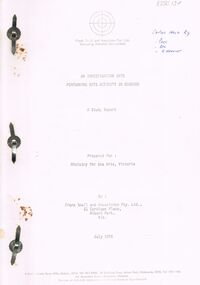
Document - MERLE HALL COLLECTION: AN INVESTIGATION INTO PERFORMING ARTS (FRANK SMALL AND ASSOC)
... MERLE HALL COLLECTION: AN INVESTIGATION INTO PERFORMING ARTS (FRANK SMALL AND ASSOC)......Frank small...An Investigation into Performing Arts Activity in Bendigo - A Study Report (Frank Small and Assoc) prepared for Ministry for the Arts, Victoria July 1976. ...Performing Arts Ministry foir the Arts Frank small Merle Hall collection An Investigation into Performing Arts Activity in Bendigo - A Study Report (Frank Small and Assoc) prepared for Ministry for the Arts, Victoria July 1976. ...An Investigation into Performing Arts Activity in Bendigo - A Study Report (Frank Small and Assoc) prepared for Ministry for the Arts, Victoria July 1976. Index includes Summary and Conclusions and the following 'Current Activity Profiles' - Bendigo Arts Council, other Bendigo-based groups, touring companies, notes on facilities, activity projections. The Appendix lists performing arts activities published in the 'Bendigo Advertiser' from July 75 - June 76. Handwritten annotations throughout.performing arts, ministry foir the arts, frank small, merle hall collection -
 Surrey Hills Historical Society Collection
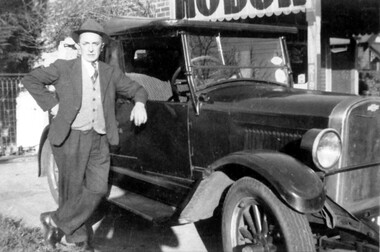
Photograph, Frank Etheridge, outside the small general store at 224 Mont Albert Road, Surrey Hills
... Frank Etheridge, outside the small general store at 224 Mont Albert Road, Surrey Hills...He is standing beside a car parked beside a shop. Frank Etheridge, outside the small general store at 224 Mont Albert Road, Surrey Hills Photograph Photograph ...In earlier years (c1923-1943), the shop was known as Mrs Sim's shop. Note that prior to c1928 the property was numbered 292 Mont Albert Road. Electoral rolls describe Victoria May Sims (nee Munday) as a confectioner but she also sold school requisites and other general household items. Her husband Harry Pascoe Sims died in 1926. The shop was taken over by Leonard William James Etheridge, whom electoral rolls and probate records variously describe as a grocer, stationer or builder. His sons Austin, Douglas and Leonard attended nearby Chatham Primary School. Leonard senior and his wife Marie Wanda (nee Chambers) lived in various locations around Surrey Hills after leaving the shop. Austin went on to establish Etheridge Ford in Ringwood.A black and white photograph of a man dressed in a suit wearing a hat. He is standing beside a car parked beside a shop.mrs sims shop, mont albert road, surrey hills, chatham school, austin etheridge, frank etheridge, victoria may sims, leonard william etheridge, douglas etheridge, leonard etheridege, marie wanda etheridge, marie wanda chambers -
 Bendigo Historical Society Inc.
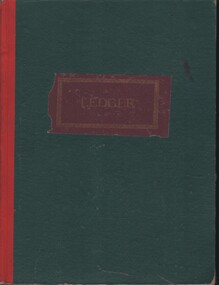
Book - MCCOLL, RANKIN AND STANISTREET COLLECTION: EAST CLARENCE GOLD MINING CO - LEDGER, 1932/37
... Ledger East Clarence Gold Mining Company No Liability, (small sticker, Frank Every's Book and Stationary Centre Bendigo)....Ledger East Clarence Gold Mining Company No Liability, (small sticker, Frank Every's Book and Stationary Centre Bendigo). ...Book; Hardcover accounts ledger book - front section of book is tab alphabet indexed. Ledger East Clarence Gold Mining Company No Liability, (small sticker, Frank Every's Book and Stationary Centre Bendigo).MCCOLL RANKIN & STANISTREETgold mining, miners' safety cage, accounts book., mccoll rankin & stanistreet -
 Phillip Island Conservation Society Inc.
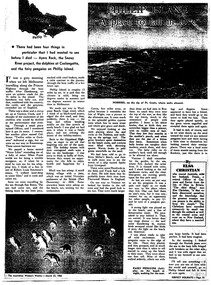
Work on paper - Photocopy of newspaper cutting, "PHILLIP ISLAND/A place to fall in love"
... This article was written by an English visitor named Elsa Christian who was touring Australia and New Zealand with her husband Frank in their own small van. The article was published in the Australian Women’s Weekly, magazine, March 1966. ...This article was written by an English visitor named Elsa Christian who was touring Australia and New Zealand with her husband Frank in their own small van. The article was published in the Australian Women’s Weekly, magazine, March 1966. ...This article was written by an English visitor named Elsa Christian who was touring Australia and New Zealand with her husband Frank in their own small van. The article was published in the Australian Women’s Weekly, magazine, March 1966. Elsa writes she wanted to visit four Australian locations before she died: Ayers Rock (actually Uluru), the Snowy River project, dolphins at Coolangatta and the Penguin Parade at Phillip Island. These destinations were all very popular in the 1960s for both Australian residents and overseas visitors. Because the roads were becoming better too many locations, self guided tours in small vans for cars towing bond would caravans were becoming more popular means of seeing AustraliaThe article is significant in many ways. 1. Indicates the places English visitors commonly wish to see in Australia. 2. Describes the growing trend to self- drive van/camping holidays. 3. Gives the route taken from Melbourne to Phillip Island during the 1960s. 4. Describes the appearance of the roadsides and locations visited. 5. It is written in a descriptive and lyrical style designed to appeal to Women’s Weekly magazine readers, who were probably wondering how they could visit Phillip Island with their husbands or families themselves, and what there was to see there. 6. Gives the visitors’ view of how the Penguin Parade operated at the time. 7. Includes a description of potter and artist Eric Juckert’s renowned garden at Grossard Point, Ventnor. 8. Indicates how introduced plants such as Hawthorn pushes and Kate weed were common in the area. 9. Describes Phillip Island as “a place to fall in love” because of its natural beauty, fauna and coastal seascapes. 10. As a visitor Elsa describes the housing estates as a blot on the landscape, but also sees the value as a way of their owners escaping from the hustle and bustle of Melbourne. 11. Gives the visitors’ interpretation of the behaviour of wildlife the RC in the wild, as well as Elsa’s knowledge about some of the species she encounters.Photocopy of full page article with 5 columns of text, a map and 2 photographs. Black ink on white paper. Photographs blackened in photocopying processphillip island, cape woolamai, penguin parade, seal rocks, nobbies, township of rhyll phillip island, princes highway, dandenong, pakenham, kooweerup, carinya creek, officer, san remo, gippsland highway, holiday homes, fort dumaresq, kitty miller's beach, wreck of the speke, hereford cattle, fleetwood manor, koalas, ventnor, eric juckert, little penguin behaviour -
 Colac RSL Sub Branch
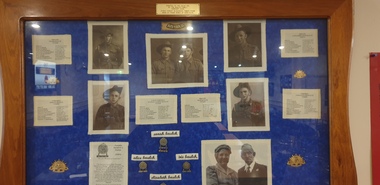
Decorative object - Baulch Brothers. Their Service - Our Heritage. Photo/Badge Collection, Baulch Family, 2008
... Private Frank Baulch. VX72238 + small Rising Sun Badge. Born 15/11/1911 at Glen Aire, Vic. ...Private Frank Baulch. VX72238 + small Rising Sun Badge. Born 15/11/1911 at Glen Aire, Vic. ...Item donated to Colac RSL by the Baulch Family February 2008. Constructed of Otway Forest Blackwood. Made by Frank Nemec of Eden N.S.W High SignificanceBlackwood Timber Frame. Blue material cloth background, with photos and military badges. Banner - Blue material with gold writingPhoto Frame:- Upper Left. Private Frank Baulch. VX72238 + small Rising Sun Badge. Born 15/11/1911 at Glen Aire, Vic. Enlisted 15/2/1942 in Caulfield, Vic. Discharged 3/12/1945. 2nd/2nd Pioneer Battalion. Lower Left. Corporal Horace Baulch. VX869036 + Large Rising Sun Badge. Born 29/4/1942 at Colac, Vic. Enlisted 29/4/1942 at Seymour, Vic. Discharged 13/3/1946. H.Q. AMF School of Mechanization. Centre. Lance Corporal Stanley Baulch VX72233. Born 8/12/1914 at Gellibrand, Vic. Enlisted 19/1/1942 in Caulfield, Vic. Discharged 5/12/1945. 2nd/2nd Pioneer Battalion. Private Jack Baulch VX72232. Born 18/5/1917 at Colac, Vic. Enlisted 15/1/1942 in Colac, Vic. Discharged 29/1/1946. ? Battalion Lower Centre. Female Relatives Badges and Information sheet. Badges:- Sarah, Alice, Iris and Elizabeth Baulch. Photo Sarah and Fred Baulch. Upper Right. Alexander Baulch VX56771 + small Rising Sun Badge. Born 21/2/1919 at Collingwood, Vic. Enlisted 28/5/1942 at Royal Park, Vic. Discharged 20/11/1945. ? Batt. Lower Right. Norman Baulch. VX86902 + large Rising Sun Badge. Enlisted 28/5/1942 at Royal Park, Vic. Born 5/12/1921 at Colac, Vic. Enlisted 29/7/1942 in Seymour, Vic. Discharged 28/2/1945. ?Batt. -
 Ringwood and District Historical Society
Scrap Book, Scrap book of Mr. J.K. Turnbull, Ringwood's first Station Master, containing correspondence, newspaper clippings, obituaries and personal memorabilia c.1890-1913, c. 1890 - 1913
... Post Office Telegraphs 14-Jan-1891; 3. Small ad. - Frank Lowe - is running a waggonette to meet every train - stables - 'Coach and Horses Hotel' 12-Jan-1913; 4. ...Post Office Telegraphs 14-Jan-1891; 3. Small ad. - Frank Lowe - is running a waggonette to meet every train - stables - 'Coach and Horses Hotel' 12-Jan-1913; 4. ...Mr J.K. Turnbulls own scrap book lent by his son to Mr McCaskill. Alan Carter got it from Mr McCaskill to return but the son died and Alan Carter gave it to the Historical Society. Mr Turnbull was Ringwood's first Station Master and a well liked person in the community.Mr J.K. Turnbulls own scrap book. Large blue cardboard covers with black and red embossing and 'Scraps' on front. Blue cloth spine. No pages held by spine - five with cuttings from papers pasted on to them; three handwritten letters; several single cuttings.; 1. Five pages of newspaper cuttings pasted to page.; 2. Post Office Telegraphs 14-Jan-1891; 3. Small ad. - Frank Lowe - is running a waggonette to meet every train - stables - 'Coach and Horses Hotel' 12-Jan-1913; 4. Mr Turnbull at Healesville; a favourite Returns; two cuttings with same story.; 5. Photocopy of the 'Programme of Dances for the Opening of the Ringwood Goods Shed' Monday 28 December 1887.; 6. Handwritten in pencil - New Goods Shed 28/11/1887. Opening ceremony 2-Dec-1887 - not very legible - 4 pages (15 x 10cm); 7. Two letters to Mr Turnbull from John Ross - 17-Jan-1891; 8. Letter from Samuel and Elizabeth Cutts and family to Mr Turnbull.; Note: Cutts, Elizabeth - owned the hotel at Burnt Bridge; Mr McCaskill was mayor and first President of the Historical Society; Carter, Alan - was father of Richard Carter. +Additional Keywords: Turnbull, J.K. / McCaskill, Mr / Carter, Alan / Lowe, Frank / Ross, John / Cutts, Samuel / Cutts, Elizabeth'Scraps' -
 Flagstaff Hill Maritime Museum and Village
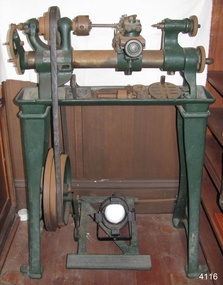
Machine - Treadle Lathe, 1920-1923
... small centre lathe … which had a compound slide rest with feed-screws and adjustable slides’. He also designed and built ‘lathes of 4.5 inch and 5 inch centre height, which had beds of a special form whereby the use of a gap piece was eliminated but the advantages of a gap-bed lathe were retained’. Assisted by his brother, Mr Frank...small centre lathe … which had a compound slide rest with feed-screws and adjustable slides’. He also designed and built ‘lathes of 4.5 inch and 5 inch centre height, which had beds of a special form whereby the use of a gap piece was eliminated but the advantages of a gap-bed lathe were retained’. Assisted by his brother, Mr Frank ...The lathe-making business incorporated in 1902 as Drummond Bros Ltd originated in the fertile mind of Mr Arthur Drummond, said to have been living at that time at Pinks Hill, on the southern edge of Broad Street Common, west of Guildford. Mr Drummond, whose accomplishments included several pictures hung in the Royal Academy, was unable to find a lathe suitable for use in model engineering. In 1896 he designed for himself a ‘small centre lathe … which had a compound slide rest with feed-screws and adjustable slides’. He also designed and built ‘lathes of 4.5 inch and 5 inch centre height, which had beds of a special form whereby the use of a gap piece was eliminated but the advantages of a gap-bed lathe were retained’. Assisted by his brother, Mr Frank Drummond, who had served an apprenticeship to an engineering firm at Tunbridge Wells, the first lathes were made in a workshop adjoining Arthur Drummond’s house. The demand that speedily built up led to the decision to form a company and manufacture the lathes for sale commercially. Land was acquired nearby, at Rydes Hill, and the first factory built. The enterprise was a success, and the company quickly established ‘a high reputation in this country and abroad for multi-tool and copying lathes, and gear-cutting machines’. Other lathes were added to the range, including the first of the ’round bed’ machines for which the firm became widely known. A Drummond 3.5 inch lathe was among the equipment of Captain Scott’s 1912 expedition to the South Pole, and large numbers of 3.5 inch and 4 inch designs were exported to Australia, Canada and India. By the outbreak of war in 1914, 5 inch, 6 inch and 7 inch screw cutting lathes, arranged for power drive, were on sale. Large orders were received from the government for 3.5 inch lathes, for use in destroyers and submarines, and 5 inch lathes for the mechanised section of the Army Service Corps. The latter were used in mobile workshops. The factory worked night and day to supply the forces’ needs, until production was disrupted by a fire which destroyed a large part of the works in May 1915. As soon as rebuilding was complete work restarted. At the end of the war the entire production was being taken by the Government departments, a special feature being a precision screw lathe, bought by the Ministry of Munitions in 1918. Between the wars Drummond Bros Ltd introduced new machines for the motor vehicle, and later the aircraft industry, and the works were extended on many occasions to fulfill the increasing orders. The Maxicut multi-tool lathe (1925), designed for high-production turning operations, was one of the first machines of this type to be built in England. It was followed (1928) by an hydraulic version for turning gear blanks, and similar work. Further developments provided machines which, during the Second World War, turned all the crankshafts and propeller shafts for Bristol engines. Others, ordered by the Ministry of Supply were employed in turning shells, and many other specific needs of vehicle and aircraft manufacture were catered for by new types of Drummond lathes. Production of the small centre lathes ceased during the war when the company needed to concentrate on building multi-tool lathes and gear shapers. After the war a completely new Maxicut range was introduced, replacing the older versions, and fully automatic. The types were continually developed, and new versions manufactured until the end of the company’s life in 1980. The disappearance from the scene of Mr Arthur Drummond in 1946, and the end of the company’s autonomous existence in 1953 when the company was acquired by William Asquith Ltd, which was in turn bought by Staveley in 1966, meant that the factory at Rydes Hill became one – albeit very effective – part of a large national engineering company. Achievements at the Guildford works during its last years included the development of automated Maxicut gear-shapers in what was ‘probably the most fully automated gear shop in the country’, while a machine from Guildford was sent to the Osaka Fair in 1962. In 1963 an agreement was signed with Hindustan Machine Tools for the manufacture of Maxicut gear-shapers in state owned factories in Bangalore and Chandigarh. During 1963 the two largest multi-tool lathes ever made in the UK were installed in Ambrose Shardlow’s works in Sheffield for handling cranks up to 14 foot long. In 1976 Drummond lathes were included in Staveley’s £14,000,000 installation in Moscow of an automated production line for Zil motor cars. Up to the end invention continued at Guildford: a new Drummond Multi-turn memory-controlled machine was shown at the International Machine Tool Exhibition in 1977. This could not save the works from the pressures of the late 1970s, and Staveley Industries closed its Guildford site in 1980.An early example of a lathe that was designed primarily for the hobbyist model maker. It is in good condition and sought today by collectors as many of it's attributes were innovative at the time and lead to further development and incorporation of some of its features into more industrial models of production machinery. Lathe, round bed, treadle powered lathe, Drummond Type A, Serial number and maker's inscription. 1920-1923, Made by Drummond Brothers in Guildford, Surrey, England. Lathe is complete with Chuck, Tool post and Tail Stock in situ (30 extra parts)"MADE BY DRUMMOND BROTHERS LIMITED - PATENT TEES - RYDE'S HILL n GUILDFORD SURREY", "Serial Number 01470," "L44" or "L45 " flagstaff hill, warrnambool, shipwrecked coast, flagstaff hill maritime museum, maritime museum, shipwreck coast, flagstaff hill maritime village, great ocean road, lathe 1920-1923, round bed lathe, treadle lathe, drummond type a, guildford surrey, drummond brothers guildford surrey england, tread'e -
 Flagstaff Hill Maritime Museum and Village
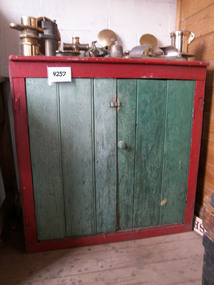
Furniture - Cupboard, 1912-1972
... small, historic bell to its original condition. The Schomberg Bell is a fine example from a luxury migrant vessel dating back to the mid-19th century, reflecting the craftsmanship and heritage preserved by Briggs Brass Foundry. Flagstaff Hill Flagstaff Hill Maritime Museum and Village Warrnambool Maritime Museum Maritime Village Great Ocean Road Shipwreck Coast Briggs Briggs Marine Briggs Foundry cupboard storage brass objects Briggs family marine products village display Briggs Brass Foundry Briggs Marine Foundry Briggs Marine Products Herbert Harrison Briggs George Edward Briggs Cyril Falkiner McKinnon Briggs Collingwood Moorabbin Frank Lee Les Lee Eva Lee Briggs Marine Warrnambool non-ferrous founders bell specialists ship bell specialists sand cast marine equipment marine fittings foundry brass foundry founders Cupboard; wooden, painted red with two green doors, round wood door knobs a wood catch. ...At Briggs’ Brass Foundry, traditional sand-casting techniques have been practised for generations. Sand casting, a craft that spans over two thousand years, involves creating intricate moulds into which molten metal is poured. This handcrafted process produces durable brass and copper alloy goods, which are particularly suited to marine environments. Items such as bells, boat hooks, cowls, propellers, handles, lids, rowlocks, hooks, letters, bolts, rail holders, brackets, deck plates, flanges, rudder guides, portholes and covers have all been made using this technique. The bronze mixture used by Briggs is a copper-based alloy, carefully formulated from locally sourced ingots of copper, tin, zinc and lead in precise quantities. This results in a non-ferrous finished product, renowned for its longevity and resilience, often lasting indefinitely even in harsh conditions. Donation to Flagstaff Hill: In Flagstaff Hill's formative years, 1972-1975, the Briggs family generously donated a range of related items, including casting patterns, brassware, tools, machinery and a cupboard. These patterns illustrate the historic trades of foundering and metalwork, both of which have been essential in supporting marine industries such as shipwrights and boatbuilders. Furthermore, local industries like farming and manufacturing have relied on foundries for the casting of essential equipment. It is believed that Briggs Marine’s family members gave personal assistance in setting up the displays in the original village shops, particularly the ‘Brass Foundry’ building. Exhibition and Legacy: The donated items were displayed in a simulated Brass Foundry within the Village. This exhibit was part of a broader showcase of working crafts, trades and services typical of a Maritime town. The display was available to the public from the completion of the building in 1986 until 1994, when the space was repurposed. A notable feature of the Village Brass Foundry was the historic Cornish chimney, presented as a working model. This chimney visually demonstrated the process of smelting metal in furnaces and pouring it into sand moulds. Constructed from specially curved bricks, the chimney now stands at about two-thirds of its original height, having been relocated from the Grassmere Cheese factory.The small cupboard holds particular significance due to its association with brass foundries operating across Victoria. Marine industries, including ship and boat building, depend heavily on high-quality castings for their machinery, equipment and fittings. Briggs Brass Foundry developed a specialised brass alloy using non-ferrous metals, ensuring the durability and longevity of its products in demanding marine environments. The cupboard is linked to Briggs Maine, a longstanding business dedicated to producing cast goods tailored for the marine sector. The foundry was equipped to meet requirements for both custom and mass-produced items. Briggs Foundry’s products were commonly installed on sailing and steam vessels operating along Victoria’s coastline, including in Warrnambool. In addition to general marine fittings, Briggs Marine was recognised for its expertise in bell-founding. The foundry is notably associated with the Schomberg Bell at Flagstaff Hill, having restored this small, historic bell to its original condition. The Schomberg Bell is a fine example from a luxury migrant vessel dating back to the mid-19th century, reflecting the craftsmanship and heritage preserved by Briggs Brass Foundry.Cupboard; wooden, painted red with two green doors, round wood door knobs a wood catch. Doors are made from tongue-and-groove wood. Inside are two shelves. Stored on the shelves are an assortment of brass hinges, pipes, handles, ventilators, collars, and so on from the Briggs Foundry, Melbourne.flagstaff hill, flagstaff hill maritime museum and village, warrnambool, maritime museum, maritime village, great ocean road, shipwreck coast, briggs, briggs marine, briggs foundry, cupboard, storage, brass objects, briggs family, marine products, village display, briggs brass foundry, briggs marine foundry, briggs marine products, herbert harrison briggs, george edward briggs, cyril falkiner mckinnon briggs, collingwood, moorabbin, frank lee, les lee, eva lee, briggs marine warrnambool, non-ferrous founders, bell specialists, ship bell specialists, sand cast, marine equipment, marine fittings, foundry, brass foundry, founders -
 Federation University Historical Collection
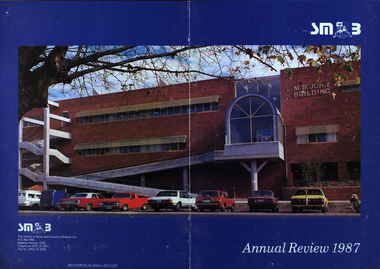
Booklet - Annual Review, Ballarat School of Mines Annual Review, 1986 -1991
... Frank Sheehan, Julie Baulch, Jo Reeves, Col McCurry, Jenny Garnham .3) Blue covered book with a photograph of the M.B. John Building taken from Albert Street on the cover. Topics include: Ken Flecknoe, Peter Shiells, Ararat Campus, David Haddow, Kevin Martin, Rendle Hannah, Gary Eason, Geoff Pope, Albert Peart, M.B. John building opened, Hairdressing Salon, Community Centre, Creche, closure of Lydiard Street, Museum, Jenny Levison, Inskill, Small...Frank Sheehan, Julie Baulch, Jo Reeves, Col McCurry, Jenny Garnham .3) Blue covered book with a photograph of the M.B. John Building taken from Albert Street on the cover. Topics include: Ken Flecknoe, Peter Shiells, Ararat Campus, David Haddow, Kevin Martin, Rendle Hannah, Gary Eason, Geoff Pope, Albert Peart, M.B. John building opened, Hairdressing Salon, Community Centre, Creche, closure of Lydiard Street, Museum, Jenny Levison, Inskill, Small ...The Ballarat School of Mines was established in 1870 through the initiatives of the Ballarat Mining Board making it the oldest site of technical education in Australia. The Board was concerned with the shortage of mine managers for the goldfields. Classes began in surveying, mathematics, and chemistry and a decade later they included metallurgy , assaying and geology. With the decline in goldmining the direction of the college changed and broadened, the art School was established and the Ballarat Junior Technical School developed. In 1976, the tertiary sector seperated from the School of Mines and Industries Ballarat to form the Ballarat College of Advanced Education. In the 1980s SMB was a Community College of Technical Education and Further Education (TAFE) offering a wide range of vocational, enrichment and preparatory programs. It is continuing the tradition of providing for the educaiton needs of people within the Central Highlands. During the 1970s and 80s it acquired and refurbished old buildings and developed new facilities to keep up with the needs of an expanding curriculum and student population. The era of these annual reports is just before the merger with the University of Ballarat.A number of soft card covered annual report for the Ballarat School of Mines. .1) 12 page black covered report featuring an image of the E.J. Tippett Library. Includes information on death of E.J. Tippett, disability policy, Peter Quinn, Patti McNulty, Bob Feary, Shane Everand, Integration, Fiona Watson, retirement of Robert Morgan, Opening of the carpentry and Joinery Facility in Davey Street, formation of the School of Business and Information Technology, Melissa Bone, opening of the E.J. T. Tippett Learning Resource Centre (Library), Refurbishment of the Administration Building, Food Service Building (Prospects), Court House Theatre, Enrolment centre, Museum, Creche, Women's Trade technical Program, Rural Education Program, Ararat Prison Program, Community Studies Section, Ararat Adult Literacy Group. Literacy Assistance for Undergraduates, Fire training, fitness, open Learning, Training & Employment Group, Awards, Filipino Visitors, oil Seed Research, Brunei, Barometer (gift) for Horticulture, Special Equipment (guillotine and brake press; programmable logic Controller; theodolite: laser lever; Universal testing Machine; Atomic Absorption Spectrophotometer)., organisational Structure. Photos include Ken Flecknoe, Peter Quinn, Patti McNulty, Bob Feary, Shane Everard, Fiona Watson,Linda Bland, Robert Morgan, David McCaughey, E.J. Tippett, Frank Sheehan, Julie Baulch, Jo Reeves, Col McCurry, Jenny Garnham .3) Blue covered book with a photograph of the M.B. John Building taken from Albert Street on the cover. Topics include: Ken Flecknoe, Peter Shiells, Ararat Campus, David Haddow, Kevin Martin, Rendle Hannah, Gary Eason, Geoff Pope, Albert Peart, M.B. John building opened, Hairdressing Salon, Community Centre, Creche, closure of Lydiard Street, Museum, Jenny Levison, Inskill, Small Business Training, Ballarat Eat free Library, Barkly Street, Wormalds Valve Group, Aboriginal Programs, Horticulture Center, Awards, Country fire Authority, tractor Donation, Women's Policy. Special purchases included surveying equipment with data recorder, test rig , CDT MIG welder, compact gas chromatograph with FID and single pen recorder, Olivetti stand-alone word processing unit. Images include Ken Flecknoe. Peter Shiells, John Crowe, Trevor Slater, Brian McLennan, Kerrie Cross, Albert Peart, John Cain, M.B. John, Enrollment Centre, Museum, Jo Watson, Wormalds, Brian Webber, Dianna Nikelson, Ian Aitken, Brendan B, Chez Dichiera, Heather Dixon, Julie Broadbent .4) 1993 - Brown and white soft covered annual review featuring students of the Ballarat School of Mines at work. Bill Gribble, Brian McLennan, Peter Shiells Retirement, Robert C. Lovett, Steven Mendelson, Max Palmer, Jenny Gough, Mary Molloy, Barrie Firth, Colin McCurry, Dora Hormann, Organisation Structure, Brewery Acquisition, Humffray Street Primary School, Grant Street Retaining Wall, Neville Bunning Plaque, VCE Plus, Ballarat Small Business centre, Ararat Prison, Ballarat Showgrounds Rotunda, .6) Green covered annual review with an aerial photograph over Albert Street, Ballarat. Content include Kerrie Cross, Peter Shiells. Kenneth Flecknoe Obituary, Ian Pimblett, Keith Boast, David Nicholson, Max Palmer, Brian Webber, Bob Lovett, Linda Bland, Prospects, Training restaurant, 3BBB, Malcolm Vallance, Aboriginal Programs, Ian Cathie, Koorie Support Unit, Caroline Hogg, 'Trained Men Make Their Own Terms' exhibition at the Gold Museum, Ricky Hains, Stephen Hughes, Jeff White, Dennis Bolster .8) Blue covered review for 1989. The contents include: Kerrie Cross, Peter Shiells, Ann McCaffrey, Kevin Alsop, Mary Molloy, Ross Furness, Robert Lovett, Victoria Street Student Hostel, Hugh Beggs, Ballarat Small Business Centre, Inskill, Ararat Campus, Hospitality and Tourism, Koorie Support Unit, Fiona Warsn, Bruce Staley, Terry Moran, Anthony Wonish, Ivan Deveson, Leo Shannon Memorial Award, Bryan Crebbin, Geoff Howard, R.C.W. Burdett, Jeff White, Ian Harris, Tom Wiseman, Bill Gribble, Allison Kay, Steven Mendelson, Keith Boast. .9) Grey covered book with a coloured photo of the Victoria Street Student Residence. Contents include: Kerry Cross, Peter Shiells, Morgan Bevan John Illuminated address. Jean Phillips, Koorie Support Unit, Andrew Sullivan, Victoria Street Student Residence, Horticulture, Inskill, Tertiary Awareness Project, Adult Education, Ivan Deveson, Brian Howe, Barry Jones, Joan Kirner, Andrew Trigg, Warren Perry, Murrell Rock Collections, Gwyn Hanssen-Piggott, Disability Awareness Day, Sebastopol Borough Logo, Phoebe Rimmer, Russell Jackson, R.J. Young Scholarship, Peter Muir, Founders Day Cake, Morgan John. .11) Black card covered booklet with five images of exteriors of the Ballarat School of Mines. the contents include: Jack Barker, Peter Shiells, Peter Ellyard, Ian Stoney, Terry Moran, Wayne Strong, David Ince, Simone Titheridge, Ian Aitken,Kevin Alsop, Bill Bridges, Clive Carmichael, Bob Feary, Rendle hannah, Roly Parfenovics, Graham Snibson, Kevin Stockdale, Len Wilson, Child Care Centre opening, Student accommodation, Victoria Street, Brewery site. naming buildings, E.J. barker. A.W. Steane K.J. Flecknow, Carpentry and joinery, Inskill, Hospitality, Pottery, ceramics, Founders' Day, Warren Perry, Agreement between Ballarat School of Mines and Ballarat university College, merger, Peter Baldwin, Awards, obituary Lindsay Hillman. Images include: Wayne Strong, David Ince, Simone Titheridge, kerrie Cross, Joan Kirner, Frank Sheehan, Bill Gribble Ros Wilkie, Judi O'Loughlin, Tony Leonard, Gemma Hearnes, Brendan Hill, Joanne Bell, Karl Moon, Stella Savy, Shirley Falkinder, Peter Baldwin, Jack Barker, Michael Ronaldson, David Kemp, Peter Shiells, Margot Healey, Sharon McLennan, Kerrie Firns, Petrena Brookers, Deb Goudappel, Claire Bond, Administration Building Lindsay Hillman. .13 ) Brown covered report with photographic images. Content includes: Pam Merrett. , Peter Shiells, Robert Lovett, Steven Mendelson, Max Palmer, Jenny Gough, Barrie Firth .14) Brown covered report with photographic images. Content includes: .15) Green covered report with photographic images. The blond woman standing on the right looking at a computer screen is Pam Merrett. Content includes: Bill Gribble, Ron Wild, Doug Sarah, Martin Hill, John Kemp, David Manterfield, Leslie Comy, Linette Penhall, Glen Martland. Virginia Fenelon. Michael Bracher, Brewery Building. Child care centre, Prospects Cafe Opening, Horticulture Training Centre, Retaining Wall, The Gordon, University of Ballarat and Ballarat School of Mines affiliation, Geoffrey Blainey, Ararat Community College Memo of understanding, Brian McLennan. Founders Day (Hadden Storey), Gwyn Hanssen-Pigott, Ken Latta, Neville Bunning Outstanding Achievement Award, Valerie Wilson, Jack Barker, John Sharpham, Jack Barker Resignation.ballarat school of mines, university of ballarat, integration, shane everard, robery morgan, linda bland, ballarat junior technical school, former court house, ken flecknoe, bruce muir, lindsay hillman, neil crouch, jack barker, keith boast, rex hollioake, m.b. john, bob lovett, brian mclennan, peter shiells, bruce tanner, jeff white, bryan crebbin, kerrie cross, ric dunlop, tom wiseman, barbara hughes, chris matheson, morgan b. john, albert street, steven mendelson, john crowe, ann mccaffrey, kevin alsop, mary molloy, ross furness, robert lovett, victoria street student hostel, student residences, hugh beggs, ballarat small business centre, inskill, ararat campus, hospitality and tourism, koorie support unit, fiona watson, bruce staley, terry moran, anthony wonish, ivan deveson, leo shannon memorial award, geoff howard, r.c.w. burdett, ian harris, bill gribble, allison kay, liz eddy, pam merrett, doug sarah, martin hill, john kemp, david manterfield, leslie comy, linette penhall, glen martland, virginia fenelon, michael bracher, brewery building, child care centre, prospects cafe, horticulture training centre, retaining wall, the gordon, university of ballarat and ballarat school of mines affiliation, geoffrey blainey, ararat community college memo of understanding, founders day, hadden storey, gwyn hanssen-pigott, ken latta, neville bunning outstanding achievement award, valerie wilson, john sharpham, kerry cross, morgan bevan john illuminated address, jean phillips, andrew sullivan, victoria street student residence, horticulture, inskill, tertiary awareness project, adult education, brian howe, barry jones, joan kirner, andrew trigg, warren perry, murrell rock collections, gwyn hanssen-piggott, disability awareness day, sebastopol borough logo, phoebe rimmer, russell jackson, r.j. young scholarship, peter muir, kenneth flecknoe obituary, ian pimblett, david nicholson, brian webber, prospects, training restaurant, 3bbb, malcolm vallance, aboriginal programs, ian cathie, caroline hogg, 'trained men make their own terms' exhibition at the gold museum, ricky hains, stephen hughes, dennis bolster, aboriginal education, e.j. tippett obituary, patti mcnulty, bob feary, equal opportunity officer, robert c. morgan, school of business and information technology, e.j. tippett library, e.j. tippett library opening, carpentry and joinery, women's trade and technical program, rural education program, ararat prison program, barometer, oil seed research, . bill gribble, peter shiells retirement, robert c. lovett, max palmer, jenny gough, barrie firth, colin mccurry, dora hormann, organisation structure, brewery acquisition, humffray street primary school, grant street retaining wall, neville bunning plaque, vce plus, ararat prison, ballarat showgrounds rotunda -
 Federation University Historical Collection
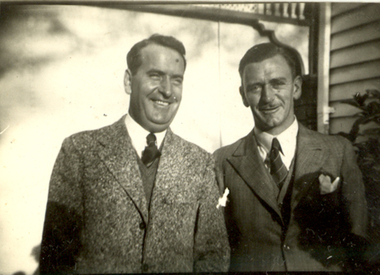
Photograph - Photograph - Black and White, Frank Wright and Friend, 03/1940
... Small black and white photograph of the torsos of two men dressed in light suits. They are standing outside a weatherboard house. The man on the left is Frank...The Frank Wright Medal at the Royal South Street competition is awarded to an individual recognized as making an outstanding contribution to brass music in Australia. frank wright vernon holt conductor brass band Written in pencil on back - March 1940 Small black and white photograph of the torsos of two men dressed in light suits. ...Frank Wright was a renown resident of Smeaton, where he was born on 2 August 1901. He lived at Laura Villa, and attended Smeaton State School. His father William was a gold miner and his mother's name was Sarah. Their family won many singing and instrumental awards. Frank was tutored by Percy Code and was awarded a gold medal for the highest marks in the ALCM examinations in the British Colonies at the age of seventeen years. He became the Australian Open Cornet Champion by the age of eighteen. A year later, Frank conducted the City of Ballarat Band, and later the Ballarat Soldiers’ Memorial Band. He formed the Frank Wright Frisco Band and Frank Wright and his Coliseum Orchestra. These bands won many South Street awards, and Frank as conductor won many awards in the Australian Band Championship contest. In 1933 Frank Wright sailed to England to conduct the famous St Hilda’s Band and was later appointed Musical Director of the London County Council, where he organized many amazing concerts in parks, in and around the London district. He was made Professor of Brass and Military Band Scoring and conducted at the Guildhall of Music and Drama. Frank was often invited to adjudicate Brass Band Championships around Europe, in Australia, including South Street and in New Zealand. The Frank Wright Medal at the Royal South Street competition is awarded to an individual recognized as making an outstanding contribution to brass music in Australia.Small black and white photograph of the torsos of two men dressed in light suits. They are standing outside a weatherboard house. The man on the left is Frank Wright and the man on the right is possibly his friend Vernon Holt.Written in pencil on back - March 1940frank wright, vernon holt, conductor, brass band -
 Federation University Historical Collection
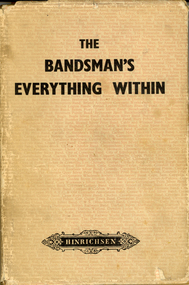
Book, The Bandsman's Everything Within, 1950
... frank wright freeman Signature in blue ink "S. A. Freeman" in front end paper Hard card covered book, 208 pages. Cover is cream, with very small ...This book was part of the collection of Frank Wright OBE.Hard card covered book, 208 pages. Cover is cream, with very small maroon writing and title in black print. At bottom of the page is an ornate bordered title "Hinrichsen". Back cover: Black print on cream. Black print title on spine. Signature in blue ink "S. A. Freeman" in front end paperhinrichsen, bandsman, cook, wright, ball, geehl, composer, mortimer, lumb, highfield school band, besses boys' band, black dyke mills band, frank wright, freeman -
 Federation University Historical Collection
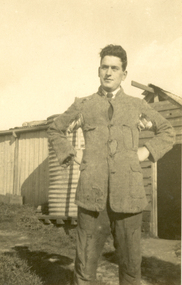
Photograph - Photograph - Black and White, Vernon Holt, Frank Wright at Smeaton (possibly at Sewell's), 1/8/1922
... In the background are farm buildings and a water tank.The man is Frank Wright and the place is Smeaton. .1) postcard sized photograph .2) small photograph...In the background are farm buildings and a water tank.The man is Frank Wright and the place is Smeaton. .1) postcard sized photograph .2) small photograph Frank Wright at Smeaton (possibly at Sewell's) Photograph Photograph - Black and White Vernon Holt ...Frank Wright was a renown resident of Smeaton, where he was born. He lived at Laura Villa, and attended Smeaton State School. His father William was a gold miner and his mother's name was Sarah. Their family won many singing and instrumental awards. Frank was tutored by Percy Code and was awarded a gold medal for the highest marks in the ALCM examinations in the British Colonies at the age of seventeen years. He became the Australian Open Cornet Champion by the age of eighteen. A year later, Frank conducted the City of Ballarat Band, and later the Ballarat Soldiers’ Memorial Band. He formed the Frank Wright Frisco Band and Frank Wright and his Coliseum Orchestra. These bands won many South Street awards, and Frank as conductor won many awards in the Australian Band Championship contest. In 1933 Frank Wright sailed to England to conduct the famous St Hilda’s Band and was later appointed Musical Director of the London County Council, where he organized many amazing concerts in parks, in and around the London district. He was made Professor of Brass and Military Band Scoring and conducted at the Guildhall of Music and Drama. Frank was often invited to adjudicate Brass Band Championships around Europe, in Australia, including South Street and in New Zealand. The Frank Wright Medal at the Royal South Street competition is awarded to an individual recognized as making an outstanding contribution to brass music in AustraliaTwo different sized identical black and white photographs of a man dressed in ragged jacket and trousers, standing with his hands on his hips. In the background are farm buildings and a water tank.The man is Frank Wright and the place is Smeaton. .1) postcard sized photograph .2) small photograph.1) Printed on back - Post Card, Kodak, Australia .2) Written in pen on back - Frank Wright, Smeaton, 1/8/22, Photo by Vernon Holtfrank wright, ballarat, cornet, conductor, smeaton, vernon holt -
 Federation University Historical Collection
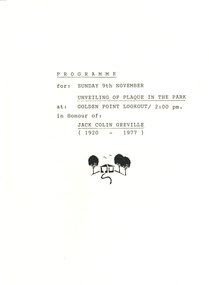
Document - Documents, Golden Point - Mount Pleasant Progress Association Establishment
... Kerry Daniels was the President in 1994. golden point mount pleasant mt pleasant ian mckinnno mara gluyas peter hiscock frank williams geoff howard leigh gillett sovereign hill kerry daniels norm strange; graeme kent; george netherway; keith rash; ian mckinnon albert graham bryan crebbin jim humphreys. wid radbourn heath martin janet dore alex mills park A small white cardboard box with purple lid of A4 documents relating to the establishment of the Golden Point - Mt Pleasant Progress Association. ...The Golden Point - Mt Pleasant Progress Association was established on Wednesday 6 April 1983. Membership was open to any person or organisation in the area generally bounded by Bridge mall and Skipton Street, Elsworth Street and main Road. annual family or organisation membership was $2.00. Mara Gluyas served as secretary of the Golden Point - Mt Pleasant Progress Association from 1983 to 1994. Ian McKinnon was the President from 1983 to 1992. Kerry Daniels was the President in 1994.A small white cardboard box with purple lid of A4 documents relating to the establishment of the Golden Point - Mt Pleasant Progress Association. The documents include the original constitution and minutes. Topics include: Pearce's Park; removal of elms, names and addresses of members, Sovereign Hill realignment; Sovereign Hill Lookout; membership form; Golden Point Historic Mines Direction Indicator; Ballarat Observatory; Nerrina Tip; Yarrowee Creek; Mine Capping (Sovereign Mine); tree planting (Sovereign Hill Lookout); Magpie Street Park; Hill Street; Yarrowee Flora Park; Barkly Street; South Street Bluestone Gutter; Ballarat Goldfields; Eastern baths site; Grant Street; Flooding; Aboriginal Advancement League; Sunnyside Woollen Mill; Chinese Garden; Golden Point Primary School closure; Ballarat West Goldfields; Sovereign Hill Land Title and Management Revision; Wainwright; Street; Llanberris; Yuille's Station Parkgolden point, mount pleasant, mt pleasant, ian mckinnno, mara gluyas, peter hiscock, frank williams, geoff howard, leigh gillett, sovereign hill, kerry daniels, norm strange; graeme kent; george netherway; keith rash; ian mckinnon, albert graham, bryan crebbin, jim humphreys. wid radbourn, heath martin, janet dore, alex mills park -
 Federation University Historical Collection
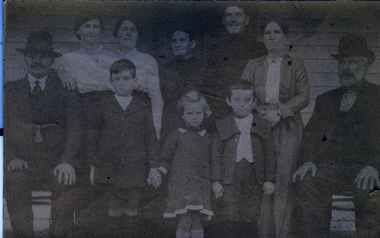
Photo, Wright Family photo
... The Frank Wright Medal at the Royal South Street competition is awarded to an individual recognized as making an outstanding contribution to brass music in Australia. frank wright smeaton frank j wright bill wright william wright 3 small holes in photo Sepia photo postcard of Wright Family Group. ...Frank Wright was born at Smeaton, lived at Laura Villa, and attended Smeaton State School. His father William was a gold miner, and his large family was musical, winning many awards in the singing and instrumental areas. Frank was tutored by Percy Code and by the age of 18 was the Australian Open Cornet Champion. A year later, Frank conducted the City of Ballarat Band, and later the Ballarat Soldiers Memorial Band. He formed the Frank Wright Frisco Band and Frank Wright and his Coliseum Orchestra. These bands won many South Street awards, and as conductor Frank won many awards in the Australian Band Championship contest. He became well known and respected as a conductor and adjudicator of band competitions at very high levels in Australia and New Zealand. In 1933 Frank Wright sailed to England to conduct the famous St Hilda’s Band and was later appointed Musical Director of the London County Council, where he organized many amazing concerts in parks, in and around the London district. He was made Professor of Brass and Military Band Scoring and conducted at the Guildhall of Music and Drama. Frank was often invited to adjudicate Brass Band Championships around Europe, as well as at Ballarat’s South Street and in Australia and New Zealand. The Frank Wright Medal at the Royal South Street competition is awarded to an individual recognized as making an outstanding contribution to brass music in Australia. Sepia photo postcard of Wright Family Group. Frank Wright's father (William) on far right, and mother in centre back.3 small holes in photofrank wright, smeaton, frank j wright, bill wright, william wright -
 Federation University Historical Collection
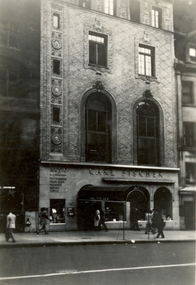
Photograph - Black and White, Carl Fischer Building, New York, 1920s?
... This photograph is part of Frank Wright's collection. carl fischer frank wright New York sheet music Black and white photograph of the lower three floors of an Art Deco style building. On the ground level the arched door has a canvas porticoed entrance and there are three arched windows on the right side and a small square window on the left. ...Carl Fischer was a major publisher of music. This photograph is part of Frank Wright's collection.Black and white photograph of the lower three floors of an Art Deco style building. On the ground level the arched door has a canvas porticoed entrance and there are three arched windows on the right side and a small square window on the left. The name 'Carl Fischer' is seen above the arches. Above are two second floor double height ornate arched windows and above these are two large rectangular windows. On the left side of these windows is a single column of small windows. Above these floors can be see the start of the rest of the building with more modest windows. People can be seen walking along the pavement. The place is New York.carl fischer, frank wright, new york, sheet music -
 Federation University Historical Collection
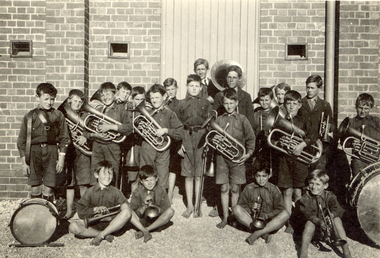
Photograph - Black and White, St Joseph's Home Band, Sebastopol, Ballarat, 1923, 1923
... The Frank Wright Medal at the Royal South Street competition is awarded to an individual recognized as making an outstanding contribution to brass music in Australia. frank wright st joseph's sebastopol orphanage sebastopol A small photograph of a group of young boys with an array of band instruments St Joseph's Home Band, Sebastopol, Ballarat, 1923 Photograph - Black and White ...Frank Wright was a renown resident of Smeaton, where he was born on 2 August 1901. He lived at Laura Villa, and attended Smeaton State School. His father William was a gold miner and his mother's name was Sarah. Their family won many singing and instrumental awards. Frank was tutored by Percy Code and was awarded a gold medal for the highest marks in the ALCM examinations in the British Colonies at the age of seventeen years. He became the Australian Open Cornet Champion by the age of eighteen. A year later, Frank conducted the City of Ballarat Band, and later the Ballarat Soldiers’ Memorial Band. He formed the Frank Wright Frisco Band and Frank Wright and his Coliseum Orchestra. These bands won many South Street awards, and Frank as conductor won many awards in the Australian Band Championship contest. In 1933 Frank Wright sailed to England to conduct the famous St Hilda’s Band and was later appointed Musical Director of the London County Council, where he organized many amazing concerts in parks, in and around the London district. He was made Professor of Brass and Military Band Scoring and conducted at the Guildhall of Music and Drama. Frank was often invited to adjudicate Brass Band Championships around Europe, in Australia, including South Street and in New Zealand. The Frank Wright Medal at the Royal South Street competition is awarded to an individual recognized as making an outstanding contribution to brass music in Australia.A small photograph of a group of young boys with an array of band instrumentsfrank wright, st joseph's sebastopol, orphanage, sebastopol -
 Federation University Historical Collection
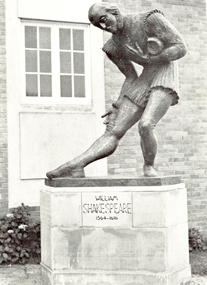
Programme, Hoskin Print, Programme for the unveiling of the Shakespeare Statue at Ballarat Civic Hall, 1960, 1960
... Frank Gale. In October 1952, the Fidelity trustee Company Limited notified of an extract of the will of Harry Person Stevens, in which be bequeathed the sum of 2,000 pounds to the fund for the erection of a Statue of William Shakespeare. In 1957 it was felt the fund had accumulated to an amount sufficient to carry out the intentions of the fund. at that stage the money in hand was approximately 4,000 pounds.A small committee was appointed to further the proposal. ...Frank Gale. In October 1952, the Fidelity trustee Company Limited notified of an extract of the will of Harry Person Stevens, in which be bequeathed the sum of 2,000 pounds to the fund for the erection of a Statue of William Shakespeare. In 1957 it was felt the fund had accumulated to an amount sufficient to carry out the intentions of the fund. at that stage the money in hand was approximately 4,000 pounds.A small committee was appointed to further the proposal. ...The sculptor of the Shakespeare sculpture was Andor Meszaros of Kew, Melbourne. The unveiling was undertaken by Mayor Arthur W. Nicholson. The statue was presented by L.F. North, general Manager of the Fidelity Trustee Company Limited, representing the late H.P. Stevens as one of the benefactors whose generosity enabled the Statue to be erected. The "portrait statue" shows how people saw Shakespeare as he wanted to be seen; as author-actor bowing to the applause. His position implies modesty, the knowledge of his own worth; majesty. his movement is at once humble and royal. The statue was positioned so people approaching or leaving Ballarat Civic Hall will see the statue full face, and the bowing attitude enables them to continue to study the face even from a few feet distant. The base in in the form of an Elizabethan stage, and is designed so that its sides correspond to the existing angles of its position. The proposal to erect a Statue of Shakespeare in Ballarat stemmed from a movement in 1889, when a committee was formed and a meeting held to inaugurate the proposal. At the initial meeting 258 pounds was contributed to the fund, which was later built on by further donations. In 1935 the fund stood at 945 pounds. In 1939 a bequest of 100 pounds was received from the estate of the late Frank Gale. In October 1952, the Fidelity trustee Company Limited notified of an extract of the will of Harry Person Stevens, in which be bequeathed the sum of 2,000 pounds to the fund for the erection of a Statue of William Shakespeare. In 1957 it was felt the fund had accumulated to an amount sufficient to carry out the intentions of the fund. at that stage the money in hand was approximately 4,000 pounds.A small committee was appointed to further the proposal. In May 1959 a panel of adjudicators met to determine the winner of a limited competition amongst sculptors. The committee comprised Cr G.L. Scott, Cr K.C. Webb, Cr W.E. Roff, J.H. Heinz representing the Fidelity Trustee Company Limited, and R.P. Evans of the Ballarat Fine Art Gallery. Norma Redpath, the nominee of the Victorian Sculptors' Society was present in the capacity of an adviser. Four page leaflet printed for the City of Ballarat Ceremony of handing over, accepting and unveiling the Shakespeare State at the Ballarat Civic Hall. The Shakespeare sculpture is cast in bronze and sits on a Stawell stone base. stevens, fidelity trustee company, gale, ballarat civic hall, shakespeare, north, nicholson, stawell stone, andor meszaros, sculpture -
 Federation University Historical Collection
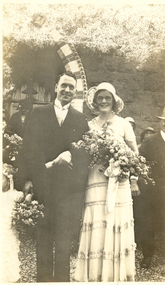
Photograph - Black and White, Frank Wright at wedding, 1930-40s?
... The man is holding the arm of a small flower girl. The man is Frank Wright and the occasion is a wedding....The Frank Wright Medal at the Royal South Street competition is awarded to an individual recognized as making an outstanding contribution to brass music in Australia. frank wright conductor brass band blue stone church Black and white photograph of a man dressed in a suit with a lady dressed in a long summer frock, hat and holding a large bouquet of flowers. They are standing outside the door of a bluestone church, with other people in the background. The man is holding the arm of a small ...Frank Wright was a renown resident of Smeaton, where he was born on 2 August 1901. He lived at Laura Villa, and attended Smeaton State School. His father William was a gold miner and his mother's name was Sarah. Their family won many singing and instrumental awards. Frank was tutored by Percy Code and was awarded a gold medal for the highest marks in the ALCM examinations in the British Colonies at the age of seventeen years. He became the Australian Open Cornet Champion by the age of eighteen. A year later, Frank conducted the City of Ballarat Band, and later the Ballarat Soldiers’ Memorial Band. He formed the Frank Wright Frisco Band and Frank Wright and his Coliseum Orchestra. These bands won many South Street awards, and Frank as conductor won many awards in the Australian Band Championship contest. In 1933 Frank Wright sailed to England to conduct the famous St Hilda’s Band and was later appointed Musical Director of the London County Council, where he organized many amazing concerts in parks, in and around the London district. He was made Professor of Brass and Military Band Scoring and conducted at the Guildhall of Music and Drama. Frank was often invited to adjudicate Brass Band Championships around Europe, in Australia, including South Street and in New Zealand. The Frank Wright Medal at the Royal South Street competition is awarded to an individual recognized as making an outstanding contribution to brass music in Australia.Black and white photograph of a man dressed in a suit with a lady dressed in a long summer frock, hat and holding a large bouquet of flowers. They are standing outside the door of a bluestone church, with other people in the background. The man is holding the arm of a small flower girl. The man is Frank Wright and the occasion is a wedding.frank wright, conductor, brass band, blue stone church -
 Federation University Historical Collection
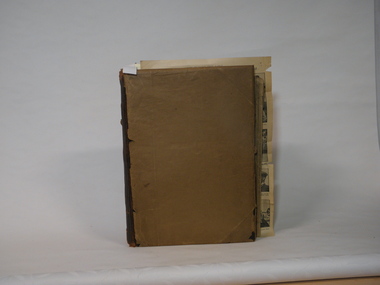
Book, Scrapbook Relating to the Career of Frank Wright, c.1930-1970
... Brown paper covered scrapbook containing newspaper clippings, but also includes letters, scripts, parts of programmes, photos, tickets and small printed scores. The scrapbook belonged to Frank Wright and began in January 1933 and finished in December 1935. ...This scrapbook has great research significance when researching the life and work of Frank Wright. frank wright music scrapbook smeaton cornet adjudicator newspaper clippings Throughout the book and on some of the clippings there are various additions written in pencil, mainly dates and the name of the newspaper. Brown paper covered scrapbook containing newspaper clippings, but also includes letters, scripts, parts of programmes, photos, tickets and small printed scores. ...This is a scrapbook of newspaper cuttings, invitations, show tickets and music sheets pertaining to Frank Wright and his musical career between the years of 1933 to 1935. The extra assorted clippings range from this date to the 1970. Frank Wright was a renown resident of Smeaton, where he was born in 1901. He lived at Laura Villa, and attended Smeaton State School. His father William was a gold miner and his mother's name was Sarah. Their family won many singing and instrumental awards. Frank was tutored by Percy Code and was awarded a gold medal for the highest marks in the ALCM examinations in the British Colonies at the age of seventeen years. He became the Australian Open Cornet Champion by the age of eighteen. A year later, Frank conducted the City of Ballarat Band, and later the Ballarat Soldiers’ Memorial Band. He formed the Frank Wright Frisco Band and Frank Wright and his Coliseum Orchestra. These bands won many South Street awards, and Frank as conductor won many awards in the Australian Band Championship contest. In 1933 Frank Wright sailed to England to conduct the famous St Hilda’s Band and was later appointed Musical Director of the London County Council, where he organized many amazing concerts in parks, in and around the London district. He was made Professor of Brass and Military Band Scoring and conducted at the Guildhall of Music and Drama. Frank was often invited to adjudicate Brass Band Championships around Europe, in Australia, including South Street and in New Zealand. The Frank Wright Medal at the Royal South Street competition is awarded to an individual recognized as making an outstanding contribution to brass music in Australia.This scrapbook has great research significance when researching the life and work of Frank Wright.Brown paper covered scrapbook containing newspaper clippings, but also includes letters, scripts, parts of programmes, photos, tickets and small printed scores. The scrapbook belonged to Frank Wright and began in January 1933 and finished in December 1935. In addition there are some loose clippings from the 1940's and 1951. b). Assorted newspaper clippings all pertaining to Frank Wright from the 1930's to the late 1970 and one invitation.Throughout the book and on some of the clippings there are various additions written in pencil, mainly dates and the name of the newspaper.frank wright, music, scrapbook, smeaton, cornet, adjudicator, newspaper clippings -
 Federation University Historical Collection
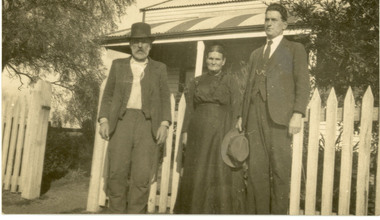
Photograph, Kodak, Frank Wright and his Parents at Laura Villa, Smeaton, 1922
... 2 black and white photographs of Frank Wright and his parents outside the front of their house, Laura Villa at Smeaton. .1) small original photograph probably taken on a Box Brownie .2) Kodak postcard reproduction...(An)" 2 black and white photographs of Frank Wright and his parents outside the front of their house, Laura Villa at Smeaton. .1) small original photograph probably taken on a Box Brownie .2) Kodak postcard reproduction Frank Wright and his Parents at Laura Villa, Smeaton Photograph Kodak ...Frank Wright was a renown resident of Smeaton, where he was born. He lived at Laura Villa, and attended Smeaton State School. His father William was a gold miner and his mother's name was Sarah. Their family won many singing and instrumental awards. Frank was tutored by Percy Code and became the Australian Open Cornet Champion by the age of eighteen. A year later, Frank conducted the City of Ballarat Band, and later the Ballarat Soldiers’ Memorial Band. He formed the Frank Wright Frisco Band and Frank Wright and his Coliseum Orchestra. These bands won many South Street awards, and Frank as conductor won many awards in the Australian Band Championship contest. In 1933 Frank Wright sailed to England to conduct the famous St Hilda’s Band and was later appointed Musical Director of the London County Council, where he organized many amazing concerts in parks, in and around the London district. He was made Professor of Brass and Military Band Scoring and conducted at the Guildhall of Music and Drama. Frank was often invited to adjudicate Brass Band Championships around Europe, in Australia, including South Street and in New Zealand. The Frank Wright Medal at the Royal South Street competition is awarded to an individual recognized as making an outstanding contribution to brass music in Australia. 2 black and white photographs of Frank Wright and his parents outside the front of their house, Laura Villa at Smeaton. .1) small original photograph probably taken on a Box Brownie .2) Kodak postcard reproduction.1) verso "Mr W. Wright, Frank Wright, Mrs W. Wright, At Laura Villa, Smeaton, 1922., V Holt. (An)"frank wright, smeaton, brass band, miners cottage, william wright, sarah wright, laura villa -
 Federation University Historical Collection
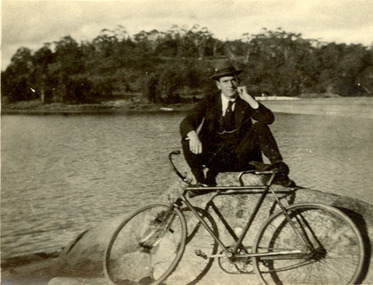
Photograph, Frank Wright at Gong Gong Reservoir, 06/06/1922
... The Frank Wright Medal at the Royal South Street competition is awarded to an individual recognized as making an outstanding contribution to brass music in Australia. frank wright gong gong reservoir bicycle Written in pen - (20) F.W. taken at Gong (near Ballarat), 6/6/22, by V.H. A small ...Frank Wright was a renown resident of Smeaton, where he was born. He lived at Laura Villa, and attended Smeaton State School. His father William was a gold miner and his mother's name was Sarah. Their family won many singing and instrumental awards. Frank was tutored by Percy Code and became the Australian Open Cornet Champion by the age of eighteen. A year later, Frank conducted the City of Ballarat Band, and later the Ballarat Soldiers’ Memorial Band. He formed the Frank Wright Frisco Band and Frank Wright and his Coliseum Orchestra. These bands won many South Street awards, and Frank as conductor won many awards in the Australian Band Championship contest. In 1933 Frank Wright sailed to England to conduct the famous St Hilda’s Band and was later appointed Musical Director of the London County Council, where he organized many amazing concerts in parks, in and around the London district. He was made Professor of Brass and Military Band Scoring and conducted at the Guildhall of Music and Drama. Frank was often invited to adjudicate Brass Band Championships around Europe, in Australia, including South Street and in New Zealand. The Frank Wright Medal at the Royal South Street competition is awarded to an individual recognized as making an outstanding contribution to brass music in Australia.A small black and white photograph of a man in a suit and hat seated on a rock. In front leaning against the rock is a bicycle and in the background is water with a timbered hill on the far side.Written in pen - (20) F.W. taken at Gong (near Ballarat), 6/6/22, by V.H.frank wright, gong gong reservoir, bicycle -
 Federation University Historical Collection
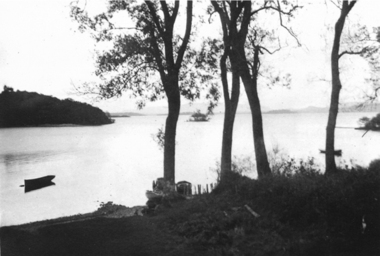
Photograph - black and white, Frank Wright at Loch Lomond, 1933, 1933
... Frank Wright. 2). Black and white photograph of a lake. In the foreground is a grassed area with four trees. a small boat is at anchor just offshore. ...Frank Wright. 2). Black and white photograph of a lake. In the foreground is a grassed area with four trees. a small boat is at anchor just offshore. ...Frank Wright was a renoun resident of Smeaton, where he was born on 2 August 1901. He lived at Laura Villa, and attended Smeaton State School. His father William was a gold miner and his mother's name was Sarah. Their family won many singing and instrumental awards. Frank was tutored by Percy Code and was awarded a gold medal for the highest marks in the ALCM examinations in the British Colonies at the age of seventeen years. He became the Australian Open Cornet Champion by the age of eighteen. A year later, Frank conducted the City of Ballarat Band, and later the Ballarat Soldiers’ Memorial Band. He formed the Frank Wright Frisco Band and Frank Wright and his Coliseum Orchestra. These bands won many South Street awards, and Frank as conductor won many awards in the Australian Band Championship contest. In 1933 Frank Wright sailed to England to conduct the famous St Hilda’s Band and was later appointed Musical Director of the London County Council, where he organized many amazing concerts in parks, in and around the London district. He was made Professor of Brass and Military Band Scoring and conducted at the Guildhall of Music and Drama. Frank was often invited to adjudicate Brass Band Championships around Europe, in Australia, including South Street and in New Zealand. The Frank Wright Medal at the Royal South Street competition is awarded to an individual recognized as making an outstanding contribution to brass music in Australia. He died on 16 November 1970.1). A black and white photograph of a man dressed in a suit, overcoat and hat, standing on a wooden pier over a stretch of water which is Loch Lomond. There are mountains to be seen in the distance. The man is Frank Wright. 2). Black and white photograph of a lake. In the foreground is a grassed area with four trees. a small boat is at anchor just offshore. The place is Loch Lomond.Written in pencil on the reverse side of the photograph is 1). "Frank Wright at Loch Lomond 1933" 2). Loch Lomond 1933frank wright, loch lomond, musician, composer -
 Federation University Historical Collection
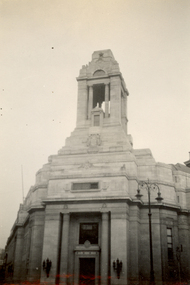
Photograph - black and white, Frank Wright, Masonic Temple, London, 1933, October 1933
... frank wright brass bands masonic temple london Written in pencil on back - New Masonic Temple, London, F.W. Oct 1933 Black and white photograph of the front of a tiered stone building with a bell tower open on the four sides at the top. The tower consists of a large square and smaller ...Frank Wright was a renown resident of Smeaton, where he was born on 2 August 1901. He lived at Laura Villa, and attended Smeaton State School. His father William was a gold miner and his mother's name was Sarah. Their family won many singing and instrumental awards. Frank was tutored by Percy Code and was awarded a gold medal for the highest marks in the ALCM examinations in the British Colonies at the age of seventeen years. He became the Australian Open Cornet Champion by the age of eighteen. A year later, Frank conducted the City of Ballarat Band, and later the Ballarat Soldiers’ Memorial Band. He formed the Frank Wright Frisco Band and Frank Wright and his Coliseum Orchestra. These bands won many South Street awards, and Frank as conductor won many awards in the Australian Band Championship contest. In 1933 Frank Wright sailed to England to conduct the famous St Hilda’s Band and was later appointed Musical Director of the London County Council, where he organized many amazing concerts in parks, in and around the London district. He was made Professor of Brass and Military Band Scoring and conducted at the Guildhall of Music and Drama. Frank was often invited to adjudicate Brass Band Championships around Europe, in Australia, including South Street and in New Zealand. The Frank Wright Medal at the Royal South Street competition is awarded to an individual recognized as making an outstanding contribution to brass music in Australia. Frank was also a Mason and became the Senior Warden in his Lodge.Black and white photograph of the front of a tiered stone building with a bell tower open on the four sides at the top. The tower consists of a large square and smaller round pillar on either side of the four openings and the roof is ornate. The building is the Masonic Temple in London.Written in pencil on back - New Masonic Temple, London, F.W. Oct 1933frank wright, brass bands, masonic temple, london -
 Federation University Historical Collection
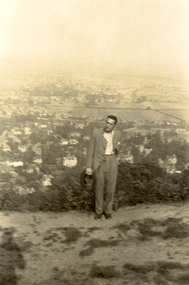
Photograph, Frank Wright on Beacon Hill, Great Malvern, 1934, 05/07/1934
... Black and white photograph of a man dressed in a suit and standing in a cleared area on a hill with small shrubbery behind and then the far background is made up of a township and fields. The man is Frank Wright and the place is Beacon Hill overlooking Great Malvern....The Frank Wright Medal at the Royal South Street competition is awarded to an individual recognized as making an outstanding contribution to brass music in Australia. frank wright conductor beacon hill great malvern Written in pencil on the back - Au, Frank Wright on Beacon Hill, Great Malvern, 5.7.34 Black and white photograph of a man dressed in a suit and standing in a cleared area on a hill with small shrubbery behind and then the far background is made up of a township and fields. ...Frank Wright was a renown resident of Smeaton, where he was born. He lived at Laura Villa, and attended Smeaton State School. His father William was a gold miner and his mother's name was Sarah. Their family won many singing and instrumental awards. Frank was tutored by Percy Code and was awarded a gold medal for the highest marks in the ALCM examinations in the British Colonies at the age of seventeen years. He became the Australian Open Cornet Champion by the age of eighteen. A year later, Frank conducted the City of Ballarat Band, and later the Ballarat Soldiers’ Memorial Band. He formed the Frank Wright Frisco Band and Frank Wright and his Coliseum Orchestra. These bands won many South Street awards, and Frank as conductor won many awards in the Australian Band Championship contest. In 1933 Frank Wright sailed to England to conduct the famous St Hilda’s Band and was later appointed Musical Director of the London County Council, where he organized many amazing concerts in parks, in and around the London district. He was made Professor of Brass and Military Band Scoring and conducted at the Guildhall of Music and Drama. Frank was often invited to adjudicate Brass Band Championships around Europe, in Australia, including South Street and in New Zealand. The Frank Wright Medal at the Royal South Street competition is awarded to an individual recognized as making an outstanding contribution to brass music in Australia.Black and white photograph of a man dressed in a suit and standing in a cleared area on a hill with small shrubbery behind and then the far background is made up of a township and fields. The man is Frank Wright and the place is Beacon Hill overlooking Great Malvern.Written in pencil on the back - Au, Frank Wright on Beacon Hill, Great Malvern, 5.7.34frank wright, conductor, beacon hill, great malvern -
 Federation University Historical Collection
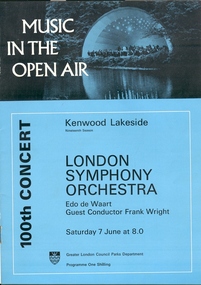
Programme, Greater London Council Parks Development Programs, 1967, 1967
... Small blue covered booklets .1) London Symphony Orchestra .2) London Symphony Orchestra, 3 June 1967 .3) Royal Liverpool Philharmonic Orchestra, 24 June 1967 .4) Sinfonia of London, 8 July 1967 .5) New Philharmonic Orchestra, 22 July 1967 .6) New Philharmonic Orchestra, 01July 1967 .7) The Halle Orchestra, 15 July 1967 .8) Bournemouth Symphony Orchestra, 10 June 1967 Gift of Frank Ritchie, Nephew of Frank Wright, 2014...frank wright music brass bands Small blue covered booklets .1) London Symphony Orchestra .2) London Symphony Orchestra, 3 June 1967 .3) Royal Liverpool Philharmonic Orchestra, 24 June 1967 .4) Sinfonia of London, 8 July 1967 .5) New Philharmonic Orchestra, 22 July 1967 .6) New Philharmonic Orchestra, 01July 1967 .7) The Halle Orchestra, 15 July 1967 .8) Bournemouth Symphony Orchestra, 10 June 1967 Gift of Frank Ritchie, Nephew of Frank Wright, 2014 Greater London Council Parks Development Programs, 1967 Programme ...Small blue covered booklets .1) London Symphony Orchestra .2) London Symphony Orchestra, 3 June 1967 .3) Royal Liverpool Philharmonic Orchestra, 24 June 1967 .4) Sinfonia of London, 8 July 1967 .5) New Philharmonic Orchestra, 22 July 1967 .6) New Philharmonic Orchestra, 01July 1967 .7) The Halle Orchestra, 15 July 1967 .8) Bournemouth Symphony Orchestra, 10 June 1967 Gift of Frank Ritchie, Nephew of Frank Wright, 2014frank wright, music, brass bands -
 Federation University Historical Collection
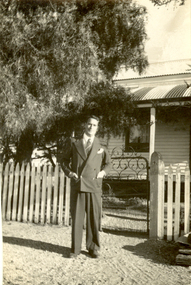
Photograph - Black and White, Frank Wright at Smeaton
... Small black and white photo of Frank Wright dressed in suit standing outside Family home at Smeaton...Photo outside his home in Smeaton frank wright smeaton cornet Small black and white photo of Frank Wright dressed in suit standing outside Family home at Smeaton Frank Wright at Smeaton Photograph - Black and White ...Frank Wright was a renown resident of Smeaton, where he was born. He lived at Laura Villa, and attended Smeaton State School. His father William was a gold miner and his mother's name was Sarah. Their family won many singing and instrumental awards. Frank was tutored by Percy Code and was awarded a gold medal for the highest marks in the ALCM examinations in the British Colonies at the age of seventeen years. He became the Australian Open Cornet Champion by the age of eighteen. A year later, Frank conducted the City of Ballarat Band, and later the Ballarat Soldiers’ Memorial Band. He formed the Frank Wright Frisco Band and Frank Wright and his Coliseum Orchestra. These bands won many South Street awards, and Frank as conductor won many awards in the Australian Band Championship contest. In 1933 Frank Wright sailed to England to conduct the famous St Hilda’s Band and was later appointed Musical Director of the London County Council, where he organized many amazing concerts in parks, in and around the London district. He was made Professor of Brass and Military Band Scoring and conducted at the Guildhall of Music and Drama. Frank was often invited to adjudicate Brass Band Championships around Europe, in Australia, including South Street and in New Zealand. The Frank Wright Medal at the Royal South Street competition is awarded to an individual recognized as making an outstanding contribution to brass music in Australia.Photo outside his home in SmeatonSmall black and white photo of Frank Wright dressed in suit standing outside Family home at Smeatonfrank wright, smeaton, cornet -
 Federation University Historical Collection
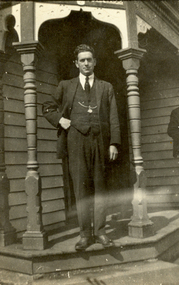
Photograph - Black and White, Frank Wright
... Small Black and white photo of Frank Wright dressed in a three piece suit, with a phob watch on his vest standing outside a home...Frank Wright in suit frank wright Small Black and white photo of Frank Wright dressed in a three piece suit, with a phob watch on his vest standing outside a home Frank Wright Photograph - Black and White ...Frank Wright was a renown resident of Smeaton, where he was born. He lived at Laura Villa, and attended Smeaton State School. His father William was a gold miner and his mother's name was Sarah. Their family won many singing and instrumental awards. Frank was tutored by Percy Code and was awarded a gold medal for the highest marks in the ALCM examinations in the British Colonies at the age of seventeen years. He became the Australian Open Cornet Champion by the age of eighteen. A year later, Frank conducted the City of Ballarat Band, and later the Ballarat Soldiers’ Memorial Band. He formed the Frank Wright Frisco Band and Frank Wright and his Coliseum Orchestra. These bands won many South Street awards, and Frank as conductor won many awards in the Australian Band Championship contest. In 1933 Frank Wright sailed to England to conduct the famous St Hilda’s Band and was later appointed Musical Director of the London County Council, where he organized many amazing concerts in parks, in and around the London district. He was made Professor of Brass and Military Band Scoring and conducted at the Guildhall of Music and Drama. Frank was often invited to adjudicate Brass Band Championships around Europe, in Australia, including South Street and in New Zealand. The Frank Wright Medal at the Royal South Street competition is awarded to an individual recognized as making an outstanding contribution to brass music in Australia.Frank Wright in suitSmall Black and white photo of Frank Wright dressed in a three piece suit, with a phob watch on his vest standing outside a homefrank wright -
 Federation University Historical Collection
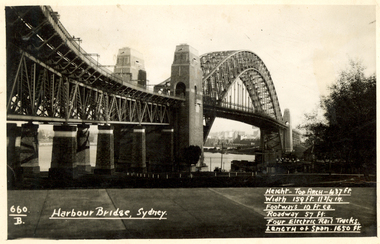
Postcard, Kodak, Sydney Harbour Bridge, c1949, 13/10/1949
... Snelling in London from Frank Wright Black and white photograph of the Sydney Harbour Bridge. A small section of the city and water can be seen beneath the arched span of the bridge. ...Postcard written by Frank Wright to a friend, W. Snelling in London. Frank Wright was a renown resident of Smeaton, where he was born. He lived at Laura Villa, and attended Smeaton State School. His father William was a gold miner and his mother's name was Sarah. Their family won many singing and instrumental awards. Frank was tutored by Percy Code and was awarded a gold medal for the highest marks in the ALCM examinations in the British Colonies at the age of seventeen years. He became the Australian Open Cornet Champion by the age of eighteen. A year later, Frank conducted the City of Ballarat Band, and later the Ballarat Soldiers’ Memorial Band. He formed the Frank Wright Frisco Band and Frank Wright and his Coliseum Orchestra. These bands won many South Street awards, and Frank as conductor won many awards in the Australian Band Championship contest. In 1933 Frank Wright sailed to England to conduct the famous St Hilda’s Band and was later appointed Musical Director of the London County Council, where he organized many amazing concerts in parks, in and around the London district. He was made Professor of Brass and Military Band Scoring and conducted at the Guildhall of Music and Drama. Frank was often invited to adjudicate Brass Band Championships around Europe, in Australia, including South Street and in New Zealand. The Frank Wright Medal at the Royal South Street competition is awarded to an individual recognized as making an outstanding contribution to brass music in Australia.Black and white photograph of the Sydney Harbour Bridge. A small section of the city and water can be seen beneath the arched span of the bridge.Written in white on front - 660.B, Harbour Bridge, Sydney., Height-Top arch - 437 ft.,Width 159 ft. 11 3/4 in., Footways 10 ft. ea., Roadway 57 ft., Four Electric Rail Tracks., Length of span 1650 ft. Handwritten on back - Message to W. Snelling in London from Frank Wrightfrank wright, cornet, conductor, sydney harbour bridge -
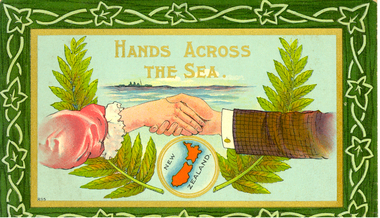 Federation University Historical Collection
Postcard, Hands Across the Sea. New Zealand, Circa 1910
... Frank Wright from his mother who is visiting New Zealand. Hand-coloured postcard in which the picture is framed by a border of a leaf and vine pattern. The picture is of the lower arms of a woman from the left hand side of the card and a man from the right hand side of the card shaking hands in the middle. Behind and below the hands is a small ...Frank Wright was a renown resident of Smeaton, where he was born. He lived at Laura Villa, and attended Smeaton State School. His father William was a gold miner and his mother's name was Sarah. Sarah spent six months in New Zealand in 1910. William and Sarah's family won many singing and instrumental awards. Frank was tutored by Percy Code and was awarded a gold medal for the highest marks in the ALCM examinations in the British Colonies at the age of seventeen years. He became the Australian Open Cornet Champion by the age of eighteen. A year later, Frank conducted the City of Ballarat Band, and later the Ballarat Soldiers’ Memorial Band. He formed the Frank Wright Frisco Band and Frank Wright and his Coliseum Orchestra. These bands won many South Street awards, and Frank as conductor won many awards in the Australian Band Championship contest. In 1933 Frank Wright sailed to England to conduct the famous St Hilda’s Band and was later appointed Musical Director of the London County Council, where he organized many amazing concerts in parks, in and around the London district. He was made Professor of Brass and Military Band Scoring and conducted at the Guildhall of Music and Drama. Frank was often invited to adjudicate Brass Band Championships around Europe, in Australia, including South Street and in New Zealand. The Frank Wright Medal at the Royal South Street competition is awarded to an individual recognized as making an outstanding contribution to brass music in Australia.Hand-coloured postcard in which the picture is framed by a border of a leaf and vine pattern. The picture is of the lower arms of a woman from the left hand side of the card and a man from the right hand side of the card shaking hands in the middle. Behind and below the hands is a small map of New Zealand in a golden circle. New Zealand fern is positioned from the circle up behind the arms to the top of the card on both sides and above the hands is a depiction of a ship sailing on the sea.The postcard contains a message to Frank Wright from his mother who is visiting New Zealand.frank wright, sarah wright, new zealand, postcard -
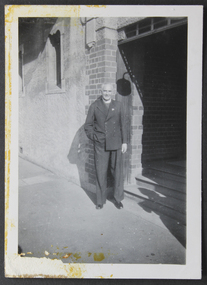 Mission to Seafarers Victoria
Photograph, Padre Oliver in front of the Mission, Flinders Street, Circa 1960
... Small black and white gloss photograph depicting Padre Frank Oliver standing at the front steps to the Mission....The image suggests that Frank Oliver was photographed around the time his tenure was coming to a close in the late 1950s. frank oliver mtsv 'Padre Oliver' is penciled on the back and the number '179' is stamped there. Small ...The image suggests that Frank Oliver was photographed around the time his tenure was coming to a close in the late 1950s.Small black and white gloss photograph depicting Padre Frank Oliver standing at the front steps to the Mission.'Padre Oliver' is penciled on the back and the number '179' is stamped there.frank oliver, mtsv
