
Showing 18 items matching "fred champion"
-
 St Kilda Historical Society
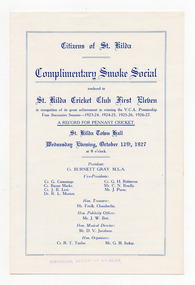
Ephemera - Special event program, Complimentary Smoke Social, 1927
... ...Fred Champion...St Kilda Cricket Club Maynard Dakin J Alexander Browne Norman Bradshaw Fred Champion Dave Bell W Burrell Folded cream coloured paper, printed in blue Complimentary Smoke Social Ephemera Special event program ...Event at the St Kilda Town Hall in recognition of the St Kilda Cricket Club First Eleven winning the VCA Premiership in four successive seasons - 1923-24, 1924-25, 1925-26, 1926-27. Details of the matches are set out on the back of the program. A smoke social was a predominantly Australian form of male only social event in the late nineteenth and early twentieth century, until about the 1940s, where men would gather to smoke. Smoke socials were often coupled with a formal dinner, an annual general meeting or a musical revue and were run by football clubs, charitable organizations, civic organizations, trade unions, and governments.Folded cream coloured paper, printed in bluest kilda cricket club, maynard dakin, j alexander browne, norman bradshaw, fred champion, dave bell, w burrell -
 Tennis Australia
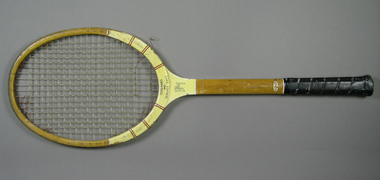
Racquet, Circa 1940
... Inscription along left side: SPECIALLY MADE BY SLAZENGERS IN CONSULTATION WITH FRED PERRY/WORLD CHAMPION, AND DAN MASKELL COACH, ALL ENGLAND CLUB WIMBLEDON. ...Inscription along left side: SPECIALLY MADE BY SLAZENGERS IN CONSULTATION WITH FRED PERRY/WORLD CHAMPION, AND DAN MASKELL COACH, ALL ENGLAND CLUB WIMBLEDON. ...A Slazenger P.M.instructional racquet, with red and white decoration. Decal on throat on obverse: PM. Instructions feature on base of racquet head, on both sides, and along right side of handle. Inscription along left side: SPECIALLY MADE BY SLAZENGERS IN CONSULTATION WITH FRED PERRY/WORLD CHAMPION, AND DAN MASKELL COACH, ALL ENGLAND CLUB WIMBLEDON. Partly legible decal of retailer features on throat on reverse. Materials: Wood, Nylon, Paint, Ribbon, Leather, Adhesive tape, Ink, Guttennis -
 Tennis Australia
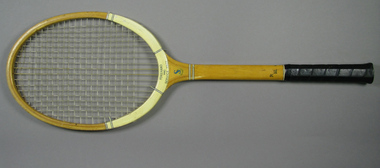
Racquet, Circa 1945
... Inscription along left side: SPECIALLY MADE BY SLAZENGER IN CONSULTATION WITH WORLD CHAMPION/FRED PER[RY A]ND L.T.A. TRAINING MANAGER DAN MASKELL. ...Inscription along left side: SPECIALLY MADE BY SLAZENGER IN CONSULTATION WITH WORLD CHAMPION/FRED PER[RY A]ND L.T.A. TRAINING MANAGER DAN MASKELL. ...A Slazenger P.M.instructional racquet, with blue and white decoration. Decal on throat on obverse features a blue 'S' on a gold disc, with 'SLAZENGERS' below. Inscription at base of stem on obverse: P.M. Insstructions feature on base of racquet head, on both sides, and along right side of handle. Inscription along left side: SPECIALLY MADE BY SLAZENGER IN CONSULTATION WITH WORLD CHAMPION/FRED PER[RY A]ND L.T.A. TRAINING MANAGER DAN MASKELL. Materials: Wood, Nylon, Paint, Ribbon, Leather, Adhesive tape, Ink, Guttennis -
 Lakes Entrance Historical Society
Postcard - Timber Cutters camp -The 'Young' Family Nowa Nowa Gippsland Victoria, 1906
... This was on the back of another family copy Left to right Alex Young Mr Barlow Robert Young Ken Young ( my grandfather) Norm Young Les Lee ( my grandfathers step brother) Ern Young ( my grandfathers step brother) Bill Weston ( champion wood cutter ) Fred Mockford Charlie Weston ( champion woodcutter ) Photo taken Nowa Nowa 100 yards from the road by Mr Bulmer who was then missionary at Lake Tyers Taken 1906 Timber Cutters Camp...This was on the back of another family copy Left to right Alex Young Mr Barlow Robert Young Ken Young ( my grandfather) Norm Young Les Lee ( my grandfathers step brother) Ern Young ( my grandfathers step brother) Bill Weston ( champion wood cutter ) Fred Mockford Charlie Weston ( champion woodcutter ) Photo taken Nowa Nowa 100 yards from the road by Mr Bulmer who was then missionary at Lake Tyers Taken 1906 Timber Cutters Camp families houses social history Sepia postcard showing two men boxing, other people with musical instruments plus three children on chairs Postcard Timber Cutters camp -The 'Young' Family Nowa Nowa Gippsland Victoria ...Karlie Robbie wrote: This information was on the photo my great uncle donated to the Chinese Dragon museum it has a connection to Bendigo's Ah Poo / Lee family who were involved in the founding of the Chinese Easter parade.. My uncles recollection of the day is written on the back: "Photo of our old bark hut at Nowa Nowa year 1906. Dad has the gloves on with Mr Barlow. My 2 brothers are beside me and my stepbrother Les "Lee" [Ah Poo] is standing near door. Mum and my stepsister May are inside. They would not have their photo taken. Mr. Bulmer conducted a church service after lunch on that Sunday morning. N. A. Young". Les's father Alexander James Ah Poo (later changed to Lee) and grandfather James Ah Poo were both prominent goldfields interpreters. Alexander predeceased his father and his widow Alice remarried Alexander Young, and it's their combined family who feature in this photo. This was on the back of another family copy Left to right Alex Young Mr Barlow Robert Young Ken Young ( my grandfather) Norm Young Les Lee ( my grandfathers step brother) Ern Young ( my grandfathers step brother) Bill Weston ( champion wood cutter ) Fred Mockford Charlie Weston ( champion woodcutter ) Photo taken Nowa Nowa 100 yards from the road by Mr Bulmer who was then missionary at Lake Tyers Taken 1906 Timber Cutters CampSepia postcard showing two men boxing, other people with musical instruments plus three children on chairs families, houses, social history -
 City of Melbourne Libraries
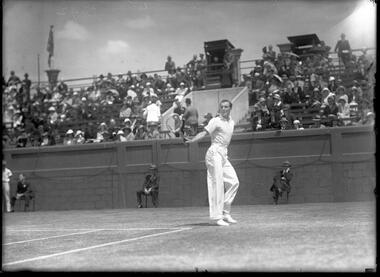
Photograph, Bull, Hugh Jones, 1897-1993, Tennis player Fred Perry, Kooyong
... Tennis champion Fred Perry backhands the ball at Kooyong, 1934 “I didn’t aspire to be a good sport, “champion” was good enough for me.” ...Tennis champion Fred Perry backhands the ball at Kooyong, 1934 “I didn’t aspire to be a good sport, “champion” was good enough for me.” ...Tennis champion Fred Perry backhands the ball at Kooyong, 1934 “I didn’t aspire to be a good sport, “champion” was good enough for me.” Fred Perry (1909-1995) was an English tennis champion who won eight Grand Slam titles including Wimbledon in 1934, 1935, 1936 and the Australian Open in 1934. Australian sports journalist Alan Trengove remarked, “When Perry walked out to play in his crisp white flannels and matching white blazer, thousands of female hearts missed a beat!” In 1935, Fred and Dorothy defeated Harry and Nell Hopman in the Wimbledon mixed doubles, and in 1936 they won against America. Fred started a successful sportswear brand in 1952, which continues today. Fred initially wanted a smoking pipe as the emblem as he was an enthusiastic smoker, but was talked out of it because it wouldn’t appeal to women. The familiar laurel was used instead. Featured in "Newsworthy: Melbourne in photographs 1933-1936" exhibition at East Melbourne Library, October to December 2023. Exhibition caption by project volunteer Fiona Collyer. Photographer notations on slide: "F. Perry 1934 Action B42" Photograph taken at Kooyong, Melbourne, but used in article about Wimbledon 1934. Published: The Age 7 July 1934 p 13 Published title: "THE FINAL STAGE." Published caption: F. J. Perry (England) Trove article identifier: http://nla.gov.au/nla.news-article205525840 Research by project volunteer Fiona Collyer: Frederick John Perry, 18 May 1909 to 2 Feb 1995 Fred Perry was an English tennis and table-tennis champion. He won eight Grand Slam titles – Wimbledon Gentlemen’s Singles, US Open three times, Australian Open and French Open once each. Fred had natural hand-to eye co-ordination, solid strokes and a devastating forehand that he used soon after the ball bounced. His fierce competitiveness and unabashed confidence gave him the winning edge. Fred was born in Stockport, Cheshire in 1909. His father, Samuel, a committed socialist, was a cotton spinner who became Secretary of the Co-Operative Party and later a Labour and Co-Operative Party M.P. When Fred was nine years old the family moved to Ealing, London. In 1929, at the age of 19, Fred became the World Champion at table-tennis – a new international sport at the time. He then decided to switch from table-tennis to tennis after his father told him to stop spending so much time in the smoke-filled halls that held table-tennis events. “You look like death warmed up.” he said. In the tennis world, Fred was regarded as an upstart intruder, and was the victim of snobbery and prejudice for his working class background. Fred trained with Arsenal Football Club in defiance of the LTA (Lawn Tennis Association) which had a dim view of extra-curricular exercise. His sarcastic toff-baiting call of “very clevah” when an opponent played a good shot and his habit of vaulting over the net whenever he won a match made Fred compelling to watch. Fred’s prize for winning Wimbledon was a £25 shopping voucher and a replica trophy. There was no on-court presentation; instead it was the custom to offer congratulations in the dressing rooms. One of the defining moments of Fred’s career came on the day he won Wimbledon for the first time in 1934. He was in the bathtub after the match when he over-heard former tennis player Brame Hillyard, a committee member of the All-England Club talking to Australian runner-up Jack Crawford. “This was the one day when the best man didn’t win.” Hillyard had brought a bottle of champagne and an All-England neck-tie, which was official recognition of Fred now being a member of one of the sporting world’s most elite clubs. Instead of a formal presentation to Fred, Hillyard draped the tie unceremoniously over his seat in the dressing room, handed Jack the bottle of champagne, and left. “Instead of Fred Perry the Champ, I felt like J. Fred Muggs the Chimp!” he said. When Fred finally went professional, an official at LTA told him he would never wear the club sweater again. Fred said “I made sure he wouldn’t have to worry about that, I sent a sleeve to him as a present!” In 1935, RKO offered Fred a contract for two movies at $50,000 each, but he had to turn down the offer as it would be in breach of LTA rules and he would lose his amateur status. In 1935, Fred married American film actress Helen Vinson in Harrison, New York, waking up a registrar at five minutes to midnight to avoid being married on Friday the thirteenth – “To be on the safe side” they said. In 1936, having been world number one tennis player for three years, Fred quit amateur tennis and moved to America. He joined tennis players Ellsworth Vines and Don Budge on a professional tennis circuit, travelling around US cities and receiving a share of the gate receipts. The All-England Club removed his honorary membership and the tie that went with it – “After all the trouble they’d gone to presenting it to me.” he quipped acidly. Despite being a three-time Wimbledon champion, Fred was barred from playing on LTA affiliated courts, so when he held his pro-tour through the UK in 1937, the matches had to be played on a portable wooden court, transported around by truck to football grounds. Fred was co-owner of the Beverley Hills Tennis Club. The exclusive membership consisted of Hollywood actors, directors, writers and studio heads. At the launch of the re-branded club in 1937, Fred played a doubles match with Charlie Chaplin, Groucho Marx and Ellsworth Vines, which he won with Charlie. Watching on was a Who’s Who of Hollywood actors including Barbara Stanwyck, Joan Crawford, the Marx Brothers, Errol Flynn, and Ronald Coleman to name a few. Fred was romantically linked to Hollywood actresses Marlene Dietrich, Jean Harlow, and Bette Davis, and was engaged to British actress Mary Lawson. In 1939, he became a US citizen and in 1942 enlisted in the US Air Force. Fred wore medical gauze around his right wrist while playing to stop sweat from flowing onto the handle of his racket and to wipe sweat from his brow. He paired up with former footballer Austrian Tibby Wegner to develop an anti-perspirant device. The prototype towelling sweatbands were given free to players at tournaments and proved popular. In 1952, Fred Perry Sportswear began and the trademark slimfit white polo shirt with embroidered laurel wreath on the left breast was born. The laurel wreath was inspired by Wimbledon’s original emblem and is the ancient symbol for triumph and victory. Fred was an enthusiastic pipe smoker and wanted a pipe to be the logo, however he was persuaded that it wouldn’t appeal to women. Years after the brand started, French tennis champion and sportswear designer Rene Lacoste and Fred were interviewed together for TV. Lacoste said ”I made the shirt and you made me a great compliment doing the same thing.” Fred responded “You made the back of it longer than the front – so between us we revolutionised it, didn’t we?” After Fred retired from competition tennis in 1956, he worked as a BBC tennis commentator for TV and radio and wrote columns for British newspapers. He also coached at Beca Raton Club in Florida and was director of golf at Runaway Bay in Jamaica. In 1984, 50 years after his first title, Wimbledon erected a statue of Fred. “I never thought I’d live to see the day when a statue was put up to the son of a Labour M.P. inside the manicured grounds of Wimbledon,” he said. Fred married four times, firstly to Texan actress Helen Vinson. His final marriage to Barbara Riese in 1952 lasted until his death. They had two children, Penny and David. Fred died in the Epworth Hospital, Richmond, Melbourne after falling in his hotel bathroom while visiting for the Australian Open. His ashes are in an urn near his statue at Wimbledon. - In 1975, Fred was inducted into the International Tennis Hall of Fame. - In 2002, the Fred Perry 23 km walking route was opened in Stockport. - An English Heritage blue plaque was attached to his Ealing house where he lived in from 1919-1935. A letter to The Times… In 1932, Dr Daniel Prenn and Gottfried Von Cramm of Germany beat the formally dominant Great Britain team of Fred Perry and Bunny Austin in the Davis Cup. Prenn was not selected for the 1933 Davis Cup Team after Chancellor Adolf Hitler announced his “Aryan only” agenda for Germany’s sporting bodies. Dr Prenn, a Jew, was born in Vilnius (then part of Russia), and in 1920 his family fled to Berlin as refugees after the pogroms. On 15 April 1933, Fred Perry and Bunny Austin (a member at the Oxford Group, a Christian anti-war movement), wrote a letter of protest to the London Times: "Sir, We have read with considerable dismay the official statement which has appeared in the Press that Dr D.D. Prenn is not to represent Germany in the Davis Cup on the grounds that he is of Jewish origin. We cannot but recall the scene when, less than twelve months ago, Dr Prenn before a large crowd at Berlin won for Germany against Great Britain the semi-final round of the European Zone of the Davis Cup, and was carried from the arena amidst spontaneous and tremendous enthusiasm. We have always valued our participation in international sport, because we believed it to be a great opportunity for the promotion of better international understanding and because it was a human activity that countenanced no distinction of race, class or creed. For this reason, if for none other, we view with great misgivings any action which may well undermine all that is most valuable in international competitions. Yours faithfully, H.W. Austin, Fred Perry.” Daniel Prenn emigrated to Britain in 1935. References: Fred Perry: British tennis legend, Kevin Jefferys, Pitch Publishing, 2017 'Fred Perry: The hero from the wrong side of the tramlines', Paul Newman, tennis correspondent, The Independent, 21 November 2015 https://www.independent.co.uk/sport/tennis/fred-perry-the-hero-from-the-wrong-side-of-the-tramlines-a6743721.html. 'Fred Perry: the radical of Wimbledon', Bob Holman, Socialist Worker, 26 June 2009 https://socialistworker.co.uk/comment/fred-perry-the-radical-of-wimbledon/ 'Daniel Prenn (1904-1991) – A little-known Jewish German tennis player', newmark401, Tennis Warehouse forums, 12 May 2011 http://tt.tennis-warehouse.com/index.php?threads/daniel-prenn-1904-1991-–-a-little-known-jewish-german-tennis-player.379780/Photographer notations on slide: "F. Perry 1934 Action B42".tennis, 1930-1939 -
 City of Melbourne Libraries
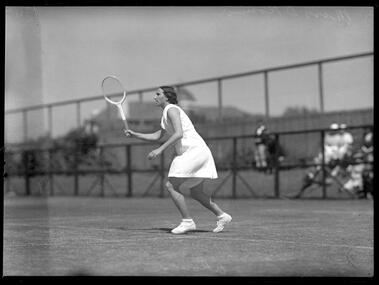
Photograph, Bull, Hugh Jones, 1897-1993, Tennis player, Dorothy Round, Albert Grounds, Melbourne
... Dorothy’s doubles partner, English tennis champion Fred Perry, did not approve of shorts for men and was particularly perturbed at the idea of women wearing them. ...Dorothy’s doubles partner, English tennis champion Fred Perry, did not approve of shorts for men and was particularly perturbed at the idea of women wearing them. ...Dorothy Round in shorts English-born Dorothy Round (1909-1982) plays tennis at Albert Park Cricket Ground, wearing her signature white sleeveless dress with divided skirt, pleated to form loose shorts. Dorothy won Wimbledon in 1934 and 1937, and the Australian Open in 1935. In the early 1930s, many women players in Europe and USA swapped stockings and long skirts for bare legs, short skirts and shorts. In October 1933, Mr Harley Malcolm, Secretary of Lawn Tennis Association Australia (LTAA) declared, “I consider shorts not regulation costume and would stop both men and women, particularly women, wearing them. I think women’s desire to strut themselves in such a costume is unreasonable.” However by November, the Victorian Lawn Tennis Association (VLTA) officially allowed shorts at Kooyong for both sexes. At the July 1934 Wimbledon Women’s Final, played in front of the King and Queen, Dorothy wore a sleeveless dress with the skirt divided. Her American competitor, Helen Jacobs, wore white tailored shorts with a black stripe on either side, described as “mannish, though businesslike”. In October, Australian tennis player Mrs Nell Hopman warned, “When Miss Dorothy Round arrives in a few weeks’ time, the LTAA will have to reconsider its decision about women playing in dresses, as she is sure to bring a trunkful of shorts. Miss Round has a “shorts only” rule which I fancy she will stick to here. She is the most stylish player I saw abroad.” The papers also reported that “Mrs Hopman saw no “he girls” among tennis players in Europe. Even the almost universal rule for shorts did not make them look masculine.” Dorothy said, “I wear shorts because they do not get in the way as a frock does. Mine are made in one piece and this avoids any tightness around the waist.” Featured in "Newsworthy: Melbourne in photographs 1933-1936" exhibition at East Melbourne Library, October to December 2023. Exhibition caption by project volunteer, Fiona Collyer. Photographer notations on slide: "Mrs D Round; D Round B6" Description: Dorothy Round plays tennis at Albert Grounds, Albert Park, Melbourne. She is wearing her signature white sleeveless dress with divided skirt, pleated to form loose shorts. Research by project volunteer, Fiona Collyer: Dorothy Round (1909-1982) was an English tennis champion from Dudley, Worcestershire. She won the Wimbledon Women’s Singles in 1934 and 1937. In 1935 she won the Australian Championships Women’s Singles in Melbourne. Dorothy won the Mixed Doubles at Wimbledon in 1934, 1935 and 1936. Dorothy was a staunch Methodist and taught Sunday School at Dudley Wesleyan Methodist Church throughout her career. She did not drink, smoke, dance or play tennis on Sundays and declined to compete in the 1933 French Open as tennis officials refused to comply to her scheduling preferences of No Sundays. During the Wightman Cup in New York when play was rained out on the Saturday, Dorothy refused to return on the Sunday. Officials reluctantly agreed to reschedule the clash for Monday, where she put in a sub par performance, prompting the New York Times to quip “Miss Round doesn’t play on Sundays, and doesn’t play particularly well on Mondays!”. In the early 1930s many women tennis players in Europe and USA abandoned their stockings and long skirts for bare legs, short skirts and shorts and some men swapped their long flannel trousers for shorts. British player Henry “Bunny” Austin was the first top male player to wear shorts at Centre Court Wimbledon in 1933, and his sister Joan Lycett nee Austin became the first female player to play without stockings on Centre Court, appearing with bare legs and ankle socks in 1931. In 1933 Mr Harley Malcolm, Secretary of the Lawn Tennis Association Australia (LTAA) and referee of big tournaments , said “the rules say regulation costume must be worn – I consider shorts are not regulation costume and would stop both men and women, particularly women, wearing them. I think women’s desire to strut themselves in such a costume is unreasonable.” (Herald 5/10/1933) However, by November 1933 the Victorian Lawn Tennis Assn officially allowed shorts as regulation dress at Kooyong for both sexes. One speaker suggested that as the majority of women were knock-kneed, the privilege of wearing shorts would not be taken up extensively by them. He added that women were not intended by nature to wear such garments. Another member mentioned that men were rather handsome objects and “works of art” and would carry off the short pants vogue nicely. (Sun Sydney 15/11/33) At the 1934 Wimbledon Singles Finals, playing in front of King George V and Queen Mary, Dorothy wore her signature outfit of sleeveless white dress with the skirt divided and pleated to form loose shorts and American Helen Jacobs wore white tailored shorts with a black stripe on either side described as “mannish, though business like.” In the lead up to Dorothy’s arrival in Australia to compete in the Australian Championship of 1935, there was much speculation written in the press about Dorothy’s preference for wearing shorts. Tennis player Mrs Nell Hopman warned “When Miss Dorothy Round arrives in a few weeks’ time, the Australian Lawn Tennis Association will have to reconsider its decision about women playing in dresses, as she is sure to bring a trunkful of shorts.” “Miss Round has a “shorts only” rule which I fancy she will stick to here. She is the most stylish player abroad.” Mrs Hopman saw no “he girls” among the tennis players in Europe. Even the almost universal rule for shorts did not make them look masculine. Mrs Hopman brought back a couple of pleated pairs that tennis player and designer Mrs Fearnley-Whittingstall (nee Eileen Bennett) made popular and worn by most English players. “They are really quite radical for they look no more startling than a short, pleated skirt” she said. (Newcastle Sun 1/10/1934) Writing for the Sydney Morning Herald 6/12/34, Dorothy said ”I have heard that a photograph of a player wearing shorts was sent to the Queen for her approval and I understand that she said in reply “that they were very attractive”. The Queen is a frequent and interested visitor to Wimbledon so this story is most credible and possibly explains the lack of official opposition to shorts this year.” “I wear shorts because they do not get in the way as a frock does. You have probably noticed that mine are made in one piece and this avoids any tightness around the waist. I don’t know whether shorts have come to stay. They do not suit everybody and the majority of the men don’t like the women in them and this may help condemn the fashion. I really think the men dislike them because too many people who shorts obviously do not suit rushed to be in the fashion and the result was devastating. For my part, I hope that this comfortable fashion endures.” Dorothy’s doubles partner, English tennis champion Fred Perry, did not approve of shorts for men and was particularly perturbed at the idea of women wearing them. Fred always wore long, white flannel trousers and white collared polo shirt on the tennis court. In July 1935 Dorothy took up a post as a dress designer and sportswear design advisor at British outfitters Jaeger. She published two books – “Modern Lawn Tennis” in 1935 and ”Tennis for Girls” in 1938 – described as cheerful and sensible guides. In 1937, Dorothy married Dr Douglas Leigh Little at Dudley Wesleyan Methodist Church. Her wedding dress was designed by renowned fashion designer Teddy Tinling who specialised in designing tennis dresses. (Tinling designed the dress worn by Billie Jean King for the famous “Battle of the Sexes” tennis match against Bobby Riggs in 1973.) News reel co. Gaumont British News filmed the wedding, showing 10,000 people, mostly women, surging towards the couple, describing it as a riot, and quipping that Dorothy’s forehand was useful when cutting the wedding cake. The city of Dudley gifted the couple an antique walnut bedroom suite chosen by them. Dorothy and Douglas had a son, Ian, and a daughter, Patricia. She gave up competitive tennis to coach and write newspaper articles. In later life she took up golf. Dorothy died of cancer in 1982 aged 73. She was inducted into the International Tennis Hall of Fame 1986. In 2004 a bronze bust of Dorothy was installed at Wimbledon, and in 2013 a life size bronze statue was erected at Priory Park, Dudley. References: MRS. HOPMAN RETURNS (1934, October 1). The Newcastle Sun (NSW : 1918 - 1954), p. 9. Retrieved September 20, 2023, from http://nla.gov.au/nla.news-article166292409 FIGURED IT OUT (1933, November 15). The Sun (Sydney, NSW : 1910 - 1954), p. 13 (FINAL EXTRA). Retrieved September 20, 2023, from http://nla.gov.au/nla.news-article230199908 FASHIONS OF THE TENNIS COURTS. (1934, December 6). The Sydney Morning Herald (NSW : 1842 - 1954), p. 7 (Women's Supplement). Retrieved September 20, 2023, from http://nla.gov.au/nla.news-article28021332 Leading Tennis Referee Condemns Wearing of Shorts (1933, October 5). The Herald (Melbourne, Vic. : 1861 - 1954), p. 11. Retrieved September 20, 2023, from http://nla.gov.au/nla.news-article243193607 DOROTHY ROUND Chooses Going-Away TROUSSEAU (1937, September 4). The Australian Women's Weekly (1933 - 1982), p. 39. Retrieved September 20, 2023, from http://nla.gov.au/nla.news-article51588090 Ban On Shorts For Tennis Girls? (1934, April 15). The Sun (Sydney, NSW : 1910 - 1954), p. 3. Retrieved February 5, 2024, from http://nla.gov.au/nla.news-article230535547 Dorothy Round Little - one of Britain's greatest champions, 13 September 2009, Tennis Forum, https://www.tennisforum.com/threads/dorothy-round-little-one-of-britains-greatest-champions.409612/Photographer notations on slide: "Mrs D Round; D Round B6".tennis, clothing and dress, 1930-1939 -
 Australian National Surfing Museum
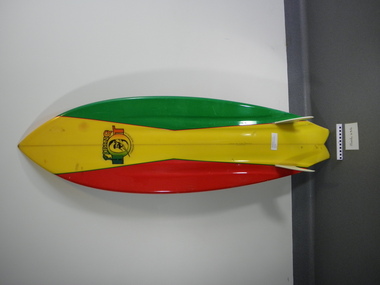
Surfboard, 1979 (estimated); The Piping Hot Twin Fin was produced in 1979 - 1980
... Champion Mark Richards (Newcastle). In this period 1978 -1981 these surfboards represented the pinnacle of surfboard design progression and high performance. This surfboard also represents Piping Hot which was one of Australia's leading surf 'brands' at that time. Piping Hot was a Torquay based company that produced surfboards,wetsuits and surf clothing. surfboard fibreglass twin fin piping hot mike patterson torquay channel bottom fred ...Twin fin surfboard manufactured at Piping Hot Boston Road Torquay. Manufactured from polyurethane foam core and laminated fibreglass with fixed fibreglass fins. Shaped by Mike Patterson. This board is has channels running almost full length on the bottom of the board, the wide point forward of centre, swallow tail with flyer. Custom graphics in red, yellow and green top and bottom; from 1979High performance twin fin designs were pioneered by 4 time Professional World Surfing Champion Mark Richards (Newcastle). In this period 1978 -1981 these surfboards represented the pinnacle of surfboard design progression and high performance. This surfboard also represents Piping Hot which was one of Australia's leading surf 'brands' at that time. Piping Hot was a Torquay based company that produced surfboards,wetsuits and surf clothing. Piping Hot Twin Fin surfboard. Manufactured from polyurethane foam core and laminated fibreglass with fixed fibreglass fins. Full plan shape with channels running almost full length on the bottom of the board, the wide point forward of centre, swallow tail with flyer. Legrope plug fitted. Custom graphics in red, yellow and green top and bottom.20cm x 16cm Black red yellow green Piping Hot logo on deck and bottom 60cm down from nose. Hand written makers mark "Shaped by Mike Patterson Custom" in pencil on blank beside stringer forward of the fins on the bottom. "1459" in pencil on bottom near tail. surfboard, fibreglass, twin fin, piping hot, mike patterson, torquay, channel bottom, fred pyke, rod brooks -
 Australian National Surfing Museum
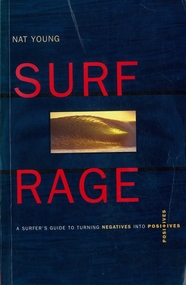
Book, Surf Rage, 2000 (exact)
... champion Nat Young was physically assaulted at Angourie Beach after an altercation in the water. The book contains a series of eleven articles exploring the issue of aggression (rage) in the surfing community. The book features a forward by Drew Kampion and articles by a number of surfers including Nat Young, Derek Reilly, Nick Carroll, Fred Pawle and Torquay local, Gordon Stammers. ...champion Nat Young was physically assaulted at Angourie Beach after an altercation in the water. The book contains a series of eleven articles exploring the issue of aggression (rage) in the surfing community. The book features a forward by Drew Kampion and articles by a number of surfers including Nat Young, Derek Reilly, Nick Carroll, Fred Pawle and Torquay local, Gordon Stammers. ...This book is a direct result of an incident on 16 March 2000 when Australian surfing champion Nat Young was physically assaulted at Angourie Beach after an altercation in the water. The book contains a series of eleven articles exploring the issue of aggression (rage) in the surfing community. The book features a forward by Drew Kampion and articles by a number of surfers including Nat Young, Derek Reilly, Nick Carroll, Fred Pawle and Torquay local, Gordon Stammers. This book is significant in that it was the first Australian publication to formally address the issue of surf rage on Australian beaches.SURF RAGE by Nat Young (a surfers guide to turning negatives into positives). Full colour, soft colour book with a photo of a tubing wave on the coverISBN 0-9585750-1-0surfing, nat young, surf rage, nick carroll, gordon stammers, tribal law, surfers, violence, anger -
 Eltham District Historical Society Inc
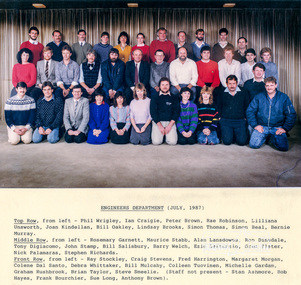
Photograph, Staff Photo, Engineers Department, Shire of Eltham, July, 1987 (with names), 1987
... Fred Harrington, Margaret Morgan, Colene Dal Santo, Debra Whittaker, Bill Mulcahy, Colleen Tuovinen, Michelle Gardam, Graham Rushbrook, Brian Taylor, Steve Smeelie. (Staff not present - Stan Ashmore, Bob Hayes, Frank Bourchier, Sue Long, Anthony Brown). shire of eltham council staff Originally contained in an envelope with handwritten note on enveloe to Allan Baker dated 14 Dec 1987 "Enclosed for your use are staff photos of all departments. I've given each Champion ...Top Row, from left - Phil Wrigley, Ian Craigie, Peter Brown, Rae Robinson, Lilliana Unsworth, Joan Kindellan, Bill Oakley, Lindsay Brooks, Simon Thomas, Simon Beal, Bernie Murray. Middle Row, from left - Rosemary Garnett, Maurice Stabb, Alan Lansdowne, Ron Dinsdale, Tony Digiacomo, John Stamp, Bill Salisbury, Barry Welch, Ezio Lattanzio, Greg Slater, Nick Palamaras, Stephen Richards. Front Row, from left - Ray Stockley, Craig Stevens, Fred Harrington, Margaret Morgan, Colene Dal Santo, Debra Whittaker, Bill Mulcahy, Colleen Tuovinen, Michelle Gardam, Graham Rushbrook, Brian Taylor, Steve Smeelie. (Staff not present - Stan Ashmore, Bob Hayes, Frank Bourchier, Sue Long, Anthony Brown).Two colour photographs, laminated, with typed list of names 2 copies; 22.5 x 27 cm laminated (12.5 x 20 cm photo)Originally contained in an envelope with handwritten note on enveloe to Allan Baker dated 14 Dec 1987 "Enclosed for your use are staff photos of all departments. I've given each Champion of Committees copies for all their respective Councillor photos of Depts reporting to each committee. Outdoor staff photos will be taken next week and I'll make those available as soon as possible. Cheers (Undecipherable)"shire of eltham, council staff -
 Bendigo Historical Society Inc.
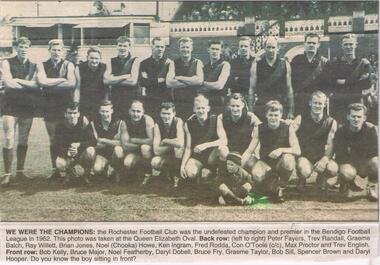
Newspaper - JENNY FOLEY COLLECTION: WE WERE THE CHAMPIONS
... champion and premier in the Bendigo Football League in 1962. This photo was taken at the Queen Elizabeth Oval. Back row, left to right: Peter Fayers, Trev Randall, Greame Balch, Ray Willett, Brian Jones, Noel (Chooka) Howe, Ken Ingram, Fred Rodda, Con O'Toole (c/c), Max Proctor and Trev English. ...champion and premier in the Bendigo Football League in 1962. This photo was taken at the Queen Elizabeth Oval. Back row, left to right: Peter Fayers, Trev Randall, Greame Balch, Ray Willett, Brian Jones, Noel (Chooka) Howe, Ken Ingram, Fred Rodda, Con O'Toole (c/c), Max Proctor and Trev English. ...Rochester football club was formed in 1874 specifically to play against the Echuca team. In 1877 it was a foundation member of the VFA. It mainly played informal friendly games against Echuca teams and became part of the Echuca District Football League in 1890. This then became the Norther District fotball League.Bendigo Advertiser '' The way we were'' from Monday, August 26, 2002. We were the champions: the Rochester Football Club was the undefeated champion and premier in the Bendigo Football League in 1962. This photo was taken at the Queen Elizabeth Oval. Back row, left to right: Peter Fayers, Trev Randall, Greame Balch, Ray Willett, Brian Jones, Noel (Chooka) Howe, Ken Ingram, Fred Rodda, Con O'Toole (c/c), Max Proctor and Trev English. Front row: Bob Kelly, Bruce Major, Daryl Dobell, Bruce Fry, Graeme Taylor, Bob Sill, Spencer Brown and Daryl Hooper. The clip is in a folder.newspaper, bendigo advertiser, the way we were -
 Bendigo Historical Society Inc.
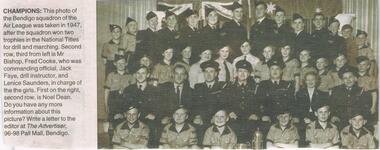
Newspaper - JENNY FOLEY COLLECTION: CHAMPIONS
... Champions: this photo of the Bendigo squadron of the Air League was taken in 1947, after the squadron won two trophies in the National Titles for drill and marching. Second row third from left is Mr Bishop, Fred...Champions: this photo of the Bendigo squadron of the Air League was taken in 1947, after the squadron won two trophies in the National Titles for drill and marching. Second row third from left is Mr Bishop, Fred ...Bendigo Advertiser "The way we were" from Wednesday, February 16, 2005. Champions: this photo of the Bendigo squadron of the Air League was taken in 1947, after the squadron won two trophies in the National Titles for drill and marching. Second row third from left is Mr Bishop, Fred Cooke, who was commanding official, Jack Faye, drill instructor andLenice Saunders, in charge of the girls. First on the right second row is Noel Dean.newspaper, bendigo advertiser, the way we were -
 Bendigo Historical Society Inc.
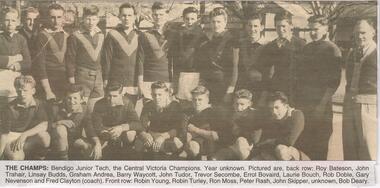
Newspaper - JENNY FOLEY COLLECTION: THE CHAMPS
... Champions. Year unknown. Back row: Roy Bateson, John Trahair, Linsay Budds, Graham Andrea, Barry Waycott, John Tudor, Trevor Seacombe, Errol Bovaird, Lauri Bouch, Rob Doble, Gary Nevenson and Fred Clayton (coach). ...Champions. Year unknown. Back row: Roy Bateson, John Trahair, Linsay Budds, Graham Andrea, Barry Waycott, John Tudor, Trevor Seacombe, Errol Bovaird, Lauri Bouch, Rob Doble, Gary Nevenson and Fred Clayton (coach). ...Bendigo Advertiser ''The way we were'' from Monday, June 20, 2005. The champs: Bendigo Junior Tech, the Central Victoria Champions. Year unknown. Back row: Roy Bateson, John Trahair, Linsay Budds, Graham Andrea, Barry Waycott, John Tudor, Trevor Seacombe, Errol Bovaird, Lauri Bouch, Rob Doble, Gary Nevenson and Fred Clayton (coach). Front row: Robin Young Robin Turley, Ron Moss, Peter Rash, John Skipper, Unknown, Bob Deary.newspaper, bendigo advertiser, the way we were -
 Kew Historical Society Inc
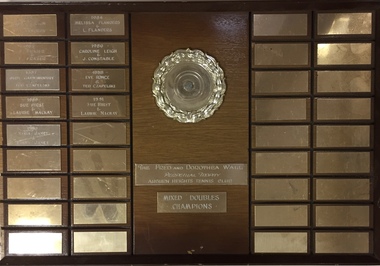
Award, Auburn Heights Tennis Club, The Fred & Dorothea Wall Perpetual Trophy, Mixed Doubles Champions, 1983-1991
... Wooden panel listing the Mixed Doubles Champions of the Auburn Heights Tennis Club between 1983 and 1991. The perpetual trophy was named to honour Fred and Dorothea Wall. ...The Fred & Dorothea Wall Perpetual Trophy, Mixed Doubles Champions Award Award Auburn Heights Tennis Club ...Sports Clubs in Kew in the final decades of the 19th century and in the early 20th century were often umbrella organisations with facilities for a number of sports. Typically in Kew, this included teams in lawn bowls, tennis and croquet. The Kew Bowling Club was formed in 1880 while the privately owned Auburn Heights Recreation Club was opened in 1904. By 1998, the two Clubs decided to amalgamate at the Auburn Heights site in Barkers Road, forming the Kew Heights Sports Club. The combined club was itself taken over by the Melbourne Cricket Club in 2012 becoming MCC Kew Sports Club. In 2017 MCC Kew closed and its landholding was subsequently sold to Carey Baptist Grammar School. Both the Kew and Auburn Heights Clubs assembled important collections. These historically significant and large collections were donated to the Society in 2020. The collections include manuscripts, pictures, trophies, plans, honour boards etc. References Barnard FGA 1910, 'Sports and Pastimes' in Jubilee History of Kew Victoria: Its origin & progress 1803-1910. Chapman J & C 1999, The history of the Auburn Heights Recreation Club, 1904 to 1908. Reeve S 2012, City of Boroondara: Thematic Environmental History, p.216.The combined collections of the four sporting clubs making up the collection number hundreds of items that are historically significant locally. They are also significant to the sporting history of the greater Melbourne area and to the sports of lawn bowls and tennis in Australia in the 19th and 20th centuries. The collection illuminates two of the Victorian historic themes - 'Building community life' through forming community organisations and 'Shaping cultural and creative life' by participating in sport and recreation.Wooden panel listing the Mixed Doubles Champions of the Auburn Heights Tennis Club between 1983 and 1991. The perpetual trophy was named to honour Fred and Dorothea Wall. [The item forms part of the large historic Auburn Heights Recreation Club collection, with items relating to the sports of lawn bowls, tennis and croquet, gifted to the Kew Historical Society in 2020].auburn heights tennis club - barkers road - kew (vic), auburn heights tennis club - trophies -
 Whitehorse Historical Society Inc.
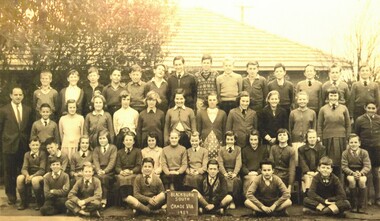
Photograph - Black and white photo, Blackburn South State School (No4035)
... Students identified= David Olgive, John Barr, Ray Keane, John Champion, Ken Veale, Lindsay McNaught, Greg Mckibbin, John Holden, Alan Warne, John Campbell, Wes Hannaford, Keith Elliot, Fred MacFarlane....Students identified= David Olgive, John Barr, Ray Keane, John Champion, Ken Veale, Lindsay McNaught, Greg Mckibbin, John Holden, Alan Warne, John Campbell, Wes Hannaford, Keith Elliot, Fred MacFarlane. ...Students identified= David Olgive, John Barr, Ray Keane, John Champion, Ken Veale, Lindsay McNaught, Greg Mckibbin, John Holden, Alan Warne, John Campbell, Wes Hannaford, Keith Elliot, Fred MacFarlane.Class photograph showing 45 students and Teacher, Mr Kavanagh.blackburn south state school no. 4035, 1959, class 6a -
 Whitehorse Historical Society Inc.
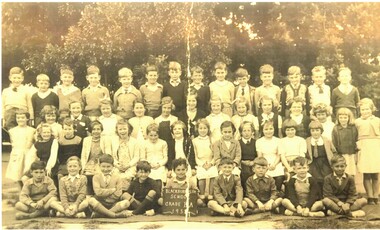
Photograph - Black and white photo, Blackburn South State School 1955, 1955
... Greg Leonard, Geoff Sammons, Ken Veale, John Champion, G Tepper, John Holden, Greg McKibbin, L Wells, R Cousland, P Vallieu, Wendy Scurry, S Murphy, Cathy Arnold, P Penry, Billy Thompson, J Stewart, Keith Elliot, Keith Watson, Fred Macfarlane, R Batchelor, ...Greg Leonard, Geoff Sammons, Ken Veale, John Champion, G Tepper, John Holden, Greg McKibbin, L Wells, R Cousland, P Vallieu, Wendy Scurry, S Murphy, Cathy Arnold, P Penry, Billy Thompson, J Stewart, Keith Elliot, Keith Watson, Fred Macfarlane, R Batchelor, Blackburn South State School 1955 Class 2A Blackburn South State School 1955. ...Pupils identified. Greg Leonard, Geoff Sammons, Ken Veale, John Champion, G Tepper, John Holden, Greg McKibbin, L Wells, R Cousland, P Vallieu, Wendy Scurry, S Murphy, Cathy Arnold, P Penry, Billy Thompson, J Stewart, Keith Elliot, Keith Watson, Fred Macfarlane, R Batchelor, Blackburn South State School 1955. Class photo of 2A showing 49 students.blackburn south state school, 1955, class 2a -
 Tennis Australia
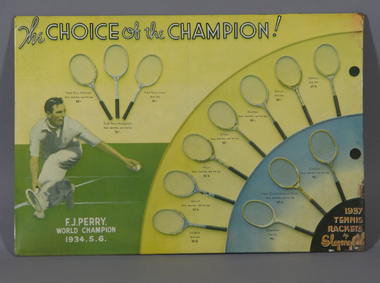
Advertisement, 1937
... Slazenger advertisement featuring image, name and record of Fred Perry and depicting fanned out visual arrangment of 13 racquets and their specs. Text in bottom right corner: '1937/TENNIS/RACKETS/BY/SLAZENGER'. Text in top right corner: 'THE CHOICE OF THE CHAMPION...Tennis Slazenger advertisement featuring image, name and record of Fred Perry and depicting fanned out visual arrangment of 13 racquets and their specs. Text in bottom right corner: '1937/TENNIS/RACKETS/BY/SLAZENGER'. Text in top right corner: 'THE CHOICE OF THE CHAMPION ...Slazenger advertisement featuring image, name and record of Fred Perry and depicting fanned out visual arrangment of 13 racquets and their specs. Text in bottom right corner: '1937/TENNIS/RACKETS/BY/SLAZENGER'. Text in top right corner: 'THE CHOICE OF THE CHAMPION!'. paper ad mounted under plastic and backed with sheet metal and patterned paper. Materials: Ink, Paper, Metal, Plastictennis -
Victorian Harness Racing Heritage Collection at Lord's Raceway Bendigo
Document - Record, Harness Horse, Pure Steel
... Champion in 1978 and 1980. Leading Australian Pacing Stakes Winner in 1977 (All Ages), 1978 (All Ages), 1980 (All Ages). Inducted into the Western Australia Harness Horse Hall of Fame in 2010. Had a Winning Streak of 6 wins. Career: 68 wins 29 seconds 8 thirds 127 starts. harness racing australasian harness racing horse career performance records bendigo harness racing club bhrc pure steel phil coulson pc coulson te demmler ted demmler fr kersley fred kersley j retzlaff jack retzlaff l poyser les poyser s shinn steven shinn t demmler p coulson m roberts mark roberts Typed document in black and red ink. ...Stephen Spark compiled horses performance records starting in 1983 on his typewriter. Pure Steel raced from 1974 (2yo) through to 1983 (11yo). Australian Harness Horse of the Year in 1980. Australian Grand Circuit Champion in 1978 and 1980. Leading Australian Pacing Stakes Winner in 1977 (All Ages), 1978 (All Ages), 1980 (All Ages). Inducted into the Western Australia Harness Horse Hall of Fame in 2010. Had a Winning Streak of 6 wins. Career: 68 wins 29 seconds 8 thirds 127 starts.Typed document in black and red ink.harness racing, australasian harness racing, horse career, performance records, bendigo harness racing club, bhrc, pure steel, phil coulson, pc coulson, te demmler, ted demmler, fr kersley, fred kersley, j retzlaff, jack retzlaff, l poyser, les poyser, s shinn, steven shinn, t demmler, p coulson, m roberts, mark roberts -
 Melbourne Tram Museum
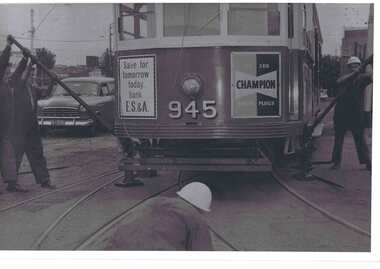
Photograph - Set of 7 Black & White Photograph/s, Melbourne & Metropolitan Tramways Board (MMTB), 1970's?
... . - has ES&A bank and Champion spark plugs ads on the front of the tram. 2 - tram body being winched with a chain attached to the bogie - tram 897 - has a Schweppes advert on side panel. 3 - tram bogie being jacked or pushed with a Trewalla jack on a greased plate. 4 - tram 897 being slewed with a Trewalla jack - has "Nu-Dutch cleaning" cleaning advert on front panel and a Schweppes Soda Water advert on side panel. 5 - Fred turner working the winch slewing a tram on greased plates - tram has a "Snappy Panties" advert on a side panel. 6 - tram being slewed with a Trewalla jack and greased plate - has a Metters stove advert on side panel. 7 - photo showing greased plate in position under a wheel..... - has ES&A bank and Champion spark plugs ads on the front of the tram. 2 - tram body being winched with a chain attached to the bogie - tram 897 - has a Schweppes advert on side panel. 3 - tram bogie being jacked or pushed with a Trewalla jack on a greased plate. 4 - tram 897 being slewed with a Trewalla jack - has "Nu-Dutch cleaning" cleaning advert on front panel and a Schweppes Soda Water advert on side panel. 5 - Fred turner working the winch slewing a tram on greased plates - tram has a "Snappy Panties" advert on a side panel. 6 - tram being slewed with a Trewalla jack and greased plate - has a Metters stove advert on side panel. 7 - photo showing greased plate in position under a wheel. ...Series of nine black and white photographs (two copies of each) of training tram recovery staff in rerailing trams. Not taken all the same time, as trams very. Most photos taken at South Melbourne Depot. 1 - tram 945 being lifted by two portable lifting jacks. - has ES&A bank and Champion spark plugs ads on the front of the tram. 2 - tram body being winched with a chain attached to the bogie - tram 897 - has a Schweppes advert on side panel. 3 - tram bogie being jacked or pushed with a Trewalla jack on a greased plate. 4 - tram 897 being slewed with a Trewalla jack - has "Nu-Dutch cleaning" cleaning advert on front panel and a Schweppes Soda Water advert on side panel. 5 - Fred turner working the winch slewing a tram on greased plates - tram has a "Snappy Panties" advert on a side panel. 6 - tram being slewed with a Trewalla jack and greased plate - has a Metters stove advert on side panel. 7 - photo showing greased plate in position under a wheel.trams, tramways, derailments, accidents, south melbourne depot, recovery, tram 945, tram 897, sw6 class, mmtb, r10 vehicle
