
Showing 72 items matching "free the army"
-
 National Vietnam Veterans Museum (NVVM)
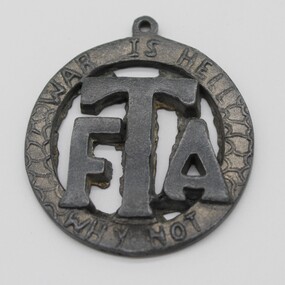
Memorabilia - Medallion, FTA anti-war
... ...Free the Army...Medallion supporting anti-war activists. 'Free the army' believed to have been used as a spoof of the American Army recruitment campaign 'Fun, Travel and Adventure'. ...Medallion supporting anti-war activists. 'Free the army' believed to have been used as a spoof of the American Army recruitment campaign 'Fun, Travel and Adventure'. ...Medallion supporting anti-war activists. 'Free the army' believed to have been used as a spoof of the American Army recruitment campaign 'Fun, Travel and Adventure'. Soldiers in Vietnam often converted the slogan to "F-ck The Army ".Round Medallion with large FTA in middle, circled by inscription' War is Hell' at top/ 'Why Not' at bottom.protest movement, antiwar, vietnam, fta, free the army, war is hell, protest, anti-war -
 Running Rabbits Military Museum operated by the Upwey Belgrave RSL Sub Branch
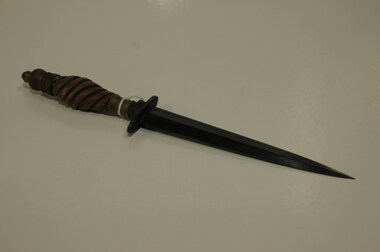
Knife
... Free French Army Throwing Knife in USA M1 Carbine Scabard...Weapon Free French Army Throwing Knife in USA M1 Carbine Scabard Knife ...Free French Army Throwing Knife in USA M1 Carbine Scabardweapon -
 Federation University Historical Collection
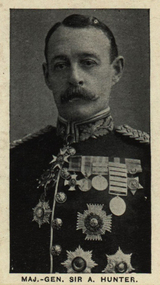
Photograph (black & White), Major-General Sir Archibald Hunter - South Africa
... Once Pretoria was captured they still had to deal with Guerrilla Warfare and Hunter was sent south as overall commander of five columns that converged on the Free State army camped at Brandwater Basin, forcing the surrender of 4,314 Boers led by Marthinus Prinsloo. ...Once Pretoria was captured they still had to deal with Guerrilla Warfare and Hunter was sent south as overall commander of five columns that converged on the Free State army camped at Brandwater Basin, forcing the surrender of 4,314 Boers led by Marthinus Prinsloo. ...At the outbreak of the Second Boer War, Major General Hunter was on the staff of Sir George White's Natal Field Force during the Battle of Ladysmith in Natal. He led a small raid against some of the Boers' guns, disabled them and relieved the town. Promotion followed and he became General Officer Commanding 10th Division. The Division was sent to join Lord Roberts' army camped at the captured Orange Free State capital. Hunter led them in the march on Pretoria. Once Pretoria was captured they still had to deal with Guerrilla Warfare and Hunter was sent south as overall commander of five columns that converged on the Free State army camped at Brandwater Basin, forcing the surrender of 4,314 Boers led by Marthinus Prinsloo. He was awarded Knight Grand Cross of the Order of the Bath, Knight Grand Cross of the Royal Victorian Order, Territorial Decoration Legion of Honour (France)Individual image taken from photographed poster of tobacco and cigarette cardssecond boer war, major generl, archibald hunter, natal field force, battle of ladysmith, general officer commanding, sir george white, guerrilla warfare, orange free state, brandwater basin, marthinus prinsloo, knight grand cross of the order of the bath, knight grand crossof the royal victorian order, legion of honour (france) -
 Marysville & District Historical Society
THE TRIANGLE NEWS-VOL 40 NO 36-SEPTEMBER 20 2013
... army...community small business funding available...dalton fiske foundation grants awards...marysville primary school parents club...market stalls available...buxton hotel curry night...local bus tours...real estate...fire fighting opportunities available across victoria...lions triangle tool library...council encourages spring clear with free...marysville victoria australia national emergency medal recipients honoured what's on when in september buxton progress assocn agm the committee of management of the gallipoli park precinct marysville community market creative triangle murrindindi shire council payment of rate instalments marysville & district chamber of commerce agm church notices triangle community dinner el kanah village marysville & district football & netball agm councillor comment great victorian rail trail marketing opportunities mayor's chair expressions of interest 2013 open gardens advertisements the salvation army community small business funding available dalton fiske foundation grants awards marysville primary school parents club market stalls available buxton hotel curry night local bus tours real estate fire fighting opportunities available across victoria lions triangle tool library council encourages spring clear with free green waste disposal marysville country bakery seeking staff amnesty supports fire prevention efforts black spur inn front of house waiting staff murrindindi shire council tender australian centre for grief and bereavement marysville golf report gallipoli park commitee of management report narbethong history group narbethong hall book launch black spur inn tradie meal & stay deal road management plan review highlights works priorities office manager camp marysville sixteenth annual steam and wood show alexandra timber and tramway museum stage reading crossways inspired by bruno's sculpture garden THE TRIANGLE NEWS-VOL 40 NO 36-SEPTEMBER 20 2013 ...marysville, victoria, australia, national emergency medal recipients honoured, what's on when in september, buxton progress assocn agm, the committee of management of the gallipoli park precinct, marysville community market, creative triangle, murrindindi shire council, payment of rate instalments, marysville & district chamber of commerce agm, church notices, triangle community dinner, el kanah village, marysville & district football & netball agm, councillor comment, great victorian rail trail marketing opportunities, mayor's chair, expressions of interest, 2013 open gardens, advertisements, the salvation army, community small business funding available, dalton fiske foundation grants awards, marysville primary school parents club, market stalls available, buxton hotel curry night, local bus tours, real estate, fire fighting opportunities available across victoria, lions triangle tool library, council encourages spring clear with free green waste disposal, marysville country bakery seeking staff, amnesty supports fire prevention efforts, black spur inn front of house waiting staff, murrindindi shire council tender, australian centre for grief and bereavement, marysville golf report, gallipoli park commitee of management report, narbethong history group, narbethong hall book launch, black spur inn tradie meal & stay deal, road management plan review highlights works priorities, office manager camp marysville, sixteenth annual steam and wood show, alexandra timber and tramway museum, stage reading crossways, inspired by bruno's sculpture garden -
 Federation University Historical Collection
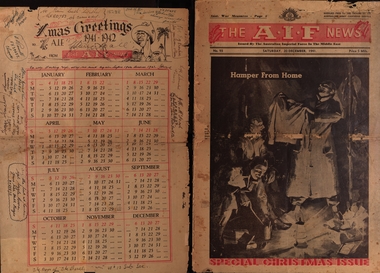
Newspaper - Twenty page issue December 1941 No. 93, Societe Orientale de Publicite, The A.I.F. News Special Christmas Issue 1941, December 1941
... .= The Australian Imperial Force and this newspaper was supplied free to the troops of the Australian Army Canteens Service. This issue is dated Saturday 22nd December 1941. ...Twenty pages of news supplied free to the troops by the Australian Army Canteens Service.....= The Australian Imperial Force and this newspaper was supplied free to the troops of the Australian Army Canteens Service. This issue is dated Saturday 22nd December 1941. ...The A.I.F.= The Australian Imperial Force and this newspaper was supplied free to the troops of the Australian Army Canteens Service. This issue is dated Saturday 22nd December 1941. It includes advertisments for businesses in Cairo and Alexandria; Egypt, Palestine and Syria. Page 2 includes a poem titled "This Holy Night" by Pte C.M. Walker; two sonnets by Rupert Brooke; a poem, "Waiting Dreams" by Pilot Officer J.A. Henderson RAAF and a poem by Lieut. David McNicoll AIF Abroad Air Mail - Palestine. Page 3 includes a message from General Sir Thomas Blamey, an article on the part women would increasingly play as a consequence of the emergency war policy; an advertisment for tobacco specially packed for overseas forces. Page 4 includes an article on Australian coastal cities being ready for raids. Page 5 includes an article about the Commonwealth of the Philippines and their defense which until 1946 lay with America. General D Macarthur was the Commander In Chief in the Philippines. Germany's "secret Weapon" legend. Page 6 includes "Dancing Dan's Christmas"; "Bluey and Curley" comic strip. Page 7 includes article "Rommel's Armoured Might Lies Strewn Over Libyan Sands" Page 8 includes an article: "All In Fun" - a revue - has begun a tour of Australian camps in Palestine and Syria. Page 9 includes articles "War Will Revolutionise Air Services In Australia"; a list - Greek Awards To AIF Officers and a cartoon by George Aria titled 'Jonah '. Pages 10&11 "Christmas 1941" - messages from prominent people: Mr Winston Churchill; The Govenor General (Lord Gorrie); The Prime Minister (Mr Curtin); Mininster for the Army (Mr Forde). Also photos of army operations and traditional family Christmas time. Page 12 &13 Articles regarding sport under the heading 'Australian Sporting Digest'. Page 14 A story - "The Gift of the Magi" - an O Henry Christmas Story. Also a greeting from Myer's of Melbourne and Adelaide to all Myer Men in the AIF Page 15 An article where General Blamey reassures Australia about its capability of defence. Page 16 A description of a battle by Australian sloop "Parramatta" with HMAS "Auckland" against enemy planes whilst they were escorting a merchant ship with a cargo of petrol during the Battle of Tobruk Page 17 & 18 Pages under the title 'ACK-I-FOOFS' (Articles submitted by soldiers: The real Rat of Tobruk - a rat trained by L/Cpl Jack Kneeshaw which he named "Goebbels"; poems and cartoons. Page 19 "Women of War" - photos of women at work filling in for men who have gone to war. Page 20 Xmas Greetings 1942-1942 - a 1942 Calendar signed by 14 members of the AIF, some with messages and including their Army Number. Twenty pages of news supplied free to the troops by the Australian Army Canteens Service.The last page is a calendar for 1942 with personal inscriptions and greetings of servicemen. Some inscriptions have I.D. Numbers ( VX35435 W. Johnston; QX20753 of Carmody ; VX40449 ; VX39637 N. Powell; VX32054 Blue Ernistson?; N?X23234 W.Cummins; VXthe a.i.f. news christmas edition 1941, australian imperial force, world war 2, australian army canteens service, general blamey, world war 2 - pacific war, world war 2 - phillipine islands, general d macarthur, emergency plans ww2 australia, secret weapons ww2, western desert ww2, australian imperial force - western desert ww2, civil aviation post ww2, air services australia, lord gowrie, governor general lord gowrie, prime minister john curtain, minister for the army - mr forde, cartoons 1941, women-in ww2, xmas greetings calendar 1941-1942, cairo 1941, palestine 1941, western desert 1941, advertisements 1941, middle east 1941 -
 Flagstaff Hill Maritime Museum and Village
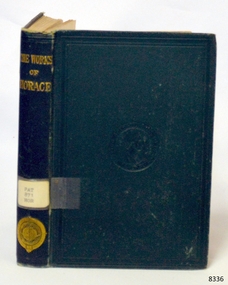
Book - Lyrical Poems, Samuel Lee (Translator), The Works of Horace, 1890
... Quintus Horatius Flaccus (Horace) was born the son of a freed slave in Venusia, Italy, (65–8 BCE) who had acquired enough wealth as an auction collector to provide his son with a first-rate education in Rome and Athens. While studying in Greece, Horace was swept up in the Roman Civil Wars following the assassination of Julius Caesar. He joined the republican army...Quintus Horatius Flaccus (Horace) was born the son of a freed slave in Venusia, Italy, (65–8 BCE) who had acquired enough wealth as an auction collector to provide his son with a first-rate education in Rome and Athens. While studying in Greece, Horace was swept up in the Roman Civil Wars following the assassination of Julius Caesar. He joined the republican army ...The original author of this work was Quintus Horatius Flaccus, one of the leading Roman lyric poets during the time of Augustus Caesar (1st century BCE). This volume features the complete surviving works of Horace, rendered entirely into English prose. It includes his famous Odes, or lyrical poems, as well as his earlier poems on politics and social issues of the time. It also features his Satires, which offer humorous commentaries on Roman life, and his Epistles, or letters in verse, which include his highly influential work on literary criticism, the Ars Poetica (or The Art of Poetry).The Works of Horace Author: James Lonsdale and Samuel Lee Publisher: Macmillan And Co Date: 1890 Further Information: non-fictionThe original author of this work was Quintus Horatius Flaccus, one of the leading Roman lyric poets during the time of Augustus Caesar (1st century BCE). This volume features the complete surviving works of Horace, rendered entirely into English prose. It includes his famous Odes, or lyrical poems, as well as his earlier poems on politics and social issues of the time. It also features his Satires, which offer humorous commentaries on Roman life, and his Epistles, or letters in verse, which include his highly influential work on literary criticism, the Ars Poetica (or The Art of Poetry).flagstaff hill, warrnambool, shipwrecked coast, flagstaff hill maritime museum, maritime museum, shipwreck coast, flagstaff hill maritime village, great ocean road, book, pattison collection, warrnambool library, warrnambool mechanics’ institute, ralph eric pattison, corangamite regional library service, warrnambool city librarian, mechanics’ institute library, victorian library board, warrnambool books and records, warrnambool children’s library, the works of horace, samuel lee, james lonsdale, latin translated text -
 Flagstaff Hill Maritime Museum and Village
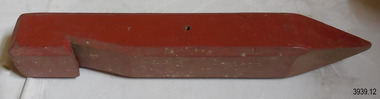
Equipment - Sand peg set, Mid-19th to mid-20th Century
... Army and by campers. The rocket rescue crews used a sand anchor at a beach rescue site to weigh down the rescue apparatus. The crew would connect the shackle to the other cable on the anchor and to the loose steel cable to form a triangle with the cable lengths. They would then bury the anchor in about a 0.75-meter trench, keeping the free...Army and by campers. The rocket rescue crews used a sand anchor at a beach rescue site to weigh down the rescue apparatus. The crew would connect the shackle to the other cable on the anchor and to the loose steel cable to form a triangle with the cable lengths. They would then bury the anchor in about a 0.75-meter trench, keeping the free ...This set of Victorian era wooden sand pegs was part of the equipment used by the Rocket Rescue Crew when attending a shipwreck. The broad pegs were designed to give a strong grip on soft sand and soil. The pegs could be used with the sand anchor as well as to give a stronger hold on the tripod holding the hawser. The same design is still available today and is used by the Army and by campers. The rocket rescue crews used a sand anchor at a beach rescue site to weigh down the rescue apparatus. The crew would connect the shackle to the other cable on the anchor and to the loose steel cable to form a triangle with the cable lengths. They would then bury the anchor in about a 0.75-meter trench, keeping the free end of the cable above the surface. This end of the cable was then connected to a block that was attached to the heavy hawser line. The block and a crotch pole were used to keep the hawser line high and taught as the survivors were hauled to shore on a line or in a breeches buoy. Saving lives in Warrnambool – The coastline of South West Victoria is the site of over 600 shipwrecks and many lost lives; even in Warrnambool’s Lady Bay there were around 16 known shipwrecks between 1850 and 1905, with eight lives lost. In 1859 the first Government-built lifeboat arrived at Warrnambool Harbour and a shed was soon built to house it. In 1858 the provision of rocket and mortar apparatus was approved for lifeboat stations in Victoria, and in 1864 a rocket house was built to safely store the rocket rescue equipment. In 1878 the buildings were moved to the Breakwater area, and in 1910 the new Lifeboat Warrnambool arrived with its ‘self-righting’ design. For almost a hundred years the lifeboat and rocket crews, mostly local volunteers, trained regularly to maintain their rescue skills. They were summoned when needed by alarms, gunshots, ringing bells and foghorns. Some became local heroes but all served an important role. By the end of the 1950s, the lifeboat and rescue equipment had become obsolete. Rocket Rescue Method - The Government of Victoria adopted lifesaving methods based on Her Majesty’s Coast Guard in Great Britain. It authorised the first line-throwing rescue system in 1858. Captain Manby’s mortar powered a projectile connected to a rope, invented in 1808. The equipment was updated to John Dennett’s 8-foot shaft and rocket method that had a longer range of about 250 yards. From the 1860s the breeches buoy apparatus was in use. The apparatus was suspended on a hawser line and manually pulled to and from the distressed vessel carrying passengers and items. In the early 1870s Colonel Boxer’s rocket rescue method became the standard in Victoria. His two-stage rockets, charged by a gunpowder composition, could fire the line up to 500-600 yards, although 1000 yards range was possible. Boxer’s rocket carried the light line, which was faked, or coiled, in a particular way between pegs in a faking box to prevent twists and tangles when fired. The angle of firing the rocket to the vessel in distress was measured by a quadrant-type instrument on the side of the rocket machine. Decades later, in about 1920, Schermuly invented the line-throwing pistol that used a small cartridge to fire the rocket. The British Board of Trade published instructions for both the beach rescue crew and ship’s crew. It involved setting up the rocket launcher on shore at a particular angle measured by the quadrant, inserting a rocket that had a lightweight line threaded through its shaft, and then firing it across the stranded vessel, the line issuing freely from the faking board. A tally board was then sent out to the ship with instructions in four languages. The ship’s crew would haul on the line to bring out the heavier, continuous whip line, then secure the attached whip block to the mast or other sturdy part of the ship. The rescue crew on shore then hauled out a stronger hawser line, which the ship’s crew fixed above the whip block. The hawser was then tightened using the block on the shore end of the whip. The breeches buoy and endless whip are then attached to the traveller block on the hawser, allowing the shore crew to haul the breeches buoy to and from the vessel, rescuing the stranded crew one at a time. This set of sand pegs would have been used with sand anchor that is part of the rocket rescue equipment . It is significant for its connection with local history, maritime history and marine technology. Lifesaving has been an important part of the services performed from Warrnambool's very early days, supported by State and Local Government, and based on the methods and experience of Great Britain. Hundreds of shipwrecks along the coast are evidence of the rough weather and rugged coastline. Ordinary citizens, the Harbour employees, and the volunteer boat and rescue crew, saved lives in adverse circumstances. Some were recognised as heroes, others went unrecognised. In Lady Bay, Warrnambool, there were around 16 known shipwrecks between 1850 and 1905. Many lives were saved but tragically, eight lives were lost.Peg or spike; set of twelve wooden pegs, painted red. Pages have a long, thick square shank with bevelled side edges, flat top with broad hook on one side of the top and a point at the other end. A small hole goes from one side to the other side near the centre of the shank, on the face without the hook. flagstaff hill maritime museum & village, flagstaff hill, maritime museum, maritime village, warrnambool, great ocean road, shipwreck, life-saving, lifesaving, rescue crew, rescue, rocket rescue, maritime accidents, shipwreck victim, rocket crew, beach rescue, line rescue, rescue equipment, rocket firing equipment, rocket rescue equipment, rocket apparatus, beach apparatus, breeches buoy, rocket house, rocket equipment, rocket launcher, rocket line, marine technology, beach rescue set, traveller, block, running block, pulley, hawser, faked line, lady bay, warrnambool harbour, port of warrnambool, volunteer lifesavers, volunteer crew, breakwater, rocket rescue method, rocket rescue apparatus, shore to ship, rocket apparatus rescue, stranded vessel, whip line, endless whip, harbour board, sand anchor, rocket set, anchor backer, beach anchor, backer, steel cable, wire cable, sand peg, wooden tent peg, army peg, military peg -
 Geelong RSL Sub Branch
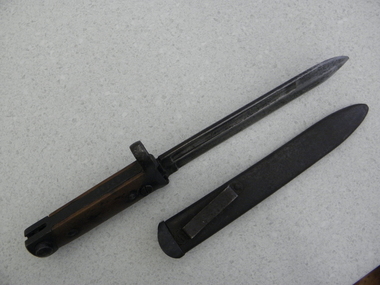
Bayonet, No maker, Early 20th Century
... Army. T4 37248 Metal bayonet with wooden and medal handle, four screws holding the wood to the metal frame. The bayonet has a release button to free the the blade to a position as required. ...There are no distinguishing features on the item to be able to link it to any one event.Metal bayonet with wooden and medal handle, four screws holding the wood to the metal frame. The bayonet has a release button to free the the blade to a position as required. There is a metal scabbard to house the bayonet blade, there is a metal loop on the scabbard to hang onto a belt. There is a round sight on top of the bayonet.T4 37248military, bayonet, australian army. -
 Glenelg Shire Council Cultural Collection
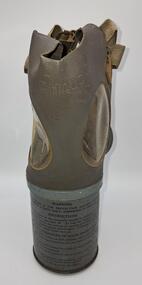
Equipment - Gas Mask, c.1939-1945
... Second World War World War II Child Gas Mask Army Civilian Top front of rubber head harness embossed is 'CHILD' Extensive inscription printed on gas filter cannister. 'THIS GAS MASK IS FOR PROTECTION AGAINST CHEMICAL WARFARE AGENTS ONLY, DISPERsED IN FREE AIR.' ...The mask is of the type issued to civilians for air-raid precautions in Australia during World War II.A gas mask is a piece of personal protective equipment used to protect the wearer from inhaling airborne pollutants and toxic gases, this particular type believe to possibly be a M1A 2-1-1 designed for civilian use during World War II.Child size respirator / gas mask comprising rubber head harness with yellow tinged celluloid eyepieces and elasticized straps to attach around head at back. A grey metal gas filter cannister is fitted to the front of the mask, printed with an extensive inscription about use and cleaning. Grey plastic air vent to the side of the head harness.Top front of rubber head harness embossed is 'CHILD' Extensive inscription printed on gas filter cannister. 'THIS GAS MASK IS FOR PROTECTION AGAINST CHEMICAL WARFARE AGENTS ONLY, DISPERsED IN FREE AIR.' Instructions on fitting and cleaning follow.second world war, world war ii, child gas mask, army, civilian -
Phillip Island and District Historical Society Inc.
Book, ABBOTT, John S.C, History of the civil war in America : comprising a full and impartial account of the origin and progress of the rebellion, of the various naval and military engagements, of the heroic deeds performed by armies and individuals, and of touching scenes in the field, the camp, the hospital, and the cabin, 1863
... Free Public Library', 'Phillip Island Historical Society, Cleeland Bequest'. Stamped 'Jno Cleeland, Albion Hotel, Gt Bourke St., Melbourne'. Inscribed 'Melbourne, Aug 5th 1864'. History of the civil war in America : comprising a full and impartial account of the origin and progress of the rebellion, of the various naval and military engagements, of the heroic deeds performed by armies and individuals, and of touching scenes in the field, the camp, the hospital, and the cabin. ...Labelled 'Cowes Free Public Library', 'Phillip Island Historical Society, Cleeland Bequest'. Stamped 'Jno Cleeland, Albion Hotel, Gt Bourke St., Melbourne'. Inscribed 'Melbourne, Aug 5th 1864'. -
 Flagstaff Hill Maritime Museum and Village
Book, War Letters of General Monash
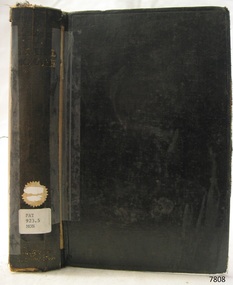
... Free Library Front loose endpaper has a sticker from Corangamite Regional Library Service On a type written page inside book is written General Monash: 1865 - 1931 …. Australian soldier of Jewish birth, was born in Melbourne, graduating at Melbourne University..Began practising as a civil engineer in 1884, and became President of the Victorian Engineering Institute .. In 1887 entered the Australian Army...Free Library Front loose endpaper has a sticker from Corangamite Regional Library Service On a type written page inside book is written General Monash: 1865 - 1931 …. Australian soldier of Jewish birth, was born in Melbourne, graduating at Melbourne University..Began practising as a civil engineer in 1884, and became President of the Victorian Engineering Institute .. In 1887 entered the Australian Army ...This item is from the ‘Pattison Collection’, a collection of books and records that was originally owned by the Warrnambool Mechanics’ Institute, which was founded in Warrnambool in 1853. By 1886 the Warrnambool Mechanics’ Institute (WMI) had grown to have a Library, Museum and Fine Arts Gallery, with a collection of “… choice productions of art, and valuable specimens in almost every branch and many wonderful national curiosities are now to be seen there, including historic relics of the town and district.” It later included a School of Design. Although it was very well patronised, the lack of financial support led the WMI in 1911 to ask the City Council to take it over. In 1935 Ralph Pattison was appointed as City Librarian to establish and organise the Warrnambool Library as it was then called. When the WMI building was pulled down in 1963 a new civic building was erected on the site and the new Warrnambool Library, on behalf of the City Council, took over all the holdings of the WMI. At this time some of the items were separated and identified as the ‘Pattison Collection’, named after Ralph Pattison. Eventually the components of the WMI were distributed from the Warrnambool Library to various places, including the Art Gallery, Historical Society and Flagstaff Hill. Later some were even distributed to other regional branches of Corangamite Regional Library and passed to and fro. It is difficult now to trace just where all of the items have ended up. The books at Flagstaff Hill Maritime Village generally display stamps and markings from Pattison as well as a variety of other institutions including the Mechanics’ Institute itself. RALPH ERIC PATTISON Ralph Eric Pattison was born in Rockhampton, Queensland, in 1891. He married Maude Swan from Warrnambool in 1920 and they set up home in Warrnambool. In 1935 Pattison accepted a position as City Librarian for the Warrnambool City Council. His huge challenge was to make a functional library within two rooms of the Mechanics’ Institute. He tirelessly cleaned, cleared and sorted a disarrayed collection of old books, jars of preserved specimens and other items reserved for exhibition in the city’s museum. He developed and updated the library with a wide variety of books for all tastes, including reference books for students; a difficult task to fulfil during the years following the Depression. He converted all of the lower area of the building into a library, reference room and reading room for members and the public. The books were sorted and stored using a cataloguing and card index system that he had developed himself. He also prepared the upper floor of the building and established the Art Gallery and later the Museum, a place to exhibit the many old relics that had been stored for years for this purpose. One of the treasures he found was a beautiful ancient clock, which he repaired, restored and enjoyed using in his office during the years of his service there. Ralph Pattison was described as “a meticulous gentleman whose punctuality, floorless courtesy and distinctive neat dress were hallmarks of his character, and ‘his’ clock controlled his daily routine, and his opening and closing of the library’s large heavy doors to the minute.” Pattison took leave during 1942 to 1945 to serve in the Royal Australian Navy, Volunteer Reserve as Lieutenant. A few years later he converted one of the Museum’s rooms into a Children’s Library, stocking it with suitable books for the younger generation. This was an instant success. In the 1950’s he had the honour of being appointed to the Victorian Library Board and received more inspiration from the monthly conferences in Melbourne. He was sadly retired in 1959 after over 23 years of service, due to the fact that he had gone over the working age of council officers. However he continued to take a very keen interest in the continual development of the Library until his death in 1969. The Pattison Collection, along with other items at Flagstaff Hill Maritime Village, was originally part of the Warrnambool Mechanics' Institute’s collection. The Warrnambool Mechanics’ Institute Collection is primarily significant in its totality, rather than for the individual objects it contains. Its contents are highly representative of the development of Mechanics' Institute libraries across Australia, particularly Victoria. A diversity of publications and themes has been amassed, and these provide clues to our understanding of the nature of and changes in the reading habits of Victorians from the 1850s to the middle of the 20th century. The collection also highlights the Warrnambool community’s commitment to the Mechanics’ Institute, reading, literacy and learning in the regions, and proves that access to knowledge was not impeded by distance. These items help to provide a more complete picture of our community’s ideals and aspirations. The Warrnambool Mechanics Institute book collection has historical and social significance for its strong association with the Mechanics Institute movement and the important role it played in the intellectual, cultural and social development of people throughout the latter part of the nineteenth century and the early twentieth century. The collection of books is a rare example of an early lending library and its significance is enhanced by the survival of an original collection of many volumes. The Warrnambool Mechanics' Institute’s publication collection is of both local and state significance. War Letters of General Monash Edited by F M Cutlack Publisher: Angus & Robertson Date: 1934Label on spine cover with typed text PAT 923.5 MON Pastedown front endpaper has sticker from Warrnambool Mechanics Institute and Free Library Front loose endpaper has a sticker from Corangamite Regional Library Service On a type written page inside book is written General Monash: 1865 - 1931 …. Australian soldier of Jewish birth, was born in Melbourne, graduating at Melbourne University..Began practising as a civil engineer in 1884, and became President of the Victorian Engineering Institute .. In 1887 entered the Australian Army, in which he rapidly rose to the rank of Col. At outbreak of World War 1 , he became Chief Censor, and then was sent in command of 4th Brigade to Gallopoli... Later commonded 3rd Australian Division in France, and in June 1918 took command of the Australian Corps. After armistice, Director general of Demob. for Australia.. Knighted in 1918 and published Australian Victories in France two years later.warrnambool, shipwrecked-coast, flagstaff-hill, flagstaff-hill-maritime-museum, maritime-museum, shipwreck-coast, flagstaff-hill-maritime-village, shipwrecked-artefact, book, pattison collection, warrnambool library, warrnambool mechanics’ institute, ralph eric pattison, corangamite regional library service, warrnambool city librarian, mechanics’ institute library, victorian library board, warrnambool books and records, warrnambool children’s library, great ocean road, f m cutlack, war letters of general monash, general monash, victorian engineering institute, 4th brigade, gallopoli, 3rd australian division, australian corps -
 Flagstaff Hill Maritime Museum and Village
Book - Reference Book, H Rider Haggard, author, Regeneration, 1910
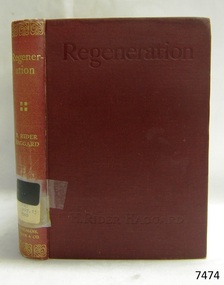
... Free Library...Corangamite Regional Library Service...Regeneration...Salvation Army...Thomas Longman Paternoster Row London Pattison Collection Ralph Eric Pattison Warrnambool Mechanics’ Institute Mechanics’ Institute Library Warrnambool Library Free Library Corangamite Regional Library Service Regeneration Salvation Army Britain Social Work 1910 H Rider Haggard Sticker, typed text "PAT 267.15 HAG" The Pastedown end page has a sticker from "Warrnambool Mechanics Institute" covered by a sticker from "Corangamite Regional Library Service" "1115" and "2223" Regeneration: Being an Account of the Social Work of The Salvation Army in Great Britain Author: H Rider Haggard Publisher: Longmans, Green and Co Date: 1910 Red hardcover book with a gold embossed spine, an inscription on a sticker on the spine, and a pressed title on the cover. ...H. Rider Haggard (1856-1925), a British author, wrote fiction and non-fiction works and had letters and articles published in newspapers and journals. in 1895 he served on a government commission to examine Salvation Army labour colonies, which possibly influenced this book titled 'Regeneration'. The publisher firm, Longmans, Green & Co, was originally founded in 1724 in London by Thomas Longman under the name Longman. In August of that year, he bought the two shops and goods of William Taylor and set up his publishing house there at 39 Paternoster Row. The shops were called Black Swan and Ship, and it is said that the 'ship' sign was the inspiration for Longman's Logo. After many changes of name and management, the firm was incorporated in 1926 as Longmans, Green & Co. Pty Ltd. The firm was acquired by Pearson in 1968 and was known as Pearson Longman or Pearson PLC.The book is also significant for its connection to the publisher Longmans, Green and Co., of London, a firm that has been established for over two centuries, renowned for publishing encyclopedias, dictionaries, books on English grammar, textbooks, poetry, reference books, novels, magazines and more. The book has additional importance for its connection to the Pattison Collection, which, along with other items at Flagstaff Hill Maritime Village, was originally part of the Warrnambool Mechanics' Institutes’ Collection. The Warrnambool Mechanics’ Institute book collection has historical and social significance for its strong association with the Mechanics Institute movement and its important role in people's intellectual, cultural and social development throughout the latter part of the nineteenth century and the early twentieth century. The collection of books is a rare example of an early lending library and its significance is enhanced by the survival of an original collection of many volumes. The Warrnambool Mechanics' Institute’s publication collection is of both local and state significance.Regeneration: Being an Account of the Social Work of The Salvation Army in Great Britain Author: H Rider Haggard Publisher: Longmans, Green and Co Date: 1910 Red hardcover book with a gold embossed spine, an inscription on a sticker on the spine, and a pressed title on the cover. The book is part of the Pattison Collection.Sticker, typed text "PAT 267.15 HAG" The Pastedown end page has a sticker from "Warrnambool Mechanics Institute" covered by a sticker from "Corangamite Regional Library Service" "1115" and "2223"flagstaff hill, flagstaff hill maritime museum and village, warrnambool, maritime museum, maritime village, great ocean road, shipwreck coast, longmans green and co., thomas longman, paternoster row london, pattison collection, ralph eric pattison, warrnambool mechanics’ institute, mechanics’ institute library, warrnambool library, free library, corangamite regional library service, regeneration, salvation army, britain, social work, 1910, h rider haggard -
 Bendigo Military Museum
Manual - Australian Map Grid Technical Manual, National mapping Council of Australia, Canberra, 1968
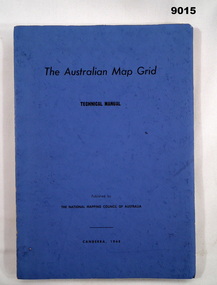
... There was now a homogenous system of coordinates (other than heights) for geodetic survey stations all over Australia, free from discontinuities caused by changes in origin. Royal Australian Survey Corps RASvy Fortuna Army Survey Regiment Army Svy Regt ASR National Mapping Council of Australia A A4 blue card covered manual containing 84 Pages of text and diagrams and Graphic Annexes A-J. ...In 1966, all geodetic surveys in Australia and New Guinea were recomputed and adjusted on the new Australian Geodetic Datum (AGD). There was now a homogenous system of coordinates (other than heights) for geodetic survey stations all over Australia, free from discontinuities caused by changes in origin.A A4 blue card covered manual containing 84 Pages of text and diagrams and Graphic Annexes A-J. The Australian Map Grid Technical Manual published by The National Mapping Council of Australia, Canberra, 1968. Bound by 2 x Celco Clips.royal australian survey corps, rasvy, fortuna, army survey regiment, army svy regt, asr, national mapping council of australia -
 Bendigo Military Museum
document - ARMY DOCUMENTS WW2, WWII
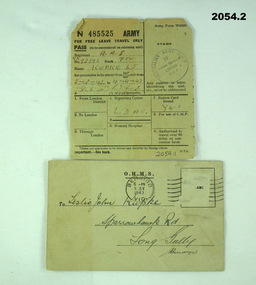
... .1) Free leave travel pass issued to L. J. KUPKE VX93892. Army form W4098. .2) Notice to report for Medical Examination....Discharged from the Army 1.7.1947. documents-army records Travel .1) Stamped by Australian Army Staff .2) Addressed to Leslie John KUPKE, Sparrowhawk Rd. Long Gully. .1) Free leave travel pass issued to L. ...2054.1) Travel pass issued to L. J. KUPKE whilst attached to Australian Army Staff in London in 1947. 2054.2) Issued to L. J. KUPKE VX93892 requesting that he report for a medical examination in Bendigo on corner of Pall Mall and Bull St. Leslie John KUPKE (born Albury, enlisted Royal Park) initially signed Mobilization forms on 12.7.1943 as No V513056 age 18 years. He then transferred to the AIF on 3.12.1943 as No VX93892. He embarked for Bougainville with the the 15th Aust Infantry Battalion on 23.11.1944, hospital with Hookworm from 8.6.1945 to 30.6.1945, embarked for Australia returning on 1.6.1946, hospital with Malaria on 17.8.1946. On 21.1.1947 he embarked for England as a POW voyage guard and returned on 14.6.1947. Discharged from the Army 1.7.1947..1) Free leave travel pass issued to L. J. KUPKE VX93892. Army form W4098. .2) Notice to report for Medical Examination..1) Stamped by Australian Army Staff .2) Addressed to Leslie John KUPKE, Sparrowhawk Rd. Long Gully.documents-army records, travel -
 Bendigo Military Museum
Photograph - Royal Australian Survey Corps Aerial Surveys, c1980
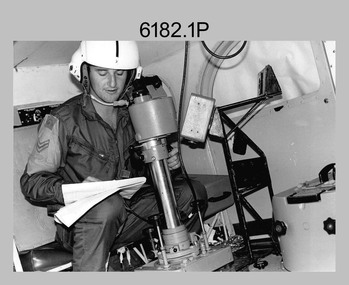
... Army Pilatus Porter aircraft. The Wild RC10 super wide-angle air survey cameras were first introduced in 1971, were equipped with virtual distortion free lenses for supplementary, spot and special photography. ...Army Pilatus Porter aircraft. The Wild RC10 super wide-angle air survey cameras were first introduced in 1971, were equipped with virtual distortion free lenses for supplementary, spot and special photography. ...This is a set of nine photographs of technicians from the Royal Australian Survey Corps operating aerial surveys equipment c1980s. In photo .1P, CPL Steve Gloster was operating a RC10 air survey camera mounted in an Australian Army Pilatus Porter aircraft. The Wild RC10 super wide-angle air survey cameras were first introduced in 1971, were equipped with virtual distortion free lenses for supplementary, spot and special photography. In photo .2P, Roger Rees was operating Air Profile Recorder (APR) equipment. it was possibly taken during OP NERVOSE 84, sometime between June – August 1984 when based in Ngukurr, Northern Territory. The APR was operated at this time in unison with an RC10 camera. In 1963 the Royal Australian Survey Corps introduced the radar airborne profile recorder (Canadian Applied Research Ltd, Mark V, Airborne Profiler Recorder) was introduced for 1:100,000 mapping to replace terrain heighting by aneroid barometry. Later in 1974-1975, the Australian developed WREMAPS II airborne laser terrain profile recorder was introduced. In photo .3P, Neil Jones appears at the door of Airsearch Beechcraft Queen Air aircraft, Registration / Serial VH-MWX. This aircraft was typically used by RA Svy on air survey operations flying mission with Aerodist, APR and RC10 camera equipment. The Australian Army’s Pilatus Porter (short take-off and landing turbo propeller) was also equipped with a Wild RC10 aerial mapping camera for identification photography. The Pilatus Porter was also used on RA Svy’s map field checking operations. Photo .9P was taken at a survey station at an unknown location. In this photo an Australian Army Kiowa Light Observation Helicopter (LOH) is supporting a field survey party undertaking Magnavox AN/PRR-14 portable Doppler satellite observations. The satellite receiver’s antenna is plumbed over the survey ground mark surrounded by white plastic panels. The panels were used to identify the survey station on aerial photography. Introduced in 1974–1975, the Magnavox AN/PRR-14 portable Doppler satellite (US Navy Navigation Satellite System – TRANSIT) receivers and computing system provided independent three-dimensional point positions anywhere in the world, anytime, in any weather accurate to about 1.5metres with precise satellite ephemerides. The Bell OH-58 Kiowa LOH was a family of military helicopters used for observation, utility, and direct fire support. It was identified by RA Svy in the mid-1970s that considerable time was lost in replacing unserviceable remote equipment by road. Therefore Aerodist operations (pre-dating satellite receiver operations) were fully supported by Army’s Kiowa LOH aircraft. This is a set of nine photographs of technicians from the Royal Australian Survey Corps operating aerial surveys equipment c1980s. .1P to .3P, .5P to .9P - Colour and black and white photos on photographic paper and scanned at 300 dpi. .4P - Colour photo on 35mm slide film and scanned at 96 dpi. .1) & .2) - Photo, black & white, c1980s, CPL Steve Gloster operating an RC10 air camera. .3) - Photo, colour, 1984, Roger Rees operating Air Profile Recorder (APR) equipment. .4) - Photo, colour, c1980s, Neil Jones at the door of an Airsearch Beechcraft Queen Air aircraft, typically used by RA Svy on air survey operations. .5) - Photo, colour, c1980s. A Beechcraft King Air aircraft, also used by RA Svy on air survey operations. .6) - Photo, colour, c1980s. An Australian Army Pilatus Porter, used by RA Svy on air survey and map field checking operations. SGT Peter Mustart is possibly in the foreground. .7) to .8) - Photo, colour, c1980s. An Australian Army Pilatus Porter and unidentified personnel, used by RA Svy on air survey and map field checking operations. .9) - Photo, colour, c1980s. An Australian Army Kiowa helicopter supporting a field survey party undertaking Magnavox AN/PRR-14 portable Doppler satellite observations. There are biro marks on photos .4P to .9Proyal australian survey corps, rasvy, army survey regiment, asr, fortuna, aerial surveys -
4th/19th Prince of Wales's Light Horse Regiment Unit History Room
Rifle Bucket
... free to use the sword in combat. This Rifle bucket has had the mid strap replaced in service as evidenced by the use of 'black waxed, hand made thread', which was the type of stitching used by the Army on all saddlery and harness. ...free to use the sword in combat. This Rifle bucket has had the mid strap replaced in service as evidenced by the use of 'black waxed, hand made thread', which was the type of stitching used by the Army on all saddlery and harness. ...This type of rifle bucket was in use by the 4th Light Horse Regiment AIF in 1918. It was introduced into service following the Charge at Beersheba (Palestine, Oct. 31 1917) which lead to the introduction of the Cavalry sword to the Light Horse Brigades of the 1st AIF. The use of the cavalry sword required the riders arms to be free and this caused the relocation of the rifle from being slung on the rider's shoulder or carried in his right hand to being carried by the saddle. The Sword and the Rifle Bucket continued in use after WW1 by the 4th Corangamite Light Horse, the 17th Prince of Wales Light Horse Regiment and the 19th Yarrowee Light Horse Regiments in the 1920's and 1930's and possibly as late as 1941/42 prior to mechanisation and the demise of the use of the horse in combat. This item was designed to allow the rifle to be carried secured to the saddle and allow the right arm to be free to use the sword in combat. This Rifle bucket has had the mid strap replaced in service as evidenced by the use of 'black waxed, hand made thread', which was the type of stitching used by the Army on all saddlery and harness. On the rifle bucket, the makers name is usually stamped on this strap and the in service replacement of the strap explains why the maker's name is not present. The reinforcing leather at the lower edge of the bucket is unusual and judging by the colour of the leather it was added to the bucket by the regimental saddler as a repair probably at the same time as the mid section strap.None sightedrifle bucket, light horse, saddlery -
4th/19th Prince of Wales's Light Horse Regiment Unit History Room
Document (2 copies), Lt L O Evans, Band Uniform (Notes Only), 1970
... The dress for members of the Army is prescribed in the Dress Manual. The CO would not have a been a free agent to modify the Band's dress. ...The dress for members of the Army is prescribed in the Dress Manual. The CO would not have a been a free agent to modify the Band's dress. band uniforms A folder containing submission to the Commanding Officer by Lt L O Evans to consider recommendations to improve the dress of the Regimental Band - covering both winter and summer dress and that of the Drum Major Band Uniform (Notes Only) Document (2 copies) Lt L O Evans ...The dress for members of the Army is prescribed in the Dress Manual. The CO would not have a been a free agent to modify the Band's dress. A folder containing submission to the Commanding Officer by Lt L O Evans to consider recommendations to improve the dress of the Regimental Band - covering both winter and summer dress and that of the Drum Majorband, uniforms -
 Bendigo Military Museum
Newspaper - THE A.I.F. NEWS
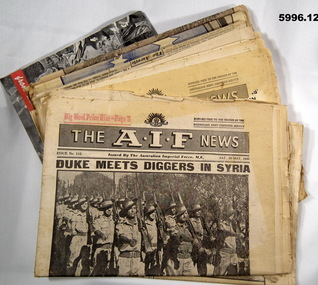
... The AIF News was issued by the Army Canteen Services, free to Australian Troops during WW2. ...The AIF News was issued by the Army Canteen Services, free to Australian Troops during WW2. ...The AIF News was issued by the Army Canteen Services, free to Australian Troops during WW2. It contains Military News and a mix of cartoons, crosswords and letters similar to home newspaper. Aim to keep troops informed and increase morale. magazine often sent home to family. Items in collection relating to David Peterson.1-11. Tabloid size newspaper. Faded white to yellow in colour. Usually about 16-18 pages in content with black and white photos, black writing and some highlighting in red covering May 1942 to Jan 1943. 12. Is smaller magazine supplement issued Christmas 1942 mainly pictorial in black and white and red covering photos of Egypt, Palestine and Syria.All have been sent home to family and written on back; Mrs C. J. Penney 95 Shaftesbury Parade, Thornsbury W17, Melbourne, Victoria, Australia (or some variation)newspaper, aif -
 Bendigo Historical Society Inc.
Newspaper - HOWARD AND VIOLET JOLLEY COLLECTION: NEWSPAPER
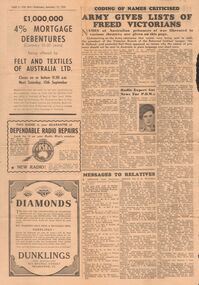
... From The Sun of Wednesday Sept 12 1945, a, page 6, Coding of Names criticised ARMY GIVES LISTS OF FREED VICTORIANS listing names so identified, and message to relatives, included a reference to J. ...The Sun Newspaper The Advocate From The Sun of Wednesday Sept 12 1945, a, page 6, Coding of Names criticised ARMY GIVES LISTS OF FREED VICTORIANS listing names so identified, and message to relatives, included a reference to J. ...From The Sun of Wednesday Sept 12 1945, a, page 6, Coding of Names criticised ARMY GIVES LISTS OF FREED VICTORIANS listing names so identified, and message to relatives, included a reference to J. F. Dale to his parents H. C. Dale of 47 Joseph Street Bendigo. Item re radio expert got news for P.O.W.s and on b, page 5 HIGH PRODUCTION COSY INVESTIGATION; RSL Wants clinics for War Neurosis; BRAVERY EARNS MM; LAND LEASES ADVOCATED Assembly Discussion on Settling Soldiers; WOOL BUYING SCHEME CHANGE SOON; CWA makes Requests; Good homes needed; Decentralization Urged; Peck killed in air accident. C Page 27 of the Advocate April 13 1939, Requiem for Late Father Ronan, popular Bendigo Priest. This page also has advertisements for the Beehive, Davey & Waddington, Matthews Bros, Sandhurst and northern district Trustees, W. Ewing & Son, H & C Styles, McEncroe Milk Products.the sun newspaper, the advocate -
 Bendigo Historical Society Inc.
Document - LYDIA CHANCELLOR COLLECTION; ANZAC MEMORIAL BAND PROGRAMME
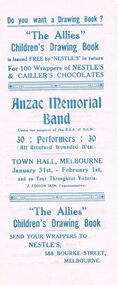
... Army ANZAC Memorial Band bands A white programme with blue print. On the front are the words ' Do you want a Drawing Book? 'The Allies' Children's Drawing Book is issued Free by 'Nestles' in return for 100 wrappers of Nestles & Cailler's Chocolates. ...A white programme with blue print. On the front are the words ' Do you want a Drawing Book? 'The Allies' Children's Drawing Book is issued Free by 'Nestles' in return for 100 wrappers of Nestles & Cailler's Chocolates. ANZAC MEMORIAL BAND (under the auspices of the R.S.A. 0f N.S.W.) 30 Performers : 30 ( All returned wounded men). TOWN HALL, MELBOURNE January 31st, - February 1st., and on Tour throughout Victoria. J. Edison Ikin. Representative. 'The Allies' Children's Drawing Book. Send your wrappers to NESTLE'S 588 Bourke Street, Melbourne.' On the inside is the poem 'How Anzac was Named,' an advertisement for Bellmaine Bros. printers Melbourne and the programme itself. On the back are the words for ' The Toast! For ANZAC Day by C.H. Souter. C. 1940s -50s.program, music, anzac day, lydia chancellor, collection, event, music, entertainment, concert, australian army, anzac memorial band, bands -
 National Vietnam Veterans Museum (NVVM)
Ephemera - Envelope, US Army
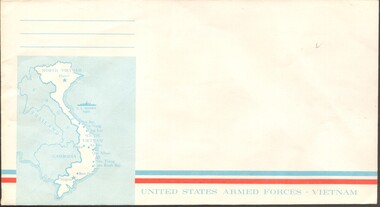
... free of charge. Ephemera Envelope United States Armed Forces Vietnam stationery mail Map of Vietnam on left side of envelope in blue and white Blue and red colour stripes across botttom Words - United States Armed Forces - Vietnam, at bottom United States Armed Forces - Vietnam Envelope Ephemera Envelope, US Army ...During the Vietnam War, mail was a primary method of communication between Australian servicemen and their families back home. Envelopes such as these were commonly used by Australian servicemen. Mail to and from Australia was delivered free of charge.United States Armed Forces - Vietnam EnvelopeMap of Vietnam on left side of envelope in blue and white Blue and red colour stripes across botttom Words - United States Armed Forces - Vietnam, at bottomephemera, envelope, united states armed forces vietnam, stationery, mail -
 National Vietnam Veterans Museum (NVVM)
Ephemera - Envelope, Air mail
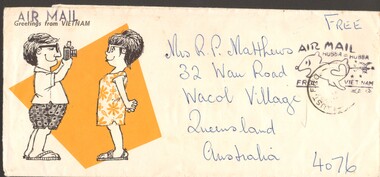
... Army Ordnance Corp, service no.34974. This tourist-style envelope is in stark contrast to the reality of war. It also shows that Australian soldiers did not pay for postage. Airmail Envelopes 34974 Robert Palmer Matthews Vietnam mail communication envelope Airmail/ Greeting from Vietnam/ Mrs R.P Matthews/ 32 Wau Road/ Walcol Village/ Queensland/ Australia/ 4076/ Free/ Stamp - Airmail/ Hubba=Hubba/ from Vietnam. ...Sent by Warrant Officer Class 2 Robert Palmer Matthew home to family. Royal Australian Army Ordnance Corp, service no.34974. This tourist-style envelope is in stark contrast to the reality of war. It also shows that Australian soldiers did not pay for postage.Airmail envelope - printed with tourist-looking man in shorts and thongs taking a photo of a woman in a sundress. Image is against an orange shape on the left of the envelope. Addressed and airmail stamped. On Back - print of man with suitcase and bindle over shoulder. Wording 'I should be home soon'. Orange sun design with face drawn on it.Airmail/ Greeting from Vietnam/ Mrs R.P Matthews/ 32 Wau Road/ Walcol Village/ Queensland/ Australia/ 4076/ Free/ Stamp - Airmail/ Hubba=Hubba/ from Vietnam.airmail envelopes, 34974, robert palmer matthews, vietnam, mail, communication, envelope -
 National Vietnam Veterans Museum (NVVM)
Slide - Sims Image Collection
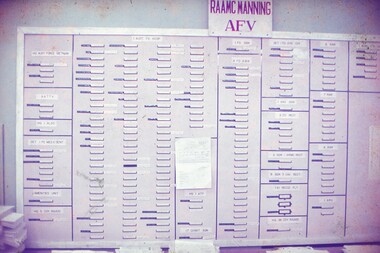
... Army Medical Corps...Vietnam War...Sims...Australian Forces Vietnam...HQ Australian Forces Vietnam...Medical manning board...Free...Peter Stanley Sims 44304 Slides Royal Australian Army Medical Corps Vietnam War Sims Australian Forces Vietnam HQ Australian Forces Vietnam Medical manning board Free World Military Assistance Organisation Medical Manning Board of all medics, by unit, hanging on the wall of the medical records office, Headquarters Australian Force Vietnam, Saigon 1969/70. ...From a collection of 253 images on slides taken while on deployment in Vietnam, by Corporal Peter Stanley Sims (44304), who served in the Royal Australian Army Medical Corps, 1969 - 1970.Medical Manning Board of all medics, by unit, hanging on the wall of the medical records office, Headquarters Australian Force Vietnam, Saigon 1969/70.peter stanley sims, 44304, slides, royal australian army medical corps, vietnam war, sims, australian forces vietnam, hq australian forces vietnam, medical manning board, free world military assistance organisation -
 National Vietnam Veterans Museum (NVVM)
Slide - Sims Image Collection
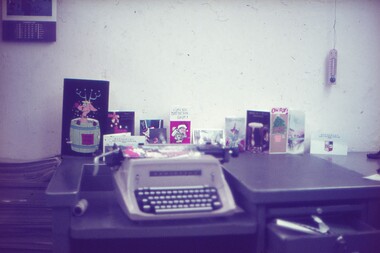
... Army Medical Corps...Vietnam War...Sims...Australian Forces Vietnam...HQ Australian Forces Vietnam...Free...Peter Stanley Sims 44304 Slides Royal Australian Army Medical Corps Vietnam War Sims Australian Forces Vietnam HQ Australian Forces Vietnam Free World Military Assistance Organisation Cpl Peter Sims's desk displaying Christmas cards in the medical records office, Headquarters Australian Force Vietnam, Saigon 1969/70. ...From a collection of 253 images on slides taken while on deployment in Vietnam by Corporal Peter Stanley Sims (44304), who served in the Royal Australian Army Medical Corps, 1969 - 1970.Cpl Peter Sims's desk displaying Christmas cards in the medical records office, Headquarters Australian Force Vietnam, Saigon 1969/70.peter stanley sims, 44304, slides, royal australian army medical corps, vietnam war, sims, australian forces vietnam, hq australian forces vietnam, free world military assistance organisation -
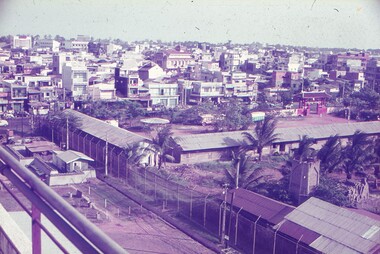 National Vietnam Veterans Museum (NVVM)
Slide - Sims Image Collection
... Army Medical Corps...Vietnam War...Sims...Australian Forces Vietnam...HQ Australian Forces Vietnam...Free...Peter Stanley Sims 44304 Slides Royal Australian Army Medical Corps Vietnam War Sims Australian Forces Vietnam HQ Australian Forces Vietnam Free World Military Assistance Organisation saigon cityscape View of compound and buildings from the roof of Headquarters Australian Force Vietnam, Saigon 1969/70. ...A collection of 253 images on slides taken while on deployment in Vietnam, by Corporal Peter Stanley Sims (44304), who served in the Royal Australian Army Medical Corps, 1969 - 1970.View of compound and buildings from the roof of Headquarters Australian Force Vietnam, Saigon 1969/70.peter stanley sims, 44304, slides, royal australian army medical corps, vietnam war, sims, australian forces vietnam, hq australian forces vietnam, free world military assistance organisation, saigon, cityscape -
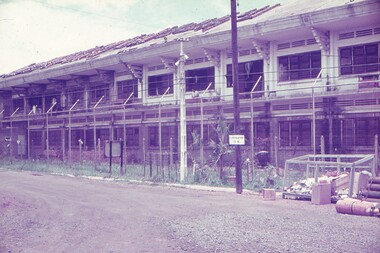 National Vietnam Veterans Museum (NVVM)
Slide - Sims Image Collection
... Army Medical Corps...Vietnam War...Sims...Australian Forces Vietnam...HQ Australian Forces Vietnam...Free...Peter Stanley Sims 44304 Slides Royal Australian Army Medical Corps Vietnam War Sims Australian Forces Vietnam HQ Australian Forces Vietnam Free World Military Assistance Organisation doctors View of compound and building next to Headquarters Australian Force Vietnam. ...From a collection of 253 images on slides taken by Corporal Peter Stanley Sims (44304) while on deployment in Vietnam in the Royal Australian Army Medical Corps, 1969 - 1970.View of compound and building next to Headquarters Australian Force Vietnam. The road was used for morning roll call until devices noticed on roof. Saigon 1969/70.peter stanley sims, 44304, slides, royal australian army medical corps, vietnam war, sims, australian forces vietnam, hq australian forces vietnam, free world military assistance organisation, doctors -
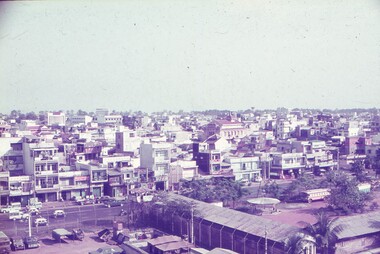 National Vietnam Veterans Museum (NVVM)
Slide - Sims Image Collection
... Army Medical Corps...Vietnam War...Sims...Australian Forces Vietnam...HQ Australian Forces Vietnam...Free...From a collection of 253 images on slides taken by Corporal Peter Stanley Sims (Service no: 44304) while on deployment in Vietnam in the Royal Australian Army Medical Corps, 1969 - 1970 Peter Stanley Sims 44304 Slides Royal Australian Army Medical Corps Vietnam War Sims Australian Forces Vietnam HQ Australian Forces Vietnam Free World Military Assistance Organisation saigon cityscape View of the front main road taken from the roof of Headquarters Australian Force Vietnam, Saigon 1970. ...From a collection of 253 images on slides taken by Corporal Peter Stanley Sims (Service no: 44304) while on deployment in Vietnam in the Royal Australian Army Medical Corps, 1969 - 1970View of the front main road taken from the roof of Headquarters Australian Force Vietnam, Saigon 1970.peter stanley sims, 44304, slides, royal australian army medical corps, vietnam war, sims, australian forces vietnam, hq australian forces vietnam, free world military assistance organisation, saigon, cityscape -
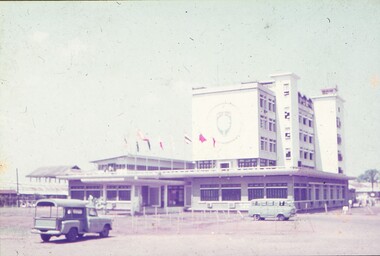 National Vietnam Veterans Museum (NVVM)
Slide - Sims Image Collection
... Army Medical Corps...Vietnam War...Sims...Australian Forces Vietnam...HQ Australian Forces Vietnam...Free...From a collection of 253 images on slides taken by Corporal Peter Stanley Sims (Service no: 44304) while on deployment in Vietnam in the Royal Australian Army Medical Corps, 1969 - 1970 Peter Stanley Sims 44304 Slides Royal Australian Army Medical Corps Vietnam War Sims Australian Forces Vietnam HQ Australian Forces Vietnam Free World Military Assistance Organisation View of Headquarters Australian Force Vietnam building, Saigon 1970. ...From a collection of 253 images on slides taken by Corporal Peter Stanley Sims (Service no: 44304) while on deployment in Vietnam in the Royal Australian Army Medical Corps, 1969 - 1970View of Headquarters Australian Force Vietnam building, Saigon 1970.peter stanley sims, 44304, slides, royal australian army medical corps, vietnam war, sims, australian forces vietnam, hq australian forces vietnam, free world military assistance organisation -
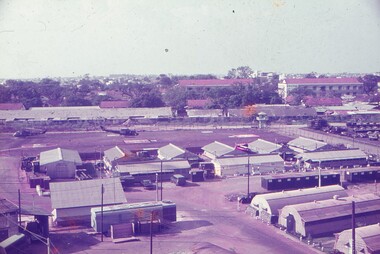 National Vietnam Veterans Museum (NVVM)
Slide - Sims Image Collection
... Army Medical Corps...Vietnam War...Sims...Australian Forces Vietnam...HQ Australian Forces Vietnam...Free...Peter Stanley Sims 44304 Slides Royal Australian Army Medical Corps Vietnam War Sims Australian Forces Vietnam HQ Australian Forces Vietnam Free World Military Assistance Organisation View of rear of Tpt compound with buildings and helicopters. ...A collection of 253 images on slides taken while on deployment in Vietnam, by Corporal Peter Stanley Sims (44304). He served in the Royal Australian Army Medical Corps, 1969 - 1970.View of rear of Tpt compound with buildings and helicopters. Headquarters Australian Force Vietnam, Saigon 1970.peter stanley sims, 44304, slides, royal australian army medical corps, vietnam war, sims, australian forces vietnam, hq australian forces vietnam, free world military assistance organisation -
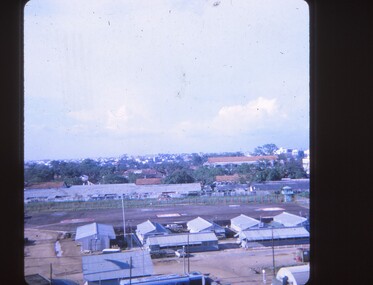 National Vietnam Veterans Museum (NVVM)
Slide - Sims Image Collection
... Army Medical Corps...Vietnam War...Sims...Australian Forces Vietnam...HQ Australian Forces Vietnam...Free...Peter Stanley Sims 44304 Slides Royal Australian Army Medical Corps Vietnam War Sims Australian Forces Vietnam HQ Australian Forces Vietnam Free World Military Assistance Organisation View of rear of Tpt compound with buildings and landing strip. ...A collection of 253 images on slides taken while on deployment in Vietnam, by Corporal Peter Stanley Sims (44304). He served in the Royal Australian Army Medical Corps, 1969 - 1970.View of rear of Tpt compound with buildings and landing strip. Headquarters Australian Force Vietnam, Saigon 1970.peter stanley sims, 44304, slides, royal australian army medical corps, vietnam war, sims, australian forces vietnam, hq australian forces vietnam, free world military assistance organisation
