
Showing 41 items matching "from the cockpit"
-
 Moorabbin Air Museum
Book - AVIATION DISASTERS, The Black Box The Last Words from The Cockpit
... The Black Box The Last Words from The Cockpit...Aviation disasters Various flight recorder transcripts Transcripts of recordings from cockpit voice recorders during incidents/disasters, circa 1984 The Black Box The Last Words from The Cockpit Book AVIATION DISASTERS ...Transcripts of recordings from cockpit voice recorders during incidents/disasters, circa 1984non-fictionTranscripts of recordings from cockpit voice recorders during incidents/disasters, circa 1984various flight recorder transcripts -
Moorabbin Air Museum
Book - De Havilland Venom, Venom. De Havilland Venom and Sea Venom The Complete History
... ...From the cockpit...De Havilland Venom Venom development Venoms with second tactical air force Middle East operations The Suez crises Malaya Venoms in the Far East RAF Venom NF.2 Venom NF.2A Venom NF3 night fighter Sea Venom development Into service with the Royal Navy Sea Venom FAW.21 Blown flap trials Venoms in service overseas Warbirds & survivors From the cockpit History of Venom / Sea Venom fighter, circa 2003 Venom. ...History of Venom / Sea Venom fighter, circa 2003non-fictionHistory of Venom / Sea Venom fighter, circa 2003venom development, venoms with second tactical air force, middle east operations, the suez crises, malaya, venoms in the far east, raf venom nf.2, venom nf.2a, venom nf3 night fighter, sea venom development, into service with the royal navy, sea venom faw.21, blown flap trials, venoms in service overseas, warbirds & survivors, from the cockpit -
 Mont De Lancey
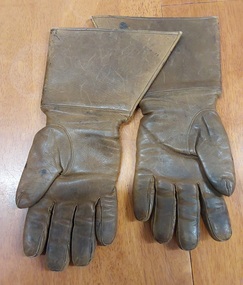
Uniform - Flying Gauntlets, 1940's
... They shielded aircrews from instrument burns and cockpit fires. Long gauntlet cuffs protected the wrists and forearms from drafts and cold air. ...They shielded aircrews from instrument burns and cockpit fires. Long gauntlet cuffs protected the wrists and forearms from drafts and cold air. ...World War II 1939-1945 Luftwaffe leather flying gauntlets were protective hand wear designed for military aviators to guard against high-altitude freezing temperatures and severe flash burns. They shielded aircrews from instrument burns and cockpit fires. Long gauntlet cuffs protected the wrists and forearms from drafts and cold air. They were favored by bomber and maritime patrol crews in unheated aircraft, German aircrew gauntlets used thin brown kid leather with raised ridges and expanding wrist gussets. Fighter pilots usually rejected them in favor of shorter gloves for better mobility.A pair of WW11 Luftwaffe flying gauntlets. They are light brown leather, fur lined, tapered at the wrist, and fitted with a narrow expandable wristband which closes with a dark brown press stud. There are three detailed stitching lines on the back of each gauntlet.gloves, gauntlet gloves, ww2 flying gloves, uniforms -
 Sorrento/Portsea RSL Sub Branch
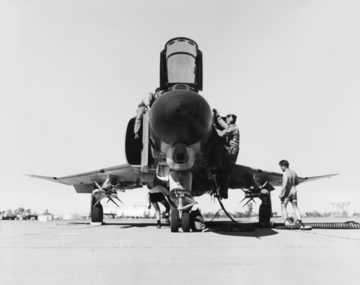
Photograph, F4E at RAAF Darwin, October 1972
... Photograph taken from the aircraft nose showing raised cockpit canopies,groundcrew and aircrew readying the airrcraft for flight. ...Photograph taken from the aircraft nose showing raised cockpit canopies,groundcrew and aircrew readying the airrcraft for flight. ...The F4E depicted was tasked to 'cold soak" Sidewinder and Sparrow missiles in the troposphere at 53,000 feetabove Darwin in a joint exercise for the RAAF and the United States Navy in 1972.The aircraft is being readied for flight by the aircrew and ground crew at RAAF Darwin.F4E at start up RAAF Darwin tarmac.Armed with Sidewinder and Sparrow missiles. Photograph taken from the aircraft nose showing raised cockpit canopies,groundcrew and aircrew readying the airrcraft for flight. Note air start is connected Aircraft Serial No. A69-217.f4e, raaf, missle, peace time, darwin, vietnam, noelryan -
 Bendigo Military Museum
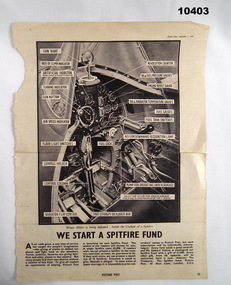
Magazine - DIAGRAM, SPITFIRE COCKPIT, Picture Post, September 7th, 1940
... Magazine page diagram and associated text details the features of a Spitfire cockpit. Taken from the “Picture Post”, page 35, September 7, 1940. ...Magazine page diagram and associated text details the features of a Spitfire cockpit. Taken from the “Picture Post”, page 35, September 7, 1940. ...Magazine page diagram and associated text details the features of a Spitfire cockpit. Taken from the “Picture Post”, page 35, September 7, 1940. Part of the "Kenneth William Hesse" RAAF No. 41144, collection. See Catalogue No. 10364 for details of his service.Single magazine page with labelled black and white diagram. Text on labels in black type. Text below diagram in black typekenneth william hesse, raaf, spitfire picture -
 Bendigo Military Museum
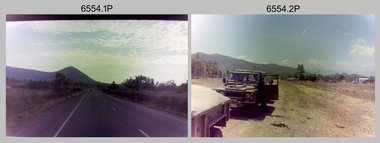
Photograph - 4th Field Survey Squadron deployed on Operation NERIGHT, Queensland & Northern Territory, 1989
... Unidentified soldier practices repelling from a UH1H Iroquois helicopter. .10) - Photo, colour, 1989. Inside the cockpit of a UH1H Iroquois helicopter. .11) - Photo, colour, 1989. ...Unidentified soldier practices repelling from a UH1H Iroquois helicopter. .10) - Photo, colour, 1989. Inside the cockpit of a UH1H Iroquois helicopter. .11) - Photo, colour, 1989. ...This is a set of 19 photographs taken in 1989 during 4th Field Survey Squadron’s deployment on Operation NERIGHT 89 in Queensland and the Northern Territory. It was a two-part operation in 1989 with work conducted in the areas of Camooweal and Weipa. Part 1 was the field completion of topographic maps conducted near Camooweal QLD, along the Barkley Highway on the border between NT and QLD, from the 12th of September to the 20th of October 1989. A Bell Kiowa LOH helicopter from 162 Recce Sqn supported topographic field completion. Operation NERIGHT 89 Part 2 was the acquisition of mapping control by GPS field parties utilising Texas Instruments TI4100 Global Positioning System receivers around Weipa on Cape York Peninsula from the 22nd of September to the 22nd of October 1989. Part 2 Two Bell UH-1H Iroquois helicopters from RAAF’s 35 Squadron were principally used to deploy GPS field parties. Identification photography of control points was taken by air camera operators in AAAvn Pilatus Porter aircraft from 173 Gen Spt Sqn fitted with an RC10 aerial camera. The two parts of the operation were conducted concurrently. This is a set of 19 photographs taken in 1989 during 4th Field Survey Squadron’s deployment on Operation Neright in Queensland & the Northern Territory. The colour photographs are on 35mm negative film and are part of the Army Survey Regiment’s Collection. The photographs were scanned at 96 dpi. .1) to .3) - Photo, colour, 1989. En-route to areas of survey operations. .4) to .5) - Photo, colour, 1989. Unidentified personnel relax next to river/waterhole. .6) - Photo, colour, 1989. Two Bell UH-1H Iroquois helicopters from RAAF’s 35 SQN utilised in the movement of GPS parties. .7) to .9) - Photo, colour, 1989. Unidentified soldier practices repelling from a UH1H Iroquois helicopter. .10) - Photo, colour, 1989. Inside the cockpit of a UH1H Iroquois helicopter. .11) - Photo, colour, 1989. Field Party camp with GPS equipment in foreground. Unidentified soldier prepares a meal. .12) - Photo, colour, 1989. GPS antenna plumbed over a survey ground mark. Witness post on left. .13) & .14) - Photo, colour, 1989. Unknown Cape York Peninsula beaches. .15) & .16) - Photo, colour, 1989. Dramatic fire next to base camp. .17) - Photo, colour, 1989. Aboriginal rock art at unknown location. .18) - Photo, colour, 1989. Aboriginal rock art at unknown location. L to R: unidentified, SPR Andrew Quin. .19) - Photo, colour, 1989. Aboriginal rock art at unknown location. LT Chris Topovsek..1P to .19P – There are no personnel identified. ‘1989 OP NERIGHT’ annotated on negative sleeve.royal australian survey corps, rasvy, 4 fd svy sqn, op neright 89 -
 Monbulk RSL Sub Branch
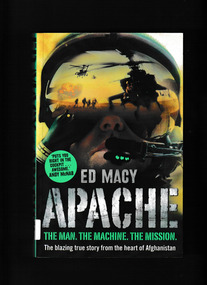
Book, HarperPress, Apache : the man, the machine, the mission, 2008
... Afghan war 2001-2021 - Military operations - Britain Afghan war 2001-2021 - personal narratives - Britain Apache' is the first book to come from the cockpit of the most sophisticated fighting helicopter the world has ever known. ...Apache' is the first book to come from the cockpit of the most sophisticated fighting helicopter the world has ever known. Designed in the mid 1980s to take on the Soviets, these machines have proven themselves as the perfect tool for combat in Afghanistan. Ed Macy's account of the incredibly hard Apache selection process, tougher than that of the SAS, combined with his description of the sheer difficulty of flying one of these helicopters provides a fascinating insight into the relationship between man and machine fighting in the toughest conditions imaginable.Index, ill, maps, p.374.non-fictionApache' is the first book to come from the cockpit of the most sophisticated fighting helicopter the world has ever known. Designed in the mid 1980s to take on the Soviets, these machines have proven themselves as the perfect tool for combat in Afghanistan. Ed Macy's account of the incredibly hard Apache selection process, tougher than that of the SAS, combined with his description of the sheer difficulty of flying one of these helicopters provides a fascinating insight into the relationship between man and machine fighting in the toughest conditions imaginable.afghan war 2001-2021 - military operations - britain, afghan war 2001-2021 - personal narratives - britain -
 Monbulk RSL Sub Branch
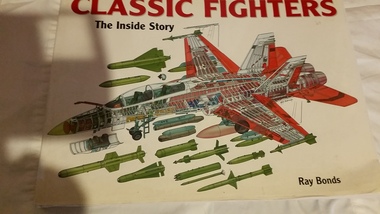
Book, Chartwell Books, Classic fighters : the inside story, 2005
... cockpit components, engines, fuel tanks, avionics, machine guns and cannon, missiles and bombs - revealing how the fighters were built, and the weapons they have carried into combat. Each significant component is given a number and is identified in an accompanying key. Moreover, together with stunning photographs, as well as detailed specifications, the absorbing in-depth development histories provide avid aviation enthusiasts all the information they could wish for about the most exciting warplanes spanning almost a hundred years. The aircraft themselves vary tremendously, from ...'Packed with fascinating facts, this volume contains incredibly detailed cutaway drawings of arguably the greatest fighter aircraft ever flown. Each drawing examines what's 'under the skin', clearly showing 'the inside story' - airframe structure, cockpit components, engines, fuel tanks, avionics, machine guns and cannon, missiles and bombs - revealing how the fighters were built, and the weapons they have carried into combat. Each significant component is given a number and is identified in an accompanying key. Moreover, together with stunning photographs, as well as detailed specifications, the absorbing in-depth development histories provide avid aviation enthusiasts all the information they could wish for about the most exciting warplanes spanning almost a hundred years. The aircraft themselves vary tremendously, from simple, wooden-framed, fabric-covered machines with open cockpits, often firing machine guns through whirring, propellers, to super-fast, highly maneuverable, sophisticated and stealthy fighters armed to the teeth with multi-barrel cannons and missiles that can destroy enemy aircraft from beyond visual range. In between are featured a host of combat-proven fighters, many of which have recorded a plethora of 'firsts' - first jet warplane, first supersonic fighter to enter service, first Mach 2 and even Mach 3 interceptors, first tail-less delta machine, first sweeping-wing machine, first missile-armed fighter, and many more. It is certainly an extraordinarily wide-ranging subject presented in such a fantastically individual manner that it is difficult to imagine a more striking volume in aviation publishing.Ill, p,253.non-fiction'Packed with fascinating facts, this volume contains incredibly detailed cutaway drawings of arguably the greatest fighter aircraft ever flown. Each drawing examines what's 'under the skin', clearly showing 'the inside story' - airframe structure, cockpit components, engines, fuel tanks, avionics, machine guns and cannon, missiles and bombs - revealing how the fighters were built, and the weapons they have carried into combat. Each significant component is given a number and is identified in an accompanying key. Moreover, together with stunning photographs, as well as detailed specifications, the absorbing in-depth development histories provide avid aviation enthusiasts all the information they could wish for about the most exciting warplanes spanning almost a hundred years. The aircraft themselves vary tremendously, from simple, wooden-framed, fabric-covered machines with open cockpits, often firing machine guns through whirring, propellers, to super-fast, highly maneuverable, sophisticated and stealthy fighters armed to the teeth with multi-barrel cannons and missiles that can destroy enemy aircraft from beyond visual range. In between are featured a host of combat-proven fighters, many of which have recorded a plethora of 'firsts' - first jet warplane, first supersonic fighter to enter service, first Mach 2 and even Mach 3 interceptors, first tail-less delta machine, first sweeping-wing machine, first missile-armed fighter, and many more. It is certainly an extraordinarily wide-ranging subject presented in such a fantastically individual manner that it is difficult to imagine a more striking volume in aviation publishing.fighter planes - history, fighter planes -
 Bendigo Historical Society Inc.
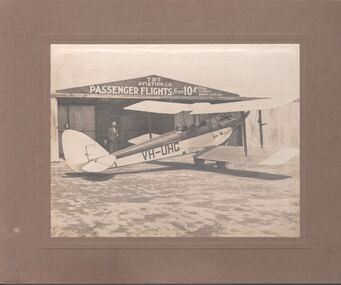
Photograph - T.B.T. Aviation Co
... Passenger flights from 10 shillings every Saturday, Sunday and Holiday. Markings on the plane: VH-UHG Eaglehawk. Two men are standing, and one is in the cockpit of the plane. ...Passenger flights from 10 shillings every Saturday, Sunday and Holiday. Markings on the plane: VH-UHG Eaglehawk. Two men are standing, and one is in the cockpit of the plane. ...The Bendigo Aero Club laid out the Myers Flat aerodrome in 1929 to serve as an airport for Northern Victoria and the Riverina. In May 1929, 12 machines arrived to give an aerial display to local citizenry.Black and white photograph glued to brown cardboard. Photo of a single engine propeller plane in front of a shed. The sign on the shed reads: T.B.T. Aviation Co. Passenger flights from 10 shillings every Saturday, Sunday and Holiday. Markings on the plane: VH-UHG Eaglehawk. Two men are standing, and one is in the cockpit of the plane. Part of the Barker's family collection.At "Drome" Myers Flat. Left to right: O'Halloran, Cyril James (brother of Emmie Barker nee James), J.S. Barker.myers flat, aviation, tbt aviation -
 National Vietnam Veterans Museum (NVVM)
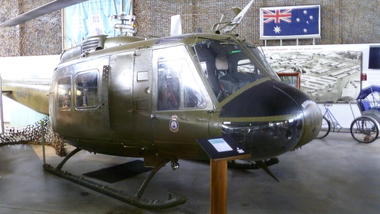
Vehicle - Bell UH1 Iroquois Helicopter, 1960 approx
... HueyCobra (Helicopter) Iroquois helicopter Bush Ranger 9 Squadron badges on cockpit doors, RAAF & Kangaroo on tail boom, 110 & Bush Ranger on the nose. Bell UH1 Iroquois helicopter modified by the RAAF. It is known as the Bush Ranger. It was used in Vietnam from ...Bell UH1 Iroquois helicopter modified by the RAAF. It is known as the Bush Ranger. It was used in Vietnam from 1962-1975. Display aircraft AS-110 was used in Vietnam from Dec 1969 to 1971.9 Squadron badges on cockpit doors, RAAF & Kangaroo on tail boom, 110 & Bush Ranger on the nose.hueycobra (helicopter), iroquois helicopter, bush ranger -
 National Vietnam Veterans Museum (NVVM)
Slide - Sims Image Collection
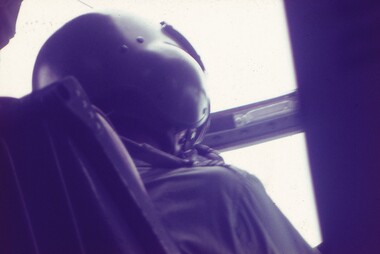
... From a collection of 253 images on slides taken while on deployment in Vietnam by Corporal Peter Stanley Sims (44304), who served in the Royal Australian Army Medical Corps, 1969 - 1970. Peter Stanley Sims 44304 Slides Royal Australian Army Medical Corps Vietnam War Sims Australian Force Vietnam Wallaby Airlines A pilot in cockpit of aircraft "Wallaby Airlines", Vietnam 1970. ...From a collection of 253 images on slides taken while on deployment in Vietnam by Corporal Peter Stanley Sims (44304), who served in the Royal Australian Army Medical Corps, 1969 - 1970.A pilot in cockpit of aircraft "Wallaby Airlines", Vietnam 1970.peter stanley sims, 44304, slides, royal australian army medical corps, vietnam war, sims, australian force vietnam, wallaby airlines -
 National Vietnam Veterans Museum (NVVM)
Slide - Sims Image Collection
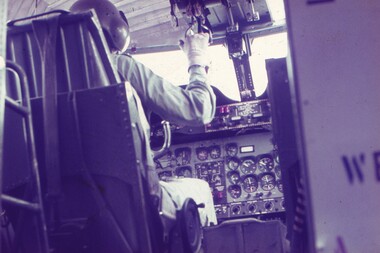
... From a collection of 253 images on slides taken while on deployment in Vietnam by Corporal Peter Stanley Sims (44304). He served in the Royal Australian Army Medical Corps, 1969 - 1970. Peter Stanley Sims 44304 Slides Royal Australian Army Medical Corps Vietnam War Sims Australian Force Vietnam A pilot in cockpit of Australian 'Wallaby Airlines' C-123 aircraft, on route to Nui Dat, Vietnam 1969/70. ...From a collection of 253 images on slides taken while on deployment in Vietnam by Corporal Peter Stanley Sims (44304). He served in the Royal Australian Army Medical Corps, 1969 - 1970.A pilot in cockpit of Australian 'Wallaby Airlines' C-123 aircraft, on route to Nui Dat, Vietnam 1969/70.peter stanley sims, 44304, slides, royal australian army medical corps, vietnam war, sims, australian force vietnam -
Moorabbin Air Museum
Photograph (item) - Image of Moorabbin Air Museum's Bristol Beaufort Cockpit, Beaufort Cockpit Restored to Original 1943 Configuration
... Authentically restored over a period of 20 years, the cockpit is a virtual time capsule from 1943....Authentically restored over a period of 20 years, the cockpit is a virtual time capsule from 1943. Colour image and caption glued to a polystyrene board Beaufort Cockpit Restored to Original 1943 Configuration Photograph Image of Moorabbin Air Museum's Bristol Beaufort Cockpit ...Caption reads: A major step towards the restoration of the entire aircraft, the nose section of a World War II RAAF Beaufort bomber is now on display. Authentically restored over a period of 20 years, the cockpit is a virtual time capsule from 1943. -
 Bendigo Military Museum
Photograph - BUTTERWORTH SINGAPORE, Nov 1970
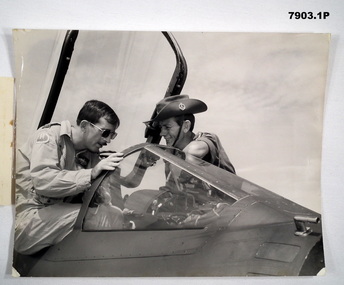
... from "Public Relations Aust Army Force, GPO Singapore” and written in pencil on; 1. “GAR/70/318” 2. “GAR/ 70312” Orientation sessions for new soldiers. 1. Black and white photos of Private Rod Clarke looking over a mirage fighter based at Butterworth, Singapore, during his tour in 1970. Close up photo of him and a Flying Officer looking at the cockpit ...Items relate to items in the collection of Lloyd Farrell. Refer Cat No. 7889P. Related to posting of Charlie Company on rotation through Selarang Barracks in 1970.Orientation sessions for new soldiers. 1. Black and white photos of Private Rod Clarke looking over a mirage fighter based at Butterworth, Singapore, during his tour in 1970. Close up photo of him and a Flying Officer looking at the cockpit. Flying Officer is Lieutenant Brian Waston. 2. Similar photo of Private Brian Smith inspecting a Mirage fighter at Butterworth, Singapore in 1970. Being shown by Flying Officer Geoff Bond of No. 75 Mirage Squadron. Both include stapled piece of paper with detailed description of who, where and why.Stamp of back from "Public Relations Aust Army Force, GPO Singapore” and written in pencil on; 1. “GAR/70/318” 2. “GAR/ 70312”butterworth, selarang barracks -
 Australian Gliding Museum
Machine - Glider - Sailplane, 2012
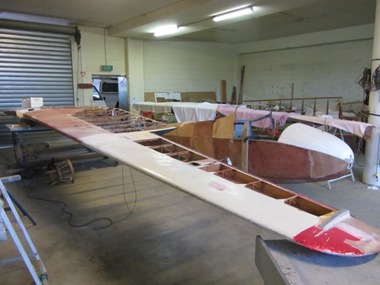
... cockpit. This made for good in flight communication between instructor and trainee. Overall, thirty six were built by Edmund Schneider Pty Ltd. A longer wing version (the ES52B) was also introduced that had a better glide ratio (around 25:1). Five examples of this version were built. In Germany a modified ES52 was built incorporating a metal tube fuselage frame and with the addition of a engine driven propeller mounted on top of the wing which enabled the glider to be self launching. This museum collection item consists of the fuselage, tailplane, elevators, fin, rudder from...cockpit. This made for good in flight communication between instructor and trainee. Overall, thirty six were built by Edmund Schneider Pty Ltd. A longer wing version (the ES52B) was also introduced that had a better glide ratio (around 25:1). Five examples of this version were built. In Germany a modified ES52 was built incorporating a metal tube fuselage frame and with the addition of a engine driven propeller mounted on top of the wing which enabled the glider to be self launching. This museum collection item consists of the fuselage, tailplane, elevators, fin, rudder from ...The ES52 Kookaburra is a two seat high wing glider – sailplane of wooden construction designed by Harry Schneider and built Edmund Schneider Pty Ltd. It was first flown on 26 June 1954 and became the glider of choice for training new pilots of many gliding clubs around Australia in the 1950s, 1960s and 1970s. Several found there way to New Zealand. Further two kits were sent to Brazil and at least one of these was finished and flow successfully. The ES52 performed well with a glide ratio of about 22:1 and had soaring and cross-country capabilities. A notable feature of the ES52 design was the staggered side-by-side seating arrangement of the cockpit. This made for good in flight communication between instructor and trainee. Overall, thirty six were built by Edmund Schneider Pty Ltd. A longer wing version (the ES52B) was also introduced that had a better glide ratio (around 25:1). Five examples of this version were built. In Germany a modified ES52 was built incorporating a metal tube fuselage frame and with the addition of a engine driven propeller mounted on top of the wing which enabled the glider to be self launching. This museum collection item consists of the fuselage, tailplane, elevators, fin, rudder from the Mark I, ES 52 Kookaburra, formerly registered as VH-GFF and last owned by the Barcaldine and District Airsports Club of Queensland. The glider was in a damaged condition when it was acquired by the Museum. A decision was made by the Museum to repair the glider for display rather than endeavouring to restore it to an airworthy condition. The reconstruction of the wings is being undertaken by using parts of damaged ES 52 Kookaburra wings (as it happened from later ES 52 Marks). The Log Book for VH-GFF reveals operational life with a succession of gliding clubs around Australia. This exhibit will be of interest to gliding enthusiasts wishing to inspect the popular two seat club trainer of a by-gone era.This is a wood and fabric covered aircraft that is being rebuilt from the components of several aircraft as a non-flying exhibit.Fuselage marked with Edmund Schneider Pty Ltd Serial Number 9 and comes from the glider previously registered as VH-GFF.australian gliding, glider, sailplane, edmund schneider, es 52, kookaburra, barcaldine and district airsports club, victorian motorless flight group, alice springs gliding club, raaf richmond, raaf williamtown, gayndah gliding club, blackwater gliding club, southern downs aero and soaring club, charleville gliding club -
 Australian Gliding Museum
Machine - Glider – Sailplane, 1963
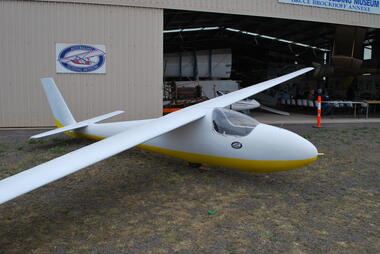
... from the 1960s. This type is of note because it was the first Australian designed and built sailplane to be used in a world gliding competition (Jack Iggulden in Argentina in 1963). australian gliding glider sailplane schneider es59 arrow darling downs soaring club wollongong gliding club ron geake Plate in cockpit with details of manufacturer states; manufactured by E. ...This aircraft is one of 9 single seat ES 59 advanced club sailplanes manufactured by Edmund Schneider Pty Ltd in the 1960s. It was first flown in August 1963 and delivered to the Darling Downs Soaring Club at Toowoomba Queensland. At that Club it had 2603 flights and recorded a total airtime of 1475 hours. In addition to many local circuits and soaring and cross country flying, it was used at gliding competitions, including Nationals at Benalla in December 1964, State Championships at Oakey in April 1965, at Warwick in April 1966, and at (Inverell?) in March 1967. On at least 15 occasions flight times in excess of 5 hours duration were achieved. On 5 October 1970, the glider had a new life when it was relocated to Wollongong in New South Wales. It recorded 1927 flights with a total airtime of 1179 hours at the club between October 1970 and June 1988. Competition appearances included the State Championships held at Forbes in January 1972. Places away from Wollongong where the glider was launched include Cootamundra, Wagga, Temora, Marulon, Narromine, Leeton, Nowra, Goulburn, Horsham, Greenthorpe. On 15 June 1988 it was transferred to Ron Geake who transported it to Warrego in Northern Territory (flown once at Alice Springs), and then to Gympie in Queensland where it was flown about 20 times by the end of 1995. It was also flown on a small number of occasions at Forbes in New South Wales in 1996 and 1997. During 1998 and 1999 the glider was sparsely used (9 flights) at locations that have not been recorded. From May 1999 until transfer to the Australian Gliding Museum in May 2011 it apparently was not flown. Aggregate airtime hours for the glider stand at 2702 hours 53 minutes. It has been launched 4569 times. A good example of a Schneider ES59 sailplane from the 1960s. This type is of note because it was the first Australian designed and built sailplane to be used in a world gliding competition (Jack Iggulden in Argentina in 1963). This Schneider ES59 Arrow is a single seat wooden sailplane with one piece wing. The instruments are not present except for altimeter. Fin and rudder are of swept back design. Colour scheme is white with lemon yellow fuselage underbelly. The aircraft came to the museum on an open trailer that had been designed to carry the one piece wing. Plate in cockpit with details of manufacturer states; manufactured by E. Schneider Ltd, Adelaide SA; Type ES 59; Serial Number 62; Date August 1963.australian gliding, glider, sailplane, schneider, es59, arrow, darling downs soaring club, wollongong gliding club, ron geake -
 Australian Gliding Museum
Machine - Glider – Sailplane, 1952-1953
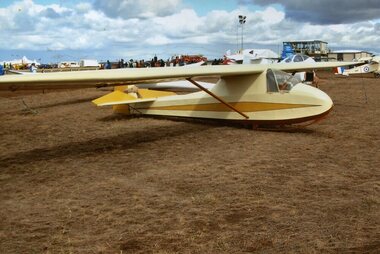
... It is essentially a Grunau Baby 2B with a Perspex enclosed cockpit, wing airbrakes and a landing wheel. However, the wing design came from an existing Grunau 3 type that was being built in Germany. ...It is essentially a Grunau Baby 2B with a Perspex enclosed cockpit, wing airbrakes and a landing wheel. However, the wing design came from an existing Grunau 3 type that was being built in Germany. ...This aircraft, the first glider built by Schneiders after they immigrated to Australia, was test flown on 3 January 1953 by Dave Darbyshire and Owen Lewis. It is the only machine of its type. It is essentially a Grunau Baby 2B with a Perspex enclosed cockpit, wing airbrakes and a landing wheel. However, the wing design came from an existing Grunau 3 type that was being built in Germany. The glider has given extensive service for a number of owners – including the Gliding Club of Victoria, Sunraysia Gliding Club, Millicent Gliding Club, Max Bugler of Morwell and Garth Hudson of Brighton in Victoria. Prior to being donated to the Australian Gliding Museum in January 2001 the glider had logged over 2200 hours flying time from over 9000 flights. The glider is an improved Grunau Baby design that Edmund Schneider built after coming to Australia.Single seat glider of wood and fabric construction, with steel wing struts. Currently painted crème with yellow details. Underside of fuselage is painted orange.australian gliding, grunau, grunau baby, schneider, gliding club of victoria, sunraysia gliding club, millicent gliding club, darbyshire, lewis, bugler, hudson -
 Australian Gliding Museum
Machine - Glider – Sailplane, 1969
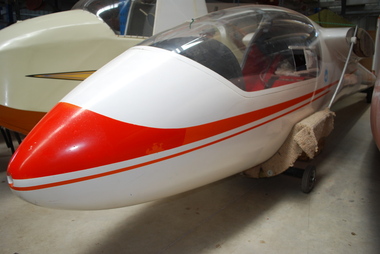
... cockpit – registration VH-GSW which has been painted on the sides of the fuselage rear of the wings. A Freistaat Bayern crest has been applied to each side of the vertical stabilizer. The Phoebus is a modern looking single seat glass fibre sailplane with a ‘T’ tailplane. It is finished in white with light red detailing including thin red stripe on wings and some red striping on fuselage sides from ...The Phoebus is a fibreglass composite sailplane that was designed by H. Nagele, R. Linder and R. Eppler in the early 1960s for competition flying. It is a derivative from the Akaflieg Stuttart Phonix which was the first sailplane to be built of fibreglass. The first Phoebus, a Standard Class design with a 15 metre wingspan, flew in 1964. The Phoebus C is the open class version of the type that was introduced in 1967. It has a 17 metre wing span, retractable wheel and tail brake parachute. Several hundred Phoebus sailplanes (all versions) were made by the manufacturer Bolkow at Ottobrun in Germany before production ended in 1970. The Museum’s Phoebus C, serial number 866, was built in 1969. It was donated to the Museum by Ian Cohn in 2008. Early fibreglass design that was manufactured in numbers. The Phoebus is a modern looking single seat glass fibre sailplane with a ‘T’ tailplane. It is finished in white with light red detailing including thin red stripe on wings and some red striping on fuselage sides from nose to underneath wings.Serial number 866 on plate affixed inside cockpit – registration VH-GSW which has been painted on the sides of the fuselage rear of the wings. A Freistaat Bayern crest has been applied to each side of the vertical stabilizer. australian gliding, glider, sailplane, bolkow, phoebus, cohn, nagele, linder, eppler -
 Australian Gliding Museum
Machine - Glider – Sailplane, 1952
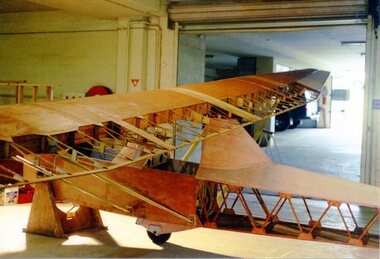
... The Slingsby T35 is a modified Tandem Tutor two seat glider that had extensive service at a number of Australian gliding clubs over a period of approximately 15 years from the mid 1950s. australian gliding glider sailplane slingsby waikerie gliding club renmark gliding club raaf gliding club The Slingsby T35 is an open cockpit, tandem, two-seater glider with high, pylon mounted two piece wing supported by double, wire braced, steel tube struts. ...The T35 Austral was developed by Slingsby Aviation from the Slingsby T31 with the wing span increased and a larger rudder to improve performance. This was done in response to an order from an Australian gliding club. The Museum’s glider was built from a Slingsby kit imported from the UK in 1952 and assembled by the Waikerie Gliding Club. The glider came on the Australian register as VH-GFX in May 1956. It was later transferred to the Renmark Gliding Club. In 1968 it was acquired by the RAAF Gliding Club at Laverton, Victoria. The existing log book records for the Museum’s T35 Austral are incomplete. Nevertheless the information at hand shows that it was launched over 17000 times and spent about 2400 hours in the air. It would appear that the glider has not been used for many years, the last flight recorded by the RAAF Gliding Club for this aircraft being in September 1971. As far as is known VH-GFX is the only example of the type to be built. The Slingsby T35 is a modified Tandem Tutor two seat glider that had extensive service at a number of Australian gliding clubs over a period of approximately 15 years from the mid 1950s. The Slingsby T35 is an open cockpit, tandem, two-seater glider with high, pylon mounted two piece wing supported by double, wire braced, steel tube struts. australian gliding, glider, sailplane, slingsby, waikerie gliding club, renmark gliding club, raaf gliding club -
 Australian Gliding Museum
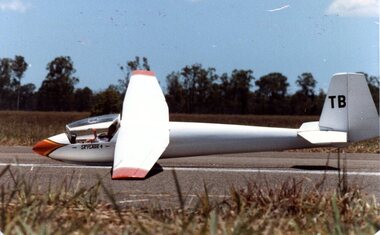
Machine - Glider – Sailplane, 1963
... from 1961. The design heralded a trend towards the use of plastics in the construction of gliders. Slingsby incorporated GRP (glass reinforced plastic) panels to achieve a streamlined fuselage nose and cockpit area while retaining the more traditional wood techniques for the rest of the aircraft. ...from 1961. The design heralded a trend towards the use of plastics in the construction of gliders. Slingsby incorporated GRP (glass reinforced plastic) panels to achieve a streamlined fuselage nose and cockpit area while retaining the more traditional wood techniques for the rest of the aircraft. ...The Skylark 4, the final in the Slingsby Skylark series, dates from 1961. The design heralded a trend towards the use of plastics in the construction of gliders. Slingsby incorporated GRP (glass reinforced plastic) panels to achieve a streamlined fuselage nose and cockpit area while retaining the more traditional wood techniques for the rest of the aircraft. Another notable feature was the smooth wing surface that was obtained using a Gaboon ply skin across the ribs. Best glide performance of 1:33 was found to be comparable with the early full GRP glider designs. The Museum’s example (VH-GTB – C/N 1382) was built in 1963 and originally owned by Chuck Bentson of the UK. It was brought to Australia in 1967 by Jeremy Picket-Heaps and flown at various places including Benalla, Cooma and Gundaroo. In 1970 the glider was transferred to the New England Soaring Club. Many flights were made from Armidale and Bellata in Northern New South Wales. On one occasion, the glider was kept aloft for 8 hours 45 minutes and on another the pilot took it around a 500 kilometre triangle in nearly 8 hours. In 1980 it was sold to Ralph (“Feathers”) Crompton and was flown extensively in South Australia until 1988. The final owner before the glider was given to the Museum in 2004 was Ross Dutton of Melbourne. The last recorded flight occurred in 1992. The glider at that point had logged over 2000 hours flying time from about 2000 launches. The airframe is currently being restored to flying condition. Technically this aircraft represents the state of the art at the stage that sailplane design was changing from traditional wood construction to composites (GRP) The Slingsby Skylark 4 is high wing single seat sailplane of mainly wooden construction with plywood and fabric covering. However, the cockpit and forward part of the fuselage consists of glass reinforced plastic which was innovative at the time that the type was designed. The cockpit provides for a semi reclining position for the pilot protected with a full Perspex canopy. The wings are made up of a centre section with constant chord and tapered wing tips. The aircraft has a conventional arrangement for the tail stabiliser / control surfaces. The sailplane bears construction number 1382 and is registered in Australia as VH-GTBaustralian gliding, glider, sailplane, skylark, slingsby, bentson, picket-heaps, crompton, new england soaring club, dutton -
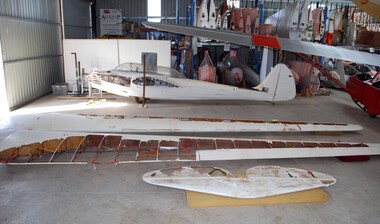 Australian Gliding Museum
Machine - Glider - Sailplane, 1943
... from 1:24 to something like 1:30. The LK10A was located at the Gliding Club of Western Australia for many years. Records reveal that it was kept airworthy until about 1975. The LK10A is an important acquisition in that it allows one to compare the state of two seat glider design in United States and the United Kingdom in the immediate post war period. It is interesting to note that at that time a number of clubs in Australia who acquired a two seat glider for training chose the United Kingdom open cockpit ...The Laister-Kauffman 10A (LK10A) is a 2 seat a military training glider developed from a successful Jack Laister single seat glider called Yankee Doodle that first flew in 1938 and was exhibited at the Paris Air Show of 1939. The two seater variation was ordered in 1941 by the US Army for training glider pilots of troop carrying gliders. The military designation was XTG-4. The LK 10A glider was a simpler, more robust design than Yankee Doodle. A longer canopy enclosed both seating positions. The top of the fuselage formed a straight ridge from the top of the canopy to the point where the fin – rudder connected. Also, the design was simplified by adopting straight spar wings of 15.2 metres in place of gull wings of 14.170 metres. During the war years 156 LK10As were produced before the contracts to supply the US Army were terminated. Many of these were later sold as surplus. The Museum’s exhibit (serial number 122) was built in 1943. It was imported into Australia in the 1950s by Ric New, a member of the Gliding Club of Western Australia. Ric New modified the glider by “flat topping” the fuselage and making other aerodynamic changes. This kind of modification of the LK10A was a well tried strategy in United States for extracting better performance from the glider. It is understood that the reduction in weight and cleaner aerodynamics from the changes could increase the glide ratio from 1:24 to something like 1:30. The LK10A was located at the Gliding Club of Western Australia for many years. Records reveal that it was kept airworthy until about 1975. The LK10A is an important acquisition in that it allows one to compare the state of two seat glider design in United States and the United Kingdom in the immediate post war period. It is interesting to note that at that time a number of clubs in Australia who acquired a two seat glider for training chose the United Kingdom open cockpit high strutted wing offerings from Slingsby (e.g. T31) instead of more innovative military surplus gliders from America. Modified LK10A glider consisting of tubular steel fuselage with a combination of fabric and metal covering, fabric covered wooden wings and other flying surfaces.australian gliding, glider, sailplane, laister, kauffman, ric new, gliding club of western australia, lk10a, yankee doodle, xtg-4 -
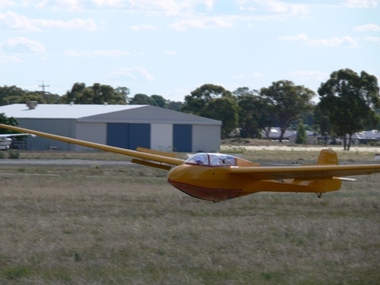 Australian Gliding Museum
Machine - Glider - Sailplane, 1961
... It has a fully enclosed cockpit under perspex (which is missing from this airframe). The wings which join the fuselage at shoulder height are swept forward such that the aircraft can be flown solo from the front seat and be properly balanced. ...It has a fully enclosed cockpit under perspex (which is missing from this airframe). The wings which join the fuselage at shoulder height are swept forward such that the aircraft can be flown solo from the front seat and be properly balanced. ...The Scheibe Bergfalke II is a high performance (for its day) and relatively inexpensive two seat sailplane designed by Egon Scheibe. It appeared in 1953 as a derivative of the Scheibe Mu13 Bergfalke and incorporated design changes to resolve and simplify structural issues that affected the Mu13. The Bergfalke II-55 followed in 1955. About 300 of the Bergfalke II and II-55 types were built in Germany and Sweden. This aircraft of the Bergfalke II-55 type was built by Scheibe in 1961 (work number 339). After a long life at Fliegergruppe Leimen e.V. logging 6754 flights and 1588 hours in the air, the glider was imported into Australia from Germany in June 2004. The glider was registered as VH-GKZ in January 2005 by Thomas Dattler of Millumbindy and flown only a small number of occasions (probably at Byron Soaring Centre). The Mangalore Gliding Club appears to have taken an interest in the glider in 2006 and completed routine Form 2 inspections in 2006 and 2009. The amount of usage during this period is unclear as the logbook records held are incomplete. In January 2012 the glider was purchased by the Southern Riverina Gliding Club and flown at Tocumwal until it was damaged in 2013 due to being blown over while at rest on the airfield. The 10 year survey was due in March 2013 and a decision was made by the club to donate the glider to the Australian Gliding Museum instead of completing the necessary repairs for returning it to an airworthy condition. It is estimated that the glider was flown about 300 times and perhaps logged about 140 hours in the air in Australia. If restored this exhibit will be representative of the Scheibe Bergfalke II-55 sailplane type (a rarity in Australia).Tandem two seat sailplane of a wood and tubular steel construction covered with plywood and fabric. It has a fully enclosed cockpit under perspex (which is missing from this airframe). The wings which join the fuselage at shoulder height are swept forward such that the aircraft can be flown solo from the front seat and be properly balanced. The aircraft is in a damaged condition. Registration "GKZ" on sides of fuselage glider, sailplane, australian gliding, scheibe, bergfalke, byron soaring centre, mangalore gliding club, dattler, southern riverina gliding club, tocumwal -
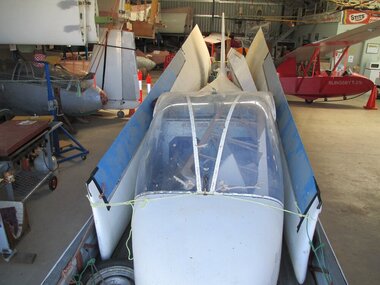 Australian Gliding Museum
Machine - Glider – Sailplane, 1964
... The T49 “Capstan” is a two seat trainer, developed by Slingsby in 1960-1961 from an earlier design, the T42 “Eagle”. A major difference was that the T49 cockpit was arranged with side by side seating instead of the tandem seats of the earlier design. ...The T49 “Capstan” is a two seat trainer, developed by Slingsby in 1960-1961 from an earlier design, the T42 “Eagle”. A major difference was that the T49 cockpit was arranged with side by side seating instead of the tandem seats of the earlier design. ...The T49 “Capstan” is a two seat trainer, developed by Slingsby in 1960-1961 from an earlier design, the T42 “Eagle”. A major difference was that the T49 cockpit was arranged with side by side seating instead of the tandem seats of the earlier design. The prototype T49 flew in 1961. The production version (T49-B) was slightly different to the prototype in that it was given a taller fin. Thirty two were built by Slingsby. The Australian Gliding Museum example of this type (Serial Number FMD86), designated T49-B, is one of a pair built in 1964 from kits by Fred M. Dunn (Sailplane Services Ltd (NZ)) at Christchurch, New Zealand. It was registered as ZK-GDU in July 1964 and was flown at Wigram Gliding Club and Canterbury Gliding Club. It had logged over 4000 hours as at December 1987. The glider was brought to Australia in 1988 and registered as VH-CQH by Allen Rundle of Maclean, near Grafton, New South Wales. The glider’s last New Zealand maintenance release expired in January 1988. It has not flown in Australia. The exhibit is one of a relatively small number (probably about a dozen) of this Slingsby type that remain. It is the only T49B in Australia, as the other built by Fred Dunn in 1964 (and brought to Australia by Allen Rundle) was found to be beyond repair and has been broken up. Sailplane of wood, plywood and fabric construction with some fibreglass elements.Marked with NZ registration “DU”australian gliding, glider, sailplane, slingsby, capstan, t49, wigram gliding club, canterbury gliding club, fred dunn, allen rundle, sailplane services ltd -
 Australian Gliding Museum
Machine - Glider –Sailplane, 1960
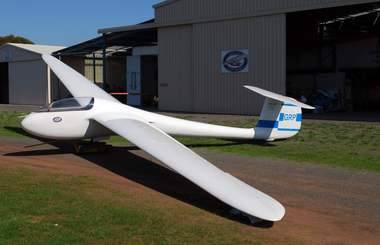
... from 182 kg to approximately 220 kg. Nevertheless, the wing loading is a modest 20kg/square metre. As at January 2016, minor repairs and airworthiness certification are required to return the glider to flying condition. This exhibit is highly significant as it is one of only eight of this pioneering sailplane design. It is the only one in Australia. australian gliding sailplane glider fs-24 phonix nagele eppler lindner stuttgart technical university bolkov aircraft company segelfluggruppe solothurn ashford geelong gliding club. Australian registration GRP on rudder; Serial Number 403 and Vintage glider club of Netherlands plaque in cockpit ...The FS-24 Phonix is the first sailplane design to be built using a moulded fiberglass sandwich technique. It was designed by Hermann Nagele and Richard Eppler leading a group setup for the purpose at Stuttgart Technical University in the early 1950s. Initial construction was undertaken at workshops of Wolf Hirth and the first prototype was completed at the Bolkow Aircraft Company where Nagele and another member of the group, Rudi Lindner, had gained employment. It flew on 27 November 1957. Two further prototypes were built incorporating a T-tail and other refinements. Eight in all were built before production was stopped in 1961. A number of gliding records were broken in Phonix sailplanes in Germany in 1962-1963. It was found to have a best glide ratio of 40:1. The Museum’s example, No. 403 was originally a prototype built on 25 May 1960 [Registration D-8354]. It was converted at Bolkow to a Phonix T in 1963 and sold to a private owner in Switzerland [Registration HB-746] and later then to gliding club Segelfluggruppe Solothurn in 1965. The glider returned to Germany in 1971 (Meersburg) and re-registered as D-0738. It moved to a new owner in Allershausen in 1976, and again to Lindhoft in 1982. In 1983 the glider was sold to owners at Hasselt, Belgium and given registration OO-ZQD. In 1989 a further change of ownership occurred and the glider went to Leusden in the Netherlands where it was registered as PH-949. In 2006 the Phonix No.403 was imported into Australia by John Ashford of the Geelong Gliding Club. On 30 January 2007, it was registered as VH-GRP. However, as at January 2016 it has not been flown in Australia. In the course of its flying history the glider was damaged several times and repaired. At one stage a larger rudder was fitted and later on this modification was reversed. With the original conversion to a Phonix T and subsequent repairs and changes to equipment the weight of the airframe increased from 182 kg to approximately 220 kg. Nevertheless, the wing loading is a modest 20kg/square metre. As at January 2016, minor repairs and airworthiness certification are required to return the glider to flying condition. This exhibit is highly significant as it is one of only eight of this pioneering sailplane design. It is the only one in Australia. Glassfibre single seat sailplane, finished white with blue stripes on fin and rudder.Australian registration GRP on rudder; Serial Number 403 and Vintage glider club of Netherlands plaque in cockpitaustralian gliding, sailplane, glider, fs-24, phonix, nagele, eppler, lindner, stuttgart technical university, bolkov aircraft company, segelfluggruppe solothurn, ashford, geelong gliding club. -
 Australian Gliding Museum
Machine - Glider – Sailplane
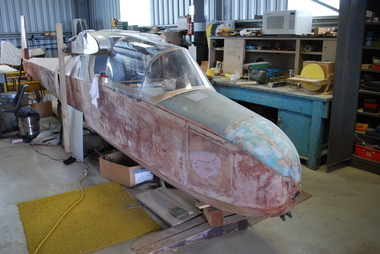
... from 1955 to 1958 and registered as VH-GLL on 15 January 1959. It was the second of the ES49s built by the Adelaide Soaring Club. Originally it had a rather distinctive appearance due to the use of a sleek P51 Mustang canopy to enclose the forward seating position of the cockpit. ...from 1955 to 1958 and registered as VH-GLL on 15 January 1959. It was the second of the ES49s built by the Adelaide Soaring Club. Originally it had a rather distinctive appearance due to the use of a sleek P51 Mustang canopy to enclose the forward seating position of the cockpit. ...The ES49 glider / sailplane was designed by Edmund Schneider in Germany before he migrated to Australia in the early 1950s. In Germany the ES49 was put into limited production by the Schleicher factory from 1951 to 1953 (8 produced). In Australia the ES49 is commonly referred to as the “Wallaby”; two were built by the Adelaide Soaring Club with assistance from Edmund Schneider Ltd and one independently from plans by Eric Hader and members of the Cooma Gliding Club. The Museum’s ES49 – serial number GFA-HB-36 - was built at Gawler from 1955 to 1958 and registered as VH-GLL on 15 January 1959. It was the second of the ES49s built by the Adelaide Soaring Club. Originally it had a rather distinctive appearance due to the use of a sleek P51 Mustang canopy to enclose the forward seating position of the cockpit. The glider, together with its sister VH-GDK, was used at the Gliding Federation of Australia National Gliding Schools at Gawler. In 1964 the glider was transferred to the Newcastle Gliding Club, Newcastle, in New South Wales and then in 1966 it went to the Albury and District Gliding Club, Albury, New South Wales. The Snowy Mountains Gliding Club, Khancoban, New South Wales acquired the glider in 1968 where it remained until 1974. In 1974 the glider transferred into private hands at Wodonga, Victoria, for two years and then to interests at Albury until 1985. At that stage the glider was acquired by a private owner at Bathurst, New South Wales, who undertook a restoration that included, amongst other work, the fitting of a more conventional cockpit canopy. The glider was at Warkworth, New South Wales in 1992 and became to be owned by Eric Oates who preserved it until he donated it to the Australian Gliding Museum. According to the logbook for VH-GLL held by the Museum, the glider was last flown in November 1990 and at that time had logged 2758 hours and 57 minutes from 15775 launches. The fuselage is currently under restoration at the Museum’s Dave Darbyshire workshop. The ES49 – VH-GLL – is an example of the state of wood and fabric dual place sailplane design in the late 1940s. The glider served the Adelaide Soaring Club and subsequent owners well as a training and general purpose sailplane over many years. It is a rare example of the type (one of 4 existing in the world). Tandem two seat high wing strut braced glider-sailplane finished in silver grey colour scheme.australian fliding, glider, sailplane, schneider, es 49, wallaby, oats, adelaide soaring club, hader, cooma gliding club, newcastle gliding club, albury & district gliding club, snowy mountains gliding club -
 Australian Gliding Museum
Machine - Glider - Sailplane, 1937
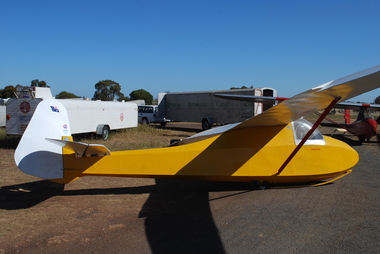
... from Edmund Schneider in Germany. The Golden Eagle was found to fly well, having a similar performance to the Grunau Baby. In the 1950s, the Golden Eagle was modified by rebuilding the front of the fuselage to enclose the cockpit with a Perspex canopy. ...from Edmund Schneider in Germany. The Golden Eagle was found to fly well, having a similar performance to the Grunau Baby. In the 1950s, the Golden Eagle was modified by rebuilding the front of the fuselage to enclose the cockpit with a Perspex canopy. ...The Golden Eagle is an original design by Geoff Richardson. Geoff commenced gliding in the early days of the sport circa 1933 in Melbourne, flying at Coode Island and Mt Frazer. In 1934, he began construction of a secondary type glider but scrapped it upon realizing that a better design was needed. He conducted further research and came up with a sailplane of similar size and general arrangement to the Grunau Baby but with a “Gull” wing using a Gottingen 535 wing section (the same as for the Grunau Baby). Geoff did all the technical calculations himself and even made up and tested a Casein glue for the construction. Geoff competed construction of his new sailplane (which he called the “Golden Eagle”) in 1937 and it was test flown at Laverton at the western edge of Melbourne in September 1937. On the same day, at Laverton, the Gliding Club of Victoria flew its new Grunau Baby 2 sailplane which it had imported as a finished machine from Edmund Schneider in Germany. The Golden Eagle was found to fly well, having a similar performance to the Grunau Baby. In the 1950s, the Golden Eagle was modified by rebuilding the front of the fuselage to enclose the cockpit with a Perspex canopy. A landing wheel was incorporated behind the skid. Spoilers were added to the wings and a trim tab to the elevators. The Golden Eagle has been flown with the VMFG (Victorian Motorless Flight Group) for most of its long life. When donated to the Australian Gliding Museum in 2016 by Alan Patching it was probably the oldest, continuously airworthy glider in the world. Having regard to the historical significance of the Golden Eagle, the Museum has decided to not to fly it anymore to avoid risk of loss or damage. The exhibit is of great significance for Australian gliding history – the Golden Eagle is a flyable 1930s aircraft in excellent condition that was designed and built by an Australian gliding pioneer. Single seat wood and fabric sailplane finished with white wings, tailplane and rudder and yellow fuselage Registration letters “FC” on fuselage nose port side, Australian flag, Vintage Gliders Australia and VMFG decals on rudder, “Golden Eagle” lettering in red on each side of the fuselage below the canopy, Aboriginal flag decal on port side of fuselage below the canopy. australian gliding, glider, sailplane, golden eagle, richardson, patching, vmfg, victorian motorless flight group -
 Australian Gliding Museum
Machine - Glider – Sailplane, 1959
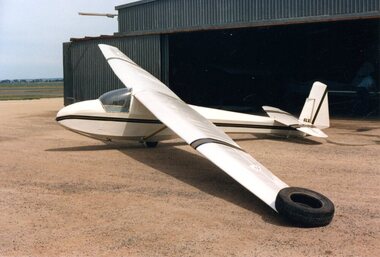
... from service. The exhibit represents the final development of the "Grunau" single seat type by Edmund Schneider Ltd in Australia. Viewed together with the Grunau Baby gliders in the ATO Collection (Two Grunau Baby 2, and a Grunau Baby 3A), the changes to this glider type over a 30 year period can be recognized. australian gliding glider sailplane grunau grunau 3a grunau 3b grunau 4 schneider waikerie gliding club dubbo gliding club adelaide soaring club josef brabec Identification Plate in cockpit showing that glider is serial number 37 built by Edmund Schneider Ltd in 1959 Single seat wooden sailplane with fabric covering. ...This aircraft was designed by Edmund Schneider as a single seat medium performance sailplane. Originally designated as the Grunau 3b but later named the Grunau 4. However, it was a new design with fully enclosed cockpit. The main point of difference to earlier Schneider Grunau designs was the tapered wings with the Gottingen 549 aerofoil. This design feature gave the Grunau 4 a better speed range compared to the Grunau Baby 2b or the Grunau 3. The prototype flew on 6 December 1953 and it went to the Waikerie Gliding Club. A second was delivered to the Dubbo Gliding Club in October of the next year and a third (the Australian Gliding Museum’s exhibit) built for the Adelaide Soaring Club in 1959 (registered as VH-GLX on 21 October 1959). Another was built by Josef Brabec from a Schneider supplied kit from 1954 to 1956. The log book indicates that the glider recorded 2362 flying hours over approximately 40 years of active service. There are many long flights recorded. The registration was cancelled on 30 July 2014 as a result of a decision by the Museum to withdraw the glider from service. The exhibit represents the final development of the "Grunau" single seat type by Edmund Schneider Ltd in Australia. Viewed together with the Grunau Baby gliders in the ATO Collection (Two Grunau Baby 2, and a Grunau Baby 3A), the changes to this glider type over a 30 year period can be recognized. Single seat wooden sailplane with fabric covering. Fully enclosed cockpit. The aircraft is white with Linden Green on the wing tips, tailplane and underside of the fuselage and also on the central wing cover. Identification Plate in cockpit showing that glider is serial number 37 built by Edmund Schneider Ltd in 1959 australian gliding, glider, sailplane, grunau, grunau 3a, grunau 3b, grunau 4, schneider, waikerie gliding club, dubbo gliding club, adelaide soaring club, josef brabec -
 Australian Gliding Museum
Machine - Glider - Sailplane, 1974
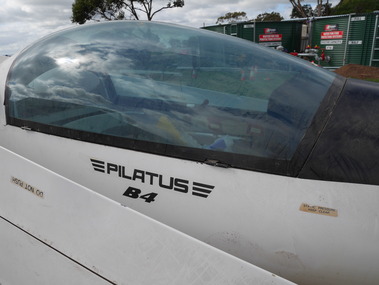
... from 4304 flights. It returned to service briefly in January 2008 (5 flights totalling about 5 hours). It was donated to the Museum by David Millward of the Geelong Gliding Club, Victoria, on 10 April 2017. The aircraft is representative of a popular imported 1970s intermediate single seat sailplane design of aluminium alloy construction. australian gliding glider sailplane pilatus b4 sutton narrogin albury corowa green townsville millward geelong White colour scheme with yellow fuselage underside highlighted by blue stripe – “Pilatus B4” in black lettering on starboard side of cockpit – black anti-glare paint on the fuselage nose – Registration “GID” on the underside of port wing. ...The Pilatus B4 is an all metal intermediate sailplane meeting Standard Class rules that was designed in 1966 by Ingo Herbst, Manfred Küppers and Rudolf Reinke. It did not immediately go into production. In 1972 Pilatus Aircraft of Switzerland acquired a licence to build the aircraft and began production. The PCII and PCIIA versions were semi-aerobatic. The PC11AF released in 1975 was rated as fully aerobatic. By 1980, when Pilatus sold the rights to manufacture of the aircraft to Nippi Aircraft of Japan, 322 of the Pilatus B4 had been produced. Nippi Aircraft built a further 13 and also one two seat version. The Pilatus B4 proved popular in Australia with 26 appearing on the Australian register. The Museum’s example is a basic semi-aerobatic type (Serial Number 092) that was built in 1974. It is registered as VH-GID on 8 July 1974 by H.G. Sutton of Mandura, Western Australia and flown out of the Narrogin Gliding Club in Western Australia until September 1986 when it was sold to the Albury – Corowa Gliding Club, New South Wales. In 1999 it was acquired by Michael Green and moved to Townsville, Queensland. The aircraft changed ownership again in 2004 and fell out of use for nearly 4 years. By then it had recorded 4377 hours in the air from 4304 flights. It returned to service briefly in January 2008 (5 flights totalling about 5 hours). It was donated to the Museum by David Millward of the Geelong Gliding Club, Victoria, on 10 April 2017. The aircraft is representative of a popular imported 1970s intermediate single seat sailplane design of aluminium alloy construction.Single seat sailplane of metal alloy constructionWhite colour scheme with yellow fuselage underside highlighted by blue stripe – “Pilatus B4” in black lettering on starboard side of cockpit – black anti-glare paint on the fuselage nose – Registration “GID” on the underside of port wing.australian gliding, glider, sailplane, pilatus b4, sutton, narrogin, albury, corowa, green, townsville, millward, geelong -
Moorabbin Air Museum
Machine - CAC CA-31 Jet Trainer Factory Mockup, 1964
... cockpit configuration. It was constructed in CAC’s development Hangar, (the CAC Butler Hangar now relocated to. Description: The CAC CA-31 concept was developed in 1964 as a two seat delta wing trainer to support the intended use of the GAF Mirage fighter in RAAF service. It followed on from...cockpit configuration. It was constructed in CAC’s development Hangar, (the CAC Butler Hangar now relocated to. Description: The CAC CA-31 concept was developed in 1964 as a two seat delta wing trainer to support the intended use of the GAF Mirage fighter in RAAF service. It followed on from ...Historical Details: The CA-31 Factory Mockup was constructed by CAC to provide a full size – 3 dimensional demonstration of the aircraft’s overall size, layout and cockpit configuration. It was constructed in CAC’s development Hangar, (the CAC Butler Hangar now relocated to. Description: The CAC CA-31 concept was developed in 1964 as a two seat delta wing trainer to support the intended use of the GAF Mirage fighter in RAAF service. It followed on from an earlier swept wing jet trainer proposal first commenced in 1953, which went through. Level of Importance: National -
Moorabbin Air Museum
Machine - De Havilland DH104 Dove (Cockpit) VH-ALD (G-BAHB, CS-TAC )
... Description: The de Havilland Dove was one of the aircraft types resulting from the recommendations of the wartime Brabazon Committee which studied the post war requirements of British commercial aviation. One recommendation was for the design of what what is now call. Level of Importance: Regional De Havilland DH104 Dove (Cockpit ...Historical Details: . Description: The de Havilland Dove was one of the aircraft types resulting from the recommendations of the wartime Brabazon Committee which studied the post war requirements of British commercial aviation. One recommendation was for the design of what what is now call. Level of Importance: Regional
