
Showing 10 items matching "galileo"
-
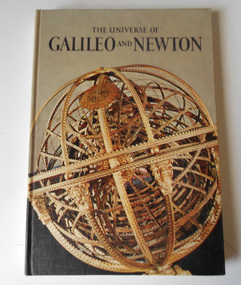 Robin Boyd Foundation
Book, William Bixby, The Universe of Galileo & Newton, 1964
... The Universe of Galileo & Newton...Galileo Galilei Isaac Newton modern science Walsh St library 2 Notes on the text - handwritten by a student between pages 116-117 Hardcover The Universe of Galileo & Newton Book William Bixby American Heritage Publishing ...Hardcover2 Notes on the text - handwritten by a student between pages 116-117galileo galilei, isaac newton, modern science, walsh st library -
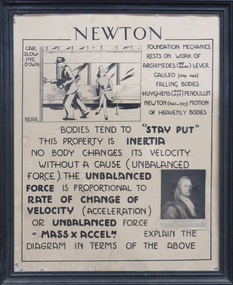 Federation University Historical Collection
Artwork, other - Image, Newton/Inertia Advertisment
... ...galileo...It also makes reference to Archimedes, Galileo, and Huyghens....inertia poster newton galileo archimedes huyghens Framed educational poster on Newton and Inertia. ...Framed educational poster on Newton and Inertia. It also makes reference to Archimedes, Galileo, and Huyghens.inertia, poster, newton, galileo, archimedes, huyghens -
 Bendigo Historical Society Inc.
Document - ROYAL PRINCESS THEATRE COLLECTION: AUSTRALIASIAN TOUR, CALVE', 6 October, 1910
... Songs etc. by Signor Galileo Gasparri; Africana, Recitar mentre Preso, Vesti li giubba. ...Songs etc. by Signor Galileo Gasparri; Africana Recitar mentre Preso Vesti li giubba. ...Princess Theatre - Australiasian Tour, Calve'. Signor Gasparri, Tenor M Pintel, Pianist. Madame Calve's Australian Tour, Direction J & N Tait. 6th October, 1910. Programme:Piano Solos by M Jaques Pintel; Ballade in A Flat, Rhapsodie No. 8, Polonaise. Songs etc. by Signor Galileo Gasparri; Africana, Recitar mentre Preso, Vesti li giubba. Songs by Madame Calve; Stances, Air di Mysoli. Song Duo and Romance by Madame Calve' and Signor Gallieo Gasparri: Habanera, Canzonetta, Enfin c'est toi, La Fluer que to m'avais jetee, Non! Tu ne m'aimes pas! Markings none.program, music, princess theatre, princess theatre - australiasian tour, calve'. signor gasparri, tenor m pintel, pianist. madame calve's australian tour, direction j & n tait. 6th october, 1910. programme:piano solos by m jaques pintel; ballade in a flat, rhapsodie no. 8, polonaise. songs etc. by signor galileo gasparri; africana, recitar mentre preso, vesti li giubba. songs by madame calve; stances, air di mysoli. song duo and romance by madame calve' and signor gallieo gasparri: habanera, canzonetta, enfin c'est toi, la fluer que to m'avais jetee, non! tu ne m'aimes pas! -
 Warrnambool RSL Sub Branch
Album - Photo Album
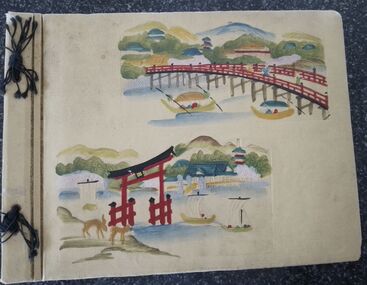
... Moonstone captures sub (Med 1940, sub Galileo Galilei). Nice work Kimberley H L Anderson. ...Moonstone captures sub (Med 1940, sub Galileo Galilei). Nice work Kimberley H L Anderson. ...No provenanceshows geographic details and extent of WW2 but is undatedPhoto Album- padded covers with black card inserts with mounted B/W photos attached. Several pics missing.Front has 2 coloured images of Japan. Back has 1 coloured image. Inside Front cove is colour pic of Aquitania. First page contains 'pin-up' pics of pre-war starlets Idntifying pics include: Ocean Escort-Australian Convoy,Colombo-Suez, February 1940. Moonstone captures sub (Med 1940, sub Galileo Galilei). Nice work Kimberley H L Anderson. HMS Kimberley served in North Sea and Med. Dyatalawa=town in Sri Lanka. Berbera=British Somaliland taken by Italy in 1940. Dyaluma Falls=Sri Lanka. HMAS Sydney (no date or location).mostly pics of ceylon (sri lanka), some locations identified. sme battle scenes and wreckage pics. -
 Flagstaff Hill Maritime Museum and Village
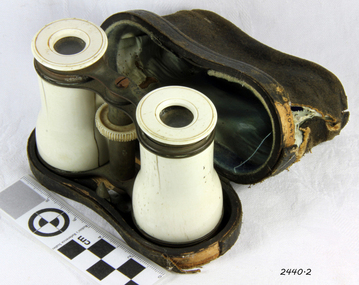
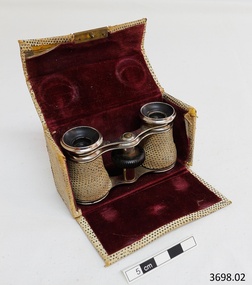
Opera Glasses & case, Early 20th Century
... Less than a year later, a well-known inventor and philosopher by the name of Galileo developed what became known as the Galilean telescope. ...Less than a year later, a well-known inventor and philosopher by the name of Galileo developed what became known as the Galilean telescope. ...Opera Glasses came into existence as a result of a long line of inventions, and further improvements upon those inventions. The process started in the year 1608 when a Dutch optician by the name of Hans Lipperhey developed the first pair of binoculars with a magnification capability of X3. Less than a year later, a well-known inventor and philosopher by the name of Galileo developed what became known as the Galilean telescope. Advertisements were first found for opera glasses and theatre binoculars in London as early as 1730 in the form of a long collapsible telescope. The "Opera Glass" as it was referred to; was often covered in enamel, gems, ivory, or other art and paintings. For almost 100 years opera glasses existed merely as telescopes. In Vienna, in 1823 the first binocular opera glasses and theatre binoculars began to appear. They were two simple Galilean telescopes with a bridge in the centre, each telescope focused independently from the other by extending or shortening the telescope until the desired focus was achieved, which was useful, yet very cumbersome. Two years later in Paris, Pierre Lemiere improved on this design and created a centre focus wheel. This allowed the focusing of both telescopes together. After this development, opera glasses and theatre binoculars grew in popularity because of the superior view they facilitated in opera and theatre houses. The beautiful design of the glasses themselves also added appeal to the opera-going crowd. By the 1850's opera glasses and theatre, glasses had become a must-have fashion accessory for all opera and theatergoers.Not very significant as not associated with a historic event or person and made during the first half of the 20th Century and many are still available and easily sourced.Vintage Pair of Opera Glasses, with cow bone barrels and eyepieces, both barrel pieces have split in them, both metal end barrels each have a minor dent, optics are pretty clear no mould although have very minor dust spots inside, they look like they were gilded at some point but most of this has rubbed off glasses have a black leather case with blue lining. No markings whatsoever anywhereflagstaff hill, warrnambool, shipwrecked coast, flagstaff hill maritime museum, maritime museum, shipwreck coast, flagstaff hill maritime village, great ocean road, binoculars, opera glasses, theatre glasses, optical instrument, cow bone -
 Flagstaff Hill Maritime Museum and Village
Functional object - Opera Glasses, 1920s
... Less than a year later, a well-known inventor and philosopher by the name of Galileo developed what became known as the Galilean telescope. ...Less than a year later, a well-known inventor and philosopher by the name of Galileo developed what became known as the Galilean telescope. ...Opera Glasses came into existence as a result of a long line of inventions, and further improvements upon those inventions. The process started in the year 1608 when a Dutch optician by the name of Hans Lipperhey developed the first pair of binoculars with a magnification capability of X3. Less than a year later, a well-known inventor and philosopher by the name of Galileo developed what became known as the Galilean telescope. Advertisements were first found for opera glasses and theatre binoculars in London as early as 1730 in the form of a long collapsible telescope. The "Opera Glass" as it was referred to; was often covered in enamel, gems, ivory, or other art and paintings. For almost 100 years opera glasses existed merely as telescopes. In Vienna, in 1823 the first binocular opera glasses and theatre binoculars began to appear. They were two simple Galilean telescopes with a bridge in the centre, each telescope focused independently from the other by extending or shortening the telescope until the desired focus was achieved, which was useful, yet very cumbersome. Two years later in Paris, Pierre Lemiere improved on this design and created a centre focus wheel. This allowed the focusing of both telescopes together. After this development, opera glasses and theatre binoculars grew in popularity because of the superior view they facilitated in opera and theatre houses. The beautiful design of the glasses themselves also added appeal to the opera-going crowd. By the 1850's opera glasses and theatre, glasses had become a must-have fashion accessory for all opera and theatregoers. A vintage pair of 1920s opera glasses probably made in France by an unknown maker the item is significant due to it's provenance that can be traced and it's completeness as a useful social item and fashion accessory used by theatergoers from the mid 19th century and well into the 20th century. Some people still use modern variants of theater glasses today to improve their enjoyment of the theater.Both glasses and case are covered with black and white snake skin. Case lined with purple velvet, and has brass closure clip.Noneflagstaff hill, warrnambool, shipwrecked coast, flagstaff hill maritime museum, maritime museum, flagstaff hill maritime village, great ocean road, opera glasses, serpentine opera glasses, binoculars, accessories, optical instrument, scientific instrument, theater glasses, french opera glasses, hans lipperhey -
 Flagstaff Hill Maritime Museum and Village
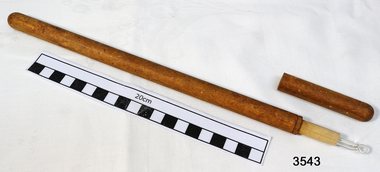
Functional object - Thermometer, Late 19th - early 20th century
... The Thermoscope The thermometer dates back to the early 1600s, with Galileo’s invention of the “thermoscope.” Galileo’s device could determine whether temperature was rising or falling, but was not able to detect the actual scale of the temperature. ...The Thermoscope The thermometer dates back to the early 1600s, with Galileo’s invention of the “thermoscope.” Galileo’s device could determine whether temperature was rising or falling, but was not able to detect the actual scale of the temperature. ...The Thermoscope The thermometer dates back to the early 1600s, with Galileo’s invention of the “thermoscope.” Galileo’s device could determine whether temperature was rising or falling, but was not able to detect the actual scale of the temperature. In 1612, Italian inventor and physician Sanctorius was the first to put a numerical scale on the thermoscope. His product was also designed for taking temperature from a patient’s mouth. However, neither Galileo’s nor Sanctorius’ thermoscopes were very accurate. Standardized Scales In 1709, Daniel Gabriel Fahrenheit invented his first thermometer using alcohol. He later introduced the mercury thermometer in 1714, which was more accurate and predictable. The Fahrenheit temperature scale was standardized in 1724 with a freezing point of 32 degrees and a boiling point of 212 degrees. Fahrenheit’s mercury thermometer is recognized as the first modern thermometer with a standardized scale. The Celsius scale was invented in 1742 by Anders Celsius, with a freezing point of 0 degrees and a boiling point of 100 degrees. This scale was accepted into the international conference on weights and measurements in 1948. The Kelvin Scale, measuring extreme temperatures, was developed by Lord Kelvin in 1848. Registering Thermometers Early versions of the thermometer were not able to hold the temperature after they were moved. You can imagine how this made it hard for doctors to correctly read a patient’s temperature. The first thermometer that could register and hold onto temperature was built by James Six in 1782. Today, it is known as Six’s thermometer. Since then, the mercury thermometer was adapted to read a patients temperature after leaving the body. Registering thermometers are still used today and are reset by shaking down the mercury to the bottom of the tube. The Modern Devices Modern Day Thermometers This brings us to the first practical clinical thermometer, which was invented in 1867 by Sir Thomas Allbutt. The device was portable, about 6 inches long and was capable of recording a patient’s temperature in 5 minutes. Now, there are a few options for clinical and home use. Liquid filled thermometers have been adapted based on the designs of inventors like Fahrenheight and Six are still used today. Digital thermometers, like the Omron Compact Digital Thermometer, are capable of finding a temperature and producing an electronic number within a minute of use. Digital ear thermometers also produce a quick and accurate temperature. Dr. Jacob Fraden invented an infared thermometer called the Thermoscan Human Ear Thermometer in 1984. These thermometers use an infared light to scan the heat radiation in a patient’s ear or forehead. The thermometer, like many medical devices, has made strides in efficiency and accuracy. As medical technology continues to advance, businesses in the medical device industry must be prepared to move with it. This thermometer was donated to Flagstaff Hill Maritime Village by the family of Doctor William Roy Angus, Surgeon and Oculist. It is part of the “W.R. Angus Collection” that includes historical medical equipment, surgical instruments, and material once belonging to Dr. Edward Ryan and Dr. Thomas Francis Ryan, (both of Nhill, Victoria) as well as Dr. Angus’ own belongings. The Collection’s history spans the medical practices of the two Doctors Ryan, from 1885-1926 plus that of Dr. Angus, up until 1969. ABOUT THE “W.R.ANGUS COLLECTION” Doctor William Roy Angus M.B., B.S., Adel., 1923, F.R.C.S. Edin.,1928 (also known as Dr. Roy Angus) was born in Murrumbeena, Victoria in 1901 and lived until 1970. He qualified as a doctor in 1923 at the University of Adelaide, was Resident Medical Officer at the Royal Adelaide Hospital in 1924 and for a period was house surgeon to Sir (then Mr.) Henry Simpson Newland. Dr. Angus was briefly an Assistant to Dr. Riddell of Kapunda, then commenced private practice at Curramulka, Yorke Peninsula, SA, where he was a physician, surgeon, and chemist. In 1926, he was appointed as a new Medical Assistant to Dr. Thomas Francis Ryan (T.F. Ryan, or Tom), in Nhill, Victoria, where his experiences included radiology and pharmacy. In 1927 he was Acting House Surgeon in Dr. Tom Ryan’s absence. Dr. Angus had become engaged to Gladys Forsyth and they decided he would take time to further his studies overseas in the UK in 1927. He studied at London University College Hospital and at Edinburgh Royal Infirmary and in 1928, was awarded FRCS (Fellow from the Royal College of Surgeons), Edinburgh. He worked his passage back to Australia as a Ship’s Surgeon on the Australian Commonwealth Line’s SS Largs Bay. Dr. Angus married Gladys in 1929, in Ballarat. (They went on to have one son (Graham 1932, born in SA) and two daughters (Helen (died 12/07/1996) and Berenice (Berry), both born at Mira, Nhill ) Dr. Angus was a ‘flying doctor’ for the A.I.M. (Australian Inland Ministry) Aerial Medical Service in 1928. The organisation began in South Australia through the Presbyterian Church that year, with its first station being in the remote town of Oodnadatta, where Dr. Angus was stationed. He was locum tenens there on North-South Railway at 21 Mile Camp. He took up this ‘flying doctor’ position in response to a call from Dr. John Flynn; the organisation was later known as the Flying Doctor Service, then the Royal Flying Doctor Service. A lot of his work during this time involved dental surgery also. Between 1928-1932 he was a surgeon at the Curramulka Hospital, Yorke Peninsula, South Australia. In 1933 Dr. Angus returned to Nhill where he’d previously worked as Medical Assistant and purchased a share of the Nelson Street practice and Mira hospital from Dr. Les Middleton one of the Middleton Brothers, the current owners of what was once Dr. Tom Ryan’s practice. Dr. L Middleton was House Surgeon at the Nhill Hospital from 1926-1933 when he resigned. [Dr. Tom Ryan’s practice had originally belonged to his older brother Dr. Edward Ryan, who came to Nhill in 1885. Dr. Edward saw patients in his rooms, firstly in Victoria Street and in 1886 in Nelson Street, until 1901. The Nelson Street practice also had a 2-bed ward, called Mira Private Hospital ). Dr. Edward Ryan was House Surgeon at the Nhill Hospital from 1884-1902. He also had occasions where he successfully performed veterinary surgery for the local farmers too. Dr. Tom Ryan then purchased the practice from his brother in 1901. Both Dr. Edward and Dr. Tom Ryan work as surgeons including in eye surgery. Dr. Tom Ryan performed many of his operations in the Mira private hospital on his premises. He too was House Surgeon at the Nhill Hospital from 1902-1926. Dr. Tom Ryan had one of the only two pieces of radiology equipment in Victoria during his practicing years – The Royal Melbourne Hospital had the other one. Over the years Dr. Tom Ryan gradually set up what was effectively a training school for country general-practitioner-surgeons. Each patient was carefully examined, including using the X-ray machine, and any surgery was discussed and planned with Dr. Ryan’s assistants several days in advance. Dr. Angus gained experience in using the X-ray machine there during his time as assistant to Dr. Ryan. Dr. Tom Ryan moved from Nhill in 1926. He became a Fellow of the Royal Australasian College of Surgeons in 1927, soon after its formation, a rare accolade for a doctor outside any of the major cities. He remained a bachelor and died suddenly on 7th Dec 1955, aged 91, at his home in Ararat. Scholarships and prizes are still awarded to medical students in the honour of Dr. T.F. Ryan and his father, Dr. Michael Ryan, and brother, John Patrick Ryan. ] When Dr. Angus bought into the Nelson Street premises in Nhill he was also appointed as the Nhill Hospital’s Honorary House Surgeon from 1933-1938. His practitioner’s plate from his Nhill surgery states “HOURS Daily, except Tuesdays, Fridays and Saturday afternoons, 9-10 am, 2-4 pm, 7-8 pm. Sundays by appointment”. This plate is now mounted on the doorway to the Port Medical Office at Flagstaff Hill Maritime Village, Warrnambool. Dr. Edward Ryan and Dr. Tom Ryan had an extensive collection of historical medical equipment and materials spanning 1884-1926 and when Dr. Angus took up practice in their old premises he obtained this collection, a large part of which is now on display at the Port Medical Office at Flagstaff Hill Maritime Village in Warrnambool. During his time in Nhill Dr. Angus was involved in the merging of the Mira Hospital and Nhill Public Hospital into one public hospital and the property titles were passed on to Nhill Hospital in 1939. In 1939 Dr Angus and his family moved to Warrnambool where he purchased “Birchwood,” the 1852 home and medical practice of Dr. John Hunter Henderson, at 214 Koroit Street. (This property was sold in1965 to the State Government and is now the site of the Warrnambool Police Station. ). The Angus family was able to afford gardeners, cooks, and maids; their home was a popular place for visiting dignitaries to stay whilst visiting Warrnambool. Dr. Angus had his own silkworm farm at home in a Mulberry tree. His young daughter used his centrifuge for spinning the silk. Dr. Angus was appointed on a part-time basis as Port Medical Officer (Health Officer) in Warrnambool and held this position until the 1940’s when the government no longer required the service of a Port Medical Officer in Warrnambool; he was thus Warrnambool’s last serving Port Medical Officer. (The duties of a Port Medical Officer were outlined by the Colonial Secretary on 21st June 1839 under the terms of the Quarantine Act. Masters of immigrant ships arriving in port reported incidents of diseases, illness, and death and the Port Medical Officer made a decision on whether the ship required Quarantine and for how long, in this way preventing contagious illness from spreading from new immigrants to the residents already in the colony.) Dr. Angus was a member of the Australian Medical Association, for 35 years and a surgeon at the Warrnambool Base Hospital from 1939-1942, He served as a Surgeon Captain during WWII1942-45, in Ballarat, Victoria, and in Bonegilla, N.S.W., completing his service just before the end of the war due to suffering from a heart attack. During his convalescence, he carved an intricate and ‘most artistic’ chess set from the material that dentures were made from. He then studied ophthalmology at the Royal Melbourne Eye and Ear Hospital and created cosmetically superior artificial eyes by pioneering using the intrascleral cartilage. Angus received accolades from the Ophthalmological Society of Australasia for this work. He returned to Warrnambool to commence practice as an ophthalmologist, pioneering artificial eye improvements. He was Honorary Consultant Ophthalmologist at Warrnambool Base Hospital for 31 years. He made monthly visits to Portland as a visiting surgeon, to perform eye surgery. He represented the Victorian South-West subdivision of the Australian Medical Association as its secretary between 1949 and 1956 and as chairman from 1956 to 1958. In 1968 Dr. Angus was elected a member of Spain’s Barraquer Institute of Barcelona after his research work in Intrasclearal cartilage grafting, becoming one of the few Australian ophthalmologists to receive this honour, and in the following year presented his final paper on Living Intrasclearal Cartilage Implants at the Inaugural Meeting of the Australian College of Ophthalmologists in Melbourne In his personal life, Dr. Angus was a Presbyterian and treated Sunday as a Sabbath, a day of rest. He would visit 3 or 4 country patients on a Sunday, taking his children along ‘for the ride’ and to visit with him. Sunday evenings he would play the pianola and sing Scottish songs to his family. One of Dr. Angus’ patients was Margaret MacKenzie, author of a book on local shipwrecks that she’d seen as an eyewitness from the late 1880s in Peterborough, Victoria. In the early 1950’s Dr. Angus, painted a picture of a shipwreck for the cover jacket of Margaret’s book, Shipwrecks, and More Shipwrecks. She was blind in later life and her daughter wrote the actual book for her. Dr. Angus and his wife Gladys were very involved in Warrnambool’s society with a strong interest in civic affairs. Their interests included organisations such as the Red Cross, Rostrum, Warrnambool and District Historical Society (founding members), Wine and Food Society, Steering Committee for Tertiary Education in Warrnambool, Local National Trust, Good Neighbour Council, Housing Commission Advisory Board, United Services Institute, Legion of Ex-Servicemen, Olympic Pool Committee, Food for Britain Organisation, Warrnambool Hospital, Anti-Cancer Council, Boys’ Club, Charitable Council, National Fitness Council, and Air Raid Precautions Group. He was also a member of the Steam Preservation Society and derived much pleasure from a steam traction engine on his farm. He had an interest in people and the community He and his wife Gladys were both involved in the creation of Flagstaff Hill, including the layout of the gardens. After his death (28th March 1970) his family requested his practitioner’s plate, medical instruments, and some personal belongings be displayed in the Port Medical Office surgery at Flagstaff Hill Maritime Village, and be called the “W. R. Angus Collection”. The W.R. Angus Collection is significant for still being located at the site it is connected with, Doctor Angus being the last Port Medical Officer in Warrnambool. The collection of medical instruments and other equipment is culturally significant, being an historical example of medicine from late 19th to mid-20th century. Dr Angus assisted Dr Tom Ryan, a pioneer in the use of X-rays and in ocular surgery. Long cylindrical glass thermometer with mercury bulb, inside a light weight wooden cylinder with top, (W.R. Angus Collection) Temperature scale in fahrenheit. flagstaff hill, warrnambool, shipwrecked-coast, flagstaff-hill, flagstaff-hill-maritime-museum, maritime-museum, shipwreck-coast, flagstaff-hill-maritime-village, thermometer, dr w r angus, medical equipment, surgical instrument, dr ryan, ophthalmology, s.s. largs bay, warrnambool base hospital, nhill base hospital, flying doctor, medical history, medical treatment, mira hospital, medical education -
Port Melbourne Historical & Preservation Society
Book - Memo, MHT re damage to piers by ships, c. 1970
... Melbourne Harbor Trust - Port of Melbourne Authority Piers and Wharves - Station Pier Piers and Wharves - Princes Pier E SMALLWOOD Maru Suzakasay V S REED L C CLEMENCE Britanis Ellinis Angelina Lauro Achgetis Australis York Syme Ocean Monarch J SAUNDERS Patris Lake Eyre Startaro Tai Fun Orsova Philippine Bear Australian Endeavour Border Chiefain Fairsky Atrea Iron Monarch Bass Trader Golden Bear Jette Beu P CURRAN Cathay Tolga Spica Australian Enterprise Marina Raskova Vigorous Australian Bear Torronga Laurel Wood Mobil Australis Janova Evimeria Arthur Philip Galileo Galilei Soyokaze Maru Bulk Pioneer Toyota Maru HMAS Vampire SS Himalaya SS Guglielmo Marconi "Damages" handwritten in black on front cover. "563572" handwritten sideways in blue on the front cover. ...Carbon copy book of memos to Melb Harbor Trust concerning damage to piers by ships."Damages" handwritten in black on front cover. "563572" handwritten sideways in blue on the front cover. "Damages" on top edge of pages.melbourne harbor trust - port of melbourne authority, piers and wharves - station pier, piers and wharves - princes pier, e smallwood, maru suzakasay, v s reed, l c clemence, britanis, ellinis, angelina lauro, achgetis, australis, york syme, ocean monarch, j saunders, patris, lake eyre, startaro, tai fun, orsova, philippine bear, australian endeavour, border chiefain, fairsky, atrea, iron monarch, bass trader, golden bear, jette beu, p curran, cathay, tolga, spica, australian enterprise, marina raskova, vigorous, australian bear, torronga, laurel wood, mobil australis, janova, evimeria, arthur philip, galileo galilei, soyokaze maru, bulk pioneer, toyota maru, hmas vampire, ss himalaya, ss guglielmo marconi -
Port Melbourne Historical & Preservation Society
Book - Notebook, Berthing information for ships at Station Pier, 1974 - 1984
... shota rustaveli saga fjord klingsholm mariposa turkmania felix dzerzhinskiy fedor shalyapin hmas vampire mikhail lermonotov tarbat ness jeanne d'arc chirral nippon maia uss queenfish hmes provider oronsay hmas vendetta shin sarllina maru monterey hmas onslow hmas supply patris sea princess hmas swan uss cochrane arcadia taros shevchenko hmas stalwart galileo galilei rfa black rover hms areethusa leonid sabinov uss gurnard hmas melbourne uss bristol county ivan franko italia ming hua uss robert e peary dalmacija uss hector hmas hobart hmas canberra hamas parramatta princess mahsuri hmas oxley hmas adelaide hmas perth hmas hoel fns commandant riviere hmas ovens fns jacques cartier uss scholfireld uss whipple hmas brisbane hmas launceston hmas whyalla hmas curlew hmas attack hmas torrens uss cimarron uss cushing Piers and Wharves - Station Pier RMS Queen Elizabeth 2 QE2 HMAS Yarra Australia Ellinis Britanis Fairsky Marco Polo Cathay Fairstar Oriana SS Guglielmo Marconi 'AHM Port Melbourne' handwritten on the binding on the front cover. '10/9/74' handwritten on the front cover Notebook containing berthing information of various ships at Station Pier between 10.9.1974 and 15.10.1984 Book Notebook, Berthing information for ships at Station Pier ...Notebook containing berthing information of various ships at Station Pier between 10.9.1974 and 15.10.1984'AHM Port Melbourne' handwritten on the binding on the front cover. '10/9/74' handwritten on the front covershota rustaveli, saga fjord, klingsholm, mariposa, turkmania, felix dzerzhinskiy, fedor shalyapin, hmas vampire, mikhail lermonotov, tarbat ness, jeanne d'arc, chirral, nippon maia, uss queenfish, hmes provider, oronsay, hmas vendetta, shin sarllina maru, monterey, hmas onslow, hmas supply, patris, sea princess, hmas swan, uss cochrane, arcadia, taros shevchenko, hmas stalwart, galileo galilei, rfa black rover, hms areethusa, leonid sabinov, uss gurnard, hmas melbourne, uss bristol county, ivan franko, italia, ming hua, uss robert e peary, dalmacija, uss hector, hmas hobart, hmas canberra, hamas parramatta, princess mahsuri, hmas oxley, hmas adelaide, hmas perth, hmas hoel, fns commandant riviere, hmas ovens, fns jacques cartier, uss scholfireld, uss whipple, hmas brisbane, hmas launceston, hmas whyalla, hmas curlew, hmas attack, hmas torrens, uss cimarron, uss cushing, piers and wharves - station pier, rms queen elizabeth 2, qe2, hmas yarra, australia, ellinis, britanis, fairsky, marco polo, cathay, fairstar, oriana, ss guglielmo marconi -
Port Melbourne Historical & Preservation Society
Card - Binder, Piers Festival, Polly Woodside Maritime Museum, c. 1990
... These migrant ship cards were used loose by the former Maritime Museum (Polly Woodside), and donated to PMHPS by A Gibson, National Trust Victoria, bound in January 2013 for use in the PMHPS display on migrant ships in Princes Pier Gatehouse Transport - Shipping Immigration Celebrations fetes and exhibitions Angelina Lauro Arcadia Australis Canberra Captain Cook Captain Hobson Castel Felice Chusan Dominion Monarch Ellinis Esperance Bay Fairsea Fairstar Fairsky Galileo Galilei Himilaya Johan Van Olden Barnevelt Largs Bay Maasdam Mariposa Moreton Bay Northern Star Orion Oriana Oronsay Ormonde Orsova Otranto Patris Roma Southern Cross Stathaird Statheden Stathmore SS Iberia SS Guglielmo Marconi The backs of the cards are pasted with sections of nautical maps. ...These migrant ship cards were used loose by the former Maritime Museum (Polly Woodside), and donated to PMHPS by A Gibson, National Trust Victoria, bound in January 2013 for use in the PMHPS display on migrant ships in Princes Pier GatehouseOne of three sets of laminated information cards, punched and roughly bound into a book for information display at "Piers festival". (.01) - "Angelina Lauro" to "Esperance Bay" (.02) - "Fairsea" to "Moreton Bay" (.03) - "Northern Star" to "Stathmore"The backs of the cards are pasted with sections of nautical maps.transport - shipping, immigration, celebrations fetes and exhibitions, angelina lauro, arcadia, australis, canberra, captain cook, captain hobson, castel felice, chusan, dominion monarch, ellinis, esperance bay, fairsea, fairstar, fairsky, galileo galilei, himilaya, johan van olden barnevelt, largs bay, maasdam, mariposa, moreton bay, northern star, orion, oriana, oronsay, ormonde, orsova, otranto, patris, roma, southern cross, stathaird, statheden, stathmore, ss iberia, ss guglielmo marconi
