
Showing 13 items matching "geelong gaol"
-
 National Wool Museum
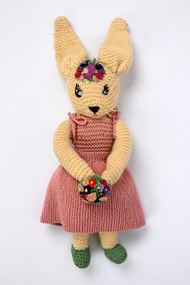
Craft - Toy Rabbit, 1959
... Geelong Gaol...This knitted toy rabbit was given to the donor as a child, made by a prisoner at the Geelong Gaol. The donor spent Christmas holidays at the gaol, below are some of her memories of these times: Eric Stafford was the Governor of Geelong Gaol and he and Elsie Stafford lived in the Governor’s residence at the front of the gaol where I stayed during Christmas holidays from about 1959 to 1962. ...Geelong Gaol, 202 Myers Street, Geelong, Victoria, Australia...This knitted toy rabbit was given to the donor as a child, made by a prisoner at the Geelong Gaol. The donor spent Christmas holidays at the gaol, below are some of her memories of these times: Eric Stafford was the Governor of Geelong Gaol and he and Elsie Stafford lived in the Governor’s residence at the front of the gaol where I stayed during Christmas holidays from about 1959 to 1962. ...This knitted toy rabbit was given to the donor as a child, made by a prisoner at the Geelong Gaol. The donor spent Christmas holidays at the gaol, below are some of her memories of these times: Eric Stafford was the Governor of Geelong Gaol and he and Elsie Stafford lived in the Governor’s residence at the front of the gaol where I stayed during Christmas holidays from about 1959 to 1962. ‘Aunty’ Elsie had the help of prisoners with the housework. One and sometimes two prisoners did the heavy cleaning of floors, windows and furniture polishing. I remember one prisoner down on his hands and knees polishing the lino in the long hallway to a bright gleam, and when a prisoner was helping in the residence, ‘Aunty’ Elsie, the prisoner and I would always have morning tea together in the kitchen. The backyard of the Governor’s residence was divided in two. The kitchen window overlooked the front part of the yard and I was allowed to play there with the dogs as ‘Aunty’ Elsie could keep an eye on me. The back part of the yard was behind a gated wall and I was not allowed in there as prisoners worked on the back garden, the chook pen and doing general maintenance – although I sometimes sneaked in with the dogs to see the chooks and have a chat but was called back. In the back there was a large padlocked iron bound door in the large bluestone wall which ‘Uncle’ Eric could open. A couple of times he took me through this door which opened into the gaol’s large vegetable garden. I only went twice as a didn’t like going there because all the prisoners working there would stop doing what they were doing, stand and silently stare at me. Of course holidaying in Geelong there was always the great beach and carnival rides. ‘Aunty’ Elsie and I would walk to and from the beach and on the way home would stop and buy an ice cream at the nearby shop. Sometimes we would buy an ice cream for ‘Uncle’ Eric and if there weren’t any vans, prisoners or visitors in the gaol entrance courtyard I was allowed to take the ice cream to ‘Uncle’ Eric in his office after ‘Aunty’ Elsie phoned him from the residence. ‘Uncle’ Eric had a sheep farm in Meredith and sometimes he took a prisoner with him to do some work on the farm. I can remember on the way to the farm sitting in the front seat of the vehicle squeezed in between ‘Uncle’ Eric and a prisoner with the dogs and equipment in the back tray. - Donor, 2025Woollen cream knitted toy rabbit in a knitted pink dress with a knitted green petticoat, knitted green panties and a little knitted cream rabbit tail. Holding a bouquet of felt flowers and a coronet of felt jewels on the forehead. Wool embroidered eyes, nose and mouth, and whiskers of silk cord.geelong gaol, craft, prison, prisoner, governor geelong gaol, holidays, childhood, working life, eric stafford, elsie stafford, geelong, meredith, rabbit, toy, knitting, hand made -
 City of Greater Geelong
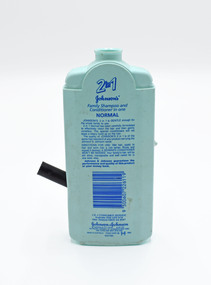
Blue Bottle Contraband, c. 1990
... Geelong...Gaol...Prisoner made smoking pipe - made and confiscated at Geelong Gaol. Circa 1990's....Prisoner made smoking pipe - made and confiscated at Geelong Gaol. Circa 1990's. Geelong Gaol Museum Smoking Contraband Paraphernalia Improvised smoking pipe made from shampoo and conditioner bottle and plastic tube Blue Bottle Contraband Blue Bottle Contraband ...Prisoner made smoking pipe - made and confiscated at Geelong Gaol. Circa 1990's.Improvised smoking pipe made from shampoo and conditioner bottle and plastic tubegeelong, gaol, museum, smoking, contraband, paraphernalia -
 City of Greater Geelong
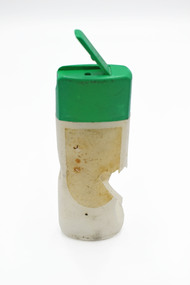
Green Lid Contraband, c. 1990
... Geelong...Gaol...Prisoner made smoking pipe (broken) - made and confiscated at Geelong Gaol. Circa 1990's....Prisoner made smoking pipe (broken) - made and confiscated at Geelong Gaol. Circa 1990's. Geelong Gaol Museum Smoking Contraband Plastic bottle with hole in the side and breakage on the opposite side. ...Prisoner made smoking pipe (broken) - made and confiscated at Geelong Gaol. Circa 1990's.Plastic bottle with hole in the side and breakage on the opposite side.geelong, gaol, museum, smoking, contraband -
 City of Greater Geelong
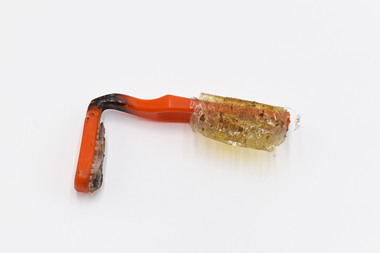
Orange Tattoo Gun, c. 1990
... Geelong...Gaol...Part of a Prisoner made Tattoo Gun - made and confiscated at Geelong Gaol. Circa 1990's. (Prisoner issued Tooth Brush)...Part of a Prisoner made Tattoo Gun - made and confiscated at Geelong Gaol. Circa 1990's. (Prisoner issued Tooth Brush) Geelong Gaol Museum Tattoo Contraband Orange toothbrush moulded to form tattoo gun with sticky tape. ...Part of a Prisoner made Tattoo Gun - made and confiscated at Geelong Gaol. Circa 1990's. (Prisoner issued Tooth Brush)Orange toothbrush moulded to form tattoo gun with sticky tape.geelong, gaol, museum, tattoo, contraband -
 City of Greater Geelong
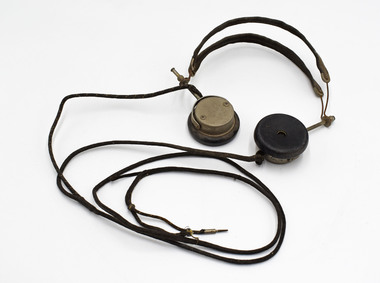
Functional object - Headphones
... Geelong...Gaol...Prisoner issue Headphones for use in the cells of the HM Prison Geelong Geelong Gaol Museum Headphones Bakelite Pair of Bakelite headphones supported by metal headpiece with electrical cable. ...Prisoner issue Headphones for use in the cells of the HM Prison GeelongPair of Bakelite headphones supported by metal headpiece with electrical cable.geelong, gaol, museum, headphones, bakelite -
 City of Greater Geelong
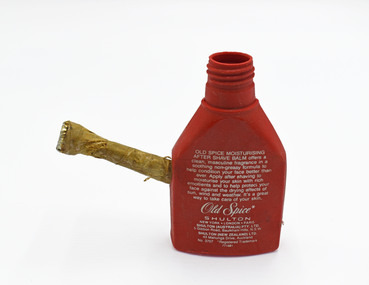
'Old Spice' Contraband, c1980
... Geelong...Gaol...See Senior Prison Office Jack Glenoble (oral history database - Object number (COH-0001) for more details. Geelong Gaol Museum Pipe Mr Watto Cell 24 Paraphernalia Old Spice Small improvised smoking pipe made from an after shave balm bottle and possibly a pen casing. ...Prisoner made smoking pipe confiscated from prisoner "Mr Watto" cell 24, who was the boiler Stocker in the laundry. Circa 1980's. See Senior Prison Office Jack Glenoble (oral history database - Object number (COH-0001) for more details.See Senior Prison Office Jack Glenoble (oral history database - Object number (COH-0001) for more details.Small improvised smoking pipe made from an after shave balm bottle and possibly a pen casing.Old Spicegeelong, gaol, museum, pipe, mr watto, cell 24, paraphernalia -
 Federation University Historical Collection
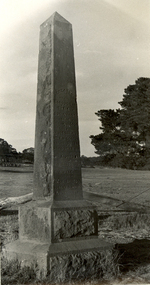
Photograph - Photograph - Black and White, Photographs of Ballarat Buildings by Geoff Biddington, 1967, 1967
... Geelong Road, Mount Clear 3. Water Hydrant 4. Former Police Station, Camp Street 5. Cast Iron Drinking Fountain, Eureka Stockade 6. Buninyong Gold Discovery Monument 7. Ballarat Old Cemetery Gates 8. Ballarat East Post office 9. Carriers Arms, Doveton Street North 10. North Star Hotel, Lydiard Street North 11.Lake View Hotel 12. Former Ballarat Gaol...He was an active member of the Ballarat Branch of the National Trust. geoff biddington biddington buninyong mount clear police gold cemetery hotels ballarat gaol beaufort house smythesdale ballan theatre statue statues statuary peter lalor ranger barracks smeaton mill smeaton bridge hepburn tram sebastopol craig's her majesty's theatre smeaton hepburn graveyard gold monument queen victoria statue, ballarat foodland ballarat ballarat buildings former eagle hotel former ballarat police station gold discovery craig's hotel buninyong gold discovery obelisk 48 black and white photographs of Ballarat buildings. 1. National Bank, Buninyong 2. Gas Light Standard, Geelong ...Geoff Biddington took numerous photos around Ballarat and District. He was an active member of the Ballarat Branch of the National Trust. 48 black and white photographs of Ballarat buildings. 1. National Bank, Buninyong 2. Gas Light Standard, Geelong Road, Mount Clear 3. Water Hydrant 4. Former Police Station, Camp Street 5. Cast Iron Drinking Fountain, Eureka Stockade 6. Buninyong Gold Discovery Monument 7. Ballarat Old Cemetery Gates 8. Ballarat East Post office 9. Carriers Arms, Doveton Street North 10. North Star Hotel, Lydiard Street North 11.Lake View Hotel 12. Former Ballarat Gaol, Gate Two 13. Beaufort House 14. Smythesdale Post Office 15. Ballan Timber Building 16. National Mutual Building, Sturt Street 17. Craig's Hotel Doors 18. Her Majesty's Theatre Stage 19 & 20. Ballarat Botanical Gardens Statuary House 21 & 22. Stonemason at work 23. Methodist Church School (1867) Humffray Street 24 & 25. Methodist Church, Brown Hill 26. Queen St Statue,Sturt Street 27-29. Sturt Street Fountain 30. Moore Statue, Sturt Street 31. Hede Statue, Sturt Street 32. George V Statue (Victor Greenhalgh), Sturt Street 33-35. Peter Lalor Statue, Sturt Street 36. Art Deco Statue, Sturt Street 37. Beaufort Bandstand 38. Ranger Barracks, Curtis Street, Ballarat 39. Smeaton Mill and Bridge 40. Hepburn Graveyard, Smeaton 41-45 - Ballarat Tram Ride (possibly last) 46-48. Taking up the Ballarat Tram Tracks, 1967 .49. Melbourne House, Sebastopolgeoff biddington, biddington, buninyong, mount clear, police, gold, cemetery, hotels, ballarat gaol, beaufort house, smythesdale, ballan, theatre, statue, statues, statuary, peter lalor, ranger barracks, smeaton mill, smeaton bridge, hepburn, tram, sebastopol, craig's, her majesty's theatre, smeaton, hepburn graveyard, gold monument, queen victoria statue, ballarat, foodland, ballarat, ballarat buildings, former eagle hotel, former ballarat police station, gold discovery, craig's hotel, buninyong gold discovery obelisk -
 Federation University Historical Collection
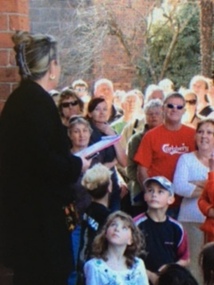
Article - Article - Women, Ballarat College of Advanced Education: Anne Stewart; Librarianship Storyteller
... gaol, the SMB ghosts came to life as she enthralled numerous groups visiting the campus on Open Day 2007, 2008 and 2009. In 2009 Anne E. Stewart was a principal teller at the Scottish International Storytelling Festival at Edinburgh. women of note ballarat college of advanced education anne stewart presentaion college windsor librarianship graduate diploma of librarianship graduate diploma of education community radio geelong library jolly jumbuck van storytelling australian storytelling guild daylesford primary school swag of yarns cape at dromkeen children's literature ghost tours school of mines ballarat Ballarat College of Advanced Education: Anne Stewart; Librarianship Storyteller. ...Anne completed her secondary education at Presentation College Windsor. She left Melbourne to study Librarianship at Ballarat College of Advanced Education and completed a Graduate Diploma of Librarianship in 1981 and a Graduate Diploma of Education in 1986. During her studies Anne E. Stewart produced weekly shows on 3BBB Community Radio Ballarat, `As the assistant children's librarian at Geelong in 1987 Anne E. Stewart drove the Jolly Jumbuck storytelling van to various local sites, gathered the children and told a story. A keen community player Anne E. Stewart has fulfilled a number of pro bono roles such as the President of the Australian Storytelling Guild (Vic Branch), and Council President of the Daylesford Primary School. Anne E. Stewart is a senior writer for the 'Swag of Yarns' and has worn the prestigious storytellers Cape at Dromkeen, an institution that nurtures and develops children's literature. Returning to her alma mater in 2007 Anne E. Stewart developed a ghost tour through the historic Ballarat School of Mines (SMB) campus. Established in 1870, and incorporating a former gaol, the SMB ghosts came to life as she enthralled numerous groups visiting the campus on Open Day 2007, 2008 and 2009. In 2009 Anne E. Stewart was a principal teller at the Scottish International Storytelling Festival at Edinburgh.women of note, ballarat college of advanced education, anne stewart, presentaion college windsor, librarianship, graduate diploma of librarianship, graduate diploma of education, community radio, geelong library, jolly jumbuck van, storytelling, australian storytelling guild, daylesford primary school, swag of yarns, cape at dromkeen, children's literature, ghost tours, school of mines ballarat -
 Federation University Historical Collection
Book - Book - Scrapbook, Ballarat Institute of Advanced Education: Scrapbook of newspaper cutting, Book 7; May 1972 to August 1972
... geelong...ballarat to put case for university...students head nuclear protest...studying their likely careers...gaol...The cuttings cover the period from 1 May 1972 to 16 August 1972. ballarat institute of advanced education biae employment advertisements application for enrolment outline of courses technical teachers on strike biae students-pick and shovel award winner from mt isa first h e arblaster award to brian nash alan weston wins state award - joinery ballarat paper for conference in u s a publicity campaign by biae george cross for r w richards teachers' award attacked professor white - cornell university the college graduate allowance cuts hit students multi-purpose colleges considered academic board for smb cuts in college budgets gas scholarships darryl jeffries noel shillito federal government cuts to colleges sturt mansions julie selmon-architecture student graeme mcgregor-construction student teacher colleges get freedom fourth uni in geelong ballarat to put case for university students head nuclear protest studying their likely careers gaol gates are safety hazard medal presented by the queen r richards alp education committee at smb biae campus divided longer than expected mayor puts ballarat's claim for university geology seminar rainbow high school visit smb awards for 80 new craftsmen smb ball Book with orange cover, front. ...Newspaper cuttings relating to Ballarat Institute of Advanced Education. These are from various newspapers and include The Age, Ballarat Courier, The Australian, The Herald. The cuttings cover the period from 1 May 1972 to 16 August 1972. Book with orange cover, front. Spiral bound.ballarat institute of advanced education, biae, employment advertisements, application for enrolment, outline of courses, technical teachers on strike, biae students-pick and shovel, award winner from mt isa, first h e arblaster award to brian nash, alan weston wins state award - joinery, ballarat paper for conference in u s a, publicity campaign by biae, george cross for r w richards, teachers' award attacked, professor white - cornell university, the college graduate, allowance cuts hit students, multi-purpose colleges considered, academic board for smb, cuts in college budgets, gas scholarships, darryl jeffries, noel shillito, federal government cuts to colleges, sturt mansions, julie selmon-architecture student, graeme mcgregor-construction student, teacher colleges get freedom, fourth uni in geelong, ballarat to put case for university, students head nuclear protest, studying their likely careers, gaol gates are safety hazard, medal presented by the queen, r richards, alp education committee at smb, biae campus divided longer than expected, mayor puts ballarat's claim for university, geology seminar, rainbow high school visit smb, awards for 80 new craftsmen, smb ball -
 Mission to Seafarers Victoria
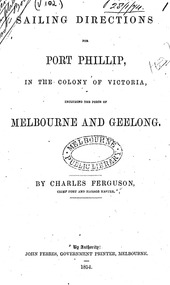
Booklet - Manual, Sailing directions for Port Phillip, in the colony of Victoria including the ports of Melbourne and Geelong, 1854
... Captain Ferguson was instrumental in the foundation of the Bethel Church. 1854 hobsons bay geelong melbourne williamstown sandridge mariner's hospital floating church Seamen's hospital Captain Charles Ferguson (1813-1868) Kezia Elizabeth Hayter (1818-1885) rajah quilt prison hulks water police harbour master harbor master gaols Digital copies of the 37 pages ; 22 cm. ...Captain Charles Ferguson was born in Scotland in 1813. He was the Master of the "Rajah" from 1838 to 1850 on voyages from England to Australia and vice versa. He became the First Chief Harbour Master for the port of Melbourne in 1852 after being the first Harbour Master and Water Police Officer in Geelong for 12 months. On the 5th of April 1841, the Rajah sailed with James Donovan M.D. as Surgeon Superintendent, and the Rajah sailed from Woolwich with 180 female convicts. The Rajah arrived on the 19th of July in Hobart, with 179 females (one died during the voyage) and 10 children. Miss Kezia Elizabeth Hayter was the matron on board. On page 28 of the "Sailing directions for Port Phillip, in the colony of Victoria including the ports of Melbourne and Geelong", a mention is made of the Mariner's Hospital and Floating Church soon to be established. There were discussions to built the hospital in Williamstown but instead the Government decided to build it in Melbourne. The Harbour Master and a commiittee decided to use the water police hulk, Emily, left unsold in 1856, to create a floating church: the Bethel was open in July 1857 with Reverend Kerr Johnston as Chaplain. Latrobe wrote a letter to Captain Cole in 1869, a few months after learning his death : "To Captain George Ward Cole † [from a draft in another’s hand] Clapham House, Lewes, Sussex, January 28th, 1869. My dear Captain Cole, Last mail will have taken out the sad intelligence of the death of our excellent old friend, Captain Ferguson. This will have been a terrible blow to his children and to his friends in the colony, who may have held reason to expect his early return to his home, with a not unreasonable prospect of ultimate restoration to health and activity. In the course of last October I went up to town with one of my children, mainly with the purpose of finding my way to Pinner, where he and Mrs. Ferguson were staying with an intimate friend. I found him in excellent health and spirits, and enjoying the prospect of a speeding resumption of the service to which he had devoted his best days, and upon the furtherance of which his entire energy was still directed. A week or two later Captain and Mrs. Ferguson went to Dover for change of air, and being still under the impression received from the advisers by whom they had been guided during their residence at a hydropathic establishment at Matlock, felt encouraged to plan almost immediate return to the colony by the Jerusalem early in December. However, certain misgivings in the mind of a medical gentleman, then in England, under whose care Captain Ferguson had at one time placed himself in Williamtown, led them to consider it judicious before departure to take the advice of some surgeon of eminence in London. Accordingly they came up to town at the close of November. The first London practitioners they consulted shook their heads, and advised consultation with Sir Wm. Ferguson. The result was that amputation, without loss of time, was pronounced necessary. The rest is soon told. He received the painful intelligence with calmness and full resignation to God's will, and underwent the operation at King's College Hospital with exemplary firmness and Courage on the 28th of November. Perfect success seemingly attended it, and there seemed, humanly speaking, to be every prospect of a prompt cure and early convalescence; everything seemed in his favour. A few days later, however, all was clouded by symptoms of hospital fever (pyoe æm ia). This resisted all control, and finally carried him off on the 27th of December, just one month after the operation. He had lived a Christian life, and his death was the peaceful and resigned death of a Christian. It was a melancholy satisfaction to me to be able to join a few friends in following his remains to their resting place in one of the outlying London cemeteries on the last day of the year. You know Mrs Ferguson well, and will be prepared to hear me say that her whole conduct and demeanour throughout this period of suspense and bitter trial has been worthy of her high character and steadfast principle. Come what will, and happen what may, I have the fullest conviction that neither the widow nor the children will be forsaken, however doubtful and clouded the future may appear, in consequence of the irreparable loss which, they have sustained. And now, dear Captain Cole, it is possible that you may already have heard all this from other sources, but I have dictated it to you under strong impulse, for I feel assured that there is no member of the community in which you live who will more sincerely deplore the loss of Captain Ferguson on private grounds; at the same time that there is no one who, from long acquaintance with his official character and services, will be in a better position to estimate their real value or the loss which the colony has sustained. The circumstances in which Captain Ferguson's family are left not only demands the utmost display of sympathy and interest on the part of friends, but may call for decided and prompt action; therefore I cannot rest satisfied without discharging what I consider my duty, and seeking to strengthen your hands as far as I may in bringing the character of his long services before the existing colonial authorities. Of his private career previous to his entering the service of the Colonial Government in 1851 nothing need be said. Captain Ferguson was appointed as the Harbour Master at Geelong in April, 1851 – a few months before the separation of the colony from New South Wales. He there did excellent service in a variety of ways calculated to advance the interests of the port, and to introduce www.latrobesociety.org.au 27 order, where, from circumstances, but little order had hitherto prevailed. His was the first appointment of this class in that locality. The separation of the colony from New South Wales took place in the month of July following. Shortly after, the late Captain Bunbury resigned the Harbour Mastership of Port Phillip. Captain Ferguson was at once (February, 1852) appointed to succeed him, and from that time performed all duties of Chief Harbour Master of the colony. The previous year (May 1851) the first gold discoveries in New South Wales had taken place, and in the month of August those of our colony followed. At the time of Captain Ferguson’s taking charge of the Port of Melbourne their influence had begun to be fully felt, and in no department more seriously than in that of the Harbour Master. This is no place for statistical details, but they must bear me out in reminding you of a few facts connected with our late friend’s career. At the time of separation that department comprised only 30 individuals of all ranks, and when he took charge the number was much reduced. There were at that time, according to the returns, no fewer than 54 vessels, registering 26,785 tons, in Hobson’s Bay alone. The crews on arrival numbered 1,235 men. Of this number only 463 remained on board, 500 having deserted, and the rest having been discharged by arrangement or pure necessity. For the first six months after Captain Ferguson’s assumption of office as Harbour Master the duties of Police Magistrate and Chief of the Water Police were superadded, and how much labour they involved may be surmised from the fact that from 1st of April to the 31st July, 1852, four months only, no less than 236 marine cases were brought before the bench at Williamstown - sometimes as many as 30 in a day. A year later (March 1853) the returns show that the number of vessels in the harbour in Hobson’s Bay alone were 91, tonnage 43,754; and passing on to the still later returns of May, 1853, two years after Captain Ferguson’s assumption of office, we find from the records that the number of ships in port had increased to 129; tonnage, 63,292; crew on board on arrival, 2872, and at the date of report, 1628; the amount of desertions at that time having, however, proportionally diminished, in consequence of the abatement of the gold fever, caused by the non-success attendant upon the labours of thousands at the goldfields. The above numbers take no account of the large number of vessels and amount of tonnage lying at the wharves at Melbourne or elsewhere. From these figures alone it may be judged what must have been a struggle in which the Chief Harbour Master was engaged from the very outset to secure order, and answer the innumerable calls on every branch of his department, at the same time that there was for many months an almost complete impossibility of securing subordinate agency, such as boatmen, pilots, and police, at any price. But I may bear witness to the untiring diligence, energy, and self-devotion with which Captain Ferguson grappled with the difficulties of his position, and the seemingly insurmountable obstacles which stood in his way. Ashore and afloat he was always ready, showing the same directness of purpose, intelligence, and forgetfulness of self. He shunned no responsibility, and turned his hand from no work, whether within or beyond the ordinary scope of his duty, which the hard necessity of the times forced the Government to bring under his notice. Already in 1852, when the overflowing of our gaol and stockade rendered the adoption of other methods of restraint absolutely necessary, and addition to the existing buildings could not be thought of, it was Captain Ferguson who first suggested the employment of hulks; and it was with his personal assistance and supervision, and under his unflagging energy, that the three first of these – the Success, the President, and the Sacramento – were purchased, fitted up, and made available for the purpose in view, and the rules and regulations for the employment and safety of the men afloat and ashore prescribed and carried out. He carried the same energy into every branch of his department, and his influence was soon apparent. His subordinates of every class became actuated by his spirit. As time moved on, the range of his duties, both ordinary and extraordinary, increased. In the formation of the quarantine station at the heads, in the management if not the erection of lighthouses, sailing directions, port and wharf regulations, buoys, signal stations, www.latrobesociety.org.au 28 steam dredging &c., he was the main and most active agent. The whole pilot establishment and regulations, men, and vessels, were under his charge; and when I left the colony in May, 1854, the entire range of ports outside Port Phillip Heads from Point Lonsdale to Portland, as well as that of Geelong had felt the influence of his intelligent supervision and care. The entire department of Chief Harbour Master, which I have numbered at the period of separation about thirty individuals, then numbered 230. The character of Captain Ferguson’s unbroken service during the fourteen years which have elapsed since I left the colony must be well known to the Government and the people he has served so long and so faithfully. I confine myself to recalling to mind those earlier, and what must have been the hardest and most difficult, period – none can know how difficult but those who were in that fierce struggle for the maintenance of order under so many disadvantages; and on this subject I have spoken advisedly and with reason, for I may truly say he worked under my own eye. I had sincere regard for the man, and just pride in the qualities of his heart, head, and hand. Whatever mistakes may have been made by the Government of the colony in those hard and difficult times (and I am quite ready to admit that there were many, especially if the past is to be judged by the light of the present), I never have hesitated in believing that, in appointing Captain Ferguson to the office he has so long filled, it was the right man in the right place. I shall be heartily rejoiced to find that the Government and inhabitants of the colony admit that this has been the case, and to learn that they have not forgotten the strong claims of one who has served them so long and so faithfully, and who, removed by God’s providence, so to say, in the maturity of his powers, has left a widow and young family behind him. I have done, I leave you to make use of this communication, or any portion of it, which you may think judicious and called for. There may be among Ferguson’s friends those who may not be sorry to be reminded of facts. By-the-bye, I may mention as a proof how completely Captain Ferguson’s mind was engrossed by devotion to his public duty, that while in Dover, only ten days before the operation, he took an opportunity to drag himself up into the lantern of the S. Foreland Lighthouse, and made a most careful scrutiny of the whole apparatus and arrangement, with a view of the adoption of any hint for the perfection of those under his charge in the colony. And now, goodbye. I trust this will find you in good health, and in comparative vigour. Believe me ever, dear Captain Cole, Yours very truly, C. J. La Trobe"The attempt for a floating church was made as early as 1853 following similar examples in London like the Seamen's Hospital. Captain Ferguson was instrumental in the foundation of the Bethel Church.Digital copies of the 37 pages ; 22 cm.1854, hobsons bay, geelong, melbourne, williamstown, sandridge, mariner's hospital, floating church, seamen's hospital, captain charles ferguson (1813-1868), kezia elizabeth hayter (1818-1885), rajah quilt, prison hulks, water police, harbour master, harbor master, gaols -
 Uniting Church Archives - Synod of Victoria
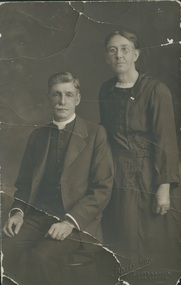
Photograph, Undated c.1920
... Geelong, Yarra St.; 1913 Kilcunda & Powlett River; 1917 Kyabram; 1920 North Melbourne; 1923 Brighton; 1928 Prahran; 1932 Supernumerary Hawthorn. Gaol...Geelong, Yarra St.; 1913 Kilcunda & Powlett River; 1917 Kyabram; 1920 North Melbourne; 1923 Brighton; 1928 Prahran; 1932 Supernumerary Hawthorn. Gaol ...James Rogers was born in Wallaroo, South Australia, but came to Sailor's Gully, Eaglehawk with his family as an infant. He was converted in a Salvation Army meeting at Bendigo. He became a member of the Primitive Methodist Church at Eaglehawk. He was stationed at: 1888 Murtoa; 1889 Hamilton; 1892 Melbourne, Collingwood; 1892 Beaconsfield; 1894 Penguin; 1900 Castlemaine; 1905 Dimboola; 1909 Geelong, Yarra St.; 1913 Kilcunda & Powlett River; 1917 Kyabram; 1920 North Melbourne; 1923 Brighton; 1928 Prahran; 1932 Supernumerary Hawthorn. Gaol Chaplain 1909 - 1912; Hospital Chaplain 1935 - 1936Died 2nd September 1937 Agnes Rogers (nee Caldwell) was born in 1867, married James Rogers in 1892 and died in 1951.B & W studio portrait of Rev James Rogers and Mrs Agnes Rogers (nee Caldwell)james rogers, agnes rogers, agnes caldwell, methodist, primitive methodist, eaglehawk, minister -
 Uniting Church Archives - Synod of Victoria
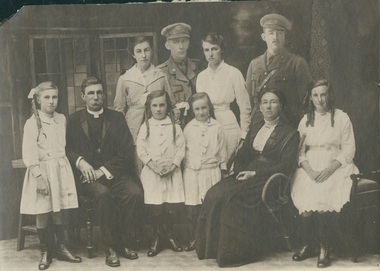
Photograph, Undated c.1914 - 1918
... Geelong, Yarra St.; 1913 Kilcunda & Powlett River; 1917 Kyabram; 1920 North Melbourne; 1923 Brighton; 1928 Prahran; 1932 Supernumerary Hawthorn. Gaol...Geelong, Yarra St.; 1913 Kilcunda & Powlett River; 1917 Kyabram; 1920 North Melbourne; 1923 Brighton; 1928 Prahran; 1932 Supernumerary Hawthorn. Gaol ...James Rogers was born in Wallaroo, South Australia, but came to Sailor's Gully, Eaglehawk with his family as an infant. He was converted in a Salvation Army meeting at Bendigo. He became a member of the Primitive Methodist Church at Eaglehawk. He was stationed at: 1888 Murtoa; 1889 Hamilton; 1892 Melbourne, Collingwood; 1892 Beaconsfield; 1894 Penguin; 1900 Castlemaine; 1905 Dimboola; 1909 Geelong, Yarra St.; 1913 Kilcunda & Powlett River; 1917 Kyabram; 1920 North Melbourne; 1923 Brighton; 1928 Prahran; 1932 Supernumerary Hawthorn. Gaol Chaplain 1909 - 1912; Hospital Chaplain 1935 - 1936Died 2nd September 1937 Agnes Rogers (nee Caldwell) was born in 1867, married James Rogers in 1892 and died in 1951. The children in the photograph are: James Stanley (born 1893), John David (born 1895), Agnes Pricilla (born 1897), Robert Leslie (born 1899), Jean (born 1900), Ethel Margaret (born 1903), Amelia Florence (born 1905) Lois Susan and Ella (twins born 1908).B & W studio photograph of Rev James Rogers, Mrs Agnes Rogers (nee Caldwell) and their children. The images of two men in uniform (presumably absent overseas) have been superimposed on the photograph to complete the family group. james rogers, agnes rogers, agnes caldwell, methodist, primitive methodist, eaglehawk, minister, first world war -
 Kew Historical Society Inc
Album, Eva Grant, Historic Buildings in Victoria & New South Wales, 1919-c.1962
... Geelong (Vic) - first Bishopscourt Hawthorn (Vic) - Convent (1930), The Hawthorns, Keilor plains (Vic) - pioneer homes, pioneer cemetery Kew (Vic) - Roseneath (1951), Tarring - Ruyton, Turinville, house - Foley street (c.1960). Malvern (Vic) - church Mount Ridley (Vic) - Summerhill Melbourne (Vic) - Old Brewery - Custom’s House Lane (1960), Customs House, Scott’s Hotel (1962), Western market (c.1960) Phillip Island (Vic) - Grave Toorak (Vic) - Mandeville Hall, Merna (sic) - Arthur Streeton’s house, Toorak House Wentworth (NSW) - Harvey’s Hotel, Sturt Memorial, Sturt’s Tree, Wentworth Gaol Williamstown (Vic) - Williamstown Dairy Yan Yean (Vic) - Bear’s Castle (c.1947) Beveridge/Big Hill (Vic) - Kelly’s cottage...Geelong (Vic) - first Bishopscourt Hawthorn (Vic) - Convent (1930), The Hawthorns, Keilor plains (Vic) - pioneer homes, pioneer cemetery Kew (Vic) - Roseneath (1951), Tarring - Ruyton, Turinville, house - Foley street (c.1960). Malvern (Vic) - church Mount Ridley (Vic) - Summerhill Melbourne (Vic) - Old Brewery - Custom’s House Lane (1960), Customs House, Scott’s Hotel (1962), Western market (c.1960) Phillip Island (Vic) - Grave Toorak (Vic) - Mandeville Hall, Merna (sic) - Arthur Streeton’s house, Toorak House Wentworth (NSW) - Harvey’s Hotel, Sturt Memorial, Sturt’s Tree, Wentworth Gaol Williamstown (Vic) - Williamstown Dairy Yan Yean (Vic) - Bear’s Castle (c.1947) Beveridge/Big Hill (Vic) - Kelly’s cottage Important photograph record (and notes) about historic buildings in Victoria. heritage sites - victoria - australia eva grant scrapbooks - 20th century See images 38-page scrapbook with additional text created by Eva Grant, a past member of the Kew Historical Society. ...One of three scrapbooks created by Eva Grant, a past member of the Kew Historical Society which were donated by her niece, Julie Thomson, in 2013. The scrapbook includes photographs and descriptions of the following sites. (Many of these are now demolished and so the photographs and descriptions may be rare records of a site.) Sites include: Abbotsford (Vic) - Abbotsford Convent, Mayfield (c.1962), prefabricated house - Church street Armadale (Vic) - church (c.1959) - Thomson & Wattletree Roads Arthur’s Seat (Vic) - McCrae homestead Ballarat (Vic) - Memorial plaque on site of Bentley’s Hotel, Memorial on site of Eureka Stockade, Early municipal buildings - East Ballarat, Adam Lindsay Gordon’s cottage - Botanical Gardens, View from Sovereign Hill, Shell house Broken Hill (NSW) - panorama (1963), Flying Doctor’s base (?1963) Eltham (Vic) - Hassell’s outdoor art gallery Essendon (Vic) - Niddrie Homestead and stables (1963) Geelong (Vic) - first Bishopscourt Hawthorn (Vic) - Convent (1930), The Hawthorns, Keilor plains (Vic) - pioneer homes, pioneer cemetery Kew (Vic) - Roseneath (1951), Tarring - Ruyton, Turinville, house - Foley street (c.1960). Malvern (Vic) - church Mount Ridley (Vic) - Summerhill Melbourne (Vic) - Old Brewery - Custom’s House Lane (1960), Customs House, Scott’s Hotel (1962), Western market (c.1960) Phillip Island (Vic) - Grave Toorak (Vic) - Mandeville Hall, Merna (sic) - Arthur Streeton’s house, Toorak House Wentworth (NSW) - Harvey’s Hotel, Sturt Memorial, Sturt’s Tree, Wentworth Gaol Williamstown (Vic) - Williamstown Dairy Yan Yean (Vic) - Bear’s Castle (c.1947) Beveridge/Big Hill (Vic) - Kelly’s cottageImportant photograph record (and notes) about historic buildings in Victoria.38-page scrapbook with additional text created by Eva Grant, a past member of the Kew Historical Society. In addition to the 68 photographs, there are two postcards and a number of publications/handouts.collected by Eva on her trips to heritage sites in Victoria and New South Wales. The pages of the album can be viewed in the image carousel above. Most of the photographs of heritage buildings were taken in the early 1960s.See imagesheritage sites - victoria - australia, eva grant, scrapbooks - 20th century
