
Showing 7 items matching "geographical -- victoria -- st. kilda. | st. kilda (vic.) -- name -- history."
-
 Koorie Heritage Trust
Book, Bader, Frances, Naming St. Kilda, 2007
... ...Geographical -- Victoria -- St. Kilda. | St. Kilda (Vic.) -- Name -- History....Names Geographical -- Victoria -- St. Kilda. | St. Kilda (Vic.) -- Name -- History. ...Mentions the indigenous inhabitants of the area.i - vi; 214 P.; ports,; facs.; refs.; bib.; Mentions the indigenous inhabitants of the area. names, geographical -- victoria -- st. kilda. | st. kilda (vic.) -- name -- history. -
 Federation University Historical Collection
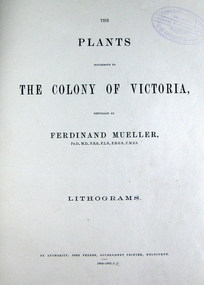
Book, The Plants Indigenous to the Colony of Victoria, 1865 (exact); "1864-1865, CR"
... Victoria by Governor Charles La Trobe. In 1873, Ferdinand received an honorary doctorate of the University of Rostock. In 1883, he was awarded the Clarke Medal by the Royal Society of New South Wales. He published many volumes on the Victorian plants. Many of Australian geographical features were named after him such as: the Mueller Ranges (WA), Muellers Range (Qld), Mount Mueller (in WA, NT, Tas and Vic) and many more. Mueller died in Melbourne on 10 October 1896 and is buried in the St. Kilda...Victoria by Governor Charles La Trobe. In 1873, Ferdinand received an honorary doctorate of the University of Rostock. In 1883, he was awarded the Clarke Medal by the Royal Society of New South Wales. He published many volumes on the Victorian plants. Many of Australian geographical features were named after him such as: the Mueller Ranges (WA), Muellers Range (Qld), Mount Mueller (in WA, NT, Tas and Vic) and many more. Mueller died in Melbourne on 10 October 1896 and is buried in the St. Kilda ...Baron Sir Ferdinand Jacob Heinrich von Mueller was born in Germany on 30 June 1825. Ferdinand was a German-Australian physician, geographer, and a botanist. After passing the pharmaceutical examinations he studied botany at Kiel University. In 1847 he received the degree of Doctor of Philosophy from Kiel University.when he was 21 years old for a thesis on the flora of Schleswig-Holstein. In 1847, he moved to Adelaide, Australia and worked as a chemist. From 1848 to 1852 he travelled through the colony, discovering and describing a large number of unknown to Western science plants. He wrote a few papers to German periodicals on botanical subjects. In 1851, Mueller moved to Melbourne, capital of the new colony of Victoria. In 1853, He was appointed Government Botanist for Victoria by Governor Charles La Trobe. In 1873, Ferdinand received an honorary doctorate of the University of Rostock. In 1883, he was awarded the Clarke Medal by the Royal Society of New South Wales. He published many volumes on the Victorian plants. Many of Australian geographical features were named after him such as: the Mueller Ranges (WA), Muellers Range (Qld), Mount Mueller (in WA, NT, Tas and Vic) and many more. Mueller died in Melbourne on 10 October 1896 and is buried in the St. Kilda Cemetery A green cloth hard cover book. Title and author's name is engraved in gold on spine. It includes an introduction, a table of contents and plates. Lithograms in b/w. Each plate accompanied by a page with descriptive print. Number of plates XIII-LXXI. No. of supplement plates XII-XVII. The book illustrates Victorian plants and outlines the principal characters of those species. This book is No 1290 in the Original Register of Books (Cat. No. 005)Hand written pencil notes on contents page. Stamped throughout with "The School of Mines, Industries & Science, Ballarat. Ingenio Effodere Opes. In the University of Melbourne."australia, botany victoria, plants, ferdinand mueller, ferdinand von mueller, biodiversity, flora -
 Flagstaff Hill Maritime Museum and Village
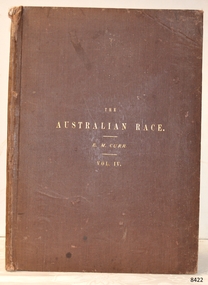
Book - Ethnographic survey, Edward Micklethwaite Curr, The Australian Race Vol 4, 1886-1887
... St Kilda, Victoria, in 1889. Curr’s work was not a single continuous narrative in this four volume set but a large reference style compilation assembled from many contributors, so each volume functions more like a research dossier than a modern ethnography. Because of that, the volumes are best used together the early volumes help with language comparison, while the later ones broaden into customs, geography...St Kilda, Victoria, in 1889. Curr’s work was not a single continuous narrative in this four volume set but a large reference style compilation assembled from many contributors, so each volume functions more like a research dossier than a modern ethnography. Because of that, the volumes are best used together the early volumes help with language comparison, while the later ones broaden into customs, geography ...The Australian Race Vol. 4 by Edward M. Curr is the highly illustrated fourth part of Curr’s four volume ethnographic survey of Aboriginal Australia. It consolidates his findings on origins, languages, customs, and distributions, and its atlas volume furnishes a large comparative language map and ethnographic plates. The four volume set are a broad survey of Aboriginal peoples’ origins, languages, social customs, and movements across the Australian continent. The fourth volume functions as an atlas and language compendium, pairing textual material with a folio atlas of comparative vocabularies and a large map that traces routes and distributions. This volume also documents specific rites and regional practices, as part of his broader attempt to synthesize ethnographic and linguistic data across Australia. The work is considered a foundational reference work although in today's modern world is is regarded as dated and eurocentric set of volumes as a reference in Australian Indigenous studies and anthropology.Hard cover book, The Australian Race Vol 4. Author: Edward Micklethwaite Curr Publisher: John Ferres, Government Printer Melbourne Aus. Date: 1886-1887 Light brown cloth hardcover and spine and blue edging to hard covers lettering in blue . The spine has a label with an inscription. Further Information: Map in pocket at the back of volnon-fictionThe Australian Race Vol. 4 by Edward M. Curr is the highly illustrated fourth part of Curr’s four volume ethnographic survey of Aboriginal Australia. It consolidates his findings on origins, languages, customs, and distributions, and its atlas volume furnishes a large comparative language map and ethnographic plates. The four volume set are a broad survey of Aboriginal peoples’ origins, languages, social customs, and movements across the Australian continent. The fourth volume functions as an atlas and language compendium, pairing textual material with a folio atlas of comparative vocabularies and a large map that traces routes and distributions. This volume also documents specific rites and regional practices, as part of his broader attempt to synthesize ethnographic and linguistic data across Australia. The work is considered a foundational reference work although in today's modern world is is regarded as dated and eurocentric set of volumes as a reference in Australian Indigenous studies and anthropology.flagstaff hil, warrnambool, flagstaff hill maritime museum, maritime museum, shipwreck coast, flagstaff hill maritime village, great ocean road, book, pattison collection, warrnambool library, warrnambool mechanics’ institute, ralph eric pattison, corangamite regional library service, warrnambool city librarian, mechanics’ institute library, victorian library board, warrnambool books and records, warrnambool children’s library, the australian race vol 4, aboriginal studies, languages, native langauge -
 Flagstaff Hill Maritime Museum and Village
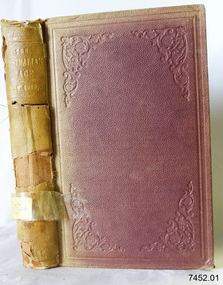
Book - Ethnographic survey, Edward Micklethwaite Curr, The Australian Race Vol 1, 1886-1887
... St Kilda, Victoria, in 1889. Curr’s work was not a single continuous narrative in this four volume set but a large reference style compilation assembled from many contributors, so each volume functions more like a research dossier than a modern ethnography. Because of that, the volumes are best used together the early volumes help with language comparison, while the later ones broaden into customs, geography...St Kilda, Victoria, in 1889. Curr’s work was not a single continuous narrative in this four volume set but a large reference style compilation assembled from many contributors, so each volume functions more like a research dossier than a modern ethnography. Because of that, the volumes are best used together the early volumes help with language comparison, while the later ones broaden into customs, geography ...The Australian Race Vol. 1 by Edward M. Curr is the highly illustrated first part of Curr’s four volume ethnographic survey of Aboriginal Australia. It consolidates his findings on origins, languages, customs, and distributions, and its atlas volume furnishes a large comparative language map and ethnographic plates. The four volume set is a broad survey of Aboriginal peoples’ origins, languages, social customs, and movements across the Australian continent. Volume one is chiefly a comparative on various vocabularies and linguistic materials, with early observations used to identify and compare Aboriginal language groups. This volume also documents specific rites and regional practices, as part of his broader attempt to synthesize ethnographic and linguistic data across Australia. The work is considered a foundational reference work although in today's modern world is is regarded as dated and eurocentric set of volumes as a reference in Australian Indigenous studies and anthropology.Hard cover book, The Australian Race Vol 1. Author: Edward Micklethwaite Curr Publisher: John Ferres, Government Printer Melbourne Aus. Date: 1886-1887 Light brown cloth hardcover and spine and blue edging to hard covers lettering in blue . The spine has a label with an inscription.non-fictionThe Australian Race Vol. 1 by Edward M. Curr is the highly illustrated first part of Curr’s four volume ethnographic survey of Aboriginal Australia. It consolidates his findings on origins, languages, customs, and distributions, and its atlas volume furnishes a large comparative language map and ethnographic plates. The four volume set is a broad survey of Aboriginal peoples’ origins, languages, social customs, and movements across the Australian continent. Volume one is chiefly a comparative on various vocabularies and linguistic materials, with early observations used to identify and compare Aboriginal language groups. This volume also documents specific rites and regional practices, as part of his broader attempt to synthesize ethnographic and linguistic data across Australia. The work is considered a foundational reference work although in today's modern world is is regarded as dated and eurocentric set of volumes as a reference in Australian Indigenous studies and anthropology.flagstaff hil, warrnambool, flagstaff hill maritime museum, maritime museum, shipwreck coast, flagstaff hill maritime village, great ocean road, book, pattison collection, warrnambool library, warrnambool mechanics’ institute, ralph eric pattison, corangamite regional library service, warrnambool city librarian, mechanics’ institute library, victorian library board, warrnambool books and records, warrnambool children’s library, the australian race vol 4, aboriginal studies, languages, native langauge -
 Flagstaff Hill Maritime Museum and Village
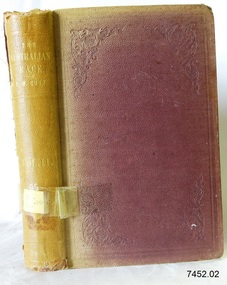
Book - Ethnographic survey, Edward Micklethwaite Curr, The Australian Race Vol 2, 1886-1887
... St Kilda, Victoria, in 1889. Curr’s work was not a single continuous narrative in this four volume set but a large reference style compilation assembled from many contributors, so each volume functions more like a research dossier than a modern ethnography. Because of that, the volumes are best used together the early volumes help with language comparison, while the later ones broaden into customs, geography...St Kilda, Victoria, in 1889. Curr’s work was not a single continuous narrative in this four volume set but a large reference style compilation assembled from many contributors, so each volume functions more like a research dossier than a modern ethnography. Because of that, the volumes are best used together the early volumes help with language comparison, while the later ones broaden into customs, geography ...The Australian Race Vol. 2 by Edward M. Curr is the second part of Curr’s four volume ethnographic survey of Aboriginal Australia. Volume two continues the language and vocabulary work from volume one, and goes on in expanding the comparative material available across more regions and groups of Aboriginal tribes or mobs. The four volume set is a broad survey of Aboriginal peoples’ origins, languages, social customs, and movements across the Australian continent. Volume one is chiefly a comparative on various vocabularies and linguistic materials, with early observations used to identify and compare Aboriginal language groups. This volume also documents specific rites and regional practices, as part of his broader attempt to synthesize ethnographic and linguistic data across Australia. The work is considered a foundational reference work although in today's modern world is is regarded as dated and eurocentric set of volumes as a reference in Australian Indigenous studies and anthropology.Hard cover book, The Australian Race Vol 2. Author: Edward Micklethwaite Curr Publisher: John Ferres, Government Printer Melbourne Aus. Date: 1886-1887 Light brown cloth hardcover and spine and blue edging to hard covers lettering in blue . The spine has a label with an inscription.non-fictionThe Australian Race Vol. 2 by Edward M. Curr is the second part of Curr’s four volume ethnographic survey of Aboriginal Australia. Volume two continues the language and vocabulary work from volume one, and goes on in expanding the comparative material available across more regions and groups of Aboriginal tribes or mobs. The four volume set is a broad survey of Aboriginal peoples’ origins, languages, social customs, and movements across the Australian continent. Volume one is chiefly a comparative on various vocabularies and linguistic materials, with early observations used to identify and compare Aboriginal language groups. This volume also documents specific rites and regional practices, as part of his broader attempt to synthesize ethnographic and linguistic data across Australia. The work is considered a foundational reference work although in today's modern world is is regarded as dated and eurocentric set of volumes as a reference in Australian Indigenous studies and anthropology.flagstaff hil, warrnambool, flagstaff hill maritime museum, maritime museum, shipwreck coast, flagstaff hill maritime village, great ocean road, book, pattison collection, warrnambool library, warrnambool mechanics’ institute, ralph eric pattison, corangamite regional library service, warrnambool city librarian, mechanics’ institute library, victorian library board, warrnambool books and records, warrnambool children’s library, the australian race vol 4, aboriginal studies, languages, native langauge -
 Flagstaff Hill Maritime Museum and Village
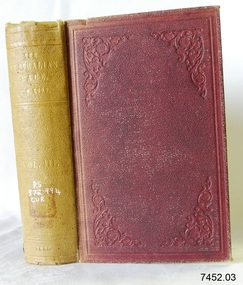
Book - Ethnographic survey, Edward Micklethwaite Curr, The Australian Race Vol 3, 1886-1887
... St Kilda, Victoria, in 1889. Curr’s work was not a single continuous narrative in this four volume set but a large reference style compilation assembled from many contributors, so each volume functions more like a research dossier than a modern ethnography. Because of that, the volumes are best used together the early volumes help with language comparison, while the later ones broaden into customs, geography...St Kilda, Victoria, in 1889. Curr’s work was not a single continuous narrative in this four volume set but a large reference style compilation assembled from many contributors, so each volume functions more like a research dossier than a modern ethnography. Because of that, the volumes are best used together the early volumes help with language comparison, while the later ones broaden into customs, geography ...The Australian Race Vol. 3 by Edward M. Curr is the third part of Curr’s four volume ethnographic survey of Aboriginal Australia. Volume three moves further into Aboriginal customs their social practices, and regional accounts gathered from settlers, missionaries, and other correspondents of the time. The four volume set is a broad survey of Aboriginal peoples’ origins, languages, social customs, and movements across the Australian continent. Volume one is chiefly a comparative on various vocabularies and linguistic materials, with early observations used to identify and compare Aboriginal language groups. This volume continuing in documenting specific rites and regional practices, as part of his broader attempt to synthesize ethnographic and linguistic data across Australia. The work is considered a foundational reference work although in today's modern world is is regarded as dated and eurocentric set of volumes as a reference in Australian Indigenous studies and anthropology.Hard cover book, The Australian Race Vol 3. Author: Edward Micklethwaite Curr Publisher: John Ferres, Government Printer Melbourne Aus. Date: 1886-1887 Light brown cloth hardcover and spine and blue edging to hard covers lettering in blue . The spine has a label with an inscription.non-fictionThe Australian Race Vol. 3 by Edward M. Curr is the third part of Curr’s four volume ethnographic survey of Aboriginal Australia. Volume three moves further into Aboriginal customs their social practices, and regional accounts gathered from settlers, missionaries, and other correspondents of the time. The four volume set is a broad survey of Aboriginal peoples’ origins, languages, social customs, and movements across the Australian continent. Volume one is chiefly a comparative on various vocabularies and linguistic materials, with early observations used to identify and compare Aboriginal language groups. This volume continuing in documenting specific rites and regional practices, as part of his broader attempt to synthesize ethnographic and linguistic data across Australia. The work is considered a foundational reference work although in today's modern world is is regarded as dated and eurocentric set of volumes as a reference in Australian Indigenous studies and anthropology.flagstaff hil, warrnambool, flagstaff hill maritime museum, maritime museum, shipwreck coast, flagstaff hill maritime village, great ocean road, book, pattison collection, warrnambool library, warrnambool mechanics’ institute, ralph eric pattison, corangamite regional library service, warrnambool city librarian, mechanics’ institute library, victorian library board, warrnambool books and records, warrnambool children’s library, the australian race vol 4, aboriginal studies, languages, native langauge -
 Bendigo Historical Society Inc.
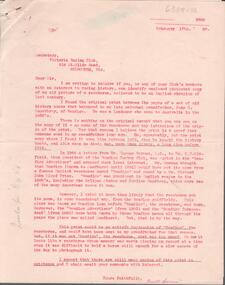
Letter - Bendigo the Racehorse, 17th Fabruary 1968
... Naming of Bendigo Harold Curnow racehorse Written in pencil on fleft hand side: 'Question for B'go Ad?' Two letters: red text carbon copy of letter sent to Secretary, Victoria Racing Club, 418 St. Kilda Road, Melbourne, February 17th, 1968 by Harold Curnow. Harold discusses the original print of the racehorse 'Bendigo', that he found 'between the pages of a set of old history books that belonged to my late maternal grandfather, John G. Sauerbray, of Bendigo'. Second letter from Victoria Racing Club, Melbourne to Mr. Harold Curnow, P.O. Box 96, Bendigo. Vic ...William Abednego Thompson (11 October 1811 – 23 August 1880), also known as Bendigo Thompson, was an English bare-knuckle boxer who won the heavyweight championship of England from James Burke on 12 February 1839.[3] He was inducted into The Ring magazine Hall of Fame in 1955, the International Boxing Hall of Fame in 1991[3] and the Bare Knuckle Boxing Hall of Fame in 2011. His nickname of "Bendigo" lives on in the name of a city and creek in Australia. (Wikipedia)Two letters: red text carbon copy of letter sent to Secretary, Victoria Racing Club, 418 St. Kilda Road, Melbourne, February 17th, 1968 by Harold Curnow. Harold discusses the original print of the racehorse 'Bendigo', that he found 'between the pages of a set of old history books that belonged to my late maternal grandfather, John G. Sauerbray, of Bendigo'. Second letter from Victoria Racing Club, Melbourne to Mr. Harold Curnow, P.O. Box 96, Bendigo. Vic. regarding 'Bendigo' the racehorse and his inability to identify the horse in question. Written in pencil on fleft hand side: 'Question for B'go Ad?'abednego thompson, william thompson, naming of bendigo, harold curnow, racehorse
