
Showing 18 items matching "german migration to australia"
-
 Wodonga & District Historical Society Inc
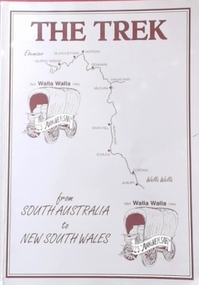
Book - The Trek from South Australia to New South Wales, Leon Wegener, 1994
... German Migration to Australia...This book is significant because it documents the journey made by German immigrants from South Australia to Walla Walla in search of a better life. German Migration to Australia German immigrants Walla Walla Ebenezer to Walla Walla This publication attempts to provide an insight into the background of the German heritage of the Walla Walla community. ...This publication attempts to provide an insight into the background of the German heritage of the Walla Walla community. It focuses on a major historical event, THE TREK and the families who migrated in covered wagons from Ebenezer in South Australia to the Riverina area in southern New South Wales in 1869. They were in search of new farmland and a better life. This journey has become known as "The Trek". The book was published in 1994 by the Walla Wall Historical Society to commemorate the 125th anniversary of "The Trek".A publication of 132 pages, including maps, illustrations and images.non-fictionThis publication attempts to provide an insight into the background of the German heritage of the Walla Walla community. It focuses on a major historical event, THE TREK and the families who migrated in covered wagons from Ebenezer in South Australia to the Riverina area in southern New South Wales in 1869. They were in search of new farmland and a better life. This journey has become known as "The Trek". The book was published in 1994 by the Walla Wall Historical Society to commemorate the 125th anniversary of "The Trek".german migration to australia, german immigrants walla walla, ebenezer to walla walla -
 Wodonga & District Historical Society Inc
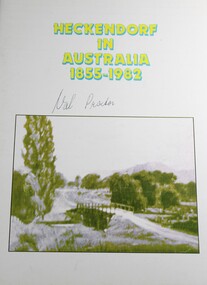
Book - Heckendorf in Australia 1855 - 1982
... ...german migration to australia...heckendorf family wodonga pioneers german migration to australia A Genealogical study of the Families of Frederick Heckendorf and a Record of Their Descendants, 1808-1982, 127 Years in Australia. ...A Genealogical study of the Families of Frederick Heckendorf and a Record of Their Descendants, 1808-1982, 127 Years in Australia. In 1855, Frederick and Julianna Heckendorf and their children departed Hamburg on the SS Steinwarder for a new life in Australia. In 1869, they moved to Wodonga and it wasn't long before they set up a dairy farm at Willow Park. One hundred years later, the farm was in the hands of Fredrick's great grandson Les Boyes. In the 1970s the land was acquired by the Albury-Wodonga Development Corporation, which had the goal of developing Albury-Wodonga into a major inland city.non-fictionA Genealogical study of the Families of Frederick Heckendorf and a Record of Their Descendants, 1808-1982, 127 Years in Australia. In 1855, Frederick and Julianna Heckendorf and their children departed Hamburg on the SS Steinwarder for a new life in Australia. In 1869, they moved to Wodonga and it wasn't long before they set up a dairy farm at Willow Park. One hundred years later, the farm was in the hands of Fredrick's great grandson Les Boyes. In the 1970s the land was acquired by the Albury-Wodonga Development Corporation, which had the goal of developing Albury-Wodonga into a major inland city.heckendorf family, wodonga pioneers, german migration to australia -
 Australian Multicultural Community Services
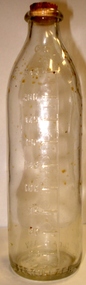
baby milk bottle
... it was given by Red Cross to the Polish family with one child in the displaced persons camp in Paderbonn, Germany, 1950 prior to migration to Australia...it was given by Red Cross to the Polish family with one child in the displaced persons camp in Paderbonn, Germany, 1950 prior to migration to Australia one of a few items of this kind which has survived to present days baby milk bottle refugee Red Cross "made in USA 3 A 45" mark on the bottom of the bottle glass baby milk bottle ...it was given by Red Cross to the Polish family with one child in the displaced persons camp in Paderbonn, Germany, 1950 prior to migration to Australiaone of a few items of this kind which has survived to present daysglass"made in USA 3 A 45" mark on the bottom of the bottlebaby milk bottle, refugee, red cross -
 The Beechworth Burke Museum
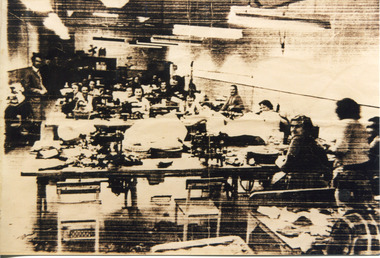
Photograph, Between 1946 and 1961
... Australia Policy’. In 1954 Beechworth had 170 migrants from the UK, 102 from Hungary, and 63 from Germany. The factory closed in 1961 as increased centralisation of both populations and industry in the larger nearby towns of Wangaratta and Wodonga lead to the closure of many factories in small towns in the 1960s and 1970s. This photograph is historically significant as it shows the working conditions in a factory primarily staffed by women at some point between the late 1940s and early 1960s. Pitman Shoe Factory Elgin Shoe Company industry shoe factory shoemaking working women post-war migration ...Elgin Shoes Pty., Ltd., established a branch shoe factory in Beechworth in 1946. Managing director, Mr T Nagle Pitman, selected Beechworth as a suitable location for the factory due to the availability of labour in the town, particularly girls under sixteen years of age. At its peak, the shoe factory employed thirty six women and girls, which also included post-war migrants. After the Second World War, Australia admitted increasing numbers of immigrants in order to fulfil labour requirements for a rapidly inflating demand of consumer goods. These migrants were largely from European Countries in line with the ‘White Australia Policy’. In 1954 Beechworth had 170 migrants from the UK, 102 from Hungary, and 63 from Germany. The factory closed in 1961 as increased centralisation of both populations and industry in the larger nearby towns of Wangaratta and Wodonga lead to the closure of many factories in small towns in the 1960s and 1970s. This photograph is historically significant as it shows the working conditions in a factory primarily staffed by women at some point between the late 1940s and early 1960s. Sepia rectangular photograph printed on matte photographic paperReverse: 14 / AFGA / 6982 / pitman shoe factory, elgin shoe company, industry, shoe factory, shoemaking, working women, post-war migration, factory, white australia policy, mid-twentieth century women's working conditions, twentieth-century working conditions, pitman, elgin, shoe, sewing machine, leather, pittman -
 Queenscliffe Maritime Museum
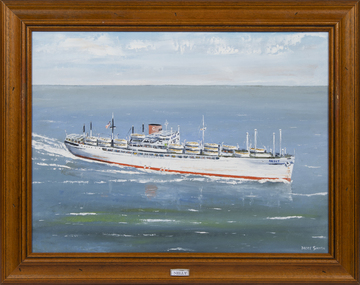
Painting - MS Nelly, Dacre Smyth, Nelly
... Australia in the 1940s and 1950s. She was eventually renamed ‘Seven Seas’ and would go on to have an impressive career sailing across the globe from Canada to New Zealand. The migrant ship MS Nelly carried the first German migrants under the bilateral assisted passage scheme signed on 29 August 1952. The ship departed Bremen in early November and arrived in Melbourne on 5 December 1952. Those on board had agreed to work as directed for the Commonwealth of Australia for two years, in exchange for a heavily reduced fare. MS Nelly Migrant ships German migrants Post War migration ...MS Nelly was a humble but reliable immigrant liner operating between Europe and Australia in the 1940s and 1950s. She was eventually renamed ‘Seven Seas’ and would go on to have an impressive career sailing across the globe from Canada to New Zealand.Mrs B SmythA framed oil painting of the migrant ship MS NellyNellyms nelly, migrant ships, german migrants, post war migration -
 Australian Multicultural Community Services
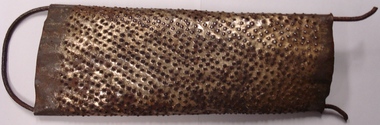
grater, 50s
... this item belongs to the Polish family; it was home made in the displaced persons camp in Paderbonn, Germany; the family arrived in Australia in 1950 and settled down in Melbourne one of a few items of this kind which has survived to present days grater migration displaced person camp steel, sharp perforations, rusted grater ...this item belongs to the Polish family; it was home made in the displaced persons camp in Paderbonn, Germany; the family arrived in Australia in 1950 and settled down in Melbourneone of a few items of this kind which has survived to present dayssteel, sharp perforations, rustedgrater, migration, displaced person camp -
 Australian Multicultural Community Services
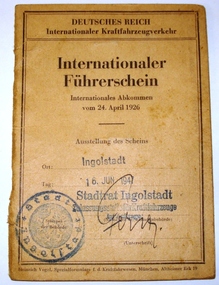
internationaler führerschein (international license)
... It was issued according to international agreement from 24 April 1926; this document belonged to deceased Marian Dabrowski, ex-soldier, migrant from Poland who came to Australia as a refugee after II World War one of a few items of this kind which has survived to present days international license migration Germany document front cover: stamp and signature of authorised person page 3: stamp, photo of holder Marian Dabrowski and handwritten info about holder of license page 38; 2 stamps which identify the category of license (A&B), handwritten info about holder brownish paper, 42 pages, back cover blank, page 37&38 folded page 2 contains list of countries where this license could be used page 4 - internationaler führerschein (international license) ...international license (internationaler führerschein) was issued on 16 June 1947 in Ingolstadt. It was issued according to international agreement from 24 April 1926; this document belonged to deceased Marian Dabrowski, ex-soldier, migrant from Poland who came to Australia as a refugee after II World Warone of a few items of this kind which has survived to present daysbrownish paper, 42 pages, back cover blank, page 37&38 folded page 2 contains list of countries where this license could be used page 4 - front cover: stamp and signature of authorised person page 3: stamp, photo of holder Marian Dabrowski and handwritten info about holder of license page 38; 2 stamps which identify the category of license (A&B), handwritten info about holderinternational license, migration, germany, document -
 Sunshine and District Historical Society Incorporated
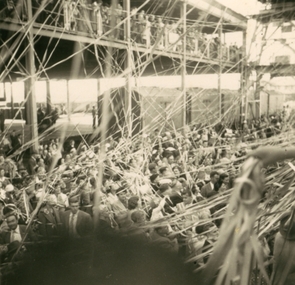
Photograph - Skaubryn Migrant Ship
... Australia migrant route. It carried more than a thousand migrants per voyage and was considered well‑equipped for post‑war mass migration. The Skaubryn made multiple voyages from European ports to Australia between 1951 and 1958, carrying migrants from Germany, the Netherlands, Malta, and elsewhere. ...Australia migrant route. It carried more than a thousand migrants per voyage and was considered well‑equipped for post‑war mass migration. The Skaubryn made multiple voyages from European ports to Australia between 1951 and 1958, carrying migrants from Germany, the Netherlands, Malta, and elsewhere. ...The MS Skaubryn was a Norwegian passenger liner launched in 1950 and used extensively on the Europe–Australia migrant route. It carried more than a thousand migrants per voyage and was considered well‑equipped for post‑war mass migration. The Skaubryn made multiple voyages from European ports to Australia between 1951 and 1958, carrying migrants from Germany, the Netherlands, Malta, and elsewhere. It also made occasional voyages to Canada and troop transport charters. The Skaubryn is best remembered for its catastrophic fire in the Indian Ocean on 31 March 1958. 5476.01 - Skaubryn Migrant Ship Photograph.jpg 5476.02 - Migrant Ship C1950's Photograph.jpg 5476.03 - Migrant Ship C1950's Photograph.jpg skaubryn migrant ship, migrants, immigration -
 Tatura Irrigation & Wartime Camps Museum
Document, Transfer from Camp 14
... Lists received from Migration Museum Archive, in Adelaide. German POW's Loveday South Australia Camp 14 Transfer from Camp 14, a Compound, Loveday SA Black folder containing photocopied lists of Germans transferred by train from Loveday, South Australia, to Camp 1. ...Lists received from Migration Museum Archive, in Adelaide.Black folder containing photocopied lists of Germans transferred by train from Loveday, South Australia, to Camp 1. All in plastic sleevesTransfer from Camp 14, a Compound, Loveday SAgerman pow's, loveday south australia, camp 14 -
Whitehorse Historical Society Inc.
Audio - Interview Recording, BARAGWANATH, Lucie, 'Peter', 27/11/2006
... Magnetic tape cassette recording of an Oral History Migration interview with Peter (surname withheld), who migrated to Australia from Germany in 1955. ...Peter Emigration Oral History Migration Program Germans in Australia Magnetic tape cassette recording of an Oral History Migration interview with Peter (surname withheld), who migrated to Australia from Germany in 1955. ...Interviewed by Lucie Baragwanath on 27 November 2006. Part of the Oral History Migration Program. Magnetic tape cassette recording of an Oral History Migration interview with Peter (surname withheld), who migrated to Australia from Germany in 1955. IThe interview was conducted by Lucie Baragwanath on 27 November 2006. A copy of the transcript is included.peter, emigration, oral history migration program, germans in australia -
Whitehorse Historical Society Inc.
Document, George Djoneff, /04/2006
... Djoneff George Emigration Oral History Migration Program Germans in Australia Bulgarians in Australia Interview with George Djoneff about the emigration and life in Australia of his Bulgarian father and German mother, who migrated to Australia in 1950. ...Interview with George Djoneff about the emigration and life in Australia of his Bulgarian father and German mother, who migrated to Australia in 1950.Interview with George Djoneff about the emigration and life in Australia of his Bulgarian father and German mother, who migrated to Australia in 1950. Interviewed by Barbara Gardiner 1 April 2006.Interview with George Djoneff about the emigration and life in Australia of his Bulgarian father and German mother, who migrated to Australia in 1950.djoneff, george, emigration, oral history migration program, germans in australia, bulgarians in australia -
Whitehorse Historical Society Inc.
Document, Roy Rogalski, 1/11/2006 12:00:00 AM
... German government. Tape at NP3466. Rogalski Roy Oral History Migration Program Emigration Poles in Australia Interview with Roy Rogalski, who migrated to Australia from Poland in 1950. ...Interview with Roy Rogalski, who migrated to Australia from Poland in 1950.Interview with Roy Rogalski, who migrated to Australia from Poland in 1950. Interviewed by Bob Gardiner 2 November 2006 and 15 February 2007. With copies of photos and documents supporting a claim for compensation from the German government.Tape at NP3466.Interview with Roy Rogalski, who migrated to Australia from Poland in 1950. rogalski, roy, oral history migration program, emigration, poles in australia -
Whitehorse Historical Society Inc.
Document, Harry Spiess, 1/09/2006 12:00:00 AM
... Spiess Harry Emigration Oral History Migration Program Germans in Australia Interview with Harry Spiess, who migrated to Australia from germany in 1952. ...Interview with Harry Spiess, who migrated to Australia from germany in 1952.Interview with Harry Spiess, who migrated to Australia from Germany in 1952. Interviewed by Valda Arrowsmith 25 September 2006. Tape at NP 3448Interview with Harry Spiess, who migrated to Australia from germany in 1952.spiess, harry, emigration, oral history migration program, germans in australia -
Whitehorse Historical Society Inc.
Document, Lottie Szigat, 1/06/2006 12:00:00 AM
... Tape at NP 3448 Szigat Lottie Emigration Oral History Migration Program Germans in Australia Interview with Lottie Szigat, who migrated to Australia from germany in 1965. ...Interview with Lottie Szigat, who migrated to Australia from germany in 1965.Interview with Lottie Szigat, who migrated to Australia from germany in 1965. Interviewed by Liz Chapman 29 June 2006. Tape at NP 3448Interview with Lottie Szigat, who migrated to Australia from germany in 1965. szigat, lottie, emigration, oral history migration program, germans in australia -
Whitehorse Historical Society Inc.
Mixed media - Audio Cassette, Lottie Szrgat aka Szigat, 29th June 2006
... Australia from Germany in 1965. Interviewed by Liz Chapman on 29th June 2006. Transcription on ND5659 Szigat Lottie Emigration Oral History Migration Program Germans in Australia Szrgat Lottie Interview with Lottie Szigat , who emigrated to Australia from Germany in 1965. ...Interview with Lottie Szigat , who emigrated to Australia from Germany in 1965. Interviewed by Liz Chapman on 29th June 2006. Transcription on ND5659Interview with Lottie Szigat , who emigrated to Australia from Germany in 1965. Interviewed by Liz Chapman on 29th June 2006. Original record ID was NP3448. Transcription on ND5659szigat lottie, emigration, oral history migration program, germans in australia, szrgat lottie -
 Friends of Westgarthtown
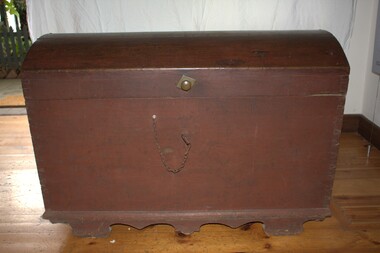
Functional object - Trunk/ Koffer, c. 1840s
... Australia. The wooden Koffer was airtight, so if lost overboard it would be retrievable. Some were fixed to the ship’s deck. After they settled at Westgarthtown the Koffer continued to contain the precious documents through each generation. Only the current owners saw the contents in each generation, and the children always regarded it as a “treasure chest”, which was always locked and out of bounds for them. This German-made sea chest, dating from the late 1840s, holds exceptional historical, cultural, and interpretive significance as an original migration ...The chest was constructed to allowable dimensions for storage in the ship's hold. The sturdy watertight construction afforded protection for the chests contents. It can be imagined that these would be household utensils, items of clothing and the most treasured ornaments as space permitted. It is likely that the contents included some building tools and as well, implements which Christian Ziebell used in his trade as a butcher in Bruel, thereby enabling him to undertake profitable work on his arrival in Australia.This object is of primary significance. The Koffer was constructed to allowable dimensions for storage in the ship’s hold. The sturdy watertight construction afforded protection for the Koffer’s contents on the voyage aboard the Privislaw from Hamburg, Germany to Hobsons Bay, Australia in 1850. The Koffer held the precious necessities for life for Christian Ziebell's family at their new destination. It is likely that the contents included some building tools as well, implements that Christian used in his trade as a butcher in Bruel, thereby enabling him to undertake profitable work on arrival in Australia. The wooden Koffer was airtight, so if lost overboard it would be retrievable. Some were fixed to the ship’s deck. After they settled at Westgarthtown the Koffer continued to contain the precious documents through each generation. Only the current owners saw the contents in each generation, and the children always regarded it as a “treasure chest”, which was always locked and out of bounds for them. This German-made sea chest, dating from the late 1840s, holds exceptional historical, cultural, and interpretive significance as an original migration object belonging to Christian and Sophia Ziebell during their maiden voyage to Australia. Serving as the family’s personal storage trunk aboard the Pribislaw in 1849, the chest would have functioned as a container for clothing, tools, and essential belongings. Later it served as storage for family archives and Lutheran church committee papers. Constructed in the robust mid-19th-century German style, the chest likely features oak timbers, dovetail joinery, and iron fittings typical of sea-going koffers of the period. Its painted decoration, including the name “C. Ziebell” in large black charcoal script, provides strong, direct provenance and reflects both ownership and pride in family identity. Such personalised embellishment was common among German migrants who decorated their chests during periods of spare time aboard the ship. As one of the rare surviving objects directly associated with the Ziebell family’s migration story, this chest embodies themes of aspiration, hardship, cultural continuity, and settlement. It is a tangible link between the family’s Mecklenburg origins and their new life at Westgarthtown, offering powerful interpretive value for understanding early German-Wendish migration and daily life at sea. Built to specifications for sea voyaging it is also a reminder of the planning required prior to considered migration. Its survival enriches the museum’s capacity to convey the lived experience of Christian and Sophia Ziebell and the foundational story of the community they helped to establish. Large wooden trunk/koffer. Base is rectangular, and lid is rectancular to fit the base but curves between the front and back. Morticed corners; protruding base with beveled edge. Supported by profiled runners with four built-in feet. Handle for carrying on each end, and locking mechanism on front.'C. Ziebell' written in large font on back of chestpersonal effects, travel goods, pribislaw, johann christian ziebell, german migration, luggage -
 Wodonga & District Historical Society Inc
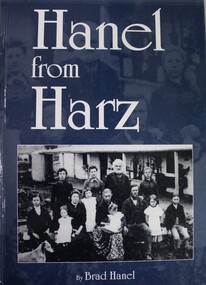
Book - HANEL FROM HARZ, Brad Hanel, 2001
... hanel family. harz mountains region german migration A History and Family Tree of Heinrich August Hanel and his wife Henriette Julianne Sommer and their descendants 1813-1997. Like many German migrants, they first landed in South Australia before moving on to Victoria and southern New South Wales, including Albury, Wodonga, Culcairn, Chiltern and surrounding districts. ...A History and Family Tree of Heinrich August Hanel and his wife Henriette Julianne Sommer and their descendants 1813-1997. Like many German migrants, they first landed in South Australia before moving on to Victoria and southern New South Wales, including Albury, Wodonga, Culcairn, Chiltern and surrounding districts. This book provides a detailed history of their origins and migration to Australia as well as the achievements of their descendants in Australia.non-fictionA History and Family Tree of Heinrich August Hanel and his wife Henriette Julianne Sommer and their descendants 1813-1997. Like many German migrants, they first landed in South Australia before moving on to Victoria and southern New South Wales, including Albury, Wodonga, Culcairn, Chiltern and surrounding districts. This book provides a detailed history of their origins and migration to Australia as well as the achievements of their descendants in Australia. hanel family., harz mountains region, german migration -
 Wodonga & District Historical Society Inc
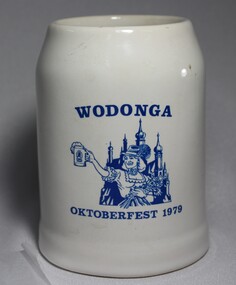
Memorabilia - Wodonga Oktoberfest Stein, c1979
... Australia and other parts of Victoria. Among the names were Heckendorf, Mueller, Zeinert and Schubert. These families were instrumental in lobbying for the establishment of the St. John's Lutheran Church in Wodonga, the foundation stone being laid in 1874. By the 1890s to the early 1900s many other Germany names were added to the local community including Muller, Lange, Pumpa, Greschke, Lobbe, Posselt, Kreuger, Schuster, Pertzel, Star, Draper, Mueller, Semmler, Thiele, Terlich, Wegener, Schreiber and Draper. Germans continued to arrive in the area until 1914. In the great post-war migration...Australia and other parts of Victoria. Among the names were Heckendorf, Mueller, Zeinert and Schubert. These families were instrumental in lobbying for the establishment of the St. John's Lutheran Church in Wodonga, the foundation stone being laid in 1874. By the 1890s to the early 1900s many other Germany names were added to the local community including Muller, Lange, Pumpa, Greschke, Lobbe, Posselt, Kreuger, Schuster, Pertzel, Star, Draper, Mueller, Semmler, Thiele, Terlich, Wegener, Schreiber and Draper. Germans continued to arrive in the area until 1914. In the great post-war migration ...Several German families arrived in Wodonga, usually via South Australia, in the late 1850 and 1860s. Some of the earliest settlers to arrive were the Haeusler, Schlink, Trudewind, Pfeiffer and Klinge families. Many of them had left from Prussia and Bavaria to escape religious persecution. They all became actively involved in the community and made outstanding and lasting contributions to the development of the town. In the years 1868-69 more settlers arrived from South Australia and other parts of Victoria. Among the names were Heckendorf, Mueller, Zeinert and Schubert. These families were instrumental in lobbying for the establishment of the St. John's Lutheran Church in Wodonga, the foundation stone being laid in 1874. By the 1890s to the early 1900s many other Germany names were added to the local community including Muller, Lange, Pumpa, Greschke, Lobbe, Posselt, Kreuger, Schuster, Pertzel, Star, Draper, Mueller, Semmler, Thiele, Terlich, Wegener, Schreiber and Draper. Germans continued to arrive in the area until 1914. In the great post-war migration that started through Bonegilla in December 1947, Germans were among the tens of thousands who arrived. Most of the migrants who settled in Wodonga at this time were born in Germany. According to the 2016 Census, Wodonga still has a larger percentage of people with German ancestry than most other rural communities in Victoria. The German Austrian Australian Club, Wodonga was originally formed in 1960 by immigrants to Australia, to provide a meeting place for refugees and immigrants from Europe. Oktoberfest has become a world-wide occasion for all people to share in the celebration of Bavarian traditions. The Wodonga Hospital approached the Club and asked for their involvement in holding an Oktoberfest to raise funds for the Hospital. These Fests took 11 months to organize and ended up raising over $27,000.00 for the Hospital. A large number of families of German origin have arrived in the Wodonga area from as early as the 1850s. They have made valuable and lasting contributions to the area in a range of fields including agriculture, local government, businesses, retail and medical services. Their contributions are recognised in several street names in Wodonga. A white china beer stein bearing the blue logo of the Wodonga 1979 Oktoberfest. Logo includes an image of a woman in German national costume.Above the image "WODONGA" Underneath the image "OKTOBERFEST 1979"wodonga, oktoberfest, german immigrants
