
Showing 22 items matching "german story books"
-
 Tatura Irrigation & Wartime Camps Museum
Book
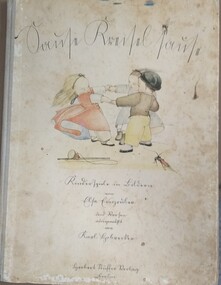
... ...German story books...Peter Drescher Jaffa, Palestine Internee books German story books Peter Drescher, Tatura, 1942 Hard card covered story book with colour illustrations throughout. ...Possession of former internee at camp 3. Brought with him from Jaffa, Palestine in 1941.Hard card covered story book with colour illustrations throughout. Has grey cloth spine. Cover features illustrations of 3 children holding hands/forming a circle. Title etc. in handwriting/German Gothic script.Peter Drescher, Tatura, 1942peter drescher, jaffa, palestine, internee books, german story books -
 Flagstaff Hill Maritime Museum and Village
Book - Reference Book/History, Henry Smith Williams, The Historians History of the World Vol 23 set 1 - Edited by Henry Smith Williams L.L.D. Published by “The Times” 1908, 1908
... books was designed to tell the story of humanity using the actual words of over 2,000 "master historians" (such as Herodotus, Gibbon, and Mommsen), woven together by modern editorial transitions. This specific 1908 set of volumes was published by "The Times" (London). In the early 20th century, The Times entered the book trade to boost its prestige and revenue, notably marketing this set and the “Encyclopedia Britannica”. Volume 23 includes the Rise of Prussia with a detailed accounts of Frederick the Great’s reign and the Seven Years' War. The Napoleonic Wars in Germany...books was designed to tell the story of humanity using the actual words of over 2,000 "master historians" (such as Herodotus, Gibbon, and Mommsen), woven together by modern editorial transitions. This specific 1908 set of volumes was published by "The Times" (London). In the early 20th century, The Times entered the book trade to boost its prestige and revenue, notably marketing this set and the “Encyclopedia Britannica”. Volume 23 includes the Rise of Prussia with a detailed accounts of Frederick the Great’s reign and the Seven Years' War. The Napoleonic Wars in Germany ...The historians' History of the World, Volume 23 serves as a fascinating transition point where the series moves from the political history of nations to the broader history of the West, and the late-stage development of several major world powers. This volume covers and returns to, Germany, Scandinavia, and the Modern Nations. It is a diverse volume that primarily focuses on the History of Germany (Part II), covering the period from the mid-18th century through the early 20th century, and the History of Scandinavia.The Book is part of a 25 volume set with red cloth bindings and gold filigree design to rib.non-fictionThe historians' History of the World, Volume 23 serves as a fascinating transition point where the series moves from the political history of nations to the broader history of the West, and the late-stage development of several major world powers. This volume covers and returns to, Germany, Scandinavia, and the Modern Nations. It is a diverse volume that primarily focuses on the History of Germany (Part II), covering the period from the mid-18th century through the early 20th century, and the History of Scandinavia. flagstaff hill, warrnambool, shipwrecked-coast, flagstaff-hill-maritime-museum, maritime-museum, flagstaff-hill-maritime-village, book, the historians history of the world vol 23 set 1, henry smith williams -
 Greensborough Historical Society
Book, A. J. Evans, The Escaping club, 1957_
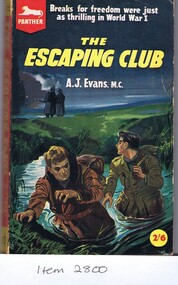
... Story of a British pilot's capture, imprisonment and escape from POW camps in Germany in World War 1 world war 1 prisoner of war camps 191 p. pbk. The Escaping club Book Book A. J. Evans Panther Books ...Story of a British pilot's capture, imprisonment and escape from POW camps in Germany in World War 1191 p. pbk.world war 1, prisoner of war camps -
 Australian Commando Association - Victoria
Book - 6th Div, Shawn OLeary, To The Green Fields Beyond:The story of the 6th Division Cavalry Commandos
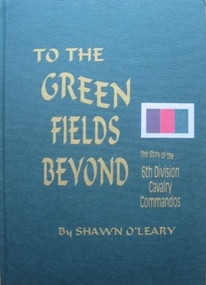
... books. This is the story of one of Australia’s most famous fighting regiments during World War II. As an armoured cavalry unit it fought the Italians and Germans in the sands of the African desert and the Vichy French in the mountains of Syria. ...The comprehensive history of the 6th Australian Division Cavalry Commandos – a (now out of print) reprint of one of the rarer Armoured unit history books. This is the story of one of Australia’s most famous fighting regiments during World War II. As an armoured cavalry unit it fought the Italians and Germans in the sands of the African desert and the Vichy French in the mountains of Syria. Later as a dismounted commando unit it fought the Japanese in the terrifying jungles of New Guinea. The heroism of the men in its ranks and the actions in which they engaged are portrayed in a way which makes battle deeds leap realistically from the pages. “To The Green Fields Beyond” is a documented and detailed book which is of value to everyone who is interested in Australia’s story. Seldom before has such a contribution been made to record of our national history. The book has been approved and sponsored by the Australian War Memorial. The 6th Division Cavalry Regiment was formed in November 1939 and, just two months later, was sent overseas to the Middle East in January 1940. Arriving in Egypt, the regiment immediately went to Palestine, where it joined the rest of the 6th Division and trained using machine-gun carriers and, from October, six old Vickers light tanks. At the end of the year the regiment moved into the Western Desert, where it joined British forces ready for the major offensive to commence on 9 December. Two days later the regiment became the first unit of the 2nd Australian Imperial Force (AIF) to go into action when one of its squadron fought a sharp action against the Italians holding Garn el Grein and Fort Maddalina on 11 and 12 December. By 21 December British forces had captured Sidi Barrrani and the desert was now open for the 6th Division’s advance along the Libyan coast. On 3 January 1941 the division attacked and captured the Italian fort of Bardia. The regiment’s A Squadron, under the command of Major Denzil Macarthur-Onslow, who went on to command the 4th Armoured Brigade, supported the attack. Tobruk was the next Italian fort to be captured, with the regiment again in support and covering the 19th Brigade’s advance. The regiment, though, was under-equipped and without its full compliment of vehicles, using only machine gun carriers. To compensate for this, A Squadron was parity re-equipped with captured Italian light tanks, which had large kangaroos painted on the hulls and turrets to distinguish them from enemy vehicles. After Tobruk, the regiment was used as part of the advance guard in the capture of Derna and then Benghazi. In April the unit moved to Helwan, where it was equipped with Vickers light tanks and machine-gun carriers, and operated with British troops in capturing Sollum. Towards the end of May the regiment moved to Palestine, where it came under the command of the 7th Division for the imminent invasion of Syria. The regiment experienced its heaviest fighting during the Syrian campaign, which began on 7 June. A Squadron was attached to the 21st Brigade and advanced along the coast, where the rugged hills made it difficult to manoeuvre the tanks and carriers. The squadron was relieved by one of the 9th Division Cavalry Regiment’s squadrons on 13 and 14 June. C Squadron, meanwhile, was with the 25th Brigade, and advanced along the Rosh Pinna road, engaging strong enemy defences at Fort Khirbe. C Squadron was relieved by B Squadron, which was later attacked by Vichy French tanks that were supported by heavy artillery and machine-gun fire, which forced the Australians to withdrawal. Always willing or needing to improvise during the campaign, A and B Squadrons both operated three captured French R35 Renault light tanks, while C Squadron provided personnel for a horse troop, quickly nicknamed the “Kelly Gang”, to patrol the high, rugged hills near the Mardjayoun–Banis Road. The regiment remained in Syria as part of the occupation force and returned to Australia in March 1942. It was sent to the Adelaide River, in the Northern Territory, and then later to Murgon, in Queensland. In 1943 and 1944 divisional cavalry regiments were reorganised into cavalry (commando) regiments. In January 1944 the 6th Division Cavalry Regiment became the 2/6th Cavalry (Commando) Regiment. The regiment lost its vehicles and became the administrative headquarters for the 2/7th, 2/9th, and 2/10th Commando Squadrons. The regiment remained with the 6th Division and participated in the Aitpae–Wewak campaign, in New Guinea, during 1945. Includes Nominal Rollnon-fictionThe comprehensive history of the 6th Australian Division Cavalry Commandos – a (now out of print) reprint of one of the rarer Armoured unit history books. This is the story of one of Australia’s most famous fighting regiments during World War II. As an armoured cavalry unit it fought the Italians and Germans in the sands of the African desert and the Vichy French in the mountains of Syria. Later as a dismounted commando unit it fought the Japanese in the terrifying jungles of New Guinea. The heroism of the men in its ranks and the actions in which they engaged are portrayed in a way which makes battle deeds leap realistically from the pages. “To The Green Fields Beyond” is a documented and detailed book which is of value to everyone who is interested in Australia’s story. Seldom before has such a contribution been made to record of our national history. The book has been approved and sponsored by the Australian War Memorial. The 6th Division Cavalry Regiment was formed in November 1939 and, just two months later, was sent overseas to the Middle East in January 1940. Arriving in Egypt, the regiment immediately went to Palestine, where it joined the rest of the 6th Division and trained using machine-gun carriers and, from October, six old Vickers light tanks. At the end of the year the regiment moved into the Western Desert, where it joined British forces ready for the major offensive to commence on 9 December. Two days later the regiment became the first unit of the 2nd Australian Imperial Force (AIF) to go into action when one of its squadron fought a sharp action against the Italians holding Garn el Grein and Fort Maddalina on 11 and 12 December. By 21 December British forces had captured Sidi Barrrani and the desert was now open for the 6th Division’s advance along the Libyan coast. On 3 January 1941 the division attacked and captured the Italian fort of Bardia. The regiment’s A Squadron, under the command of Major Denzil Macarthur-Onslow, who went on to command the 4th Armoured Brigade, supported the attack. Tobruk was the next Italian fort to be captured, with the regiment again in support and covering the 19th Brigade’s advance. The regiment, though, was under-equipped and without its full compliment of vehicles, using only machine gun carriers. To compensate for this, A Squadron was parity re-equipped with captured Italian light tanks, which had large kangaroos painted on the hulls and turrets to distinguish them from enemy vehicles. After Tobruk, the regiment was used as part of the advance guard in the capture of Derna and then Benghazi. In April the unit moved to Helwan, where it was equipped with Vickers light tanks and machine-gun carriers, and operated with British troops in capturing Sollum. Towards the end of May the regiment moved to Palestine, where it came under the command of the 7th Division for the imminent invasion of Syria. The regiment experienced its heaviest fighting during the Syrian campaign, which began on 7 June. A Squadron was attached to the 21st Brigade and advanced along the coast, where the rugged hills made it difficult to manoeuvre the tanks and carriers. The squadron was relieved by one of the 9th Division Cavalry Regiment’s squadrons on 13 and 14 June. C Squadron, meanwhile, was with the 25th Brigade, and advanced along the Rosh Pinna road, engaging strong enemy defences at Fort Khirbe. C Squadron was relieved by B Squadron, which was later attacked by Vichy French tanks that were supported by heavy artillery and machine-gun fire, which forced the Australians to withdrawal. Always willing or needing to improvise during the campaign, A and B Squadrons both operated three captured French R35 Renault light tanks, while C Squadron provided personnel for a horse troop, quickly nicknamed the “Kelly Gang”, to patrol the high, rugged hills near the Mardjayoun–Banis Road. The regiment remained in Syria as part of the occupation force and returned to Australia in March 1942. It was sent to the Adelaide River, in the Northern Territory, and then later to Murgon, in Queensland. In 1943 and 1944 divisional cavalry regiments were reorganised into cavalry (commando) regiments. In January 1944 the 6th Division Cavalry Regiment became the 2/6th Cavalry (Commando) Regiment. The regiment lost its vehicles and became the administrative headquarters for the 2/7th, 2/9th, and 2/10th Commando Squadrons. The regiment remained with the 6th Division and participated in the Aitpae–Wewak campaign, in New Guinea, during 1945. Includes Nominal Rollww2, australian commandos, australian special forces, world war 2 -
 Monbulk RSL Sub Branch
Book, Max Hastings, Armageddon: the battle for Germany, 2004
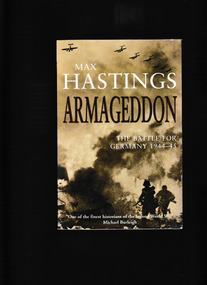
... Few books on the Second World War have so vividly brought together the story of the battlefields, east and west, with the decisions of the generals and the impact of great events upon ordinary soldiers and civilians. Index, ill, maps, p.584. Armageddon: the battle for Germany ...Armageddon tells the story of the climactic months of the Second World War, the destruction of Hitler's Germany. Max Hastings has researched archives in four countries and interviewed 170 witnesses to piece together a saga that is at once fascinating military history and the greatest human tragedy of the twentieth century." "This book follows Max Hastings's earlier acclaimed studies of the Second World War, including Overlord and Bomber Command, in examining a great sweep of history with massive research and a host of new insights." "Armageddon embraces the fates of more than a hundred million people, men and women, old and very young, from the tragic teenage fanatics who died in the ruins of Hitler's Reich to the British 'Tommies' who simply yearned to finish a painful job and go home. Few books on the Second World War have so vividly brought together the story of the battlefields, east and west, with the decisions of the generals and the impact of great events upon ordinary soldiers and civilians.Index, ill, maps, p.584.non-fictionArmageddon tells the story of the climactic months of the Second World War, the destruction of Hitler's Germany. Max Hastings has researched archives in four countries and interviewed 170 witnesses to piece together a saga that is at once fascinating military history and the greatest human tragedy of the twentieth century." "This book follows Max Hastings's earlier acclaimed studies of the Second World War, including Overlord and Bomber Command, in examining a great sweep of history with massive research and a host of new insights." "Armageddon embraces the fates of more than a hundred million people, men and women, old and very young, from the tragic teenage fanatics who died in the ruins of Hitler's Reich to the British 'Tommies' who simply yearned to finish a painful job and go home. Few books on the Second World War have so vividly brought together the story of the battlefields, east and west, with the decisions of the generals and the impact of great events upon ordinary soldiers and civilians.world war 1939-1945 - battles - germany, world war 1939-1945 - history -
 Monbulk RSL Sub Branch
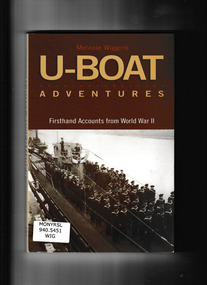
Book, Naval Institute, U-boat adventures : firsthand accounts from World War II, 2010
... World war 1939 – 1945 –Naval operations - Germany Germany - U-boats Twenty-two U-boat veterans tell their stories in this collection of their experiences, recorded by the author during several years of travel throughout Germany. While many books ...Twenty-two U-boat veterans tell their stories in this collection of their experiences, recorded by the author during several years of travel throughout Germany. While many books have been written about the U-boat war, this is one of the few that focuses on the lives of the submariners, and rarer still is its concentration on the crewmen rather than the officers. Melanie Wiggins interviewed seventeen men of the enlisted ranks, along with five commanders, to take readers into the terrifying world of underwater warfare, where every single crewman made a crucial difference in the fate of his boat. As she searched for and interviewed U-boat men, Wiggins also collected photographs from scrapbooks and archives, and consulted war-era personnel records and secret diaries. Her attendance at a reunion of the crew of U-682 netted a wealth of information as did her interviews with submarine veterans in Gؤrlitz, former East Germany. Her interviews with Admiral Otto Kretschmer just two months before his death and ninety-four-year-old Commander Jѓrgen Wattenberg in Hamburg add important dimensions to the work. Among the individual sagas included are Radioman Hans Bѓrck's description of his 1942 patrol to Aruba and the visit of Japanese submarine I-30 at Lorient; Fireman 2nd Class Josef Erben's explanation of how his boat, U-128, got stuck on a large rock and had to be hauled free; POW Ernst Gؤ:thling's memories of being wounded in a British prison camp when German planes mistakenly dropped bombs in the area.Index, bibliography, notes, ill, p.250.non-fictionTwenty-two U-boat veterans tell their stories in this collection of their experiences, recorded by the author during several years of travel throughout Germany. While many books have been written about the U-boat war, this is one of the few that focuses on the lives of the submariners, and rarer still is its concentration on the crewmen rather than the officers. Melanie Wiggins interviewed seventeen men of the enlisted ranks, along with five commanders, to take readers into the terrifying world of underwater warfare, where every single crewman made a crucial difference in the fate of his boat. As she searched for and interviewed U-boat men, Wiggins also collected photographs from scrapbooks and archives, and consulted war-era personnel records and secret diaries. Her attendance at a reunion of the crew of U-682 netted a wealth of information as did her interviews with submarine veterans in Gؤrlitz, former East Germany. Her interviews with Admiral Otto Kretschmer just two months before his death and ninety-four-year-old Commander Jѓrgen Wattenberg in Hamburg add important dimensions to the work. Among the individual sagas included are Radioman Hans Bѓrck's description of his 1942 patrol to Aruba and the visit of Japanese submarine I-30 at Lorient; Fireman 2nd Class Josef Erben's explanation of how his boat, U-128, got stuck on a large rock and had to be hauled free; POW Ernst Gؤ:thling's memories of being wounded in a British prison camp when German planes mistakenly dropped bombs in the area.world war 1939 – 1945 –naval operations - germany, germany - u-boats -
 Monbulk RSL Sub Branch
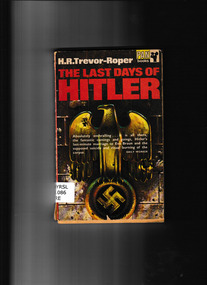
Book, Pan Books, The last days of Hitler, 1952
... books ever written. The Last Days of Hitler tells the extraordinary story of those last days of the Thousand Year Reich in the Berlin Bunker. Besieged in the shattered capital, but still dominating the remains of his court, Hitler reiterated the original alternative of Nazism: either total victory or annihilation. This book is the record of that carefully prepared, ceremonious finale to a terrible chapter of history. World War II. Military History. Nazi Germany ...The classic account of Hitler's fall from power, first pubilshed in 1947, reissued with a striking new cover. In September 1945 the fate of Adolf Hitler was a complete mystery. He had simply disappeared, and had been missing for four months. Hugh Trevor-Roper, an intelligence officer, was given the task of solving the mystery. His brilliant piece of detective work not only proved finally that Hitler had killed himself in Berlin, but also produced one of the most fascinating history books ever written. The Last Days of Hitler tells the extraordinary story of those last days of the Thousand Year Reich in the Berlin Bunker. Besieged in the shattered capital, but still dominating the remains of his court, Hitler reiterated the original alternative of Nazism: either total victory or annihilation. This book is the record of that carefully prepared, ceremonious finale to a terrible chapter of history. World War II. Military History. Nazi Germany.Index, notes, map, p.267.non-fictionThe classic account of Hitler's fall from power, first pubilshed in 1947, reissued with a striking new cover. In September 1945 the fate of Adolf Hitler was a complete mystery. He had simply disappeared, and had been missing for four months. Hugh Trevor-Roper, an intelligence officer, was given the task of solving the mystery. His brilliant piece of detective work not only proved finally that Hitler had killed himself in Berlin, but also produced one of the most fascinating history books ever written. The Last Days of Hitler tells the extraordinary story of those last days of the Thousand Year Reich in the Berlin Bunker. Besieged in the shattered capital, but still dominating the remains of his court, Hitler reiterated the original alternative of Nazism: either total victory or annihilation. This book is the record of that carefully prepared, ceremonious finale to a terrible chapter of history. World War II. Military History. Nazi Germany. germany - politics and government - 1933-1945, adolf hitler - death and burial -
 Monbulk RSL Sub Branch
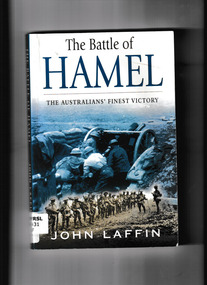
Book, Kangaroo Press, The battle of Hamel : the Australians' finest victory, 1999
... story of the capture of the German front line in July of 1918. It was the turning point of WWI, which came to a victorious end shortly after. Laffin is one of the world's most distinguished military historians and has written more than 60 books concerning war. ...The amazing and inspiring story of the capture of the German front line in July of 1918. It was the turning point of WWI, which came to a victorious end shortly after. Laffin is one of the world's most distinguished military historians and has written more than 60 books concerning war.Index, ill, map, p.176.non-fictionThe amazing and inspiring story of the capture of the German front line in July of 1918. It was the turning point of WWI, which came to a victorious end shortly after. Laffin is one of the world's most distinguished military historians and has written more than 60 books concerning war. world war one 1914-1918 - western front, western front 1914-1918 - australian participation -
 Bendigo Historical Society Inc.
Book - GERMAN HERITAGE SOCIETY COLLECTION: FLIGENDE BLATTER
... BOOKS Collections German Magazine German Heritage Society Collection - Fligende Blatter Mrs Legg Deutscher Verein Library Bendigo Berlag von Brann & Gchneider Item 12. Large book with blue cover, a black spine and a black diagonal piece on each outer edge corner. Purple inside front and back covers and fly leaves. 'Fligende Blatter' German Gothic script, produced in Munich. A collection of magazines, editions 3232-3257 bound in hard-cover. Dates July 5th 1907 to Bendigo 27th 1907. Donated by Mrs Legg, Melbourne on May 28th 1990. Originally the property of the Deutscher Verein Library, Bendigo. Book has stories ...Item 12. Large book with blue cover, a black spine and a black diagonal piece on each outer edge corner. Purple inside front and back covers and fly leaves. 'Fligende Blatter' German Gothic script, produced in Munich. A collection of magazines, editions 3232-3257 bound in hard-cover. Dates July 5th 1907 to Bendigo 27th 1907. Donated by Mrs Legg, Melbourne on May 28th 1990. Originally the property of the Deutscher Verein Library, Bendigo. Book has stories, hand drawn cartoons, advertisements and some photos.Berlag von Brann & Gchneiderbooks, collections, german magazine, german heritage society collection - fligende blatter, mrs legg, deutscher verein library bendigo -
 Bendigo Military Museum
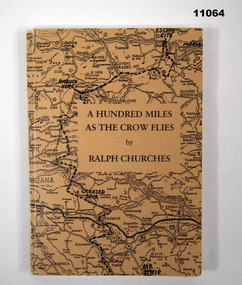
Book - ESCAPE NARRATIVE, WW2, Ralph Churches, "A HUNDRED MILES AS THE CROW FLIES", 1996
... story of an escape from a German Prisoner-of-War camp in August 1944. It tells of what is/ probably the largest successful break-out by British P.O.W.'s/ in World War II". Publications Books ...From the Preface: "This is a true story - a story of an escape from a German Prisoner-of-War camp in August 1944. It tells of what is/ probably the largest successful break-out by British P.O.W.'s/ in World War II".Soft cover book. Cover - cardboard. Black coloured ink print on front, spine and back. Background - light brown colour. Illustrated front - map and back photograph of men, some in military uniforms climbing a hill with forest trees in background. 172 pages - cut, plain, white paper. Illustrated black and white photograps and maps.Handwritten details - blue ink pen. Top "(illegible name) 11/10/99". Lower - "F. Barnstable/ 24 Thornton St/ Numurkah."publications, books, german pow camp, ww2 -
 Tatura Irrigation & Wartime Camps Museum
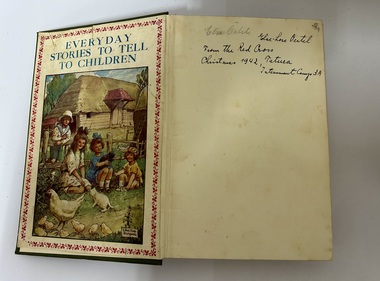
Book - Book - Childrens, Mrs H C Craddock, Everyday Stories to tell to Children, January 1930
... Germany when war broke out. Else Lore Hukins Children's Books Camp 3 Christmas Red Cross Internees Hand written inside: Else-Lore Oertel from the Red Cross, Christmas 1942, Tatura Internment Camp 3A. Olive green linen cover with embossing on edge and spine. Gold printing on spine. 256 pages. The front of the original dust cover has been attached to the inside of the book. It is colour picture of four children in a farmyard with chickens and two cats. Painted by Ettel Kate Burgess. Everyday Stories ...Else Oertel and her daughter Else-Lore were interned in Camp 3A from 1940. Her husband was not interned as he was on a business trip to Germany when war broke out. Olive green linen cover with embossing on edge and spine. Gold printing on spine. 256 pages. The front of the original dust cover has been attached to the inside of the book. It is colour picture of four children in a farmyard with chickens and two cats. Painted by Ettel Kate Burgess.Hand written inside: Else-Lore Oertel from the Red Cross, Christmas 1942, Tatura Internment Camp 3A. else lore hukins, children's books, camp 3, christmas, red cross, internees -
 Tatura Irrigation & Wartime Camps Museum
Book, The Uncles, The Story of the Heyde Brothers, 2011
... Written by Margaret Bowering a neice of the Heyde Brothers. german migrants western australia internment camp 1 tatura books biography Brown soft cover book with photo of five men in work clothes on front. The Uncles, The Story ...Written by Margaret Bowering a neice of the Heyde Brothers.Brown soft cover book with photo of five men in work clothes on front.german migrants, western australia, internment camp 1 tatura, books, biography -
 Tatura Irrigation & Wartime Camps Museum
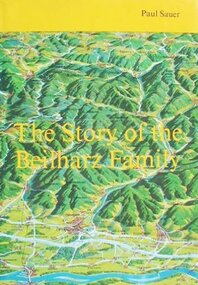
Book, The Story of the Beilharz Family, 1988
... The story of a family of Black Forest farmers and trades people, from the 15th to the 20th Century in Germany, Palestine and Australia beilharz sauer p camp 3 tatura ww2 camp 3 books history local Presented to this Museum by Mr. ...The story of a family of Black Forest farmers and trades people, from the 15th to the 20th Century in Germany, Palestine and AustraliaBeige hard cover book. Gold text front cover and along the spine. Yellow dust cover with map of Germany on the front cover and Palestine on the back coverPresented to this Museum by Mr. HW Beilharz, Bellvue Hill, NSW 1989beilharz, sauer p, camp 3, tatura, ww2 camp 3, books, history, local -
Tatura Irrigation & Wartime Camps Museum
Book, Deutsches Lesbuch Fue Zivilinternierte Kinder, 1944
... Used by Internee children at Camp 3, Tatura ww2 camp 3 books childrens Deutsches Reiss Kreuz Pra Sidium Pale green hard cover German childrens story book with green cloth spine. ...Used by Internee children at Camp 3, TaturaPale green hard cover German childrens story book with green cloth spine. Printed on front cover "Deutsches Lesebuch Zivilinternierte Kinder". Black and white illustrations, 2 coloured (1 print, 1 hand coloured) in old German script.Deutsches Reiss Kreuz Pra Sidiumww2, camp 3, books, childrens -
Tatura Irrigation & Wartime Camps Museum
Book, Konsalik Alarm! Das Weiberschiff, 1980
... books novels "Donor Kurt Kazenwadel" on first page|An indecipherable signature on first page Off white coloured book. Black, red and blue text. Snow scene top of front cover. Love scene bottom of front cover. Photo of author on back cover together with description of story, in German ...Off white coloured book. Black, red and blue text. Snow scene top of front cover. Love scene bottom of front cover. Photo of author on back cover together with description of story, in German. Book written in German. Title in English "Alarm! A shipload of women". 254 pages.|Included with the book is a piece of paper with English translation of front & back cover"Donor Kurt Kazenwadel" on first page|An indecipherable signature on first pagekazenwadel, tatura, books, novels -
Tatura Irrigation & Wartime Camps Museum
Book, Christophs Abenteuer in Australien, 1935 copyright|1942?
... Property of internee at Camp 3, Tatura ww2 camp 3 books fiction Gisela weid 28.11.46 H 16a Hard cover bound story book. Printed in German/Gothic script. ...Property of internee at Camp 3, TaturaHard cover bound story book. Printed in German/Gothic script. Black and white illustrations. Appears to be about a boy's adventures in Australia. Red printing on front cover.Gisela weid 28.11.46 H 16aww2, camp 3, books, fiction -
Tramways/East Melbourne RSL Sub Branch - RSL Victoria Listing id: 27511
Book, William Manchester et al, The Arms of Krupp 1587-1968(True story of the family dynasty that built the German War Machine)
... ISBN: 553-05230-195 The Arms of Krupp 1587-1968(True story of the family dynasty that built the German War Machine) Book William Manchester BANTAM BOOKS ...isbn: 553-05230-195 -
 Wodonga & District Historical Society Inc
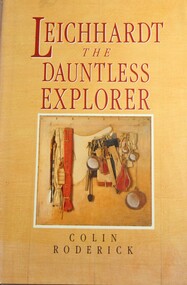
Book - Leichhardt the Dauntless Explorer, Colin Roderick, 1988
... books. Leichhardt's accomplishments have been uncarefully handled by many researchers and much hearsay and supposition has marred the record of the explorer's life. Not assisting in these efforts is the fact that his journals and logbooks were all written in the Gothic form of the German language and have been largely indecipherable and, in places, open to misinterpretation. With the publication of this volume, the story ...Ludwig Leichhardt (1813 -1848) is known as one of the most individualistic of Australian explorers. This is the first substantial account of his life and work, based on his diaries, logs and field books. Leichhardt's accomplishments have been uncarefully handled by many researchers and much hearsay and supposition has marred the record of the explorer's life. Not assisting in these efforts is the fact that his journals and logbooks were all written in the Gothic form of the German language and have been largely indecipherable and, in places, open to misinterpretation. With the publication of this volume, the story has been set straight. Using unprecedented access to Leichhardt's writings, including his personal correspondence, the author throws new light upon the scandals and defamations which historians - many with vested interests - have heaped upon him. It also includes Leichhardt’s observations of Aboriginal culture round Durundur Station; references to meetings with groups by 1844-1845 expedition to Port Essington; predominantly friendly relations with tribes; instruction in bush foods and medicines; Koko-Pera attack; appendix includes table of Tribal areas traversed 1844-5.non-fictionLudwig Leichhardt (1813 -1848) is known as one of the most individualistic of Australian explorers. This is the first substantial account of his life and work, based on his diaries, logs and field books. Leichhardt's accomplishments have been uncarefully handled by many researchers and much hearsay and supposition has marred the record of the explorer's life. Not assisting in these efforts is the fact that his journals and logbooks were all written in the Gothic form of the German language and have been largely indecipherable and, in places, open to misinterpretation. With the publication of this volume, the story has been set straight. Using unprecedented access to Leichhardt's writings, including his personal correspondence, the author throws new light upon the scandals and defamations which historians - many with vested interests - have heaped upon him. It also includes Leichhardt’s observations of Aboriginal culture round Durundur Station; references to meetings with groups by 1844-1845 expedition to Port Essington; predominantly friendly relations with tribes; instruction in bush foods and medicines; Koko-Pera attack; appendix includes table of Tribal areas traversed 1844-5.ludwig leichhardt 1813 - 1848, exploration australia, australia -- discovery and exploration, leichhardt biography -
 Mrs Aeneas Gunn Memorial Library
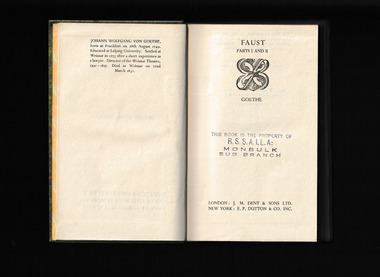
Book, JM Dent and sons, Goethe's Faust : Parts I and II, 1908
... The Faust of early books - as well as the ballads, dramas, movies, and puppet-plays which grew out of them - is irrevocably damned because he prefers human to divine knowledge; "he laid the Holy Scriptures behind the door and under the bench, refused to be called doctor of Theology, but preferred to be styled doctor of Medicine". Plays and comic puppet theatre loosely based on this legend were popular throughout Germany in the 16th century, often reducing Faust and Mephistopheles to figures of vulgar fun. The story ...Faust is the protagonist of a classic German legend. He is a scholar who is highly successful yet dissatisfied with his life, so he makes a pact with the Devil, exchanging his soul for unlimited knowledge and worldly pleasures. The Faust legend has been the basis for many literary, artistic, cinematic, and musical works that have reinterpreted it through the ages. Faust and the adjective Faustian imply a situation in which an ambitious person surrenders moral integrity in order to achieve power and success for a delimited term. The Faust of early books - as well as the ballads, dramas, movies, and puppet-plays which grew out of them - is irrevocably damned because he prefers human to divine knowledge; "he laid the Holy Scriptures behind the door and under the bench, refused to be called doctor of Theology, but preferred to be styled doctor of Medicine". Plays and comic puppet theatre loosely based on this legend were popular throughout Germany in the 16th century, often reducing Faust and Mephistopheles to figures of vulgar fun. The story was popularised in England by Christopher Marlowe, who gave it a classic treatment in his play, The Tragical History of Doctor Faustus. In Goethe's reworking of the story two hundred years later, Faust becomes a dissatisfied intellectual who yearns for "more than earthly meat and drink" in his lifep.424.non-fictionFaust is the protagonist of a classic German legend. He is a scholar who is highly successful yet dissatisfied with his life, so he makes a pact with the Devil, exchanging his soul for unlimited knowledge and worldly pleasures. The Faust legend has been the basis for many literary, artistic, cinematic, and musical works that have reinterpreted it through the ages. Faust and the adjective Faustian imply a situation in which an ambitious person surrenders moral integrity in order to achieve power and success for a delimited term. The Faust of early books - as well as the ballads, dramas, movies, and puppet-plays which grew out of them - is irrevocably damned because he prefers human to divine knowledge; "he laid the Holy Scriptures behind the door and under the bench, refused to be called doctor of Theology, but preferred to be styled doctor of Medicine". Plays and comic puppet theatre loosely based on this legend were popular throughout Germany in the 16th century, often reducing Faust and Mephistopheles to figures of vulgar fun. The story was popularised in England by Christopher Marlowe, who gave it a classic treatment in his play, The Tragical History of Doctor Faustus. In Goethe's reworking of the story two hundred years later, Faust becomes a dissatisfied intellectual who yearns for "more than earthly meat and drink" in his lifegerman literature, german drama -
 Mrs Aeneas Gunn Memorial Library
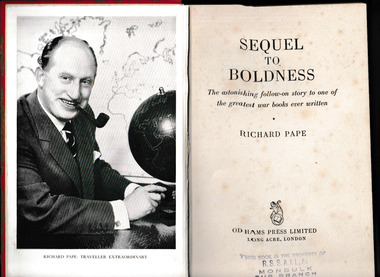
Book, Odhams Press limited, Sequel to Boldness : The astonishing follow-on story to one of the greatest war books ever written, 1959
... Germany Index, ill, p.256. Sequel to Boldness : The astonishing follow-on story to one of the greatest war books ever written Book Odhams Press limited Richard Pape. ...A personal account of prison and escapes in wartime GermanyIndex, ill, p.256.non-fictionA personal account of prison and escapes in wartime Germanyworld war 1939-1945 - personal narratives - britain, world war 1939-1945 - prisoners of war - germany -
![Book - Novel, Lytton, Lord [Edward George Earle Lytton Bulwer-Lytton] [=Baron Lytton, Lord Lytton], The pilgrims of the Rhine : with poem "The ideal world", 1855](/media/collectors/641920217f0478323d8a47a8/items/68785867544da409502f935d/item-media/68788779fc3ae00ce1db08f0/item-fit-380x285.jpg?cb=6) Linton Mechanics Institute and Free Library Collection
Linton Mechanics Institute and Free Library CollectionBook - Novel, Lytton, Lord [Edward George Earle Lytton Bulwer-Lytton] [=Baron Lytton, Lord Lytton], The pilgrims of the Rhine : with poem "The ideal world", 1855
... Books were sold on station platforms for one shilling. George Smith whose name is inscribed across the title page may have been a newsagent and stationer in Linton (died 1900), and was not the George Henry Smith who was Grenville Shire Secretary from 1894. Book plate signed by J. Dodds indicates book was part of original Linton Mechanics' Institute collection, acquired before 1891. Fiction Lord Lytton James Dodds Original collection English literature Folklore A set of loosely connected stories based in German ...A set of loosely connected stories based in German literature,xii, 172 p. : paper-covered, decorative green cardboard cover, cover has text: "THE NEW LIBRARY / PILGRIMS OF THE RHINE / EDWARD BULWER LYTTON / ONE SHILLING / GEO. ROUTLEDGE / 2 FARRINGDON ST." Includes Dedication to the author's brother, Henry Lytton Bulwer, p.iii; Advertisement to the First Edition, p. v.; Preface, p. vii and viii. Table of Contents p. ix-xii. Book shows signs of repair with tape, on spine and between cover and first page. Some loose pages.fictionA set of loosely connected stories based in German literature,fiction, lord lytton, james dodds, original collection, english literature, folklore -
 Flagstaff Hill Maritime Museum and Village
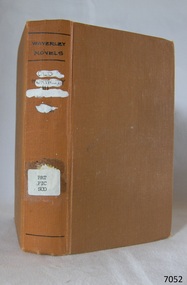
Book - Fictional stories, Sir Walter Scott, Waverley Novels Tales of my Landlord-2 Vol 10, 1836
... German poet, playwright and novelist hailed Scott's Waverley novels as among the world's best literary works. The character Effie Deans is significant to this story because her case drives much of the plot and contrasts sharply with sisters firmness and moral seriousness. Effie also helps Scott explore themes of law, mercy, reputation, class, and the harsh treatment of women in 18th-century society. This work is significant because Scott’s Waverley novels were hugely influential in shaping the historical novel as a genre, and The Heart of Midlothian is often counted among his best works. The Tales of My Landlord books ...The subject volume “Waverley Novels Vol 10” published by Fisher Son & Co (1838) is part of a collected edition of Sir Walter Scott's works, containing stories from the "Tales of My Landlord" series. "Tales of My Landlord" forms a key subset of Scott's Waverley Novels, presented as fictional tales gathered by characters like Peter Pattieson from the landlord of the Wallace “Inn at Gandercleugh”. The series spans multiple books across four sub-series, including “The Black Dwarf” (1707 setting), “Old Mortality” (1679–1689), “The Heart of Midlothian” (1736), “The Bride of Lammermoor” (1709–1711), “A Legend of Montrose” (1644–1645), “Count Robert of Paris” (1097), and “Castle Dangerous” (1307). Vol 46 in the 1838 Fisher edition reprints later entries like “Count Robert of Paris” or “Castle Dangerous” from the fourth series, as these stories originally appeared in Scott's Magnum Opus collected volume editions, the first from 1816. With the influential 48-volume “Magnum Opus” edition from 1829–1833 by Robert Cadell, serving as the basis for later collected published sets like Fisher's. In the “Second Series” is the one that includes The Heart of MidLothian, a major Scott novel set around the 1736 Porteous riots in Edinburgh. The story was presented as a collection of stories gathered from a fictional landlord, edited by the imagined figures Peter Pattieson and Jedediah Cleishbotham. In the second series, the central novel, “The Heart of MidLothian, follows crime, justice, and moral conflict in 18th-century Scotland, especially the case of Effie Deans the fictional character in the novel. She is Jeanie Dean’s younger sister presented as pretty, impulsive, and more socially vulnerable than her sister Jeanie. In the novel, she is accused of killing her illegitimate child, though the truth is more complicated, and Jeanie travels to London to seek a pardon for her. Therefore her story centres on an out-of-wedlock pregnancy, a charge of child murder, and the efforts made to save her life, as well as the social consequences of her trial.Waverley Novels Tales of my Landlord Set-2 Vol 10, Light brown hardcover lettering in black text. Author: Sir Walter Scott Publisher: Fisher Son & Co Date: 1836fictionThe subject volume “Waverley Novels Vol 10” published by Fisher Son & Co (1838) is part of a collected edition of Sir Walter Scott's works, containing stories from the "Tales of My Landlord" series. "Tales of My Landlord" forms a key subset of Scott's Waverley Novels, presented as fictional tales gathered by characters like Peter Pattieson from the landlord of the Wallace “Inn at Gandercleugh”. The series spans multiple books across four sub-series, including “The Black Dwarf” (1707 setting), “Old Mortality” (1679–1689), “The Heart of Midlothian” (1736), “The Bride of Lammermoor” (1709–1711), “A Legend of Montrose” (1644–1645), “Count Robert of Paris” (1097), and “Castle Dangerous” (1307). Vol 46 in the 1838 Fisher edition reprints later entries like “Count Robert of Paris” or “Castle Dangerous” from the fourth series, as these stories originally appeared in Scott's Magnum Opus collected volume editions, the first from 1816. With the influential 48-volume “Magnum Opus” edition from 1829–1833 by Robert Cadell, serving as the basis for later collected published sets like Fisher's. In the “Second Series” is the one that includes The Heart of MidLothian, a major Scott novel set around the 1736 Porteous riots in Edinburgh. The story was presented as a collection of stories gathered from a fictional landlord, edited by the imagined figures Peter Pattieson and Jedediah Cleishbotham. In the second series, the central novel, “The Heart of MidLothian, follows crime, justice, and moral conflict in 18th-century Scotland, especially the case of Effie Deans the fictional character in the novel. She is Jeanie Dean’s younger sister presented as pretty, impulsive, and more socially vulnerable than her sister Jeanie. In the novel, she is accused of killing her illegitimate child, though the truth is more complicated, and Jeanie travels to London to seek a pardon for her. Therefore her story centres on an out-of-wedlock pregnancy, a charge of child murder, and the efforts made to save her life, as well as the social consequences of her trial. warrnambool, shipwrecked-coast, flagstaff-hill, flagstaff-hill-maritime-museum, maritime-museum, shipwreck-coast, flagstaff-hill-maritime-village, shipwrecked-artefact, book, waverley novels vol 46 tales of my landlord, sir walter scott, pattison collection, warrnambool library, warrnambool mechanics’ institute, ralph eric pattison, corangamite regional library service, warrnambool city librarian, mechanics’ institute library, victorian library board, warrnambool books and records, warrnambool children’s library, waverley novels
