
Showing 387 items matching "glass manufacturer."
-
 Coal Creek Community Park & Museum
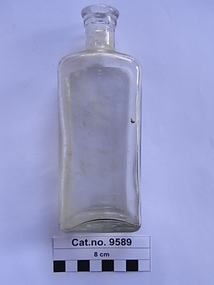
Bottle, glass, c. 1916 - c. 1923
... glass manufacturer....Australian Glass Manufacturers ...Date of manufacture reference style of 'AGM' letters.Rectangular clear glass bottle.Embossed on base illegible numerals / symbols and the letters 'AGM' inside a round circle.glass manufacturer. -
 Coal Creek Community Park & Museum
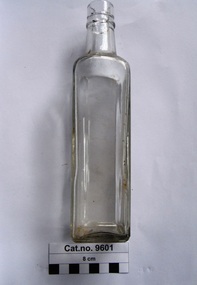
Bottle, glass, c.1916- c.1923
... glass manufacturer....Australian Glass Manufacturers ...Slender clear glass bottle, square in section, embossed text in impressed circle on base. and cartouche shaped panel impressed on one side.'M714' (indistinct) 'AGM' on baseglass manufacturer. -
 Orbost & District Historical Society
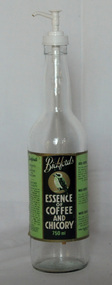
bottle, Felton Grimwade & Bickford, 1920+
... Base - symbols - glass manufacturers 77 X813 14590...Base - symbols - glass manufacturers 77 X813 14590 A tall slim clear glass bottle with a pump dispenser. ...A tall slim clear glass bottle with a pump dispenser. It has a green paper label. It was used for holding coffee and chicory. it has a picture of a kookaburra on the label and recipes for iced, molk and white coffee.Base - symbols - glass manufacturers 77 X813 14590 -
 Coal Creek Community Park & Museum
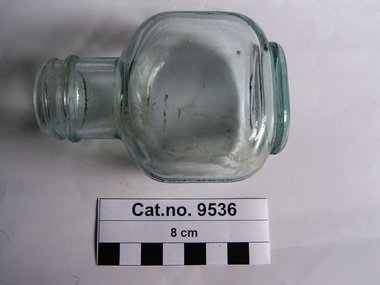
Bottle, glass, 1934 - present
... Australian Glass Manufacturers monogram and 'C345' over 'M' on base. ...Australian Glass Manufacturers monogram and 'C345' over 'M' on base. ...Squat aqua tinted clear glass rectangular bottle with wide neck for screw top. Monogram and numerals embossed on baseAustralian Glass Manufacturers monogram and 'C345' over 'M' on base. -
 Bendigo Historical Society Inc.
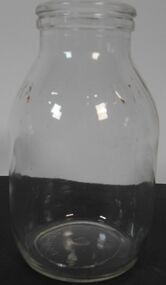
Domestic object - Milk Bottle 1/2 pint
... Half pint glass milk bottle - Australian Glass manufacturer - ...Milk Bottles 1/2 pint bottle AGM No Deposit No return - AGM M18 PBM -227 Half pint glass milk bottle - Australian Glass manufacturer - Domestic object Milk Bottle 1/2 pint ...Half pint glass milk bottle - Australian Glass manufacturer - No Deposit No return - AGM M18 PBM -227milk bottles, 1/2 pint bottle, agm -
 Bendigo Historical Society Inc.
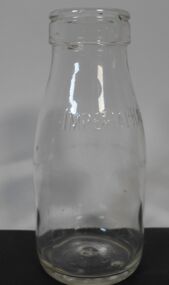
Domestic object - Imperial Half Pint bottle
... Milk Bottle Imperial Half Pint - Australian Glass Manufacturer....Imperial Half Pint AGM Milk Bottle Imperial Half Pint - Base stamped AGM 3 - m 760 Milk Bottle Imperial Half Pint - Australian Glass Manufacturer. Domestic object Imperial Half Pint bottle ...This bottle can be dated to the 1960's-1970's. Before this the bottles had a thick lip to accommodate a cardboard lid whilst this bottle would have had a foil lid. One of the most common uses for this bottle was as part of the Schools Milk Program where crates of milk (1 bottle per student) were delivered to schools each day.Milk Bottle Imperial Half Pint - Australian Glass Manufacturer.Imperial Half Pint - Base stamped AGM 3 - m 760imperial half pint, agm, milk bottle -
 Kew Historical Society Inc
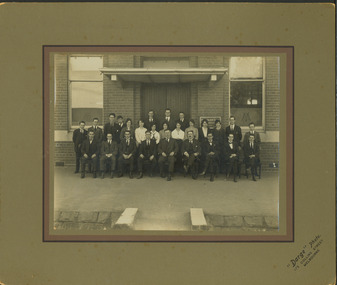
Photograph - Australian Glass Manufacturers, Darge Photographers
... Black and white photograph, mounted on card of a group of workers at Australian Glass Manufacturers in Spotswood. ...Photograph Australian Glass Manufacturers Darge Photographers ...One of a series of photographs and documents relating to her father, Wilfred Charles Woollard, and (his daughter) Jean Margaret Woollard (1916-2002). Wilfred Charles Woollard (1892-1971) was the grandson of William Woollard (1834-1923) and Charlotte Woollard, nee Lott (1828-1902), early settlers in Kew. Wilfred's father and mother were Walter Herbert Woollard (1856-19) and Rosa Anna Woollard, nee Morgan, (1859-1936). Wilfred Woollard's siblings were Walter James Woollard (1882- ), and Arthur Reginald Woollard (1888-1973). Jean Woollard was a member of the Kew Historical Society from 1987. She made a series of donations to the Society in 1987, 1989, 1995, 1997 and 1998.Black and white photograph, mounted on card of a group of workers at Australian Glass Manufacturers in Spotswood. "Wilfred Charles Woollard d.1975 [Back row right]australian glass manufacturers, spotswood (vic) -- industries -
 Coal Creek Community Park & Museum
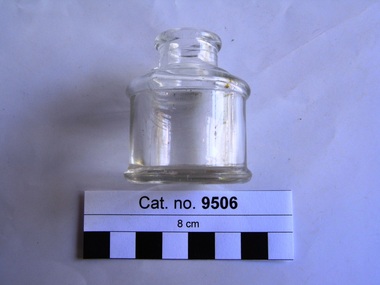
Bottle, glass, Post 1916 - c.1939
... Austrralian Glass Manufacturers monogram on base with embossed illustration of a feather quill....Australian Glass Manufacturers Stephens' Inks (Australia) Pty. ...TROVE : Port Philip Gazette and Settler's Journal (Vic. : 1845 - 1850) Saturday 21 April 1849 p 3 Advertising 'On MONDAY, 23RD INSTANT, (WITHOUT RESERVE,) at 12 o'clock, AN INVOICE of Drawings, Prints, Crayons, Portraits, coloured Figures II M. Ships '"Vindictive," "Victory," "Pomona," ''Vanguard," " Carysfoot," " Magicienne," &c., coloured ; the Channel Fleet, Jenny Lind, and a large quantity of Engravings. Three hundred volumes Books, comprising Novels, History, Poetry, School Books, &c., &c., &c. A large quantity of assorted stationery consisting of boxes of India rubber bands, pens, show cases, fancy wafers, satin note paper. One cask Stephen's Fluid Ink, in pints and half-pints. Terms— Cash'. TROVE : The Argus (Melbourne, Vic. : 1848 - 1957) Tuesday 27 March 1956 p 2 Advertising 'PUBLIC NOTICE TO BOTTLERS, BOTTLE DEALERS. Etc., RE PROPERTY BRANDED BOTTLES WHICH ARE NOT SOLD The undermentioned Firms and Companies,' carrying on businesses at Sydney and elsewhere, HEREBY GIVE NOTICE that all Bottles delivered by them to their customers having: a notification moulded thereon (including bottom) that they are, or remain the property of. the Firms and Companies mentioned below ARE NOT SOLD WITH THE CONTENTS THEREOF BUT REMAIN THE PROPERTY OF SUCH FIRMS AND COMPANIES. Such Bottles are loaned solely for the purpose of enabling the contents to be delivered to purchasers from the said Firms and 'Companies and to all subsequent purchasers of the contents. As soon as the Bottles are emptied of their contents they must not be refilled destroyed, damaged, or used again for any purpose, but must, on demand be delivered up to the Companies or Firms whose names are moulded thereon or to their Accredited Agents: BUTLER & NORMAN PTY. LTD., MANDIBLE STREET. ALEXANDRIA, N.S.W. The remuneration received by Collectors, Dealers, etc.,- is simply an allowance for the safe custody and collection of the Bottles LEGAL ACTION WILL BE TAKEN AGAINST ANY PERSON OR COMPANY VIOLATING THE PROPERTY RIGHTS OF THESE FIRMS OR COMPANIES' BRANDED BOTTLES. ABC Mop Co.......................Stephens Ink (Australia) Pty Ltd.......................'.Squat round clear glass ink bottle with embossed text on heel at base and monogram on base'PROPERTY OF STEPHENS INKS AUSTRALIA LTD' on heel of base. Austrralian Glass Manufacturers monogram on base with embossed illustration of a feather quill.ink bottle -
 Coal Creek Community Park & Museum
Bottle, glass, c.1934-2004
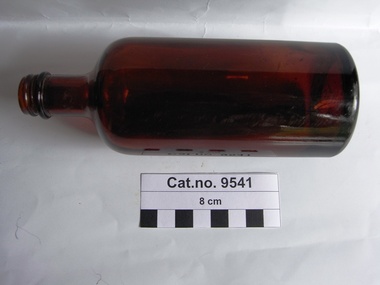
... On base Australian Glass Manufacturers monogram over 'J851' over 'M', 'H4' and the numeral '9' on it side....Australian Glass Manufacturers ...Round in section clear amber glass bottle for screw top. Embossed numeral on side near base, embossed letters, numerals and monogram on base.On side near base '4'. On base Australian Glass Manufacturers monogram over 'J851' over 'M', 'H4' and the numeral '9' on it side.amber glass -
 Kiewa Valley Historical Society
Bottle - Clag
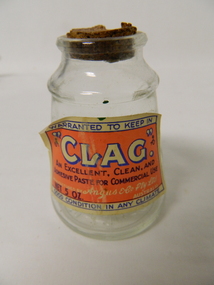
... Ltd around the top / 1156 / glass manufacturers logo '9 above 46' inside a circle then '4' Across the bottom: 'Clag'...Ltd around the top / 1156 / glass manufacturers logo '9 above 46' inside a circle then '4' Across the bottom: 'Clag' Clear glass round bottle gradually tapering from base to opening. ...Clag was used in homes, schools and offices for sticking mostly paper and cardboard together. It was applied with a brush. In later years adhesives became varied with chemicals being combined enabling many different surfaces to be stuck together. Clag is a very basic form of adhesive.Clear glass round bottle gradually tapering from base to opening. It has an orange and white label with blue and white writing and titled 'Clag'. The opening has a partly broken cork in it.Embossed at base: 'Angus & Co. Pty. Ltd around the top / 1156 / glass manufacturers logo '9 above 46' inside a circle then '4' Across the bottom: 'Clag'bottle for clag; adhesive; office equipment -
 Coal Creek Community Park & Museum
Bottle, glass, Australian Glass Manufacturers, 1934-present
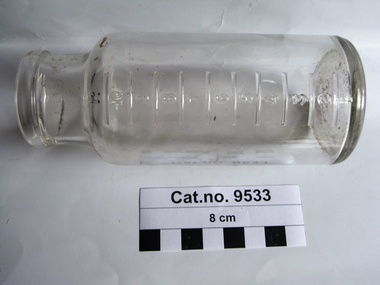
... 'L918','O' under 'M', '731' and AGM monogram of the Australian Glass Manufacturers on base. ...Australian Glass Manufacturers ...Round clear glass bottle with wide neck. Embossed graduations down side with numerals, monogram, numerals and letters on base.Graduations labelled with the numerals '1, 2, 3, 4, 5, 6, 7, 8, 9, 10, 11', on side. 'L918','O' under 'M', '731' and AGM monogram of the Australian Glass Manufacturers on base. -
 Emerald Museum & Nobelius Heritage Park
Container - Free School Milk Bottle, Australian Glass Manufacturers, 1954
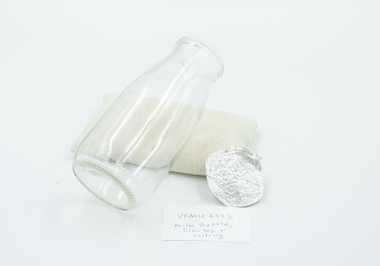
... The year of manufacture can be determined from the '4' by the Australian Glass Manufacturers maker's mark; the context indicates the bottle is from the 1950s, while the 4 indicates it is from a year ending with 4. ...Bottle, Makers Marking: "4 [Australian Glass Manufacturers Logo] M10357" Accompanying Note: Page 1: "I interviewed my Grandma about when she was in / Grade 1 in 1953 and how school has changed to / now in 2018. / That is 65 years difference." ...Container Free School Milk Bottle Australian Glass Manufacturers ...This bottle was manufactured in 1954 and donated alongside an accompanying note which implies it was a free school milk bottle given to a girl in Grade 2 in that year. In 2018 it was shown to the original recipient's grandchild, who wrote the accompanying note, before both were likely donated to us. The year of manufacture can be determined from the '4' by the Australian Glass Manufacturers maker's mark; the context indicates the bottle is from the 1950s, while the 4 indicates it is from a year ending with 4. The free school milk program for children up to 13 was established by the Federal Government in 1950 and implemented in Victoria by 1951. This was not the first free milk program - for example, Victoria had a winter-only program for a time - but was the first to standardise it across Australia. The program continued for two decades until a 1973 report assessed that the program was poor value for money, causing the Whitlam government to abolish it. In the words of Australian Food Timeline: "Recollections of the scheme vary. While some remember it fondly, most seem to have unpleasant memories of milk left to become warm and unappetising. Many claim it put them off milk forever. Personally, I would rank the abolition of school milk as one of the crowning achievements of the Whitlam government."The free milk program in many ways seems to be a remnant of a time where Australian nutrition policy aimed to counter hunger and maximise caloric intake rather than minimise it. This bottle and its accompanying note is an example of how much nutrition policy and educational standards has changed since the 1950s.This item was donated with a printed note which has been included in its record. This main item is a small glass milk bottle with a thread for a screw-on lid (not included). For a little over half its heigh, the walls of the bottle are vertical, before they curve inwards to make the top slightly narrower than the base. The base is stipled, and near the base is a makers mark and a pattern of dots denoting the mould from which the bottle was formed. The printed note is two pages, stapled in the top-left corner, with page numbers handwritten in red in the top right.Bottle, Makers Marking: "4 [Australian Glass Manufacturers Logo] M10357" Accompanying Note: Page 1: "I interviewed my Grandma about when she was in / Grade 1 in 1953 and how school has changed to / now in 2018. / That is 65 years difference." Page 2: "Some other things that have changed. / - Girls could only wear skirts to school, no pants. / - Boys and Girls had different play areas. / - At recess every child was given a bottle of milk to drink. / - Everyone walked to school."education, 1950s -
 Coal Creek Community Park & Museum
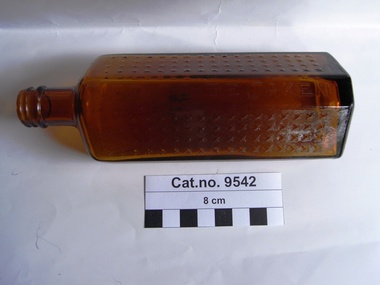
Bottle, glass, c. 1934-2004
... On base Australian Glass manufacturers monogram above 'F1073' with three other indistinct making to the right....Australian Glass Manufacturers ...Tall clear amber glass hexagonal shaped bottle for screw top. Three plain sides, the widest with an embossed numeral near the base, two sides with embossed 'x' stipple pattern either side of a panel with embossed text. Text, numerals and monogram embossed on base. Numeral '7' near base of plain side. Two panels with 'x' stipple pattern, either side of panel with text 'NOT TO BE TAKEN'. On base Australian Glass manufacturers monogram above 'F1073' with three other indistinct making to the right.amber glass -
 Geoffrey Kaye Museum of Anaesthetic History
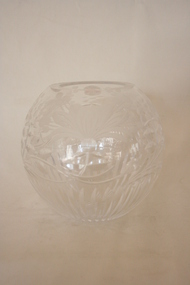
Decorative object - Vase, crystal, Royal Brierley, Unknown
... Royal Brierley is a crystal glass manufacturer based in Brierley Hill, Dudley, West Midlands. ...Royal Brierley is a crystal glass manufacturer based in Brierley Hill, Dudley, West Midlands. ...During a visit to Ulimaroa in 1994, Dr Richard Howell (Coventry, West Midlands), Griselda Cooper (Queen Elizabeth Hospital, Birmingham) and David Greaves (Ashington Hospital, Northumberland) presented the College with a Royal Brierley etched vase. This gift was accepted on behalf of the college by the Registrar, Mrs Joan Sheales. Royal Brierley is a crystal glass manufacturer based in Brierley Hill, Dudley, West Midlands. It is one of the oldest crystal glass manufacturers in England which dates back to the early 17th century.Medium sized round shaped crystal vase, hand made, decorated with etched floral motifs.[LABEL] SINCE 1776 / Royal Brierley / HANDMADE / IN / ENGLANDdr howell, dr cooper, dr greaves, royal brierley -
 City of Moorabbin Historical Society (Operating the Box Cottage Museum)
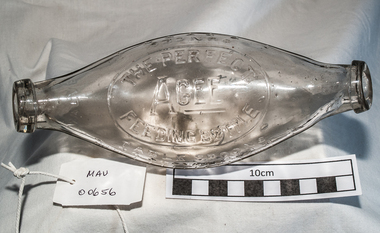
Manufactured Glass, baby feeding bottle, c1950
... Australian Glass Manufacturers produced glass bottles for pharmacy, brewery, dairy and domestic use 1913 – 1970 . ...Australian Glass Manufacturers produced glass bottles for pharmacy, brewery, dairy and domestic use 1913 – 1970 . ...A baby bottle is a bottle with a rubber or latex teat attached so that baby can drink directly from it by sucking on the teat. It is typically used by infants and young children ,when a mother does not breastfeed, to feed infant formula, expressed breast milk or paediatric electrolyte solution. Australian Glass Manufacturers produced glass bottles for pharmacy, brewery, dairy and domestic use 1913 – 1970 . Melbourne Glass Bottle Works Co Pty Ltd Registered in Victoria in 1903 amalgamated with the Waterloo Glass Bottle Works Ltd in 1915 to form Australian Glass Manufacturers Company, Limited. .Melbourne Glass Bottle Works Spotswood 1872- 1970 comprising a complex of buildings constructed between 1880 and 1940, (at Booker Street, Douglas Parade, 2-38 Hudson Road, Raleigh Street and Simcock Avenue, Spotswood ) originally made bottles for druggists Felton Grimwade before it was sold to the State Government by US multinational, OI glass manufacturers. . The Baby feeding bottle has graduated markings in 1- 6 ounces which shows that it was made prior to the introduction of Decimal Currency in Australia 14/2/1966. A clear glass feeding bottle. It is 'banana shaped' and open both ends with graduated measurements - 1-6 ouncesAGEE/ THE PERFECT FEEDING BOTTLE / OUNCES 1-6* bottles, feeding bottles, infants, breastfeeding, moorabbin, bentleigh, ormond cheltenham, glass, australian glass manufacturing company ltd, decimal currency, imperial measurements, ounces, milk, dairy, baby formulae, -
 City of Moorabbin Historical Society (Operating the Box Cottage Museum)
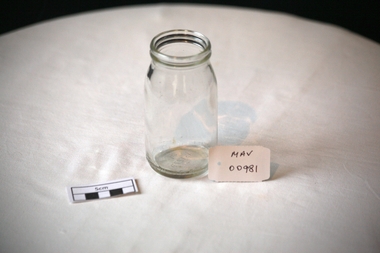
Manufactured Glass, jar, 'Pickle', mid 20thC
... The former glassworks was established in 1890 and originally made bottles for pharmacists Felton Grimwade before it was sold to the State Government by US multinational, OI glass manufacturers. Australian Consolidated Industries Ltd was formed in 1939 when Australian Glass Manufacturers Co Ltd changed it's name to reflect diversification into building products. 1982 a new holding company was formed and the company's name was changed to A.C.I. ...The former glassworks was established in 1890 and originally made bottles for pharmacists Felton Grimwade before it was sold to the State Government by US multinational, OI glass manufacturers. Australian Consolidated Industries Ltd was formed in 1939 when Australian Glass Manufacturers Co Ltd changed it's name to reflect diversification into building products. 1982 a new holding company was formed and the company's name was changed to A.C.I. ...In 1872 Felton and Grimwade established the Melbourne Glass Bottle Works which grew into Australian Consolidated Industries (ACI). .Melbourne Glass Bottle Works Co Pty Ltd (1903 - 1915) Registered in Victoria in 1903 the company amalgamated with the Waterloo Glass Bottle Works Ltd in 1915 to form Australian Glass Manufacturers Company, Limited. Melbourne Glass Bottle Works Spotswood 1872- 1915 The Melbourne Glass Bottle Works (former), comprising a complex of buildings constructed between 1880 and 1940, at Booker Street, Douglas Parade, 2-38 Hudson Road, Raleigh Street and Simcock Avenue, Spotswood. The former glassworks was established in 1890 and originally made bottles for pharmacists Felton Grimwade before it was sold to the State Government by US multinational, OI glass manufacturers. Australian Consolidated Industries Ltd was formed in 1939 when Australian Glass Manufacturers Co Ltd changed it's name to reflect diversification into building products. 1982 a new holding company was formed and the company's name was changed to A.C.I. International Ltd. A clear glass jar made for the Australian Pickle Co. Pty. Ltd.Around base; THIS BOTTLE ALWAYS REMAINS THE PROPERTY OF THE AUSTRALIAN PICKLE CO. PTY. LTD. Base; (makers mark) / IS 1279 / 3 melbourne, early settlers, market gardeners, moorabbin, bentleigh, cheltenham, manufactured glass, austalian pickle co.pty.ltd, australian glass manufacturing company ltd, felton grimwade pty ltd, pharmacists, bottles, melbourne glass bottle works, -
 City of Moorabbin Historical Society (Operating the Box Cottage Museum)
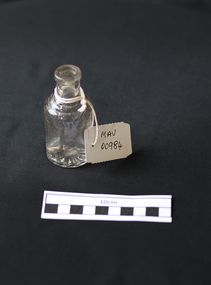
Glass hand blown, bottle with cork stopper, 20thC
... The former glassworks was established in 1890 and originally made bottles for pharmacists Felton Grimwade before it was sold to the State Government by US multinational, OI glass manufacturers ...Melbourne Glass Bottle Works Co Pty Ltd (1903 - 1915) Registered in Victoria in 1903 the company amalgamated with the Waterloo Glass Bottle Works Ltd in 1915 to form Australian Glass Manufacturers Company, Limited. Melbourne Glass Bottle Works Spotswood 1872- 1915 The Melbourne Glass Bottle Works (former), comprising a complex of buildings constructed between 1880 and 1940, at Booker Street, Douglas Parade, 2-38 Hudson Road, Raleigh Street and Simcock Avenue, Spotswood. ...Melbourne Glass Bottle Works Co Pty Ltd (1903 - 1915) Registered in Victoria in 1903 the company amalgamated with the Waterloo Glass Bottle Works Ltd in 1915 to form Australian Glass Manufacturers Company, Limited. Melbourne Glass Bottle Works Spotswood 1872- 1915 The Melbourne Glass Bottle Works (former), comprising a complex of buildings constructed between 1880 and 1940, at Booker Street, Douglas Parade, 2-38 Hudson Road, Raleigh Street and Simcock Avenue, Spotswood. The former glassworks was established in 1890 and originally made bottles for pharmacists Felton Grimwade before it was sold to the State Government by US multinational, OI glass manufacturers A small clear glass bottle with a piece of the cork stopper* pharmacy, medicines, asthma, respiratory diseases, early settlers, market gardeners, moorabbin, bentleigh, cheltenham, glass bottles, melbourne glass bottle works. felton grimwade, spotswood, -
 Sunshine and District Historical Society Incorporated
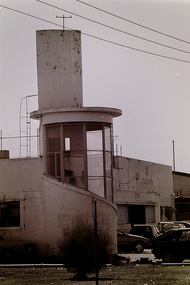
Photograph - Pilkingtons 234 Ballarat Road Braybrook 1991 Photographs, Adam Ellwood, 4th February 1991
... Although Pilkington (later Pilkington ACI) is a global glass manufacturer dating back to the 19th century, the Braybrook factory itself dates to 1962. ...Although Pilkington (later Pilkington ACI) is a global glass manufacturer dating back to the 19th century, the Braybrook factory itself dates to 1962. ...Although Pilkington (later Pilkington ACI) is a global glass manufacturer dating back to the 19th century, the Braybrook factory itself dates to 1962. The factory was built during a major wave of industrial expansion in Melbourne’s inner‑west, a period when Braybrook shifted from “noxious trades” to modern manufacturing.The Pilkington building is one of the most architecturally distinctive and historically important industrial sites in Melbourne’s west due to its unusual and elaborate architectural design, combining strong horizontal lines, stepped brick parapet, steel hopper windows, circular facade and raised concrete framing.Pilkingtons Ballarat Rd - Bruce Harding & John Brezovel pilkingtons, ballarat road, braybrook -
 Federation University Historical Collection
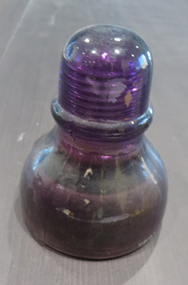
Equipment - Object, Glass insulators
... Australian Glass Manufacturers (A.G.M.) had developed a toughened type of glass very similar to Pyrex glass. ...Australian Glass Manufacturers (A.G.M.) had developed a toughened type of glass very similar to Pyrex glass. ...This insulator was used on phone wires. Insulators were originally designed to keep the wires linking telegraphs and telephones insulated from the wooden poles that held them aloft. Prior to 1925, Australia relied solely on insulators imported from other countries. Glass insulators were first manufactured in Australia in c. 1926 by Australian Glass Manufacturers. Their factory was, and still is, located on South Dowling Road in Sydney. Australian Glass Manufacturers (A.G.M.) had developed a toughened type of glass very similar to Pyrex glass. Since the Pyrex name could not be used due to trademark infringements, they called their glass AGEE for Australian Glass. Many fruit jars, insulators, pie dishes and other glass items were manufactured with this AGEE trademark during the 1926 to 1940 period.Glass insulators are rapidly becoming a thing of the past in Australia with open-wire communication lines rarely existing near metropolitan areas. The remaining open wire lines are being abandoned and dismantled everywhere with very few insulators being saved as interest in them in Australia is quite limited. (ref Australian Insulators web-site). This item is an example of a piece of equipment which has been superceded.Purple glass insulator by Ageeinsulator, electricity, agee -
 Orbost & District Historical Society
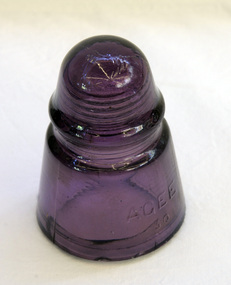
insulator, 1926 to 1940 (probably 1930)
... Australian Glass Manufacturers (A.G.M.) had developed a toughened type of glass very similar to Pyrex glass. ...Australian Glass Manufacturers (A.G.M.) had developed a toughened type of glass very similar to Pyrex glass. ...This insulator was used on phone wires. Insulators were originally designed to keep the wires linking telegraphs and telephones insulated from the wooden poles that held them aloft. Prior to 1925, Australia relied solely on insulators imported from other countries. Glass insulators were first manufactured in Australia in c. 1926 by Australian Glass Manufacturers. Their factory was, and still is, located on South Dowling Road in Sydney. Australian Glass Manufacturers (A.G.M.) had developed a toughened type of glass very similar to Pyrex glass. Since the Pyrex name could not be used due to trademark infringements, they called their glass AGEE for Australian Glass. Many fruit jars, insulators, pie dishes and other glass items were manufactured with this AGEE trademark during the 1926 to 1940 period.Glass insulators are rapidly becoming a thing of the past in Australia with open-wire communication lines rarely existing near metropolitan areas. The remaining open wire lines are being abandoned and dismantled everywhere with very few insulators being saved as interest in them in Australia is quite limited. (ref Australian Insulators web-site). This item is an example of a piece of equipment which has been superceded.A glass telegraph line insulator of double umbrella shape. Glass is coloured purple - AGEE 30 Insulator. It is a tapered cone of thick glass. The inside top is threaded for screwing onto the metal piece on a wooden cross bar.Embossed on outside of bell: "AGEE 30"insulator-glass agee a.g.m. communications telegraphy -
 Friends of Westgarthtown
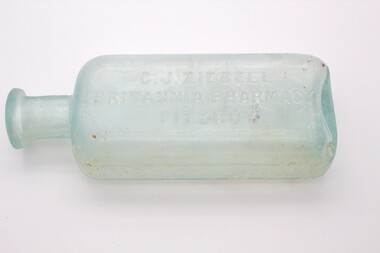
Container - Medicine bottle, c.1900
... U.S.A. 1892”, likely referring to Whitall Tatum & Co., an American glass manufacturer known for producing pharmaceutical and chemical bottles. ...U.S.A. 1892”, likely referring to Whitall Tatum & Co., an American glass manufacturer known for producing pharmaceutical and chemical bottles. ...Small medicine glass bottle branded "C.J. Ziebell, Britannia Pharmacy". The bottle is associated with Charles Johann Ziebell, a pharmaceutical chemist who, after studying in Germany, operated the Britannia Pharmacy in Brunswick Street, Fitzroy, for the entirety of his working life. During this period, Brunswick Street was home to numerous pharmacies, shops and medical practices. Charles was reportedly the first chemist in Australia to manufacture hydrogen peroxide, along with developing a range of other pharmaceutical and beauty products. Hydrogen peroxide was produced in a building located behind the pharmacy. Family history suggests that a large chemical company later acquired or appropriated Charles's formula. Believing he had been unfairly treated, and amidst strong anti-German sentiment during the early twentieth century, Charles subsequently took his own life.Small clear medicine glass bottle branded "C.J. Ziebell, Britannia Pharmacy". The base is embossed “W.T. & Co. U.S.A. 1892”, likely referring to Whitall Tatum & Co., an American glass manufacturer known for producing pharmaceutical and chemical bottles. The 1892 date may relate to a patent or mould design rather than the exact date of manufacture.W T & Co USA 1892 -
 Kiewa Valley Historical Society
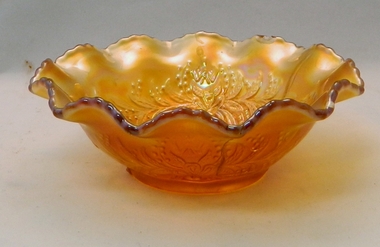
Bowl Carnival Glass, circa early 1900s
... Initially this type of bowl was reintroduced(from Roman times) into the 19th and 20th Century (modern age) by a United States glass manufacturer.....Initially this type of bowl was reintroduced(from Roman times) into the 19th and 20th Century (modern age) by a United States glass manufacturer.. Bowl Carnival Glass Crown Crystal Glass Co Ltd ...This particular glass bowl was a favoured ornamental type room "brightener" in the early 1900's. Although referred to as a "nappy bowl" this bowl has not the capacity for nappies but for nappy pins. This was a period in time before the nappy ties and instant nappy covers.This has relevance as an object that was both practical for the early 1900's nappy changes and provided some visual relief for any "drab" household ambience, especial in rural homes. The early to mid 1900's, rural households, on the whole, were more practical and not designed for entertainment. This reflected the more serious nature which were governed by aspects of providing a living from the land and unreliable weather. By placing visually attractive ornaments within various rooms (lounge/living rooms) the transformation from a stark external environment to a more warm and friendly area was achieved. This dark amber (Marigold) carnival glass 5 inch nappy bowl has a Kookaburra press molded base and wattle blossom with waratah and flannel flower sides. The bowl has a twelve scolloped rippled rim. Initially this type of bowl was reintroduced(from Roman times) into the 19th and 20th Century (modern age) by a United States glass manufacturer..Manufacturer's mark at the base illegible nappy bowls, nappy pin holders, visual mood changing ornaments -
 City of Moorabbin Historical Society (Operating the Box Cottage Museum)
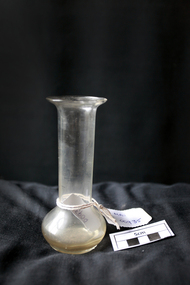
Manufactured Glass, Pharmacy beaker, 20thC
... The glassworks was established in 1890 and originally made bottles for pharmacists Felton Grimwade before it was sold to the State Government by US multinational, OI glass manufacturers. ...The glassworks was established in 1890 and originally made bottles for pharmacists Felton Grimwade before it was sold to the State Government by US multinational, OI glass manufacturers. melbourne glass bottle works spotswood melbourne pharmacy industrial glass cheltenham moorabbin A pharmaceutical clear glass beaker with capacity 300ml Manufactured Glass, Pharmacy beaker Melbourne Glass Bottle Works ...Melbourne Glass Bottle Works, Spotswood, Victoria 1872- 1915 comprising a complex of buildings constructed between 1880 and 1940, at Booker Street, Douglas Parade, 2-38 Hudson Road, Raleigh Street and Simcock Avenue, Spotswood. The glassworks was established in 1890 and originally made bottles for pharmacists Felton Grimwade before it was sold to the State Government by US multinational, OI glass manufacturers. A pharmaceutical clear glass beaker with capacity 300mlmelbourne glass bottle works, spotswood melbourne, pharmacy, industrial glass, cheltenham, moorabbin -
 City of Moorabbin Historical Society (Operating the Box Cottage Museum)
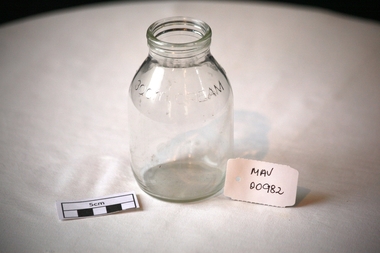
Manufactured Glass, bottle cream 300ml, post 1966
... The former glassworks was established in 1890 and originally made bottles for pharmacists Felton Grimwade before it was sold to the State Government by US multinational, OI glass manufacturers Australian Consolidated Industries Ltd was formed in 1939 when Australian Glass Manufacturers Co Ltd changed it's name to reflect diversification into building products. 1982 a new holding company was formed and the company's name was changed to A.C.I. ...The former glassworks was established in 1890 and originally made bottles for pharmacists Felton Grimwade before it was sold to the State Government by US multinational, OI glass manufacturers Australian Consolidated Industries Ltd was formed in 1939 when Australian Glass Manufacturers Co Ltd changed it's name to reflect diversification into building products. 1982 a new holding company was formed and the company's name was changed to A.C.I. ...General use of milk bottles is usually associated with the 20th century , with occasional late 19th century. Initially, milk was delivered in cans stacked upright in a wagon. At each stop, someone, usually the wife of the house, would bring a pitcher or a pail to the wagon, and the milk man would ladle out the desired amount of milk. Needless to say, this practice was hazardous and unhealthy. The New York State Tuberculosis Association condemned the practice of selling “loose milk,” still being conducted in New York City in 1922, as a major cause for the spread of tuberculosis (Glass Container1922:8). It is probable that the delivery of milk in glass containers became universal shortly thereafter Melbourne Glass Bottle Works Co Pty Ltd (1903 - 1915) Registered in Victoria in 1903 the company amalgamated with the Waterloo Glass Bottle Works Ltd in 1915 to form Australian Glass Manufacturers Company, Limited. Melbourne Glass Bottle Works Spotswood 1872- 1915 The Melbourne Glass Bottle Works (former), comprising a complex of buildings constructed between 1880 and 1940, at Booker Street, Douglas Parade, 2-38 Hudson Road, Raleigh Street and Simcock Avenue, Spotswood. The former glassworks was established in 1890 and originally made bottles for pharmacists Felton Grimwade before it was sold to the State Government by US multinational, OI glass manufacturers Australian Consolidated Industries Ltd was formed in 1939 when Australian Glass Manufacturers Co Ltd changed it's name to reflect diversification into building products. 1982 a new holding company was formed and the company's name was changed to A.C.I. International Ltd. Metric Measure was introduced in Australia 14/2/1966 A clear glass, cream bottle 300ml Around Shoulder : NO DEPOSIT NO RETURN 300ML CREAM Around Base: (makers stamp) M 10116 38 melbourne, early settlers, market gardeners, moorabbin, bentleigh, cheltenham, manufactured glass, milk bottles, dairy farmers, dairies, decimalisation in australia 1966, metric measures, melbourne glass bottle works, spotswood, felton grimwade pty ltd, pharmacists, -
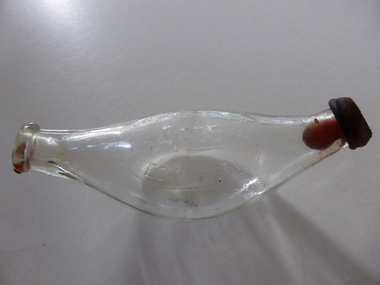 Warrnambool and District Historical Society Inc.
Bottle, The Perfect Agee Feeding Bottle, Mid 20th century
... This baby’s feeding bottle was made by Agee (Australian Glass Manufacturers) and marketed by the Crown Crystal Glass Company. ...This baby’s feeding bottle was made by Agee (Australian Glass Manufacturers) and marketed by the Crown Crystal Glass Company. ...This baby’s feeding bottle was made by Agee (Australian Glass Manufacturers) and marketed by the Crown Crystal Glass Company. It is made of pyrex which is a brand of glass first produced by Corning Inc. of America in 1908. Pyrex is a clear low-thermal-expansion borosilicate glass used for laboratory glassware and kitchenware. The use of pyrex bottles became more prevalent in Australia in the second half of the 20th century and baby’s bottles made of pyrex were popular as they were easily sterilised in the home environment. This baby’s bottle has no known local provenance but it is retained because it is a good example of the advancement in infant health and welfare over the past 80 years. This is a baby’s feeding bottle made of glass (pyrex). The body of the bottle is hexagonal-shaped (circular with rounded edges). It has a circular-shaped neck and an open top with a moulded glass around it. The bottle has no feeding nipple or stopper. There are measurement marks on the side of the bottle up to 8 ounces. ‘The Ideal Agee Pyrex Feeder’ ‘AGM 1S 1561 6’ infant welfare, history of warrnambool -
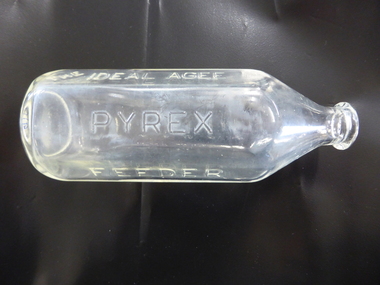 Warrnambool and District Historical Society Inc.
Bottle, Feeder Bottle Pyrex, Mid 20th century
... This baby’s feeding bottle was made by Agee (Australian Glass Manufacturers) and marketed by the Crown Crystal Glass Company. ...This baby’s feeding bottle was made by Agee (Australian Glass Manufacturers) and marketed by the Crown Crystal Glass Company. ...This baby’s feeding bottle was made by Agee (Australian Glass Manufacturers) and marketed by the Crown Crystal Glass Company. It is made of pyrex which is a brand of glass first produced by Corning Inc. of America in 1908. Pyrex is a clear low-thermal-expansion borosilicate glass used for laboratory glassware and kitchenware. The use of pyrex bottles became more prevalent in Australia in the second half of the 20th century and baby’s bottles made of pyrex were popular as they were easily sterilised in the home environment. This baby’s bottle has no known local provenance but it is retained because it is a good example of the advancement in infant health and welfare over the past 80 years. This is a baby’s feeding bottle made of glass (pyrex). The body of the bottle is hexagonal-shaped (circular with rounded edges). It has a circular-shaped neck and an open top with a moulded glass around it. The bottle has no feeding nipple or stopper. There are measurement marks on the side of the bottle up to 8 ounces.‘The Ideal Agee Pyrex Feeder’ ‘AGM 1S 1561 6’ infant welfare, history of warrnambool -
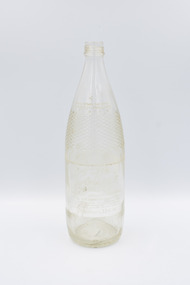 Emerald Museum & Nobelius Heritage Park
Container - "Cottee's" Large Bottle, Australian Glass Manufacturers, 1938
... Based on the makers mark, this bottle was manufactured in 1938 by Australian Glass Manufacturers (AGM)....Container "Cottee's" Large Bottle Australian Glass Manufacturers ...Cottee's is a longstanding Australian food and beverage brand, in operation in the dairy industry since the early 20th century. Passiona - a sparkling passionfruit drink - has been produced by the company for almost as long, after being invented by Spencer Cottee in the earlier 1920s and fully introduced to markets by 1927. The "authorised bottlers" mentioned on the label included a number of now defunct Australian bottlers from across the nation. Applied Colour Labels were in heavy use from the mid-1930s. Based on the makers mark, this bottle was manufactured in 1938 by Australian Glass Manufacturers (AGM).This is an older style of bottle that is no longer in use, creating a useful record of past manufacturing and style preferences. This item is a large 32 fluid ounce (~950 ml) glass bottle adorned with nutritional advice and Cottee's labelling. The glass forms a cylinder for half of the bottle's height, where it is joined to the upper part of the bottle which curves inward to a screw top. In the upper half of the bottle, there is an approximately 52 millimetre high strip with a textured relief pattern of small ovals, arranged to circumnavigate the bottle. Writing on the sides is in white Applied Colour Label - although it is possible the original colour may have faded. The writing at the bottom of the bottle is in relief.Reverse: High: "PLEASE RETURN THIS BOTTLE / AND RECEIVE YOUR REFUND" Mid: "Cottee's / TRADE MARK REG'D. / BOTTLED BY / PASSIONA BOTTLING COMPANIES / AND AUTHORISED BOTTLERS / PRESERVATIVE ADDED. ARTIFICIALLY COLOURED / THIS FOOD CONTAINS SACCHARIN, A NON-NUTRITIVE / SWEETENING SUBSTANCE AND ADDED SUGAR. NET CONTENTS 32 FL. OZ." Obverse: "Cottee's / SPARKLING DRINKS / SO REFRESHING!" Bottom: "THIS DESIGN REMAINS / THE / PROPERTY OF / COTTEE'S LTD"1930s -
 City of Kingston
Photograph - Colour, 29 January 1993
... State primary and high schools were opened in 1958 on land in Breeze Street that was once occupied by The Australian Glass Manufacturers. Immediately east of the school sites is the Patterson River Golf Club. ...State primary and high schools were opened in 1958 on land in Breeze Street that was once occupied by The Australian Glass Manufacturers. Immediately east of the school sites is the Patterson River Golf Club. ...Bonbeach is a small beachside suburb located between Chelsea and Carrum. The station was opened in 1926 and was the last to be established in the group from Aspendale to Carrum. Urban growth began after World War II. State primary and high schools were opened in 1958 on land in Breeze Street that was once occupied by The Australian Glass Manufacturers. Immediately east of the school sites is the Patterson River Golf Club. The Bonbeach sports reserve has five ovals and is home to the Bonbeach football and baseball clubs. The suburb borders the Edithvale-Seaford Wetlands which is the remnant site of the Carrum Carrum swamp, once the home of the Bunurong people.Bonbeach was originally a seaside destination for holidaymakers and the housing comprised of holiday homes and gradually more permanent residents. It was not until 1926 that Bonbeach had its own railway station. From 1906 until the late 1940s sand was quarried on the east side of the railway line and used in the manufacture of glass. The Australian Glass Manufacturers sold this land in residential blocks and Bonbeach's permanent population spread from the coastal strip across to the other side of the railway line. Laminated colour aerial photograph of the suburb of Bonbeach and also the southern section of neighbouring Chelsea within the City of Kingston. The extent of this 1993 aerial image includes: Top left - Maury Road at the south end of the Chelsea shopping Centre; Top right - Scotch Parade Chelsea Bottom left - Monica Avenue in Bonbeach; Bottom right - Patterson River Golf Club. Landmarks include St Joseph's Church and Primary School, Chelsea Primary School, Bonbeach Station, Bonbeach Fotball Club sports playing fields and Bonbeach Life Saving Club. The Edithvale Wetlands is featured prominently to the right-hand side of the image. Black typed writing on white adhesive label: No. 6662 Black typed writing on white adhesive label: 26E/6662, 29/1/93, 4.25 pm Black typed writing on white adhesive label: 29-1-93 Black typed writing on white adhesive label: P000109 Circular yellow adhesive sticker bonbeach, chelsea -
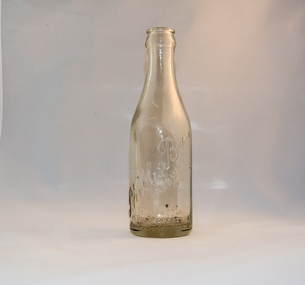 Kiewa Valley Historical Society
Bottle Ginger Beer, circa mid to late 1900's
... Australian Glass Manufacturers and the Melbourne Glass Bottle Works Co. were the main suppliers for the Victorian State....Australian Glass Manufacturers and the Melbourne Glass Bottle Works Co. were the main suppliers for the Victorian State. ...This glass ginger beer bottle was manufactured and used early to late 1900's, until the time that cheaper containers were invented(plastic bottles). This bottle was so constructed to be easily moved within the ginger beer processing plants from the brewing vats/holding tanks to the final corking/sealing of the bottles for eventual distribution. From 1990s the bottle slowly became phased out of production however boutique suppliers still preferred thick glass to contain any explosive action. Two major glass bottle works companies, e.g. Australian Glass Manufacturers and the Melbourne Glass Bottle Works Co. were the main suppliers for the Victorian State.In the period when this bottle was manufactured and used the major ginger beer brewing plants for the whole of Victoria were located in Melbourne because this was where its greatest consumer base was there and most rural areas were supplied by domestic sources (mother brewing ginger beer for the children). The Kiewa Valley and its region was one rural area which until road invrastructure was enhance covered the ginger beer thirst by local family production. As the population expanded considerably in the late 1940's (SECV Hydro Scheme) with a greater demand for "soft" drinks" being established supplies from larger towns and cities were call for. Each bottle was "branded" during manufacturing to show the contents were from a reputable supplier (PHIBBS Bros) and where it originated from. These bottles were recycled by the manufacturer as a way to cut production costs. This method of recycling the bottles back to the specific manufacturer has (except for South Australia)been overtaken by a no cost recycling collection by councils (funded by their communities). This method by passes the user cost principle as the bottles are processed as non generic. The uneconomical "on cost" which was replaced by the "throw away" less costly plastic containers however did not provide the keen domestic brewer of the "beer" with a reusable bottle.This heavy gauged glass bottle (Ginger Beer) has a rim and a distinctive head at the top. This head has been manufactured to facilitate the movement of the bottled along the production line. The method of pouring ginger beer into the bottle has been part of the "production line" process of automation. This bottle has a capacity to hold 250ml of ginger beer and is made from "clear" glass. The marority of ginger beer bottles produced in this time frame where made with a "green" tint in them.This tinting helped reduce the sunlight effecting the contentsAround the bottom side of the bottle and blown into the glass is "THIS BOTTLE IS THE PROPERTY OF PHIBBS BROS, ALBURY" above this, in "running script" and sloping up from left to right is "Phibbs Bros" and underneath parallel to it "ALBURY". On the base of the bottle is molded a big "L 289" underneath this "M" and below this "AGM".ginger beer bottle, soft drink bottles, cordial bottles -
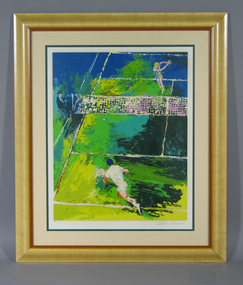 Tennis Australia
Print, 1980
... Parts 2 and 3 are enclosed in envelope attached to frame backing. Glass manufacturer's sticker on backing, stating that frame is glazed with UV preservation glass. ...Parts 2 and 3 are enclosed in envelope attached to frame backing. Glass manufacturer's sticker on backing, stating that frame is glazed with UV preservation glass. ...Print: 'Blood Tennis'. Three part object: (1/3) framed artist's proof of serigraph entitled 'Blood Tennis' depicting a match between two players, with an umpire sitting at the net. (2/3) Certificate of authenticity from dealer; and (3/3) Certificate of Authenticity from publisher. Parts 2 and 3 are enclosed in envelope attached to frame backing. Glass manufacturer's sticker on backing, stating that frame is glazed with UV preservation glass. Number '176' handwritten on backing in black marker. Materials: Ink, Paper, Wood, Cardboard, Metal, Felttennis
