
Showing 38 items matching "glides"
-
 Whitehorse Historical Society Inc.
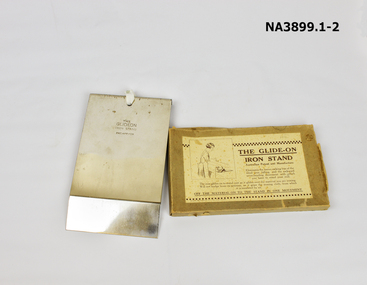
Domestic object - Trivet for Flat Iron
... The Glide On Iron stand made of mild steel which has been chromed stamped 'The Glide On Iron Stand Pat app. for' with the original box....The Glide On Iron Stand...Purchased by donor from the collection of the 'Cobweb Antiques' owned by Ken and Faye Turner domestic items irons The Glide On Iron Stand The Glide On Iron stand made of mild steel which has been chromed stamped 'The Glide On Iron Stand Pat app. for' with the original box. ...Purchased by donor from the collection of the 'Cobweb Antiques' owned by Ken and Faye TurnerThe Glide On Iron stand made of mild steel which has been chromed stamped 'The Glide On Iron Stand Pat app. for' with the original box.The Glide On Iron Standdomestic items, irons -
 Kew Historical Society Inc
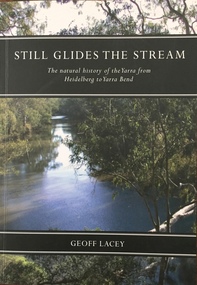
Book, Australian Scholarly Publishing Pty Ltd, Still Glides the Stream: The natural history of the Yarra from Heidelberg to Yarra Bend, 2004
... Still Glides the Stream: The natural history of the Yarra from Heidelberg to Yarra Bend.... : ill., maps ; 22 cm Still Glides the Stream: The natural history of the Yarra from Heidelberg to Yarra Bend Book Australian Scholarly Publishing Pty Ltd Geoff Lacey ...Natural History of Yarraxii, 281 p. : ill., maps ; 22 cmnon-fictionNatural History of Yarrayarra river - natural history, geoff lacey -
 Victorian Harness Racing Heritage Collection at Lord's Raceway Bendigo
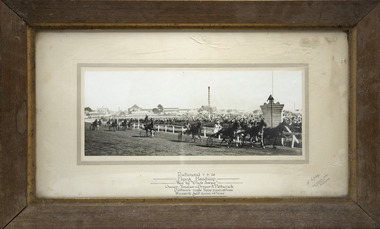
Photograph - Wooden framed photo finish, A Copley, Glide Away, 7 May 1928
... Glide Away...Glide Away owned, trained and driven by A Petherick. ...Top line: Richmond / 7/5/28 Second line: Flying Handicap Third line: Won by Glide Away Fourth line: Owner Trainer & Driver A Petherick Fifth line: Distance 1 mile / Time 2 min 18 3/4 sec Bottom right corner: A Copley, 434a Flinders Street Near William St Melbourne...Glide Away won the Flying Handicap at Richmond on the 7 May 1928. ...Glide Away won the Flying Handicap at Richmond on the 7 May 1928. Glide Away owned, trained and driven by A Petherick. One large black and white photograph in a black and gold frame. Top line: Richmond / 7/5/28 Second line: Flying Handicap Third line: Won by Glide Away Fourth line: Owner Trainer & Driver A Petherick Fifth line: Distance 1 mile / Time 2 min 18 3/4 sec Bottom right corner: A Copley, 434a Flinders Street Near William St Melbournehorses, race, winner, driver, trainer, owner, a copley, richmond, glide away, 1928, a petherick, alf petherick -
 Orbost & District Historical Society
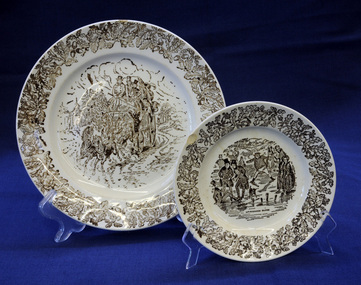
plates
... One small Broadhurst Dickens Series side plate Mr Pickwick Glides One large dinner plate. Both have white background and oak tree branches as border. ...Front of smaller plate - Mr Pickwick Glides Front of larger plate - My first fall in life - David Copperfield Back of both "Ironstone Broadhurst Staffordshire England. ...One small Broadhurst Dickens Series side plate Mr Pickwick Glides One large dinner plate. Both have white background and oak tree branches as border. ...One small Broadhurst Dickens Series side plate Mr Pickwick Glides One large dinner plate. Both have white background and oak tree branches as border. Small plate illustration in centre is of people sliding on ice. Large plate centre illustration is David Copperfield + friends on a horse buggy riding bthrough town.Front of smaller plate - Mr Pickwick Glides Front of larger plate - My first fall in life - David Copperfield Back of both "Ironstone Broadhurst Staffordshire England. Dickens series underglaze... plates pottery broadhurst domestic-items china -
 Bendigo Military Museum
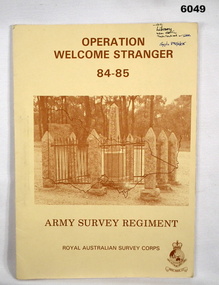
Administrative record - Army Survey Regiment - Operation Welcome Stranger - Operation Report
... An A4 booklet sepia cardboard cover, brown text Survey Corps Badge, Photo of " Welcome Stranger Monument", outline shape of Victoria, glide on Arnos fastener binder....Covering 1:250,000 map areas SJ54-4 St Arnaud, SJ 55-1 Bendigo, SJ54-8 Ballarat, SJ %%-2 Wangaratta Royal Australian Survey Corps RASvy Fortuna Army Survey Regiment Army Svy Regt ASR An A4 booklet sepia cardboard cover, brown text Survey Corps Badge, Photo of " Welcome Stranger Monument", outline shape of Victoria, glide on Arnos fastener binder. Army Survey Regiment - Operation Welcome Stranger - Operation Report Administrative record Army Survey Regiment - Operation Welcome Stranger - Operation Report ...Operation Report of Mapping areas in central Victoria in 29 Mar 84 - 6 Mar 85. Covering 1:250,000 map areas SJ54-4 St Arnaud, SJ 55-1 Bendigo, SJ54-8 Ballarat, SJ %%-2 WangarattaAn A4 booklet sepia cardboard cover, brown text Survey Corps Badge, Photo of " Welcome Stranger Monument", outline shape of Victoria, glide on Arnos fastener binder.royal australian survey corps, rasvy, fortuna, army survey regiment, army svy regt, asr -
 Whitehorse Historical Society Inc.
Letter - Correspondence, Mason's Paddock, 1937
... Letter from Holmes & Glide, Auctioneer acting as executor of Estate, Late J. ...Letter from Holmes & Glide, Auctioneer acting as executor of Estate, Late J. ...Letter from Holmes & Glide, Auctioneer acting as executor of Estate, Late J. Payne to Shire of Blackburn and Mitcham noting interest in purchasing Lot 5 Mason's Paddock, Blackburn Road, Blackburn.Letter from Holmes & Glide, Auctioneer acting as executor of Estate, Late J. Payne to Shire of Blackburn and Mitcham noting interest in purchasing Lot 5 Mason's Paddock, Blackburn Road, Blackburn.Letter from Holmes & Glide, Auctioneer acting as executor of Estate, Late J. Payne to Shire of Blackburn and Mitcham noting interest in purchasing Lot 5 Mason's Paddock, Blackburn Road, Blackburn.blackburn road, blackburn, masons paddock, shire of blackburn and mitcham, payne, j -
 Whitehorse Historical Society Inc.
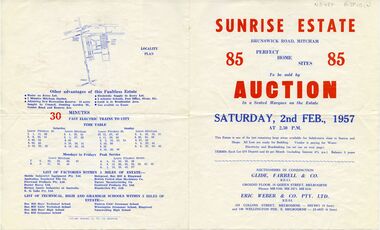
Document, Sunrise Estate, 1957
... Auction brochure for 'Sunrise Estate' Brunswick Road, Mitcham, 85 sites, 2 February 1957. Agent Glide, Farrell & Co; Eric Weber & Co. Ltd. ...Auction brochure for 'Sunrise Estate' Brunswick Road, Mitcham, 85 sites, 2 February 1957. Agent Glide, Farrell & Co; Eric Weber & Co. Ltd. ...Auction brochure for 'Sunrise Estate' Brunswick Road, Mitcham, 85 sites, 2 February 1957.Auction brochure for 'Sunrise Estate' Brunswick Road, Mitcham, 85 sites, 2 February 1957. Agent Glide, Farrell & Co; Eric Weber & Co. Ltd. Includes train timetables and list of factories and schools in area..Auction brochure for 'Sunrise Estate' Brunswick Road, Mitcham, 85 sites, 2 February 1957. sunrise estate, mitcham, brunswick road, centre road, mcghee avenue, holly court, berry avenue, garden avenue, land subdivision -
 Trafalgar Holden Museum
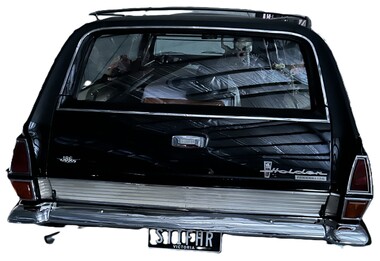
Vehicle - 1967 Hr Hearse
... "HOLDEN' badge and POWER GLIDE on right On front.right and Left "SPECIAL" Middle grille Lion emblem, left grille "HOLDEN" badge..."HOLDEN' badge and POWER GLIDE on right On front.right and Left "SPECIAL" Middle grille Lion emblem, left grille "HOLDEN" badge Black body station wagon with vinyl roof with red leather interior. ...Manufactured and sold by HoldenBlack body station wagon with vinyl roof with red leather interior. Chrome luggage rack on roof."186" left hand side of back door. "HOLDEN' badge and POWER GLIDE on right On front.right and Left "SPECIAL" Middle grille Lion emblem, left grille "HOLDEN" badgeholden, vehicle, 1976 hr -
 Ringwood and District Historical Society
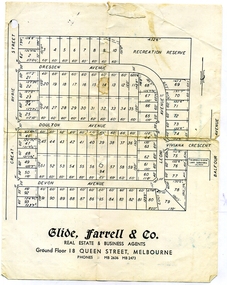
Document, Glen Turnbull, Land Sale Brochure - Heathmont Hills Estate - subdivision of Stan Wieland's Land (undated), 25/2/2008
... Small brochure by Glide Farrell & Co, real estate and Business Agents, Melbourne advertising "93 Superb Building Blocks 3Mins Station & Shops", and "Sky-Line Views of Heathmont Hills Estate" , comprising lots in Dresden Ave, Doulton Ave, Devon Ave, Viviana Crescent, Leoni Avenue. ...Small brochure by Glide Farrell & Co, real estate and Business Agents, Melbourne advertising "93 Superb Building Blocks 3Mins Station & Shops", and "Sky-Line Views of Heathmont Hills Estate" , comprising lots in Dresden Ave, Doulton Ave, Devon Ave, Viviana Crescent, Leoni Avenue. ...Small brochure by Glide Farrell & Co, real estate and Business Agents, Melbourne advertising "93 Superb Building Blocks 3Mins Station & Shops", and "Sky-Line Views of Heathmont Hills Estate" , comprising lots in Dresden Ave, Doulton Ave, Devon Ave, Viviana Crescent, Leoni Avenue. -
 Bendigo Historical Society Inc.
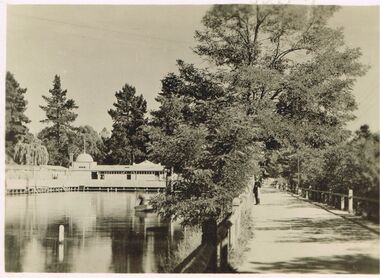
Photograph - DAWN SMITH COLLECTION: PHOTOS OF BENDIGO, c1929
... Another Black & White Photograph of Baths at The Upper Reserve Bendigo c1929, which changed its name to The Queen Elizabeth Oval (QEO) in the 1950s to commemorate the coronation of Queen Elizabeth II. A small punt glides ably along observed by a solitary onlooker dressed in dark suit and hat carrying a towel....Another Black & White Photograph of Baths at The Upper Reserve Bendigo c1929, which changed its name to The Queen Elizabeth Oval (QEO) in the 1950s to commemorate the coronation of Queen Elizabeth II. A small punt glides ably along observed by a solitary onlooker dressed in dark suit and hat carrying a towel. ...Dawn Smith Collection. Another Black & White Photograph of Baths at The Upper Reserve Bendigo c1929, which changed its name to The Queen Elizabeth Oval (QEO) in the 1950s to commemorate the coronation of Queen Elizabeth II. A small punt glides ably along observed by a solitary onlooker dressed in dark suit and hat carrying a towel.Souvenir Photograph Set Bendigo ? Rose Collectionbendigo, tourism, the upper reserve bendigo (qeo) -
 Whitehorse Historical Society Inc.
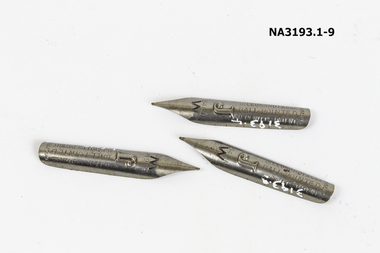
Functional object - Pens, nibs and box
... On back: Suitable for writing in Every position, glide over. Any paper, never scratch nor stick in the paper. ...On back: Suitable for writing in Every position, glide over. Any paper, never scratch nor stick in the paper. ...A small box of ball-pointed pen nibs (7 left). A yellow, red and black box containing metal no. 5 & 6M grey nibs. Named as balled-pointed pens, 2L Flewitt's Patent. On back: Suitable for writing in Every position, glide over. Any paper, never scratch nor stick in the paper. Manufactured by D. Leonards & Co. Birmingham. Solely for Ormiston & Glass Ltd. Contractors to H.M. Government 28 Newgate St., London ECcommerce, office equipment / stationery, domestic items, writing equipment -
Moorabbin Air Museum
Book - Pilot training - general aviation, Emergency Maneuver Training. Controlling Your Airplane During a Crises
... ...Glides...Pilot training - general aviation Basic aerodynamics Roll / yaw & pitch Pitch & power Curved flight Stalls Spins Overbanked Control failures Glides Powerplant failures Off airport landings The pilot in command Overview of emergency strategies for general aviation pilots, circa 1996 Emergency Maneuver Training. ...Overview of emergency strategies for general aviation pilots, circa 1996non-fictionOverview of emergency strategies for general aviation pilots, circa 1996basic aerodynamics, roll / yaw & pitch, pitch & power, curved flight, stalls, spins, overbanked, control failures, glides, powerplant failures, off airport landings, the pilot in command -
 Australian Gliding Museum
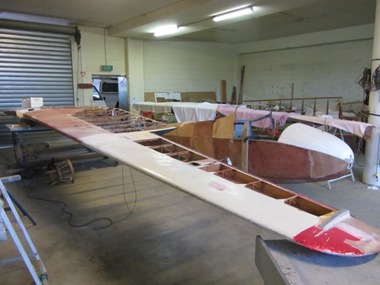
Machine - Glider - Sailplane, 2012
... The ES52 performed well with a glide ratio of about 22:1 and had soaring and cross-country capabilities. ...The ES52 performed well with a glide ratio of about 22:1 and had soaring and cross-country capabilities. ...The ES52 Kookaburra is a two seat high wing glider – sailplane of wooden construction designed by Harry Schneider and built Edmund Schneider Pty Ltd. It was first flown on 26 June 1954 and became the glider of choice for training new pilots of many gliding clubs around Australia in the 1950s, 1960s and 1970s. Several found there way to New Zealand. Further two kits were sent to Brazil and at least one of these was finished and flow successfully. The ES52 performed well with a glide ratio of about 22:1 and had soaring and cross-country capabilities. A notable feature of the ES52 design was the staggered side-by-side seating arrangement of the cockpit. This made for good in flight communication between instructor and trainee. Overall, thirty six were built by Edmund Schneider Pty Ltd. A longer wing version (the ES52B) was also introduced that had a better glide ratio (around 25:1). Five examples of this version were built. In Germany a modified ES52 was built incorporating a metal tube fuselage frame and with the addition of a engine driven propeller mounted on top of the wing which enabled the glider to be self launching. This museum collection item consists of the fuselage, tailplane, elevators, fin, rudder from the Mark I, ES 52 Kookaburra, formerly registered as VH-GFF and last owned by the Barcaldine and District Airsports Club of Queensland. The glider was in a damaged condition when it was acquired by the Museum. A decision was made by the Museum to repair the glider for display rather than endeavouring to restore it to an airworthy condition. The reconstruction of the wings is being undertaken by using parts of damaged ES 52 Kookaburra wings (as it happened from later ES 52 Marks). The Log Book for VH-GFF reveals operational life with a succession of gliding clubs around Australia. This exhibit will be of interest to gliding enthusiasts wishing to inspect the popular two seat club trainer of a by-gone era.This is a wood and fabric covered aircraft that is being rebuilt from the components of several aircraft as a non-flying exhibit.Fuselage marked with Edmund Schneider Pty Ltd Serial Number 9 and comes from the glider previously registered as VH-GFF.australian gliding, glider, sailplane, edmund schneider, es 52, kookaburra, barcaldine and district airsports club, victorian motorless flight group, alice springs gliding club, raaf richmond, raaf williamtown, gayndah gliding club, blackwater gliding club, southern downs aero and soaring club, charleville gliding club -
 Falls Creek Historical Society
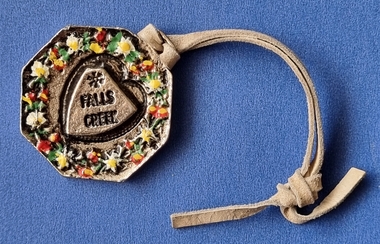
Decorative object - Medallion - Falls Creek and Ullr, Patron Saint of Skiers
... Ullr was said to be an expert skater, skier and hunter who would glide around the world and cover the land with snow. ...Ullr was said to be an expert skater, skier and hunter who would glide around the world and cover the land with snow. ...This medallion was donated by Hayley Martin. Throughout the 1960s and early 1970s the six members of the Martin Family generally spent at least a week each year at Falls Creek, staying at Spargo's Lodge. The Martins then bought a share in Diana Lodge and stayed there frequently until the late 1970s. Medallions such as this one purchased at Cuming's Ski Hire, were commonly worn by skiers attached to an item of their ski apparel with the leather strap. The reverse side features an image from Nordic mythology. Ullr was the God of Snow, Patron Saint of Skiers, the son of Sif and stepson of Thor, the God of Thunder. Ullr was said to be an expert skater, skier and hunter who would glide around the world and cover the land with snow. Skiers hoped Ullr would ensure them of a good snow season and also protect them from injury.This item is significant because variations of medallions such as this were worn by many skiers and also advertised Falls Creek.A metal medallion decorated with wildflowers on one side and the image of Ullr, Patron Saint of Skiers on the reverse side.ullr patron saint of skiers, cuming's ski hire, spargo lodge, diana alpine lodge -
 Australian National Surfing Museum
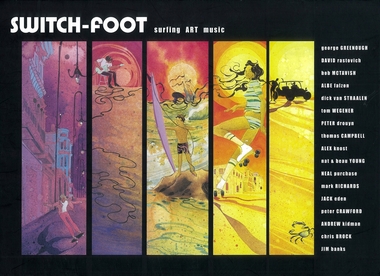
Book, Andrew Crockett, Switch-foot (surfing art music), 2005
... Stories from: George Greenough looking at his simple genius and his movie magic with ‘Dolphin Glide’ and ‘Behind the Scenes.’ The unmasking of the truth behind Peter Drouyn, 12 legends of the Lens (images from the golden era) The telling of Dick Van Straalen’s story and his current relationship with Dave Rastovich The art of Harry Daily Global surf travel with Colas Thomas Campbell drops by Rasta and friends music with the exploration into the mystery of the art of jamming Discussions about sustainable surfcraft production with Tom Wegener, the unveiling of new school talent within music and photography and also talking to important leaders in the field of classic surfing to gather information on surfboard design, single fin surfing and fin dynamics. ...Music from low pressure sound systems in the story titled ‘the art of jamming’ A significant publication that explores art, photography and music in surfing culture. art surfing jack eden switchfoot music surf photography alby falzon george greenough peter drouyn dolphin glide dick van straaleen jim banks peter crawford mark richards ISBN 0-646-45057 Switch-foot (surfing art music) is a hard copybook of surfing photography with a black cover featuring 5 art panels and one panel with text. ...Switch-foot is a classic publication out of Australia 2005. This 210 page hardcover book has many of the immortal surfing images from the golden era in surfing from photographers such as Albe Falzon, George Greenough and Jack Eden. Stories from: George Greenough looking at his simple genius and his movie magic with ‘Dolphin Glide’ and ‘Behind the Scenes.’ The unmasking of the truth behind Peter Drouyn, 12 legends of the Lens (images from the golden era) The telling of Dick Van Straalen’s story and his current relationship with Dave Rastovich The art of Harry Daily Global surf travel with Colas Thomas Campbell drops by Rasta and friends music with the exploration into the mystery of the art of jamming Discussions about sustainable surfcraft production with Tom Wegener, the unveiling of new school talent within music and photography and also talking to important leaders in the field of classic surfing to gather information on surfboard design, single fin surfing and fin dynamics. Music from low pressure sound systems in the story titled ‘the art of jamming’ A significant publication that explores art, photography and music in surfing culture.Switch-foot (surfing art music) is a hard copybook of surfing photography with a black cover featuring 5 art panels and one panel with text. 'Switch-foot surfing art music'.ISBN 0-646-45057art, surfing, jack eden, switchfoot, music, surf photography, alby falzon, george greenough, peter drouyn, dolphin glide, dick van straaleen, jim banks, peter crawford, mark richards -
 The Beechworth Burke Museum
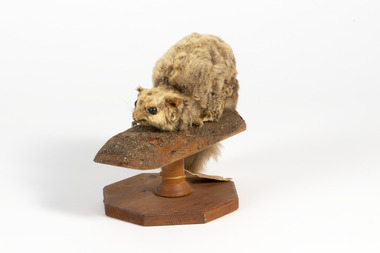
Animal specimen - Krefft's glider, Trustees of the Australian Museum, 1860-1880
... Krefft's glider (Petaurus notatus) is a small, nocturnal, arboreal marsupial known for its ability to glide. It is native to much of eastern mainland Australia and has also been introduced to Tasmania. ...Krefft's glider (Petaurus notatus) is a small, nocturnal, arboreal marsupial known for its ability to glide. It is native to much of eastern mainland Australia and has also been introduced to Tasmania. ...Krefft's glider (Petaurus notatus) is a small, nocturnal, arboreal marsupial known for its ability to glide. It is native to much of eastern mainland Australia and has also been introduced to Tasmania. The classification of Petaurus populations from New Guinea and Indonesia, previously assigned to P. breviceps, remains under review. The American Society of Mammalogists tentatively includes these populations within P. notatus, though they may represent a complex of distinct species. Notably, most captive gliders referred to as "sugar gliders" in the United States are believed to originate from West Papua, suggesting they may actually be Krefft's gliders, though this classification is still under study. This specimen is part of a collection of almost 200 animal specimens that were originally acquired as skins from various institutions across Australia, including the Australian Museum and the National Museum of Victoria, as well as individuals such amateur anthropologist Reynell Eveleigh Johns between 1860-1880. These skins were then mounted by members of the Burke Museum Committee and put-on display in the formal space of the Museum’s original exhibition hall where they continue to be on display. This display of taxidermy mounts initially served to instruct visitors to the Burke Museum of the natural world around them, today it serves as an insight into the collecting habits of the 19th century. The specimen is part of a significant and rare taxidermy mount collection in the Burke Museum. This collection is scientifically and culturally important for reminding us of how science continues to shape our understanding of the modern world. They demonstrate a capacity to hold evidence of how Australia's fauna history existed in the past and are potentially important for future environmental, climate and conservation research.Small sized glider with a pointed head, curved body, bushy tail, and curved claws perched on a wooden mount. The pelage is thick, long and silky in pale caramel and tan shades. The head is small with two pointed ears, two glass eyes, and about five teeth.On wooden mount: BMM5895 /taxidermy mount, taxidermy, flying fox, fruit bat, burke museum, australian museum, skin, reynell eveleigh johns, natural history, animal, krefft's glider, glider, arboreal -
 Mission to Seafarers Victoria
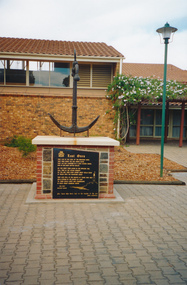
Photograph - Photograph, colour, c. 2001
... Do you see them soar where great gulls glide At peace with the fearsome seas ? They live still in the hearts of those who wait Held strong in the bonds of love 'Til their souls unite and congregate In God`s great harbour above. ...Do you see them soar where great gulls glide At peace with the fearsome seas ? They live still in the hearts of those who wait Held strong in the bonds of love 'Til their souls unite and congregate In God`s great harbour above. ...Opened by His Excellency Sir Eric Neal AC CVO on 30 September 2001, the Memorial is located in City Park, Port Pirie, South Australia. The monument commemorates those who were lost at sea while serving with the Merchant Navy. Mr Noel Smith, a resident of Port Pirie, former Merchant Navy seaman and Port Pirie tugboat officer designed the memorial, found the anchor located on the top of the memorial during a dredging operation in a creek near the Nystar plant and wrote the poem inscribed on the main plaque. Front Inscription Lost Ones They live in the curl of the breaking wave, They sing when the sea winds blow, They lay not confined in a land locked grave, Nor in dim dark depths below. Do you hear them laugh in the rippling tide, Call free in the ocean breeze ? Do you see them soar where great gulls glide At peace with the fearsome seas ? They live still in the hearts of those who wait Held strong in the bonds of love 'Til their souls unite and congregate In God`s great harbour above. Noel Smith Merchant Seaman For those who were lost to the depths of the sea Emma Hindmarsh Left Side Inscription Memorial unveiled by His Excellency Sir Eric Neal AC CVO Governor of South Australia and His Worship the Mayor Ken Madigan Port Pirie Regional Council Memorial blessed and consecrated by Right Reverend Garry Weatherill Bishop of Willochra 30 September 2001Colour photograph of the memorial made of an anchor on a bricks and stones base with a black marble plaque titled The Lost Ones. The logo of the Merchant Navy, MN, on the top left corner of the plaque.merchant navy, mn, port pirie, memorial -
 Australian Gliding Museum
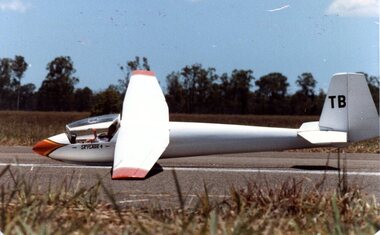
Machine - Glider – Sailplane, 1963
... Another notable feature was the smooth wing surface that was obtained using a Gaboon ply skin across the ribs. Best glide performance of 1:33 was found to be comparable with the early full GRP glider designs. ...Another notable feature was the smooth wing surface that was obtained using a Gaboon ply skin across the ribs. Best glide performance of 1:33 was found to be comparable with the early full GRP glider designs. ...The Skylark 4, the final in the Slingsby Skylark series, dates from 1961. The design heralded a trend towards the use of plastics in the construction of gliders. Slingsby incorporated GRP (glass reinforced plastic) panels to achieve a streamlined fuselage nose and cockpit area while retaining the more traditional wood techniques for the rest of the aircraft. Another notable feature was the smooth wing surface that was obtained using a Gaboon ply skin across the ribs. Best glide performance of 1:33 was found to be comparable with the early full GRP glider designs. The Museum’s example (VH-GTB – C/N 1382) was built in 1963 and originally owned by Chuck Bentson of the UK. It was brought to Australia in 1967 by Jeremy Picket-Heaps and flown at various places including Benalla, Cooma and Gundaroo. In 1970 the glider was transferred to the New England Soaring Club. Many flights were made from Armidale and Bellata in Northern New South Wales. On one occasion, the glider was kept aloft for 8 hours 45 minutes and on another the pilot took it around a 500 kilometre triangle in nearly 8 hours. In 1980 it was sold to Ralph (“Feathers”) Crompton and was flown extensively in South Australia until 1988. The final owner before the glider was given to the Museum in 2004 was Ross Dutton of Melbourne. The last recorded flight occurred in 1992. The glider at that point had logged over 2000 hours flying time from about 2000 launches. The airframe is currently being restored to flying condition. Technically this aircraft represents the state of the art at the stage that sailplane design was changing from traditional wood construction to composites (GRP) The Slingsby Skylark 4 is high wing single seat sailplane of mainly wooden construction with plywood and fabric covering. However, the cockpit and forward part of the fuselage consists of glass reinforced plastic which was innovative at the time that the type was designed. The cockpit provides for a semi reclining position for the pilot protected with a full Perspex canopy. The wings are made up of a centre section with constant chord and tapered wing tips. The aircraft has a conventional arrangement for the tail stabiliser / control surfaces. The sailplane bears construction number 1382 and is registered in Australia as VH-GTBaustralian gliding, glider, sailplane, skylark, slingsby, bentson, picket-heaps, crompton, new england soaring club, dutton -
 Australian Gliding Museum
Machine - Glider - Sailplane, 1943
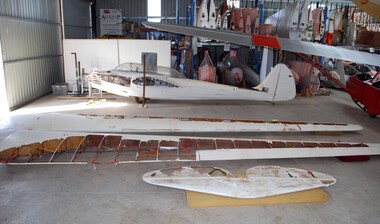
... It is understood that the reduction in weight and cleaner aerodynamics from the changes could increase the glide ratio from 1:24 to something like 1:30. ...It is understood that the reduction in weight and cleaner aerodynamics from the changes could increase the glide ratio from 1:24 to something like 1:30. ...The Laister-Kauffman 10A (LK10A) is a 2 seat a military training glider developed from a successful Jack Laister single seat glider called Yankee Doodle that first flew in 1938 and was exhibited at the Paris Air Show of 1939. The two seater variation was ordered in 1941 by the US Army for training glider pilots of troop carrying gliders. The military designation was XTG-4. The LK 10A glider was a simpler, more robust design than Yankee Doodle. A longer canopy enclosed both seating positions. The top of the fuselage formed a straight ridge from the top of the canopy to the point where the fin – rudder connected. Also, the design was simplified by adopting straight spar wings of 15.2 metres in place of gull wings of 14.170 metres. During the war years 156 LK10As were produced before the contracts to supply the US Army were terminated. Many of these were later sold as surplus. The Museum’s exhibit (serial number 122) was built in 1943. It was imported into Australia in the 1950s by Ric New, a member of the Gliding Club of Western Australia. Ric New modified the glider by “flat topping” the fuselage and making other aerodynamic changes. This kind of modification of the LK10A was a well tried strategy in United States for extracting better performance from the glider. It is understood that the reduction in weight and cleaner aerodynamics from the changes could increase the glide ratio from 1:24 to something like 1:30. The LK10A was located at the Gliding Club of Western Australia for many years. Records reveal that it was kept airworthy until about 1975. The LK10A is an important acquisition in that it allows one to compare the state of two seat glider design in United States and the United Kingdom in the immediate post war period. It is interesting to note that at that time a number of clubs in Australia who acquired a two seat glider for training chose the United Kingdom open cockpit high strutted wing offerings from Slingsby (e.g. T31) instead of more innovative military surplus gliders from America. Modified LK10A glider consisting of tubular steel fuselage with a combination of fabric and metal covering, fabric covered wooden wings and other flying surfaces.australian gliding, glider, sailplane, laister, kauffman, ric new, gliding club of western australia, lk10a, yankee doodle, xtg-4 -
 Australian Gliding Museum
Machine - Glider –Sailplane, 1960
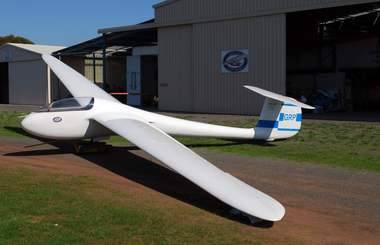
... It was found to have a best glide ratio of 40:1. The Museum’s example, No. 403 was originally a prototype built on 25 May 1960 [Registration D-8354]. ...It was found to have a best glide ratio of 40:1. The Museum’s example, No. 403 was originally a prototype built on 25 May 1960 [Registration D-8354]. ...The FS-24 Phonix is the first sailplane design to be built using a moulded fiberglass sandwich technique. It was designed by Hermann Nagele and Richard Eppler leading a group setup for the purpose at Stuttgart Technical University in the early 1950s. Initial construction was undertaken at workshops of Wolf Hirth and the first prototype was completed at the Bolkow Aircraft Company where Nagele and another member of the group, Rudi Lindner, had gained employment. It flew on 27 November 1957. Two further prototypes were built incorporating a T-tail and other refinements. Eight in all were built before production was stopped in 1961. A number of gliding records were broken in Phonix sailplanes in Germany in 1962-1963. It was found to have a best glide ratio of 40:1. The Museum’s example, No. 403 was originally a prototype built on 25 May 1960 [Registration D-8354]. It was converted at Bolkow to a Phonix T in 1963 and sold to a private owner in Switzerland [Registration HB-746] and later then to gliding club Segelfluggruppe Solothurn in 1965. The glider returned to Germany in 1971 (Meersburg) and re-registered as D-0738. It moved to a new owner in Allershausen in 1976, and again to Lindhoft in 1982. In 1983 the glider was sold to owners at Hasselt, Belgium and given registration OO-ZQD. In 1989 a further change of ownership occurred and the glider went to Leusden in the Netherlands where it was registered as PH-949. In 2006 the Phonix No.403 was imported into Australia by John Ashford of the Geelong Gliding Club. On 30 January 2007, it was registered as VH-GRP. However, as at January 2016 it has not been flown in Australia. In the course of its flying history the glider was damaged several times and repaired. At one stage a larger rudder was fitted and later on this modification was reversed. With the original conversion to a Phonix T and subsequent repairs and changes to equipment the weight of the airframe increased from 182 kg to approximately 220 kg. Nevertheless, the wing loading is a modest 20kg/square metre. As at January 2016, minor repairs and airworthiness certification are required to return the glider to flying condition. This exhibit is highly significant as it is one of only eight of this pioneering sailplane design. It is the only one in Australia. Glassfibre single seat sailplane, finished white with blue stripes on fin and rudder.Australian registration GRP on rudder; Serial Number 403 and Vintage glider club of Netherlands plaque in cockpitaustralian gliding, sailplane, glider, fs-24, phonix, nagele, eppler, lindner, stuttgart technical university, bolkov aircraft company, segelfluggruppe solothurn, ashford, geelong gliding club. -
 Australian Gliding Museum
Machine - Glider – Sailplane, 1963
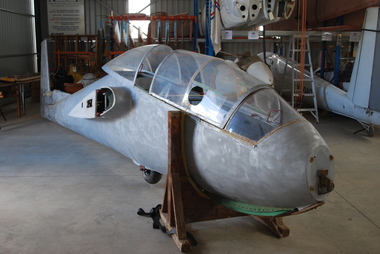
... The aerobatic capability and fine performance (best glide ratio of 26) has enabled the Bocian to be used to train competition pilots as well as those of lesser experience. ...The aerobatic capability and fine performance (best glide ratio of 26) has enabled the Bocian to be used to train competition pilots as well as those of lesser experience. ...The Bocian is a versatile training sailplane that first flew in 1952. The type has been modified in several respects over the course of production by SZD (tailplane and rudder in particular). About 600 have been built; many for export to 27 countries (including Australia). The aerobatic capability and fine performance (best glide ratio of 26) has enabled the Bocian to be used to train competition pilots as well as those of lesser experience. Many world gliding records were set in the 1950s and 1960s in Bocian gliders. The Museum’s example is a type D test flown in Poland on 3 and 4 April 1963. It was imported into Australia in September 1963 by Austerserve Pty Ltd. The first owner was the Alice Springs Gliding Club and the glider had name “Cumulus” painted on the side of the fuselage (since removed). The glider had recorded 726 hours 46 minutes flying time from 2138 launches as at July 1967 when it was transferred to the Darwin Gliding Club. It appears that the glider was damaged in June 1968. The substantial repairs to the fuselage, both wings and tailplane and other minor repairs were completed on 13 October 1968. The glider continued flying with the Darwin Gliding Club until August 1969 at which time the service to that club amounted to 59 hours 7 minutes flying time from 348 flights. Between August 1969 and August 1976 no flights are recorded in the logbook. It is understood that on its last flight at Bachelor, south of Darwin in the Northern Territory (August 1969) it was severely damaged when it crashed after spinning while being auto-tow launched (although this is not expressly mentioned in the logbook). Reg Hancock purchased the damaged glider and rebuilt the port wing and restored it to airworthy condition (September 1976). It was then transferred to Colac, Victoria, and used by the Colac Gliding Group at the Yeo airfield until February 1981, adding another 153 hours from 403 flights to the glider’s record. After airworthy inspection in September 1982 the glider was used by the Geelong Gliding Club until 1983 (logbook details not held). The 20 year survey was then due and the glider fell out of service. In the course of the most recent restoration attempt it was discovered that the glue used in construction had deteriorated and that it was no longer feasible to bring it back to an airworthy condition. Subject to restoration, this exhibit may be representative of the 1950s - 1960s Bocian two seat sailplane typeThis exhibit is a large two seat glider /sailplane of wood and fabric construction. All components are present with the exception of instruments. However, at the time that the aircraft was transferred to the Museum it had been taken apart for major restoration work. As received it is stripped of the top coats of paint and a number of components (including, amongst others, tip fairings, nose cone and cockpit elements) that were removed for facilitating the repair process. The glider, serial number 803, was registered as VH-GNLaustralian gliding, glider, sailplane, bocian, cumulus, alice springs gliding club, darwin gliding club, colac gliding group, geelong gliding club, hancock -
 City of Melbourne Libraries
Photograph, Bull, Hugh Jones, 1897-1993, Curling at the Glaciarium, South Melbourne
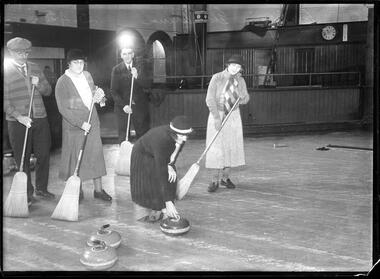
... The sweeping is to gently warm the surface of the ice where the stone will glide, to extend the path of the stone. In 1934, an Australian team which included the Moffatt-Penders, travelled to New Zealand to compete in a bonspiel on frozen Idaburn Dam near Oturehua, Central Otago. ...The sweeping is to gently warm the surface of the ice where the stone will glide, to extend the path of the stone. In 1934, an Australian team which included the Moffatt-Penders, travelled to New Zealand to compete in a bonspiel on frozen Idaburn Dam near Oturehua, Central Otago. ...Curling at the Glaciarium Mr A G Outhwaite, Mrs Lorna Moffatt-Pender and others, play a game of curling at Melbourne’s Glaciarium, c1933. “Game for Women who are “getting on”!” ran The Herald headline reporting that, “Mrs Moffatt-Pender finds curling a delightful game for the woman who is not quite as young as she was and wants something livelier than croquet. “There is no reason why women should not play up to 50 years of age. And there is always the domestic appeal of the broom which accompanies the curler on ice. Accuracy is the great thing in the game.” Arthur Grenby Outhwaite co-wrote popular “fairy” books, illustrated by his wife, Ida Rentoul Outhwaite. Featured in "Newsworthy: Melbourne in photographs 1933-1936" exhibition at East Melbourne Library, October to December 2023. Exhibition caption by project volunteer, Fiona Collyer. Photographer notations on slide: "Curling - Glaciarium B42" Description: Mr A G Outhwaite, Mrs Lorna Moffatt-Pender, Mrs S J Allen and two unidentified people play a game of curling at Melbourne Glaciarium. Research by project volunteer, Fiona Collyer: Mr Arthur Grenby Outhwaite was married to Ida Rentoul Outhwaite, who was regarded as Australia’s greatest children’s book illustrator and they, along with Ida’s sister Annie, collaborated on many books about fairies, elves and koalas. Ida designed four beautiful stained glass windows at St Marks Fitzroy, which are still there. Mrs Lorna Moffatt-Pender née Smith was married to Captain Iain Moffatt-Pender, a former Scottish Rugby Union international player and Seaforth Highlander in WWI, before he emigrated to Australia and became a wealthy sheep farmer. They were both keen curlers and participated in the NZ v Australia bonspiels at Melbourne Glaciarium in 1935. According to The Herald 9/4/1934, Mrs Moffatt-Pender wore fur-lined suede moccasins on the ice and found curling to be "a delightful game for the woman who is not quite as young as she was and wants something livelier than croquet. “There is no reason why women should not play up to 50 years of age. And there is always the domestic appeal of the broom which accompanies the curler on ice. There is a good sprinkling of women among curlers overseas. Accuracy is the great thing in the game.”" The Curling Club of Australia was formed in Melbourne in 1933 with Wimbledon Singles Champion 1907 and 1914, Sir Norman Brookes, the inaugural president. It disbanded in 1939. Curling was invented in Scotland in 1541, where the tradition is that the laird and the crofter are the same on the ice and after bonspiels (curling tournaments) everybody adjourn for a meal of beef and greens. Rocks of granite are sourced from the Scottish island of Ailsa Craig and weigh 20 kg each. Curling is similar to lawn bowls, but on ice. Two teams of four people each take turns to slide granite stones towards a target known as a house. The team with the most rocks closest to the centre of the house, scores points. Curling stones are delivered with a pre-determent rotation so that they curl as they travel – hence “curling”. Opposition teams can throw guards to block the house or take out the opponent’s stone. The sweeping is to gently warm the surface of the ice where the stone will glide, to extend the path of the stone. In 1934, an Australian team which included the Moffatt-Penders, travelled to New Zealand to compete in a bonspiel on frozen Idaburn Dam near Oturehua, Central Otago. New Zealand won. In June 1935, for the Melbourne Centenary, the New Zealand team came to Melbourne to compete for the Silver Fern Trophy. They voyaged on the M.S. Wanganella and the crew nicknamed the curlers the “Ladies Hairdressers”. Australia won two tests and the third test was a draw. At the conclusion of the bonspiel, a secret, centuries old initiation was held at a “curlers’ court” at Anzac House with seven Australian curlers initiated. Afterwards, a dinner was held at the Occidental Hotel (corner of Exhibition and Collins streets, demolished 1950s), where the haggis was carried in under an archway of curling brooms. The “Ode to the Haggis” was recited by “My Lord of the Court”, Captain Moffatt-Pender before he presented each New Zealand team member with a miniature curling stone as a souvenir of their visit. The Melbourne Glaciarium (also known as "The Glaci" or "The Glassy") opened in 1906 at 16 City Road, South Melbourne and was the third largest ice rink in the world at the time. There was seating for 2000 people which was heated with hot water pipes, and they could hire out 1500 pairs of skates. Up to 5000 people could attend hockey matches and ice sports carnivals at any one time. Patrons could watch films in summer or dance to the Glaciarium’s own orchestra conducted by Frank Bladen, who had played with the Pavlova and the Gilbert and Sullivan orchestras. In 1911 John Sousa, creator of the Sousaphone, and his band played a season of concerts. In 1924, the Glaciarium was turned into a makeshift film studio for filming of the interior scenes of "Jewelled Nights", starring Australian actress Louise Lovely, who had achieved success in Hollywood. The basketball and gymnastic competitions for the 1956 Melbourne Olympic Games were held there. Public skating sessions always finished with “Till we Meet Again”, a popular WWI song about the parting of a soldier and his sweetheart, written by Richard A Whiting and Raymond B Egan. The Glaciarium closed in 1959 and was demolished after a fire in 1963. References: WOMAN CURLER RETURNS (1934, April 9). The Herald (Melbourne, Vic. : 1861 - 1954), p. 14. Retrieved September 14, 2023, from http://nla.gov.au/nla.news-article243253779 CURLERS INITIATED (1935, June 24). The Argus (Melbourne, Vic. : 1848 - 1957), p. 4. Retrieved February 2, 2024, from http://nla.gov.au/nla.news-article12251790 Melbourne Glaciarium, Only Melbourne, https://www.onlymelbourne.com.au/melbourne-glaciarium Melbourne Glaciarium, Legends of Australian Ice, https://icelegendsaustralia.com/glaciariums.htmlPhotographer notations on slide: "Curling - Glaciarium B42".curling, 1930-1939, glaciarium, fires -
 Kiewa Valley Historical Society
Seal Skins Ski Straps / Soles, mid 1900's
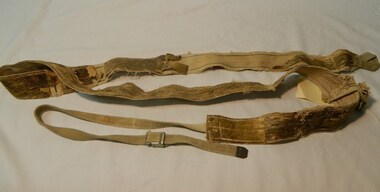
... The sealskins were sewn so that their grain ran from front to back thereby allowing the skins to grip going up hill and glide going downhill.The gardens and varieties of flowering shrubs and trees where also more in line with traditional European "outdoor" settings. alpine sports snow skis winter clothing mount bogong recreational activities snow sports Seal skin sewn onto one side of a strap of webbing. ...These seal skin straps and webbing were introduced into the Victorian Alps by European engineers, conducting survey work for the SEC Hydro scheme in the late 1930s. This period in time produced many immigrants from a war torn Europe with highly developed technical skills. Many of these immigrants provided articles that were well suited to the alpine regions of Australia, ones they used in their homelands. These were times when the home grown cultures of the Anglo Saxon heritage of the earlier settlers within the Kiewa Valley became interwoven with the various European cultures and this formed, what in later years became the beginning of the Australian multi-cultural society. The Kiewa Valley and its surrounding regions where the major rural areas which did not progress in a so typical Aussie "dinky-di", "she'll be right" fashion. The European influence was however not too strong, so as to obliterate the flavour of the home grown rural society.The major populated sections of the upper Kiewa Valley and the Alpine regions were accelerated by the SEC Hydro Development which brought into the slow growing rural regions a quasi multi ethnic society, however this was only noticeable up to the time when the final Power Station was commissioned in the 1960s. The slight variations to the typical Australian rural settlements of the time were in some food preparations, winter apparel such as these seal skin straps and soles and "langlauf" (cross-country skis). The sealskins were sewn so that their grain ran from front to back thereby allowing the skins to grip going up hill and glide going downhill.The gardens and varieties of flowering shrubs and trees where also more in line with traditional European "outdoor" settings. Seal skin sewn onto one side of a strap of webbing. There is a webbing loop on the front that slips over a small point at the front of the ski. There is a webbing strap attached to the back of the seal skin sole coming over the back of ski that clips metal fasteners onto a loop of webbing behind the ski boot. alpine sports, snow skis, winter clothing, mount bogong recreational activities, snow sports -
Moorabbin Air Museum
Document (Item) - Detailed flight characteristic calculations Includes glide angle calculations and using engines ASV 8 and ASV 11, GAF. Jindivik Mk 2, 2A, 2B, 3
... Jindivik Mk 2, 2A, 2B, 3 Document Detailed flight characteristic calculations Includes glide angle calculations and using engines ASV 8 and ASV 11 ... -
Moorabbin Air Museum
Document (Item) - ARINC - Airborne Glide Slope Receiver Mark - 2
... ARINC - Airborne Glide Slope Receiver Mark - 2...ARINC - Airborne Glide Slope Receiver Mark - 2 Document ARINC - Airborne Glide Slope Receiver Mark - 2 ... -
Moorabbin Air Museum
Document (Item) - ARINC - Airborne Glide Slope Receiver Mark - 2
... ARINC - Airborne Glide Slope Receiver Mark - 2...ARINC Characteristic No.550 ARINC - Airborne Glide Slope Receiver Mark - 2 Document ARINC - Airborne Glide Slope Receiver Mark - 2 ...ARINC Characteristic No.550 -
Moorabbin Air Museum
Booklet (item) - CAC Commonwealth Aircraft Corporation Glide Slope Receiver, GSA-25A Glide Slope Receiver
... GSA-25A Glide Slope Receiver...Commonwealth Aircraft Corporation GSA-25A Glide Slope Receiver Booklet CAC Commonwealth Aircraft Corporation Glide Slope Receiver ...Commonwealth Aircraft Corporation -
 Australian Gliding Museum
Machine - ES56 Nymph Sailplane
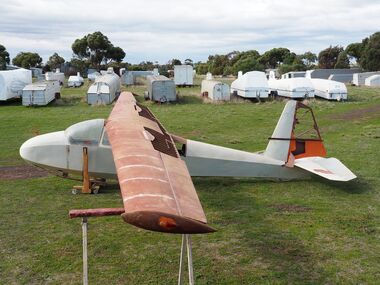
... It exbibits design innovation, notably the use of a laminar flow wing profile in pursuit of better glide performance. Also, considerable attention was given to simplifying the structure in order to keeping cost and the weight low. ...ES 56 Nymph Following the successful introduction of the ES 52 Kookaburra two-seater in mid-1954, Edmund Schneider Ltd designed a higher performance single seat sailplane of similar construction and with similar handling qualities. It was designated the ES 56 and became known as the ES56 “Nymph”. The ES56 Nymph was a success in that it delivered the anticipated performance and was found to have satisfactory flying characteristics. However, only the prototype (“Nymph -I”) and three production examples (“Nymph-II”) were built. Schneiders made some changes to the design before building the production version. The wing chord at the tip on the prototype measured 650 mm. This was reduced to 500 mm for subsequent builds. The explanation is that provision was made in the original design for the possible lengthening of the tapered wing to 13 metres. However, apparently it was decided to retain the 11.900 metre span which allowed the tip chord to be reduced slightly. Other changes included the installation of scissor type air brakes in the wing instead of simple hinged flap spoilers and the addition of a landing wheel behind the skid on the fuselage. On one of the Nymph-II a dorsal was added on top of the fuselage forward of the vertical fin when repairs were made rectifying damage incurred as a result of an accident at Benalla on 31 March 1963. Even before these ES56 gliders were finished, Edmund Schneider Ltd decided to offer a less expensive single seat design to cater in particular for newly solo pilots, the ES57 Kingfisher. With the Kingfisher, Schneiders reverted to a traditional airfoil (Gott 549) for the wing instead of the laminar flow section that was chosen for the Nymph in the pursuit of performance. As such, the Kingfisher was more appropriately characterised as a single seat version of the Kookaburra in comparison to the Nymph. Schneiders continued for a time to offer the ES56 Nymph as a high-performance sailplane. However, its place in the market was soon overtaken by imported designs with superior performance, such as the Schleicher KA6, which Schneiders also imported and built under license. Nymph-I was test flown in December 1955 and entered by Harry Schneider into the gliding championships held at Waikerie from 5th to 16th of that month. Harry finished 12th in the individual placing out of a field of approximately 24. The capabilities of the Nymph were further demonstrated by Harry Schneider in January 1956 with a Gold C flight of 193 miles from Gawler in South Australia to Walpeup in Victoria. Nymph-I was acquired by the Port Pirie Gliding Club in South Australia. It has been saved and restored and is a regular feature at vintage glider rallies in Victoria and New South Wales. See Museum Newsletter No 35 Winter Edition 2017 pages 3 -6, for that story. The Nymph-II production models were delivered by Edmund Schneider Ltd in October 1956 to the Gliding Club of Victoria, the Victorian Motorless Flight Group and the Royal Australian Navy Gliding Association. The VMFG flew its Nymph in the First National Gliding Championships at Tocumwal, NSW, in December 1956 and all three were flown at the Second National Gliding Championships at Benalla in 29th December 1958 to 8th January 1959, delivering competitive performances based on handicap. Nymph-I Serial Number 17 Original owner – Port Pirie Gliding Club, S.A. Registered VH-GHG on 20 August 1957 Re-registered VH-GHA on 11 October 2016 Currently Raywood, Victoria Believed airworthy Nymph-II Serial Number 20 Original owner – R.A.N. Gliding Association Registered VH-GDX on 20 May 1957 Currently Locksley, Victoria. In storage Nymph-II Serial Number 21 Original owner – Gliding Club of Victoria Registered VH-GHU on 27 August 1957 Currently Bendick Murrell, N.S.W. In storage Nymph-II Serial Number 22 Original owner – Victorian Motorless Flight Group Registered VH-GFE on 5 March 1957 Currently Bacchus Marsh, Victoria Under restoration for display. The Museum’s exhibit is the ES56, serial number 22, registered as VH-GFE. The glider was flown by the VMFG in Victoria until approximately September 1968. GFA records show that it was transferred to Queensland in 1968, and it passed through several owners until the mid-1970s. Information received indicates that it was flown by the Leichardt Soaring Club at Mount Isa in the (late?) 1960s. The history from then is not presently known except to say that it has been kept in dry storage for many years. It is not known when the glider was last flown. What is Significant? The Schneider ES 56 Nymph single seat sailplane, serial number 22, designed and built in 1955-1956, by Edmund Schneider Ltd in Adelaide. It was delivered to its original owner, the Victorian Motorless Flight Group, in October 1956, and registered as VH-GFE on 5 March 1957. How it is Significant? The ES56 Nymph is of historical, aesthetic, scientific and research, and social significance to the Australian gliding community. Why it is Significant? The ES56 is of historical significance as it was designed and built by Edmund and Harry Schneider. The Schneiders immigrated to Australia after the end of the second world war bringing with them considerable expertise in relation to glider design and construction. Over the following decades they maintained a close association with the Gliding Federation of Australia and the gliding clubs and through their glider production made a major contribution to the sport. The ES56 is part of that story. The ES56 in its design and construction exhibits the glider construction technology of the time, which principally consisted of lightweight wooden framework skinned with ply and doped fabric. It exbibits design innovation, notably the use of a laminar flow wing profile in pursuit of better glide performance. Also, considerable attention was given to simplifying the structure in order to keeping cost and the weight low. The ES56 played a useful role at gliding clubs where it was operated, especially the late 1950s and early 1960s and is remembered well by pilots who flew her. The glider is in the course of restoration and provides an insight into the skills and workmanship that were involved in design, building and maintenance of these wooden aircraft. It is of aesthetic and scientific and research significance. Glider airframe of a traditional wood and fabric covered constructionNoneglider, sailplane, edmund schneider, harry schneider, es56, nymph, es57, kingfisher, victorian motorless flight group, gliding club of victoria, ran gliding association, port pirie gliding club, leichardt soaring club. -
Moorabbin Air Museum
Photograph (Item) - GTV Release From Mirage III Trials Proving Range, Maximising Glide Algorithm
... GTV Release From Mirage III Trials Proving Range, Maximising Glide Algorithm...GTV Release From Mirage III Trials Proving Range, Maximising Glide Algorithm Photograph GTV Release From Mirage III Trials Proving Range, Maximising Glide Algorithm ... -
Moorabbin Air Museum
Manual (Item) - Smiths instruments - Glide Coupling Overhaul Manual
... Smiths instruments - Glide Coupling Overhaul Manual...Smiths instruments - Glide Coupling Overhaul Manual Manual Smiths instruments - Glide Coupling Overhaul Manual ...
