
Showing 16 items matching "graeme davison"
-
 Warrnambool and District Historical Society Inc.
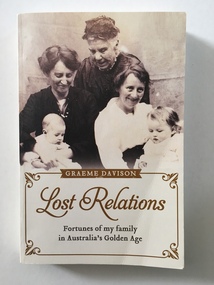
Book, Allen & Unwin. Crows Nest NSW Aust, Lost Relations, 2015
... Graeme Davison... This book details the lives of the ancestors of the author, Graeme Davison. It begins with the story of Jane Hewett who migrated with her eight children to Australia from England in 1850. ...This is a soft cover book of 274 pages detailing the family history of the author Graeme Davison. The cover is cream-coloured and has sepia-coloured photographs of the author’s ancestors on the front and back. ...Front Cover: ‘Graeme Davison’ ‘Lost Relations’ ‘Fortunes of my family in Australia’s Golden Age’ Inside title page: Signature of author ‘Graeme Davison’ ......Graeme Davison...Griffin Press Graeme Davison ...The history of the Hewett family from Hampshire, England to Australia.This is a soft cover book of 274 pages detailing the family history of the author Graeme Davison. The cover is cream-coloured and has sepia-coloured photographs of the author’s ancestors on the front and back. The printing on the front and back covers is in gold and black. The book contains a Contents page, Introduction, ten chapters on the author’s family history, Acknowledgements, Picture Acknowledgements, Notes and Index. There are many black and white photographs, sketches and maps. non-fictionThe history of the Hewett family from Hampshire, England to Australia.graeme davison, 19th century australian social history, hewett families, warrnambool, history -
 Surrey Hills Historical Society Collection
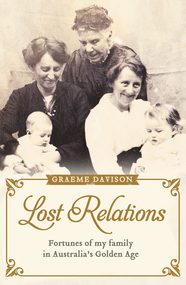
Book, Lost relations : Fortunes of my family in Australia's Golden Age, 2015
... ...(mr) graeme davison...Bought with funds generated by cemetery tours , presented to SHNCHC by SHHS following a presentation to the Society by the author. Graeme Davison has lived in Surrey Hills for many years. ...A family history by historian Graeme Davison - A widow and her 8 older children are uprooted from their Hampshire farm in 1850 and thrown together on an emigrate ship with 38 distressed needlewomen from London. ...Title Page : (signed by author) :Graeme Davison......Graeme Davison...Inscriptions: family history hewett family (mr) graeme davison Title Page : (signed by author) :Graeme Davison A family history by historian Graeme Davison - A widow and her 8 older children are uprooted from their Hampshire farm in 1850 and thrown together on an emigrate ship with 38 distressed needlewomen from London. ...Bought with funds generated by cemetery tours , presented to SHNCHC by SHHS following a presentation to the Society by the author. Graeme Davison has lived in Surrey Hills for many years. A family history by historian Graeme Davison - A widow and her 8 older children are uprooted from their Hampshire farm in 1850 and thrown together on an emigrate ship with 38 distressed needlewomen from London. How they came to be on the boat, and what happened on the high seas and afterwards in Australia , is a vivid tale of family ambitions and fears, successes and catastrophes. The Hewetts were not famous or distinguished, but their story reveals much about the foundations of Australia. Inscriptions: A family history by historian Graeme Davison - A widow and her 8 older children are uprooted from their Hampshire farm in 1850 and thrown together on an emigrate ship with 38 distressed needlewomen from London. How they came to be on the boat, and what happened on the high seas and afterwards in Australia , is a vivid tale of family ambitions and fears, successes and catastrophes. The Hewetts were not famous or distinguished, but their story reveals much about the foundations of Australia. Inscriptions: Title Page : (signed by author) :Graeme Davisonfamily history, hewett family, (mr) graeme davison -
 Eltham District Historical Society Inc
Book, Graeme Davison, What makes a building historic? / Graeme Davison, 1986
... What makes a building historic? / Graeme Davison....Graeme Davison...What makes a building historic? / Graeme Davison. Book Graeme Davison Historic Buildings Council (Vic.) ...Paperback; 12 p. : ill. ; 25 cm.ISBN 0730601366buildings -
 Surrey Hills Historical Society Collection
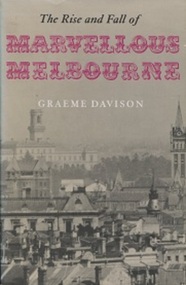
Book, The rise and fall of Marvellous Melbourne, 1978
... ...Graeme Davison...Includes: Clerical salaries chart p.16|Part 1: The City|Part 2: The Suburbs|Picture of Camberwell Railway Station p. 160 (from Latrobe Pictorial Collection. Graeme Davison is a local resident.Text records how the experience of boom and Depression touched the lives of ordinary Melburnians during the years 1880-1900.......Graeme Davison...Apart from its significance as an academic work, Graeme Davison is a local resident. melbourne - history- 1880-1900 (Mr) Graeme John Davison depression Graeme Davison Text records how the experience of boom and Depression touched the lives of ordinary Melburnians during the years 1880-1900. ...Includes: Clerical salaries chart p.16|Part 1: The City|Part 2: The Suburbs|Picture of Camberwell Railway Station p. 160 (from Latrobe Pictorial Collection. Graeme Davison is a local resident.Text records how the experience of boom and Depression touched the lives of ordinary Melburnians during the years 1880-1900.Apart from its significance as an academic work, Graeme Davison is a local resident.Text records how the experience of boom and Depression touched the lives of ordinary Melburnians during the years 1880-1900.melbourne - history- 1880-1900, (mr) graeme john davison, depression, graeme davison -
 Sunshine and District Historical Society Incorporated
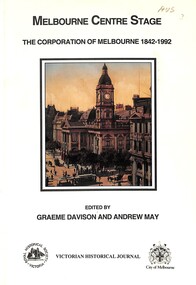
Journal - Melbourne Centre Stage The Corporation of Melbourne 1842 - 1992, Royal Historical Society of Victoria, 1992
... Melbourne Centre Stage The Corporation of Melbourne 1842 - 1992 Edited by Graeme Davison and Andrew May Victorian Historical Journal Vol.63 Nos. 2 and 3 October 1992 Issue 240 Royal Historical Society of Victoria......Graeme Davison & Andrew May...Melbourne Centre Stage The Corporation of Melbourne 1842 - 1992 Edited by Graeme Davison and Andrew May Victorian Historical Journal Vol.63 Nos. 2 and 3 October 1992 Issue 240 Royal Historical Society of Victoria Soft covered book with a glossy front cover Melbourne Centre Stage The Corporation of Melbourne 1842 - 1992 Journal Melbourne Centre Stage The Corporation of Melbourne 1842 - 1992 Royal Historical Society of Victoria Graeme Davison & Andrew May ...The Victorian Historical Journal, first published as the Victorian Historical Magazine in 1911, is the official journal of record and scholarly publication of the Royal Historical Society of Victoria. It is the second oldest history journal in Australia. It has become a vast collaborative history of Victoria with hundreds of individual contributors and topics and has itself become a primary source for researchers.Soft covered book with a glossy front covernon-fictionThe Victorian Historical Journal, first published as the Victorian Historical Magazine in 1911, is the official journal of record and scholarly publication of the Royal Historical Society of Victoria. It is the second oldest history journal in Australia. It has become a vast collaborative history of Victoria with hundreds of individual contributors and topics and has itself become a primary source for researchers. melbourne, history -
 Canterbury History Group
Article, Graeme Davison, What makes a building historic?
... ... Davison> Graeme...Graeme Davison...Canterbury Shrublands Historic Buildings Council Davison> Graeme Town Planning Historic Buildings Article from the Camberwell City News by Professor Graeme Davison provides an insight into the classification of buildings as historic. ...Article from the Camberwell City News by Professor Graeme Davison provides an insight into the classification of buildings as historic.Double page newspaper spreadnon-fictionArticle from the Camberwell City News by Professor Graeme Davison provides an insight into the classification of buildings as historic.canterbury, shrublands, historic buildings council, davison> graeme, town planning, historic buildings -
Clunes Museum
Book, GRAEME DAVISON & ANDREW MAY, MELBOURNE CENTRE STAGE
... GRAEME DAVISON & ANDREW MAY...BOOK HISTORY THE CORPORATION OF MELBOURNE EXPLORES THE CORPORATION OF MELBOURNE 1842-1992 IN TEXT AND IMAGES SOFT COVER BOOK WITH CREAM COLOURED COVER , A COLOURED IMAGE OF CITY BUILDINGS ON FRONT COVER MELBOURNE CENTRE STAGE Book BOOK GRAEME DAVISON & ANDREW MAY ALLIANCE PRINTING GROUP PTY. ...EXPLORES THE CORPORATION OF MELBOURNE 1842-1992 IN TEXT AND IMAGESSOFT COVER BOOK WITH CREAM COLOURED COVER , A COLOURED IMAGE OF CITY BUILDINGS ON FRONT COVER non-fictionEXPLORES THE CORPORATION OF MELBOURNE 1842-1992 IN TEXT AND IMAGESbook, history, the corporation of melbourne -
Box Hill Historical Society
Book, Graeme Davison, Heritage handbook, 1991
... Graeme Davison...Answers questions on researching your house's history; interpreting a historic site; what makes a building historic and how to present a case to a local council or planning authority. 274pp Heritage handbook Book Graeme Davison Chris McConville Allen & Unwin ...A comprehensive guide to heritage issues in Australia. Answers questions on researching your house's history; interpreting a historic site; what makes a building historic and how to present a case to a local council or planning authority.274ppA comprehensive guide to heritage issues in Australia. Answers questions on researching your house's history; interpreting a historic site; what makes a building historic and how to present a case to a local council or planning authority.houses, historical sites, historical buildings, heritage studies -
Surrey Hills Historical Society Collection
Work on paper - Vertical file, Awards
... ...Graeme Davison...‘It’s an Honour!’ Graeme Davison AM; Graham Bartle OAM; Stephen Dinham OAM; SHHN No. 173 August-September 2011 (1 page). 34. ...‘It’s an Honour!’ Graeme Davison AM; Graham Bartle OAM; Stephen Dinham OAM; SHHN No. 173 August-September 2011 (1 page). 34. ...A vertical file containing the following items regarding awards of various nature; all individuals having some local connection: 1. ‘Proudly humble retiree’, re Antonio Trivisonno paper and date unknown (1 page); and ‘OAM for seniors work’ Whitehorse Leader, 2.2.2011 (1 page). 2. ‘Antonio Trivisonno - enthusiasm for life’, SHNN, No. 170, Feb./March 2011 (1 page). 3. ‘Boroondara‘s Queen’s Birthday Honours list’, (re David Bottomley and William Swinson) Progress Leader, 14.6.2016 (1 page). 4. ‘Order of Australia awards’, (re David Kissane and John Payne) SHNN c. Feb. 2018 (1 page). 5. ‘Conservator honoured’, (re John Payne) Age ?, 26.1.2018 (1 page). 6. ‘Making world a better place’, (re David Kissane and others) Whitehorse Leader, 29.1.2018 (1 page). 7. ‘Honours for local people’, re Dr Hari Harayan Sinha and Stanley Bruce McKenzie, SHNN 44, Feb./March 1990 (1 page). 8. ‘Congratulations’, re Martin Culkin, Andrew Wall and Jean Jackson, SHNN No. 185 Aug./Sept. 2013 (1 page). 9. ‘A bloomin’ good life’, re Mr. Vivian Bennett, 1989 (source unknown), (1 page). 10. “Know your plants” medallist advises re Mr. Vivian Bennett, 1979 (source unknown), (1 page). 11. ‘Community contributions recognised’ re Caroline Carroll and Jack Ma, SHNN No. 188, Feb./March 2014 (2 pages). 12. Christopher Thorn, SHNN No. 206, Feb./March 2017 (1 page). 13. ‘Calculation is worth a medal’ re Prof. Kate Smith-Miles, Progress Leader, 23.11.2010 (1 page). 14. ‘Reward for dedicated work a dream once thought impossible for Caroline’, re Caroline Carroll, Progress Leader, 28.1.2014 (1 page). 15. ‘Community service – with a smile’, re Nina Buscombe, SHNN No. 92, Feb./March 1998 (1 page). 16. ‘Local resident awarded OAM’, re Charlie Wei Quan Xu, SHNN 225 April/May 2020 (1 page). 17. ‘David Winter, Whitehorse Citizen of the Year’, SHNN 230, Feb./March 2021 (1 page). 18. Gwen Smith Victorian Senior of the Year 2016, The Senior, November, 2016 (1 page). 19. ‘Local Traders win Oz awards!’ SHNN 142, June/July 2006 (1 page). 20. Centenary Medal Presentation 24.3.2003 at Ashwood Secondary College, 12 page booklet provided by Anna Burke, MP, Federal member for Chisholm. Note Elizabeth Meredith. 21. ‘Father of the Year!’ SHNN 138, October/November 2005 re Robert Moodie (1 page). 22. Burwood Bulletin Inc., Issue 159, Autumn 2021, re David Winter (3 sheets). 23. ‘Mont Albert Resident receives Order of Australia’, SHNN 158 re Dr. Rodney Arambewela (1 page). 24. ‘Citizen of the year 2000’, SHNN 106, June/July 2000 re Gert Rainey (1 page). 25. “’Best Friend’ award for Philip Crohn, SHNN 181, Dec. 2012/Jan./2013 (1 page). 26. ‘Surrey Hills Citizen of the Year 2002’, SHNN 118, June/July 2002 re Suzanna Henman (1 page). 27. ‘Bill Chandler awarded OAM’, SHNN 191, August/September, 2014 (1 page). 28. Kevin Donnelly AM, SHNN 206, February/March, 2017 (1 page). 29. ‘Just her cup of tea’, Progress Press, 1.5.2000. (1 page). 30. ‘Congratulations Greg Buchanan!’, SHNN No. 236, February, 2022 (1 page), and Citizenship Ceremony 26.1.2022. (A4 folded sheet). 31. ‘Meet our 2022 Citizens of the Year’, Boroondara Bulletin, March, 2022: Greg Buchanan, Rhea Werner and Belinda Battey (2 sheets). 32. ‘Order of Australia awards’: John Grace AO; Lesley (Pat) Farrant AM; Helen Buckingham OAM; Margaret Zacharin OAM; SHHN No. 215, August-September 2018 (1 page). 33. ‘It’s an Honour!’ Graeme Davison AM; Graham Bartle OAM; Stephen Dinham OAM; SHHN No. 173 August-September 2011 (1 page). 34. Mrs. Anne Patricia Murphy, awarded OAM, (no date), (1 page). 35. Citizen of the year 2023 Maxine Gross, Boroondara Bulletin, March, 2023 (1 page). 36. ‘Citizen of the year 2000’, Gert Rainey, SHNN No. 106, June/July 2000 (1 page). 37. ‘Arthur Tonkin Surrey Hills Citizen of the year 2001’, SHNN No. 112, June/July 2001 (1 page). 38. ‘Surrey Hills Citizen of the year 2001’, Suzanna Henman, SHNN No. 118, June/July 2002 (1 page). 39. ‘Surrey Hills Citizens of the year 2004’, Sue Barnett and Andrew White, SHNN No. 130, June/July 2004 (1 page). 40. ‘A creative and rich life’, Peter Hardham OAM, SHNN ? , June 2019 (1 page). 41. ‘Australia Day Honours’, Craig Kenny and Jillian Wright both OAM and of Mont Albert, SHNN No. 219, April/May 2019, (1 page). 42. Professor Marilyn Liddell, AM, Progress Press, Feb. 2010 (1 page). antonio trivisonno, david bottomley, william swinson, david kissane, dr hari harayan sinha, stanley bruce mckenzie, andrew wall, martin culkin, jean jackson, vivian bennett, caroline carroll, jack ma, christopher thorn, prof. kate smith-miles, nina buscombe, charlie wei quan xu, gwen smith, david winter, robert moodie, elizabeth meredith, rodney arambewela, philip crohn, suzanna henman, gert rainey, bill chandler, kevin donnelly, greg buchanan, rhea werner, belinda battey, john grace, lesley (pat) farrant, helen buckingham, margaret zacharin, graeme davison, graham bartle, stephen dinham, anne patricia murphy, maxine gross, arthur tonkin, peter hardham, andrew white, craig kenny, sue barnett, jillian wright, marilyn liddell, john payne -
 Surrey Hills Historical Society Collection
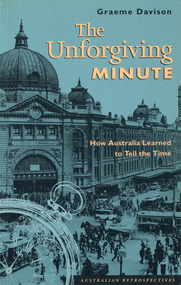
Book - The Unforgiving Minute: How Australia Learned to Tell the Time
... ...Graeme Davison...Emeritus Professor Graeme Davison is a local resident as well as one of the country's fore-most historians. ...Drawing on a wide range of theoretical insights and primary sources, "The Unforgiving Minute" offers an original interpretation of Australian history. It examines time telling from the convict era to the 1990's. As the convict era drew to an end, the colonial governors looked to clocks as the mechanical policemen of an emerging free society. Fifty years later, as railways and telegraphs began to spread across the land, and pocket watches appeared on the waistcoats of working men, colonial society began to keep stricter hours of work and play, and to teach its children the virtue of punctuality. In the early 20th century, punch clocks and time-switches laid the basis for new patterns of work in the factory and the home. Now, in the 1990s, the "faceless clocks" in computers and automated control systems have created a "postmodern" time regime that is both more flexible, and more demanding, than its predecessors.a small book of 21.5 cm; 160pnon-fictionDrawing on a wide range of theoretical insights and primary sources, "The Unforgiving Minute" offers an original interpretation of Australian history. It examines time telling from the convict era to the 1990's. As the convict era drew to an end, the colonial governors looked to clocks as the mechanical policemen of an emerging free society. Fifty years later, as railways and telegraphs began to spread across the land, and pocket watches appeared on the waistcoats of working men, colonial society began to keep stricter hours of work and play, and to teach its children the virtue of punctuality. In the early 20th century, punch clocks and time-switches laid the basis for new patterns of work in the factory and the home. Now, in the 1990s, the "faceless clocks" in computers and automated control systems have created a "postmodern" time regime that is both more flexible, and more demanding, than its predecessors. time measurements -- social aspects -- australia -- history, clocks and watches -- social aspects -- australia -- history, australia -- social conditions, graeme davison -
Whitehorse Historical Society Inc.
Article, Fifty x Fifty, 2009
... ...Davison...Graeme...Fifty x Fifty Exhibition Whitehorse Historical Society Inc. Davison Graeme Harris Helen An exhibition in the Box Hill Art Space at Box Hill Town hall celebrating the 1950s. ...An exhibition in the Box Hill Art Space at Box Hill Town hall celebrating the 1950s.An exhibition in the Box Hill Art Space at Box Hill Town hall celebrating the 1950s. Historical groups combined to put on a display of art, clothing, etc. Includes a list of exhibits, a page from Housekeeping Monthly and an invitation to the opening.An exhibition in the Box Hill Art Space at Box Hill Town hall celebrating the 1950s. fifty x fifty exhibition, whitehorse historical society inc., davison, graeme, harris, helen -
 Eltham District Historical Society Inc
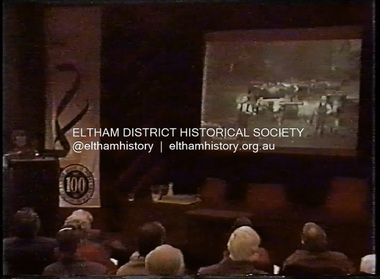
Film - Video (DVD), Melbourne and Metropolitan Board of Works, Yarra River Conference Proceedings; a Board of Works centenary event, 13-16 April 1991
... Speakers Dr Tony Dingle *, Department of Economic History, Monash University Dr Carolyn Rasmussen *, History Consultant Prof. Graeme Davison, History Department, Monash University Mr. ...Speakers Dr Tony Dingle *, Department of Economic History, Monash University Dr Carolyn Rasmussen *, History Consultant Prof. Graeme Davison, History Department, Monash University Mr. ...Yarra River Conference History Segment [Noted on VHS tape jackets "Due to unavoidable circumstances, the quality of these tapes in some setions is less than desired."] The Yarra River Conference, organised by the Board of Works as part of the Centenary Celebrations, was held in the Board's Head Office Theatrette from 13-16 April, 1991. A segment of the Conference focussed on the role that the Yarra River has played in relation to the historical development of Melbourne. Conceived and presented by a group of prominent historians as a chronological 'trip down the river in time', and profusely illustrated with slides, this segment traced the various impacts that urban and rural growth, development of marine commerce, recreational uses, and environmental problems have had on the Yarra during a century and a half of European occupation. As no formal written paper of this combined presentation is available, these two video-tapes provide a record for anyone who has an interest in tis fascinating aspect of the Yarra's history. The speakers who combined to present this segment are identified on the cover of Tape 2. Tape 1 (2 hours) 1838-1863 Deputy ?? to Utility Early navigators of the Yarra River; developing the port of Melbourne; the gold rush and its effect on the new colony; punts and bridges; water supply; pollution of the Yarra; the discovery of gold and early settlement of the Yarra valley; floods of 1839 and 1863. 1863-1891 Formation of the Harbour Trust; Coode Canal; pollution of the Yarra by industry; aborigines, gold miners, timber getters in the Upper Yarra areas; bridges; the flood of 1891. Tape 2 ( 1 1/2 hours) 1892-1934: People Begin to See Beauty and Romance to the River Henley-on-Yarra; realignment of the Yarra; MMBW is responsible for a sewerage system; new docks to cope with increased overseas trade; development of recreational parks; new reservoirs; timber production and timber tramways; bushfire; flood of 1934. 1935-1970: The River is Neglected Still, Except When it Proves Useful Bushfirs of 1939; the end of many sawmills; birth of tourism; increased interest in conservation and preservation of land for open space; further augmentation of water supply system; birth of containerisation changes the port; environmental concerns gain momentum. Speakers Dr Tony Dingle *, Department of Economic History, Monash University Dr Carolyn Rasmussen *, History Consultant Prof. Graeme Davison, History Department, Monash University Mr. Tom Griffiths, Lecturer in Public History, Monash Uiversity Mr. Patrick Miller, History Consultant Mr. Colin Jones, Author and Historian * Co-authors of the Board's history, 'Vital Connections'.video recording, yarra river, conference proceedings -
 City of Melbourne Libraries
Photograph, Bull, Hugh Jones, 1897-1993, Lord Mayor's Dinner, Melbourne Town Hall
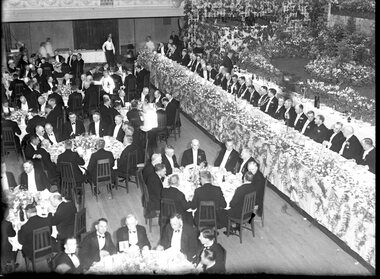
... Retrieved September 4, 2024, from http://nla.gov.au/nla.news-article205939431 'Portrait of Sir George Wales (Lord Mayor 1934-1937)', City Collection, City of Melbourne, https://citycollection.melbourne.vic.gov.au/portrait-of-sir-george-wales-lord-mayor-1934-37/ Graeme Davison, 'Marvellous Melbourne', eMelbourne, https://www.emelbourne.net.au/biogs/EM00906b.htm THE LORD MAYOR'S BANQUET. (1936, November 10). ...Retrieved September 4, 2024, from http://nla.gov.au/nla.news-article205939431 'Portrait of Sir George Wales (Lord Mayor 1934-1937)', City Collection, City of Melbourne, https://citycollection.melbourne.vic.gov.au/portrait-of-sir-george-wales-lord-mayor-1934-37/ Graeme Davison, 'Marvellous Melbourne', eMelbourne, https://www.emelbourne.net.au/biogs/EM00906b.htm THE LORD MAYOR'S BANQUET. (1936, November 10). ...Photographer notations on slide: "General View Of Lord Mayor's Dinner At Town Hall Nov 1936 B112" Published: The Age, Tuesday 10 November 1936, page 13 Published title: LORD MAYOR'S BANQUET Published caption: The brilliant scene inside the Melbourne Town Hall last night during the Lord Mayor’s banquet. Trove article identifier: http://nla.gov.au/nla.news-article205939431 Description: 700 guests (all men) are seated around numerous tables in the Melbourne Town Hall for the Lord Mayor's dinner in November 1936. Before the stage is a top table of 35 men, all dressed smartly in black dinner suits, with either a black or white bow tie. Many are wearing their medals. The Lord Mayor has on his Mayoral chains, and to his right is the Governor of Victoria, Lord Huntingfield. The stage is heavily decorated with fresh flowers. Research by project volunteer, Louise McKenzie: This image takes up one quarter of the photographic space on page 13 of The Age on 10 November 1936, reflecting the importance of the event and also the sheer dramatics of the image: 700 guests (all men), a top table of 35, and all dressed smartly in black dinner suits, with either a black or white bow tie. Many are wearing their medals. The Lord Mayor has on his Mayoral chains, and to his right is the Governor of Victoria, Lord Huntingfield. Further to his right is a man with an impressive sash across his chest. It is a very animated, and rather informal, moment. Banks of fresh flowers smother the stage, which is decorated in the manner of a terrace at an English stately home. Tables are laden with food, drink and decorations, and the wait staff (men and women) are also formally dressed, in the manner of Downton Abbey. It is spectacular, dramatic, and luxurious, and perpetuates the proud descriptor of “Marvellous Melbourne” as conferred by London Journalist George Augustus Sala when he visited the city in 1885. During its 1880s boom, Melbourne was the second-largest city in the British Empire, after London, and reputedly the richest city in the world. At times the expression was used with some irony, but "...in Victoria’s centenary year, 1934, with the city mired in another depression, a publisher bravely entitled a book of souvenir photographs Marvellous Melbourne, claiming that the subject ‘still finds apt expression in the happy one-time sobriquet’.” This photo seems to reflect an ongoing pride in Melbourne and a desire for it to live up to its descriptor and celebrate its post-centenary era in style. So it is no surprise to find that on page 11 of The Age on the same day, a second photo is to be found – a cropped view of one table – along with a very detailed description of the night, its purpose, and a surprise announcement. But, who was the Lord Mayor in whose honour the dinner was held? In 1934, the Lord Mayor of Melbourne was Cr. Alexander George Wales, (born Richmond, 11 October 1885, died Elsterwick, 31 May 1962). His father was a contractor and quarry-owner, but was blinded in an industrial accident in 1899. Consequently Alexander, then aged 14, left Brunswick State School to become a railway labourer working at a quarry, and in 1903 joined the Commonwealth public service as a clerk and began studying at night school, determined to improve himself. In 1907 he was appointed secretary of the Albion Quarrying Co. (in which the family had an interest), then its managing director and chairman. As the Australian Dictionary of Biography notes, he was instrumental in expanding the company’s interests, "...becoming director of the Hardware Co. of Australia Pty Ltd, the Twentieth Century Building and Investment Society, the Albion Sand Co. and the Geelong Brick Co.”. His public career began in 1914 when he was elected to the Brunswick council. He was mayor 1917-18, and in 1925 progressed to the Melbourne City Council where he remained for 29 years, being a member of most council committees. He served three successive terms as lord mayor (1934-37), was Chairman of the council’s decorations committee for Melbourne’s centenary, president of the Metropolitan Fire Brigades Board (1936), and Chairman of the Public Works Committee (1937-39). In 1936 he was elected to the Legislative Council with United Australia Party support, but later resigned over possible State government contract tender irregularities. Wales received "the customary reward” of a knighthood and was invested at Buckingham Palace by King George VI whose coronation he attended in 1937. He was an early director of what is now Ampol, and helped the development of the petroleum industry in Australia after visiting the USA in 1943 and 1946. He was impressed by that country’s wartime shipbuilding efforts and supported closer ties with the USA. “While president (1947-48) of the Melbourne Chamber of Commerce, Wales was a vocal critic of the Federal Labor Government, ...a staunch anti-socialist ... and a focus for conservative opposition to the Curtin and Chifley governments...” He is described as “a natural leader in business and civic politics,... a powerful force in the Melbourne City Council... opposing democratic reforms such as the creation of a Greater Melbourne Council and the abolition of plural voting, but advocat[ing] the redevelopment of city-owned property like the Eastern and Western markets...” So, this Lord Mayor’s dinner marks the third successive term in office for Governor Cr. A G Wales. The room is filled with powerful and influential men, and provided a platform for the Premier of Victoria, Albert Dunstan (1882-1950, United Country party) to announce that if the City Council would bear half the cost the State Government would build a bridge at Punt Road “at once”. He announced that the Government proposed to have the bridge built by the Country Roads Board, and allow the City Council to pay its share on convenient terms, and further, it would investigate the shared provision of more Yarra bridges. The proposal for the Punt Road Bridge was met with applause as the Yarra River constituted a serious traffic barrier. On 12 November 1936, two days after the Lord Mayor’s dinner, The Age published an article, “Building without a Plan”. It questions the appropriateness of the next Yarra bridge being the one at Punt Road, and encourages a “proper procedure” to look at the provision of additional Yarra bridges as a whole. But in fact this topic had been canvassed back in August when Melbourne City Council’s public works committee had recommended the replacement of the footbridge at Punt Road with a bridge, and if the Country Roads Board would declare this portion of Punt Road, including the river crossing, a State Highway, this could give the Board authority to construct the bridge and allocate the cost. Hence the reference at the dinner to a shared expense. Still an integral part of traffic management today, the Hoddle Bridge carries Punt Road over the Yarra River between Richmond and South Yarra in Melbourne. It is a five-lane road bridge with narrow footpaths on either side. It is of continuous reinforced concrete T-beam construction with five segmental arched spans, supported on transverse piers, and linked by concrete cross-beams. “The piers terminate in a series of tapered concrete pillars with Art Deco-styled steamlined decoration. Each pillar supports a Victorian-style lamp. The infill railings are geometric-patterned painted metal. Construction began in late 1937, and it was opened by Premier Albert Dunstan on 22 December 1938. It replaced an earlier footbridge, which in turn had replaced a punt service. The bridge (originally referred to as Punt Road Bridge) was named after Robert Hoddle, who planned central Melbourne’s Hoddle Grid, the grid of streets which form Melbourne’s central business district. Hoddle arrived in Australia from the UK in 1823 and went on to carry out surveys in NSW and Queensland before arriving in Melbourne in 1837. He designed layouts for both Melbourne and Williamstown, and later Geelong and other Victorian country areas. He was keen that major streets be at least 30 metres wide. ”With remarkable foresight he provided for wide boulevards from the city to the suburbs, but the subdivisions of early speculators in inner suburbs created the bottle-necks of today. After the separation of the colony in 1851, he became Victoria’s first surveyor-general... and advocated the provision of three-chain (60 m) roads and the widening of all existing main roads from one (20 m) to three chains." However, he was met with constant opposition and in 1853, was eased out of office. As a small and interesting aside: Hoddle was appointed auctioneer for the first sale of crown land in Melbourne on 1 June 1837. His commission was 57 pounds 12s 7d. and he bought two allotments for himself at a cost of 54 pounds. After he died his second wife married Richard Buckhurst Buxton, a member of the family which in 1860s Melbourne established the Australian property dynasty of Buxton Real Estate, Becton, MAB Corporation etc. Returning to the dinner and The Age article of 10 November 1836: Another topic of the after-dinner speeches was a reference to the upcoming Armistice Day. “The Minister of Customs (Mr White) said the proximity of Armistice day reminded us that eighteen years ago we had high hopes of prolonged peace.” The term “Armistice Day” was coined after WWI: “At 11 am on 11 November 1918, the guns on the Western Front fell silent after more than four years of continuous warfare. The Germans called for an armistice (suspension of fighting) in order to secure a peace settlement. They accepted the allied terms on unconditional surrender. Therefore on the 11th hour of the 11th day of the 11th month, a minute’s silence is observed and dedicated to those soldiers who died fighting to protect the nation. Originally known as Armistice Day, it was renamed Remembrance Day after World War Two to commemorate those who were killed in both World Wars. Today it refers to the loss of Australian lives from all wars and conflicts, accompanied by the words, "We will remember them, Lest we forget"." There was comment at the dinner about the need to remain firm in supporting the “democratic government in the British Empire to avoid a “plunge into savagery”. There was a grave responsibility on the British people to keep democracy alive, and that could not be done without adequate defence forces... Many weak governments in non-British countries had been swept aside by strong-fisted dictators, who now were the real threat to peace”. With the benefit of hindsight these were very pertinent comments and tragically prophetic. The Melbourne Shrine of Remembrance had only been dedicated two years earlier, at a ceremony attended by the Duke of Gloucester, son of King George V. Over 300,000 citizens attended: one third of the population of Melbourne. It became the location for the Anzac Day Dawn Service. Originally the march travelled from the Shrine into the city, however, in 1936, this was reversed, and the Shrine became the termination point for Anzac Day Marches. Also significant in 1936, was the installation of a statue in the west forecourt of the Shrine: “The Man with the Donkey” (aka 'Private John Simpson and his Little Donkey'). The work is said to represent the “valour and compassion of the Australian soldier”. Its full citation, according to the City of Melbourne City Collection is: West Side of Base: "The / Man with his Donkey / Gallipoli, April 25 to May 19 / in Commemoration / of the valour and compassion / of the Australian Soldier" AFTER LANDING AT GALLIPOLI, SIMPSON, WITH HIS LITTLE DONKEY, WORKED ALONE, DAY AND NIGHT TAKING WATER TO THE FRONT LINE AND CARRYING THE WOUNDED BACK TO THE DRESSING STATIONS. HE AND HIS DONKEY WERE KILLED BY A SHRAPNEL SHELL ON THE 19TH MAY, 1915. SIMPSON WAS MENTIONED IN DISPATCHES BY SIR IAN HAMILTON, COMMANDER-IN-CHIEF OF THE MEDITERRANEAN EXPEDITIONARY FORCE. / Erected by Public Subscription under auspices of the / Red Cross Society. East Side of Base: Private John Simpson." Their summary in background states: "A bronze figure of Simpson and his donkey with a wounded man on the donkey's back on a granite pedestal. Private John Simpson Kirkpatrick’s intrepid and short-lived exploits during the Gallipoli campaign have made him a popular figure of World War One. He has been mythologised to represent the lauded values of the digger, and he symbolises all those who went into battle unarmed. Born in England in 1892, he came to Australia in 1910. He enlisted to make his way back to England, but as a member of the 3rd Field Ambulance AIA was sent to Gallipoli. After just three weeks of bearing wounded soldiers across Shrapnel Gully on the back of his donkey, Simpson was killed by shrapnel fire. Simpson’s story became a powerful propaganda tool for enlistment in Australia, but following the war he was quickly forgotten. With the Shrine of Remembrance nearing completion in 1933, the memory of Simpson was rekindled to commemorate all who gave their lives to help others during the war. One plaque reads: ‘The / Man with his donkey / Gallipoli … / In commemoration / of the valour and compassion / of the Australian soldier’. In 1935, Wallace Anderson’s design for the memorial was selected though a competition organised by the Australian Red Cross. Anderson had served during the war and worked at the Australian War Memorial after his return. His Man with the Donkey was cast in Italy, and after some debate was sited near the shrine. Unveiled 20th June, 1936." The sculptor, Victorian-born William Wallace Anderson (1888-1975), served in France during WWI and afterwards produced a number of bronze war memorials and memorial portraits, predominantly in Victoria. “His most famous work is that of Simpson and his Donkey (1935), which he completed after winning a competition conducted by the Victorian Division of the Australian Red Cross. Anderson’s fee was 350 pounds; the cast, made by the Chiurazzi Foundry, Naples, Italy, cost 40 pounds. The work... has become well known as a symbol of the Anzac tradition.” A debate as to the siting of the statue arose from a strong view expressed by General Sir John Monash that no representation of individual members of the Australian Defence Force be located on the Shrine itself. Hence its location off to the northwest of the forecourt, in a garden of rosemary. And finally we return to the photo of the grand Lord Mayor’s dinner! An article in The Argus of 4 November 1936 refers to “Brilliant Scene at Lord Mayor’s Ball – Hall Becomes a Garden”. So now it becomes clear why the Town Hall, location of the Lord Mayor’s Dinner on 10 November 1934, only 6 days later, is so lavishly decorated. The floral decorations from the Ball are still in place - an early example of “recycling”, which is gratifying to note at a time of Depression. The reporter has captured the scene with enthusiasm: “Hundreds of tiny rose lights, hidden among pink roses, transformed the Melbourne Town Hall into a magical garden last night, when the Lord Mayor and Lady Mayoress (Councillor A. C. Wales, M.L.C., and Mrs. Wales) entertained about 3,500 guests at a ball. His Excellency the Governor (Lord Huntingfield) and Lady Huntingfield were present, while Rear-Admiral and Mrs. Lane Poole and officers from the visiting squadron were among the special guests. The balconies all round the hall were hidden by a white trellis, covered with pink blossoms and greenery. Rosy flowers were issued up every pillar, and great golden lamps, hanging from the door, were seated in greenery and trails of sweet peas. The organ gallery was converted into a terrace garden with stone steps leading to banks of pink azaleas, pink pelargoniums, masses of calceolarias, and the lovely deep mauve and blue of cinerarias. Slender Japanese maples and poplar trees grew from the higher slopes amid thickets of hostas, while a fascinating illusion was created by the lofty conservatory windows, which formed the background, and which were tinted cerulean blue to simulate the sky seen through glass. Large fern baskets hung from the conservatory roof, and the whole scene was enclosed in trellises of blossom. In the entrance palm green shrubs stood like sentinels round the passed floor, and flowers bloomed in misty golds. The long corridor upstairs leading to the council chamber was lined with an avenue of poplar trees in tubs. In the Lower Town Hall great banks of calceolarias and azaleas decked the upper dais, and each supper table was adorned with a different coloured flower with sprays of roses and Japanese maple laid on the snowy cloths. The adjoining supper-rooms were fragrant with the scent of huge bowls of stock in mauve, purple, and pink, while the white walls were covered with palm leaves and flowers. The roof garden below the clock tower was enclosed as a buffet with rose wreathed walls, and flowers were arranged attractively in the Lady Mayoress's rooms." References: LORD MAYOR'S BANQUET. CENTURY MAKERS AT THE M.C.G. BEFORE THE CHANGE. (1936, November 10). The Age (Melbourne, Vic. : 1854 - 1954), p. 13. Retrieved September 4, 2024, from http://nla.gov.au/nla.news-article205939431 'Portrait of Sir George Wales (Lord Mayor 1934-1937)', City Collection, City of Melbourne, https://citycollection.melbourne.vic.gov.au/portrait-of-sir-george-wales-lord-mayor-1934-37/ Graeme Davison, 'Marvellous Melbourne', eMelbourne, https://www.emelbourne.net.au/biogs/EM00906b.htm THE LORD MAYOR'S BANQUET. (1936, November 10). The Age (Melbourne, Vic. : 1854 - 1954), p. 11. Retrieved September 26, 2024, from http://nla.gov.au/nla.news-article205939643 BRILLIANT SCENE AT LORD MAYOR'S BALL Hall Becomes a Garden (1936, November 4). The Argus (Melbourne, Vic. : 1848 - 1957), p. 14. Retrieved September 26, 2024, from http://nla.gov.au/nla.news-article11932746 'Hoddle Bridge', Wikipedia, https://en.wikipedia.org/wiki/Hoddle_Bridge 'Hoddle Bridge', Victorian Heritage Database Report, Victorian Heritage Council, https://vhd.heritagecouncil.vic.gov.au/places/195689/download-report David Dunstan, 'Wales, Sir Alexander George (1885–1962)', Australian Dictionary of Biography, National Centre of Biography, Australian National University, https://adb.anu.edu.au/biography/wales-sir-alexander-george-8951/text15737, published first in hardcopy 1990, accessed online 26 September 2024. Marjorie J. Tipping, 'Hoddle, Robert (1794–1881)', Australian Dictionary of Biography, National Centre of Biography, Australian National University, https://adb.anu.edu.au/biography/hoddle-robert-2190/text2823, published first in hardcopy 1966, accessed online 26 September 2024. BUILDING WITHOUT A PLAN. (1936, November 12). The Age (Melbourne, Vic. : 1854 - 1954), p. 8. Retrieved September 26, 2024, from http://nla.gov.au/nla.news-article205949762 NEW BRIDGE AT PUNT ROAD (1936, August 12). The Argus (Melbourne, Vic. : 1848 - 1957), p. 10. Retrieved September 26, 2024, from http://nla.gov.au/nla.news-article11902131 'The Shrine of Remembrance', Beaconsfield’s Soldiers: https://beaconsfield.org.au/digitalmemorial/shrine-introduction/ 'Shrine of Remembrance', Wikipedia, https://en.wikipedia.org/wiki/Shrine_of_Remembrance Ken Scarlett, 'Anderson, William Wallace (1888–1975)', Australian Dictionary of Biography, National Centre of Biography, Australian National University, https://adb.anu.edu.au/biography/anderson-william-wallace-9362/text16441, published first in hardcopy 1993, accessed online 26 September 2024. 'Man with the Donkey', City Collection, City of Melbourne, https://citycollection.melbourne.vic.gov.au/man-with-the-donkey-aka-private-john-simpson-and-his-little-donkey/ 'Remembrance Day', Australian Army, https://www.army.gov.au/about-us/history-and-research/traditions/remembrance-day Photographer notations on slide: "General View Of Lord Mayor's Dinner At Town Hall Nov 1936 B112".melbourne town hall, mayors, lord mayors, centenaries, bridges, dinners, clothing and dress, festive decorations, dances and balls, eating and drinking, shrine of remembrance, governors, monuments and memorials, 1930-1939, plants -
 Federation University Historical Collection
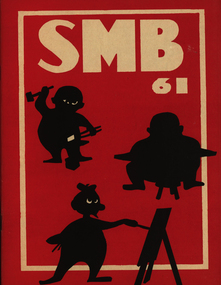
Booklet, Ballarat School of Mines Students' Magazine, 1961, 1961
... davison...brian harold duthie...thomas bernard gallagher...john robert gowan...william john spencer...lawrence grenville trevan...douglas james vendy...michael villani...walter john wynd, graeme...Science, Hong Kong Today, Conferring of Diplomas, Bath Push, Intellectual Pursuit, Never be a Woman, Man and Morality, The Old and the New, A Gentlemen's Excursion to Beaufort House, Awards 1961, Sports, The History of Electricity, School Council, Members of Staff, Roll Call ballarat school of mines students' magazine staff, sports john w. boarmans noel delosa noel whitcher bob coutts noel kelly les dobie noel murphy malcolm peel peter agrums, ian weir, sue mole val baker neil bromley kevin oscar rogers h. e. arblaster richard w. richards daniel yung m. b. john morgan bevan john sir william hudson, brian arthur bellingham francis david benjamin neil albert brogden geoffrey angus chritian william davison brian harold duthie thomas bernard gallagher john robert gowan william john spencer lawrence grenville trevan douglas james vendy michael villani walter john wynd, graeme robert bromley, david william brown leonard ernest fox ralph james hepburn john gribble holloway peter john matthews peter mervyn robinson, chris peter livitsanos, david yan kai chung thomas henry john coad john neil mcarthur, john andrew watts d. pollard n. r. whitcher peter agrumsk. e. ooi t. smith c. naylor p. terry gerald brenan e. r. mcgrath j. kavangh a. bitans Red front page soft cover with white inscriptions and black figures on front cover, 72 pages Ballarat School of Mines Students' Magazine, 1961 Booklet Booklet J. ...Ballarat School of Mines Students' Magazine, 1961. Editorial, Prominent Personalities, The Principal's Pages, The Richard W. Richards Medal, Loyalty, Arts v. Science, Hong Kong Today, Conferring of Diplomas, Bath Push, Intellectual Pursuit, Never be a Woman, Man and Morality, The Old and the New, A Gentlemen's Excursion to Beaufort House, Awards 1961, Sports, The History of Electricity, School Council, Members of Staff, Roll Call Red front page soft cover with white inscriptions and black figures on front cover, 72 pagesballarat school of mines students' magazine, staff, sports, john w. boarmans, noel delosa, noel whitcher, bob coutts, noel kelly, les dobie, noel murphy, malcolm peel, peter agrums, ian weir, sue mole, val baker, neil bromley, kevin oscar rogers, h. e. arblaster, richard w. richards, daniel yung, m. b. john, morgan bevan john, sir william hudson, brian arthur bellingham, francis david benjamin, neil albert brogden, geoffrey angus chritian, william davison, brian harold duthie, thomas bernard gallagher, john robert gowan, william john spencer, lawrence grenville trevan, douglas james vendy, michael villani, walter john wynd, graeme robert bromley, david william brown, leonard ernest fox, ralph james hepburn, john gribble holloway, peter john matthews, peter mervyn robinson, chris peter livitsanos, david yan kai chung, thomas henry john coad, john neil mcarthur, john andrew watts, d. pollard, n. r. whitcher, peter agrumsk., e. ooi, t. smith, c. naylor, p. terry, gerald brenan, e. r. mcgrath, j. kavangh, a. bitans -
 Federation University Historical Collection
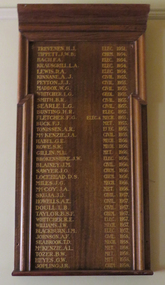
Photograph, Ballarat School of Mines Associates Board 1951-1957, c1984
... graeme r bromley mechanical engineering 1961...william davison...Ballarat School of Mines Associates could ascribe ASMB after their name. ballarat school of mines smb campus electrical engineering 1958 brian w. schreenan civil engineering 1958 clifford j. restarick metallurgy 1958 john t h. clelland metallurgy 1958 donald c. stevens mining engineering 1958 john g. wolfe civil engineering 1959 james e. mcneil electrical engineering 1959 patrick h. nally civil engineering 1959 graham j. willey metallurgy 1959 stanley p. kisler civil engineering 1959 donald j. overall electrical engineering 1959 brian j. mclennan civil engineering 1959 philip j. davis art 1959 bruce v. mcdougall mining engineering 1959 lancelot j. matthews mechanical engineering 1959 alan w. wilson mechanical engineering 1959 alan w. wilson electrical engineering 1959 george a r. lewis art 1959 noel e. meagher electrical engineering 1960 john l. collier mining engineering 1960 john l. collier civil engineering 1960 frank andrewartha mechanical engineering 1960 norman leckie art 1960 lansell j. groat civil engineering 1960 boon thiam lu mining engineering 1960 oswyn n. hails civil engineering 1960 john a. watts applied chemistry 1960 thomas b. gallagher civil engineering 1960 brian a. bellingham civil engineering 1961 alan c leviston applied chemistry 1961 walter j wynd civil engineering 1961 francis d benjamin civil engineering 1961 leonard e fox mechanical engineering 1961 yan kai chung applied chemistry 1961 george d mcgrath mechanical engineering 1961 john r sawyer mechanical engineering 1961 ronald horgan applied chemistry 1961 douglas j vendy civil engineering 1961 john a barnes electrical engineering 1961 brian w smith metallurgy 1961 william r carlyon metallurgy 1961 chris p livitsanos metallurgy 1961 lawrence g trevan civil engineering 1961 richard g dunlop mechanical engineering 1961 ronald m ingleton mechanical engineering 1961 peter m robinson mechanical engineering 1961 david j jelbart mechanical engineering 1961 john g hollway mechanical engineering 1961 george m hetherington civil engineering 1961 david w brown mechanical engineering 1961 john r gowan civil engineering 1961 geoffrey a christian civil engineering 1961 arthur c burrow mechanical engineering 1961 john n mcarthur applied chemistry 1961 graeme r bromley mechanical engineering 1961 william davison civil engineering 1961 ben a johnson electrical engineering 1961 ben a johnson civil engineering 1961 allan j tinney civil engineering 1961 thomas h j coad applied chemistry 1961 brian h duthie civil engineering 1961 basil c bautovich mechanical engineering 1961 reece pullen electrical engineering 1961 john d carmichael electrical engineering 1961 william j spencer civil engineering 1961 neil a brogden civil engineering 1961 michael villani civil engineering 1961 ralph j hepburn mechanical engineering 1961 peter w linaker mechanical engineering 1961 peter j matthews mechanical engineering 1961 edgar mca bartrop mining engineering 1961 donald j stewart brian schreenan Associates of the Ballarat School of Mines :Lists names 1989-1964 Black and white photograph of Associatedsof the Ballarat School of Mines from 1951-1957. ...In the early 1880s the Ballarat School of Mines Council introduced a three year course of training under the professors to qualify students in the following professions: 1. Mining Engineering 2. Metallurgy 3. Geology 4. Electricity [45] Each of these courses had an additional, but optional, fourth year of study. The prescribed subjects of study for an Associateship was set out in the Calendar of the Ballarat School of Mines in each year. Any student who passed the prescribed examinations in any of the above courses was issued with a Certificate of Competency, and conferred with the distinction of Associate. By the 1890s the professorial staff had drawn up a curriculum leading to an Associateship of the Ballarat School of Mines. The first two years work was to be common to all courses, but in the third and subsequent years the student wold be devoted to a specialised branch of study. The Associateship was to be conferred in one of another of the following Courses: Agriculture, Civil Engineering, Electrical Engineering, [Geology], Metallurgy and Mining Engineering. All were three year courses except for Agriculture which was two years. Each course was conducted in accordance with a prescribed curriculum and syllabus. During the 1910s there was an expectation that candidates for the Associate course should have attained the age of sixteen, and have received preparatory training equivalent to University Matriculation at least in the subjects of Elementary Mathematics, English Grammar and Composition, or have passed through Junior Technical School. In 1960 an new procedure for admission to graduate status as Associates was introduced to the Ballarat School of Mines where Associateship would be conferred at a public ceremony. After 01 July 1976 graduates of Ballarat College of Advanced Education and Ballarat College of Advanced Education were admitted in major studies relating to mining for Australian accreditation and overseas purposes. Ballarat School of Mines Associates could ascribe ASMB after their name.Black and white photograph of Associatedsof the Ballarat School of Mines from 1951-1957.Associates of the Ballarat School of Mines :Lists names 1989-1964ballarat school of mines, smb campus, electrical engineering 1958, brian w. schreenan civil engineering 1958, clifford j. restarick metallurgy 1958, john t h. clelland metallurgy 1958, donald c. stevens mining engineering 1958, john g. wolfe civil engineering 1959, james e. mcneil electrical engineering 1959, patrick h. nally civil engineering 1959, graham j. willey metallurgy 1959, stanley p. kisler civil engineering 1959, donald j. overall electrical engineering 1959, brian j. mclennan civil engineering 1959, philip j. davis art 1959, bruce v. mcdougall mining engineering 1959, lancelot j. matthews mechanical engineering 1959, alan w. wilson mechanical engineering 1959, alan w. wilson electrical engineering 1959, george a r. lewis art 1959, noel e. meagher electrical engineering 1960, john l. collier mining engineering 1960, john l. collier civil engineering 1960, frank andrewartha mechanical engineering 1960, norman leckie art 1960, lansell j. groat civil engineering 1960, boon thiam lu mining engineering 1960, oswyn n. hails civil engineering 1960, john a. watts applied chemistry 1960, thomas b. gallagher civil engineering 1960, brian a. bellingham civil engineering 1961, alan c leviston applied chemistry 1961, walter j wynd civil engineering 1961, francis d benjamin civil engineering 1961, leonard e fox mechanical engineering 1961, yan kai chung applied chemistry 1961, george d mcgrath mechanical engineering 1961, john r sawyer mechanical engineering 1961, ronald horgan applied chemistry 1961, douglas j vendy civil engineering 1961, john a barnes electrical engineering 1961, brian w smith metallurgy 1961, william r carlyon metallurgy 1961, chris p livitsanos metallurgy 1961, lawrence g trevan civil engineering 1961, richard g dunlop mechanical engineering 1961, ronald m ingleton mechanical engineering 1961, peter m robinson mechanical engineering 1961, david j jelbart mechanical engineering 1961, john g hollway mechanical engineering 1961, george m hetherington civil engineering 1961, david w brown mechanical engineering 1961, john r gowan civil engineering 1961, geoffrey a christian civil engineering 1961, arthur c burrow mechanical engineering 1961, john n mcarthur applied chemistry 1961, graeme r bromley mechanical engineering 1961, william davison civil engineering 1961, ben a johnson electrical engineering 1961, ben a johnson civil engineering 1961, allan j tinney civil engineering 1961, thomas h j coad applied chemistry 1961, brian h duthie civil engineering 1961, basil c bautovich mechanical engineering 1961, reece pullen electrical engineering 1961, john d carmichael electrical engineering 1961, william j spencer civil engineering 1961, neil a brogden civil engineering 1961, michael villani civil engineering 1961, ralph j hepburn mechanical engineering 1961, peter w linaker mechanical engineering 1961, peter j matthews mechanical engineering 1961, edgar mca bartrop mining engineering 1961, donald j stewart, brian schreenan -
 Bendigo Historical Society Inc.
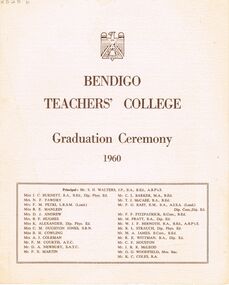
Document - LA TROBE UNIVERSITY BENDIGO COLLECTION: BENDIGO TEACHERS' COLLEGE GRADUATION CEREMONY 1960
... The following page contains a list of "Students of 1958-1960 Trained Infant Teacher's Certificate" - Marjorie May Allen, Janice Helen Ashman, Grada Ali Bos, Joan Margaret Busfield, Barbara Joan Cameron, Shirley Margaret Cribbes, Marcia Ann Davison, Margaret Mary Frances Dick, Lorraine Jean MacIntosh Goddard, Beverley Lorraine Goudie, Jennifer Joy Hamilton, Maureen Margaret Hunt, Shirley Joyce Innocent, Monica McKenna, Eileen Bernadette Mulvahil, Nola Ellen Parker, Jeanette Mary Pearson, Maureen Anne Pentland, Elaine Denise Pochon, Marian Judith Rechter, Marilyn Joy Rose, Catherine Shiels, Margaret Evelyn Stevenson, Rosemary Sutherland, Patricia Helen Tassicker, Eileen Monica Tuohey, Robin Elizabeth Walters, Patricia Ann Wenn and Ethel Dawn Whitelock. The back page contains a list of "Students of 1959-1960 Trained Primary Teacher's Certificate". - Kathleen Anne Algie, Ian Armstrong, Lorna Constance Barbour, Ronald Lindsay Bell, Michael Laurence Brown, Ross Ernest Brown, Graeme...The following page contains a list of "Students of 1958-1960 Trained Infant Teacher's Certificate" - Marjorie May Allen, Janice Helen Ashman, Grada Ali Bos, Joan Margaret Busfield, Barbara Joan Cameron, Shirley Margaret Cribbes, Marcia Ann Davison, Margaret Mary Frances Dick, Lorraine Jean MacIntosh Goddard, Beverley Lorraine Goudie, Jennifer Joy Hamilton, Maureen Margaret Hunt, Shirley Joyce Innocent, Monica McKenna, Eileen Bernadette Mulvahil, Nola Ellen Parker, Jeanette Mary Pearson, Maureen Anne Pentland, Elaine Denise Pochon, Marian Judith Rechter, Marilyn Joy Rose, Catherine Shiels, Margaret Evelyn Stevenson, Rosemary Sutherland, Patricia Helen Tassicker, Eileen Monica Tuohey, Robin Elizabeth Walters, Patricia Ann Wenn and Ethel Dawn Whitelock. The back page contains a list of "Students of 1959-1960 Trained Primary Teacher's Certificate". - Kathleen Anne Algie, Ian Armstrong, Lorna Constance Barbour, Ronald Lindsay Bell, Michael Laurence Brown, Ross Ernest Brown, Graeme ...A cream document titled "Bendigo Teachers' College Graduation Ceremony 1960". The front page also contains a list of the staff working at the college. They are Mr. S. H. Walters (Principal), Miss J. C. Burnett, Mrs. N. F. Fawdry, Mrs. F. M. Petri, Miss R. E. Manlein, Mrs. D. J. Andrew, Mrs. B. F. Hughes, Miss K. Alexander, Miss C. M. Oughton Jones, Miss B. H. Cowling, Mrs. A. J. Coleman, Mr. F. M. Courtis, Mr. D. A. Newbury, Mr. F. X. Martin, Mr. C. L. Barker, Mr. T. J. McCabe, Mr. F. G. East, Mr. P. F. Fitzpatrick, Mr. M. Pratt, Mr. W. J. F. Bernoth, Mr. R. L. Strauch, Mr. M. A. James, Mr. R. E. Wittman, Mr. C. F. Houston, Mr. J. R. R. McLeod, Mr. G. G. Woodfield and Mr. K. C. Coles. The inside cover contains the "Significance of the Ceremony" and "Order of the Ceremony". Mr. F. M. Courtis welcomed the visitors whilst the Principal read the College Charge. The 'Graduation Book' was presented to Mr. A. L. Harris Inspector of Schools by Miss J. C. Burnett.The final roll call for 1960 was read by Mr. C. L. Barker. Congratulations were offered by The Mayor of Bendigo Cr. R. H. Wilson,J. P., Cr. T. A. Drechsler President of Strathfieldsaye Shire and Mr. G. Salathiel, Head Teacher of Gravel Hill State School. Finally the Occasional Address was presented by Mr. F. H. Brooks Assistant Director of Education. The following page contains a list of "Students of 1958-1960 Trained Infant Teacher's Certificate" - Marjorie May Allen, Janice Helen Ashman, Grada Ali Bos, Joan Margaret Busfield, Barbara Joan Cameron, Shirley Margaret Cribbes, Marcia Ann Davison, Margaret Mary Frances Dick, Lorraine Jean MacIntosh Goddard, Beverley Lorraine Goudie, Jennifer Joy Hamilton, Maureen Margaret Hunt, Shirley Joyce Innocent, Monica McKenna, Eileen Bernadette Mulvahil, Nola Ellen Parker, Jeanette Mary Pearson, Maureen Anne Pentland, Elaine Denise Pochon, Marian Judith Rechter, Marilyn Joy Rose, Catherine Shiels, Margaret Evelyn Stevenson, Rosemary Sutherland, Patricia Helen Tassicker, Eileen Monica Tuohey, Robin Elizabeth Walters, Patricia Ann Wenn and Ethel Dawn Whitelock. The back page contains a list of "Students of 1959-1960 Trained Primary Teacher's Certificate". - Kathleen Anne Algie, Ian Armstrong, Lorna Constance Barbour, Ronald Lindsay Bell, Michael Laurence Brown, Ross Ernest Brown, Graeme Lambden Budd, Duncan Leslie Thomas Cameron, Peter Morgan Clutterbuck, Joan Christine Connor, Allen William Cornelius, Glenys Elaine Cussins, Jean Elizabeth Davis, Denis William DeCann, Robert Alain Denham, Janet Carmel Doyle, Patricia May Edwards, Walter Kenneth Espagne, Fay Iris Evans, Brenda Gertrude Farrell, Malcolm George Ferguson, Elizabeth Joyce Fitzgerald, Kevin Joseph Foley, Barbara Violet Forrester, Lawrence Joseph Ginnivan, Peter Murray Graham, Thelma Elaine Grist, Dorothy Robyn Haines, William Jon Hall, Patricia Jeanette Hancock, Robert John Harris, William Ian Hart, Lorraine Moira Holmes, Lynette Ann Ireland, Morris Raymond Jackman, Christine Jackson, Margaret Nancy Jackson, Nanette Elizabeth Johnson, Trevor John Kellam, Robert Bruce Kemp, Ross Eliot Koochew, Henry Francis Lean, Janet Bobbie Leabeter, Rosemary Elizabeth Lowe, Graeme Stanley Lucas, Joy Patricia Maxwell, Terence Michael Mulvihill, George Alan Murdoch, Kevin Michael Murphy, Ann-Marie McCallum, Helen June Nixon, Kerry Joy O'Brien, William John O'Connell, Christine Lynette Olsen, William Stanley Page, Janice Anne Preston, John Stuart Reed, William Francis Reeves, Gary Desmond Robbins, Peter John Schlitz, Donald John McIntosh Shadforth, Gavin James Smith, John Archibald Spark, Illar Streimann, Janice Margaret Taylor, Ian Leonard Thornton, Rosemary Fay Wait, Russell Gilbert Walker, James John Wallis, Clare Mary Ward, David Ross Wiedermann, and Stephen Wilkinson.bendigo, education, bendigo teachers' college graduatio, la trobe university bendigo collection, collection, bendigo teachers' college, bendigo, education, teaching, teachers, students, graduation, tertiary education, graduation ceremony, history, book, bendigo teachers' college staff, graduands, graduates, bendigo teachers' college students, teacher training
