
Showing 15 items matching "gramophone co ltd"
-
 National Wool Museum
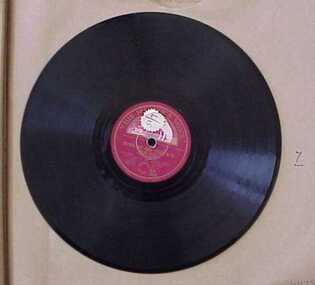
Audio - Record, Gramophone, Gramophone Co Ltd, Better not roll those blue, blue eyes / You rhyme with everything that's beautiful, c.1946
... ...Gramophone Co Ltd...[printed] "HIS MASTER'S VOICE" / TRADE MARK / MANUFACTURED SPECIALLY FOR THE GRAMOPHONE CO LTD, SYDNEY, NSW / BETTER NOT ROLL THOSE BLUE, / BLUE EYES / (At Somebody Else) / Quick Step / (Twomey Goodhart) / JOE LOSS & HIS ORCHESTRA / Dance / Orchestra / (OER713) / Speed 78 / Cat. ...Gramophone Co Ltd...Textile Mills staff Valley Worsted Mill Gramophone record Textile Mills - staff His Masters Voice (HMV) Gramophone Co Ltd Dickson's Geelong music audio [printed] "HIS MASTER'S VOICE" / TRADE MARK / MANUFACTURED SPECIALLY FOR THE GRAMOPHONE CO LTD, SYDNEY, NSW / BETTER NOT ROLL THOSE BLUE, / BLUE EYES / (At Somebody Else) / Quick Step / (Twomey Goodhart) / JOE LOSS & HIS ORCHESTRA / Dance / Orchestra / (OER713) / Speed 78 / Cat. ...Gramophone record used in the mending room of the Foster Valley Mill.Gramophone record housed in a brown paper sleeve bound in a orange folder with a blue spine. One of a collection of 12 gramophone records housed in the folder.[printed] "HIS MASTER'S VOICE" / TRADE MARK / MANUFACTURED SPECIALLY FOR THE GRAMOPHONE CO LTD, SYDNEY, NSW / BETTER NOT ROLL THOSE BLUE, / BLUE EYES / (At Somebody Else) / Quick Step / (Twomey Goodhart) / JOE LOSS & HIS ORCHESTRA / Dance / Orchestra / (OER713) / Speed 78 / Cat. No. / E.A. / 3104 / CHAPPELLS / SYDNEY / MUST NOT BE USED FOR RADIO / BROADCASTING, NOR PUBLICLY PERFORMED [Hand written on sticker] 51/7 [printed] "HIS MASTER'S VOICE" / TRADE MARK / MANUFACTURED SPECIALLY FOR THE GRAMOPHONE CO LTD, SYDNEY, NSW / YOU RHYME WITH EVERYTHING / THAT'S BEAUTIFUL / Slow Fox Trot / (Stoner-Reisfeld) / JOE LOSS & HIS ORCHESTRA / Dance / Orchestra / (OER719) / Speed 78 / Cat. No. / E.A. / 3104 / CHAPPELLS / SYDNEY / MUST NOT BE USED FOR RADIO / BROADCASTING, NOR PUBLICLY PERFORMEDtextile mills staff, valley worsted mill, gramophone, record, textile mills - staff, his masters voice (hmv), gramophone co ltd, dickson's geelong, music, audio -
 Flagstaff Hill Maritime Museum and Village
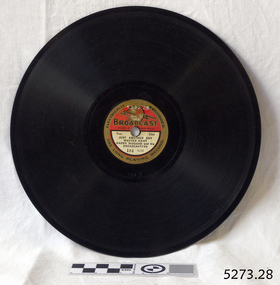
Audio - Gramophone Record, Vocalion Gramophone Co. Ltd (Broadcast records), Just Another Day Wasted Away, late 1920s to early 1930s
... Vocalion Gramophone Co. Ltd (Broadcast records)...Just Another Day Wasted Away Audio Gramophone Record Vocalion Gramophone Co. Ltd (Broadcast records) ...Thomas Edison (1847–1931), an American, invented the phonograph in 1877, making it possible to record sound waves vertically and reproduce them on a wax cylinder so they could be heard again. Later, the German American, Emile Berliner (1851-1929), improved on Edison’s principles, greatly increasing the quality of the reproduced sounds with his invention of the gramophone in 1887, which recorded the sound waves laterally onto a flat shellac disc, or ‘record’. Records could be mass-produced in a factory where audio recordings were converted to a physical copy of that recording on a plate-sized disc. A gramophone machine reproduced the sound by spinning the record on a turntable at a specified number of rotations per minute (RPM) and using a stylus or needle to transfer the vibration via a membrane to a speaker, which amplified the sound. Berliner helped set up affiliated businesses overseas. One of his representatives was William Barry Owen (1860–1914), who, on 23 February 1889, partnered with Edmund Trevor Lloyd Williams (1859–1946) in England to register The Gramophone Company. His Master’s Voice (HMV) soon became the company’s major recording label, popular worldwide. The business based the label's logo of a dog looking into a gramophone horn for ‘his master’s voice’ was based on a painting by English artist Francis Barraud, which featured a terrier called Nipper beside a gramophone. Early gramophone records were mostly made from a material referred to as shellac, a natural ingredient combined with slate powder, and a filler of manilla copal, wood resin, carnauba wax, and carbon black. Although Bakelite seemed a useful, synthetic product, it was unsuccessful as a product for records. Around the time of World War II, lightweight, flexible synthetic vinyl records began replacing shellac records. Common diameters of records: 7 inch, 10 inch, 12 inch and 16 inch Revolutions Per Minute include: 33 1/3, 45, 78 Minutes per side of record: 3, 5.5, 7, 8, 9, 12, 15 and 22 Labels, in minutes per side: Single Play 3-5 min, Extended Play (EP) 7-12 min, Long Play (LP) 12-22 min This gramophone represents a step in the evolution of recording sound. In the 19th century, the human voice was first recorded on wax cylinders and replayed. It was the beginning of a new era in sound. Then, in the 1880s, voice could be recorded onto flat discs like this record, reliably reproduced and replayed many times, even on portable devices. Later, in the mid-20th century the following generation of electronic audio recording began, and later that century, digital recording gave even better reproduction. The record represents a popular means of entertainment for personal and social activities, as well as in some businesses. Shellac gramophone record with a red, cream and gold label. Title: Just Another Day Wasted Away Artist: Harry Bidgood and his Broadcasters Publisher: Broadcast, British Vocalion Number: A184 Size: 8 inch This small record was electronically recorded. It was promoted as Broadcast, The Long Playing Record.flagstaff hill, warrnambool, maritime village, maritime museum, flagstaff hill maritime museum and village, shipwreck coast, great ocean road, gramophone, phonograph, sound waves, record, reproduction, audio record, music, sound, thomas edison, emile berliner, 1887, shellac, rpm, william barry owen, edmund trevor lloyd williams, the gramophone company, his master’s voice, hmv, francis barraud, nipper, electrically recorded, the long playing record, broadcast, british vocalion, middlesex, a184, just another day wasted away, harry bidgood and his broadcasters, 8 inch -
 Flagstaff Hill Maritime Museum and Village
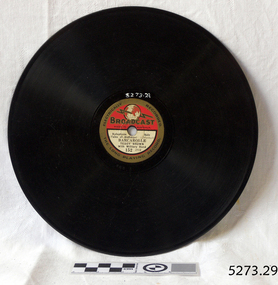
Audio - Gramophone Record, Vocalion Gramophone Co. Ltd (Broadcast records), Barcarole, late 1920s to early 1930s
... Vocalion Gramophone Co. Ltd (Broadcast records)...Barcarole Audio Gramophone Record Vocalion Gramophone Co. Ltd (Broadcast records) ...Thomas Edison (1847–1931), an American, invented the phonograph in 1877, making it possible to record sound waves vertically and reproduce them on a wax cylinder so they could be heard again. Later, the German American, Emile Berliner (1851-1929), improved on Edison’s principles, greatly increasing the quality of the reproduced sounds with his invention of the gramophone in 1887, which recorded the sound waves laterally onto a flat shellac disc, or ‘record’. Records could be mass-produced in a factory where audio recordings were converted to a physical copy of that recording on a plate-sized disc. A gramophone machine reproduced the sound by spinning the record on a turntable at a specified number of rotations per minute (RPM) and using a stylus or needle to transfer the vibration via a membrane to a speaker, which amplified the sound. Berliner helped set up affiliated businesses overseas. One of his representatives was William Barry Owen (1860–1914), who, on 23 February 1889, partnered with Edmund Trevor Lloyd Williams (1859–1946) in England to register The Gramophone Company. His Master’s Voice (HMV) soon became the company’s major recording label, popular worldwide. The business based the label's logo of a dog looking into a gramophone horn for ‘his master’s voice’ was based on a painting by English artist Francis Barraud, which featured a terrier called Nipper beside a gramophone. Early gramophone records were mostly made from a material referred to as shellac, a natural ingredient combined with slate powder, and a filler of manilla copal, wood resin, carnauba wax, and carbon black. Although Bakelite seemed a useful, synthetic product, it was unsuccessful as a product for records. Around the time of World War II, lightweight, flexible synthetic vinyl records began replacing shellac records. Common diameters of records: 7 inch, 10 inch, 12 inch and 16 inch Revolutions Per Minute include: 33 1/3, 45, 78 Minutes per side of record: 3, 5.5, 7, 8, 9, 12, 15 and 22 Labels, in minutes per side: Single Play 3-5 min, Extended Play (EP) 7-12 min, Long Play (LP) 12-22 min This gramophone represents a step in the evolution of recording sound. In the 19th century, the human voice was first recorded on wax cylinders and replayed. It was the beginning of a new era in sound. Then, in the 1880s, voice could be recorded onto flat discs like this record, reliably reproduced and replayed many times, even on portable devices. Later, in the mid-20th century the following generation of electronic audio recording began, and later that century, digital recording gave even better reproduction. The record represents a popular means of entertainment for personal and social activities, as well as in some businesses. Shellac gramophone record with a red, cream and gold label. Title: Barcarole Artist: Teddy Brown with his Military Band, Publisher: Broadcast, British Vocalion, Middlesex Number: A152 Size: 9 inch, Electrically recorded, promoted as Broadcast, The Long Playing Record.flagstaff hill, warrnambool, maritime village, maritime museum, flagstaff hill maritime museum and village, shipwreck coast, great ocean road, gramophone, phonograph, sound waves, record, reproduction, audio record, music, sound, thomas edison, emile berliner, 1887, shellac, rpm, william barry owen, edmund trevor lloyd williams, the gramophone company, his master’s voice, hmv, francis barraud, nipper, electrically recorded, the long playing record, broadcast, british vocalion, middlesex, a152, barcarole, teddy brown with his military band, 9 inch -
 Flagstaff Hill Maritime Museum and Village
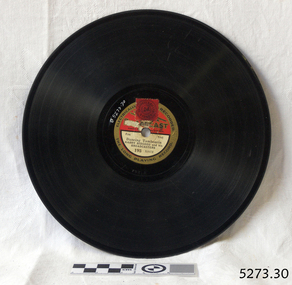
Audio - Gramophone Record, Vocalion Gramophone Co. Ltd (Broadcast records), Dancing Tamborine, late 1920s to early 1930s
... Vocalion Gramophone Co. Ltd (Broadcast records)...Dancing Tamborine Audio Gramophone Record Vocalion Gramophone Co. Ltd (Broadcast records) ...Thomas Edison (1847–1931), an American, invented the phonograph in 1877, making it possible to record sound waves vertically and reproduce them on a wax cylinder so they could be heard again. Later, the German American, Emile Berliner (1851-1929), improved on Edison’s principles, greatly increasing the quality of the reproduced sounds with his invention of the gramophone in 1887, which recorded the sound waves laterally onto a flat shellac disc, or ‘record’. Records could be mass-produced in a factory where audio recordings were converted to a physical copy of that recording on a plate-sized disc. A gramophone machine reproduced the sound by spinning the record on a turntable at a specified number of rotations per minute (RPM) and using a stylus or needle to transfer the vibration via a membrane to a speaker, which amplified the sound. Berliner helped set up affiliated businesses overseas. One of his representatives was William Barry Owen (1860–1914), who, on 23 February 1889, partnered with Edmund Trevor Lloyd Williams (1859–1946) in England to register The Gramophone Company. His Master’s Voice (HMV) soon became the company’s major recording label, popular worldwide. The business based the label's logo of a dog looking into a gramophone horn for ‘his master’s voice’ was based on a painting by English artist Francis Barraud, which featured a terrier called Nipper beside a gramophone. Early gramophone records were mostly made from a material referred to as shellac, a natural ingredient combined with slate powder, and a filler of manilla copal, wood resin, carnauba wax, and carbon black. Although Bakelite seemed a useful, synthetic product, it was unsuccessful as a product for records. Around the time of World War II, lightweight, flexible synthetic vinyl records began replacing shellac records. Common diameters of records: 7 inch, 10 inch, 12 inch and 16 inch Revolutions Per Minute include: 33 1/3, 45, 78 Minutes per side of record: 3, 5.5, 7, 8, 9, 12, 15 and 22 Labels, in minutes per side: Single Play 3-5 min, Extended Play (EP) 7-12 min, Long Play (LP) 12-22 min This gramophone represents a step in the evolution of recording sound. In the 19th century, the human voice was first recorded on wax cylinders and replayed. It was the beginning of a new era in sound. Then, in the 1880s, voice could be recorded onto flat discs like this record, reliably reproduced and replayed many times, even on portable devices. Later, in the mid-20th century the following generation of electronic audio recording began, and later that century, digital recording gave even better reproduction. The record represents a popular means of entertainment for personal and social activities, as well as in some businesses. Shellac gramophone record with a red, cream and gold label. Title: Dancing Tamborine Artist: Harry Bidgood and his Broadcasters Publisher: Broadcast, British Vocalion Number: A193 Size: 8 inch Electrically recorded, promoted by Broadcast as The Long Playing Record.flagstaff hill, warrnambool, maritime village, maritime museum, flagstaff hill maritime museum and village, shipwreck coast, great ocean road, gramophone, phonograph, sound waves, record, reproduction, audio record, music, sound, thomas edison, emile berliner, 1887, shellac, rpm, william barry owen, edmund trevor lloyd williams, the gramophone company, his master’s voice, hmv, francis barraud, nipper, electrically recorded, the long playing record, broadcast, british vocalion, middlesex, a193, dancing tamborine, harry bidgood and his broadcasters, 8 inch -
 Robin Boyd Foundation
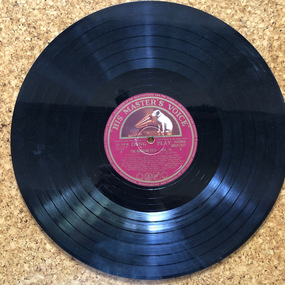
Audio - Recording, Gramophone Co Ltd, Sydney
... Gramophone Co Ltd, Sydney...Audio Recording Gramophone Co Ltd, Sydney ...The Boyds purchased their record player and sound system from Thomas’s in Melbourne. Patricia Boyd (later Davies) was very interested in opera and was later appointed to the Board of the Australian Opera.The Roaring 20s - Vol III. LP 33RPM vinyl, Catalogue Number: GA-33-353, 1 vinyl disk, plastic sleeve, no cover.John Gray' and 'GRAY' handwritten on side 1lp, sound recording -
 Mont De Lancey
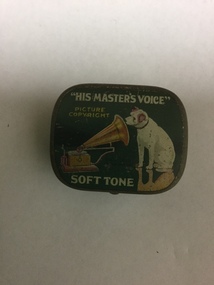
Gramophone needles, Gramophone Co. Ltd
... Gramophone Co. Ltd....Gramophone needles Gramophone Co. Ltd. ...His Masters Voice - Soft tone.Green tin with picture of dog and gramophone on front, containing approximately 200 English gramophone needles. Used in gramophones which played 78 rpm shellac records.styluses (audio), gramophones -
 Coal Creek Community Park & Museum
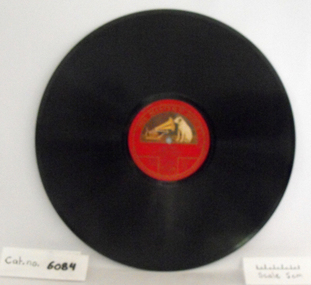
Phonograph record, Ave Maria / On Wings of Song
... DB 283 The Gramophone Co. Ltd....DB 283 The Gramophone Co. Ltd. Red "His Master's Voice" record label, Side A: Ave Maria, Side B: On Wings of Song Ave Maria / On Wings of Song Phonograph record ...Red "His Master's Voice" record label, Side A: Ave Maria, Side B: On Wings of SongDB 283 The Gramophone Co. Ltd. -
 Coal Creek Community Park & Museum
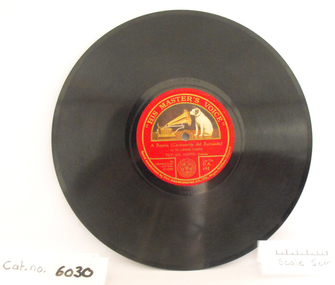
Audio - Phonograph record, The Gramophone Record Co. Ltd, Magari (Canzonetta Veneziana), A Rosina (Canzonetta Del Barcaiolo)
... The Gramophone Record Co. Ltd...Artist: Toti Dal Monte - Soprano Magari (Canzonetta Veneziana), A Rosina (Canzonetta Del Barcaiolo) Audio Phonograph record The Gramophone Record Co. Ltd ...Black Shellac phonograph record with red His Master's Voice label. Artist: Toti Dal Monte - Soprano"His Masters Voice" Cat. No. DA 698 -
 Mont De Lancey
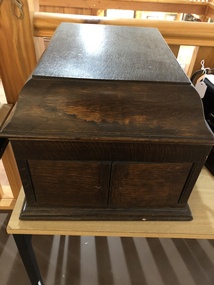
Gramophone
... 'His Master's Voice' 'The Gramophone Co. Ltd. Patents Applied For'...Gramophones 'His Master's Voice' 'The Gramophone Co. Ltd. Patents Applied For' Wooden gramophone cabinet with hinged lid, 2 doors at front with 3 shelves each. ...Used at the home of Margaret Lewis (nee Aitken) and her husband, Joseph Lewis, 'Yuonga' in Seville, Victoria, Australia.Wooden gramophone cabinet with hinged lid, 2 doors at front with 3 shelves each. Metal turntable with felt covering, and a Broadcast vinyl record from Palings.'His Master's Voice' 'The Gramophone Co. Ltd. Patents Applied For'gramophones -
 Warrnambool and District Historical Society Inc.
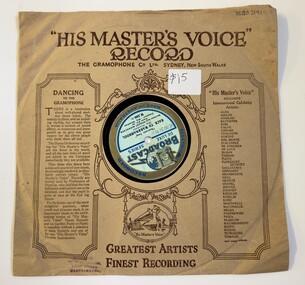
Functional object - Musical recording, Back to Warrnambool, C 1930
... Cover:"His Masters Voice." Record.The Gramophone Co Ltd Sydney New South Wales. ...Cover:"His Masters Voice." Record.The Gramophone Co Ltd Sydney New South Wales. This is a 78rpm record in a brown paper sleeve with a circle cut out in the centre revealing the titleof the songs on each side of the record. ...Back to Warrnambool celebrations were an important event on the social calendar and were run over a number of years in the town. Some of the events held over the week included processions, sports Carnivals, concerts, card playing, Church services and local tourist events.Reginald Stoneham the composer of the song , "Back to Warrnambool,"was born in 1879 and died March 1942. He was a popular accompanist and recording artist in the early part of the 20th century. Other songs which he wrote include All for Australia, The drover, Bendigo for the weekly Times, Mildura and Home to Ballaraat.He also penned music under the name Alberto Algrati which were his middle names.This recording is a valuable piece of Warrnambool's history as it provides an original version of the song as it was sung at the time and also as a piece of Reg Stonehams work. The "Back to Warrnambool" celebrations were a major event on the social calendar of the town for a number of years.This is a 78rpm record in a brown paper sleeve with a circle cut out in the centre revealing the titleof the songs on each side of the record.On recording: Broadcast De Luxe Series Back to Warrnambool ( Reg Stoneham) Baritone Solo, Robert Nicholson. Side 2.A Hymn of Home. Male Quartet The Premier Four. Label Mrs Rowan Music House, 143 Liebig ST Warrnambool Phone 634. Cover:"His Masters Voice." Record.The Gramophone Co Ltd Sydney New South Wales. back to warrnambool, 78 recording, reg stoneham, mrs rowan music house, warrnambool history, 1930 warrnambool -
 Flagstaff Hill Maritime Museum and Village
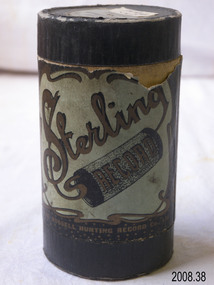
Gramophone cylinders, The Russell Hunting Record Co Ltd, Killarney
... Gramophone cylinder...Sterling Record...The Russell Hunting Record Co Ltd...Gramophone cylinders, black. 6 grooves on interior stored in cardboard round container with detachable lid. Sterling Record, Manufactured The Russell Hunting Record Co Ltd. ...Co Ltd. Song: 1061 Killarney, Ernest Pike and Orchestra Killarney Gramophone cylinders The Russell Hunting Record Co Ltd. ...Gramophone cylinders, black. 6 grooves on interior stored in cardboard round container with detachable lid. Sterling Record, Manufactured The Russell Hunting Record Co Ltd. Song: 1061 Killarney, Ernest Pike and Orchestraflagstaff hill, warrnambool, shipwrecked-coast, flagstaff-hill, flagstaff-hill-maritime-museum, maritime-museum, shipwreck-coast, flagstaff-hill-maritime-village, gramophone cylinder, sterling record, the russell hunting record co ltd, killarney, ernest pike and orchestra -
 Flagstaff Hill Maritime Museum and Village
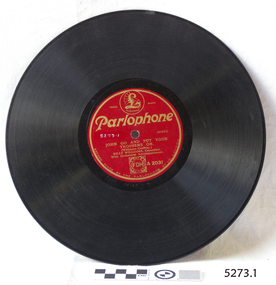
Audio - Gramophone Record, Parlophone Co. Ltd, John Go And Put Your Trousers On, Early-to-mid 20th century
... Gramophone Company...His Master’s Voice...HMV...Francis Barraud...Nipper...10 inch...Parlophone Co Ltd...gramophone record, red label. Title: John Go And Put Your Trousers On Artist: Billy Williams Publisher: Parlophone Co Ltd, London Number: 41413 Size: 10 inch...Title: John Go And Put Your Trousers On Artist: Billy Williams Publisher: Parlophone Co Ltd, London Number: 41413 Size: 10 inch John Go And Put Your Trousers On Audio Gramophone Record Parlophone Co. ...Thomas Edison (1847–1931), an American, invented the phonograph in 1877, making it possible to record sound waves vertically and reproduce them on a wax cylinder so they could be heard again. Later, the German American, Emile Berliner (1851-1929), improved on Edison’s principles, greatly increasing the quality of the reproduced sounds with his invention of the gramophone in 1887, which recorded the sound waves laterally onto a flat shellac disc, or ‘record’. Records could be mass-produced in a factory where audio recordings were converted to a physical copy of that recording on a plate-sized disc. A gramophone machine reproduced the sound by spinning the record on a turntable at a specified number of rotations per minute (RPM) and using a stylus or needle to transfer the vibration via a membrane to a speaker, which amplified the sound. Berliner helped set up affiliated businesses overseas. One of his representatives was William Barry Owen (1860–1914), who, on 23 February 1889, partnered with Edmund Trevor Lloyd Williams (1859–1946) in England to register The Gramophone Company. His Master’s Voice (HMV) soon became the company’s major recording label, popular worldwide. The label's logo, a dog looking into a gramophone horn, looking for his master’s voice, was based on a painting by English artist Francis Barraud, which featured a terrier called Nipper beside a gramophone. Early gramophone records were mostly made from a material referred to as shellac, a natural ingredient combined with slate powder, and a filler of manilla copal, wood resin, carnauba wax, and carbon black. Although Bakelite seemed a useful, synthetic product, it was unsuccessful as a product for records. Around the time of World War II, lightweight, flexible synthetic vinyl records began replacing shellac records. Common diameters of records: 7 inch, 10 inch, 12 inch and 16 inch Revolutions Per Minute include: 33 1/3, 45, 78 Minutes per side of record: 3, 5.5, 7, 8, 9, 12, 15 and 22 Labels, in minutes per side: Single Play 3-5 min, Extended Play (EP) 7-12 min, Long Play (LP) 12-22 min This gramophone represents a step in the evolution of recording sound. In the 19th century, the human voice was first recorded on wax cylinders and replayed. It was the beginning of a new era in sound. Then, in the 1880s, voice could be recorded onto flat discs like this record, reliably reproduced and replayed many times, even on portable devices. Later, in the mid-20th century the following generation of electronic audio recording began, and later that century, digital recording gave even better reproduction. The record represents a popular means of entertainment for personal and social activities, as well as in some businesses. Shellac gramophone record, red label. Title: John Go And Put Your Trousers On Artist: Billy Williams Publisher: Parlophone Co Ltd, London Number: 41413 Size: 10 inch"A2031"flagstaff hill, warrnambool, maritime village, maritime museum, flagstaff hill maritime museum and village, shipwreck coast, great ocean road, gramophone, phonograph, sound waves, record, reproduction, audio record, music, sound, thomas edison, emile berliner, 1887, shellac, rpm, william barry owen, edmund trevor lloyd williams, the gramophone company, his master’s voice, hmv, francis barraud, nipper, 10 inch, parlophone co ltd, london, john go and put your trousers on, billy williams -
 Orbost & District Historical Society
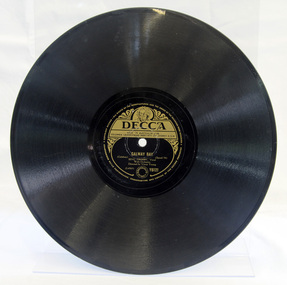
gramophone record, 1949
... On the central label is Y6121 and detailed information of the maker, Columbia Gramophone Company (Aust)., in gold print on black background. gramophone record D, Davis & Co Ltd Sydney ...Galway Bay was a hit around the world for the American singer Bing Crosby in the late 1940s. Crosby was very popular in Australia and had planned to visit Australia in 1949.The phonograph disc record was the primary medium used for music reproduction until late in the 20th century, replacing the phonograph cylinder record—with which it had co-existed from the late 1880s through to the late 1920s. Records were still the most popular media even when new formats such as compact cassette were mass-marketed. By the late 1980s, digital media, in the form of the compact disc, had gained a larger market share, and the vinyl record left the mainstream in 1991. This item is representative of the music popular in the mid 20th century.Double sided black disc with a single central hole. A side is Galway Bay. B side is My Girl's An Irish Girl. Both are vocal with orchestra by Bing Crosby. On the central label is Y6121 and detailed information of the maker, Columbia Gramophone Company (Aust)., in gold print on black background.Pressed - WL4583T20Aphonogram-record vinyl crosy-bing music-irish -
 Williamstown Historical Society Inc
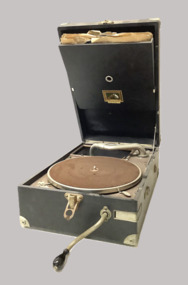
Audio - Portable winding gramophone
... Co Ltd., Hayes, Middlesex, England." Portable winding gramaphone. Dark brown case with hinged lid. Includes two records (78’s - bakelite) stored in the lid. Audio Portable winding gramophone ...Portable winding gramaphone. Dark brown case with hinged lid. Includes two records (78’s - bakelite) stored in the lid."His Master's Voice" "The Gramaphone Company Ltd. Patent Applied for." "His Master's Voice" "No 4 the Gramaphone Company Co Ltd., Hayes, Middlesex, England." -
 Tatura Irrigation & Wartime Camps Museum
Gramophone Record and cover
... Co of Japan Ltds VE 4182. Reverse side the same except no 4275. 52353 A. Rain on Willow 4182 52353 B. Folk Song 4275 Interpreted by Hajime Kitamura. A Japanese journalist who visited the museum on 4 February 2006. Inscription on cover reads Columbia Electronically recorded. New process. Record Columbia and Japanese writing. (front and back) Round black bakelite audio record. Gold coloured lettering and His Masters Voice insignia in the centre around a central hole. This record is contained in a brown and green paper cover with dark green printing in English and Japanese. Gramophone ...Famous Japanese singer Chimara Hsakusa, recorded as a commemorative issue for a willow tree planted in central Tokyo and thought to be 100 years old.Round black bakelite audio record. Gold coloured lettering and His Masters Voice insignia in the centre around a central hole. This record is contained in a brown and green paper cover with dark green printing in English and Japanese.VE His Masters Voice trade mark reg. Victor Orthophonic recording 52353-19 (4182) Japanese writing. Victor Talking Machine Co of Japan Ltds VE 4182. Reverse side the same except no 4275. 52353 A. Rain on Willow 4182 52353 B. Folk Song 4275 Interpreted by Hajime Kitamura. A Japanese journalist who visited the museum on 4 February 2006. Inscription on cover reads Columbia Electronically recorded. New process. Record Columbia and Japanese writing. (front and back)chimara hsakusa, victor taling machine co., hajime kitamura, rain on willow, folk song, walter hamblin
