
Showing 7 items matching "harvesting methods"
-
 Maffra Sugarbeet Museum
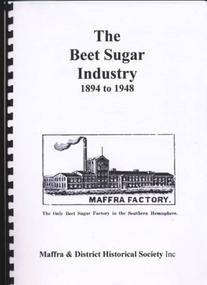
Book, The Beet Sugar Industry 1894 to 1948, 2011
... ...harvesting methods...sugarbeet harvesting methods maffra Published book (processed, comb bound) "The Beet Sugar Industry 1894 to 1948" The Beet Sugar Industry 1894 to 1948 Book Book McCole, Shirley Fletcher, Meredith Pywell, Frank Maffra and District Historical Society ...Published book (processed, comb bound) "The Beet Sugar Industry 1894 to 1948"sugarbeet, harvesting methods, maffra -
 Melton City Libraries
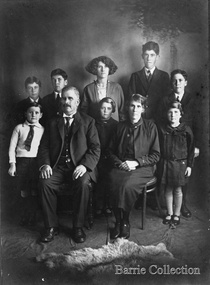
Photograph, Charles Ernest and Jessie Barrie with family, Unknown
... This method of handling sheaves significantly reduced laborious pitchforking individual sheaves. This invention was soon taken up by farmers far and wide and was a common sight in the district at harvest time in the stacking season. ...This method of handling sheaves significantly reduced laborious pitchforking individual sheaves. This invention was soon taken up by farmers far and wide and was a common sight in the district at harvest time in the stacking season. ...This document is has been compiled by Wendy Barrie daughter of Ernest (Bon) and Edna Barrie and granddaughter of Charles E and Jessie M Barrie. I was born in during WW 11 and the first child of my generation to live on the ‘ Darlingsford’ property at Melton. My grandfather was well known in the district and was mostly referred to as Ernie. He shared the same initials as his second son Edgar. His three eldest sons lived and farmed in Melton for their entire lives. His descendants are still associated with farming, engineering and earthmoving in Melton. Ernie Barrie operated a travelling Chaff Cutter in the St Arnaud area where his parents William and Mary Ann had taken up land at Coonooer West in 1873. Ernie commenced his working life with a team of bullocks and a chaff cutter. The earliest connection he had with Melton was in 1887. By the beginning of the 20th century Ernie and his father William and brothers, William, Samuel, James Edwin,[Ted] Robert, Arthur and Albert have been associated with farming and milling in the Melton district. In the early 1900’s Ernie and his brother Ted were in partnership in a Chaff cutting and Hay processing Mill on the corner of Station and Brooklyn road Melton South. The mill was managed by William for a time. By 1906 Charles Ernest and James Edwin were in partnership in the Station Road mill when a connecting rail line across Brooklyn Road for a siding was constructed to the Melton Railway Station. In 1911 the Mill’s letterhead shows C.E. BARRIE Hay Pressing and Chaff Cutting Mills. Melton Railway Station. Telephone No 1 Melton. This Mill as sold to H S K Ward in 1916 and stood until 1977 when it burnt down in a spectacular fire. Ernie built a house at Melton South beside the Chaff Mill at Station Road in 1906 and married Jessie May Lang in August at the Methodist Church. Jessie’s father was Thomas Lang. He came to Melton in 1896 and was the Head Teacher at Melton State School No 430 until he retired in 1917. They had 9 children with 8 surviving to adulthood. Jessie and Ernie had 6 sons and 3 daughters. All the children lived at Darlingsford. In April 1910 the family left Melton for a brief period and moved to a farm in Trundle in NSW. They returned to Melton and purchased Darlingsford in May 1911. For a time during WW1 they lived at Moonee Ponds near the Lang grandparents at Ascot Vale. Mary and Bon attended Bank St State School. The children developed diphtheria in 1916 and their youngest boy, Cecil died of complications. Mary and Bon were taken to Fairfield Hospital and both recovered. At the end of the war influenza broke out the family returned to Darlingsford and shared the home for a short while with the Pearcey family who had been working the farm. By 1922 the family had and grown and Edgar, Tom, Horace, Jessie, Joyce and Jim were living a Darlingsford. Ernie continued during the 1920’s working the farm and attend his many civic and community commitments. Two 8 clydesdale horse teams were used to work the land which meant early rising for the horses to be fed and harnessed to commence the days work. In 1916 Ernie also became involved in a Chaff Mill on the corner of Sunshine and Geelong Road West Footscray, which at the time was being run by John Ralph Schutt. It was known an Schutt Barrie. A flour mill was added at a later stage. Other Schutt and Barrie mills were situated at Parwan and Diggers Rest. Another mill was situated beside the railway line at Rockbank. The Footscray mill ceased operation in 1968 Ernie spent a lot of time and energy at the Parwan Mill and travelling around Parwan and Balliang farms, where he came to know many of the families in the district. Ernies commitment to the civic development to the Melton and district was extensive, he was involved with a number of large events during the 1920’s such as the Melton Exhibitions and the 1929 Back to Melton Celebrations. He was a member of the Australian Natives Association at the turn of the century. He was Chairman of the School Committee at Melton State School 430 and the Melton South State School in thw1920s. He donated the land for a Hall for Melton South in 1909, known as Exford Hall and later in 1919 renamed Victoria Hall. The Hall was demolished in 1992. He was a Councillor, JP, and Vice President and President of the Melton Mechanics Institute Hall Committee in 1915- 1916. He was a member of the Methodist Church and later the Scots Presbyterian Church. He was Superintendent of the Sunday School of the Methodist Church to 1910 and later Scots Presbyterian Church until 1931. This is reflected in the theme of children in the stained glass window which was dedicated in his memory by his wife Jessie as a gift to the Scots Church. Charles Ernest Barrie made many generous donations to many charities who supported young people and children. In 1918 Jessie and Ernie made the first donation to a very prominent Victorian charity whose work still continues. Yooralla. In July 1931 Ernie’s untimely death was a major blow to the family and the Melton community. To this day people still vividly recall the day they lined the streets for his funeral. The day of the funeral is recalled as the day Melton stood as two of their prominent citizens who tragically died on the same day. Their eldest daughter Mary had married Keith Robinson in 1930 and had just moved to Heatherdale Toolern Vale with their year old baby son. Bon the eldest son was 22, Edgar 18, Tom 16, Horace 15, Jessie and Joyce 10 and Jim 8 years old. A heavy burden of responsibility fell on the shoulders of the two eldest children, Mary particularly for her mother and Bon stepped in assuming head of the family for his mother, brothers and sisters living at the Darlingsford homestead. In the early 1930’s the three eldest sons took on many of the Civic and Church commitments which their father had held. This community involvement extended well into the 1980s. In 1941 Bon married Edna Myers and they moved into a house shifted from Harkness Lane to Harkness Lane on the eastern section of the Darlingford property. Edgar married Margaret Hodgkinson a Primary school teacher at Melton in 1949 and they lived in the Darlingsford house. Earlier Tom married May Ferris and lived on the eastern side of Ferris Lane in the Ferris home. Bon , Edgar and Tom often operated as a team effort, in particular at harvest time when a larger team of workers was needed. The three farms cultivated wheat, barley and oats and supplied the Mill with sheafed hay. They continued using horse teams until mechanisation in the 1940’s made the horses redundant. By the 1960s their five sons continued with farming. Many loads of hay were transported to the Mill in Footscray. Well into the 1960s hired harvest hands along with agricultural university students were involved in bringing in he harvest. Stacking was an art form in itself and Tom held the expertise for building and shaping the sides and roof. The stacks built in the district each had their own unique shape and could be recognized by their builders. The Barrie brothers developed a mechanical fork lift for picking up complete stooks and moving them to be loaded to the elevator to build the haystack. The prototype built by Bill Gillespie was attached to a Bedford truck. Later refinements in a collaborative effort with the Gillespie brothers a multi pronged fork was attached to the front of tractor which was hydraulically operated to raise each stook onto trucks to be transported to the site of the haystacks. This method of handling sheaves significantly reduced laborious pitchforking individual sheaves. This invention was soon taken up by farmers far and wide and was a common sight in the district at harvest time in the stacking season. I recall visiting farmers calling in at the house at Ferris Road farm to inspect this break through invention. The Clydesdale horse teams were used into the 1940s but by the 1950s the Barries’ farms were fully mechanised. When the demand for sheafed hay declined other crops were introduced these included barley, lucerne, wheat and peas. Sheep were added to the mix in the 1950s in an attempt to keep the farms more viable. In the 1970s part of the Barrie’s farms were facing a major disruption with the impending compulsorily acquisition of a strip of land for the construction the freeway bypass, which divided access between the Darlingsford homestead with those on Ferris Lane. Charles Ernest Barrie and Jessie May Lang's children: 1. Mary Ena BARRIE was born on 07 October 1907. She died on 29 April 1999. 2. Ernest Wesley BARRIE was born on 29 April 1909 in Ascot Vale, Victoria, Australia.He died on 25 December 1985 in Melton, Victoria, Australia. 3. Cecil William BARRIE was born on 23 February 1911.He died on 25 May 1916. 4. Charles Edgar BARRIE was born on 01 June 1913.He died on 06 October 1975. 5. Thomas Lindsay BARRIE was born on 25 November 1914.He died on 14 September 1990 in Melton, Victoria, Australia. 6. William Horace BARRIE was born on 11 October 1915.He died on 19 December 1950. 7. Jessie Maud BARRIE was born on 06 November 1920 in Bacchus Marsh, Victoria, Australia.She died on 26 February 1994. 8. Dorothy Joyce BARRIE was born on 06 November 1920 in Bacchus Marsh, Victoria, Australia.She died on 18 March 2003.. 9. James Edward BARRIE was born on 17 January 1922 in Bacchus Marsh, Victoria, Australia.He died on 23 August 2004Family Photo with Edgar, Tom, Mary, Ernest (Bon), Horace, Jim, Charles Ernest, Jessie and Joycelocal identities -
 Victorian Railway History Library
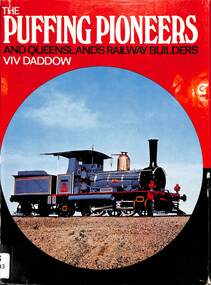
Book, Daddow, Vivian, The Puffing Pioneers - and Queensland's Railway Builders, 1975
... While miners talked of what made their day, farmers discussed crops and harvests, seamen their ships, and trainers and jockeys their horses, wherever steam men gathered, discussion soon turned to locomotives and the trains they hauled. Like jockeys with their mounts, iron horses with excellent traits were praised while those with annoying peculiarities were criticized and remedies suggested. Methods ...INTRODUCTION Until well into the twentieth century, driver, fireman and guard — with a locomotive — set out on something resembling a safari. Tucker boxes crammed with food, a change of clothing, a roll of blankets, and armed with a sheaf of time-tables, they worked trains hither and thither not to return home for almost a week. But the passing of time, plus union pressure, brought an end to the need for "waltzing Matilda". Not only blankets but sheets, pillow slips, then later mosquito nets, along with other aids to civilized living, were provided by the Department in living quarters away from home. Few wives took kindly to the chore of selecting and preparing food and packing tucker boxes. Railwaymen seeking board and lodgings in a new depot could receive a set-back by being told "no tucker boxes packed". Until pooling of locomotives in depots became the order, a driver and fireman had "their own engine", and great was the competition between engine crews to display the best groomed horse. Much time might be spent outside rostered working hours cleaning their engine with kerosene and polishing with tallow and bath brick. So spotless and sparkling were some that a proud engineman would say a clean white handkerchief could be rubbed even over a hidden part. While miners talked of what made their day, farmers discussed crops and harvests, seamen their ships, and trainers and jockeys their horses, wherever steam men gathered, discussion soon turned to locomotives and the trains they hauled. Like jockeys with their mounts, iron horses with excellent traits were praised while those with annoying peculiarities were criticized and remedies suggested. Methods of firing to get best results from slow steaming locos were debated. Driver warned driver of weaknesses found in locomotives on recent "trips", spoke of developing defects calling for close attention — this one is "knocking Badly on one side", that one "priming badly (give her a good blow down before leaving the shed)", another with a "big end inclined to run hot", one with "a lot of slop in the boxes", one "getting down on the springs", or the sloth that was slow pulling on steep climbs to the chagrin of a driver striving to run on time. Things of no small concern when handling a locomotive on a train for a shift of maybe eight hours straight, or ten, even twelve, and on occasions longer. Foreknowledge of the particular loco allotted his train on the next job could fill the preceding hours for a driver or fireman with pleasant contentment, or with nagging trepidation and disgust……index, ill, p.217.non-fictionINTRODUCTION Until well into the twentieth century, driver, fireman and guard — with a locomotive — set out on something resembling a safari. Tucker boxes crammed with food, a change of clothing, a roll of blankets, and armed with a sheaf of time-tables, they worked trains hither and thither not to return home for almost a week. But the passing of time, plus union pressure, brought an end to the need for "waltzing Matilda". Not only blankets but sheets, pillow slips, then later mosquito nets, along with other aids to civilized living, were provided by the Department in living quarters away from home. Few wives took kindly to the chore of selecting and preparing food and packing tucker boxes. Railwaymen seeking board and lodgings in a new depot could receive a set-back by being told "no tucker boxes packed". Until pooling of locomotives in depots became the order, a driver and fireman had "their own engine", and great was the competition between engine crews to display the best groomed horse. Much time might be spent outside rostered working hours cleaning their engine with kerosene and polishing with tallow and bath brick. So spotless and sparkling were some that a proud engineman would say a clean white handkerchief could be rubbed even over a hidden part. While miners talked of what made their day, farmers discussed crops and harvests, seamen their ships, and trainers and jockeys their horses, wherever steam men gathered, discussion soon turned to locomotives and the trains they hauled. Like jockeys with their mounts, iron horses with excellent traits were praised while those with annoying peculiarities were criticized and remedies suggested. Methods of firing to get best results from slow steaming locos were debated. Driver warned driver of weaknesses found in locomotives on recent "trips", spoke of developing defects calling for close attention — this one is "knocking Badly on one side", that one "priming badly (give her a good blow down before leaving the shed)", another with a "big end inclined to run hot", one with "a lot of slop in the boxes", one "getting down on the springs", or the sloth that was slow pulling on steep climbs to the chagrin of a driver striving to run on time. Things of no small concern when handling a locomotive on a train for a shift of maybe eight hours straight, or ten, even twelve, and on occasions longer. Foreknowledge of the particular loco allotted his train on the next job could fill the preceding hours for a driver or fireman with pleasant contentment, or with nagging trepidation and disgust…… railroads -- queensland -- history, railroads -- australia -- queensland -- history. -
 Department of Energy, Environment and Climate Action
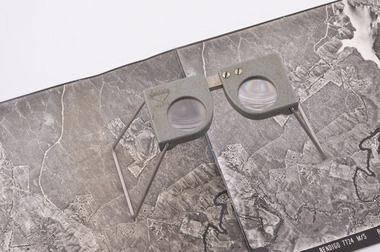
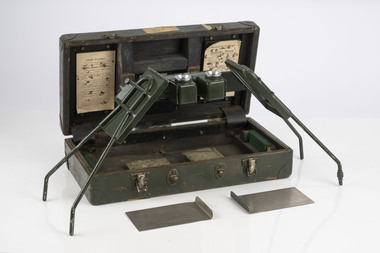
Pocket Stereoscope
... harvesting, plantations, bushfires, insect and disease attack and so on In 1928, the Forests Commission undertook its first major aerial photography project over 15,000 acres of forest which is said to be the first of its kind in Australia. During the Second World War, large areas of Victoria were photographed by RAAF and used to produce orthophoto maps. By 1945 aerial photography of 13,000 square miles (3.4 M ha) was completed, including much of the inaccessible eastern forests. The Forests Commission started developing its own small format photography in the early 1970s. Simple, cheap and rapid methods...harvesting, plantations, bushfires, insect and disease attack and so on In 1928, the Forests Commission undertook its first major aerial photography project over 15,000 acres of forest which is said to be the first of its kind in Australia. During the Second World War, large areas of Victoria were photographed by RAAF and used to produce orthophoto maps. By 1945 aerial photography of 13,000 square miles (3.4 M ha) was completed, including much of the inaccessible eastern forests. The Forests Commission started developing its own small format photography in the early 1970s. Simple, cheap and rapid methods ...This pocket stereoscope was used to view a pair of separate and overlapping aerial photos as a single three-dimensional image. It was small and could be easily used in the field. Larger, mirror stereoscope were also available in some offices. The aerial images were used to map forest types, timber stands, new roads and tracks, firebreaks, boundaries of timber harvesting, plantations, bushfires, insect and disease attack and so on In 1928, the Forests Commission undertook its first major aerial photography project over 15,000 acres of forest which is said to be the first of its kind in Australia. During the Second World War, large areas of Victoria were photographed by RAAF and used to produce orthophoto maps. By 1945 aerial photography of 13,000 square miles (3.4 M ha) was completed, including much of the inaccessible eastern forests. The Forests Commission started developing its own small format photography in the early 1970s. Simple, cheap and rapid methods of obtaining photographs using 70mm and 35mm cameras were developed Small pocket stereoscope to interprete aerial photographs in the field Adjustable lenses on foldaway wire legsSokkisha Tokyoforest measurement, surveying, forests commission victoria (fcv) -
 Department of Energy, Environment and Climate Action
Stereoscope
... harvesting, plantations, bushfires, insect and disease attack and so on In 1928, the Forests Commission undertook its first major aerial photography project over 15,000 acres of forest which is said to be the first of its kind in Australia. During the Second World War, large areas of Victoria were photographed by the RAAF and used to produce orthophoto maps. By 1945 aerial photography of 13,000 square miles (3.4 M ha) was completed, including much of the inaccessible eastern forests. The Forests Commission started developing its own small format photography in the early 1970s. Simple, cheap and rapid methods...harvesting, plantations, bushfires, insect and disease attack and so on In 1928, the Forests Commission undertook its first major aerial photography project over 15,000 acres of forest which is said to be the first of its kind in Australia. During the Second World War, large areas of Victoria were photographed by the RAAF and used to produce orthophoto maps. By 1945 aerial photography of 13,000 square miles (3.4 M ha) was completed, including much of the inaccessible eastern forests. The Forests Commission started developing its own small format photography in the early 1970s. Simple, cheap and rapid methods ...This stereoscope was used to view a pair of separate and overlapping aerial photos as a single three-dimensional image. Smaller units and could be easily used in the field but this larger, mirror stereoscope was used in offices. The aerial images were used to map forest types, timber stands, new roads and tracks, firebreaks, boundaries of timber harvesting, plantations, bushfires, insect and disease attack and so on In 1928, the Forests Commission undertook its first major aerial photography project over 15,000 acres of forest which is said to be the first of its kind in Australia. During the Second World War, large areas of Victoria were photographed by the RAAF and used to produce orthophoto maps. By 1945 aerial photography of 13,000 square miles (3.4 M ha) was completed, including much of the inaccessible eastern forests. The Forests Commission started developing its own small format photography in the early 1970s. Simple, cheap and rapid methods of obtaining photographs using 70mm and 35mm cameras were developedFoldable metal stereoscope in wooden box with mirror covers Ex Dept of Defenceforests commission victoria (fcv), surveying, forest measurement -
 Department of Energy, Environment and Climate Action
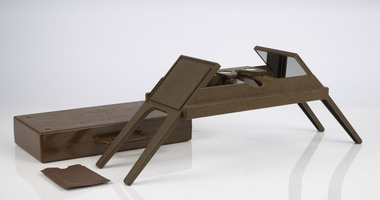
Foldable Stereoscope
... harvesting, plantations, bushfires, insect and disease attack and so on In 1928, the Forests Commission undertook its first major aerial photography project over 15,000 acres of forest which is said to be the first of its kind in Australia. During the Second World War, large areas of Victoria were photographed by RAAF and used to produce orthophoto maps. By 1945 aerial photography of 13,000 square miles (3.4 M ha) was completed, including much of the inaccessible eastern forests. The Forests Commission started developing its own small format photography in the early 1970s. Simple, cheap and rapid methods...harvesting, plantations, bushfires, insect and disease attack and so on In 1928, the Forests Commission undertook its first major aerial photography project over 15,000 acres of forest which is said to be the first of its kind in Australia. During the Second World War, large areas of Victoria were photographed by RAAF and used to produce orthophoto maps. By 1945 aerial photography of 13,000 square miles (3.4 M ha) was completed, including much of the inaccessible eastern forests. The Forests Commission started developing its own small format photography in the early 1970s. Simple, cheap and rapid methods ...This stereoscope was used to view a pair of separate and overlapping aerial photos as a single three-dimensional image. This smaller foldable unit could be easily used in the field but larger, mirror stereoscope was used in offices. The aerial images were used to map forest types, timber stands, new roads and tracks, firebreaks, boundaries of timber harvesting, plantations, bushfires, insect and disease attack and so on In 1928, the Forests Commission undertook its first major aerial photography project over 15,000 acres of forest which is said to be the first of its kind in Australia. During the Second World War, large areas of Victoria were photographed by RAAF and used to produce orthophoto maps. By 1945 aerial photography of 13,000 square miles (3.4 M ha) was completed, including much of the inaccessible eastern forests. The Forests Commission started developing its own small format photography in the early 1970s. Simple, cheap and rapid methods of obtaining photographs using 70mm and 35mm cameras were developedFoldable plastic stereoscope in box Benallaforests commission victoria (fcv), surveying, forest measurement -
 City of Melbourne Libraries
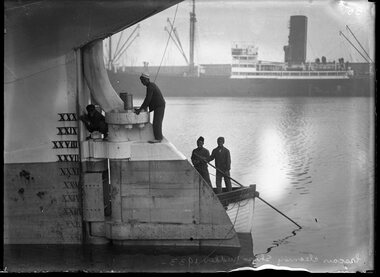
Photograph, Bull, Hugh Jones, 1897-1993, Lascars cleaning ship's rudder
... New land clearing methods in Australia allowed large tracts of land to be cleared more efficiently – this included the invention of the iconic ‘stump jump’ plough. With the success of the wheat harvests...New land clearing methods in Australia allowed large tracts of land to be cleared more efficiently – this included the invention of the iconic ‘stump jump’ plough. With the success of the wheat harvests ...Published: unknown, however, on 26 June 1935 a similar, but not the exact photo in the McKenzie Collection, was published in The Age: Published title: Shipping Victorian Flour to the East Published Caption: Flour and wheat figure prominently in all cargoes carried by ships trading to Chinese, Japanese and Eastern ports. Victorian millers are eager to extend lids outlet for their produce, and every opportunity is grasped. The pictures show Australian labourers unloading from railway trucks some of the 2300 tons of flour which will go into the hold of the Burns, Philp motor ship Neptuna for shipment to Hong Kong, while Chinese seamen are busy cleaning and painting the rudder post of the ship. Hard by the Neptuna, other ships are taking on flour for the East. Research by Project Volunteer, Louise McKenzie: The image was described by Hugh Bull on the rear of the glass plate as – “Lascars cleaning ships rudder 1933”. Basically, a “lascar” is a seaman. Image No. 032 in the McKenzie Collection shows two lascars perched on the rudder of a ship, with two others standing in a rowboat along side. They are dressed in baggy trousers and jackets and wearing caps. Across a very calm dock area is a single funnel ship with on-deck derricks. The rudder of the ship being cleaned is white, with large black roman numbering denoting the depth at which the ship is sitting, depending on whether it is loaded or empty. Whilst the exact photo in the McKenzie Collection has yet to be located in The Age in 1933, the date when it was taken, there is a photo published in The Age on 25 June 1935 which appears to be one of a series of photos taken on the same day, featuring lascars cleaning a ship’s rudder. It bears a striking resemblance to MCK 032, but it is taken from a slightly different angle. The 1935 published photo is a close up of a ship’s rudder being cleaned, with same style of roman numerals in black on the white of the rudder. One lascar is standing on the rudder, one is standing in a small clinker style rowboat, with its characteristic wooden overlapping hull planks, holding a broom; two more lascars are sitting in the bow and stern of the rowboat. The ship being cleaned is in a dock, as a wharf and warehouses can be seen in the background, the water is very calm, and there are two other ships moored nearby – one across the other side of the dock with a black and white hull and derricks on its deck, and one adjacent, with its mooring lines clearly visible. The lascars are wearing caps, baggy trousers and jackets. Compelling similarities therefore exist between the two images. Whilst it is difficult to positively identify the cultural background of these particular lascars in either photo, the newspaper article dated June 1935 advises they are “Chinese”. This is possibly because the ship they are associated with, the Neptuna, is reported to have sailed from Melbourne on this date, bound for Hong Kong. However, the men are probably from South East Asia. Wikipedia describes the term “Southeast Asia” as covering ” … the people of Southeast Asia from prehistory to the present in two distinct sub-regions: Mainland Southeast Asia (or Indochina) and Maritime Southeast Asia (or Insular Southeast Asia). Mainland Southeast Asia comprises Cambodia, Laos, Myanmar (or Burma), Peninsular Malaysia, Thailand and Vietnam whereas Maritime Southeast Asia comprises Brunei, Cocos (Keeling) Islands, Christmas Island, East Malaysia, East Timor, Indonesia, Philippines and Singapore. Additionally, Wikipedia “Lascars” states that “Lascars were sailors from the Indian subcontinent, South East Asia, the Arab world, British Somaliland and lands east of the Cape of Good Hope, who were employed to work on colonial merchant ships. The practice ran from the 16th century to the mid 20th century”. Indian seamen were used as early as the 16th century by Portuguese explorer Vasgo da Gama in his successful voyage to India, and subsequently by Portuguese ships in the 16th and 17th centuries. “Through the Portuguese and Spanish maritime world empires, some Indian lascars found their way onto English merchant ships, and were among the sailors on the first English East India Company (EIC) ships to sail to India.” In the 17th Century “When the English adopted the term "lascar", they initially used it for all Asian sailors on English-flagged ships, but after 1661 and the Portuguese ceded Bombay to England, the term was used mainly to describe Indian sailors specifically. The term "topaze" was used to describe Indo-Portuguese personnel, especially those from Bombay, Thana, Diu, Dammam and Cochin. The term "sepoy" was used to describe Indian soldiers in European service. The number of lascars employed on EIC East Indiamen was so great that the Parliament of England restricted their employment via the Navigation Acts (in force from 1660 onwards) which required that 75% of the crew onboard English-flagged ships importing goods from Asia be English subjects. The restriction arose due to the high rates of illnesses and death among European sailors on East Indiamen, and their frequent desertions in Asia, which left such ships short of crew for the return voyage. Another reason was the frequent impressment of European sailors from EIC East Indiamen by the Royal Navy in times of war“. The term “impressment” colloquially refers to “the “press gang” …”a type of conscription of people into a military force, especially a naval force, via intimidation and physical coercion, conducted by an organized group (hence “gang”). .. The large size of the British Royal Navy in the Age of Sail meant impressment was most commonly associated with Great Britain.”. (Wikipedia – Impressment). By the 20th century these sailors served on British ships under "lascar agreements", which allowed shipowners more control than was the case in ordinary articles of agreement. The sailors could be transferred from one ship to another and retained in service for up to three years at one time. “Lascars served all over the world in the period leading up to the First World War. Lascars were barred from landing at some ports, such as in British Columbia. At the beginning of World War I, there were 51,616 lascars working on British merchant ships in and around the British Empire. In World War II thousands of lascars served in the war and died on vessels throughout the world, especially those of the British India Steam Navigation Company, P&O and other British shipping companies. The lack of Canadian naval manpower led to the employment of a total of 121 Catholic Goans and 530 Muslim British Indians on the Empress vessels of the Canadian Pacific Railway, such as the Empress of Asia and Empress of Japan. These ships served in the Indian Ocean both as ANZAC convoy ships and in actions at Aden. The ships were placed under the British Admiralty as part of Canada's contribution to the war effort and all of the Indian men were awarded medals by the Admiralty, though none of them were delivered. In the 1950s the use of the term "lascar" declined with the ending of the British Empire. The Indian “Lascar Act” of 1832 was finally repealed in 1963. However, "traditional" Indian deck and Pakistani engine crews continued to be used in Australia until 1986 when the last crew was discharged from the P&O and replaced by a general-purpose crew of Pakistanis. The term lascar has been widely used to engender an element of exoticism in literature eg “Sir Arthur Conan Doyle created a Lascar foil to Sherlock Holmes in "The Man with the Twisted Lip" in 1891. Lascars aboard the ship Patna figure prominently in the early chapters of Joseph Conrad's novel Lord Jim. Frances Hodgson Burnett's novel A Little Princess features a lascar named Ram Dass. Also, Caleb Carr portrays two lascars as bodyguards for a Spanish diplomat near the end of The Angel of Darkness. In Wuthering Heights, it is speculated that Heathcliff, the main character, may be of lascar origin." (Wikipedia – Lascar) And what has become of these “forgotten heroes of the World Wars”? The South Asian Heritage Trust, which seeks to commemorate, mark and celebrate South Asian cultures, stories, and communities, published an article in July 2025 entitled – The Lascars: Seafaring Roots of Modern Britain. It particularly honours the role of the 80,000 lascars who served Britain in WWI, and the over 100,000 who served in the British Merchant Navy in WWII, and concludes: “The hardships faced by Lascars were profound. They were often assigned the most dangerous tasks, lived in substandard conditions aboard ships and, even after their immense contributions to the war efforts, many veterans found it difficult to secure the recognition, pensions and rights afforded to other veterans. Many were employed under ‘Asiatic Articles’, which offered less protection and lower pay than their European counterparts. Yet, their legacy endures. The multicultural fabric of areas like East London owes much to these early seafarers and settlers. The East London Mosque, established in 1910, became an important spiritual and community hub. Today, efforts to bring their stories out of the shadows are growing. The Museum of London Docklands features exhibits on their history. Memorials, such as the P&O headstone in Dover for the 22 Lascar crew members of the SS Maloja sunk in 1916 and the careful restoration of the Lascar War Memorial in Kolkata, serve as important reminders of the sacrifices. The journey of the Lascars – from their homelands, along dangerous wartime shipping routes, to the docklands of Britain – is a story of personal courage and of a rich contribution to Britain’s history and identity.” The ship MV Neptuna, mentioned in the 1935 article, had that year been purchased from a German company by Australian-owned Burns Philp, with Australian Government assistance, and it was instrumental in ensuring the shipment of rice from Vietnam to Papua New Guinea. Rice is still a household staple in PNG. Despite it being introduced into PNG more than 100 years ago, the crop has not been sufficiently integrated into the country’s traditional agricultural production system, and today PNG imports still account for nearly 98% of rice. (Spotlight Magazine Sept. 2016) The 1935 newspaper article states that the Neptuna is involved in moving flour for the East. Australian wheat exports began in 1845, but were not regular until the 1870s. New land clearing methods in Australia allowed large tracts of land to be cleared more efficiently – this included the invention of the iconic ‘stump jump’ plough. With the success of the wheat harvests, flour mills began to spring up around the country. By the 1870s, many large country towns had their own mills, with around 500 mills producing flour across the country. Flour exports were an important part of the wheat industry until around the 1930s. After the Second World War, many of Australia’s export partners (which were mainly in the developing nations of Asia) began setting up their own flour industries and the Australian product was no longer in demand. In 1942 MV Neptuna was being utilised for the war effort, and carrying depth charges and other armaments for Australia, when on 19 February it was sunk in a bombing raid on Darwin, and where part of her hull still lies. References: SHIPPING VICTORIAN FLOUR TO THE EAST. (1935, June 25). The Age (Melbourne, Vic. : 1854 - 1954), p. 11. Retrieved July 23, 2025, from http://nla.gov.au/nla.news-article204357218 Age (Melbourne, Vic. : 1854 - 1954), Tuesday 25 June 1935, page 11 Wikipedia, Clinker (boat building), https://en.wikipedia.org/wiki/Clinker_(boat_building) Wikipedia, Lascar, https://en.wikipedia.org/wiki/Lascar Wikipedia, History of Southeast Asia, https://en.wikipedia.org/wiki/History_of_Southeast_Asia Wikipedia, Impressment, https://en.wikipedia.org/wiki/Impressment NEPTUNA LEAVES FOR CHINA WITH TOURISTS (1935, June 25). The Herald (Melbourne, Vic. : 1861 - 1954), p. 5. Retrieved July 23, 2025, from http://nla.gov.au/nla.news-article244841163 National Research Institute SPOTLIGHT paper Vol 9, Issue 7, https://pngnri.org/images/Publications/Spotlight_No_9_Vol_7_-_201609_-_Sofe__Odhuno_-_Rice_Import_Quota1.pdf South Asian Heritage Trust, The Lascars: Seafaring Roots of Modern Britain, July 11,2025 : Royal British Legion. https://southasianheritage.org.uk/royal-british-legion/the-lascars-seafaring-roots-of-modern-britain/ Photographer notations on slide: "Lascars cleaning ships rudder 1933".lascars, ships, 1930-1939, employment, ethnic communities
