
Showing 11 items matching "helps's essays"
-
 Flagstaff Hill Maritime Museum and Village
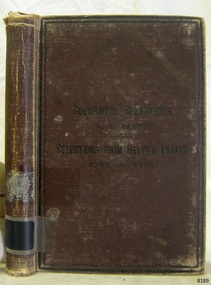
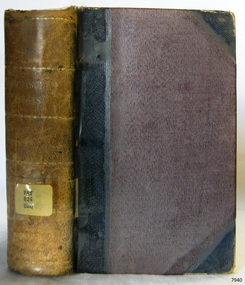
Book, Selections from Goldsmiths Poems and Helps's Essays
... Selections from Goldsmiths Poems and Helps's Essays......helps's essays...Selections from Goldsmiths Poems and Helps's Essays Notes on Goldsmith's Poems by Rev A R Vardy. ...Notes on Helps's Essays by F J Rowe and W T Webb As prescribed for the Matriculation Examinations at the Melbourne University Publisher: Melville, Mullen & Slade Date: 1894 Selections from Goldsmiths Poems and Helps's Essays Book ...This book was part of a large group of books referred to as the Pattison Collection, which belonged to the Warrnambool Public Library, part of the Warrnambool Mechanics’ Institute. About RALPH ERIC PATTISON and the ‘PATTISON COLLECTION’ The ‘Pattison Collection’ is a collection of books and records that was originally owned by the Warrnambool Mechanics’ Institute, founded in Warrnambool in 1853. By 1886 the Warrnambool Mechanics’ Institute (WMI) had grown to have a Library, Museum and Fine Arts Gallery, with a collection of “… choice productions of art and valuable specimens in almost every branch and many wonderful national curiosities are now to be seen there, including historic relics of the town and district.” It later included a School of Design. Although it was very well patronised, the WMI was led to ask the City Council to take it over in 1911 due to lack of financial support. In 1935 Ralph Pattison was appointed as City Librarian to establish and organise the Warrnambool Public Library as it was then called. Ralph Eric Pattison was born in Rockhampton, Queensland, in 1891. He married Maude Swan from Warrnambool in 1920 and they set up home in Warrnambool. In 1935 when Pattison accepted the position as City Librarian for the Warrnambool City Council his huge challenge was to make a functional library within two rooms of the Mechanics’ Institute. He tirelessly cleaned, cleared and sorted a disarrayed collection of old books, jars of preserved specimens and other items reserved for exhibition in the city’s museum. He developed and updated the library with a wide variety of books for all tastes, including reference books for students; a difficult task to fulfil during the years following the Depression. He converted all of the lower areas of the building into a library, reference room and reading room for members and the public. The books were sorted and stored using a cataloguing and card index system that he had developed himself. He also prepared the upper floor of the building and established the Art Gallery and later the Museum, a place to exhibit the many old relics that had been stored for years for this purpose. One of the treasures he found was a beautiful ancient clock, which he repaired, restored and enjoyed using in his office during the years of his service there. Ralph Pattison was described as “a meticulous gentleman whose punctuality, floorless courtesy and distinctive neat dress were hallmarks of his character, and ‘his’ clock controlled his daily routine and his opening and closing of the library’s large heavy doors to the minute.” Pattison took leave from 1942 to 1945 to serve in the Royal Australian Navy, Volunteer Reserve as Lieutenant. A few years later he converted one of the Museum’s rooms into a Children’s Library, stocking it with suitable books for the younger generation. This was an instant success. In the 1950’s he had the honour of being appointed to the Victorian Library Board and received more inspiration from the monthly conferences in Melbourne. He was sadly retired in 1959 after over 23 years of service, due to the fact that he had gone over the working age of council officers. However, he continued to take a very keen interest in the continual development of the Library until his death in 1969. THE NEW WARRNAMBOOL LIBRARY When the WMI building was pulled down in 1963 a new civic building was erected on the site and the new Warrnambool Library, on behalf of the City Council, took over all the holdings of the WMI. At this time some of the items were separated and identified as the ‘Pattison Collection’, named after Pattison. Eventually, the components of the WMI were distributed from the Warrnambool Library to various places, including the Art Gallery, Historical Society and Flagstaff Hill. Later some were even distributed to other regional branches of Corangamite Regional Library and passed to and fro. It is difficult now to trace just where all of the items have ended up. The books at Flagstaff Hill Maritime Village generally display stamps and markings from Pattison as well as a variety of other institutions including the Mechanics’ Institute itself. WARRNAMBOOL MECHANICS’ INSTITUTE Warrnambool's Mechanics' Institute (or Institution as it was sometimes called) was one of the earliest in Victoria. On 17th October 1853, a meeting was held where it was resolved to request the Lieutenant Governor of the Colony to grant land for the erection of a Mechanics' Institutes building. A committee was formed at the meeting and Richard Osburne chaired the first meeting of this committee. The land on the North West corner of Banyan and Merri Streets was granted but there were no funds to erect the building. The Formal Rights of the Warrnambool Mechanics' Institute's encompassed its aims and these were officially adopted in1859; "This Institution has for its object the diffusion of literary, scientific, and other useful knowledge amongst its members, excluding all controversial subjects, religious or political. These objects are sought to be obtained by means of a circulating library, a reading room, the establishment of classes, debates, and the occasional delivery of lectures on natural and experimental philosophy, mechanics, astronomy, chemistry, natural history, literature, and the useful and ornamental arts, particularly those which have a more immediate reference to the colony." The Warrnambool Mechanics' Institute opened its first reading room in November 1884 in the National School building at the corner of Banyan and Timor Streets. The Institute was funded by member subscription, payable on a quarterly, half-yearly or yearly basis. Samuel Hannaford, the Manager of the Warrnambool Bank of Australasia, was the first Honorary Secretary of the Mechanics' Institutes, and an early President and Vice-President. He also gave several of the early lectures in the Reading Room. Another early Secretary, Librarian and lecturer was Marmaduke Fisher, the teacher at the National School. Lecture topics included The Poets and Poetry of Ireland', 'The Birth and Development of the Earth', 'The Vertebrae - with Remarks on the pleasures resulting from the study of Natural History' and 'Architecture'. In 1856 the Reading Room was moved to James Hider's shop in Timor Street, and by 1864 it was located in the bookshop of Davies and Read. In the 1860's the Mechanics' Institute struggled as membership waned but in 1866, after a series of fundraising efforts, the committee was able to purchase land in Liebig Street, on a site then called Market Square, between the weighbridge and the fire station. A Mechanics' Institute building was opened at this site in August 1871. The following year four more rooms were added to the main Reading Room and in 1873 the Artisan School of Design was incorporated into the Institute. The same year Joseph Archibald established a Museum; however, it deteriorated when he was transferred to Bendigo in 1877. In 1880, with Archibald's return to Warrnambool, the Museum was re-established, and in 1885 a new building was built at the back of the Institute to accommodate the re-created School of Design, the Art Gallery and the Museum. In 1887 the Museum section was moved to the former courthouse in Timor Street (for some time the walls of the building formed part of the TAFE cafeteria but all is now demolished)). In 1911 the Museum was transferred back to the original building and the management of the Mechanics' Institute was handed over to the Warrnambool City Council. The Museum and Art Gallery became one and housed many fine works of art, and the Library continued to grow. The building was well patronised, with records showing that at the beginning of the 20th century there were between 500 and 800 visitors. During World War One the monthly figures were in the thousands, with 3,400 people visiting in January 1915. The Museum was a much-loved Institution in Warrnambool until the contents of the Museum and Art Gallery were removed to make room for the Warrnambool City Council Engineers' Department. The contents were stored but many of the items were scattered or lost. When the original building was demolished the site became occupied by the Civic Centre, which included the new City Library. (The library was temporarily located in the old Palais building in Koroit Street.) In the process of reorganisation the Collection was distributed amongst the community groups: -The new City Library took some of the historical books and some important documents, historic photographs and newspapers. -The Art Gallery kept the 19th Century art collection and some of the artefacts from the museum. -The Historical Society has some items -The State Museum has some items -Some items were destroyed -Flagstaff Hill Maritime Village has old newspapers, Government Gazettes, most of the Mechanics' Institute Library, ledgers and documents connected to the Mechanics' Institute Library, some framed and unframed artworks and some photographs. The Warrnambool Mechanics' Institute Library book collection is deemed to be of great importance because it is one of the few collections in an almost intact state, and many of the books are now very rare and of great value. The Pattison Collection, along with other items at Flagstaff Hill Maritime Village, was originally part of the Warrnambool Mechanics' Institute’s collection. The Warrnambool Mechanics’ Institute Collection is primarily significant in its totality, rather than for the individual objects it contains. Its contents are highly representative of the development of Mechanics' Institute libraries across Australia, particularly Victoria. A diversity of publications and themes has been amassed, and these provide clues to our understanding of the nature of and changes in the reading habits of Victorians from the 1850s to the middle of the 20th century. The collection also highlights the Warrnambool community’s commitment to the Mechanics’ Institute, reading, literacy and learning in the regions, and proves that access to knowledge was not impeded by distance. These items help to provide a more complete picture of our community’s ideals and aspirations. The Warrnambool Mechanics Institute book collection has historical and social significance for its strong association with the Mechanics Institute movement and the important role it played in the intellectual, cultural and social development of people throughout the latter part of the nineteenth century and the early twentieth century. The collection of books is a rare example of an early lending library and its significance is enhanced by the survival of an original collection of many volumes. The Warrnambool Mechanics' Institute’s publication collection is of both local and state significance. Selections from Goldsmiths Poems and Helps's Essays Notes on Goldsmith's Poems by Rev A R Vardy. Notes on Helps's Essays by F J Rowe and W T Webb As prescribed for the Matriculation Examinations at the Melbourne University Publisher: Melville, Mullen & Slade Date: 1894 The label is a black square that is unreadable The top and front of the text block have the name "T Alston" on them in black ink. The top text block also has the date 9/8/94 written in black ink on it. Pastedown front endpaper has a sticker from Warrnambool Mechanics Institute and Free Library covered by a sticker from Corangamite Regional Library Service Front loose endpaper has a stamp from Corangamite Regional Library Service flagstaff hill, warrnambool, shipwrecked coast, flagstaff hill maritime museum, maritime museum, shipwreck coast, flagstaff hill maritime village, great ocean road, book, pattison collection, warrnambool library, warrnambool mechanics’ institute, ralph eric pattison, corangamite regional library service, warrnambool city librarian, mechanics’ institute library, victorian library board, warrnambool books and records, warrnambool children’s library, goldsmiths poems, melbourne university, selections from goldsmiths poems and helps's essays, rev a r vardy, helps's essays, f j rowe, w t webb -
 Mission to Seafarers Victoria
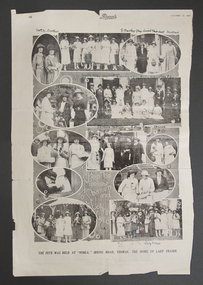
Newspaper - Clipping, The Australasian, To Help the Missions to Seamen and St John's Guild, 7th October 1922
... A large whole page (p.34) clipping from Punch journal featuring a photo-essay of an event at a garden fete at Norla in 1922. The page is annotated in places with identifying names in handwritten ink; To Help the Missions to Seamen and St John's Guild Newspaper Clipping The Australasian ...This vital fundraiser event was held at Lady Fraser's house, opened by Lady Forster and featured in respective issues of Punch and Table talk , October 12th 1922. Also reported in the Argus on Monday 9th of October 1922.The event raised important funds towards the costs of opening the Dome Gymnasium at the 717 Flinders St Mission to Seafarers. The building became known eventually as the 'Norla Dome Gymnasium". The Fraser's home, Norla was sold and demolished in 1934 for subdivision.A large whole page (p.34) clipping from Punch journal featuring a photo-essay of an event at a garden fete at Norla in 1922. The page is annotated in places with identifying names in handwritten ink;Some hand-inscribed annotations in blue ink some indecipherable: "Lady Lyle" and "Lady Miller", G. Hawkey, are clear.norla dome, gymnasium, lady fraser, gladys hawkey -
 City of Moorabbin Historical Society (Operating the Box Cottage Museum)
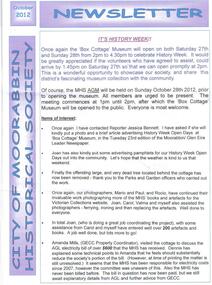
Newsletter - City of Moorabbin Historical Society Oct 2012, October 2012
... Volunteer photographers from Caulfield Photography Group have helped our members to catalogue the Museum artefacts and we are progressing well.. An unfortunate electricity account was referred to GECC for advice. Helen has given an essay...Volunteer photographers from Caulfield Photography Group have helped our members to catalogue the Museum artefacts and we are progressing well.. An unfortunate electricity account was referred to GECC for advice. Helen has given an essay ...The City of Moorabbin Historical Society was formed c 1960 by a group of Moorabbin area residents who were concerned that the history of the area should be preserved. A good response to a call for items related to the historical area of Moorabbin Shire brought donations of a wide variety of artefacts that are now preserved by the current members of CMHS at Box Cottage Museum. Helen Stanley, Secretary of CMHS, began producing a Newsletter for members in April 2007 to provide current information and well researched items of historical interestHelen Stanley has produced a bi-monthly Newsletter, 2007 - 2013, for the members of the City of Moorabbin Historical Society that contains well researched interesting historical items, notification of upcoming events, current advice from Royal Australian Historical Society , Museums Australia Victoria and activities of Local Historical Societies. The Newsletter is an important record of the activities of the CMHS.4 x A4 paper printed on 1 side Issue 29 of the bi-monthly, City of Moorabbin Historical Society Newsletter produced by Society member and Secretary, Mrs Helen Stanley in October 2012. Notice of AGM October 28th , and Box Cottage Museum will be Open on 27th and 28th for History Week. Jessica Bennett, Reporter for The Leader Newspaper, has been asked to promote the History Week Open Days, volunteers have distributed fliers, and Glen Eira CC Parks and Gardens officers have removed the dead tree. Volunteer photographers from Caulfield Photography Group have helped our members to catalogue the Museum artefacts and we are progressing well.. An unfortunate electricity account was referred to GECC for advice. Helen has given an essay, of 3x A4 pages, about The Lees Family pioneer market gardeners as researched by Jan Rigby, a descendant. CITY of MOORABBIN HISTORICAL SOCIETY / OCTOBER 2012 NEWSLETTERcity of moorabbin historical society, stanley helen, melbourne, moorabbin, brighton, cheltenham, ormond, bentleigh, market gardeners, pioneers, early settlers, the moorabbin roads board 1862, city of glen eira, city of kingston, moorabbin shire, parish of moorabbin, brighton east, south brighton, bent tommy, mair william, jessse morleys hotel, lees james, lees william, convicts, jamison john, bent james, lees james henry, lees joseph, lees jack allen, -
 Flagstaff Hill Maritime Museum and Village
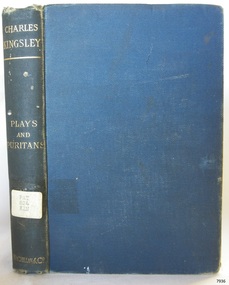
Book - Reference Book/Historical/Sociology/Research, Charles Kingsley, Plays and Puritans and other Historical Essays, 1873
... essays. Charles Kingsley (1819–1875) was an Anglican clergyman, social reformer, historian, and popular Victorian novelist. He was associated with Christian socialism, helped found the Working Men’s College, became Regius Professor of Modern History at Cambridge, chaplain to Queen Victoria, and later canon of Chester Cathedral and of Westminster Abbey. ...essays. Charles Kingsley (1819–1875) was an Anglican clergyman, social reformer, historian, and popular Victorian novelist. He was associated with Christian socialism, helped found the Working Men’s College, became Regius Professor of Modern History at Cambridge, chaplain to Queen Victoria, and later canon of Chester Cathedral and of Westminster Abbey. ...Plays and Puritans and Other Historical Essays by Charles Kingsley is a collection of cultural and historical meditations, centred on the relationship between Puritanism and the English stage, especially in the 16th and 17th centuries, along with broader reflections on art, morality, and national identity in Victorian‑era Britain.Plays and Puritans and other Historical Essays Author: Charles Kingsley Publisher: MacMillan & Co Date: 1873, Light Blue to cloth cardboard covers darker Blue to the spine the spine has title embossed in gold lettering. non-fictionPlays and Puritans and Other Historical Essays by Charles Kingsley is a collection of cultural and historical meditations, centred on the relationship between Puritanism and the English stage, especially in the 16th and 17th centuries, along with broader reflections on art, morality, and national identity in Victorian‑era Britain. warrnambool, shipwrecked-coast, flagstaff-hill, flagstaff-hill-maritime-museum, maritime-museum, shipwreck-coast, flagstaff-hill-maritime-village, shipwrecked-artefact, book, pattison collection, warrnambool library, warrnambool mechanics’ institute, ralph eric pattison, corangamite regional library service, warrnambool city librarian, mechanics’ institute library, victorian library board, warrnambool books and records, warrnambool children’s library, great ocean road, plays and puritans and other historical essays, charles kingsley -
 Flagstaff Hill Maritime Museum and Village
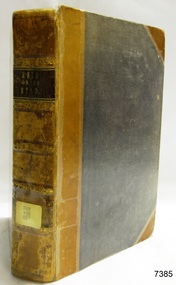
Book - Reference Book/Social & Writing Protocols, Thomas DeQuincey, On Style and Conversation, 1862
... essays argue that style matters in writing because manner and substance are often inseparable. They explore how language works in books, public speaking, newspapers, and everyday speech. DeQuincey uses examples from British and classical culture to defend disciplined prose and to criticise sloppy or merely fashionable writing. A lot of his writing blends autobiography, criticism, philosophy, and dreamlike reflection. He often wrote about memory, guilt, addiction, imagination, and the darker sides of the human experience. DeQuincey is important as a writer because he helped ...This is a volume from Thomas DeQuincey’s collected works, and the contents around “Style” and “Conversation” are essays on prose style, rhetoric, language, and communication rather than a biography in the modern sense. DeQuincey’s essay sequence is described as a continuous discussion of style and rhetoric, originally these essays on style and rhetoric first appeared serially in Blackwood’s Edinburgh Magazine in the 1840s. William Blackwood and Sons, a Scottish publishing house and printer was founded by William Blackwood in Edinburgh in 1804. He became famous both as a book publisher and as the publisher of the influential literary magazine Blackwood’s Edinburgh Magazine.On Style and Conversation A series of essays Author: Thomas DeQuincey Publisher: Adam & Charles Black Date: 1862non-fictionThis is a volume from Thomas DeQuincey’s collected works, and the contents around “Style” and “Conversation” are essays on prose style, rhetoric, language, and communication rather than a biography in the modern sense. DeQuincey’s essay sequence is described as a continuous discussion of style and rhetoric, originally these essays on style and rhetoric first appeared serially in Blackwood’s Edinburgh Magazine in the 1840s. William Blackwood and Sons, a Scottish publishing house and printer was founded by William Blackwood in Edinburgh in 1804. He became famous both as a book publisher and as the publisher of the influential literary magazine Blackwood’s Edinburgh Magazine. shipwrecked-coast, flagstaff-hill, flagstaff-hill-maritime-museum, maritime-museum, shipwreck-coast, shipwrecked-artefact, book, pattison collection, warrnambool library, warrnambool mechanics’ institute, ralph eric pattison, corangamite regional library service, warrnambool city librarian, mechanics’ institute library, victorian library board, warrnambool books and records, on style and conversation, thomas dequincey, adam & charles black, essays -
 Flagstaff Hill Maritime Museum and Village
Book - Reference Book/Scholarly/Philosophy, Rev. George Newenham Wright et al, Essays on The Active Powers of the Human Mind (Annotated Version by REV. G N Wright), 1843
... helped shift attention away from abstract ideas and toward ordinary human cognition, perception, and moral responsibility. Thomas Reid work is regarded as a respected 18th-century philosophical edition from an important Enlightenment thinker. George Newenham Wright's 1843 edition of Thomas Reid's Essays ...Essays on The Active Powers of the Human Mind (Annotated Version by REV. G N Wright) Author: Original 1788 work by Thomas Reid ( subject work by REV. G N Wright ) Publisher: Thomas Tegg London Date: Subject work 1843 Black cloth cardboard covers with leather embossed ribbed spine (This is a first edition) non-fictionpattison collection, flagstaff hill maritime museum, george newenham, thomas reid, philosophy, book, warrnambool mechanics institute -
 Sunshine and District Historical Society Incorporated
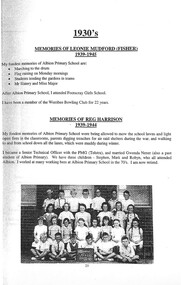
Essay - Albion State School 1930s Memories
... help develop their leadership skills. Albion State School Albion Primary School Adelaide Street Albion 5167.01 - Albion State School 1930s Memories of Reg Harrison 1939 to 1944 5167.02 - Albion State School 1930s Memories of Ron Phillips 1934 to 1939 5167.03 - Albion State School 1930s Memories of Beth Hamilton Nee Powell Page 1 5167.03 - Albion State School 1930s Memories of Beth Hamilton Nee Powell Page 2 5167.04 - Albion State School 1930s Memories of Veda Heath Ashford 5167.05 - Albion State School 1930s Memories of Gwenda Powell Lusted 1935 to 1940 Collection of Digital Photographs Essay Albion State School 1930s Memories ...The current school, Albion Primary School, No 4265 opened in 1926. It was built on a site once owned by John Fitzgerald (1850s). The land was later acquired by H. V. McKay who had transferred his Sunshine Harvester Works to the area in 1905 - 7. In 1920, the Albion railway station was moved nearer Ballarat Road at the request of Mr McKay. More people came to live in the area including soldier settlers.Albion Primary School's mission is to 'Aim High' in all we do so that our students grow to be socially capable, reach their full academic potential and become caring, respectful community minded people. Albion Primary School is located in a residential area in Albion, a small pocket of the local government area of Brimbank, approximately 10 kilometres west of Melbourne and was established in 1926. Our current enrolment is 199 students. We have a rich cultural diversity amongst our school community. The school is set around a courtyard with spacious playing areas including a grassed oval, running track, games courts, an adventure playground, sand pit, jumping pits, shady courtyard and garden areas, a vegetable garden and fruit tree orchard. As well as classroom groups, we have our learning teams, student house groups (siblings are allocated to the same house) and a Junior School Council. The school has four main buildings. All classrooms have air conditioning and interactive screens. Block A houses classrooms, staff areas and the administration offices. Our newest building has classrooms and some small group/office spaces. Block B includes our library, canteen and a multi-purpose room used for indoor physical education, Perceptual Motor Program, drama, visiting performers, and community activities. Block C houses classrooms and specialist rooms. We expect and receive the best from our students in terms of their learning and behaviour. The school’s dedicated and effective staff is strongly committed to helping students achieve personal, behavioural, social and academic success. In terms of learning, the highest priority is placed on the work in English and Mathematics. We also have a range of specialist and extra-curricular programs that we provide. Our specialist teacher-librarian is involved in reading extension programs that support development in literacy. All children are able to develop their artistic abilities through visual arts and music program. Our music program is supported by the Australian Children's Music Foundation. A specialist Physical Education teacher provides lessons for all children as well as the opportunity for students to participate in organised lunch time sporting competitions between the house groups. Auslan is the additional language all students learn at Albion. All children participate in a student wellbeing program that focuses on developing strong connections and a sense of belonging within the school. Our school student leaders participate in programs that help develop their leadership skills. 5167.01 - Albion State School 1930s Memories of Reg Harrison 1939 to 1944 5167.02 - Albion State School 1930s Memories of Ron Phillips 1934 to 1939 5167.03 - Albion State School 1930s Memories of Beth Hamilton Nee Powell Page 1 5167.03 - Albion State School 1930s Memories of Beth Hamilton Nee Powell Page 2 5167.04 - Albion State School 1930s Memories of Veda Heath Ashford 5167.05 - Albion State School 1930s Memories of Gwenda Powell Lusted 1935 to 1940 albion state school, albion primary school, adelaide street, albion -
 Sunshine and District Historical Society Incorporated
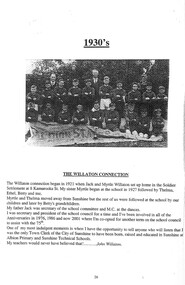
Essay - Albion State School 1920s The Willaton Connection
... help develop their leadership skills. Albion State School Albion Primary School Adelaide Street Albion John Willaton 5168.01 - Albion State School 1930s The Willaton Connection Page 1 5168.02 - Albion State School 1930s The Willaton Connection Page 2 5168.03 - Albion State School 1930s The Willaton Connection Page 3 Collection of Digital Photographs Essay Albion State School 1920s The Willaton Connection ...The current school, Albion Primary School, No 4265 opened in 1926. It was built on a site once owned by John Fitzgerald (1850s). The land was later acquired by H. V. McKay who had transferred his Sunshine Harvester Works to the area in 1905 - 7. In 1920, the Albion railway station was moved nearer Ballarat Road at the request of Mr McKay. More people came to live in the area including soldier settlers.Albion Primary School's mission is to 'Aim High' in all we do so that our students grow to be socially capable, reach their full academic potential and become caring, respectful community minded people. Albion Primary School is located in a residential area in Albion, a small pocket of the local government area of Brimbank, approximately 10 kilometres west of Melbourne and was established in 1926. Our current enrolment is 199 students. We have a rich cultural diversity amongst our school community. The school is set around a courtyard with spacious playing areas including a grassed oval, running track, games courts, an adventure playground, sand pit, jumping pits, shady courtyard and garden areas, a vegetable garden and fruit tree orchard. As well as classroom groups, we have our learning teams, student house groups (siblings are allocated to the same house) and a Junior School Council. The school has four main buildings. All classrooms have air conditioning and interactive screens. Block A houses classrooms, staff areas and the administration offices. Our newest building has classrooms and some small group/office spaces. Block B includes our library, canteen and a multi-purpose room used for indoor physical education, Perceptual Motor Program, drama, visiting performers, and community activities. Block C houses classrooms and specialist rooms. We expect and receive the best from our students in terms of their learning and behaviour. The school’s dedicated and effective staff is strongly committed to helping students achieve personal, behavioural, social and academic success. In terms of learning, the highest priority is placed on the work in English and Mathematics. We also have a range of specialist and extra-curricular programs that we provide. Our specialist teacher-librarian is involved in reading extension programs that support development in literacy. All children are able to develop their artistic abilities through visual arts and music program. Our music program is supported by the Australian Children's Music Foundation. A specialist Physical Education teacher provides lessons for all children as well as the opportunity for students to participate in organised lunch time sporting competitions between the house groups. Auslan is the additional language all students learn at Albion. All children participate in a student wellbeing program that focuses on developing strong connections and a sense of belonging within the school. Our school student leaders participate in programs that help develop their leadership skills. 5168.01 - Albion State School 1930s The Willaton Connection Page 1 5168.02 - Albion State School 1930s The Willaton Connection Page 2 5168.03 - Albion State School 1930s The Willaton Connection Page 3albion state school, albion primary school, adelaide street, albion, john willaton -
 Sunshine and District Historical Society Incorporated
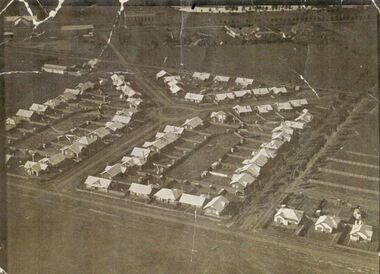
Essay - The Soldier Settlement
... help develop their leadership skills. Albion State School Albion Primary School Adelaide Street Albion 5170.01 - The Soldier Settlement 5170.02 - The Soldier Settlement Details Collection of Digital Photographs Essay The Soldier Settlement ...The current school, Albion Primary School, No 4265 opened in 1926. It was built on a site once owned by John Fitzgerald (1850s). The land was later acquired by H. V. McKay who had transferred his Sunshine Harvester Works to the area in 1905 - 7. In 1920, the Albion railway station was moved nearer Ballarat Road at the request of Mr McKay. More people came to live in the area including soldier settlers.Albion Primary School's mission is to 'Aim High' in all we do so that our students grow to be socially capable, reach their full academic potential and become caring, respectful community minded people. Albion Primary School is located in a residential area in Albion, a small pocket of the local government area of Brimbank, approximately 10 kilometres west of Melbourne and was established in 1926. Our current enrolment is 199 students. We have a rich cultural diversity amongst our school community. The school is set around a courtyard with spacious playing areas including a grassed oval, running track, games courts, an adventure playground, sand pit, jumping pits, shady courtyard and garden areas, a vegetable garden and fruit tree orchard. As well as classroom groups, we have our learning teams, student house groups (siblings are allocated to the same house) and a Junior School Council. The school has four main buildings. All classrooms have air conditioning and interactive screens. Block A houses classrooms, staff areas and the administration offices. Our newest building has classrooms and some small group/office spaces. Block B includes our library, canteen and a multi-purpose room used for indoor physical education, Perceptual Motor Program, drama, visiting performers, and community activities. Block C houses classrooms and specialist rooms. We expect and receive the best from our students in terms of their learning and behaviour. The school’s dedicated and effective staff is strongly committed to helping students achieve personal, behavioural, social and academic success. In terms of learning, the highest priority is placed on the work in English and Mathematics. We also have a range of specialist and extra-curricular programs that we provide. Our specialist teacher-librarian is involved in reading extension programs that support development in literacy. All children are able to develop their artistic abilities through visual arts and music program. Our music program is supported by the Australian Children's Music Foundation. A specialist Physical Education teacher provides lessons for all children as well as the opportunity for students to participate in organised lunch time sporting competitions between the house groups. Auslan is the additional language all students learn at Albion. All children participate in a student wellbeing program that focuses on developing strong connections and a sense of belonging within the school. Our school student leaders participate in programs that help develop their leadership skills. 5170.01 - The Soldier Settlement 5170.02 - The Soldier Settlement Detailsalbion state school, albion primary school, adelaide street, albion -
 Sunshine and District Historical Society Incorporated
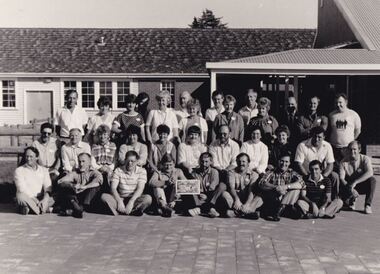
Essay - Albion State School Reunion
... help develop their leadership skills. Albion State School Albion Primary School Adelaide Street Albion 5171.01 - Albion State School Reunion Collection of Digital Photographs Essay Albion State School Reunion ...The current school, Albion Primary School, No 4265 opened in 1926. It was built on a site once owned by John Fitzgerald (1850s). The land was later acquired by H. V. McKay who had transferred his Sunshine Harvester Works to the area in 1905 - 7. In 1920, the Albion railway station was moved nearer Ballarat Road at the request of Mr McKay. More people came to live in the area including soldier settlers.Albion Primary School's mission is to 'Aim High' in all we do so that our students grow to be socially capable, reach their full academic potential and become caring, respectful community minded people. Albion Primary School is located in a residential area in Albion, a small pocket of the local government area of Brimbank, approximately 10 kilometres west of Melbourne and was established in 1926. Our current enrolment is 199 students. We have a rich cultural diversity amongst our school community. The school is set around a courtyard with spacious playing areas including a grassed oval, running track, games courts, an adventure playground, sand pit, jumping pits, shady courtyard and garden areas, a vegetable garden and fruit tree orchard. As well as classroom groups, we have our learning teams, student house groups (siblings are allocated to the same house) and a Junior School Council. The school has four main buildings. All classrooms have air conditioning and interactive screens. Block A houses classrooms, staff areas and the administration offices. Our newest building has classrooms and some small group/office spaces. Block B includes our library, canteen and a multi-purpose room used for indoor physical education, Perceptual Motor Program, drama, visiting performers, and community activities. Block C houses classrooms and specialist rooms. We expect and receive the best from our students in terms of their learning and behaviour. The school’s dedicated and effective staff is strongly committed to helping students achieve personal, behavioural, social and academic success. In terms of learning, the highest priority is placed on the work in English and Mathematics. We also have a range of specialist and extra-curricular programs that we provide. Our specialist teacher-librarian is involved in reading extension programs that support development in literacy. All children are able to develop their artistic abilities through visual arts and music program. Our music program is supported by the Australian Children's Music Foundation. A specialist Physical Education teacher provides lessons for all children as well as the opportunity for students to participate in organised lunch time sporting competitions between the house groups. Auslan is the additional language all students learn at Albion. All children participate in a student wellbeing program that focuses on developing strong connections and a sense of belonging within the school. Our school student leaders participate in programs that help develop their leadership skills. 5171.01 - Albion State School Reunionalbion state school, albion primary school, adelaide street, albion -
 Victorian Railway History Library
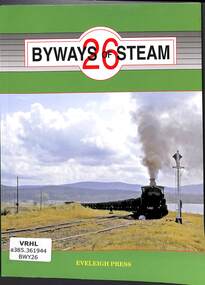
Book, Andrews, Brian, Byways of Steam 26, 2009
... helped to reverse a frightening incidence of child mortality and illness in the outback. This article covers the history of this most worthwhile scheme and the carriages which served it so well. Steam Depots in NSW: Mt Victoria. Ray Love presents the life and times of this small but important locomotive out-depot located at the top of the Blue Mountains. Coals to Newcastle in Days Past. Ray Loves photo essay ...Railways and Collieries of the West Wallsend District. Brian Andrews gives an account of the coal railways of the area. Another Trial Trip. Before engine crews are passed for a specific class of locomotive, it is necessary for the men to successfully handle the engine on a Trial Trip in the presence of a Locomotive Inspector. Long time Junee engineman Pat Turner relates a few problems which he and driver Dick Evans had with a 60 class Garratt on one such trip. Our Railway Heritage – Kogarah. Robert Booth looks at this Sydney suburban location. Thank God for the Far West. From 1931 until 1967, The Far West Children’s Health Scheme Carriages were a familiar sight in outback New South Wales. Converted from former passenger carriages, the cars conveyed a nursing sister to various locations where she tended and gave advice to expectant or new mothers and so helped to reverse a frightening incidence of child mortality and illness in the outback. This article covers the history of this most worthwhile scheme and the carriages which served it so well. Steam Depots in NSW: Mt Victoria. Ray Love presents the life and times of this small but important locomotive out-depot located at the top of the Blue Mountains. Coals to Newcastle in Days Past. Ray Loves photo essay reliving the haulage of coal in Newcastle. Timber Tramways of the 7th Section. Jim Longworth provides an insight into two timber tramways, the Bonville Timber Tramway and the Boambee Timber Tramway. What’s Your Number? Ian Dunn presents an overview of the locomotive numbering practices of the NSWGR, and a description of the numeral forms used on steam and diesel locomotives from 1855 to 1982.ill, maps, p.136.non-fictionRailways and Collieries of the West Wallsend District. Brian Andrews gives an account of the coal railways of the area. Another Trial Trip. Before engine crews are passed for a specific class of locomotive, it is necessary for the men to successfully handle the engine on a Trial Trip in the presence of a Locomotive Inspector. Long time Junee engineman Pat Turner relates a few problems which he and driver Dick Evans had with a 60 class Garratt on one such trip. Our Railway Heritage – Kogarah. Robert Booth looks at this Sydney suburban location. Thank God for the Far West. From 1931 until 1967, The Far West Children’s Health Scheme Carriages were a familiar sight in outback New South Wales. Converted from former passenger carriages, the cars conveyed a nursing sister to various locations where she tended and gave advice to expectant or new mothers and so helped to reverse a frightening incidence of child mortality and illness in the outback. This article covers the history of this most worthwhile scheme and the carriages which served it so well. Steam Depots in NSW: Mt Victoria. Ray Love presents the life and times of this small but important locomotive out-depot located at the top of the Blue Mountains. Coals to Newcastle in Days Past. Ray Loves photo essay reliving the haulage of coal in Newcastle. Timber Tramways of the 7th Section. Jim Longworth provides an insight into two timber tramways, the Bonville Timber Tramway and the Boambee Timber Tramway. What’s Your Number? Ian Dunn presents an overview of the locomotive numbering practices of the NSWGR, and a description of the numeral forms used on steam and diesel locomotives from 1855 to 1982.railroads - nsw - history, steam locomotives - nsw – pictorial
