
Showing 40 items matching "history ned kelly"
-
 Mont De Lancey
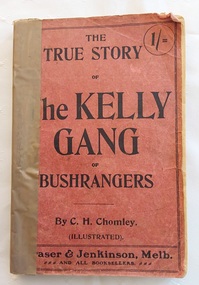
Book, C.H. Chomley, The True Story of the Kelly Gang of Bushrangers, 1920's
... ...History Ned Kelly...Dorothy O' Neill Australian history Bushrangers History Victoria History books History Ned Kelly "The True Story of the Kelly Gang of Bushrangers, published in 1900, was a highly researched biography of the notorious 19th-century Victorian family of bushrangers. ..."The True Story of the Kelly Gang of Bushrangers, published in 1900, was a highly researched biography of the notorious 19th-century Victorian family of bushrangers. Chomley wrote the biography using court documents, police records and court evidence.] It is recognised as being one of the most accurate depictions of the story of Ned Kelly, particularly regarding the police involvement. In his discussion of The True Story of the Kelly Gang of Bushrangers, Paul Eggert writes: "He often expresses scepticism about the extant accounts of events and of motives, but his attitude is always one of confident understanding and conservative judgement". As the nephew of Arthur Wolfe Chomley, the Assistant prosecutor at Ned Kelly’s trial in 1880, and the nephew of Hussey Malone Chomley, a police officer during the Kelly years, Chomley had a unique insight into the case."--Back cover.A small faded red book titled: The True Story of the Kelly gang of Bushrangers by C.H. Chomley with publisher details at the bottom. 1/= price is listed at the top right hand corner of the front cover. The spine is bound on the left side with brown tape as the title page and last few back pages and cover are missing. Inside the front cover are two advertisements for books which may interest the reader.The frontispiece black and white illustration is of the five Kelly Gang members: Dan Kelly, Steve Hart, Joe Byrne, Aaron Sherritt and Ned Kelly.There is a Contents page with a Note on the reverse stating the writers carefully consulted official documents, newspapers and other sources of information. There are other full page illustrations. Pp.156 (some missing at the end).non-fiction"The True Story of the Kelly Gang of Bushrangers, published in 1900, was a highly researched biography of the notorious 19th-century Victorian family of bushrangers. Chomley wrote the biography using court documents, police records and court evidence.] It is recognised as being one of the most accurate depictions of the story of Ned Kelly, particularly regarding the police involvement. In his discussion of The True Story of the Kelly Gang of Bushrangers, Paul Eggert writes: "He often expresses scepticism about the extant accounts of events and of motives, but his attitude is always one of confident understanding and conservative judgement". As the nephew of Arthur Wolfe Chomley, the Assistant prosecutor at Ned Kelly’s trial in 1880, and the nephew of Hussey Malone Chomley, a police officer during the Kelly years, Chomley had a unique insight into the case."--Back cover.australian history, bushrangers, history victoria, history books, history ned kelly -
 Clunes Museum
Postcard, ROSE STEREOGRAPH CO
... HISTORY...DOCUMENT...CARDS...NED KELLY...LOCAL HISTORY DOCUMENT CARDS NED KELLY 4 POSTCARDS OF NED KELLY 1880 1. ...4 POSTCARDS OF NED KELLY 1880 1. NED AND DON KELLY'S ARMOUR 2. NED KELLY GANG 3. NED KELLY BAY 4. NED KELLY AT BEECHWORTH IN THE DOCKlocal history, document, cards, ned kelly -
 Clunes Museum
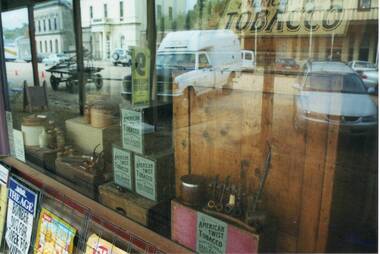
Photograph, NED KELLY SET, 2002
... history...photography...photographs...ned kelly...NED KELLY FILM - FRASER STREET, CLUNES - 29TH MAY 2002 local history photography photographs ned kelly 59 COLOUR PRINTS OF NED KELLY FILM SET NED KELLY SET Photograph PHOTOGRAPH ...NED KELLY FILM - FRASER STREET, CLUNES - 29TH MAY 200259 COLOUR PRINTS OF NED KELLY FILM SETlocal history, photography, photographs, ned kelly -
 Flagstaff Hill Maritime Museum and Village
Wood Sample, 1840
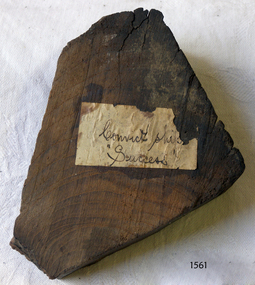
... Ned Kelly. It is also rumoured that Ned Kelly’s father John was a passenger on the Success, but this is also unverified. There are over 16 other ships named “Success”, although one in particular causes some confusion when researching “Success” in Australia. This other ship – the “HMS Success” was a 28 gun frigate built in1823, which was broken up in 1849. It also sailed to Australia. Statement of Significance: This piece of wood from the “Success” is connected to the ship Success, built in Burma in 1840. The “Success” is connected to the history ...This shipwreck artefact is a section of wood from the vessel “Success, a former immigrant ship, and later a convict hulk at Melbourne. The sailing ship “Success” was a teakwood vessel built in Natmoo (Natmaw), Tenasserim, Burma (now Myanmar) in 1840 for Cockerell & Co., Calcutta. Over its lifetime of 106 years, it was used to trade in the Indian subcontinent, to transport free emigrants to Australia, as a prison hulk in the Port of Melbourne for both hardened criminals, and later for women and boys, as a storage vessel for ammunition, a reformatory, and as a floating museum sent around the world to tell the tale of the convict era. During the time “Success” was used as a museum, pamphlets were distributed to paying customers advertising erroneously, that the “Success” was the oldest ship in the world. The “Success” sank and was re-floated twice: the first in Sydney in 1885, the second in the USA in 1918, before it was finally burned and sank July 4, 1946 in Lake Erie, near Sandusky, Ohio in 1946. Although the “Success” was home to prisoners while berthed in the Port of Melbourne, it was not used as convict transport. There has been speculation that Ned Kelly’s infamous armour was displayed on the “Success”, but this cannot be verified. Another link to Ned Kelly is Henry Johnson, an Irish prisoner on the Success, who was implicated in the murder of the ship’s warder, and later Johnson was supposedly a bushranger with Ned Kelly. It is also rumoured that Ned Kelly’s father John was a passenger on the Success, but this is also unverified. There are over 16 other ships named “Success”, although one in particular causes some confusion when researching “Success” in Australia. This other ship – the “HMS Success” was a 28 gun frigate built in1823, which was broken up in 1849. It also sailed to Australia. Statement of Significance: This piece of wood from the “Success” is connected to the ship Success, built in Burma in 1840. The “Success” is connected to the history of Australia because she was used as a merchant ship to transport immigrants to Australia, as a prison ship in Melbourne, a storage vessel, and as a floating “convict” museum, which travelled the world. Section of wood from ship “Success”. Wood appears to have been partially burnt, saw marks faintly visible on wood, remnant of a label with handwriting in black inklabel marked in script handwriting “Convict ship / “Success””flagstaff hill, warrnambool, shipwrecked-coast, flagstaff-hill, flagstaff-hill-maritime-museum, maritime-museum, shipwreck-coast, flagstaff-hill-maritime-village, sailing vessel success, wood sample of sailing ship success, cockerell & co. calcutta -
 The Beechworth Burke Museum
Photograph, unknown
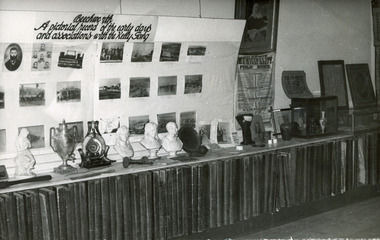
... Ned Kelly is an Australian icon, mythologised in Australian literature, art, folklore and history, and the Kelly Gang story permeates Australia's national consciousness. ...This photograph was taken in the Burke Museum c1970 and depicts an exhibition about the Kelly Gang. This photograph is of social significance due to its connection with the Burke Museum as well as the Kelly Gang. The Kelly Gang story is integral to the formation of an Australian identity and highlights the Irish oppression during the 1800s. Ned Kelly is an Australian icon, mythologised in Australian literature, art, folklore and history, and the Kelly Gang story permeates Australia's national consciousness. The Burke Museum is significant here also, as the image shows the importance of the Kelly Story to the Beechworth area and local identity. This photograph is also of research potential due to the great interest in the Kelly Gang history in Australia, and also for its presentation of a historical museum exhibition in Beechworth.Black and white, rectangular photograph, printed on photographic paperObverse: Beechworth/a pictorial record of the early days/and associations with the Kelly Gang Reverse: BMA03314 1997.3125/Agfaned kelly, kelly gang, burke museum, australia, museum, display, photograph, pictorial record, beechworth municipality, beechworth, exhibit, bust, clock, urn, vase, painting -
 The Beechworth Burke Museum
Photograph, c.1980
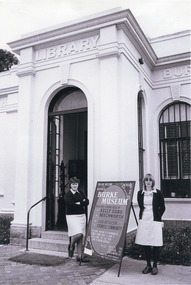
... Ned Kelly collection advertised on the a-frame in the photograph. The photograph itself is also part of the Burke Museum collection. The Burke Museum itself is very significant to Victorian history. ...This photograph depicts the entrance to the Burke Museum in Beechworth, most likely in 1980. The building was originally established as the Beechworth Athenaeum in 1857 to provide a lecture hall and reading room at the peak of the gold rush. In 1859, it became the Beechworth Public Library, which is why the writing embossed above the main entry says 'Library' rather than 'Museum'. The building was turned into a museum and renamed the Robert O'Hara Burke Memorial Museum in 1863 in honour of Robert O'Hara Burke, former Police Superindendent of Beechworth who died in 1861 on the Burke and Wills expedition. The Burke Museum has been in almost continual operation since that time. In the 1970s, the building underwent renovations to create several verandas, though the main façade visible in this photograph remained as it was when originally built. The Burke Museum currently contains over 30,000 individual objects, including the Gold Rush era items and the Ned Kelly collection advertised on the a-frame in the photograph. The photograph itself is also part of the Burke Museum collection.The Burke Museum itself is very significant to Victorian history. It is on both the Victorian Heritage Register and is part of the National Trust due to its relevance to the history of the Gold Rush period, its architectural features, and its significant collection. Photographs of it throughout its history are an important part of telling the museum's story. This photograph in particular highlights what the museum staff believed would be appealing to a 1980s public, evident by the A-frame advertising board.A black and white rectangular photograph printed on photographic paper.Top right text: 5147. Bottom left text: Beryl Seatt (or possibly Scatt) & friend 1980beechworth, burke museum, beechworth museum, beechworth historic precinct, architecture, museum, library, 1980s, 1980s australia, museum staff -
 The Beechworth Burke Museum
Photograph, 1997
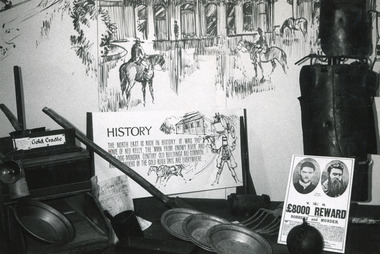
... Obverse: Gold Cradle / History / Claim 1835 / The north east is rich in history. It was the home of Ned Kelly, the 'Man from Snowy River' and (???) ...Ned Kelly is an Australian icon, mythologised in Australian literature, art, folklore and history, and the Kelly Gang permeates Australia's national consciousness. ...This photograph is recorded as having been taken in the North East Victoria Regional Tourist Authority, Wangaratta and depicts an exhibition display of items and interpretative labels associated with the Kelly Gang. The display was reportedly laid out as part of a Vic Tour Stamp, with items from the Burke Museum Collection.This photograph is of social significance due to its connection with the Burke Museum as well as the Kelly Gang. The Kelly Gang story is integral to the formation of the Australian identity and highlights the Irish oppression during the 1880s. Ned Kelly is an Australian icon, mythologised in Australian literature, art, folklore and history, and the Kelly Gang permeates Australia's national consciousness. The significance of the Burke Museum is also highlighted here, as the photograph shows the importance of the Kelly story to the Beechworth area and local identity, as well as its significance within the museum collection. The photograph is of strong research potential due to its depiction of the Kelly Gang history in Australia and its presentation of a historical museum exhibition which toured from Beechworth to other Victorian locations. With a depiction of the exhibition and associated label, the photograph provides insight into how the language and historical interpretation of Kelly Gang has developed, and how cultural and social opinions which are often shaped by exhibition displays, have shifted. Black and white rectangular photograph printed on matte photographic paper.Obverse: Gold Cradle / History / Claim 1835 / The north east is rich in history. It was the home of Ned Kelly, the 'Man from Snowy River' and (???) dog Mogan. Century old buildings are common and (???)nders of the gold rush days are everywhere / V. R. / £8000 Reward / Robbery and Murder / (indeterminate) Reverse: The historical display laid out in VICTOUR / 1997 3135 / North East Victoria/ Regional Tourist Authority/ P.O. Box 250/ Wangaratta. 3577 /BMMA03324burke museum, ned kelly, kelly gang, museum collection, exhibition, display, gallery, museum, exhibit -
 Geelong RSL Sub Branch
History of Colin Quin, Late 20th Century
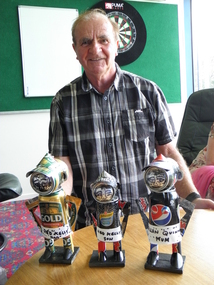
... Ned Kelly. This is the original story of Colin Quin. A detailed A4 paper discription of Colin Quin a National Serviceman in 1958 and commenced training in the 20 National Service Battalion. Colin Quinn and joined the Regular Army after completion of National Service. History ...Colin Quin was a National Serviceman in the 1958 intake upon completion of National Service Colin Quin joined the Regular Army. Colin served with the 21st Construction Engineers the unit went to Wewak, Borneo. After Military Service Colin worked as a refrigeration mechanic and has the interesting hobby of making model aeorplanes from beer cans. Colin Quin is also a distant relative to Ned Kelly.This is the original story of Colin Quin.A detailed A4 paper discription of Colin Quin a National Serviceman in 1958 and commenced training in the 20 National Service Battalion. Colin Quinn and joined the Regular Army after completion of National Service. -
 Supreme Court of Victoria Library
Plaster Portrait Bust, Justice Redmond Barry, 1884
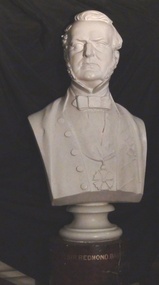
... Redmond Barry is an important figure in colonial Victorian history, responsible for the establishment of key cultural institutions as well as a Supreme Court Judge for nearly 30 years, presiding over both the Eureka trials and the trial of Ned Kelly....Redmond Barry is an important figure in colonial Victorian history, responsible for the establishment of key cultural institutions as well as a Supreme Court Judge for nearly 30 years, presiding over both the Eureka trials and the trial of Ned Kelly. ...The library committee had already commissioned a portrait of Sir Redmond Barry when they purchased this bust of Barry along with that of Justice Fellows. The library still holds the receipt for this purchase of 24 pounds. The purchases were probably part of the program of outfitting the library interiors and may have been purchased for the niches, that were later covered with the portraits, ironically one of these was of Barry. Redmond Barry is an important figure in colonial Victorian history, responsible for the establishment of key cultural institutions as well as a Supreme Court Judge for nearly 30 years, presiding over both the Eureka trials and the trial of Ned Kelly.The bust of Redmond Barry is of some interest as part of the original furnishings of the library. It represents one of a number of bust portraits of Barry and is of some significance as it portrays Barry, an important figure in Victorian history. The bust is also of interest as a work of James Scurry, most well known for his architectural sculpture.Plaster bust of Justice Redmond Barry. The bust itself is painted white. The pedestal has been painted for a red and black marble effect. Barry's name appears in gold lettering. The Bust is larger than life size. The head is finely detailed with Barry in contemporary clothing with a bow tie and his orders on his chest.Sir Redmond Barry -
 The Beechworth Burke Museum
Photograph, 1970-71
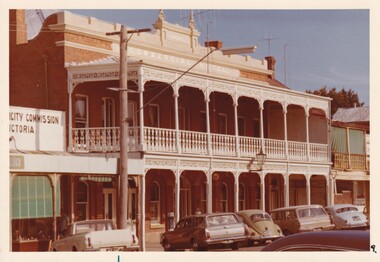
... Over its long history, the hotel hosted figures such as the Governor of Victoria in 1906, and reputedly even Ned Kelly. ...Over its long history, the hotel hosted figures such as the Governor of Victoria in 1906, and reputedly even Ned Kelly. ...This is a Kodak film packet of colour photographs of the historic Tanswell's Commercial Hotel, Beechworth. They were taken by William Gray in 1970–71, soon after the Tanswell era ended in 1967, after almost a century. Over its long history, the hotel hosted figures such as the Governor of Victoria in 1906, and reputedly even Ned Kelly. The photos depict the hotel's prominent exterior and antique interiors and furnishings, as well as Gray’s personal interest in antiques. One photograph shows Gray’s family at a Chinese burning tower. The reverse of the photographs contain Gray's handwritten notes. He later opened his own studio in Ivanhoe. These photographs have historic significance as they depict the Tanswell's Commercial Hotel- a notable example of Australian country hotel architecture and a prominent local landmark. Furthermore, these photographs were taken prior to the restoration works hence depicting the original colour and texture of the facade's brickwork. These photographs also have artistic significance as they beautifully capture the antique interiors of the hotel.Colour rectangular photographs printed on matte photographic paper unmounted8496.1: Obverse: 9. 8496.1: Reverse: Tanswell's Historic Hotel/Beechworth/About 1970-71?/8496 8496.2: Obverse: 12. 8496.2: Reverse: Tanswell's Historic Hotel/Beechworth/Remarkable ____ ____/1971/8496 8496.3: Obverse: 10. 8496.3: Reverse: Upstairs Antique Furniture/Incl: Triple 'Love Seat'/Tanswells Historic Hotel/Beechworth/About 1970-71/8496 8496.4: Obverse: 16. 8496.4: Reverse: Tanswell's Historic Pub/Beechworth/Upstairs Antique Room/1971/8496 8496.8: Reverse: 1971?/Tanswell's Historic Hotel/Beechworth/Upstairs Antique Room/Triple "Love Seat"/Later.../I bought a red _____/'Double' Love Seat for/__ studio+_____/It was not successful/8496 8496.5: Obverse: 15. 8496.5: Reverse: Bard, Susan, Rosemary Gray/+Sasha (Dalmatian)/Probably Beechworth Cemetry/About 1970-71?/8496 8496.6: Obverse: 14. 8496.6: Reverse: Tanswells Historic Hotel/Beechworth/Upstairs Dining Room/1971/8496 8496.7: Obverse: 11. 8496.7: Reverse: Tanswells Historic Hotel/Beechworth/1st ___/Antique Lounge/About 1970-71/8496 8496.8: Obverse: 13.tanswells commercial hotel, tanswells hotel, beechworth 1970s, william gray, antique furniture -
 The Beechworth Burke Museum
Photograph, c1970
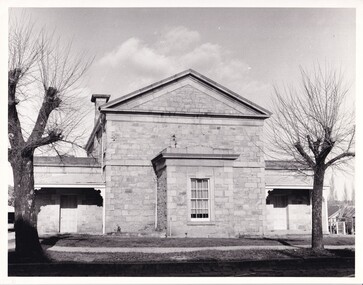
... The Courthouse is a significant site in Australia’s legal history because it was the location of more than 40 trials and hearings for the Kelly Gang and their sympathisers. 1850s Beechworth Beechworth Courthouse Ned Kelly 1800s Beechworth Kelly gang Beechworth Historic Courthouse 1858 kelly trials Daniel Kelly Dan Kelly Edward Kelly Ellen Kelly Elizabeth Scott the first woman hanged in Victoria Colony of Victoria 1863 domestic violence related murder Reverse Ministry of Tourism, Melbourne This a rectangular, black and white photograph, unmounted. ...The Beechworth Historic Courthouse is a living history museum in Victoria, Australia. Built in 1858, it has been in continuous service for 131 years and is currently home to a unique collection of artifacts, including its original furniture and fittings. The Courthouse Law Library is also recognised as being of outstanding national significance with many rare books held in the collection. The courthouse was built in 1858 and is located in the centre of the Beechworth Historic Precinct. It was built from granite with a double height gabled courtroom with the entrance via a central projecting porch. The building was classified in 1959 as part of Group Classification (B2615)with Forests Office, Lands Office, Police Lock-up & Police Station. The Courthouse is a significant site in Australia’s legal history because it was the location of more than 40 trials and hearings for the Kelly Gang and their sympathisers.This a rectangular, black and white photograph, unmounted.Reverse Ministry of Tourism, Melbourne1850s beechworth, beechworth courthouse, ned kelly, 1800s beechworth, kelly gang, beechworth historic courthouse, 1858, kelly trials, daniel kelly, dan kelly, edward kelly, ellen kelly, elizabeth scott, the first woman hanged in victoria, colony of victoria, 1863, domestic violence related murder -
 Flagstaff Hill Maritime Museum and Village
Equipment - Ship's Wheel, 1840
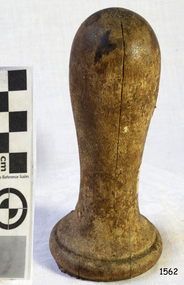
... Ned Kelly. It is also rumoured that Ned Kelly’s father John was a passenger on the Success, but this is also unverified. There are over 16 other ships named “Success”, although one in particular causes some confusion when researching “Success” in Australia. This other ship – the “HMS Success” - was a 28 gun frigate built in1823, which was broken up in 1849. It also sailed to Australia. Thiswooden ship's wheel handle was once part of the ship’s wheel of the sailing ship “Success” , which was, built in Burma in 1840. The “Success” is connected to the history ...This wooden spoke handle is from the wheel of the sailing ship “Success”, a former immigrant ship and later a convict hulk at Melbourne. The sailing ship “Success” was a teakwood vessel built in Natmoo (Natmaw), Tenasserim, Burma (now Myanmar) in 1840 for Cockerell & Co., Calcutta. Over its lifetime of 106 years, it was used to trade in the Indian subcontinent, to transport free emigrants to Australia, as a prison hulk in the Port of Melbourne for both hardened criminals, and later for women and boys, as a storage vessel for ammunition, a reformatory, and as a floating museum sent around the world to tell the tale of the convict era. During the time “Success” was used as a museum, pamphlets were distributed to paying customers advertising erroneously, that the “Success” was the oldest ship in the world. The “Success” sank and was re-floated twice: the first in Sydney in 1885, the second in the USA in 1918, before it was finally burned and sank on July 4, 1946 in Lake Erie, near Sandusky, Ohio, in 1946. Although the “Success” was home to prisoners while berthed in the Port of Melbourne, it was not used as convict transport. There has been speculation that Ned Kelly’s infamous armour was displayed on the “Success”, but this cannot be verified. Another link to Ned Kelly is Henry Johnson, an Irish prisoner on the vessel Success, who was implicated in the murder of the ship’s warder. and later, Johnson was supposedly a bushranger with Ned Kelly. It is also rumoured that Ned Kelly’s father John was a passenger on the Success, but this is also unverified. There are over 16 other ships named “Success”, although one in particular causes some confusion when researching “Success” in Australia. This other ship – the “HMS Success” - was a 28 gun frigate built in1823, which was broken up in 1849. It also sailed to Australia.Thiswooden ship's wheel handle was once part of the ship’s wheel of the sailing ship “Success” , which was, built in Burma in 1840. The “Success” is connected to the history of Australia because she was used as a merchant ship to transport immigrants to Australia, and was also used as a prison ship in Melbourne, a storage vessel, and as a floating “convict” museum, which travelled the world. Ship's wheel handle. Hndle from the wheel of sailing ship, the “Success”. The shaped handle is domed at one end, becoming narrower towards the other end, then flattened out into a beveled circle. The handle has an inscription written in pencil."Success"flagstaff hill maritime museum, maritime museum, sailing ship success, ship's wheel spoke, ship's steering wheel, prison ship, prison hulks, convict ship, spoke handle, ship's wheel, navigation equipment, steering wheel -
Glen Eira Historical Society
Article - Little Cromer, Kooyong Road, 235, Elsternwick
... history on home and former owners. Description of home interior features, also includes and exterior and interior photograph Caulfield Glen Eira Leader Kooyong Road Little Cromer Air Raid Shelters Sadleir John Architectural Styles Schreiber Robert Henry Architects Beemery Park Elsternwick Joske Adam Gary Peer and Associates Krongold Darren Caulfield North Kelly Ned Article Little Cromer, Kooyong Road, 235, Elsternwick ...Photocopied article from Caulfield Glen Eira Leader April 16, 2001 on Little Cromer 235 Kooyong Road, which is to be auctioned on April 29, 2001. Article gives brief history on home and former owners. Description of home interior features, also includes and exterior and interior photographcaulfield glen eira leader, kooyong road, little cromer, air raid shelters, sadleir john, architectural styles, schreiber robert henry, architects, beemery park, elsternwick, joske adam, gary peer and associates, krongold darren, caulfield north, kelly ned -
Port Melbourne Historical & Preservation Society
Document - Memoir, Rev David Monkhouse, Reminiscences, Mar 1965
... According to the author, "Many extremely interesting and amusing incidents, dates and happpenings have been omitted, and only those with a Religious, Moral or Historical significance recorded". families sport - yachting ralph monkhouse thomas edwards susanna anna philpot monkhouse eli 'dick' edwards vincent 'ben' edwards ralph philpot monkhouse mary ellen edwards monkhouse john thomas monkhouse susanna monkhouse mary monkhouse john boothroyd (jack) monkhouse edna jane monkhouse ned kelly David MONKHOUSE Photocopy only - of the handwritten memoirs of the Rev. David Monkhouse, written in 1965 at the age of 73, includes family history from 1831. 87 pp Reminiscences Document Memoir, Rev David Monkhouse ...According to the author, "Many extremely interesting and amusing incidents, dates and happpenings have been omitted, and only those with a Religious, Moral or Historical significance recorded".Photocopy only - of the handwritten memoirs of the Rev. David Monkhouse, written in 1965 at the age of 73, includes family history from 1831. 87 ppfamilies, sport - yachting, ralph monkhouse, thomas edwards, susanna anna philpot monkhouse, eli 'dick' edwards, vincent 'ben' edwards, ralph philpot monkhouse, mary ellen edwards monkhouse, john thomas monkhouse, susanna monkhouse, mary monkhouse, john boothroyd (jack) monkhouse, edna jane monkhouse, ned kelly, david monkhouse -
 Monbulk RSL Sub Branch
Book, Peter Fitzimons, Breaker Morant, 2020
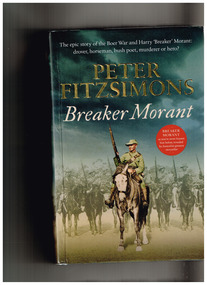
... Boer war 1899-1901 - History Boer war 1899-1902 - Biography The epic story of the Boer War and Harry 'Breaker' Morant: drover, horseman, bush poet - murderer or hero? Most Australians have heard of the Boer War of 1899 to 1902 and of Harry 'Breaker' Morant, a figure who rivals Ned Kelly as an archetypal Australian folk hero. ...The epic story of the Boer War and Harry 'Breaker' Morant: drover, horseman, bush poet - murderer or hero? Most Australians have heard of the Boer War of 1899 to 1902 and of Harry 'Breaker' Morant, a figure who rivals Ned Kelly as an archetypal Australian folk hero. Born in England and emigrating to Queensland in 1883 in his early twenties, Morant was a charming but reckless man who established a reputation as a rider, polo player and writer. He submitted ballads to The Bulletin that were published under the name 'The Breaker' and counted Banjo Paterson as a friend. When appeals were made for horsemen to serve in the war in South Africa, Morant joined up, first with the South Australian Mounted Rifles and then with a South African irregular unit, the Bushveldt Carbineers. In September 1901 Morant and two other Australians, Lieutenants Peter Handcock and George Witton, were arrested for the murder of Boer prisoners. Morant and Handcock were court-martialled and executed in February 1902 as the Boer War was in its closing stages, but the debate over their convictions continues to this day. Does Breaker Morant deserve his iconic status? Who was Harry Morant? What events and passions led him to a conflict that was essentially an Imperial war, played out on a distant continent under a foreign flag? Was he a scapegoat for British war crimes or a criminal himself? With his trademark brilliant command of story, Peter FitzSimons unravels the many myths and fictions that surround the life of Harry Morant. The truths FitzSimons uncovers about 'The Breaker' and the part he played in the Boer War are astonishing - and, in the hands of this master storyteller, make compelling reading.Ill, bib, index, p.500.non-fictionThe epic story of the Boer War and Harry 'Breaker' Morant: drover, horseman, bush poet - murderer or hero? Most Australians have heard of the Boer War of 1899 to 1902 and of Harry 'Breaker' Morant, a figure who rivals Ned Kelly as an archetypal Australian folk hero. Born in England and emigrating to Queensland in 1883 in his early twenties, Morant was a charming but reckless man who established a reputation as a rider, polo player and writer. He submitted ballads to The Bulletin that were published under the name 'The Breaker' and counted Banjo Paterson as a friend. When appeals were made for horsemen to serve in the war in South Africa, Morant joined up, first with the South Australian Mounted Rifles and then with a South African irregular unit, the Bushveldt Carbineers. In September 1901 Morant and two other Australians, Lieutenants Peter Handcock and George Witton, were arrested for the murder of Boer prisoners. Morant and Handcock were court-martialled and executed in February 1902 as the Boer War was in its closing stages, but the debate over their convictions continues to this day. Does Breaker Morant deserve his iconic status? Who was Harry Morant? What events and passions led him to a conflict that was essentially an Imperial war, played out on a distant continent under a foreign flag? Was he a scapegoat for British war crimes or a criminal himself? With his trademark brilliant command of story, Peter FitzSimons unravels the many myths and fictions that surround the life of Harry Morant. The truths FitzSimons uncovers about 'The Breaker' and the part he played in the Boer War are astonishing - and, in the hands of this master storyteller, make compelling reading. boer war 1899-1901 - history, boer war 1899-1902 - biography -
 Bendigo Historical Society Inc.
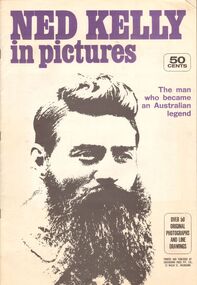
Book - LYDIA CHANCELLOR COLLECTION: NED KELLY IN PICTURES. THE MAN WHO BECAME AN AUSTRALIAN LEGEND
... HISTORY Australian bushrangers Lydia Chancellor collection Ned Kelly Australian history history individual person male bushranger crime books Australia Southdown Press Pty Ltd., 32 Walsh Street, Melbourne. ...A large soft covered book titled, 'Ned Kelly in pictures. The man who became an Australian legend.' Over 50 original photographs and line drawings. Printed and published by Southdown Press Pty. Ltd. 32 Walsh Street., Melbourne. 15 pages. 50 cents.Southdown Press Pty Ltd., 32 Walsh Street, Melbourne.history, australian, bushrangers, lydia chancellor, collection, ned kelly, australian history, history, individual, person, male, bushranger, crime, books, australia -
 Bendigo Historical Society Inc.
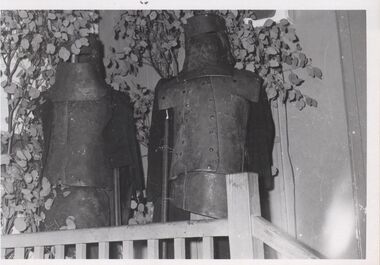
Photograph - GOLDEN DAYS HISTORICAL EXHIBITION COLLECTION: NED KELLY AND DAN KELLY'S ARMOUR
... BENDIGO History golden days historical exhibition Black and white photograph: written on back in blue pen: 'Golden Days Historical Exhibition' 12th to 17 August, 1960' At R.S.L. Hall, Bendigo. Ned and Dan Kelly's ...Black and white photograph: written on back in blue pen: 'Golden Days Historical Exhibition' 12th to 17 August, 1960' At R.S.L. Hall, Bendigo. Ned and Dan Kelly's Armour. Image shows armour manufactured by Kelly gang. Appears to be the original armour. Unknown where it was borrowed from for the Exhibition.bendigo, history, golden days historical exhibition -
 Bendigo Historical Society Inc.
Book - ALEC H CHISHOLM COLLECTION: BOOK ''HISTORY OF THE KELLY GANG & THEIR PURSUERS'' BY J.J.KENNEALLY
... BOOKS Collections history ALEC H CHISHOLM COLLECTION NED KELLY KELLY GANG J.J.KENNEALLY HISTORY J. ...Book. ALEC H CHISHOLM COLLECTION. 306 softcover book by J. J. Kenneally called 'The Complete Inner History of the Kelly Gang and their Pursuers'. Foreword by G. C. Stanley with several B & W photos and drawings of locations and characters and one map of Kelly country. Published and printed in 1934 by H. Hearne & Co, Pty. Ltd., Melbourne. Catalogue sticker ''2191 KEN'' on spine.J. J. Kenneallybooks, collections, history, alec h chisholm collection, ned kelly, kelly gang, j.j.kenneally, history -
 National Wool Museum
Archive - Price List, Kathryn Knitwear, 1964
... Business Business history Manufacturing Knitting Machine Fashion Textile Production Business Archives Manufacturing Documents [internal] SHADES – WINTER 1964 [LEFT COLUMN] ORLON WHITE PINK LEMON BALE BLUE OATMEAL SULTRY GREEN NUTTY BROWN PINE GREEN REDCOAT BOTANY BLUE SKY BLUE VIYELLA WHITE PINK LEMON PALE BLUE [RIGHT COLUMN] WOOL. SKY BLUE PINK LEMON PALE BLUE WILD OAT SULTRY GREEN NUTTY BROWN NED KELLY ...Kathryn Knitwear, founded by Robert Blake, manufactured high quality children’s knitwear in Melbourne from the 1940s – 1980s. Robert Blake began manufacturing children’s knitwear in his bedroom in Strathmore using a hand powered machine in the late 1940s. The operation moved to Ascot Vale and Essendon, before eventually establishing a factory in Moonee Ponds in the early 1950s. The business continued to expand, necessitating a move to a new factory in Broadmeadows. By 1962, the Broadmeadows factory was producing an average of 20,000 garments per month, which increased to 24,000 by 1964. Robert Blake’s Son, Brendan recalls that “The Kathryn brand was famous around Australia, anywhere children needed to keep warm and dress smartly. It also won a number of wool fashion awards”, including the 1969 Wool Awards, which was held by the Australian Wool Bureau and published in Women’s Weekly. The Kathryn range was designed for durability, comfort and care, without sacrificing style. They used patterning techniques that increase stretchiness, comfort and fit, as well as integrating decorative elements into the fabric to prevent them from being bulky, uncomfortable or tight. Making longevity of style a priority, Brendan Blake remembers that “there was one particular garment that was in the range for at least thirty years”. He also recalls “In the past, when women have found out that I was associated with Kathryn Knitwear, they would often relate to me the story of a garment they had purchased or received as a gift and, when their child had grown out of it, they would hand it on to another child. Several ladies have told me of purchasing garments for their daughters’ glory box, or saving a particular garment after their daughter had grown out of it. Brendan Blake: “At the peak of their operation they employed approximately two hundred people, mainly women and girls. A family would often seek to send their daughter to work in this company because they knew they would be looked after and safe. One lady wrote to me telling me that working at the Moonee Ponds Factory prior to getting married was the happiest time of her life.” In 1963, workers at the Kathryn factory earned £13 per week, which was 8 shillings and 8 pence higher than the minimum weekly wage for female workers in the textile manufacturing industry (£12 11s 4d). By 1970, the Kathryn Knitwear brand expanded from children’s knitwear into womenswear under the brand name ‘Lady Kathryn’, and for boys and men under ‘Robert Blake’. Continuing to diversify their distribution, they also began exporting ‘Kathryn’ garments to New Zealand, the Pacific Islands, and Japan. ‘Kathryn Knitwear’ was well-known for their early adoption of modern materials and techniques that had broad appeal to their customer base. This is shown in their early use of the acrylic fibre ‘Orlon’ in the 50s and 60s and ‘Superwash’ wool in the 1970s. Many of Kathryn Knitwear’s styles, particularly those that were long running staples of the brand, were available in both wool and Orlon to suit the consumer’s preference. Far from the humble origins of one man in his bedroom with a hand-cranked machine; at its closure in 1980, the Broadmeadows factory of ‘Kathryn’ housed more than 100 machines, including 53 sewing machines and 45 knitting machines. Robert Blake was “a passionate advocate for wool and Australian Made” throughout his whole life. A strong thread that ties through the lifespan of Robert Blake and Kathryn Knitwear is a balance between adopting new innovations without sacrificing the core values of durability, comfort, care and style that had made the brand so well known. Their legacy forms an integral part of both Australian social and manufacturing history.Price list booklet for Winter 1964. Booklet was housed inside yellow manila envelope printed in black and red ink with the Kathryn Logo and contact details. The booklet contains tables, printed in blue ink, that outline the price for each style and size available, as well as providing the available colours. Annotations are made in red pen ink. A sheet of yellow paper has been included in the front of the booklet that includes all the shades available in Orlon, Viyella and Wool.[internal] SHADES – WINTER 1964 [LEFT COLUMN] ORLON WHITE PINK LEMON BALE BLUE OATMEAL SULTRY GREEN NUTTY BROWN PINE GREEN REDCOAT BOTANY BLUE SKY BLUE VIYELLA WHITE PINK LEMON PALE BLUE [RIGHT COLUMN] WOOL. SKY BLUE PINK LEMON PALE BLUE WILD OAT SULTRY GREEN NUTTY BROWN NED KELLY GREEN REDCOAT BOTANY BLUE CHESTNUT PARCHMENT PIONEER GREEN MAZURKAH KATHRYN AND VIYELLA/KATHRYN SHOW CARDS AVAILABLE ON REQUEST.business, business history, manufacturing, knitting machine, fashion textile production, business archives, manufacturing documents -
Clunes Museum
Coin - COINS, 2004
... Card has picture of helmet on front and Ned Kelly history on back. All in plastic sleeve...ned kelly 50cents coin collector coin commemorative coin .2 Coin has Kelly bust and picture in armour on front, Queens head on back. Card has picture of helmet on front and Ned Kelly history on back. ....1 Cook Island 50 cent coin (currently unavailable 19/8/2019) .2 Ned Kelly collector coin, mounted on card.2 Coin has Kelly bust and picture in armour on front, Queens head on back. Card has picture of helmet on front and Ned Kelly history on back. All in plastic sleevened kelly, 50cents coin, collector coin, commemorative coin -
Clunes Museum
Photograph
... LOCAL HISTORY PHOTOGRAPHY PHOTOGRAPHS EVENTS AND CELEBRATIONS - NED KELLY FILMING COLLECTION OF 17 COLOUR PHOTOGRAPHS OF NED KELLY FILMING INCLUDING "TODAY" TELEVISION SHOW WITH STEVE LIEBERMAN AND CREW IN FRASER STREET, CLUNES. ...COLLECTION OF 17 COLOUR PHOTOGRAPHS OF NED KELLY FILMING INCLUDING "TODAY" TELEVISION SHOW WITH STEVE LIEBERMAN AND CREW IN FRASER STREET, CLUNES. VIC.local history, photography, photographs, events and celebrations - ned kelly filming -
 Beechworth Honey Archive
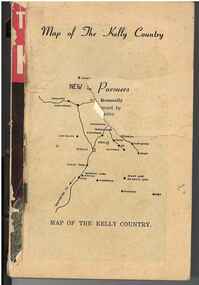
Publication, The Complete Inner History of the Kelly Gang and their Pursuers. (Kenneally, J.J.). Cheltenham, 1950, 1950
... publication book ned kelly gang beechworth honey 316 pages, illustrated. The Complete Inner History of the Kelly Gang and their Pursuers. ...316 pages, illustrated.publication, book, ned kelly gang, beechworth honey -
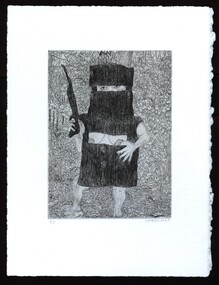 Federation University Art Collection
Work on paper, 'The True History of the Kelly-Gang" (Salote), Warby Ranges by Arlene TextaQueen, 2008
... Arlene TEXTAQUEEN (1975= ) Born Perth, Western Australia Gippsland Campus Art Collection Ned Kelly 'The True History of the Kelly-Gang" (Salote), Warby Ranges by Arlene TextaQueen Work on paper Arlene TextaQueen ...Arlene TEXTAQUEEN (1975= ) Born Perth, Western Australiagippsland campus art collection, ned kelly -
Unions Ballarat
Eureka : The songs that made Australia, 31 cm
... history in songs. songs btlc ballarat trades and labour council ballarat trades hall convicts transportation sea shanties pioneering gold goldrush bushrangers shearers drovers bush life sporting life disasters music Front cover: author's name and title. Back cover: author bio; praise from Jack Pobar, swagman. Paper; paperback book. Front cover: multicoloured background; picture of swaggy with guitar; picture of Eureka flag; black and green lettering. Back cover: red, orange and white background; Eureka flag; picture of a shearer with sheep; picture of a person in Ned Kelly ...Songs of Australian heritage for voice. Melody line only with chord symbols. Includes guitar tablature for chords. Convicts, transportation and sea shanties. Pioneering, goldrush days and bushrangers. Shearers, drovers and bush life. Swagmen, Victorian expansion, sporting life and disasters. Contents: • According to the Act • The Albury ram • Another fall of rain • Australia's on the Wallaby • The bald-headed end of the broom • The ballad of Ben Hall • The ballad of the Kelly Gang • The banks of the Condamine • The big-gun shearer • The black velvet band • The blackboys Waltzing Matilda • Bluey Brink • Bold Jack Donohue • Bound for Botany Bay • Brisbane ladies • Cain killed Abel • The cane-cutter's lament • The carrier's song • The Catalpa • Charlie Mopps • Click go the shears • The cockies of Bungaree • Colonial experience • Coming down the flat • The convict maid • The currency lasses • The death of Alec Robertson • The death of Ben Hall • The death of Willie Stone • Denis O'Reilly • The drover's dream • The dying aviator • The dying stockman • Eight little cylinders • The Eldorado mining disaster • The exile of Erin • Farewell to Greta • Flash Jack from Gundagai • The flash stockman • Frank Gardiner • The freehold on the plain • The gaol song • The girls of the Shamrock Shores • The golden gullies of the Palmer • The gumtree canoe • The Hamfat man • Heenan and Sayers • Henry's downfall • Here's adieu to all judges and juries • I've been to Australia, Oh • Jim Jones at Botany Bay • Jog along til shearing • John Kanaka • The Lachlan Tigers • Leave her, jollies, leave her • Les Darcy • The limejuice tub • Look out below • Maggie May • Maids of Australia • Man of the Earth • The Maryborough miner • Moreton Bay • The morning of the fray • Morrisey and the Russian sailor • Musselman • The mustering song • My name is Edward Kelly • Nails • The new chum Chinaman • Nine miles from Gundagai • The nose on my old man • Oh, give me a hut • The old bark hut • The old bullock dray • One of the has-beens • The overlanders • Pint Pot and Billy • Pity poor labourers • Radcliffe Highway • The rigs of the time • Rolling home • The Ryebuck shearer • Sam Holt • Sign-on day • Sixteen thousand miles from home • South Australia • The springtime it brings on the shearing • The stockman's last bed • The Sunshine Railway disaster • Tambaroora Ted • The tattooed lady • Ten thousand miles away • The tent poles are rotten • Travelling down the Castlereagh • Tumba-bloody-Rumba • The two professional hums • Van Diemen's Land • The wallaby brigade • When we get our tuppence back • The wild colonial boy • Woolloomooloo Australian culture, folklore and history in songs.Paper; paperback book. Front cover: multicoloured background; picture of swaggy with guitar; picture of Eureka flag; black and green lettering. Back cover: red, orange and white background; Eureka flag; picture of a shearer with sheep; picture of a person in Ned Kelly armour playing a guitar on a horse; picture of woman facing the Ned Kelly figure; brand with the message "unsurpassed Australian made".Front cover: author's name and title. Back cover: author bio; praise from Jack Pobar, swagman.songs, btlc, ballarat trades and labour council, ballarat trades hall, convicts, transportation, sea shanties, pioneering, gold, goldrush, bushrangers, shearers, drovers, bush life, sporting life, disasters, music -
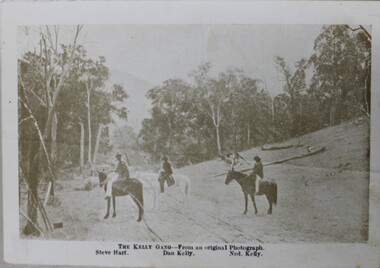 Ballarat Diocesan Historical Commission
postcard, postcard of Kelly gang
... Kelly story as well as its place in Ballarat's history. Fr Linane gathered a great deal of secondary material relating to the Kelly's, Mahogany Ship and other Victorian history and folklore. postcard, Kelly gang, Ballarat. Steve Hart, Ned ...An item from the collection of Diocesan Historian Fr T. Linane that reflects his interest in the Kelly story as well as its place in Ballarat's history. Fr Linane gathered a great deal of secondary material relating to the Kelly's, Mahogany Ship and other Victorian history and folklore. small Regal Postcard Co's series, Sydney postcard printed in Malta.postcard, kelly gang, ballarat. steve hart, ned kelly, dan kelly, regal postcard co, malta. -
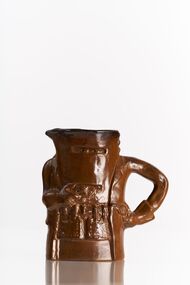 City of Greater Bendigo - Civic Collection
Artwork, other - Bendigo Pottery Toby Jug, Bendigo Pottery, Ned Kelly, c 1977
... The City of Greater Bendigo has had a long history of partnering with Bendigo Pottery and the Civic Collection holds a number of important items within its collection. Ned Kelly...The City of Greater Bendigo has had a long history of partnering with Bendigo Pottery and the Civic Collection holds a number of important items within its collection. Ned Kelly ...Established by George Guthrie in 1857 (about 5km north of its current site) and then again seven years later in 1864 after it initially closed, Bendigo Pottery remains one of the most influential and longest running Pottery’s in Australia. Over the years the Pottery has contributed to the growth and development of the district through both its products including building products, table ware and decorative and commemorative war as well as artistically, being responsible for training and supporting many potters locally. The City of Greater Bendigo has had a long history of partnering with Bendigo Pottery and the Civic Collection holds a number of important items within its collection. Ned Kelly is one of Australia's most iconic outlaws. Kelly was born and raised in rural Victoria, the third of eight children to Irish parents. His father, a transported convict, died in 1866, leaving Kelly, then aged 12, as the eldest male of the household. The Kelly's were a poor selector family who saw themselves as downtrodden by the squattocracy and as victims of persecution by the Victoria Police. While a teenager, Kelly was arrested for associating with bushranger Harry Power and served two prison terms for a variety of offences, the longest stretch being from 1871 to 1874. He later joined the "Greta Mob", a group of bush larrikins known for stock theft. A violent confrontation with a policeman occurred at the Kelly family's home in 1878, and Kelly was indicted for his attempted murder. Fleeing to the bush, Kelly vowed to avenge his mother, who was imprisoned for her role in the incident. After he, his brother Dan, and associates Joe Byrne and Steve Hart shot dead three policemen, the government of Victoria proclaimed them outlaws. Kelly died aged 25 at Melbourne Goal after being captured by Police in Glenrowan and sentenced to death. (Source Wikipedia).Brown glazed slip cast jug. Includes details which are iconic to the image of Ned Kelly including face and body armour pistol and gloves. Ned's left arm forms the handle.Verso; NED KELLY / Bendigo Pottery Epsom (stamp) Underside; Bendigo Pottery / Limited / Edition Series / 879 / 3000 / Australiacity of greater bendigo tourism, bendigo pottery -
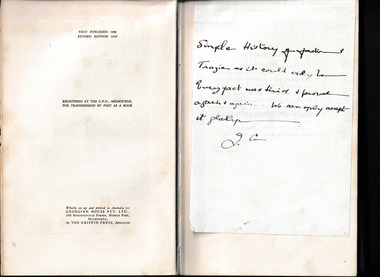 Mrs Aeneas Gunn Memorial Library
Georgian House, Australian son : the story of Ned Kelly, 1956
... Ned Kelly Australia - Bushrangers - History The story of the life of Australian bushranger Ned Kelly Ill, p.283. ...The story of the life of Australian bushranger Ned KellyIll, p.283.non-fictionThe story of the life of Australian bushranger Ned Kellyned kelly, australia - bushrangers - history -
 The Beechworth Burke Museum
Photograph
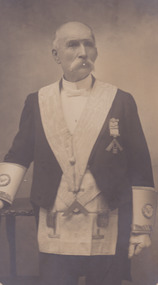
... Steele is well known in Victorian history for a variety of reasons, the most famous being the role he played in capturing Edward “Ned” Kelly at Glenrowan on the 28th June 1880. ...Steele is well known in Victorian history for a variety of reasons, the most famous being the role he played in capturing Edward “Ned” Kelly at Glenrowan on the 28th June 1880. ...This photograph, taken by Courtney’s Thelma Studios in Wangaratta, depicts Sergeant Arthur Loftus Maule Steele standing in the regalia of the Masonic Lodge. Before his death, Steele was a long term member of the St John’s Lodge of Masons where he was a Past Master and held office of treasurer for over thirty years. He was also a dedicated member of the Church of England and was an Electoral Inspector for Wangaratta. Steele was Sergeant of Police in Wangaratta for much of his life. He was one of 17 children born to Captain Robert Ball Steele and Mary Babington in Tours, France, in 1839. His parents were travelling at the time and soon after settled in Donegal, Ireland. At the age of 12, Steele was sent to the Military Academy of Dublin where he passed his examinations and prepared to enter the British Army. Steele met a bother of Robert O’Hara Burke and was advised to travel to Australia and join as a police cadet. Steele took the advice and travelled to Australia, arriving in Melbourne at the age of 17. He spend some time in a variety of employment including working as a clerk for the White Star Line. He entered the Victorian Police force in 1856. By 1864, Steele married Ruth Ingram Ballinger at Snowy Creek and worked at Omeo until being promoted to the mining centre of Beechworth, taking charge of the Yackandandah Station. Steele and Ballinger had ten children. Steele is well known in Victorian history for a variety of reasons, the most famous being the role he played in capturing Edward “Ned” Kelly at Glenrowan on the 28th June 1880. He also arrested Frank Neville (for the murder of a local resident Mr Nicholls) and Patrick Sheehan (first person to be executed in the Beechworth Gaol 1865 for the murder of James Kennedy at Rowdy Flat Yackandandah). He later worked on the case of Bridget Mepham (charged with the murder of her sister) at Wangaratta and retired from the Police force on the 1st of August 1896. In this retirement, Steele was a keen horticulturalist who enjoyed observing the habits and growth of new varieties cared for in his conservatory. Steele passed away in February 1914. This image has the potential to support current research on Sergeant Steele, the Masonic Lodge and photography during the c.1890s. Sergeant Steele is a well-researched member of the Victorian Police force and is known primarily for his involvement with the Kelly Gang. Therefore, depictions of Steele through photography can help to provide essential information about Steele outside of the Police force. This image has the capacity to inform about Steele’s involvement with the Masonic Lodge in Wangaratta. Therefore, it is important for what it can reveal regarding historic and social aspects. The Burke Museum is home to a large collection of Kelly centred photographs. The study of these photographs in connection to those in other museums have the ability to further current understanding on important figures and events in this historic occasion.Black and White rectangular photograph printed on matte photographic paper and mounted on an oval boardObverse: Courtney's Thelma Studios/ Wangaratta Reverse: 2747portrait, ned kelly, uniform, policeman, wangarratta, sergeant, steele, 1880, photograph, oval, black and white, sergeant steele, arthur loftus maule steele, arthur steele, wangaratta, beechworth -
 The Beechworth Burke Museum
Postcard, 2005
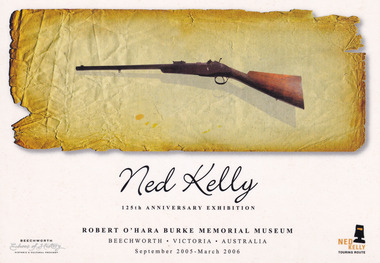
... Obverse: Ned Kelly / 125th ANNIVERSARY EXHIBITION / ROBERT O'HARA BURKE MEMORIAL MUSEUM BEECHWORTH . VICTORIA . AUSTRALIA / September 2005-2006 / BEECHWORTH / Echoes of History / HISTORIC & CULTURAL PRECINCT / NED / KELLY / TOURING ROUTE / REVERSE: Ned Kelly / 125th ANNIVERSARY EXHIBITION / ROBERT O'HARA BURKE MEMORIAL MUSEUM BEECHWORTH . ...The item can be compared with other Kelly photographs in Burke Museum's collection. kelly album ned kelly exhibition ned kelly's rifle betty snider-enfield .557 caliber rifle revolver exhibition beechworth burke museum 125th anniversary firearm Obverse: Ned Kelly / 125th ANNIVERSARY EXHIBITION / ROBERT O'HARA BURKE MEMORIAL MUSEUM BEECHWORTH . VICTORIA . AUSTRALIA / September 2005-2006 / BEECHWORTH / Echoes of History ...To commemorate the 125th anniversary of Edward “Ned” Kelly’s committal trial in the Beechworth Historic Courthouse, the Robert O’Hara Burke Memorial Museum (henceforth Burke Museum) commissioned this postcard to coincide with their exhibition dating September 2005 to March 2006 and titled the Ned Kelly 125th Anniversary Exhibition. The postcard depicts a Snider-Enfield of .577 calibre which was reputedly favoured by the Bushranger. The firearm is of typical 1870s hunting design and was displayed as a focal point within this exhibition. The firearm, which was named “Betty” was reportedly taken by Kelly from Henry Dudley. The weapon has the letter ‘K’ engraved into the wood of the fore end. Other items also displayed in this exhibition include the Burke’s Kelly death mask, a replica of the Kelly Gang armour and photographs from the Burke Museum’s Kelly album. This postcard advertises an exhibition held at the Beechworth Burke Museum to commemorate the 125th anniversary of Kelly’s committal trial, which took place in Beechworth's historic courthouse. The selection and interpretation of items like the gun called 'Betty' are significant for understanding the changing nature of Kelly scholarship, treatment and curation, in particular, the popular and iconic myth of the Australian bushranger. The item can be compared with other Kelly photographs in Burke Museum's collection.Rectangular colour printed postcard celebrating Ned Kelly 125th Anniversary Exhibition at Burke Museum, Beechworth. Inset image of Ned Kelly's rifle. Obverse: Ned Kelly / 125th ANNIVERSARY EXHIBITION / ROBERT O'HARA BURKE MEMORIAL MUSEUM BEECHWORTH . VICTORIA . AUSTRALIA / September 2005-2006 / BEECHWORTH / Echoes of History / HISTORIC & CULTURAL PRECINCT / NED / KELLY / TOURING ROUTE / REVERSE: Ned Kelly / 125th ANNIVERSARY EXHIBITION / ROBERT O'HARA BURKE MEMORIAL MUSEUM BEECHWORTH . VICTORIA . AUSTRALIA / September 2005-2006 / AFFIX STAMP HERE / 7250 / This is the rifle that was taken from Henry Dudley by Ned Kelly. It became Ned's favourite / rifle, which he called 'Betty'. Note the 'K' carved into the wood of the fore-end. / Interestingly, there is at least one other rifle owned by Ned Kelly that also has a 'K' engraved / into it by Ned- the Colt revolving carbine used by Ned at Glenrowan /kelly album, ned kelly exhibition, ned kelly's rifle, betty, snider-enfield, .557 caliber, rifle, revolver, exhibition, beechworth, burke museum, 125th anniversary, firearm -
 The Beechworth Burke Museum
Photograph, c.1914
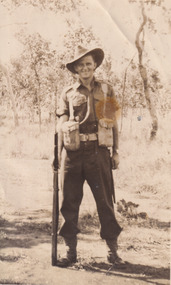
... As the son of Kate Kelly and William “Bricky” Foster, Fred Foster is an important part of the Kelly story after the execution of Edward “Ned” Kelly which has information it can impart relating to the history of the family after 1880. ...This photograph depicts a soldier, credited on the reverse as Fred Foster. The young man is dressed in military attire and is standing tall with a gun beside him. He is located in the Australian bush and the date of the photograph is unknown. Frederick “Fred” Arthur Foster was nephew to famous Bushranger Edward “Ned” Kelly. He was born on the 15th of March 1889 in Forbes, New South Wales. He was the eldest son of Catherine “Kate” Kelly and William Henry “Bricky” Foster. After the death of his mother in October of 1898 from apparent drowning, Foster (then aged 9) was raised by his grandmother Ellen Kelly (née Quinn) at Eleven Mile Creek in Victoria. On the 29th of June 1915, 26 year old Foster travelled to Melbourne, Victoria and enlisted in the Australian Army. He was a Private in the 17th Infantry Battalion (originally C.Company, 47th battalion). He previously was attached to the 55th Battalion but transferred in 1916. Prior to enlisting in the army, Foster worked as a Bee Keeper and served in the 16th Light Horse regiment at Benalla. Foster had blue eyes, brown hair and was of Presbyterian faith. On the 28th of February 1917, Foster travelled to France aboard SS “Golden Eagle”. He was killed in action in Lagnicourt, France on the 15th of April 1917 at 28 years old. The Battle in Lagnicourt France, on the Western Front, occurred from the 1st of March to the 30th of April of 1917 and was the location of fierce fighting between Germany and the British Empire. Germany became aware of a weakness they had along the Hindenburg Line, one of these weaknesses was located in Lagnicourt which is a small village in Northern France. Therefore, the Germans decided to launch a counter-attack in this area on the 15th of April at dawn. During this fight, German forces captured several batteries of the 1st Australian Division’s artillery but the Australians led a strong counter-attack by four of their battalions and recaptured the village and most of the guns from the German forces. German forces were forced into a premature withdrawal. This battle was not undertaken in typical WW1 “trench” style warfare. Instead, the battle was up on the ground in what was described as “old open style warfare”. In this battle, slightly more than 1000 casualties were Australian, with 300 of these prisoners of war. German forces suffered a loss of over 2300 casualties with 360 taken captive. Foster was one of 43 in his regiment who died, 87 were wounded and 51 reported missing. Foster was buried at location in Lagnicourt and whilst the grave was initially marked, it is now unknown. Foster’s service, alongside those who fell at Lagnicourt, is commemorated at the Australian National Memorial in Villers-Bretonneux, France along with other national Australian memorial sites.Photography played an important part in World War 1. Photographs of men in their military uniforms served as propaganda during the Great War to reassure civilians back at home of the military prowess of their nation and the bravery of their men. It did this while hiding the true horrors which faced the men in battle. These photographs, which includes those taken at home prior to embarking overseas like Fred Foster’s, act as censored memory for those who have lost a loved one at war. It enables families to remember their relatives in their youth and standing proudly rather than having to face the actual danger and horror which faced these men at the front line. The battle of Lagnicourt France was a victory for the European Empire and therefore, men who lost their lives protecting their countries became heroes and were awarded posthumous medals for their service. Photos of soldiers in their uniforms, were undertaken by men like Foster, so their families would be able to retain their memories and likeness before they embarked for war. Many men were killed or horribly wounded so these images were important for reminding families about their sons/ husbands/ brothers/ cousins and friends. This photo is a part of the Burke Museum Kelly album which includes numerous photographs relating to the Kelly Gang. As the son of Kate Kelly and William “Bricky” Foster, Fred Foster is an important part of the Kelly story after the execution of Edward “Ned” Kelly which has information it can impart relating to the history of the family after 1880. Whilst an important element of the Kelly Album, Foster’s photograph is also historically important in its own right for its connection to the Great War and the experiences of a soldier at the Western Front.Original sepia rectangular photograph developed on matte photographic paper, unmounted.Reverse: (Top right corner of reverse:) FRED FOSTER/ (Top centre of reverse:) Kate Kelly's son.kelly album, fred foster, kate kelly, photograph, australian soldier, the kelly gang, australian bush, burke museum, sepia photo, gum trees, family of the kelly gang, world war i, langnicourt, france, great war, 1917, ned kelly, frederick foster, william "bricky" foster, ellen kelly, military history, australian military
