
Showing 65 items matching "hobart town"
-
 Uniting Church Archives - Synod of Victoria
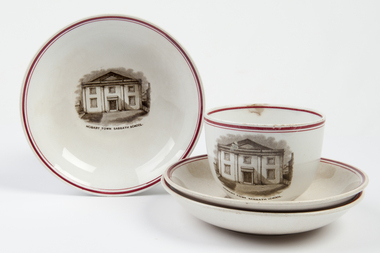
Cup and saucer
... hobart town sabbath school...Hobart Town Sabbath School...hobart town sabbath school wesleyan methodist Hobart Town Sabbath School 3 saucers, registration numbers 4.2; 4.3; 4.4 and one cup, registration number 4.1. ...3 saucers, registration numbers 4.2; 4.3; 4.4 and one cup, registration number 4.1. White china with burgundy rim and sepia transfer print of building and sepia text.Hobart Town Sabbath Schoolhobart town sabbath school, wesleyan methodist -
 Federation University Historical Collection
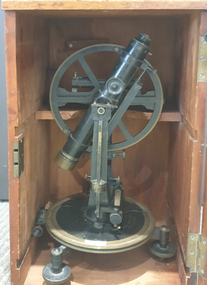
Instrument - Scientific Instruments, Abbott, Boxed Theodolite, c1850-1860s
... ...abbott hobart town...Engraved Abbott Hobart Town Varley London...He died in 1883. theodolite scientific instruments francis abbott abbott hobart town varley london convict Engraved Abbott Hobart Town Varley London A theodolite in a timber box Boxed Theodolite Instrument Scientific Instruments Abbott Varley ...This item was used at the Ballarat School of Mines. Francis Abbott was a watchmaker from Manchester. He arrived in Tasmania as a convict in 1845, and was granted a ticket of leave in 1849. He died in 1883.A theodolite in a timber boxEngraved Abbott Hobart Town Varley Londontheodolite, scientific instruments, francis abbott, abbott hobart town, varley london, convict -
 Uniting Church Archives - Synod of Victoria
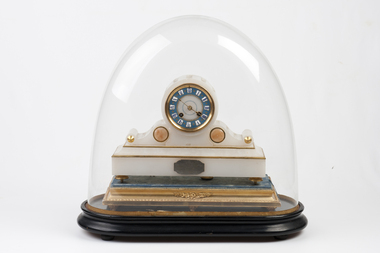
Mantel clock
... Hobart Town Wesleyan Christiam Association...Silver plate on the base: "Presented by the Hobart Town Wesleyan Christian Association to the Reveerand S. ...Hobart Town Wesleyan Christiam Association Williams, S. ...19th century French marble and gilt drumhead mantel clock on brass adjustable feet. Blue and white enamel face with black Roman numerals. On a wooden base with a glass dome cover. Silver plate on the base: "Presented by the Hobart Town Wesleyan Christian Association to the Reveerand S. Williams their President 1866"hobart town wesleyan christiam association, williams, s. [rev] -
 Uniting Church Archives - Synod of Victoria
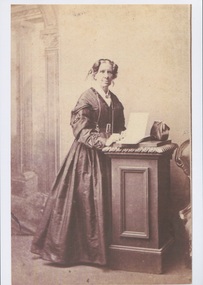
Photograph, Undated c.1870
... Caroline Elizabeth Newcombe, Anne Drysdale, Rev James Davy Dodgson, Coryule, Geelong, Hobart Town, John Batman, squatter, Methodist, Drysdale...Born in London and emigrated to Hobart Town in 1833. She went to Port Phillip in 1836 as governess to the children of John Batman. ...Born in London and emigrated to Hobart Town in 1833. She went to Port Phillip in 1836 as governess to the children of John Batman. ...Caroline Elizabeth Newcomb (1812 - 1874) woman squatter. Born in London and emigrated to Hobart Town in 1833. She went to Port Phillip in 1836 as governess to the children of John Batman. She met Anne Drysdale in Geelong and they set up a farming partnership. Caroline Newcomb joined the Wesleyan Methodist Society in 1839 and became the first secretary of the Methodist Church at Drysdale, founded in 1849. After Anne's death in in 1853 she continued to run the Coryule property. On 27 November 1861 she married Wesleyan minister the Rev James Davy Dodgson. She died at Brunswick on 3 October 1874. She was buried beside Miss Drysdale at Coryule.Sepia toned enlarged reproduction of original full-length studio portrait of Mrs Caroline Dodgson, formerly Miss Caroline Newcomb. caroline elizabeth newcombe, anne drysdale, rev james davy dodgson, coryule, geelong, hobart town, john batman, squatter, methodist, drysdale -
 Dandenong & District Historical Society
Book, Victoria History as it Happened by Nic Van Oudtshoorn, 26 August 2026
... ...Hobart Town...History as It happened First settlement Hobart Town Cricket: Victoria v NSW Floods & Cyclones 1939 Fires Ryan - The Last Hanging Hotels Picasso Art Grab Articles of interest from 1803-1986 Including Landing of Lt Governor David Collins and 300 convicts in 1803 through to 1986 and the temporary kidnapping of Picasso's Weeping Woman, Title of Book on front Cover along with pictures of interesting articles also on Back Cover 4pp Cover printed Red and Black.Text printed Black only. ...Articles of interest from 1803-1986 Including Landing of Lt Governor David Collins and 300 convicts in 1803 through to 1986 and the temporary kidnapping of Picasso's Weeping Woman,4pp Cover printed Red and Black.Text printed Black only.non-fictionArticles of interest from 1803-1986 Including Landing of Lt Governor David Collins and 300 convicts in 1803 through to 1986 and the temporary kidnapping of Picasso's Weeping Woman,first settlement, hobart town, cricket: victoria v nsw, floods & cyclones, 1939 fires, ryan - the last hanging, hotels, picasso art grab -
 Uniting Church Archives - Synod of Victoria
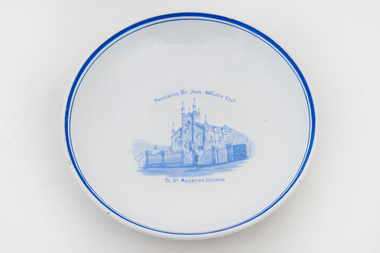
Ceramic - Commemorative plate, St Andrew's Church
... John Walker arrived in Hobart Town in 1822. Within a month he was appointed superintendent of the government flour-mill on the Hobart Town Rivulet. ...John Walker arrived in Hobart Town in 1822. Within a month he was appointed superintendent of the government flour-mill on the Hobart Town Rivulet. ...The tea service originally consisted of cups, saucers, plates, teapots, basins and milk jugs. John Walker arrived in Hobart Town in 1822. Within a month he was appointed superintendent of the government flour-mill on the Hobart Town Rivulet. Next year he received a grant of 200 acres (81 ha) and in 1824 built a mill at Richmond. [Australian Dictionary of Biography] CH008.2 was a gift from the Right Reverend Gillam Albert McConnell (Pat) Wood to Jenny and John Preston while on their honeymoon. March 1967 Pat Wood was selling the very large dinner set to raise money for the restoration of the interior of the church. CH008.1 and CH008.2 white plate with blue rim and blue image of church in centre. "PRESENTED BY JOHN WALKER ESQ TO ST ANDREWS CHURCH"scots memorial church hobart, john walker, st andrew's presbyterian church hobart, rev g.a. (pat) wood -
Tarnagulla History Archive
Registration of Death form, 1872
... Haughton Age: 53 years Cause of Death: Apoplexy Duration of illness: 4 hours Date of Death: 16th June 1872 Place of Death: Tarnagulla Place of burial: Tarnagulla Father's name: not known Mother's name: not known Spouse: not known Issue: three children listed Deceased place of birth: Hobart Town, Tasmania ...Haughton Age: 53 years Cause of Death: Apoplexy Duration of illness: 4 hours Date of Death: 16th June 1872 Place of Death: Tarnagulla Place of burial: Tarnagulla Father's name: not known Mother's name: not known Spouse: not known Issue: three children listed Deceased place of birth: Hobart Town, Tasmania Registration of Death form ...A large lot of papers, including this and many other birth and death registration forms, were apparently found in the ceiling cavity of the Sandy Creek/Tarnagulla Post and Telegraph Office in the later 20th Century, during building works. Donald Clark Collection. Registration of Death form Name of deceased: Elenor (?) Haughton Age: 53 years Cause of Death: Apoplexy Duration of illness: 4 hours Date of Death: 16th June 1872 Place of Death: Tarnagulla Place of burial: Tarnagulla Father's name: not known Mother's name: not known Spouse: not known Issue: three children listed Deceased place of birth: Hobart Town, Tasmania -
 8th/13th Victorian Mounted Rifles Regimental Collection
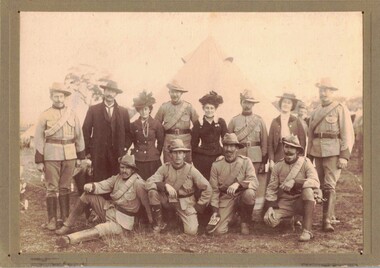
Photograph - VMR c.1900
... Price was born in Tasmania, educated in Hobart Town and at Scotch College, Melbourne, before entering the East India Military College, Addiscombe, England. ...Price was born in Tasmania, educated in Hobart Town and at Scotch College, Melbourne, before entering the East India Military College, Addiscombe, England. ...The Victorian Mounted Rifles was raised as the mounted arm of the Victorian Colonial defence force in 1885. It was under the command of Colonel Thomas Caradoc Rose (Tom) Price (1842-1911). Price was born in Tasmania, educated in Hobart Town and at Scotch College, Melbourne, before entering the East India Military College, Addiscombe, England. He was commissioned on 7 July 1861 in the Madras Infantry and began twenty years’ service in India with several regiments, retiring in April 1883. On his return to Victoria he was tasked with raising of a force of one thousand, to be known as the Victorian Mounted Rifles, and appointed a lieutenant-colonel in the Permanent Military Forces. Companies of the Victorian Mounted Rifles were raised in rural districts throughout Victoria. The soldiers were paid a small annual allowance and were required to provide their own horse. Many members served in contingent to the Boer War. After Federation the VMR was gathered up into the Australian Light Horse. Black and white photograph of group of Victorian Mounted Rifles soldiers posed with a gentleman and three ladies. Occasion is probably open day at a camp of training. Photograph is professionally mounted o backing card.Ink stamp on reverse: "Hewitt / Photographer / 98 Simpson Street east Melbourne / Weddings and picnics attended / Extra copies may be obtained"vmr, boer war, colonial, training, uniform -
8th/13th Victorian Mounted Rifles Regimental Collection
Document - History VMR South Africa
... Price was born in Tasmania, educated in Hobart Town and at Scotch College, Melbourne, before entering the East India Military College, Addiscombe, England. ...Price was born in Tasmania, educated in Hobart Town and at Scotch College, Melbourne, before entering the East India Military College, Addiscombe, England. ...The Victorian Mounted Rifles was raised as the mounted arm of the Victorian Colonial defence force in 1885. It was under the command of Colonel Thomas Caradoc Rose (Tom) Price (1842-1911). Price was born in Tasmania, educated in Hobart Town and at Scotch College, Melbourne, before entering the East India Military College, Addiscombe, England. He was commissioned on 7 July 1861 in the Madras Infantry and began twenty years’ service in India with several regiments, retiring in April 1883. On his return to Victoria he was tasked with raising of a force of one thousand, to be known as the Victorian Mounted Rifles, and appointed a lieutenant-colonel in the Permanent Military Forces. Companies of the Victorian Mounted Rifles were raised in rural districts throughout Victoria. The soldiers were paid a small annual allowance and were required to provide their own horse. Many members served in contingents to the Boer War. After Federation the VMR was gathered up into the Australian Light Horse. Photocopy of a single page typed document relating to the Victorian Mounted Rifles in South Africa 1899-1902.light horse, vmr, south africa, boer war, history -
 8th/13th Victorian Mounted Rifles Regimental Collection
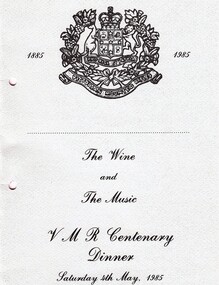
Card - Centenary dinner
... Price was born in Tasmania, educated in Hobart Town and at Scotch College, Melbourne, before entering the East India Military College, Addiscombe, England. ...Price was born in Tasmania, educated in Hobart Town and at Scotch College, Melbourne, before entering the East India Military College, Addiscombe, England. ...The Victorian Mounted Rifles was raised as the mounted arm of the Victorian Colonial defence force in 1885. It was under the command of Colonel Thomas Caradoc Rose (Tom) Price (1842-1911). Price was born in Tasmania, educated in Hobart Town and at Scotch College, Melbourne, before entering the East India Military College, Addiscombe, England. He was commissioned on 7 July 1861 in the Madras Infantry and began twenty years’ service in India with several regiments, retiring in April 1883. On his return to Victoria he was tasked with raising of a force of one thousand, to be known as the Victorian Mounted Rifles, and appointed a lieutenant-colonel in the Permanent Military Forces. Companies of the Victorian Mounted Rifles were raised in rural districts throughout Victoria. The soldiers were paid a small annual allowance and were required to provide their own horse. Many members served in contingent to the Boer War. After Federation the VMR was gathered up into the Australian Light Horse. Printed card for VMR Centenary Dinner giving Wine List and music.Contains significant dates for VMR; Battle Honours: 100 years of VMR mobility.military, vmr, centenary -
 8th/13th Victorian Mounted Rifles Regimental Collection
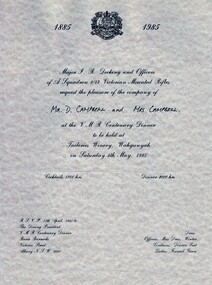
Document
... Price was born in Tasmania, educated in Hobart Town and at Scotch College, Melbourne, before entering the East India Military College, Addiscombe, England. ...Price was born in Tasmania, educated in Hobart Town and at Scotch College, Melbourne, before entering the East India Military College, Addiscombe, England. ...The Victorian Mounted Rifles was raised as the mounted arm of the Victorian Colonial defence force in 1885. It was under the command of Colonel Thomas Caradoc Rose (Tom) Price (1842-1911). Price was born in Tasmania, educated in Hobart Town and at Scotch College, Melbourne, before entering the East India Military College, Addiscombe, England. He was commissioned on 7 July 1861 in the Madras Infantry and began twenty years’ service in India with several regiments, retiring in April 1883. On his return to Victoria he was tasked with raising of a force of one thousand, to be known as the Victorian Mounted Rifles, and appointed a lieutenant-colonel in the Permanent Military Forces. Companies of the Victorian Mounted Rifles were raised in rural districts throughout Victoria. The soldiers were paid a small annual allowance and were required to provide their own horse. Many members served in contingent to the Boer War. After Federation the VMR was gathered up into the Australian Light Horse. Printed invitation to VMR Centenary Dinner 4 May 1985 and menu for the function."Mr D Campbell & Mrs Campbell" -
 8th/13th Victorian Mounted Rifles Regimental Collection
Photograph
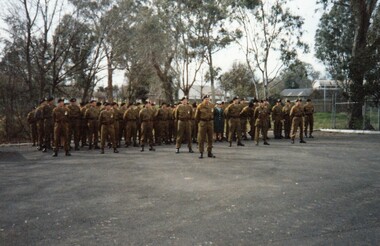
... Price was born in Tasmania, educated in Hobart Town and at Scotch College, Melbourne, before entering the East India Military College, Addiscombe, England. ...Price was born in Tasmania, educated in Hobart Town and at Scotch College, Melbourne, before entering the East India Military College, Addiscombe, England. ...The Victorian Mounted Rifles was raised as the mounted arm of the Victorian Colonial defence force in 1885. It was under the command of Colonel Thomas Caradoc Rose (Tom) Price (1842-1911). Price was born in Tasmania, educated in Hobart Town and at Scotch College, Melbourne, before entering the East India Military College, Addiscombe, England. He was commissioned on 7 July 1861 in the Madras Infantry and began twenty years’ service in India with several regiments, retiring in April 1883. On his return to Victoria he was tasked with raising of a force of one thousand, to be known as the Victorian Mounted Rifles, and appointed a lieutenant-colonel in the Permanent Military Forces. Companies of the Victorian Mounted Rifles were raised in rural districts throughout Victoria. The soldiers were paid a small annual allowance and were required to provide their own horse. Many members served in contingent to the Boer War. After Federation the VMR was gathered up into the Australian Light Horse. Two colour photographs of ' A ' Squadron 8/13 Victorian Mounted Rifles formed for the march to Holy Trinity Church Benalla 4 August 1985 for the Centenary Service. -
8th/13th Victorian Mounted Rifles Regimental Collection
Document
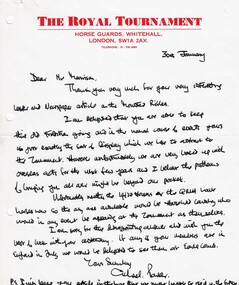
... Price was born in Tasmania, educated in Hobart Town and at Scotch College, Melbourne, before entering the East India Military College, Addiscombe, England. ...Price was born in Tasmania, educated in Hobart Town and at Scotch College, Melbourne, before entering the East India Military College, Addiscombe, England. ...The Victorian Mounted Rifles was raised as the mounted arm of the Victorian Colonial defence force in 1885. It was under the command of Colonel Thomas Caradoc Rose (Tom) Price (1842-1911). Price was born in Tasmania, educated in Hobart Town and at Scotch College, Melbourne, before entering the East India Military College, Addiscombe, England. He was commissioned on 7 July 1861 in the Madras Infantry and began twenty years’ service in India with several regiments, retiring in April 1883. On his return to Victoria he was tasked with raising of a force of one thousand, to be known as the Victorian Mounted Rifles, and appointed a lieutenant-colonel in the Permanent Military Forces. Companies of the Victorian Mounted Rifles were raised in rural districts throughout Victoria. The soldiers were paid a small annual allowance and were required to provide their own horse. Many members served in contingent to the Boer War. After Federation the VMR was gathered up into the Australian Light Horse. Typed draft of a letter from Lieutenant Robert Morrison ' A ' Squadron 8/13 Victorian Mounted Rifles to Major M. Parker, Director Royal Tournament Committee, Horse Guards, London exploring the possibility of a team from 8/13 Heritage Troop competing at the Royal Tournament in 1986. He suggests horses might be provided by affiliated regiment 14/20 Hussars as they did in 1891. -
 8th/13th Victorian Mounted Rifles Regimental Collection
Document
... Price was born in Tasmania, educated in Hobart Town and at Scotch College, Melbourne, before entering the East India Military College, Addiscombe, England. ...Price was born in Tasmania, educated in Hobart Town and at Scotch College, Melbourne, before entering the East India Military College, Addiscombe, England. ...The Victorian Mounted Rifles was raised as the mounted arm of the Victorian Colonial defence force in 1885. It was under the command of Colonel Thomas Caradoc Rose (Tom) Price (1842-1911). Price was born in Tasmania, educated in Hobart Town and at Scotch College, Melbourne, before entering the East India Military College, Addiscombe, England. He was commissioned on 7 July 1861 in the Madras Infantry and began twenty years’ service in India with several regiments, retiring in April 1883. On his return to Victoria he was tasked with raising of a force of one thousand, to be known as the Victorian Mounted Rifles, and appointed a lieutenant-colonel in the Permanent Military Forces. Companies of the Victorian Mounted Rifles were raised in rural districts throughout Victoria. The soldiers were paid a small annual allowance and were required to provide their own horse. Many members served in contingent to the Boer War. After Federation the VMR was gathered up into the Australian Light Horse. Hand written letter from Major Parker, Director of Royal Tournament replying to Robert Morrison's letter ( 3103.906 ) . He points out the difficulty of affiliated regiments 14/20 Hussars and Queens Royal Irish Hussars providing horses because they no longer have horses. -
 8th/13th Victorian Mounted Rifles Regimental Collection
Document - Order of Service
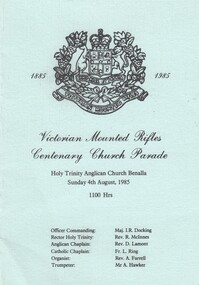
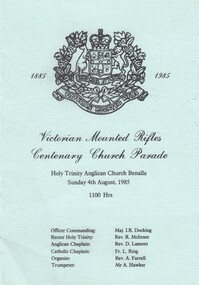
... Price was born in Tasmania, educated in Hobart Town and at Scotch College, Melbourne, before entering the East India Military College, Addiscombe, England. ...Price was born in Tasmania, educated in Hobart Town and at Scotch College, Melbourne, before entering the East India Military College, Addiscombe, England. ...The Victorian Mounted Rifles was raised as the mounted arm of the Victorian Colonial defence force in 1885. It was under the command of Colonel Thomas Caradoc Rose (Tom) Price (1842-1911). Price was born in Tasmania, educated in Hobart Town and at Scotch College, Melbourne, before entering the East India Military College, Addiscombe, England. He was commissioned on 7 July 1861 in the Madras Infantry and began twenty years’ service in India with several regiments, retiring in April 1883. On his return to Victoria he was tasked with raising of a force of one thousand, to be known as the Victorian Mounted Rifles, and appointed a lieutenant-colonel in the Permanent Military Forces. Companies of the Victorian Mounted Rifles were raised in rural districts throughout Victoria. The soldiers were paid a small annual allowance and were required to provide their own horse. Many members served in contingent to the Boer War. After Federation the VMR was gathered up into the Australian Light Horse. Marks one event in centenary celebrations.Printed Order of Service for Victorian Mounted Rifles Centenary Church Parade at Holy Trinity Anglican Church Benalla, 4 August 1985.church, vmr, centenary, benalla -
 8th/13th Victorian Mounted Rifles Regimental Collection
Photograph - Centenary Church Service
... Price was born in Tasmania, educated in Hobart Town and at Scotch College, Melbourne, before entering the East India Military College, Addiscombe, England. ...Price was born in Tasmania, educated in Hobart Town and at Scotch College, Melbourne, before entering the East India Military College, Addiscombe, England. ...The Victorian Mounted Rifles was raised as the mounted arm of the Victorian Colonial defence force in 1885. It was under the command of Colonel Thomas Caradoc Rose (Tom) Price (1842-1911). Price was born in Tasmania, educated in Hobart Town and at Scotch College, Melbourne, before entering the East India Military College, Addiscombe, England. He was commissioned on 7 July 1861 in the Madras Infantry and began twenty years’ service in India with several regiments, retiring in April 1883. On his return to Victoria he was tasked with raising of a force of one thousand, to be known as the Victorian Mounted Rifles, and appointed a lieutenant-colonel in the Permanent Military Forces. Companies of the Victorian Mounted Rifles were raised in rural districts throughout Victoria. The soldiers were paid a small annual allowance and were required to provide their own horse. Many members served in contingent to the Boer War. After Federation the VMR was gathered up into the Australian Light Horse. Two colour photographs of ' A ' Squadron 8/13 Victorian Mounted Rifles marching to Holy Trinity Church Benalla 4 August 1985 prior to the Centenary Church Service.benalla, vmr, centenary, church -
 8th/13th Victorian Mounted Rifles Regimental Collection
Letter - First day cover
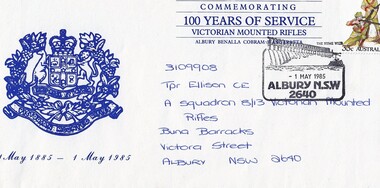
... Price was born in Tasmania, educated in Hobart Town and at Scotch College, Melbourne, before entering the East India Military College, Addiscombe, England. ...Price was born in Tasmania, educated in Hobart Town and at Scotch College, Melbourne, before entering the East India Military College, Addiscombe, England. ...The Victorian Mounted Rifles was raised as the mounted arm of the Victorian Colonial defence force in 1885. It was under the command of Colonel Thomas Caradoc Rose (Tom) Price (1842-1911). Price was born in Tasmania, educated in Hobart Town and at Scotch College, Melbourne, before entering the East India Military College, Addiscombe, England. He was commissioned on 7 July 1861 in the Madras Infantry and began twenty years’ service in India with several regiments, retiring in April 1883. On his return to Victoria he was tasked with raising of a force of one thousand, to be known as the Victorian Mounted Rifles, and appointed a lieutenant-colonel in the Permanent Military Forces. Companies of the Victorian Mounted Rifles were raised in rural districts throughout Victoria. The soldiers were paid a small annual allowance and were required to provide their own horse. Many members served in contingent to the Boer War. After Federation the VMR was gathered up into the Australian Light Horse. First Day Cover commemorating 100 years of service Victorian Mounted Rifles Postmarked 1 May 1985 at Albury NSW 2640. Badge of 8/13 Victorian Mounted Rifles on left side of envelope.3109908 Tpr Ellison. C. E. A Squadron 8/13 Victorian Mounted Rifles Buna Barracks Victoria Street Albury NSW 2640military, vmr, postage, centenary, victoria -
8th/13th Victorian Mounted Rifles Regimental Collection
Document - Admin instruction
... Price was born in Tasmania, educated in Hobart Town and at Scotch College, Melbourne, before entering the East India Military College, Addiscombe, England. ...Price was born in Tasmania, educated in Hobart Town and at Scotch College, Melbourne, before entering the East India Military College, Addiscombe, England. ...The Victorian Mounted Rifles was raised as the mounted arm of the Victorian Colonial defence force in 1885. It was under the command of Colonel Thomas Caradoc Rose (Tom) Price (1842-1911). Price was born in Tasmania, educated in Hobart Town and at Scotch College, Melbourne, before entering the East India Military College, Addiscombe, England. He was commissioned on 7 July 1861 in the Madras Infantry and began twenty years’ service in India with several regiments, retiring in April 1883. On his return to Victoria he was tasked with raising of a force of one thousand, to be known as the Victorian Mounted Rifles, and appointed a lieutenant-colonel in the Permanent Military Forces. Companies of the Victorian Mounted Rifles were raised in rural districts throughout Victoria. The soldiers were paid a small annual allowance and were required to provide their own horse. Many members served in contingent to the Boer War. After Federation the VMR was gathered up into the Australian Light Horse. Typed administrative instruction for parade through main streets of Cobram 24 August 1985 to mark the Centenary of the Victorian Mounted Rifles. 3 pages dated 14 Augusst 1985. centenary, parade, order, vmr, cobram -
8th/13th Victorian Mounted Rifles Regimental Collection
Document
... Price was born in Tasmania, educated in Hobart Town and at Scotch College, Melbourne, before entering the East India Military College, Addiscombe, England. ...Price was born in Tasmania, educated in Hobart Town and at Scotch College, Melbourne, before entering the East India Military College, Addiscombe, England. ...The Victorian Mounted Rifles was raised as the mounted arm of the Victorian Colonial defence force in 1885. It was under the command of Colonel Thomas Caradoc Rose (Tom) Price (1842-1911). Price was born in Tasmania, educated in Hobart Town and at Scotch College, Melbourne, before entering the East India Military College, Addiscombe, England. He was commissioned on 7 July 1861 in the Madras Infantry and began twenty years’ service in India with several regiments, retiring in April 1883. On his return to Victoria he was tasked with raising of a force of one thousand, to be known as the Victorian Mounted Rifles, and appointed a lieutenant-colonel in the Permanent Military Forces. Companies of the Victorian Mounted Rifles were raised in rural districts throughout Victoria. The soldiers were paid a small annual allowance and were required to provide their own horse. Many members served in contingent to the Boer War. After Federation the VMR was gathered up into the Australian Light Horse. Typed administrative instruction for the parade through the streets of Albury on 27 July 1985 to mark the Centenary of the Victorian Mounted Rifles- three pages dated 31 May 1985. -
8th/13th Victorian Mounted Rifles Regimental Collection
Document
... Price was born in Tasmania, educated in Hobart Town and at Scotch College, Melbourne, before entering the East India Military College, Addiscombe, England. ...Price was born in Tasmania, educated in Hobart Town and at Scotch College, Melbourne, before entering the East India Military College, Addiscombe, England. ...The Victorian Mounted Rifles was raised as the mounted arm of the Victorian Colonial defence force in 1885. It was under the command of Colonel Thomas Caradoc Rose (Tom) Price (1842-1911). Price was born in Tasmania, educated in Hobart Town and at Scotch College, Melbourne, before entering the East India Military College, Addiscombe, England. He was commissioned on 7 July 1861 in the Madras Infantry and began twenty years’ service in India with several regiments, retiring in April 1883. On his return to Victoria he was tasked with raising of a force of one thousand, to be known as the Victorian Mounted Rifles, and appointed a lieutenant-colonel in the Permanent Military Forces. Companies of the Victorian Mounted Rifles were raised in rural districts throughout Victoria. The soldiers were paid a small annual allowance and were required to provide their own horse. Many members served in contingent to the Boer War. After Federation the VMR was gathered up into the Australian Light Horse. Typed administrative instruction for parade through the main streets of Wangaratta and Benalla on 3 August 1985 to mark the Centenary of the Victorian Mounted Rifles. 3 pages dated 28 June 1985. -
 8th/13th Victorian Mounted Rifles Regimental Collection
Work on paper - Programme
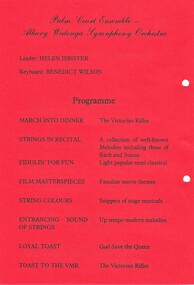
... Price was born in Tasmania, educated in Hobart Town and at Scotch College, Melbourne, before entering the East India Military College, Addiscombe, England. ...Price was born in Tasmania, educated in Hobart Town and at Scotch College, Melbourne, before entering the East India Military College, Addiscombe, England. ...The Victorian Mounted Rifles was raised as the mounted arm of the Victorian Colonial defence force in 1885. It was under the command of Colonel Thomas Caradoc Rose (Tom) Price (1842-1911). Price was born in Tasmania, educated in Hobart Town and at Scotch College, Melbourne, before entering the East India Military College, Addiscombe, England. He was commissioned on 7 July 1861 in the Madras Infantry and began twenty years’ service in India with several regiments, retiring in April 1883. On his return to Victoria he was tasked with raising of a force of one thousand, to be known as the Victorian Mounted Rifles, and appointed a lieutenant-colonel in the Permanent Military Forces. Companies of the Victorian Mounted Rifles were raised in rural districts throughout Victoria. The soldiers were paid a small annual allowance and were required to provide their own horse. Many members served in contingent to the Boer War. After Federation the VMR was gathered up into the Australian Light Horse. Printed card for VMR Centenary Dinner giving Wine List and music; contains significant dates for VMR; battle Honours; 100 years of VMR mobility.military, music, dinner, vmr, centenary -
 Warrnambool and District Historical Society Inc.
Book, Daniel Harrison, Language of the Aborigines of the Colony of Victoria and other Australian Districts, 1851
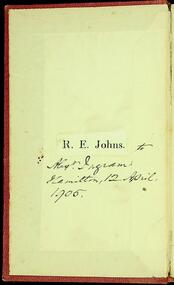
... He was trained as a gardener and botanist, and emigrated to Hobart Town on Tasmania in 1833. In 1839 he went to Port Phillip, immediately joined a party of Aboriginals on a journey to Western Port, and made an intensive study of their spoken language. ...He was trained as a gardener and botanist, and emigrated to Hobart Town on Tasmania in 1833. In 1839 he went to Port Phillip, immediately joined a party of Aboriginals on a journey to Western Port, and made an intensive study of their spoken language. ...This volume is a compilation by the author, botanist, Daniel Bunce of language of the Aborigines of the Colony of Victoria. It was prepared as a guide to Aboriginal protectors and others who were engaging with First Nations people of the time. The loose leaf documents found within the book contain handwritten lists of aboriginal words.This is a slender red covered volume with black print. There is a rectangle of white paper glued to the inside cover with a printed name. The inside cover has an inscription in black ink as does the frontice page. The front and rear covers have had paper tape applied to them. Inside the book were found two sheets of paper [.2 &.3] with handwritten notes in black ink. [.4] There is also a small white envelope with red postmarks, a typewritten address and blue printing in the bottom left hand corner which originally contained the smaller sheet of paper.non-fictionThis volume is a compilation by the author, botanist, Daniel Bunce of language of the Aborigines of the Colony of Victoria. It was prepared as a guide to Aboriginal protectors and others who were engaging with First Nations people of the time. The loose leaf documents found within the book contain handwritten lists of aboriginal words.daniel bunce, aboriginal language, first nation language, alexander ingram, reynell eveleigh johns -
 Uniting Church Archives - Synod of Victoria
Photograph, Undated c.1900
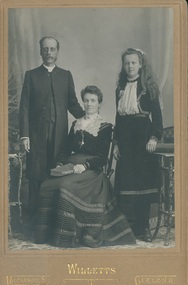
... Spencer Williams of Launceston on 22 March 1888. 1884 Warragul; 1885 Prahran; 1886 Murtoa; 1887 Flemington; 1888 Wangaratta; 1889 Sandhurst; 1892 Hobart; 1895 New Town; 1897 Westbury; 1900 Geelong West; 1902 Geelong; 1903 St. ...Spencer Williams of Launceston on 22 March 1888. 1884 Warragul; 1885 Prahran; 1886 Murtoa; 1887 Flemington; 1888 Wangaratta; 1889 Sandhurst; 1892 Hobart; 1895 New Town; 1897 Westbury; 1900 Geelong West; 1902 Geelong; 1903 St. ...David Buckley Bridgwood: born 1852 England. Commenced ministry in 1884. Married Adeline Williams, daughter of the Rev. Spencer Williams of Launceston on 22 March 1888. 1884 Warragul; 1885 Prahran; 1886 Murtoa; 1887 Flemington; 1888 Wangaratta; 1889 Sandhurst; 1892 Hobart; 1895 New Town; 1897 Westbury; 1900 Geelong West; 1902 Geelong; 1903 St. Arnaud; 1904 Sale; 1905 Moonta; 1908 Crystal Brook; 1911 Koolunga; 1914 Woodville; 1916 Redruth; 1920 Gumeracha; 1924 Supernumerary Gumeracha; Chairman of District 1897 - 1899, 1904, 1913. Died 1941, buried Mitcham S.A. B & W gloss, studio portrait of the Rev. D. Buckley Bridgwood with his wife Adeline and daughter Florence.methodist, minister, buckley bridgwood, adeline bridgwood, florence bridgwood -
 Federation University Historical Collection
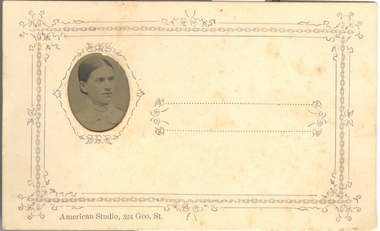
Photograph - Little Gem tintype, American Studio, Portrait of a Woman, (exact)
... Bent, Sandhurst (Bendigo); - George Fisher, Victoria; - Anson Brothers, Hobart Town. (Abridged information from http://members.ozemail.com.au/~msafier/photos/tintypes.html) ...Bent, Sandhurst (Bendigo); - George Fisher, Victoria; - Anson Brothers, Hobart Town. (Abridged information from http://members.ozemail.com.au/~msafier/photos/tintypes.html) tintype american studio woman unidentified woman women photograph Printed lower left hand side of the card "American Studio, 324 Geo. ...The tintype (or ferrotype or Melainotype) was produced on metallic sheet (not, actually, tin) instead of glass. The plate was coated with collodion and sensitized just before use. It was introduced by Adolphe Alexandre Martin in 1853. The most common size was about the same as the carte-de-visite, 5.5cm x 9.0cm, but both larger and smaller ferrotypes were made. The smallest were "Little Gem" tintypes, about the size of a postage-stamp, made simultaneously on a single plate in a camera with 12 or 16 lenses. They were often produced by travelling photographers, and were cheaper than Ambrotypes so made photography available to working classes, not just to the more well-to-do. The print would come out laterally reversed (as one sees oneself in a mirror). Being quite rugged, tintypes could be sent by post. Tintypes were eventually superseded by gelatin emulsion dry plates in the 1880s, though street photographers in various parts of the world continued with this process until the 1950s. (Above information abridged from http://www.rleggat.com/photohistory/history/tintype.htm) The firm of Gove and Allen opened in Sydney in 1880 and were responsible for the belated popularizing of the gem tintype in Australia. The firm traded as both The American Gem Studio and The American Studio. Others franchises were opened in Melbourne, Ballarat and Sandhurst (Bendigo). The Sandhurst branch closed in 1882 and Adelaide in 1884. All Gove and Allen studios had ceased trading by 1885. The studio addresses were: 23 King William St, Adelaide; 324 George St, Sydney; 95 Swanston St, Melbourne; Howard Place, Sandhurst; 7 Queen St, Brisbane; The card mounts used in Gove and Allen studios in Australia are identical to those used in America. They were initially made of plain white card with embossing around the oval image opening in the mount while some also had simple geometric and floral printed designs as well. Although Gove and Allen studios produced the majority of gem tintypes in Australia, other studios offered them including: - London, American & Sydney Photo Company, 328 George St, Sydney; - David Edelsten, 55 & 57 Bourke St, Melbourne; - Burman's Portrait Rooms, St. George's Hall, 209 Bourke St, Melbourne; - Bell's Gem Portrait Studio, 57 Bourke St East, Melbourne; - R. H. Kenny, Bridge St, Ballarat; - Marinus W. Bent, Sandhurst (Bendigo); - George Fisher, Victoria; - Anson Brothers, Hobart Town. (Abridged information from http://members.ozemail.com.au/~msafier/photos/tintypes.html) A tintype portrait of a woman's head, attached to a card.Printed lower left hand side of the card "American Studio, 324 Geo. St."tintype, american studio, woman, unidentified woman, women, photograph -
 Federation University Historical Collection
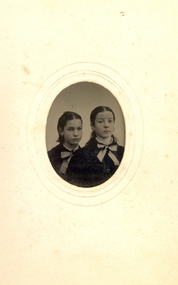
Photograph - Tintype, Portrait of two young girls
... Bent, Sandhurst (Bendigo); - George Fisher, Victoria; - Anson Brothers, Hobart Town. (Abridged information from http://members.ozemail.com.au/~msafier/photos/tintypes.html) ...Bent, Sandhurst (Bendigo); - George Fisher, Victoria; - Anson Brothers, Hobart Town. (Abridged information from http://members.ozemail.com.au/~msafier/photos/tintypes.html) little gem women children photography tintype .2) A tintype portrait of two girls heads, attached to a card. ...The tintype (or ferrotype or Melainotype) was produced on metallic sheet (not, actually, tin) instead of glass. The plate was coated with collodion and sensitized just before use. It was introduced by Adolphe Alexandre Martin in 1853. The most common size was about the same as the carte-de-visite, 5.5cm x 9.0cm, but both larger and smaller ferrotypes were made. The smallest were "Little Gem" tintypes, about the size of a postage-stamp, made simultaneously on a single plate in a camera with 12 or 16 lenses. They were often produced by travelling photographers, and were cheaper than Ambrotypes so made photography available to working classes, not just to the more well-to-do. The print would come out laterally reversed (as one sees oneself in a mirror). Being quite rugged, tintypes could be sent by post. Tintypes were eventually superseded by gelatin emulsion dry plates in the 1880s, though street photographers in various parts of the world continued with this process until the 1950s. (Above information abridged from http://www.rleggat.com/photohistory/history/tintype.htm) The firm of Gove and Allen opened in Sydney in 1880 and were responsible for the belated popularizing of the gem tintype in Australia. The firm traded as both The American Gem Studio and The American Studio. Others franchises were opened in Melbourne, 6 Sturt St Ballarat and Sandhurst (Bendigo). The Sandhurst branch closed in 1882 and Adelaide in 1884. All Gove and Allen studios had ceased trading by 1885. The studio addresses were: 23 King William St, Adelaide; 324 George St, Sydney; 95 Swanston St, Melbourne; Howard Place, Sandhurst; 7 Queen St, Brisbane; The card mounts used in Gove and Allen studios in Australia are identical to those used in America. They were initially made of plain white card with embossing around the oval image opening in the mount while some also had simple geometric and floral printed designs as well. Although Gove and Allen studios produced the majority of gem tintypes in Australia, other studios offered them including: - London, American & Sydney Photo Company, 328 George St, Sydney; - David Edelsten, 55 & 57 Bourke St, Melbourne; - Burman's Portrait Rooms, St. George's Hall, 209 Bourke St, Melbourne; - Bell's Gem Portrait Studio, 57 Bourke St East, Melbourne; - R. H. Kenny, Bridge St, Ballarat; - Marinus W. Bent, Sandhurst (Bendigo); - George Fisher, Victoria; - Anson Brothers, Hobart Town. (Abridged information from http://members.ozemail.com.au/~msafier/photos/tintypes.html) .2) A tintype portrait of two girls heads, attached to a card. The girls are wearing a cloak with a large bow at the frontlittle gem, women, children, photography, tintype -
 Federation University Historical Collection
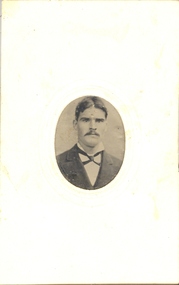
Photograph - Little Gem tintype, Portrait of a Man
... Bent, Sandhurst (Bendigo); - George Fisher, Victoria; - Anson Brothers, Hobart Town. (Abridged information from http://members.ozemail.com.au/~msafier/photos/tintypes.html) ...Bent, Sandhurst (Bendigo); - George Fisher, Victoria; - Anson Brothers, Hobart Town. (Abridged information from http://members.ozemail.com.au/~msafier/photos/tintypes.html) little gem tintype man unidentified man .4) A tintype portrait of a man, attached to a card. ...The tintype (or ferrotype or Melainotype) was produced on metallic sheet (not, actually, tin) instead of glass. The plate was coated with collodion and sensitized just before use. It was introduced by Adolphe Alexandre Martin in 1853. The most common size was about the same as the carte-de-visite, 5.5cm x 9.0cm, but both larger and smaller ferrotypes were made. The smallest were "Little Gem" tintypes, about the size of a postage-stamp, made simultaneously on a single plate in a camera with 12 or 16 lenses. They were often produced by travelling photographers, and were cheaper than Ambrotypes so made photography available to working classes, not just to the more well-to-do. The print would come out laterally reversed (as one sees oneself in a mirror). Being quite rugged, tintypes could be sent by post. Tintypes were eventually superseded by gelatin emulsion dry plates in the 1880s, though street photographers in various parts of the world continued with this process until the 1950s. (Above information abridged from http://www.rleggat.com/photohistory/history/tintype.htm) The firm of Gove and Allen opened in Sydney in 1880 and were responsible for the belated popularizing of the gem tintype in Australia. The firm traded as both The American Gem Studio and The American Studio. Others franchises were opened in Melbourne, Ballarat and Sandhurst (Bendigo). The Sandhurst branch closed in 1882 and Adelaide in 1884. All Gove and Allen studios had ceased trading by 1885. The studio addresses were: 23 King William St, Adelaide; 324 George St, Sydney; 95 Swanston St, Melbourne; Howard Place, Sandhurst; 7 Queen St, Brisbane; The card mounts used in Gove and Allen studios in Australia are identical to those used in America. They were initially made of plain white card with embossing around the oval image opening in the mount while some also had simple geometric and floral printed designs as well. Although Gove and Allen studios produced the majority of gem tintypes in Australia, other studios offered them including: - London, American & Sydney Photo Company, 328 George St, Sydney; - David Edelsten, 55 & 57 Bourke St, Melbourne; - Burman's Portrait Rooms, St. George's Hall, 209 Bourke St, Melbourne; - Bell's Gem Portrait Studio, 57 Bourke St East, Melbourne; - R. H. Kenny, Bridge St, Ballarat; - Marinus W. Bent, Sandhurst (Bendigo); - George Fisher, Victoria; - Anson Brothers, Hobart Town. (Abridged information from http://members.ozemail.com.au/~msafier/photos/tintypes.html) .4) A tintype portrait of a man, attached to a card. little gem, tintype, man, unidentified man -
 Federation University Historical Collection
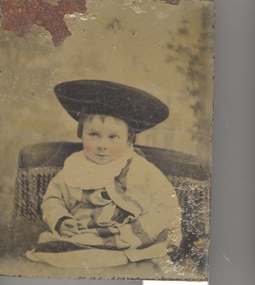
Photograph - Photograph - Little Gem tintype, Possibly American Studio, Portrait of a child
... Bent, Sandhurst (Bendigo); - George Fisher, Victoria; - Anson Brothers, Hobart Town. (Abridged information from http://members.ozemail.com.au/~msafier/photos/tintypes.html) ...Bent, Sandhurst (Bendigo); - George Fisher, Victoria; - Anson Brothers, Hobart Town. (Abridged information from http://members.ozemail.com.au/~msafier/photos/tintypes.html) little gem child hat A tintype portrait of a child, attached to a card. ...The tintype (or ferrotype or Melainotype) was produced on metallic sheet (not, actually, tin) instead of glass. The plate was coated with collodion and sensitized just before use. It was introduced by Adolphe Alexandre Martin in 1853. The most common size was about the same as the carte-de-visite, 5.5cm x 9.0cm, but both larger and smaller ferrotypes were made. The smallest were "Little Gem" tintypes, about the size of a postage-stamp, made simultaneously on a single plate in a camera with 12 or 16 lenses. They were often produced by travelling photographers, and were cheaper than Ambrotypes so made photography available to working classes, not just to the more well-to-do. The print would come out laterally reversed (as one sees oneself in a mirror). Being quite rugged, tintypes could be sent by post. Tintypes were eventually superseded by gelatin emulsion dry plates in the 1880s, though street photographers in various parts of the world continued with this process until the 1950s. (Above information abridged from http://www.rleggat.com/photohistory/history/tintype.htm) The firm of Gove and Allen opened in Sydney in 1880 and were responsible for the belated popularizing of the gem tintype in Australia. The firm traded as both The American Gem Studio and The American Studio. Others franchises were opened in Melbourne, Ballarat and Sandhurst (Bendigo). The Sandhurst branch closed in 1882 and Adelaide in 1884. All Gove and Allen studios had ceased trading by 1885. The studio addresses were: 23 King William St, Adelaide; 324 George St, Sydney; 95 Swanston St, Melbourne; Howard Place, Sandhurst; 7 Queen St, Brisbane; The card mounts used in Gove and Allen studios in Australia are identical to those used in America. They were initially made of plain white card with embossing around the oval image opening in the mount while some also had simple geometric and floral printed designs as well. Although Gove and Allen studios produced the majority of gem tintypes in Australia, other studios offered them including: - London, American & Sydney Photo Company, 328 George St, Sydney; - David Edelsten, 55 & 57 Bourke St, Melbourne; - Burman's Portrait Rooms, St. George's Hall, 209 Bourke St, Melbourne; - Bell's Gem Portrait Studio, 57 Bourke St East, Melbourne; - R. H. Kenny, Bridge St, Ballarat; - Marinus W. Bent, Sandhurst (Bendigo); - George Fisher, Victoria; - Anson Brothers, Hobart Town. (Abridged information from http://members.ozemail.com.au/~msafier/photos/tintypes.html) A tintype portrait of a child, attached to a card. little gem, child, hat -
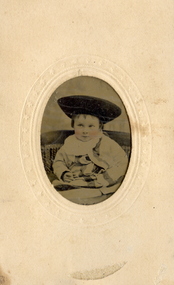 Federation University Historical Collection
Photograph - Photo - Little Gem tintype, Possibly American Studio, Portrait of a child
... Bent, Sandhurst (Bendigo); - George Fisher, Victoria; - Anson Brothers, Hobart Town. (Abridged information from http://members.ozemail.com.au/~msafier/photos/tintypes.html) ...Bent, Sandhurst (Bendigo); - George Fisher, Victoria; - Anson Brothers, Hobart Town. (Abridged information from http://members.ozemail.com.au/~msafier/photos/tintypes.html) little gem photography child portrait .5) A tintype portrait of a child, attached to a card. ...The tintype (or ferrotype or Melainotype) was produced on metallic sheet (not, actually, tin) instead of glass. The plate was coated with collodion and sensitized just before use. It was introduced by Adolphe Alexandre Martin in 1853. The most common size was about the same as the carte-de-visite, 5.5cm x 9.0cm, but both larger and smaller ferrotypes were made. The smallest were "Little Gem" tintypes, about the size of a postage-stamp, made simultaneously on a single plate in a camera with 12 or 16 lenses. They were often produced by travelling photographers, and were cheaper than Ambrotypes so made photography available to working classes, not just to the more well-to-do. The print would come out laterally reversed (as one sees oneself in a mirror). Being quite rugged, tintypes could be sent by post. Tintypes were eventually superseded by gelatin emulsion dry plates in the 1880s, though street photographers in various parts of the world continued with this process until the 1950s. (Above information abridged from http://www.rleggat.com/photohistory/history/tintype.htm) The firm of Gove and Allen opened in Sydney in 1880 and were responsible for the belated popularizing of the gem tintype in Australia. The firm traded as both The American Gem Studio and The American Studio. Others franchises were opened in Melbourne, Ballarat and Sandhurst (Bendigo). The Sandhurst branch closed in 1882 and Adelaide in 1884. All Gove and Allen studios had ceased trading by 1885. The studio addresses were: 23 King William St, Adelaide; 324 George St, Sydney; 95 Swanston St, Melbourne; Howard Place, Sandhurst; 7 Queen St, Brisbane; The card mounts used in Gove and Allen studios in Australia are identical to those used in America. They were initially made of plain white card with embossing around the oval image opening in the mount while some also had simple geometric and floral printed designs as well. Although Gove and Allen studios produced the majority of gem tintypes in Australia, other studios offered them including: - London, American & Sydney Photo Company, 328 George St, Sydney; - David Edelsten, 55 & 57 Bourke St, Melbourne; - Burman's Portrait Rooms, St. George's Hall, 209 Bourke St, Melbourne; - Bell's Gem Portrait Studio, 57 Bourke St East, Melbourne; - R. H. Kenny, Bridge St, Ballarat; - Marinus W. Bent, Sandhurst (Bendigo); - George Fisher, Victoria; - Anson Brothers, Hobart Town. (Abridged information from http://members.ozemail.com.au/~msafier/photos/tintypes.html) .5) A tintype portrait of a child, attached to a card. little gem, photography, child, portrait -
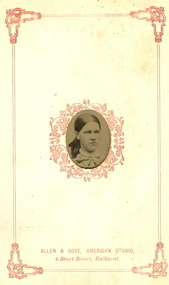 Federation University Historical Collection
Photograph - Photograph - Little Gem tintype, American Studio, Portrait of a Woman
... Bent, Sandhurst (Bendigo); - George Fisher, Victoria; - Anson Brothers, Hobart Town. (Abridged information from http://members.ozemail.com.au/~msafier/photos/tintypes.html) ...Bent, Sandhurst (Bendigo); - George Fisher, Victoria; - Anson Brothers, Hobart Town. (Abridged information from http://members.ozemail.com.au/~msafier/photos/tintypes.html) ballarat american studio little gem allen gove tintype woman unidentified woman photography Printed on the lower edge of the card "Allen & Gove, American Studion, 6 Sturt St, Ballarat" A tintype portrait of a woman's head, attached to a card. ...The tintype (or ferrotype or Melainotype) was produced on metallic sheet (not, actually, tin) instead of glass. The plate was coated with collodion and sensitized just before use. It was introduced by Adolphe Alexandre Martin in 1853. The most common size was about the same as the carte-de-visite, 5.5cm x 9.0cm, but both larger and smaller ferrotypes were made. The smallest were "Little Gem" tintypes, about the size of a postage-stamp, made simultaneously on a single plate in a camera with 12 or 16 lenses. They were often produced by travelling photographers, and were cheaper than Ambrotypes so made photography available to working classes, not just to the more well-to-do. The print would come out laterally reversed (as one sees oneself in a mirror). Being quite rugged, tintypes could be sent by post. Tintypes were eventually superseded by gelatin emulsion dry plates in the 1880s, though street photographers in various parts of the world continued with this process until the 1950s. (Above information abridged from http://www.rleggat.com/photohistory/history/tintype.htm) The firm of Gove and Allen opened in Sydney in 1880 and were responsible for the belated popularizing of the gem tintype in Australia. The firm traded as both The American Gem Studio and The American Studio. Others franchises were opened in Melbourne, 6 Sturt St Ballarat and Sandhurst (Bendigo). The Sandhurst branch closed in 1882 and Adelaide in 1884. All Gove and Allen studios had ceased trading by 1885. The studio addresses were: 23 King William St, Adelaide; 324 George St, Sydney; 95 Swanston St, Melbourne; Howard Place, Sandhurst; 7 Queen St, Brisbane; The card mounts used in Gove and Allen studios in Australia are identical to those used in America. They were initially made of plain white card with embossing around the oval image opening in the mount while some also had simple geometric and floral printed designs as well. Although Gove and Allen studios produced the majority of gem tintypes in Australia, other studios offered them including: - London, American & Sydney Photo Company, 328 George St, Sydney; - David Edelsten, 55 & 57 Bourke St, Melbourne; - Burman's Portrait Rooms, St. George's Hall, 209 Bourke St, Melbourne; - Bell's Gem Portrait Studio, 57 Bourke St East, Melbourne; - R. H. Kenny, Bridge St, Ballarat; - Marinus W. Bent, Sandhurst (Bendigo); - George Fisher, Victoria; - Anson Brothers, Hobart Town. (Abridged information from http://members.ozemail.com.au/~msafier/photos/tintypes.html) A tintype portrait of a woman's head, attached to a card. Printed on the lower edge of the card "Allen & Gove, American Studion, 6 Sturt St, Ballarat"ballarat, american studio, little gem, allen gove, tintype, woman, unidentified woman, photography -
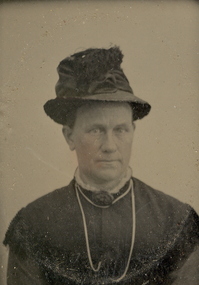 Federation University Historical Collection
Photograph - Little Gem tintype, Portrait of a Woman in a hat
... Bent, Sandhurst (Bendigo); - George Fisher, Victoria; - Anson Brothers, Hobart Town. (Abridged information from http://members.ozemail.com.au/~msafier/photos/tintypes.html) ...Bent, Sandhurst (Bendigo); - George Fisher, Victoria; - Anson Brothers, Hobart Town. (Abridged information from http://members.ozemail.com.au/~msafier/photos/tintypes.html) little gem woman unidentified woman women photography .9) A tintype portrait of a woman's head, attached to a card. ...The tintype (or ferrotype or Melainotype) was produced on metallic sheet (not, actually, tin) instead of glass. The plate was coated with collodion and sensitized just before use. It was introduced by Adolphe Alexandre Martin in 1853. The most common size was about the same as the carte-de-visite, 5.5cm x 9.0cm, but both larger and smaller ferrotypes were made. The smallest were "Little Gem" tintypes, about the size of a postage-stamp, made simultaneously on a single plate in a camera with 12 or 16 lenses. They were often produced by travelling photographers, and were cheaper than Ambrotypes so made photography available to working classes, not just to the more well-to-do. The print would come out laterally reversed (as one sees oneself in a mirror). Being quite rugged, tintypes could be sent by post. Tintypes were eventually superseded by gelatin emulsion dry plates in the 1880s, though street photographers in various parts of the world continued with this process until the 1950s. (Above information abridged from http://www.rleggat.com/photohistory/history/tintype.htm) The firm of Gove and Allen opened in Sydney in 1880 and were responsible for the belated popularizing of the gem tintype in Australia. The firm traded as both The American Gem Studio and The American Studio. Others franchises were opened in Melbourne, Ballarat and Sandhurst (Bendigo). The Sandhurst branch closed in 1882 and Adelaide in 1884. All Gove and Allen studios had ceased trading by 1885. The studio addresses were: 23 King William St, Adelaide; 324 George St, Sydney; 95 Swanston St, Melbourne; Howard Place, Sandhurst; 7 Queen St, Brisbane; The card mounts used in Gove and Allen studios in Australia are identical to those used in America. They were initially made of plain white card with embossing around the oval image opening in the mount while some also had simple geometric and floral printed designs as well. Although Gove and Allen studios produced the majority of gem tintypes in Australia, other studios offered them including: - London, American & Sydney Photo Company, 328 George St, Sydney; - David Edelsten, 55 & 57 Bourke St, Melbourne; - Burman's Portrait Rooms, St. George's Hall, 209 Bourke St, Melbourne; - Bell's Gem Portrait Studio, 57 Bourke St East, Melbourne; - R. H. Kenny, Bridge St, 6 Sturt St Ballarat; - Marinus W. Bent, Sandhurst (Bendigo); - George Fisher, Victoria; - Anson Brothers, Hobart Town. (Abridged information from http://members.ozemail.com.au/~msafier/photos/tintypes.html) .9) A tintype portrait of a woman's head, attached to a card. The cheeks have been hand coloured.little gem, woman, unidentified woman, women, photography
