
Showing 16 items matching "hobbs family"
-
 Stawell Historical Society Inc
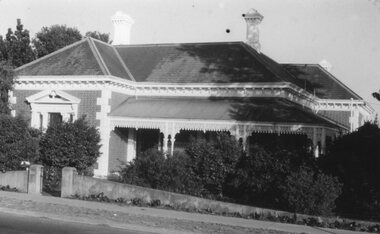
Photograph, Hobbs Family House at 10 Seaby Street Stawell 1997
... Hobbs Family House at 10 Seaby Street Stawell 1997...Stawell B/W photograph of substantial brick home at 10 Seaby Street. Hobbs Family House at 10 Seaby Street Stawell 1997 Photograph ...Built by Mary Ellen Hobbs of Seaby Street widow of William Hobbs.B/W photograph of substantial brick home at 10 Seaby Street. stawell -
 Stawell Historical Society Inc
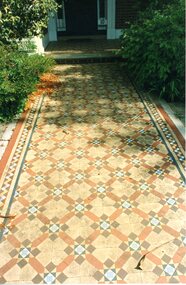
Photograph, Hobbs Family House at 10 Seaby Street Stawell -- 10 Photos
... Hobbs Family House at 10 Seaby Street Stawell -- 10 Photos...Series on ten photographs of Hobbs Home Seaby Street Stawell Stawell Hobbs Family House at 10 Seaby Street Stawell -- 10 Photos Photograph ...Series on ten photographs of Hobbs Home Seaby Street Stawellstawell -
 Stawell Historical Society Inc
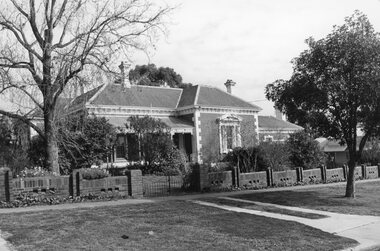
Photograph, Hobbs Family House at 10 Seaby Street Stawell 1997
... Hobbs Family House at 10 Seaby Street Stawell 1997...Stawell Brick House with brick front fence in Seaby Street Stawell. Hobbs Family House at 10 Seaby Street Stawell 1997 Photograph ...Private Home - 10 Seaby Street (Hobbs) 1997. Built by Mary Ellen Hobbs widow of William Hobbs Paid for by proceeds of Mine Investments Later purchased by Frank & Lorraine Stokes.Brick House with brick front fence in Seaby Street Stawell.stawell -
 Phillip Island and District Historical Society Inc.
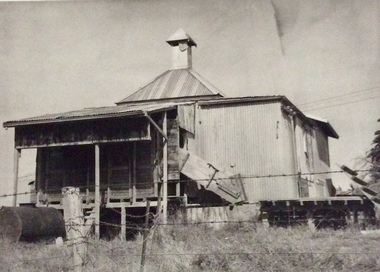
Photograph, Hobbs Chickory Kiln
... ...hobbs family...WW2 as a substitute for coffee. phillip island photographs chicory kiln hobbs family farming Nil Black & white photo of the chicory kiln on the Hobbs farm Hobbs Chickory Kiln Photograph ...Chicory was grown extensively on Phillip Island c. WW2 as a substitute for coffee.Black & white photo of the chicory kiln on the Hobbs farmNilphillip island, photographs, chicory kiln, hobbs family, farming -
 Mont De Lancey
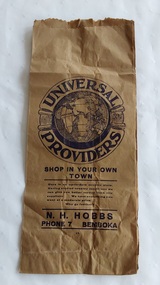
Domestic object - Universal Providers Paper bag, Universal Providers, 1900's
... Hobbs Store was a historic general store in Bemboka, New South Wales, run continuously by the Hobbs family for 80 years. Established in the early 1900s, it served as a regional landmark and trading post for locals and travelers crossing Brown Mountain before closing down....Hobbs Store was a historic general store in Bemboka, New South Wales, run continuously by the Hobbs family for 80 years. Established in the early 1900s, it served as a regional landmark and trading post for locals and travelers crossing Brown Mountain before closing down. ..."Universal Providers" was a late 19th- and early 20th-century term used by major historic department stores—such as Melbourne's George & George on Collins Street (later Georges) or Sydney's Anthony Hordern & Sons—to signify that they stocked everything under one roof. Original branded paper bags and packaging from these iconic "Universal Providers" are now rare pieces of ephemera. The N.H. Hobbs Store was a historic general store in Bemboka, New South Wales, run continuously by the Hobbs family for 80 years. Established in the early 1900s, it served as a regional landmark and trading post for locals and travelers crossing Brown Mountain before closing down.A vintage tall narrow rectangular brown paper bag with side gussets for greater storage. The large brand symbol Universal Providers for the N.H. Hobbs store in Bemboka is printed on the front in black lettering. There is a globe of the world surrounded by two scroll type banners with the brand Universal Providers. Underneath is further information promoting the store and a phone number. The back is plain.'Universal Providers' 'Shop in your own town' 'Ours is an up-to-date country store. Having studied country conditions we can give you better service than city suppliers. We have everything you want at a moderate price. Why go further?' N.H. Hobbs Phone 7 Bemboka'paper bags, bags, containers -
 Ringwood and District Historical Society
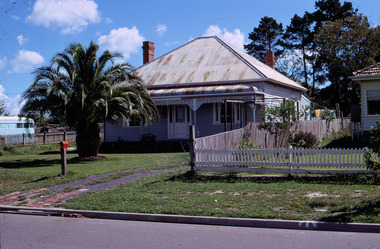
Photograph, North side of City Road, Ringwood 1969
... As you proceed up City Road from Wantirna Road, The Salvation Army church is on the left corner. The Hobbs family lived on that corner, in an old house on a block which was bordered by a huge hedge. ...As you proceed up City Road from Wantirna Road, The Salvation Army church is on the left corner. The Hobbs family lived on that corner, in an old house on a block which was bordered by a huge hedge. ...Written by Michael Anderson on RDHS Facebook on March 2016 CITY ROAD, RINGWOOD 1959 My family moved to City Road in 1959. At that time, it was a narrow rutted dirt road, with a large drain running on the northern side, and a wide nature strip complete with big wattle trees on the southern side, ideal for playing cricket and other games. There was no Salvation Army Citadel, nor was there a Lutheran Church. As you proceed from Wantirna Road towards Jubilee Park, there were no houses on the right hand side at all until you reached our house, 14 City Road, which at the time was Lot 51. On the corner where the Lutheran Church now stands, there was an old rusty farm gate, attached to a very weathered wooden post. This indicated that at some stage, City Road had been a private road. This rusty old gate was never closed, but it was a remnant of bygone days. Ireland St, Regina St, and Greenwood Avenue south of Haig Street were all narrow dirt roads as well. Jubilee Park Oval was fairly new, and there was no grandstand. The players and staff had to make do with a small wooden building that looked like a garden shed. Just beyond the southern end of the oval were growing many wild pumpkins, and I understand that the land had been a rubbish tip in the not so distant past. The park also had a couple of tennis courts. There was no road from Jubilee Park to Reilly St, and Reilly St didn't go all the way through from Wantirna Road to Great Ryrie St. It was broken by a creek. Aquinas College was an orchard. As you proceed up City Road from Wantirna Road, The Salvation Army church is on the left corner. The Hobbs family lived on that corner, in an old house on a block which was bordered by a huge hedge. The house next door in Wantirna Road, which is also Salvation Army land now, was owned by the Bayliss family. Mrs Bayliss was a teacher at Ringwood High. The first house in City Rd proper was at no. 1 to 5. The Roberts family lived there in an old weatherboard house on an acre of land. Mr Roberts was a carpenter who had built our house at No. 14, and he lived there with his wife and two sons, Graeme and Max. Eventually, they wanted more space, so they moved to the acre. Next door to the Roberts was Ted O'Regan at no. 7 to no. 9. He appears to have been a widower, and he lived by himself in an old wooden house which was surrounded by a large veranda on about 2/3 acre. Next door to Ted O'Regan lived his brother Jack O'Regan at no. 11 on about 1/2 acre, with his wife Edna, his son Alan, and his Daughter Judith. Barney Meadows lived on about 1/2 acre at no. 13. Barney was an old widower, and his front garden had a huge palm tree in it. Next to Barney lived the Reeves at no. 15, and finally there was the McDonald family at no. 17, which is on the corner of Regina St. From then on, City Rd, was a bush block down to Greenwood Ave, and the bush continued up Greenwood Ave to the Williams house, one house block from Haig St. On the right hand side of City Road it was all paddock to Ireland St, and another paddock which ended at our house was over the other side of Ireland St. Both paddocks were developed in about 1961/62, and there are about 12 houses there now, plus the Lutheran Church. When we first moved there, there was a horse and a cow grazing in the paddock beside our house. For the first couple of years, there was a huge bonfire in "our" paddock to mark Guy Fawkes day. It was a lot of fun, although I concede that it might have been a tad dangerous, with 3d. bungers and all that! Next door to us at no. 16 was the Goessling family. From now on the house blocks were normal sized. The Goesslings had one baby girl who was about 9 months old when we first moved in, but they ended up with 4 kids, all of whom would be middle aged now. They were observant Lutherans, but they were there before the church. Next door to the Goesslings at no. 18 was the Weir family on the corner of Regina St. On the other side of Regina St. at no. 20 was the Gowland family, and the last house in the street at no. 22 was owned by Arthur Johnston and his family. Arthur was an Ambulance Driver. Of course, many other people moved in and moved out in all those years. There was one particularly bad week for the street in June 1969. My brother Peter was killed in a work accident on Saturday 7th June. The next Wednesday 11th June Ted O'Regan, who lived diagonally opposite us died. Then on the next Saturday the 14th June, Ted Bell, who lived next door to us at no. 12 died from a heart attack at the age of 47. Three deaths in one week was a bit too much. It was eerie! Our old house is still standing, but I doubt for much longer. It was bought by people who wanted to develop it. Their plans were knocked back, so they sold it again. I would bet that in the not too distant future the house will be a piece of history. City Road was a paradise for kids when we moved in. We had lived in the inner suburbs, so the space and freedom were amazing for us "city slickers." I don't know where you could move to now if you wanted to bring up your children in a similar environment. Somehow, I don't think it would be possible. -
 Ringwood and District Historical Society
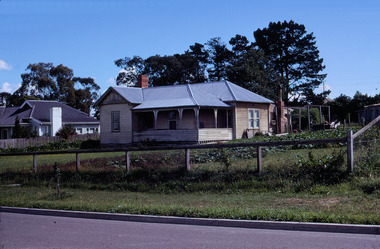
Photograph, City Road – North Side. Owned by E A (Ted) O’Regan on 23 March 1969
... As you proceed up City Road from Wantirna Road, The Salvation Army church is on the left corner. The Hobbs family lived on that corner, in an old house on a block which was bordered by a huge hedge. ...As you proceed up City Road from Wantirna Road, The Salvation Army church is on the left corner. The Hobbs family lived on that corner, in an old house on a block which was bordered by a huge hedge. ...Written by Michael Anderson on RDHS Facebook on March 2016 CITY ROAD, RINGWOOD 1959 My family moved to City Road in 1959. At that time, it was a narrow rutted dirt road, with a large drain running on the northern side, and a wide nature strip complete with big wattle trees on the southern side, ideal for playing cricket and other games. There was no Salvation Army Citadel, nor was there a Lutheran Church. As you proceed from Wantirna Road towards Jubilee Park, there were no houses on the right hand side at all until you reached our house, 14 City Road, which at the time was Lot 51. On the corner where the Lutheran Church now stands, there was an old rusty farm gate, attached to a very weathered wooden post. This indicated that at some stage, City Road had been a private road. This rusty old gate was never closed, but it was a remnant of bygone days. Ireland St, Regina St, and Greenwood Avenue south of Haig Street were all narrow dirt roads as well. Jubilee Park Oval was fairly new, and there was no grandstand. The players and staff had to make do with a small wooden building that looked like a garden shed. Just beyond the southern end of the oval were growing many wild pumpkins, and I understand that the land had been a rubbish tip in the not so distant past. The park also had a couple of tennis courts. There was no road from Jubilee Park to Reilly St, and Reilly St didn't go all the way through from Wantirna Road to Great Ryrie St. It was broken by a creek. Aquinas College was an orchard. As you proceed up City Road from Wantirna Road, The Salvation Army church is on the left corner. The Hobbs family lived on that corner, in an old house on a block which was bordered by a huge hedge. The house next door in Wantirna Road, which is also Salvation Army land now, was owned by the Bayliss family. Mrs Bayliss was a teacher at Ringwood High. The first house in City Rd proper was at no. 1 to 5. The Roberts family lived there in an old weatherboard house on an acre of land. Mr Roberts was a carpenter who had built our house at No. 14, and he lived there with his wife and two sons, Graeme and Max. Eventually, they wanted more space, so they moved to the acre. Next door to the Roberts was Ted O'Regan at no. 7 to no. 9. He appears to have been a widower, and he lived by himself in an old wooden house which was surrounded by a large veranda on about 2/3 acre. Next door to Ted O'Regan lived his brother Jack O'Regan at no. 11 on about 1/2 acre, with his wife Edna, his son Alan, and his Daughter Judith. Barney Meadows lived on about 1/2 acre at no. 13. Barney was an old widower, and his front garden had a huge palm tree in it. Next to Barney lived the Reeves at no. 15, and finally there was the McDonald family at no. 17, which is on the corner of Regina St. From then on, City Rd, was a bush block down to Greenwood Ave, and the bush continued up Greenwood Ave to the Williams house, one house block from Haig St. On the right hand side of City Road it was all paddock to Ireland St, and another paddock which ended at our house was over the other side of Ireland St. Both paddocks were developed in about 1961/62, and there are about 12 houses there now, plus the Lutheran Church. When we first moved there, there was a horse and a cow grazing in the paddock beside our house. For the first couple of years, there was a huge bonfire in "our" paddock to mark Guy Fawkes day. It was a lot of fun, although I concede that it might have been a tad dangerous, with 3d. bungers and all that! Next door to us at no. 16 was the Goessling family. From now on the house blocks were normal sized. The Goesslings had one baby girl who was about 9 months old when we first moved in, but they ended up with 4 kids, all of whom would be middle aged now. They were observant Lutherans, but they were there before the church. Next door to the Goesslings at no. 18 was the Weir family on the corner of Regina St. On the other side of Regina St. at no. 20 was the Gowland family, and the last house in the street at no. 22 was owned by Arthur Johnston and his family. Arthur was an Ambulance Driver. Of course, many other people moved in and moved out in all those years. There was one particularly bad week for the street in June 1969. My brother Peter was killed in a work accident on Saturday 7th June. The next Wednesday 11th June Ted O'Regan, who lived diagonally opposite us died. Then on the next Saturday the 14th June, Ted Bell, who lived next door to us at no. 12 died from a heart attack at the age of 47. Three deaths in one week was a bit too much. It was eerie! Our old house is still standing, but I doubt for much longer. It was bought by people who wanted to develop it. Their plans were knocked back, so they sold it again. I would bet that in the not too distant future the house will be a piece of history. City Road was a paradise for kids when we moved in. We had lived in the inner suburbs, so the space and freedom were amazing for us "city slickers." I don't know where you could move to now if you wanted to bring up your children in a similar environment. Somehow, I don't think it would be possible. -
 Kiewa Valley Historical Society
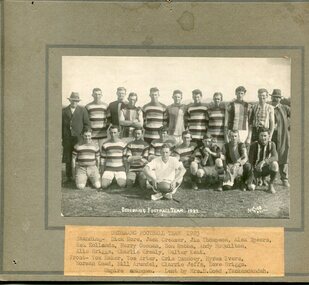
Photos - Dederang Football Club Team Photos - Set of 2 - 1919 and 1923, 1. 1923 2. 1919
... family playing in the team. Dederang won its first flag in the Tallangata League in1958 led by the Hobbs brothers Rex, Colin, Ken and Jack Dederang Football Glued underneath photo, Typed names of team players 1. ...The Dederang-Mt. Beauty Football Club, nicknamed the Bombers, is an Australian rules football club playing in the Tallangatta & District Football League. The club is based in Dederang, Victoria and Mount Beauty, Victoria. It was formed in the early1900s and disbanded in 1976 when it merged with Mount Beauty to form Dederang-Mount Beauty football club. In 1948 the competition received a boost with an influx of new players who came to work on the Kiewa Hydro Scheme. George and Gordon Hobbs were the famous Hobbs brothers of Dederang which two Premierships were built around. Four brothers starred in Dederang’s First Flag in the Tallangatta League in 1958. Dederang Football Club was one of the earliest recorded football clubs in the Kiewa Valley area. Many players came from pioneering farming families in the area and there were often several boys from the same family playing in the team. Dederang won its first flag in the Tallangata League in1958 led by the Hobbs brothers Rex, Colin, Ken and Jack2 original black and white photographs of Dederang football club teams. Mounted on heavy card 1. Dederang Football Team – 1923 2. Dederang Football Team – 1919 Glued underneath photo, Typed names of team players 1. Dederang Football Team – 1923 Standing- Dick Hore, Jack Creamer, Jim Thompson, Alex Speers, Rex Hollands, Harry Goonan, Son Hobbs, Andy McQuilton, Alie Briggs, Charlie Grealy, Walter Keat. Front- Tom Baker, Tom Arter, Chris Quonoey, Hyram Ivers,Norman Coad, Bill Arundel, Clarrie Jeffs, David Briggs. Umpire unknown. Lent by Mrs D Coad Yackandandah 2. Dederang Football Team – 1919 Standing- Tom Hollands, Mick Tooey, Rex Hollands, Charlie Grealey,Jack Charles, HyramIvers, Mr Hewitt, Andy McQuilton, Alex Speers, Jack Creamer, Andrew Nettie. Front- Norman Coad, Bill Goonan, Rex Ellis, Davis, Umpire, V Donaghu, Bev Day, Barny Keegan, Mick Hynes. Lent by Mrs D Coad, Yackandandah dederang, football -
 Kiewa Valley Historical Society
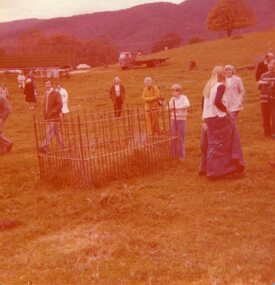
Photograph of pioneer grave, 29th May, 1977
... Miss Hobbs, formerly of Running Creek, mentioned that twin babies of the Brigg's family are buried at Mary Holland's feet....Miss Hobbs, formerly of Running Creek, mentioned that twin babies of the Brigg's family are buried at Mary Holland's feet. ...Pictorial record of the grave of pioneer woman Mrs Mary Hollonds, who passed away in 1862. The grave is located at Mullagong Station (farm) in Tawonga, five miles south of Keegan's Bridge. Miss Hobbs, formerly of Running Creek, mentioned that twin babies of the Brigg's family are buried at Mary Holland's feet.Pictorial record of pioneer gravesites in the Kiewa Valley. Social history of people in 1977 showing interested in local historyColour photograph of group visiting the grave of pioneer woman Mrs Mary Hollands at Mullagong on 29th May, 1977Handwritten in faint blue ink on back of photograph: Mrs Mary Holland's grave. Died 1862 Mullagong. 29th May, 1977kiewa valley, mullagong station, tawonga, hollonds family, brigg's family -
 Kiewa Valley Historical Society
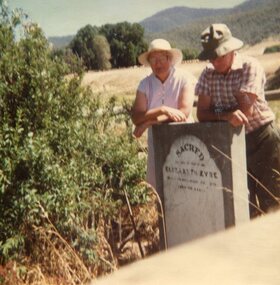
Photograph x 2 of pioneer gravesites, 11th January, 1985
... Pictorial record of the graves of early pioneers Mrs Elizabeth Eyre who died in 1879 located at Tawonga Homestead and Mary Hollands , located at Mullagong in Tawonga Record of early history of Kiewa Valley pioneers Gwen Hobbs and Rob Hollands are descendants of pioneer farmers. Hobbs and Hollands families have lived and worked in the Kiewa Valley for many years. ...Pictorial record of the graves of early pioneers Mrs Elizabeth Eyre who died in 1879 located at Tawonga Homestead and Mary Hollands , located at Mullagong in TawongaRecord of early history of Kiewa Valley pioneers Gwen Hobbs and Rob Hollands are descendants of pioneer farmers. Hobbs and Hollands families have lived and worked in the Kiewa Valley for many years.1. Colour photograph of 2 Kiewa Valley residents visiting gravesites of pioneer Elizabeth Eyre who died in 1879. Grave located at Tawonga Homestead. 2. Colour photograph of Kiewa Valley residents visiting the gravesite of Mrs Mary Hollands, pioneer of the area. Gravesite located at Mullagong property in Tawonga.1. Handwritten in ink on back of photograph: Gwen Hobbs and Rob Hollands - Tawonga Homestead grave 2. Handwritten in ink on back of photograph: Gwen Hobbs and Barbara, Rob and Margaret Hollands at Mullagong graveselisabeth eyre, mary hollonds, tawonga, graves -
 Warrnambool and District Historical Society Inc.
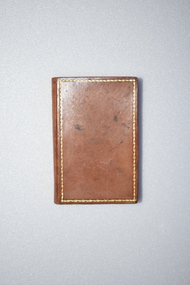
Autograph Album, 1920s
... family...history of warrnambool...autographs of australian cricketers...wally hammond...george duckworth...harold larwood...jack hobbs...The autograph album has handwritten contributions (verse and signatures) from family members and friends and twelve signatures of cricketers from the Australian Test series of 1928-1929. These are mostly English cricketers and include the signatures of Wally Hammond, Jack Hobbs, Harold Larwood and George Duckworth....The autograph album has handwritten contributions (verse and signatures) from family members and friends and twelve signatures of cricketers from the Australian Test series of 1928-1929. These are mostly English cricketers and include the signatures of Wally Hammond, Jack Hobbs, Harold Larwood and George Duckworth. ...This item comes from the estates of the Misses Ardlie of Warrnambool. It belonged to Agnes Ardlie (1915-1993) who was aged 11 when she received the album. Her sisters were Olive (1905-1912) and Dorothy (1910-1993). They were the daughters of Arthur and Ethel Ardlie of Warrnambool, the granddaughters of the prominent Warrnmbool lawyer, William Ardlie and his wife Mary and the great granddaughters of John and Mary Ardlie, early settlers in Warrnambool. The Misses Ardlie lived in their early years at Aroona in Princess Street in Warrnambool. The autograph album has handwritten contributions (verse and signatures) from family members and friends and twelve signatures of cricketers from the Australian Test series of 1928-1929. These are mostly English cricketers and include the signatures of Wally Hammond, Jack Hobbs, Harold Larwood and George Duckworth.This autograph book is of considerable interest, firstly as a memento of Agnes Ardlie, a member of a prominent family in Warrnambool in the 20th century and secondly, as an item of some significance in the cricket world with its signatures of some English cricketers on tour in Australia in 1928/29.This is an autograph album with a dark red leather cover and gold writing on the front cover. Inside the cover are pages in a green mottled pattern. The other pages are mostly white or cream with some coloured pages. Some pages have handwritten verse and signatures in black and blue ink. A blue shopkeeper’s label is on the inside back page. Album Agnes M. Ardlie ‘Aroona’ Warrnambool 3.11.26 ardlie family, history of warrnambool, autographs of australian cricketers, wally hammond, george duckworth, harold larwood, jack hobbs, australian cricket team 1928-1929 -
 Stawell Historical Society Inc
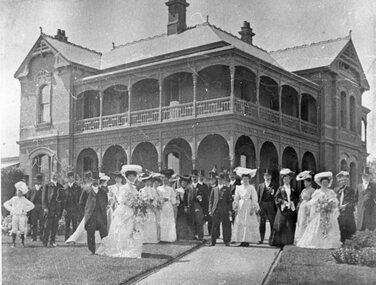
Photograph, Miss Eugenie Simmons marrying Mr George Hobbs at the 2 story house "Oban" 1900 -- House built 1898
... Family 1898. Later called “Mt. Salina” now R.S.L. in Scallan Street Stawell. George Hobbs married Eugenie Simmons in 1900. ...Family 1898. Later called “Mt. Salina” now R.S.L. in Scallan Street Stawell. George Hobbs married Eugenie Simmons in 1900. ...Simmons Wedding at two story "Oban" built by Edward Simmons and Family 1898. Later called “Mt. Salina” now R.S.L. in Scallan Street Stawell. George Hobbs married Eugenie Simmons in 1900. Miss Effie Simons 2nd Dan Edward married 31.1.1905 to W.M. AnthonyTwo black and white photograph of a large wedding party in front of a double storey brick building. The double storey arched verandah has wood turned posts with a hip and gabled slate roof.stawell houses -
 Queen's College
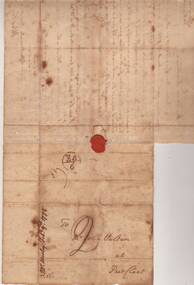
Letter, February 9 1775
... Hobbs of Auckland, NZ in 1859 to the Rev. J.W. Crisp, who gave it to his grandson Walter Freeman Brownell, who presented it to his nephew, Drew Lelean. Donated by the Rev. Drew Lelean February 2004 on behalf of the Lelean family...Hobbs of Auckland, NZ in 1859 to the Rev. J.W. Crisp, who gave it to his grandson Walter Freeman Brownell, who presented it to his nephew, Drew Lelean. Donated by the Rev. Drew Lelean February 2004 on behalf of the Lelean family ...Brought from England in 1838 by the Rev. John Waterhouse then given by his youngest daughter, Mrs Hobbs of Auckland, NZ in 1859 to the Rev. J.W. Crisp, who gave it to his grandson Walter Freeman Brownell, who presented it to his nephew, Drew Lelean. Donated by the Rev. Drew Lelean February 2004 on behalf of the Lelean family.Letter 1775 February 9, London to Mr Valton at Purfleet, from John Wesley. Holograph, signed. Has a red seal.john wesley, john valton -
 Surrey Hills Historical Society Collection
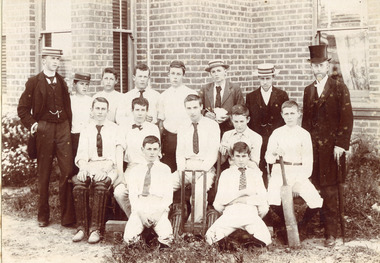
Photograph - Surrey College Cricket Team, 1899, 1899
... Hobbs, whose grandfather Rev. George Edward Downton is thought to have been a student at the college. George E. Downton was born in Avoca in 1885. He was later a missionary in New Guinea and Secretary to the Australian Board of Missions in Adelaide. He died in 1926 or 1927. This photo is one of two that were originally in the Box Hill Historical Society collection. They were transferred to us in 2024. The third photo could not be located. There was also a rough family... tree and notes for the Downton family with correspondence regarding the donation but this was not found. Schools Sport Cricket 1899 Surrey Hills Surrey College Rev Frederick A Darling George Edward Downton Susan Hobbs Union Road Nethercourt hospital St Jude's hospital 219-223 Union Road York Street 1890-1899 "Surrey College - Surrey Hills/Principal: Rev Fredk. ...Surrey College was opened in early 1892 by Reverend Dr Frederick Darling who had been the first minister of the Presbyterian Church in Canterbury Road. He resigned this position to open the school which operated until 1905 with additional premises at 12 Vincent Street. The main building fronted 219-233 Union Road. The school had 40 boarders as well as day boys. Courses included algebra, euclid, history, typewriting, shorthand and drill. In the 1930s, Nethercourt Private Hospital took over the site. Later it became St Jude's Hospital. Land in front of the building was sub-divided off in the 1970s. The building is still extant as a private dwelling with York Street, Surrey Hills as the address. This is one of 3 photos donated by Susan Hobbs, whose grandfather Rev. George Edward Downton is thought to have been a student at the college. George E. Downton was born in Avoca in 1885. He was later a missionary in New Guinea and Secretary to the Australian Board of Missions in Adelaide. He died in 1926 or 1927. This photo is one of two that were originally in the Box Hill Historical Society collection. They were transferred to us in 2024. The third photo could not be located. There was also a rough family tree and notes for the Downton family with correspondence regarding the donation but this was not found.Sepia photograph on grey mount board of 15 men and boys. Eleven of the boys are dressed in whites, 5 wearing ties and 1 a bow tie, one with a boater and one with a cap. The boy seated on the right is holding a cricket bat and the boy seated on left is wearing cricket pads on his legs. There are stumps and bails in the middle of front row. Three young men are in suits and boaters with one in the back row holding items in his hands. On the right hand side of the back row is Reverend Frederick Darling, Principal of the College, who wears a top hat and tails. There is a brick building behind with windows and blinds, and some foliage and plants behind and in front of boys. "Surrey College - Surrey Hills/Principal: Rev Fredk. A Darling, Melb. Unib./Cricket Team, 1899"schools, sport, cricket, 1899, surrey hills, surrey college, rev frederick a darling, george edward downton, susan hobbs, union road, nethercourt hospital, st jude's hospital, 219-223 union road, york street, 1890-1899 -
 Wodonga & District Historical Society Inc
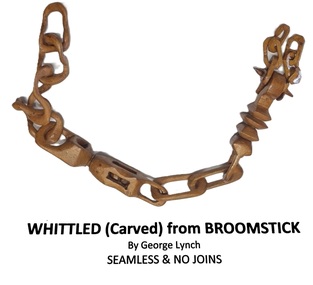
Decorative object - Whittled artefact, George Lynch
... Hobbs and George Padgett. They all lived with their families in Wodonga. ...Hobbs and George Padgett. They all lived with their families in Wodonga. ...This item was whittled as a continuous piece from a broomstick handle by George Lynch. George had a long career with Victorian Railways. The son of a railway man, George grew up in St Arnaud near the railway line. He watched the engines go by and dreamed of being an engine driver. He started working as a cleaner in 1907. Through hard work and further study, George worked his way up to become a locomotive driver. He moved to Wodonga in 1917. At the Victorian Railways Institute examinations, George won four gold medals for Engine Working and Westinghouse Brake In 1925 he was appointed as an Instructor. George was one of four senior drivers who in rotation drove the Sydney Limited. The other drivers were Ray Murphy, F. Hobbs and George Padgett. They all lived with their families in Wodonga. George drove the first Spirit of Progress from Spencer Street to Albury. He made railway history in 1937 when the Sydney Ltd ran non-stop from Albury to Spencer Street in 3 hrs. 25 mins, clipping 25 minutes off the previous record. He retired at the age of 65 in 1953 and died at the age of 74.This item is significance because it was made by a long-serving locomotive driver based in Wodonga.A chain made by whittling the handle of a broomstick. It is one continuous piece of wood with a variety of shapes swivels and interlinked sections. There are 13 similar sized links and 2 larger ones. The larger links have small balls inside them.whittled objects, george lynch, railways wodonga -
 Wodonga & District Historical Society Inc
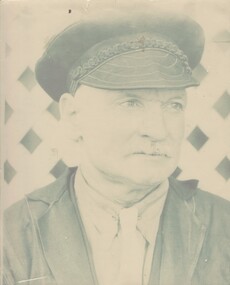
Article - Fred Rochow Railways Collection - George Lynch Senior, C. 1950s
... Hobbs and George Padgett. They all lived with their families in Wodonga. ...Hobbs and George Padgett. They all lived with their families in Wodonga. ...The Fred Rochow Railways Collection incorporates photos related to the operation of the Wodonga Railway Station including different types of trains and railways staff C. 1930 – 1990. It was donated to the Wodonga Historical Society by Fred Rochow, a railwayman who spent many years based in Wodonga. He joined the Victorian Railways on 17th June l947 and retired in 1988. For some time, he was a member of the Australian Federated Union of Locomotive Enginemen and served a term as a member of the Trades Hall Council. He had an extensive knowledge of the struggles that took place to achieve better conditions for railway workers. Fred worked for many years as a fireman and then worked his way up the ranks to driver, experiencing many changes from the days of steam locomotives through to diesel trains, locomotives and even the modern XPT train. He worked throughout Victoria at different stages of his career, with his final working years focused on the northeast of Victoria and the Albury to Melbourne line. After his retirement, Fred continued to share his love of steam miniature trains with the community.This collection has local and statewide significance as it captures images of trains, locomotives and personnel who operated the railway services in Wodonga and throughout Northeast Victoria. The railways played a critical role in opening up Victoria and connecting Australia for trade, business, social communication and transport.George Lynch had a long career with Victorian Railways. The son of a railway man, George grew up in St Arnaud near the railway line. He watched the engines go by and dreamed of being an engine driver. He started working as a cleaner in 1907. Through hard work and further study, George worked his way up to become a locomotive driver. He moved to Wodonga in 1917. At the Victorian Railways Institute examinations, George won four gold medals for Engine Working and Westinghouse Brake In 1925 he was appointed as an Instructor. George was one of four senior drivers who in rotation drove the Sydney Limited. The other drivers were Ray Murphy, F. Hobbs and George Padgett. They all lived with their families in Wodonga. George drove the first Spirit of Progress from Spencer Street to Albury. He made railway history in 1937 when the Sydney Ltd ran non-stop from Albury to Spencer Street in 3 hrs. 25 mins, clipping 25 minutes off the previous record. He retired at the age of 65 in 1953 and died at the age of 74.railways wodonga, fred rochow, wodonga railwaymen, george lynch snr
