
Showing 20 items matching "horse and cart 1900s"
-
 The Beechworth Burke Museum
Postcard, 1908
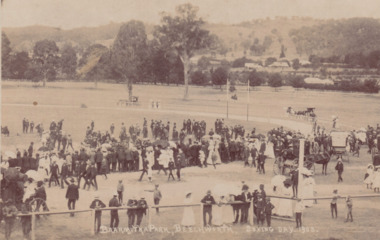
... A large number of women are holding parasols. Multiple horse-drawn carts are visible throughout the image. ...Printed in 1908, the postcard depicts a public gathering at Baarmutha Park, Beechworth on Boxing Day the same year. There are many men, women and children dressed in formal attire including suits and hats. A large number of women are holding parasols. Multiple horse-drawn carts are visible throughout the image.The record is historically significant due to its production in the very early twentieth century. This significance is enhanced by its contextual information, as the record provides insight into the social and leisure activities enjoyed by people at Baarmutha Park during this time.Sepia rectangular postcard printed on card.Obverse: BAARMUTHA PARK, BEECHWORTH. BOXING DAY, 1908. / Reverse: Parks & Gardens. / POST CARD. / KODAK / CORRESPONDENCE. / ADDRESS ONLY. / AUSTRAL / AUSTRAL / KODAK / (?) Craig / Stanley / 3747 / 9/ - Boxing Day / Sports Baarmutha / Park Beechworth / 84-148-1 / GARDENS / 97.2335 / 79.21.9 /entertainment album, baarmutha park, beechworth, 1900s, social, leisure, gathering, horses -
 Cheese World Museum
Photograph, Nirranda Creamery
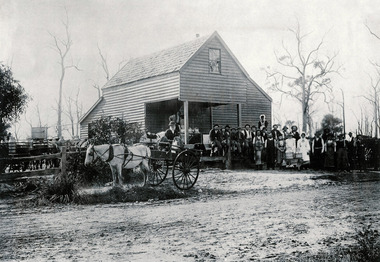
... 1900s it had 3 subsidiary creameries where farmers delivered their milk. Often the farmers collected the skim milk to feed pigs. At this time bacon was considered to be a dairy product. There were over 200 butter factories and creameries in Victoria in 1905. This is the only known photograph of the Nirranda Creamery. allansford nirranda creameries transport costumes warrnambool cheese and butter factory company Black & white photograph showing a two storey weatherboard building with horse and cart loaded with milk cans and a group of men and women standing in front. ...Warrnambool Cheese and Butter Factory at Allansford commenced in 1888. By the early 1900s it had 3 subsidiary creameries where farmers delivered their milk. Often the farmers collected the skim milk to feed pigs. At this time bacon was considered to be a dairy product. There were over 200 butter factories and creameries in Victoria in 1905.This is the only known photograph of the Nirranda Creamery.Black & white photograph showing a two storey weatherboard building with horse and cart loaded with milk cans and a group of men and women standing in front.allansford, nirranda, creameries, transport, costumes, warrnambool cheese and butter factory company -
 Orbost & District Historical Society
black and white photograph, 1920s
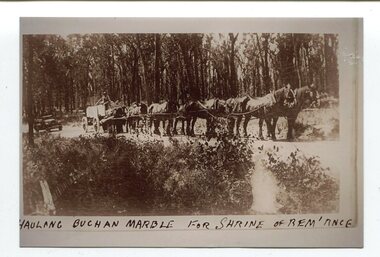
... 1900s black marble was being mined in the Bruthen district. Some was used for the Shrine of Remembrance in Melbourne and Australia House in London. 900 tonnes were shipped to London to be included in the construction of Australia House. Marble quarrying has been a significant part of the history of Buchan in East Gippsland. Its inclusion in the Shrine of Remembrance War Memorial is noteworthy. marble-Buchan quarry-marble-South-Buchan Shrine-of-Remembrance om front - "HAULING BUCHAN MARBLE FOR SHRINE OF REM'ANCE" A black / white photograph of a team of eight horses hitched to an open top cart. ...The Shrine of Remembrance was created to meet the needs of a grieving community after the extensive loss of lives in the First World War (1914 –18). sixteen dark Buchan marble Ionic columns. In the early 1900s black marble was being mined in the Bruthen district. Some was used for the Shrine of Remembrance in Melbourne and Australia House in London. 900 tonnes were shipped to London to be included in the construction of Australia House. Marble quarrying has been a significant part of the history of Buchan in East Gippsland. Its inclusion in the Shrine of Remembrance War Memorial is noteworthy.A black / white photograph of a team of eight horses hitched to an open top cart. The cart is loaded with lrge slabs of marble. The driver is on top of the load. It is on a gravel road in a forest. The photograph has a grey frame background.om front - "HAULING BUCHAN MARBLE FOR SHRINE OF REM'ANCE"marble-buchan quarry-marble-south-buchan shrine-of-remembrance -
 Warrnambool and District Historical Society Inc.
Booklet, Steam carriage works - A Robinson, Early 1900s (original)
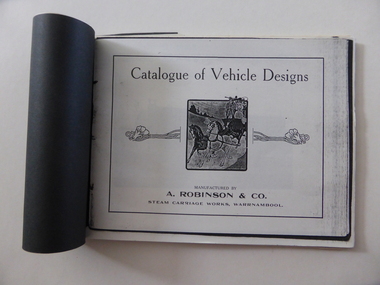
... 1900s. The pages are bound together with a plastic clip and the back cover is a piece of stiff cardboard. The booklet contains black and white photographs of the factory building and of the buggies, wagons, jinkers and carts for sale. ...This is a photocopy of a booklet produced in the early 1900s by the firm of A.Robinson & Co. of Warrnambool. Alexander Robinson, the son of James and Jane Robinson (farmers) was born in Warrnambool in 1862. He was an award-winning coach and carriage builder, firstly in partnership with Frederick Morse in Fairy Street and later with his own company A. Robinson and Co. By the early 20th century he was also selling and repairing motor cars. Alex Robinson was a Warrnambool City Councillor from 1904 to 1910 and from 1922 to 1927 and Mayor on two occasions. His business site was occupied by Callaghan Motors until 2017. In 2025 the site was for sale after plans to develop it did not proceed.Although this is only a photocopy it is of great interest as the photocopied photographs are clear and show us exactly what type of horse-drawn vehicles were in use in the Warrnambool area at the end of the 19th century and the beginning of the 20th century. The firm of A. Robinson was a prominent one in Warrnambool and Alex Robinson was active in civic affairs in the town. This is a photocopy of a booklet produced by Alexander Robinson advertising his Steam Carriage Works in the early 1900s. The pages are bound together with a plastic clip and the back cover is a piece of stiff cardboard. The booklet contains black and white photographs of the factory building and of the buggies, wagons, jinkers and carts for sale. It also has a page detailing the prizes won by the firm at Agricultural Shows all over Victoria.robinson & morse, a.robinson & co., history of warrnambool, coach and carriage making in warrnambool, fairy street -
 Eltham District Historical Society Inc
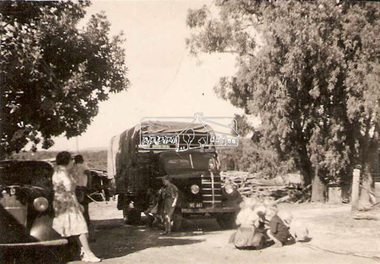
Photograph, Len Parker's Bedford truck at the Tosch home in Panton Hill, c.1952
... His father Fred first came through the district in the early 1900s. With horse and cart buying and selling what was available at the markets using his mothers’ home in North Melbourne as his base. ...His father Fred first came through the district in the early 1900s. With horse and cart buying and selling what was available at the markets using his mothers’ home in North Melbourne as his base. ...Len Parker's Bedford truck is featured in one of the public art mosaics in Were Street, Montmorency. Mr Parker by Grace de Visser (EDHS Newsletter No. 249, December 2019) Len Parker was a regular sight around the district for almost 40 years, selling fruit and veggies from the back of his truck to his regular customers between 1939 and 1978, first in a 1927 Chevy then a 1949 Bedford truck. Len’s connection to the Eltham district started long before he was born. His father Fred first came through the district in the early 1900s. With horse and cart buying and selling what was available at the markets using his mothers’ home in North Melbourne as his base. Fred settled and developed a market garden in the rich soil along the creek at Watsons Creek, Christmas Hills in 1903. Ada Watson was almost five years old and one of eight siblings aged two to sixteen, when her Grandfather and Father both named Christopher Watson brought the Eltham Hotel and they moved from Richmond. Ada’s mother was formerly Emily Silk whose parents Martha and John Silk had been farming in Eltham around 1858 and much later a dairy farmer in Fitzroy. In 1917 at St Margaret’s Church Eltham, Fred aged 44 married Ada aged 35 who was still living and working at the Eltham Hotel. Six years later Ada died from cancer leaving Fred with two small children, Rose five and Len three. Len as a young boy, like his father before him worked the land with horses, growing vegetables, mainly potatoes, cabbages, pumpkins, beans, and tomatoes, selling the excess at the market. Len took over from his ageing father Fred, who had established similar rounds selling door to door with a horse and cart. Len preferred mechanical horsepower to the real kind! In 1939 at the age of eighteen Len brought an old 1927 Chevy Truck. He was taught how to drive it and two weeks later got his driver’s Licence. The Chevy truck had an old wagon on the back with no doors, only hessian bags to keep the wind out! Len had paid 75 pounds for it, kept it for ten years and sold it for the same price! Len’s blue 1949 Bedford was brought new in 1950 for 900 pounds with only a tray back on it. Straight away Len had a wooden frame covered with canvas added, with a roll up front and back. In later years, more solid sides replaced the canvas. Benches were added to hold the boxes of fruit and vegetables, with room to move in the middle, a fruit shop on wheels. Len had large scales attached to a box for weighing the fruit and veggies and many a district baby was also weighed on them. Len would stop at customer’s homes, take their orders and with his big cane basket on his arm deliver their order to their door. On his rounds he always wore a big soft back leather apron and a black or navy beret. If it was cold, he wore a ‘bluey’ jacket on his tall slender frame. Len would go to the markets early Thursday morning, only buying what was not grown at home or brought from his brother in law’s orchard. On his way home Len would start his ‘rounds’ in Lower Plenty and then Montmorency and parts of Eltham. Friday’s regulars were in Research, Kangaroo Ground and Panton Hill. Saturdays were Panton Hill and Christmas Hills. When Len retired in 1978, due to changing social times, women were working more and supermarkets starting to take over; his ageing truck was retired too. In 1999 his son Jim had the Bedford restored, Len was very happy to see ‘Beddy’ all shiny and new once again with just a tray back, like when it was new. Jim still drives the ‘Beddy’ to Heritage Truck shows twenty years on. Len married, had five children and lived most of his life, (except during World War 2 when he served in New Guinea), at Watsons Creek, Christmas Hills dying there in 2006 and is buried at the Kangaroo Ground cemetery with his wife of 64 years, Stella nee Tosch 1917 - 2007. Grace de Visser, the author of this article, is the daughter of Len Parker and a descendant of the two former owners of the Eltham Hotel, both named Christopher Watson. bedford truck, len parker, panton hill, tosch property -
 Eltham District Historical Society Inc
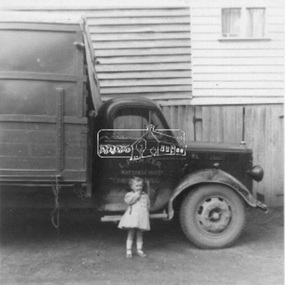
Photograph, Len Parker's Bedford truck, c.1962
... His father Fred first came through the district in the early 1900s. With horse and cart buying and selling what was available at the markets using his mothers’ home in North Melbourne as his base. ...His father Fred first came through the district in the early 1900s. With horse and cart buying and selling what was available at the markets using his mothers’ home in North Melbourne as his base. ...Len Parker's Bedford truck is featured in one of the public art mosaics in Were Street, Montmorency. The little girl is Grace de Visser's sister. Mr Parker by Grace de Visser (EDHS Newsletter No. 249, December 2019) Len Parker was a regular sight around the district for almost 40 years, selling fruit and veggies from the back of his truck to his regular customers between 1939 and 1978, first in a 1927 Chevy then a 1949 Bedford truck. Len’s connection to the Eltham district started long before he was born. His father Fred first came through the district in the early 1900s. With horse and cart buying and selling what was available at the markets using his mothers’ home in North Melbourne as his base. Fred settled and developed a market garden in the rich soil along the creek at Watsons Creek, Christmas Hills in 1903. Ada Watson was almost five years old and one of eight siblings aged two to sixteen, when her Grandfather and Father both named Christopher Watson brought the Eltham Hotel and they moved from Richmond. Ada’s mother was formerly Emily Silk whose parents Martha and John Silk had been farming in Eltham around 1858 and much later a dairy farmer in Fitzroy. In 1917 at St Margaret’s Church Eltham, Fred aged 44 married Ada aged 35 who was still living and working at the Eltham Hotel. Six years later Ada died from cancer leaving Fred with two small children, Rose five and Len three. Len as a young boy, like his father before him worked the land with horses, growing vegetables, mainly potatoes, cabbages, pumpkins, beans, and tomatoes, selling the excess at the market. Len took over from his ageing father Fred, who had established similar rounds selling door to door with a horse and cart. Len preferred mechanical horsepower to the real kind! In 1939 at the age of eighteen Len brought an old 1927 Chevy Truck. He was taught how to drive it and two weeks later got his driver’s Licence. The Chevy truck had an old wagon on the back with no doors, only hessian bags to keep the wind out! Len had paid 75 pounds for it, kept it for ten years and sold it for the same price! Len’s blue 1949 Bedford was brought new in 1950 for 900 pounds with only a tray back on it. Straight away Len had a wooden frame covered with canvas added, with a roll up front and back. In later years, more solid sides replaced the canvas. Benches were added to hold the boxes of fruit and vegetables, with room to move in the middle, a fruit shop on wheels. Len had large scales attached to a box for weighing the fruit and veggies and many a district baby was also weighed on them. Len would stop at customer’s homes, take their orders and with his big cane basket on his arm deliver their order to their door. On his rounds he always wore a big soft back leather apron and a black or navy beret. If it was cold, he wore a ‘bluey’ jacket on his tall slender frame. Len would go to the markets early Thursday morning, only buying what was not grown at home or brought from his brother in law’s orchard. On his way home Len would start his ‘rounds’ in Lower Plenty and then Montmorency and parts of Eltham. Friday’s regulars were in Research, Kangaroo Ground and Panton Hill. Saturdays were Panton Hill and Christmas Hills. When Len retired in 1978, due to changing social times, women were working more and supermarkets starting to take over; his ageing truck was retired too. In 1999 his son Jim had the Bedford restored, Len was very happy to see ‘Beddy’ all shiny and new once again with just a tray back, like when it was new. Jim still drives the ‘Beddy’ to Heritage Truck shows twenty years on. Len married, had five children and lived most of his life, (except during World War 2 when he served in New Guinea), at Watsons Creek, Christmas Hills dying there in 2006 and is buried at the Kangaroo Ground cemetery with his wife of 64 years, Stella nee Tosch 1917 - 2007. Grace de Visser, the author of this article, is the daughter of Len Parker and a descendant of the two former owners of the Eltham Hotel, both named Christopher Watson. bedford truck, len parker -
 Eltham District Historical Society Inc
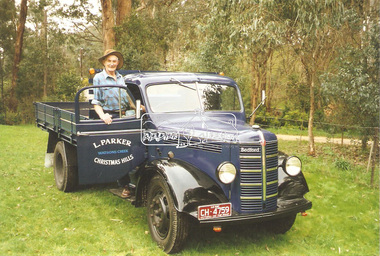
Photograph, Len Parker with his restored Bedford truck, 1999
... His father Fred first came through the district in the early 1900s. With horse and cart buying and selling what was available at the markets using his mothers’ home in North Melbourne as his base. ...His father Fred first came through the district in the early 1900s. With horse and cart buying and selling what was available at the markets using his mothers’ home in North Melbourne as his base. ...Len's Bedford truk is featured in one of the Montmorency Were Street shopping precinct mosaics. Mr Parker by Grace de Visser (EDHS Newsletter No. 249, December 2019) Len Parker was a regular sight around the district for almost 40 years, selling fruit and veggies from the back of his truck to his regular customers between 1939 and 1978, first in a 1927 Chevy then a 1949 Bedford truck. Len’s connection to the Eltham district started long before he was born. His father Fred first came through the district in the early 1900s. With horse and cart buying and selling what was available at the markets using his mothers’ home in North Melbourne as his base. Fred settled and developed a market garden in the rich soil along the creek at Watsons Creek, Christmas Hills in 1903. Ada Watson was almost five years old and one of eight siblings aged two to sixteen, when her Grandfather and Father both named Christopher Watson brought the Eltham Hotel and they moved from Richmond. Ada’s mother was formerly Emily Silk whose parents Martha and John Silk had been farming in Eltham around 1858 and much later a dairy farmer in Fitzroy. In 1917 at St Margaret’s Church Eltham, Fred aged 44 married Ada aged 35 who was still living and working at the Eltham Hotel. Six years later Ada died from cancer leaving Fred with two small children, Rose five and Len three. Len as a young boy, like his father before him worked the land with horses, growing vegetables, mainly potatoes, cabbages, pumpkins, beans, and tomatoes, selling the excess at the market. Len took over from his ageing father Fred, who had established similar rounds selling door to door with a horse and cart. Len preferred mechanical horsepower to the real kind! In 1939 at the age of eighteen Len brought an old 1927 Chevy Truck. He was taught how to drive it and two weeks later got his driver’s Licence. The Chevy truck had an old wagon on the back with no doors, only hessian bags to keep the wind out! Len had paid 75 pounds for it, kept it for ten years and sold it for the same price! Len’s blue 1949 Bedford was brought new in 1950 for 900 pounds with only a tray back on it. Straight away Len had a wooden frame covered with canvas added, with a roll up front and back. In later years, more solid sides replaced the canvas. Benches were added to hold the boxes of fruit and vegetables, with room to move in the middle, a fruit shop on wheels. Len had large scales attached to a box for weighing the fruit and veggies and many a district baby was also weighed on them. Len would stop at customer’s homes, take their orders and with his big cane basket on his arm deliver their order to their door. On his rounds he always wore a big soft back leather apron and a black or navy beret. If it was cold, he wore a ‘bluey’ jacket on his tall slender frame. Len would go to the markets early Thursday morning, only buying what was not grown at home or brought from his brother in law’s orchard. On his way home Len would start his ‘rounds’ in Lower Plenty and then Montmorency and parts of Eltham. Friday’s regulars were in Research, Kangaroo Ground and Panton Hill. Saturdays were Panton Hill and Christmas Hills. When Len retired in 1978, due to changing social times, women were working more and supermarkets starting to take over; his ageing truck was retired too. In 1999 his son Jim had the Bedford restored, Len was very happy to see ‘Beddy’ all shiny and new once again with just a tray back, like when it was new. Jim still drives the ‘Beddy’ to Heritage Truck shows twenty years on. Len married, had five children and lived most of his life, (except during World War 2 when he served in New Guinea), at Watsons Creek, Christmas Hills dying there in 2006 and is buried at the Kangaroo Ground cemetery with his wife of 64 years, Stella nee Tosch 1917 - 2007. Grace de Visser, the author of this article, is the daughter of Len Parker and a descendant of the two former owners of the Eltham Hotel, both named Christopher Watson. bedford truck, len parker -
 Kiewa Valley Historical Society
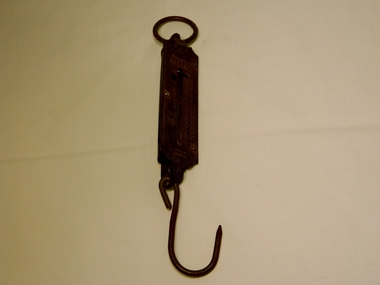
Scales Balance Pocket, Circa 1900
... Historically this item would have been used by gold miners, rabbit shooters, mobile "Rag and Bone" traders and other mobile(in caravans and/or horse drawn cart) traders of various small goods and haberdashery. ...Historically this item would have been used by gold miners, rabbit shooters, mobile "Rag and Bone" traders and other mobile(in caravans and/or horse drawn cart) traders of various small goods and haberdashery. ...Historically this item would have been used by gold miners, rabbit shooters, mobile "Rag and Bone" traders and other mobile(in caravans and/or horse drawn cart) traders of various small goods and haberdashery. Although marked as not to be used as trade, the isolation and sometimes difficult terrain rules out using larger and more delicate scales. In the early 1900s rough roads and severe weather conditions forced traders to be more flexible in trading with weights and measures. The "close enough is good enough" doctrine was the Australian outback rule of thumb. The significance of this item in the Kiewa Valley during this period demonstrates the slower acceptance of accurate trading measure using the country side principle "my hand shake is my bond". In the Kiewa Valley small quantity commercial undertakings e.g. gold mining, fur pelts and rabbit meat trade did not require bulk weight type scales. Commerce in rural production e.g. fruit and vegetables involved more farmers and their staff in a barter and/or "in kind" payments. This was more so in the depression years 1929 to late 1930s. Self sufficiency was to a large extent more attainable in this region than in the city/ large country town environment. The Australian "fair go" ethical approach to life and commerce was very much ingrained in those living in country regions, like Kiewa Valley as is demonstrated by the not so accurate hand balance, spring loaded scales. Portable Pocket Balance with front plate made from brass. Spring mechanism enclosed by black painted medium gauge steel cover( three quarters cylindrical). Front scale face and rear spring casing fastened by three rivets. Spring loaded marker blade is located in the centre of the front plate. See item KVHS 0224 for a similar scales.Front plate marked: at top "Not legal for use in trade", below this in larger print "Pocket Balance", under and to the right in smaller print "lbs" under this graded marks, first marked with a Zero, then every second mark in ascending order up to 25. At the bottom of the front plate is marked "Made in Germany"antique pocket balance, scales, mobile weights, vintage appliances -
 Kiewa Valley Historical Society
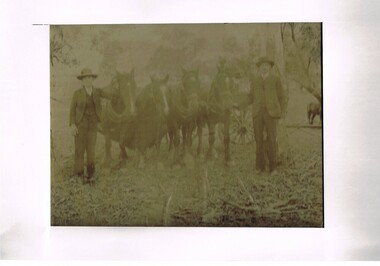
Photograph (Digital) Harnessing Horses, Harnessing Working Horses early 1900, early 1900s
... This copy of an original photograph created in the early 1900s details the "horse and cart" era when the normal transportation of the day was, in this rural setting, exclusively by horse and cart. ...This copy of an original photograph created in the early 1900s details the "horse and cart" era when the normal transportation of the day was, in this rural setting, exclusively by horse and cart. ...This copy of an original photograph created in the early 1900s details the "horse and cart" era when the normal transportation of the day was, in this rural setting, exclusively by horse and cart. The importance of this particular photograph to the subjects can be seen by the formal suits worn by both subjects.The natural bush and grassed backdrop have not been "touched up". The dray behind the horses is barely visible (fog like aperture). The lad , John Cooper was 14 years old when this photograph was taken. Both were in the process of harnessing four horses to "hook up" on the dray behind them. From their attire it looks like a trip to town or "the church".This photograph of life on a rural property in the early 1900 shows the rough and hard (physically) life in rural areas before great mechanical revolution/evolution post World War II. This was a time in the Kiewa Valley when most transportation was by horse drawn carriages and transportation routes where dirt roads with potholes. The significance of a local pioneer "family" encapsulated by this photograph cannot be reproduced as effectively in any other form. This digitised scanned copy of an original photograph of four work horses is on 200gms Fujicolor (Fujifilm) Crystal Archive paper has a silver side on which the image has been printed and a matt reverse side.The darker slightly "blurred" image has had a white frame placed over it at the time of encapsulation to provide the finished photo with a frame. This method highlights and focuses the view into the photograph. It is a clever way to permit the eyes to focus into the image to give it a greater third dimensional aspect. on the reverse side hand written(in pencil) "John Cooper & Paddy Cullen (itinerant worker) on grandfathers place (opposite Nesta Drews place) (orange Grove). "Grandfather emigrated from England with Ryders""orange grove " property, early tawonga life style, john cooper, paddy cullen, harnessing working horses -
 Kiewa Valley Historical Society
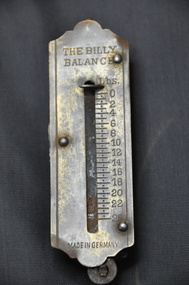
Scales Weighing Pocket, circa early 1900s
... Historically this item would have been used by gold miners, rabbit shooters, mobile "Rag and Bone" traders and other mobile(in caravans and/or horse drawn cart) traders of various small goods and haberdashery. ...Historically this item would have been used by gold miners, rabbit shooters, mobile "Rag and Bone" traders and other mobile(in caravans and/or horse drawn cart) traders of various small goods and haberdashery. ...Historically this item would have been used by gold miners, rabbit shooters, mobile "Rag and Bone" traders and other mobile(in caravans and/or horse drawn cart) traders of various small goods and haberdashery. Although marked as not to be used as trade, the isolation and sometimes difficult terrain rules out using larger and more delicate scales. In the early 1900s rough roads and severe weather conditions forced traders to be more flexible in trading with weights and measures. The "close enough is good enough" doctrine was the Australian outback rule of thumb.The significance of this item in the Kiewa Valley during this period demonstrates the slower acceptance of accurate trading measure using the country side principle "my hand shake is my bond". In the Kiewa Valley small quantity commercial undertakings e.g. gold mining, fur pelts and rabbit meat trade did not require bulk weight type scales. Commerce in rural production e.g. fruit and vegetables involved more farmers and their staff in a barter and/or "in kind" payments. This was more so in the depression years 1929 to late 1930s. Self sufficiency was to a large extent more attainable in this region than in the city/ large country town environment. The Australian "fair go" ethical approach to life and commerce was very much ingrained in those living in country regions, like Kiewa Valley as is demonstrated by the not so accurate hand balance, spring loaded scales.This brass "faced" portable Pocket Balance ( Fish Scales) has front plate made from thin pressed brass. The mild steel spring mechanism enclosed by black painted medium gauge steel cover( three quarters cylindrical). Front scale face and rear spring casing fastened by three rivets. Spring loaded marker blade is located in the centre of the front plate. A steel " finger holder" ring is attached at the top of the scale unit from one of two pre drilled holes. The top is for holding the scale upright and the bottom for a hook to dangle the item to be weighed from the bottom. See item KVHS 0223 for similar scales"THE BILLY BALANCE" and at the bottom "MADE IN GERMANY"antique pocket balance, scales, mobile weights, vintage appliances -
 Bendigo Historical Society Inc.
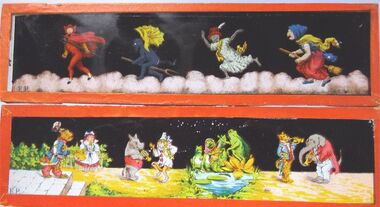
Slide - MAGIC LANTERN COLLECTION: 2 X MAGIC LANTERN SLIDES
... MAGIC LANTERN COLLECTION- 2 x glass MAGIC LANTERN SLIDEs 14 x 19 cm / one has a rough pencil l sketch of a horse and cart, the other of an egg timer ? ...MAGIC LANTERN COLLECTION- 2 x glass MAGIC LANTERN SLIDEs 14 x 19 cm / one has a rough pencil l sketch of a horse and cart, the other of an egg timer ? ...Objects. MAGIC LANTERN COLLECTION- 2 x glass MAGIC LANTERN SLIDEs 14 x 19 cm / one has a rough pencil l sketch of a horse and cart, the other of an egg timer ? / 2 x slides glass antique Circa 1870's - 1900s (produced by Ernst Plank ?) Magic Lantern slides red bordered slides.photography, projectors - still -
 Bendigo Historical Society Inc.
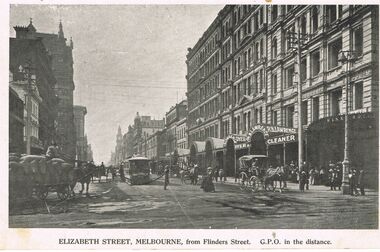
Photograph - POST CARD ELIZABETH STREET MELBOURNE
... 1900s ? / black and white photo on paper / picture shows R W LAWRENCE DRY CLEANER , HORSES AND CARTS AND EARLY TRAM . / back of card R B LAWRENCE , DRY CLEANER , Dry Cleaner , Ostrich Feather Dresser etc, / card addressed to Branch , 209 Mitchell St Bendigo / no stamp included ....1900s ? / black and white photo on paper / picture shows R W LAWRENCE DRY CLEANER , HORSES AND CARTS AND EARLY TRAM . / back of card R B LAWRENCE , DRY CLEANER , Dry Cleaner , Ostrich Feather Dresser etc, / card addressed to Branch , 209 Mitchell St Bendigo / no stamp included . ...post card Elizabeth street Melbourne , from Flinders Street . GPO in the distance - early 1900s ? / black and white photo on paper / picture shows R W LAWRENCE DRY CLEANER , HORSES AND CARTS AND EARLY TRAM . / back of card R B LAWRENCE , DRY CLEANER , Dry Cleaner , Ostrich Feather Dresser etc, / card addressed to Branch , 209 Mitchell St Bendigo / no stamp included .postcard, photograph, post card elizabeth street melbourne , from flinders street . gpo in the distance - early 1900s / r w lawrence dry cleaner / -
 Kiewa Valley Historical Society
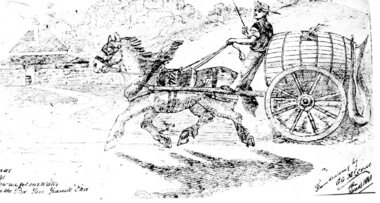
Postcard – Black and white illustration of horse and cart with driver, Circa 1881
... Postcard – Black and white illustration of horse and cart with driver ...Postcard production blossomed in the late 1800s and early 1900s. Postcards were popular because they were a quick and easy way for individuals to communicate with each other and became an efficient method of sharing information and photographs.Postcards provided a glimpse into the lifestyles of the sender which sometimes included a photograph of family or a hand drawn scene as in the accompanying example. As such, they formed part of family history.Black and white printed postcard of a hand drawn single horse cart with driver. Cart is carrying a large wooden barrel with hose attached. Brick homestead building in background. Unwritten on the rear. Handwritten inscription on bottom left of page - How we got our water in the pre Yan Yeanite era Handwritten inscription on bottom right of page – From drawing by G. G. McCrae Christmas 1881 postcard; horse and cart; -
 Charlton Golden Grains Museum Inc
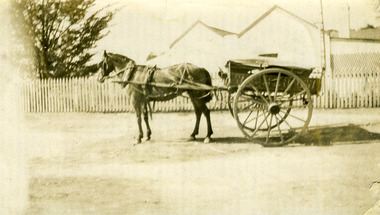
Photograph - Sepia photo of horse and cart c. 1925
... ...Horse and cart 1900s...Curnow ans Sons, High St Charlton c.1925 W Curnow and Sons High St Charlton Horse and cart 1900s Sepia photo of horse and cart used by Clive Curnow for grocery deliveries W. ...Horse and cart used to deliver groceries from W. Curnow ans Sons, High St Charlton c.1925Sepia photo of horse and cart used by Clive Curnow for grocery deliveries W. Curnow and Sons was a store in High St. Charlton c. 1925w curnow and sons, high st charlton, horse and cart 1900s -
 Churchill Island Heritage Precinct
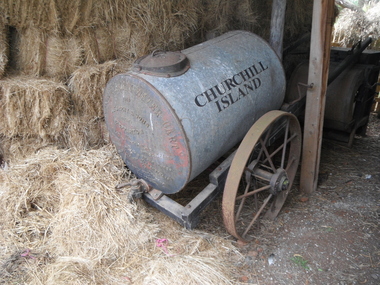
Functional object - Furphy Water Cart, 1929
... In the mid 1900s this water cart was used by the Buckley family on Churchill Island. farm machinery water horse drawn furphy churchill island CHURCHILL ISLAND Furphy water cart / Furphy & Sons, Shepparton Cylindrical tin water cart with small access lid on top, unpainted and mounted onto a two-wheel cart Functional object Furphy Water Cart Furphy and Sons ...The Churchill Island collection includes objects from the late 1800s. The collection is presented in sets and series, of which this object represents the Buckley era. The family-owned Furphy company has been manufacturing agricultural equipment in Victoria from the 1860s to the present day. In the mid 1900s this water cart was used by the Buckley family on Churchill Island.Cylindrical tin water cart with small access lid on top, unpainted and mounted onto a two-wheel cartCHURCHILL ISLAND Furphy water cart / Furphy & Sons, Sheppartonfarm machinery, water, horse drawn, furphy, churchill island -
 Mt Dandenong & District Historical Society Inc.
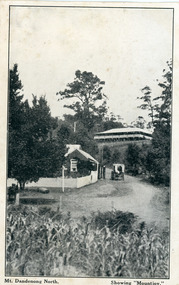
Photograph, Mt Dandenong North. Showing "Mountjoy"
... 1900s. The building burned down in 1975. Mt. Dandenong North was renamed Kalorama in 1926. postcard mountjoy guest house beulah tea room beulah mt dandenong north kalorama On front ; Mt. Dandenong North. Showing "Mountjoy." Black and white postcard showing a horse and cart ...The building with the white picket fence is the Beulah Tea Gardens opened by Eliza Hand c1904 at The Gap (now FiveWays). The building is still operating as a cafe. The Tourist Road does not yet exist. Old Coach Road comes into the picture from the right and the horse and cart is heading up Ridge Road. The elm trees can be seen on the left. The building up on the hill is the Mountjoy Guest House. ‘Mountjoy’ was built by the Paynter family in 1905. It had fourteen bedrooms, a dining room and sitting room, kitchen with a big wood burning range and verandahs on three sides. There were commanding views of the eastern ranges and the city to the west. Ellis Jeeves purchased ‘Mountjoy’ in 1908 and it soon became a popular tourist destination, the coach yards making it a centre of the district. ‘Mountjoy’ is a central feature of many photographs of Kalorama in the 1900s. The building burned down in 1975. Mt. Dandenong North was renamed Kalorama in 1926.Black and white postcard showing a horse and cart on road between two buildings.On front ; Mt. Dandenong North. Showing "Mountjoy."postcard, mountjoy, guest house, beulah tea room, beulah, mt dandenong north, kalorama -
 Emerald Museum & Nobelius Heritage Park
Photograph - Mechanics Institute, Emerald, Unknown photographer, 1900s
... 1900s Inscribed on front of photo: 'Emerald' Hand-written on back of photo: 'Mechanics Institute / Sherriff Rd. / Emerald / Opened 1905 Black and white photograph of the Mechanics Institute at Emerald newly built. Circa 1905. The Institute is located on the present- day site of the tennis courts. A man on a horse pulling a cart ...Mechanics Institutes were the forerunners of public libraries and adult education in Australia. The Emerald Mechanics Institute was the product (as was typical of the Institutes) of the local community's donation of labour, time, expertise and money. Nurseryman, C. A. Nobelius, donated the land for this project and provided conifer and deciduous trees which were planted on the reserve.Black and white photograph of the Mechanics Institute at Emerald newly built. Circa 1905. The Institute is located on the present- day site of the tennis courts. A man on a horse pulling a cart can be seen on the right and the old general store (present-day Woolworths) on the extreme right. There are two boys in the center right of the image.Inscribed on front of photo: 'Emerald' Hand-written on back of photo: 'Mechanics Institute / Sherriff Rd. / Emerald / Opened 1905mechanics institute, emerald mechanics institute hall, carl axel nobelius, 1900s -
 Emerald Museum & Nobelius Heritage Park
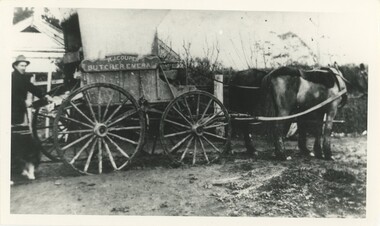
Photograph - R. J. Couper Butcher Cart, c. 1900s
... cart was used for transportation by the business. This photograph captures a major early Emerald business; it is also a good example of transportation in the early 20th century. 1900s Emerald Butchery Commerce Transport Obverse, Cart Label: "R. ...Robert John Couper (born 1871) was Emerald's first butcher, establishing his butchery c. 1900 and soon taking up a position near the corner of Main Street and Emerald-Monbulk Road. He operated the business until the Madigan family took over in 1919. This cart was used for transportation by the business.This photograph captures a major early Emerald business; it is also a good example of transportation in the early 20th century.This item is a black-and-white photograph depicting two horses and horsecart. The cart has four spoked wooden wheels and a painted label advertising R. J. Couper. A man stands behind the cart, placing items into it. The cart is parked on the side of an unpaved road, besides a building and hedge. The reverse features annotations in blue pen and an accession number in pencil.Obverse, Cart Label: "R. J. COUPER / BUTCHER EMERALD" Reverse: "From / R. [illegible] / R J Couper's meat delivery cart / early 1900's"1900s, emerald, butchery, commerce, transport -
 Emerald Museum & Nobelius Heritage Park
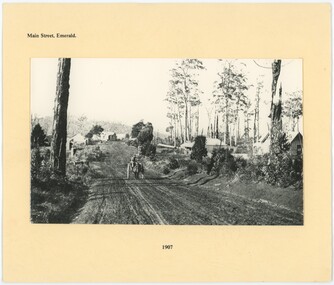
Photograph - Emerald Main Street, 1907
... Emerald 1900s Commerce Top: "Main Street, Emerald" Bottom: "1907" A black and white photograph at the center of a labelled card backing. The photograph depicts a wide dirt road, with a horse and cart traversing the center of the road. ...This photograph depicts Emerald Main Street in 1907, still unpaved and traversed by horses more than cars. Mr. W. Moffat's general store is in the background on the right. The year after this photograph was taken, bushfires would threaten Moffat's store, (along with other stores and homes, on top of the church and the railway sleepers) which was ignited several times but not destroyed. According to Old Ferntree Gully Shire History, the man in the horsecart is David Charman, early Emerald resident and namesake of Charman Avenue. This is a copy of an original; part of a stamp on an older copy is cut off in the top right of the photograph. Additionally, another copy of this photograph is in our collection.This photograph captures a much earlier Emerald Main Street, almost unrecognisable today.A black and white photograph at the center of a labelled card backing. The photograph depicts a wide dirt road, with a horse and cart traversing the center of the road. There are buildings - mostly shops - on either side, amidst trees. A hill rises in the background.Top: "Main Street, Emerald" Bottom: "1907"emerald, 1900s, commerce -
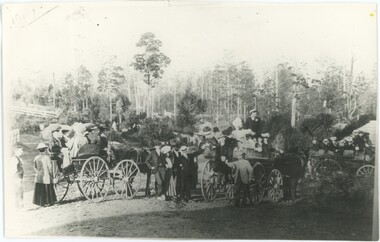 Emerald Museum & Nobelius Heritage Park
Photograph - Nobelius Employee's Picnic, 1909
... carts. Another post specifically labels it as the corner of Mount Dandenong Tourist Road and Monbulk Road, though I don't believe we have enough information to affirm this. This image recalls the workplace recreational events of the area in the early 20th century, and has direct relevance to the Nobelius Nursery. Cockatoo 1900s ...This photograph depicts employees of C. A. Nobelius on a fruit growers employee picnic. It is disputed where this photograph was taken - while we have suggested it was in the Cockatoo Creek area (now simply Cockatoo), the State Library's catalogue entry for another copy of this photograph suggests it was likely the Dandenong Ranges based on the Sassafras-Olinda label on one of the carts. Another post specifically labels it as the corner of Mount Dandenong Tourist Road and Monbulk Road, though I don't believe we have enough information to affirm this. This image recalls the workplace recreational events of the area in the early 20th century, and has direct relevance to the Nobelius Nursery.A black and white copy of a photograph of several horse-drawn carts on a road, filled with at least thirty people - men and women - dressed in the styles of the early 20th century. There are trees and buildings in the background, and some of the picnickers are posing for the photograph.Top-left of photograph: "1909"cockatoo, 1900s, nobelius nursery
