
Showing 45 items matching "house hold items"
-
 Sunshine and District Historical Society Incorporated
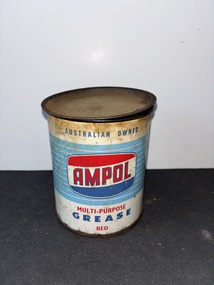
Mixed media - Tom Hoole Household items and materials c1940s
... 2020.01 - Tom Hoole House hold items and materials c1940s - AMPOL Multi-Purpose Red Grease 2020.02 - Tom Hoole House hold items and materials c1940s - Coacoline Leather Dressing 2020.03 - Tom Hoole House hold items and materials c1940s - ENERGREASE C2 2020.04 - Tom Hoole House hold items and materials c1940s - SHELL RETINAX A Multi-Purpose Grease 2020.05 - Tom Hoole House hold items and materials c1940s - ENERGREASE 2020.06 - Tom Hoole House hold items and materials c1940s - Hunters Shellite 2020.07 - Tom Hoole House hold items and materials c1940s - Winter Wash Tar Distillate 2020.08 - Tom Hoole House hold items and materials c1940s - Paterson's Clensel Liquid Cleaner 2020.09 - Tom Hoole House hold items and materials c1940s - Brylcreem Hair Dressing 2020.10 - Tom Hoole House hold items and materials c1940s - 7X Grapefruit Flavour Soda Drink Bottle 2020.11 - Tom Hoole House hold items and materials c1940s - Salter's Pocket Balance No 6 2020.12 - Tom Hoole House hold items and materials c1940s - Blacksmith Pinchers 2020.13 - Tom Hoole House hold items and materials c1940s - Bridgeoort Car Puncture Repair Kit 2020.14 - Tom Hoole House hold items and materials c1940s - ROMAC Bicycle Puncture Repair Kit 2020.15 - Tom Hoole House hold items and materials c1940s - Cigarette Lighter With Humes Ltd Engraved On It 2020.16 - Tom Hoole House hold items and materials c1940s - Decimal Equivalents Conversion Chart Back 2020.16 - Tom Hoole House hold items and materials c1940s - Decimal Equivalents Conversion Chart Front 2020.17 - Tom Hoole House hold items and materials c1940s - Stamp Duty Stamps 2020.18 - Tom Hoole House hold items and materials c1940s - Striker Lighter Matches 2020.19 - Tom Hoole House hold items and materials c1940s - Gladstone Bag 2020.20 - Tom Hoole House hold items and materials c1940s - Kraft Cheese Wooden Box Bottom 2020.20 - Tom Hoole House hold items and materials c1940s - Kraft Cheese Wooden Box Side...Collection of items donated by Tom Hoole Thomas "Tom" Hoole Household Manufacturing Trades 2020.01 - Tom Hoole House hold items and materials c1940s - AMPOL Multi-Purpose Red Grease 2020.02 - Tom Hoole House hold items and materials c1940s - Coacoline Leather Dressing 2020.03 - Tom Hoole House hold items and materials c1940s - ENERGREASE C2 2020.04 - Tom Hoole House hold items and materials c1940s - SHELL RETINAX A Multi-Purpose Grease 2020.05 - Tom Hoole House hold items and materials c1940s - ENERGREASE 2020.06 - Tom Hoole House hold items and materials c1940s - Hunters Shellite 2020.07 - Tom Hoole House hold items and materials c1940s - Winter Wash Tar Distillate 2020.08 - Tom Hoole House hold items and materials c1940s - Paterson's Clensel Liquid Cleaner 2020.09 - Tom Hoole House hold items and materials c1940s - Brylcreem Hair Dressing 2020.10 - Tom Hoole House hold items and materials c1940s - 7X Grapefruit Flavour Soda Drink Bottle 2020.11 - Tom Hoole House hold items and materials c1940s - Salter's Pocket Balance No 6 2020.12 - Tom Hoole House hold items and materials c1940s - Blacksmith Pinchers 2020.13 - Tom Hoole House hold items and materials c1940s - Bridgeoort Car Puncture Repair Kit 2020.14 - Tom Hoole House hold items and materials c1940s - ROMAC Bicycle Puncture Repair Kit 2020.15 - Tom Hoole House hold items and materials c1940s - Cigarette Lighter With Humes Ltd Engraved On It 2020.16 - Tom Hoole House hold items and materials c1940s - Decimal Equivalents Conversion Chart Back 2020.16 - Tom Hoole House hold items and materials c1940s - Decimal Equivalents Conversion Chart Front 2020.17 - Tom Hoole House hold items and materials c1940s - Stamp Duty Stamps 2020.18 - Tom Hoole House hold items and materials c1940s - Striker Lighter Matches 2020.19 - Tom Hoole House hold items and materials c1940s - Gladstone Bag 2020.20 - Tom Hoole House hold items and materials c1940s - Kraft Cheese Wooden Box Bottom 2020.20 - Tom Hoole House hold items and materials c1940s - Kraft Cheese Wooden Box Side Collection of Tom Hoole's household items Mixed media Tom Hoole Household items and materials c1940s ...Collection of items donated by Tom HooleCollection of Tom Hoole's household items2020.01 - Tom Hoole House hold items and materials c1940s - AMPOL Multi-Purpose Red Grease 2020.02 - Tom Hoole House hold items and materials c1940s - Coacoline Leather Dressing 2020.03 - Tom Hoole House hold items and materials c1940s - ENERGREASE C2 2020.04 - Tom Hoole House hold items and materials c1940s - SHELL RETINAX A Multi-Purpose Grease 2020.05 - Tom Hoole House hold items and materials c1940s - ENERGREASE 2020.06 - Tom Hoole House hold items and materials c1940s - Hunters Shellite 2020.07 - Tom Hoole House hold items and materials c1940s - Winter Wash Tar Distillate 2020.08 - Tom Hoole House hold items and materials c1940s - Paterson's Clensel Liquid Cleaner 2020.09 - Tom Hoole House hold items and materials c1940s - Brylcreem Hair Dressing 2020.10 - Tom Hoole House hold items and materials c1940s - 7X Grapefruit Flavour Soda Drink Bottle 2020.11 - Tom Hoole House hold items and materials c1940s - Salter's Pocket Balance No 6 2020.12 - Tom Hoole House hold items and materials c1940s - Blacksmith Pinchers 2020.13 - Tom Hoole House hold items and materials c1940s - Bridgeoort Car Puncture Repair Kit 2020.14 - Tom Hoole House hold items and materials c1940s - ROMAC Bicycle Puncture Repair Kit 2020.15 - Tom Hoole House hold items and materials c1940s - Cigarette Lighter With Humes Ltd Engraved On It 2020.16 - Tom Hoole House hold items and materials c1940s - Decimal Equivalents Conversion Chart Back 2020.16 - Tom Hoole House hold items and materials c1940s - Decimal Equivalents Conversion Chart Front 2020.17 - Tom Hoole House hold items and materials c1940s - Stamp Duty Stamps 2020.18 - Tom Hoole House hold items and materials c1940s - Striker Lighter Matches 2020.19 - Tom Hoole House hold items and materials c1940s - Gladstone Bag 2020.20 - Tom Hoole House hold items and materials c1940s - Kraft Cheese Wooden Box Bottom 2020.20 - Tom Hoole House hold items and materials c1940s - Kraft Cheese Wooden Box Sidethomas "tom" hoole, household, manufacturing, trades -
 Warrnambool and District Historical Society Inc.
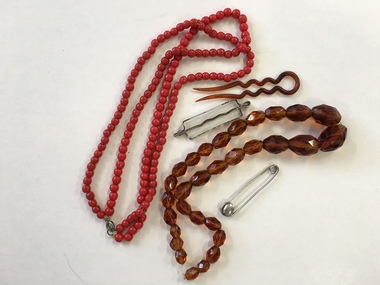
Personal items, Beads, hair clip and safety pin, Early 20th century
... ...House hold items...Beads Hair curler House hold items These are two necklaces, one red double stringed and one amber coloured with graduated glass beads. ...These items would have been worn or used by a woman in the early 20th century for decorative purposes.These items have no known provenance and are retained for display purposes.These are two necklaces, one red double stringed and one amber coloured with graduated glass beads. Both are tied together with cotton. Attached to the cotton is one metal pin and one metal hair curler. beads, hair curler, house hold items -
 Warrnambool and District Historical Society Inc.
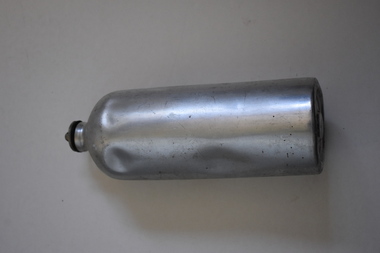
Hot water bottle, Mid 20th century
... 20th century house hold items...This item is retained for display purposes. 20th century house hold items This is a cylindrical aluminium bottle with a detachable metal stopper .The stopper has a metal handle. ...A hot water bottle such as this would have been used in the mid 20th century before the advent of rubber ones.This item is retained for display purposes.This is a cylindrical aluminium bottle with a detachable metal stopper .The stopper has a metal handle. It has traces of adhesive tape on one side to cover a small hole. The body of the cylinder is dinted. 20th century house hold items -
 Warrnambool and District Historical Society Inc.
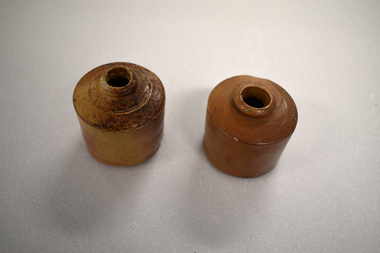
Ink wells, Pottery inkwells x 2, Mid 20th century
... vintage house hold and business items...These items have no known provenance but are retained for display purposes. ink wells vintage house hold and business items .1 A round ceramic ink well It is coloured brown and there is some damage on the side. .2 A round, brown ceramic ink well with a little ridged top.There is some damage on the base. ...These items are typical of the ink wells used in the first half of the 20th century in a home or business. The use of ink wells was superseded by the introduction of fountain pens and ball point pens . These items have no known provenance but are retained for display purposes..1 A round ceramic ink well It is coloured brown and there is some damage on the side. .2 A round, brown ceramic ink well with a little ridged top.There is some damage on the base.ink wells, vintage house hold and business items -
 Upper Yarra Museum
Green Gables Letter Box, Unknown
... This item was used in the office of Green Gables, Guest House, Warburton, to hold post cards, that were sold to the guests....This item was used in the office of Green Gables, Guest House, Warburton, to hold post cards, that were sold to the guests. ...This item was used in the office of Green Gables, Guest House, Warburton, to hold post cards, that were sold to the guests. The Kent Family owned and operated the House from 1949 -1957, this item was kept by the family until 2013.It was then donated to the Upper Yarra Museum.Wooden hardwood, Letter holder, back 28 cm high,13 cm wide.7 cms. deep. 2 compartments inner compartment 20cm. high. Front is 9 cms. with inscription.Stenstil sign in gold with black outline. This is on the lower front panel green gables, warburton, -
 Flagstaff Hill Maritime Museum and Village
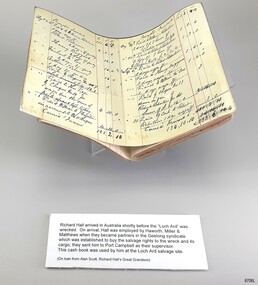
Book - Cash Book, Richard Hall, Manager of Loch Ard salvage site, 1878
... The Flagstaff Hill Maritime Village houses a diverse and substantial collection of artefacts recovered from the Loch Ard, representing one of the largest assemblies of items from this significant shipwreck. The collection serves as a vital snapshot of history, enabling interpretation of the circumstances and impact of the tragic Loch Ard event. Additionally, the artefacts hold ...Richard Hall arrived in Australia shortly before the "Loch Ard" was wrecked at Port Campbell in June 1878. On arrival, Hall was employed by the partners Haworth, Miller & Matthews, a Geelong syndicate established to buy the salvage rights to the wreck and its cargo. The firm sent Hall to Port Campbell as their supervisor. Hall used this cash book at the Loch Ard salvage site, keeping a record of the date, the workers’ names, hours worked and amount paid. The wreck was difficult to access from the shore, so the firm sent its recently purchased steamer, the SS Napier, to allow access from the sea. Sadly, the steamer hit rocks in the process, and it sank nearby with a cargo of general stores for settlers along the coast. Rochard Hall’s cash book has been passed down through his family’s generations. Currently, it belongs to his great-grandson, who has generously loaned it for display with other significant Loch Ard relics. Richard Hall’s cash book is significant as a record of essential details regarding the salvage process in the 1870s, including the date of work, the names of workers involved, the hours they worked, and the payments made. The use of this cash book ensured meticulous documentation of the workforce and financial transactions during the salvage period. Richard Hall’s cash book has been carefully preserved within his family for generations. Today, it is in the possession of his great-grandson, who has generously loaned it for public exhibition alongside other important relics from the Loch Ard shipwreck. The cash book serves as a tangible link to the events surrounding the salvage and the individuals involved in this historic episode. The Loch Ard shipwreck itself is a landmark event in Victoria’s maritime history and is registered on the Victorian Heritage Register (Ref S 417). The Flagstaff Hill Maritime Village houses a diverse and substantial collection of artefacts recovered from the Loch Ard, representing one of the largest assemblies of items from this significant shipwreck. The collection serves as a vital snapshot of history, enabling interpretation of the circumstances and impact of the tragic Loch Ard event. Additionally, the artefacts hold archaeological importance, offering insights into Victoria’s shipping history and early social and historical themes. The collection’s historical significance is further emphasised by its association with what is regarded as the worst and best-known shipwreck in Victoria’s history. Cash book: a small cash book with printed blue lines and red columns. Entries are handwritten in blue ink. They show the date, the name of the person paid, the amount paid, and the cheque number, or cash. The book is kindly on loan from Alan Scott, Richard Hall's great-grandson.Handwritten entries in pen and ink.flagstaff hill maritime museum and village, great ocean road, shipwreck coast, richard hall, loch ard, cash book, financial record, salvage, haworth miller and matthews, geelong salvage syndicate, 1878 wreck, port campbell, ss napier, salvage supervisor, salvage manager, salvage workers, richard hall's cash book, loch ard cash book -
 Orbost & District Historical Society
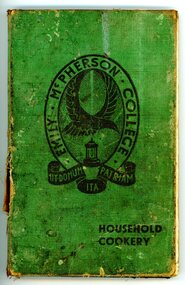
Book - Cookery Book, Emily McPherson College, Emily McPherson College, House Hold Cookery, 1930's to 1950's
... item is significant because represents a cookery teaching tool in Victoria Education system in the 1950's. Household cookery book Orbost HIgh School Inside front cover are the hand written words, Margaret Houston, Form 3c, Tennyson St, Orbost, 24/9/52, Orbost High School in blue ink Blue/Green covered fabric book with 106 pages, front cover has oval shaped crest with the words Emily McPherson College around the edge with a bird shape in the centre in black print and at the bottom right corner has the words Household Cookery in black print Emily McPherson College, House Hold Cookery Book Cookery Book Emily McPherson College The Ruskin Press Orbost HIgh School ...This book was owned by Margaret Owen (Houston) born 1938 died 2025, and relates to the time when she was a student at Orbost High School in 1952. She lived in the Orbost district all her life and became a school teacher and worked at Cabbage Tree Primary School and Orbost Primary School. She married and had 5 children, one of whom was Nicholas Owen who donated this book to the Orbost and District Historical Society.This item is significant because represents a cookery teaching tool in Victoria Education system in the 1950's.Blue/Green covered fabric book with 106 pages, front cover has oval shaped crest with the words Emily McPherson College around the edge with a bird shape in the centre in black print and at the bottom right corner has the words Household Cookery in black printInside front cover are the hand written words, Margaret Houston, Form 3c, Tennyson St, Orbost, 24/9/52, Orbost High School in blue inkhousehold cookery book, orbost high school -
 Cheese World Museum
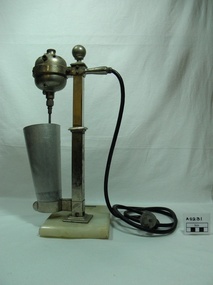
Retailing equipment, Hamilton Beach Mfg Co, Milkshake mixer
... items given into the care of the Cheese World Museum. Uebergang catalogue No.N42 Allansford Hamilton Beach Manufacturing Company USA milkshake maker milk retailing equipment Hamilton Beach Mfg Co. Builders, Racine, Wisc. Made in USA. Pats Pending. Volts 220-50c. No.4N14412A A single beater electric commercial milkshake maker with black lead, mounted on a white 'artificial marble' base with four rubber stops; and straight-sided aluminium mixing container. An extendable metal column (to H44cm) with a side clip attached is used to hold the container. The electric motor is housed ...The Percy Uebergang family lived at Tooram Park, Allansford from 1912 until 1992. Percy and Myrtle Uebergang's children were twins, Ray and Joyce born in 1926 who lived at Tooram Park until their deaths, Ray in 1986 and Joyce in 1992. Neither Ray nor Joyce married and following the death of her brother Joyce set up the Ray and Joyce Uebergang Foundation which supports the local community. This milkshake maker is part of the collection of items given into the care of the Cheese World Museum. Uebergang catalogue No.N42 A single beater electric commercial milkshake maker with black lead, mounted on a white 'artificial marble' base with four rubber stops; and straight-sided aluminium mixing container. An extendable metal column (to H44cm) with a side clip attached is used to hold the container. The electric motor is housed in a slotted round metal casing.Hamilton Beach Mfg Co. Builders, Racine, Wisc. Made in USA. Pats Pending. Volts 220-50c. No.4N14412Aallansford, hamilton beach manufacturing company, usa, milkshake maker, milk, retailing equipment -
 Flagstaff Hill Maritime Museum and Village
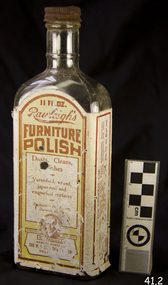
Container - Glass Bottle, W T Rawleigh, 1920s
... The item demonstrates how selling house hold products door to door was pioneered in Australia by the Rawleigh’s company in the early 1900s and is still in existence today. flagstaff hill warrnambool flagstaff hill maritime museum shipwreck coast flagstaff hill maritime village great ocean road bottle rawleigh's furniture polish furniture polish rawleigh's cleaning label of Rawleigh's Furniture Polish Bottle, glass, narrow neck rectangular base with metal screw top. ...W.T. Rawleigh's & Co. manufactured various household products in a factory in Collins Place, Melbourne, between 1930 and 1935. The W.T. Rawleigh Company was an American company started by William Rawleigh in 1889. The company expanded to both Canada and Australia with the Rawleigh company specialising in medicines, remedies, food additives, cleaning products and toiletries. Due to increased demand, Rawleigh’s required a larger factory and thus built the factory in Dawson Street Brunswick Victoria and by 1950 the factory had been extended to include 98,000 square feet of floor space. The Brunswick factory ceased production in the late 1970s and manufacturing was moved to New South Wales. During the peak of production, more than 200 people were employed in the Brunswick factory and several independent sale representatives sold their products door-to-door throughout the country. The ‘Rawleigh’s man’ was a regular door-to-door salesman of inter war and post-war suburban Melbourne. Rawleigh’s products are still in production today.A significant item as it gives a snapshot into domestic life and social norms of the pre and post war period in Melbourne and throughout Australia and New Zealand. The item demonstrates how selling house hold products door to door was pioneered in Australia by the Rawleigh’s company in the early 1900s and is still in existence today.Bottle, glass, narrow neck rectangular base with metal screw top.label of Rawleigh's Furniture Polishflagstaff hill, warrnambool, flagstaff hill maritime museum, shipwreck coast, flagstaff hill maritime village, great ocean road, bottle, rawleigh's furniture polish, furniture polish, rawleigh's, cleaning -
 Warrnambool and District Historical Society Inc.
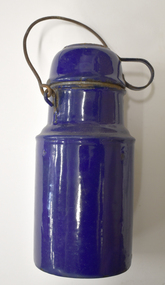
Domestic object - Thermos, c. 1920
... This is a vintage item from the early 20th century. It could have been used in a house hold context or by farmers in the paddocks, by hikers, family picnickers, campers or by workers in factories. ...This is a vintage item from the early 20th century. It could have been used in a house hold context or by farmers in the paddocks, by hikers, family picnickers, campers or by workers in factories. ...This is a vintage item from the early 20th century. It could have been used in a house hold context or by farmers in the paddocks, by hikers, family picnickers, campers or by workers in factories. This item has no known provenance and is kept as an interesting vintage domestic object..Deep blue enamel vacuum flask or thermos with a rusted metal handle and a lid which serves as a cup. There are rust patches on the base, sides and cup. The central section is round.vintage domestic item, vintage vacuum flask, vintage thermos -
 Kiewa Valley Historical Society
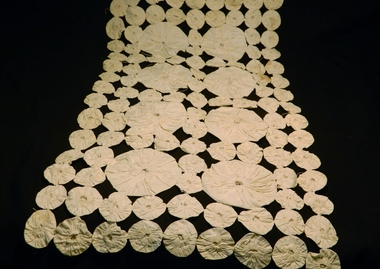
Table Runner, circa 1920s to 1950s
... The fashion dictated to by the larger cities and towns were for some smaller items of house hold furniture encompassed by homes in the region, not only because of practicality but also for longevity of the item it protected....The fashion dictated to by the larger cities and towns were for some smaller items of house hold furniture encompassed by homes in the region, not only because of practicality but also for longevity of the item it protected. ...Historically this item highlights the middle to upper to middle socio economic levels of a rural community in the 1920s to 1950s. The fashion dictated to by the larger cities and towns were for some smaller items of house hold furniture encompassed by homes in the region, not only because of practicality but also for longevity of the item it protected.The significance of this item in showing that although the region was to a small degree isolated from the "latest" fashion of house hold dressage, it was to a certain degree not regional and that the fashion of the day in large cities and towns was instilled through magazines and Country Women,s organisations.Fine cotton table runner. Middle section has a 2cm wide crochet insert around it with another border of cotton around it 2cm wide. All the item is edged with a 7cm wide crochet band.hand craft, furniture dressing, lace, crochet, cotton furniture proctective coverings -
 Bendigo Historical Society Inc.
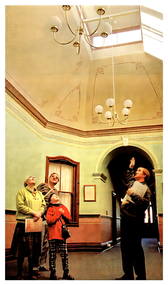
Newspaper - Fortuna Article - "Fortuna Open For Inspection", July 08 1997
... hold due to limited resources. Original wood and artefacts are stored until funds allow for their proper display. Furniture sold in 1934 has been gradually repurchased by the Regiment and Lansell family members.The house features luxurious marble baths, stained-glass windows, grand staircases, and intricate ceiling work, reflecting George Lansell's taste. Every part of Fortuna contains elements of Bendigo's history. bendigo fortuna army tropographic support establishment Fortuna Restoration Article - "Fortuna Open For Inspection" - Bendigo Advertiser Tues 08 July 1997- Author Susan Turpie, photographer Peter Hyett This item ...Fortuna house is open to the public with weekly guided tours, contrary to the belief that it closed after the Army Survey Regiment left. Tours are led by Mal Fosters and run every Sunday from 1pm to 3pm, with group bookings and alternative times available by contacting Pat Graham. Tour attendance declined after the army's departure, impacting funding for restoration and upkeep. Funds from tours are essential for ongoing restoration projects, some of which are on hold due to limited resources. Original wood and artefacts are stored until funds allow for their proper display. Furniture sold in 1934 has been gradually repurchased by the Regiment and Lansell family members.The house features luxurious marble baths, stained-glass windows, grand staircases, and intricate ceiling work, reflecting George Lansell's taste. Every part of Fortuna contains elements of Bendigo's history.Fortuna Restoration Article - "Fortuna Open For Inspection" - Bendigo Advertiser Tues 08 July 1997- Author Susan Turpie, photographer Peter Hyett This item contains the following: 11217.5a Colour Photo of Fortuna tour guide Mal Fosters pointing out the intricate details of a ceiling in one room, before showing people into one of George Lansell's former dining rooms in the majestic mansion. 11217.5b Colour Photo of tourists scanning the stained-glass windows 11217.5c Colour Photo of one of the dining rooms 11217.5d Part of page 2 - Fortuna Open For Inspectionnon-fictionbendigo, fortuna, army tropographic support establishment -
 Bendigo Historical Society Inc.
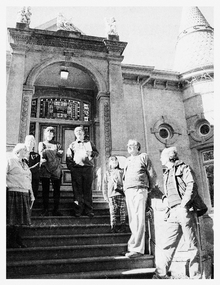
Newspaper - Fortuna Article - "Landmark Opens Doors", July 10 1997
... hold due to limited resources. The house features luxurious elements such as marble baths, stained-glass windows, grand staircases, and ornate ceilings, reflecting George Lansell's taste. Many original furnishings, sold in 1934, have been gradually reacquired by the Regiment and Lansell family members. Tours are held every Sunday from 1 pm to 3 pm, with group bookings and alternative times available by arrangement. bendigo fortuna army tropographic support establishment Fortuna Restoration Article - "Landmark Opens Doors" - Bendigo Advertiser Thur 10 July 1997- Author Susan Turpie This item contains the following: 11217.6a Black and White Photo of Fortuna tour guide Mal Fosters with another curious group visiting Fortuna 11217.6b Part of page 7 - Fortuna Open For Inspection Newspaper Fortuna Article - "Landmark Opens Doors" ...After the Army Survey Regiment left, Fortuna house is now open to the public for weekly guided tours. Tours are led by Mal Fosters, who aims to correct the misconception that the house is closed. Tour attendance dropped after the army's departure, impacting funding for restoration and upkeep. Funds from tours are essential for ongoing restoration projects; some projects and artifact displays are on hold due to limited resources. The house features luxurious elements such as marble baths, stained-glass windows, grand staircases, and ornate ceilings, reflecting George Lansell's taste. Many original furnishings, sold in 1934, have been gradually reacquired by the Regiment and Lansell family members. Tours are held every Sunday from 1 pm to 3 pm, with group bookings and alternative times available by arrangement.Fortuna Restoration Article - "Landmark Opens Doors" - Bendigo Advertiser Thur 10 July 1997- Author Susan Turpie This item contains the following: 11217.6a Black and White Photo of Fortuna tour guide Mal Fosters with another curious group visiting Fortuna 11217.6b Part of page 7 - Fortuna Open For Inspectionnon-fictionbendigo, fortuna, army tropographic support establishment -
 Warrnambool and District Historical Society Inc.
Box, Tin Box McGennan
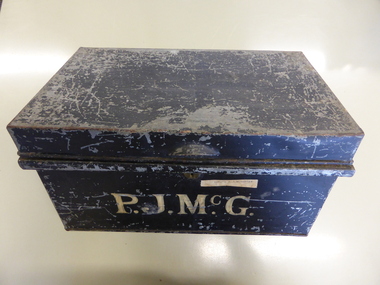
... house his estate papers after his death. Many of these documents are in the collection of the Warrnambool &District Historical Society. This box is of some importance as it belonged to a prominent Warrnambool businessman and his family. It has social significance as an example of the type of storage items used early in the 20th century to hold ...Peter McGennan (1839-1920) arrived in Warrnambool in the 1870s and established a cooperage in Kepler Street and a boating business on the Hopkins River. He rebuilt the boating establishment after a fire in 1876. In 1896 McGennan established a Box and Case Factory in Davis Street (Merrivale Drive), importing timber from New Zealand, using chartered vessels and his own ships which included the ‘Speculant’. The box factory was a successful venture employing over 30 men until it was destroyed by fire in 1923. Peter McGennan was involved in the establishment of the Warrnambool Cheese and Butter Factory at Allansford and the Warrnambool Woollen Mill. He was a Director of the latter company until his death. Members of the McGennan family were also important business people in Warrnambool, being involved in the hotel business and civic affairs for many years. The tin box may have been used to house family papers or business documents during Peter McGennan’s life and it was used to house his estate papers after his death. Many of these documents are in the collection of the Warrnambool &District Historical Society.This box is of some importance as it belonged to a prominent Warrnambool businessman and his family. It has social significance as an example of the type of storage items used early in the 20th century to hold documents etc.This is a rectangular tin box with the black paint on the outside peeling and yellow paint inside. There is a metal lock which has no key. There is a small handle on the top added to the tin surface. The name ‘P.J.McGennan’ is painted on the front side in yellow paint.‘P.J.McGennan’ A typed label on faded yellow adhesive tape ‘Estate P.J.McGennan’ peter mcgennan, p j mcgennan, peter mcgennan metal box, mcgennan box factory, mcgennan warrnambool -
 Port Melbourne Historical & Preservation Society
Document - James CONDER Journal, James Brycanne Conder, NOTES FROM A SAILORS LOG - UNDER STEAM - PART II THE NAVY
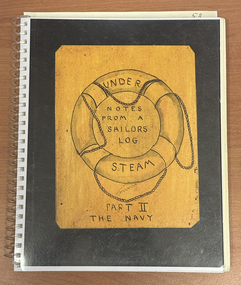
... House in Geelong. He remained with the Naval College until 1937 through its moves to Jervis Bay, NSW and then to Crib Point, Victoria training midshipmen according to the practices of the Royal Navy. In later life, CONDER produced two handwritten journals for his family illustrated with his own paintings and drawings. Two original sets were made. One remains in the family while the other is held by the Australian National Maritime Museum in Sydney. PMHPS hold several items...House in Geelong. He remained with the Naval College until 1937 through its moves to Jervis Bay, NSW and then to Crib Point, Victoria training midshipmen according to the practices of the Royal Navy. In later life, CONDER produced two handwritten journals for his family illustrated with his own paintings and drawings. Two original sets were made. One remains in the family while the other is held by the Australian National Maritime Museum in Sydney. PMHPS hold several items ...James Bryance CONDER (aka James Brycanne CONDER) Artist, poet and four-navy veteran, 1872 - 1954. In 1889 he served in the Merchant Marine Service sailing on the ships ‘Ellora’ and ‘Avenger’. in 1891, aged 19, he joined the Royal Navy in Australia serving on the flagship of the Australian Station, ‘HMS Orlando’, when it escorted ships of the new Australasian Auxiliary Squadron in coastal voyages. After serving 6 months he returned to family in Melbourne rather than sign on for 12 years. Instead he joined the Victorian Colonial Navy and was posted, in succession, to the ‘HMVS Cerberus’, ‘HMVS Nelson’ and the gunboat ‘HMVS Albert’. In 1896 he left the navy, married Victoria Agnes NIHILL and joined the Victorian Police Force. In 1904 CONDOR returned to the sea as part of the Commonwealth Naval Forces, an amalgamation of the colonial navies formed after federation and later becoming the Royal Australian Navy. On his first ship, ‘HMS Katoomba’, as bosun yeoman, he helped train new recruits. He later served on ‘HMS Challenger’ and ‘HMS Psyche’ which included voyages to Fiji, the New Hebrides, Singapore and New Zealand as well as regular cruises to Australian ports. In 1909, CONDER left the Navy and undertook shored-based civilian work until 1913 when he joined the Royal Australian Naval College at Osborne House in Geelong. He remained with the Naval College until 1937 through its moves to Jervis Bay, NSW and then to Crib Point, Victoria training midshipmen according to the practices of the Royal Navy. In later life, CONDER produced two handwritten journals for his family illustrated with his own paintings and drawings. Two original sets were made. One remains in the family while the other is held by the Australian National Maritime Museum in Sydney. PMHPS hold several items relating to James CONDER including photocopies of his journals ‘Notes from a Sailors Log - Under Canvas - Part I The Merchant Service’ (Cat No 2700.01) and ‘Notes from a Sailors Log - Under Steam - Part II The Navy’ (Cat No 2700.02), a photocopy of his Certificate of Service (Cat No 2700.03), a booklet of his life story (Cat No 2700.04) and several digital items (Cat No 2476.01 - 2476.09).A spiral bound photocopy of a sailor's log; dark red marbled covers; front cover has tan inset with title in and around a sketch of a lifebuoy. Under Steam - Part II The Navy. See Under Canvas - Part I The Merchant Service (Cat No 2700.01)transport - shipping, hmvs cerberus, james bryance conder, armed services - navy, ran - royal australian navy -
 Port Melbourne Historical & Preservation Society
Booklet, Robert Murphy, James Conder - A Maritime Life - 1872-1954, c. 2000
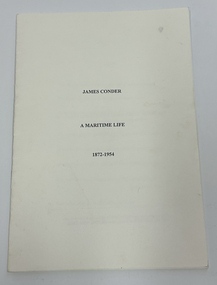
... House in Geelong. He remained with the Naval College until 1937 through its moves to Jervis Bay, NSW and then to Crib Point, Victoria training midshipmen according to the practices of the Royal Navy. In later life, CONDER produced two handwritten journals for his family illustrated with his own paintings and drawings. Two original sets were made. One remains in the family while the other is held by the Australian National Maritime Museum in Sydney. PMHPS hold several items...House in Geelong. He remained with the Naval College until 1937 through its moves to Jervis Bay, NSW and then to Crib Point, Victoria training midshipmen according to the practices of the Royal Navy. In later life, CONDER produced two handwritten journals for his family illustrated with his own paintings and drawings. Two original sets were made. One remains in the family while the other is held by the Australian National Maritime Museum in Sydney. PMHPS hold several items ...James Bryance CONDER (aka James Brycanne CONDER) Artist, poet and four-navy veteran, 1872 - 1954. In 1889 he served in the Merchant Marine Service sailing on the ships ‘Ellora’ and ‘Avenger’. in 1891, aged 19, he joined the Royal Navy in Australia serving on the flagship of the Australian Station, ‘HMS Orlando’, when it escorted ships of the new Australasian Auxiliary Squadron in coastal voyages. After serving 6 months he returned to family in Melbourne rather than sign on for 12 years. Instead he joined the Victorian Colonial Navy and was posted, in succession, to the ‘HMVS Cerberus’, ‘HMVS Nelson’ and the gunboat ‘HMVS Albert’. In 1896 he left the navy, married Victoria Agnes NIHILL and joined the Victorian Police Force. In 1904 CONDOR returned to the sea as part of the Commonwealth Naval Forces, an amalgamation of the colonial navies formed after federation and later becoming the Royal Australian Navy. On his first ship, ‘HMS Katoomba’, as bosun yeoman, he helped train new recruits. He later served on ‘HMS Challenger’ and ‘HMS Psyche’ which included voyages to Fiji, the New Hebrides, Singapore and New Zealand as well as regular cruises to Australian ports. In 1909, CONDER left the Navy and undertook shored-based civilian work until 1913 when he joined the Royal Australian Naval College at Osborne House in Geelong. He remained with the Naval College until 1937 through its moves to Jervis Bay, NSW and then to Crib Point, Victoria training midshipmen according to the practices of the Royal Navy. In later life, CONDER produced two handwritten journals for his family illustrated with his own paintings and drawings. Two original sets were made. One remains in the family while the other is held by the Australian National Maritime Museum in Sydney. PMHPS hold several items relating to James CONDER including photocopies of his journals ‘Notes from a Sailors Log - Under Canvas - Part I The Merchant Service’ (Cat No 2700.01) and ‘Notes from a Sailors Log - Under Steam - Part II The Navy’ (Cat No 2700.02), a photocopy of his Certificate of Service (Cat No 2700.03), a booklet of his life story (Cat No 2700.04) and several digital items (Cat No 2476.01 - 2476.09). 'James Conder - A Maritime Life - 1872-1954', A5 booklet 20 pp incl cover, 'developed by Robert Murphy for the many family members descended from James Conder'.armed services - navy, transport - shipping, police, arts and entertainment - visual arts, hmvs cerberus, james bryance conder, ran - royal australian navy, victorian colonial navy, victoria police, royal australian naval college, robert murphy, painting, royal naval squadron -
 Port Melbourne Historical & Preservation Society
Certificate - Photocopy, Certificate of Service, James Condor, Navy, 1904 - 1959
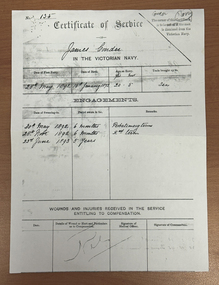
... House in Geelong. He remained with the Naval College until 1937 through its moves to Jervis Bay, NSW and then to Crib Point, Victoria training midshipmen according to the practices of the Royal Navy. In later life, CONDER produced two handwritten journals for his family illustrated with his own paintings and drawings. Two original sets were made. One remains in the family while the other is held by the Australian National Maritime Museum in Sydney. PMHPS hold several items...House in Geelong. He remained with the Naval College until 1937 through its moves to Jervis Bay, NSW and then to Crib Point, Victoria training midshipmen according to the practices of the Royal Navy. In later life, CONDER produced two handwritten journals for his family illustrated with his own paintings and drawings. Two original sets were made. One remains in the family while the other is held by the Australian National Maritime Museum in Sydney. PMHPS hold several items ...James Bryance CONDER (aka James Brycanne CONDER) Artist, poet and four-navy veteran, 1872 - 1954. In 1889 he served in the Merchant Marine Service sailing on the ships ‘Ellora’ and ‘Avenger’. in 1891, aged 19, he joined the Royal Navy in Australia serving on the flagship of the Australian Station, ‘HMS Orlando’, when it escorted ships of the new Australasian Auxiliary Squadron in coastal voyages. After serving 6 months he returned to family in Melbourne rather than sign on for 12 years. Instead he joined the Victorian Colonial Navy and was posted, in succession, to the ‘HMVS Cerberus’, ‘HMVS Nelson’ and the gunboat ‘HMVS Albert’. In 1896 he left the navy, married Victoria Agnes NIHILL and joined the Victorian Police Force. In 1904 CONDOR returned to the sea as part of the Commonwealth Naval Forces, an amalgamation of the colonial navies formed after federation and later becoming the Royal Australian Navy. On his first ship, ‘HMS Katoomba’, as bosun yeoman, he helped train new recruits. He later served on ‘HMS Challenger’ and ‘HMS Psyche’ which included voyages to Fiji, the New Hebrides, Singapore and New Zealand as well as regular cruises to Australian ports. In 1909, CONDER left the Navy and undertook shored-based civilian work until 1913 when he joined the Royal Australian Naval College at Osborne House in Geelong. He remained with the Naval College until 1937 through its moves to Jervis Bay, NSW and then to Crib Point, Victoria training midshipmen according to the practices of the Royal Navy. In later life, CONDER produced two handwritten journals for his family illustrated with his own paintings and drawings. Two original sets were made. One remains in the family while the other is held by the Australian National Maritime Museum in Sydney. PMHPS hold several items relating to James CONDER including photocopies of his journals ‘Notes from a Sailors Log - Under Canvas - Part I The Merchant Service’ (Cat No 2700.01) and ‘Notes from a Sailors Log - Under Steam - Part II The Navy’ (Cat No 2700.02), a photocopy of his Certificate of Service (Cat No 2700.03), a booklet of his life story (Cat No 2700.04) and several digital items (Cat No 2476.01 - 2476.09). Photocopy of James CONDER's Certificate of Servicearmed services - navy, transport - shipping, james bryance conder, ran - royal australian navy, royal naval squadron, victorian colonial navy, merchant navy, victoria police, police -
 Port Melbourne Historical & Preservation Society
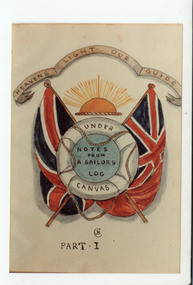
Photograph - Title page drawing from James Conder Journal Part I
... House in Geelong. He remained with the Naval College until 1937 through its moves to Jervis Bay, NSW and then to Crib Point, Victoria training midshipmen according to the practices of the Royal Navy. In later life, CONDER produced two handwritten journals for his family illustrated with his own paintings and drawings. Two original sets were made. One remains in the family while the other is held by the Australian National Maritime Museum in Sydney. PMHPS hold several items...House in Geelong. He remained with the Naval College until 1937 through its moves to Jervis Bay, NSW and then to Crib Point, Victoria training midshipmen according to the practices of the Royal Navy. In later life, CONDER produced two handwritten journals for his family illustrated with his own paintings and drawings. Two original sets were made. One remains in the family while the other is held by the Australian National Maritime Museum in Sydney. PMHPS hold several items ...James Bryance CONDER (aka James Brycanne CONDER) Artist, poet and four-navy veteran, 1872 - 1954. In 1889 he served in the Merchant Marine Service sailing on the ships ‘Ellora’ and ‘Avenger’. in 1891, aged 19, he joined the Royal Navy in Australia serving on the flagship of the Australian Station, ‘HMS Orlando’, when it escorted ships of the new Australasian Auxiliary Squadron in coastal voyages. After serving 6 months he returned to family in Melbourne rather than sign on for 12 years. Instead he joined the Victorian Colonial Navy and was posted, in succession, to the ‘HMVS Cerberus’, ‘HMVS Nelson’ and the gunboat ‘HMVS Albert’. In 1896 he left the navy, married Victoria Agnes NIHILL and joined the Victorian Police Force. In 1904 CONDOR returned to the sea as part of the Commonwealth Naval Forces, an amalgamation of the colonial navies formed after federation and later becoming the Royal Australian Navy. On his first ship, ‘HMS Katoomba’, as bosun yeoman, he helped train new recruits. He later served on ‘HMS Challenger’ and ‘HMS Psyche’ which included voyages to Fiji, the New Hebrides, Singapore and New Zealand as well as regular cruises to Australian ports. In 1909, CONDER left the Navy and undertook shored-based civilian work until 1913 when he joined the Royal Australian Naval College at Osborne House in Geelong. He remained with the Naval College until 1937 through its moves to Jervis Bay, NSW and then to Crib Point, Victoria training midshipmen according to the practices of the Royal Navy. In later life, CONDER produced two handwritten journals for his family illustrated with his own paintings and drawings. Two original sets were made. One remains in the family while the other is held by the Australian National Maritime Museum in Sydney. PMHPS hold several items relating to James CONDER including photocopies of his journals ‘Notes from a Sailors Log - Under Canvas - Part I The Merchant Service’ (Cat No 2700.01) and ‘Notes from a Sailors Log - Under Steam - Part II The Navy’ (Cat No 2700.02), a photocopy of his Certificate of Service (Cat No 2700.03), a booklet of his life story (Cat No 2700.04) and several digital items (Cat No 2476.01 - 2476.09).Colour digital photograph of the title page handdrawn by James GONDER from ‘Notes from a Sailors Log - Under Canvas - Part I The Merchant Service’ (Cat No 2700.01).armed services - navy, transport - shipping, james bryance conder, ran - royal australian navy, victorian colonial navy, royal australian naval college, merchant navy, royal naval squadron -
 Port Melbourne Historical & Preservation Society
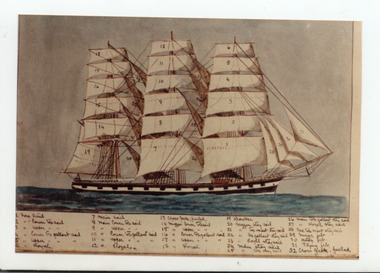
Photograph - Sailing ship showing sail configuration
... House in Geelong. He remained with the Naval College until 1937 through its moves to Jervis Bay, NSW and then to Crib Point, Victoria training midshipmen according to the practices of the Royal Navy. In later life, CONDER produced two handwritten journals for his family illustrated with his own paintings and drawings. Two original sets were made. One remains in the family while the other is held by the Australian National Maritime Museum in Sydney. PMHPS hold several items...House in Geelong. He remained with the Naval College until 1937 through its moves to Jervis Bay, NSW and then to Crib Point, Victoria training midshipmen according to the practices of the Royal Navy. In later life, CONDER produced two handwritten journals for his family illustrated with his own paintings and drawings. Two original sets were made. One remains in the family while the other is held by the Australian National Maritime Museum in Sydney. PMHPS hold several items ...James Bryance CONDER (aka James Brycanne CONDER) Artist, poet and four-navy veteran, 1872 - 1954. In 1889 he served in the Merchant Marine Service sailing on the ships ‘Ellora’ and ‘Avenger’. in 1891, aged 19, he joined the Royal Navy in Australia serving on the flagship of the Australian Station, ‘HMS Orlando’, when it escorted ships of the new Australasian Auxiliary Squadron in coastal voyages. After serving 6 months he returned to family in Melbourne rather than sign on for 12 years. Instead he joined the Victorian Colonial Navy and was posted, in succession, to the ‘HMVS Cerberus’, ‘HMVS Nelson’ and the gunboat ‘HMVS Albert’. In 1896 he left the navy, married Victoria Agnes NIHILL and joined the Victorian Police Force. In 1904 CONDOR returned to the sea as part of the Commonwealth Naval Forces, an amalgamation of the colonial navies formed after federation and later becoming the Royal Australian Navy. On his first ship, ‘HMS Katoomba’, as bosun yeoman, he helped train new recruits. He later served on ‘HMS Challenger’ and ‘HMS Psyche’ which included voyages to Fiji, the New Hebrides, Singapore and New Zealand as well as regular cruises to Australian ports. In 1909, CONDER left the Navy and undertook shored-based civilian work until 1913 when he joined the Royal Australian Naval College at Osborne House in Geelong. He remained with the Naval College until 1937 through its moves to Jervis Bay, NSW and then to Crib Point, Victoria training midshipmen according to the practices of the Royal Navy. In later life, CONDER produced two handwritten journals for his family illustrated with his own paintings and drawings. Two original sets were made. One remains in the family while the other is held by the Australian National Maritime Museum in Sydney. PMHPS hold several items relating to James CONDER including photocopies of his journals ‘Notes from a Sailors Log - Under Canvas - Part I The Merchant Service’ (Cat No 2700.01) and ‘Notes from a Sailors Log - Under Steam - Part II The Navy’ (Cat No 2700.02), a photocopy of his Certificate of Service (Cat No 2700.03), a booklet of his life story (Cat No 2700.04) and several digital items (Cat No 2476.01 - 2476.09).Colour digital photograph of a drawing by James CONDER showing the sail configuration for a sailing ship.armed services - navy, transport - shipping, james bryance conder, ran - royal australian navy, victorian colonial navy, royal australian naval college, merchant navy, royal naval squadron -
 Port Melbourne Historical & Preservation Society
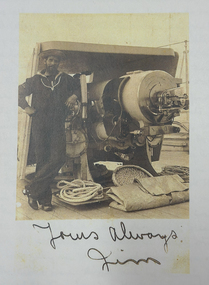
Photograph - James CONDER in uniform, c. 1905
... House in Geelong. He remained with the Naval College until 1937 through its moves to Jervis Bay, NSW and then to Crib Point, Victoria training midshipmen according to the practices of the Royal Navy. In later life, CONDER produced two handwritten journals for his family illustrated with his own paintings and drawings. Two original sets were made. One remains in the family while the other is held by the Australian National Maritime Museum in Sydney. PMHPS hold several items...House in Geelong. He remained with the Naval College until 1937 through its moves to Jervis Bay, NSW and then to Crib Point, Victoria training midshipmen according to the practices of the Royal Navy. In later life, CONDER produced two handwritten journals for his family illustrated with his own paintings and drawings. Two original sets were made. One remains in the family while the other is held by the Australian National Maritime Museum in Sydney. PMHPS hold several items ...James Bryance CONDER (aka James Brycanne CONDER) Artist, poet and four-navy veteran, 1872 - 1954. In 1889 he served in the Merchant Marine Service sailing on the ships ‘Ellora’ and ‘Avenger’. in 1891, aged 19, he joined the Royal Navy in Australia serving on the flagship of the Australian Station, ‘HMS Orlando’, when it escorted ships of the new Australasian Auxiliary Squadron in coastal voyages. After serving 6 months he returned to family in Melbourne rather than sign on for 12 years. Instead he joined the Victorian Colonial Navy and was posted, in succession, to the ‘HMVS Cerberus’, ‘HMVS Nelson’ and the gunboat ‘HMVS Albert’. In 1896 he left the navy, married Victoria Agnes NIHILL and joined the Victorian Police Force. In 1904 CONDOR returned to the sea as part of the Commonwealth Naval Forces, an amalgamation of the colonial navies formed after federation and later becoming the Royal Australian Navy. On his first ship, ‘HMS Katoomba’, as bosun yeoman, he helped train new recruits. He later served on ‘HMS Challenger’ and ‘HMS Psyche’ which included voyages to Fiji, the New Hebrides, Singapore and New Zealand as well as regular cruises to Australian ports. In 1909, CONDER left the Navy and undertook shored-based civilian work until 1913 when he joined the Royal Australian Naval College at Osborne House in Geelong. He remained with the Naval College until 1937 through its moves to Jervis Bay, NSW and then to Crib Point, Victoria training midshipmen according to the practices of the Royal Navy. In later life, CONDER produced two handwritten journals for his family illustrated with his own paintings and drawings. Two original sets were made. One remains in the family while the other is held by the Australian National Maritime Museum in Sydney. PMHPS hold several items relating to James CONDER including photocopies of his journals ‘Notes from a Sailors Log - Under Canvas - Part I The Merchant Service’ (Cat No 2700.01) and ‘Notes from a Sailors Log - Under Steam - Part II The Navy’ (Cat No 2700.02), a photocopy of his Certificate of Service (Cat No 2700.03), a booklet of his life story (Cat No 2700.04) and several digital items (Cat No 2476.01 - 2476.09).Sepia digital photograph of James CONDER in uniform, sent to family with greeting 'Yours Always, Jim'. This photo is included in the early pages of CONDER's journal ‘Notes from a Sailors Log - Under Steam - Part II The Navy’ (Cat No 2700.02)."Yours always / Jim"armed services - navy, transport - shipping, james bryance conder, ran - royal australian navy, victorian colonial navy -
 Port Melbourne Historical & Preservation Society
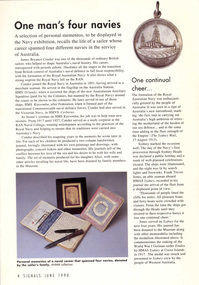
Magazine - Article, One Man's Four Navies
... House in Geelong. He remained with the Naval College until 1937 through its moves to Jervis Bay, NSW and then to Crib Point, Victoria training midshipmen according to the practices of the Royal Navy. In later life, CONDER produced two handwritten journals for his family illustrated with his own paintings and drawings. Two original sets were made. One remains in the family while the other is held by the Australian National Maritime Museum in Sydney. PMHPS hold several items...House in Geelong. He remained with the Naval College until 1937 through its moves to Jervis Bay, NSW and then to Crib Point, Victoria training midshipmen according to the practices of the Royal Navy. In later life, CONDER produced two handwritten journals for his family illustrated with his own paintings and drawings. Two original sets were made. One remains in the family while the other is held by the Australian National Maritime Museum in Sydney. PMHPS hold several items ...James Bryance CONDER (aka James Brycanne CONDER) Artist, poet and four-navy veteran, 1872 - 1954. In 1889 he served in the Merchant Marine Service sailing on the ships ‘Ellora’ and ‘Avenger’. in 1891, aged 19, he joined the Royal Navy in Australia serving on the flagship of the Australian Station, ‘HMS Orlando’, when it escorted ships of the new Australasian Auxiliary Squadron in coastal voyages. After serving 6 months he returned to family in Melbourne rather than sign on for 12 years. Instead he joined the Victorian Colonial Navy and was posted, in succession, to the ‘HMVS Cerberus’, ‘HMVS Nelson’ and the gunboat ‘HMVS Albert’. In 1896 he left the navy, married Victoria Agnes NIHILL and joined the Victorian Police Force. In 1904 CONDOR returned to the sea as part of the Commonwealth Naval Forces, an amalgamation of the colonial navies formed after federation and later becoming the Royal Australian Navy. On his first ship, ‘HMS Katoomba’, as bosun yeoman, he helped train new recruits. He later served on ‘HMS Challenger’ and ‘HMS Psyche’ which included voyages to Fiji, the New Hebrides, Singapore and New Zealand as well as regular cruises to Australian ports. In 1909, CONDER left the Navy and undertook shored-based civilian work until 1913 when he joined the Royal Australian Naval College at Osborne House in Geelong. He remained with the Naval College until 1937 through its moves to Jervis Bay, NSW and then to Crib Point, Victoria training midshipmen according to the practices of the Royal Navy. In later life, CONDER produced two handwritten journals for his family illustrated with his own paintings and drawings. Two original sets were made. One remains in the family while the other is held by the Australian National Maritime Museum in Sydney. PMHPS hold several items relating to James CONDER including photocopies of his journals ‘Notes from a Sailors Log - Under Canvas - Part I The Merchant Service’ (Cat No 2700.01) and ‘Notes from a Sailors Log - Under Steam - Part II The Navy’ (Cat No 2700.02), a photocopy of his Certificate of Service (Cat No 2700.03), a booklet of his life story (Cat No 2700.04) and several digital items (Cat No 2476.01 - 2476.09).Article, 'One Man's Four Navies', about James CONDER from National Maritime Museum's 'Signals' magazine, Issue 12, 1 June 1990. armed services - navy, transport - shipping, james bryance conder, ran - royal australian navy, royal naval squadron, victorian colonial navy -
 Port Melbourne Historical & Preservation Society
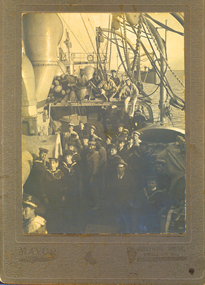
Photograph - Crew of the Katoomba, 1904
... House in Geelong. He remained with the Naval College until 1937 through its moves to Jervis Bay, NSW and then to Crib Point, Victoria training midshipmen according to the practices of the Royal Navy. In later life, CONDER produced two handwritten journals for his family illustrated with his own paintings and drawings. Two original sets were made. One remains in the family while the other is held by the Australian National Maritime Museum in Sydney. PMHPS hold several items...House in Geelong. He remained with the Naval College until 1937 through its moves to Jervis Bay, NSW and then to Crib Point, Victoria training midshipmen according to the practices of the Royal Navy. In later life, CONDER produced two handwritten journals for his family illustrated with his own paintings and drawings. Two original sets were made. One remains in the family while the other is held by the Australian National Maritime Museum in Sydney. PMHPS hold several items ...James Bryance CONDER (aka James Brycanne CONDER) Artist, poet and four-navy veteran, 1872 - 1954. In 1889 he served in the Merchant Marine Service sailing on the ships ‘Ellora’ and ‘Avenger’. in 1891, aged 19, he joined the Royal Navy in Australia serving on the flagship of the Australian Station, ‘HMS Orlando’, when it escorted ships of the new Australasian Auxiliary Squadron in coastal voyages. After serving 6 months he returned to family in Melbourne rather than sign on for 12 years. Instead he joined the Victorian Colonial Navy and was posted, in succession, to the ‘HMVS Cerberus’, ‘HMVS Nelson’ and the gunboat ‘HMVS Albert’. In 1896 he left the navy, married Victoria Agnes NIHILL and joined the Victorian Police Force. In 1904 CONDOR returned to the sea as part of the Commonwealth Naval Forces, an amalgamation of the colonial navies formed after federation and later becoming the Royal Australian Navy. On his first ship, ‘HMS Katoomba’, as bosun yeoman, he helped train new recruits. He later served on ‘HMS Challenger’ and ‘HMS Psyche’ which included voyages to Fiji, the New Hebrides, Singapore and New Zealand as well as regular cruises to Australian ports. In 1909, CONDER left the Navy and undertook shored-based civilian work until 1913 when he joined the Royal Australian Naval College at Osborne House in Geelong. He remained with the Naval College until 1937 through its moves to Jervis Bay, NSW and then to Crib Point, Victoria training midshipmen according to the practices of the Royal Navy. In later life, CONDER produced two handwritten journals for his family illustrated with his own paintings and drawings. Two original sets were made. One remains in the family while the other is held by the Australian National Maritime Museum in Sydney. PMHPS hold several items relating to James CONDER including photocopies of his journals ‘Notes from a Sailors Log - Under Canvas - Part I The Merchant Service’ (Cat No 2700.01) and ‘Notes from a Sailors Log - Under Steam - Part II The Navy’ (Cat No 2700.02), a photocopy of his Certificate of Service (Cat No 2700.03), a booklet of his life story (Cat No 2700.04) and several digital items (Cat No 2476.01 - 2476.09). Digital copy of b&w photograph of the crew of the 'Katoomba'armed services - navy, hms katoomba, james bryance conder, ran - royal australian navy -
 Port Melbourne Historical & Preservation Society
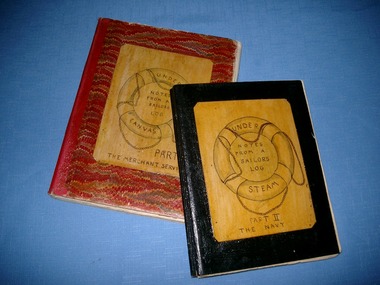
Photograph - James CONDER's journals, Glen Stuart, Aug 2008
... House in Geelong. He remained with the Naval College until 1937 through its moves to Jervis Bay, NSW and then to Crib Point, Victoria training midshipmen according to the practices of the Royal Navy. In later life, CONDER produced two handwritten journals for his family illustrated with his own paintings and drawings. Two original sets were made. One remains in the family while the other is held by the Australian National Maritime Museum in Sydney. PMHPS hold several items...House in Geelong. He remained with the Naval College until 1937 through its moves to Jervis Bay, NSW and then to Crib Point, Victoria training midshipmen according to the practices of the Royal Navy. In later life, CONDER produced two handwritten journals for his family illustrated with his own paintings and drawings. Two original sets were made. One remains in the family while the other is held by the Australian National Maritime Museum in Sydney. PMHPS hold several items ...James Bryance CONDER (aka James Brycanne CONDER) Artist, poet and four-navy veteran, 1872 - 1954. In 1889 he served in the Merchant Marine Service sailing on the ships ‘Ellora’ and ‘Avenger’. in 1891, aged 19, he joined the Royal Navy in Australia serving on the flagship of the Australian Station, ‘HMS Orlando’, when it escorted ships of the new Australasian Auxiliary Squadron in coastal voyages. After serving 6 months he returned to family in Melbourne rather than sign on for 12 years. Instead he joined the Victorian Colonial Navy and was posted, in succession, to the ‘HMVS Cerberus’, ‘HMVS Nelson’ and the gunboat ‘HMVS Albert’. In 1896 he left the navy, married Victoria Agnes NIHILL and joined the Victorian Police Force. In 1904 CONDOR returned to the sea as part of the Commonwealth Naval Forces, an amalgamation of the colonial navies formed after federation and later becoming the Royal Australian Navy. On his first ship, ‘HMS Katoomba’, as bosun yeoman, he helped train new recruits. He later served on ‘HMS Challenger’ and ‘HMS Psyche’ which included voyages to Fiji, the New Hebrides, Singapore and New Zealand as well as regular cruises to Australian ports. In 1909, CONDER left the Navy and undertook shored-based civilian work until 1913 when he joined the Royal Australian Naval College at Osborne House in Geelong. He remained with the Naval College until 1937 through its moves to Jervis Bay, NSW and then to Crib Point, Victoria training midshipmen according to the practices of the Royal Navy. In later life, CONDER produced two handwritten journals for his family illustrated with his own paintings and drawings. Two original sets were made. One remains in the family while the other is held by the Australian National Maritime Museum in Sydney. PMHPS hold several items relating to James CONDER including photocopies of his journals ‘Notes from a Sailors Log - Under Canvas - Part I The Merchant Service’ (Cat No 2700.01) and ‘Notes from a Sailors Log - Under Steam - Part II The Navy’ (Cat No 2700.02), a photocopy of his Certificate of Service (Cat No 2700.03), a booklet of his life story (Cat No 2700.04) and several digital items (Cat No 2476.01 - 2476.09).Colour digital photograph of of of the original two sets of James CONDER's handwritten and illustrated journals made for his family, '‘Notes from a Sailors Log - Under Canvas - Part I The Merchant Service’ (Cat No 2700.01) and ‘Notes from a Sailors Log - Under Steam - Part II The Navy’ (Cat No 2700.02). Displayed in 'Navy in Port' exhibition Aug/Sept 2008armed services - navy, transport - shipping, james bryance conder, merchant navy, royal naval squadron, victorian colonial navy, ran - royal australian navy -
 Port Melbourne Historical & Preservation Society
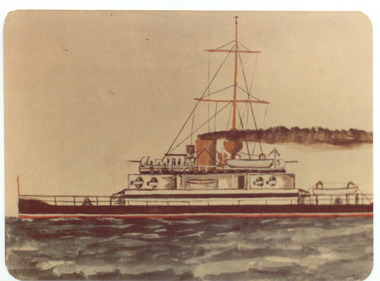
Photograph - HMVS Cerberus by James CONDER
... House in Geelong. He remained with the Naval College until 1937 through its moves to Jervis Bay, NSW and then to Crib Point, Victoria training midshipmen according to the practices of the Royal Navy. In later life, CONDER produced two handwritten journals for his family illustrated with his own paintings and drawings. Two original sets were made. One remains in the family while the other is held by the Australian National Maritime Museum in Sydney. PMHPS hold several items...House in Geelong. He remained with the Naval College until 1937 through its moves to Jervis Bay, NSW and then to Crib Point, Victoria training midshipmen according to the practices of the Royal Navy. In later life, CONDER produced two handwritten journals for his family illustrated with his own paintings and drawings. Two original sets were made. One remains in the family while the other is held by the Australian National Maritime Museum in Sydney. PMHPS hold several items ...James Bryance CONDER (aka James Brycanne CONDER) Artist, poet and four-navy veteran, 1872 - 1954. In 1889 he served in the Merchant Marine Service sailing on the ships ‘Ellora’ and ‘Avenger’. in 1891, aged 19, he joined the Royal Navy in Australia serving on the flagship of the Australian Station, ‘HMS Orlando’, when it escorted ships of the new Australasian Auxiliary Squadron in coastal voyages. After serving 6 months he returned to family in Melbourne rather than sign on for 12 years. Instead he joined the Victorian Colonial Navy and was posted, in succession, to the ‘HMVS Cerberus’, ‘HMVS Nelson’ and the gunboat ‘HMVS Albert’. In 1896 he left the navy, married Victoria Agnes NIHILL and joined the Victorian Police Force. In 1904 CONDOR returned to the sea as part of the Commonwealth Naval Forces, an amalgamation of the colonial navies formed after federation and later becoming the Royal Australian Navy. On his first ship, ‘HMS Katoomba’, as bosun yeoman, he helped train new recruits. He later served on ‘HMS Challenger’ and ‘HMS Psyche’ which included voyages to Fiji, the New Hebrides, Singapore and New Zealand as well as regular cruises to Australian ports. In 1909, CONDER left the Navy and undertook shored-based civilian work until 1913 when he joined the Royal Australian Naval College at Osborne House in Geelong. He remained with the Naval College until 1937 through its moves to Jervis Bay, NSW and then to Crib Point, Victoria training midshipmen according to the practices of the Royal Navy. In later life, CONDER produced two handwritten journals for his family illustrated with his own paintings and drawings. Two original sets were made. One remains in the family while the other is held by the Australian National Maritime Museum in Sydney. PMHPS hold several items relating to James CONDER including photocopies of his journals ‘Notes from a Sailors Log - Under Canvas - Part I The Merchant Service’ (Cat No 2700.01) and ‘Notes from a Sailors Log - Under Steam - Part II The Navy’ (Cat No 2700.02), a photocopy of his Certificate of Service (Cat No 2700.03), a booklet of his life story (Cat No 2700.04) and several digital items (Cat No 2476.01 - 2476.09).Colour digital photograph of a drawing of HMVS Cerberus by James CONDER.armed services - navy, transport - shipping, james bryance conder, ran - royal australian navy, victorian colonial navy, royal australian naval college, merchant navy, hmvs cerberus, royal naval squadron -
 Port Melbourne Historical & Preservation Society
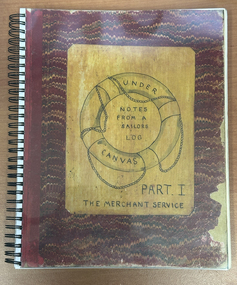
Document - James CONDER Journal, James Brycanne Conder, NOTES FROM A SAILORS LOG - UNDER CANVAS - PART I THE MERCHANT SERVICE
... House in Geelong. He remained with the Naval College until 1937 through its moves to Jervis Bay, NSW and then to Crib Point, Victoria training midshipmen according to the practices of the Royal Navy. In later life, CONDER produced two handwritten journals for his family illustrated with his own paintings and drawings. Two original sets were made. One remains in the family while the other is held by the Australian National Maritime Museum in Sydney. PMHPS hold several items...House in Geelong. He remained with the Naval College until 1937 through its moves to Jervis Bay, NSW and then to Crib Point, Victoria training midshipmen according to the practices of the Royal Navy. In later life, CONDER produced two handwritten journals for his family illustrated with his own paintings and drawings. Two original sets were made. One remains in the family while the other is held by the Australian National Maritime Museum in Sydney. PMHPS hold several items ...James Bryance CONDER (aka James Brycanne CONDER) Artist, poet and four-navy veteran, 1872 - 1954. In 1889 he served in the Merchant Marine Service sailing on the ships ‘Ellora’ and ‘Avenger’. in 1891, aged 19, he joined the Royal Navy in Australia serving on the flagship of the Australian Station, ‘HMS Orlando’, when it escorted ships of the new Australasian Auxiliary Squadron in coastal voyages. After serving 6 months he returned to family in Melbourne rather than sign on for 12 years. Instead he joined the Victorian Colonial Navy and was posted, in succession, to the ‘HMVS Cerberus’, ‘HMVS Nelson’ and the gunboat ‘HMVS Albert’. In 1896 he left the navy, married Victoria Agnes NIHILL and joined the Victorian Police Force. In 1904 CONDOR returned to the sea as part of the Commonwealth Naval Forces, an amalgamation of the colonial navies formed after federation and later becoming the Royal Australian Navy. On his first ship, ‘HMS Katoomba’, as bosun yeoman, he helped train new recruits. He later served on ‘HMS Challenger’ and ‘HMS Psyche’ which included voyages to Fiji, the New Hebrides, Singapore and New Zealand as well as regular cruises to Australian ports. In 1909, CONDER left the Navy and undertook shored-based civilian work until 1913 when he joined the Royal Australian Naval College at Osborne House in Geelong. He remained with the Naval College until 1937 through its moves to Jervis Bay, NSW and then to Crib Point, Victoria training midshipmen according to the practices of the Royal Navy. In later life, CONDER produced two handwritten journals for his family illustrated with his own paintings and drawings. Two original sets were made. One remains in the family while the other is held by the Australian National Maritime Museum in Sydney. PMHPS hold several items relating to James CONDER including photocopies of his journals ‘Notes from a Sailors Log - Under Canvas - Part I The Merchant Service’ (Cat No 2700.01) and ‘Notes from a Sailors Log - Under Steam - Part II The Navy’ (Cat No 2700.02), a photocopy of his Certificate of Service (Cat No 2700.03), a booklet of his life story (Cat No 2700.04) and several digital items (Cat No 2476.01 - 2476.09).A spiral bound photocopy of a sailor's log; dark red marbled covers; front cover has tan inset with title in and around a sketch of a lifebuoy. Under Canvas - Part I The Merchant Service. See Under Steam - Part II The Navy (Cat No 2700.02)transport - shipping, james bryance conder, merchant navy -
 Heyfield & Districts Historical Society
Bill spike, George Edward Barraclough (1906-1981), 1940s-1950s
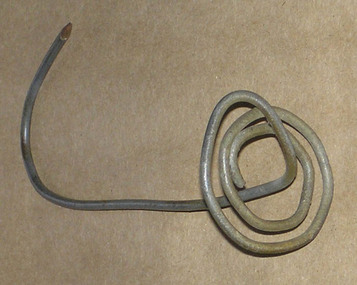
... hold houses together. Referring to "No 8 fencing wire" became a type of Australian shorthand for bush ingenuity. It is no longer available, being replaced by 4mm high tensile wire. This item ...George Barraclough (1907-1981), a landholder from north of Licola, in the Victorian Great Divide, made a number of these spikes, as needed. As accounts were paid, receipts were pasted to the account, the account was impaled on the spike, and the spike was rehung on a nail on a wall stud. All transactions dealing with money were filed in this manner, as an orderly way of tracking items that were usually remotely ordered and delivered on the mail car. George Barraclough used No8 in a number of creative ways, and his durable and untilitarion toasting forks are still in family use today. After George died in 1981 the spikes with their accounts passed to his daughter Linda Barraclough, who archived the accounts and later made copies available for study. Those accounts form a record of the businesses of Heyfield for 1940s and 1950s.This bill hook is of historical significance as a survivor of bush ingenuity and bush filing systems. Commercially made bill spikes were in common use in offices, where they usually consisted of a heavy metal base with an upright pointed piece of wire. Number 8 fencing wire was an important and readily accessible repair commodity for rural dwellers, and achieved iconic status as the most generic method of repair for cars broken down (resort to nearest fence) and was even used to hold houses together. Referring to "No 8 fencing wire" became a type of Australian shorthand for bush ingenuity. It is no longer available, being replaced by 4mm high tensile wire. This item is important both as an example of inventive use of No8 wire, and also as an example of the bush filing methods in use in the 1940s and 1950s. No 8 fencing wire holds a similar position in New Zealand - see Wikipedia NZ at http://en.wikipedia.org/wiki/Number_8_wire A section of number 8 fencing wire twisted to form a bill spike. It has a rounded.base made from several twists of wire in a flat platform, with the remaining wire rising from the centre to form a stem that terminates in a hook with a sharpened point.wire, bush ingenuity, barraclough, licola north -
 Warrnambool and District Historical Society Inc.
Household, Glass Jug, Early 20th century
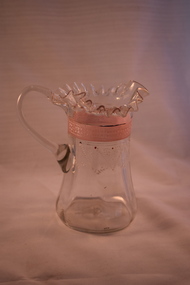
... hold water or cordial. It could also have been used as a vase. There may have been a set of glass tumblers to match the jug. This vase is retained as an excellent example of a jug used in a household in the past. It is a timeless piece and would grace any table in a house today Household Items ...This jug is decorative and attractive and may have been used on special occasions to hold water or cordial. It could also have been used as a vase. There may have been a set of glass tumblers to match the jug. This vase is retained as an excellent example of a jug used in a household in the past. It is a timeless piece and would grace any table in a house todayThis is a glass jug with a round base and a body tapering slightly to a fluted rim and opening. The handle is clear glass. The upper section of the jug has a white raised decorated pattern with a band of pink raised decorations above it. There are six small red dots in the white decorated section. household items, history of warrnambool -
Warrnambool and District Historical Society Inc.
Administrative record - Customer cash book, Swinton and Sons Mrs. Brass South Warrnambool, 1895
... A perusal of the items bought suggest they were not just for a house hold but possibly for a small general store. ...A perusal of the items bought suggest they were not just for a house hold but possibly for a small general store. ...This note book contains a list of items bought from Swinton and Sons, Warrnambool from April to October 1895 . The buyer is Mrs. Brass of South Warrnambool. A perusal of the items bought suggest they were not just for a house hold but possibly for a small general store. The Brass family is a well known one in South Warrnambool. John Brass, a pioneer settler, was a lighterman and boatman at the harbour. He was accidentally drowned in 1895. The firm of William Swinton and Sons was a prominent one in Warrnambool established in 1865.This item is of some interest but needs further researchThis is a small notebook with a navy cloth cover and a hand written label on the front. The pages contain printed red lines and hand written entries in black ink. The pages are detached from the cover and there are many blank pages and one torn page.brass family warrnambool, swinton stores warrnambool -
 Robin Boyd Foundation
Decorative object - Model of Tower Hill Natural History Centre, 2017
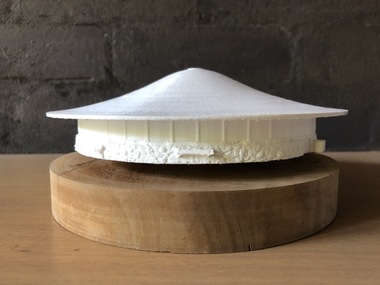
... The Archive also holds some of the original architectural drawings (item PL136-P145). This model was created for the House of Ideas exhibition, made by a University of Melbourne, Melbourne School of Design, Masters student....The Archive also holds some of the original architectural drawings (item PL136-P145). This model was created for the House of Ideas exhibition, made by a University of Melbourne, Melbourne School of Design, Masters student. robin boyd 3D timber model of the Tower Hill landscape Decorative object Model of Tower Hill Natural History Centre ...This is a model of the Robin Boyd-designed Tower Hill Natural History Centre, Tower Hill, near Warrnambool, Victoria (1963). It was opened shortly after Robin Boyd died in November 1971. The Archive also holds some of the original architectural drawings (item PL136-P145). This model was created for the House of Ideas exhibition, made by a University of Melbourne, Melbourne School of Design, Masters student.3D timber model of the Tower Hill landscaperobin boyd -
 Robin Boyd Foundation
Document - Script, Robin Boyd, The Flying Dogtor. Episode 6 Rain, 1963
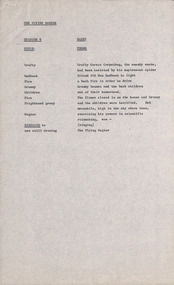
... house and Granny and the children were terrified. But meanwhile, high in the sky above them, exercising his powers in scientific rainmaking, was The Flying Dogtor. The sky was filled with rain and it put out the fire. Crafty Carson Carpetbag and Old Man Redback, with the help of Elvis Evil Eagle, got a hold of the rainmaking powder and schemed to start a flood. The Flying Dogtor" series was broadcast on Australian Television Network (later becoming the Seven Network) between February and April 1964 (see item ...The flames closed in on the house and Granny and the children were terrified. But meanwhile, high in the sky above them, exercising his powers in scientific rainmaking, was The Flying Dogtor. The sky was filled with rain and it put out the fire. Crafty Carson Carpetbag and Old Man Redback, with the help of Elvis Evil Eagle, got a hold of the rainmaking powder and schemed to start a flood.The Flying Dogtor" series was broadcast on Australian Television Network (later becoming the Seven Network) between February and April 1964 (see item D254 for schedule).Typewritten, carbon copy, foolscap, 5 pagesthe flying dogtor, robin boyd, crawford productions, manuscript
