
Showing 7 items matching "how to use this source book"
-
 Moorabbin Air Museum
Book - Aircraft of World War II, The Source Book Of World War II Aircraft
... How to use this source book...Aircraft of World War II How to use this source book Listing of aircraft Full listing of all aircraft used in WWII by all countries, circa 1986 The Source Book Of World War II Aircraft Book Aircraft of World War II ...Full listing of all aircraft used in WWII by all countries, circa 1986non-fictionFull listing of all aircraft used in WWII by all countries, circa 1986how to use this source book, listing of aircraft -
 Flagstaff Hill Maritime Museum and Village
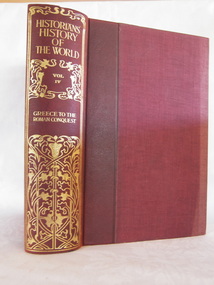
Book - Reference Book/History, Henry Smith Williams, The Historians History of the World Vol 4 set 1 - Edited by Henry Smith Williams L.L.D. Published by “The Times” 1908, 1908
... using original source texts rather than a single author’s voice. All the volumes are significant for their cross-cultural synthesis as it serves the vital link between classical antiquity and the medieval world. The set of volumes are a "time capsule" of how Edwardian scholars viewed the "darkening" of civilisation. It reflects the 1908 fascination with imperial overstretch a topic very relevant to the British Empire at the time of publication. (For more information on the Pattison Collection and the Mechanics Institute visit) https://victoriancollections.net.au/items/5580c7e72162f114d8b758db flagstaff hill warrnambool shipwrecked-coast flagstaff-hill flagstaff-hill-maritime-museum maritime-museum book ...The 1908 edition of The Historians' History of the World is a monumental work of Edwardian scholarship, representing a specific era of "universal history" where the goal was to synthesise all human knowledge into a single narrative. Volume 4 is a deep dive into the later history of Ancient Greece, specifically focusing on the period from the aftermath of the Peloponnesian War through to the Roman conquest. This volume bears the subtitle "Greece to the Roman Conquest." It covers several pivotal shifts in power regards the post war struggle (404 to 374 BC.)Book is part of a 25 volume set with red cloth bindings and gold filigree design to rib.non-fictionThe 1908 edition of The Historians' History of the World is a monumental work of Edwardian scholarship, representing a specific era of "universal history" where the goal was to synthesise all human knowledge into a single narrative. Volume 4 is a deep dive into the later history of Ancient Greece, specifically focusing on the period from the aftermath of the Peloponnesian War through to the Roman conquest. This volume bears the subtitle "Greece to the Roman Conquest." It covers several pivotal shifts in power regards the post war struggle (404 to 374 BC.)flagstaff hill, warrnambool, shipwrecked-coast, flagstaff-hill, flagstaff-hill-maritime-museum, maritime-museum, book, the historians history of the world vol 4 set 1, henry smith williams -
 Warrnambool and District Historical Society Inc.
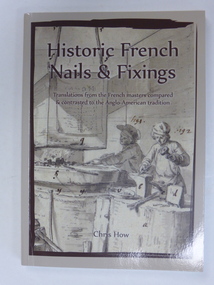
Book, Historic French Nails and Fixings, 2017
... book is of interest because it was written by a local Warrnambool resident, one who has researched and studied many buildings in Warrnambool and district through an examination of the building materials used, especially the nails and fixings. Chris How History of Nails History of Warrnambool This is a soft cover book of 126 pages The cover is grey with a grey, black and white sketch on the front cover and a colour photograph on the back page. The book has contents pages, a list of tables and figures, a list of the source ...This book contains information on historic French nails and fixings, being translations from the French Masters compared and contrasted to the Anglo-American tradition. It has been compiled by Chris How, a retired Civil/Structural Engineer who lives in Warrnambool, Victoria. He has been involved with conservation and heritage buildings for half a century and it was working with pioneer materials and techniques that first stimulated his interest in historic nails. He has completed a Master’s degree in England and made a special study of French and Germanic framing and its spread across Europe. This involved similar studies in Denmark, Belgium, the Baltic countries and Australia. This book is of interest because it was written by a local Warrnambool resident, one who has researched and studied many buildings in Warrnambool and district through an examination of the building materials used, especially the nails and fixings. This is a soft cover book of 126 pages The cover is grey with a grey, black and white sketch on the front cover and a colour photograph on the back page. The book has contents pages, a list of tables and figures, a list of the source of illustrations and credits, a foreword, acknowledgements, a preface, eight chapters, a glossary of terms and appendices. There are many black and white and colour illustrations. chris how, history of nails, history of warrnambool -
 Monbulk RSL Sub Branch
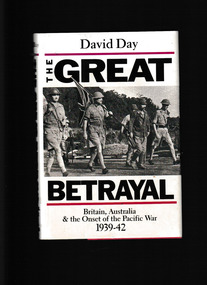
Book, Angus and Robertson, The great betrayal : Britain, Australia and the onset of the Pacific War, 1939-42, 1988
... using her to divert and delay the Japanese thrust westwards towards India and the Middle East...[inside front and back cover]. This compelling and controversial book reveals how in 1942 Churchill, in an attempt to delay an attack on India, left Australia at the mercy of the Japanese by trying to prevent American forces being sent to the Pacific. Drawing on a wealth of sources ...The ignominious fall of Singapore to the Japanese in February 1942 marked the climax of the greatese crisis in Anglo-Australian relations - Britain's inexcusable betrayal of Australia in time of war. Until World War II, Australia had always rushed to the Imperial colours, confident that just as Australian blood was shed for the Mother Country, so too would British Blood be in the defence of Australia. But in 1939 Australia lay wide open to attack, her defences practically non-existent, and she was reluctant to commit her meagre forces overseas. Her objections were overcome, however, by an unequivocal British promise to protect her from a Japanese attack, so she sent troops and ships to the northern hemisphere, leaving Singapore naval base as the cornerstone of her own defence policy. Britain's promise to defend Australia was made with little concern for the possibility of its ever being implemented and, certainly, in 1939 a direct threat to Australia looked unlikely. During 1940 and 1941, however, the threat from Japan increased, while Britain's ability to counter it weakened. Yet the British government resisted calls to strengthen the Far Eastern Defence, continually reassuring Australia that the Japanese threat would not materialize and that, even if it did, Britain could still contain it. Then the inconceivable happened: in December 1941 the Japanese decimated the US fleet at Pearl Harbour and in early 1942 took Singapore, leaving Australia suddenly in immediate peril. But the oft-repeated promise to defend the Dominion came to nought. And, at the most crucial time in Australia's history, Churchill tried to prevent substantial American forces from being sent to the pacific, and even attempted to delay the repatriation of Australian troops needed for defence. Thus Britain deliberately left Australia at the mercy of Japan, using her to divert and delay the Japanese thrust westwards towards India and the Middle East...[inside front and back cover]. This compelling and controversial book reveals how in 1942 Churchill, in an attempt to delay an attack on India, left Australia at the mercy of the Japanese by trying to prevent American forces being sent to the Pacific. Drawing on a wealth of sources, including many previously unavailable to historians, David Day exposes a saga of empty promises and asks serious questions about the past and future relationship between Britain and Australia. Collapse summaryIndex, p.388.non-fictionThe ignominious fall of Singapore to the Japanese in February 1942 marked the climax of the greatese crisis in Anglo-Australian relations - Britain's inexcusable betrayal of Australia in time of war. Until World War II, Australia had always rushed to the Imperial colours, confident that just as Australian blood was shed for the Mother Country, so too would British Blood be in the defence of Australia. But in 1939 Australia lay wide open to attack, her defences practically non-existent, and she was reluctant to commit her meagre forces overseas. Her objections were overcome, however, by an unequivocal British promise to protect her from a Japanese attack, so she sent troops and ships to the northern hemisphere, leaving Singapore naval base as the cornerstone of her own defence policy. Britain's promise to defend Australia was made with little concern for the possibility of its ever being implemented and, certainly, in 1939 a direct threat to Australia looked unlikely. During 1940 and 1941, however, the threat from Japan increased, while Britain's ability to counter it weakened. Yet the British government resisted calls to strengthen the Far Eastern Defence, continually reassuring Australia that the Japanese threat would not materialize and that, even if it did, Britain could still contain it. Then the inconceivable happened: in December 1941 the Japanese decimated the US fleet at Pearl Harbour and in early 1942 took Singapore, leaving Australia suddenly in immediate peril. But the oft-repeated promise to defend the Dominion came to nought. And, at the most crucial time in Australia's history, Churchill tried to prevent substantial American forces from being sent to the pacific, and even attempted to delay the repatriation of Australian troops needed for defence. Thus Britain deliberately left Australia at the mercy of Japan, using her to divert and delay the Japanese thrust westwards towards India and the Middle East...[inside front and back cover]. This compelling and controversial book reveals how in 1942 Churchill, in an attempt to delay an attack on India, left Australia at the mercy of the Japanese by trying to prevent American forces being sent to the Pacific. Drawing on a wealth of sources, including many previously unavailable to historians, David Day exposes a saga of empty promises and asks serious questions about the past and future relationship between Britain and Australia. Collapse summary worls war 1939-1945 - diplomatic history, australia - foreign relations - britain -
 Surrey Hills Historical Society Collection
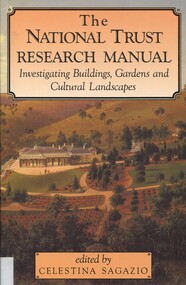
Book, The National Trust Research Manual: investigating buildings, gardens and cultural landscapes, 1992
... This book explains how to use the many documentary sources that are available, such as rate books, directories and titles; how to investigate and restore exteriors; and, how to recognise the main architectural styles....This book explains how to use the many documentary sources that are available, such as rate books, directories and titles; how to investigate and restore exteriors; and, how to recognise the main architectural styles....This book explains how to use the many documentary sources that are available, such as rate books, directories and titles; how to investigate and restore exteriors; and, how to recognise the main architectural styles. historic sites historic buildings conservation (ms) celestina sagazio national trust of australia This book explains how to use the many documentary sources that are available, such as rate books, directories and titles; how to investigate and restore exteriors; and, how to recognise the main architectural styles. ...This book explains how to use the many documentary sources that are available, such as rate books, directories and titles; how to investigate and restore exteriors; and, how to recognise the main architectural styles.This book explains how to use the many documentary sources that are available, such as rate books, directories and titles; how to investigate and restore exteriors; and, how to recognise the main architectural styles.historic sites, historic buildings, conservation, (ms) celestina sagazio, national trust of australia -
 Melbourne Legacy
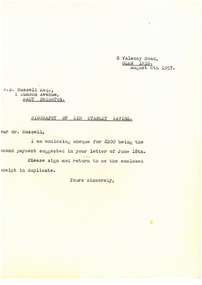
Letter, Biography of Sir Stanley Savige, 1957
... used. He notes four main fields of activity - sifting and arranging Savige's own records, interviewing friends and relatives, background reading (newspapers etc.), and making notes from interviews and source material. Most of the first progress payment was directed to reimbursement of salary lost whilst working full time on the book. Part of the story of how ...Series of documents recording the second progress payment to W.B. Russell for writing 'There Goes a Man', his signed receipt, outline of progress and the way in which the first progress payment was used. He notes four main fields of activity - sifting and arranging Savige's own records, interviewing friends and relatives, background reading (newspapers etc.), and making notes from interviews and source material. Most of the first progress payment was directed to reimbursement of salary lost whilst working full time on the book.Part of the story of how the book 'There goes a Man' came to be created.Typed documents, black on white. Stamp Duty stamp fixed to 00903.2.00903.2 Signed and dated in blue ink 'W.B.Russell 9-8-57' 00903.3 Signed 'W.B. Russell' in blue ink, pencilled annotations: "Wilf, Thank you. Just like (illegible)! 13.viii.57' 'Read to J.G. Gillespie 14/8/57'savige book, w b russell -
 Surrey Hills Historical Society Collection
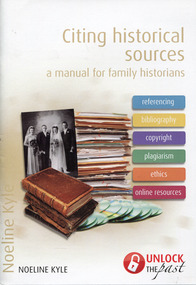
Book - Citing historical sources: a manual for family historians
... History Bibliographical citations Genealogy -- Computer network resources Intellectual property Australia This is a manual for family historians to answer the question: how do I reference the diverse range of source material encountered by the family historian? This book uses a straightforward and practical format to take you to the rules and conventions of referencing and acknowledgement of the resources used in your research to provide an easy and sensible entry into this important historical task. ...This is a manual for family historians to answer the question: how do I reference the diverse range of source material encountered by the family historian? This book uses a straightforward and practical format to take you to the rules and conventions of referencing and acknowledgement of the resources used in your research to provide an easy and sensible entry into this important historical task.An A5 sized booklet, 40 p, indexnon-fictionThis is a manual for family historians to answer the question: how do I reference the diverse range of source material encountered by the family historian? This book uses a straightforward and practical format to take you to the rules and conventions of referencing and acknowledgement of the resources used in your research to provide an easy and sensible entry into this important historical task.history, bibliographical citations, genealogy -- computer network resources, intellectual property, australia
