
Showing 7 items matching "hurdle flat"
-
 The Beechworth Burke Museum
Photograph, Unknown c1925
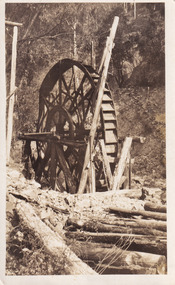
... ...Hurdle Flat...Depicted in the photograph is mining machinery at Wallaby Mine, Hurdle Flat in Stanley, Victoria. The Wallaby Mine overlooks the Nine Mile Creek roughly eight kilometers from Beechworth. ...Reverse: 83/ The Wallaby Mine Hurdle Flat about 1925/ 97.2504 ...Mining Wallaby Mine Hurdle Flat Reverse: 83/ The Wallaby Mine Hurdle Flat about 1925/ 97.2504 A black and white photograph featuring a mine in the center printed on matte photographic paper. ...Depicted in the photograph is mining machinery at Wallaby Mine, Hurdle Flat in Stanley, Victoria. The Wallaby Mine overlooks the Nine Mile Creek roughly eight kilometers from Beechworth. At the Wallaby Mine remains a twelve head stamp battery that was built in 1912 replacing the previous battery that was destroyed by bushfires. The stamp battery was used to extract gold by crushing rocks, a common method used in the late 1800s until the early 1900s. Gold mining heavily contributed to the development of Victoria since 1851, especially as a source of wealth in the 1800s.This photograph is historically significant as it provides insight into the mining industry around Beechworth in the 1920s including the development of mining technologies and the technological history of gold mining in Victoria.A black and white photograph featuring a mine in the center printed on matte photographic paper.Reverse: 83/ The Wallaby Mine Hurdle Flat about 1925/ 97.2504 mining, wallaby mine, hurdle flat -
 The Beechworth Burke Museum
Photograph, Late 1900s
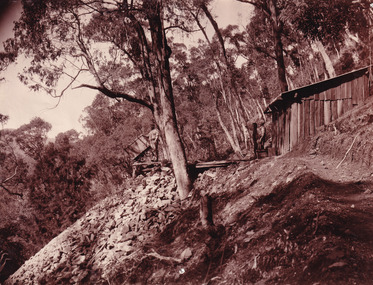
... In places such as El Dorado, Beechworth and Stanley there was profit, however Hurdle Flat and Stonry Creek, gold could not be found in the quantities that was required. ...In places such as El Dorado, Beechworth and Stanley there was profit, however Hurdle Flat and Stonry Creek, gold could not be found in the quantities that was required. ...This photograph dating to the late 1900s depicts the entrance to a reef mine the in Beechworth division. The image depicts two men outside the entrance, which is covered by a hut, where one is standing near a mine cart. The mine car was used to haul soil from the mine. The Beewchworth divison consisted of 5 locations: Beechworth, Stanley, El Dorado, Hurdle Flat and Stony Creek. These locations were set up due to speculative fever that more gold could be found. In places such as El Dorado, Beechworth and Stanley there was profit, however Hurdle Flat and Stonry Creek, gold could not be found in the quantities that was required. By 1880 the Beechworth division was in depression due to the reserves being used up. However, in spite of the depression mining was continued until the late 20th Century.The search for gold is ingrained into the history of Victoria and therefore, images like this one which portray an open cut sluicing site can reveal important information for society and technology for the date when the photograph was taken. This image is of important historical significance for its ability to convey information about reef mining in the late 1900s. It also shows a location where reef mining was undertook which provides insight into the impact of reef mining on the environment at a time when it was done. This image is important for current research into the history of Beechworth , a town in Victoria's north-east. Therefore, this image has the capacity to be beneficial for research into society and the motivations of those living and working in this region during this period and therefore, has social significance. The Beechworth Burke Museum has additional images relating to reef mining and Beechworth which can be analysed and studied alongside images like this one.Sepia coloured retangular photograph printed on newspaper.Reverse: 7813beechworth, beechworth division, mining, reef mining, gold, gold mining, 1990 -
 Ballarat Clarendon College
Medal, c1887
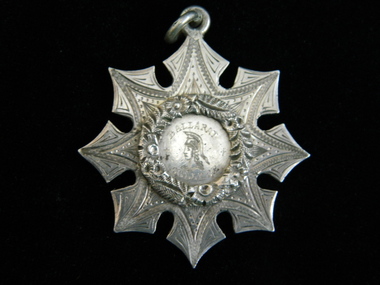
... The 1887 Ballarat College Sports program lists Arthur's name against Hurdles, Flat Race, and High Jump. Unfortunately the medal is undated. ...The 1887 Ballarat College Sports program lists Arthur's name against Hurdles, Flat Race, and High Jump. Unfortunately the medal is undated. ...Arthur Ernest Albert Dawson entered Ballarat College 4 August 1886. The 1887 Ballarat College Sports program lists Arthur's name against Hurdles, Flat Race, and High Jump. Unfortunately the medal is undated. The intriguing inscription 'Twice Second' may refer to Arthur's competition for the College Cup, a highly valued Athletics Prize. The school does not hold sufficient records from this era to confirm any further details. The medal was donated to the school by Arthur's great-nephew, Ken Dawson, in 2019. The medal has social significance. It reveals the very high value placed on sports involvement at the school from its earliest beginnings. Ornate silver medal Inscribed around school crest on front: Ballarat College Inscribed on medal verso: A Dawson / Twice Secondarthur ernest albert dawson, college cup, athletics, medal, 1880s, dawson -
 The Beechworth Burke Museum
Photograph, 1890
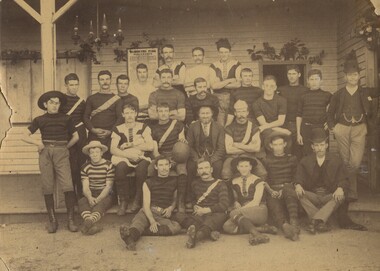
... One was the Beechworth FC and the other was the Wanderers FC, which was based at Hurdle Flat, near Stanley. In 1892, the two teams merged under the name "Beechworth District Wanderers Football Club." ...One was the Beechworth FC and the other was the Wanderers FC, which was based at Hurdle Flat, near Stanley. In 1892, the two teams merged under the name "Beechworth District Wanderers Football Club." ...This photograph was taken of the “Wanderers” Football club at Barmutha Park, Beechworth in c1890. The Beechworth Football Club was formed in 1861 which then became affiliated to the Victorian Football Association (VFA) upon being founded in 1877. There were two football teams in Beechworth. One was the Beechworth FC and the other was the Wanderers FC, which was based at Hurdle Flat, near Stanley. In 1892, the two teams merged under the name "Beechworth District Wanderers Football Club." Those present include; Bob Wray, Jim Wray, Ike Brown, Jim Buckley, George Spencer, Jim McKenzie, Dave McAliece, Arite stone, Win Johnstone, Jack Tresize, Jim Shennan, Ned Turnbull, George Johnson, Jerry Sutherland, Jack Brown, Dick Hambleton, George Hacket, Jim Brown, Jack Johnson. The team adopted a red and black striped football jersey.The club joined the Ovens and King league, winning three consecutive premierships in 1912, 1913 and 1914, leaving the league that same year. The club suspended its activities from 1915 to 1918 during the WWI returning to the league in 1919. Sepia rectangular photograph printed on matte photographic paper mounted on board. Obverse: THE "WANDERERS" 1890 Reverse: From Mrs R. Scott beechworth, the wanderers, football, sports -
 Warrnambool and District Historical Society Inc.
Medal, Villers & Heytesbury, 1879
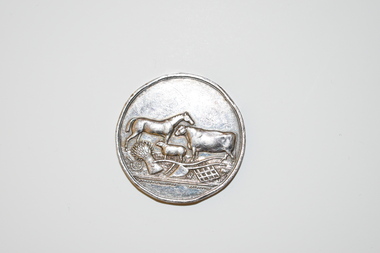
... The medal was awarded for the best blood yearling of 1879 and this was Fright, one of the progeny of the famous stud horse Panic (second in the Melbourne Cup, 1865), His progeny won many hurdle races and flat races including the Melbourne Cup. ...The medal was awarded for the best blood yearling of 1879 and this was Fright, one of the progeny of the famous stud horse Panic (second in the Melbourne Cup, 1865), His progeny won many hurdle races and flat races including the Melbourne Cup. ...This splendid medal was awarded by the Villiers and Heytesbury Agricultural Association in 1879. This association held its first show in Port Fairy in 1854 and in Warrnambool in 1855. It continues to this day under the name of the Warrnambool and District Agricultural Society. The medal was awarded to James Astley Bromfield, am early Warrnambool chemist who arrived in Victoria in 1852 and is significant in Warrnambool’s history. He produced the 1856 map of the Warrnambool district with the first landowners, a seminal resource for historians and was prominent in community affairs, especially in horse racing. He was also a Warrnambool and Shire Councillor. The medal was awarded for the best blood yearling of 1879 and this was Fright, one of the progeny of the famous stud horse Panic (second in the Melbourne Cup, 1865), His progeny won many hurdle races and flat races including the Melbourne Cup. The medal features also the names of two donors of prizes to James Bromfield, Henry Phillips and Francis Tozer, both pioneer men in Warrnambool’s horse racing history. Henry Phillips was the first President of the Warrnambool Amateur Turf Club and had the horse Panic standing at his 1000 acre stud, Bryan O’Lynn, at Purnim in the Western District. Francis Tozer was an owner, breeder and steward in racing circles and in the 1870s had the 2000 acre stud farm, Wangoom Park, at Wangoom, near Warrnambool.This is a most significant item as it was awarded to James Astley Bromfield, an early Warrnambool chemist and a person concerned with the history of the early settlement of Warrnambool and one prominent in community affairs in Warrnambool in the 19th century. The item also has connections with the famous stud horse, Panic and two other noted personalities of Warrnambool and district, Francis Tozer and Henry Phillips. The item also is of intrinsic monetary value as a 19th century medal from the Villiers and Heytesbury Agricultural Association. This is a round silver medal. It has etched printing on one side and raised images of farm animals and farm implements on the other side. It also has etched printing around the edge of the medal. There are some slight dents around the edge of the medal.‘Villiers & Heytesbury Agricultural Association 1st Prize Awarded to J. A. Bromfield for Blood Yearling 1879 ‘Fright by Panic’ Warrnambool Oct. 16 1879’ ‘Also Phillips and Tozer’s Special Prizes’ james astley bromfield, warrnambool, villiers and heytesbury agricultural association, henry phillips, warrnambool, francis tozer, warrnambool, history of warrnambool -
 Warrnambool and District Historical Society Inc.
Badges, Warrnambool Racing Club Membership, 1950s
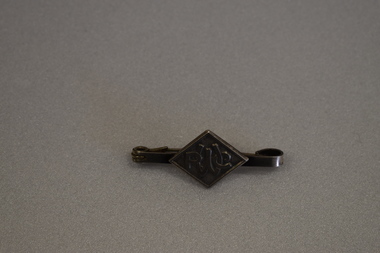
... Flat. The first meeting at the present race course was held in 1858 with Warrnambool Racing Club established in 1873.The main event in Warrnambool horse racing today is the May Racing Carnival which features the Grand Annual Steeplechase. It has 33 jumps, the most hurdles...Flat. The first meeting at the present race course was held in 1858 with Warrnambool Racing Club established in 1873.The main event in Warrnambool horse racing today is the May Racing Carnival which features the Grand Annual Steeplechase. It has 33 jumps, the most hurdles ...These badges all marked W.R.C. appear to come from the Warrnambool Racing Club. The first race meeting in Warrnambool was held in 1848 at Jetty Flat. The first meeting at the present race course was held in 1858 with Warrnambool Racing Club established in 1873.The main event in Warrnambool horse racing today is the May Racing Carnival which features the Grand Annual Steeplechase. It has 33 jumps, the most hurdles of any race in the world over 5,500 metres. These badges are of minor interest as ones that belonged to members and supporters of the Warrnambool Racing Club.1 Silver coloured metal diamond shaped badge fixed to a silver coloured metal horizontal bar. The centre of the diamond has intertwined letters R W C The reverse has a pin clip attached to the bar with numbers. .2.1 and .2.2 Silver coloured metal badge In rectangular shape with extended arcs on top and bottom and triangular extensions on the sides. R W C and other text is raised . The reverse has a pin clip The numbers on the reverse of the badges are different. .3 Rectangular silver coloured metal badge. The sides of the rectangle have extended points. The letters RWC are raised. Under these letters is a scroll with text. There is a pin clip on the reverse and numbers. .4 Triangular gold coloured metal badge with R W C raised and a scroll underneath with text. The upper corners of the triangle feature decorative spirals.There is a pin clip on the reverse with numbers. .5 Rectangular gold coloured badge with raised WRC attached to a gold coloured metal horizontal bar. There is a pin clip on the reverse and numbers. .1 RWC A 121 . 2.1RWC B7 LADY SEASON 1958 /59 STOKES .2.2 RWC B93 LADY SEASON 1958/59 STOKES .3 RWC LADY B123 SEASON 1956/57 STOKES MELB .4 RWC LADY B106 SEASON 1957/58 STOKES MELB .5 WRC A 125 STOKES MELB -
 St Kilda Historical Society
Decorative object - School trophy, Queen's College St Kilda School Cup, 1899
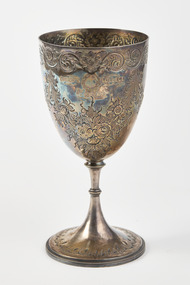
... hurdles races). Queen's College, St Kilda was a prominent private secondary school for boys and girls located in St Kilda, Melbourne. It operated independently of the residential Queen's College at the University of Melbourne. The school grounds were located near the corner of Fitzroy Street and Grey Street. The historic buildings were eventually converted into flats...hurdles races). Queen's College, St Kilda was a prominent private secondary school for boys and girls located in St Kilda, Melbourne. It operated independently of the residential Queen's College at the University of Melbourne. The school grounds were located near the corner of Fitzroy Street and Grey Street. The historic buildings were eventually converted into flats ...Award to Alan Durward Mickle (20 August 1882 – 15 May 1969) who later became a writer of essays and verse. He received the cup for outstanding athletic performance at the school's annual sports day in 1899. The cup was awarded to the 'Champion Athlete' or winner of the premier track and field events (such as the 100-yard, 200-yard, or hurdles races). Queen's College, St Kilda was a prominent private secondary school for boys and girls located in St Kilda, Melbourne. It operated independently of the residential Queen's College at the University of Melbourne. The school grounds were located near the corner of Fitzroy Street and Grey Street. The historic buildings were eventually converted into flats in 1922 and later replaced by shops and residences.Silver goblet style cup with ornate embossing on exterior and base.Queen's College St Kilda School Cup won by Alan D Mickle Nov. 1899 On base: 4915/2st kilda schools, queen's college st kilda, alan durward mickle
