
Showing 370 items matching "husband (mrs)"
-
 Whitehorse Historical Society Inc.
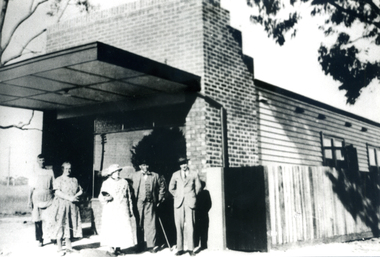
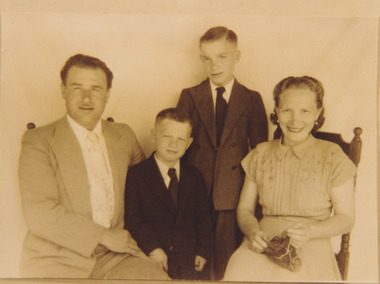
Photograph, Mr. & Mrs C. Husband and son, Lindsay David
... Mr. & Mrs C. Husband and son, Lindsay David...Black and white photo of Mr. & Mrs C. Husband & son, Lindsay David Husband. (now where the Bathroom Centre is 2002)...husband mary c charles edward lindsay daniel Black and white photo of Mr. & Mrs C. ...Black and white photo of Mr. & Mrs C. Husband & son, Lindsay David Husband. (now where the Bathroom Centre is 2002)husband, mary c, charles edward, lindsay daniel -
 Whitehorse Historical Society Inc.
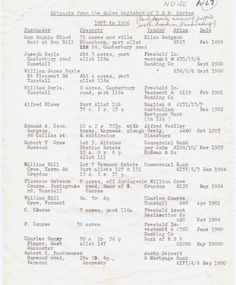
Report, Extracts from sales register of T.R.B. Morton
... ...husband (mrs)...Sales register lent by Mrs Wainwright of Blackburn, a grand-daughter. t. r. b. morton & son wainwright (mrs) blood sophia hodgson ellen boyle joseph william james bloom alfred cook edmund a. greig alfred woolley crow robert t. william hill course florence rebecca charles finger charles henry fankhauser robert c john farmilo hubert henry fulton margaret game thomas robinson husband (mrs) henwood william dashwood f.r. samuel j.m. blake arthur palmer. horkings hurter c.e. john henry janet hone robert arthur henry john joyner herbert jeffery mary ann keogh james lieber otto methodist boys home purches frederick walter rooks charles francis abraham edmund sarah scott eliza emma sergeant frederick henry pickett tainton brock mary theresa thiele ambrose frederick walker edgar edwardes mary jane zander Extracts from the Sales register of T.R.B. ...Extracts from the Sales register of T.R.B. Morton (1897 - !906) including names of people well known in Nunawading.t. r. b. morton & son, wainwright, (mrs), blood, sophia, hodgson, ellen, boyle, joseph, william james, bloom, alfred, cook, edmund a., greig, alfred woolley, crow, robert t., william hill, course, florence rebecca, charles, finger, charles henry, fankhauser, robert c, john, farmilo, hubert henry, fulton, margaret, game, thomas robinson, husband (mrs), henwood, william, dashwood, f.r., samuel j.m., blake, arthur palmer., horkings, hurter, c.e., john henry, janet, hone, robert arthur, henry john, joyner, herbert, jeffery, mary ann, keogh, james, lieber, otto, methodist boys home, purches, frederick walter, rooks, charles francis, abraham, edmund, sarah, scott, eliza emma, sergeant, frederick, henry, pickett, tainton, brock, mary theresa, thiele, ambrose frederick, walker, edgar edwardes, mary jane, zander -
 Whitehorse Historical Society Inc.
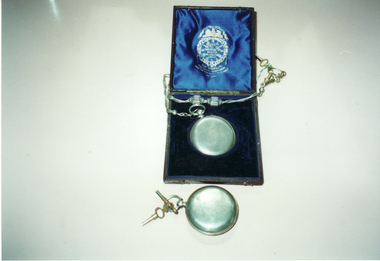
Photograph - Coloured Photograph, Watches owned by W Slater
... The other watch belonged to Mr. E.Pearce husband of Mrs . M. Pearce...The other watch belonged to Mr. E.Pearce husband of Mrs . M. Pearce Watches owned by W Slater. ...Coloured photograph of of watches belonging to W.S.Slater and Edward Pearce, husband of Mary. Watch in box made by Bennett - watch and chronometer maker, 65 Cheapside, London. The Admiralty, The Royal Observatory and The Hon. Board of Ordnance. The other watch belonged to Mr. E.Pearce husband of Mrs . M. Pearceslater.w.s., pearce, ronald, harry, mary, edward, bennett, watch & chronometer maker -
 Stawell Historical Society Inc
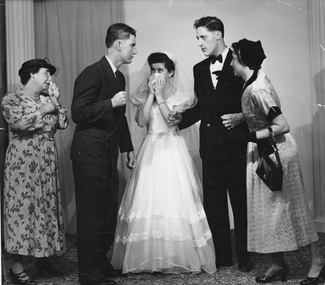
Photograph, Stawell Drama Group 1954
... Diane Hall "Pam" daughter Malcolm Smith - Paul ex husband. May Hall - Mrs. Coot - nanny Glenda Hurst - Angela mother. ...Diane Hall "Pam" daughter Malcolm Smith - Paul ex husband. May Hall - Mrs. Coot - nanny Glenda Hurst - Angela mother. 1954 Three act play "Fools Rush In" Stawell drama group. ...Diane Hall "Pam" daughter Malcolm Smith - Paul ex husband. May Hall - Mrs. Coot - nanny Glenda Hurst - Angela mother. ...Stawell Drama Group in 1954 stage production "Fools Rush In". Photo taken Stawell Town Hall. In Photo L - R. Phillis Grant, Malcolm Smith, Dianne Hall, Alan Podger, Glenda Hurst. Diane Hall "Pam" daughter Malcolm Smith - Paul ex husband. May Hall - Mrs. Coot - nanny Glenda Hurst - Angela mother. Three act play "Fools Rush In" Stawell drama group. Presented at Stawell Town on 1st April 1954. Black and white photograph of five persons on stage. Also colour photograph of brick house.Diane Hall "Pam" daughter Malcolm Smith - Paul ex husband. May Hall - Mrs. Coot - nanny Glenda Hurst - Angela mother. 1954 Three act play "Fools Rush In" Stawell drama group. Presented at Stawell Town on 1st April 1954. In Photo L - R. Phillis Grant, Malcolm Smith, Dianne Hall, Alan Podger, Glenda Hurst. stawell entertainment -
 National Wool Museum
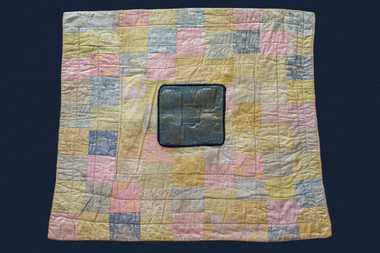
Quilt
... Back is covered in upholstery fabric. Mrs Giles husband, an upholsterer, was one source for her fabrics....Back is covered in upholstery fabric. Mrs Giles husband, an upholsterer, was one source for her fabrics. ...Part of the "Wagga" collection. Made by Gwen Giles c.1930 and given by her to Running Stitch. Her husband was an upholsterer and and one of the sources of her cloth.Patchwork quilt of pastel coloured damask squares with dark grey central satin square edged in black. Contains felting fabric. Back is covered in upholstery fabric. Mrs Giles husband, an upholsterer, was one source for her fabrics.quilting history, running stitch group, running stitch collection, giles, mrs gwen, quilting - history -
 Stawell Historical Society Inc
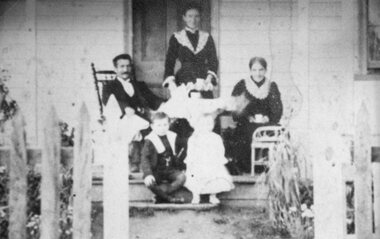
Photograph, Mrs Ann Griffin nee Beynon, at back with Mr Griffith at the front left, their 2 children then Mrs Ann Beynon nee Unknown on the right
... Deep Lead – Portrait Griffith Family Mrs Ann Griffin nee (Beynon) standing at back. Her husband and two children. ...Deep Lead – Portrait Griffith Family Mrs Ann Griffin nee (Beynon) standing at back. Her husband and two children. ...Deep Lead – Portrait Griffith Family Mrs Ann Griffin nee (Beynon) standing at back. Her husband and two children. Mrs Ann Beynon Seated.stawell -
 Bendigo Historical Society Inc.
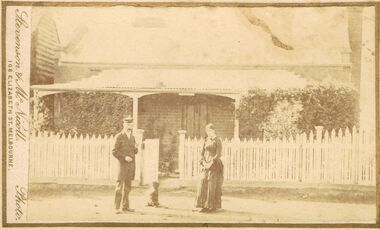
Photograph - BLACK AND WHITE PHOTOGRAPH: MAN WOMAN AND DOG
... Man woman and dog black wearing Victorian era clothing / / -Stevenson & McNicoll late Benson & Stevenson Photographers 108 Elizabeth Street Melbourne / / Mrs Goggin & husband...black and white photograph - Man woman and dog black wearing Victorian era clothing / old and stained / bottom and rear shows Logo -Stevenson & McNicoll late Benson & Stevenson Photographers 108 Elizabeth Street Melbourne / 'Light & Truth -Copies of this portrait can be had at any time by sending the name and Post Office Money Order or stamps for the amount of order' / Mrs Goggin & husband...PHOTOGRAPH Person male / female Man woman and dog black wearing Victorian era clothing / / -Stevenson & McNicoll late Benson & Stevenson Photographers 108 Elizabeth Street Melbourne / / Mrs Goggin & husband black and white photograph - Man woman and dog black wearing Victorian era clothing / old and stained / bottom and rear shows Logo -Stevenson & McNicoll late Benson & Stevenson Photographers 108 Elizabeth Street Melbourne / 'Light & Truth -Copies of this portrait can be had at any time by sending the name and Post Office Money Order or stamps for the amount of order' / Mrs Goggin & husband Photograph BLACK AND WHITE PHOTOGRAPH: MAN WOMAN AND DOG ...black and white photograph - Man woman and dog black wearing Victorian era clothing / old and stained / bottom and rear shows Logo -Stevenson & McNicoll late Benson & Stevenson Photographers 108 Elizabeth Street Melbourne / 'Light & Truth -Copies of this portrait can be had at any time by sending the name and Post Office Money Order or stamps for the amount of order' / Mrs Goggin & husbandphotograph, person, male / female, man woman and dog black wearing victorian era clothing / / -stevenson & mcnicoll late benson & stevenson photographers 108 elizabeth street melbourne / / mrs goggin & husband -
 Whitehorse Historical Society Inc.
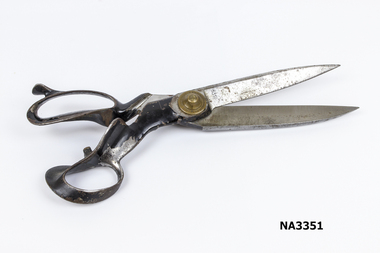
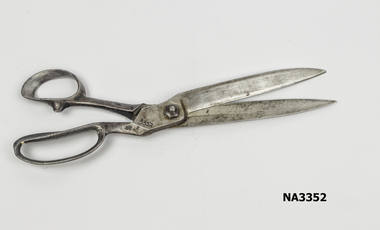
Functional object - Tailor's cutting shears, c 1900
... Returned to Australia, married in 1908 and opened a shop in Elizabeth Street, Melbourne. Mrs Hooke's husband, Bernard Arthur was born at Wandinong, Canterbury Road, Blackburn and was Chairman of the Advisory Committee 1973 - 1996...Returned to Australia, married in 1908 and opened a shop in Elizabeth Street, Melbourne. Mrs Hooke's husband, Bernard Arthur was born at Wandinong, Canterbury Road, Blackburn and was Chairman of the Advisory Committee 1973 - 1996 trades tailoring R. ...Cutting shears used in 1907 by William Cox. Travelled to England and worked for a tailor in the West End, London for a year. Returned to Australia, married in 1908 and opened a shop in Elizabeth Street, Melbourne. Mrs Hooke's husband, Bernard Arthur was born at Wandinong, Canterbury Road, Blackburn and was Chairman of the Advisory Committee 1973 - 1996Long tailor's cutting shears, 35 cm. in lengthR. Henish Inventor, U.S.A.trades, tailoring -
 Whitehorse Historical Society Inc.
Functional object - Tailor's cutting shears
... Opened a shop in Elizabeth Street, Melbourne. Mrs Hooke's husband, Bernard Arthur was born at Wandinong, Canterbury Road, Blackburn and was Chairman of the Advisory Committee 1973 - 1996...Opened a shop in Elizabeth Street, Melbourne. Mrs Hooke's husband, Bernard Arthur was born at Wandinong, Canterbury Road, Blackburn and was Chairman of the Advisory Committee 1973 - 1996 trades tailoring Tailor's cutting shears, 34 cm long Functional object Tailor's cutting shears ...Cutting shears used in 1907 by William Cox. Travelled to England and worked for a tailor in the West End, London for a year. Returned to Australia, married in 1908. Opened a shop in Elizabeth Street, Melbourne. Mrs Hooke's husband, Bernard Arthur was born at Wandinong, Canterbury Road, Blackburn and was Chairman of the Advisory Committee 1973 - 1996Tailor's cutting shears, 34 cm longtrades, tailoring -
 Warrnambool and District Historical Society Inc.
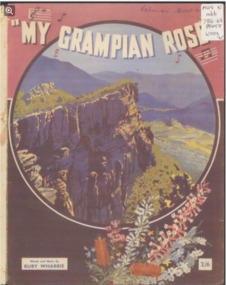
Leisure object - Sheet Music, My Grampian Rose, 1940s
... Mrs Wharrie is best known for her doll-making business which she operated in Stawell, Victoria with her husband and son. ...Mrs Wharrie is best known for her doll-making business which she operated in Stawell, Victoria with her husband and son. ...This is a waltz piece of music with words and music by Ruby Wharrie. Mrs Wharrie is best known for her doll-making business which she operated in Stawell, Victoria with her husband and son. Mrs Wharrie was the designer of the dolls which were made in the 1940s and 50s. One doll was named ‘Shurl’ to cash in on the popularity of the child actress Shirley Temple and the consequent popularity of the Shirley Temple doll. Stawell is a provincial city situated close to the Grampians mountain range and the title of the music reflects Mrs Wharrie’s interest in the area. ‘My Grampian rose’ is a person and the theme of the music is the fulfilment of love - ‘I am coming back to you, my little Grampian Rose’. This music is of interest as it has been written by a person who lived in western Victoria. It has Ruby Wharrie’s signature inside the front cover, making it more valuable. It is also an example of the sweet and sentimental music produced during the 1940s and 50s as a foil to the sadness and brutality of the world war. This is sheet music of four pages (two pages printed back to back) with the printed music on three pages and the cover having a multi-coloured illustration of the Grampians mountain range in Victoria. It is in good condition and has an old catalogue number ‘94’ on the back page. Front cover: ‘My Grampian Rose, Words and Music by Ruby Wharrie, 2/6’ Inside front cover: ‘Ruby Wharrie’ ruby wharrie, my grampian rose, sheet music -
 Sunbury Family History and Heritage Society Inc.
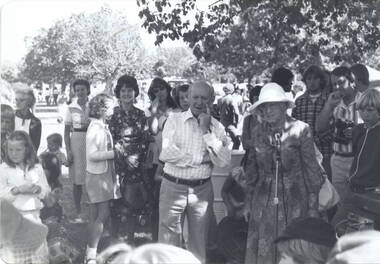
Photograph, c1977
... Mrs. Mommsen's husband, Frederick Christian Mommsen was a former Shire of Bulla councillor. ...Mrs. Mommsen's husband, Frederick Christian Mommsen was a former Shire of Bulla councillor. ...The photograph was taken at the Sunbury Fair possibly in 1977 when Bert Kelly, who is the man in the foreground, was the Shire President. The lady, wearing a dark patterned dress and standing immediately behind Bert Kelly is Shirley McKerrow, whose husband was John McKerrow, the Shire Engineers. Mrs Mommsen is standing next to him and the young man 2nd from extreme right is Graham Gibb. Mrs. Mommsen's husband, Frederick Christian Mommsen was a former Shire of Bulla councillor. Each year, the Sunbury Festival is held over the first weekend in March with community groups participating in a parade through the town on the Saturday morning, followed by entertainment on the Village Green throughout Saturday and Sunday afternoon. A non-digital black and white photograph of a crowd of people watch an event at a recreation ground. A man is standing with a well-dressed lady who is standing in front of a microphone, in the foreground.bert kelly, eadie family, milling, ben eadie winery -
 The Beechworth Burke Museum
Audio - Oral History, Jennifer Williams, Mrs Val Mason, 5 January 2001
... Mrs. Valerie (Val) Mason (1927-2019) was a local sheep farmer, business-woman, Beechworth shire councillor, and mother to five children. With her husband...Mrs. Valerie (Val) Mason (1927-2019) was a local sheep farmer, business-woman, Beechworth shire councillor, and mother to five children. With her husband ...Mrs. Valerie (Val) Mason (1927-2019) was a local sheep farmer, business-woman, Beechworth shire councillor, and mother to five children. With her husband, Charles, Mrs. Mason developed and managed the Big Valley farm estate, at Everton, which is now part of a vineyard and farm stay. Mrs. Mason was instrumental in introducing a 'paddock to plate' philosophy and business model, opening a butcher shop on the farm in 1973. Concerned with improving infrastructure and developing economic opportunities in the region, Mrs. Mason successfully stood as a local council representative for South Riding in the United Shire of Beechworth, and later become the first woman Shire President in 1979. Mrs Mason was a member of the local Business and Professional Women's Club for 37 years. This oral history recording was part of a project conducted by Jennifer Williams in the year 2000 to capture the everyday life and struggles in Beechworth during the twentieth century. This project involved recording seventy oral histories on cassette tapes of local Beechworth residents which were then published in a book titled: 'Listen to what they say: voices of twentieth century Beechworth. These cassette tapes were digitised in July 2021 with funds made available by the Friends of the Burke.Mrs. Mason's story is historically significant for understanding economic and social changes in the Beechworth region during the latter half of the twentieth century. As a council representative, issues such as road and infrastructure modernisation and the transition from traditional government employment sectors, like Beechworth's care institutions, were challenges for local government. As a farmer and local employer, Mrs. Mason's story is testimony to the region's economic diversification as businesses like Big Valley farm shop helped shape the region's contemporary character. Mrs. Mason was among the first women to broach the traditionally all-male Beechworth Council Chambers and her story is socially significant for understanding the changing role of women in rural and regional Australia. This oral history recording offers interpretive capacity for social history themes and may be compared with other oral histories in the Burke Museum's collection. This oral history account is socially and historically significant as it is a part of a broader collection of interviews conducted by Jennifer Williams which were published in the book 'Listen to what they say: voices of twentieth-century Beechworth.' While the township of Beechworth is known for its history as a gold rush town, these accounts provide a unique insight into the day-to-day life of the town's residents during the 20th century, many of which will have now been lost if they had not been preserved.This is a digital copy of a recording that was originally captured on a cassette tape. The cassette tape is black with a horizontal white strip and is currently stored in a clear flat plastic rectangular container. It holds up 40 minutes of recordings on each side.Mrs Val Mason /listen to what they say, beechworth, oral history, burke museum, working women, trail blazers, farm to plate, farm shop, paddock to plate, woman farmer, united shire of beechworth, rural and regional women, beechworth's first woman shire president, women in leadership positions, women leaders, australian settlement history, settler societies, victorian gold rush, heritage tourism, culinary tourism, regional land use, indigo winery, farm stay, social history -
 The Beechworth Burke Museum
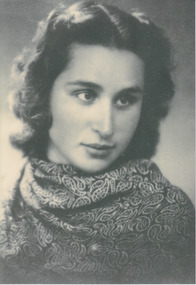
Audio - Oral History, Jennifer Williams, Mrs Beth Miller, 8 June 2000
... Mrs Beth Miller was born in February, 1924 in Latvia. Her family left for Germany after Russian occupation was implemented in Latvia, and eventually sailed for Australia from Naples, Italy in 1949. A working contract and position at the Mayday Hills Mental Hospital brought her to Beechworth, where she settled with her husband and parents. ...Mrs Beth Miller was born in February, 1924 in Latvia. Her family left for Germany after Russian occupation was implemented in Latvia, and eventually sailed for Australia from Naples, Italy in 1949. A working contract and position at the Mayday Hills Mental Hospital brought her to Beechworth, where she settled with her husband and parents. ...Mrs Beth Miller was born in February, 1924 in Latvia. Her family left for Germany after Russian occupation was implemented in Latvia, and eventually sailed for Australia from Naples, Italy in 1949. A working contract and position at the Mayday Hills Mental Hospital brought her to Beechworth, where she settled with her husband and parents. Mrs Miller recounts the daily work in the Mental Hospital during the 1950s, life in Black Spring and the isolation of the immigrant experience. This oral history recording was part of a project conducted by Jennifer Williams in the year 2000 to capture the everyday life and struggles in Beechworth during the twentieth century. This project involved recording seventy oral histories on cassette tapes of local Beechworth residents which were then published in a book titled: Listen to what they say: voices of twentieth century Beechworth. These cassette tapes were digitised in July 2021 with funds made available by the Friends of the Burke.Mrs Beth Millers account of her life in Beechworth and the local area during the 20th century is historically and socially significant to the cultural heritage of the region. She gives important insights into the life of post-war European immigrants in the area. This oral history account is socially and historically significant as it is a part of a broader collection of interviews conducted by Jennifer Williams which were published in the book 'Listen to what they say: voices of twentieth-century Beechworth.' While the township of Beechworth is known for its history as a gold rush town, these accounts provide a unique insight into the day-to-day life of the town's residents during the 20th century, many of which will have now been lost if they had not been preserved.This is a digital copy of a recording that was originally captured on a cassette tape. The cassette tape is black with a horizontal white strip and is currently stored in a clear flat plastic rectangular container. It holds up 40 minutes of recordings on each side.Mrs Beth Miller /beechworth, beth miller, miller, listen to what they say, jennifer williams, oral history, latvia, bonegilla, immigration, mayday, mayday hills, mental hospital, asylum, black spring, bakery, lutheran, immigrant -
 Ballarat Tramway Museum
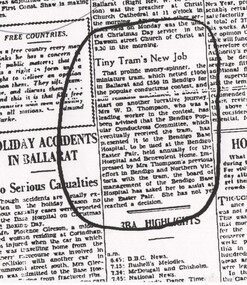
Document - Photocopy, Alan Bradley, "Tiny Tram's New Job", 14/02/1996 12:00:00 AM
... In addition is a item concerning the death of Mrs Eeleen Scruse on 25/12/1944. Mrs. Scruse husband was a tram driver. (See Reg Item 1655 for photo of Frank Scruse) Fax dated 14/2/1996. ...In addition is a item concerning the death of Mrs Eeleen Scruse on 25/12/1944. Mrs. Scruse husband was a tram driver. (See Reg Item 1655 for photo of Frank Scruse) Fax dated 14/2/1996. ...Photocopy per facsimile machine of part of The Courier, Ballarat 27/12/1944 detailing the movement and location of the miniature or Treasure Tram that was used to raise money during the wartime in Ballarat as part of the most popular conductress competition (see also Reg. items 241 and 247 )had been presented to the Bendigo Base Hospital to be used in the Bendigo Easter Fair. In addition is a item concerning the death of Mrs Eeleen Scruse on 25/12/1944. Mrs. Scruse husband was a tram driver. (See Reg Item 1655 for photo of Frank Scruse) Fax dated 14/2/1996. In the file is the Fax Cover Sheet from Alan Bradley who supplied the item.trams, tramways, treasure tram, most popular conductress competition, bendigo base hospital, conductresses -
 Melbourne Legacy
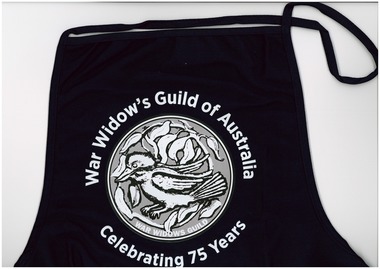
Domestic object, War Widows' Guild Apron, 2020
... The kookaburra was also the mascot of the 7th Division of the 2nd AIF, commanded by Mrs Vasey’s husband, Major-General Vasey. Mrs J M Vasey was the founder and president of the War Widows Guild. ...The kookaburra was also the mascot of the 7th Division of the 2nd AIF, commanded by Mrs Vasey’s husband, Major-General Vasey. Mrs J M Vasey was the founder and president of the War Widows Guild. ...An apron made to celebrate 75 years of the War Widows Guild in 2020. The Kookaburra is the symbol of the Guild due to its laugh. From the War Widows' Guild of Australia website: 'the Guild badge would feature the kookaburra, an industrious and cheerful bird who mated for life, was fearless and aggressive in the defence of its young and the area of territory it regarded as its own. The bird also had a unique call, not a song but a laugh; a chortle of rollicking mirth (to bring the widows back to laughter). Also, the kookaburra is a typically and completely Australian symbol, one that could be worn proudly by every widow whatever her creed or ideals. The kookaburra was also the mascot of the 7th Division of the 2nd AIF, commanded by Mrs Vasey’s husband, Major-General Vasey. Mrs J M Vasey was the founder and president of the War Widows Guild. During the second world war she became secretary of the AIF Women's Association, a body which sought to help soldiers' wives. Her work with this body drew her attention to the plight of war widows. After her husband Major-General George Alan Vasey died in an aircraft accident on 5 March 1945 she became a widow herself. At the end of the war Mrs Vasey founded the War Widows Guild, established on 22 November 1945. The Victorian War Widows Guild closed in 2021. Some items, including this apron, were donated to the Legacy archive for preservation. It was possible for a widow to be members of both Legacy and the War Widows Guild. Both organisations helped war widows in various ways.A celebration of the 75 years of work done by Jessie Vasey and the War Widows Guild.Dark navy cotton apron with a white stencilled Guild kookaburra logo and text saying 'Celebrating 75 years'.war widows guild, jessie vasey, wwg -
 Melbourne Legacy
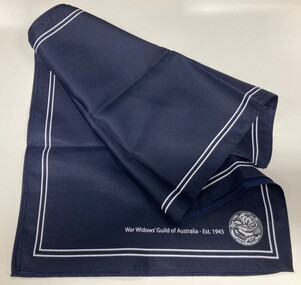
Clothing, War Widows' Guild Scarf, 2020
... The kookaburra was also the mascot of the 7th Division of the 2nd AIF, commanded by Mrs Vasey’s husband, Major-General Vasey. Mrs J M Vasey was the founder and president of the War Widows Guild. ...The kookaburra was also the mascot of the 7th Division of the 2nd AIF, commanded by Mrs Vasey’s husband, Major-General Vasey. Mrs J M Vasey was the founder and president of the War Widows Guild. ...A scarf made for War Widows Guild. The Kookaburra is the symbol of the Guild. From the War Widows' Guild of Australia website: 'the Guild badge would feature the kookaburra, an industrious and cheerful bird who mated for life, was fearless and aggressive in the defence of its young and the area of territory it regarded as its own. The bird also had a unique call, not a song but a laugh; a chortle of rollicking mirth (to bring the widows back to laughter). Also, the kookaburra is a typically and completely Australian symbol, one that could be worn proudly by every widow whatever her creed or ideals. The kookaburra was also the mascot of the 7th Division of the 2nd AIF, commanded by Mrs Vasey’s husband, Major-General Vasey. Mrs J M Vasey was the founder and president of the War Widows Guild. During the second world war she became secretary of the AIF Women's Association, a body which sought to help soldiers' wives. Her work with this body drew her attention to the plight of war widows. After her husband Major-General George Alan Vasey died in an aircraft accident on 5 March 1945 she became a widow herself. At the end of the war Mrs Vasey founded the War Widows Guild, established on 22 November 1945. The Victorian War Widows Guild closed in 2021. Some items, including this scarf, were donated to the Legacy archive for preservation. It was possible for a widow to be members of both Legacy and the War Widows Guild. Both organisations helped war widows in various ways.A memento of the War Widows Guild.Dark navy rectangular scarf with a white Guild kookaburra logo and text saying 'War Widows' Guild of Australia - Est 1945'.war widows guild, wwg -
 Melbourne Legacy
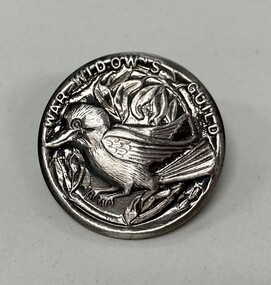
Badge, War Widows' Guild Badge, 2020
... The kookaburra was also the mascot of the 7th Division of the 2nd AIF, commanded by Mrs Vasey’s husband, Major-General Vasey. Mrs J M Vasey was the founder and president of the War Widows Guild. ...The kookaburra was also the mascot of the 7th Division of the 2nd AIF, commanded by Mrs Vasey’s husband, Major-General Vasey. Mrs J M Vasey was the founder and president of the War Widows Guild. ...A badge made for War Widows Guild members to wear to show they were members. The Kookaburra is the symbol of the Guild. From the War Widows' Guild of Australia website: 'the Guild badge would feature the kookaburra, an industrious and cheerful bird who mated for life, was fearless and aggressive in the defence of its young and the area of territory it regarded as its own. The bird also had a unique call, not a song but a laugh; a chortle of rollicking mirth (to bring the widows back to laughter). Also, the kookaburra is a typically and completely Australian symbol, one that could be worn proudly by every widow whatever her creed or ideals. The kookaburra was also the mascot of the 7th Division of the 2nd AIF, commanded by Mrs Vasey’s husband, Major-General Vasey. Mrs J M Vasey was the founder and president of the War Widows Guild. During the second world war she became secretary of the AIF Women's Association, a body which sought to help soldiers' wives. Her work with this body drew her attention to the plight of war widows. After her husband Major-General George Alan Vasey died in an aircraft accident on 5 March 1945 she became a widow herself. At the end of the war Mrs Vasey founded the War Widows Guild, established on 22 November 1945. The Victorian War Widows Guild closed in 2021. Some items, including this badge, were donated to the Legacy archive for preservation. It was possible for a widow to be members of both Legacy and the War Widows Guild. Both organisations helped war widows in various ways.A identity badge of the War Widows Guild.Dark silver badge with a kookaburra logo and a butterfly clip.Engraved on reverse 'M2155' and stamped 'Property of War Widows' Guild'.war widows guild, wwg -
 Halls Gap & Grampians Historical Society
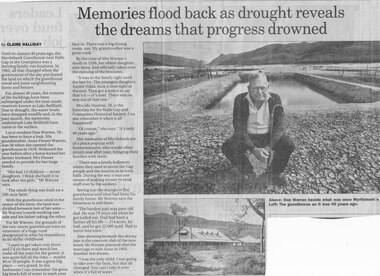
Newspaper - B/W
... Widowed, the year before after a horse kicked her farmer husband, Mrs Flower needed to provide for their large family. ...Widowed, the year before after a horse kicked her farmer husband, Mrs Flower needed to provide for their large family. ...Until the closure 40 years ago, the Myrtlebank Guesthouse near Halls Gap in the Grampians was a thriving family - run business. In 1962, all that changed when the government of the day purchased the land on which the guesthouse stood and some neighbouring farms and houses. For almost 40 Years, the remains of the buildings have been submered under the man made reservoir known as Lake Bellfield. Due to drought, the eater levels have dropped steadily and, in the past month, the memories underneath Lake Bellfield have come to the surface. Local resident Don warren 70, has been to have a look. His grandmother Anne Flower Warren, was 56 when she opened the guesthouse in 1916. Widowed, the year before after a horse kicked her farmer husband, Mrs Flower needed to provide for their large family. "She had 13 children - seven daughters. I think she built it to look after the girls," Mr Warren says, "The whole think was built on a 500 acre farm." With the guesthouse sited in the centre of the farm, the land was divided between two of her sons- Mr Warren's uncle working one side and his father taking the other. For Mr Warren, the grounds of the two-storey guesthouse were an extension of a huge rural playground in what he remembers as an idyllic childhood. "I used to get taken over there and I'd sit there and watch her make all the toast for the guests. It was quite full all the time - maybe 40 or 50 people. It was a great big place - very grand. In the bedrooms I can remember the great big bowls full of water to wash your face in. There was a big dining room, too. My grandmother was a great cook." By the time of Mrs Warren's death in 1936, her eldest daughter also Anne, had officially taken over the running of the business. "It was in the family right until the last bit. The youngest daughter, Auntie Hilda, took it over right at the end. they got a notice to say that's it - it's over There was no way out of that one." Mrs Ida Stanton, 78, is the historian for the Halls Gap and Grampians Historical Society. Can she remember it when it all happened? "Of course" she says "It's only 40 years ago" Her memories of Myrtlebank are of a place popular with honeymooners, who would often return year after year, bringing their families with them. "There was a lovely ballroom where they used to invite the Gap people and the tourists in to have balls. During the war it was one means of making money to send stuff over to the soldiers." Seeing just the stumps of the guesthouse and what had been his family home, Mr Warren says the bitterness is still there. "The hardest part was poor old dad. He was 70 years old when he got turfed out. Dad had been a farmer all his life - 214 acres, he had, and he got 22,000 quid. Had to move into town" Also showing beneath the drying lake is the concrete slab of the new home Mr Warren planned after his marriage to wife Anne in 1955. Another lost dream. " I was the only child, I was going to take over the farm, but that all changed. You can't take it over when it's full of water.Newspaper clipping of history of Myrtlebank by Don Warren and photo of Don at old site of pooland guest House photo Article by Claire Halliday from newspaper 2002accommodation, guesthouses, myrtlebank -
 Flagstaff Hill Maritime Museum and Village
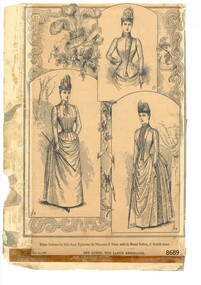
Newspaper - Fashion Page from The Queen, The Lady's Newspaper, December 24th 1887, Winter Costumes for their Royal Highness the Princesses of Wales, made by Messrs Redfern, of Conduit-street
... In 1861 Samuel Orchart Beeton (Mrs Beeton’s husband) had founded a paper named ‘The Queen’ about fashion and culture for upper class women of society. ...In 1861 Samuel Orchart Beeton (Mrs Beeton’s husband) had founded a paper named ‘The Queen’ about fashion and culture for upper class women of society. ...The Queen: The Ladies Newspaper and Court Chronicle or simply The Queen was a magazine created in 1864 in London. The title became ‘Queen’ in the 1950s, then ‘Harpers and Queen’ in the UK and then part of the British ‘Harper's Bazaar’. In 1861 Samuel Orchart Beeton (Mrs Beeton’s husband) had founded a paper named ‘The Queen’ about fashion and culture for upper class women of society. Edward William Cox bought the title the following year and at the same time he bought the Queen's rival that was named ‘The Ladies' Paper’. He merged the two publications into ‘The Queen: The Ladies Newspaper and Court Chronicle’ in 1864. The designer was John Redfern (1820-1895). He founded a British tailoring firm that developed into a leading European couture house and is credited for being one of the first designers to make tailored clothing respectable for women.‘The Queen, The Lady's Newspaper’ was delivered to Australia from the UK during the late 1800s. The fashion page shows the style of dress favoured by the Royal Princesses (Queen Victoria’s daughters)A double-sided newspaper page. The front page shows two full length sketches and one half-sketch of winter costumes designed for the Princesses of Wales in 1887 by Messrs Redfern of Conduit-street. The back page is set out in three columns with close typeset. There are three main sections titled The Boudoir (To Correspondents, University Women & Royal Naval Scripture Readers’ Society), Births, Marriages, Deaths and What Women are Doing. The descriptions of the winter costumes and which Princess they were for has been covered up by the date and title of the newspaper. The name Victor is written between the two full length sketches – presumably this is the artist’s signature. flagstaff hill maritime museum and village, great ocean road, shipwreck coast, 1887, winter costumes for the princesses of wales, the queen, the lady's newspaper, newspaper fashion page, john redfern, 'what women are doing', the boudoir, newspaper, births marriages and deaths announcements -
 Eltham District Historical Society Inc
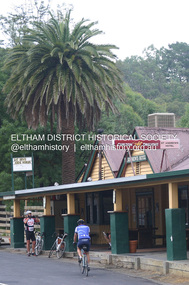
Photograph - Digital Photograph, Alan King, St Andrews Hotel, 2 February 2008
... Mrs Knell was appointed Deputy Registrar of Births and Deaths for Queenstown. The hotel was also used to hold inquests into people’s deaths when the police residence became too small.6 The hotel also became a fashionable destination at Christmas for parties from Melbourne. In 1868, possibly following her husband’s...Mrs Knell was appointed Deputy Registrar of Births and Deaths for Queenstown. The hotel was also used to hold inquests into people’s deaths when the police residence became too small.6 The hotel also became a fashionable destination at Christmas for parties from Melbourne. In 1868, possibly following her husband’s ...The c1860 St Andrews Hotel, with the c1930 additions, and the Canary Island Palm, and the surrounding site to the title boundaries are historically, socially and aesthetically significant to the Shire of Nillumbik. The St Andrews Hotel is historically significant because it may have given its name 'St Andrews' to the town (another suggestion is that the name came from St Andrews church) and for its connection to Ewen Hugh Cameron (1831-1915) the prosperous local farmer, member of the Eltham Roads Board/Shire Council and local MP. It is also significant as the oldest hotel building in the former Shire of Eltham, as one of the few surviving buildings connected with the Caledonian goldfields era and as one of a handful of early structures to have survived the 1960s bushfires; the additions and alterations to the hotel reflect its long life. The hotel is socially significant because it has served as an important meeting place for more than 160 years. The Canary Island Palm is historically significant as a rare example of exotic tree planting in this rural area. The tree is aesthetically and historically significant as a local landmark and for its contribution to the streetscape and landscape value. Covered under Heritage Overlay, Nillumbik Planning Scheme. Published: Nillumbik Now and Then / Marguerite Marshall 2008; photographs Alan King with Marguerite Marshall.; p71 Built around 1860, St Andrews Hotel has changed little since it first welcomed thirsty gold diggers from the Caledonia Goldfields. The timber building, with gabled roof, beamed ceilings and a massive fireplace, is Nillumbik Shire’s oldest hotel and has always been an important community centre, particularly in its early days. Fortunately, the hotel and the near-by Canary Island Palm Tree, which is quite rare in this area, survived the 1960s bushfires, along with a few other early buildings. St Andrews (formerly Queenstown) was founded on gold, as were Panton Hill (formerly Kingstown), Research and Diamond Creek, from the mid-1850s to the 1860s. But by the early 20th century common use changed the name Queenstown to St Andrews, possibly after this hotel or after the church or the mining district.1 The Caledonia Diggings were probably named by Scottish settlers after the Roman name for Scotland, despite this land bearing little similarity to their homeland.2 Queenstown, which was proclaimed as a township in 1861, was the gold-mining centre on the Upper Diamond and in the 1850s had up to 600 European inhabitants and a small camp of Chinese on the flats along the creek. Queenstown was the administrative centre of the Upper Diamond with three hotels, a brewery and a slaughterhouse.3 It is unclear which hotel was the district’s first, as distinct from the earliest unlicensed grog shops, some of which operated in tents. John Corke Knell was one of eight unlicensed storekeepers supplying drink to miners at Caledonia in 1857, named by Sgt. McNamara of the Caledonia Police Station.4 In February 1859, Knell apparently bought most of the present hotel’s site at the first township land sales. As he was a local storekeeper, he might have first established a store there.5 Knell and his wife Eliza were early licensees of the St Andrews Hotel. The hotel had eight bedrooms – including three for public use – and the dining-room seated 30 people. It is thought they named the hotel St Andrews after Eliza’s hometown of St Andrews in Scotland. St Andrews Hotel was an important local centre in several ways. In the same building the Knells also operated a post office and general store. In 1867 Mrs Knell was appointed Deputy Registrar of Births and Deaths for Queenstown. The hotel was also used to hold inquests into people’s deaths when the police residence became too small.6 The hotel also became a fashionable destination at Christmas for parties from Melbourne. In 1868, possibly following her husband’s death, Mrs Knell applied for a temporary licence, which was then transferred to Robert Smith after their marriage in 1869. But then, possibly after Robert’s death, Mrs Smith operated the hotel until 1892. This contradicts a report in The Evelyn Observer 1882 that JC Knells of the St Andrews Hotel was granted a publican’s licence in the Queenstown Police Court. At that time he was supposed to have been dead for around 14 years! Although Mrs Smith was a respected citizen, known for her geniality and as an ideal hostess, she had a minor brush with the law when she was fined ten shillings for not lighting a lamp outside her licensed premises.7 From 1892 several publicans owned the hotel including W Atkins, from 1895. In 1909 the licensee was apparently Mrs Smith’s son, Walter Knell, who held the licence until at least the 1920s. Not surprisingly, this old hotel has attracted romantic stories. Mrs Smith is said to be seen roaming the pub in her nightdress – even though she was buried in the Queenstown Cemetery in 1911.8 A musical The Hero of Queenstown, set in the hotel, was written and produced by local actor Reg Evans in the 1970s.This collection of almost 130 photos about places and people within the Shire of Nillumbik, an urban and rural municipality in Melbourne's north, contributes to an understanding of the history of the Shire. Published in 2008 immediately prior to the Black Saturday bushfires of February 7, 2009, it documents sites that were impacted, and in some cases destroyed by the fires. It includes photographs taken especially for the publication, creating a unique time capsule representing the Shire in the early 21st century. It remains the most recent comprehenesive publication devoted to the Shire's history connecting local residents to the past. nillumbik now and then (marshall-king) collection, st andrews hotel -
 Uniting Church Archives - Synod of Victoria
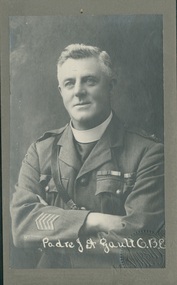
Photograph, Undated c.1915 - 1918
... Born 26 June 1865 at Manchester, England Husband of Mrs. Edith Ann Maria GAULT Of 'The Inglenook', Sea Parade, Cheltenham, Vic. ...Born 26 June 1865 at Manchester, England Husband of Mrs. Edith Ann Maria GAULT Of 'The Inglenook', Sea Parade, Cheltenham, Vic. ...Born 26 June 1865 at Manchester, England Husband of Mrs. Edith Ann Maria GAULT Of 'The Inglenook', Sea Parade, Cheltenham, Vic. Aged 50 years Enlisted 01 July 1915 for Continuous Service Embarked 16 July 1915 per 'HMAT Demosthenes' from Melbourne, Vic Pay rate of 19s 0d after embarkation Embarked 29 March 1916 per 'RMS Orontes' from Melbourne, Vic. Served in Egypt and on the Western Front Returned to Australia 01 November 1919 Awarded OBE Death of Rev. J. A. Gault The Rev. J. A. Gault, a Methodist minister, who was widely known to Australian soldiers as Padre Gault, died yesterday after a long illness. One of the best-loved padres in the AIF, Mr. Gault served for four years with the Australians, at first in Egypt and later in France and England. After the war, he continued to show great interest in returned soldiers and work in training camps. When he retired in February, 1934, Mr. Gault had been in the ministry for 40 years. Bom at Manchester. England on June 10, 1865 he came to Australia when aged three years in the sailing-ship Antiope. He was educated at Gold street State school and later at Wesley College. After his appointment as a minister, he served the church in many circuits in Tasmania and Victoria. Before the war he was superintendent of the Methodist Mission at Collingwood,and after his return from overseas he occupied important positions, including those of superintendent minister in the Brunswick, Port Melbourne, and Yarra street, Geelong, circuits. His last charge was at Camberwell. After ill-health caused him to retire, he lived at Mentone. He has left a widow, a son, and two daughters. Dr. Edward Gault. of Collins street, is a brother, and there are two sisters in New Zealand. The funeral will leave Mr. Gault's home In Sea parade, Mentone, tomorrow, at 2p.m., for the Methodist Church, Mentone. It will then proceed to the Springvale Crematorium. W. D. Rose and Son. Cheltenham, are making the arrangemnts. R.S.L. Tribute "Returned soldiers will learn of the death of Padre Gault with deep regret," said the president of the Returned Soldiers' League (Mr. G. W. Holland) lastnight. "He was revered by the AIF. for his unfailing sympathy, understanding, and comradeship." - from the Melbourne Argus 02 Feb 1938 "REV. J. A. GAULT. BELOVED A.I.F."PADRE." Death After A Long Illness. After a long Illness, the death occurred at his home at Mentone yesterday afternoon, of Rev. James Archibald ("Padre") Gault, one of the best known and beloved Methodist chaplains to the A.I.F. at Galllpoli and in France. Sorrow at the "padre's" demise, at the age of 72 years, will be shared not only by the thousands to whom he rendered, both spiritual and temporal comfort during the war, but, also by a host of friends won during a long and. fruitful, ministry at many centres in the State, and as chaplain at military camps after the war. He retired from the ministry three years ago, and had suffered Ill-health from that time. Deceased entered the Methodist ministry in 1894, and was ordained four years later. After a successful year as conference evangelist. he was stationed at Mansfield, then at Richmond. Following a ministry at Richmond he was transferred to Tasmania, where for twelve years he exercised his ministry at Mt Lyell Launceston, Penguin and Hobart. Returning to Victoria, Mr. Gault was stationed at St. Kilda, and when the war broke out he was associated with the Colllngwood Mission. He left on active service as a chaplain with the first troops, and was ' present ' throughout the Galllpoli campaign. Later he was with the forces In France, and remained on active service until the last of the troops were demobilised to 1920. He was affectionately known as "padre"after the war to the thousands of soldiers who had learned to regard him as guide, philosopher and friend In the trenches. He was noted always for the good cheer he invariably brought to the troops, and his famous "stunts" among the men were subsequently recorded by him in his publication, "The Stunt Book." For services rendered he was made a member of the Order of the British Empire. On his return to Australia In 1920 he was stationed at Brunswick for three years, and then followed ministries at Port Melbourne, Spring-road, Malvern and finally at Camberwell. A deeply spiritual man, he brought a rare devotion to his ministry, and was beloved by his congregations and ministerial brethren alike. He shunned the limelight, and was one of the most retiring men in conference affairs. The deceased is survived by a widow, two daughters and, one, son. Dr. Edward L. Gaul is a brother." - from the Melbourne Age 02 Feb 1938 B & W waist length studio portrait of the Rev. James Archibald Gault dressed in uniform as Chaplain to the A.I.F. Mounted on grey card.Padre J.A. Gault OBE -
 Flagstaff Hill Maritime Museum and Village
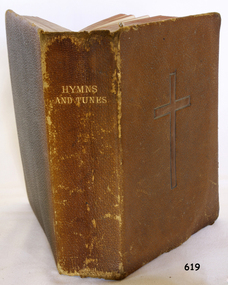
Book - Religious Book, William Clowes & Sons, Limited, Hymns Ancient and Modern, bef. Sept 8th 1884
... This book was a gift from Mrs. Cornish to her husband Nefiea, given to him on September 8th, 1884. ...This book was a gift from Mrs. Cornish to her husband Nefiea, given to him on September 8th, 1884. ...The brown leather-covered bound book has an embossed inscription on the spine and an impressed cross symbol on the front cover. It has red leaf pages (681 pages). The music and words were compiled and arranged by editor William Henry Monk, and published in London. This Revised and Enlarged edition was printed in London by William Clowes & Sons Ltd. The book's title is "Hymns Ancient and Modern". The inscription shows it was given as a gift in 1884. It has since been added to our St Nicholas Seamen's Church Collection. flagstaff hill maritime museum and village, flagstaff hill, warrnambool, maritime museum, maritime village, shipwreck coast, great ocean road, religion, religious service, st nicholas seamen’s church, williamstown, missions to seamen victoria, worship service, worship music, hymn book, music book, william clowes and sons, st nicholas seamen's church, london, hymns ancient and modern, revised and enlarged edition, 1884 -
 Flagstaff Hill Maritime Museum and Village
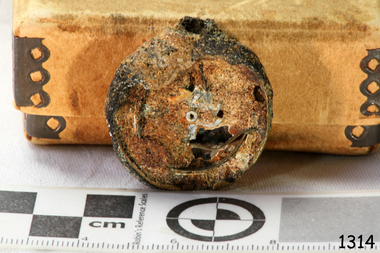
Instrument - Fob Watch, ca 1878
... Mrs J. Morton, formerly Elizabeth Ford, married her second husband, James Morton, in 1904, the year before the date of the letter. ...Mrs J. Morton, formerly Elizabeth Ford, married her second husband, James Morton, in 1904, the year before the date of the letter. ...The story of this gold fob watch is intriguing. The letter is dated March 6, 1905, 27 years after the Loch Ard was wrecked. It appears to be a quick personal note from a relative or friend who briefly writes the history of the enclosed ‘souvenir’ watch, found in Loch Ard Gorge at Port Campbell. Although the finder is not named, it is likely the letter’s author. The writer mentions that the letter and watch would be sent once photographs of the area where the watch was found had been added. The fancy, lined envelope’s date stamp is October 12th, 1917 (12.10.17), almost 12 years after the letter was written. It has a postmark from Florence (Firenze), Italy. The handwriting on the envelope differs from that of the letter, and there is no further mention of photographs being included. The condition of the watch certainly shows the effects of time in the sea. Some inner workings can be seen through broken encrustations and missing sections of its case. The winding knob on the top is recognisable even though it is covered by sand and other adhesions from the sea. Its dainty size and gold case suggest that it was made for a well-to-do female. The watch, envelope and letter were donated along with a 1971 newspaper cutting, all neatly folded and tucked with the watch into a small, strong cardboard box with metal reinforcing on the corners and a fitted lid. The newspaper article gives context to the watch, telling the story of the Loch Ard shipwreck tragedy and the two survivors, but does not refer to the watch. Perhaps one of the 17 passengers sailing on the Loch Ard, including members of the Carmichael family, owned the watch, or maybe it was amongst the cargo, as the ship’s manifest includes ‘clocks and watches £25’. . Considering the dates of the letter and the envelope, did the finder of the ‘souvenir’ watch take it to Europe? Was it used for good luck during service in the military? . Comparing the different writing on the letter and the envelope, does it suggest that the watch’s finder was overseas and asked someone to send the envelope to the intended recipient, with postage from Italy? ABOUT the address, “Glencove”: The details on the envelope are faint and obscured by stiff creases in the paper. The address appears to be “Mrs J. Mortton, Glencove, Portsea, Victoria, Australia”; though the family at that address had the surname “Morton”. Mrs J. Morton, formerly Elizabeth Ford, married her second husband, James Morton, in 1904, the year before the date of the letter. The couple lived at the Nepean Hotel before they were at “Glencove”. Although they never owned that property, it was their home when James died in 1937. Elizabeth’s nephew, Alfred Sandle Ford (1894-1981), and a nephew-in-law were overseas during World War I. Alfred Ford had moved to Melbourne as a young boy with his father. He entered service as Second Lieutenant in 1915, naming his father, Alfred Sandle Ford, as his next of kin. He served in Egypt, France and Belgium with the Australian Imperial Forces as a member of the Field Artillery Brigades. He returned to Melbourne in 1919 and worked in Richmond and Box Hill. He later married Frances Whyburn. Previously, in 1872, Elizabeth Ford’s sister, Julia Ford, acquired the 1-acre property with a 3-room house that became known as “Glencove”, Portsea. The building was originally the first school in the area, established before Crown Land sales. In the Parish of Nepean, it was first assessed for rates in 1871. Julia Ford (1843-1912) and Elizabeth Ford (1859-1957) were daughters of James Sandle Ford (1811-1890), a well-known pioneer of Portsea, formerly a convict limeburner. James Ford acquired several Crown allotments in Portsea. In 1872, he converted his old hotel into the large residential establishment known as the Nepean Hotel, which his family largely ran until it was demolished in 1971. During those years, different family members lived at the Nepean Hotel or Glencove. In 1877, Julia Ford married a significant landowner, John Cain, a limeburner from Rye. They had five daughters, four of whom were never married; Kathleen (1880-1949), Mabel (1881-1973), who was the last family member to own the house until her death, Hilda (1884-1974) and Julia Ethel (1888-1949). Some of the newspaper records refer to “Glencove”, Portsea, inform that: 1927 - Dr. and Mrs. J. E. Shilliday are staying with Mrs. R. B. Sanderson at Glencove. (Australasian) 1937 - James Morton died at his property, Glencove, Portsea, aged 83 years (Argus) 1949 - Julia Ethel Cain died at Glencove, Portsea. (Argus) 1949 - Probate application by sisters of Julia Ethel Cain, deceased, formerly of Nepean Hotel, Portsea, but late of Glencove, Nepean Highway, Portsea. The connection of the watch with the sands of Loch Ard Gorge and to the ship Loch Ard contributes to our knowledge of personal items brought to Australia in 1878, whether as the belongings of a passenger or as cargo; a gold watch would be intended for a wealthy buyer. The little artefact helps us understand the survival of artefacts in the powerful sea, over a quarter of a century after the wreck of the ship. Although many people would have visited the shipwreck site, the length of time before it was found helps us understand the effects of the sea on shipwreck artefacts. The survival of the carefully packaged watch and related documents shows the respectful understanding of preservation of historic artefacts, even from almost 150 years ago at the time of writing (2025). Ladies' fob watch, thought to be gold. It is now covered in encrustation. A bump on the edge would be the winding mechanism for the watch. A small section of the back of the case has broken away, and an engraved surface can be seen. Face and hands are missing, revealing the spring workings inside. Donated with the watch were two documents and a newspaper cutting about the story of the shipwreck of the Loch Ard. They are all in a strong cardboard box with reinforced corners on the base and lid. Found at Loch Ard Gorge and said to have been from the Loch Ard. The three donated documents are: - 1. A rectangular envelope made of cream waxy paper lined with black and white diagonally striped paper. The top right corner, usually meant for a postage stamp, has been torn off, partly exposing text on a rectangular printed logo. A round black postmark stamp near the top centre shows the post office location and date. The address on the front is handwritten in black ink. The creases on the envelope suggest it has been folded three times. 2. A letter on cream rectangular paper features clear, handwritten script in black ink. The unevenly cut bottom edge has two short black vertical lines, possibly the tops of tall written letters. There are creases where the page has been folded three times. 3. A newspaper clipping featuring text, an illustration, and handwritten details of the newspaper’s source.1. Envelope: - Address: ”Australia (per Postage) / [looks like “Mrs J. Mortton”] / Glencove, (Portsea) / Victoria” Postmark: “FIRENZE” 12 10 17” “ - - - -PORTEN – (illegible)” Logo inside envelope: “BUSTA BRE--- / Earliera Lialia” [Italian; Busta = envelope, Earliera == earlier] 2. Letter: - “I am sending you a ‘souvenir’ from the wreck of the Loch Ard 28 years ago at Port Campbell. It is the remains of a lady’s gold watch found in the gorge where Miss Carmichael & Tom Pearce (the only two saved) were washed up. This souvenir was lying there ever since. I went down into the awful gorge & saw the cave where these two unfortunates (or fortunate perhaps, as they were saved) lived until rescued. I also saw the graves of those who were washed up from the wreck. One grave contains Dr and Mrs Carmichael & six of their children. Later on, when I can get some good views of that wild coast I will send them to you. 6/3/05.” 3. Newspaper cutting: - History of the Lochard. Refer to the Sydney Morning Herald, Nov. 28th, 1971: “Loch Ard: the wreck that became a legend” flagstaff hill, warrnambool, shipwreck coast, flagstaff hill maritime museum, maritime museum, flagstaff hill maritime village, great ocean road, loch ard, eva carmichael, tom pearce, loch ard gorge, loch ard souvenir, port campbell, miss carmichael, mrs carmichael, dr carmichael, 1878, loch ard: the wreck that became a legend, ladies fob watch, gold watch, fob watch, pocket watch, horology, accessory, time keeping, scientific instrument, ladies' watch, ladies' pocket watch, lady's watch, souvenir watch, survivor, clocks and watches, diagonally striped envelope lining, firenze, busta, earliera, florence, italy, glencove, portsea, victoria, 1905, 1917, nepean hotel, moreton, morton, elizabeth morton, mrs j. morton, james morton, elizabeth ford, julia ford, alfred sandle ford, frances whyburn, james sandle ford, john cain, kathleen cain, mabel cain, hilda cain, julia ethel cain, australian imperial forces, field artillery brigades, limeburner -
 Flagstaff Hill Maritime Museum and Village
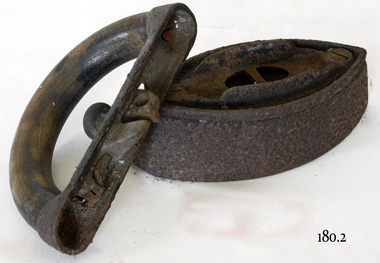
Domestic object - Iron, Mrs Florence Potts, Late 19th to early 20th century
... husband, tried unsuccessfully to market her invention on her own. It wasn't until she sold the sales rights to the American Manufacturing Company that sales took off. Advertised as "Mrs...husband, tried unsuccessfully to market her invention on her own. It wasn't until she sold the sales rights to the American Manufacturing Company that sales took off. Advertised as "Mrs ...Sad irons of the 19th century were so named because of the weight 1.8Kg that was needed to press wrinkled clothes and sheets. They were made of solid metal, including the handle. When the iron was heated, this meant that the handle would also heat up. The user would have to use a thick cloth or a mitt of some sort before they could pick up the iron. Even so, burns and blisters, as well as strained, tired arms, were a normal part of the “ironing day.” Mrs Mary Florence Potts of Ottumwa, Iowa, brought a change to the world of ironing. At the age of 19, in 1870, she invented her first sad iron. It had a hollow metal body that could be filled with a non-conducting material such as plaster of Paris. In 1871, Mary invented the removable wood handle, so that it could be changed from the cool iron to one that was hot and ready to use. A final improvement was the shape: Mary made both ends pointed so its user could iron in either direction. All of these inventions were patented under her name, a rarity for the time. Mary, with the help of her husband, tried unsuccessfully to market her invention on her own. It wasn't until she sold the sales rights to the American Manufacturing Company that sales took off. Advertised as "Mrs Potts' sad iron," it became a sensation. The company manufactured the iron from about 1876 to 1951. Mrs Potts' sad iron became a household word and a standard for future inventors to have to surpass. This didn't happen until 1882 when Henry W. Seely patented the first electric iron. The item is significant not only as a usable domestic tool, but it was, at the time of its creation, a revolutionary labour-saving device. Mrs Potts invention remains associated with a housewife's answer to the domestic drudgery of ironing.Iron,"Mrs Potts" pattern iron. Semi-circular or 'D' shaped wood handle and wood knob.Mrs Pottsflagstaff hill, warrnambool, shipwrecked coast, flagstaff hill maritime museum, flagstaff hill maritime village, great ocean road, iron, clothes iron, flat iron, laundry, sad iron, mrs potts -
 The Beechworth Burke Museum
Audio - Oral History, Jennifer Williams, Mrs Hedwig Bruckner, 2 July 2000
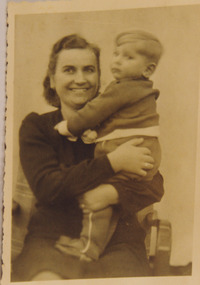
... Mrs. Hedwig Bruckner was born in Answar, Germany, in 1920. She emigrated to Beechworth in 1955 at age 32 with her two children. Her husband...Mrs. Hedwig Bruckner was born in Answar, Germany, in 1920. She emigrated to Beechworth in 1955 at age 32 with her two children. Her husband ...Mrs. Hedwig Bruckner was born in Answar, Germany, in 1920. She emigrated to Beechworth in 1955 at age 32 with her two children. Her husband was a prisoner of war in Russia for 6 years. After emigrating, Hedwig worked at the Beechworth tannery, but worked for the majority (20+) of her working years as a housekeeper for Doctor Collins. Her husband worked the nightshift at the Forestry Commission. Hedwig's testimony paints the picture of a life that was "very hard". When they moved into their house in 1956, they had no money for doors. Their two eldest children were pulled out of the convent school due to lack of funds, and their son worked as a milkman from a young age to supplement the family's income. Hedwig's testimony notes language difficulties and the number of European emigrant families in Beechworth, with which the Bruckners formed community bonds. This oral history recording was part of a project conducted by Jennifer Williams in the year 2000 to capture the everyday life and struggles in Beechworth during the twentieth century. This project involved recording seventy oral histories on cassette tapes of local Beechworth residents which were then published in a book titled: Listen to what they say: voices of twentieth century Beechworth. These cassette tapes were digitised in July 2021 with funds made available by the Friends of the Burke.Mrs. Hedwig Bruckner's oral history is significant for its insight into the perspectives and experiences of European emigrant families to Beechworth, noting their unique experiences and hardships of language, food, work, forging community bonds, and adjusting to country Australian life. The oral history project more broadly is significant for its capture of the lives of ordinary Beechworth residents from incredibly divergent backgrounds, which has led to a rich, nuanced and diverse range of accounts of Beechworth.This is a digital copy of a recording that was originally captured on a cassette tape. The cassette tape is black with a horizontal white strip and is currently stored in a clear flat plastic rectangular container. It holds up 40 minutes of recordings on each side.listen to what they say, beechworth, oral history, burke museum, hedwig bruckner -
 The Beechworth Burke Museum
Audio - Oral History, Jennifer Williams, Mrs Pam Croswaite, 2000
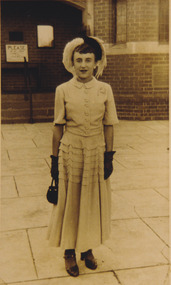
... Mrs Pam Croswaite was born 1928 in Beechworth. Her father was one of the Zwar brothers who co-owned the Beechworth Tannery until it was sold in the 1950s. Her grandfather was the founder of the Zwar Bros. Tannery and one of the first car owners in Beechworth. Pam went to university to become a pharmacist, studying in Beechworth and Melbourne. She returned to Beechworth to raise her family after quitting her work and travelling with her navy husband...Mrs Pam Croswaite was born 1928 in Beechworth. Her father was one of the Zwar brothers who co-owned the Beechworth Tannery until it was sold in the 1950s. Her grandfather was the founder of the Zwar Bros. Tannery and one of the first car owners in Beechworth. Pam went to university to become a pharmacist, studying in Beechworth and Melbourne. She returned to Beechworth to raise her family after quitting her work and travelling with her navy husband ...Mrs Pam Croswaite was born 1928 in Beechworth. Her father was one of the Zwar brothers who co-owned the Beechworth Tannery until it was sold in the 1950s. Her grandfather was the founder of the Zwar Bros. Tannery and one of the first car owners in Beechworth. Pam went to university to become a pharmacist, studying in Beechworth and Melbourne. She returned to Beechworth to raise her family after quitting her work and travelling with her navy husband to England twice. In 1984 she returned to work as a pharmacist at Mayday Hills psychiatric facility, the former 'Beechworth Lunatic Asylum'. Her grandfather, on her mother's side, was the former superintendent of the psychiatric facility. She retired in 1993, but remained active in the community in the choir and book clubs. This oral history recording was part of a project conducted by Jennifer Williams in the year 2000 to capture the everyday life and struggles in Beechworth during the twentieth century. This project involved recording seventy oral histories on cassette tapes of local Beechworth residents which were then published in a book titled: Listen to what they say: voices of twentieth century Beechworth. These cassette tapes were digitised in July 2021 with funds made available by the Friends of the Burke.Pam's story is significant because of her familial links to the Zwar Bros, who owned the tannery and employed a large percentage of the township and her work as a pharmacist in the Mayday Hills facility. She was the granddaughter of the tannery's founder and daughter of one of the three brothers who owned it until the 1950s. She become a pharmacist after studying in Melbourne and via correspondence from home, which demonstrates how university study was conducted in the 1940s. She worked in the psychiatric facility Mayday Hills, the former 'lunatic asylum', as a pharmacist after her separation form her husband from 1984 to 1993. Pam's story also demonstrated the expectation of women to leave their work to raise their families and the general expectations of women during the 1930s,40s and 50s. The project is significant because it records locally important stories and memories of the township in the 1900s. By recording the memories of some of the older members of the community, information on Beechworth's evolution as a township can be preserved. This is a digital copy of a recording that was originally captured on a cassette tape. The cassette tape is black with a horizontal white strip and is currently stored in a clear flat plastic rectangular container. It holds up 40 minutes of recordings on each side.beechworth, burke museum, beechworth lunatic asylum, mayday hills, zwar bros. tannery, beechworth tannery, pharmacist -
 The Beechworth Burke Museum
Audio - Oral History, Jennifer Williams, Mrs Sheila Parkinson, 3 January 2000
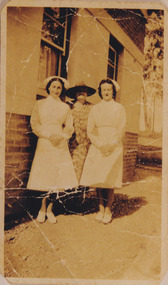
... Mrs Sheila Parkinson was born in Wagga in 1916 and came to Beechworth as a young woman around 1938. Sheila trained as a psychiatric nurse at Mayday Hills hospital prior to the second World War. At that time, unmarried women were accommodated and received nursing training on-site. Shiela was obliged to cease professional training and employment when she married in 1941, which disrupted completion of her final nursing examinations. Following post-war changes to the law that allowed married women to work, Sheila returned to Mayday Hills. Sheila's husband...Mrs Sheila Parkinson was born in Wagga in 1916 and came to Beechworth as a young woman around 1938. Sheila trained as a psychiatric nurse at Mayday Hills hospital prior to the second World War. At that time, unmarried women were accommodated and received nursing training on-site. Shiela was obliged to cease professional training and employment when she married in 1941, which disrupted completion of her final nursing examinations. Following post-war changes to the law that allowed married women to work, Sheila returned to Mayday Hills. Sheila's husband ...Mrs Sheila Parkinson was born in Wagga in 1916 and came to Beechworth as a young woman around 1938. Sheila trained as a psychiatric nurse at Mayday Hills hospital prior to the second World War. At that time, unmarried women were accommodated and received nursing training on-site. Shiela was obliged to cease professional training and employment when she married in 1941, which disrupted completion of her final nursing examinations. Following post-war changes to the law that allowed married women to work, Sheila returned to Mayday Hills. Sheila's husband, Don, returned to Beechworth after four years abroad as a serviceman in the Australian Air Force. Beechworth's institutions were a major source of local employment throughout the twentieth century. As well as providing limited employment opportunities to young women like Shiela, post-war European migrants from Bonegilla Migrant camp found at Mayday Hills, encouraging European migrant settlement in the district. Mayday Hills was renamed several times since its establishment in 1867. At the peak of operations, it comprised sixty-seven buildings housing over twelve hundred patients patients and five hundred staff. The hospital officially closed in 1998. Today, the decommissioned two-storey Italianate style main building stands on eleven hectares of botanical gardens under National Trust protection. The site remains a popular cultural heritage destination for visitors. This oral history recording was part of a project conducted by Jennifer Williams in the year 2000 to capture the everyday life and struggles in Beechworth during the twentieth century. This project involved recording seventy oral histories on cassette tapes of local Beechworth residents which were then published in a book titled: Listen to what they say: voices of twentieth century Beechworth. The cassette tapes were digitised in July 2021 with funds made available by the Friends of the Burke.Employed as a psychiatric nurse at one of Beechworth's large welfare institutions, Mayday Hills, Mrs Sheila Parkinson recalls the conditions faced by staff and patients at the hospital, which cared for chronically ill people from the Ovens region and patients from the Yarra Bend Asylum, Melbourne, which closed in 1925. When Sheila first began her nurse training, Mayday Hills suffered from a lack of resources and rudimentary facilities and patients frequently suffered from the cold due to poor heating and inadequate clothing and bedding. However, as the twentieth century progressed, Sheila recalls how conditions and treatments improved as a result of increased government funding of services and advances in psychiatry and pharmaceutical medicine. Mrs Sheila Parkinson's oral history recording is historically and socially significant for its witness to life in Beechworth in the pre- and post-WWII period. Sheila's story enriches our understanding of processes of modernisation with regard to psychiatric and welfare services, while the course of Sheila's professional training and employment brings attention to systemic and socio-economic barriers faced by women, as well as the valuable contribution women and migrants make in the delivery of care and ancillary services. This oral history account is socially and historically significant as it is a part of a broader collection of interviews conducted by Jennifer Williams which were published in the book 'Listen to what they say: voices of twentieth-century Beechworth.' While the township of Beechworth is known for its history as a gold rush town, these accounts provide a unique insight into the day-to-day life of the town's residents during the twentieth century, many of which would have been lost if they had not been preserved.This is a digital copy of a recording that was originally captured on a cassette tape. The cassette tape is black with a horizontal white strip and is currently stored in a clear flat plastic rectangular container. It holds up 40 minutes of recordings on each side.Mrs Sheila Parkinson /twentieth century beechworth, mayday hills, psychiatric care, benevolent asylums, nursing, wwii, psychiatric treatment, country women, psychiatric hostpital, beechworth's institutions, local employment, government institutions, listen to what they say, oral history, burke museum, sheila parkinson, beechworth lunatic asylum, beechworth mental hospital, beechworth hospital for the insane, the kerferd clinic, bonegilla migrant camp, working women, white australia policy -
 The Beechworth Burke Museum
Audio - Oral History, Olive Wilkinson
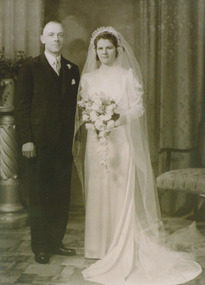
... husband as the Superintendent. This oral history recording was part of a project conducted by Jennifer Williams in the year 2000 to capture the everyday life and struggles in Beechworth during the twentieth century. This project involved recording seventy oral histories on cassette tapes of local Beechworth residents which were then published in a book titled: Listen to what they say: voices of twentieth century Beechworth. These cassette tapes were digitised in July 2021 with funds made available by the Friends of the Burke. Mrs ...Olive Wilkinson was born in 1917 in Ararat. She and her husband both worked at the Ovens Benevolent Home, with her as a temporary matron when the need arose, and her husband as the Superintendent. This oral history recording was part of a project conducted by Jennifer Williams in the year 2000 to capture the everyday life and struggles in Beechworth during the twentieth century. This project involved recording seventy oral histories on cassette tapes of local Beechworth residents which were then published in a book titled: Listen to what they say: voices of twentieth century Beechworth. These cassette tapes were digitised in July 2021 with funds made available by the Friends of the Burke. Mrs Olive Wilkinson's account of her life in Beechworth and the local area during the 20th century is historically and socially significant to the cultural history of the region. She details historical events pertaining to Beechworth and her family. This oral history account is socially and historically significant as it is a part of a broader collection of interviews conducted by Jennifer Williams which were published in the book 'Listen to what they say: voices of twentieth-century Beechworth'. While the township of Beechworth is known for its history as a gold rush town, these accounts provide a unique insight into the day-to-day life of the town's residents during the 20th century, many of which will have now been lost if they had not been preserved. This is a digital copy of a recording that was originally captured on a cassette tape. The cassette tape is black with a horizontal white strip and is currently stored in a clear flat plastic rectangular container. It holds up 40 minutes of recordings on each side. Mrs Olive Wilkinsonlisten to what they say, beechworth, oral history, burke museum, wilkinson, olive wilkinson, ovens benevolent home -
 The Beechworth Burke Museum
Audio - Oral History, Jennifer Williams, Mrs Helen Jackson, 9th March 2000
... Mrs. Helen Jackson, originally from Melbourne, moved to Beechworth in the 1950s for the purpose of her husband's employment with the Mayday Hills asylum as a vegetable gardener. ...Mrs. Helen Jackson, originally from Melbourne, moved to Beechworth in the 1950s for the purpose of her husband's employment with the Mayday Hills asylum as a vegetable gardener. ...Mrs. Helen Jackson, originally from Melbourne, moved to Beechworth in the 1950s for the purpose of her husband's employment with the Mayday Hills asylum as a vegetable gardener. Living in Beechworth for over 40 years, Mrs. Jackson spent her time as a devoted full-time mother raising her family of biological and foster children where she has fond memories of Beechworth being a safe and fun place to live - "Oh it was, life was fun!". This oral history recording was part of a project conducted by Jennifer Williams in the year 2000 to capture the everyday life and struggles in Beechworth during the twentieth century. This project involved recording seventy oral histories on cassette tapes of local Beechworth residents which were then published in a book titled: Listen to what they say: voices of twentieth century Beechworth. These cassette tapes were digitised in July 2021 with funds made available by the Friends of the Burke.The oral history record of Mrs. Helen Jackson is a representative insight into life in Beechworth from the 1950s onwards, specifically in the descriptions of commerce, business, family, and leisure activities for residents of the town during the post-war period until the present day. Mrs. Jackson's recollections have a social value to the town of Beechworth as a local perspective on its development and contributes to its cultural and social history. This oral history account is socially and historically significant as it is a part of a broader collection of interviews conducted by Jennifer Williams which were published in the book 'Listen to what they say: voices of twentieth-century Beechworth.' While the township of Beechworth is known for its history as a gold rush town, these accounts provide a unique insight into the day-to-day life of the town's residents during the 20th century, many of which will have now been lost if they had not been preserved.This is a digital copy of a recording that was originally captured on a cassette tape. The cassette tape is black with a horizontal white strip and is currently stored in a clear flat plastic rectangular container. It holds up 40 minutes of recordings on each side.Mrs Helen Jackson /listen to what they say, beechworth, oral history, burke museum, jackson, helen jackson, linda peacock, mayday hills -
 The Beechworth Burke Museum
Audio - Oral History, Valentina Witkowski
... Mrs Valentina Witkowski account of her life before and after arriving in Beechworth and the local area during the 20th century is historically and socially significant to the cultural heritage of the region. She details her struggles in Germany before arriving in Beechworth with her new husband ...Valentina Witkowski was born in 1922 in St. Petersberg (Leningrad at the time) in Russia. She moved to Australia post war with her husband and children. She retells her time moving from Russia, to Germany where she was in a camp, Canada, Argentina and then finally Australia. This oral history recording was part of a project conducted by Jennifer Williams in the year 2000 to capture the everyday life and struggles in Beechworth during the twentieth century. This project involves recording seventy oral histories on cassette tapes of local Beechworth residents which were then published in a book titled: Listen to what they say: voices of twentieth century Beechworth. These cassette tapes were digitised in July 2021 with funds made available by the Friends of the Burke. Mrs Valentina Witkowski account of her life before and after arriving in Beechworth and the local area during the 20th century is historically and socially significant to the cultural heritage of the region. She details her struggles in Germany before arriving in Beechworth with her new husband and children. This oral history account is socially and historically significant as it is a part of a broader collection of interviews conducted by Jennifer Williams which were published in the book 'Listen to what they say: voices of twentieth-century Beechworth'. While the township of Beechworth is known for its history as a gold rush town, these accounts provide a unique insight into the day-to-day life of the town's residents during the 20th century, many of which will have now been lost if they had not been preserved. This is a digital copy of a recording that was originally captured on a cassette tape. The cassette tape is black with a horizontal white strip and is currently stored in a clear flat plastic rectangular container. It holds up 40 minutes of recordings on each side. Mrs Valentina Witkowskilisten to what they say, beechworth, oral history, witkowski, valentina witkowski, russia, burke museum
