
Showing 46 items matching "hydraulic pumps"
-
 Moorabbin Air Museum
Manual (Item) - Hydraulic Pumps - Handbook of Instructions with parts Catalog - RAAF
... Hydraulic Pumps - Handbook of Instructions with parts Catalog - RAAF...Hydraulic Pumps - Handbook of Instructions with parts Catalog - RAAF...Hydraulic Pumps - Handbook of Instructions with parts Catalog - RAAF Manual Hydraulic Pumps - Handbook of Instructions with parts Catalog - RAAF ... -
Moorabbin Air Museum
Manual (item) - Vickers Hydraulic Pumps & Hydromotive Controls Engineering Data
... Vickers Hydraulic Pumps & Hydromotive Controls Engineering Data...Vickers Hydraulic Pumps & Hydromotive Controls Engineering Data...Vickers Hydraulic Pumps & Hydromotive Controls Engineering Data Manual Vickers Hydraulic Pumps & Hydromotive Controls Engineering Data ... -
 Moorabbin Air Museum
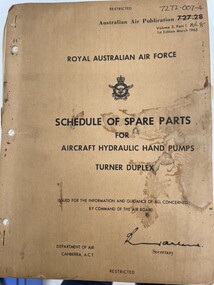
Document (Item) - (SP) AAP 7272.007-4 RAAF Pub 727:28 Schedule Of Spare Parts For Aircraft Hydraulic Hand Pumps Turner Duplex
... (SP) AAP 7272.007-4 RAAF Pub 727:28 Schedule Of Spare Parts For Aircraft Hydraulic Hand Pumps Turner Duplex...(SP) AAP 7272.007-4 RAAF Pub 727:28 Schedule Of Spare Parts For Aircraft Hydraulic Hand Pumps Turner Duplex...AAP 7272.007-4 (SP) AAP 7272.007-4 RAAF Pub 727:28 Schedule Of Spare Parts For Aircraft Hydraulic Hand Pumps Turner Duplex Document (SP) AAP 7272.007-4 RAAF Pub 727:28 Schedule Of Spare Parts For Aircraft Hydraulic Hand Pumps Turner Duplex ...AAP 7272.007-4 -
Moorabbin Air Museum
Manual (Item) - Aircraft Fuel-Hydraulic-Air Pumps Schedule of Fits and Clearances, Repair Tolerances and Instructions RAAF Publication No 321, Aircraft Fuel-Hydraulic-Air Pumps Schedule of Fits and Clearances, Repair Tolerances and Instructions
... Aircraft Fuel-Hydraulic-Air Pumps Schedule of Fits and Clearances, Repair Tolerances and Instructions RAAF Publication No 321...Aircraft Fuel-Hydraulic-Air Pumps Schedule of Fits and Clearances, Repair Tolerances and Instructions...Aircraft Fuel-Hydraulic-Air Pumps Schedule of Fits and Clearances, Repair Tolerances and Instructions Manual Aircraft Fuel-Hydraulic-Air Pumps Schedule of Fits and Clearances, Repair Tolerances and Instructions RAAF Publication No 321 ... -
Moorabbin Air Museum
Manual (Item) - Vickers Hydraulic Pumps Engineering Data
... Vickers Hydraulic Pumps Engineering Data...Manual Vickers Hydraulic Pumps Engineering Data ...Description: 300 pages. Published by Wright Aeronautical Corp. Published 8/4/1940. Wright Engines Cyclone Models F, F-50, G, G-100 and Whirlwind J-6 (E-Series) Tool Catalogues Level of Importance: World. -
Moorabbin Air Museum
Manual (Item) - Vickers Hydraulic Pumps and Hydromotive Controls Engineering Data Aircraft Units
... Vickers Hydraulic Pumps and Hydromotive Controls Engineering Data Aircraft Units...Manual Vickers Hydraulic Pumps and Hydromotive Controls Engineering Data Aircraft Units ... -
Moorabbin Air Museum
Manual - Pesco pumps, Pesco Service Manual for Pesco Hydraulic Pumps Gear Type
... Pesco Service Manual for Pesco Hydraulic Pumps Gear Type...Pesco pumps General & detailed descriiption Accessories Installation Overhaul Parts list Test equiipmejnt & procedures Guide for installing & servicing high pressure oil pump , model 203, circa 1937 Pesco Service Manual for Pesco Hydraulic Pumps Gear Type Manual Pesco pumps ...Guide for installing & servicing high pressure oil pump , model 203, circa 1937non-fictionGuide for installing & servicing high pressure oil pump , model 203, circa 1937general & detailed descriiption, accessories, installation, overhaul, parts list, test equiipmejnt & procedures -
 Moorabbin Air Museum
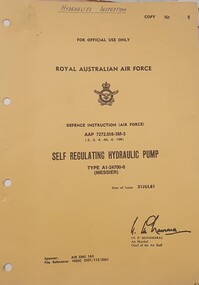
Manual (Item) - AAP 7272.058-3M-3 Self Regulating Hydraulic Pump Type A1-24700-0 (Messier)
... AAP 7272.058-3M-3 Self Regulating Hydraulic Pump Type A1-24700-0 (Messier)...self regulating hydraulic pumps...A maintenance manual for a self-regulating hydraulic pump....A maintenance manual for a self-regulating hydraulic pump. Royal Australian Air Force technical manual self regulating hydraulic pumps Manual AAP 7272.058-3M-3 Self Regulating Hydraulic Pump Type A1-24700-0 (Messier) ...Issued by the Royal Australian Air Force in July 1981. A maintenance manual for a self-regulating hydraulic pump.royal australian air force, technical manual, self regulating hydraulic pumps -
 Flagstaff Hill Maritime Museum and Village
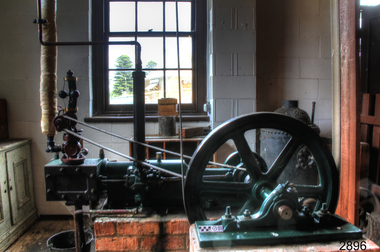
Machine - Steam Engine, Tangyes engineering, Mid-1880s
... ...hydraulic pumps...Flagstaff Hill Warrnambool Maritime Village Maritime Museum Flagstaff Hill Maritime Museum and Village Shipwreck coast Great Ocean Road machine invention engine steam steam engine horizontal steam engine Tangyes horizontal steam engine stationary steam engine single cylinder steam engine manufacturing farming pumps lifting equipment engines machine tools hydraulic rams hydraulic pumps steam pumps differential pulleys Mill type steam engine 4 inch cylinder Weston’s differential pulley Thomas Aldridge Weston 1862 International Exhibition in London Brunel SS Great Eastern Cleopatra’s Needle Forth Road Bridge Cornwall House Collins Street Melbourne agricultural machinery industrial machinery Allspeeds dairy pump Richard Tangye & Brothers James Tangye and Brothers Tangye Brothers and Price Tangye Brothers Tangye Brothers & Holman Tangyes Ltd. ...This Tangye B-size, single-cylinder, horizontal steam engine was likely manufactured in England around the mid-1880s. It was distributed by Melbourne machinery merchants Cameron & Sutherland, which also operated in Bendigo and Ballarat. A local cheese maker once used the engine to drive factory equipment. It was later donated to the Warrnambool Technical School, which then donated it to Flagstaff Hill to add to its historical steam engine collection. Between its manufacture and its donation to Flagstaff Hill, the governor had been replaced by the current Pickering governor. This engine design was very popular in the late 19th and early 20th centuries. When connected and powered up, the engine could drive an overhead line shaft via a flat belt off its flywheel. The line shaft would then drive the machinery via flat belts. It could drive virtually any type of machinery, such as water and sewerage pumps, mine elevators, winches, cranes, metal forges, air blowers, and marine machinery. This engine features a mechanical governor, which controls the speed of the engine regardless of whether it is under load. It also has a water pump built into the valve rod, which is used to supply the boiler with water. Steam enters the cylinder via a slide valve and applies pressure to the piston; it is like a modern internal combustion engine, but in the case of the steam engine, the pressure is exerted in turn on either side of the piston. In other words, the connecting rod is pushed by steam via the piston and piston rod and then pulled back again by steam pushing on the opposite side of the piston. Thus, power is exerted almost continuously, except at the end of each piston stroke, when it reverses direction. In the 1880s, many local butter and cheese manufacturers installed Tangye steam engines to power their machinery. A comprehensive article in the Gippsland Mercury in September 1889 extolled the magnificence of the Farnham Butter Factory in Dennington, Warrnambool, and described how one Tangye engine was used to drive several machines in the cheese- and butter-making processes. A report in the Warragul Guardian in December 1890 notes that the newly opened Warrnambool Butter Factory used a Tangye steam engine to pump water from a 60-foot well. Tangye: Richard Tangye (1833–1906) and four of his brothers—James, Joseph, Edward, and George—were the sons of Joseph Tangye, a Quaker Cornish miner. In 1857, they founded the engineering firm Richard Tangye & Brothers in Birmingham, UK. In 1860, the firm became Tangye Brothers and moved to Cornwall Works in Birmingham. The business encouraged inventors to join the company and develop their patents there, as happened with Weston’s differential pulley block, invented by the Englishman Thomas Aldridge Weston in 1854. Tangye bought the patent in 1858, giving the firm the sole right to manufacture it. The design received a medal for “original application, practical utility and success” at the 1862 International Exhibition in London. Also in 1858, the Tangye firm was commissioned by Brunel’s shipping company to manufacture hydraulic lifting jacks, or rams, to launch the steamship SS Great Eastern. The success of this project brought favourable attention to the firm, and it became involved in other notable projects, including the erection of Cleopatra’s Needle in London in 1878 and work on the Forth Road Bridge in Scotland. The firm underwent several name changes over the years, including James Tangye and Brothers (1857), Tangye Brothers and Price (1859), Tangye Brothers (1860), Tangye Brothers & Holman (1876), Tangye Brothers (by 1878), Tangye Ltd. (1881), and then simply Tangye. Its machinery and equipment were exported worldwide. In 1884, a branch with showrooms, offices, and a warehouse was opened in Melbourne at Cornwall House, Collins Street West. The firm was well known for producing high-quality machinery for agriculture and industry. Even today, new Tangye machinery is available for a subsidiary of Allspeeds. An extensive account of the firm’s history, names, inventions, and further references is available in Grace’s Guide, which also includes references to and diagrams of the Tangye horizontal steam engine. The horizontal steam engine was made by the well-known engineering firm Tangye, known for its high quality of manufacture. It was an important development in machinery because it helped improve productivity. Engines of this type are still used in some parts of the world today. This engine is a good example of a late 19th-century steam engine used in industry and agriculture and adapted for many different purposes. It is also important locally because it was connected to a local cheese making business and part of the thriving western district dairy industry. It may have been one of the Tangyes engines used at the Farnham butter factory or the Warrnambool Butter Factory, which was reported to be one of the most important in the Colony. It is also connected to the Warrnambool Technical School, established in 1968. Steam engine: stationary Tangye Size B, single-cylinder, horizontal Mill type steam engine. It has a 4-inch diameter cylinder with an 8-inch stroke. The body is painted green, and the Pickering governor is red. It was manufactured in Birmingham, England, in accordance with Tangye's Patent 238930, and distributed by Cameron and Sunderland, Melbourne, in the mid-1880s. TANGEYS PATENT BIRMINGHAM B SIZE 238930 CAMERON & SUTHERLAND MELBOURNE THE PICKERING PORTLAND . GOVERNOR . CONN. U.S.A.flagstaff hill, warrnambool, maritime village, maritime museum, flagstaff hill maritime museum and village, shipwreck coast, great ocean road, machine, invention, engine, steam, steam engine, horizontal steam engine, tangyes horizontal steam engine, stationary steam engine, single cylinder steam engine, manufacturing, farming, pumps, lifting equipment, engines, machine tools, hydraulic rams, hydraulic pumps, steam pumps, differential pulleys, mill type steam engine, 4 inch cylinder, weston’s differential pulley, thomas aldridge weston, 1862 international exhibition in london, brunel, ss great eastern, cleopatra’s needle, forth road bridge, cornwall house, collins street melbourne, agricultural machinery, industrial machinery, allspeeds, dairy, pump, richard tangye & brothers, james tangye and brothers, tangye brothers and price, tangye brothers, tangye brothers & holman, tangyes ltd., tangye, richard tangye, james tangye, joseph tangye, edward tangye, george tangye, cornwall works, birmingham, pickering governor, pickering portland connecticut usa, 19th century, dairy plant, steam power, tangye's patent 238930, tangye b size engine, cameron & sutherland, machine merchants, 1880s, mid-1880s, cheese manufacturer, butter manufacturer, diary industry, warrnambool technical school, belt driven machinery, agriculture, mechanical governor, farnham butter factory, warrnambool butter factory -
 El Dorado Museum Association Inc.
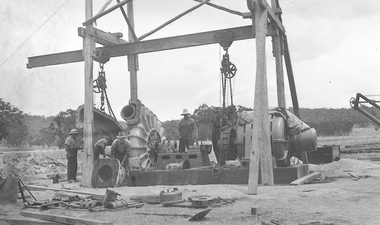
Photograph (item) - Digital Image
... Digital image copied from a black and white photograph of large hydraulic pumps on gantry crane. There are four men wearing hats in the image. ...Cock’s Pioneer Gold and Tin Mines NL carried on large-scale hydraulic sluicing operations until 1941. mines mining tin gold tin mining gold mining hydraulic mining cocks pioneer el dorado eldorado Digital image copied from a black and white photograph of large hydraulic pumps on gantry crane. There are four men wearing hats in the image. ...Cocks Pioneer new engines. Cocks Pioneer Electric Gold & Tin Mine Company was formed in 1899. The company's first power station, located at the eastern end of the valley began operating with its 340 Kilowatt steam-powered generator. By 1909, from 2,500,000 cubic yards worked, reported recovery was 17,284 ounces of gold and 224 tons of tin ore. By 1909, Cocks Pioneer’s power plant had become inadequate and uneconomical. The barge was floated downstream about a mile, but lost time caused the operations to cease. Following testing, a new mine was established by diverting Reid's Creek at a cost of £25 000. Settling dams were built, one of which held 1,935,900 cubic feet. Sold earth banks, built against a wall of stringy bark saplings constructed and laced with vertical props, were built. In 1914, the company was reformed as Cock’s Pioneer Gold and Tin Mines NL, another power station was constructed at the western end of the township, near the junction of Clear and Reid's Creeks. From 6,800,000 cubic yards of material processed, the returns were 64,397 ounces of gold and 855 ton of tin. Cocks Pioneer mine then moved the barge downs stream and continued sluicing. In 1929 Cocks Pioneer Electric Gold and Tin Mining Company ceased operations due to a drop in values. Cock’s Pioneer Gold and Tin Mines NL carried on large-scale hydraulic sluicing operations until 1941. mines, mining, tin, gold, tin mining, gold mining, hydraulic mining, cocks pioneer, el dorado, eldorado -
Moorabbin Air Museum
Manual - Aircraft equipment, Index of Army and Navy Aeronautical Equipment , Supercharger Pumps and Accessories
... pumps...Hydraulic oil pump...Aircraft Equipment Turbosuperchargers Regulators Fuel pumps Booster pumps & controls Motors Fuel transfer pumps Hydraulic oil pump Air pump assemblies Parts lists for superchargers, regulators, pumps & accessories, circa 1940s Hard cardboard cover. ...Parts lists for superchargers, regulators, pumps & accessories, circa 1940sHard cardboard cover. Books 3434 & 3435non-fictionParts lists for superchargers, regulators, pumps & accessories, circa 1940sturbosuperchargers, regulators, fuel pumps, booster pumps & controls, motors, fuel transfer pumps, hydraulic oil pump, air pump assemblies, -
Moorabbin Air Museum
Manual (Item) - D-C Reverse-Current Air-Circuit Breaker
... Published June 1954. Vickers Hydraulic Pumps Engineering Data and Parts Illustration Level of Importance: World. ...Published June 1954. Vickers Hydraulic Pumps Engineering Data and Parts Illustration Level of Importance: World. ...Description: 250 pages. Published by Vickers Inc. Published June 1954. Vickers Hydraulic Pumps Engineering Data and Parts Illustration Level of Importance: World. -
 Federation University Historical Collection
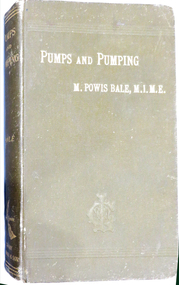
Book, Pumps and Pumping: A Handbook for Pump Users, 1901, 1901
... Chapters include steam pumps; pumps and injectors for feeding steam boilers; hand pumps; hydraulic rams; pumps for specific duties; pump valves; suction and delivery pumps; rules and notes relating to pumps. ...Chapters include steam pumps; pumps and injectors for feeding steam boilers; hand pumps; hydraulic rams; pumps for specific duties; pump valves; suction and delivery pumps; rules and notes relating to pumps. ...Brown, hard, cloth covered book of 121 pages plus advertisements. Chapters include steam pumps; pumps and injectors for feeding steam boilers; hand pumps; hydraulic rams; pumps for specific duties; pump valves; suction and delivery pumps; rules and notes relating to pumps. mining, pumps, pumping, powis bale, boilers, steam, hydrology, valves, windmills, waterworks, pipes -
 The Beechworth Burke Museum
Photograph - Photograph - Reproduction
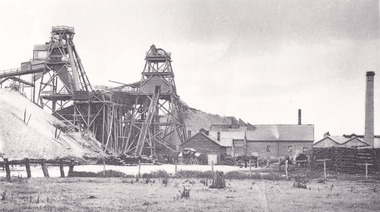
... The Great Southern Mine depicted in this photograph required the use of a range of modern technologies, including the hydraulic pumps, in order to reach gold. This photo depicts the mining operations as they were undertaken around the turn of the century....The Great Southern Mine depicted in this photograph required the use of a range of modern technologies, including the hydraulic pumps, in order to reach gold. This photo depicts the mining operations as they were undertaken around the turn of the century. ...This photograph depicts the Great Southern Mine located in Rutherglen as it was during the 1900. After the initial Gold Rush of 1853-1854, Gold was discovered deeper under the surface of the earth in the 1860 after the discovery of another deep lead system. Due to the discovery of Gold in Rutherglen, Rutherglen developed into a community in its own right, possessing a population of 6600 by December 1860 and developed into a municipality in 1862. The Great Southern Mine depicted in this photograph required the use of a range of modern technologies, including the hydraulic pumps, in order to reach gold. This photo depicts the mining operations as they were undertaken around the turn of the century.The search for gold is ingrained into the history of Victoria and therefore, images like this one which portray a modern mining operation undertaken in the 1860s, can reveal important information for society and technology for the date when the photograph was taken. This image is of important historical significance for its ability to convey information about the methods used to extract gold in 1900. It is significant as most mining operations around the region, particularly earlier on in the period, used different technologies such as water races. This image is important for current research into the history of Rutherglen more generally, a town which developed singlehandedly due to the discovery of minerals and mining, as depicted here in this photograph, thus indicating an element of social significance as well as historic. The Beechworth Burke Museum has additional images relating to mining and Rutherglen which can be analysed and studied alongside images like this one.A black and white rectangular photograph printed on matte photographic paper.Reverse: $ 3.00 19972503 / a02503 / Great Southern Mine Rutherglen 1900rutherglen mine, rutherglen, great southern mine, beechworth, mine, mining, post goldrush, victoria, gold, 1860s, sluicing, hydrolic sluicing -
 Bendigo Historical Society Inc.
Document - STATE RIVERS AND WATER SUPPLY COMMISSION : EPPALOCK PROJECT - CONSTRUCTION
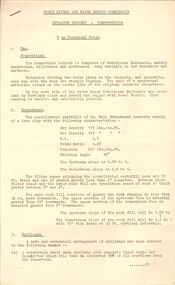
... Information typed under subheadings: Dam, Embankment, Spillways, Outlet works, proposed hydraulic driven pumps, road deviations. Undated....Information typed under subheadings: Dam, Embankment, Spillways, Outlet works, proposed hydraulic driven pumps, road deviations. Undated. Document STATE RIVERS AND WATER SUPPLY COMMISSION : EPPALOCK PROJECT - CONSTRUCTION ...State Rivers and Water Supply Commission headed six page document, stapled. Subtitled: ' Eppalock Project - Construction. Some Technical Notes.' Information typed under subheadings: Dam, Embankment, Spillways, Outlet works, proposed hydraulic driven pumps, road deviations. Undated.state infrastructure, water supply, coliban system, state rivers and water supply commission. coliban system. eppalock. -
 The Beechworth Burke Museum
Photograph, 1900-1912
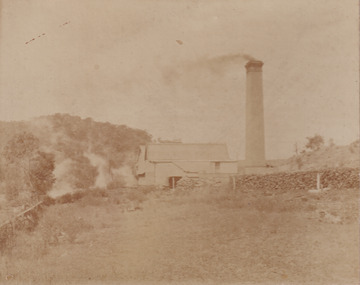
... The Cocks Pioneer Electric Gold and Tin Co was formed in 1899 at El Dorado, an area to the east of Beechworth proper, which marked the transition in this area from traditional lead mining methods to open cut sluicing and was said to use pump hydraulic sluicing to best effect in the Beechworth division. ...The Cocks Pioneer Electric Gold and Tin Co was formed in 1899 at El Dorado, an area to the east of Beechworth proper, which marked the transition in this area from traditional lead mining methods to open cut sluicing and was said to use pump hydraulic sluicing to best effect in the Beechworth division. ...This photograph depicts a power house for the Cocks Pioneer Gold and Tin Sluicing Company and is dated 1900-1912. John Cock migrated to Victoria from Cornwall in 1854 and worked on the El Dorado mines for 20 years, before going on to become a superintendent and/or advisor to all Indigo shire deep lead companies of the 1890's. The Cocks Pioneer Electric Gold and Tin Co was formed in 1899 at El Dorado, an area to the east of Beechworth proper, which marked the transition in this area from traditional lead mining methods to open cut sluicing and was said to use pump hydraulic sluicing to best effect in the Beechworth division. This power house fuelled the mining operations of the company with a steam-powered generator. This photograph has historic significance and research potential for study on the gold mining of the Beechworth region, specifically the new methods used, types of equipment, and the power sources required to fuel expanding mining operations after the initial gold rush of 1853-1854. A black and white rectangular photograph printed on matte photographic paper and mounted on board.Obverse: (5) / Power House / Cocks Pioneer Gold & Tin Sluicing Co. N.L. / 1900-1912 Reverse: 15 / 10 (?) / 1997.2610 / A02610 beechworth, mining, gold rush, sluicing, cocks pioneer gold & tin sluicing co, gold mining -
 Flagstaff Hill Maritime Museum and Village
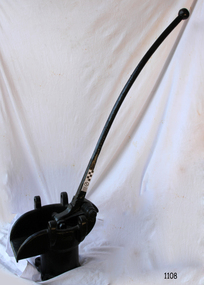
Functional object - Water Pump, Goulds Manufacturing Co, 1915-1925
... Goulds made many different types of pumps to suit differing pumping situations such as. Well Pumps, Hydraulic Rams, Diaphragm Pumps, Tank Pumps, Sprayers and Small Capacity Power rumps. ...Goulds made many different types of pumps to suit differing pumping situations such as. Well Pumps, Hydraulic Rams, Diaphragm Pumps, Tank Pumps, Sprayers and Small Capacity Power rumps. ...Gould manufacturing company was founded in 1848 at Seneca Falls, New York when Seabury S. Gould purchased an interest in Downs, Mynderse & Co. and the firm became Downs & Co. Wooden pumps were produced at the time in an old cotton factory building. In 1869, the name of the company was changed from Downs & Company to Goulds Manufacturing Company. Seabury S. Gould was regarded as a man of unusual vision, and as the founder of Goulds Manufacturing Company he was keen to start producing cast iron pumps. An iron pump, he believed, would overcome all the disadvantages of a wooden pump. It would be strong and efficient and provide fresh flowing water for the pioneers. He ran the company until after the American Civil War and because Goulds Manufacturing had a foundry, they also produced all kinds of cast iron products such as corn shellers, bells, sad irons, sinks, tools, and a line of fire engines. From 1848 to 1964 a Gould family member had always been President of the company. However, the company ownership in 1964 was transferred from family-owned stock to public offerings and employee ownership of stock. The subject item called the "N e w Deluge" was an improved bilge pump for vessels having not more than 25 feet depth of hold. It was also used by contractors for pumping out excavations and was well adapted for irrigation use. This hand pump was designed to be used where a hand pump of large capacity was desired. Goulds made many different types of pumps to suit differing pumping situations such as. Well Pumps, Hydraulic Rams, Diaphragm Pumps, Tank Pumps, Sprayers and Small Capacity Power rumps. Goulds Triplex, Centrifugal, Rotary and Deep Well Power Pumps The subject item was first introduced to the market in the Goulds catalogue of 1915 and became a very popular pump used in Australia and the USA. It is manufactured by a company still trading today with offices in Australia and many other countries.Hand Pump cast iron with long reversable pumping lever and cylindrical casing there are 4 metal holes for fastening to floor surface. Painted black. Embossed "NEW DELUGE" "- - -" and "No 16" or "No 18".warrnambool, flagstaff-hill, flagstaff-hill-maritime-museum, maritime-museum, shipwreck-coast, flagstaff-hill-maritime-village, pump, hand pump, goulds manufacturing -
 Parks Victoria - Maldon State Battery
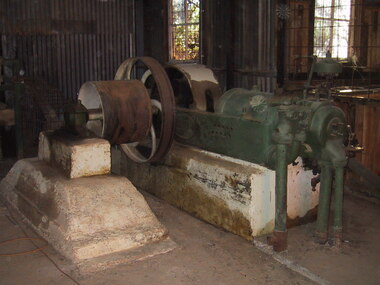
Engine, gas
... After the deaths of Richard (1906) and George (1920), with the family owning the majority of shares, their sons entered the business.[2] In 1919, the company started production of large-scale industrial diesel engines, pumps and hydraulic equipment. Engine production was stopped after World War Two. ...After the deaths of Richard (1906) and George (1920), with the family owning the majority of shares, their sons entered the business.[2] In 1919, the company started production of large-scale industrial diesel engines, pumps and hydraulic equipment. Engine production was stopped after World War Two. ...This engine turned belts to power battery operation. Used from C 1910-1920, some are parts missing. 'Tangye' had offices in Sydney.The first gas engine, a 1 nominal horsepower two-cycle type, was sold in 1881, and in 1890 the firm commenced manufacture of the four-cycle gas engine. Incorporated as a limited company from 1881, in 1894 they produced their first hot bulb engine.[2] Richard Tangye was knighted in 1894. After the deaths of Richard (1906) and George (1920), with the family owning the majority of shares, their sons entered the business.[2] In 1919, the company started production of large-scale industrial diesel engines, pumps and hydraulic equipment. Engine production was stopped after World War Two. A Tangye 35HP suction gas engine. (incomplete). Large green cast iron engine sitting on large white concrete block, with inscriptions on both sides. The green engine has 3 outlet/inlet pipes and joins onto one belt wheel; belt wheel joins onto another belt wheel which is sitting on another white concrete block."Tangye/patents/birmingham" -
Federation University Historical Collection
Book, New York Post, The School of Mine Quarterly: A Journal of Applied Science, 1889-1809
... Hydraulic diagrams...standardistion of Potassium permanganate...Sewerage Discharge into Sea Water...Modern waterworks...True Column formula...Slags from lead furnaces...missouri river...tempreture of gases...rocks...architectural history...Modern dome...oil machine...undulations in railway tracks...Irrigation engineering...Cleps-tachymeters...Electrical Engineering...New York Shales...fan pump...The School of Mines Quarterly was a jpournal of Applied Science from Columbia College, New York City. school of mines new york columbia college schools of mines columbia school of mines Witwatersrand Goldfield INter-continental Railway Mine Ropes Harbor improvememnts on the Pacific coast Glycerine and artificial Butter industry Transit Factors for teh Columbia College Observatory Tables for the Reducation of Transit Observations Ancienct methods for dividing and Recoording time in Japan Assay of tin John Strong Newberry Standards of linnear Measure Comparison of costs of electric lighting Huanchaca Mine Bolivia El Callao Gold Mine Venezuela John Magnus Adams Ores in Saxony Hartz and Rhenish Prussia Hofmann Apparatus Adjustment of Trangulation Determination of Carbonic Acid in White Lead Lower Coals in Western Clearfield County Pennsylvania Old Telegraph Mine Ningham Canon Utah mechanical Preparation of Ores modern waterworks construction curdling of milk French regenerative gas furnace Irrication Canals peruvian salt mine Collection of Metallurgic Dust and fume Permeability of iron and steel Assay of Silver Explosion in a Zinc Fume condenser Teaching archtectural history Liquid air between the mine and the smelter Ballistic Galvonometer Assay of Telluride ores Analytical Chemistry Theory and design of the masonry arch silver pick mine Wilson colorado telegraphy and telephoney mineralogy morse code Michigan mining practices Titaniferous magnetites paradox of the pantheon Rocks from Wyoming Witwatersrand goldfields Gaseous sun Alternating current distribution Engineering tests on direct current Electrical Machinery Thomas Egleston Ore dressing Frederick Morgan Watson Camp Bird Gold Mine and Mills Magnetic properties of Iron and Steel Morphology of Organic compounds Antimony structure of the Starch Molecule Cerrillos Hills New Mexico geology Rossie Lead Veins practical electrochemistry lines of graphic statics Anistic Acid by the ozidation of Anniseed Oil Bromate method for antimony John Krom Rees Trust company of America Building Helion lamp Frederick Arthur Goetze Mine Surveying Pine Wood Oils Malleable Cast iron Electrolytic treatment of Galena turpentine and pine oils Bluestone Ashokan Dam bluestone road resistances Oxy-gas blowtorch Mine dumps segregation of steel ingots masonry dam formulas putnam county magnetic belts gases Continuity of education Hydraulic diagrams standardistion of Potassium permanganate Sewerage Discharge into Sea Water Modern waterworks True Column formula Slags from lead furnaces missouri river tempreture of gases rocks architectural history Modern dome oil machine undulations in railway tracks Irrigation engineering Cleps-tachymeters Electrical Engineering New York Shales fan pump Sucrose Isaac Newton French school of anstronomers Electrolytic polarization Benjamin bowden lawrence diamond drilling New York Ciy Water Front Engineering profession ethics The Index to the School of Mines Quarterlu Volumes X1-XX (1900) and 32 green covered journals The School of Mine Quarterly: A Journal of Applied Science Book New York Post ...The School of Mines Quarterly was a jpournal of Applied Science from Columbia College, New York City.The Index to the School of Mines Quarterlu Volumes X1-XX (1900) and 32 green covered journals school of mines, new york, columbia college, schools of mines, columbia school of mines, witwatersrand goldfield, inter-continental railway, mine ropes, harbor improvememnts on the pacific coast, glycerine and artificial butter industry, transit factors for teh columbia college observatory, tables for the reducation of transit observations, ancienct methods for dividing and recoording time in japan, assay of tin, john strong newberry, standards of linnear measure, comparison of costs of electric lighting, huanchaca mine bolivia, el callao gold mine venezuela, john magnus adams, ores in saxony, hartz and rhenish prussia, hofmann apparatus, adjustment of trangulation, determination of carbonic acid in white lead, lower coals in western clearfield county pennsylvania, old telegraph mine ningham canon utah, mechanical preparation of ores, modern waterworks construction, curdling of milk, french regenerative gas furnace, irrication canals, peruvian salt mine, collection of metallurgic dust and fume, permeability of iron and steel, assay of silver, explosion in a zinc fume condenser, teaching archtectural history, liquid air, between the mine and the smelter, ballistic galvonometer, assay of telluride ores, analytical chemistry, theory and design of the masonry arch, silver pick mine wilson colorado, telegraphy and telephoney, mineralogy, morse code, michigan mining practices, titaniferous magnetites, paradox of the pantheon, rocks from wyoming, witwatersrand goldfields, gaseous sun, alternating current distribution, engineering tests on direct current electrical machinery, thomas egleston, ore dressing, frederick morgan watson, camp bird gold mine and mills, magnetic properties of iron and steel, morphology of organic compounds, antimony, structure of the starch molecule, cerrillos hills new mexico, geology, rossie lead veins, practical electrochemistry, lines of graphic statics, anistic acid by the ozidation of anniseed oil, bromate method for antimony, john krom rees, trust company of america building, helion lamp, frederick arthur goetze, mine surveying, pine wood oils, malleable cast iron, electrolytic treatment of galena, turpentine and pine oils, bluestone, ashokan dam bluestone, road resistances, oxy-gas blowtorch, mine dumps, segregation of steel ingots, masonry dam formulas, putnam county magnetic belts, gases, continuity of education, hydraulic diagrams, standardistion of potassium permanganate, sewerage discharge into sea water, modern waterworks, true column formula, slags from lead furnaces, missouri river, tempreture of gases, rocks, architectural history, modern dome, oil machine, undulations in railway tracks, irrigation engineering, cleps-tachymeters, electrical engineering, new york shales, fan pump, sucrose, isaac newton, french school of anstronomers, electrolytic polarization, benjamin bowden lawrence, diamond drilling, new york ciy water front, engineering profession ethics -
Moorabbin Air Museum
Drawing - Hydraulic Pump Adapter, No details
... Hydraulic Pump Adapter ...No details Drawing Hydraulic Pump Adapter ... -
Moorabbin Air Museum
Document (Item) - RAAF Self-Regulating Hydraulic Pump Manual, Self Regulating Hydraulic Pump Type A25400-11
... RAAF Self-Regulating Hydraulic Pump Manual...Self Regulating Hydraulic Pump Type A25400-11...Australian Air Publication (AAP) 7272.058-3M-2 (-3, -4, -6, -100) Colletion of loose leaf paper stored in clear plastic bag Self Regulating Hydraulic Pump Type A25400-11 Document RAAF Self-Regulating Hydraulic Pump Manual ...Australian Air Publication (AAP) 7272.058-3M-2 (-3, -4, -6, -100) -
 Moorabbin Air Museum
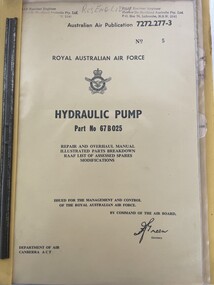
Manual (Item) - (SP) AAP 7272.277-3 Hydraulic Pump Pt 67B025 Repair and Overhaul, Royal Australian Air Force Hydraulic Pump Part No. 67 B 025
... (SP) AAP 7272.277-3 Hydraulic Pump Pt 67B025 Repair and Overhaul...Royal Australian Air Force Hydraulic Pump Part No. 67 B 025...RAAF Royal Australian Air Force Hydraulic Pump Part No. 67 B 025 Manual (SP) AAP 7272.277-3 Hydraulic Pump Pt 67B025 Repair and Overhaul ...RAAF -
Moorabbin Air Museum
Manual (Item) - RAAF Hydraulic Pump Manuals, Royal Australian Air Force Amendment List Hydraulic Pump
... RAAF Hydraulic Pump Manuals...Royal Australian Air Force Amendment List Hydraulic Pump...Royal Australian Air Force Amendment List Hydraulic Pump Manual RAAF Hydraulic Pump Manuals ... -
Moorabbin Air Museum
Manual (Item) - RAAF Variable Displacement Hydraulic Pump Manual, Royal Australian Air Force Variable Displacement Hydraulic Pump Model AS-66698-L8A
... RAAF Variable Displacement Hydraulic Pump Manual ...Royal Australian Air Force Variable Displacement Hydraulic Pump Model AS-66698-L8A...RAAF Royal Australian Air Force Variable Displacement Hydraulic Pump Model AS-66698-L8A Manual RAAF Variable Displacement Hydraulic Pump Manual ...RAAF -
Moorabbin Air Museum
Manual (series) - The Lockheed Mark VI Hydraulic Pump Service Manual
... The Lockheed Mark VI Hydraulic Pump Service Manual...The Lockheed Mark VI Hydraulic Pump Service Manual...The Lockheed Mark VI Hydraulic Pump Service Manual Manual The Lockheed Mark VI Hydraulic Pump Service Manual ... -
 El Dorado Museum Association Inc.
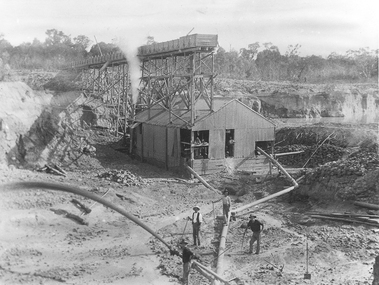
Photograph (item) - Digital Image
... Cock’s Pioneer Gold and Tin Mines NL carried on large-scale hydraulic sluicing operations until 1941. mines mining gold tin gold mining tin mining sluicing men cocks pioneer el dorado eldorado Digital image copied from a black and white photograph of open cut mine, with large barge in the centre of image with water pipes and water cannon. Three men in the barge. Gravel pump ...Cocks Pioneer Gold & Tin Mines NL sluicing works, open cut hydraulic mine. Cocks Pioneer Electric Gold & Tin Mine Company was formed in 1899. The company's first power station, located at the eastern end of the valley began operating with its 340 Kilowatt steam-powered generator. By 1909, from 2,500,000 cubic yards worked, reported recovery was 17,284 ounces of gold and 224 tons of tin ore. By 1909, Cocks Pioneer’s power plant had become inadequate and uneconomical. The barge was floated downstream about a mile, but lost time caused the operations to cease. Following testing, a new mine was established by diverting Reid's Creek at a cost of £25,000. Settling dams were built, one of which held 1,935,900 cubic feet. Sold earth banks, built against a wall of stringy bark saplings constructed and laced with vertical props, were built. In 1914, the company was reformed as Cock’s Pioneer Gold and Tin Mines NL, another power station was constructed at the western end of the township, near the junction of Clear and Reid's Creeks. From 6,800,000 cubic yards of material processed, the returns were 64,397 ounces of gold and 855 ton of tin. Cocks Pioneer mine then moved the barge downs stream and continued sluicing. In 1929 Cocks Pioneer Electric Gold and Tin Mining Company ceased operations due to a drop in values. Cock’s Pioneer Gold and Tin Mines NL carried on large-scale hydraulic sluicing operations until 1941. mines, mining, gold, tin, gold mining, tin mining, sluicing, men, cocks pioneer, el dorado, eldorado -
 Puffing Billy Railway
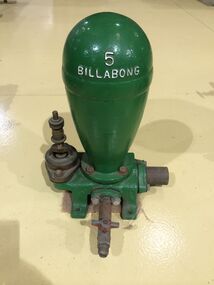
Functional object - Billabong Ram Pump Size #5, Unknown
... Pump - Billabong Ram Pump Size #5 Based on available historical data, the Australian-made Billabong Hydraulic Ram is one of the oldest rams produced anywhere in the world The Billabong Hydraulic Ram was first introduced into Australia in 1855 by John Danks and Son Limited, John Danks & Son Pty Ltd began as a plumbing business in 1859, established by brothers John and Samuel. ...Pump - Billabong Ram Pump Size #5 Based on available historical data, the Australian-made Billabong Hydraulic Ram is one of the oldest rams produced anywhere in the world The Billabong Hydraulic Ram was first introduced into Australia in 1855 by John Danks and Son Limited, John Danks & Son Pty Ltd began as a plumbing business in 1859, established by brothers John and Samuel. ...Pump - Billabong Ram Pump Size #5 Based on available historical data, the Australian-made Billabong Hydraulic Ram is one of the oldest rams produced anywhere in the world The Billabong Hydraulic Ram was first introduced into Australia in 1855 by John Danks and Son Limited, John Danks & Son Pty Ltd began as a plumbing business in 1859, established by brothers John and Samuel. It occupied a prominent site in Bourke Street, Melbourne, for 100 years. The business quickly grew to include factories in Melbourne and Sydney which manufactured and supplied a variety of plumbing and engineering products such as brassware, pumps, windmills and bells. The company was registered in Victoria on 25 January 1889 to continue the hardware manufacturing and supply business founded by brothers John and Samuel Danks in 1859. The head office was based in Bourke Street, Melbourne while another branch was established in Sydney in the 1880s. The company had factories in Melbourne and Sydney. The John Danks and Son Limited catalogue published in 1890, listing Billabong Hydraulic Rams as one of its major machinery products. The catalogue also provides reference to the company’s ram experience and manufacture, beginning by stating that in 1890 they already had 35 years of experience with Billabong Hydraulic Rams. The Hydraulic Ram has stood the test of time and it remains one of the few really practical and efficient uses of natural energy today. It operates without almost any cost, will last indefinitely and, with only two moving parts, is simplicity itself. It requires minimum maintenance and minimum replacement of parts. It is not uncommon to find rams working continuously for many years without any attention. • The Rams do not require electricity, fuel or steam to operate. • They possess simplicity of construction and operation – only 2 moving parts. • Powered only by running water. • Require very minimal or almost no maintenance. • Heavy duty cast Iron base and Dome. This Pump recovered from the Clematis Creek in the Mid 1970's Used to pump water from the creek to the Paradise (Clematis) Hotel. Historic - Farm Equipment - Used to pump water from the creek to the Paradise (Clematis) Hotel.Cast Iron Bronze valveBillabong 5billabong, puffing billy, ram pump -
 Puffing Billy Railway
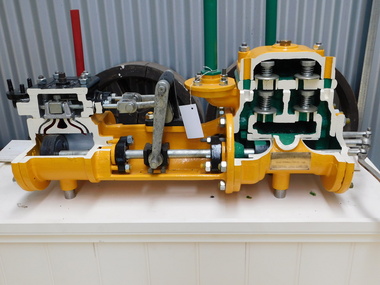
Sectioned Tangye Steam Operated Water Pump, 1900s
... Further expansion occurred in the 1920s with the purchase of established gasworks at Williamstown, Frankston and Dandenong and the acquisition of ten further gas undertakings in Queensland and New South Wales, making the firm the fifth largest gas producer in Australia. info from The Colonial Gas Association Limited, circa 1893 https://collections.museumvictoria.com.au/items/1553322 Originally formed by the five Tangye brothers from Cornwall as James Tangye & Brothers in 1857, this Birmingham engineering firm grew to become one of the largest suppliers of jacks, pumps, steam and oil engines, hydraulic presses, gas producers and machine tools in the late 19th and early 20th centuries. ...Further expansion occurred in the 1920s with the purchase of established gasworks at Williamstown, Frankston and Dandenong and the acquisition of ten further gas undertakings in Queensland and New South Wales, making the firm the fifth largest gas producer in Australia. info from The Colonial Gas Association Limited, circa 1893 https://collections.museumvictoria.com.au/items/1553322 Originally formed by the five Tangye brothers from Cornwall as James Tangye & Brothers in 1857, this Birmingham engineering firm grew to become one of the largest suppliers of jacks, pumps, steam and oil engines, hydraulic presses, gas producers and machine tools in the late 19th and early 20th centuries. ...Sectioned steam pump so that the pump workings can be seen. Inscriptions & Markings: Tangye Birmingham, This steam pump was presented by the colonial gas Assn Ltd (brass plaque) The Colonial Gas Association was originally formed in London on 2 February 1888, as The Australasian Gas Association Limited. The primary objective of the company was to provide investment capital to help finance the construction and management of gasworks being established by the London engineering firm John Coates & Co in metropolitan cities and regional towns throughout Australia and New Zealand. By 1890, the Australasian Gas Association had acquired gasworks at Benalla, Shepparton, Wangaratta, Warragul, Maldon and Seymour, and had constructed a large gasworks at Box Hill to supply the eastern suburbs of Melbourne. In 1893, the company's name was changed to the Colonial Gas Association Limited. During the 1890s, the company acquired regional gasworks in Queensland, Western Australia and South Australia, followed by its first gasworks in New South Wales, in 1911. In 1914, the company consolidated its metropolitan supply area by purchasing the Oakleigh and Footscray gasworks. Further expansion occurred in the 1920s with the purchase of established gasworks at Williamstown, Frankston and Dandenong and the acquisition of ten further gas undertakings in Queensland and New South Wales, making the firm the fifth largest gas producer in Australia. info from The Colonial Gas Association Limited, circa 1893 https://collections.museumvictoria.com.au/items/1553322 Originally formed by the five Tangye brothers from Cornwall as James Tangye & Brothers in 1857, this Birmingham engineering firm grew to become one of the largest suppliers of jacks, pumps, steam and oil engines, hydraulic presses, gas producers and machine tools in the late 19th and early 20th centuries. The successful sideways launching of I.K. Brunel's 'Great Eastern' from the mud of the Thames in 1857 using Tangyes hydraulic jacks gave the firm much needed publicity and new orders flowed in. To finance expansion, George Price provided additional capital and the company name became Tangye Brothers & Price in 1859. A new factory known as the 'Cornwall Works' was built in Clement Street, Birmingham. In 1872, the firm became Tangye Brothers and in about 1879- 1880 began production of internal combustion stationary engines based on Horace Robinson's patents, later using the Otto four-stroke design for its Soho range of gas engines. Examples of the Soho engine were exhibited by the firm at the 1880 Melbourne International Exhibition. Petrol and oil engines were made from the 1890s onward, and by 1910 had developed into the Model B, BR and AA series engines. Tangyes supplied custom-built pumps and presses for particular applications, becoming a major exporter of engineering equipment. In 1884, Tangye Brothers opened a custom-built branch office, showroom and warehouse in Melbourne at Cornwall House in Collins Street West, advertising the full range of engineering products. These lantern slides images are taken from Tangyes product catalogues from the 1910-1925 period and are believed to have been used as sales promotional aids in Australia by the Tangye Brothers. info from https://collections.museumvictoria.com.au/articles/4670 Historic - Industrial Steam Operated Water Pump built by Tangye Bros and used by the Colonial Gas Company - Melbourne, Victoria, AustraliaSectioned steam pump so that the pump workings can be seen. Tangye Birmingham, This steam pump was presented by the colonial gas Assn Ltd (brass plaque)puffing billy, steam pump, sectioned, tangye bros -
Moorabbin Air Museum
Manual (Item) - Huppert Technical Bulletins Fuel Vacuum Hydraulic Systems Vane and Gear Pumps
... Huppert Technical Bulletins Fuel Vacuum Hydraulic Systems Vane and Gear Pumps Manual Huppert Technical Bulletins Fuel Vacuum Hydraulic Systems Vane and Gear Pumps ... -
Moorabbin Air Museum
Manual (Item) - Eclipse Service Manual No.35 Motor-Driven Hydraulic Gear Pump ,Types 809-1-A , 809-3-A , 996-1-A ,996-2-A , 1024-1-A And 1269-1-A, Eclipse Service Manual No.35 Motor-Driven Hydraulic Gear Pump
... Eclipse Service Manual No.35 Motor-Driven Hydraulic Gear Pump ,Types 809-1-A , 809-3-A , 996-1-A ,996-2-A , 1024-1-A And 1269-1-A...Eclipse Service Manual No.35 Motor-Driven Hydraulic Gear Pump...Ex CAC Collection Eclipse Service Manual No.35 Motor-Driven Hydraulic Gear Pump Manual Eclipse Service Manual No.35 Motor-Driven Hydraulic Gear Pump ,Types 809-1-A , 809-3-A , 996-1-A ,996-2-A , 1024-1-A And 1269-1-A ...Ex CAC Collection
