
Showing 13 items matching "immigrant experiences"
-
 Wodonga & District Historical Society Inc
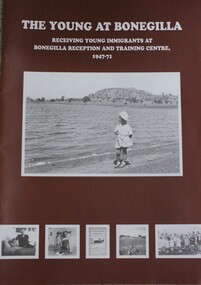
Booklet - The Young at Bonegilla : Receiving young Immigrants at Bonegilla Reception and Training Centre. 1947 - 1971, Bruce J Pennay
... ...immigrant experiences...bonegilla immigrant experiences young immigrants postwar Between 1947 and 1971 about 309,000 people arrived in Australia through the Bonegilla Reception and Training Centre in Northeast Victoria. ...Between 1947 and 1971 about 309,000 people arrived in Australia through the Bonegilla Reception and Training Centre in Northeast Victoria. Bonegilla was the largest and longest serving migration reception centre. It usually accommodated about 3,000 people but did hold up to 7,000 at one stage. It was a young person's place. Few of the adults were aged over 35 years old. This study analyses how Australia tried to meet the challenges involved in supporting young adults, teenagers and children. It also examines how those who were young remember their experiences at Bonegilla.non-fictionBetween 1947 and 1971 about 309,000 people arrived in Australia through the Bonegilla Reception and Training Centre in Northeast Victoria. Bonegilla was the largest and longest serving migration reception centre. It usually accommodated about 3,000 people but did hold up to 7,000 at one stage. It was a young person's place. Few of the adults were aged over 35 years old. This study analyses how Australia tried to meet the challenges involved in supporting young adults, teenagers and children. It also examines how those who were young remember their experiences at Bonegilla.bonegilla, immigrant experiences, young immigrants postwar -
 The Beechworth Burke Museum
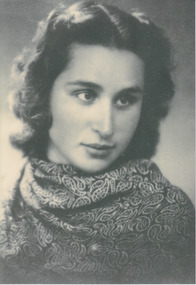
Audio - Oral History, Jennifer Williams, Mrs Beth Miller, 8 June 2000
... Mrs Miller recounts the daily work in the Mental Hospital during the 1950s, life in Black Spring and the isolation of the immigrant experience. This oral history recording was part of a project conducted by Jennifer Williams in the year 2000 to capture the everyday life and struggles in Beechworth during the twentieth century. ...Mrs Miller recounts the daily work in the Mental Hospital during the 1950s, life in Black Spring and the isolation of the immigrant experience. This oral history recording was part of a project conducted by Jennifer Williams in the year 2000 to capture the everyday life and struggles in Beechworth during the twentieth century. ...Mrs Beth Miller was born in February, 1924 in Latvia. Her family left for Germany after Russian occupation was implemented in Latvia, and eventually sailed for Australia from Naples, Italy in 1949. A working contract and position at the Mayday Hills Mental Hospital brought her to Beechworth, where she settled with her husband and parents. Mrs Miller recounts the daily work in the Mental Hospital during the 1950s, life in Black Spring and the isolation of the immigrant experience. This oral history recording was part of a project conducted by Jennifer Williams in the year 2000 to capture the everyday life and struggles in Beechworth during the twentieth century. This project involved recording seventy oral histories on cassette tapes of local Beechworth residents which were then published in a book titled: Listen to what they say: voices of twentieth century Beechworth. These cassette tapes were digitised in July 2021 with funds made available by the Friends of the Burke.Mrs Beth Millers account of her life in Beechworth and the local area during the 20th century is historically and socially significant to the cultural heritage of the region. She gives important insights into the life of post-war European immigrants in the area. This oral history account is socially and historically significant as it is a part of a broader collection of interviews conducted by Jennifer Williams which were published in the book 'Listen to what they say: voices of twentieth-century Beechworth.' While the township of Beechworth is known for its history as a gold rush town, these accounts provide a unique insight into the day-to-day life of the town's residents during the 20th century, many of which will have now been lost if they had not been preserved.This is a digital copy of a recording that was originally captured on a cassette tape. The cassette tape is black with a horizontal white strip and is currently stored in a clear flat plastic rectangular container. It holds up 40 minutes of recordings on each side.Mrs Beth Miller /beechworth, beth miller, miller, listen to what they say, jennifer williams, oral history, latvia, bonegilla, immigration, mayday, mayday hills, mental hospital, asylum, black spring, bakery, lutheran, immigrant -
 Flagstaff Hill Maritime Museum and Village
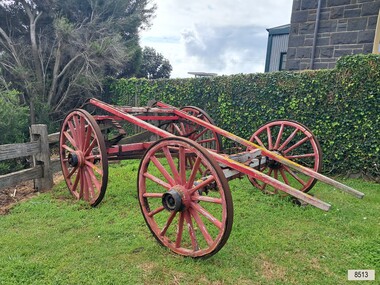
Vehicle - Wagon, Circa 1909
... experience of horse-drawn rides around the lake. Flagstaff Hill Warrnambool Maritime Village Maritime Museum Flagstaff Hill Maritime Museum and Village Shipwreck coast Great Ocean Road southwest Victoria northwest Victoria western district Colac Colac Hospital Colac Licensing Court Thowgla Corryong Garvoc Cooramook Road Warrnambool Petty Sessions Court Warrnambool Hospital Russells Creek Road Ganges Warrnambool Cemetery Uppal Bhopa Jalandhar Hawker’s Licence covered wagon wagon hawker's wagon horse-drawn cart hawker's cart light delivery vehicle hawker travelling salesman travelling hawker door-to-door sales rural salesman rural commerce Prince Duke Clydesdale horse 1997 Pooran Singh Indian immigrant Pat John James Moore Vera Moore John and Vera Moore John Moore Guyatt’s Funerals Kapil Dev Harmel Uppal Avis Quarrell Wagon: a light delivery vehicle once used as a hawker's wagon. ...This wagon was used in towns across south-west Victoria during the first half of the twentieth century by Pooran Singh, an Indian-born immigrant. Singh arrived in Australia alone in 1899 at the age of 30. The following year, at the Colac Licensing Court in western Victoria, he was one of 78 hawkers granted a Hawker’s Licence. According to the Colac Herald, all but two of the applicants appeared to be Asian. While some hawkers registered horse-drawn carts, Singh was one of nineteen licensed to trade on foot, selling door to door. Applicants were encouraged to contribute to a collection for the Colac Hospital. Over time, Pooran Singh came to own his own wagon—a top-of-the-range light delivery vehicle—and a horse named Prince. His work often took him along rough country roads, and for a period, he worked in the Corryong district of north-eastern Victoria, an area popular with hawkers. In September 1909, near Thowgla, he was thrown from his wagon while attempting to navigate a deep rut and was run over by one of its wheels. Although he suffered bruising to his chest, his injuries were not serious. The following year, he was granted a Hawker’s Licence in Corryong. By 1916, Singh was living and working at Garvoc in western Victoria, where that year, he lost his paper licence on Cooramook Road, and he placed a notice in The Standard. In 1918, at the Warrnambool Petty Sessions Court, he was one of four applicants granted renewal of their hawkers’ licences, and each donated ten shillings to Warrnambool Hospital. Throughout these years, Singh became well known to farmers and their families as he travelled across Victoria’s Western District, living and working from his covered wagon. In his later years, Pooran Singh formed a close friendship with John Jandes Moore and his wife, Vera, of Russells Creek, Warrnambool. They offered him the use of their property as a base for his travels and cared for him during his final illness. John Moore was later appointed one of the two executors of Singh’s will. Pooran Singh died in Warrnambool on 8 June 1947, aged 77. His final wish was to be cremated and for his ashes to be returned to India for immersion in the Ganges. The cremation was arranged by Guyett’s Funerals in Warrnambool. Having never married, Singh left his estate to his four nephews, enabling them to buy land and build homes; one later installed a memorial plaque in his honour. In the late 1980s, Guyett’s Funerals placed his ashes in the niche wall at Warrnambool Cemetery as a memorial, while continuing to hope that family instructions might eventually arrive. Nearly 63 years after his death, renewed enquiries brought public attention to the long and respectful care given to his ashes. As a result, the renowned Indian cricketer Kapil Dev travelled to Warrnambool to collect them and escort them to India, helping to fulfil Singh’s final wish. He was joined by one of Singh’s grand-nephews, Harmel Uppal, who had travelled from England. At a formal ceremony on 25 July 2010 commemorating Singh’s life, the ashes were handed to Dev and Uppal, and local resident Avis Quarrell, who had known Singh as a child, read a poem she had written in his memory. She still owned a shell necklace that Singh had made for her mother. Some Warrnambool locals who had been closely involved also travelled to India, where they joined Uppal’s family from the village of Uppal Bhopa, near Jalandhar. On 31 July 2010, Pooran Singh’s ashes were immersed in the Ganges, fulfilling the wish he had expressed more than six decades earlier. After Pooran Singh’s death, his horse and wagon remained on John Moore’s property. When Prince died, he was buried on the beach at Warrnambool. The wagon remained with the Moore family and was occasionally used as a cubby house. In about 1997, John Moore, the son of John Jandes Moore, donated it to Flagstaff Hill. After restoration, the wagon became an attraction in the village, where volunteer Pat and his Clydesdale horse, Duke, offered visitors rides around Flagstaff Hill’s lake. This wagon is significant for its association with an Indian emigrant who used it to earn an income in Australia. It also reflects the vital role of hawkers, who travelled through rural and regional communities in the late nineteenth and early twentieth centuries, supplying food, goods and news. The wagon is also historically significant as a former Flagstaff Hill attraction, offering visitors the experience of horse-drawn rides around the lake.Wagon: a light delivery vehicle once used as a hawker's wagon. It is a four-wheel, horse-drawn vehicle with iron tyres, brakes, spoked wheels painted red with decorative yellow strips on the hubs, a timber shaft, and springs on the undercarriage. It was once a covered wagon, fitted with green, wooden sideboards, a front seat with leather-padded backrest and mounting steps. The late-19th to early-20th-century wagon was once owned by Pooran Singh, a local Indian hawker. flagstaff hill, warrnambool, maritime village, maritime museum, flagstaff hill maritime museum and village, shipwreck coast, great ocean road, southwest victoria, northwest victoria, western district, colac, colac hospital, colac licensing court, thowgla, corryong, garvoc, cooramook road, warrnambool petty sessions court, warrnambool hospital, russells creek road, ganges, warrnambool cemetery, uppal bhopa, jalandhar, hawker’s licence, covered wagon, wagon, hawker's wagon, horse-drawn cart, hawker's cart, light delivery vehicle, hawker, travelling salesman, travelling hawker, door-to-door sales, rural salesman, rural commerce, prince, duke, clydesdale horse, 1997, pooran singh, indian immigrant, pat, john james moore, vera moore, john and vera moore, john moore, guyatt’s funerals, kapil dev, harmel uppal, avis quarrell -
 Greensborough Historical Society
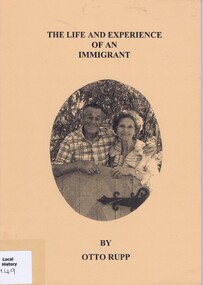
Book, The life and experience of an immigrant by Otto Rupp, 2004_
... The life and experience of an immigrant by Otto Rupp...The life and experience of an immigrant by Otto Rupp Book Book Yarrambat Historical Society ...Autobiography by Otto Rupp of the places and family in Victoria and South Australia. Transcribed from original handwritten 1933 manuscript. First edition 1995, second edition 1999, reprinted 2004.Reflects the importance of immigration to AustraliaA4 size, 60 pages. Black print on white paper, black and white illustrations. Light brown cover with photo of author and wife."Noel with Y.H.S. thanks 9.6.2009"otto rupp, victoria immigration, yarrambat historical society, yarrambat -
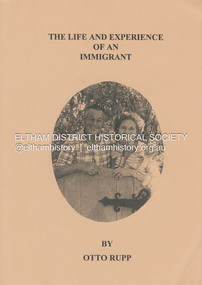 Eltham District Historical Society Inc
Book, Otto Rupp, The Life and Experience of an Immigrant, 1999
... The Life and Experience of an Immigrant.... : ill., fascsims., geneal. table ; 30 cm The Life and Experience of an Immigrant Book Otto Rupp Yarrambat Historical Society ...An autobiography by Otto Rupp (1904 -1993). Transcribed by the Yarrambat Historical Society from the original manuscript in 1993. Otto Rupp was born in Switzerland in 1904. He migrated to Australia in 1927 and after working in the South Australian outback bought land in Yarramabt. He married Edna Young in 1935. This diary includes recollections of his life from 1927 to 1983. Bachelor Days, 1919-1935: Murray Bridge, Karoonda, Wirrabara, Appilia, South Australia, Central Australia, Tancks Corner (Yarrambat), Balranald, and Yarramabt. Married Life, Gold in Yarrambat, Times, People and Memories, 1943-1987.58 p. : ill., fascsims., geneal. table ; 30 cmnon-fictionAn autobiography by Otto Rupp (1904 -1993). Transcribed by the Yarrambat Historical Society from the original manuscript in 1993. Otto Rupp was born in Switzerland in 1904. He migrated to Australia in 1927 and after working in the South Australian outback bought land in Yarramabt. He married Edna Young in 1935. This diary includes recollections of his life from 1927 to 1983. Bachelor Days, 1919-1935: Murray Bridge, Karoonda, Wirrabara, Appilia, South Australia, Central Australia, Tancks Corner (Yarrambat), Balranald, and Yarramabt. Married Life, Gold in Yarrambat, Times, People and Memories, 1943-1987.otto rupp, edna young, yarrambat, tancks corner victoria, autobiography, migrant -
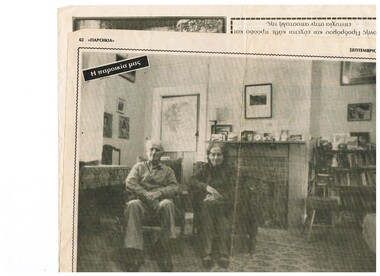 Ithacan Historical Society
Newspaper, Spiros Kallinikos reminisces 13 return trips to Ithaca
... He talks of his love of Ithaca and Greece and his experiences as an early immigrant to Melbourne. Spiros was born in Ag Yianni Ithaca and arrived in Australia in 1910. ...He talks of his love of Ithaca and Greece and his experiences as an early immigrant to Melbourne. Spiros was born in Ag Yianni Ithaca and arrived in Australia in 1910. ...A Neos Kosmos newspaper article based on an interview with Spiros Kallinikos aged 96 at the time. He talks of his love of Ithaca and Greece and his experiences as an early immigrant to Melbourne. Spiros was born in Ag Yianni Ithaca and arrived in Australia in 1910. He returned to Greece to fight in the Balkan wars. He married Evriklia Kolaitou who was from Vathi, Ithaca and had three daughters, Nina, Kali and Penelope.Spiros Kallinikos' story is emblematic of the story of many early Ithacan immigrants.Greek newspaper article including black and white photograph of couple seated in armchairs in lounge room. Photograph has the Greek words 'Η παροικια μας' (translated Our community) written across top left corner. The newspaper article is has the heading 'Δεκατρεις φορες πηγε στο Θιακη και ακομα δεν χορτασε' (translated: Thirteen times he has been to Thiaki and he still not sated. -
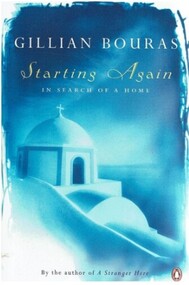 Nhill and District Historical Society Inc.
Book - Starting Again, In Search of a Home by Gillian Bouras, 1999
... Local Author - Gillian Bouras is an expatriate Australian writer who has written several books, short stories and articles, many of these dealing with her experiences as an Australian woman in Greece. Bouras Gillian - 1945 - Diaries Australian - Diaries Women immigrants Social life and customs Cultural Assimilation Greek Australians Biography & Autobiography Psychology Social Science Customs & Traditions Emigration & Immigration Personal Memoirs For some, home is not simply a matter of place. ...For some, home is not simply a matter of place. Gillian Bouras comes and goes between London, where she spends long periods, and the village in the Peloponnese to which she migrated nearly twenty years ago. Unable to settle in either England or Greece, her life is one of perpetual journey, of constant goodbyes and starting again. Even in Australia, where she was born and raised, she feels like an outsider. This journal deals with the complexity of finding your place in the world. Insightful and always engaging, Bouras explores the divide that exists between cultures, between the past and the present, between those who shut the world out and those who too readily let it in.non-fictionFor some, home is not simply a matter of place. Gillian Bouras comes and goes between London, where she spends long periods, and the village in the Peloponnese to which she migrated nearly twenty years ago. Unable to settle in either England or Greece, her life is one of perpetual journey, of constant goodbyes and starting again. Even in Australia, where she was born and raised, she feels like an outsider. This journal deals with the complexity of finding your place in the world. Insightful and always engaging, Bouras explores the divide that exists between cultures, between the past and the present, between those who shut the world out and those who too readily let it in.bouras gillian - 1945 - diaries, australian - diaries, women immigrants, social life and customs, cultural assimilation, greek australians, biography & autobiography, psychology, social science, customs & traditions, emigration & immigration, personal memoirs -
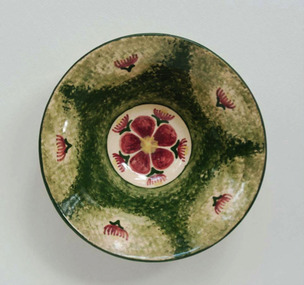 Duldig Studio museum + sculpture garden
Ceramic, Karl Duldig, Gumnut Bowl by Karl Duldig c.1948, c. 1948
... This bowl is part of a collection of ceramics that has national historic significance in providing a rich illustration of an immigrant and artistic experience, and touching on the themes of settlement adaptation of artistic practice. ...Karl Duldig’s ceramic bowl is a particularly interesting example of Karl’s ability to creatively respond to a new environment with a fresh visual repertoire, in this case, the flowering Eucalyptus in a design reminiscent of traditional European folk art. The bowl is an excellent example of the utilitarian and decorative studio pottery produced by Karl and his wife Slawa Horowitz-Duldig between 1944 and 1960. Clay was an important medium for Karl. When he was forced to flee Austria for Switzerland, working with clay became a convenient medium; and he continued to expand his use of clay in Singapore. In Australia his work in clay extended from domestic hand-made pottery to public sculptures and architectural reliefs. In 1944 Duldig purchased a kiln, which was installed in the garage of the family’s St. Kilda flat, soon after a pottery wheel was acquired. It was the beginning of a cottage industry that supplemented the family income during the war years and beyond. Duldig initially sold his decorative ceramic wares through a local florist in St. Kilda, and subsequently through shops such as the Chez Nous French Art Shop (Howey Place) and Light and Shade (Royal Arcade), and the Primrose Pottery shop in Collins Street. The Primrose Pottery shop was an extremely important commercial outlet, and hub, for emerging artists, potters and designers from 1929 until 1974. Its proprietors Edith and Betty MacMillan worked closely with their suppliers, commissioning and taking items on consignment. In the post war period important Melbourne studio potters such as Allan Lowe, Arthur Boyd, John Perceval and Neil Douglas exhibited and sold domestic wares in the Primrose Pottery shop. The Duldigs studio pottery provides a counterpoint to the ceramics produced at Arthur Merric Boyd Pottery in Murrumbeena, which was established in 1944 by Arthur Boyd, John Perceval and Peter Herbst. The emphasis on painterly decoration was important and the AMB potters also produced simple household wares decorated with Australian flora and wildlife, for example Neil Douglas also made small bowls decorated with the fairy wrens, lyrebirds, gumnuts and eucalypts. Ann Carew 2016The Duldig Studio’s collection of ceramics has national aesthetic and historic significance. It contains a representative sample of works of art in ceramics created by Karl Duldig during his lifetime, including small sculptures, as well as functional and novelty items for the tourist market during the 1956 Melbourne Olympic Games. The artist’s working methods and the development of his practice are comprehensively demonstrated in the collection. This in-situ collection demonstrates the philosophy of the Vienna Secession and its inheritors that handcrafted, simple functional domestic wares might enrich both the lives of the maker and the user. This bowl is part of a collection of ceramics that has national historic significance in providing a rich illustration of an immigrant and artistic experience, and touching on the themes of settlement adaptation of artistic practice. The collection is also associated with places of cultural and historical significance in Melbourne such as the Primrose Pottery Shop, and the story of Australian studio ceramics in the post-war years. Ann Carew 2016Cream earthenware bowl with flowering gum motif and sponged green background.Duldig in script incised under. -
 Wodonga & District Historical Society Inc
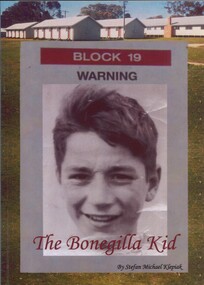
Book - The Bonegilla Kid, Stefan Michael Klepiak, 2007
... This book is significant because it relates the experience of a child migrant at Bonegilla, Victoria Immigrant Children Biography bonegilla migrant reception centre Migrant life Australia This biography documents the story of Stefan Michael Klepiak who, as a boy, between the ages of nine and 15 years lived at the Migrant Reception Centre at Bonegilla, Victoria. ...This biography documents the story of Stefan Michael Klepiak who, as a boy, between the ages of nine and 15 years lived at the Migrant Reception Centre at Bonegilla, Victoria. This was from 1957 to 1962 when Australia's post-World War II immigration program was at its peak. In his own words, young Stefan terrorised the migrants at the Bonegilla migrant camp day and night. The book describes the antics he and other boys at Bonegilla engaged in as they adapted to their new life after fleeing war-torn Europe. Stefan was often unsupervised, played truant from school and crossed the path of the local Wodonga Police. He was a regular guest at the Wodonga jailhouse and became known by the police and magistrates after several court appearances as "The Bonegilla Kid". In the Epilogue Stefan acknowledges key people in his life, including two Bonegilla policemen and the Bonegilla Camp Director, who gave "The Bonegilla Kid" the guidance he needed and put him on a positive pathway for the future.A volume of 57 pages plus an epilogue relating the author's experience at Bonegilla, Victoria.non-fictionThis biography documents the story of Stefan Michael Klepiak who, as a boy, between the ages of nine and 15 years lived at the Migrant Reception Centre at Bonegilla, Victoria. This was from 1957 to 1962 when Australia's post-World War II immigration program was at its peak. In his own words, young Stefan terrorised the migrants at the Bonegilla migrant camp day and night. The book describes the antics he and other boys at Bonegilla engaged in as they adapted to their new life after fleeing war-torn Europe. Stefan was often unsupervised, played truant from school and crossed the path of the local Wodonga Police. He was a regular guest at the Wodonga jailhouse and became known by the police and magistrates after several court appearances as "The Bonegilla Kid". In the Epilogue Stefan acknowledges key people in his life, including two Bonegilla policemen and the Bonegilla Camp Director, who gave "The Bonegilla Kid" the guidance he needed and put him on a positive pathway for the future.immigrant children biography, bonegilla migrant reception centre, migrant life australia -
 City of Ballarat Libraries
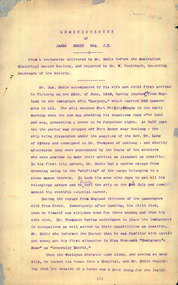
Australian Historical Record Society papers, Reminiscences of James Oddie Esq
... ...immigrant experience...It is not known how the papers made their way to the then Ballarat Municipal Library, but they have been part of the Library's collection for many years. larpent (ship) eureka stockade goldrush ballarat immigrant experience immigrants Notes from a lecturette given to the AHRS by James Oddie, and recorded by Mr Coulthard, the Recording Secretary. ...The Australian Historical Records Society existed in Ballarat between 1896 and 1906. They were one of Australia's first historical societies, and were in the position to still be able to talk to early pioneers. They invited such pioneers to either submit letters or memoirs, or to address the Society's meetings, where their reminiscences were taken down in shorthand and later typed up. The Society also attempted to preserve memorabilia from Ballarat's early days, but on the disbanding of the group in 1906, materials were stored at the Ballarat Town Hall and were later lost. It is not known how the papers made their way to the then Ballarat Municipal Library, but they have been part of the Library's collection for many years.Notes from a lecturette given to the AHRS by James Oddie, and recorded by Mr Coulthard, the Recording Secretary. James Oddie was born in England and arrived in Geelong with his wife and daughter in 1849. The gold lured him to Ballarat, where he witnessed the Eureka uprising. He was the first chairman of the Ballarat Municipal Council, and because of his many philanthropic activities and community involvement, is thought of as "the father of Ballarat."larpent (ship), eureka stockade, goldrush, ballarat, immigrant experience, immigrants -
 Surrey Hills Historical Society Collection
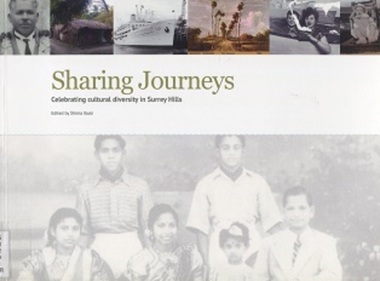
Book, Sharing Journeys: celebrating cultural diversity in Surrey Hills, 2016
... experience of moving to Australia from other countries. Interviewers and photographers also with links to SHNC. Foreword by Josh Frydenberg, Federal Member for Kooyong. immigrants - victoria - surrey hills biography (Mrs) shima ibuki (Mr) chris young (Mr) hung le (Mr) nathan paramanathan (Ms) sue barnett (Ms) suet mun wong (Mrs) betsie mineur (Mr) rudi mineur (Mrs) kathryn mcevoy (Mrs) anke schwaiger (Ms) phillipa taylor (Ms) jessy zhu (Ms) julia mcleish (Miss) nasrin sadeghpour (Mrs) melanie sanders (Mrs) priscilla tiplady (Mr) robin tiplady (Mr) leslie gibbons geln stander (Mrs) helen standler (Mr) joe sterpin (Mrs) rosa spinello (Mrs) pepa jones (mr) graham o'rourke (Mr) simon williams (Mr) colin barrow (Mrs) rosemary barrow (Mr) josh frydenberg (Mrs) ruth scharley (Mrs) Soni Prabhur (Mrs) Julie Zeelander This book shares the stories of 20 people from a wide variety of backgrounds, all with connections to the Surrey Hills Neighbourhood Centre (SHNC). ...This book shares the stories of 20 people from a wide variety of backgrounds, all with connections to the Surrey Hills Neighbourhood Centre (SHNC). Through personal memoir or oral history they reflect upon their experience of moving to Australia from other countries. Interviewers and photographers also with links to SHNC. Foreword by Josh Frydenberg, Federal Member for Kooyong.This book shares the stories of 20 people from a wide variety of backgrounds, all with connections to the Surrey Hills Neighbourhood Centre (SHNC). Through personal memoir or oral history they reflect upon their experience of moving to Australia from other countries. Interviewers and photographers also with links to SHNC. Foreword by Josh Frydenberg, Federal Member for Kooyong.immigrants - victoria - surrey hills, biography, (mrs) shima ibuki, (mr) chris young, (mr) hung le, (mr) nathan paramanathan, (ms) sue barnett, (ms) suet mun wong, (mrs) betsie mineur, (mr) rudi mineur, (mrs) kathryn mcevoy, (mrs) anke schwaiger, (ms) phillipa taylor, (ms) jessy zhu, (ms) julia mcleish, (miss) nasrin sadeghpour, (mrs) melanie sanders, (mrs) priscilla tiplady, (mr) robin tiplady, (mr) leslie gibbons, geln stander, (mrs) helen standler, (mr) joe sterpin, (mrs) rosa spinello, (mrs) pepa jones, (mr) graham o'rourke, (mr) simon williams, (mr) colin barrow, (mrs) rosemary barrow, (mr) josh frydenberg, (mrs) ruth scharley, (mrs) soni prabhur, (mrs) julie zeelander -
 Wodonga & District Historical Society Inc
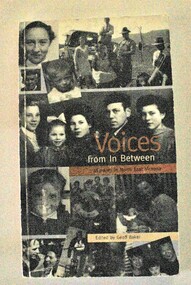
Book - Voices From In Between - Migrants in North East Victoria, Geoff Baker, 2000
... This collection of poetry reflects the migrant experience as they adjusted to their new life in North East Victoria, many remaining in the Wodonga district. Immigrants ...This book is an anthology of poetry written by over 80 migrants who settled in the North East of Victoria. It is a moving evocation of the migrant experience. Many of these migrants had been housed at the Bonegilla Migrant Reception and Training Centre near Wodonga which began receiving migrants in 1947, Bonegilla became the largest and longest operating reception centre in the post-war era. More than 300,000 migrants passed through its doors between 1947 and 1971. Most of these migrants came from non-English speaking European families escaping their war-torn homelands. Their world had been turned upside down. Many were confused, unsure of where they were going or what the future held for them. These poems reflect their experiences in adjusting to their new country and environment.A publication of 186 pages featuring black and white photographs and an anthology of poetry.This book is an anthology of poetry written by over 80 migrants who settled in the North East of Victoria. It is a moving evocation of the migrant experience. Many of these migrants had been housed at the Bonegilla Migrant Reception and Training Centre near Wodonga which began receiving migrants in 1947, Bonegilla became the largest and longest operating reception centre in the post-war era. More than 300,000 migrants passed through its doors between 1947 and 1971. Most of these migrants came from non-English speaking European families escaping their war-torn homelands. Their world had been turned upside down. Many were confused, unsure of where they were going or what the future held for them. These poems reflect their experiences in adjusting to their new country and environment.immigrants' writings, immigrants in north east victoria, immigrants -- poetry, bonegilla migrant reception centre -
 Wodonga & District Historical Society Inc
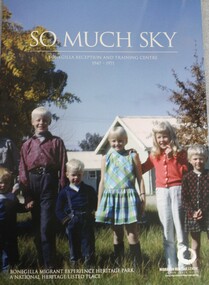
Booklet - So Much Sky: Bonegilla Reception Centre and Training Centre 1947 - 1971, Bruce J Pennay, 2008
... bonegilla migrant reception centre immigrants australia post-war immigration An overview of the Bonegilla Migrant Reception Centre and Heritage Museum At bottom of Front Cover "Bonegilla Migrant Experience Heritage Park, a national heritage listed place" So Much Sky: Bonegilla Reception Centre and Training Centre 1947 - 1971 Booklet So Much Sky: Bonegilla Reception Centre and Training Centre 1947 - 1971 Bruce J Pennay Migration Heritage Centre NSW ...An overview of the Bonegilla Migrant Reception Centre and Heritage Museumnon-fictionAn overview of the Bonegilla Migrant Reception Centre and Heritage Museumbonegilla migrant reception centre, immigrants australia, post-war immigration
