
Showing 48 items matching "irish silver"
-
 City of Moorabbin Historical Society (Operating the Box Cottage Museum)
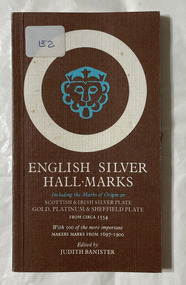
Book, Banister, Judith, English Silver Hall-marks: Including the Marks of Origin on Scottish & Irish Silver Plate, Gold, Platinum & Sheffield Plate with 300 of the More Important Makers Marks from 1697-1900, with Lists of English, Scottish, and Irish Hall-marks and Makers' Marks from Circa 1554, 1990
... English Silver Hall-marks: Including the Marks of Origin on Scottish & Irish Silver Plate, Gold, Platinum & Sheffield Plate with 300 of the More Important Makers Marks from 1697-1900, with Lists of English, Scottish, and Irish Hall-marks and Makers' Marks from Circa 1554......Irish Silver...English silver scottish silver Irish Silver hall-marks makers marks It contains hundreds of silver marks making the process of identifying that special item you have found- quick and easy. ...It contains hundreds of silver marks making the process of identifying that special item you have found- quick and easy. A practical guide used by antique dealers world wide for years118 pages, illustratednon-fictionIt contains hundreds of silver marks making the process of identifying that special item you have found- quick and easy. A practical guide used by antique dealers world wide for yearsenglish silver, scottish silver, irish silver, hall-marks, makers marks -
 Geoffrey Kaye Museum of Anaesthetic History
Decorative object - Decanter, Waterford Crystal
... The crystal decanter, made by the manufacturer Waterford, is well known as the first glass making factory in Ireland. The hallmarks on the sterling silver plaque also verify this piece was made in Dublin....Large Waterford Ship's crystal cut decanter with ball-shaped stopper and Irish sterling silver plaque and chain around neck....Moriaty, Dennis RCSI Baker, AB CIREBA Waterford Crystal [on plaque] FACULTY OF ANAESTHETISTS RACS / FROM FACULTY OF ANAESTHETISTS RCSI / MAY 1990 [hallmarks on plaque] TW / Dublin hallmarks / cursive script D Large Waterford Ship's crystal cut decanter with ball-shaped stopper and Irish sterling silver plaque and chain around neck. ...This object was presented by Dr Dennis Moriarty (Dean of the Irish Faculty of the RCSI) to Professor A B Baker (Dean of the Faculty RACS) at the 6th International Conference of Reciprocating Examination Boards of Anaesthesia (CIREBA) in Wellington, New Zealand 1990. The crystal decanter, made by the manufacturer Waterford, is well known as the first glass making factory in Ireland. The hallmarks on the sterling silver plaque also verify this piece was made in Dublin.Large Waterford Ship's crystal cut decanter with ball-shaped stopper and Irish sterling silver plaque and chain around neck.[on plaque] FACULTY OF ANAESTHETISTS RACS / FROM FACULTY OF ANAESTHETISTS RCSI / MAY 1990 [hallmarks on plaque] TW / Dublin hallmarks / cursive script Dmoriaty, dennis, rcsi, baker, ab, cireba, waterford, crystal -
 Federation University Historical Collection
Book, D.C. Davies et al, Metalliferous Minerals and Mining, 1892, 1892
... silver...russia...nevada...ruby hill, nevada...utah...emma mine, nevada...colarado...red mountain district, colorado...yankee girl mine...arizona...mexico...peru...bolivia...chili\copper...south africa...italy...austria...norway...swedan...france...cornwall...dolcoath mine...sandstone...parys mines of anglesea...carnarvonshire...cardiganshire...wicklow, ireland...mining minerals quartz nova scotia california germany ural mountains gold deposits virginia new england new brunswick brazil australia new south wales mount morgan new zealand africa statistics india phillipines aruba island silver russia nevada ruby hill, nevada utah emma mine, nevada colarado red mountain district, colorado yankee girl mine arizona mexico peru bolivia chili\copper south africa italy austria norway swedan france cornwall dolcoath mine sandstone parys mines of anglesea carnarvonshire cardiganshire wicklow, ireland mississippi valley wisconsin lake superior wyoming cuba jamaica venezuela south australia york peninsula flinders ranges japan tin banca malaysia bohemia saxony sweden spain cligga point rin lodes of cornwall andalusia belgium shropshire isle of man durham westmoreland limestone flintshire dengigshire canada lead zinc siberia hungary silesia sardinia algeria ireland new jersey iron lancashire missouri michigan superstitions equipment cages stopes winzes timbering ventilation fans drilling boring dynamite electricity blasting horse whims water wheels boilers petterson's elephant ore stamp stamper battery jogs linkenbach table panning cradle quartz mining hydraulic mining alluvia; mining altai mountains north wales neugluck mine freiberg christbescherung mine drei prinzen lode miask woodville, virginia gongo soco, brazil sierra nevada, california st john del rey mine, brazil leydenberg gold field, south africa banket reefs, transvaal kongsberg, norway santa rosa mine, peru huelva, spain dolcoath mine, cornwall parys mine, anglesea waterbury copper mine, lake superior copiapo, chilli altenberg, saxony whea; uny, cornwall wast wheel mine. redruth, cornwall cligga point, cornwall old hewas mine, cornwall hartz, germany snailbeach mine, shropshire llangynog, north wales van mine, mongomeryshire Brown hard covered, illustrated book of 518 pages. ...Brown hard covered, illustrated book of 518 pages. It includes a bookplate of the Ballarat Ironworkers' and Polytechnical Association Library Rules. The book was bequethed to the Ironworkers' Association by the late James Oddie.mining, minerals, quartz, nova scotia, california, germany, ural mountains, gold deposits, virginia, new england, new brunswick, brazil, australia, new south wales, mount morgan, new zealand, africa, statistics, india, phillipines, aruba island, silver, russia, nevada, ruby hill, nevada, utah, emma mine, nevada, colarado, red mountain district, colorado, yankee girl mine, arizona, mexico, peru, bolivia, chili\copper, south africa, italy, austria, norway, swedan, france, cornwall, dolcoath mine, sandstone, parys mines of anglesea, carnarvonshire, cardiganshire, wicklow, ireland, mississippi valley, wisconsin, lake superior, wyoming, cuba, jamaica, venezuela, south australia, york peninsula, flinders ranges, japan, tin, banca, malaysia, bohemia, saxony, sweden, spain, cligga point, rin lodes of cornwall, andalusia, belgium, shropshire, isle of man, durham, westmoreland, limestone, flintshire, dengigshire, canada, lead, zinc, siberia, hungary, silesia, sardinia, algeria, ireland, new jersey, iron, lancashire, missouri, michigan, superstitions, equipment, cages, stopes, winzes, timbering, ventilation, fans, drilling, boring, dynamite, electricity, blasting, horse whims, water wheels, boilers, petterson's elephant ore stamp, stamper battery, jogs, linkenbach table, panning, cradle, quartz mining, hydraulic mining, alluvia; mining, altai mountains, north wales, neugluck mine, freiberg, christbescherung mine, drei prinzen lode, miask, woodville, virginia, gongo soco, brazil, sierra nevada, california, st john del rey mine, brazil, leydenberg gold field, south africa, banket reefs, transvaal, kongsberg, norway, santa rosa mine, peru, huelva, spain, dolcoath mine, cornwall, parys mine, anglesea, waterbury copper mine, lake superior, copiapo, chilli, altenberg, saxony, whea; uny, cornwall, wast wheel mine. redruth, cornwall, cligga point, cornwall, old hewas mine, cornwall, hartz, germany, snailbeach mine, shropshire, llangynog, north wales, van mine, mongomeryshire -
 City of Moorabbin Historical Society (Operating the Box Cottage Museum)
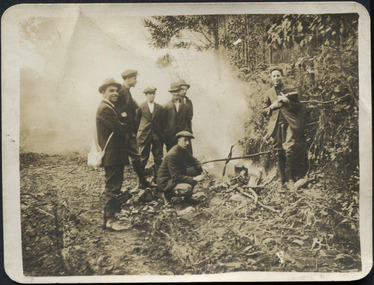
Photograph, postcard "Boiling the Billy" c1900, Early 1900's "Boiling the Billy", c1900
... Ireland. It is widely accepted that the term "billycan" is derived from the large cans used for transporting bouilli or bully beef on Australia-bound ships or during exploration of the outback, which after use were modified for boiling water over a camp fire. Postcards developed out of the complex tradition of nineteenth-century printed calling cards, beginning with the advent of the Cartes-de-Visite in France. In the 1850s, Parisian photographer Andre Adolphe Eugene Disderi invented a photographic process involving egg white, albumen, and silver...Ireland. It is widely accepted that the term "billycan" is derived from the large cans used for transporting bouilli or bully beef on Australia-bound ships or during exploration of the outback, which after use were modified for boiling water over a camp fire. Postcards developed out of the complex tradition of nineteenth-century printed calling cards, beginning with the advent of the Cartes-de-Visite in France. In the 1850s, Parisian photographer Andre Adolphe Eugene Disderi invented a photographic process involving egg white, albumen, and silver ...Early 1900's. "Boiling the billy". The term billy or billycan is particularly associated with Australian usage, but is also used in the UK and Ireland. It is widely accepted that the term "billycan" is derived from the large cans used for transporting bouilli or bully beef on Australia-bound ships or during exploration of the outback, which after use were modified for boiling water over a camp fire. Postcards developed out of the complex tradition of nineteenth-century printed calling cards, beginning with the advent of the Cartes-de-Visite in France. In the 1850s, Parisian photographer Andre Adolphe Eugene Disderi invented a photographic process involving egg white, albumen, and silver nitrate to create inexpensive portraits on paper cards. These photographic Cartes-de-Visites were 2 1/2 (75mm) by 4 inches (98mm) and became a popular, collectable form of "visiting cards" world-wide. Photographers would reprint portraits of famous individuals they had taken at their studios or during travel and sell them as collectable cards. Postcards as we know them now first began in 1861 as cards mailed by private post. In the 1870s picture postcards grew in popularity throughout the United States, Britain, Europe, and Japan. Cards were first permitted to have a "Divided Back," with text written on the left half of a dividing line and the address on the right half, beginning in England in 1902. Around 1900 the first postcards made of "Real Photos" rather than artwork began to circulate, aided in by advances in amateur photography equipment by companies such as Kodak. Kodak also introduced postcard paper for photographic development and photography studios began to offer portraits printed as postcards Many local town, countryside, and architectural images were captured during this period by local photographers, then printed and sold as postcards . Advances in amateur photography all contributed to a postcard craze that lasted from 1900 to the First World War. Postcards were the preferred means to send a quick note, whether across town or across a continent.Postcard with a black and white Photograph on the front and a 'Divided Back ' for the message and address. There are seven men surrounding the billy suspended over a camp fire. The ground has a lot of dead branches around. One man is bending down towards the billy. Two men on either side of the camp fire are carrying either a white bag across their shoulders or the fish in their hands. You can see, that there is some steam also coming out of the billy, which means that its hot. Court Post Card. / this space may be used for correspondence. / The address only to be written here.1900's, boiling the billy , postcards, photographers, england, hungary, america, cartes-de-visite, visiting cards, moorabbin, cheltenham, bentleigh, market gardeners, early settlers, pioneers, -
 Flagstaff Hill Maritime Museum and Village
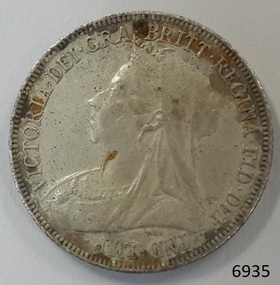
Currency - Coin, 1896
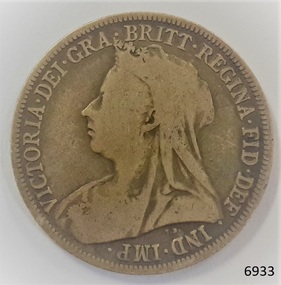
... Silver coin, round. Obverse; Queen Victoria head, ‘Old Head’, looking left. Reverse; 3 shields (each crowned) - 3 passant lions (England), 1 rampant lion (Scotland), golden harp (Northern Ireland) - floral symbols between them – 1 rose, 2 thistles. ...Silver coin, round. Obverse; Queen Victoria head, ‘Old Head’, looking left. Reverse; 3 shields (each crowned) - 3 passant lions (England), 1 rampant lion (Scotland), golden harp (Northern Ireland) - floral symbols between them – 1 rose, 2 thistles. ...This Great Britain one shilling coin is dated 1896, which is during the reign of Queen Victoria. There were over 9 million of these coins minted. Queen Victoria succeeded King William IV to the British Throne in 1837 – she was only 18 years old at the time – and she ruled until 1901. British coins such as this one shilling were in circulation in the colony of Australia until 1910, when the Commonwealth of Australia began producing its own coinage. This one shilling coin was minted by the Royal Mint at Royal Mint Court, in Little Tower Hill, London, England. Coins for circulation in the Kingdom of England, Great Britain and most of the British Empire were produced here until the 1960’s when the Royal Mint shifted location to Wales. There are three main groups of shillings produced during Queen Victoria’s reign:- - The Young Head; 1837-1887, in 8 different versions, on the obverse showing the Queen’s maturing face over 50 years. - The Junior Head; 1887-1892, minted when Queen Victoria had been reigning for 50 years. Her head was smaller on the coins minted 1887-1889 than on those shillings minted 1889-1892. - The Old Head; 1893-1901, shows the veiled head of Queen Victoria. The obverse side of the coin was designed by Thomas Brock. The inscription’s translation is “Victoria by the Grace of God, Queen of the British territories, Defender of the Faith, Empress of India”. The reverse side of the coin was designed by Edward Paynter. The inscription "HONI SOIT QUI MAL Y PENSE" translates as "Evil be to him who evil thinks". AUSTRALIAN CURRENCY The early settlers of Australia brought their own currency with them so a wide variety of coins, tokens and even ‘promissory’ notes (often called IOU’s) were used in the exchange of goods and services. In 1813 Spanish dollars were imported and converted for use by punching a hole in the centre of the coin. Both the outer ring, called the holey dollar, and the punched out ‘hole’, called the dump, were then used as the official currency. In 1825 the British Government passed the Sterling Silver Currency Act, making the British Pound the only legal form of currency in the Australian colonies. Not enough British currency was imported into the colony so other forms of currency were still used. In the mid 1800’s Australia entered the Gold Rush period when many made their fortunes. Gold was used for trading, often shaped into ingots, stamped with their weight and purity, and one pound tokens. In 1852 the Adelaide Assay Office, without British approval, made Australia’s first gold coin to meet the need for currency in South Australia after the Gold Rush began. In 1855 the official Australian Mint opened in Sydney, operating as a branch of the Royal Mint in London, and the gold was turned into coins called ‘sovereigns’. Other branches also opened in Melbourne and Perth. Up to the time of Australia becoming a federation in 1901 its currency included British copper and silver coins, Australian gold sovereigns, locally minted copper trade tokens, private banknotes, New South Wales and Queensland government treasury notes and Queensland government banknotes. After Federation the Australian government began to overwrite privately issued notes and prepared for the introduction of its own currency. In 1910 a National Australian Currency was formed, based on the British currency of ‘pounds, shillings and pence’ and the first Commonwealth coining was produced. In 1966, on February 14th, Australia changed over to the decimal currency system of dollars and cents. Australia did not have its own currency in the colonial times. Settlers brought money from other countries and they also traded goods such as grain when currency was scarce. For a long time there was no standardised value for the different currencies. In 1825 British currency became the only official currency in the colony of Australia and coins such as this silver shilling were imported into Australia to replace the mixture of foreign currency. Australia became a Federated nation on 1st January 1901. In 1910 National Australian Currency was formed and Australia produced its own currency, based on the British ‘pounds, shillings and pence’. The British currency was no longer valid. This silver shilling is of national significance as it represents the British currency used in Australia from 1825-1910. This silver shilling is also of significance to Australia as part one of the British Colonies ruled by Queen Victoria. It is part of the special silver and gold coins minted 1887-1893 to celebrate the 50 years Jubilee of Queen Victoria’s reign 1837-1887.Coin, Great Britain Shilling, 1896. Silver coin, round. Obverse; Queen Victoria head, ‘Old Head’, looking left. Reverse; 3 shields (each crowned) - 3 passant lions (England), 1 rampant lion (Scotland), golden harp (Northern Ireland) - floral symbols between them – 1 rose, 2 thistles. Inscriptions on both sides of coin.Obverse “VICTORIA . DEI . GRA . BRITT . REGINA . FID . DEF . IND . IMP” Reverse “ONE SHILLING, 1896, Inner band, some letters hidden - HONI SO VI Y PENSE” flagstaff hill, warrnambool, shipwrecked coast, flagstaff hill maritime museum, maritime museum, shipwreck coast, flagstaff hill maritime village, great ocean road, coin, currency, money, legal tender, australian currency history, royal mint, british shilling 1896, thomas brock, edward paynter, great britain shilling, queen victoria currency, queen victoria 50 years golden jubilee shilling, colonial australia currency, numismatics -
 Flagstaff Hill Maritime Museum and Village
Currency - Coin, 1896
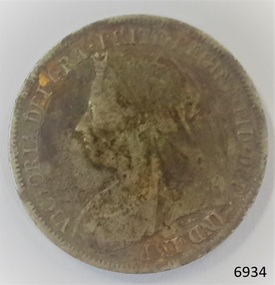
... Silver coin, round. Obverse; Queen Victoria head, ‘Old Head’, looking left. Reverse; 3 shields (each crowned) - 3 passant lions (England), 1 rampant lion (Scotland), golden harp (Northern Ireland) - floral symbols between them – 1 rose, 2 thistles. ...Silver coin, round. Obverse; Queen Victoria head, ‘Old Head’, looking left. Reverse; 3 shields (each crowned) - 3 passant lions (England), 1 rampant lion (Scotland), golden harp (Northern Ireland) - floral symbols between them – 1 rose, 2 thistles. ...This Great Britain one shilling coin is dated 1896, which is during the reign of Queen Victoria. There were over 9 million of these coins minted. Queen Victoria succeeded King William IV to the British Throne in 1837 – she was only 18 years old at the time – and she ruled until 1901. British coins such as this one shilling were in circulation in the colony of Australia until 1910, when the Commonwealth of Australia began producing its own coinage. This one shilling coin was minted by the Royal Mint at Royal Mint Court, in Little Tower Hill, London, England. Coins for circulation in the Kingdom of England, Great Britain and most of the British Empire were produced here until the 1960’s when the Royal Mint shifted location to Wales. There are three main groups of shillings produced during Queen Victoria’s reign:- - The Young Head; 1837-1887, in 8 different versions, on the obverse showing the Queen’s maturing face over 50 years. - The Junior Head; 1887-1892, minted when Queen Victoria had been reigning for 50 years. Her head was smaller on the coins minted 1887-1889 than on those shillings minted 1889-1892. - The Old Head; 1893-1901, shows the veiled head of Queen Victoria. The obverse side of the coin was designed by Thomas Brock. The inscription’s translation is “Victoria by the Grace of God, Queen of the British territories, Defender of the Faith, Empress of India”. The reverse side of the coin was designed by Edward Paynter. The inscription "HONI SOIT QUI MAL Y PENSE" translates as "Evil be to him who evil thinks". AUSTRALIAN CURRENCY The early settlers of Australia brought their own currency with them so a wide variety of coins, tokens and even ‘promissory’ notes (often called IOU’s) were used in the exchange of goods and services. In 1813 Spanish dollars were imported and converted for use by punching a hole in the centre of the coin. Both the outer ring, called the holey dollar, and the punched out ‘hole’, called the dump, were then used as the official currency. In 1825 the British Government passed the Sterling Silver Currency Act, making the British Pound the only legal form of currency in the Australian colonies. Not enough British currency was imported into the colony so other forms of currency were still used. In the mid 1800’s Australia entered the Gold Rush period when many made their fortunes. Gold was used for trading, often shaped into ingots, stamped with their weight and purity, and one pound tokens. In 1852 the Adelaide Assay Office, without British approval, made Australia’s first gold coin to meet the need for currency in South Australia after the Gold Rush began. In 1855 the official Australian Mint opened in Sydney, operating as a branch of the Royal Mint in London, and the gold was turned into coins called ‘sovereigns’. Other branches also opened in Melbourne and Perth. Up to the time of Australia becoming a federation in 1901 its currency included British copper and silver coins, Australian gold sovereigns, locally minted copper trade tokens, private banknotes, New South Wales and Queensland government treasury notes and Queensland government banknotes. After Federation the Australian government began to overwrite privately issued notes and prepared for the introduction of its own currency. In 1910 a National Australian Currency was formed, based on the British currency of ‘pounds, shillings and pence’ and the first Commonwealth coining was produced. In 1966, on February 14th, Australia changed over to the decimal currency system of dollars and cents. Australia did not have its own currency in the colonial times. Settlers brought money from other countries and they also traded goods such as grain when currency was scarce. For a long time there was no standardised value for the different currencies. In 1825 British currency became the only official currency in the colony of Australia and coins such as this silver shilling were imported into Australia to replace the mixture of foreign currency. Australia became a Federated nation on 1st January 1901. In 1910 National Australian Currency was formed and Australia produced its own currency, based on the British ‘pounds, shillings and pence’. The British currency was no longer valid. This silver shilling is of national significance as it represents the British currency used in Australia from 1825-1910. This silver shilling is also of significance to Australia as part one of the British Colonies ruled by Queen Victoria. It is part of the special silver and gold coins minted 1887-1893 to celebrate the 50 years Jubilee of Queen Victoria’s reign 1837-1887. Coin, Great Britain Shilling, 1896. Silver coin, round. Obverse; Queen Victoria head, ‘Old Head’, looking left. Reverse; 3 shields (each crowned) - 3 passant lions (England), 1 rampant lion (Scotland), golden harp (Northern Ireland) - floral symbols between them – 1 rose, 2 thistles. Inscriptions on both sides of coin.Obverse “VICTORIA . DEI . GRA . BRITT . REGINA . FID . DEF . IND . IMP” Reverse “ONE SHILLING, 1896”, Inner band, [some letters hidden] “HONI SO VI Y PENSE” flagstaff hill, warrnambool, shipwrecked coast, flagstaff hill maritime museum, maritime museum, shipwreck coast, flagstaff hill maritime village, great ocean road, coin, currency, money, legal tender, australian currency history, royal mint, british shilling 1896, thomas brock, edward paynter, great britain shilling, queen victoria currency, queen victoria 50 years golden jubilee shilling, colonial australia currency, numismatics -
 Flagstaff Hill Maritime Museum and Village
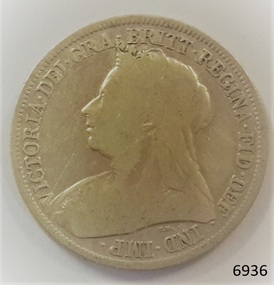
Currency - Coin, 1897
... Silver coin, round. Obverse; Queen Victoria head, ‘Old Head’, looking left. Reverse; 3 shields (each crowned) - 3 passant lions (England), 1 rampant lion (Scotland), golden harp (Northern Ireland) - floral symbols between them – 1 open rose, 2 thistles. ...Silver coin, round. Obverse; Queen Victoria head, ‘Old Head’, looking left. Reverse; 3 shields (each crowned) - 3 passant lions (England), 1 rampant lion (Scotland), golden harp (Northern Ireland) - floral symbols between them – 1 open rose, 2 thistles. ...This Great Britain one shilling coin is dated 1897, which is during the reign of Queen Victoria. There were over 6 million of these coins minted. Queen Victoria succeeded King William IV to the British Throne in 1837 – she was only 18 years old at the time – and she ruled until 1901. British coins such as this one shilling were in circulation in the colony of Australia until 1910, when the Commonwealth of Australia began producing its own coinage. This one shilling coin was minted by the Royal Mint at Royal Mint Court, in Little Tower Hill, London, England. Coins for circulation in the Kingdom of England, Great Britain and most of the British Empire were produced here until the 1960’s when the Royal Mint shifted location to Wales. There are three main groups of shillings produced during Queen Victoria’s reign:- - The Young Head; 1837-1887, in 8 different versions, on the obverse showing the Queen’s maturing face over 50 years. - The Junior Head; 1887-1892, minted when Queen Victoria had been reigning for 50 years. Her head was smaller on the coins minted 1887-1889 than on those shillings minted 1889-1892. - The Old Head; 1893-1901, shows the veiled head of Queen Victoria. The obverse side of the coin was designed by Thomas Brock. The inscription’s translation is “Victoria by the Grace of God, Queen of the British territories, Defender of the Faith, Empress of India”. The reverse side of the coin was designed by Edward Paynter. The inscription "HONI SOIT QUI MAL Y PENSE" translates as "Evil be to him who evil thinks". AUSTRALIAN CURRENCY The early settlers of Australia brought their own currency with them so a wide variety of coins, tokens and even ‘promissory’ notes (often called IOU’s) were used in the exchange of goods and services. In 1813 Spanish dollars were imported and converted for use by punching a hole in the centre of the coin. Both the outer ring, called the holey dollar, and the punched out ‘hole’, called the dump, were then counter-stamped and used as the official currency. In 1825 the British Government passed the Sterling Silver Currency Act, making the British Pound the only legal form of currency in the Australian colonies. Not enough British currency was imported into the colony so other forms of currency were still used. In the mid 1800’s Australia entered the Gold Rush period when many made their fortunes. Gold was used for trading, often shaped into ingots, stamped with their weight and purity, and one pound tokens. In 1852 the Adelaide Assay Office, without British approval, made Australia’s first gold coin to meet the need for currency in South Australia after the Gold Rush began. In 1855 the official Australian Mint opened in Sydney, operating as a branch of the Royal Mint in London, and the gold was turned into coins called ‘sovereigns’. Other branches also opened in Melbourne and Perth. Up to the time of Australia becoming a federation in 1901 its currency included British copper and silver coins, Australian gold sovereigns, locally minted copper trade tokens, private banknotes, New South Wales and Queensland government treasury notes and Queensland government banknotes. After Federation the Australian government began to overwrite privately issued notes and prepared for the introduction of its own currency. In 1910 a National Australian Currency was formed, based on the British currency of ‘pounds, shillings and pence’ and the first Commonwealth coining was produced, removing the power from the States. In 1966, on February 14th, Australia changed over to the decimal currency system of dollars and cents. Australia did not have its own currency in the colonial times. Settlers brought money from other countries and they also traded goods such as grain when currency was scarce. For a long time there was no standardised value for the different currencies. In 1825 British currency became the only official currency in the colony of Australia and coins such as this silver shilling were imported into Australia to replace the mixture of foreign currency. Australia became a Federated nation on 1st January 1901. In 1910 National Australian Currency was formed and Australia produced its own currency, based on the British ‘pounds, shillings and pence’. The British currency was no longer valid. This silver shilling is of national significance as it represents the British currency used in Australia from 1825-1910. This silver shilling is also of significance to Australia as part one of the British Colonies ruled by Queen Victoria. It is part of the special silver and gold coins minted 1887-1893 to celebrate the 50 years Jubilee of Queen Victoria’s reign 1837-1887. Coin, Great Britain Shilling, 1897. Silver coin, round. Obverse; Queen Victoria head, ‘Old Head’, looking left. Reverse; 3 shields (each crowned) - 3 passant lions (England), 1 rampant lion (Scotland), golden harp (Northern Ireland) - floral symbols between them – 1 open rose, 2 thistles. Inscriptions on both sides of coin.Obverse “VICTORIA . DEI . GRA . BRITT . REGINA . FID . DEF . IND . IMP” Reverse “ONE SHILLING, 1897, Inner band, some letters hidden - HONI SO VI Y PENSE” flagstaff hill, warrnambool, shipwrecked coast, flagstaff hill maritime museum, maritime museum, shipwreck coast, flagstaff hill maritime village, great ocean road, coin, currency, money, legal tender, australian currency history, royal mint, british shilling 1897, thomas brock, edward paynter, great britain shilling, queen victoria currency, queen victoria 50 years golden jubilee shilling, colonial australia currency, numismatics -
 Flagstaff Hill Maritime Museum and Village
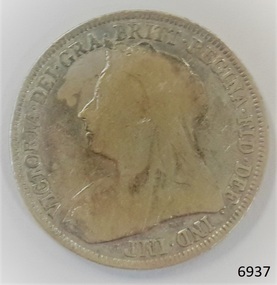
Currency - Coin, 1897
... Silver coin, round. Obverse; Queen Victoria head, ‘Old Head’, looking left. Reverse; 3 shields (each crowned) - 3 passant lions (England), 1 rampant lion (Scotland), golden harp (Northern Ireland) - floral symbols between them – 1 rose, 2 thistles. ...Silver coin, round. Obverse; Queen Victoria head, ‘Old Head’, looking left. Reverse; 3 shields (each crowned) - 3 passant lions (England), 1 rampant lion (Scotland), golden harp (Northern Ireland) - floral symbols between them – 1 rose, 2 thistles. ...This Great Britain one shilling coin is dated 1897, which is during the reign of Queen Victoria. There were over 6 million of these coins minted. Queen Victoria succeeded King William IV to the British Throne in 1837 – she was only 18 years old at the time – and she ruled until 1901. British coins such as this one shilling were in circulation in the colony of Australia until 1910, when the Commonwealth of Australia began producing its own coinage. This one shilling coin was minted by the Royal Mint at Royal Mint Court, in Little Tower Hill, London, England. Coins for circulation in the Kingdom of England, Great Britain and most of the British Empire were produced here until the 1960’s when the Royal Mint shifted location to Wales. There are three main groups of shillings produced during Queen Victoria’s reign:- - The Young Head; 1837-1887, in 8 different versions, on the obverse showing the Queen’s maturing face over 50 years. - The Junior Head; 1887-1892, minted when Queen Victoria had been reigning for 50 years. Her head was smaller on the coins minted 1887-1889 than on those shillings minted 1889-1892. - The Old Head; 1893-1901, shows the veiled head of Queen Victoria. The obverse side of the coin was designed by Thomas Brock. The inscription’s translation is “Victoria by the Grace of God, Queen of the British territories, Defender of the Faith, Empress of India”. The reverse side of the coin was designed by Edward Paynter. The inscription "HONI SOIT QUI MAL Y PENSE" translates as "Evil be to him who evil thinks". AUSTRALIAN CURRENCY The early settlers of Australia brought their own currency with them so a wide variety of coins, tokens and even ‘promissory’ notes (often called IOU’s) were used in the exchange of goods and services. In 1813 Spanish dollars were imported and converted for use by punching a hole in the centre of the coin. Both the outer ring, called the holey dollar, and the punched out ‘hole’, called the dump, were then counter-stamped and used as the official currency. In 1825 the British Government passed the Sterling Silver Currency Act, making the British Pound the only legal form of currency in the Australian colonies. Not enough British currency was imported into the colony so other forms of currency were still used. In the mid 1800’s Australia entered the Gold Rush period when many made their fortunes. Gold was used for trading, often shaped into ingots, stamped with their weight and purity, and one pound tokens. In 1852 the Adelaide Assay Office, without British approval, made Australia’s first gold coin to meet the need for currency in South Australia after the Gold Rush began. In 1855 the official Australian Mint opened in Sydney, operating as a branch of the Royal Mint in London, and the gold was turned into coins called ‘sovereigns’. Other branches also opened in Melbourne and Perth. Up to the time of Australia becoming a federation in 1901 its currency included British copper and silver coins, Australian gold sovereigns, locally minted copper trade tokens, private banknotes, New South Wales and Queensland government treasury notes and Queensland government banknotes. After Federation the Australian government began to overwrite privately issued notes and prepared for the introduction of its own currency. In 1910 a National Australian Currency was formed, based on the British currency of ‘pounds, shillings and pence’ and the first Commonwealth coining was produced, removing the power from the States. In 1966, on February 14th, Australia changed over to the decimal currency system of dollars and cents. Australia did not have its own currency in the colonial times. Settlers brought money from other countries and they also traded goods such as grain when currency was scarce. For a long time there was no standardised value for the different currencies. In 1825 British currency became the only official currency in the colony of Australia and coins such as this silver shilling were imported into Australia to replace the mixture of foreign currency. Australia became a Federated nation on 1st January 1901. In 1910 National Australian Currency was formed and Australia produced its own currency, based on the British ‘pounds, shillings and pence’. The British currency was no longer valid. This silver shilling is of national significance as it represents the British currency used in Australia from 1825-1910. This silver shilling is also of significance to Australia as part one of the British Colonies ruled by Queen Victoria. It is part of the special silver and gold coins minted 1887-1893 to celebrate the 50 years Jubilee of Queen Victoria’s reign 1837-1887. Coin, Great Britain Shilling, 1897. Silver coin, round. Obverse; Queen Victoria head, ‘Old Head’, looking left. Reverse; 3 shields (each crowned) - 3 passant lions (England), 1 rampant lion (Scotland), golden harp (Northern Ireland) - floral symbols between them – 1 rose, 2 thistles. Inscriptions on both sides of coin.Obverse “VICTORIA . DEI . GRA . BRITT . REGINA . FID . DEF . IND . IMP” Reverse “ONE SHILLING, 1897, Inner band, some letters hidden - HONI SO VI Y PENSE” flagstaff hill, warrnambool, shipwrecked coast, flagstaff hill maritime museum, maritime museum, shipwreck coast, flagstaff hill maritime village, great ocean road, coin, currency, money, legal tender, australian currency history, royal mint, british shilling 1897, thomas brock, edward paynter, great britain shilling, queen victoria currency, queen victoria 50 years golden jubilee shilling, colonial australia currency, numismatics -
 Flagstaff Hill Maritime Museum and Village
Currency - Coin, 1898
... Silver coin, round. Obverse; Queen Victoria head, ‘Old Head’, looking left. Reverse; 3 shields (each crowned) - 3 passant lions (England), 1 rampant lion (Scotland), golden harp (Northern Ireland) - floral symbols between them – 1 rose, 2 thistles. ...Silver coin, round. Obverse; Queen Victoria head, ‘Old Head’, looking left. Reverse; 3 shields (each crowned) - 3 passant lions (England), 1 rampant lion (Scotland), golden harp (Northern Ireland) - floral symbols between them – 1 rose, 2 thistles. ...This Great Britain one shilling coin is dated 1898, which is during the reign of Queen Victoria. There were over 9 million of these coins minted. Queen Victoria succeeded King William IV to the British Throne in 1837 – she was only 18 years old at the time – and she ruled until 1901. British coins such as this one shilling were in circulation in the colony of Australia until 1910, when the Commonwealth of Australia began producing its own coinage. This one shilling coin was minted by the Royal Mint at Royal Mint Court, in Little Tower Hill, London, England. Coins for circulation in the Kingdom of England, Great Britain and most of the British Empire were produced here until the 1960’s when the Royal Mint shifted location to Wales. There are three main groups of shillings produced during Queen Victoria’s reign:- - The Young Head; 1837-1887, in 8 different versions, on the obverse showing the Queen’s maturing face over 50 years. - The Junior Head; 1887-1892, minted when Queen Victoria had been reigning for 50 years. Her head was smaller on the coins minted 1887-1889 than on those shillings minted 1889-1892. - The Old Head; 1893-1901, shows the veiled head of Queen Victoria. The obverse side of the coin was designed by Thomas Brock. The inscription’s translation is “Victoria by the Grace of God, Queen of the British territories, Defender of the Faith, Empress of India”. The reverse side of the coin was designed by Edward Paynter. The inscription "HONI SOIT QUI MAL Y PENSE" translates as "Evil be to him who evil thinks". AUSTRALIAN CURRENCY The early settlers of Australia brought their own currency with them so a wide variety of coins, tokens and even ‘promissory’ notes (often called IOU’s) were used in the exchange of goods and services. In 1813 Spanish dollars were imported and converted for use by punching a hole in the centre of the coin. Both the outer ring, called the holey dollar, and the punched out ‘hole’, called the dump, were then used as the official currency. In 1825 the British Government passed the Sterling Silver Currency Act, making the British Pound the only legal form of currency in the Australian colonies. Not enough British currency was imported into the colony so other forms of currency were still used. In the mid 1800’s Australia entered the Gold Rush period when many made their fortunes. Gold was used for trading, often shaped into ingots, stamped with their weight and purity, and one pound tokens. In 1852 the Adelaide Assay Office, without British approval, made Australia’s first gold coin to meet the need for currency in South Australia after the Gold Rush began. In 1855 the official Australian Mint opened in Sydney, operating as a branch of the Royal Mint in London, and the gold was turned into coins called ‘sovereigns’. Other branches also opened in Melbourne and Perth. Up to the time of Australia becoming a federation in 1901 its currency included British copper and silver coins, Australian gold sovereigns, locally minted copper trade tokens, private banknotes, New South Wales and Queensland government treasury notes and Queensland government banknotes. After Federation the Australian government began to overwrite privately issued notes and prepared for the introduction of its own currency. In 1910 a National Australian Currency was formed, based on the British currency of ‘pounds, shillings and pence’ and the first Commonwealth coining was produced. In 1966, on February 14th, Australia changed over to the decimal currency system of dollars and cents. Australia did not have its own currency in the colonial times. Settlers brought money from other countries and they also traded goods such as grain when currency was scarce. For a long time there was no standardised value for the different currencies. In 1825 British currency became the only official currency in the colony of Australia and coins such as this silver shilling were imported into Australia to replace the mixture of foreign currency. Australia became a Federated nation on 1st January 1901. In 1910 National Australian Currency was formed and Australia produced its own currency, based on the British ‘pounds, shillings and pence’. The British currency was no longer valid. This silver shilling is of national significance as it represents the British currency used in Australia from 1825-1910. This silver shilling is also of significance to Australia as part one of the British Colonies ruled by Queen Victoria. It is part of the special silver and gold coins minted 1887-1893 to celebrate the 50 years Jubilee of Queen Victoria’s reign 1837-1887. Coin, Great Britain Shilling, 1898. Silver coin, round. Obverse; Queen Victoria head, ‘Old Head’, looking left. Reverse; 3 shields (each crowned) - 3 passant lions (England), 1 rampant lion (Scotland), golden harp (Northern Ireland) - floral symbols between them – 1 rose, 2 thistles. Inscriptions on both sides of coin.Obverse “VICTORIA . DEI . GRA . BRITT . REGINA . FID . DEF . IND . IMP” Reverse “ONE SHILLING, 1898, Inner band, some letters hidden - HONI SO VI Y PENSE” flagstaff hill, warrnambool, shipwrecked coast, flagstaff hill maritime museum, maritime museum, shipwreck coast, flagstaff hill maritime village, great ocean road, coin, currency, money, legal tender, australian currency history, royal mint, british shilling 1898, thomas brock, edward paynter, great britain shilling, queen victoria currency, queen victoria 50 years golden jubilee shilling, colonial australia currency, numismatics -
 Bendigo Military Museum
Badge - VARIOUS MILITARY BADGES, Unknown
... Military badges either gold, silver or brass colour with or without a backing mounting plate, pins. Sizes vary. 1. 7th Dragoon Guards - hat 1906-1922. 2. 2nd Dragoon Guards collar. 3. The Tyneside Irish...Passchendaele barracks trust PBT161to170 Badges Military badges either gold, silver or brass colour with or without a backing mounting plate, pins. Sizes vary. 1. 7th Dragoon Guards - hat 1906-1922. 2. 2nd Dragoon Guards collar. 3. The Tyneside Irish ...Military badges either gold, silver or brass colour with or without a backing mounting plate, pins. Sizes vary. 1. 7th Dragoon Guards - hat 1906-1922. 2. 2nd Dragoon Guards collar. 3. The Tyneside Irish Regiment Hat. 4. Liverpool Scottish Cameroon Regt. WW2. 5. British Intelligence Corps Hat. 6. Intelligence Corps Collar (ERII). 7. Royal Army Service Corps Collar (GVI). 8. Royal Army Pay Corps Hat. 9. Royal Army Chaplains Dept Hat. 10. Royal Engineers Hat (GVI). passchendaele barracks trust, pbt161to170, badges -
Frankston RSL Sub Branch
Swagger Stick
... Wooden shaft 680mm tipped with 25mm silvered metal cap and 40mm silvered metal head with pressed Royal Irish Fusiliers crest ...Royal Irish Fusiliers crest pressed into silvered cap on head of shaft...Royal Irish Fusiliers crest pressed into silvered cap on head of shaft Wooden shaft 680mm tipped with 25mm silvered metal cap and 40mm silvered metal head with pressed Royal Irish Fusiliers crest Swagger Stick ...Wooden shaft 680mm tipped with 25mm silvered metal cap and 40mm silvered metal head with pressed Royal Irish Fusiliers crest Royal Irish Fusiliers crest pressed into silvered cap on head of shaft -
 Geoffrey Kaye Museum of Anaesthetic History
Decorative object - Plate, Swatkins, c.2017
... [Presented to the / Australia and New Zealand College of Anaesthetists / on the occasion of their Silver Jubilee / from the / College of Anaesthetists of Ireland / May 2017]...Presented to the ANZCA president David A Scott during the ANZCA ASM held in Brisbane, May 2017 by the College of Anaesthetists of Ireland. college of anaesthetists of ireland asm swatkins [Presented to the / Australia and New Zealand College of Anaesthetists / on the occasion of their Silver Jubilee / from the / College of Anaesthetists of Ireland / May 2017] Silver plated, medium size plate with central inscription. ...Presented to the ANZCA president David A Scott during the ANZCA ASM held in Brisbane, May 2017 by the College of Anaesthetists of Ireland. Silver plated, medium size plate with central inscription. Displayed on a wooden stand and presented in a blue wooden box[Presented to the / Australia and New Zealand College of Anaesthetists / on the occasion of their Silver Jubilee / from the / College of Anaesthetists of Ireland / May 2017]college of anaesthetists of ireland, asm, swatkins -
 Yarra Ranges Regional Museum
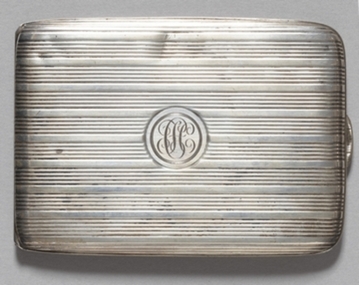
Cigarette Case
... Irish ancestry . He was a graduate of the New England Conservatory od Boston where he studied classical music and piano. In 1926 John Charles Hughes' wife died of cancer leaving a daughter Dorothy (who is the wife of the donor). He was unable to continue his work after the death of his wife and after a bout of alcoholism disappeared and was never seen again. Dame Nellie Melba cigarette case John Charles Hughes (Engraved) From Nellie Melba 1913 - 1914 Silver ...Cigerette case given by Dame Nellie Melba to John Charles Hughes. Mr Hughes was responsibile for maintaining and tuning her piano while on tour in the USA and AustraliaJohn Charles Hughes was born in 1882 of Scotish- Irish ancestry . He was a graduate of the New England Conservatory od Boston where he studied classical music and piano. In 1926 John Charles Hughes' wife died of cancer leaving a daughter Dorothy (who is the wife of the donor). He was unable to continue his work after the death of his wife and after a bout of alcoholism disappeared and was never seen again. Silver cigarette case with textured horizontal lines on outside surface and engraved monogram in centre. Hinged lid and clasp at one end. Interior has flat metal bar attached at one end to keep cigarettes in place, and 'From Nellie Melba 1913-1914' engraved across surface underneath bar.(Engraved) From Nellie Melba 1913 - 1914 dame nellie melba, cigarette case, john charles hughes -
 Bendigo Historical Society Inc.
Document - DUDLEY HOUSE COLLECTION: ROYAL SILVER JUBILEE EXHIBITION MUSICAL PROGRAMME 1977, 1977
... Bendigo Branch Royal Historical Society of Victoria Dudley House Silver Jubilee Exhibition & Musical Performances. 29th May 1977. Soprano Patricia Lyon and Accompanist Fred Trewarne. Programme: 1. 'The Fairy Tales of Ireland...BENDIGO Tourism dudley house royal exhibition Bendigo Branch Royal Historical Society of Victoria Dudley House Silver Jubilee Exhibition & Musical Performances. 29th May 1977. Soprano Patricia Lyon and Accompanist Fred Trewarne. Programme: 1. 'The Fairy Tales of Ireland ...Bendigo Branch Royal Historical Society of Victoria Dudley House Silver Jubilee Exhibition & Musical Performances. 29th May 1977. Soprano Patricia Lyon and Accompanist Fred Trewarne. Programme: 1. 'The Fairy Tales of Ireland' 2. ''Princess of the Dawn'' Composer Eric Coates. Refer to original document for a brief history of English Composer Eric Coates et.al. 3. ''Come Unto Him'' (from the Messiah) G.F. Handel. 4. ''Lament of Isis'' -Gone is My Love, My Lord '' (from Songs of Egypt) Granville Bantock. 5. ''Oh My Beloved Father'' (from Gianni Schicchi) G. Puccini. 6. ''Drooping Wings'' R. Quilter. 7. ''Caro Mio Ben'' (Dearest Believe) G. Geordani. 8. ''A Japanese Love Song'' May Brahe. 9. Mattinata (Morning Song) '''Tis the Day''. R. Leoncavello.bendigo, tourism, dudley house royal exhibition -
 Royal Australasian College of Surgeons Museum and Archives
Ceremonial object - Commemorative gift, Loving Cup, 1977
... Ireland. The coat-of arms of the Colleges are engraved around the outside. The Cup was made by Roy Flewin, a master craftsman of London. It is sterling silver...Ireland. The coat-of arms of the Colleges are engraved around the outside. The Cup was made by Roy Flewin, a master craftsman of London. It is sterling silver ...The Loving Cup was presented to the Royal Australasian College of Surgeons at the inaugural session of the General Scientific Meeting in Melbourne, on 15 May 1977, to mark the 50th anniversary of the foundation of the College. It was presented by Sir Rodney Smith PRCS and Lady Smith, and was a gift from the Royal College of Surgeons of England, the Royal College of Surgeons of Edinburgh, the Royal College of Physicians and Surgeons of Glasgow, and the Royal College of Surgeons in Ireland. The coat-of arms of the Colleges are engraved around the outside. The Cup was made by Roy Flewin, a master craftsman of London. It is sterling silver, hallmarked for the year of the Queen’s Silver Jubilee (1977), and stands 26cm high. It is fitted with two handles and a lid’ and has a gilt interior. The engraving was carried out by Stanley Reece. Whether between friends or lovers, drinking from a Loving Cup is an act of ultimate trust, and is always performed with due ceremony: “A” takes the Cup, filled with wine, and turns to “B”. “A” bows to “B”, and “B” bows/curtsies to “A”. “B” removes the lid of the Cup. “A” drinks from the Cup, and wipes the place he drank from with a cloth tied to one of the handles. “B” replaces the lid, and takes the Cup. If only two people are involved, then they simply reverse rôles. If there are more than two, then the ceremony continues in a similar fashion. The Cup is a token of the friendship and cordiality that exists among the Royal Colleges. In presenting it to E.S.R. (Bill) Hughes, then President of the RACS, Sir Rodney described it as ‘a symbol of our common heritage, and the privileges and responsibilities we share’The Loving Cup was presented to the Royal Australasian College of Surgeons at the inaugural session of the General Scientific Meeting in Melbourne, on 15 May 1977, to mark the 50th anniversary of the foundation of the CollegeSTERLING SILVER 2-HANDLED LOVING CUP WITH LIFT TOP, FINE BUD FILIAL, GILDED INTERIOR AND SCROLLED HANDLES, ON RIBBED PLATFORM BASE, WITH CREST, ETC. (SEE TOORAC AUCTION LIST FOR ALL DETAILS).HALLMARKS AND COATS OF ARMS. UNDER BASE: "ENGRAVED BY STANLEY REECE) PRESENTATION CARD: "LOVING CUP PRESENTED AT THE INAUGURAL CEREMONY GENERAL SCIENTIFIC MEETING, RACS, 15 MAY 1977 BY loving cup, 50th anniversary of the foundation of the college, sir rodney smith, 1977, roy flewin -
 Stanley Athenaeum & Public Room
Plaque - Shield - silver & wood, Shield with wooden case
... Shield shape - wooden with silver shield inside . Musical motif/Irish harp/advance Stanley - extra pes. ...Engraved 'Beechworth Choir Contest' Judge Redford 7th Oct 1903 Shield shape - wooden with silver shield inside . Musical motif/Irish harp/advance Stanley - extra pes. ...Shield shape - wooden with silver shield inside . Musical motif/Irish harp/advance Stanley - extra pes. Cabinet hinged - lockable. Ornate scrolled top on wooden part of shield.Engraved 'Beechworth Choir Contest' Judge Redford 7th Oct 1903 -
 Sandhurst Diocese Historical Commission
Knife, Circa 1870 - 1900
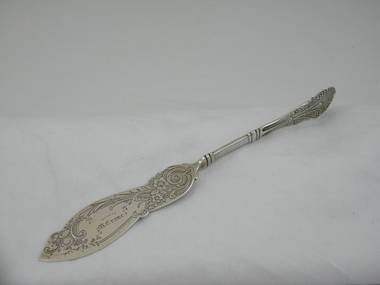
... Irish born Crane was an Augustinian priest before being ordained in 1874. Crane was Bishop of Sandhurst for 27 years. Knife silverplate cutlery Catholic clergy Bishop. M. Crane. Engraved on the front of knife. Silversmith's name/symbol engraved on the back of knife blade. Sterling. P??? engraved on the back of knife blade. Elaborately engraved sterling silver ...Martin Crane was the first Bishop of Sandhurst. 1874 - 1901. The knife was probably a gift and is engraved on the front with his name. Martin Crane was a progressive leader in Sandhurst and built many new schools and churches in the Diocese. The knife is significant because it belonged to the first Bishop of Sandhurst, Martin Crane. Irish born Crane was an Augustinian priest before being ordained in 1874. Crane was Bishop of Sandhurst for 27 years. Elaborately engraved sterling silver knife. Floral, leafy design. Probably a cheese or butter knife. The handle sits 90 degrees to the knife blade. This a part of a cutlery set. Bishop. M. Crane. Engraved on the front of knife. Silversmith's name/symbol engraved on the back of knife blade. Sterling. P??? engraved on the back of knife blade. knife, silverplate, cutlery, catholic clergy -
 Hume City Civic Collection
Rupertswood Battery Collection, Royal Irish Military Tournament/1895. Riding & Jumping sections 2nd prize, c.1893
... Wallace at Islington in 1893. royal irish military tournament. victorian horse artiller rupertswood battery collection george evans collection Royal Irish Military Tournament /1893/Riding & jumping in sections/2nd prize (on Lid) on barrel. M. A. Williams. Royal Hotel Sunbury August 11th 1905 A wood and silver-plated biscuit barrel with plated lid Royal Irish Military Tournament/1895. ...This biscuit barrel of silverplate and wood was won by a member of the Victorian Horse Artillery, Driver J. Mc Keon, along with Sergeant Harry Looney, Driver J. Ryan and Driver J. Wallace at Islington in 1893.A wood and silver-plated biscuit barrel with plated lidRoyal Irish Military Tournament /1893/Riding & jumping in sections/2nd prize (on Lid) on barrel. M. A. Williams. Royal Hotel Sunbury August 11th 1905royal irish military tournament., victorian horse artiller, rupertswood battery collection, george evans collection -
 Wangaratta RSL Sub Branch
Coin, Royal Mint, circa 1711
... Round silver coin with bust of woman - ANNA DEI GRATIA - silver chain attached Reverse side - Crowned shields - with arms of England and Scotland impaled at top and bottom, Ireland at left and France at right, forming a cross shape with the badge of the Star of the Garter at the centre; around, MAG BRI FR ET HIB REG 1711, the date being divided by a crown....Circa 1711 Queen Anne silver shilling coin coin queen anne Round silver coin with bust of woman - ANNA DEI GRATIA - silver chain attached Reverse side - Crowned shields - with arms of England and Scotland impaled at top and bottom, Ireland at left and France at right, forming a cross shape with the badge of the Star of the Garter at the centre; around, MAG BRI FR ET HIB REG 1711, the date being divided by a crown. ...Circa 1711 Queen Anne silver shilling coin Round silver coin with bust of woman - ANNA DEI GRATIA - silver chain attached Reverse side - Crowned shields - with arms of England and Scotland impaled at top and bottom, Ireland at left and France at right, forming a cross shape with the badge of the Star of the Garter at the centre; around, MAG BRI FR ET HIB REG 1711, the date being divided by a crown.coin, queen anne -
 The Celtic Club
Book, Marguerite Elsbeth, The Silver Wheel, 1996
... Ireland - Religion - Fiction Woman's Mysteries. A blend of mythology, psychology and shamanism to reveal the beauty of the Celtic tradition for women today. Index, ill, p.212. The Silver ...A blend of mythology, psychology and shamanism to reveal the beauty of the Celtic tradition for women today.Index, ill, p.212.non-fictionA blend of mythology, psychology and shamanism to reveal the beauty of the Celtic tradition for women today.ireland - religion - fiction, woman's mysteries. -
 The Celtic Club
Book, L. R. Silver, The Battle of Vinegar Hill, 1989
... Vinegar Hill - Insurgency Irish - New South Wales - History An account of an episode which has become part of Australia's legendary past. Index, bib, plates, maps, ill, p.164. The Battle of Vinegar Hill Book L. R. Silver ...An account of an episode which has become part of Australia's legendary past.Index, bib, plates, maps, ill, p.164.non-fictionAn account of an episode which has become part of Australia's legendary past.vinegar hill - insurgency, irish - new south wales - history -
 Wodonga & District Historical Society Inc
Souvenir - Mug Silver Jubilee of Queen Elizabeth II
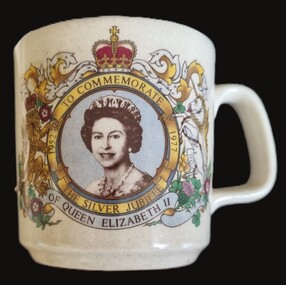
... Silver Jubilee of Queen Elizabeth II". The reverse bears a decorative transfer. The centre features the British Royal Crown. Surrounding the crown are floral emblems representing the United Kingdom: the Tudor Rose (England), the Thistle (Scotland), and Shamrock (Ireland). ...Silver Jubilee of Queen Elizabeth II". The reverse bears a decorative transfer. The centre features the British Royal Crown. Surrounding the crown are floral emblems representing the United Kingdom: the Tudor Rose (England), the Thistle (Scotland), and Shamrock (Ireland). ...Queen Elizabeth II ascended the throne, at the age of 25, on the death of her father King George VI on the 6th February 1952. Elizabeth was crowned as the Queen of the United Kingdom and the other Commonwealth realms on June 2nd 1953 at Westminster Abbey. Her Silver Jubilee was celebrated with large-scale parties and parades throughout the United Kingdom and the Commonwealth throughout 1977, culminating in June with the official "Jubilee Days", held to coincide with the Queen's Official Birthday. In addition Queen Elizabeth and Prince Philip embarked on a tour of Commonwealth nations including Australia. In March 1977, a Silver Jubilee Parade was held in front of Parliament House, Canberra. The Royal Australian Mint released a commemorative Silver Jubilee 50c coin, which featured twenty-five representations of St Edward's Crown. Two commemoratives stamps were released by Australia Post to celebrate the Jubilee. Australian artist Paul Fitzgerald was commissioned to complete the only official portrait of the Queen during the Silver Jubilee year. The Silver Jubilee celebrations culminated in December 1977 with 35,000 serving personnel taking part in parades across Australia.This item is significant because it records an important event in the British Royal Family, a vital part of the hereditary of many Wodonga residents. This item is a vintage ceramic commemorative mug produced to celebrate the 1977 Silver Jubilee of Queen Elizabeth II. It features a portrait of the Queen surrounded by royal iconography, including the crown, crests, and the text "To Commemorate The Silver Jubilee of Queen Elizabeth II". The reverse bears a decorative transfer. The centre features the British Royal Crown. Surrounding the crown are floral emblems representing the United Kingdom: the Tudor Rose (England), the Thistle (Scotland), and Shamrock (Ireland). TO COMMEMORATE THE SILVER JUBILLEE OF QUEEN ELIZABETH II 1952 1977queen elizabeth ii, royal memorabilia -
 8th/13th Victorian Mounted Rifles Regimental Collection
Rosebowl, Subalterns Challenge Cup, 1893 circa
... Presented to the 8th/13th Victorian Mounted Rifles Regiment RAAC by its affiliated regiment the 8th Royal Irish Hussars as part of a gift of regimental property when a reorganisation of British cavalry regiments was being undertaken. 8th hussars rose bowl regimental silver horse racing subalterns challenge cup On side of bowl: "Subalterns Challenge Cup Presented to Lieut.Col. ...Presented to the 8th/13th Victorian Mounted Rifles Regiment RAAC by its affiliated regiment the 8th Royal Irish Hussars as part of a gift of regimental property when a reorganisation of British cavalry regiments was being undertaken.Silver rose bowl mounted on black shellacked wooden base. Bowl is oval in plan view and boat-shaped in elevation with human figurines as handles. Designation of the bowl as the Subalterns Challenge Cup inscribed on side of bowl while winners are inscribed on wooden base.On side of bowl: "Subalterns Challenge Cup Presented to Lieut.Col. Davidson and the Officers 8th Hussara by major C G Poley on leaving the Regiment May 1893" and on base: "Won at Wetherby 1896 Lt O'Brien br:g "Baccarat" Owner Won at Wetherby 1897 Lt F J C Howard's b.m Moonshine aged Owner 12st 3lb Won at Fethard 1898 Lt E A O'Brien br.g Baccarat Owner 12st 3lb Won at Mullaboden 1899 Lt E M Jennings b.g May Boy Owner 12st 3lb Won at Aldershot 1904 Lt H F Partridge's b.g Loch Lomond aged Owner 12st.3lb"8th hussars, rose bowl, regimental silver, horse racing, subalterns challenge cup -
 Federation University Historical Collection
Book, The MIneral Industry its Statistics, Technology and Trade during 1919 and 1920 and 1927 and 1928
... ireland...coins...Cuba...blast furnaces...Gold...Lead production...Manganese...opals...silver...Used at the Ballarat School of Mines Mining statistics technology trades metal industry minerals united states canada china france germany italy japan russia south america spain sweden united kingdom ireland coins Cuba blast furnaces Gold Lead production Manganese opals silver + alumite antinomy cobalt coke copper ore iron lead limestone flux managanese shale silver-lead tin zinc abrasives chemical industry gems precious stones dividends akalies salt earthernware glass petroleum aluminium bismuth tungsten This volume includes Australasia, and lists each state seperately , as well as New Zealand, It also lists Bismoth, Chome iron ore, coal, copper, gold, lead, mineral industry growth, alumite, antinomy, cobalt, coke, copper ore, gold, iron, lead, limestone flux, managanese, shale, silver, silver-lead, tin and zinc Red hard cloth covered book of 900 pages. ...This volume includes Australasia, and lists each state seperately , as well as New Zealand, It also lists Bismoth, Chome iron ore, coal, copper, gold, lead, mineral industry growth, alumite, antinomy, cobalt, coke, copper ore, gold, iron, lead, limestone flux, managanese, shale, silver, silver-lead, tin and zincRed hard cloth covered book of 900 pages. Includes contents and index.non-fictionThis volume includes Australasia, and lists each state seperately , as well as New Zealand, It also lists Bismoth, Chome iron ore, coal, copper, gold, lead, mineral industry growth, alumite, antinomy, cobalt, coke, copper ore, gold, iron, lead, limestone flux, managanese, shale, silver, silver-lead, tin and zinc mining, statistics, technology, trades, metal industry, minerals, united states, canada, china, france, germany, italy, japan, russia, south america, spain, sweden, united kingdom, ireland, coins, cuba, blast furnaces, gold, lead production, manganese, opals, silver, +, alumite, antinomy, cobalt, coke, copper ore, iron, lead, limestone flux, managanese, shale, silver-lead, tin, zinc, abrasives, chemical industry, gems, precious stones, dividends, akalies, salt, earthernware, glass, petroleum, aluminium, bismuth, tungsten -
 Federation University Historical Collection
Book, The Mineral Industry its Statistics, Technology and Trade during 1929
... ireland...coins...Cuba...blast furnaces...Gold...Lead production...Manganese...opals...silver...Used at the Ballarat School of Mines Mining statistics technology trades metal industry minerals united states canada china france germany italy japan russia south america spain sweden united kingdom ireland coins Cuba blast furnaces Gold Lead production Manganese opals silver + alumite antinomy cobalt coke copper ore iron lead limestone flux managanese shale silver-lead tin zinc abrasives chemical industry gems precious stones dividends akalies salt earthernware glass petroleum aluminium bismuth tungsten This volume includes Australasia, and lists each state seperately , as well as New Zealand, It also lists Bismoth, Chome iron ore, coal, copper, gold, lead, mineral industry growth, alumite, antinomy, cobalt, coke, copper ore, gold, iron, lead, limestone flux, managanese, shale, silver, silver-lead, tin and zinc Red hard cloth covered book of 845 pages. ...This volume includes Australasia, and lists each state seperately , as well as New Zealand, It also lists Bismoth, Chome iron ore, coal, copper, gold, lead, mineral industry growth, alumite, antinomy, cobalt, coke, copper ore, gold, iron, lead, limestone flux, managanese, shale, silver, silver-lead, tin and zincRed hard cloth covered book of 845 pages. Includes contents and index.non-fictionThis volume includes Australasia, and lists each state seperately , as well as New Zealand, It also lists Bismoth, Chome iron ore, coal, copper, gold, lead, mineral industry growth, alumite, antinomy, cobalt, coke, copper ore, gold, iron, lead, limestone flux, managanese, shale, silver, silver-lead, tin and zinc mining, statistics, technology, trades, metal industry, minerals, united states, canada, china, france, germany, italy, japan, russia, south america, spain, sweden, united kingdom, ireland, coins, cuba, blast furnaces, gold, lead production, manganese, opals, silver, +, alumite, antinomy, cobalt, coke, copper ore, iron, lead, limestone flux, managanese, shale, silver-lead, tin, zinc, abrasives, chemical industry, gems, precious stones, dividends, akalies, salt, earthernware, glass, petroleum, aluminium, bismuth, tungsten -
 Federation University Historical Collection
Book, The Mineral Industry Its Statistics, Technology and Trade during 1926
... ireland...coins...Cuba...blast furnaces...Gold...Lead production...Manganese...opals...silver...Used at the Ballarat School of Mines Mining statistics technology trades metal industry minerals united states canada china france germany italy japan russia south america spain sweden united kingdom ireland coins Cuba blast furnaces Gold Lead production Manganese opals silver + alumite antinomy cobalt coke copper ore iron lead limestone flux managanese shale silver-lead tin zinc abrasives chemical industry gems precious stones dividends akalies salt earthernware glass petroleum aluminium bismuth tungsten This volume includes Australasia, and lists each state seperately , as well as New Zealand, It also lists Bismoth, Chome iron ore, coal, copper, gold, lead, mineral industry growth, alumite, antinomy, cobalt, coke, copper ore, gold, iron, lead, limestone flux, managanese, shale, silver, silver-lead, tin and zinc Red hard cloth covered book of 878 pages. ...This volume includes Australasia, and lists each state seperately , as well as New Zealand, It also lists Bismoth, Chome iron ore, coal, copper, gold, lead, mineral industry growth, alumite, antinomy, cobalt, coke, copper ore, gold, iron, lead, limestone flux, managanese, shale, silver, silver-lead, tin and zincRed hard cloth covered book of 878 pages. Includes contents and index.non-fictionThis volume includes Australasia, and lists each state seperately , as well as New Zealand, It also lists Bismoth, Chome iron ore, coal, copper, gold, lead, mineral industry growth, alumite, antinomy, cobalt, coke, copper ore, gold, iron, lead, limestone flux, managanese, shale, silver, silver-lead, tin and zinc mining, statistics, technology, trades, metal industry, minerals, united states, canada, china, france, germany, italy, japan, russia, south america, spain, sweden, united kingdom, ireland, coins, cuba, blast furnaces, gold, lead production, manganese, opals, silver, +, alumite, antinomy, cobalt, coke, copper ore, iron, lead, limestone flux, managanese, shale, silver-lead, tin, zinc, abrasives, chemical industry, gems, precious stones, dividends, akalies, salt, earthernware, glass, petroleum, aluminium, bismuth, tungsten -
 Federation University Historical Collection
Book, The Mineral Industry its Statistics, Technology and Trade during 1917
... ireland...coins...Cuba...blast furnaces...Gold...Lead production...Manganese...opals...silver...Used at the Ballarat School of Mines Mining statistics technology trades metal industry minerals united states canada china france germany italy japan russia south america spain sweden united kingdom ireland coins Cuba blast furnaces Gold Lead production Manganese opals silver + alumite antinomy cobalt coke copper ore iron lead limestone flux managanese shale silver-lead tin zinc abrasives chemical industry gems precious stones dividends akalies salt earthernware glass petroleum This volume includes Australasia, and lists each state seperately , as well as New Zealand, It also lists Bismoth, Chome iron ore, coal, copper, gold, lead, mineral industry growth, alumite, antinomy, cobalt, coke, copper ore, gold, iron, lead, limestone flux, managanese, shale, silver, silver-lead, tin and zinc Red hard cloth covered book of 928 pages. ...This volume includes Australasia, and lists each state seperately , as well as New Zealand, It also lists Bismoth, Chome iron ore, coal, copper, gold, lead, mineral industry growth, alumite, antinomy, cobalt, coke, copper ore, gold, iron, lead, limestone flux, managanese, shale, silver, silver-lead, tin and zincRed hard cloth covered book of 928 pages. Includes contents and index.non-fictionThis volume includes Australasia, and lists each state seperately , as well as New Zealand, It also lists Bismoth, Chome iron ore, coal, copper, gold, lead, mineral industry growth, alumite, antinomy, cobalt, coke, copper ore, gold, iron, lead, limestone flux, managanese, shale, silver, silver-lead, tin and zinc mining, statistics, technology, trades, metal industry, minerals, united states, canada, china, france, germany, italy, japan, russia, south america, spain, sweden, united kingdom, ireland, coins, cuba, blast furnaces, gold, lead production, manganese, opals, silver, +, alumite, antinomy, cobalt, coke, copper ore, iron, lead, limestone flux, managanese, shale, silver-lead, tin, zinc, abrasives, chemical industry, gems, precious stones, dividends, akalies, salt, earthernware, glass, petroleum -
Federation University Historical Collection
Book, The Mineral Industry its Statistics, Technology and Trade during 1918
... ireland...coins...Cuba...blast furnaces...Gold...Lead production...Manganese...opals...silver...Used at the Ballarat School of Mines Mining statistics technology trades metal industry minerals united states canada china france germany italy japan russia south america spain sweden united kingdom ireland coins Cuba blast furnaces Gold Lead production Manganese opals silver + alumite antinomy cobalt coke copper ore iron lead limestone flux managanese shale silver-lead tin zinc abrasives chemical industry gems precious stones dividends akalies salt earthernware glass petroleum aluminium bismuth tungsten This volume includes Australasia, and lists each state seperately , as well as New Zealand, It also lists Bismoth, Chome iron ore, coal, copper, gold, lead, mineral industry growth, alumite, antinomy, cobalt, coke, copper ore, gold, iron, lead, limestone flux, managanese, shale, silver, silver-lead, tin and zinc Red hard cloth covered book of 937 pages. ...This volume includes Australasia, and lists each state seperately , as well as New Zealand, It also lists Bismoth, Chome iron ore, coal, copper, gold, lead, mineral industry growth, alumite, antinomy, cobalt, coke, copper ore, gold, iron, lead, limestone flux, managanese, shale, silver, silver-lead, tin and zincRed hard cloth covered book of 937 pages. Includes contents and index.non-fictionThis volume includes Australasia, and lists each state seperately , as well as New Zealand, It also lists Bismoth, Chome iron ore, coal, copper, gold, lead, mineral industry growth, alumite, antinomy, cobalt, coke, copper ore, gold, iron, lead, limestone flux, managanese, shale, silver, silver-lead, tin and zinc mining, statistics, technology, trades, metal industry, minerals, united states, canada, china, france, germany, italy, japan, russia, south america, spain, sweden, united kingdom, ireland, coins, cuba, blast furnaces, gold, lead production, manganese, opals, silver, +, alumite, antinomy, cobalt, coke, copper ore, iron, lead, limestone flux, managanese, shale, silver-lead, tin, zinc, abrasives, chemical industry, gems, precious stones, dividends, akalies, salt, earthernware, glass, petroleum, aluminium, bismuth, tungsten -
 Federation University Historical Collection
Book, The Mineral Industry its Statistics, Technology and Trade during 1916
... ireland...coins...Cuba...blast furnaces...Gold...Lead production...Manganese...opals...silver...Used at the Ballarat School of Mines Mining statistics technology trades metal industry minerals united states canada china france germany italy japan russia south america spain sweden united kingdom ireland coins Cuba blast furnaces Gold Lead production Manganese opals silver + alumite antinomy cobalt coke copper ore iron lead limestone flux managanese shale silver-lead tin zinc abrasives chemical industry gems precious stones dividends akalies salt earthernware glass petroleum This volume includes Australasia, and lists each state seperately , as well as New Zealand, It also lists Bismoth, Chome iron ore, coal, copper, gold, lead, mineral industry growth, alumite, antinomy, cobalt, coke, copper ore, gold, iron, lead, limestone flux, managanese, shale, silver, silver-lead, tin and zinc Red hard cloth covered book of 939 pages. ...This volume includes Australasia, and lists each state seperately , as well as New Zealand, It also lists Bismoth, Chome iron ore, coal, copper, gold, lead, mineral industry growth, alumite, antinomy, cobalt, coke, copper ore, gold, iron, lead, limestone flux, managanese, shale, silver, silver-lead, tin and zincRed hard cloth covered book of 939 pages. Includes contents and index.non-fictionThis volume includes Australasia, and lists each state seperately , as well as New Zealand, It also lists Bismoth, Chome iron ore, coal, copper, gold, lead, mineral industry growth, alumite, antinomy, cobalt, coke, copper ore, gold, iron, lead, limestone flux, managanese, shale, silver, silver-lead, tin and zinc mining, statistics, technology, trades, metal industry, minerals, united states, canada, china, france, germany, italy, japan, russia, south america, spain, sweden, united kingdom, ireland, coins, cuba, blast furnaces, gold, lead production, manganese, opals, silver, +, alumite, antinomy, cobalt, coke, copper ore, iron, lead, limestone flux, managanese, shale, silver-lead, tin, zinc, abrasives, chemical industry, gems, precious stones, dividends, akalies, salt, earthernware, glass, petroleum -
Federation University Historical Collection
Book, The Mineral Industry its Statistics, Technology and Trade in the United States and Other Countries 1901
... ireland...coins...Cuba...blast furnaces...Gold...Lead production...Manganese...opals...silver...Used at the Ballarat School of Mines Mining statistics technology trades metal industry minerals united states canada china france germany italy japan russia south america spain sweden united kingdom ireland coins Cuba blast furnaces Gold Lead production Manganese opals silver alumite antinomy cobalt coke copper ore iron lead limestone flux managanese shale silver-lead tin zinc abrasives chemical industry gems precious stones quicksilver rare elements silica slate This volume includes Australasia, and lists each state seperately , as well as New Zealand, It also lists Bismoth, Chome iron ore, coal, copper, gold, lead, mineral industry growth, alumite, antinomy, cobalt, coke, copper ore, gold, iron, lead, limestone flux, managanese, shale, silver, silver-lead, tin and zinc. ...This volume includes Australasia, and lists each state seperately , as well as New Zealand, It also lists Bismoth, Chome iron ore, coal, copper, gold, lead, mineral industry growth, alumite, antinomy, cobalt, coke, copper ore, gold, iron, lead, limestone flux, managanese, shale, silver, silver-lead, tin and zinc. Australasian co.Red hard cloth covered book of 986 pages. Includes contents and index.non-fictionThis volume includes Australasia, and lists each state seperately , as well as New Zealand, It also lists Bismoth, Chome iron ore, coal, copper, gold, lead, mineral industry growth, alumite, antinomy, cobalt, coke, copper ore, gold, iron, lead, limestone flux, managanese, shale, silver, silver-lead, tin and zinc. Australasian co. mining, statistics, technology, trades, metal industry, minerals, united states, canada, china, france, germany, italy, japan, russia, south america, spain, sweden, united kingdom, ireland, coins, cuba, blast furnaces, gold, lead production, manganese, opals, silver, alumite, antinomy, cobalt, coke, copper ore, iron, lead, limestone flux, managanese, shale, silver-lead, tin, zinc, abrasives, chemical industry, gems, precious stones, quicksilver, rare elements, silica, slate
