
Showing 8 items matching "island lagoon"
-
 Eltham District Historical Society Inc
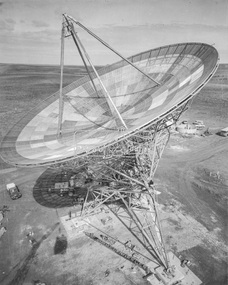
Photograph - Black and White Print, Weapons Research Establishment (WRE), 35' - 0" diameter dish at Island Lagoon, Woomera, 3 August, 1960
... 35' - 0" diameter dish at Island Lagoon, Woomera, 3 August......Island Lagoon...On reverse: 35' - 0" diameter dish at Island Lagoon, Woomera Also stamped in blue ink: Phone: Ex. 253 STILL PHOTO SECTION W.R.E. ...Alan Gardiner Collection 1960 1960-08-03 Island Lagoon Radio Telescope Salisbury Satellite Dish South Australia Space Industry Weapons Research Establishment (WRE) Woomera On reverse: 35' - 0" diameter dish at Island Lagoon, Woomera Also stamped in blue ink: Phone: Ex. 253 STILL PHOTO SECTION W.R.E. ...On reverse: 35' - 0" diameter dish at Island Lagoon, Woomera Also stamped in blue ink: Phone: Ex. 253 STILL PHOTO SECTION W.R.E. SALISBURY, S.A. Neg. No. N60/2805 (in pencil) Date: Subject: Classification: UNCLASSIFIED (over stamped) 3 Aug 1960 (over stamped)alan gardiner collection, 1960, 1960-08-03, island lagoon, radio telescope, salisbury, satellite dish, south australia, space industry, weapons research establishment (wre), woomera -
 Flagstaff Hill Maritime Museum and Village
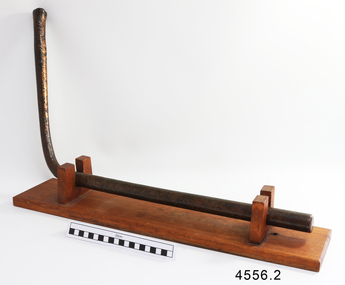
Nail, circa 1810
... Island. She was sailing in the moonlit night to hasten her arrival in port due to the great number of sick on board. She struck uncharted rocks, known only to the local whalers, between Actaeon Reef and Southport Lagoon and within hours began to break up. ...Island. She was sailing in the moonlit night to hasten her arrival in port due to the great number of sick on board. She struck uncharted rocks, known only to the local whalers, between Actaeon Reef and Southport Lagoon and within hours began to break up. ...This copper nail, sometimes known as a ‘Dumpy Bolt’ or spike, was salvaged from the hull of the wreck of the “George III”. It dates back to at least 1810. It was found by an abalone diver on the south east coast of Tasmania. The nail would have been used to hold the layers of the ship’s keel frame and the planking together. The nail has been passed from the abalone diver to an interested business man on a trip to the south of Hobart, on again to the business man’s close friend who then donated it to Flagstaff Hill Maritime Village. The metal of nails such as this one, after being in the sea for a long time, become affected by the natural reaction of the sea water, causing it to degenerate and thin, and the stress from the force of the sea over the years alters its shape. Iron nails had been used on ships previously, but they quickly corroded in the salt; ships needed regular, costly and time-consuming maintenance to replace the iron nails. Towards the end of the 18th century the British Navy trialled the use of copper nails, finding them to be very successful. Merchant ships began to adopt this process in the early 19th century, although it made ship building very expensive and was more often used for ships such as the “George III” that sailed on long voyages. The three masted sailing ship “George III” was a convict transport ship built in Deptford, England, in 1810. On 14th December 1834 she left Woolwich, England, bound for Hobart Town, Van Diemen’s Land (Tasmania), under Captain William Hall Moxey. She was carrying 220 male convicts plus crew, guards and their families, totalling 294 persons (another 2 were during the voyage). Amongst the cargo were military stores including several copper drums of gun powder. On 27th January 1835 the “George III” was near the Equator, about half way into her journey. A fire broke out and the gun powder was in danger of explosion, threatening the whole ship. Two convicts braved the heat and smoke, entered the store and seized the gun powder drums, suffering burns for their efforts but saving a probable disaster. The fire destroyed some of the provisions and food was scarce. Many became ill with scurvy and some died during the journey. Nearing the end of their journey on 10th April 1835 the “George III” was headed through the D'Entrecasteaux Channel, south east Tasmania, between the mainland and Bruny Island. She was sailing in the moonlit night to hasten her arrival in port due to the great number of sick on board. She struck uncharted rocks, known only to the local whalers, between Actaeon Reef and Southport Lagoon and within hours began to break up. The ship’s boats were used to first rescue the women and children. Firearms were used to help quell the panic of the convicts below decks and some were killed by the shots. Many convicts, including the sick, were drowned. In all, 133 lives were lost including 5 of the crew, guards and their families. It was the third worst shipping disaster in Tasmanian waters. A monument in honour of the prisoners who perished in the “George III” has been erected, noting the date of the wreck as “Friday 10th April 1835.” (NOTE: there are a few differences between sources regarding dates of the shipwreck, some saying March and others April 1835. There are also differences in the figures of those on board and the number of lives lost.) The copper nail is significant as an example of sailing ship construction; fasteners used in the early 19th century on ships carrying convicts to Australia. The nail is also significant for its association with the ship “George III”. The “George III” is registered on the Australian National Shipwreck Database, ID 7195 as an Historic Shipwreck. She is the third worst shipwreck in Tasmanian waters. She is also associated with Early Australian History and the transportation of convicts to Australia. The incident of the fire on board and the bravery of the convicts in making the gun powder safe is an example of the social character of the people in early Tasmanian colonisation. Copper nail (also called a Dumpy bolt or spike) from the convict ship George III, wrecked in 1835. Nail is long, bent in an ‘L’ shape about 3/5ths along, tapering from both ends to the bend. Both ends are flat and do not taper to a point, nor have a thread. The shorter end has been polished, showing bright copper. There is pitting along the nail and virdigris is evident on the longer, unpolished end. The nail is displayed with the longer section resting on a wooden board between two ‘U’ shaped uprights, the shorter section upright. flagstaff hill, warrnambool, shipwrecked coast, flagstaff hill maritime museum, maritime museum, shipwreck coast, flagstaff hill maritime village, great ocean road, george iii, ship construction, ship nail, 1835 shipwreck, 19th century shipwreck, william moxey, d'entrecasteaux channel, convict transportation, copper nail, dumpy bolt, spike, keel nail -
 Phillip Island and District Historical Society Inc.
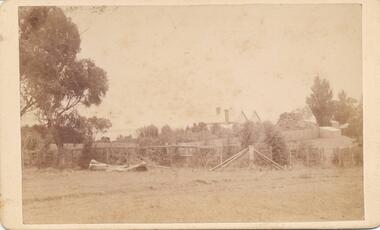
Photograph, McHaffie Homestead
... This homestead was situated next to the Lagoon Ventnor. The McHaffie brothers leased the Island from 1842 to 1863. ...This homestead was situated next to the Lagoon Ventnor. The McHaffie brothers leased the Island from 1842 to 1863. phillip island mchaffie homestead mchaffie brothers Sepia photograph believed to be the McHaffie Homestead, Ventnor, Phillip Island. ...This homestead was situated next to the Lagoon Ventnor. The McHaffie brothers leased the Island from 1842 to 1863. Sepia photograph believed to be the McHaffie Homestead, Ventnor, Phillip Island. NB by C Grayden 6/7/2015. The envelope that these photos were stored in has a typed note "Cumloden", St. Kilda.phillip island, mchaffie homestead, mchaffie brothers -
 Phillip Island and District Historical Society Inc.
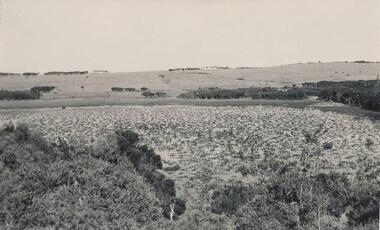
Photograph
... Photograph of McHaffie's Lagoon, Ventnor Phillip Island....One of a collection of over 400 photographs in an album commenced in 1960 and presented to the Phillip Island & Westernport Historical Society by the Shire of Phillip Island local history photography black & white photograph wetlands john jenner bryant west McHaffie's Lagoon Photograph of McHaffie's Lagoon, Ventnor Phillip Island. ...One of a collection of over 400 photographs in an album commenced in 1960 and presented to the Phillip Island & Westernport Historical Society by the Shire of Phillip IslandPhotograph of McHaffie's Lagoon, Ventnor Phillip Island.local history, photography, black & white photograph, wetlands, john jenner, bryant west, mchaffie's lagoon -
 Phillip Island and District Historical Society Inc.
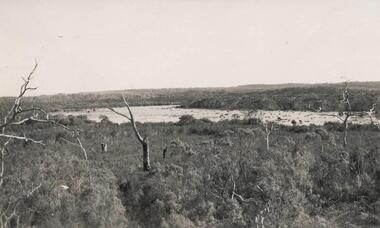
Photograph
... One of a collection of over 400 photographs in an album commenced in 1960 and presented to the Phillip Island & Westernport Historical Society by the Shire of Phillip Island local history photography lagoon at rhyll reserve black & white photograph wetlands rhyll reserve lagoon John Jenner Bryant West Photograph of the Rhyll Reserve Lagoon Photograph Bryant West ...One of a collection of over 400 photographs in an album commenced in 1960 and presented to the Phillip Island & Westernport Historical Society by the Shire of Phillip IslandPhotograph of the Rhyll Reserve Lagoonlocal history, photography, lagoon at rhyll reserve, black & white photograph, wetlands, rhyll reserve lagoon, john jenner, bryant west -
 Phillip Island and District Historical Society Inc.
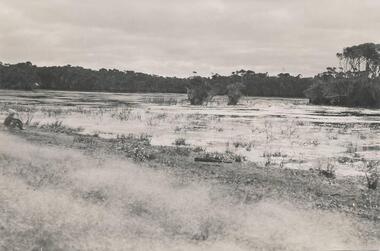
Photograph
... One of a collection of over 400 photographs in an album commenced in 1960 and presented to the Phillip Island & Westernport Historical Society by the Shire of Phillip Island local history photography newhaven lagoon black & white photograph wetlands John Jenner Bryant West Photograph of the Lagoon at Newhaven Photograph Bryant West ...One of a collection of over 400 photographs in an album commenced in 1960 and presented to the Phillip Island & Westernport Historical Society by the Shire of Phillip IslandPhotograph of the Lagoon at Newhavenlocal history, photography, newhaven lagoon, black & white photograph, wetlands, john jenner, bryant west -
 Phillip Island and District Historical Society Inc.
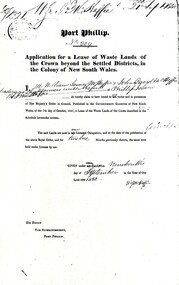
Document, Grant to W.J.McHaffie for lease of Crown land
... J D McHaffie, Phillip Island's first leaseholder, relates how McHaffie set up his headquarters (and later built his house) alongside what is now known as McHaffies lagoon. ...J D McHaffie, Phillip Island's first leaseholder, relates how McHaffie set up his headquarters (and later built his house) alongside what is now known as McHaffies lagoon. ...J D McHaffie, Phillip Island's first leaseholder, relates how McHaffie set up his headquarters (and later built his house) alongside what is now known as McHaffies lagoon. The McHaffie brothers – John David and William – occupied Phillip Island under a license from the Admiralty in 1842 and farmed it as a sheep run.Historical3 A4 photocopies showing application for lease in 1850, size and description of the land and instructions for the application.w.j.mchaffie, land grant, farming, saltwater creek, crown land -
 Phillip Island and District Historical Society Inc.
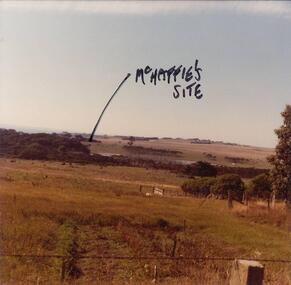
Photograph, John Cook, 1978-79
... Lagoon...Ventnor Phillip Island...Site of the first house built on Phillip island at Ventnor, showing the McHaffie Lagoon....Island. William went back to Scotland leaving David in sole charge of the property. coloured photograph McHaffie Lagoon Ventnor Phillip Island John Cook First settlers Site of the first house built on Phillip island at Ventnor, showing the McHaffie Lagoon. ...The McHaffie brothers came to Phillip Island in 1842. They settled on the sheltered, west side of the Island. William went back to Scotland leaving David in sole charge of the property.Site of the first house built on Phillip island at Ventnor, showing the McHaffie Lagoon.coloured photograph, mchaffie lagoon, ventnor phillip island, john cook, first settlers
