
Showing 363 items matching "james (captain)"
-
 Sunshine and District Historical Society Incorporated
Book - The Three Famous Voyages of Captain James Cook Round the World, Ward Lock and Co, C1890's
... The Three Famous Voyages of Captain James Cook Round the World...The Three Famous Voyages of Captain James Cook Round the World...Captain James Cook...The Three Famous Voyages of Captain James Cook Round the World...Ex Sunshine High School Library Collection Captain James Cook The Three Famous Voyages of Captain James Cook Round the World Green colored hard cover book The Three Famous Voyages of Captain James Cook Round the World Book The Three Famous Voyages of Captain James Cook Round the World Ward Lock and Co ...Green colored hard cover bookcaptain james cook -
 Flagstaff Hill Maritime Museum and Village
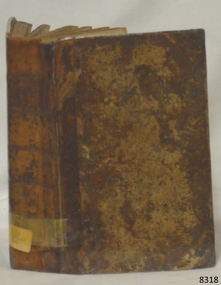
Book - Captain James Cooks Voyages Including aditional Anthology of Explorers Journals, Captain James Cook, Captain Cook's Voyages Round The World, 1790
... Captain James Cooks Voyages Including aditional Anthology of Explorers Journals...Captain Cooks Voyages Round The World...James...The primary author is Captain James Cook (1728–1779), as the core text is compiled directly from his official journals and logs. ...Captain Cook's Voyages Round The World Author: Captain James Cook Editor: M. K. Beddie. Publisher: Matthew Brown, Newcastle Upon Tyne. ...Captain James Cook...The primary author is Captain James Cook (1728–1779), as the core text is compiled directly from his official journals and logs. ...This specific printing of Captain Cook's voyages is a fascinating piece of late 18th-century provincial book history. This is a rare 18th-century provincial English edition. In the definitive reference work for Cook collectors M. K. Beddie’s Bibliography of Captain James Cook this exact printing is catalogued and recognised globally as Beddie No. 44. It was issued as a multi-volume set, typically bound in three thick octavo volumes or sometimes split into four. Rather than just copying the standard London texts, this specific edition is an expansive compilation. It includes Cook's three major voyages alongside supplementary accounts of the era, such as Captain Furneaux’s journals, Commodore Phipps’s expedition to the North Pole and, notably, Governor Arthur Phillip’s historic voyage to Botany Bay and the establishment of the Port Jackson colony.Captain Cook's Voyages Round The World Author: Captain James Cook Editor: M. K. Beddie. Publisher: Matthew Brown, Newcastle Upon Tyne. (At Bible Shop the Fresh Market) Date: 1790 Brown plain leather hardcover badly spotted. The spine has a Library label with an inscription.non-fictionThis specific printing of Captain Cook's voyages is a fascinating piece of late 18th-century provincial book history. This is a rare 18th-century provincial English edition. In the definitive reference work for Cook collectors M. K. Beddie’s Bibliography of Captain James Cook this exact printing is catalogued and recognised globally as Beddie No. 44. It was issued as a multi-volume set, typically bound in three thick octavo volumes or sometimes split into four. Rather than just copying the standard London texts, this specific edition is an expansive compilation. It includes Cook's three major voyages alongside supplementary accounts of the era, such as Captain Furneaux’s journals, Commodore Phipps’s expedition to the North Pole and, notably, Governor Arthur Phillip’s historic voyage to Botany Bay and the establishment of the Port Jackson colony.flagstaff hill, warrnambool, shipwrecked coast, flagstaff hill maritime museum, maritime museum, shipwreck coast, flagstaff hill maritime village, great ocean road, book, pattison collection, warrnambool library, warrnambool mechanics’ institute, ralph eric pattison, corangamite regional library service, warrnambool city librarian, mechanics’ institute library, victorian library board, warrnambool books and records, warrnambool children’s library, captain cooks voyages round the world, james cook -
 Whitehorse Historical Society Inc.
Document, Captain James Cook, n.d
... Captain James Cook......James (Captain)...A tribute to Captain James Cook By Neil Smith, 1770 - 1970. ...Dedicated to Captain Allan Villiers. Cook James (Captain) Smith Neil S A tribute to Captain James Cook By Neil Smith, 1770 - 1970. ...A tribute to Captain James Cook By Neil Smith, 1770 - 1970.A tribute to Captain James Cook By Neil Smith, 1770 - 1970. Dedicated to Captain Allan Villiers.A tribute to Captain James Cook By Neil Smith, 1770 - 1970. cook, james (captain), smith, neil s -
 Mission to Seafarers Victoria
Print - Reproduction of a painting, Captain James Cook - The First Voyage 1768-1771
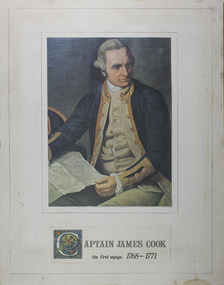
... Captain James Cook - The First Voyage 1768-1771...captain james cook...Captain James Cook - The First Voyage 1768-1771...Voyage 1 (1768–1771): ship Endeavour Route: London – Madiera – Rio de Janeiro – Cape Horn – Tuamotu Island – Tahiti – Society Islands – New Zealand – New Holland (Australia) – East Timor – Java – Batavia – Cape of Good Hope – St Helena – Ascension – London Cook joined the British merchant navy as a teenager and joined the Royal Navy in 1755. captain james cook Nathaniel Dance (1735-1811) endeavour navigators sea voyage Captain James Cook - The First Voyage 1768-1771 Colour reproduction of portrait of Captain Cook by Nathaniel Dance (1735-1811) Captain James Cook - The First Voyage 1768-1771 Print Reproduction of a painting ...The first voyage of Lieutenant James Cook was a combined Royal Navy and Royal Society expedition to the south Pacific Ocean aboard HMS Endeavour, from 1768 to 1771. The aims of this first expedition were to observe the transit of Venus across the Sun (3–4 of June 1769). Departing from Plymouth in August 1768, the expedition crossed the Atlantic, rounded Cape Horn and reached Tahiti in time to observe the transit of Venus. In September 1769 the expedition reached New Zealand. In April 1770 they became the first known Europeans to reach the east coast of Australia, making landfall near present-day Point Hicks, and then proceeding north to Botany Bay. The expedition continued northward along the Australian coastline. In October 1770 they reached the port of Batavia in the Dutch East Indies. They resumed their journey on 26 December, rounded the Cape of Good Hope on 13 March 1771, and reached the English port of Deal on 12 July. The voyage lasted almost three years. Voyage 1 (1768–1771): ship Endeavour Route: London – Madiera – Rio de Janeiro – Cape Horn – Tuamotu Island – Tahiti – Society Islands – New Zealand – New Holland (Australia) – East Timor – Java – Batavia – Cape of Good Hope – St Helena – Ascension – LondonCook joined the British merchant navy as a teenager and joined the Royal Navy in 1755.Colour reproduction of portrait of Captain Cook by Nathaniel Dance (1735-1811)Captain James Cook - The First Voyage 1768-1771captain james cook, nathaniel dance (1735-1811), endeavour, navigators, sea voyage -
 Flagstaff Hill Maritime Museum and Village
Book, Captain James Cook
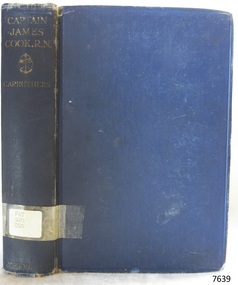
... Captain James Cook......Captain James Cook...Captain James Cook, R. N. One hundred and fifty years on Author: Sir Joseph Carruthers Publisher: John Murray Date: 1930...One hundred and fifty years on Author: Sir Joseph Carruthers Publisher: John Murray Date: 1930 Captain James Cook Book ...This item is from the ‘Pattison Collection’, a collection of books and records that was originally owned by the Warrnambool Mechanics’ Institute, which was founded in Warrnambool in 1853. By 1886 the Warrnambool Mechanics’ Institute (WMI) had grown to have a Library, Museum and Fine Arts Gallery, with a collection of “… choice productions of art, and valuable specimens in almost every branch and many wonderful national curiosities are now to be seen there, including historic relics of the town and district.” It later included a School of Design. Although it was very well patronised, the lack of financial support led the WMI in 1911 to ask the City Council to take it over. In 1935 Ralph Pattison was appointed as City Librarian to establish and organise the Warrnambool Library as it was then called. When the WMI building was pulled down in 1963 a new civic building was erected on the site and the new Warrnambool Library, on behalf of the City Council, took over all the holdings of the WMI. At this time some of the items were separated and identified as the ‘Pattison Collection’, named after Ralph Pattison. Eventually the components of the WMI were distributed from the Warrnambool Library to various places, including the Art Gallery, Historical Society and Flagstaff Hill. Later some were even distributed to other regional branches of Corangamite Regional Library and passed to and fro. It is difficult now to trace just where all of the items have ended up. The books at Flagstaff Hill Maritime Village generally display stamps and markings from Pattison as well as a variety of other institutions including the Mechanics’ Institute itself. RALPH ERIC PATTISON Ralph Eric Pattison was born in Rockhampton, Queensland, in 1891. He married Maude Swan from Warrnambool in 1920 and they set up home in Warrnambool. In 1935 Pattison accepted a position as City Librarian for the Warrnambool City Council. His huge challenge was to make a functional library within two rooms of the Mechanics’ Institute. He tirelessly cleaned, cleared and sorted a disarrayed collection of old books, jars of preserved specimens and other items reserved for exhibition in the city’s museum. He developed and updated the library with a wide variety of books for all tastes, including reference books for students; a difficult task to fulfil during the years following the Depression. He converted all of the lower area of the building into a library, reference room and reading room for members and the public. The books were sorted and stored using a cataloguing and card index system that he had developed himself. He also prepared the upper floor of the building and established the Art Gallery and later the Museum, a place to exhibit the many old relics that had been stored for years for this purpose. One of the treasures he found was a beautiful ancient clock, which he repaired, restored and enjoyed using in his office during the years of his service there. Ralph Pattison was described as “a meticulous gentleman whose punctuality, floorless courtesy and distinctive neat dress were hallmarks of his character, and ‘his’ clock controlled his daily routine, and his opening and closing of the library’s large heavy doors to the minute.” Pattison took leave during 1942 to 1945 to serve in the Royal Australian Navy, Volunteer Reserve as Lieutenant. A few years later he converted one of the Museum’s rooms into a Children’s Library, stocking it with suitable books for the younger generation. This was an instant success. In the 1950’s he had the honour of being appointed to the Victorian Library Board and received more inspiration from the monthly conferences in Melbourne. He was sadly retired in 1959 after over 23 years of service, due to the fact that he had gone over the working age of council officers. However he continued to take a very keen interest in the continual development of the Library until his death in 1969. The Pattison Collection, along with other items at Flagstaff Hill Maritime Village, was originally part of the Warrnambool Mechanics' Institute’s collection. The Warrnambool Mechanics’ Institute Collection is primarily significant in its totality, rather than for the individual objects it contains. Its contents are highly representative of the development of Mechanics' Institute libraries across Australia, particularly Victoria. A diversity of publications and themes has been amassed, and these provide clues to our understanding of the nature of and changes in the reading habits of Victorians from the 1850s to the middle of the 20th century. The collection also highlights the Warrnambool community’s commitment to the Mechanics’ Institute, reading, literacy and learning in the regions, and proves that access to knowledge was not impeded by distance. These items help to provide a more complete picture of our community’s ideals and aspirations. The Warrnambool Mechanics Institute book collection has historical and social significance for its strong association with the Mechanics Institute movement and the important role it played in the intellectual, cultural and social development of people throughout the latter part of the nineteenth century and the early twentieth century. The collection of books is a rare example of an early lending library and its significance is enhanced by the survival of an original collection of many volumes. The Warrnambool Mechanics' Institute’s publication collection is of both local and state significance. Captain James Cook, R. N. One hundred and fifty years on Author: Sir Joseph Carruthers Publisher: John Murray Date: 1930Label on spine cover with typed text PAT 920 COO Pastedown front endpaper has sticker from Corangamite Regional Library Service Pastedown front endpaper has stamp from Corangamite Regional Library Service warrnambool, shipwrecked-coast, flagstaff-hill, flagstaff-hill-maritime-museum, maritime-museum, shipwreck-coast, flagstaff-hill-maritime-village, shipwrecked-artefact, book, pattison collection, warrnambool library, warrnambool mechanics’ institute, ralph eric pattison, corangamite regional library service, warrnambool city librarian, mechanics’ institute library, victorian library board, warrnambool books and records, warrnambool children’s library, great ocean road, captain james cook, sir joseph carruthers -
 Kew Historical Society Inc
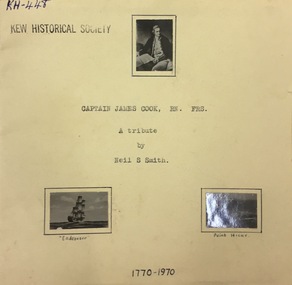
Booklet, Neil S Smith, Captain James Cook, RM, FRNS, 1970
... Captain James Cook, RM, FRNS...captain james cook...Monograph on Captain James Cook written by Neil S Smith....Monograph on Captain James Cook written by Neil S Smith. captain james cook british navigators Inside cover (handwritten): "Kew Historical Society / a token of appreciation for a / pleasant vistit. / Neil S. ...Monograph on Captain James Cook written by Neil S Smith.16 page typed and reproduced monograph on Capn James Cook, written by Neil S. Smith. The monograph has stapled brown paper covers with photographs attached. Inside cover (handwritten): "Kew Historical Society / a token of appreciation for a / pleasant vistit. / Neil S. Smith"captain james cook, british navigators -
 Glenelg Shire Council Cultural Collection
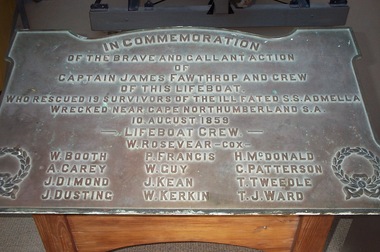
Plaque - Commemorative Plaque - dedicated to Captain James Fawthrop and the Portland Lifeboat Crew for the rescue of Admella survivors, 1859, 1859
... Commemorative Plaque - dedicated to Captain James Fawthrop and the Portland Lifeboat Crew for the rescue of Admella survivors, 1859...... Captain James Fawthrop...Front: In commemoration of the brave and gallant action of Captain James Fawthrop and crew of this lifeboat who rescued 19 survivors of the ill fated SS Admella wrecked near Cape Northumberland S.A. 10 August 1859. ...City of Portland collection Relates to the Portland Lifeboat and the wreck of the Admella Portland Lifeboat Captain James Fawthrop Admella shipwreck Front: In commemoration of the brave and gallant action of Captain James Fawthrop and crew of this lifeboat who rescued 19 survivors of the ill fated SS Admella wrecked near Cape Northumberland S.A. 10 August 1859. ...City of Portland collectionRelates to the Portland Lifeboat and the wreck of the AdmellaCommemorative bronze plaque to Cpt. James Fawthrop and the crew of the Portland life boat, who rescued the survivors from the wreck of the SS Admella. Mounted on wooden stand with stained finish, plaque slopes towards viewer. 1859Front: In commemoration of the brave and gallant action of Captain James Fawthrop and crew of this lifeboat who rescued 19 survivors of the ill fated SS Admella wrecked near Cape Northumberland S.A. 10 August 1859. -Life boat crew-W.Rosevear - Cox W.Booth P.Francis H.McDonald A. Carey W.Guy C.Patterson J.Dimond J.Kean T.Tweedle J.Dusting W.Kerkin T.J.Ward Back: (no inscriptions)portland lifeboat, captain james fawthrop, admella, shipwreck -
 Warrnambool and District Historical Society Inc.
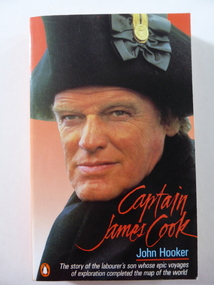
Book, Penguin Books, Captain James Cook, 1987
... Captain James Cook......Captain James Cook... This book, written by John Hooker, contains the story of Captain Cook based on the screenplay by Peter Yeldham for the A.B.C. television production of the life of Captain James Cook. The voyages of Captain Cook are of prime importance in Australia’s history as his discoveries and positive reports of the east coast of Australia led eventually to Britain’s decision to establish a penal colony in New South Wales....The book has a Prologue, three chapters and an Epilogue Captain James Cook Book Penguin Books ...The story of Captain Cook based on the screenplay by Peter Yeldham.This is a soft cover book of 258 pages. The cover is mainly red and blue and features on the front cover a colour photograph of Keith Michell, the actor portraying Captain Cook in the A.B.C. film production. The back cover has a summary of the life of Captain Cook and a small colour photograph of a film scene of Captain Cook with some Pacific Islanders. The book has a Prologue, three chapters and an Epiloguenon-fictionThe story of Captain Cook based on the screenplay by Peter Yeldham.john hooker, captain james cook, history of australia, warrnambool history -
 Ballarat Heritage Services
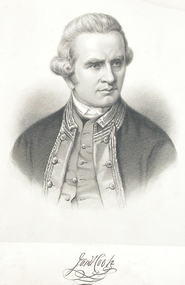
Image, Captain James Cook
... Captain James Cook...captain cook...james...Line drawing of Captain James Cook....First Published in Picturesque Atlas of Australia. captain cook james cook botany bay endeavour explorer Line drawing of Captain James Cook. ...First Published in Picturesque Atlas of Australia.Line drawing of Captain James Cook.captain cook, james cook, botany bay, endeavour, explorer -
Unions Ballarat
Captain Cook in Australia: extracts from the journals of Captain James Cook giving a full account in his own words of his adventures and discoveries in Australia (Don Woodward Collection), Cook, James, 1969
... Captain Cook in Australia: extracts from the journals of Captain James Cook giving a full account in his own words of his adventures and discoveries in Australia (Don Woodward Collection)......Cook, Captain James...James Cook's journals around the time of his voyage to the east coast of New Holland (Australia) and a visit to Van Diemen's Land (Tasmania). Biographical interest. Historical - Australia. BTLC Ballarat Trades Hall ballarat trades and labour council Cook, Captain ...James Cook's journals around the time of his voyage to the east coast of New Holland (Australia) and a visit to Van Diemen's Land (Tasmania).Biographical interest. Historical - Australia.Book; 192 pages. Dust jacket: white background; colour artwork with ship; black and green text; editor's name and title."Happy Birthday, George 1973"btlc, ballarat trades hall, ballarat trades and labour council, cook, captain james, tasmania - van diemen's land, australia - new holland, australia - explorers -
Glenelg Shire Council Cultural Collection
Photograph - Photograph - Captain James Fawthrop, c. 1970
... Photograph - Captain James Fawthrop...Photographic print of a rephotographed photograph. Image of Captain James Fawthrop, Portland's first Harbour Master....Photograph Photograph - Captain James Fawthrop ...Photographic print of a rephotographed photograph. Image of Captain James Fawthrop, Portland's first Harbour Master.Back: 'Fawthrop' - blue biro -
 Ballarat Heritage Services
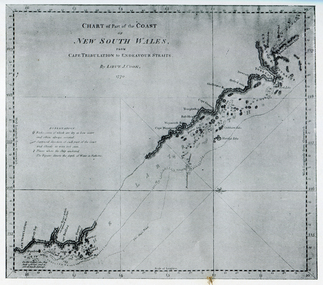
Photograph - Map, Portion of Captain James Cook's Chart of New South Wales, 1770, 1770
... Portion of Captain James Cook's Chart of New South Wales, 1770......captain james cook...Portion of Captain James Cook's Chart of New South Wales, 1770 Photograph Map ...Copy of a map from 'A Short HIstory of Australia' by Ernest Scott.map, explorers, exploration, voyages, captain james cook, new south wales coast -
Glenelg Shire Council Cultural Collection
Souvenir - Fridge Magnet - Admella Festival Portland, Victoria, Admella Festival - Captain James Fawthrop, c. 2009
... Admella Festival - Captain James Fawthrop...Admella Festival - Captain James Fawthrop. Measures in diameter 5.8 cm....Admella Festival - Captain James Fawthrop. Measures in diameter 5.8 cm. ...Circular white plastic fridge magnet. Circular magnet attached to back. Black and grey image of Captain Fawthrop attached to front, covered by clear plastic. Admella Festival - Captain James Fawthrop. Measures in diameter 5.8 cm. -
Glenelg Shire Council Cultural Collection
Photograph - Photograph - Painting of Captain James Fawthrop, c. 2009
... Photograph - Painting of Captain James Fawthrop...Photograph of a painting (c.1826) of captain James Fawthrop, Portland's First Harbour master. ...Photograph of a painting (c.1826) of captain James Fawthrop, Portland's First Harbour master. ...Photograph of a painting (c.1826) of captain James Fawthrop, Portland's First Harbour master. The painting was executed when he was doing his training in seaman ship at age 22. It is a head and sholders portrait. He is wearing a coat over a buttoned vest, and a neckerchief. He had short, curly hair. -
 Glenelg Shire Council Cultural Collection
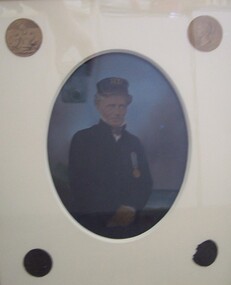
Photograph - Daguerreotype, Captain James Fawthrop, c. 1967
... Captain James Fawthrop...Photograph of Captain James Fawthrop in Harbour Master's uniform wearing the gold medal awarded for his role in the rescue of surviviors from the Admella wreck....Captain James Fawthrop Photograph Daguerreotype Unknown ...UnknownColour photograph on glass. Oval mount in rectangular frame, gold paint under glass. Four seals in each corner of the mount. Photograph of Captain James Fawthrop in Harbour Master's uniform wearing the gold medal awarded for his role in the rescue of surviviors from the Admella wreck.Front: (no inscriptions) Back: (no inscriptions) -
 Stawell Historical Society Inc
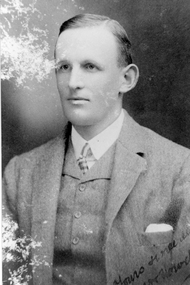
Photograph, Mr James Donald Howden -- captain Stawell Golf Club 1902-1912
... Mr James Donald Howden -- captain Stawell Golf Club 1902-1912...James Donald Howden Captain Stawell Golf Club 1902-1912. ...James Donald Howden Captain Stawell Golf Club 1902-1912. ...James Donald Howden Captain Stawell Golf Club 1902-1912. James was Australian & Victorian Amateur Champion. Photo used in Stawell Golf Club History Book. Refer page 99 - 102 of "Farms, Fences & Fairways" - Centenary Stawell Golf Club 1898 - 1998, by Jim Melbourne located Mag Box 10.Copy of original of a gentleman dressed in a suit.Your sincerely J.D. Howden J.D. Howden Australian & Victorian Amateur Champion - Captain of Stawell Golf Club for 11 years.stawell -
Glenelg Shire Council Cultural Collection
Painting, Captain James Fawthrop, n.d
... Captain James Fawthrop...Small oil on paper painting of Captain James Fawthrop, wearing his gold Admella medal. ...Small oil on paper painting of Captain James Fawthrop, wearing his gold Admella medal. ...Small oil on paper painting of Captain James Fawthrop, wearing his gold Admella medal. He is wearing a dark-coloured uniform jacket & cap with letters "HD" in gold. Blue sky & clouds in background. The painting is covered with glass and is set in an oval, dark wooden frame, that has a gold inner line. The painting is bordered by three mat boards, dark grey, light grey and gold. The back is covered in brown paper, with cord between the two metal 'eyes' for hanging. -
 St Kilda Historical Society
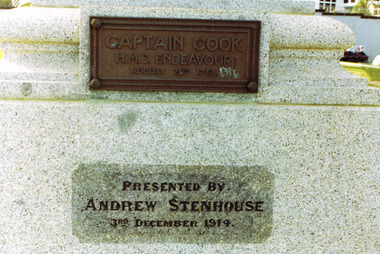
Photograph, Captain James Cook statue, St Kilda - images collection, Photographs taken c 1991 (set)
... Captain James Cook statue, St Kilda - images collection...Donated by Mr Andrew Stenhouse, a retired contractor who lived at Beaconsfield Parade, St Kilda, he was interested in the reclamation of the foreshore in front of his dwelling Captain James Cook FRS (1728-1779) was a British explorer, navigator, cartographer, and captain in the Royal Navy. ...A plaque on the rear of the pedestal (no image provided) lists the crew of the Endeavour. colour photograph unmounted Captain James Cook statue, St Kilda - images collection Photograph ...Statue presented by Andrew Stenhouse, 3 December 1914. Donated by Mr Andrew Stenhouse, a retired contractor who lived at Beaconsfield Parade, St Kilda, he was interested in the reclamation of the foreshore in front of his dwelling Captain James Cook FRS (1728-1779) was a British explorer, navigator, cartographer, and captain in the Royal Navy. During three voyages to the Pacific Ocean he achieved the first recorded European contact with the eastern coastline of Australia and the Hawaiian Islands, and the first recorded circumnavigation of New Zealand. He was killed in the Hawaiian Islands in 1779. The statue appears to have been the first monument erected to him in Victoria and is a replica of one in Whitby, England. It was unveiled on Monday December 7th, 1914 by the Governor of Victoria, Sir Arthur Stanley in front of Commonwealth and State dignitaries and hundreds of St Kilda residents. It was donated by philanthropist Mr. Andrew Stenhouse, a member of the St. Kilda Shore committee.colour photograph unmountedCaptain Cook HMS Endeavour, August 26, 1768. Presented by Andrew Stenhouse, 3rd December 1914. A plaque on the rear of the pedestal (no image provided) lists the crew of the Endeavour. st kilda, captain cook, plaques, catani gardens, captain cook statue, andrew stenhouse -
 Allan Doney Collection, Bendigo Historical Society Inc.
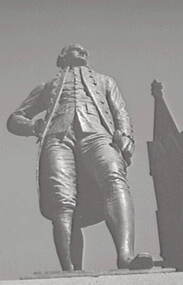
Negative - Statue Bendigo - Captain James Cook - St Paul’s Church, Allan Doney, 1950 -1970
... Statue Bendigo - Captain James Cook - St Paul’s Church...Negative Statue Bendigo - Captain James Cook - St Paul’s Church Allan Doney ...In the years of Allan Doney’s photography, landmark buildings succumbed to fire, neglect and redevelopment. He photographed the grey sand hills from Bendigo’s mining past, the streetscapes, poppet heads, miners’ cottages, gracious homes with ornate verandahs, trams and much more. Above all, his photographs show how much of the city has survived from the 19th century – and how much has not. Through two decades of great change, Allan Doney was there to capture ways people interacted with it. Although he travelled to many other places in Northern Victoria and beyond in search of subjects for his art, he seemed to always return to Bendigo for inspiration. -
 Allan Doney Collection, Bendigo Historical Society Inc.
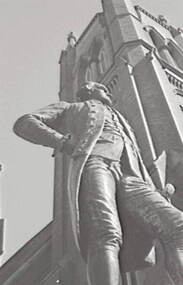
Negative - statue Bendigo - Captain James Cook - St Paul’s Church, Allan Doney, 1950 -1970
... statue Bendigo - Captain James Cook - St Paul’s Church...Negative statue Bendigo - Captain James Cook - St Paul’s Church Allan Doney ...In the years of Allan Doney’s photography, landmark buildings succumbed to fire, neglect and redevelopment. He photographed the grey sand hills from Bendigo’s mining past, the streetscapes, poppet heads, miners’ cottages, gracious homes with ornate verandahs, trams and much more. Above all, his photographs show how much of the city has survived from the 19th century – and how much has not. Through two decades of great change, Allan Doney was there to capture ways people interacted with it. Although he travelled to many other places in Northern Victoria and beyond in search of subjects for his art, he seemed to always return to Bendigo for inspiration. -
 Phillip Island and District Historical Society Inc.
Photograph
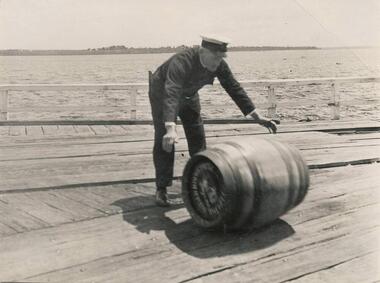
... ...captain james clark...Photograph of Captain James Clark rolling a barrel on Cowes Jetty. ...One of a collection of over 400 photographs in an album commenced in 1960 and presented to the Phillip Island & Westernport Historical Society by the Shire of Phillip Island local history photography photographs captain james clark ferry captain black & white photograph shipping ferry captains cargo cowes jetty john jenner bryant west Photograph of Captain James Clark rolling a barrel on Cowes Jetty. ...One of a collection of over 400 photographs in an album commenced in 1960 and presented to the Phillip Island & Westernport Historical Society by the Shire of Phillip IslandPhotograph of Captain James Clark rolling a barrel on Cowes Jetty. Sandy Point in background.local history, photography, photographs, captain james clark, ferry captain, black & white photograph, shipping, ferry captains, cargo, cowes jetty, john jenner, bryant west -
 Hymettus Cottage & Garden Ballarat
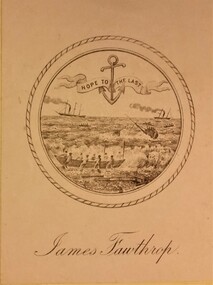
Work on paper - Bookplate, Captain James Fawthrop Bookplate
... Captain James Fawthrop Bookplate...Portland Fawthrop Rescue Lifeboat Captain James Fawthrop Bookplate Work on paper Bookplate ...Bookplate in book from Fawthrop collection of maritime works. Captain James Fawthrop was presented with a gold medal for his leadership and seamanship in captaining the rescue lifeboat from Portland in the rescue of survivors of the Admella in 1859. His bookplate carries the image of the medal.portland, fawthrop, rescue, lifeboat -
Glenelg Shire Council Cultural Collection
Letter - Letter - Mr Williams to his daughter Eleanor Rebecca Jones, William Jones, 17/10/1854
... Captain James Fawthrop...This ship was owned by the Henty brothers. Captain James Fawthrop was the harbour master at Portland and also captain of the Portland Lifeboat crew at the time of the wrecking of the Admella in 1859....Letter written by Mr Williams Jones, Launceston, to his daughter Eleanor Rebecca Jones who was staying with Captain James Fawthrop at Windsor Cottage, Portland....Captain James Fawthrop letter bottle Windsor Cottage Hand-written letter in glass bottle. ...These letters came to Portland on the 'City of Sydney' under Captain Henderson. This ship was owned by the Henty brothers. Captain James Fawthrop was the harbour master at Portland and also captain of the Portland Lifeboat crew at the time of the wrecking of the Admella in 1859.Hand-written letter in glass bottle. Letter written by Mr Williams Jones, Launceston, to his daughter Eleanor Rebecca Jones who was staying with Captain James Fawthrop at Windsor Cottage, Portland.captain james fawthrop, letter, bottle, windsor cottage -
Federation University Historical Collection
Newspaper Supplement, Cook and After: A Bi-Centenary Look at Early Australia, 1970, 21/04/1970
... james cook...captain...Eight page broadsheet supplement relating to the bi-centenary of Captain James Cook sailing along the Australian coastline. ...james cook captain cook btany bay first fleet alcan francis greenway matthew flinders william dampier Eight page broadsheet supplement relating to the bi-centenary of Captain James Cook sailing along the Australian coastline. ...Eight page broadsheet supplement relating to the bi-centenary of Captain James Cook sailing along the Australian coastline. It was published by the Australian on 21 April 1970.james cook, captain cook, btany bay, first fleet, alcan, francis greenway, matthew flinders, william dampier -
Glenelg Shire Council Cultural Collection
Instrument - Flutina, n.d
... Captain James Fawthrop...This instrument belonged to Captain James Fawthrop's stepson...This instrument belonged to Captain James Fawthrop's stepson Connection to Captain James Fawthrop Captain James Fawthrop musical instrument accordion flutina he flutina is an early French precursor of the diatonic button accordion. ...This instrument belonged to Captain James Fawthrop's stepsonConnection to Captain James Fawthrophe flutina is an early French precursor of the diatonic button accordion. The earliest version of the instrument dates from about 1831. It was constructed by "Pichenot le Jeune" and was probably one of the first accordions capable of playing a melody. It has one or two rows of treble buttons, which can play the tonic of the scale as "drawing" the bellows. Usually there is no bass keyboard. The right hand operates an air valve (silent except for the rush of air). In the front of the keyboard is a rocker switch, which is also called "bascule d'harmonie". This switch is to be activated with the thumb in order to open up a pallet (a pad that covers a tone hole at the other end of the key buttons) for a simple tonic/dominant effect of accompaniment: tonic while drawing and dominant while pressing.captain james fawthrop, musical instrument, accordion, flutina -
 Phillip Island and District Historical Society Inc.
Telescope
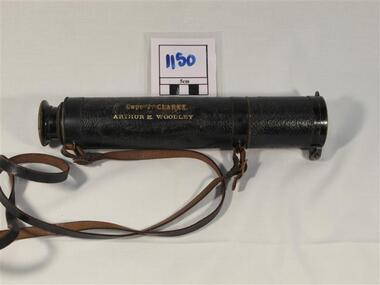
... ...captain james clarke...Owned by Captain James Clarke, master of the Cowes to Stony Point ferry service for 28 years from 1923....Owned by Captain James Clarke, master of the Cowes to Stony Point ferry service for 28 years from 1923. cowes telescope captain james clarke ferry arthur woodley stony point Capt J Clarke (crossed out) and Arthur E Woodley in gold leaf lettering on leather casing. ...Owned by Captain James Clarke, master of the Cowes to Stony Point ferry service for 28 years from 1923.Black leather bound casing and strap with extendable brass telescope painted black.Capt J Clarke (crossed out) and Arthur E Woodley in gold leaf lettering on leather casing.cowes, telescope, captain james clarke, ferry, arthur woodley, stony point -
Port Melbourne Historical & Preservation Society
Document (Item), Trustees of the Melbourne General Cemetery, Certificate of Right of Burial for James Renton WATTERS, 1902
... The Certificate of Right of Burial was issued to Captain James Renton WATTERS (mis-spelled as WATERS) gave him he right, for the sum of One pound, to be buried in an 8 x 3 at Melbourne General Cemetery. ...A buff coloured Certificate of Right of Burial for Captain James Renton WATTERS. ...The Certificate of Right of Burial was issued to Captain James Renton WATTERS (mis-spelled as WATERS) gave him he right, for the sum of One pound, to be buried in an 8 x 3 at Melbourne General Cemetery. ...The Certificate of Right of Burial was issued to Captain James Renton WATTERS (mis-spelled as WATERS) gave him he right, for the sum of One pound, to be buried in an 8 x 3 at Melbourne General Cemetery. James died in 1919 and was buried in his purchased plot/As well as the handwritten information, there are 2 date stamps ( Jun 25 1907 and Jun 22 1908) and an undertaker's stamp.james renton watters, deaths and funerals -
 Flagstaff Hill Maritime Museum and Village
Textile - Wall Hanging, curtain, 1854-1855
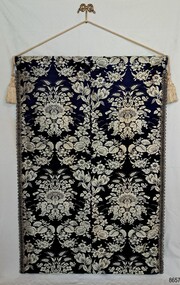
... ...James Forbes...Captain...Its commander was Captain James Nicol Forbes, who had been selected by James Baine & Co for his navigation skills, experience, and reputation for breaking sailing records. ...Its commander was Captain James Nicol Forbes, who had been selected by James Baine & Co for his navigation skills, experience, and reputation for breaking sailing records. ...The striking fabric of this wall hanging was recovered from the sinking Schomberg. It was originally one of the many curtains adorning the captain’s cabin and ladies’ saloons that attracted first-class passengers to this luxury vessel, built for comfort and speed. The clipper ship was on its maiden voyage, full of passengers emigrating to Australia in 1855. Its commander was Captain James Nicol Forbes, who had been selected by James Baine & Co for his navigation skills, experience, and reputation for breaking sailing records. However, on December 26th, 1855, the vessel became stranded and sank west of Cape Otway, not quite reaching its destination of Melbourne. A reporter explored the Schomberg before its journey; the following detailed description is an excerpt of his article published in a newspaper after the disastrous voyage was announced. “ … descending by a flight of stairs, covered with carpet of a very rich pattern, we came to the saloon passengers’ cabin. This is a noble place, and all that refined taste would suggest has been done to make each berth a miniature palace. The bedding is of the very best material, and the fittings are replete with every convenience. The carpets are of various coloured velvet pile, and the curtains are of satin damask, lined with white satin … The fronts of the berths are highly decorated, and festoons of flowers are painted on the panels … No two berths are furnished with the same-coloured material … the visitor is, therefore, much pleased with the variety which he has to inspect….” (Trove: Shipping Gazette and Sydney General Trade, 31 Dec 1955, p. 283) The curtain material, ‘folded into a single piece and parcelled for protection’, has been passed down through generations of Captain Forbes’ relatives, starting with his half-sister Isabella Jeffrey Nicol. The curtain has remained with the family, although some transition details are incomplete. About a century later, Isabella and Blakiston Robinson’s great-grandson and his wife had the fabric professionally mounted as a wall hanging to showcase the beauty of the woven brocade. Eventually, the custodianship of the curtain was transferred to the donor, who is also a great-grandson of Isabella and Blakiston. He and his wife hung the curtain on the wall of a high-ceilinged room in their home, away from direct light, making it visible for all to appreciate its beauty and significance. In 2024, they donated the curtain for inclusion among the collection of artefacts that help tell the story of the Schomberg and those who sailed on its first and last voyage. The donor’s aunt was highly involved in the family’s history. She had collected and recorded information that dates back to pre-1341. A footnote included in a handwritten letter dated April 20, 1959, from the late Arthur William Rudd, OBE, MA, LLB, husband of another of the donor’s aunts, states, “The curtains you mentioned came from the Schomberg. AWR.” CAPTAIN JAMES NICOL FORBES (1821-1874) and the donor’s family: - Captain Forbes was born in Aberdeen. In his late teens, he moved to Liverpool, a hub for international trade and an emigration port. By the age of 25, he was master of the Prince of Waterloo and later, the Wakefield. He then commanded the Cleopatra for the James Baines Co., which, two years later, transferred him to command the Maria, providing fast and lucrative passage to the gold fields in Ballarat, Australia. James Baines Co. and shipbuilder Thomas Mackay formed the Black Ball Line of clipper ships in 1852. Forbes was appointed master of the largest ship in the fleet, the marvellous Marco Polo. He broke the record time for the passage to Australia, taking only 68 days at sea, and the return journey in only 76 days, a total of 5 months and 21 days. On his second voyage to Melbourne in the Marco Polo the following year, he took 75 days, and 95 days on the return trip. His accomplishment made him famous. James Baines reported that the Marco Polo was the only ship, sail or steam, to do the round trip within 6 months, and it had done it twice. Captain Forbes then took command of the American-built clipper Lightning, one of four built for the Black Ball line. His 19-year-old half-sister, Isabella Jaffray Nicol, was also onboard when he sailed for Melbourne in 1854. During the 77-day voyage, Isabella met Blakiston Robinson, and not long after the ship arrived in Melbourne on July 31, the couple married, with James Nicol Forbes as a witness, on August 16. When Forbes returned to Liverpool, he took a record-breaking 63 days, which has never been bettered. James Baines Co. ordered a new luxury emigrant ship from Alexander Hall of Aberdeen; the Schomberg was the largest sailing ship ever built in Britain. On October 6, 1855, the vessel departed Liverpool commanded by Captain Forbes, with 430 passengers on board, 54 of whom were First Class. It had almost completed its voyage to Melbourne when, on the night of December 26, it ran aground west of Cape Otway. Captain Doran, master of the steamer Queen, responded to the distress signal while on its way to Portland and, with the agreement of his passengers, rescued as many as possible from the Schomberg and returned to Melbourne with them. Captain Helpman, master of the steamer Champion, rescued most of the remaining Schomberg passengers on December 27. On Friday, 28th, Captain James Lawrence was on his way to Adelaide in the steamer Burra Burra, and called past the Schomberg. He reported that the remaining crew were all doing their duties, but the Schomberg was deteriorating on a sand spit and had about 16 feet of water in its hold. That same day, the schooner Jane Elizabeth collected 220 packages of passengers’ luggage to deliver to Melbourne on the 29th. Two steamers also arrived on the 29th with 20 men to collect passengers’ luggage and valuable ship’s cargo items. They were accompanied by water police, customs agents, company representatives and a Lloyds agent. The decision was made to abandon ship on the 30th due to rough and unsafe conditions. The officials and Captain Forbes voyaged to Melbourne, while the seamen remained behind awaiting rescue. Evacuation by sea became too risky, so on January 2, 1856, while the first Mate and Steward remained at the wreck site, the rest of the crew began the 70-mile march to Warrnambool, led by the band. They arrived on January 5th and left for Melbourne on the steamer Champion on January 10th. Parts of the Schomberg wreck ended up in New Zealand. The curtain is important for its connection to the Schomberg, which was unique for being designed and built in Aberdeen, and commanded by an Aberdonian who was the most celebrated clipper captain of the age. The ship was the largest sailing ship ever built in Britain, and reported as the largest vessel that sailed to Australia. The curtain is an example of the rich decorative furnishings available in 1855. The preservation and respect the donor and his family have shown towards the curtain over many decades reflect its important role in telling the family’s history; the journey, the romantic attachment, the family connection to the sea, and travel in gold rush times. The curtain is significant for its connection to James Nocol Forbes, a famous sailing ship commander who broke several sailing records, one of which has never been bettered. This wall hanging, also known as the Schomberg Curtain, was created from a curtain recovered from the stranded luxury ship Schomberg in December 1855. The woven satin damask fabric in blue and cream has been meticulously joined to blend the intricate pattern. The reverse features a soft cream lining. The hems at the top and bottom of the fabric hold wooden rods. The side edges feature decorative braid that has been hand-stitched in place. On the reverse, the bottom hem includes the same braid, which remains unseen from the front, and the centre of the top hem has a hand-worked, unused buttonhole. Each of the hems varies in depth. The curtain was tastefully mounted later to highlight the beauty of the original saloon curtain. A decorative twisted cord of cream silk threads, accented with gold highlights and decorative tassels, was coiled and attached to the ends of the top rod. The elegant display was completed with an ornate gold hook, chosen to complement the wall hanging.flagstaff hill maritime museum and village, great ocean road, shipwreck coast, shipwreck artefact, memorabilia, curtain, saloon curtain, schomberg, wall hanging, decorative object, domestic item, warrnambool, flagstaff hill, maritime museum, maritime village, maritime history, shipwreck, stranding, schomberg curtain, schomberg wall hanging, luxury ship, 1855, damask, silk damask, blue and cream, captain’s cabin, ladies’ saloon, clipper ship, migrant, emigrant, liverpool to australia, captain james nicol forbes, james forbes, captain forbes, bully forbes, james baines & co, james baines, cape otway, aberdeen, prince of waterloo, wakefield, cleopatra, maria, thomas mackay, black ball line, marco polo, sailing record, lightning, isabella jaffray nocol, blakiston robinson, alexander hall, steamer queen, captain helpman, james lawrence, steamer burra burra, steamer jane elizabeth, water police, customs agents, lloyds agent, ship’s band, walk to warrnambool, march to warrnambool, steamer champion, agnes nicol robinson, arthur william rudd obe ma llb -
Port Melbourne Historical & Preservation Society
Document (Item) - Life and career of James Renton WATTERS, c. 2022
... The collection of documents relating to the life, career and family of Captain James Renton WATTERS was compiled and written by his great granddaughter, Robyn WATTERS. ...A collection of documents outlining the life , career and family tree of Captain James Renton WATTERS....The collection of documents relating to the life, career and family of Captain James Renton WATTERS was compiled and written by his great granddaughter, Robyn WATTERS. ...The collection of documents relating to the life, career and family of Captain James Renton WATTERS was compiled and written by his great granddaughter, Robyn WATTERS. It includes copies of his wife and family as well as James' grave in Melbourne General Cemetery.families, james renton watters, robyn watters -
 Flagstaff Hill Maritime Museum and Village
Functional object - Compass, mid-19th Century
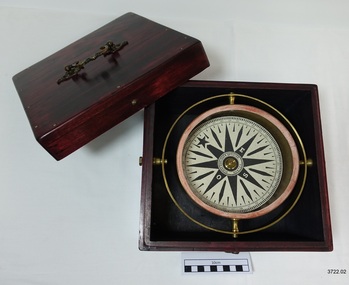
... ...captain james arthur robilliard...In the 1880s, James Robilliard captained the cutter "Hannah Thompson" into Port Campbell, Victoria. ...The compass, as well as the ship, belonged to Captain James Arthur Robilliard and was donated by his family. ...In the 1880s, James Robilliard captained the cutter "Hannah Thompson" into Port Campbell, Victoria. ...Captain Robilliard: James Arthur Robilliard was a sea captain and tentmaker, born on the 19th April 1843 at Saint Helier, Jersey. He trained there in his father's sail loft as a sailmaker. His first job as a sailor was in Liverpool, England, and in 1875, James Robilliard migrated to Australia as a mate on the "E.M. Young". James Robilliard and his family were amongst the early settlers who arrived along the Curdies River in the Heytesbury district of Western Victoria. In 1877, he became a Captain and would have used his compass from ship to ship. On 28th May 1877, in that same district, a small 3-masted schooner, the "Young Australian", was wrecked. This schooner had been built in 1864 at Jervis Bay, NSW. It had been on her way from Maryborough, Queensland, to Adelaide, under the command of Captain Whitfield, when it lost its mainmast in a heavy gale. It was beached at Curdies Inlet in Peterborough, Victoria. Captain Robilliard was placed in charge of the salvaging operation and recovered a good portion of the cargo. Not long after this incident, a Warrnambool shop owner, David Evans, found employment for James Robilliard with Evan Evans, who produced tents, sails, tarpaulins and similar goods; James already had the necessary skills for this work. Evan Evans was the same sailor rescued from the “Young Australian”. Soon after his rescue, Evan recalled he had a relative in Australia in a town called Warrnambool, and while walking in Timor Street, Warrnambool, he saw a sign over a shop that said “David Evans,” and once the two men met, Evan was warmly welcomed. David then helped his relative establish a tent and tarpaulin-making business there. Evan later transferred his successful business to a shop in Elizabeth St, Melbourne, under the name Evan Evans Pty. Ltd.) James Robilliard was a committed Christian and accredited Lay Preacher with the Methodist Church. He travelled around the local district leading the settlers in worship. On 14th November 1879, Captain Robilliard married Helen Beckett. Alfred and Selina Beckett and their family all attended the church at Brucknell, where Captain Robilliard preached. He was said to have been taken by their young daughter, Helen. James and Helen had ten children: James Arthur (Jnr), Henry William, Nellie Jessie, Alfred Albert, Rubena Nellie, De Jersy Norman, Clifford Beckett, Olive Ida, Frances Ridley Havergal and Nellie Elvie, all born in Victoria. In the 1880s, James Robilliard captained the cutter "Hannah Thompson" into Port Campbell, Victoria. This vessel was the first coastal trader to operate between Melbourne and Port Campbell. At one time, Captain Robilliard had to beach the "Hannah Thompson" for repairs. In 1923, the vessel was blown ashore in a gale and wrecked at Oberon Bay, at Wilson's Promontory. In 1889, the compass was saved by Captain James Arthur Robilliard from his sinking brigantine "Mary Campbell". This vessel was used to carry equipment for the Sydney Sugar Refinery's Mill in Southgate, NSW. The ship had been built in 1869 and traded for the next 20 years between Australian ports and rivers along the east coast, as well as regular ports in New Zealand. It was recognised by the Sydney Morning Herald as one of the best "carrying vessels in the timber trade". It had several owners over this time, the last one being Captain James A. Robilliard. On 29th April 1889, the "Mary Campbell", with Captain James A Robilliard as captain and owner, was on its way from Clarence River, NSW to Melbourne, Victoria with a cargo of railway girders for the Melbourne Harbour Trust. Captain Robilliard encountered a storm off Port Macquarie. He sailed the vessel south to about 40km east of Cape Hawke, near Tuncurry. At around 7 pm, he discovered that the cargo had shifted during the storm and the heavy girders had damaged the hull, causing a leak. The pumps were inadequate to stem the fast-flowing leak, and water soon filled the hull during the next two hours. Some of the crew began throwing the cargo overboard to lighten the vessel, hoping to keep it afloat until daylight. When the water reached over 2 meters in the hull, they realised their efforts were in vain. On the 30th April 1889, the crew left the vessel the ship was sinking fast, so they made for the shore. While still miles off Cape Hawke, all seven crew members, including the Captain, were rescued by the Government Tug "Rhea" and taken to Port Macquarie Hospital and later returned to Sydney in the vessel "Wellington". No cargo had been saved, and the consignment had been under-insured, only covered for half its value. The name of the last ship Captain Robilliard sailed is currently unknown; however, he sailed that ship from the port of Marlborough, Queensland, carting steel railway girders for the Geelong-to-Camperdown railway line. On this trip, the ship hit a storm, the cargo shifted, and the ship was wrecked along the NSW coast. After this, Captain Robilliard retired from the sea and began farming in Peterborough. In about 1897, verging on retirement, Capt. Robilliard superintended the Melbourne Sailors’ Home in Spencer Street, Melbourne, before being asked to leave this position in 1902 for trying to shut down a local hotel. On 6th May 1917, Captain James Arthur Robilliard J.P. died at Blackwood Park, in the Cobden district of Brucknell, the first Robilliard family homestead in Australia. He was buried in the Melbourne General Cemetery, Victoria. His wife Helen, passed away in 1947. This compass, once belonging to Captain James Arthur Robilliard, is of local and state historical significance for its use by the Captain with his vessel, the "Mary Campbell", a trading vessel that was bringing railway girders to the Melbourne Harbour Trust. He also used this compass on the "Hannah Thompson", listed on the Victorian Heritage Register and known as being the first coastal trader to operate between Melbourne and Port Campbell. The compass is also a very fine example of maritime navigational instruments manufactured and used in the mid-19th century. Marine compass, brass, in a wooden box with a separate, fitted lid. The compass card has sixteen points. The four principal points are marked: North with a star-shape, South with an “S”, East with an “E” and West with an “O” (French word OUEST). Each quadrant of the circle is numbered from 0 – 90 degrees. The card is floating in a liquid. The compass gimbal is attached to the sides of the box and to the front and back of the compass’ cylindrical brass frame. The mahogany coloured timber storage case is joined with brass nails. The centre of the lid has a folding decorative brass handle. The lid fits over the base and closes with a brass screw and hook on both front and back. Maker: Dubas Watchmaker Optician, Nantes, France, c 1860-1870. Compass came from the ship “Mary Campbell”, which sank off the NSW coast in 1889, near Forster. The compass, as well as the ship, belonged to Captain James Arthur Robilliard and was donated by his family. “DUBAS MANTES” stamped into the side of the gimbal. “DUBAS HORLOGER OPTICIEN. NANTES.” printed around the centre of the card. flagstaff hill, warrnambool, shipwrecked coast, flagstaff hill maritime museum, maritime museum, shipwreck coast, flagstaff hill maritime village, great ocean road, marine compass, navigation instrument 19th century, marine instruments, dubas mantes, captain james arthur robilliard, j.a. robilliard, helen beckett, ship young australian, ship young australia(n), ship hannah thompson, ship mary campbell, melbourne sailors home, david evans, evan evans, curdies inlet, brucknell church, curdies railway, great lakes museum, dubas horloger opticien. nantes
