
Showing 18 items matching "jill barnard"
-
 Port Melbourne Historical & Preservation Society
Audio - Human face of Port Melbourne places, Jill Barnard, 23 Aug 2012
... Human face of Port Melbourne places, Jill Barnard......Jill Barnard...Jill Barnard discussing the human face of Port Melbourne places....Built Environment Families Jill Barnard Duration 00:45:45 Jill Barnard discussing the human face of Port Melbourne places. ...Jill Barnard discussing the human face of Port Melbourne places.Duration 00:45:45built environment, families, jill barnard -
Port Melbourne Historical & Preservation Society
Book, Jill Barnard et al, "Welcome & Farewell - The Story of Station Pier", Aug 2004
... ...jill barnard...Signed by co-authors Jill Barnard and Sonia Jennings, and Station Pier Manager Evda Marangos...Jill Barnard...(Ref 1948.01 for picture of authors at launch). piers and wharves - railway pier piers and wharves - station pier transport - shipping transport - railways immigration jill barnard sonia jennings Signed by co-authors Jill Barnard and Sonia Jennings, and Station Pier Manager Evda Marangos "Welcome & Farewell - The Story of Station Pier" - a large, lavishly illustrated history of early Sandridge Railway and Station Piers. ...Donated to the PMH&PS by the authors, at the launch on Station Pier (occasion of 150th birthday of Railway Pier), 12th September 2004. (Ref 1948.01 for picture of authors at launch)."Welcome & Farewell - The Story of Station Pier" - a large, lavishly illustrated history of early Sandridge Railway and Station Piers. Copper coloured cover and dust cover, hardback, 206 pp. Index, Bibliography, Chronology and extensive references. Signed by co-authors and Station Pier ManagerSigned by co-authors Jill Barnard and Sonia Jennings, and Station Pier Manager Evda Marangospiers and wharves - railway pier, piers and wharves - station pier, transport - shipping, transport - railways, immigration, jill barnard, sonia jennings -
 Mission to Seafarers Victoria
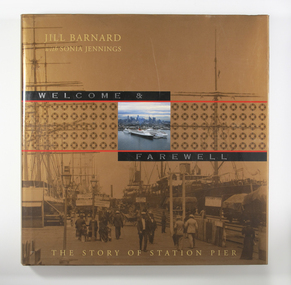
Book - Reference book, Jill Barnard et al, Welcome and Farewell: The Story of Station Pier, 2004
... Jill Barnard.... : ill., maps, ports.Bibliography: p. 199-201 Welcome and Farewell: The Story of Station Pier Book Reference book Jill Barnard Sonia Jennings Australian Scholarly Publishing ...In the mid-nineteenth century, Victoria’s primitive maritime infrastructure was not coping with the volume of passenger and cargo traffic arriving in and departing from the burgeoning gold-fevered colony. However, the opening of Railway Pier at Port Melbourne in 1854 greatly improved the situation. Railway Pier serviced the steamships, which plied Port Phillip Bay and the Victorian coastal waters beyond, and also offered berths for vessels on the regular runs to other Australian colonies and to overseas destinations. However, as the larger and more powerful steamships of the early twentieth century found berthing increasingly difficult at Railway Pier, the need for a more modern pier became apparent. By 1930, the new Station Pier had replaced its predecessor. Itself extended and upgraded several times including during the past decade, Station pier still offers every contemporary convenience to shipping services using its busy facilities, just as did its predecessor Railway Pier, 150 years ago. The Victorian Government commissioned Welcome & Farewell to celebrate the 150 years since the opening of the Railway Pier. In doing so, it was mindful that the story of the site is not limited to its contribution to national and state economies, or to its physical development. The Government wanted a history that would also speak to ordinary Victorians, and other Australians, of their own experiences of this significant place. For indeed the Station Pier site has played its part in almost every milestone or phase in our history: at moments of celebration and commemoration, during economic booms and depressions, during times of war and peace. It has also won a place in the hearts of ordinary individuals affected by the welcomes and farewells they have experienced there: those for visiting royalty and celebrities, for servicemen and medical personnel off to war or returning home, for migrants from distant countries and refugees from war zones, for friends and family travelling for personal, professional or cultural reasons. Welcome & Farewell thoughtfully examines Station Pier’s significance and offers a splendid visual panorama of the experiences lived out there between 1854 and 2004.Illustrated large-format book with 224 pages [36] p. of plates. : ill., maps, ports.Bibliography: p. 199-201non-fictionIn the mid-nineteenth century, Victoria’s primitive maritime infrastructure was not coping with the volume of passenger and cargo traffic arriving in and departing from the burgeoning gold-fevered colony. However, the opening of Railway Pier at Port Melbourne in 1854 greatly improved the situation. Railway Pier serviced the steamships, which plied Port Phillip Bay and the Victorian coastal waters beyond, and also offered berths for vessels on the regular runs to other Australian colonies and to overseas destinations. However, as the larger and more powerful steamships of the early twentieth century found berthing increasingly difficult at Railway Pier, the need for a more modern pier became apparent. By 1930, the new Station Pier had replaced its predecessor. Itself extended and upgraded several times including during the past decade, Station pier still offers every contemporary convenience to shipping services using its busy facilities, just as did its predecessor Railway Pier, 150 years ago. The Victorian Government commissioned Welcome & Farewell to celebrate the 150 years since the opening of the Railway Pier. In doing so, it was mindful that the story of the site is not limited to its contribution to national and state economies, or to its physical development. The Government wanted a history that would also speak to ordinary Victorians, and other Australians, of their own experiences of this significant place. For indeed the Station Pier site has played its part in almost every milestone or phase in our history: at moments of celebration and commemoration, during economic booms and depressions, during times of war and peace. It has also won a place in the hearts of ordinary individuals affected by the welcomes and farewells they have experienced there: those for visiting royalty and celebrities, for servicemen and medical personnel off to war or returning home, for migrants from distant countries and refugees from war zones, for friends and family travelling for personal, professional or cultural reasons. Welcome & Farewell thoughtfully examines Station Pier’s significance and offers a splendid visual panorama of the experiences lived out there between 1854 and 2004.port melbourne, station pier -
 Mission to Seafarers Victoria
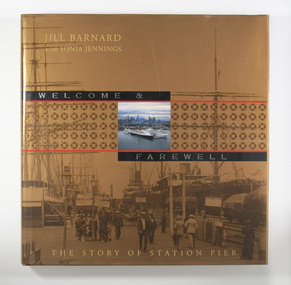
Book, Jill Barnard et al, Welcome and Farewell: The Story of Station Pier, 2004
... Jill Barnard...Illustrated large-format book with 224 pages Welcome and Farewell: The Story of Station Pier Book Book Jill Barnard Sonia Jennings ...This book is about those who arrived in the hope of a new life and new opportunities. Those who departed to homelands and foreign shores, and they who represented us and were never to return to loved ones. We look at the people who worked on the Pier, its custodians and protectors of its heritage value. Finally, the passing visitors and those who came to simply enjoy and reminisce.Illustrated large-format book with 224 pagesnon-fictionThis book is about those who arrived in the hope of a new life and new opportunities. Those who departed to homelands and foreign shores, and they who represented us and were never to return to loved ones. We look at the people who worked on the Pier, its custodians and protectors of its heritage value. Finally, the passing visitors and those who came to simply enjoy and reminisce.immigration, station pier, port melbourne, shipping -
 Sunshine and District Historical Society Incorporated
Document - Maribyrnong Heritage Reviews, Jill Barnard, Graeme Butler, Francine Gilfedder & Gary Vines, 2000 & 2001
... Jill Barnard, Graeme Butler, Francine Gilfedder & Gary Vines...Maidstone Braybrook Maribyrnong Tottenham 5822.01 - Maribyrnong Heritage Review Volume 1.pdf Historic Places - Project Methods and Results 5822.02 - Maribyrnong Heritage Review Volume 2.pdf Environmental History City of Maribyrnong 5822.03 - Maribyrnong Heritage Review Volume 3.pdf Historic Places Industrial places in the City of Maribyrnong 5822.04 - Maribyrnong Heritage Review Volume 4.pdf Historic Places - Non-industrial places in former City of Sunshine (Maribyrnong, Maidstone, Braybrook and Tottenham) 5822.05 - Maribyrnong Heritage Review Volume 5.pdf Historic Places - Urban Conservation Areas & Individual Places in the former City of Footscray 5822.06 - Maribyrnong Heritage Review Volume 6.pdf Historic Places - Significant Trees in the City of Maribyrnong Six digital PDF files Document Maribyrnong Heritage Reviews Jill Barnard, Graeme Butler, Francine Gilfedder & Gary Vines ...Braybrook, Maribyrnong, Tottenham and sections of Maidstone were in the Shire of Braybrook and subsequently the City of Sunshine prior to the 1994 council mergers. A number of sites from the above locations are listed in these documents and therefore are of interest to the Sunshine and District Historical Society.5822.01 - Maribyrnong Heritage Review Volume 1.pdf Historic Places - Project Methods and Results 5822.02 - Maribyrnong Heritage Review Volume 2.pdf Environmental History City of Maribyrnong 5822.03 - Maribyrnong Heritage Review Volume 3.pdf Historic Places Industrial places in the City of Maribyrnong 5822.04 - Maribyrnong Heritage Review Volume 4.pdf Historic Places - Non-industrial places in former City of Sunshine (Maribyrnong, Maidstone, Braybrook and Tottenham) 5822.05 - Maribyrnong Heritage Review Volume 5.pdf Historic Places - Urban Conservation Areas & Individual Places in the former City of Footscray 5822.06 - Maribyrnong Heritage Review Volume 6.pdf Historic Places - Significant Trees in the City of Maribyrnongmaidstone, braybrook, maribyrnong, tottenham -
 Kew Historical Society Inc
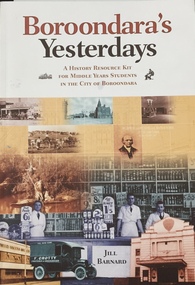
Book, Jill Barnard, Boroondara's Yesterdays, 2009
... Jill Barnard...Boroondara's Yesterdays Book Jill Barnard City of Boroondara ...An educational resource for Middle Years students about the history of the City of Boroondarav, 89 p. : ill., facsims., maps, ports. ; 30 cm. non-fictionAn educational resource for Middle Years students about the history of the City of Boroondaraboroondara - history - kew - hawthorn - canterbury - camberwell - surrey hills - ashburton -
 Canterbury History Group
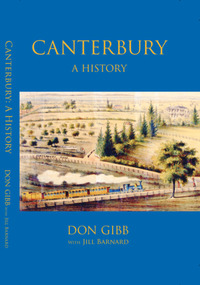
Book, Don Gibb et al, Canterbury: a history, 2022
... ...Jill Barnard...The Canterbury History Group and the Royal Historical Society of Victoria, together with Don’s family, were determined to see Don’s book completed and published. Jill Barnard contributed the final two chapters dealing with the inter war and post-World War II decades. 187 pages : illustrations, maps, portraits, facsimiles Canterbury: a history Book Don Gibb Jill Barnard Royal Historical Society of Victoria ...Canterbury: A History covers the history of the suburb of Canterbury, Victoria from its Aboriginal history as part of the country of the Wurundjeri people to its completed development as a middle-class suburb by the late 1950s. The book had been a labour of love by esteemed historian, Don Gibb, for many years. Don’s sudden death in late 2017 left the manuscript uncompleted. The Canterbury History Group and the Royal Historical Society of Victoria, together with Don’s family, were determined to see Don’s book completed and published. Jill Barnard contributed the final two chapters dealing with the inter war and post-World War II decades.187 pages : illustrations, maps, portraits, facsimilesnon-fictionCanterbury: A History covers the history of the suburb of Canterbury, Victoria from its Aboriginal history as part of the country of the Wurundjeri people to its completed development as a middle-class suburb by the late 1950s. The book had been a labour of love by esteemed historian, Don Gibb, for many years. Don’s sudden death in late 2017 left the manuscript uncompleted. The Canterbury History Group and the Royal Historical Society of Victoria, together with Don’s family, were determined to see Don’s book completed and published. Jill Barnard contributed the final two chapters dealing with the inter war and post-World War II decades.canterbury, canterbury history, residential development, maling road, gibb> don -
 Surrey Hills Historical Society Collection
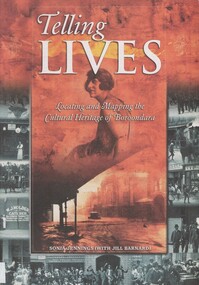
Book, City of Boroondara Library Service et al, Telling lives: locating and mapping the cultural heritage of Boroondara, 2002
... ...Jill Barnard...Telling lives: locating and mapping the cultural heritage of Boroondara Book City of Boroondara Library Service Sonia Jennings Jill Barnard ...Includes: cultural setting and context (part one)|Biographical notes (part two)|Index by art form Charts cultural heritage of Boroondara since Australia's Federation in 1901. Reviews and record the past cultural achievements of Boroondara's local people from 1880s to 1920s.Charts cultural heritage of Boroondara since Australia's Federation in 1901. Reviews and record the past cultural achievements of Boroondara's local people from 1880s to 1920s.boroondara history, artists - boroondara, cultural events and activities, events and activities, entertainers - boroondara, authors- boroondara, people associated with culture, palace theatre, zelman family, (mr) garnet walch, (mr) robert sparrow smythe, (ms) dorothy roxburgh, (mr) walter murdoch, (mr) percival (percy) lindsay, j. w lindt, (mr) john longstaff, (mr) george marshall-hall, montgomery family, (mr) max meldrum, (mr) frederick mccubbin -
 Camberwell Historical Society
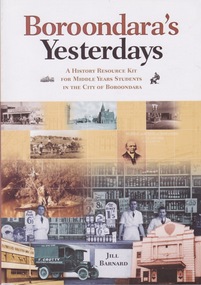
Book, Jill Barnard, Boroondara's Yesterdays: a history resource kit for middle years students in the City of Boroondara, 2009
... Jill Barnard...Camberwell Boroondara The book is designed to help middle years students in the Boroondara area to understand and discover more of the local history of their city Boroondara's Yesterdays: a history resource kit for middle years students in the City of Boroondara Book Book Jill Barnard City of Boroondara Library Service ...The book is designed to help middle years students in the Boroondara area to understand and discover more of the local history of their citycamberwell, boroondara -
 Camberwell Historical Society
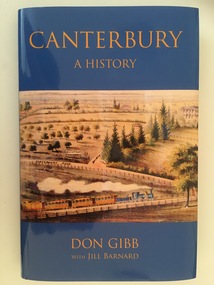
Book, Don Gibb et al, Canterbury: A History, 2019
... ...Jill Barnard...Canterbury: A History Book Book Don Gibb Jill Barnard Royal Historical Society of Victoria Canterbury History Group Focus Print Group ...In this book, Don Gibb presents a history of the development of Canterbury as a suburb up until 1960. Produced by Royal Historical Society of Victoria and Canterbury History Group. Published 2019.camberwell, canterbury -
 Port Melbourne Historical & Preservation Society
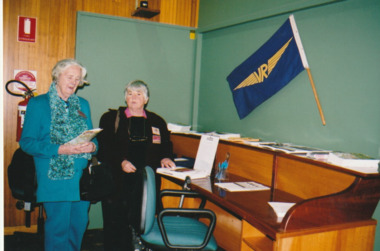
Photograph - Making Tracks exhibition, Station Pier, Port Melbourne, Ann Smallpage, 12 Sep 2004
... ...Jill BARNARD...Includes: .01: Launch of "Farewell & Welcome" with Transport Minister Peter Batchelor and Jill Barnard with Sonia Jennings. .02: Jill Barnard presenting the book to PMH&PS Secretary Pat Grainger. .03 & .04: RHSV launch of 'Making Tracks'. .05 & .06: Meyer Eidelson & Pat Grainger at exhibition. .07: Norah Howard & Lois Daley at exhibition. .08: Norah Howard & Pat Grainger. .09-.24: Exhibition details....Includes: .01: Launch of "Farewell & Welcome" with Transport Minister Peter Batchelor and Jill Barnard with Sonia Jennings. .02: Jill Barnard presenting the book to PMH&PS Secretary Pat Grainger. .03 & .04: RHSV launch of 'Making Tracks'. .05 & .06: Meyer Eidelson & Pat Grainger at exhibition. .07: Norah Howard & Lois Daley at exhibition. .08: Norah Howard & Pat Grainger. .09-.24: Exhibition details. ...9 members attended the minister's breakfast celebrating the sesquintennial of the M&HB Railway & Pier, and others joined them at noon to see the "Making Tracks" exhibition. Both exhibition and the book "Welcome & Farewell" were launched at the breakfast, and also plaques for Station Pier, PMR Station & Flinders Street Station. Ref items 1947.01-.13 for presentation material. 1946 for book launched at this event.Set of 24 photos taken at 'Making Tracks' exhibition launch breakfast at Station Pier celebrating 150th anniversay of Pier & railway (12-09-2004). Includes: .01: Launch of "Farewell & Welcome" with Transport Minister Peter Batchelor and Jill Barnard with Sonia Jennings. .02: Jill Barnard presenting the book to PMH&PS Secretary Pat Grainger. .03 & .04: RHSV launch of 'Making Tracks'. .05 & .06: Meyer Eidelson & Pat Grainger at exhibition. .07: Norah Howard & Lois Daley at exhibition. .08: Norah Howard & Pat Grainger. .09-.24: Exhibition details.celebrations fetes and exhibitions, norah howard nee mallet, transport - railways, arts and entertainment - literature, jill barnard, sonia jennings, meyer eidelson, pat grainger, peter batchelor -
Koorie Heritage Trust
Book, Barnard, Jill et al, People's playground : a history of the Albert Park, 1996
... Barnard, Jill...Photographs; maps; notes; index People's playground : a history of the Albert Park. Book Barnard, Jill Chandos Publishing Keating, Jenny ...A history of Melbourne's Albert Park from the food-gathering area for the Aboriginals through early «uropean settlement to the park of today.vii-xviii; 222P. ill. Photographs; maps; notes; indexA history of Melbourne's Albert Park from the food-gathering area for the Aboriginals through early «uropean settlement to the park of today.parks, victoria, melbourne; albert park, melbourne; yallukit-willam clan; -
 Whitehorse Historical Society Inc.
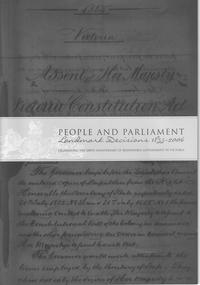
Pamphlet, Barnard, Jill and Jennings Sonia, People and Parliament, 2006
... Barnard, Jill and Jennings Sonia...Aborigines Coranderrk Victorian Government Suffrage Land Settlement Farming Water Gardening Land use A 24 page booklet of landmark decisions by the Victorian Government between 1855 - 2006 was published to celebrate their 150th anniversary. 24 pp, A4 People and Parliament Pamphlet Barnard, Jill and Jennings Sonia ...A 24 page booklet of landmark decisions by the Victorian Government between 1855 - 2006 was published to celebrate their 150th anniversary.24 pp, A4non-fictionA 24 page booklet of landmark decisions by the Victorian Government between 1855 - 2006 was published to celebrate their 150th anniversary. aborigines, coranderrk, victorian government, suffrage, land settlement, farming, water, gardening, land use -
Canterbury History Group
Photograph - "Frognall' in 1944 when used as RAAF HQ Wireless Transmitting Station, 1944
... Copy of a photograph from the Australian War Memorial of "Frognall" in 1944 acquired for publication in "Canterbury, a History" by Don Gibb with Jill Barnard. ...Copy of a photograph from the Australian War Memorial of "Frognall" in 1944 acquired for publication in "Canterbury, a History" by Don Gibb with Jill Barnard. Canterbury Mont Albert Road Frognall RAAF Photograph "Frognall' in 1944 when used as RAAF HQ Wireless Transmitting Station. ...Copy of a photograph from the Australian War Memorial of "Frognall" in 1944 acquired for publication in "Canterbury, a History" by Don Gibb with Jill Barnard. canterbury, mont albert road, frognall, raaf -
 Eltham District Historical Society Inc
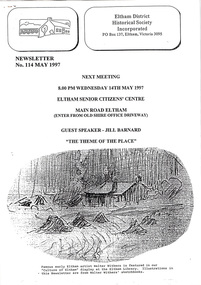
Newsletter, Newsletter, No. 114 May 1997
... Contents: • Next meeting, guest speaker; Jill Barnard: The Theme of the Place • May Meeting • Now Hear This • Office Bearers for 1997 • Subscriptions • Autumn Excursion • Some Other Brief Items • Andrew Ross Museum ...Contents: • Next meeting, guest speaker; Jill Barnard: The Theme of the Place • May Meeting • Now Hear This • Office Bearers for 1997 • Subscriptions • Autumn Excursion • Some Other Brief Items • Andrew Ross Museum The Shire of Eltham Historical Society was formed in October 1967. ...Contents: • Next meeting, guest speaker; Jill Barnard: The Theme of the Place • May Meeting • Now Hear This • Office Bearers for 1997 • Subscriptions • Autumn Excursion • Some Other Brief Items • Andrew Ross Museum The Shire of Eltham Historical Society was formed in October 1967. The first newsletter of the Society was issued May 1978 and has been published continuously ever since on a bi-monthly basis. With the cessation of the Shire of Eltham in late 1994, the Society's name was revised to Eltham District Historical Society and this name first appeared with issue No. 103, July 1995. The collection of the Society's newsletters provides a valuable resource on the history of the Society's activities, office bearers and committee members, guest speakers and subjects of historical interest pertinent to the former Shire of Eltham and the Eltham District.A4 photocopied newsletter distributed to membersnewsletter, eltham district historical society, shire of eltham historical society -
 City of Melbourne Libraries
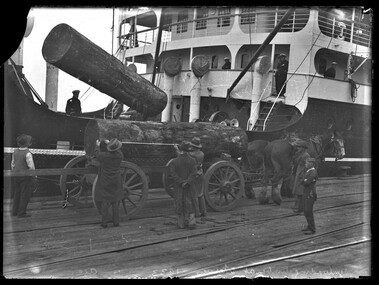
Photograph (item), Bull, Hugh Jones, 1897-1993, Unloading timber at Victoria Dock, 1933
... Retrieved January 30, 2026, from http://nla.gov.au/nla.news-article204377024 Wikipedia, Taiping steamer, https://en.wikipedia.org/wiki/Taiping_(steamer) Wikipedia, Victoria Dock, https://en.wikipedia.org/wiki/Victoria_Dock_(Melbourne) Docklands News, Ashley Smith, 2 Mar 2022, https://www.docklandsnews.com.au/victoria-dock/ Living Histories: Heritage Council of Victoria, Jill Barnard, 2008, Jetties and Piers, https://livinghistories.net.au/wp-content/uploads/2015/11/Jetties-ONL-intro_Part-1.pdf eMelbourne, Wharves and Docks, https://www.emelbourne.net.au/biogs/EM01612b.htm Australian Academy of Technological Sciences – Harvesting Wood, https://www.austehc.unimelb.edu.au/tia/225.html Old Treasury Building, On the Water – The Docks, https://tinyurl.com/3wkbk66m Old Treasury Building, On The Road, https://tinyurl.com/dw44yr3t Port of Melbourne, Victorian Places, https://www.victorianplaces.com.au/port-of-melbourne Docklands Heritage Study - Environmental History, https://mvga-prod-files.s3.ap-southeast-4.amazonaws.com/public/2024-05/docklands-heritage-review-thematic-environmental-history-1991.pdf eMelbourne, Horses, https://www.emelbourne.net.au/biogs/EM00723b.htm Victorian Clydesdale Horse Society, https://www.clydesdalesvic.org.au/history The Crossing, https://letterboxd.com/film/the-crossing-i/...Retrieved January 30, 2026, from http://nla.gov.au/nla.news-article204377024 Wikipedia, Taiping steamer, https://en.wikipedia.org/wiki/Taiping_(steamer) Wikipedia, Victoria Dock, https://en.wikipedia.org/wiki/Victoria_Dock_(Melbourne) Docklands News, Ashley Smith, 2 Mar 2022, https://www.docklandsnews.com.au/victoria-dock/ Living Histories: Heritage Council of Victoria, Jill Barnard, 2008, Jetties and Piers, https://livinghistories.net.au/wp-content/uploads/2015/11/Jetties-ONL-intro_Part-1.pdf eMelbourne, Wharves and Docks, https://www.emelbourne.net.au/biogs/EM01612b.htm Australian Academy of Technological Sciences – Harvesting Wood, https://www.austehc.unimelb.edu.au/tia/225.html Old Treasury Building, On the Water – The Docks, https://tinyurl.com/3wkbk66m Old Treasury Building, On The Road, https://tinyurl.com/dw44yr3t Port of Melbourne, Victorian Places, https://www.victorianplaces.com.au/port-of-melbourne Docklands Heritage Study - Environmental History, https://mvga-prod-files.s3.ap-southeast-4.amazonaws.com/public/2024-05/docklands-heritage-review-thematic-environmental-history-1991.pdf eMelbourne, Horses, https://www.emelbourne.net.au/biogs/EM00723b.htm Victorian Clydesdale Horse Society, https://www.clydesdalesvic.org.au/history The Crossing, https://letterboxd.com/film/the-crossing-i/ ships shipping timber industry shipwrecks horses docks wharves 1930-1939 wars docklands Photographer notations on slide: "Unloading Timber at Wharves 1933 Age B5" Glass plate negative Unloading timber at Victoria Dock Photograph Bull, Hugh Jones, 1897-1993 The Age (Melbourne, Vic. : 1854 - 1954) ...Photographer notations on slide: "Unloading Timber at Wharves 1933 Age B5" Published: Age (Melbourne, Vic.: 1854- ), Tuesday 15 August 1933 MAHOGANY FROM MANILA. (1933, August 15). The Age (Melbourne, Vic. : 1854 - 1954), p. 11. Retrieved January 16, 2026, from http://nla.gov.au/nla.news-article204377024 Published title: MAHOGANY FROM MANILA Published Caption: Age Tue 15 Aug 1933 Caption: Unloading Mahogany Logs brought from Manila, Philippine Islands, by the steamer Taiping, which berthed yesterday at Victoria Dock. The vessel discharged twenty logs, each weighing three tons, the first shipment of this type of timber landed in Melbourne. Research by Project Volunteer, Louise McKenzie: This photograph in many ways epitomises Melbourne in the 1930s. It is a time of enormous growth, development and change. But before delving into that, the photo itself is very powerful. The huge mahogany logs being unloaded appear to be so heavy that the ship itself seems to list to port as they are craned over the side. They are being levered into a cart to which two large and sturdy Clydesdale horses are hitched. In contrast to the traditional horses, the wharf is crisscrossed with modern railway tracks. Unloading is both mechanical and manual, and the scene is one of intense interest to a young boy bystander. The ship appears to be squat and solid, but the whole image also gives a feeling of movement and intensity. The mahogany being delivered to Melbourne would be intended for high quality furniture. In the 1930s Australia actually had a growing timber industry, but much of the eucalyptus wood was being utilised for mass produced furniture, and much of this furniture would then have had a veneer applied to it. The fact that it was economic to import this timber from the “Philippine Islands” – not a traditional trading market for Australia – reflects a Victorian economy that was strong enough to support a growing demand for good quality furniture Mahogany was described as a classic, strong hardwood, often used for dark opulent furniture. In the 1930s the importation of timber from Manila (Philippines) to Australia was a notable trade, particularly in Philippine Lauan (often referred to as Philippine Mahogany), which was used as a cheaper alternative to other hardwoods. 1930s furniture, dominated by the art deco style, used a mix of luxurious exotic woods like mahogany, macassar and ebony for high-end pieces, often veneered over less expensive woods such as walnut, birch and poplar, and with plywood, chrome and lacquer also popular for more practical, streamlined designs during the Depression era. By the mid 1930s timber mills were being relocated away from the immediate dock area, but the fact that these logs were being transported by horse-drawn cart implies that the load would not have had to be taken too far for milling. 1885 the Melbourne Harbour Trust Commissioners had decided that land in or near the city was far too valuable to be used as timber yards. Furthermore, large stacks of timber posed a fire risk. The Trust asked the Victorian Government to reserve a site on the east side of the Yarra River opposite Yarraville and Spotswood. Here, in 1889, the Trust began building six jetties and a wharf specifically for the landing of timber. Clydesdale horses were initially brought to Victoria from Tasmania in the 1830s, and with the 1850s gold rush they were imported direct from Scotland. Melbourne was from its earliest years an important centre of horse-breeding from both imported and colonial-bred stock, providing the well-built draught horse for pulling heavily loaded wagons, the harness horse for delivery work and drawing coaches, and the saddle-horse used for riding. Stud breeding facilities were advertised from the early 1840s. By the 1870s the horse export trade was thriving, and the Port of Melbourne was the country's busiest exporter of horses to Indian, Asian and New Zealand markets. Kirk's Melbourne Horse and Carriage Bazaar in Bourke Street first advertised for business in 1840, and by the 1850s Bourke Street West was famed for its horse bazaars and saleyards. The Victorian Clydesdale Horse Society reports that Clydesdale working horses were a vital part of Melbourne's infrastructure and agricultural industry in the 1930s, when they reached the peak of their popularity despite the increasing competition from mechanization. Their main roles and usage at this time were: • City Delivery: Clydesdales were a common sight for metropolitan deliveries, particularly for breweries (such as Carlton & United Breweries), milk runs, and bread deliveries. • Industrial Work: They were heavily used for hauling cargo at the docks, in construction, and at specialized sites like the Truganina Explosives Reserve, where they pulled wagons. • Agriculture: In surrounding rural areas, they were the primary power source for ploughing and agricultural machinery. • Specialization: By the 1930s, the Clydesdale was smaller and more compact than the Shire or Percheron breeds, making them ideal for navigation in urban environments. After the 1930s their numbers decreased due to the onset of WWI and mechanisation. Wartime petrol rationing led to a brief revival for the working horse, as suburban tradesmen, now used to motor delivery, took their old jinkers out of mothballs. By 1947, however, only 1.5% of city traffic was horse-drawn. In 1952 the large horse cartage company A. Kellet Pty Ltd sold its 250 horses and converted its Richmond stables to storage. In the 1950s at Station and Princes piers, wharf labourers refused to work with the six draught horses still being used to haul trolleys and which were soon superseded by the fork lift, semi-trailer and mobile crane. Where carefully trained horses had once shunted trains in city goods yards, a few hundred a week were now being killed at the abattoirs for pet and human consumption. The last MCC dray horse was withdrawn from service in 1958, but some of the few remaining working animals are used by the mounted police for crowd control at demonstrations and football games. The death knell had also sounded for the associated trades of farrier, saddler and blacksmith. Our photo, therefore, showing the wharf with both the haulage Clydesdales and the rail lines, is a strong visual summary of the social and economic changes experienced in Victoria in the 1930s and on towards the 1950s. Our photo is located at Victoria Dock (also known as Victoria Harbour) which is still an active component of Melbourne’s port system. In 1892 the West Melbourne Dock (later Victoria Dock) was opened, downstream and immediately west of the Spencer Street railway shunting yards. It contained a swing basin for ships, replacing the one which had been provided on the south side of the river, later to be the Duke and Orr dry dock, west of the Charles Grimes Bridge. Further west was the South Wharf along the river bank. The history of Victoria Dock is extremely well described by Ashley Smith in his 2 March 2022 article in Docklands News, and its accompanying aerial photo of the Dock taken in 1934. He writes: "In the early 1930s Victoria Dock was one of the biggest sites for trade and export in Melbourne. A constant queue of ships sailed in, unloaded their cargo, recharged and reloaded, then left for the next port. Around the time this photo was taken (found in a 1934 photo book), the trapezium-shaped basin had been through some changes since its construction in the 1890s. The 497-metre-long Central Pier, finished in 1919, now featured six sheds to house the ever-increasing volume of cargo. The entrance had also been widened in the 1920s to allow better access. Some of the berths featured three-ton jib electric cranes to help with loading cargo and a rail network connected to the State Railway service. By the time construction was completed, the dock was 39 hectares and hailed as the second-largest dock in the world (behind Cavendish Dock, Barrow-in-Furness). To further save costs, excavations were dug to a more reasonable seven metres below low water, instead of British engineer Sir John Coode’s recommended 8.3 metres. Even then, the costs were still around £900,000. It was envisaged, with the extra wharfage, that around thirty 90-metre ships could berth inside. On March 22, 1892, Victoria Dock was opened by Victoria’s Governor, the Earl of Hopetoun (later Australia’s first Governor-General) who opened the sluice to let the Yarra in. It took six days to fill the basin with The Leader newspaper estimating that it would take another six months to completely fill (March 26, 1892). In the end, it took nearly a year before the first ship was allowed to enter on February 20, 1893, when the steamer Hubbuck sailed in to unload 1200 tonnes of cargo in 15 hours. The Argus (February 23, 1893) reported that the ship’s captain, J. R. Brodie, called the Yarra “better than the Thames”, and compared Victoria Dock favourably to the Albert Dock (Liverpool)." This would be a good time to move our focus on to the Taiping, which is the transporter of these giant mahogany logs. The Taiping was a steel-hulled, single-screw passenger-cargo Chinese steamer, which today has the dubious legacy of being involved in a collision headlined as “The Chinese Titanic”. It was constructed by the Hong Kong and Shampoa Dock Company at its facility in Hong Kong, with completion in 1926 for service under the Australia Oriental Line. Her gross register tonnage measured 4,324 tons, reflecting her design for inter-island and coastal trade routes, accommodating both passengers and freight. She operated routes connecting Australian ports with East Asian destinations. As World War II approached, Taiping continued predominantly working the trade routes between China and Australia, until December 1941, when she evacuated women and children from Hong Kong to Manila just before Japanese forces overran the region. She then safely reached Australia despite enemy air raids. Taiping was then requisitioned by the Royal Navy and repurposed as a victualling stores issuing ship for the Eastern Fleet, supporting logistical needs in the Pacific and Indian oceans. Returned to the Australian Oriental Line in 1947, she underwent refitting and by mid-1948 was chartered to the Shanghai Shipping Company, and modified for greater passenger accommodation – approximately 500 passengers. In 1948/49 the Chinese Civil War took place. The Taiping departed Shanghai on 26 January 1949 as one of the final vessels evacuating civilians from to Keelung Harbour in Taiwan. Reports indicate that the Taiping carried double the rated capacity of passengers i.e. 1000. The ship carried families, military personnel, civilians, carrying personal belongings, gold and valuables in hope of resettlement in Nationalist Taiwan. It also held heavy cargo in the form of silver and gold bullion loaded by the Central Bank of China. Because of the risk of patrols, and to conserve fuel, the Captain took the ship away from the usual open-sea passage, and instead navigated along the coast. He also extinguished navigation lights to avoid detection. Shortly after midnight on 27 January 1949 the Taiping collided with the smaller cargo steamer Chien Yuan in the East China Sea near the Zhoushan Archipelago. The Chien Yuan was also operating in darkness. The subsequent collision was catastrophic. The Chien Yuan sank with in 5 minutes, with the loss of 72 of its 74 crew. The Taiping sustained severe structural compromise from the broadside strike and initially remained afloat, then made a swift descent into the freezing water, with no attempt at an organised evacuation. No formal recovery process was instigated, however a distress signal went out. 32 survivors were picked up by the Australian destroyer HMAS Warramunga (on patrol nearby), a passing US vessel found 2 more, and local Zhoushan fishermen retrieved others. In the end, only 37 people survived. The event is remembered as a poignant moment in the mass migration to Taiwan, with families tragically separated. A memorial to the disaster exists at the Keelung Harbour naval base on Taiwan. With its total of over 1,500 deaths, it constituted one of the worst peacetime maritime losses. It is sometimes referred to as the “Oriental Titanic” because of the similarly large loss of life and speed of demise with the RMS Titanic in 1912. A fictional depiction of this event appears in the John Woo movies “The Crossing (Part 1) (2014), and The Crossing II (2015), known in Chinese as “Taiping Wheel”. The narrative weaves a story around pre-disaster romances and wartime turmoil among passengers, culminating in the ship’s rapid sinking. “The production, a high-budget Sino-Taiwanese-Hong Kong co-effort, portrays the event as a microcosm of the 1940s Sino-Japanese and civil war legacies, though critics noted the melodramatic style prioritizing spectacle over historical precision.” In conclusion, it is nice to return to our photo, and observe the people involved in this moment. The dockworkers are, so typical of the 1930s, dressed in what looks to us like formal clothing – dark suits or coats, white shirts, and black hats. I am particularly drawn to the young boy, bare-headed, arms crossed, and so intent on the unloading process. He too is wearing a white shirt, black trousers and jacket, and black shoes. This is 1933 Melbourne – but the haircut he is sporting is now very “hipster” and modern in 2026 Melbourne. References: MAHOGANY FROM MANILA. (1933, August 15). The Age (Melbourne, Vic. : 1854 - 1954), p. 11. Retrieved January 30, 2026, from http://nla.gov.au/nla.news-article204377024 Wikipedia, Taiping steamer, https://en.wikipedia.org/wiki/Taiping_(steamer) Wikipedia, Victoria Dock, https://en.wikipedia.org/wiki/Victoria_Dock_(Melbourne) Docklands News, Ashley Smith, 2 Mar 2022, https://www.docklandsnews.com.au/victoria-dock/ Living Histories: Heritage Council of Victoria, Jill Barnard, 2008, Jetties and Piers, https://livinghistories.net.au/wp-content/uploads/2015/11/Jetties-ONL-intro_Part-1.pdf eMelbourne, Wharves and Docks, https://www.emelbourne.net.au/biogs/EM01612b.htm Australian Academy of Technological Sciences – Harvesting Wood, https://www.austehc.unimelb.edu.au/tia/225.html Old Treasury Building, On the Water – The Docks, https://tinyurl.com/3wkbk66m Old Treasury Building, On The Road, https://tinyurl.com/dw44yr3t Port of Melbourne, Victorian Places, https://www.victorianplaces.com.au/port-of-melbourne Docklands Heritage Study - Environmental History, https://mvga-prod-files.s3.ap-southeast-4.amazonaws.com/public/2024-05/docklands-heritage-review-thematic-environmental-history-1991.pdf eMelbourne, Horses, https://www.emelbourne.net.au/biogs/EM00723b.htm Victorian Clydesdale Horse Society, https://www.clydesdalesvic.org.au/history The Crossing, https://letterboxd.com/film/the-crossing-i/Photographer notations on slide: "Unloading Timber at Wharves 1933 Age B5"ships, shipping, timber industry, shipwrecks, horses, docks, wharves, 1930-1939, wars, docklands -
 Narre Warren and District Family History Group
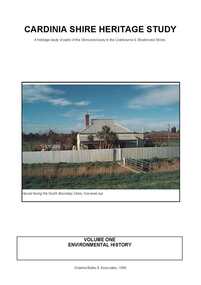
Book, Graeme Butler & Associates, Cardinia Shire Heritage Study : a heritage study of parts of the Shire previously in the Cranbourne & Sherbrooke Shires. Vol 1 : Key Findings and Recommendations Vol 2 : Heritage Place and Precinct Citations, 1998
... Cardinia Shire (Vic.) heritage studies Tivoli Berry Farm (Clematis) Carramar (Emerald) Nobelius Heritage Park Dalmore Public Hall Horace Hardy Farm Complex Emerald Lake Park The Grange (Koo Wee Rup) Glen Afton (Yannathan) Myrtlewood (Yannathan) Vay View Farm (Lang Lang) Emerald Railway Station Timber Bridges (Yallock Creek) Emerald County Clud Oak Lee (Emerald) Sycamore Lodge (Emerald) Cambden Wollybutt Row (Emerald) Silver Birches (Emerald) Lang Lang Cemetery Old Monomeith Homestead sites Monomeith Park (Monomeith) Dustings Garage (Koo Wee Rup) Koo Wee Rup Public Hall Koo Wee Rup Lockup Wattle Theatre (Koo Wee Rup) Harewood (Koo Wee Rup) Warook Homestead (Monomeith) Old Yallock St John's Roman Catholic Church (Koo Wee Rup) Royal Hotel (Koo Wee Rup) Budgeree (Yannathan) Cascades Guest House (Clematis) Rutter Farm (Tooradin) Koo Wee Rup Swamp Drains Upper Ferntree Gully to Gembrook Railway Great Southern Railway Misson's Butchers Shop & Residence (Lang Lang) English Scottish & Australian Bank (Lang Lang) Clematis Park Row Houses (Lang Lang) This Environmental History of the Cardinia Shire incorporates the Environmental History of the former Shire of Pakenham, compiled by Carlotta Kellaway for Graeme Butler & Associates and the Environmental History of those areas of the Shire formerly in the Shires of Cranbourne and Sherbrooke, compiled by Jill Barnard for Graeme Butler and Associates. ...This Environmental History of the Cardinia Shire incorporates the Environmental History of the former Shire of Pakenham, compiled by Carlotta Kellaway for Graeme Butler & Associates and the Environmental History of those areas of the Shire formerly in the Shires of Cranbourne and Sherbrooke, compiled by Jill Barnard for Graeme Butler and Associates. An environmental history, which is meant as a guide to the identification of sites of significance within a shire, cannot be a complete social history of that shire. Rather, it is meant to be a summary of the various ways in which people have used and reacted to the natural environment, altering it so as to create economic, social, cultural and educational uses for themselves and their neighbours. [from the introduction]non-fictionThis Environmental History of the Cardinia Shire incorporates the Environmental History of the former Shire of Pakenham, compiled by Carlotta Kellaway for Graeme Butler & Associates and the Environmental History of those areas of the Shire formerly in the Shires of Cranbourne and Sherbrooke, compiled by Jill Barnard for Graeme Butler and Associates. An environmental history, which is meant as a guide to the identification of sites of significance within a shire, cannot be a complete social history of that shire. Rather, it is meant to be a summary of the various ways in which people have used and reacted to the natural environment, altering it so as to create economic, social, cultural and educational uses for themselves and their neighbours. [from the introduction] cardinia shire (vic.), heritage studies, tivoli berry farm (clematis), carramar (emerald), nobelius heritage park, dalmore public hall, horace hardy farm complex, emerald lake park, the grange (koo wee rup), glen afton (yannathan), myrtlewood (yannathan), vay view farm (lang lang), emerald railway station, timber bridges (yallock creek), emerald county clud, oak lee (emerald), sycamore lodge (emerald), cambden wollybutt row (emerald), silver birches (emerald), lang lang cemetery, old monomeith homestead sites, monomeith park (monomeith), dustings garage (koo wee rup), koo wee rup public hall, koo wee rup lockup, wattle theatre (koo wee rup), harewood (koo wee rup), warook homestead (monomeith), old yallock, st john's roman catholic church (koo wee rup), royal hotel (koo wee rup), budgeree (yannathan), cascades guest house (clematis), rutter farm (tooradin), koo wee rup swamp drains, upper ferntree gully to gembrook railway, great southern railway, misson's butchers shop & residence (lang lang), english scottish & australian bank (lang lang), clematis park, row houses (lang lang) -
Kew Historical Society Inc
Archive (series) - Subject File, Authors (Kew), 1958
... Authors mentioned in the file include: Allan Aldous, F G A Barnard, James Bonwick, Martin Boyd, Vincent Buckley, Sir Macfarlane Burnet, Anne M Carson, John Clements, Rita Erlich, Barbara Giles, Alison Goding, A D Hope, Wendy Jacobs, Lally Katz, Jill Manton, Philip Martin, James McAuley, Pauline McKinnon, Philip Mendez, Marrion Miller, Michele Nayman, Brenda Niall, Mark O’Connor, Nettie Palmer, Vance Palmer, Rev Dr Arthur de Quetteville Robin, Judith Rodriguez, Myra Roper, Dorothy Rogers, Yetta Rothberg, Frederick Sinnett, John Stanley, Peter Steele, W D Vaughan, Gwen Walker, J M Walsh, Lillian Wood....Authors mentioned in the file include: Allan Aldous, F G A Barnard, James Bonwick, Martin Boyd, Vincent Buckley, Sir Macfarlane Burnet, Anne M Carson, John Clements, Rita Erlich, Barbara Giles, Alison Goding, A D Hope, Wendy Jacobs, Lally Katz, Jill Manton, Philip Martin, James McAuley, Pauline McKinnon, Philip Mendez, Marrion Miller, Michele Nayman, Brenda Niall, Mark O’Connor, Nettie Palmer, Vance Palmer, Rev Dr Arthur de Quetteville Robin, Judith Rodriguez, Myra Roper, Dorothy Rogers, Yetta Rothberg, Frederick Sinnett, John Stanley, Peter Steele, W D Vaughan, Gwen Walker, J M Walsh, Lillian Wood. ...Various PartiesReference, Research, InformationKHS OrderReference file containing Sundry information about authors (poets, novelists, playwrights, historians, politicians, journalists) who were born, educated, lived or died in Kew, initially compiled by Society member Elizabeth Mackie who had previously researched the artists of Kew. Since the file was created, various items including correspondence and newspaper articles/cuttings have been added. Some information relates to organisations rather than individuals, such as that Kew was once the headquarters of the Fellowship of Australian Writers (1/317 Barkers Road). Within the file there is correspondence and curriculum vitae supplied by: Allan Aldous, Lillian Wood, Michele Nayman (1981), Yetta Rothberg (1981), Judith Rodriguez (1981), Rev Dr Arthur de Quetteville Robin (1982). The File also includes a photocopy of a letter supplied by Prof A D Hope (1981) relating to his memories of Kew. Authors mentioned in the file include: Allan Aldous, F G A Barnard, James Bonwick, Martin Boyd, Vincent Buckley, Sir Macfarlane Burnet, Anne M Carson, John Clements, Rita Erlich, Barbara Giles, Alison Goding, A D Hope, Wendy Jacobs, Lally Katz, Jill Manton, Philip Martin, James McAuley, Pauline McKinnon, Philip Mendez, Marrion Miller, Michele Nayman, Brenda Niall, Mark O’Connor, Nettie Palmer, Vance Palmer, Rev Dr Arthur de Quetteville Robin, Judith Rodriguez, Myra Roper, Dorothy Rogers, Yetta Rothberg, Frederick Sinnett, John Stanley, Peter Steele, W D Vaughan, Gwen Walker, J M Walsh, Lillian Wood.authors - kew (vic)authors - kew (vic)
