
Showing 62 items matching "john r. sides"
-
 Federation University Historical Collection
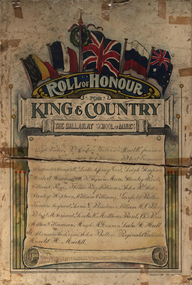
Poster - Honour Roll, Tulloch and King, Ballarat School of Mines Honour Roll, c1915, c1915
... ...john r. sides...Figgis; Thomas Rhys Williams; John R. Sides; Stanley Hepburn; William WIlliams; Garfield Bolton; Theodore Serjeant; Louis G Buchner; William H. ...Figgis; Thomas Rhys Williams; John R. Sides; Stanley Hepburn; William WIlliams; Garfield Bolton; Theodore Serjeant; Louis G Buchner; William H. ...Printers Tullock and King possibly produced an honour roll for organisations to fill in. A World War One Honour Roll lithograph on card featuring flags of the allied countries. The words 'Ballarat School of Mines' and a list of names have been handwritten onto the poster: Virgil Tucker; P. Sinclair Anderson; Carl W. Janssen, [illegible], H. S. Thomas; Robert Tremaine; Alexander Campbell; Leslie De Jersey Grut; Leigh Timpson; Herbert Hawkesworth; R. Ingrame Moore; Stanley Roots; William E. Figgis; Thomas Rhys Williams; John R. Sides; Stanley Hepburn; William WIlliams; Garfield Bolton; Theodore Serjeant; Louis G Buchner; William H. O'Bern; Robert M. Serjeant (Jnr); Leslie W. Matthews, Basil N. D. Ross; Milton Williamson; Hugh M. Conran; Leslie C. Hall; E. Sleeman Anderson, John Bolton, Reginald Callister and Harold H. Martell.ballarat school of mines, world war, world war 1, virgil tucker, p. sinclair anderson, h. s. thomas, robert tremaine, alexander campbell, leslie de jersey grut, leigh timpson, herbert hawkesworth, r. ingrame moore, stanley roots, william e. figgis, thomas rhys williams, john r. sides, stanley hepburn, william williams, garfield bolton, theodore serjeant, louis g. buchner, carl w. janssen, william h. o'bern, robert m. serjeant (jnr, leslie w. matthews, basil n. d. ross, milton williamson, hugh m. conran, leslie c. hall, e. sleeman anderson, john bolton, reginald callister, harold h. martell, william figgis, roll of honour, honour roll -
 Federation University Historical Collection
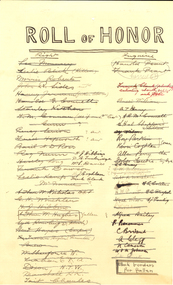
Document, Roll of Honor School of Mines Ballarat (rough), 1915, 1915
... ...john r. sides...These pages are the rough notes and compilation of the Ballarat School of Mines World War One honour board. roll of honor roll of honour honour roll honor roll ballarat ballarat school of mines smb university of ballarat expeditionary forces soldiers world war one wwi 1st world war killed in action virgil tucker alexander fraser a.g. campbell herbert hawkesworth william e. figgis stanley hepburn robert m. serjeant milton williamson e. sleep an anderson p. sinclair anderson john h.s. thomas leslie de jersey grut ralph moore louis g. buchner william williams thomas rhys williams leslie w. mathews leigh simpson john bolton martell stanley kitchner william henry o'brien reginald callister theodore serjeant les kemp basil ross carl janssen fred hepworth percy levison alfred mica smith les mounsey leslie blick john r. sides henry jerman harold g counell stanley kitchen h.m. connan reg nunn hedley long frank dawson leslie kemp mcnamee g.h. winckler h.j. hibbins arthur w. hughes syd rawlings bent hayes trevan ruglen brew w. wilberforce e.t.a. zuabour t.t.w. dixon r.r. marshall charles tait j.j. hibbins d.r. tunbridge w.s. davies j. coglan frank clark harold peart frank peart a.t. bury a.r. mcconnell sheppard alf wilson roy parker kevin coglan allan perry forbes tweedie c.e. bray l.w. matthews robert marshall a. parry h.w. preston alfred wilson r.w. vickery alfred bailey p. besmore c. bryant a. clegg n. cameron w.f.m. johnson l.w. quirk a.c. collins e.c. doepel a. gourlig allan ross ross allan samuel ainsworth les blick c.c bray b. beesmerse calvin briant h. brown harry brittain harold c. connell kevin j. coglan ted cannon e.j. cannon ray cormack dixon arthur dixon ernest duncan harold ferguson n.j. hibbins bert hayes heddles long leslie mournsey ken moss arthur w. nicholas morshead j.b. morshead allan t. penny roy parkin paulig paterson l.w. quick morris roberts lindsay ross a. simmons percy senior s. halliburton sheppard spencer gerard scarff trevan a.a. trahan percy towly robert tremain .1) ROLL OF HONOR printed on top of page .2)Revised list 12.10.15 at bottom right hand corner .3) Joined Expeditionary Forces handwritten on top of paper .1) Roll of Honor for School of Mines Ballarat - original listing on blue feint lined cream foolscap paper. ...These pages are the rough notes and compilation of the Ballarat School of Mines World War One honour board..1) Roll of Honor for School of Mines Ballarat - original listing on blue feint lined cream foolscap paper. Handwritten names (lines through) with ROLL of HONOR printed at top. .2) Handwritten names on blue feint lined foolscap paper .3) A5 cream sheet of paper with handwritten names.1) ROLL OF HONOR printed on top of page .2)Revised list 12.10.15 at bottom right hand corner .3) Joined Expeditionary Forces handwritten on top of paperroll of honor, roll of honour, honour roll, honor roll, ballarat, ballarat school of mines, smb, university of ballarat, expeditionary forces, soldiers, world war one, wwi, 1st world war, killed in action, virgil tucker, alexander fraser, a.g. campbell, herbert hawkesworth, william e. figgis, stanley hepburn, robert m. serjeant, milton williamson, e. sleep an anderson, p. sinclair anderson, john h.s. thomas, leslie de jersey grut, ralph moore, louis g. buchner, william williams, thomas rhys williams, leslie w. mathews, leigh simpson, john bolton, martell, stanley kitchner, william henry o'brien, reginald callister, theodore serjeant, les kemp, basil ross, carl janssen, fred hepworth, percy levison, alfred mica smith, les mounsey, leslie blick, john r. sides, henry jerman, harold g counell, stanley kitchen, h.m. connan, reg nunn, hedley long, frank dawson, leslie kemp, mcnamee, g.h. winckler, h.j. hibbins, arthur w. hughes, syd rawlings, bent hayes, trevan ruglen, brew, w. wilberforce, e.t.a. zuabour, t.t.w. dixon, r.r. marshall, charles tait, j.j. hibbins, d.r. tunbridge, w.s. davies, j. coglan, frank clark, harold peart, frank peart, a.t. bury, a.r. mcconnell, sheppard, alf wilson, roy parker, kevin coglan, allan perry, forbes tweedie, c.e. bray, l.w. matthews, robert marshall, a. parry, h.w. preston, alfred wilson, r.w. vickery, alfred bailey, p. besmore, c. bryant, a. clegg, n. cameron, w.f.m. johnson, l.w. quirk, a.c. collins, e.c. doepel, a. gourlig, allan ross, ross allan, samuel ainsworth, les blick, c.c bray, b. beesmerse, calvin briant, h. brown, harry brittain, harold c. connell, kevin j. coglan, ted cannon, e.j. cannon, ray cormack, dixon, arthur dixon, ernest duncan, harold ferguson, n.j. hibbins, bert hayes, heddles long, leslie mournsey, ken moss, arthur w. nicholas, morshead, j.b. morshead, allan t. penny, roy parkin, paulig, paterson, l.w. quick, morris roberts, lindsay ross, a. simmons, percy senior, s. halliburton sheppard, spencer, gerard scarff, trevan, a.a. trahan, percy towly, robert tremain -
 Flagstaff Hill Maritime Museum and Village
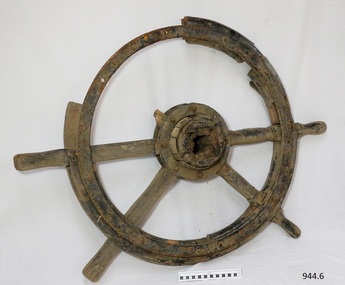
Equipment - Ship's Wheel, 1922
... sides. Its cargo included Guano, Barley, Wool, Horses, Cattle, Timber, Explosives, Potatoes, Shell Gritt and Gypsum. On April 9th 1931Reginald M weathered a large storm in St Vincent Gulf, SA. The vessel suffered great damage; the mast snapped, and the crew laboured for four hours to free it by chopping off the mast and rigging. The crew patched it up and slowly returned to Port Adelaide with only a portion of the insured cargo being damaged. The crew members at the time were owner Mr John H Murch of Wells Street, Largs Bay; Skipper Mr R...sides. Its cargo included Guano, Barley, Wool, Horses, Cattle, Timber, Explosives, Potatoes, Shell Gritt and Gypsum. On April 9th 1931Reginald M weathered a large storm in St Vincent Gulf, SA. The vessel suffered great damage; the mast snapped, and the crew laboured for four hours to free it by chopping off the mast and rigging. The crew patched it up and slowly returned to Port Adelaide with only a portion of the insured cargo being damaged. The crew members at the time were owner Mr John H Murch of Wells Street, Largs Bay; Skipper Mr R ...This ship's wheel was hand-made from wood and metal using a recycled cart wheel. It originally belonged to the "Reginald M", a coastal trading ketch. ‘REGINALD M’ 1922 to 1975- The vessel “Reginald M” was a two-masted coastal ketch, owned and built by Mr Jack (John) Murch of Birkenhead, Port of Adelaide, South Australia. Its construction took approximately 6 months, and it launched at Largs Bay in 1922. The Reginald M’s purpose was to serve the coastal trade of South Australia, to carry cargo cheaply and efficiently. Some have said that the keel was, in fact, hewn from two telegraph poles! Its builder frequented all the salvage yards for materials and fittings. Reginald M had a very shallow draft and a flat bottom that enabled it to come close to shore and to sit high and dry at low tide or to be beached on sand. The flat bottom was also to make the ship able to skim over reefs. Wagons could load and unload direct from their sides. Its cargo included Guano, Barley, Wool, Horses, Cattle, Timber, Explosives, Potatoes, Shell Gritt and Gypsum. On April 9th 1931Reginald M weathered a large storm in St Vincent Gulf, SA. The vessel suffered great damage; the mast snapped, and the crew laboured for four hours to free it by chopping off the mast and rigging. The crew patched it up and slowly returned to Port Adelaide with only a portion of the insured cargo being damaged. The crew members at the time were owner Mr John H Murch of Wells Street, Largs Bay; Skipper Mr R Murch, John’s brother; Murray, son of Captain Murch; and Seaman John Smith. Reg Webb purchased Carribie Station, at Marion in the Warooka District, south of Adelaide, in 1921. He cleared the land and farmed sheep and grain. In 1923, he shipped his own wool and grain from Marion Bay, having first carted 300 bags of the barley grain, 12 bags at a time, along the unmade track to the jetty. A photograph donated to Flagstaff Hill, dating about 1929 - 1942, shows two men on the Reginald M, holding between them their fishing catch of a large hammer shark. The photograph is stamped “GRENFELL STUDIO PORT LINCOLN PRINT” and titled “hammer shark caught on Reginald Emm”. The donor’s family lived on the Your Peninsula and dispatched their grain from a chute at Gleeson’s Landing to the awaiting transport vessel. Reg knew the Murch Brothers from Port Adelaide. The brothers had been using their ketch, Reginald M, to ship Guano from the Islands, led by Captain Richard Murch. Reg approached them in 1934 about shipping grain from Marion Bay. The brothers visited the bay and thought it was an ideal place. They showed Reg where to stack his grain, and they measured up the cliffs. When Reg was ready, they brought down and installed a ninety-foot wooden chute. The bags of grain were individually pushed down the chute, landing in a waiting small boat, then rowed to Reginald M with 14 bags at a time. After 10 hours, Reginald M would have a load of 1300 bags of grain to ship to waiting ports. At one time, a wild storm destroyed the chute, so they built a stronger replacement chute. Reginald M engaged in the shipping of grain from there until 1938. In 1940, Able Seaman Allan H Lucas served on the Reginald M between September and December, being engaged and discharged from Port Adelaide. The ship’s Master, W S Murch, signed his Certificate of Discharge. It seems that at the Reginald M was used, at one time, as a Customs vessel, as one photograph in Flagstaff Hill’s collection shows “H.M.C. No. 3, Pt Adelaide” on the bow. In 1969, the last freight left Marion Bay on the ketch Reginald M carrying grain, wool, and explosives. In late 1970, the Mt. Lyell Mining and Railway Company bought the vessel to use as a barge to carry explosives. In 1972, the Navy League of Strahan, Tasmania, purchased it for use by the Strahan Sea Cadet Unit to use at Macquarie Harbour and renamed it T.S. Macquarie. However, this plan for the use of Reginald M did not happen. In 1974, Mr Andrew Rennie, of East Brighton, Melbourne, bought it for a similar purpose, paying $5,000 and donating a ‘Cadet of the Year’ trophy to the Sea Cadets. He sailed it from Strahan to Melbourne, planning to use it for pleasure sailing. Also, in 1975, Reginald M was bought by the Melbourne Ferry Company at auction. Later in 1975, Flagstaff Hill Maritime Museum bought the Reginald M for $20,000. It became a popular exhibit in the Village’s lake. In 2006, using funds from a $4,000 government grant, the restoration of the vessel continued. Flagstaff Hill Maritime Village’s Collection holds other artefacts associated with Reginald M. They include - Photographs of the Reginald M, including one photograph of it in Outer Harbour, S.A., dated 1947, with Skipper- R.F. Dale and Owner- John Murch. Another shows it docked at Port Adelaide, with the lettering H.M.C. No. 3 Pt ADEL (standing for His /Her Majesty’s Customs). There is a black and white photo of it at a wharf and another showing a person on board. - a lifebuoy, made of cork, with the inscription of “Pt Adelaide” on it. - Helm section, removed and replaced during restoration. - a bullet found in pieces of timber when Reginald M was restored in 1979 Reginald M was a much-loved exhibit at the Maritime Village, where many visitors enjoyed boarding and exploring a real ship with a long history. Sadly, the Reginald M was decommissioned in late 2016, due to the continuing prohibitive cost of maintenance and the risk to public safety. Components from the Reginald M are held in Flagstaff Hill's collection as a reminder of the Reginald M’s history. This ship's wheel is significant because of its association with the REGINALD M. REGNIALD M was a coastal trading ketch from South Australia built in 1922. It is one of very few sailing coastal trading vessels still extant, and its flat bottom, single chine shape illustrates a very simple but robust method of construction, compared to other round bilged examples of trading vessels. She is now listed on the Australian Register of Historic Vessels (ARHV Number: HV000562.)Ship’s wheel, also called a Helm, eight spoke design. Centre of wheel is handmade of wood and has iron rings around each side. The spokes are fitted into this wooden hub. The outer wheel has an iron ring on one side and sections of a wooden ring on the other. There are both original and modern bolt and screw fastenings. The wheel has remnants of black paint. This ship’s wheel was originally fitted to the ketch REGINALD M and removed during its restoration. flagstaff hill, warrnambool, shipwrecked-coast, flagstaff-hill, flagstaff-hill-maritime-museum, maritime-museum, shipwreck-coast, flagstaff-hill-maritime-village, ship's wheel, hand made ship's wheel, coastal trader, reginald m, ketch, john murch, ch murch, reg webb, carribie station, mt lyell copper company, queenstown navy league, andrew rennie, melbourne ferry company, r.f. dale -
 Federation University Historical Collection
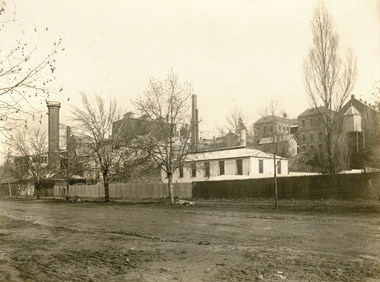
Photograph - Photograph (Black & White), Mines Department, Back View School of Mines Ballarat, c 1900
... R. Caselli] and the Mining Laboratory. The buildings shown along Albert Street have been demolished to make way for the M.B. John Building and the Flecknoe Building. ballarat school of mines albert street henry caselli henry richards caselli hr caselli Written onto bottom of photo 'Back View School of Mines Ballarat. Mines Dept. Black and white photograph mounted onto green card. Shows the Ballarat School of Mines from Albert Street. The Henry Caselli designed Gauge tower is located on the left hand side ...The Albert Street end of the Ballarat School of Mines Campus included the Gauge Tower [designed by Henry R. Caselli] and the Mining Laboratory. The buildings shown along Albert Street have been demolished to make way for the M.B. John Building and the Flecknoe Building. Black and white photograph mounted onto green card. Shows the Ballarat School of Mines from Albert Street. The Henry Caselli designed Gauge tower is located on the left hand side of the photo, and Albert Street is an unmade dirt road.Written onto bottom of photo 'Back View School of Mines Ballarat. Mines Dept.ballarat school of mines, albert street, henry caselli, henry richards caselli, hr caselli -
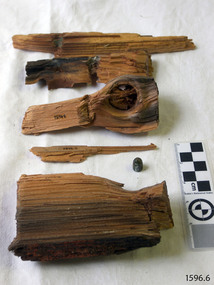 Flagstaff Hill Maritime Museum and Village
Memorabilia - Bullet & Timber, Early 20th century
... sides. Its cargo included Guano, Barley, Wool, Horses, Cattle, Timber, Explosives, Potatoes, Shell Grit, and Gypsum. On April 9th 1931, Reginald M weathered a large storm in St Vincent Gulf, SA. The vessel suffered great damage; the mast snapped, and the crew laboured for four hours to free it by chopping off the mast and rigging. The crew patched it up and slowly returned to Port Adelaide with only a portion of the insured cargo being damaged. The crew members at the time were the owner, Mr John H Murch of Wells Street, Largs Bay; Skipper Mr R...sides. Its cargo included Guano, Barley, Wool, Horses, Cattle, Timber, Explosives, Potatoes, Shell Grit, and Gypsum. On April 9th 1931, Reginald M weathered a large storm in St Vincent Gulf, SA. The vessel suffered great damage; the mast snapped, and the crew laboured for four hours to free it by chopping off the mast and rigging. The crew patched it up and slowly returned to Port Adelaide with only a portion of the insured cargo being damaged. The crew members at the time were the owner, Mr John H Murch of Wells Street, Largs Bay; Skipper Mr R ...The Reginald M was an early purchase of Flagstaff Hill Maritime Museum and Village, soon after it opened in 1975. It was restored and then used as an exhibit in the maritime Village. The reason for the bullet being within the pieces of timber is unknown. The Reginald M's history does not suggest a time when weapons were used. However, the vessel's construction included used materials from different sources; perhaps the bullet was within these materials, which later became part of the Reginald M. ‘REGINALD M’ 1922 to 1975- The vessel “Reginald M” was a two-masted coastal ketch, owned and built by Mr Jack (John) Murch of Birkenhead, Port of Adelaide, South Australia. Its construction took approximately 6 months, and it launched at Largs Bay in 1922. The Reginald M’s purpose was to serve the coastal trade of South Australia, to carry cargo cheaply and efficiently. Some have said that the keel was, in fact, hewn from two telegraph poles! Its builder frequented all the salvage yards for materials and fittings. Reginald M had a very shallow draft and a flat bottom that enabled it to come close to shore and to sit high and dry at low tide or to be beached on sand. The flat bottom was also to make the ship able to skim over reefs. Wagons could load and unload directly from their sides. Its cargo included Guano, Barley, Wool, Horses, Cattle, Timber, Explosives, Potatoes, Shell Grit, and Gypsum. On April 9th 1931, Reginald M weathered a large storm in St Vincent Gulf, SA. The vessel suffered great damage; the mast snapped, and the crew laboured for four hours to free it by chopping off the mast and rigging. The crew patched it up and slowly returned to Port Adelaide with only a portion of the insured cargo being damaged. The crew members at the time were the owner, Mr John H Murch of Wells Street, Largs Bay; Skipper Mr R Murch, John’s brother; Murray, son of Captain Murch; and Seaman John Smith. Reg Webb purchased Carribie Station, at Marion in the Warooka District, south of Adelaide, in 1921. He cleared the land and farmed sheep and grain. In 1923, he shipped his own wool and grain from Marion Bay, having first carted 300 bags of the barley grain, 12 bags at a time, along the unmade track to the jetty. A photograph donated to Flagstaff Hill, dating about 1929 - 1942, shows two men on the Reginald M, holding between them their fishing catch of a large hammer shark. The photograph is stamped “GRENFELL STUDIO PORT LINCOLN PRINT” and titled “hammer shark caught on Reginald Emm”. The donor’s family lived on the Your Peninsula and dispatched their grain from a chute at Gleeson’s Landing to the awaiting transport vessel. Reg knew the Murch Brothers from Port Adelaide. The brothers had been using their ketch, Reginald M, to ship Guano from the Islands, led by Captain Richard Murch. Reg approached them in 1934 about shipping grain from Marion Bay. The brothers visited the bay and thought it was an ideal place. They showed Reg where to stack his grain, and they measured up the cliffs. When Reg was ready, they brought down and installed a ninety-foot wooden chute. The bags of grain were individually pushed down the chute, landing in a waiting small boat, then rowed to Reginald M with 14 bags at a time. After 10 hours, Reginald M would have a load of 1300 bags of grain to ship to waiting ports. At one time, a wild storm destroyed the chute, so they built a stronger replacement chute. Reginald M engaged in the shipping of grain from there until 1938. In 1940, Able Seaman Allan H Lucas served on the Reginald M between September and December, being engaged and discharged from Port Adelaide. The ship’s Master, W S Murch, signed his Certificate of Discharge. It seems that at the Reginald M was used, at one time, as a Customs vessel, as one photograph in Flagstaff Hill’s collection shows “H.M.C. No. 3, Pt Adelaide” on the bow. In 1969, the last freight left Marion Bay on the ketch Reginald M carrying grain, wool, and explosives. In late 1970, the Mt. Lyell Mining and Railway Company bought the vessel to use as a barge to carry explosives. In 1972, the Navy League of Strahan, Tasmania, purchased it for use by the Strahan Sea Cadet Unit to use at Macquarie Harbour and renamed it T.S. Macquarie. However, this plan for the use of Reginald M did not happen. In 1974, Mr Andrew Rennie, of East Brighton, Melbourne, bought it for a similar purpose, paying $5,000 and donating a ‘Cadet of the Year’ trophy to the Sea Cadets. He sailed it from Strahan to Melbourne, planning to use it for pleasure sailing. Also, in 1975, Reginald M was bought by the Melbourne Ferry Company at auction. Later in 1975, Flagstaff Hill Maritime Museum bought the Reginald M for $20,000. It became a popular exhibit in the Village’s lake. In 2006, using funds from a $4,000 government grant, the restoration of the vessel continued. Flagstaff Hill Maritime Village’s Collection holds other artefacts associated with Reginald M. They include - Photographs of the Reginald M, including one photograph of it in Outer Harbour, S.A., dated 1947, with Skipper- R.F. Dale and Owner- John Murch. Another shows it docked at Port Adelaide, with the lettering H.M.C. No. 3 Pt ADEL (standing for His /Her Majesty’s Customs). There is a black and white photo of it at a wharf and another showing a person on board. - a lifebuoy, made of cork, with the inscription of “Pt Adelaide” on it. - Helm section, removed and replaced during restoration. - a bullet found in pieces of timber when Reginald M was restored in 1979 Reginald M was a much-loved exhibit at the Maritime Village, where many visitors enjoyed boarding and exploring a real ship with a long history. Sadly, the Reginald M was decommissioned in late 2016, due to the continuing prohibitive cost of maintenance and the risk to public safety. Components from the Reginald M are held in Flagstaff Hill's collection as a reminder of the Reginald M’s history. The timber is an example of the materials used to build the Reginald M in 1922. The ship was built from recycled items where possible. The bullet represents a time in the history of the vessel that is currently unknown.Wood from the vessel, Reginald M, and a bullet found within its timbers on June 22nd, 1979, during its restoration. flagstaff hill, flagstaff hill maritime museum and village, warrnambool, maritime museum, maritime village, great ocean road, shipwreck coast, reginald m, ketch, coastal trader, timber, wood, bullet, murch, john murch, 1922 -
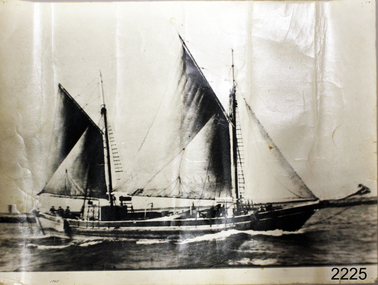 Flagstaff Hill Maritime Museum and Village
Photograph, 1945
... sides. Its cargo included Guano, Barley, Wool, Horses, Cattle, Timber, Explosives, Potatoes, Shell Gritt, and Gypsum. On April 9th 1931, Reginald M weathered a large storm in St Vincent Gulf, SA. The vessel suffered great damage; the mast snapped, and the crew laboured for four hours to free it by chopping off the mast and rigging. The crew patched it up and slowly returned to Port Adelaide with only a portion of the insured cargo being damaged. The crew members at the time were the owner, Mr John H Murch of Wells Street, Largs Bay; Skipper Mr R...sides. Its cargo included Guano, Barley, Wool, Horses, Cattle, Timber, Explosives, Potatoes, Shell Gritt, and Gypsum. On April 9th 1931, Reginald M weathered a large storm in St Vincent Gulf, SA. The vessel suffered great damage; the mast snapped, and the crew laboured for four hours to free it by chopping off the mast and rigging. The crew patched it up and slowly returned to Port Adelaide with only a portion of the insured cargo being damaged. The crew members at the time were the owner, Mr John H Murch of Wells Street, Largs Bay; Skipper Mr R ...The donor was a seamen at Port Adelaide, where this photogrpah of the ketch, Reginald M, was taken in 1945. ‘REGINALD M’ 1922 to 1975- The vessel “Reginald M” was a two-masted coastal ketch, owned and built by Mr Jack (John) Murch of Birkenhead, Port of Adelaide, South Australia. Its construction took approximately 6 months, and it launched at Largs Bay in 1922. The Reginald M’s purpose was to serve the coastal trade of South Australia, to carry cargo cheaply and efficiently. Some have said that the keel was, in fact, hewn from two telegraph poles! Its builder frequented all the salvage yards for materials and fittings. Reginald M had a very shallow draft and a flat bottom that enabled it to come close to shore and to sit high and dry at low tide or to be beached on sand. The flat bottom was also to make the ship able to skim over reefs. Wagons could load and unload directly from their sides. Its cargo included Guano, Barley, Wool, Horses, Cattle, Timber, Explosives, Potatoes, Shell Gritt, and Gypsum. On April 9th 1931, Reginald M weathered a large storm in St Vincent Gulf, SA. The vessel suffered great damage; the mast snapped, and the crew laboured for four hours to free it by chopping off the mast and rigging. The crew patched it up and slowly returned to Port Adelaide with only a portion of the insured cargo being damaged. The crew members at the time were the owner, Mr John H Murch of Wells Street, Largs Bay; Skipper Mr R Murch, John’s brother; Murray, son of Captain Murch; and Seaman John Smith. Reg Webb purchased Carribie Station, at Marion in the Warooka District, south of Adelaide, in 1921. He cleared the land and farmed sheep and grain. In 1923, he shipped his own wool and grain from Marion Bay, having first carted 300 bags of the barley grain, 12 bags at a time, along the unmade track to the jetty. A photograph donated to Flagstaff Hill, dating about 1929 - 1942, shows two men on the Reginald M, holding between them their fishing catch of a large hammer shark. The photograph is stamped “GRENFELL STUDIO PORT LINCOLN PRINT” and titled “hammer shark caught on Reginald Emm”. The donor’s family lived on the Your Peninsula and dispatched their grain from a chute at Gleeson’s Landing to the awaiting transport vessel. Reg knew the Murch Brothers from Port Adelaide. The brothers had been using their ketch, Reginald M, to ship Guano from the Islands, led by Captain Richard Murch. Reg approached them in 1934 about shipping grain from Marion Bay. The brothers visited the bay and thought it was an ideal place. They showed Reg where to stack his grain, and they measured up the cliffs. When Reg was ready, they brought down and installed a ninety-foot wooden chute. The bags of grain were individually pushed down the chute, landing in a waiting small boat, then rowed to Reginald M with 14 bags at a time. After 10 hours, Reginald M would have a load of 1300 bags of grain to ship to waiting ports. At one time, a wild storm destroyed the chute, so they built a stronger replacement chute. Reginald M engaged in the shipping of grain from there until 1938. In 1940, Able Seaman Allan H Lucas served on the Reginald M between September and December, being engaged and discharged from Port Adelaide. The ship’s Master, W S Murch, signed his Certificate of Discharge. It seems that at the Reginald M was used, at one time, as a Customs vessel, as one photograph in Flagstaff Hill’s collection shows “H.M.C. No. 3, Pt Adelaide” on the bow. In 1969, the last freight left Marion Bay on the ketch Reginald M carrying grain, wool, and explosives. In late 1970, the Mt. Lyell Mining and Railway Company bought the vessel to use as a barge to carry explosives. In 1972, the Navy League of Strahan, Tasmania, purchased it for use by the Strahan Sea Cadet Unit to use at Macquarie Harbour and renamed it T.S. Macquarie. However, this plan for the use of Reginald M did not happen. In 1974, Mr Andrew Rennie, of East Brighton, Melbourne, bought it for a similar purpose, paying $5,000 and donating a ‘Cadet of the Year’ trophy to the Sea Cadets. He sailed it from Strahan to Melbourne, planning to use it for pleasure sailing. Also, in 1975, Reginald M was bought by the Melbourne Ferry Company at auction. Later in 1975, Flagstaff Hill Maritime Museum bought the Reginald M for $20,000. It became a popular exhibit in the Village’s lake. In 2006, using funds from a $4,000 government grant, the restoration of the vessel continued. Flagstaff Hill Maritime Village’s Collection holds other artefacts associated with Reginald M. They include - Photographs of the Reginald M, including one photograph of it in Outer Harbour, S.A., dated 1947, with Skipper- R.F. Dale and Owner- John Murch. Another shows it docked at Port Adelaide, with the lettering H.M.C. No. 3 Pt ADEL (standing for His /Her Majesty’s Customs). There is a black and white photo of it at a wharf and another showing a person on board. - a lifebuoy, made of cork, with the inscription of “Pt Adelaide” on it. - Helm section, removed and replaced during restoration. - a bullet found in pieces of timber when Reginald M was restored in 1979 Reginald M was a much-loved exhibit at the Maritime Village, where many visitors enjoyed boarding and exploring a real ship with a long history. Sadly, the Reginald M was decommissioned in late 2016, due to the continuing prohibitive cost of maintenance and the risk to public safety. Components from the Reginald M are held in Flagstaff Hill's collection as a reminder of the Reginald M’s history. The photograph represents a time when the Reginald M was in use at the Port of Adelaide. It shows the configuration of the sails at that time. The vessel was active as a coastal trader from Adelaide and along the south east coast of Australia.Photograph: sepia, rectangular image of the two-masted ketch, Reginald M, in Port River, Adelaide, South Australia. A figure is on the bowsprit, and other figures are on the masts and on deck. Photographed at Port River, Adelaide.flagstaff hill, flagstaff hill maritime museum and village, warrnambool, maritime museum, maritime village, great ocean road, shipwreck coast, ships, port river sa, adelaide, reginald m, 2-masted, sailing ship, ketch, port adelaide, 1945 -
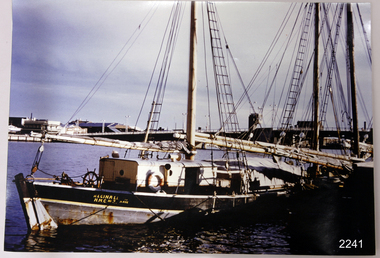 Flagstaff Hill Maritime Museum and Village
Photograph
... side. Her cargo included Guano, Barley, Wool, Horses, Cattle, Timber, Explosives, Potatoes, Shell Grit and Gypsum. In 1931 she weathered a large storm in St Vincents Gulf, SA. Her crew at the time were Owner Mr John H Murch, Wells St, Largs Bay, Skipper, John’s brother Mr R Murch, Murray, son of Mr R Murch and Seaman John Smith Reg Webb purchased Carribie Station, at Marion in the Warooka District, south of Adelaide, in 1921. ...side. Her cargo included Guano, Barley, Wool, Horses, Cattle, Timber, Explosives, Potatoes, Shell Grit and Gypsum. In 1931 she weathered a large storm in St Vincents Gulf, SA. Her crew at the time were Owner Mr John H Murch, Wells St, Largs Bay, Skipper, John’s brother Mr R Murch, Murray, son of Mr R Murch and Seaman John Smith Reg Webb purchased Carribie Station, at Marion in the Warooka District, south of Adelaide, in 1921. ...This coloured photograph of the ketch Reginald M was taken when she was docked at Port Adelaide. The side of the vessel shows the letters "REGINALD M / H.M.C. No. 2 Pt ADEL" - (abbreviation H.M.C. meaning His/Her Majesty's Customs. HISTORY The Reginald M, a two-masted coastal ketch, was owned and built by Mr. Jack (John) Murch of Birkenhead, Port of Adelaide, South Australia to serve the coastal ports of South Australia. Its construction took approximately 6 months and it was launched at Largs Bay in 1922. Its purpose was to carry cargo cheaply and efficiently, and tradition has it that the keel was in fact hewn from two telegraph poles! Its builder frequented all the salvage yards for materials and fittings. The Reginald M had a very shallow draft and a flat bottom that enabled it to sit high and dry at low tide. The flat bottom was also to make the ship able to skim over reefs. Wagons were able to load and unload direct from her side. Her cargo included Guano, Barley, Wool, Horses, Cattle, Timber, Explosives, Potatoes, Shell Grit and Gypsum. In 1931 she weathered a large storm in St Vincents Gulf, SA. Her crew at the time were Owner Mr John H Murch, Wells St, Largs Bay, Skipper, John’s brother Mr R Murch, Murray, son of Mr R Murch and Seaman John Smith Reg Webb purchased Carribie Station, at Marion in the Warooka District, south of Adelaide, in 1921. He cleared the land and farmed sheep and grain. In 1923 he shipped his own wool and grain from Marion Bay, having first carted 300 bags of the barley grain, 12 bags at a time, along the unmade track to the jetty. A photograph dating about 1929 -1942 shows 2 men on the Reginald M, having just landed their fishing catch of a hammer shark. The photograph is stamped “GRENFELL STUDIO PORT LINCLON PRINT” and titled “hammer shark caught on Reginall Emm”. Reg Webb knew the Murch Brothers from Port Adelaide. The brothers had been using their ketch REGINALD M to ship Guano from the Islands, led by Captain Richard Murch. Reg approached them in 1934 about shipping grain from Marion Bay. The brothers visited the bay and thought it was an ideal place. They showed Reg where to stack his grain and they measured up the cliffs. When Reg was ready, they brought down and installed a ninety foot wooden chute. The bags of grain were then individually sent down the chute, landing in a waiting small boat then rowed to REGINALD M, 14 bags at a time. After 10 hours REGINALD M would be fully loaded with 1300 bags of grain and shipped to waiting ports. At one time a wild storm destroyed the chute but it was rebuilt and strengthened. REGINALD M was involved in shipping the grain from there until 1938. In 1940 Able Seaman Allan H Lucas served on Reginald M between September and December, being engaged and discharged from Port of Adelaide. His Certificate of Discharge was signed by ship’s Master W S Murch. It seems that at some stage Reginald M was used as a Customs vessel because a photograph in Flagstaff Hill’s collection shows the text “H.M.C. No. 3, Pt Adelaide” on the bow, the abbreviations standing for “His/Her Majesty’s Customs”. In 1969 the last freight left Marion Bay on the ketch REGINALD M carrying grain, wool and explosives. In late 1970 she was sold to the Mt. Lyell Copper Company, based in Queenstown, Tasmania, to carry explosives. In 1972 the Navy League of Strahan, Tasmania, purchased her for use by the Strahan Sea Cadet Unit and renamed her T.S. Macquarie. In 1974 Mr. Andrew Rennie, of East Brighton, Melbourne, bought her, paying $5,000 and donating a ‘Cadet of the Year” trophy to the Sea Cadets. He sailed her from Strahan to Melbourne, planning to use her for pleasure sailing. In 1975 Reginald M was sold to Melbourne Ferry Company at auction. In 1975 the Reginald M was bought by Flagstaff Maritime Museum for $20,000. She has been restored and is now one of the exhibits, tied up at the dock. Flagstaff Hill Maritime Village’s Collection holds several other artefacts associated with Reginald M. They include - Photographs of the Reginald M, including one photograph of her in Outer Harbour, S.A. dated 1947, with Skipper- R.F. Dale and Owner- John Murch. Another shows her docked at Port Adelaide, with the lettering H.M.C. No. 3 Pt ADEL (standing for His/Her Majesty’s Customs). There is a black and white photo of her at a wharf and another showing a person on board. - a lifebuoy, with Pt Adelaide on it. - a bullet found in pieces of timber when Reginald M was restored in 1979 (References: Flagstaff Hill Fact Sheet “Reginald M”, the book “The Reg Webb Story” compiled by the Warooka & District Museum. Reg Webb’s daughter Lily Ramsay (nee Webb) and her husband Howard, Lizzie Rennie (daughter of owner Andrew Rennie), brochure “Discover the Yorke Peninsula South Australia”, Ketch in Peril; Adelaide Chronicle 9 April 1931, K Gordon & Mary Filmer of Warooka; South Australian Maritime Museum) Thiis photograph is significant because of its connection to the history of the vessel REGINALD M is a coastal trading ketch from South Australia built in 1922. It is one of very few sailing coastal trading vessels still extant, and its flat bottom, single chine shape illustrates a very simple but robust method of construction, compared to other round bilged examples of trading vessels. She is now listed on the Australian Register of Historic Vessels (ARHV Number: HV000562.)Photograph of Reginald M at Port Adelaide. The side of the vessel shows the letters "REGINALD M / H.M.C. No. 2 Pt ADEL" - (abbreviation H.M.C. meaning His/Her Majesty's Customs. Painted on the side of the vessel "REGINALD M / H.M.C. No. 2 Pt ADEL" - flagstaff hill, warrnambool, shipwrecked-coast, flagstaff-hill, flagstaff-hill-maritime-museum, maritime-museum, shipwreck-coast, flagstaff-hill-maritime-village, reginald m, coastal trading ketch, trading vessel, john murch ship builder, port adelaide vessel reginald m, andrew rennie, macquarie training vessel, mt lyell copper company, queenstown navy league, ch murch, reg webb, carribie station, melbourne ferry company, grenfell studio port lincoln, vessel reginald m -
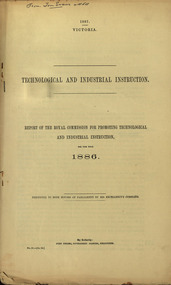 Federation University Historical Collection
Booklet - Victorian Government Reports, Report of the Royal Commission for Promoting Technical and Industrial Education, 1886-8, 1886-8
... R. Baker E.H.L. Swift A. Doepel Henry Wheeler W.H. Batten James Oldham Henry J. Hall Kew School of Art Maryborough School of Art Trades Hall Female School of Art Clunes School of Art Castlemaine School of Art Professor Huxley Edward fraser A. Humphreys J. Oldham F.J. Hall .1 and .2 Victorian Government reports printed by John Ferres, Government Printer, Melbourne .3 Report printed by Robert S. Brain, Government Printer, Melbourne Each report is numbered bottom left-hand side ...The Appendix of Art Schools under the Technological commission includes Ballarat City Schoolof Art (Academy of Arts, Ballarat West), Ballarat East School of Art (Ballarat East Public Library, Barkly St) and Ballarfat West School of Art (Ballaarat Mechanics' Institute).1 Twenty-three page typed report on foolscap sized paper dated 1886. It includes an appendix of a List of Schools of Art Under the Auspices of the technological COmmission for the year ending December 1886. .2 Twenty page photocopy of typed report on foolscap paper. Dated 1886. It includes a syllabus of technological subjects recognised by teh City and Guilds of London Institute. .3 Thirty-one page typed report on foolscap sized paper. Dated 1887 .1 and .2 are sectioned - 2 large sheets folded to make 8 pages. Sections are them stapled together .1 and .2 Victorian Government reports printed by John Ferres, Government Printer, Melbourne .3 Report printed by Robert S. Brain, Government Printer, Melbourne Each report is numbered bottom left-hand side: .1 No. 21-[1s.3d]; .2 No. 67-[1s]; .3 No.36-[1s3d]technology, technical education, royal commission for technical education, education, henry brougham loch, joseph bosisto, art schools, science schools, w.c. kernot, frederick mccoy, c.r. blackett, f. stanley dobson, andrew burns, j.g burns, ballarat west school of art, ballarat city school of arts, r. baker, e.h.l. swift, a. doepel, henry wheeler, w.h. batten, james oldham, henry j. hall, kew school of art, maryborough school of art, trades hall female school of art, clunes school of art, castlemaine school of art, professor huxley, edward fraser, a. humphreys, j. oldham, f.j. hall -
 Lara RSL Sub Branch
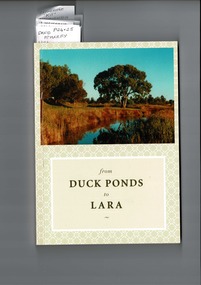
from Duck Ponds to Lara, Booklet from Duck Ponds to Lara, 2004
... R. S. L. Front of the Booklet is half covered by a photograph of Lara Creek and environes. Booklet also came with a fold-up heritage map of Lara printed on both sides. Soft back booklet a collection of of memories "From Duck Ponds to Lara." Published by the Lara Heritage Festival Inc 2004. Edited by Mary Budd, Caroline Delaney, and John ...Lara - Duck Ponds history and input by local population. Insight into the History of a small community.Local knowledge of Lara's History, some items are not well known, Excellant referamce.Soft back booklet a collection of of memories "From Duck Ponds to Lara." Published by the Lara Heritage Festival Inc 2004. Edited by Mary Budd, Caroline Delaney, and John Grainger. Contributions of short stories to the project have come from local residents. Booklet also came with a fold-up heritage map of Lara printed on both sides. The booklet is tagged for the names of contributors who are members of Lara R. S. L. Front of the Booklet is half covered by a photograph of Lara Creek and environes. Booklet also came with a fold-up heritage map of Lara printed on both sides.duck ponds, lara -
 Federation University Historical Collection
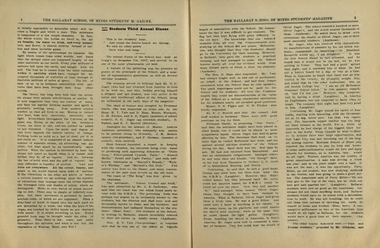
Booklet, Ballarat School of Mines, Student Magazine, First Term, 1908, 1908
... Images. pegging a tramway route transmission of power by rope driving briseis main and new brothers home diabolo snake valley obituary analytical chemistry students' library john brittain a. e. c. kerr w. smith l. seward leslie coulter t. williams f. treloar whitington hart murphy o. w. williams l. knight w. kingston g. w. sides w. gelard w. t. sayer s. r. white a. c. hesselmann r. j. moore r. g. walker j. a. peart newton g. king w. e. eyres g.h davenport a. d. r. galloway j. e. b. crossley j. smart h. hylton j. blayney t. lennon h. s. sheppard p. c. osbourne c.w. nash les smith w. b. tucker c. w. white a. j. robin h. f. owen l. a. westcott e. m. boyer ernie strick isadore wittowski m. tyler h. m. conran h. g. conran h. g. cornell l. j. middleton j. d. orr j. r. blight w. g. taylor l. hall c. bult g. o. ramsay o. w. williams stanley r. heron john a. grant william t. sayer frederick l. treloar patrick s. anderson robert mitchell frederick j. martell Booklet of 26 pages. ...Table of Contents: The location and pegging of a tramway route, The unity of things, Students' third annual dinner, The transmission of power by rope driving, Visit to the Briseis main and new brothers home, School of Mines' sports committee, School of Mines' magazine committee, Diabolo, Limericks sluiced at Snake Valley, Obituary, Hints to the inexperienced, Fossilistic love, Past students, Some bunsen memories, Quaint and curious coincidences, Notes on analytical chemistry, New students, News and notes, Students' library, Sports and pastimes, School of Mines' annual dinner, Correspondence, Answers to correspondents, Editorial notes. Images.Booklet of 26 pages.pegging a tramway route, transmission of power by rope driving, briseis main and new brothers home, diabolo, snake valley, obituary, analytical chemistry, students' library, john brittain, a. e. c. kerr, w. smith, l. seward, leslie coulter, t. williams, f. treloar, whitington, hart, murphy, o. w. williams, l. knight, w. kingston, g. w. sides, w. gelard, w. t. sayer, s. r. white, a. c. hesselmann, r. j. moore, r. g. walker, j. a. peart, newton g. king, w. e. eyres, g.h davenport, a. d. r. galloway, j. e. b. crossley, j. smart, h. hylton, j. blayney, t. lennon, h. s. sheppard, p. c. osbourne, c.w. nash, les smith, w. b. tucker, c. w. white, a. j. robin, h. f. owen, l. a. westcott, e. m. boyer, ernie strick, isadore wittowski, m. tyler, h. m. conran, h. g. conran, h. g. cornell, l. j. middleton, j. d. orr, j. r. blight, w. g. taylor, l. hall, c. bult, g. o. ramsay, o. w. williams, stanley r. heron, john a. grant, william t. sayer, frederick l. treloar, patrick s. anderson, robert mitchell, frederick j. martell -
 Federation University Historical Collection
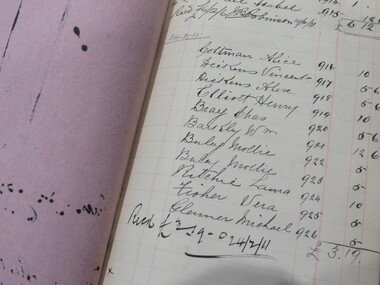
Book - Ledger, Ballarat Technical Arts School Student Fees Ledger, 1907-1914, 1907-1914
... The Ballarat Technical Art School opened in 1907 as a division of the Ballarat School of Mines. ballarat technical art school h.w. malin lilliam moyle queens college .doris walker emily turnbull viola jackson c.w. sergeant hilda wardell hettie gilbert alice benoit ella morrow d.g. johnston p. brokenshire edna tweedie millicent white dorisn walker isla gray mollie brophy annie speak c.v. clegg agnes w. reid nin z. woinarski bessie yates bessie landles jean mcdonald harold herbert harold h. herbert lizzie develin florrie sides fletcher j. crane catherine ronald gertrude owen m.d. hamilton clara v. clegg leslie sim ida barker charlotte turner florrie barnes james n. boyce leo coburn carrie peters mabel chapman fred mcintyre elsie rich henry c. hart g. bannerman jack meadows preston white lyn hamilton a. murray lillian moyle nina davies maggie kittelty m. snell samuel mee agnes carley ida delina katherine dillon nellie mccubbin lila lynch e. owen g. owen d. owen alice m. coltman ruby bawden elsie joy ellen j. norton herbert rich g. medwell maria loader agnes gibb quennie young a.e. kennedy o. geddes ruby l. smith roy proctor elsie naples w.b.g. mcdonald cecil brittain elsie fawcett g. calvert albert coates catherine hogan may vercoe daisy saunders dora furness matilda johnson gordon steele c.w. sargeant e. cornell irene hewitt wilie finn clare clegg jessie mccallum c.f. white e. kilsall kate morris ella garrett winnie trompf ellie mckissock oswald gedded doris walker elsie tipping rose smith daisy lewellin eliza frank una e. fitts may wasley grace medwell mollie laffey a. duck pearl sergent e. penny r. bieske f. pattendon e.g. bailymay booth nelliw evans gertie evans e. baker c. brittain ralph leyland e. tipping mary sheehan may chenery j. bickart e. perry m. bessemeres george richardson f. mcintyre h. fern d. little o. tolputt arthur toop p. lakeland charles j. rawlings jack hooly thomas pattenden elsie finch ernest murfett gordone steele frank power n.j. coote william ewart patrick ryan david walker john perry vera lindsay robert cooper violet leadbeater maggie skelton clara mann laura ritchie james m. johnston ida brown ethel butcher michael glenane f.j. branigan keith booth henry elliot reg cutter stan westcott frank king lottie finch ladies art association pauline lakeland cyril thermeyer albert berryman stanley lindsay joseph bickart alf berryman leo hewitt hilda tweedie vera carroll lionel davies isabel kiel alex dickens henry elliott mollie buley meg moore harrie fern eileen conway minnie buchanan thomas price edward stewart joy lugg olive grainger m. heinz d. gooch p. moon g. bailey charles bray daisy dickman george calvert florence sides tom hannah eileen blake ethel benoit ruby oaff chrissie ware harrie wilson muriel cornel phoebe wilkinson fanny kay john norcott stewart o'loughlan m. featherstone f. tweedie a. corbould d. allanby f. buchanan l. cody v. fisher r. murphy hilda jamieson bessie eason phyllis palmer lila hall vera hall anie walton ruby stevens dorotthy davison ethel hancock anas ross lizzie williams lional davies leslie page frank page lilian bell may henry doreen mclean dorothy dobson helen mcintosh charles fraser murial cornell j.b. sutcliffe dorothy dawson emma mavin agnes lumsden virginia kerr emily figgis beryl craddock winnie treloar gladstone procter f.w. procter Effie Baker Ledger with brown and blue marbled paper cover and brown tape spine. ...The Ballarat Technical Art School opened in 1907 as a division of the Ballarat School of Mines.Ledger with brown and blue marbled paper cover and brown tape spine. Some names are listed under keywords.ballarat technical art school, h.w. malin, lilliam moyle, queens college, .doris walker, emily turnbull, viola jackson, c.w. sergeant, hilda wardell, hettie gilbert, alice benoit, ella morrow, d.g. johnston, p. brokenshire, edna tweedie, millicent white, dorisn walker, isla gray, mollie brophy, annie speak, c.v. clegg, agnes w. reid, nin z. woinarski, bessie yates, bessie landles, jean mcdonald, harold herbert, harold h. herbert, lizzie develin, florrie sides, fletcher j. crane, catherine ronald, gertrude owen, m.d. hamilton, clara v. clegg, leslie sim, ida barker, charlotte turner, florrie barnes, james n. boyce, leo coburn, carrie peters, mabel chapman, fred mcintyre, elsie rich, henry c. hart, g. bannerman, jack meadows, preston white, lyn hamilton, a. murray, lillian moyle, nina davies, maggie kittelty, m. snell, samuel mee, agnes carley, ida delina, katherine dillon, nellie mccubbin, lila lynch, e. owen, g. owen, d. owen, alice m. coltman, ruby bawden, elsie joy, ellen j. norton, herbert rich, g. medwell, maria loader, agnes gibb, quennie young, a.e. kennedy, o. geddes, ruby l. smith, roy proctor, elsie naples, w.b.g. mcdonald, cecil brittain, elsie fawcett, g. calvert, albert coates, catherine hogan, may vercoe, daisy saunders, dora furness, matilda johnson, gordon steele, c.w. sargeant, e. cornell, irene hewitt, wilie finn, clare clegg, jessie mccallum, c.f. white, e. kilsall, kate morris, ella garrett, winnie trompf, ellie mckissock, oswald gedded, doris walker, elsie tipping, rose smith, daisy lewellin, eliza frank, una e. fitts, may wasley, grace medwell, mollie laffey, a. duck, pearl sergent, e. penny, r. bieske, f. pattendon, e.g. bailymay booth, nelliw evans, gertie evans, e. baker, c. brittain, ralph leyland, e. tipping, mary sheehan, may chenery, j. bickart, e. perry, m. bessemeres, george richardson, f. mcintyre, h. fern, d. little, o. tolputt, arthur toop, p. lakeland, charles j. rawlings, jack hooly, thomas pattenden, elsie finch, ernest murfett, gordone steele, frank power, n.j. coote, william ewart, patrick ryan, david walker, john perry, vera lindsay, robert cooper, violet leadbeater, maggie skelton, clara mann, laura ritchie, james m. johnston, ida brown, ethel butcher, michael glenane, f.j. branigan, keith booth, henry elliot, reg cutter, stan westcott, frank king, lottie finch, ladies art association, pauline lakeland, cyril thermeyer, albert berryman, stanley lindsay, joseph bickart, alf berryman, leo hewitt, hilda tweedie, vera carroll, lionel davies, isabel kiel, alex dickens, henry elliott, mollie buley, meg moore, harrie fern, eileen conway, minnie buchanan, thomas price, edward stewart, joy lugg, olive grainger, m. heinz, d. gooch, p. moon, g. bailey, charles bray, daisy dickman, george calvert, florence sides, tom hannah, eileen blake, ethel benoit, ruby oaff, chrissie ware, harrie wilson, muriel cornel, phoebe wilkinson, fanny kay, john norcott, stewart o'loughlan, m. featherstone, f. tweedie, a. corbould, d. allanby, f. buchanan, l. cody, v. fisher, r. murphy, hilda jamieson, bessie eason, phyllis palmer, lila hall, vera hall, anie walton, ruby stevens, dorotthy davison, ethel hancock, anas ross, lizzie williams, lional davies, leslie page, frank page, lilian bell, may henry, doreen mclean, dorothy dobson, helen mcintosh, charles fraser, murial cornell, j.b. sutcliffe, dorothy dawson, emma mavin, agnes lumsden, virginia kerr, emily figgis, beryl craddock, winnie treloar, gladstone procter, f.w. procter, effie baker -
 Federation University Historical Collection
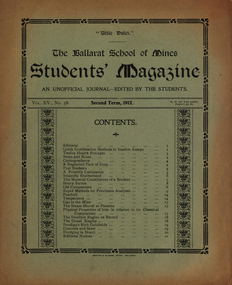
Magazine - Magazine of 24 pages, Baxter & Stubbs, Print, Ballarat School of Mines, Student Magazine, Second Term, 1912, 1912
... Table of Contents: Editorial, Quick combination methods in smelter assays, Twelve health precepts, News and notes, Correspondence, A neglected path of duty, Past students, A friendly castigation, Scientific brotherhood, The material constituents of a student, Henry Sutton, Old companions, Rapid methods for proximate analyses, Football, Temperance, Gas in the mine, The steam shovel at Panama, Physical properties of iron in relation to its chemical composition, The smallest engine on record, The diesel engine, Bendigo's rich goldfields, Concrete and steel, Dredging in Brazil, Editorial notes. editorial, quick combination methods in smelter assays, twelve health precepts, news and notes, correspondence, a neglected path of duty, past students, a friendly castigation, scientific brotherhood, the material constituents of a student, henry sutton, old companions, rapid methods for proximate analyses, football, temperance, gas in the mine, the steam shovel at panama, physical properties of iron in relation to its chemical composition, the smallest engine on record, the diesel engine, bendigo's rich goldfields, concrete and steel, dredging in brazil, editorial notes. alumni f. brindsren b .h. bennets e. bleske j. r. booth a. s. coyte h. b. cooke t. a. couper t. e. copeland l. j. coulter j. dickinson g. h. davenport w. e. eyres e. fraser a. a. gibson g. govet j. a. grant e. c. hurdsfield h. a. krause w. kingston h. r. kofoed f. a. marriot h. s. martin d. m'dougall c. w. nash j. a. reid j. sutherland g. sides e. trend r. m. vaughan s. b. vial c. h. vale o. c. witherden e. m. weston l. a. westcott j. watson j. worthington j. adam wilfred avery h. baxter h. caulfield a. cropper e. b. crossley w. currie dave don hilary dowling chas. fraser a. d. galloway w. geldard hubert hall g. s. hart w. b. hirt h. e. hawksworth carl janssen w. t. lakeland l. j. lambert c. lund k. bryon moore f. a. moss jack orr d. a. bunting l. seward h. s. sheppard c. e. sands n. stuckey r. vale r. watts reg. williamson wm. blythe l. w. g. buchner thos. davis w. e. figgis e. o. gregory jack grieves a. s. leathes dave lilley wm. macartney guy ramsay carl. moore vic. nicholls garnet nightingale g. m. roberts r. r. robin len. seal h. valentine r. g. walker n. buley a. campbell h. cornell a. guy h. hull o. e. jaeger m. mitchell r. i. moore j. r. sides h. j. whittingham c. s. whykes colin c. corrie h. miles vic. milington r. a. j. roberts john r. booth w. l. allen f. c. hall v. m. booth e. s. anderson r. blight b. serjeant m. williamson fred j. martell editorial quick combination methods in smelter assays twelve health precepts news and notes correspondence a neglected path of duty past students a friendly castigation scientific brotherhood the material constituents of a student henry sutton old companions rapid methods for proximate analyses football temperance gas in the mine the steam shovel at panama physical properties of iron in relation to its chemical composition Green booklet of 24 pages Ballarat School of Mines, Student Magazine, Second Term, 1912 Magazine Magazine of 24 pages Baxter & Stubbs, Print ...Table of Contents: Editorial, Quick combination methods in smelter assays, Twelve health precepts, News and notes, Correspondence, A neglected path of duty, Past students, A friendly castigation, Scientific brotherhood, The material constituents of a student, Henry Sutton, Old companions, Rapid methods for proximate analyses, Football, Temperance, Gas in the mine, The steam shovel at Panama, Physical properties of iron in relation to its chemical composition, The smallest engine on record, The diesel engine, Bendigo's rich goldfields, Concrete and steel, Dredging in Brazil, Editorial notes.Green booklet of 24 pageseditorial, quick combination methods in smelter assays, twelve health precepts, news and notes, correspondence, a neglected path of duty, past students, a friendly castigation, scientific brotherhood, the material constituents of a student, henry sutton, old companions, rapid methods for proximate analyses, football, temperance, gas in the mine, the steam shovel at panama, physical properties of iron in relation to its chemical composition, the smallest engine on record, the diesel engine, bendigo's rich goldfields, concrete and steel, dredging in brazil, editorial notes., alumni, f. brindsren, b .h. bennets, e. bleske, j. r. booth, a. s. coyte, h. b. cooke, t. a. couper, t. e. copeland, l. j. coulter, j. dickinson, g. h. davenport, w. e. eyres, e. fraser, a. a. gibson, g. govet, j. a. grant, e. c. hurdsfield, h. a. krause, w. kingston, h. r. kofoed, f. a. marriot, h. s. martin, d. m'dougall, c. w. nash, j. a. reid, j. sutherland, g. sides, e. trend, r. m. vaughan, s. b. vial, c. h. vale, o. c. witherden, e. m. weston, l. a. westcott, j. watson, j. worthington, j. adam, wilfred avery, h. baxter, h. caulfield, a. cropper, e. b. crossley, w. currie, dave don, hilary dowling, chas. fraser, a. d. galloway, w. geldard, hubert hall, g. s. hart, w. b. hirt, h. e. hawksworth, carl janssen, w. t. lakeland, l. j. lambert, c. lund, k. bryon moore, f. a. moss, jack orr, d. a. bunting, l. seward, h. s. sheppard, c. e. sands, n. stuckey, r. vale, r. watts, reg. williamson, wm. blythe, l. w. g. buchner, thos. davis, w. e. figgis, e. o. gregory, jack grieves, a. s. leathes, dave lilley, wm. macartney, guy ramsay, carl. moore, vic. nicholls, garnet nightingale, g. m. roberts, r. r. robin, len. seal, h. valentine, r. g. walker, n. buley, a. campbell, h. cornell, a. guy, h. hull, o. e. jaeger, m. mitchell, r. i. moore, j. r. sides, h. j. whittingham, c. s. whykes, colin c. corrie, h. miles, vic. milington, r. a. j. roberts, john r. booth, w. l. allen, f. c. hall, v. m. booth, e. s. anderson, r. blight, b. serjeant, m. williamson, fred j. martell, editorial, quick combination methods in smelter assays, twelve health precepts, news and notes, correspondence, a neglected path of duty, past students, a friendly castigation, scientific brotherhood, the material constituents of a student, henry sutton, old companions, rapid methods for proximate analyses, football, temperance, gas in the mine, the steam shovel at panama, physical properties of iron in relation to its chemical composition -
 Federation University Historical Collection
Letter, Ballarat School of Mines, 1908, 1908
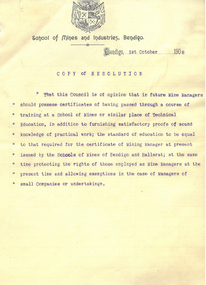
... sides asking for a reference * Letterhead of Fraser & Chalmers Ltd, Manufacturersw of mining machinery, steam engines, boilers and machinery for systematic milling, smelting and concentration of ores, signed by W.R. Caithness * Letterhead of the Board of Examiners for Engine-Drivers, signed by R. Birrell * Letter concerning outstanding amount due to theBallarat East School of Design, signed by Edward Reid, Manager * Letterhead of the Ballarat Public Library concerning an outstanding amount in the School of Design Account. * Letterhead of the A. Gallenkamp and Co. regarding their new catalogue * Letterhead from the Creswick Advertiser, Albert Street, Creswick * Handwritten letter from John...sides asking for a reference * Letterhead of Fraser & Chalmers Ltd, Manufacturersw of mining machinery, steam engines, boilers and machinery for systematic milling, smelting and concentration of ores, signed by W.R. Caithness * Letterhead of the Board of Examiners for Engine-Drivers, signed by R. Birrell * Letter concerning outstanding amount due to theBallarat East School of Design, signed by Edward Reid, Manager * Letterhead of the Ballarat Public Library concerning an outstanding amount in the School of Design Account. * Letterhead of the A. Gallenkamp and Co. regarding their new catalogue * Letterhead from the Creswick Advertiser, Albert Street, Creswick * Handwritten letter from John ...October inwards correspondence for the Ballarat School of Mines. * School of Mines and Industries, Bendigo (certification of Mine Managers) * Telegram - examination papers * Commonwealth telegram - Ballarat School of Mines battery availability for crushing ten tons. * Letterhead from the Roneo Co., Melbourne * J. Donald of Wallace St, Toorak * Letterhead from York Chambers, 49 Queen Street, Melbourne - signed J. Kaufmann * Letterhead from Cochran & Co - re Cocnran boilers * Letterhead of Thames School of Mines, New Zealand * Letter re James Chambers missing school from his father James Chambers Snr of Talbot * Education Department Circular * letter signed by F.W. Calaby * F.W. Silberberg & Co re crucibles * Letterhead of New Black Horse Mining Company - signed E. Howell * Australasian Institute of Mining Engineers, 57-59 Swanston Street, Melbourne - signed D.L. Stirling * Letterhead of John F. Paterson * Letterhead of the Welcome Stranger Dredging Company, Dunolly - W.J. Parker manager * Letterhead of Nevett and Nevett Barristers and Solicitors, Lydiard Street, Ballaarat * John Barker, H. Barbour * Telegram re Brearley Lyndhurst * Letterhead of the Commonwealth Minerals Co - John F. Paterson, Legal Manager * Query re courses at the Ballarat School of Mines - A. O'Mara * Stone to be crushed, Egerton from J.H. Davidson * Letterhead from 'Terascoa' Port Kembla signed by W.S. Macartney * Letter from Thomas Williams * Letterhead from Australian Institute of Mining Engineers regarding excursion to Toongabbie and Walhalla - Signed D.L. Stirling * Assay from George Brearley of Lyndhurst via Scottsdale * Letterhead of Berry United Deep Leads Limited, Ulina * Embossed leather classes for coachwork from S. Mee of Clunes * The Lord Nelson North Gold Mning Company No Liability signed by Edward H. Shackell * Correspondence from May Consolidated Gold Mining Company, Transvaal signed by Jason Hawthorne * Letterhead of the Northern Assurance Company, 448 Collins St, Melbourne * Letter fom James Lidgett of "Braelands" Myrniong * Gordon sides asking for a reference * Letterhead of Fraser & Chalmers Ltd, Manufacturersw of mining machinery, steam engines, boilers and machinery for systematic milling, smelting and concentration of ores, signed by W.R. Caithness * Letterhead of the Board of Examiners for Engine-Drivers, signed by R. Birrell * Letter concerning outstanding amount due to theBallarat East School of Design, signed by Edward Reid, Manager * Letterhead of the Ballarat Public Library concerning an outstanding amount in the School of Design Account. * Letterhead of the A. Gallenkamp and Co. regarding their new catalogue * Letterhead from the Creswick Advertiser, Albert Street, Creswick * Handwritten letter from John Brittain inviting Ballarat School of Mines students to join him at the telescope weather permitting * Letterhead of Victorian Railways, signed by E.B. Jones * Letterhead of the Ballarat East Town Clerk's Office * Letterhead of Elliott, Maclean and Co. Handwritten letter re Dressmaking from J.H. Wrightrand, south africa, kalgoorlie, school of mines and industries, bendigo, certification of mine managers, bendigo school of mines, telegram, ballarat school of mines battery, roneo co., melbourne, j. donald, york chambers, cochran & co, thames school of mines, new zealand, james chamberseducation department circular, f.w. calaby, * f.w. silberberg & co, crucibles, new black horse mining company, e. howell, * australasian institute of mining engineers, john f. paterson, welcome stranger dredging company, dunolly, w.j. parker, nevett and nevett, john barker, h. barbour, brearley lyndhurst, commonwealth minerals co, a. o'mara, j.h. davidson, 'terascoa' port kembla, w.s. macartney, thomas williams, australasian institute of mining engineers, excursion, toongabbie, walhalla, d.l. stirling, george brearley, lyndhurst via scottsdale, berry united deep leads limited, ulina, embossed leather classes for coachwork, s. mee, clunes, the lord nelson north gold mning company no liability, edward h. shackell, may consolidated gold mining company, transvaal, jason hawthorne, northern assurance company, james lidgett, "braelands" myrniong, gordon sides, fraser & chalmers ltd, mining machinery, w.r. caithness, examiners, ballarat east school of design, edward reid, ballarat public library, school of design, a. gallenkamp and co., creswick advertiser, john brittain, telescope, victorian railways, e.b. jones, ballarat east town clerk's office, elliott, maclean and co., dressmaking, j.h. wright, ausimm, berry united, school of mines and industries bendigo, lyndhurst tasmania, may consolidated gold co germiston transvaal, transvaal, germiston, roneo, thames school of mines, schools of mines, welcome stranger dredging co, cowley copper development syndicate ltd, department of mines, maryborough school, pharmacy board of victoria, tongalla survey camp, ballarat fine art gallery association, central microscopical -
 Federation University Historical Collection
Booklet, Ballarat School of MInes Certificate Book, 1911-1912, 1911-1912
... John Worthington Ernest H. Fraser Metallurgy George W. Cornell Thomas R. Williams Mt Morgan Jubilee Hill E. MOrshead Engineering Drawing Norman Buley P.E. Marmion Loyal H. Finch Engineering Draughtsman Elsie Lewis Dressmaking Dresscutting Harold H. Bieske Chemistry Mineralogy Leslie James Middleton F.V. Retallack A.G. Campbell Mining ENgineering Leslie J. COulter W. Baragwanth Geology W. Moon W.J. Sayer John F. Foster J.H. Thomas Algebra Geometry Electrical Technology Francis C. Hall Chemistry Dynamics and Heat Applied mechanics Vincent M. Booth Turning and Fitting fitting and turning Steam and Gas ENgines H.I.W. Dixon Colin C. Corrie F.V. Retallack R.A.J. Roberts V.E. Mellington J. Sides ...A Certificate stubb book, the stub recording when a Ballarat School of MInes certificate was collected, and the right hand section signed by the person who picked it up. g.o. ramsay, assaying, mining engineering, reginald a. roberts, virgil tucker, thomas sim, fitter and machinist, john worthington, ernest h. fraser, metallurgy, george w. cornell, thomas r. williams, mt morgan, jubilee hill, e. morshead, engineering drawing, norman buley, p.e. marmion, loyal h. finch, engineering draughtsman, elsie lewis, dressmaking, dresscutting, harold h. bieske, chemistry, mineralogy, leslie james middleton, f.v. retallack, a.g. campbell, mining engineering, leslie j. coulter, w. baragwanth, geology, w. moon, w.j. sayer, john f. foster, j.h. thomas, algebra, geometry, electrical technology, francis c. hall, chemistry, dynamics and heat, applied mechanics, vincent m. booth, turning and fitting, fitting and turning, steam and gas engines, h.i.w. dixon, colin c. corrie, f.v. retallack, r.a.j. roberts, v.e. mellington, j. sides, trigonometry, h.j. whittingham, w.h hull, milton williamson, a.c. stanger-leathes, w.j. mckenzie, e.s. anderson, richard g. walker, h.g. cornell, r.h. achison, s.h. mayo, allan o'meara, r.m. serjeant (jnr), j.h. thomas, l.h. finch, leslie j. middleton, virgil tucker, h.e. hawkesworth, r. ingram moore, reginald e. callister, rudolph bieske, j.f. roy, william geldard, w. richardson, l. trahar, albert j, robin, tongala, mine surveying, land surveying, john l. sampson, edgar c. hurdsfield, george e. stephenson, sherbourne hal. sheppard, oliver w. williams, e. mowbray boyer, first aid to the injured, lilliam nankervis, alan j. perry, albert e. coates, r. hamlyn, r. ironbridge, s.e. ellsworth, j.m. matthews, ross ironbridge, sarag e. ellsworth, frncis r. mcgregor, f.g. middleton, dora furness, v. matthews, george farmer, d. owen, ethel m. woolcock, r.j. walker, port pirrir, n. buley, electricity and magnetism, l.s. anderson, aubret simmons, william f. williamson, robert n. allan, jack blackie, nelson h. ferguson, ronald ferguson, w. mckenzie, david w. bonar, harry j. myles, charters towers, howard hall, r.a. roberts, william baragwanath, guy o. ramsay, harold bieske, leslie coulter, john foster, francis hall, vincent booth, colin corrie, milton wiliamson, albert coates, francis r. mcgregor, ethel woolcock, aubrey simmons, ronald j. ferguson -
Federation University Historical Collection
Booklet, Ballarat School of Mines Student's Magazine, Third Term, 1907, 1907
... Table of contents: Editorial, Our helpful servants, Tuberculosis, Retimbering main hauling shaft, Ferro concrete, Notes on incandescent lamps, Sporting notes, Hints on prospecting, Geometrical boarding, Abstract from chemical journals, Past students, Gain in power and economy by condensing operations, News and notes, Correspondence, Balance sheet, Editorial notices. ballarat school of mines students' magazine james t. mitchell sherb. h. sheppard a. d. gilchrist j. h. chambers w. h. shoebridge w. b. maine j. h. osborne e. mclachlan harold r. emsley francis herring w. geldard c. c. ross h. j. whittington a. c. morrison e. w. heighway h. brook w. kingston francis greene w. e. figgis h. hoylton w. r. thomas basil sawyer c. w. nash a. crittenden s. h. shephard j. blayne t. lennon h. f. owen j. sutherland h. nevett r. c. stewart a. smith c. whyte m. j. dobie r. d. nevett rupert king, j. m. currie w. b. blythe f. a. marriott f. brinsden l. d. cameron john sutherland f. a. moss g. c. klug c. m. harris n. stuckey w. white gerald young karl moore r. e. avery mel. gray j. milbin horace giles w. brokenshire a. s. coyte a. a. booth r. g. todd g. sides j. grieve jack wallace sydney burdekin arthur nevett w. h. callister Gray coloured booklet of 24 pages. ...Table of contents: Editorial, Our helpful servants, Tuberculosis, Retimbering main hauling shaft, Ferro concrete, Notes on incandescent lamps, Sporting notes, Hints on prospecting, Geometrical boarding, Abstract from chemical journals, Past students, Gain in power and economy by condensing operations, News and notes, Correspondence, Balance sheet, Editorial notices.Gray coloured booklet of 24 pages. ballarat school of mines, students' magazine, james t. mitchell, sherb. h. sheppard, a. d. gilchrist, j. h. chambers, w. h. shoebridge, w. b. maine, j. h. osborne, e. mclachlan, harold r. emsley, francis herring, w. geldard, c. c. ross, h. j. whittington, a. c. morrison, e. w. heighway, h. brook, w. kingston, francis greene, w. e. figgis, h. hoylton, w. r. thomas, basil sawyer, c. w. nash, a. crittenden, s. h. shephard, j. blayne, t. lennon, h. f. owen, j. sutherland, h. nevett, r. c. stewart, a. smith, c. whyte, m. j. dobie, r. d. nevett, rupert king,, j. m. currie, w. b. blythe, f. a. marriott, f. brinsden, l. d. cameron, john sutherland, f. a. moss, g. c. klug, c. m. harris, n. stuckey, w. white, gerald young, karl moore, r. e. avery, mel. gray, j. milbin, horace giles, w. brokenshire, a. s. coyte, a. a. booth, r. g. todd, g. sides, j. grieve, jack wallace, sydney burdekin, arthur nevett, w. h. callister -
Federation University Historical Collection
Booklet, Ballarat School of Mines, Student Magazine, First Term, 1909, 1909
... Table of Contents: Editorial, The Graduate's Problem, An Interesting Nevada Cyanide Plant, To the Students', Easter Geological Camp, New Methods for the Volumetric Estimation of Lead, New Students', Obituary, Answers to Correspondents, Mount Morgan Mine, Tin Dredging at Tingha, N.S.W., History Repeats Itself, Proverbs Modernised, Notes on the Iodide Estimation of Copper, Students' Association Rules, Sports and Pastimes, A Scientific Wooing, Past Students, Old Boys, News and Notes, Editorial Notes. ballarat school of mines students' magazine w. e. figgis t. sim a. campbell reginald callister s. leathes v. tucker mitchell c. corrie l. middleton w. geldard whittington professor smith a. c. hesselmann w. t. sawyer leslie coulter sutherland william baragwanath v. millington v. booth f. retallick r. roberts h. caulfield a. kisler e. henry h. jordon o. cornell f. fricke j. lacey j. f. phillips obituary william charles kernot william j. lamb robert b. lamb oliver jaeger david w. bonar james w. hawthorne francis solly richard e. cowles percy r. osborne john adam george e. sander walter white j. r. booth frank green william e. figgis harry r. kofoed d'oliveyra b. h. bennetts r. e. cowles, w. b. tucker g. evans e. heighway f. h. inglis o. w. williams r. ingram-moore g. h. davenport d. cameron arthur elton tandy l. c. courbould h. bieske w. kingston w. g. sides t. lennon h. valentine h. hall h. wilkins g. h. reid Peach coloured booklet of 24 pages. ...Table of Contents: Editorial, The Graduate's Problem, An Interesting Nevada Cyanide Plant, To the Students', Easter Geological Camp, New Methods for the Volumetric Estimation of Lead, New Students', Obituary, Answers to Correspondents, Mount Morgan Mine, Tin Dredging at Tingha, N.S.W., History Repeats Itself, Proverbs Modernised, Notes on the Iodide Estimation of Copper, Students' Association Rules, Sports and Pastimes, A Scientific Wooing, Past Students, Old Boys, News and Notes, Editorial Notes. Peach coloured booklet of 24 pages.ballarat school of mines, students' magazine, w. e. figgis, t. sim, a. campbell, reginald callister, s. leathes, v. tucker, mitchell, c. corrie, l. middleton, w. geldard, whittington, professor smith, a. c. hesselmann, w. t. sawyer, leslie coulter, sutherland, william baragwanath, v. millington, v. booth, f. retallick, r. roberts, h. caulfield, a. kisler, e. henry, h. jordon, o. cornell, f. fricke, j. lacey, j. f. phillips, obituary, william charles kernot, william j. lamb, robert b. lamb, oliver jaeger, david w. bonar, james w. hawthorne, francis solly, richard e. cowles, percy r. osborne, john adam, george e. sander, walter white, j. r. booth, frank green, william e. figgis, harry r. kofoed, d'oliveyra, b. h. bennetts, r. e. cowles,, w. b. tucker, g. evans, e. heighway, f. h. inglis, o. w. williams, r. ingram-moore, g. h. davenport, d. cameron, arthur elton tandy, l. c. courbould, h. bieske, w. kingston, w. g. sides, t. lennon, h. valentine, h. hall, h. wilkins, g. h. reid -
 Flagstaff Hill Maritime Museum and Village
Domestic object - Spoon, William Page & Co, Circa 1853-1878
... Items that come from several wrecks have since been donated to the Flagstaff Hill Maritime Village’s museum collection by his family, illustrating this item’s level of historical value. flagstaff hill maritime museum maritime museum shipwreck coast flagstaff hill maritime village great ocean road shipwreck artefact john chance loch ard cutlery flatware silverware tableware eating utensils dining spoon electroplated cutlery william page & co william page & co. ltd. birmingham plate silversmith antique vintage fiddle design fiddle pattern teaspoon Embossed Maker Marks - ‘W P’, within raised diamond outline, within sunken crown - ‘Cross above Triangle’ symbol within sunken oval - ‘Maltese Cross’ symbol within sunken, six-sided shape - ‘crab-like’ symbol within sunken oval - ‘R D’ within sunken diamond Spoon; teaspoon, electroplate nickel-silver, discoloured to green and red-brown in places. ...This spoon, made by William Page & Co., is electroplated nickel-silver and was recovered during the late 1960s to early 1970s from an unnamed shipwreck along the coast of Victoria. The shipwrecks in the area range from around the 1840s to the early 1930s. The spoon is part of the John Chance Collection. This spoon is likely to have been recovered be from the wreck of the Loch Ard (1873-1878) as other cutlery in the Flagstaff Hill’s Shipwreck Collection made by William Page was also recovered from the Loch Ard. The ship’s Manifest included a large quantity of cutlery. Also, other objects in the John Chance Collection were also recovered from wreck of the Loch Ard. In the mid-1800s electroplated cutlery became a popular substitute for the traditional but more costly sterling silver pieces. The ‘new’ cutlery was made from a more common base metal, such as nickel or a nickel alloy, then electroplated (coated) with a very thin layer of silver. The eating utensils looked like the expensive, pure silver version but eventually, through use and wear, the base metal would show. Some producers warranted their electroplated silver to be ‘white throughout’. WILLIAM PAGE & CO., BIRMINGHAM, ENGLAND - Although the electroplated cutlery of William Page & Co. was made in Birmingham, it does not include the embossed Birmingham Assay’s mark of an ‘anchor’ because the metal used for the spoons is not silver. William Page used various Maker’s Marks on his cutlery. The pattern of five embossed marks on this spoon is a typical example, with the embossed sunken crown containing ‘W P’ being the first in the column of symbols. - ‘W P’, within raised diamond outline, within sunken crown - ‘Cross above Triangle’ symbol within sunken oval - ‘Maltese Cross’ symbol within sunken, six-sided shape - ‘crab-like’ symbol within sunken oval - ‘R D’ within sunken diamond William Page established his business in 1834, according to the text around a printed Trademark. The firm William Page & Co. began electroplating in 1855, and from 1880 it operated from Cranemore Street, Cattle’s Grove and also at 55 Albion St, Birmingham. The firm registered a new Trademark [‘W P’ within a diamond boarder within a sunken diamond] in 1897; previously the Mark were the initials WP within a crown, but the British legislation prohibited the use of a ‘crown’ mark on electroplated ware in 1895. In 1936 the firm became William Page & Co. Ltd and became a supplier of spoons to the British Government in 1938, marking its products with the ‘broad arrow’ symbol. The firm also traded with the brand names Armour, Asrista, Bolivian Silver, Roman Silver, Roumanian Silver, Silverite and Trevor Plate. Although this spoon is not linked to a particular shipwreck, it is very likely to have come from the wreck of the Loch Ard; the ship’s Manifest includes a large quantity of cutlery. Regardless, it is recognised as being historically significant as an example of cutlery carried onboard a ship as either personal belongings or cargo and brought into Colonial Victoria in the 19th to early 20th century; through this we have added opportunity to interpret Victoria’s social and historical themes of those times. The spoon also has significance for its connection with many similar William Page pieces of cutlery in our collection that were recovered from the wreck of the sailing ship Loch Ard (1873-1878). William Page & Co. of Birmingham is one of the renowned 19th century manufacturers and electroplaters and was supplier of spoons to the British Government in 1938. The spoon has added significance, as it was recovered by John Chance, a diver of wrecks, including the Loch Ard, in Victoria’s coastal waters in the late 1960s to early 1970s. Items that come from several wrecks have since been donated to the Flagstaff Hill Maritime Village’s museum collection by his family, illustrating this item’s level of historical value.Spoon; teaspoon, electroplate nickel-silver, discoloured to green and red-brown in places. Fiddle design. Bowl has indents and holes. Five embossed Maker’s Marks on back of handle, arranged in a column from tip towards bowl. Made by William Page and Co., Birmingham. The spoon no longer has its silver plating. The surface has encrustations. Bowl has nicks, indents and holes. Stem is very bent at the shoulder. Discoloured to green and red-brown in places. Embossed Maker Marks - ‘W P’, within raised diamond outline, within sunken crown - ‘Cross above Triangle’ symbol within sunken oval - ‘Maltese Cross’ symbol within sunken, six-sided shape - ‘crab-like’ symbol within sunken oval - ‘R D’ within sunken diamondflagstaff hill maritime museum, maritime museum, shipwreck coast, flagstaff hill maritime village, great ocean road, shipwreck artefact, john chance, loch ard, cutlery, flatware, silverware, tableware, eating utensils, dining, spoon, electroplated cutlery, william page & co, william page & co. ltd., birmingham plate, silversmith, antique, vintage, fiddle design, fiddle pattern, teaspoon -
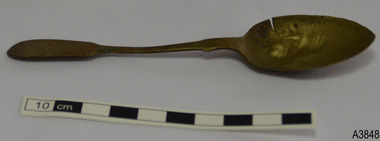 Flagstaff Hill Maritime Museum and Village
Domestic object - Spoon, William Page & Co, Circa 1853-1878
... Items that come from several wrecks have since been donated to the Flagstaff Hill Maritime Village’s museum collection by his family, illustrating this item’s level of historical value. flagstaff hill maritime museum maritime museum shipwreck coast flagstaff hill maritime village great ocean road shipwreck artefact john chance loch ard cutlery flatware silverware tableware eating utensils dining spoon electroplated cutlery william page & co william page & co. ltd. birmingham plate silversmith antique vintage fiddle design fiddle pattern teaspoon Embossed Maker Marks - ‘W P’, within raised diamond outline, within sunken crown - ‘Cross above Triangle’ symbol within sunken oval - ‘Maltese Cross’ symbol within sunken, six-sided shape - ‘crab-like’ symbol within sunken oval - ‘R D’ within sunken diamond Spoon; teaspoon, electroplate nickel-silver, silver discoloured to brown. ...This spoon, made by William Page & Co., is electroplated nickel-silver and was recovered during the late 1960s to early 1970s from an unnamed shipwreck along the coast of Victoria. The shipwrecks in the area range from around the 1840s to the early 1930s. The spoon is part of the John Chance Collection. This spoon is likely to have been recovered be from the wreck of the Loch Ard (1873-1878) as other cutlery in the Flagstaff Hill’s Shipwreck Collection made by William Page was also recovered from the Loch Ard. The ship’s Manifest included a large quantity of cutlery. Also, other objects in the John Chance Collection were also recovered from wreck of the Loch Ard. In the mid-1800s electroplated cutlery became a popular substitute for the traditional but more costly sterling silver pieces. The ‘new’ cutlery was made from a more common base metal, such as nickel or a nickel alloy, then electroplated (coated) with a very thin layer of silver. The eating utensils looked like the expensive, pure silver version but eventually, through use and wear, the base metal would show. Some producers warranted their electroplated silver to be ‘white throughout’. WILLIAM PAGE & CO., BIRMINGHAM, ENGLAND - Although the electroplated cutlery of William Page & Co. was made in Birmingham, it does not include the embossed Birmingham Assay’s mark of an ‘anchor’ because the metal used for the spoons is not silver. William Page used various Maker’s Marks on his cutlery. The pattern of five embossed marks on this spoon is a typical example, with the embossed sunken crown containing ‘W P’ being the first in the column of symbols. - ‘W P’, within raised diamond outline, within sunken crown - ‘Cross above Triangle’ symbol within sunken oval - ‘Maltese Cross’ symbol within sunken, six-sided shape - ‘crab-like’ symbol within sunken oval - ‘R D’ within sunken diamond William Page established his business in 1834, according to the text around a printed Trademark. The firm William Page & Co. began electroplating in 1855, and from 1880 it operated from Cranemore Street, Cattle’s Grove and also at 55 Albion St, Birmingham. The firm registered a new Trademark [‘W P’ within a diamond boarder within a sunken diamond] in 1897; previously the Mark were the initials WP within a crown, but the British legislation prohibited the use of a ‘crown’ mark on electroplated ware in 1895. In 1936 the firm became William Page & Co. Ltd and became a supplier of spoons to the British Government in 1938, marking its products with the ‘broad arrow’ symbol. The firm also traded with the brand names Armour, Asrista, Bolivian Silver, Roman Silver, Roumanian Silver, Silverite and Trevor Plate. Although this spoon is not linked to a particular shipwreck, it is very likely to have come from the wreck of the Loch Ard; the ship’s Manifest includes a large quantity of cutlery. Regardless, it is recognised as being historically significant as an example of cutlery carried onboard a ship as either personal belongings or cargo and brought into Colonial Victoria in the 19th to early 20th century; through this we have added opportunity to interpret Victoria’s social and historical themes of those times. The spoon also has significance for its connection with many similar William Page pieces of cutlery in our collection that were recovered from the wreck of the sailing ship Loch Ard (1873-1878). William Page & Co. of Birmingham is one of the renowned 19th century manufacturers and electroplaters and was supplier of spoons to the British Government in 1938. The spoon has added significance, as it was recovered by John Chance, a diver of wrecks, including the Loch Ard, in Victoria’s coastal waters in the late 1960s to early 1970s. Items that come from several wrecks have since been donated to the Flagstaff Hill Maritime Village’s museum collection by his family, illustrating this item’s level of historical value.Spoon; teaspoon, electroplate nickel-silver, silver discoloured to brown. Fiddle design. Five embossed Hallmarks. Five embossed Maker’s Marks on back of handle, arranged in a column from tip towards bowl. Made by William Page and Co., Birmingham. The spoon no longer has its silver plating. Bowl has a cut in the side, and is nicked and dented. Embossed Maker Marks - ‘W P’, within raised diamond outline, within sunken crown - ‘Cross above Triangle’ symbol within sunken oval - ‘Maltese Cross’ symbol within sunken, six-sided shape - ‘crab-like’ symbol within sunken oval - ‘R D’ within sunken diamondflagstaff hill maritime museum, maritime museum, shipwreck coast, flagstaff hill maritime village, great ocean road, shipwreck artefact, john chance, loch ard, cutlery, flatware, silverware, tableware, eating utensils, dining, spoon, electroplated cutlery, william page & co, william page & co. ltd., birmingham plate, silversmith, antique, vintage, fiddle design, fiddle pattern, teaspoon -
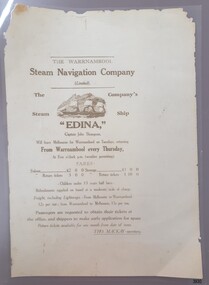 Flagstaff Hill Maritime Museum and Village
Document - Poster, Warrnambool Steam Navigation Co, ca.1938
... The Edina is listed on the Victorian Heritage Database VHR S199. warrnambool shipwreck coast flagstaff hill flagstaff hill maritime museum maritime museum fair maid of judea steam navigation pleasure steamer ss Edina a trade 19th century travel 19th century Warrnambool to Melbourne Warrnambool to Geelong Warrnambool to Port Fairy Warrnambool to Portland screw steamer coastal trader Crimean war American civil war gold export h r h duke of Edinburgh Warrnambool steam packet company stephen henty captain john Thompson chief engineer John Davies lady bay lighter Edina port phillip bay steamers vhr s199 dinah warrnambool steam navigation company advertising poster shipping agent flier Maritime Village Flagstaff Hill Maritime Museum & Village Great Ocean Road block printing woodblock printing relief printing Moorabool St Wharf western steam navigation company Tho. Mackay re-created poster Printed image [side ...This poster is typical of posters displayed by steam packet companies of the mid-19th to early 20th centuries. It advertises the passage and freight available on a local coastal trader. The steamships operated between the major ports along the western coast of Victoria between Melbourne and Portland. The traveller was not guaranteed the passage times due to possible weather changes. Discounts were offered for return trips within a month of the ticket's issue. The price of freight included 'lighterage', which was the service of a smaller vessel called a 'lighter' expressly designed to transport goods between ship and shore. This particular poster has been recreated; it advertises the services of the screw steamer SS Edina. The information on the poster applies to the years between 1871 and 1873. During that period the Master of the Edina was Captain John Thompson, the Edina was owned by the Warrnambool Steam Navigation Company and the secretary of the firm was Thos. Mackay. The passenger fares are in line with fares from that period, as seen in a display advertisement published in the Hamilton Spectator on January 17th, 1872. The 1853 Glasgow-built Screw Ship Edina had a long life. The ship served in both the Crimean War and the American Civil War. The Edina also traded in UK and European waters. The Henty family of Portland, Victoria, purchased Edina in 1863 for use as a coastal trader. The Edina had several owners and spent many years of service along the South West Coast of Victoria between Melbourne and Portland. The vessel transported passengers and freight in Port Phillip Bay, between Melbourne and Geelong, between 1880 and 1938. After 84 years of service, the Edina was renamed ‘Dinah’ and was stripped down for use as a lighter. The vessel was broken up in 1957 at Footscray, Melbourne. The remains of Edina’s hull can be found in the Maribyrnong River, Port Phillip Bay. The poster was owned by the donor's grandfather, Bruce Duff (1922-2003) who was an avid sailor and a lover of nautical history. He and his wife Mona (1924-2014) were buried in Portarlington Cemetery, Victoria. Duff would have been about 13 years old when the Edina was finally retired from service in 1938. His interest in the Edina could have come from a trip on the vessel or from watching it in operation in the ports along the coast. Duff has collected this poster as a memento of the Edina and is likely to have preserved it at a much later date when the lamination process was readily available. [Flagstaff Hill's collection includes a photograph of the Edina at the Moorabool Street Wharf, Geelong, which was in Duff's locality. The References for this poster include a link to Museum Victoria's photograph of two boys watching the Edina from a jetty.] Flagstaff Hill's Village has its own 'Examiner' Office where volunteers demonstrate the historic printing press in that building. They use original letter-type to create posters, print labels onto lolly bags and designs on fabrics. One of the volunteer printers has produced a poster closely resembling the donated poster. His replication includes a woodcut of the ship, which he skilfully crafted himself.This poster advertises the sailing of the steamer SS Edina and the information has local and State significance for its association with the trading ports of the Edina, and the associated names on the poster; Warrnambool Steam Navigation Company, Captain John Thompson and Thos. Mackay. This poster's message has a strong connection to the history of the businesses and community of Warrnambool and the people of Port Phillip Bay, where it was a passenger ferry for many years. The poster is an example of advertising used by shipping agents in the mid-19th to early 20th centuries. Its information includes the accurate costs to passengers and freighters and the type of timetable the vessels were likely to follow. The poster's connection with the Screw Steamship Edina is historically significant, as the vessel was the longest serving screw steamer in the world. The ship spent its first nine years overseas then arrived in Melbourne. The vessel's work included running the essential service of transporting cargo and passengers between Melbourne and the western Victoria ports of Warrnambool, Port Fairy and Portland. The Edina is listed on the Victorian Heritage Database VHR S199. Poster, A3 size, brown text on cream paper, laminated. Re-created poster of the Warrnambool Steam Navigation Company (Limited) advertising passage and freight on its Screw Steamship, SS Edina. It states days, times and fees for passage and freight from Warrnambool to Melbourne, and return. It names the ship's Master, Captain John Thompson and the Company's Secretary, Tho. Mackay. It displays a line drawing of a 3-masted ship with full sails.Printed image [side profile of a 3 masted vessel, bow facing left] Printed text includes "The Warrnambool Steam Navigation Company (Limited). The Company's Steam Ship "EDINA", Captain John Thompson, Will leave Melbourne for Warrnambool on Tuesdays, returning from Warrnambool every Thursday, At Five o'clock p.m. (weather permitting). FARES: Saloon £2 0 0 Steerage £1 0 0 Saloon return £3 0 0 Saloon return £1 10 00 - Children under 13 years half fares - Refreshments supplied onboard at a moderate scale of charge. Freight, including lighterage, - From Melbourne to Warrnambool - 12s per ton; from Warrnambool to Melbourne, 15s per ton. Passengers are requested to obtain their tickets at the offers, and shippers to make early application for space. Return tickets available for one month from date of issue. - THO. MACKAY, secretary. "warrnambool, shipwreck coast, flagstaff hill, flagstaff hill maritime museum, maritime museum, fair maid of judea, steam navigation, pleasure steamer, ss edina a, trade 19th century, travel 19th century, warrnambool to melbourne, warrnambool to geelong, warrnambool to port fairy, warrnambool to portland, screw steamer, coastal trader, crimean war, american civil war, gold export, h r h duke of edinburgh, warrnambool steam packet company, stephen henty, captain john thompson, chief engineer john davies, lady bay, lighter edina, port phillip bay steamers, vhr s199, dinah, warrnambool steam navigation company, advertising poster, shipping agent, flier, maritime village, flagstaff hill maritime museum & village, great ocean road, block printing, woodblock printing, relief printing, moorabool st wharf, western steam navigation company, tho. mackay, re-created poster -
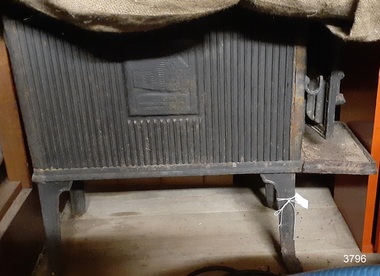 Flagstaff Hill Maritime Museum and Village
Domestic object - Wood Stove, circa 1880-1920
... side. Her cargo included Guano, Barley, Wool, Horses, Cattle, Timber, Explosives, Potatoes, Shell Gritt and Gypsum. On April 9th 1931Reginald M weathered a large storm in St Vincent Gulf, SA. The vessel suffered great damage; mast snapped and the crew laboured for four hours to free it by chopping off the past and rigging. The crew patched iit up and slowly returned to Port Adelaide with only a portion of the insured cargo being damaged. Her crew members at the time were owner Mr John H Murch of Wells Street Largs Bay, Skipper Mr R...side. Her cargo included Guano, Barley, Wool, Horses, Cattle, Timber, Explosives, Potatoes, Shell Gritt and Gypsum. On April 9th 1931Reginald M weathered a large storm in St Vincent Gulf, SA. The vessel suffered great damage; mast snapped and the crew laboured for four hours to free it by chopping off the past and rigging. The crew patched iit up and slowly returned to Port Adelaide with only a portion of the insured cargo being damaged. Her crew members at the time were owner Mr John H Murch of Wells Street Largs Bay, Skipper Mr R ...Stoves of this design are used for heating domestic places and were available in many designs and shapes. They commonly used wood as fuel. They were used for both heating and cooking. This stove was part of the original furnishings of the 1922 vessel 'Reginald M', a South Australian coastal trader. The two-masted coastal ketch was built from material and fittings obtained from salvage yards by Mr Jack (John) Murch of Birkenhead, Port of Adelaide, South Australia. Its construction took approximately six months. It was launched at Largs Bay in 1922. ‘REGINALD M’ 1922 to 1975- The vessel “Reginald M” was a two-masted coastal ketch, owned and built by Mr. Jack (John) Murch of Birkenhead, Port of Adelaide, South Australia. Its construction took approximately 6 months, and it launched at Largs Bay in 1922. The Reginald M’s purpose was to serve the coastal trade of South Australia, to carry cargo cheaply and efficiently. Some have said that the keel was in fact hewn from two telegraph poles! Its builder frequented all the salvage yards for materials and fittings. Reginald M had a very shallow draft and a flat bottom that enabled it to come close to shore and to sit high and dry at low tide or to be beached on sand. The flat bottom was also to make the ship able to skim over reefs. Wagons could load and unload direct from its side. Her cargo included Guano, Barley, Wool, Horses, Cattle, Timber, Explosives, Potatoes, Shell Gritt and Gypsum. On April 9th 1931Reginald M weathered a large storm in St Vincent Gulf, SA. The vessel suffered great damage; mast snapped and the crew laboured for four hours to free it by chopping off the past and rigging. The crew patched iit up and slowly returned to Port Adelaide with only a portion of the insured cargo being damaged. Her crew members at the time were owner Mr John H Murch of Wells Street Largs Bay, Skipper Mr R Murch – John’s brother, Murray – son of Captain Murch and Seaman John Smith. Reg Webb purchased Carribie Station, at Marion in the Warooka District, south of Adelaide, in 1921. He cleared the land and farmed sheep and grain. In 1923 he shipped his own wool and grain from Marion Bay, having first carted 300 bags of the barley grain, 12 bags at a time, along the unmade track to the jetty. A photograph donated to Flagstaff Hill, dating about 1929 - 1942, shows two men on the Reginald M, holding between them their fishing catch of a large hammer shark. The photograph is stamped “GRENFELL STUDIO PORT LINCOLN PRINT” and titled “hammer shark caught on Reginald Emm”. The donor’s family lived on the Your Peninsular and despatched their grain from a chute at Gleeson’s Landing to the awaiting transport vessel. Reg knew the Murch Brothers from Port Adelaide. The brothers had been using their ketch Reginald M to ship Guano from the Islands, led by Captain Richard Murch. Reg approached them in 1934 about shipping grain from Marion Bay. The brothers visited the bay and thought it was an ideal place. They showed Reg where to stack his grain, and they measured up the cliffs. When Reg was ready, they brought down and installed a ninety-foot wooden chute. The bags of grain individually pushed down the chute, landing in a waiting small boat then rowed to Reginald M, 14 bags at a time. After 10 hours Reginald M would have a load of 1300 bags of grain to ship to waiting ports. At one time a wild storm destroyed the chute, so they built a stronger replacement chute. Reginald M engaged in the shipping of grain from there until 1938. In 1940 Able Seaman Allan H Lucas served on Reginald M between September and December, being engaged and discharged from Port of Adelaide. The ship’s Master, W S Murch, signed his Certificate of Discharge. It seems that at the Reginald M was used at one time as a Customs vessel, as one photograph in Flagstaff Hill’s collection shows “H.M.C. No. 3, Pt Adelaide” on the bow. In 1969 the last freight left Marion Bay on the ketch Reginald M carrying grain, wool, and explosives. In late 1970 the Mt. Lyell Mining and Railway Company bought the vessel to use as a barge to carry explosives. In 1972 the Navy League of Strahan, Tasmania, purchased it for use by the Strahan Sea Cadet Unit to use at Macquarie Harbour and renamed iit T.S. Macquarie. However, this plan for use of Reginald M did not happen. In 1974 Mr. Andrew Rennie, of East Brighton, Melbourne, bought it for a similar purpose, paying $5,000 and donating a ‘Cadet of the Year” trophy to the Sea Cadets. He sailed it from Strahan to Melbourne, planning to use it for pleasure sailing. Also, in 1975 Reginald M was bought by the Melbourne Ferry Company auction. Later in 1975 Flagstaff Hill Maritime Museum bought the Reginald M for $20,000. It became a popular exhibit in the Village’s lake. In 2006, using funds from a $4,000 government grant, restoration continued the vessel. Flagstaff Hill Maritime Village’s Collection holds other artefacts associated with Reginald M. They include - Photographs of the Reginald M, including one photograph of iit in Outer Harbour, S.A. dated 1947, with Skipper- R.F. Dale and Owner- John Murch. Another shows it docked at Port Adelaide, with the lettering H.M.C. No. 3 Pt ADEL (standing for His/Her Majesty’s Customs). There is a black and white photo of it at a wharf and another showing a person on board. - a lifebuoy, made of cork, with the inscription of “Pt Adelaide” on it. - Helm section, removed and replaced during restoration. - a bullet found in pieces of timber when Reginald M was restored in 1979 Reginald M was a much-loved exhibit at the Maritime Village, where many visitors enjoyed boarding and exploring a real ship with a long history. Sadly, in late 2016, the Reginald M was decommissioned due to the continuing prohibitive cost of maintenance and the risk to public safety. Components from the Reginald M are preserved as part of Flagstaff Hill's collection. The stove is significant as it represents the heating and cooking appliances used in the late 19th and early 20th centuries, both on board vessels as well as for domestic purposes. The stove has additional significance for its association with the vessel "Reginald M", a coastal trading ketch from South Australia built in 1922 at Largs Bay. It is one of the very few sailing coastal trading vessels built in Australia, with its flat bottom, single chine shape designed for navigating shallow water. Stove: a cast-iron, rectangular, four-legged stove with a hinged front door. This stove was part of the original furnishings of the vessel 'Reginald M', built in Adelaide in 1922. Inscription on the side. Image of a log cabin with an illegible inscription below it.flagstaff hil, warrnambool, flagstaff hill maritime museum, maritime museum, shipwreck coast, flagstaff hill maritime village, coastal trader, trading vessel, vessel reginald m, ketch, john murch ship builder, reg webb, carribie station, mt lyell copper company, queenstown navy league, andrew rennie, melbourne ferry company, r.f. dale, port adelaide vessel reginald m, macquarie training vessel, grenfell studio port lincoln, stove, domestic heating, domestic cooking, heater, cooking unit, wood fired stove, wood stove, wood-burning stove -
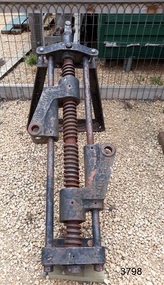 Flagstaff Hill Maritime Museum and Village
Machine - Steering Gear, Carron Ironworks foundry, before 1922
... side. Her cargo included Guano, Barley, Wool, Horses, Cattle, Timber, Explosives, Potatoes, Shell Grit and Gypsum. On April 9th 1931Reginald M weathered a large storm in St Vincent Gulf, SA. The vessel suffered much damage; mast snapped and the crew laboured for four hours to free her by chopping off the past and rigging. The crew patched her up and slowly returned to Port Adelaide with only a portion of the insured cargo being damaged. Her crew members at the time were owner Mr John H Murch of Wells Street Largs Bay, Skipper Mr R...side. Her cargo included Guano, Barley, Wool, Horses, Cattle, Timber, Explosives, Potatoes, Shell Grit and Gypsum. On April 9th 1931Reginald M weathered a large storm in St Vincent Gulf, SA. The vessel suffered much damage; mast snapped and the crew laboured for four hours to free her by chopping off the past and rigging. The crew patched her up and slowly returned to Port Adelaide with only a portion of the insured cargo being damaged. Her crew members at the time were owner Mr John H Murch of Wells Street Largs Bay, Skipper Mr R ...The ship's steering gear was used for steering and navigation of a vessel - it was a very important part of the ship's equipment. This steering gear was part of the original vessel 'Reginald M', which became part of the exhibitions at Flagstaff Hill Maritime Village. The steering gear was manufactured by the Carron Company. ABOUT THE CARRON COMPANY The Carron Company established its ironworks on the banks of the River Carron in Stirlingshire, Scotland, in 1759, and became an incorporated company in 1773. One of the notable items produced by the company was the Carronade, a short-barrelled naval cannon, being produced until the 1850s. The company was the largest ironworks in Europe during the 19th century. It supplied ammunition and armaments, steamboat engines, pig iron, cast iron goods such as balustrades fire grates and bath tugs, pillar boxes and telephone boxes, and even cast iron rings for underground tunnels. In 1982 it became insolvent and was taken over by the Franke Corporation, using the brand Carron Phoenix. ABOUT THE 'REGINALD M' The Reginald M’s purpose was to serve the coastal trade of South Australia, to carry cargo cheaply and efficiently. It is believed that the keel was in fact hewn from two telegraph poles! Its builder frequented all the salvage yards for materials and fittings. The vessel “Reginald M” was a two-masted coastal ketch, owned and built by Mr. Jack (John) Murch of Birkenhead, Port of Adelaide, South Australia. Its construction took approximately 6 months and it was launched at Largs Bay in 1922. Reginald M had a very shallow draft and a flat bottom that enabled it to come close to shore and to sit high and dry at low tide or to be beached on sand. The flat bottom was also to make the ship able to skim over reefs. Wagons could load and unload direct from her side. Her cargo included Guano, Barley, Wool, Horses, Cattle, Timber, Explosives, Potatoes, Shell Grit and Gypsum. On April 9th 1931Reginald M weathered a large storm in St Vincent Gulf, SA. The vessel suffered much damage; mast snapped and the crew laboured for four hours to free her by chopping off the past and rigging. The crew patched her up and slowly returned to Port Adelaide with only a portion of the insured cargo being damaged. Her crew members at the time were owner Mr John H Murch of Wells Street Largs Bay, Skipper Mr R Murch – John’s brother, Murray – son of Captain Murch and Seaman John Smith. Reg Webb purchased Carribie Station, at Marion in the Warooka District, south of Adelaide, in 1921. He cleared the land and farmed sheep and grain. In 1923 he shipped his own wool and grain from Marion Bay, having first carted 300 bags of the barley grain, 12 bags at a time, along the unmade track to the jetty. A photograph donated to Flagstaff Hill, dating about 1929 - 1942, shows two men on the Reginald M, holding between them their fishing catch of a large hammer shark. The photograph is stamped “GRENFELL STUDIO PORT LINCOLN PRINT” and titled “hammer shark caught on Reginald Emm”. The donor’s family lived on the Your Peninsular and despatched their grain from a chute at Gleeson’s Landing to the awaiting transport vessel. Reg knew the Murch Brothers from Port Adelaide. The brothers had been using their ketch REGINALD M to ship Guano from the Islands, led by Captain Richard Murch. Reg approached them in 1934 about shipping grain from Marion Bay. The brothers visited the bay and thought it was an ideal place. They showed Reg where to stack his grain and they measured up the cliffs. When Reg was ready, they brought down and installed a ninety foot wooden chute. The bags of grain were then individually sent down the chute, landing in a waiting small boat then rowed to REGINALD M, 14 bags at a time. After 10 hours REGINALD M would be fully loaded with 1300 bags of grain and shipped to waiting ports. At one time a wild storm destroyed the chute but it was rebuilt and strengthened. REGINALD M was involved in shipping the grain from there until 1938. In 1940 Able Seaman Allan H Lucas served on Reginald M between September and December, being engaged and discharged from Port of Adelaide. His Certificate of Discharge was signed by ship’s Master W S Murch. It seems that at some stage Reginald M was used as a Customs vessel, as one photograph in Flagstaff Hill’s collection shows “H.M.C. No. 3, Pt Adelaide” on the bow. In 1969 the last freight left Marion Bay on the ketch REGINALD M carrying grain, wool and explosives. In late 1970 she was sold to the Mt. Lyell Mining and Railway Company and was used by them as a barge to carry explosives. In 1972 the Navy League of Strahan, Tasmania, purchased her for use by the Strahan Sea Cadet Unit to use at Macquarie Harbour and renamed her T.S. Macquarie. However this plan for use of Reginald M did not come to pass. In 1974 Mr. Andrew Rennie, of East Brighton, Melbourne, bought her for a similar purpose. , paying $5,000 and donating a ‘Cadet of the Year” trophy to the Sea Cadets. He sailed her from Strahan to Melbourne, planning to use her for pleasure sailing. Also in 1975 Reginald M was sold to Melbourne Ferry Company at auction. Later in 1975 the Reginald M was bought by Flagstaff Maritime Museum for $20,000 . She has been restored and is now one of the exhibits in the Village lagoon or lake. It was restored in 2006 using funds from a $4,000 government grant. Flagstaff Hill Maritime Village’s Collection holds several other artefacts associated with Reginald M. They include photographs of the Reginald M, including one photograph of her in Outer Harbour, S.A. dated 1947, with Skipper- R.F. Dale and Owner- John Murch. Another shows her docked at Port Adelaide, with the lettering H.M.C. No. 3 Pt ADEL (standing for His/Her Majesty’s Customs). There is a black and white photo of her at a wharf and another showing a person on board.The steering gear is significant through its association with the Carron Company, the largest ironworks in Europe in the 19th century, and the manufacture of the short barrel, lightweight naval gun - the Carronade. The steering gear is significant for its association with the vessel REGINALD M is a coastal trading ketch from South Australia built in 1922. It is one of very few sailing coastal trading vessels still extant, and its flat bottom, single chine shape illustrates a very simple but robust method of construction, compared to other round bilged examples of trading vessels. She is now listed on the Australian Register of Historic Vessels (ARHV Number: HV000562.) Ship's steering gear that was part of the original vessel 'Reginald M', which was constructed in 1922. Inscription on both sides. Made by the Carron Company, UK."CARRON COMPANY"flagstaff hil, warrnambool, shipwrecked coast, flagstaff hill maritime museum, maritime museum, shipwreck coast, flagstaff hill maritime village, coastal trader, trading vessel, vessel reginald m, ketch, john murch ship builder, reg webb, carribie station, mt lyell copper company, queenstown navy league, andrew rennie, melbourne ferry company, r.f. dale, port adelaide vessel reginald m, macquarie training vessel, grenfell studio port lincoln, ship steering gear, metal steering gear, ship's gear, ship's navigation, carron company -
 Red Cliffs Military Museum
Certificate, Special Tabacco Ration for Ex-Service personnel, 1945 (estimated)
... R(unreadable) No./ Monthly Quota Selected- Cigarettes... 8oz Tabacco/ see details on other side/Nominated Retailer x Stracos..(Unreadable)..P/L/ John...R(unreadable) No./ Monthly Quota Selected- Cigarettes... 8oz Tabacco/ see details on other side/Nominated Retailer x Stracos..(Unreadable)..P/L/ John ...Part of a collection for Thomas Henry Anderson VX 34767Consummers copy of rationing certificate for tabacco to Ex-Service personnelConsumer's Copy/ National Security (Tabacco Rationing) Regulations 1942/ Specil Tabacco Ration for Ex-Service personnel/ Surname Anderson Christian Names: Thomas Henry/ Address: P.O. Red Cliffs/ Male or Female/ Service Number: VX 34767/ Identity Card No/ R(unreadable) No./ Monthly Quota Selected- Cigarettes... 8oz Tabacco/ see details on other side/Nominated Retailer x Stracos..(Unreadable)..P/L/ John..L (unreadable) & Co/ (to be filled in bt retailer)/ Quota to operate on and from ....../ National Security (Tabacco Rationing) Regulations 1942/ I declare that I am a genuine smoker, that all supplies to be/ drawn as above are for my own personal use/ and that I have no other source of supply./ ...... signature of Applicant/ c.812/9.45-c.5491/ Authorized by (faded Signature)/ Chairman, Tabacco Distribution Committee/ Place Melle Ror Date: 20 Feb 1946 (More details on back of sheet but it is glused to a board)discharge, thomas, 1942, anderson, tabacco, rationing, henry, cigarettes, regulations, nation, security -
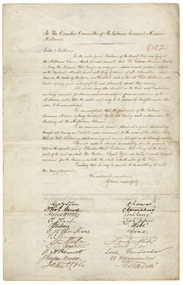 Mission to Seafarers Victoria
Letter - Petition, October November 1897
... R J Johns - ARIEL; / D Gorchem - MATADOR; / H Petersen - NESAIA;/ William J Reid - STAR of N. ZELAND [sic] ; / TJ Sohanstrom - HERMES;/ Alex Smith - SOPHOCLES; / W Y Bunn - CARMANIAN;./ William Anderson - LOCH KATRINE;/ Handwritten in red ink on the front of the parchment: "8182" NB The second digit in the number sequence appears to have been written over and could also be a "9", an "8" or a "3". paper Watermark "HERCULES". Prior to conservation and taped to the glass on the reverse side...R J Johns - ARIEL; / D Gorchem - MATADOR; / H Petersen - NESAIA;/ William J Reid - STAR of N. ZELAND [sic] ; / TJ Sohanstrom - HERMES;/ Alex Smith - SOPHOCLES; / W Y Bunn - CARMANIAN;./ William Anderson - LOCH KATRINE;/ Handwritten in red ink on the front of the parchment: "8182" NB The second digit in the number sequence appears to have been written over and could also be a "9", an "8" or a "3". paper Watermark "HERCULES". Prior to conservation and taped to the glass on the reverse side ...This document reveals the way in which Mission to Seafarers grew in response to demand. With increased shipping to Australia for all purposes, the need for the then existing Mission to grow to be conveniently located and to accommodate seafarers became increasingly evident. This document also shows the formal nature of documents and petitions in the 1890s and documents the names of twenty-two contemporaneous ships and their respective captains. The Anna, Dharwar and Mermerus arrived in port at the end of July 1897. The Carmanina arrived on the 21 October 1897. The Loch Katrine, at the end of the list, arrived on 5 November 1897. The letter was published in the Argus, 22 December 1897: "APPEAL FOR SEAMEN. TO THE EDITOR OF THE ARGUS. Sir, I beg that in the interests of the Victorian Seamen's Mission you will be kind enough to publish the appended testimony of the ship masters who for many years have been trading to this port, and therefore have had many opportunities of judging the effects of his work. The mission has much need of monetary assistance, and, should any of your numenous leaders deem it worthy of support, the committee would feel most grateful for any help that may be given in this direction. It has been the pleasure of the committee as far as possible to supply the crews of all outward bound steamers and sailing vessels with literature for their use on the voyage. My former appeals through your columns for leading matter have always been liberally responded to, and I trust that should any of our booksellers have any surplus stock of periodicals, religious and secular, illustrated or otherwise, at the end of the year, they will kindly remember the Victorian Seamen's Mission and the sailors. Private individuals also who may have stacks of literature by them, if they would kindly send some to the Seamen's Institute, Beach street, Port Melbourne, would cause the cheering of many a dark and lonely hour in the seamen's life. From 900 to 1.200 parcels have hitherto been given to the sailors and firemen annually by this mission, and we should be extremely grateful to those who would place us in a position to continue such donations in the future. Yours, &c. , E. JAMES, Chaplain to the Mission. Seamen's Institute, Beach street, Port Melbourne, Dec. 10." -------------------------------------------------- "To the Executive Committee of the Victorian Seamen's Mission, Melbourne. "Ladies and Gentleman, "We, the undersigned captains of several ships now lying at the Melbourne wharves think it most desirable that the Victorian Seamen's Mission, being the mission that has for so many years shown a most part their interest in the spiritual, moral, and social well-being of the seamen of all nationalities, shall him on the banks of the Yarra an institute such as that at Port Melbourne, where sailors of every grade could profitably and pleasantly spend their evenings. At almost every other seaport in the world such institutions are being provided for seamen, and we are satisfied from our opinion of the Melbourne public that the matter needs only to be prominently brought under their notice to be accomplished. We are confident that the good work of the mission is being hampered by its not having such a place near the shipping at the Melbourne wharves. Our crews are at present placed at a great dis advantage through not having an institute more convenient to the scene of their labours than that at Port Melbourne, which, on a very wet or a very hot, is not easily reached. If a site could be obtained immediately above the Gasworks but on the other side of Flinders street extension, that is to say, on the lower part of the land on which the Harbour Trust offices are built, it would be most convenient for the shipping on both the north and south side of the river. Trusting that it may be possible to do some thing to meet this long felt want, We suscribe ourselves, Yours respectfully, Geo.H Steven, master ship Dharwar; Thos. Curd, master ship Narcissus; James Horne, master ship Loch Garry; T.Tait, master ship Loch Ryan; T. Nilsen, master ship Hebe; G. Ch Christian, master ship Anna; R.E. Peasley, master ship Seminole; Wm. Martin, master ship Loch Ness; T.C. Martin, master ship Loch Tay; W.H. Bennett, master ship Loch Vennachar; J. Raglan Brodie, master s.s. Warrnambool; James E. Coles, master ship Mermerus; J. H. Walker, master ship Hinemoa; R.J. Johns, master ship Ariel; D. Gorchem (sic. Gerckens), master ship Matador; H. Petersen, master ship Nesaia; Wm. J. Reid, master s.s. Star of New Zealand; A. F. Svhanstrom, master ship Hermes; Alex. Smith, master ship Sophocles; W. Y. Bunn, master ship Carmanian; William Anderson, master ship Loch Katrine."This petition is historically significant as it is documentary evidence of the need for a new facility for seafarers signed and presented by the captains of 21 ships, including several of the sister ships of the Loch Ard. The need for a new facility was a result of changes in shipping and the use of the Melbourne ports in the 1890's and this document supported the pressure on the Harbour offices to finally release land for an appropriate building in the early 20th C.Mounted hand-written petition to the Executive Committee of the Victorian Seaman's Mission Melbourne. The letter petitions the Executive Committee to create a facility on the wharves, "where sailors of every grade could profitably and pleasantly spend their evenings." This portion of the letter takes up three quarters of the document. The remainder has two lists, one of twelve captain's signatures and the other of the names of their ships. The list is continued on the reverse side with an additional nine signatures and corresponding ship names.In cursive handwriting: To The Executive Committee of the Victorian Seamans Mission', / Melbourne / Ladies and Gentlemen / we the undersigned captains....... We subscribe / ourselves respectfully, Captain signatures and names of ships ( NB Ship names in upper case for this entry ): Geo H. Stevens - DHARWAR / Thomas Curd - NARCISSUS; / James Horn - LOCH GARRY / T.Tait - LOCH RYAN ; / T.NIlsen - Hebe ; / G.C. Christians - ANNA ;/ R E Peasley - SEMIOLE ; / William Martin - LOCH NESS ; / T C Martin - LOCH TAY;/ W H Bennett - LOCH VENNUACHAR; / RJ Raglan Brodie - SS WARRNAMBOOL; ; / James E. Coles - MERMERUS; / ( signatures continue overleaf) J H Walker - HINEMORA ; / R J Johns - ARIEL; / D Gorchem - MATADOR; / H Petersen - NESAIA;/ William J Reid - STAR of N. ZELAND [sic] ; / TJ Sohanstrom - HERMES;/ Alex Smith - SOPHOCLES; / W Y Bunn - CARMANIAN;./ William Anderson - LOCH KATRINE;/ Handwritten in red ink on the front of the parchment: "8182" NB The second digit in the number sequence appears to have been written over and could also be a "9", an "8" or a "3". paper Watermark "HERCULES". Prior to conservation and taped to the glass on the reverse side of the parchment was a small piece of paper reading: "Letter written in 1897 and signed between the last week of October and the first week of November." T and C probably stands for Trade and Customs and 8382 is the file no." (H8.4 x W11.8)victoria, melbourne, ships, petition, australia-wharf, captains, signatures, 717-flinders-street-docklands, maritime welfare services, mission to seafarers, seamen's mission, mission to seamen, mermerus, captain coles, sir john coode, loch line, loch ness, loch gary, loch ryan, ss warrnambool, loch tay, loch vennachar, matador, nesaia, d. gerckens, h. petersen, a.f. svhanstrom, hermes, ariel, loch katrine, william anderson, dharwar, narcissus, hebe, anna, hinemoa, sophocles, carmanian, captains' petition -
 Mission to Seafarers Victoria
Photograph - Photograph, Black and white, Australian Chaplains' Conference, Melbourne, 1952, 1952
... side of the photograph. This reads: "1.Cyril Brown (Gen. / 2. Peter Smith (L/R - Melb.) / 3. Roberts (T.ville) / 4. Palmer (? Hobart) / 5. Alex Crigan (Melb) / 6. Bob Clarke (L/R . W'town) / 7. John...Standing in back row on the left is Rev Alex Crigan, Assistant Chaplain. melbourne ties men williams nichols reverend hobart pillars suits courtyard brickwork chair creeper cyril-brown peter-smith roberts palmer townsville williamson vicar h-trinity port-melbourne wellington alex crigan missio to seafarers seamen's mission mission to seamen conference flinders street padre oliver frank leslie oliver anglican church alec crigan bob clarke reverend c.j. brown cyril j. brown max cowle john beaverstock joe forster chaplain conferences chaplains group In blue ink (written by Padre Oliver): On the top section of the white border in blue pen reads: "5", "3", "4". "6":, "7", "8", "9", "2". Whilst the lower line of the white border reads; "11", "12", "!", "!0". These number correspond to the names and numbers on the reverse side of the photograph. This reads: "1.Cyril Brown (Gen. / 2. Peter Smith (L/R ...This photograph is representative of the relationship between the Mission to Seafarers Victoria and the Anglican Church. The image also historically depicts the courtyard at the Mission to Seafarers Victoria from approximately the early 1950s.Reverend Frank Oliver served as Chaplain at the Mission to Seafarers Victoria for almost thirty years. The photograph shows the historical ties between the Mission and the Anglican Church towards the end of Oliver's chaplaincy in the 1950s. Standing in back row on the left is Rev Alex Crigan, Assistant Chaplain. Black and white photograph with a white border. Pictured are 18 men, 15 of which are wearing white collars of the church. They are positioned in two rows; the back row consists of ten men, the front row has eight men. All the men in the front row have their arms crossed, and many in the back row appear to have their arms behind their backs. The men are situated in the courtyard of the Mission to Seafarers Victoria, in front of the pillars with hanging vine leaves.In blue ink (written by Padre Oliver): On the top section of the white border in blue pen reads: "5", "3", "4". "6":, "7", "8", "9", "2". Whilst the lower line of the white border reads; "11", "12", "!", "!0". These number correspond to the names and numbers on the reverse side of the photograph. This reads: "1.Cyril Brown (Gen. / 2. Peter Smith (L/R - Melb.) / 3. Roberts (T.ville) / 4. Palmer (? Hobart) / 5. Alex Crigan (Melb) / 6. Bob Clarke (L/R . W'town) / 7. John Beaverstock (L/R Melb) / 8. Joe Forstes (Melb) / 9. Nichols, Vicar. H Trinity, Port Melb. (Late Chap, T'ville) / 10. Williams (Wellington) / 11. Max (Cowle), (Port Melbourne) / 12. F.L. Oliver (Melb.). Below this is a hand-drawn line that leads to the name "COWLE" melbourne, ties, men, williams, nichols, reverend, hobart, pillars, suits, courtyard, brickwork, chair, creeper, cyril-brown, peter-smith, roberts, palmer, townsville, williamson, vicar, h-trinity, port-melbourne, wellington, alex crigan, missio to seafarers, seamen's mission, mission to seamen, conference, flinders street, padre oliver, frank leslie oliver, anglican church, alec crigan, bob clarke, reverend c.j. brown, cyril j. brown, max cowle, john beaverstock, joe forster, chaplain conferences, chaplains group -
 Bendigo Military Museum
Administrative record - PERSONAL CLOTHING ISSUE NOTE, NAVY, HMAS ALBATROSS, 4 Sept 1984
... Kevin John HERDMAN HMAS ALBATROSS Clothing Issue note Handwritten in blue ink: "ALBATROSS, 4.9.84, 397661, HERDMAN, MAJOR, 1 SWEATER R/KNIT, EA, 1, 26.47, 2 TOWEL BLUE, EA 1, 3.83, 30.30" Handwritten in blue ink: "Two signatures" Single sided proforma with text and ruled lines in black. ...Clothing requisition made by MAJ. K.J. Herdman through H.M.A.S. ALBATROSS. Part of the "Kevin John Herdman" (No. 397661) collection. See catalogue No. 5942P for details of his service.Single sided proforma with text and ruled lines in black. Two holes at top of form. Details handwritten in blue ink.Handwritten in blue ink: "ALBATROSS, 4.9.84, 397661, HERDMAN, MAJOR, 1 SWEATER R/KNIT, EA, 1, 26.47, 2 TOWEL BLUE, EA 1, 3.83, 30.30" Handwritten in blue ink: "Two signatures"kevin john herdman, hmas albatross, clothing issue note -
 Bendigo Military Museum
Memorabilia - TRENCH ART, VASE, c.1943-45
... See Catalogue No. 5942P for details of his service record. trench art souvenir Kevin John Herdman Stamped on the base of the shell casing: “LOT, R, 806, (upwards arrow), N, 1943” Trench art based on a chrome plated shell casing. A .303 bullet is attached to each side ...Part of the Kevin John Herdman, No. 397661, Collection. See Catalogue No. 5942P for details of his service record.Trench art based on a chrome plated shell casing. A .303 bullet is attached to each side. A Rising Sun badge and a curved 'AUSTRALIA' shoulder badge are attached to the front of the shell.Stamped on the base of the shell casing: “LOT, R, 806, (upwards arrow), N, 1943”trench art, souvenir, kevin john herdman -
 Warrnambool and District Historical Society Inc.
Document, First Formal Mess, 1960
... R Angus. There are a number of signatures some of which are unreadable. but include Bell, Langley, John Andrew Brown,C Phillips, J J Godfrey,C Phillips, D A Austin * Rorke, Howletts G R Philpott W Noyes, Helsham A W Stewart, W Titchman, O' Connor Cream card with black text with logo in centre front of the page. There are a number of signatures over the front and back coversand also inside .The inside pages has a menu on one side ...This program contains a menu and order of events for the evening on Saturday 6th February 1960.. It was held by the United Service Institution of Victoria, Warrnambool Branch which was a group associated with naval, military and Air Force background. When the organisation was established in 1891 their membership was officers of the three disciplines and their main objective was the higher professional education of officers and to maintain forces in a state of efficiency. To this end they attempted to establish reading rooms , museums and lecture rooms. This card has come to the society from W R Angus who was a local doctor in Warrnambool for many years.Significant for its list of local signatures and their link with a state organisation.Cream card with black text with logo in centre front of the page. There are a number of signatures over the front and back coversand also inside .The inside pages has a menu on one side and the toast list on the right hand side.Please return to W R Angus. There are a number of signatures some of which are unreadable. but include Bell, Langley, John Andrew Brown,C Phillips, J J Godfrey,C Phillips, D A Austin * Rorke, Howletts G R Philpott W Noyes, Helsham A W Stewart, W Titchman, O' Connorwarrnambool,, w r angus, united service institution of victoria -
 Eltham District Historical Society Inc
Photograph, Nicholes Photographers, Bird family, c.1905
... Bird family, c.1905 Back row, L-R: Janet Bird (nee Kilpatrick), George Bird, Ellen May (Nell) Bird Front row L-R: George Hugh Bird, Ernest Reginald Bird, Arthur Andrew Bird, Edwin John Bird Nicholes Photographer, Alphington According to the Sands McDougall Melbourne Directory, George. Nicholes, Photographer was first listed on the north side...Bird family, c.1905 Back row, L-R: Janet Bird (nee Kilpatrick), George Bird, Ellen May (Nell) Bird Front row L-R: George Hugh Bird, Ernest Reginald Bird, Arthur Andrew Bird, Edwin John Bird Nicholes Photographer, Alphington According to the Sands McDougall Melbourne Directory, George. Nicholes, Photographer was first listed on the north side ...Bird family, c.1905 Back row, L-R: Janet Bird (nee Kilpatrick), George Bird, Ellen May (Nell) Bird Front row L-R: George Hugh Bird, Ernest Reginald Bird, Arthur Andrew Bird, Edwin John Bird Nicholes Photographer, Alphington According to the Sands McDougall Melbourne Directory, George. Nicholes, Photographer was first listed on the north side of Heidelberg Road, Alphington in 1904 and again in 1905. By 1906 he was still listed but with no profession. From 1907 on he was listed as a bicycle agent. On July 23, 1878, George Bird married Janet Kilpatrick (born Ayrshire) at Northcote by Presbyterian minister, Duncan Fraser. The witnesses were daughters of the minister. George gave his profession as farmer. Around 1880 or possibly earlier he acquired the property known as View Hill at the top of Pitt Street, Eltham between Pitt Street and Mount Pleasant Road and what is now Eucalyptus Road. George and Janet developed an orchard and farm around the View Hill home and had 10 children, three of whom died young. George Bird is listed in the 1977 history of the Eltham Methodist Church as Steward and trustee in the early years. In the 1950 history he is mentioned as Sunday School Superintendent. In the early 1900s, Janet regularly went to the church by horse and jinker. Janet died September 2, 1915, age 60 of endocarditis and bronchial pneumonia. At about this time, three children had married (Sarah, George and Ada) and four were living at home. However, Edwin joined the AIF in August 1915 and Ellen married in 1916 leaving two sons, Arthur and Reg, to look after their father and the property although some of the married children may have lived at View Hill for some time. From Edwin's letters, Hilda Pepper, a cousin on their mother's side) stayed with the family for some time to help. In later years, George developed glaucoma and became blind. He died December 6, 1920, aged 75 years, of diabetes mellites. Both Janet and George are buried at Eltham Cemetery, but the gravestone incorrectly gives 1921 for the death of George. The estate was divided into equal portions and distributed to the surviving members with Arthur and Ted Pepper being Executors. Ada Janet Lowe received a portion above what is now Rockliffe Street and Sis Pepper (Sarah Ann nee Bird) the portion below Rockliffe Street. Ernest Pepper built in the 1930s on the Pepper block at the Pitt Street end. George's share was along Wattle Grove and Arthur received the portion at the eastern end. Presumably the other two received portions including the top of the hill and slopes down to Pitt Street, Mount Pleasant Road and Wattle Grove. Read's (at the corner of Pitt Street and View Hill Crescent) was the first additional house brought in on wheels by a Mr Walkenden. The View Hill house was occupied by the Johanssons in the 1930s and was later damaged by fire. Source: Info provided to Marg Ball by Neil and Lyn Pepper (both deceased) abt. 2018. PANEL 1875-1920 Panels began to be produced around 1875, and were particularly suited, because of their larger size, for capturing family, or even larger, groups. They measured 8.5 by 6.5 inches (22 cm x 16.5 cm). - Frost, Lenore; Dating Family Photos 1850-1920; Valiant Press Pty. Ltd., Berwick, Victoria 1991marg ball collection, 1905, arthur andrew bird, bird family, edwin john bird, ellen may (nell) bird, ernest reginald bird, george bird (1845-1921), george hugh bird, janet bird (nee kilpatrick), nicholes photographer alphington, straw boater -
 Bendigo Military Museum
Photograph - Royal Australian Survey Corps Surveyors in the Field – Project Cutlass, New Guinea, 1956 – 1957
... Unidentified surveyors assessing recovery of their vehicle after bridge collapsed over flooded creek on west side of New Ireland. .4) - Photo, colour, 1956. Survey personnel L to R: Bev Uwins, John Lambie, Bob Thompson, New Ireland. .5) - Photo, colour, 1956. ...Unidentified surveyors assessing recovery of their vehicle after bridge collapsed over flooded creek on west side of New Ireland. .4) - Photo, colour, 1956. Survey personnel L to R: Bev Uwins, John Lambie, Bob Thompson, New Ireland. .5) - Photo, colour, 1956. ...This is a set of 23 photographs of surveyors and support staff in the field undertaking tasks in New Guinea 1956 – 1957. The surveyors were employed in the establishment of mapping and geodetic control for Project Cutlass, the “Ship-Shore” survey of the New Ireland province. In this survey operation surveyors used theodolites to observe horizontal and vertical angles and chains to measure base line distances between survey stations. Bob Skitch shown in photo .7P was in the 2nd year of his career in the Australian Army. He achieved the rank of Lieutenant-Colonel, and his last appointment was the CO of the Army Survey Regiment from 1976 to 1980.This is a set of 23 photographs of surveyors and support staff in the field undertaking duties during Project Cutlass located in New Ireland, New Guinea 1956 – 1957. The photographs were printed on photographic paper and are part of the Army Survey Regiment’s Collection. The photographs were scanned at 300 dpi. .1) - Photo, colour, 1956. Surveyors travelling main road from Kavieng to Namatanai, New Ireland. .2) - Photo, colour, 1956. Unidentified surveyors assessing recovery of their vehicle after bridge collapsed on west side of New Ireland. .3) - Photo, colour, 1956. Unidentified surveyors assessing recovery of their vehicle after bridge collapsed over flooded creek on west side of New Ireland. .4) - Photo, colour, 1956. Survey personnel L to R: Bev Uwins, John Lambie, Bob Thompson, New Ireland. .5) - Photo, colour, 1956. Survey base camp, New Ireland. .6) - Photo, black & white, 1956-1957. Geoff Helsham with possible human remains, New Ireland. .7) - Photo, black & white, 1956-1957. Bob Skitch undertaking survey observations using Wild T2 theodolite, New Ireland. .8) - Photo, black & white, 1956-1957. Chas Beach undertaking survey observations using Wild T2 theodolite, New Ireland. .9) & .10) - Photo, black & white, 1956-1957. Kev Parker (cook) New Ireland. .11) - Photo, colour, 1957. Brian Berkery taking a break, Top Manor Island, Lihir Island Group off New Ireland. Latitude -2° 46”, Longitude 152° 40”. .12) - Photo, colour, 1957. Survey base camp L to R: Chas Beach, Bev Uwins, Feni Islands, New Ireland. Latitude -4° 05”, Longitude 153° 45”. .13) - Photo, colour, 1957. A Hous Kiap. (Kiaps, known formally as district officers and patrol officers, were travelling representatives of the British and Australian governments), New Ireland. .14) & .15) - Photo, colour, 1957. L to R: Joe Farrington, Tom Royle Bob undertaking survey observations using theodolites from an improvised timber tower, New Ireland. .16) & .17) - Photo, colour, 1957. US Army ship FS216 used for ship-to-shore triangulation docked at Rabaul, New Britain. .18) - Photo, colour, 1957. US Army ship FS216 used for ship-to-shore triangulation docked at Kavieng, New Ireland. Sight target on top of mast. .19) - Photo, colour, 1957. Survey personnel onboard US Army ship FS392, L to R: Peter Frodsham, Bob Thompson, Doc Reid, John Underwood, remainder unidentified, New Ireland. .20) - Photo, colour, 1957. Survey base line party heading ashore, New Ireland. .21) - Photo, colour, 1957. Survey personnel rowing US Army assault boat L to R: Kev Parker, Chas Beach, folded up survey beacons overhanging stern, New Ireland. .22) - Photo, colour, 1957. Les Bailey onboard US Army ship departing Rabaul, New Britain for Brisbane. .23) - Photo, colour, 1957. Ron Newman onboard US Army ship departing Rabaul, New Britain for Brisbane. Active volcano in background..1P to .23P annotated on back – ‘Operation Cutlass’, personnel names, the year and the location. royal australian survey corps, rasvy, army survey regiment, fortuna, a, army svy regt, asr, surveying -
 Kiewa Valley Historical Society
Tape Measure, mid 1900s
... side marked in inches and feet and on the other in links. Winder lever marked "66ft No 401" on front and arrow with"wind this way". Leather cover marked "John R...side marked in inches and feet and on the other in links. Winder lever marked "66ft No 401" on front and arrow with"wind this way". Leather cover marked "John R ...This item predates the change of Imperial measure (England -1824) to decimal measure (Europe) in Australia (1970 to 1988). This item was manufactured in England as, was the majority of measuring tool and equipment. It was not until the late 1950s that other countries e.g. United States and Europe provided the same type of manufactured tools for the Australian market. World War II, when Australia had to defend its own boarders that the political push for self sufficiency of manufactured goods started local production. Workers in the Kiewa Valley had always relied on the high quality of tools and manufactured goods coming from England. From the middle to late 1950s migration by skilled workers from a war torn Europe provided the source of manpower for the expansion of the manufacturing industries in Australia.The requirement of an accurate measuring tool has always been critical. This item was used at the time when Australia was using the British Imperial measurements. Accurate measurements by carpenters and other trades people for both town and rural needs was just as critical as for the larger cities. The transition period from Imperial to metric was a period of over four years but it still presented those who had used the Imperial measurements for a longer period in their trades with a dual system of measurement for a longer time(usually up to their retirement) Other nations still using Imperial measurements kept the transition from Imperial to metric alive (the UK and USA still uses Imperial measurements in 2012)Retractable metallic wired tape measure within a leather casing. Length of tape is 66 feet. Brass fittings on casing(winder and back plate)Tape on one side marked in inches and feet and on the other in links. Winder lever marked "66ft No 401" on front and arrow with"wind this way". Leather cover marked "John R A Bone & Sons Birmingham England" on reverse side "Metallic wired tape R A Bone & Sons"wired tape measure, tool, mobile tool, construction tool
