
Showing 129 items matching "jones station"
-
 Marysville & District Historical Society
Document (item) - Research document, Gerald W. Noble, EARLY SQUATTING RUNS IN REGION, Original book published in 1969
... ...jones station...The original book was published in 1969. marysville victoria australia squatting runs thornton station torbreck station dry creek mount pleasant mount pleasant 'a' mount pleasant 'b' acheron station taggerty station granton station wanregarwan station wanregnan station riversdale no 2 station niagaroon station niagaroon riversdale no 1 station mohican station jones station charon station research document the red gate history of alexandra gerald w. noble sutledge station styx station A copy of pages from "The Red Gate, A History of Alexandra, by Gerald W. ...A copy of pages from "The Red Gate, A History of Alexandra, by Gerald W. Noble, that outlines the history of the various squatting runs in the regions surrounding Marysville. The original book was published in 1969.A copy of pages from "The Red Gate, A History of Alexandra, by Gerald W. Noble, that outlines the history of the various squatting runs in the regions surrounding Marysville. The original book was published in 1969.marysville, victoria, australia, squatting runs, thornton station, torbreck station, dry creek, mount pleasant, mount pleasant 'a', mount pleasant 'b', acheron station, taggerty station, granton station, wanregarwan station, wanregnan station, riversdale no 2 station, niagaroon station, niagaroon, riversdale no 1 station, mohican station, jones station, charon station, research document, , the red gate, history of alexandra, gerald w. noble, sutledge station, styx station -
 Whitehorse Historical Society Inc.
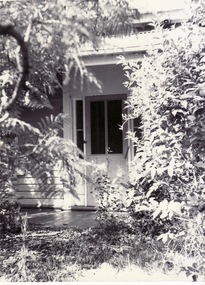
Photograph, Station Master's House, Mitcham, 22/3/1998
... jones...shirley...station...railway house mitcham jones shirley station master's house Black and white photo of Station Master's House, Mitcham. ...Black and white photo of Station Master's House, Mitcham.railway house, mitcham, jones, shirley, station master's house -
 Whitehorse Historical Society Inc.
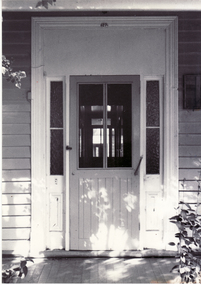
Photograph, Station Master's House, Mitcham
... jones...shirley...station...railway house mitcham jones shirley station master's house Black and white photo of Station Master's House, Mitcham.(2 copies) Station Master's House, Mitcham. ...Black and white photo of Station Master's House, Mitcham.(2 copies)railway house, mitcham, jones, shirley, station master's house -
 Whitehorse Historical Society Inc.
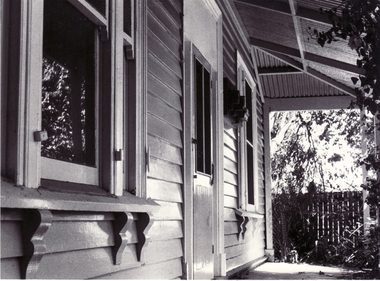
Photograph, Station Master's House, Mitcham
... jones...shirley...station...railway house mitcham jones shirley station master's house Black and white photo of Station Master's House, Mitcham. ...Black and white photo of Station Master's House, Mitcham.railway house, mitcham, jones, shirley, station master's house -
 Whitehorse Historical Society Inc.
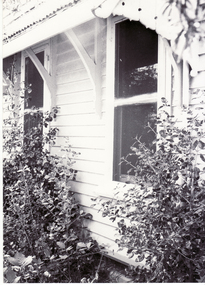
Photograph, Station Master's House, Mitcham
... jones...shirley...station...railway house mitcham jones shirley station master's house Black and white photo of Station Master's House, Mitcham.(2 Copies) Station Master's House, Mitcham Photograph Photograph ...Black and white photo of Station Master's House, Mitcham.(2 Copies)railway house, mitcham, jones, shirley, station master's house -
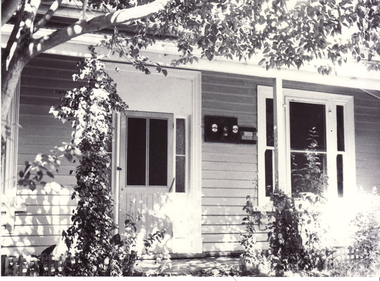 Whitehorse Historical Society Inc.
Photograph, Station Master's House, Mitcham
... jones...shirley...station...railway house mitcham jones shirley station master's house Black and white photo of Station Master's House, Mitcham.(2 copies) Station Master's House, Mitcham. ...Black and white photo of Station Master's House, Mitcham.(2 copies)railway house, mitcham, jones, shirley, station master's house -
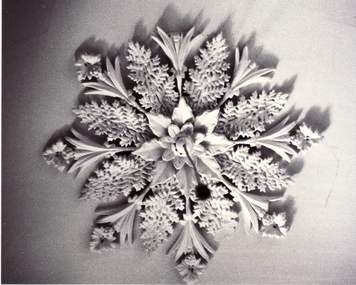 Whitehorse Historical Society Inc.
Photograph, Ceiling Rose in Station Master's House, Mitcham
... jones...shirley...station...railway house mitcham jones shirley station master's house Black and white photo of Ceiling Rose in Station Master's House, Mitcham. ...Black and white photo of Ceiling Rose in Station Master's House, Mitcham.railway house, mitcham, jones, shirley, station master's house -
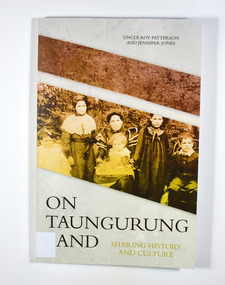 Marysville & District Historical Society
Book, Jennifer Jones et al, On Taungurung Land-Sharing History and Culture, 2020
... jones...acheron aboriginal station...Stations. It is a collaboration between Elder Uncle Roy Patterson and Jennifer Jones and draws upon Taungurung oral knowledge and an unusually rich historical record. ...A book telling of the history of two foundational Aboriginal stations on Taungurung Country in central Victoria. taungurung nation elder uncle roy patterson jennifer jones acheron aboriginal station mohican aboriginal station central victoria history white settlement On Taungurung Land: Sharing History and Culture is the first monograph to examine how the Taungurung Nation of central Victoria negotiated with protectors and pastoralists to retain possession of their own country for as long as possible. ...On Taungurung Land: Sharing History and Culture is the first monograph to examine how the Taungurung Nation of central Victoria negotiated with protectors and pastoralists to retain possession of their own country for as long as possible.Front cover has a photograph of the Patterson family c.1904. Back cover has the blurb of the book and information about the authors of the book.non-fictionOn Taungurung Land: Sharing History and Culture is the first monograph to examine how the Taungurung Nation of central Victoria negotiated with protectors and pastoralists to retain possession of their own country for as long as possible.taungurung nation, elder uncle roy patterson, jennifer jones, acheron aboriginal station, mohican aboriginal station, central victoria, history, white settlement -
Whitehorse Historical Society Inc.
Article, Mitcham Railway Station, 2014
... Mitcham Railway Station...Jones...Shirley Jones' recollections of memories of Mitcham Railway Station and her life connection with the railways through her father Frank Bawden and her husband....Mitcham Railway Station Jones Shirley Bawden Frank Shirley Jones' recollections of memories of Mitcham Railway Station. ...Shirley Jones' recollections of memories of Mitcham Railway Station.Shirley Jones' recollections of memories of Mitcham Railway Station and her life connection with the railways through her father Frank Bawden and her husband.Shirley Jones' recollections of memories of Mitcham Railway Station. mitcham railway station, jones, shirley, bawden, frank -
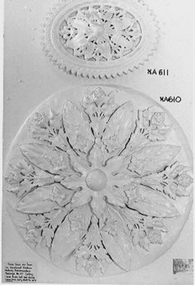 Whitehorse Historical Society Inc.
Functional object - Ceiling Rose
... Came from the Station Master's House, Mitcham Railway Station. Shirley Jones mentioned them to Harold Bakes, Shirley helped put them on the board and fill up the holes. ...Came from the Station Master's House, Mitcham Railway Station. Shirley Jones mentioned them to Harold Bakes, Shirley helped put them on the board and fill up the holes. ...Came from the Station Master's House, Mitcham Railway Station. Shirley Jones mentioned them to Harold Bakes, Shirley helped put them on the board and fill up the holes. Mr Eric Sunderland helped cut them out, quite a jobSmall ceiling rose plaster mould from the Station Master's House, Mitcham Railway Stationbuildings, fittings -
 Uniting Church Archives - Synod of Victoria
Engraving from photograph, Undated
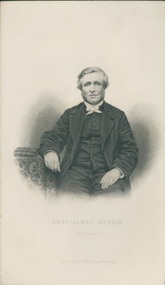
... Instead, when John Jones offered a free passage for a missionary appointed to Waikouaiti, where Jones had a whaling station, Watkin was selected for the post and arrived there in May 1840. ...Instead, when John Jones offered a free passage for a missionary appointed to Waikouaiti, where Jones had a whaling station, Watkin was selected for the post and arrived there in May 1840. ...James Watkin (1805–86), Pioneer Missionary. James Watkin was born in Manchester in 1805. While still young he felt the call to preach and in 1830 was accepted as a candidate for the Wesleyan Ministry. In the same year he married Hannah Entwistle and they sailed with a missionary party to Tonga. The work of the mission was jeopardised by prolonged and involved struggles between Christian and non-Christian Tongan chiefs; Watkin faced alone the danger of tribal warfare, but the experience left him depressed and exhausted. On his removal with his family to Sydney in September 1837 he prayed for a return home to England. Instead, when John Jones offered a free passage for a missionary appointed to Waikouaiti, where Jones had a whaling station, Watkin was selected for the post and arrived there in May 1840. Here he established the first mission station in the South Island. Watkin found the whaling settlement of Waikouaiti a centre of violence, licentiousness, and drunken depravity. Thoroughly disliking the corrupted Maoris and convinced that they were doomed to extinction, and disgusted by the brutality and vices of his fellow Europeans, Watkin laboured without hope, in the bitterness of exile and with deepening depression and distress. In spite of an abhorrence for his situation he established schools at Waikouaiti and Matanaka, and stationed partly trained Maori teachers at Stewart Island and at Moeraki. He had a natural flair for languages, preached in Maori four months after his arrival, and compiled an elementary reading book to be printed in Ngai Tahu. In November 1840 Watkin was greatly disturbed by Bishop Pompallier's visit to Otago. When, however, this was followed by Anglican intrusion – for Bishop Selwyn visited Otago in January 1844 – Watkin thought of withdrawing his own Maori teachers and abandoning the field. Never reconciled to his position at Waikouaiti, Watkin was relieved by Charles Creed and in June 1844 he sailed for Wellington, leaving 227 church members in Otago. In 1855 Watkin settled in New South Wales, and was president of the National Methodist Conference at Adelaide in 1862. He retired in 1869 and died on 14 May 1886, at Ashfield, New South Wales. 'WATKIN, James', from An Encyclopaedia of New Zealand, edited by A. H. McLintock, originally published in 1966. Te Ara - the Encyclopedia of New Zealand URL: http://www.TeAra.govt.nz/en/1966/watkin-james (accessed 30 Apr 2018) B & W engraving from a photograph of the Rev. James Watkin.Revd. James Watkin, Australia Engraved by J. Cochran from a Photograph. -
 Flagstaff Hill Maritime Museum and Village
Photograph, March, 1895
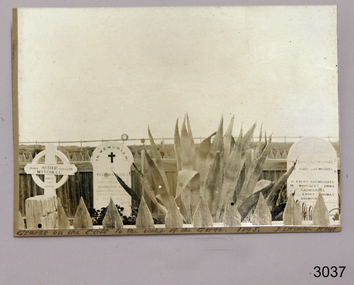
... Station...Mutton Bird Island...LOCH ARD Gorge...loch ard shipwreck...carmichael family...arthur mitchell...reginald jones...Flagstaff Hill Warrnambool Shipwrecked coast Flagstaff Hill Maritime Museum Maritime Museum Shipwreck coast Flagstaff Hill Maritime Village Great Ocean Road Loch Line LOCH ARD Captain Gibbs Eva Carmichael Tom Pearce Glenample Station Mutton Bird Island LOCH ARD Gorge loch ard shipwreck carmichael family arthur mitchell reginald jones loch ard gorge graves Reverse has hand writing “ … Loch Ard Gorge / Graves of / the Carmichael family / Mr. ...Loch Ard was bound for Melbourne in 1878 loaded with passengers and cargo when it ran into a rocky reef at the base of Mutton Bird Island, near Port Campbell. Of the 54 crew members and passengers on board, only two survived: an apprentice, Tom Pearce and a young woman passenger, Eva Carmichael, who lost all of her family in the tragedy. The wreck of Loch Ard still lies at the base of Mutton Bird Island and much of the cargo has been salvaged. Some was washed up into what is now known as Loch Ard Gorge following the shipwreck. Cargo and artefacts have also been illegally salvaged over many years before protective legislation was introduced. The photograph is significant for its association with the wreck of the Loch Ard. This wreck has been protected as a Historic Shipwreck since 11 March 1982, under the Commonwealth Historic Shipwrecks Act (1976) Flagstaff Hill’s collection of artefacts from Loch Ard is significant for being one of the largest collections of artefacts from this shipwreck in Victoria. It is significant for its association with the shipwreck, which is on the Victorian Heritage Register. The collection is significant because of the relationship between the objects, as together they have a high potential to interpret the story of the Loch Ard. The Loch Ard collection is archaeologically significant as the remains of a large international passenger and cargo ship. The Loch Ard collection is historically significant for representing aspects of Victoria’s shipping history and its potential to interpret sub-theme 1.5 of Victoria’s Framework of Historical Themes (living with natural processes). The collection is also historically significant for its association with the Loch Ard, which was one of the worst and best known shipwrecks in Victoria’s history. The Loch Ard collection meets the following criteria for assessment: Criterion A: Importance to the course, or pattern, of Victoria’s cultural history. Criterion B: Possession of uncommon, rare or endangered aspects of Victoria’s cultural history. Criterion C: Potential to yield information that will contribute to an understanding of Victoria’s cultural history. Photograph of Loch Ard Gorge graves on hillside, including the Carmichael family, Reginald Jones and Arthur Mitchell Reverse has hand writing in pen and ink, part of details are lost due to photo being trimmed. Also has four areas of torn surface, perhaps were photo had been mounted. Reverse has hand writing “ … Loch Ard Gorge / Graves of / the Carmichael family / Mr. Reginald Jones / Mr Arthur Mitchell “ and “Mr J Swinton / March 1895”flagstaff hill, warrnambool, shipwrecked coast, flagstaff hill maritime museum, maritime museum, shipwreck coast, flagstaff hill maritime village, great ocean road, loch line, loch ard, captain gibbs, eva carmichael, tom pearce, glenample station, mutton bird island, loch ard gorge, loch ard shipwreck, carmichael family, arthur mitchell, reginald jones, loch ard gorge graves -
 Federation University Historical Collection
Book, Ballarat Illustrated : Under the Seals of the City & Town Councils, c1920
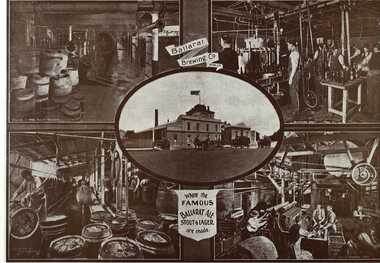
... Station Agents . Harry Davies & Co. . Views about the City . Benoit's Sun Foundry . Ballarat College (for Boys) . Wm Paterson's . Lydiard Street Views . Eureka Terra-cotta & Tile Co. of Australia Limited . Churches of Ballarat . The Ballarat Woollen & Worsted Co. Ltd Sunnyside Mills . Red Shop Tea Rooms . Tyler's - Bridge Street, Ballarat . Allchin Bros Ballarat . Loreto Abbey Mary's Mount Ballarat . Brinds - Dunnstown . Ballarat Brewing Co. . Turnbridge's Arcade . Zoological Gardens Ballarat . A. Cant Plumber & Gasfitter . Interiors of some Ballarat Churches . Hugh Jones...Station Agents . Harry Davies & Co. . Views about the City . Benoit's Sun Foundry . Ballarat College (for Boys) . Wm Paterson's . Lydiard Street Views . Eureka Terra-cotta & Tile Co. of Australia Limited . Churches of Ballarat . The Ballarat Woollen & Worsted Co. Ltd Sunnyside Mills . Red Shop Tea Rooms . Tyler's - Bridge Street, Ballarat . Allchin Bros Ballarat . Loreto Abbey Mary's Mount Ballarat . Brinds - Dunnstown . Ballarat Brewing Co. . Turnbridge's Arcade . Zoological Gardens Ballarat . A. Cant Plumber & Gasfitter . Interiors of some Ballarat Churches . Hugh Jones ...This book was a donation to Federation University Australia's Professor David Battersby from Vice-Chancellor Professor Scott Bowman of Central Queensland University.Soft cover. Front cover with some red. 80 pages. Back cover Plan of Ballarat Map. Photographic plates. Brief history of Ballarat and the topics photographed. . Ballarat City Municipal Chambers . The Ballarat Banking Company Limited . Art Gallery Ballarat . The Ballarat Trustees, Executors & Agency Company Limited . John MacLeod & Coy Pty Ltd . The Ballaarat Gas Coy . Ballarat's Homes . J. J. Goller & Co. . Ballarat East Views . Star Office . The Ballarat Courier . Morshead's . M. B. John Ballarat - The largest Inland Brass Foundry in Australia . Rowlands Koomah Spa . Huttons the Jewellers . Botanical Gardens Ballarat . Millers the Clothiers . Jas Smith Agricultural Machinery . Views of Lakes Learmonth & Burrumbeet . Coles & Pullum Stock & Station Agents . Harry Davies & Co. . Views about the City . Benoit's Sun Foundry . Ballarat College (for Boys) . Wm Paterson's . Lydiard Street Views . Eureka Terra-cotta & Tile Co. of Australia Limited . Churches of Ballarat . The Ballarat Woollen & Worsted Co. Ltd Sunnyside Mills . Red Shop Tea Rooms . Tyler's - Bridge Street, Ballarat . Allchin Bros Ballarat . Loreto Abbey Mary's Mount Ballarat . Brinds - Dunnstown . Ballarat Brewing Co. . Turnbridge's Arcade . Zoological Gardens Ballarat . A. Cant Plumber & Gasfitter . Interiors of some Ballarat Churches . Hugh Jones & B . W. F. Coltman . Views in Eureka Reserve . Loveland & Haslem, Moter Engineers . Public Institutions Ballarat . G. Warner & Co. Prop. Ltd . The Electric Supply Company of Victoria Limited . Ballarat East Views . Longhurst's Specialities . P. C. Thornton Proprietor Sturt St Ballarat . Cowley's Eureka Ironworks Pty Ltd . W. Owen Sports Depot & Tobacconist . Clarendon Ladies' College . Crocker's . Evening Echo Office . London Bank Chambers . Proprietors of Business . Broadbent Bros & Co. Gifted by Vice-Chancellor Professor Scott Bowman Central Queensland University, 2014.ballarat, school of mines, evening echo, john scullin -
 Flagstaff Hill Maritime Museum and Village
Functional object - Cow Bell, Circa 1878
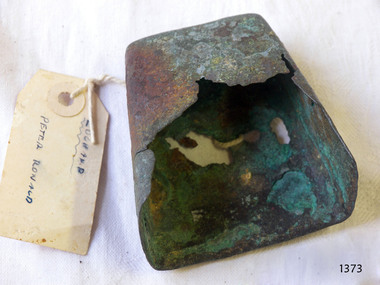
... Station shepherds and cattle drovers also used them to warn of any disturbances to their flocks and herds overnight. The bells were a necessary item in a largely unfenced continent. So important, that Anthony Mongon began making his pot-bells at Yackandandah from 1861, August Menneke produced the “Wagga Pot” from 1867, and Samuel Jones started manufacturing his distinctively shaped “Condamine Bell” in 1868. ...Station shepherds and cattle drovers also used them to warn of any disturbances to their flocks and herds overnight. The bells were a necessary item in a largely unfenced continent. So important, that Anthony Mongon began making his pot-bells at Yackandandah from 1861, August Menneke produced the “Wagga Pot” from 1867, and Samuel Jones started manufacturing his distinctively shaped “Condamine Bell” in 1868. ...The artefact is a damaged brass cow bell recovered from the 1878 shipwreck of the LOCH ARD near Port Campbell. It was raised by Flagstaff Hill divers in 1973 and is in storage at the Maritime Village. The LOCH ARD was constructed on the Clyde in 1873 for the prestigious Loch Line of colonial clipper ships, designed for the Australian run. She sailed from England on 1 March 1878 carrying 37 crew, 17 passengers and a diverse general cargo ranging from luxury items to bulk railway iron. On 1 June 1878, emerging from fog and hearing too late the sound of breakers against the tall limestone cliffs, the vessel struck the southern foot of Mutton Bird Island and sank in 23 metres of water. Of the fifty-four people on board only two survived, one young male crewman and one young female passenger. A century later, despite the pounding seas and the efforts of looters, the wreck site continued to provide ample evidence of the extraordinary range of goods being imported into the Colony of Victoria in the post-Gold Rush era. Flagstaff Hill divers in the 1970s reported finds of “Bottles of champagne, window panes, rolls of zinc, barrels of cement, iron rails, clocks, lead shot, corrugated iron, lead, marble, salad oil bottles, ink bottles, copper wire, gin bottles, rolls of carpet, floor tiles, copper rivets, gas light fittings, pocket knives, toys, crystal chandeliers, beer mugs, cutlery, candles sticks, wick scissors, cow bells, and sauce bottles.” From this array of objects on the ocean floor emerged the humble brass cow bell. Cow bells were common to colonial agriculture and transport, used wherever animals were turned out to graze overnight and had to be rounded up again next morning. Bells were fastened around the necks of household milking cows, domestic goats, bullock teams, horse teams, and camel teams, to help find them in the pre-dawn light. Station shepherds and cattle drovers also used them to warn of any disturbances to their flocks and herds overnight. The bells were a necessary item in a largely unfenced continent. So important, that Anthony Mongon began making his pot-bells at Yackandandah from 1861, August Menneke produced the “Wagga Pot” from 1867, and Samuel Jones started manufacturing his distinctively shaped “Condamine Bell” in 1868. However, these deeply resonant Australian bells were made from iron — Mongon and Jones were blacksmiths who simply beat old pitsaw blades into shape. Few genuinely brass cow bells were made here, the vast majority being imported from Britain where the industry of brass founding was already well established. (Some bells were also imported from the United States, but these too were nearly all of iron).This bell is historically significant as typical of a cow bell used by farmers and herdsmen in Colonial Victoria. Its significance is increased by being one of a collection of artefact recovered by the Flagstaff Hill Divers from the wreck of the Loch Ard in the early 1970s. Items that come from several wrecks along Victoria's coast have also been recovered for Flagstaff Hill Maritime Village’s museum collection under Government permit, illustrating this item’s level of historical value. The cow bell is also significant for being part of Flagstaff Hill’s collection of artefacts from LOCH ARD, which is significant for being one of the largest collections of artefacts from this shipwreck in Victoria. It is significant for its association with the shipwreck, which is on the Victorian Heritage Register (VHR S417). The collection is significant because of the relationship between the objects, as together they have a high potential to interpret the story of the LOCH ARD. The LOCH ARD collection is archaeologically significant as the remains of a large international passenger and cargo ship. The LOCH ARD collection is historically significant for representing aspects of Victoria’s shipping history and its potential to interpret sub-theme 1.5 of Victoria’s Framework of Historical Themes (living with natural processes). The collection is also historically significant for its association with the LOCH ARD, which was one of the worst and best known shipwrecks in Victoria’s history.A small brass cow bell, in poor condition. It is blunt-wedge shaped. The sides expand outwards from the smaller rectangular roof of the bell to a larger open rectangle or bell mouth. A handwritten label is attached to the bel. Recovered from the wreck of the Loch Ard.Label text "["10/6/73, Brass Cow Bell, LOCH ARD, Found in the sandy hole in the centre of the wreck site. Cow bells were part of the cargo" - "10/6/73, LOCH ARD, small brass cow bell salvaged by FHMV divers"]. "LOCH ARD / PETER RONALD"flagstaff hill, warrnambool, shipwrecked coast, flagstaff hill maritime museum, maritime museum, shipwreck coast, flagstaff hill maritime village, great ocean road, loch line, loch ard, eva carmichael, mutton bird island, loch ard gorge, brass cow bell, colonial cow bells, 1878 shipwreck, shipwreck artefact, flagstaff hill divers -
 Flagstaff Hill Maritime Museum and Village
Functional object - Cow Bell, Early 20th century
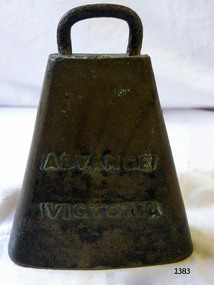
... Station shepherds and cattle drovers also used them to warn of any disturbances to their flocks and herds overnight. The bells were a necessary item in a largely unfenced continent. So important, that Anthony Mongon began making his pot-bells at Yackandandah from 1861, August Menneke produced the “Wagga Pot” from 1867, and Samuel Jones started manufacturing his distinctively shaped “Condamine Bell” in 1868. ...Station shepherds and cattle drovers also used them to warn of any disturbances to their flocks and herds overnight. The bells were a necessary item in a largely unfenced continent. So important, that Anthony Mongon began making his pot-bells at Yackandandah from 1861, August Menneke produced the “Wagga Pot” from 1867, and Samuel Jones started manufacturing his distinctively shaped “Condamine Bell” in 1868. ...Research is still being carried out regarding the inscription on this bell. Perhaps it was used for horses during the war. It may have been a souvenir or perhaps just a political statement, similar to 'Buy Australian'. Cow bells were common to colonial agriculture and transport, used wherever animals were turned out to graze overnight and had to be rounded up again next morning. Bells were fastened around the necks of household milking cows, domestic goats, bullock teams, horse teams, and camel teams, to help find them in the pre-dawn light. Station shepherds and cattle drovers also used them to warn of any disturbances to their flocks and herds overnight. The bells were a necessary item in a largely unfenced continent. So important, that Anthony Mongon began making his pot-bells at Yackandandah from 1861, August Menneke produced the “Wagga Pot” from 1867, and Samuel Jones started manufacturing his distinctively shaped “Condamine Bell” in 1868. However, these deeply resonant Australian bells were made from iron — Mongon and Jones were blacksmiths who simply beat old pitsaw blades into shape. Few genuinely brass cow bells were made here, the vast majority being imported from Britain where the industry of brass founding was already well established. (Some bells were also imported from the United States, but these too were nearly all of iron).This bell is historically significant as typical of a cow bell used by farmers and herdsmen in Colonial Victoria. Cow bell, brass, topless pyramid shape, inverted "U" shaped pin attached. Pin and clapper are iron. Bell is embossed on sides. Embossed "ADVANCE / VICTORIA" and "WWI"flagstaff hill, warrnambool, shipwreck coast, flagstaff hill maritime museum, flagstaff hill maritime village, maritime museum, great ocean road, cow bell, horse bell, bell smith, vintage bell, farmer, shepherd, drover, stock bell, brass bell, advance australia, wwi -
 Marysville & District Historical Society
Ephemera (Item) - Newspaper advertisement, Buxton General Store, Unknown
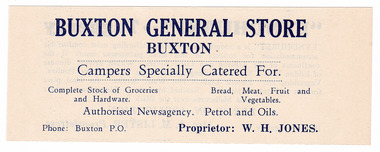
... station. The store had a succession of owners until its closure in around 2018. buxton victoria buxton general store w h. jones buxton post office jack preece A newspaper advertisement for the Buxton General Store in Victoria. ...A newspaper advertisement for the Buxton General Store in Victoria.A newspaper advertisement for the Buxton General Store in Victoria. The Buxton General Store was originally built in the early 1930s by Jack Preece. It also served as the local Post Office, cafe and petrol station. The store had a succession of owners until its closure in around 2018.buxton, victoria, buxton general store, w h. jones, buxton post office, jack preece -
 Marysville & District Historical Society
Ephemera (Item) - Newspaper advertisement, W. H. Jones & Co, Unknown
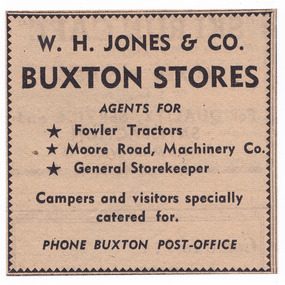
... station. The store had a succession of owners until its closure in around 2018. buxton victoria buxton general store w h. jones buxton post office jack preece A newspaper advertisement for the Buxton General Store in Victoria. ...A newspaper advertisement for the Buxton General Store in Victoria.A newspaper advertisement for the Buxton General Store in Victoria. The Buxton General Store was originally built in the early 1930s by Jack Preece. It also served as the local Post Office, cafe and petrol station. The store had a succession of owners until its closure in around 2018.buxton, victoria, buxton general store, w h. jones, buxton post office, jack preece -
Marysville & District Historical Society
Document (Item) - Research Document, Brien L. O'Brien, Buxton General Store, 12-05-2008
... station. The store had a succession of owners until its closure in around 2018. buxton victoria buxton general store jack preece jim merton dave harkness fred kubale w h jones j jones stan finke inga stumpe nick doolan val mclusky julie woods val morton k & l bellingham A document outlining the history of the Buxton General Store in Victoria. ...A document outlining the history of the Buxton General Store in Victoria.A document outlining the history of the Buxton General Store in Victoria. The Buxton General Store was originally built in the early 1930s by Jack Preece. It also served as the local Post Office, cafe and petrol station. The store had a succession of owners until its closure in around 2018.buxton, victoria, buxton general store, jack preece, jim merton, dave harkness, fred kubale, w h jones, j jones, stan finke, inga stumpe, nick doolan, val mclusky, julie woods, val morton, k & l bellingham -
 Marysville & District Historical Society
Photograph (Item) - Black and white photograph, Unknown
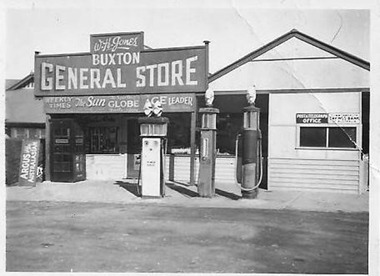
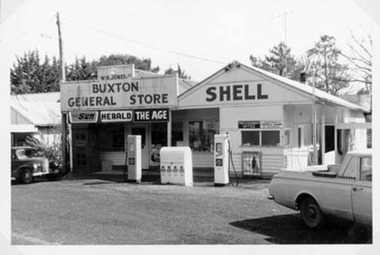
... station. The store had a succession of owners until its closure in around 2018. buxton victoria buxton general store w h jones jack preece A digital copy of a black and white photograph of the Buxton General Store. ...A digital copy of a black and white photograph of the Buxton General Store.A digital copy of a black and white photograph of the Buxton General Store. The Buxton General Store was originally built in the early 1930s by Jack Preece. It also served as the local Post Office, cafe and petrol station. The store had a succession of owners until its closure in around 2018.buxton, victoria, buxton general store, w h jones, jack preece -
 Marysville & District Historical Society
Photograph (Item) - Black and white photograph, 1960s
... station. The store had a succession of owners until its closure in around 2018. buxton victoria buxton general store w h jones jack preece A digital black and white photograph of the Buxton General Store in Victoria. ...A digital black and white photograph of the Buxton General Store in Victoria.A digital black and white photograph of the Buxton General Store in Victoria. The Buxton General Store was originally built in the early 1930s by Jack Preece. It also served as the local Post Office, cafe and petrol station. The store had a succession of owners until its closure in around 2018.buxton, victoria, buxton general store, w h jones, jack preece -
 Federation University Historical Collection
Magazine - Newspaper Supplement, The Courier: Ballarat 1900-2000, 2000
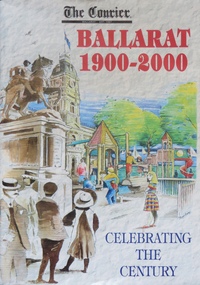
... jones...eureka flag...save bakery hill...jessie scott...anne beggs sunter...ray's tent city...art theft...woodsplitters by tom roberts...fluoride...jack chisholm...ballarat railway station...the courier ballarat courier anniversary century steve bracks tom o'meara bruce morgan weston bate r.f. scott and co camerons sunshince train crash nellie melba queen victoria's death star of the east gold mine, sebastopol phoenix foundry closure duke of cornwall and york duchess of cornwall and york central highlands water electric trams workld war one richard w. richards dick richards william dunstan mccann's dairy centre conscription george merz peace avenues of honur red cross james oddie henry sutton band competitions influenza epidemic ballarat council merger bert hinkler frank petch bartrop real estate ballarat zoo english cricket team visits ballarat the dole the depression sustenance works charles kingsford smith ballarat centenary black friday world war 2 world war two walter davis cuthberts albert coates john rowan langi kal kal soldier setttlement ronaldson and tippett america soldiers united stated marines military hospitals\corckers gollars robert clark edward j. bateman ellinor morcom f.w. barnes and son rex hollioake cricket edgar bartrop ideal homes competition ballarat begonia festival percy beames bigarelli good neighbourhood council baird and mcgregor sunicrust bakeries begonia queens tom beaumont thomas toop ray murphy alice andrews bobby greville jack hill john vernon ballarat civic hall haymarket royal visits trams olympic games robert lemke bob bath boxing norm pinney jack barker greg binns geoffrey blainey pam davies david haymes m.b. john morgan b. john austin mccallum steve moneghetti richard crouch voi williams elsi simper e.j. tippett kenn webb hugh williamson st john's lutheran church ballarat fine art gallery art gallery of ballarat peter tobin funerals keith bray john valves vietnam war john dellaca haymes paints henry haymes sovereign hill gold museum dowling forest racecourse ballarat turf club mt helen campus rupert hamer swagman bill mahoney constance coward-lemke hymettus historic garden c.v. jones eureka flag save bakery hill jessie scott anne beggs sunter ray's tent city art theft woodsplitters by tom roberts fluoride jack chisholm ballarat railway station fire princess diana prince charles university of ballarat university of ballarat 130 anniversary hailstorm ballarat brewery closure bicentenary flooding recession pat cashin funerals camp street arts precinct arts academy scout jamboree ballarat learning city council amalgamation linton bushfire eureka stockade centre russell mark tony lockett east timor ballaarat general cemeteries trust john barnes william heres nelson brothers funeral services valcor australia bob davis john curtin david davies 98 page newspaper supplement celebrating the century 1900-2000. ...98 page newspaper supplement celebrating the century 1900-2000. Includes 100 names of great Ballaratians.the courier, ballarat courier, anniversary, century, steve bracks, tom o'meara, bruce morgan, weston bate, r.f. scott and co, camerons, sunshince train crash, nellie melba, queen victoria's death, star of the east gold mine, sebastopol, phoenix foundry closure, duke of cornwall and york, duchess of cornwall and york, central highlands water, electric trams, workld war one, richard w. richards, dick richards, william dunstan, mccann's dairy centre, conscription, george merz, peace, avenues of honur, red cross, james oddie, henry sutton, band competitions, influenza epidemic, ballarat council merger, bert hinkler, frank petch, bartrop real estate, ballarat zoo, english cricket team visits ballarat, the dole, the depression, sustenance works, charles kingsford smith, ballarat centenary, black friday, world war 2, world war two, walter davis, cuthberts, albert coates, john rowan, langi kal kal soldier setttlement, ronaldson and tippett, america soldiers, united stated marines, military hospitals\corckers, gollars, robert clark, edward j. bateman, ellinor morcom, f.w. barnes and son, rex hollioake, cricket, edgar bartrop, ideal homes competition, ballarat begonia festival, percy beames, bigarelli, good neighbourhood council, baird and mcgregor, sunicrust bakeries, begonia queens, tom beaumont, thomas toop, ray murphy, alice andrews, bobby greville, jack hill, john vernon, ballarat civic hall, haymarket, royal visits, trams, olympic games, robert lemke, bob bath, boxing, norm pinney, jack barker, greg binns, geoffrey blainey, pam davies, david haymes, m.b. john, morgan b. john, austin mccallum, steve moneghetti, richard crouch, voi williams, elsi simper, e.j. tippett, kenn webb, hugh williamson, st john's lutheran church, ballarat fine art gallery, art gallery of ballarat, peter tobin funerals, keith bray, john valves, vietnam war, john dellaca, haymes paints, henry haymes, sovereign hill, gold museum, dowling forest racecourse, ballarat turf club, mt helen campus, rupert hamer, swagman, bill mahoney, constance coward-lemke, hymettus historic garden, c.v. jones, eureka flag, save bakery hill, jessie scott, anne beggs sunter, ray's tent city, art theft, woodsplitters by tom roberts, fluoride, jack chisholm, ballarat railway station fire, princess diana, prince charles, university of ballarat, university of ballarat 130 anniversary, hailstorm, ballarat brewery closure, bicentenary, flooding, recession, pat cashin funerals, camp street arts precinct, arts academy, scout jamboree, ballarat learning city, council amalgamation, linton bushfire, eureka stockade centre, russell mark, tony lockett, east timor, ballaarat general cemeteries trust, john barnes, william heres, nelson brothers funeral services, valcor australia, bob davis, john curtin, david davies -
 Flagstaff Hill Maritime Museum and Village
Functional object - Cow Bell, Circa 1878
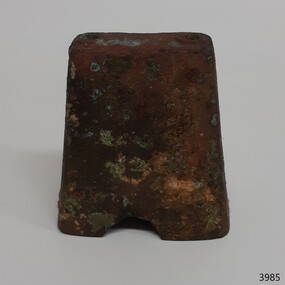
... Station shepherds and cattle drovers also used them to warn of any disturbances to their flocks and herds overnight. The bells were a necessary item in a largely unfenced continent. So important, that Anthony Mongon began making his pot-bells at Yackandandah from 1861, August Menneke produced the “Wagga Pot” from 1867, and Samuel Jones started manufacturing his distinctively shaped “Condamine Bell” in 1868. ...Station shepherds and cattle drovers also used them to warn of any disturbances to their flocks and herds overnight. The bells were a necessary item in a largely unfenced continent. So important, that Anthony Mongon began making his pot-bells at Yackandandah from 1861, August Menneke produced the “Wagga Pot” from 1867, and Samuel Jones started manufacturing his distinctively shaped “Condamine Bell” in 1868. ...The artefact is a damaged brass cow bell recovered from the 1878 shipwreck of the LOCH ARD near Port Campbell. It was raised by Flagstaff Hill divers in 1973 and is in storage at the Maritime Village. The LOCH ARD was constructed on the Clyde in 1873 for the prestigious Loch Line of colonial clipper ships, designed for the Australian run. She sailed from England on 1 March 1878 carrying 37 crew, 17 passengers and a diverse general cargo ranging from luxury items to bulk railway iron. On 1 June 1878, emerging from fog and hearing too late the sound of breakers against the tall limestone cliffs, the vessel struck the southern foot of Mutton Bird Island and sank in 23 metres of water. Of the fifty-four people on board only two survived, one young male crewman and one young female passenger. A century later, despite the pounding seas and the efforts of looters, the wreck site continued to provide ample evidence of the extraordinary range of goods being imported into the Colony of Victoria in the post-Gold Rush era. Flagstaff Hill divers in the 1970s reported finds of “Bottles of champagne, window panes, rolls of zinc, barrels of cement, iron rails, clocks, lead shot, corrugated iron, lead, marble, salad oil bottles, ink bottles, copper wire, gin bottles, rolls of carpet, floor tiles, copper rivets, gas light fittings, pocket knives, toys, crystal chandeliers, beer mugs, cutlery, candles sticks, wick scissors, cow bells, and sauce bottles.” From this array of objects on the ocean floor emerged the humble brass cow bell. Cow bells were common to colonial agriculture and transport, used wherever animals were turned out to graze overnight and had to be rounded up again next morning. Bells were fastened around the necks of household milking cows, domestic goats, bullock teams, horse teams, and camel teams, to help find them in the pre-dawn light. Station shepherds and cattle drovers also used them to warn of any disturbances to their flocks and herds overnight. The bells were a necessary item in a largely unfenced continent. So important, that Anthony Mongon began making his pot-bells at Yackandandah from 1861, August Menneke produced the “Wagga Pot” from 1867, and Samuel Jones started manufacturing his distinctively shaped “Condamine Bell” in 1868. However, these deeply resonant Australian bells were made from iron — Mongon and Jones were blacksmiths who simply beat old pitsaw blades into shape. Few genuinely brass cow bells were made here, the vast majority being imported from Britain where the industry of brass founding was already well established. (Some bells were also imported from the United States, but these too were nearly all of iron).This bell is historically significant as typical of a cow bell used by farmers and herdsmen in Colonial Victoria. It was included in the cargo of the Loch Ard. Its significance is increased by being one of a collection of artefacts recovered by the Flagstaff Hill Divers from the wreck of the Loch Ard in the early 1970s. Items that come from several wrecks along Victoria's coast have also been recovered for Flagstaff Hill Maritime Village’s museum collection under a Government permit, illustrating this item’s level of historical value. The cow bell is also significant for being part of Flagstaff Hill’s collection of artefacts from LOCH ARD, which is significant for being one of the largest collections of artefacts from this shipwreck in Victoria. It is significant for its association with the shipwreck, which is on the Victorian Heritage Register (VHR S417). The collection is significant because of the relationship between the objects, as together they have a high potential to interpret the story of the LOCH ARD. The LOCH ARD collection is archaeologically significant as the remains of a large international passenger and cargo ship. The LOCH ARD collection is historically significant for representing aspects of Victoria’s shipping history and its potential to interpret sub-theme 1.5 of Victoria’s Framework of Historical Themes (living with natural processes). The collection is also historically significant for its association with the LOCH ARD, which was one of the worst and best-known shipwrecks in Victoria’s history.Cow bell; a small brass bell, blunt-wedge shaped. The sides expand outwards from the smaller rectangular roof of the bell to a larger open rectangle or bell mouth. The handle, now missing, was fixed in two places at the top. A neat half-circle piece has been cut from the base on a long edge. Recovered from the wreck of the Loch Ard.flagstaff hill, warrnambool, shipwrecked coast, flagstaff hill maritime museum, maritime museum, shipwreck coast, flagstaff hill maritime village, great ocean road, loch line, loch ard, eva carmichael, mutton bird island, loch ard gorge, brass cow bell, colonial cow bells, 1878 shipwreck, shipwreck artefact, flagstaff hill divers, cow bell -
 City of Moorabbin Historical Society (Operating the Box Cottage Museum)
Document - Document, deposit receipt 1950, c1950
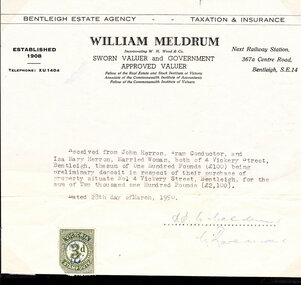
... The Marriott family were early settler market gardeners from 1878 in the area of Dendy’s 1841 Special Survey and John Herron was a descendant of Philip Jones , a chair-maker, who settled in the area of East Brighton, now Bentleigh, in 1852 pioneers early settlers brighton moorabbin bentleigh market gardeners dairyman dairy farmer jones james jones mary ann jones martha jones elizabeth ann dendy henry dendys special survey 1841 elster creek melbourne jones ethel may herron isa mary herron john tram conductor marriott m solicitors valuers taxation meldrum w real estate BENTLEIGH ESTATE AGENCY TAXATION & INSURANCE / WILLIAM MELDRUM / ESTABLISHED / 1908 Incorporating W.H.Wood & Co., Next Railway Station,/ SWORN VALUER and GOVERNMENT / APPROVED VALUER 367 a Centre Road / Bentleigh / Telephone XU 1404 / Fellow of the Real Estate and Stock Institute of Victoria / Associate of the Commonwealth Institute of Accountants/ Fellow of the Commonwealth Institute of Valuers Stamp in left bottom VICTORIA STAMP DUTY 3d with signature initials / Letter dated 28th day of March 1950 and signed SP W Meldrum / C Raveand An original paper statement of receipt issued by William Meldrum for £100 deposit paid on March 28th 1950 by Mr John Herron for purchase of the house at 4 Vickery Street Bentleigh Document Document, deposit receipt 1950 Unrecorded printer for W Meldrum, Real Estate Agent ...Mr John Herron and his wife Isa Mary Herron purchased the house at 4 Vickery Street Bentleigh in 1950 from Miss M Marriott. He was a descendant of John James an early settler dairyman in Moorabbin Shire and Miss M Marriott was a descendant of the early settler market gardeners Marriott family. Mr Herron lived there until 1989 and the house was then demolished and turned into a carpark for the busy Shopping precinct of Centre Road, Bentleigh.The Marriott family were early settler market gardeners from 1878 in the area of Dendy’s 1841 Special Survey and John Herron was a descendant of Philip Jones , a chair-maker, who settled in the area of East Brighton, now Bentleigh, in 1852An original paper statement of receipt issued by William Meldrum for £100 deposit paid on March 28th 1950 by Mr John Herron for purchase of the house at 4 Vickery Street BentleighBENTLEIGH ESTATE AGENCY TAXATION & INSURANCE / WILLIAM MELDRUM / ESTABLISHED / 1908 Incorporating W.H.Wood & Co., Next Railway Station,/ SWORN VALUER and GOVERNMENT / APPROVED VALUER 367 a Centre Road / Bentleigh / Telephone XU 1404 / Fellow of the Real Estate and Stock Institute of Victoria / Associate of the Commonwealth Institute of Accountants/ Fellow of the Commonwealth Institute of Valuers Stamp in left bottom VICTORIA STAMP DUTY 3d with signature initials / Letter dated 28th day of March 1950 and signed SP W Meldrum / C Raveand pioneers, early settlers, brighton, moorabbin, bentleigh, market gardeners, dairyman, dairy farmer, jones james, jones mary ann, jones martha, jones elizabeth ann, dendy henry, dendys special survey 1841, elster creek, melbourne, jones ethel may, herron isa mary, herron john, tram conductor, marriott m, solicitors, valuers, taxation, meldrum w, real estate -
 City of Moorabbin Historical Society (Operating the Box Cottage Museum)
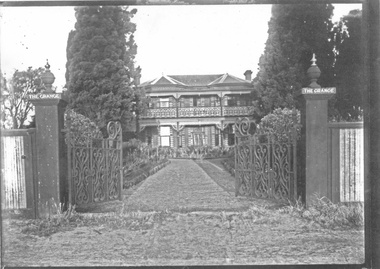
Photograph - 3 black & white Photographs, 'The Grange' ( 'Baydon Hill' ) Moorabbin, c 1920
... The Moorabbin Police Station is built on the site. tuck charles tuck jane veterinary surgeons livestock market gardeners early settlers dendy's special survey brighton moorabbin ballarat gold diggings horses chickens cattle bullocks flower shows fruit garden mulvaney s. t. healey haold james healey keith moorabbin city council chinese market gardeners plant nursery tuck leslie stephen jones elsa Written in pencil on back a) " This Photo donated by Mr Neil Follett - at the time it came into his possession he had a photography studio in Cheltenham. ...'The Grange ' was a 2 storey home built 1857 by Mr Charles Tuck, originally named 'Baydon Hill', at 1011 Nepean Highway, Moorabbin ( South Brighton). Mr Charles Tuck was Veterinary Surgeon from Baydon Hill, Wiltshire, England, who migrated to Australia c1850. He married his cousin Miss Jan Chaudler in Melbourne in1853. He was at the Ballarat gold-fields at the time of the riots and then they settled in South Brighton (later Moorabbin) and built a large Georgian styled home called 'Baydon Hill'. The Tucks had a large family - 9 children. Charles enjoyed a prosperous Veterinary Practice as his advice was needed for stock purchases by the farmers / settlers. Charles died in 1893 and Jane left the property c 1903 and died at Blackburn in 1928. The House had 5 owners, the last being the Healey family c1920 and at some stage the name was changed to 'The Grange' and the gates shown were installed. The Healey Family were also prosperous in developing vegetables and flower seeds and seedlings. 'The Grange' was sold to Moorabbin City Council 1972 and then used by the City of Moorabbin Historical Society for meetings and storage of historical material. It was demolished amidst considerable controversy 1983 and the Moorabbin Police Station was built on the site. ( S.T.Mulvany, Grand-daughter of Charles Tuck 26/7/1974)The Grange was a significant property 1853 -1983 in Moorabbin. It was built by Mr Charles Tuck 1857and in1900 extended from Point Nepean Road to South Road - 10acres. Mr Harold James Healey purchased the property in c1920 and leased a portion to a Chinese market gardener. Later with his sons he established a profitable Plant Nursery that they managed for 42years. Keith Healey, a son, remodelled the house extensively mid 20thC. The Moorabbin City Council purchased it in 1972 for $255,000 and it was demolished amid controversy 1983. The Moorabbin Police Station is built on the site.3x black and white photographs of the property at 1011 Nepean Highway Moorabbin built by Mr Charles Tuck c1853 known as 'The Grange'. Originally it was named 'Baydon Hill' because he migrated from Baydon Hill, Wiltshire, England c1850. PHOTOGRAPHS: c 1880, 1920 and 1950 showing the original and later additions made to the property by some of the 5 owners. PLAN: Proposed Alterations & Additions to 'The Grange" brick and stone residence for Mr K Healy Dack & Armstrong, Home & Industrial Designers 12 Station Street, Moorabbin. c1950sWritten in pencil on back a) " This Photo donated by Mr Neil Follett - at the time it came into his possession he had a photography studio in Cheltenham. Photographer unknown"; Folio 6 b) The Grange c 1950 Folio 6/10 c) 'Baydon Hill' ( alias "The Grange" ) / Donated by Mrs Elsa Jones, daughter of Leslie Stephen Tuck, youngest son of Charles Tuck Folio 6 /18tuck charles, tuck jane, veterinary surgeons, livestock, market gardeners, early settlers, dendy's special survey, brighton, moorabbin, ballarat, gold diggings, horses, chickens, cattle, bullocks, flower shows, fruit garden, mulvaney s. t., healey haold james, healey keith, moorabbin city council, chinese market gardeners, plant nursery, tuck leslie stephen, jones elsa -
 City of Moorabbin Historical Society (Operating the Box Cottage Museum)
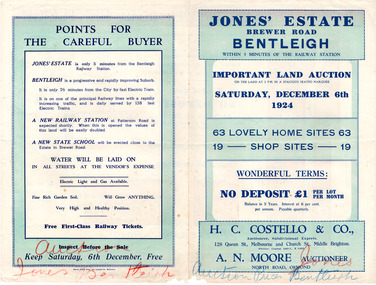
Flyer - Jones' Estate, Bentleigh, 1924
... stations. Example of the progress of the Municipality of Moorabbin Patterson Road Brewer Road Phillip Street North Avenue Real Estate Auction Bentleigh Moorabbin Jones' Estate, Brewer Road Bentleigh - 63 home sites & 19 business sites - H. ...The train line from the city to Frankston was electrified which intensified the sale in the municipality of Moorabbin, particularly land which was in the vicinity of the railway stations.Example of the progress of the Municipality of MoorabbinAdvertising flyer for auction of real estate sales - plan of building blocks for saleJones' Estate, Brewer Road Bentleigh - 63 home sites & 19 business sites - H. C. Costello & Co - A. N. Moorepatterson road, brewer road, phillip street, north avenue, real estate, auction, bentleigh, moorabbin -
 Flagstaff Hill Maritime Museum and Village
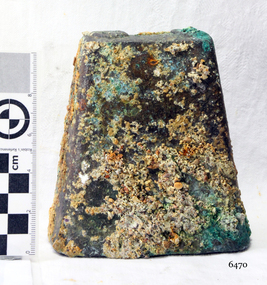
Functional object - Cow Bell, Circa 1878
... Station shepherds and cattle drovers also used them to warn of any disturbances to their flocks and herds overnight. The bells were a necessary item in a largely unfenced continent. So important, that Anthony Mongon began making his pot-bells at Yackandandah from 1861, August Menneke produced the “Wagga Pot” from 1867, and Samuel Jones started manufacturing his distinctively shaped “Condamine Bell” in 1868. ...Station shepherds and cattle drovers also used them to warn of any disturbances to their flocks and herds overnight. The bells were a necessary item in a largely unfenced continent. So important, that Anthony Mongon began making his pot-bells at Yackandandah from 1861, August Menneke produced the “Wagga Pot” from 1867, and Samuel Jones started manufacturing his distinctively shaped “Condamine Bell” in 1868. ...The artefact is a brass cow bell recovered from the 1878 shipwreck of the LOCH ARD near Port Campbell. It was raised by Flagstaff Hill divers in 1973 and is in storage at the Maritime Village. The LOCH ARD was constructed on the Clyde in 1873 for the prestigious Loch Line of colonial clipper ships, designed for the Australian run. She sailed from England on 1 March 1878 carrying 37 crew, 17 passengers and a diverse general cargo ranging from luxury items to bulk railway iron. On 1 June 1878, emerging from fog and hearing too late the sound of breakers against the tall limestone cliffs, the vessel struck the southern foot of Mutton Bird Island and sank in 23 metres of water. Of the fifty-four people on board only two survived, one young male crewman, Tom Pearce, and one young female passenger, Eva Carmichael. A century later, despite the pounding seas and the efforts of looters, the wreck site continued to provide ample evidence of the extraordinary range of goods being imported into the Colony of Victoria in the post-Gold Rush era. Flagstaff Hill divers in the 1970s reported finds of “Bottles of champagne, window panes, rolls of zinc, barrels of cement, iron rails, clocks, lead shot, corrugated iron, lead, marble, salad oil bottles, ink bottles, copper wire, gin bottles, rolls of carpet, floor tiles, copper rivets, gas light fittings, pocket knives, toys, crystal chandeliers, beer mugs, cutlery, candles sticks, wick scissors, cow bells, and sauce bottles.” From this array of objects on the ocean floor emerged the humble brass cow bell. Cow bells were common to colonial agriculture and transport, used wherever animals were turned out to graze overnight and had to be rounded up again next morning. Bells were fastened around the necks of household milking cows, domestic goats, bullock teams, horse teams, and camel teams, to help find them in the pre-dawn light. Station shepherds and cattle drovers also used them to warn of any disturbances to their flocks and herds overnight. The bells were a necessary item in a largely unfenced continent. So important, that Anthony Mongon began making his pot-bells at Yackandandah from 1861, August Menneke produced the “Wagga Pot” from 1867, and Samuel Jones started manufacturing his distinctively shaped “Condamine Bell” in 1868. However, these deeply resonant Australian bells were made from iron — Mongon and Jones were blacksmiths who simply beat old pitsaw blades into shape. Few genuinely brass cow bells were made here, the vast majority being imported from Britain where the industry of brass founding was already well established. (Some bells were also imported from the United States, but these too were nearly all of iron). This bell is historically significant as typical of a cow bell used by farmers and herdsmen in Colonial Victoria. Its significance is increased by being one of a collection of artefact recovered by the Flagstaff Hill Divers from the wreck of the Loch Ard in the early 1970s. Items that come from several wrecks along Victoria's coast have also been recovered for Flagstaff Hill Maritime Village’s museum collection under Government permit, illustrating this item’s level of historical value. The cow bell is also significant for being part of Flagstaff Hill’s collection of artefacts from LOCH ARD, which is significant for being one of the largest collections of artefacts from this shipwreck in Victoria. It is significant for its association with the shipwreck, which is on the Victorian Heritage Register (VHR S417). The collection is significant because of the relationship between the objects, as together they have a high potential to interpret the story of the LOCH ARD. The LOCH ARD collection is archaeologically significant as the remains of a large international passenger and cargo ship. The LOCH ARD collection is historically significant for representing aspects of Victoria’s shipping history and its potential to interpret sub-theme 1.5 of Victoria’s Framework of Historical Themes (living with natural processes). The collection is also historically significant for its association with the LOCH ARD, which was one of the worst and best known shipwrecks in Victoria’s history. Brass cow bell, flat-top pyramid shape, rectangular head, shoulders flare out to a rectangular mouth. The hanging yoke is missing. Noneflagstaff hill, warrnambool, shipwrecked-coast, flagstaff-hill, flagstaff-hill-maritime-museum, maritime-museum, shipwreck-coast, flagstaff-hill-maritime-village, loch ard, cowbell, great ocean road, loch line, captain gibbs, eva carmichael, tom pearce, glenample station, mutton bird island, loch ard gorge, cow bell, brass cow bell, shipwreck artefact, flagstaff hill divers, horse bell, bell smith, vintage bell, farmer, shepherd, drover, stock bell, brass bell -
 Flagstaff Hill Maritime Museum and Village
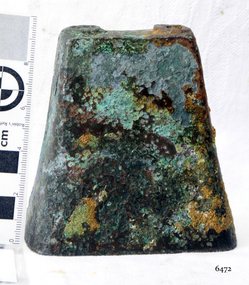
Functional object - Cow Bell, circa 1878
... Station shepherds and cattle drovers also used them to warn of any disturbances to their flocks and herds overnight. The bells were a necessary item in a largely unfenced continent. So important, that Anthony Mongon began making his pot-bells at Yackandandah from 1861, August Menneke produced the “Wagga Pot” from 1867, and Samuel Jones started manufacturing his distinctively shaped “Condamine Bell” in 1868. ...Station shepherds and cattle drovers also used them to warn of any disturbances to their flocks and herds overnight. The bells were a necessary item in a largely unfenced continent. So important, that Anthony Mongon began making his pot-bells at Yackandandah from 1861, August Menneke produced the “Wagga Pot” from 1867, and Samuel Jones started manufacturing his distinctively shaped “Condamine Bell” in 1868. ...The artefact is a brass cow bell recovered from the 1878 shipwreck of the LOCH ARD near Port Campbell. It was raised by Flagstaff Hill divers in 1973 and is in storage at the Maritime Village. The LOCH ARD was constructed on the Clyde in 1873 for the prestigious Loch Line of colonial clipper ships, designed for the Australian run. She sailed from England on 1 March 1878 carrying 37 crew, 17 passengers and a diverse general cargo ranging from luxury items to bulk railway iron. On 1 June 1878, emerging from fog and hearing too late the sound of breakers against the tall limestone cliffs, the vessel struck the southern foot of Mutton Bird Island and sank in 23 metres of water. Of the fifty-four people on board only two survived, one young male crewman, Tom Pearce, and one young female passenger, Eva Carmichael. A century later, despite the pounding seas and the efforts of looters, the wreck site continued to provide ample evidence of the extraordinary range of goods being imported into the Colony of Victoria in the post-Gold Rush era. Flagstaff Hill divers in the 1970s reported finds of “Bottles of champagne, window panes, rolls of zinc, barrels of cement, iron rails, clocks, lead shot, corrugated iron, lead, marble, salad oil bottles, ink bottles, copper wire, gin bottles, rolls of carpet, floor tiles, copper rivets, gas light fittings, pocket knives, toys, crystal chandeliers, beer mugs, cutlery, candles sticks, wick scissors, cow bells, and sauce bottles.” From this array of objects on the ocean floor emerged the humble brass cow bell. Cow bells were common to colonial agriculture and transport, used wherever animals were turned out to graze overnight and had to be rounded up again next morning. Bells were fastened around the necks of household milking cows, domestic goats, bullock teams, horse teams, and camel teams, to help find them in the pre-dawn light. Station shepherds and cattle drovers also used them to warn of any disturbances to their flocks and herds overnight. The bells were a necessary item in a largely unfenced continent. So important, that Anthony Mongon began making his pot-bells at Yackandandah from 1861, August Menneke produced the “Wagga Pot” from 1867, and Samuel Jones started manufacturing his distinctively shaped “Condamine Bell” in 1868. However, these deeply resonant Australian bells were made from iron — Mongon and Jones were blacksmiths who simply beat old pitsaw blades into shape. Few genuinely brass cow bells were made here, the vast majority being imported from Britain where the industry of brass founding was already well established. (Some bells were also imported from the United States, but these too were nearly all of iron). This bell is historically significant as typical of a cow bell used by farmers and herdsmen in Colonial Victoria. Flagstaff Hill’s collection of artefacts from LOCH ARD is significant for being one of the largest collections of artefacts from this shipwreck in Victoria. It is significant for its association with the shipwreck, which is on the Victorian Heritage Register (VHR S417). The collection is significant because of the relationship between the objects, as together they have a high potential to interpret the story of the LOCH ARD. The LOCH ARD collection is archaeologically significant as the remains of a large international passenger and cargo ship. The LOCH ARD collection is historically significant for representing aspects of Victoria’s shipping history and its potential to interpret sub-theme 1.5 of Victoria’s Framework of Historical Themes (living with natural processes). The collection is also historically significant for its association with the LOCH ARD, which was one of the worst and best known shipwrecks in Victoria’s history. Cow bell, brass, covered in encrustation, handle missing from the top.flagstaff hill, warrnambool, shipwreck coast, flagstaff hill maritime museum, flagstaff hill maritime village, maritime museum, great ocean road, shipwreck artefact, loch ard, mutton bird island, glenample, eva carmichael, tom pearce, flagstaff hill divers, cow bell, horse bell, bell smith, vintage bell, farmer, shepherd, drover, stock bell, brass bell -
 Ringwood and District Historical Society
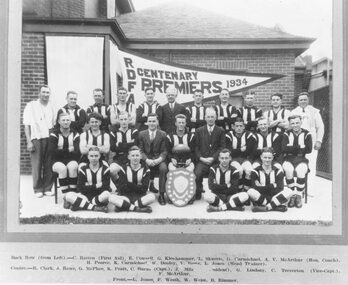
Photograph, Ringwood Football Club- Centenary Premiers, R.D.F.A., 1934
... Jones, F. Westh, W. Weist, B. Rimmer." Image taken at rear of Fire Station- some firemen on the team....Jones, F. Westh, W. Weist, B. Rimmer." Image taken at rear of Fire Station- some firemen on the team. ...Black and white photograph (2 originals mounted on lightly embossed cardboard, 1 copy)Printed below photograph: "Back Row (from Left) - C. Ratten (First Aid), E. Connell, G. Kleehammer, L. Skurrie, G. Carmichael, A.V. McArthur (Hon. Coach), H. Pearce, K. Carmichael, W. Dooley, V. Rowe, L. Jones (Head Trainer). Centre - R. Clark, J. Rowe, G. McPhee, K. Pratt, C. Burns (Capt.), J. Miller (President), G. Lindsay, C. Treverton (Vice-Capt.), F. McArthur. Front - L. Jones, F. Westh, W. Weist, B. Rimmer." Image taken at rear of Fire Station- some firemen on the team. -
 Ringwood and District Historical Society
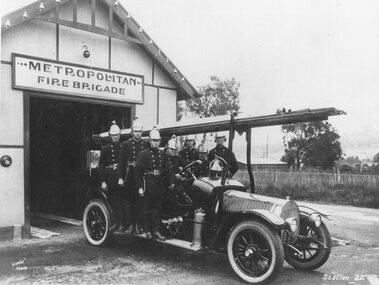
Photograph, Ringwood Fire Brigade - Old Station at rear of Old Town Hall in Melbourne Street - 1929
... station. Fire engine is a 1912 Hotchkiss. Ringwood oval in background. Fire Brigade members are- L to R: "1. George Burns, 2. Sam Brown, 3. David Anderson, 4. Les Jones...station. Fire engine is a 1912 Hotchkiss. Ringwood oval in background. Fire Brigade members are- L to R: "1. George Burns, 2. Sam Brown, 3. David Anderson, 4. Les Jones ...Black and white photographImage shows seven firemen on fire truck at front of fire station. Fire engine is a 1912 Hotchkiss. Ringwood oval in background. Fire Brigade members are- L to R: "1. George Burns, 2. Sam Brown, 3. David Anderson, 4. Les Jones (Driver), 5. Clarence Burns, 6. Roy Sedgman, 7. Jack Wilkins." -
 Ringwood and District Historical Society
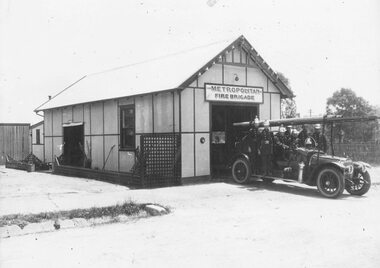
Photograph, Ringwood Fire Brigade rear Old Town Hall 1929
... Station. Fire engine is a 1912 Hotchkiss. Fire Brigade members are- L to R: S. Brown, G. Burns, C. Burns, D. Anderson, L. Jones...Station. Fire engine is a 1912 Hotchkiss. Fire Brigade members are- L to R: S. Brown, G. Burns, C. Burns, D. Anderson, L. Jones ...Black and white phootograph (2 copies)Image shows firemen on truck at front of Fire Station. Fire engine is a 1912 Hotchkiss. Fire Brigade members are- L to R: S. Brown, G. Burns, C. Burns, D. Anderson, L. Jones (Driver), J. Wilkins, R. Sedgman. Station later became Baby Health Centre.
