
Showing 52 items matching "kingdom of god"
-
 Bendigo Historical Society Inc.
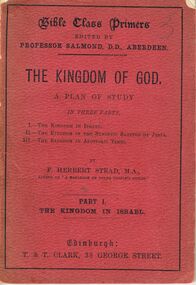
Book - THE KINGDOM OF GOD
... THE KINGDOM OF GOD......Kingdom of God...Book, Les Gillies Collection, A small red soft covered book titled '' The Kingdom Of God''. A plan of Study in 3 parts. Bible class Primers edited by professor Salmond, D.D.. ...Aberdeen Book THE KINGDOM OF GOD ...Book, Les Gillies Collection, A small red soft covered book titled '' The Kingdom Of God''. A plan of Study in 3 parts. Bible class Primers edited by professor Salmond, D.D.. Aberdeenthe name John Aitken on first pageles gilles, john aithen, kingdom of god -
 Uniting Church Archives - Synod of Victoria
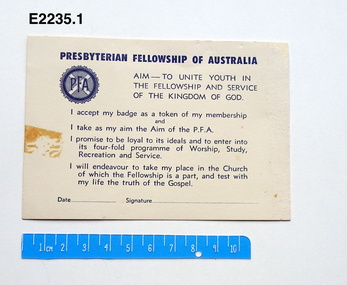
Card - Pledge card, Presbyterian Fellowship of Australia
... The card states that the aim of the PFA is "to unite youth in the fellowship and service of the Kingdom of God"...The card states that the aim of the PFA is "to unite youth in the fellowship and service of the Kingdom of God" Presbyterian Fellowship Australia Presbyterian Church of Australia White Presbyterian Fellowship of Australia card with blue PFA symbol and text. ...The card states that the aim of the PFA is "to unite youth in the fellowship and service of the Kingdom of God"White Presbyterian Fellowship of Australia card with blue PFA symbol and text.presbyterian fellowship australia, presbyterian church of australia -
 Shelford Girls' Grammar
Tie Pin, Stokes, 1922-1955
... The motto means "Seek Ye First the Kingdom of God."...The motto means "Seek Ye First the Kingdom of God." This tie pin is representative of tie pins worn by all students at Shelford C.E.G.G.S during the period 1922-1955. ...This tie pin features the school crest used by Shelford Girls Grammar during the period 1922-1955 when the school was known as a Church of England Girls Grammar School. The school was closely linked to St Mary's Church of England, Glen Eira Rd, Caulfield, Victoria. The badge was designed by Canon Langley and Mr. W.E.L. Wears in 1922 when the school was taken over by the Church of England. The motto means "Seek Ye First the Kingdom of God."This tie pin is representative of tie pins worn by all students at Shelford C.E.G.G.S during the period 1922-1955. It forms an official part of the school uniform at that time. Metal tie pin featuring the crest of Shelford Church of England Grammar School. The crest is silver and dark royal blue and features a large silver "S" in the centre of a blue oval. The oval features the words "Querite Primo Regnum Dei. St Mary's C of E". A banner underneath reads "CAULFIELD" .STOKES stamped on reverseshelford, shelford church of england girls grammar school, shelford girls grammar, st. mary's, church of england, canon langley, w. e. l. wears -
 Bendigo Historical Society Inc.
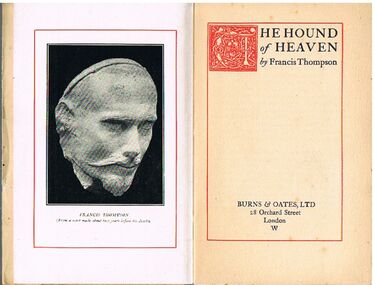
Book - ALEC H CHISHOLM COLLECTION: BOOK ''THE HOUND OF HEAVEN'' BY FRANCIS THOMPSON
... In copy (b) there is a typed extract from a poem called 'The Kingdom of God' by Francis Thompson pasted on flyleaf. ...In copy (b) there is a typed extract from a poem called 'The Kingdom of God' by Francis Thompson pasted on flyleaf. ...Book. ALEC H CHISHOLM COLLECTION. Two copies (a) and (b), of a 22 page softcover booklet of a poem called 'The Hound of Heaven' by Francis Thompson (1859 - 1907). Includes a B&W photo of a mask of the author made 2 years before his death. Published c.1910 by Burns & Oates Ltd., London. Printed by Letchworth at the Arden Press. Catalogue sticker on front cover (a) ''2066.1THO'' and (b) ''2066.2 THO''. In copy (b) there is a typed extract from a poem called 'The Kingdom of God' by Francis Thompson pasted on flyleaf. Also handwritten in ink on front cover ''M. Chisholm''.Francis Thompsonbooks, collections, poetry, alec h chisholm collection, francis thompson, poetry -
 Emerald Museum & Nobelius Heritage Park
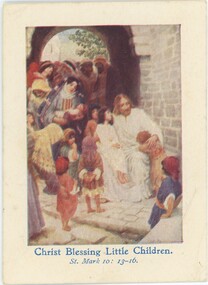
Postcard - Postcard of Christ Blessing Little Children, c. 1900s
... . / But when Jesus saw it, He was much / displeased, and said unto them, "Suffer / the little children to come unto me, and / forbid them not; for of such is the / kingdom of God. Verily I say unto you, / Whosoever shall not receive the kingdom / of God as a little child, he shall not enter / therein." / And He took them up in His arms, / put His hands on them, and blessed / them. / So that day the mother helped the / disciples to learn about Jesus. .... / But when Jesus saw it, He was much / displeased, and said unto them, "Suffer / the little children to come unto me, and / forbid them not; for of such is the / kingdom of God. Verily I say unto you, / Whosoever shall not receive the kingdom / of God as a little child, he shall not enter / therein." / And He took them up in His arms, / put His hands on them, and blessed / them. / So that day the mother helped the / disciples to learn about Jesus. ...This postcard is part of an album of postcards which date from late 19th century to mid 20th century. Religion played a significant part in daily life at the time.This postcard is in an album of postcards dating from the late 19th century to mid 20th century and, as such, indicate the popularity of collecting postcards in Australia which reached a height in the early 1900s until around 1920.This postcard depicts the scene of Mark 10: 13-16 from the bible, where Christ meetings a group of children.On front, printed under image: 'Christ Blessing Little Children / St. Mark 10: 13-16' On back, printed above line: 'Christ Blessing Little Children' On back, printed below line: 'THEY brought young children to / Jesus, that He should touch them: / and His disciples rebuked those that / brought them. / But when Jesus saw it, He was much / displeased, and said unto them, "Suffer / the little children to come unto me, and / forbid them not; for of such is the / kingdom of God. Verily I say unto you, / Whosoever shall not receive the kingdom / of God as a little child, he shall not enter / therein." / And He took them up in His arms, / put His hands on them, and blessed / them. / So that day the mother helped the / disciples to learn about Jesus. The dis- / ciples thought the children would be a / trouble, but the mothers knew that Jesus / loved the little and helpless ones, and / would bless them, for one day He had / said, " All who seek to enter the kingdom / of heaven must become like little chil- / dren." So they were not afraid to draw / near.'postcard, 1900s, "green postcard album" -
 Uniting Church Archives - Synod of Victoria
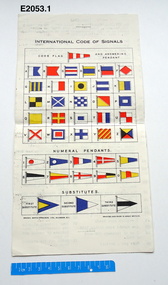
Pamphlet - Flags chart, International Code of Signals
... Started in 1936, the aim of the Pilots was to capture the imagination and the devotion of children for the service of the Kingdom of God and to begin the training for membership of the world wide church of Jesus Christ. ...Started in 1936, the aim of the Pilots was to capture the imagination and the devotion of children for the service of the Kingdom of God and to begin the training for membership of the world wide church of Jesus Christ. ...Single sheet of white paper with white, red, blue, yellow and black flags on the front and the names of the flags on the back.non-fictionpilots, congregational church, congregational church youth groups -
 Uniting Church Archives - Synod of Victoria
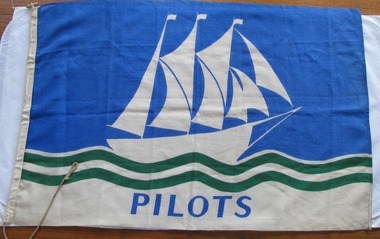
Flag - Pilots flag
... Started in 1936, the aim of the Pilots was to capture the imagination and the devotion of children for the service of the Kingdom of God and to begin the training for membership of the world wide church of Jesus Christ. ...Started in 1936, the aim of the Pilots was to capture the imagination and the devotion of children for the service of the Kingdom of God and to begin the training for membership of the world wide church of Jesus Christ. ...Started in 1936, the aim of the Pilots was to capture the imagination and the devotion of children for the service of the Kingdom of God and to begin the training for membership of the world wide church of Jesus Christ. Pilots was mainly a week-night activity to supplement the training which boys and girls are given on Sundays, either through Family Church courses or approved Sunday School guides. Many churches were already using the lesson courses prepared by the Youth and Education Department of the Congregational Union for the Family Church. A Pilot company consisting of six or more boys meet regularly under the leadership of a Captain. The Pilot's promise was "I will learn, pray and serve all I can in the world-wide church of Jesus Christ". [from "Compass : for Pilot Captains" book 1947]BN057 and BN004: Rectangular blue and green screen printed cream linen flag with cord and wood toggle at one sidePILOTScongregational church, pilots - congregational church, flags, congregational union, london missionary society -
 Uniting Church Archives - Synod of Victoria
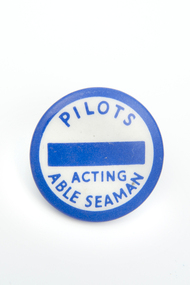
Badge
... Started in 1936, the aim of the Pilots was to capture the imagination and the devotion of children for the service of the Kingdom of God and to begin the training for membership of the world wide church of Jesus Christ. ...Started in 1936, the aim of the Pilots was to capture the imagination and the devotion of children for the service of the Kingdom of God and to begin the training for membership of the world wide church of Jesus Christ. ...Started in 1936, the aim of the Pilots was to capture the imagination and the devotion of children for the service of the Kingdom of God and to begin the training for membership of the world wide church of Jesus Christ. Pilots was mainly a week-night activity to supplement the training which boys and girls are given on Sundays, either through Family Church courses or approved Sunday School guides. Many churches were already using the lesson courses prepared by the Youth and Education Department of the Congregational Union for the Family Church. A Pilot company consisting of six or more boys meet regularly under the leadership of a Captain. The Pilot's promise was "I will learn, pray and serve all I can in the world-wide church of Jesus Christ" An Acting Able Seaman was for Pilots between the 8 - 10 years. [from "Compass : for Pilot Captains" book 1947] 3 x blue and white tin Pilots Acting Able Seaman badges. B018.1 B018.2 B018.3"Pilots Acting Able Seaman"pilots, congregational church, congregational union, congregational church youth groups -
 Uniting Church Archives - Synod of Victoria
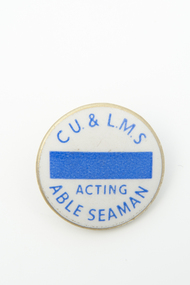
Badge
... Started in 1936, the aim of the Pilots was to capture the imagination and the devotion of children for the service of the Kingdom of God and to begin the training for membership of the world wide church of Jesus Christ. ...Started in 1936, the aim of the Pilots was to capture the imagination and the devotion of children for the service of the Kingdom of God and to begin the training for membership of the world wide church of Jesus Christ. ...Started in 1936, the aim of the Pilots was to capture the imagination and the devotion of children for the service of the Kingdom of God and to begin the training for membership of the world wide church of Jesus Christ. Pilots was mainly a week-night activity to supplement the training which boys and girls are given on Sundays, either through Family Church courses or approved Sunday School guides. Many churches were already using the lesson courses prepared by the Youth and Education Department of the Congregational Union for the Family Church. A Pilot company consisting of six or more boys meet regularly under the leadership of a Captain. The Pilot's promise was "I will learn, pray and serve all I can in the world-wide church of Jesus Christ" An Acting Able Seaman was for Pilots between the 8 - 10 years. [from "Compass : for Pilot Captains" book 1947]5 x blue and white badges with gold border. B017.1 B017.2 B017.3 B017.4 B017.5"C.U. & L.M.S. Acting Able Seaman"pilots - congregational church, congregational union, london missionary society, acting able seaman -
 Uniting Church Archives - Synod of Victoria
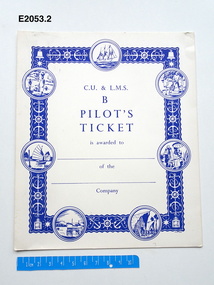
Certificate - Pilot's ticket, Congregational Union and London Missionary Society Pilot's ticket
... Started in 1936, the aim of the Pilots was to capture the imagination and the devotion of children for the service of the Kingdom of God and to begin the training for membership of the world wide church of Jesus Christ. ...Started in 1936, the aim of the Pilots was to capture the imagination and the devotion of children for the service of the Kingdom of God and to begin the training for membership of the world wide church of Jesus Christ. ...White card with blue text and decorative border.non-fictioncongregational church, pilots -
 Uniting Church Archives - Synod of Victoria
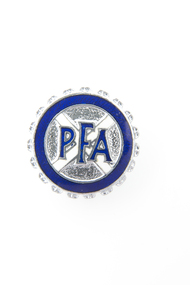
Badge - Lapel badge, Presbyterian Fellowship Association
... The aim of the PFA was "to unite youth in the fellowship of service of the Kingdom of God." Its objectives were "to present to youth the Gospel of Jesus as good news for them, the community and mankind, and as a call to vigorous and faithful activity for Christ's Kingdom in collaboration with all who seek that Kingdom. to help them understanding of the life and teaching of Jesus Christ through study of the Bible and other sources of inspiration. ...The aim of the PFA was "to unite youth in the fellowship of service of the Kingdom of God." Its objectives were "to present to youth the Gospel of Jesus as good news for them, the community and mankind, and as a call to vigorous and faithful activity for Christ's Kingdom in collaboration with all who seek that Kingdom. to help them understanding of the life and teaching of Jesus Christ through study of the Bible and other sources of inspiration. ...B006.1 associated with St George's PFA, St Kilda. Membership of the PFA was symbolised by the wearing of the badge. Badges were received by new members only at a special Badge Presentation Service. The letters "PFA" stand out clearly on the badge with the letter "F" the largest because Christian Fellowship is central - with God and and one another. Around the letters is a ring of blue. A ring is an emblem of love and blue traditionally stands for truth of loyalty. Behind the letters are a white St Andrew's cross. Around the edge of the badge are serrations which point outwards and symbolise the reaching out of the Fellowship to the world. The aim of the PFA was "to unite youth in the fellowship of service of the Kingdom of God." Its objectives were "to present to youth the Gospel of Jesus as good news for them, the community and mankind, and as a call to vigorous and faithful activity for Christ's Kingdom in collaboration with all who seek that Kingdom. to help them understanding of the life and teaching of Jesus Christ through study of the Bible and other sources of inspiration. To assist youth to grow to full and true maturity by helping to meet their spiritual needs in physical, mental and social realms. To unite the youth of the Presbyterian Church into a Fellowship of worship, study, recreation and service directed toward the achievement of these objectives." Source: "PFA Handbook", 1960.Seven Presbyterian Fellowship Association round blue and white enameled lapel badges. B006.1 PFA lapel sterling silver badge.PFApresbyterian fellowship association -
 Uniting Church Archives - Synod of Victoria
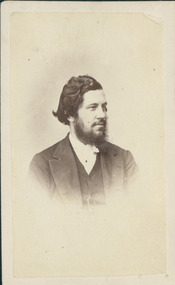
Photograph, Rev. Jacob John Halley, 1850-1869
... Obituary read: "For 37 years in the office of Union Secretary he had proved himself a faithful preacher of the Gospel, a leader of the general interest of the churches of peculiar force, knowledge and devotion, and an earnest and high principled citizen of the State, devoting hmself to the social amelioration of the people and the extension of the Kingdom of God. Our late Secretary was a man of vigorous intellectual power. ...Obituary read: "For 37 years in the office of Union Secretary he had proved himself a faithful preacher of the Gospel, a leader of the general interest of the churches of peculiar force, knowledge and devotion, and an earnest and high principled citizen of the State, devoting hmself to the social amelioration of the people and the extension of the Kingdom of God. Our late Secretary was a man of vigorous intellectual power. ...Born Highbury College London 1834, died Melbourne June 19, 1910. Ordained in Pitt Street Sydney Congregational Church 21/3/1860. Ministry: Bush Mission, Lower Darling River 1860–61; Maryborough 1861–64; Dawson St Ballarat 1864–72; Williamstown/Secretary CUV 1872–84; Secretary CUV 1884–1908. Chairman CUV 1871–72 & 1908–09. Son of Rev. Dr Robert Halley, Principal of Highbury College. Arrived Sydney c. 1853. Had a holiday home at Queescliff/Point Lonsdale and tried to establish a Congregational Church there. Obituary read: "For 37 years in the office of Union Secretary he had proved himself a faithful preacher of the Gospel, a leader of the general interest of the churches of peculiar force, knowledge and devotion, and an earnest and high principled citizen of the State, devoting hmself to the social amelioration of the people and the extension of the Kingdom of God. Our late Secretary was a man of vigorous intellectual power. His early life had given him a bent in the direction of the study of natural history. He was a keen observer, a lover of counry life, and the science and art of gardening, in which he occupied the leisure moments of a busy life."Portrait of Halley c. 1850–1869."C. 1850–1869 Rev. J. J. Halley, Cong. Union"halley, j. j., congregational church -
 Uniting Church Archives - Synod of Victoria
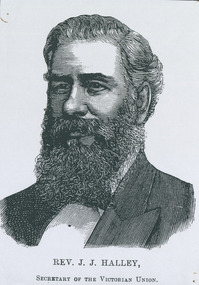
Photocopy of engraving, Rev. Jacob John Halley
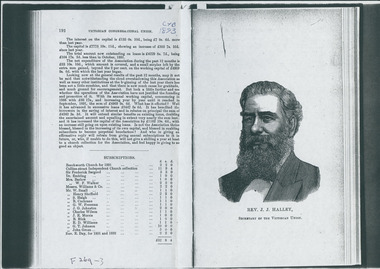
... Obituary read: "For 37 years in the office of Union Secretary he had proved himself a faithful preacher of the Gospel, a leader of the general interest of the churches of peculiar force, knowledge and devotion, and an earnest and high principled citizen of the State, devoting hmself to the social amelioration of the people and the extension of the Kingdom of God. Our late Secretary was a man of vigorous intellectual power. ...Obituary read: "For 37 years in the office of Union Secretary he had proved himself a faithful preacher of the Gospel, a leader of the general interest of the churches of peculiar force, knowledge and devotion, and an earnest and high principled citizen of the State, devoting hmself to the social amelioration of the people and the extension of the Kingdom of God. Our late Secretary was a man of vigorous intellectual power. ...Born Highbury College London 1834, died Melbourne June 19, 1910. Ordained in Pitt Street Sydney Congregational Church 21/3/1860. Ministry: Bush Mission, Lower Darling River 1860–61; Maryborough 1861–64; Dawson St Ballarat 1864–72; Williamstown/Secretary CUV 1872–84; Secretary CUV 1884–1908. Chairman CUV 1871–72 & 1908–09. Son of Rev. Dr Robert Halley, Principal of Highbury College. Arrived Sydney c. 1853. Had a holiday home at Queescliff/Point Lonsdale and tried to establish a Congregational Church there. Obituary read: "For 37 years in the office of Union Secretary he had proved himself a faithful preacher of the Gospel, a leader of the general interest of the churches of peculiar force, knowledge and devotion, and an earnest and high principled citizen of the State, devoting hmself to the social amelioration of the people and the extension of the Kingdom of God. Our late Secretary was a man of vigorous intellectual power. His early life had given him a bent in the direction of the study of natural history. He was a keen observer, a lover of counry life, and the science and art of gardening, in which he occupied the leisure moments of a busy life."Photocopy of engraving from the Congregational Year Book for 1893.halley, j. j., congregational church -
 Uniting Church Archives - Synod of Victoria
Photograph, Rev. Jacob John Halley
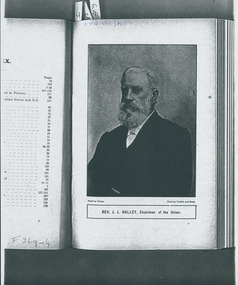
... Obituary read: "For 37 years in the office of Union Secretary he had proved himself a faithful preacher of the Gospel, a leader of the general interest of the churches of peculiar force, knowledge and devotion, and an earnest and high principled citizen of the State, devoting hmself to the social amelioration of the people and the extension of the Kingdom of God. Our late Secretary was a man of vigorous intellectual power. ...Obituary read: "For 37 years in the office of Union Secretary he had proved himself a faithful preacher of the Gospel, a leader of the general interest of the churches of peculiar force, knowledge and devotion, and an earnest and high principled citizen of the State, devoting hmself to the social amelioration of the people and the extension of the Kingdom of God. Our late Secretary was a man of vigorous intellectual power. ...Born Highbury College London 1834, died Melbourne June 19, 1910. Ordained in Pitt Street Sydney Congregational Church 21/3/1860. Ministry: Bush Mission, Lower Darling River 1860–61; Maryborough 1861–64; Dawson St Ballarat 1864–72; Williamstown/Secretary CUV 1872–84; Secretary CUV 1884–1908. Chairman CUV 1871–72 & 1908–09. Son of Rev. Dr Robert Halley, Principal of Highbury College. Arrived Sydney c. 1853. Had a holiday home at Queescliff/Point Lonsdale and tried to establish a Congregational Church there. Obituary read: "For 37 years in the office of Union Secretary he had proved himself a faithful preacher of the Gospel, a leader of the general interest of the churches of peculiar force, knowledge and devotion, and an earnest and high principled citizen of the State, devoting hmself to the social amelioration of the people and the extension of the Kingdom of God. Our late Secretary was a man of vigorous intellectual power. His early life had given him a bent in the direction of the study of natural history. He was a keen observer, a lover of counry life, and the science and art of gardening, in which he occupied the leisure moments of a busy life."Photocopy of engraving from the Congregational Year Book for 1893.halley, j. j., congregational church -
 Uniting Church Archives - Synod of Victoria
Photograph, Rev. Jacob John Halley
... Obituary read: "For 37 years in the office of Union Secretary he had proved himself a faithful preacher of the Gospel, a leader of the general interest of the churches of peculiar force, knowledge and devotion, and an earnest and high principled citizen of the State, devoting hmself to the social amelioration of the people and the extension of the Kingdom of God. Our late Secretary was a man of vigorous intellectual power. ...Obituary read: "For 37 years in the office of Union Secretary he had proved himself a faithful preacher of the Gospel, a leader of the general interest of the churches of peculiar force, knowledge and devotion, and an earnest and high principled citizen of the State, devoting hmself to the social amelioration of the people and the extension of the Kingdom of God. Our late Secretary was a man of vigorous intellectual power. ...Born Highbury College London 1834, died Melbourne June 19, 1910. Ordained in Pitt Street Sydney Congregational Church 21/3/1860. Ministry: Bush Mission, Lower Darling River 1860–61; Maryborough 1861–64; Dawson St Ballarat 1864–72; Williamstown/Secretary CUV 1872–84; Secretary CUV 1884–1908. Chairman CUV 1871–72 & 1908–09. Son of Rev. Dr Robert Halley, Principal of Highbury College. Arrived Sydney c. 1853. Had a holiday home at Queescliff/Point Lonsdale and tried to establish a Congregational Church there. Obituary read: "For 37 years in the office of Union Secretary he had proved himself a faithful preacher of the Gospel, a leader of the general interest of the churches of peculiar force, knowledge and devotion, and an earnest and high principled citizen of the State, devoting hmself to the social amelioration of the people and the extension of the Kingdom of God. Our late Secretary was a man of vigorous intellectual power. His early life had given him a bent in the direction of the study of natural history. He was a keen observer, a lover of counry life, and the science and art of gardening, in which he occupied the leisure moments of a busy life."Photocopy of engraving from the Congregational Year Book for 1893.halley, j. j., congregational church -
 Uniting Church Archives - Synod of Victoria
Pamphlet - The Bulletin, Fraser & Morphet Pty Ltd
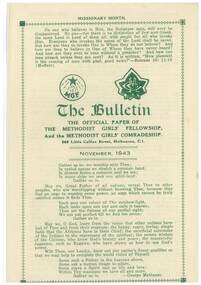
... It contains a missionary quiz and the "working for God's Kingdom": Christian Social Order Committee, Overseas Committee, City Missions, Inland, Cheltenham Homes, Babies' Homes, National Fitness and Easter Camps. ...It contains a missionary quiz and the "working for God's Kingdom": Christian Social Order Committee, Overseas Committee, City Missions, Inland, Cheltenham Homes, Babies' Homes, National Fitness and Easter Camps. ...This pamphlet is the official paper of the Methodist Girls' Fellowship and the Methodist Girls' Comradeship for November 1943 which was missionary month. It contains a missionary quiz and the "working for God's Kingdom": Christian Social Order Committee, Overseas Committee, City Missions, Inland, Cheltenham Homes, Babies' Homes, National Fitness and Easter Camps. The back contains "Doings - Near and Far". Amounts raised or donated are handwritten in the margin. Cream bi-fold paper with green text and images of the Methodist Girls' Fellowship and the Methodist Girls' Comradeship on the front. methodist girls' comardeship, methdodist girls' fellowship, missionary month -
 Sunshine and District Historical Society Incorporated
Archive - Brimbank Churches, Mosques, Temples & other Places of Worship, City of Sunshine
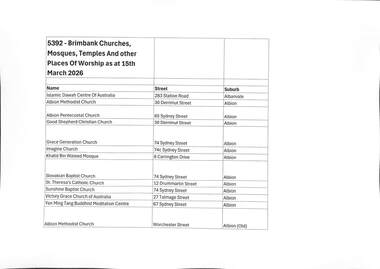
... Theresa's Catholic Church Sunshine Baptist Church Victory Grace Church of Australia Yen Ming Tang Buddhist Meditation Centre Albion Methodist Church Braybrook Methodist Church Braybrook Wesleyan Church Ardeer Ukrainian Catholic Church Chùa Bảo Vương Cyprus Turkish Islamic Community Etinchrist Kingdom Ministries Mother of God Catholic Church Queen of Heaven Church Braybook Presbyterian Church Braybrook Church of England Braybrook Methodist Church Braybrook Salvation Army Church Cao Dai Temple of Melbourne Christ the King Gateway to Glory Church God Is with Us Christian Church INC Liên Trì Tự - Lien Tri Temple Peneil Church Australia Quang Minh Buddhist Temple Samoan Assembly of God St. ...Theresa's Catholic Church Sunshine Baptist Church Victory Grace Church of Australia Yen Ming Tang Buddhist Meditation Centre Albion Methodist Church Braybrook Methodist Church Braybrook Wesleyan Church Ardeer Ukrainian Catholic Church Chùa Bảo Vương Cyprus Turkish Islamic Community Etinchrist Kingdom Ministries Mother of God Catholic Church Queen of Heaven Church Braybook Presbyterian Church Braybrook Church of England Braybrook Methodist Church Braybrook Salvation Army Church Cao Dai Temple of Melbourne Christ the King Gateway to Glory Church God Is with Us Christian Church INC Liên Trì Tự - Lien Tri Temple Peneil Church Australia Quang Minh Buddhist Temple Samoan Assembly of God St. ...List of former and current churches in the City of Brimbank. This includes churches in the former City of Sunshine and City of Keilor.This report records current and former churches in the City of Brimbank as of 15th March 2026.Name Islamic Dawah Centre Of Australia Albion Methodist Church Albion Pentecostal Church Good Shepherd Christian Church Grace Generation Church Imagine Church Khalid Bin Waleed Mosque Slovakian Baptist Church St. Theresa's Catholic Church Sunshine Baptist Church Victory Grace Church of Australia Yen Ming Tang Buddhist Meditation Centre Albion Methodist Church Braybrook Methodist Church Braybrook Wesleyan Church Ardeer Ukrainian Catholic Church Chùa Bảo Vương Cyprus Turkish Islamic Community Etinchrist Kingdom Ministries Mother of God Catholic Church Queen of Heaven Church Braybook Presbyterian Church Braybrook Church of England Braybrook Methodist Church Braybrook Salvation Army Church Cao Dai Temple of Melbourne Christ the King Gateway to Glory Church God Is with Us Christian Church INC Liên Trì Tự - Lien Tri Temple Peneil Church Australia Quang Minh Buddhist Temple Samoan Assembly of God St. Andrew’s & St. Peter’s Anglican Church Chùa Ấn Quang Avalokitesvara Yuan Tong Monastery Beautiful Life Church Bosnian Islamic Centre Chùa Lộc Uyển Deer Park Methodist Church Deer Park Preca Centre St Peter Chanel Catholic Church St. John Anglican Church The Church of Jesus Christ of Latter-day Saints Western Community Alliance Church Avalokitesvara Yuan Tong Monastery ReSoul Church Sion Baptist Chruch Chua Phap Van Buddhist Temple Living Hope Christian Church St Paul's Catholic Church Keilor Christ Church Keilor Uniting Church in Australia St Stephen Bethlehem - Church of the Living God House of Prayer St Mary of the Assumption Parish The City of Refuge, Melbourne Brimbank Anglican Church Vantage Point Church West Campus Arise Church Seventh Day Adventist Reform Movement St Augustine's Catholic Church Resurrection Catholic Parish Church Al Nur Mosque Assembly of Belivers Church Hillsong Church - West Campus Iglesia Ni Cristo - Locale of Melbourne Maidstone Church of Christ Maidstone Church of England Maidstone Methodist Church Maidstone Mosque Maidstone Presbyterian Church Maidstone Salvation Army Church Maidstone Wesleyan Chapel New Apostolic Church Our Ladys Westside Assembly of God Worldwide Missionary Movement Melbourne Ethiopian Orthdox Church Maribyrnong Methodist Church Maribyrnong Methodist Church St Margaret's Catholic Church Hillsong Church Melbourne Greater West Campus Wesleyan Methodist Church Bridge Church West Campus Chùa Hoàng Pháp Chùa Thiện Đức Chua Tu Quang Temple Friendens Kirche Lutheran Church of St. Albans GROW Church Holy Eucharist Jehovah Witnesses Kings Park Filipino Congregation of Jehovah Witnesses Mata Chintapurni Mandir Hindu Temple St Albans Neuma Church Melbourne West Panjan Centre Peace Lutheran Church Russian Orthodox Church (Abroad) Sacred Heart Catholic Church Saint Paraskevi Greek Orthodox Church And Community St. Albans St Albans Uniting Church St. Alban the Martyr Church of England St. Albans Croatian Seventh-Day Adventist Church St. Albans Preca Centre St. Albans Slavic Church St. Albans Vietnamese Alliance Church St. George Serbian Orthodox Church St. George's Coptic Orthodox Church - Melbourne St. Paraskevi Greek Orthodox Church St. Albans St. Paul Catholic Church Temple Transform Church United Penticostal Church Western New Community Baptist Church Avalokitesvara Yuan Tong Monastery Chua Hue Quang Temple Church of Christ / Elias Church of St the Prophet (Greek-Melkite) Church of England Cloud Christian Church Community Church Holy Apostles Anglican Church Hope Of Life Community Church Jehovah's Witnesses Kingdom Hall of Jehovah's Witnesses Mara Christian Church of Victoria Inc. Our Lady of the Immaculate Catholic Church Pentecostal Church Plymonth Brethren Church Plymonth Brethren Church Roman Catholic Church Seventh Day Aventist Church St. Marks Church Sunshine Sunshine Methodist Church Sunshine North Sunshine Presbyterian Church Sunshine Roman Catholic Church Sunshine Uniting Church Sunshine Vietnamese Baptist Church Sunshine Wesleyan Methodist Church Tamil Christian Fellowship Melbourne The Salvation Army The Salvation Army Westcare Vietnamese Evangelical Church Voice Of Christ Full Gospel Church Inc. Sunshine Zetseat Ethiopian Evangelical Church Australian Christian Churches Victoria Chua Phap Hoa Buddhist Temple Enjoy Church Faith & Power Ministry Revival Church Iglesia Cristiana Melbourne Murugan Hindu Temple North Sunshine Gospel Hall Pentecostal Missionary Church of Christ (4th Watch) St Bernadette's Parish St. Marys Church of England Sunshine North Presbyterian Church Sunshine North Uniting Church Tabor Romanian Pentecostal Church Western Spanish Seventh-day Adventist Church Ardeer Preca Centre Croatian Catholic Centre, Sunshine Elevation Church, Melbourne West Our Lady of Sorrows' Catholic Church St Anthony’s Greek Orthodox Church St Paul's Church Catholic Church The Potters House Christian Church (Footscray) Emmaus Catholic Church Macedonian Orthodox Cathedral Church - Nativity of The Holy Mother of God (St.Mary) St. Mary's (Holy Mother of God) Macedonian Orthodox Church Sydenham - Caroline Springs Uniting Church Sydenham Baptist Church Sydenham Presbyterian Church The Salvation Army Brimbank City Corps Town Well Uniting Church Sydenham Brimbank Presbyterian Church St. Luke's Anglican Church The Potters House Christian Church Avustralya Nur Vakfi church, churches -
 Federation University Historical Collection
Work on paper - Artwork, Ballarat East Main Road Joss House Rubbings
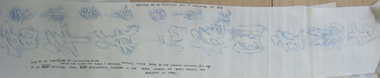
... Think of his loyalty (Quan Yu, now can canonised as the god of war to whom this temple is dedicated) (AD1084) to his sworn lover their sworn botherhood pledged in the peach garden as has been praised for thousands of years. .2) Rubbing in blue crayon of Chinese calligraphy from pole on right hand side of Joss House Door. (Larger) his great graciousness spreads to other (us here in foreign lands) kingdoms...Think of his loyalty (Quan Yu, now can canonised as the god of war to whom this temple is dedicated) (AD1084) to his sworn lover their sworn botherhood pledged in the peach garden as has been praised for thousands of years. .2) Rubbing in blue crayon of Chinese calligraphy from pole on right hand side of Joss House Door. (Larger) his great graciousness spreads to other (us here in foreign lands) kingdoms ...A number of rubbings of calligraphic carvings thought to be from the Ballarat East Joss House in Main Road. .1) Blue and brown crayon. Translation: Erected on an auspicious day in winter 1859. Think of his loyalty (Quan Yu, now can canonised as the god of war to whom this temple is dedicated) (AD1084) to his sworn lover their sworn botherhood pledged in the peach garden as has been praised for thousands of years. .2) Rubbing in blue crayon of Chinese calligraphy from pole on right hand side of Joss House Door. (Larger) his great graciousness spreads to other (us here in foreign lands) kingdoms, and his virtue guards our gold miners everywhere. (Smaller) Dedicated to his disciples the Chu Pei-Huo family .3) Rubbing on litho paper. translation - One who knows the nature of things (in the world) will thus understand human nature. .4) Rubbing on litho paper. Translation of middle calligraphy - We all behold the wisdom of the gods in the heavens, earth and man. .5) Rubbing on litho paper - translation - The grace of god flows to all corners of the earth. .6) Charcoal rubbing - translation - Temple of the god of war. .7) Crayon rubbing of calligraphy on litho paper. Translation - Dedicated by the Ma Chu-Feng family. Emperor's virtue spreads far and wide. Grace in Abundance. Erected in winter, 1859. .8) Crayon rubbing of calligraphy on litho paper. Translation: Respectfully dedicated by the Ts'Ai Chi-Yang family. Grace in abundance. Erected in winter of 1859. .9) Crayon rubbing .10) Outline of calligraphy on copy paper .11) Rubbings of calligraphy on copy paper. Translation: The Holy God of War. Exhibited in 1862. Your respectful disciples. .12) List of 11 disciples chinese, joss house, keith rash, chu pei-huo, quan yu, ma chu-feng, ts'ai chi-yang, lee chua-yeh, hwong tien-jyue, wa perg-nan, liu chin-chuson, an lee factory, lice hsue-chiere, lee mei-tzy, lee pas-chi, lui lih-nie, wir hon-fu, li hsi-yang -
 Flagstaff Hill Maritime Museum and Village
Currency - Guinea Coin, The Royal Mint, 1793 George III Spade Guinea, 1793
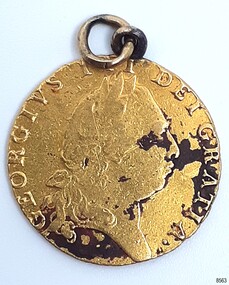
... God) Obverse relief; (King George III bust, facing right, laurel wreath on head) Reverse text; 'M.B.E.ET.H.REX.F. D.B.ET.L.D. S.R.I.A.T.ET.E' '1793' (translates to: King of Great Britain, France and Ireland, Defender of the Faith, Duke of Brunswick and Lüneburg, Arch-Treasurer and Elector of the Holy Roman Empire) Reverse relief; a spade-shaped image i.e. (Crown with fleer de lies, above Shield with crowned lions in different postures, a harp, and other details) Gold coin; British. 1793, King George III of the United Kingdom ...The coin was discovered by Julie Wilkins, a Victorian scuba diver who had already experienced more than 500 dives in Australia and overseas. She was holidaying in Peterborough, Victoria, and looking forward to discovering more about the famous Loch Ard ship, wrecked in June 1878 at Mutton Bird Island. The fast Glasgow-built clipper ship was only five years old when the tragedy occurred. There were 54 people on board the vessel and only two survived Julie's holiday photograph of Boat Bay reminds her of her most memorable dive. Submerged in the calm, flat sea, she was carefully scanning around the remains of the old wreck when, to her amazement, a gold coin and a small gold cross suddenly came up towards her. She excitedly cupped them in her hands, then stowed the treasures safely in her wetsuit and continued her dive. She soon discovered a group of brass carriage clock parts and some bottles of champagne. It was a day full of surprises. The items were easily recognisable, without any build-up of encrustations or concretion. Julie secretly enjoyed her treasures for twenty-four years then packed them up for the early morning train trip to Warrnambool. After a short walk to Flagstaff Hill Maritime Museum and Village, her photograph was taken as she handed over her precious find. She told her story to a local newspaper reporter, lunched a café in town then took the late afternoon train home. Her generous donation is now part of a vast collection of Loch Ard shipwreck artefacts, including the gold watch and the Minton Majolica model peacock. The coin is a British 1793 George III Gold Spade Guinea. It was already 83 years old when the Loch Ard had set sail. The loop and ring have been added, perhaps as a pendant, pocket watch accessory or similar purpose. It may have been worn for ‘good luck’ on the long journey to Australia, where ships had to carefully navigate the treacherous Bass’s Strait before arriving at their destination of Melbourne. Sadly, many met their fate on that short stretch of ocean aptly named the Shipwreck Coast. The coin is very recognisable even though it was exposed to the wrecking of the ship, its consequent movement, and the sea's turbulence. Its bent, scratched, buckled, split, dinted and worn condition is part of its story. The red-brown-black discolouration is similar to that found on other gold coins, sometimes called the ‘corrosion phenomena’. Studies suggest the possible cause is contaminants in the minting process reacting to the coins’ environment. The GEORGE III GOLD SPADE GUINEA: - The British Guinea was introduced in 1663 and was circulated until 1814. It was made of 22 carat gold, was 25 to 26 cm in diameter and weighed 8.35 grams. It had a value of 21 British shillings. The guinea coin ceased circulation after 1816 and was replaced by the one-pound note. However, the term ‘guinea’ continued to represent 21 shillings. King George (1738-1820) had six gold guinea designs minted during his reign from 1760 and 1820. Each of the six had different obverse portraits, all facing the right. There were three different reverse sides. The Spade Guinea was the fifth issue of the coin, introduced in 1787 and produced until 1799. The reverse shows a royal crown over a flat-topped shield with the Royal Arms of Great Britain, used in Scotland between 1714 and 1800. The shield images are, from left to right, top to bottom, the Arms of England and Scotland, the Arms of France, the Arms of Ireland, and the Arms of the House of Hanover. The Gold Guinea is also part of Australia’s history. It was the first coin mentioned in the announcement of Governor King of New South Wales his Australian Proclamation of a limited variety and denomination of coins accepted for use in the Australian Colony. The historic and decorative George III Spade Guinea has been reproduced for special collections of coins. However, replicas and imitations have also been made as souvenirs for tourists, as gaming tokens and chips for gamblers, and as ‘fake’ coins for profit. These coins differ in many ways; they may be only half the weight of the genuine coin. Often have a small stamp on the obverse with “COPY” or the manufacturer’s name or initials. Some have scalloped edges, some have dates that are different to the original dates of issue, and some even have text in Latin that translates as something very different to the original coin.The King George III Guinea was only produced from 1663 to 1814 and was the first English coin to be mechanically minted. The coin is the fifth edition of the King George III Guinea, the Spade Guinea, was only produced between 1787 and 1799. It is the only edition with this portrait of King George and the only one with the Royal Coat of Arms of Great Britain in Scotland on the reverse side. This edition was also the last guinea in circulation, because the sixth edition was reserved as the Military guinea. This edition of the Guinea is unique; This coin is the only guinea in our collection. It was minted in 1793, so it is now over 230 years old. The Gold Guinea is part of Australia’s history; it was the first coin in the list of coins for use in the Australian Colonies, mentioned by Governor King of New South Wales in his Australian Proclamation speech of 1800. The George III Spade Guinea was included in the Limited Edition Sherwood 12 Coin Collection of Notable Coinage of Australia. This coin is the only known guinea coin recovered from the wreck of the Loch Ard. It was already 85 years old when the ship was wrecked.Gold coin; British. 1793, King George III of the United Kingdom of Great Britain and Ireland (1760-1820), Spade Guinea. Yellow gold coin with gold metal loop mount and a gold ring through the loop. The design is the fifth issue of the George III Gold Guinea. The obverse relief is a portrait of George III facing right. Reverse relief is a crown above the Coats of Arms (1801-1816) of flat top spade-shaped shield divided into four quadrants that depict crowned lions, fleur de lies, a harp. These images are identified as, from left to right, top to bottom, England and Scotland, France, Ireland and Hanover. Inscriptions are minted around the rims of each side. The coin is dated 1793. Its surface has dark areas on both sides and the reed edge and surfaces are well worn. The loop mount is bent and the ring is buckled. The coin was recovered from the wreck of the ship Loch Ard.Obverse text; 'GEORGIVS III DEI GRATIA' (translates to George the Third, by the Grace of God) Obverse relief; (King George III bust, facing right, laurel wreath on head) Reverse text; 'M.B.E.ET.H.REX.F. D.B.ET.L.D. S.R.I.A.T.ET.E' '1793' (translates to: King of Great Britain, France and Ireland, Defender of the Faith, Duke of Brunswick and Lüneburg, Arch-Treasurer and Elector of the Holy Roman Empire) Reverse relief; a spade-shaped image i.e. (Crown with fleer de lies, above Shield with crowned lions in different postures, a harp, and other details)flagstaff hill maritime museum and village, warrnambool, great ocean road, shipwreck coast, royal mint, british coin, currency, guinea, military guinea, australian currency, british guinea, gold coin, spade guinea, king george iii, george iii, fifth portrait, arms of england and scotland, arms of france, arms of ireland, arms of the house of hanover, coins, gold coins, gold medallion, georgian era, 1793, numismatics, contamination phenomena, gold corrosion, good luck, lucky charm, pendant, lucky coin, trade, loch ard, wreck of the loch ard, 1878, mutton bird island, peterborough, scuba diver, 1980s, guinea coin, gold guinea, shipwreck artefact, relic, julie wilkins -
 Flagstaff Hill Maritime Museum and Village
Book - Reference Religious Ideology, Charles Taze Russell, Millennial Dawn Vol 3 Thy Kingdom Come, 1905
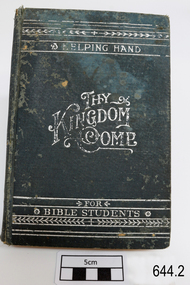
... Kingdom Come) was published in 1905 by the Watch Tower Bible & Tract Society and is a central text in the history of modern American millenarianism. The subject book was originally published in 1886 under the title The Plan of the Ages, and later re-titled The Divine Plan of the Ages as part of the Studies in the Scriptures series. Volume 1 lays out the foundational theological framework of Charles Taze Russell's religious movement. The book argues that God ...Millennial Dawn, Vol. 3 (Thy Kingdom Come) was published in 1905 by the Watch Tower Bible & Tract Society and is a central text in the history of modern American millenarianism. The subject book was originally published in 1886 under the title The Plan of the Ages, and later re-titled The Divine Plan of the Ages as part of the Studies in the Scriptures series. Volume 1 lays out the foundational theological framework of Charles Taze Russell's religious movement. The book argues that God operates through distinct chronological "dispensations" or ages, such as the Patriarchal Age, the Jewish Age, and the Gospel Age, leading up to the "Millennial Age". Its primary themes include the harmonising of the scriptures while attempting to systematically reconcile Old and New Testament prophecies.Millennial Dawn Vol 3 (Thy Kingdom Come) Author: Charles Taze Russell Publisher: Watch Tower Bible & Tract Society. Allegheny, PA USA 1905 Date: 1905 Further Information: Blue hard cover book with white text to lettering and front board edge pattern designnon-fictionMillennial Dawn, Vol. 3 (Thy Kingdom Come) was published in 1905 by the Watch Tower Bible & Tract Society and is a central text in the history of modern American millenarianism. The subject book was originally published in 1886 under the title The Plan of the Ages, and later re-titled The Divine Plan of the Ages as part of the Studies in the Scriptures series. Volume 1 lays out the foundational theological framework of Charles Taze Russell's religious movement. The book argues that God operates through distinct chronological "dispensations" or ages, such as the Patriarchal Age, the Jewish Age, and the Gospel Age, leading up to the "Millennial Age". Its primary themes include the harmonising of the scriptures while attempting to systematically reconcile Old and New Testament prophecies.flagstaff hill, warrnambool, shipwrecked-coast, flagstaff-hill, flagstaff-hill-maritime-museum, maritime-museum, shipwreck-coast, millennial dawn vol 1 the plan of the ages, book, religious works, watch tower bible & tract society, charles taze russell, jehova witness, bible studies -
 The Beechworth Burke Museum
Medal - Order of the British Empire Medal, 01/01/1976
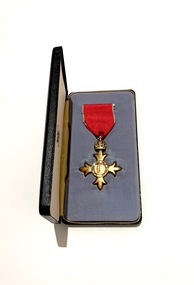
... Kingdom, however this soon became available to Commonwealth countries as well. However, Australia officially ceased to recommend the Order of the British Empire in 1989 with the establishment of the Order of Australia. burke museum obe obe medal beechworth david mckenzie-mcharg british honours system george v beechworth community order of australia. order of the british empire marjorie jean mckenzie mcharg Obverse: FOR GOD AND THE EMPIRE / Silver badge suspended from red ribbon with pearl-grey edges. ...David Aloysius Patrick McKenzie-McHarg, L.I.B, O.B.E was born on 20th June 1918 in Albury, NSW to Hugh Patrick McKenzie-McHarg and Laura May (Dunne) McKenzie-McHarg. McKenzie-McHarg served on the Council of the United Shire of Beechworth for more than a decade during the 1960s-70s, including seven years as president. He was renowned as a public speaker and played a significant role in the community. In recognition for his outstanding achievements and services rendered to the Beechworth community he was awarded an Order of the British Empire (OBE) in 1976. David McKenzie-McHarg died on 6th June 1992 and is buried in Beechworth Cemetery. David McKenzie-McHarg’s wife, Marjorie Jean McKenzie McHarg, was well known to the Beechworth community as a brilliant pianist and played at all the balls and house parties. Apparently, she could play without sheet-music and would only have to hear a tune once to play it to near perfection. Together, they were a formidable asset to the Beechworth community over many years The British honours system has various orders, usually relating to the monarchy, military and colonial officials. An OBE (or order of the British Empire) is given for an outstanding achievement or service to the community. This will have had a long-term, significant impact and stand out as an example to others. This Order was established by George V in 1917 in response to recognising the thousands of men and women who served in a variety of non-combatant roles during the First world war who didn’t otherwise receive any formal recognition but were certainly worthy of acknowledgement. Recommendations for appointments to this Order were originally made on the nomination of the United Kingdom, however this soon became available to Commonwealth countries as well. However, Australia officially ceased to recommend the Order of the British Empire in 1989 with the establishment of the Order of Australia. Silver badge suspended from red ribbon with pearl-grey edges. The badge is in the form of a cross patonce (having the arms growing broader and floriated toward the end), the obverse of which bears the same field as the star pictures George V and Queen Mary. The reverse bears George V's Royal and Imperial Cypher. Both are within a ring bearing the motto of the Order: FOR GOD AND THE EMPIRE. The presentation case in which the medal is housed is of a black outer boarder edge leatherette finishing, block letters in gold OBE. The inside has a cream velvet base with a silk padded liner to the roof with the full set of Royal Mint Crest Mark. Obverse: FOR GOD AND THE EMPIRE / burke museum, obe, obe medal, beechworth, david mckenzie-mcharg, british honours system, george v, beechworth community, order of australia., order of the british empire, marjorie jean mckenzie mcharg -
 Red Cliffs Military Museum
Certificate, Rank Promotion, 3/5/1918 (exact)
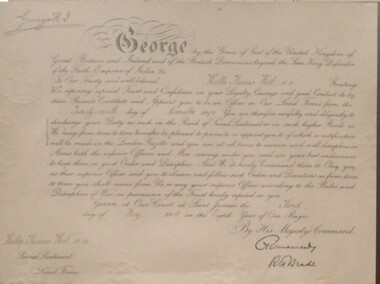
... Main Face of Certificate: 13 George, by the Grace of God of the united Kingdom of Great Britain and Ireland and of the British Dominions beyond the seas. ...Main Face of Certificate: 13 George, by the Grace of God of the united Kingdom of Great Britain and Ireland and of the British Dominions beyond the seas. ...This is another of the documents held within a frame 90.5cm X 66.5cm, covered by no-reflective glass of the Walter Thomas West Collection.Official Royal Document Certificate possibly done by caligrapher in old English script,signed by King George V, and a signature which is not decipherable.Top Left hand Corner: George R.I. (Signature of King George V). Main Face of Certificate: 13 George, by the Grace of God of the united Kingdom of Great Britain and Ireland and of the British Dominions beyond the seas. King Defender of the Faith Emporer of India etc. To our Trusty and well Beloved Walter Thomas West MM Greetings We reposing a special trust and confidence in your Loyalty, Courage and good conduct do by these presents constitute and appoint you to be an Officer in our land forces from the twenty - ninth day of November 1917. You are therefore carefully and diigently to discharge your duty as such in the Rank of Second Lieutenant or in such a higher Rank as we may from time to time hereafter be pleased to promote or Appoint you to, of which notification will be made in the London Gazette, and you are at all times to exercise and well discipline in arms both the inferior Officers and men serving under you and use your best endeavours to keep them in good order and disipline. And we do hereby command them to obey you as their superior Officer and you to observe and follow such orders and directions as from time to time you shall receive from us or any of your superior Officers according to the rules and discipline of war in persuance of the trust here by reposed in you. Given at our court at Saint James's the Third Day of May 1918 in the eighth year of our reign. By His Majesty's Command Signature Undecipheral Bottom Left hand corner Walter West MM Second Lieutenant Land Forcesww1, gazette, london, walter, thomas, west, mm, mc, lieutenant, royal, document, 2nd -
 Flagstaff Hill Maritime Museum and Village
Currency - Coin, 1819
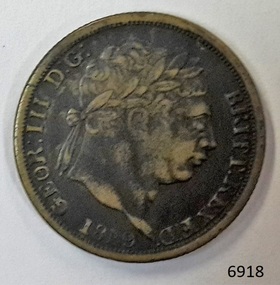
... Coins for circulation in the Kingdom of England, Great Britain and most of the British Empire were produced here until the 1960’s when the Royal Mint shifted location to Wales. The obverse side of the coin’s inscription translation is “George III by the Grace of God, King of the British territories, Defender of the Faith”. ...Coins for circulation in the Kingdom of England, Great Britain and most of the British Empire were produced here until the 1960’s when the Royal Mint shifted location to Wales. The obverse side of the coin’s inscription translation is “George III by the Grace of God, King of the British territories, Defender of the Faith”. ...This Great Britain shilling is dated 1819, the year before King George III died. There were over 7 million of these coins minted. King George III succeeded his grandfather, King George II, on the throne in 1760. He reigned until his death on 29th January 1820. The shield in the centre of the reverse of the coin is the Hanoverian Shield, showing that the House of Hanover was elected to the crown rather than taking the crown as a victory. This coin’s denomination is not inscribed on the coin but it has been identified as a shilling from information about the King George III currency 1816-1820. - The 6 pence coin is 19mm - This Shilling is 24mm (the same size as this coin) - The Half Crown is 32mm British coins such as this one shilling were in circulation in the colony of Australia until 1910, when the Commonwealth of Australia began producing its own coinage. This coin was minted by the Royal Mint at Royal Mint Court, in Little Tower Hill, London, England. Coins for circulation in the Kingdom of England, Great Britain and most of the British Empire were produced here until the 1960’s when the Royal Mint shifted location to Wales. The obverse side of the coin’s inscription translation is “George III by the Grace of God, King of the British territories, Defender of the Faith”. The engraver of the obverse image was Benedetto Pistrucci. The reverse side’s inscription on the coin is translated "Evil to him who evil thinks” The engraver of the reverse image was Thomas Wyon. AUSTRALIAN CURRENCY The early settlers of Australia brought their own currency with them so a wide variety of coins, tokens and even ‘promissory’ notes (often called IOU’s) were used in the exchange of goods and services. In 1813 40,000 silver Spanish dollars, purchased by the English government, were delivered to Sydney to help resolve the currency problem reported by Governor Macquarie. The coins were converted for use by punching a hole in the centre of the coin. Both the outer ring, called the holey dollar, and the punched out ‘hole’, called the dump, were then used as the official currency. The holey dollars hold the place of being the first distinctively Australian coins. In 1825 the British Government passed the Sterling Silver Currency Act, making the British Pound the only legal form of currency in the Australian colonies. Not enough British currency was imported into the colony so other forms of currency were still used. In the mid 1800’s Australia entered the Gold Rush period when many made their fortunes. Gold was used for trading, often shaped into ingots, stamped with their weight and purity, and one pound tokens. In 1852 the Adelaide Assay Office, without British approval, made Australia’s first gold coin to meet the need for currency in South Australia after the Gold Rush began. In 1855 the official Australian Mint opened in Sydney, operating as a branch of the Royal Mint in London, and the gold was turned into coins called ‘sovereigns’. Other branches also opened in Melbourne and Perth. Up to the time Australia became a federation in 1901 its currency included British copper and silver coins, Australian gold sovereigns, locally minted copper trade tokens, private banknotes, New South Wales and Queensland government treasury notes and Queensland government banknotes. After Federation, the Australian government began to overwrite privately issued notes and prepared for the introduction of its own currency. In 1910 a National Australian Currency was formed, based on the British currency of ‘pounds, shillings and pence’ and the first Commonwealth coining was produced. In 1966, on February 14th, Australia changed over to the decimal currency system of dollars and cents. Australia did not have its own currency in the colonial times. Settlers brought money from other countries and they also traded goods such as grain when currency was scarce. For a long time there was no standardised value for the different currencies. In 1825 British currency became the only official currency in the colony of Australia and coins such as this silver shilling were imported into Australia to replace the mixture of foreign currency. Australia became a Federated nation on 1st January 1901. In 1910 National Australian Currency was formed and Australia produced its own currency, based on the British ‘pounds, shillings and pence’. The British currency was no longer valid. This silver shilling is of national significance as it represents the British currency used in Australia from 1825-1910. Coin, Great Britain shilling, 1819. Silver coin, round. Obverse; King George III head, looking right. Reverse; crown on top of quartered shield, 2 diagonally opposite quarters both show 3 lions, another quarter has a rampant lion, another quarter has a harp; in the centre of the shield is a small crowned shield with 3 symbols that appear to be lions. Inscriptions on both sides of coin (denomination not inscribed).Obverse “GEOR . III D . G . BRITT . REX F . D .” and “1819” Reverse “HONI . SOIT . Q [UI obscured] . MAL . Y . PENSE” flagstaff hill, warrnambool, shipwrecked coast, flagstaff hill maritime museum, maritime museum, shipwreck coast, flagstaff hill maritime village, great ocean road, coin, currency, money, legal tender, australian currency history, royal mint, great britain shilling 1819, king george iii currency, colonial australia currency, benedetto pistrucci, thomas wyon, numismatics -
 Flagstaff Hill Maritime Museum and Village
Currency - Coin, 1819
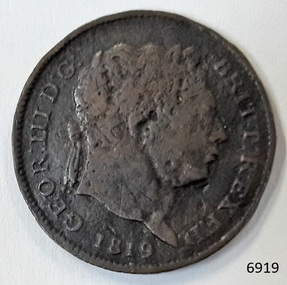
... Coins for circulation in the Kingdom of England, Great Britain and most of the British Empire were produced here until the 1960’s when the Royal Mint shifted location to Wales. The obverse side of the coin’s inscription translation is “George III by the Grace of God, King of the British territories, Defender of the Faith”. ...Coins for circulation in the Kingdom of England, Great Britain and most of the British Empire were produced here until the 1960’s when the Royal Mint shifted location to Wales. The obverse side of the coin’s inscription translation is “George III by the Grace of God, King of the British territories, Defender of the Faith”. ...This Great Britain shilling is dated 1819, the year before King George III died. There were over 7 million of these coins minted. King George III succeeded his grandfather, King George II, on the throne in 1760. He reigned until his death on 29th January 1820. The shield in the centre of the reverse of the coin is the Hanoverian Shield, showing that the House of Hanover was elected to the crown rather than taking the crown as a victory. This coin’s denomination is not inscribed on the coin but it has been identified as a shilling from information about the King George III currency 1816-1820. - The 6 pence coin is 19mm - This Shilling is 24mm (the same size as this coin) - The Half Crown is 32mm British coins such as this one shilling were in circulation in the colony of Australia until 1910, when the Commonwealth of Australia began producing its own coinage. This coin was minted by the Royal Mint at Royal Mint Court, in Little Tower Hill, London, England. Coins for circulation in the Kingdom of England, Great Britain and most of the British Empire were produced here until the 1960’s when the Royal Mint shifted location to Wales. The obverse side of the coin’s inscription translation is “George III by the Grace of God, King of the British territories, Defender of the Faith”. The engraver of the obverse image was Benedetto Pistrucci. The reverse side’s inscription on the coin is translated "Evil to him who evil thinks” The engraver of the reverse image was Thomas Wyon. AUSTRALIAN CURRENCY The early settlers of Australia brought their own currency with them so a wide variety of coins, tokens and even ‘promissory’ notes (often called IOU’s) were used in the exchange of goods and services. In 1813 40,000 silver Spanish dollars, purchased by the English government, were delivered to Sydney to help resolve the currency problem reported by Governor Macquarie. The coins were converted for use by punching a hole in the centre of the coin. Both the outer ring, called the holey dollar, and the punched out ‘hole’, called the dump, were then used as the official currency. The holey dollars hold the place of being the first distinctively Australian coins. In 1825 the British Government passed the Sterling Silver Currency Act, making the British Pound the only legal form of currency in the Australian colonies. Not enough British currency was imported into the colony so other forms of currency were still used. In the mid 1800’s Australia entered the Gold Rush period when many made their fortunes. Gold was used for trading, often shaped into ingots, stamped with their weight and purity, and one pound tokens. In 1852 the Adelaide Assay Office, without British approval, made Australia’s first gold coin to meet the need for currency in South Australia after the Gold Rush began. In 1855 the official Australian Mint opened in Sydney, operating as a branch of the Royal Mint in London, and the gold was turned into coins called ‘sovereigns’. Other branches also opened in Melbourne and Perth. Up to the time of Australia becoming a federation in 1901 its currency included British copper and silver coins, Australian gold sovereigns, locally minted copper trade tokens, private banknotes, New South Wales and Queensland government treasury notes and Queensland government banknotes. After Federation the Australian government began to overwrite privately issued notes and prepared for the introduction of its own currency. In 1910 a National Australian Currency was formed, based on the British currency of ‘pounds, shillings and pence’ and the first Commonwealth coining was produced. In 1966, on February 14th, Australia changed over to the decimal currency system of dollars and cents. Australia did not have its own currency in the colonial times. Settlers brought money from other countries and they also traded goods such as grain when currency was scarce. For a long time there was no standardised value for the different currencies. In 1825 British currency became the only official currency in the colony of Australia and coins such as this silver shilling were imported into Australia to replace the mixture of foreign currency. Australia became a Federated nation on 1st January 1901. In 1910 National Australian Currency was formed and Australia produced its own currency, based on the British ‘pounds, shillings and pence’. The British currency was no longer valid. This silver shilling is of national significance as it represents the British currency used in Australia from 1825-1910. Coin, Great Britain shilling, 1819. Silver coin, round. Obverse; King George III head, looking right. Reverse; crown on top of quartered shield, 2 diagonally opposite quarters each show 3 lions, another quarter has a rampant lion, another quarter has a harp; in the centre of the shield is a small crowned shield with 3 symbols that appear to be lions. Inscriptions on both sides of coin (denomination not inscribed).Obverse “GEOR . III D . G . BRITT . REX F . D .” and “1819” Reverse “HONI . SOIT . Q [UI obscured] . MAL . Y . PENSE” flagstaff hill, warrnambool, shipwrecked coast, flagstaff hill maritime museum, maritime museum, shipwreck coast, flagstaff hill maritime village, great ocean road, coin, currency, money, legal tender, australian currency history, royal mint, great britain shilling 1819, king george iii currency, colonial australia currency, benedetto pistrucci, thomas wyon, numismatics -
 Flagstaff Hill Maritime Museum and Village
Currency - Coin, 1826
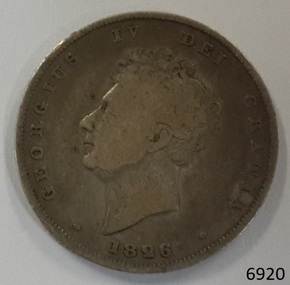
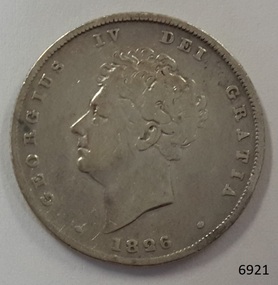
... Coins for circulation in the Kingdom of England, Great Britain and most of the British Empire were produced here until the 1960’s when the Royal Mint shifted location to Wales. The obverse side of the coin’s inscription translation is “George IV by the Grace of God”. ...Coins for circulation in the Kingdom of England, Great Britain and most of the British Empire were produced here until the 1960’s when the Royal Mint shifted location to Wales. The obverse side of the coin’s inscription translation is “George IV by the Grace of God”. ...This Great Britain shilling is dated 1826. There were over 6 million of these coins minted during the reign of King George IV, 1820-1830 This coin’s denomination is not inscribed on the coin but it has been identified as a shilling from information about the King George III currency 1816-1820. - This Shilling is 24mm (the same size as this coin) British coins such as this one shilling were in circulation in the colony of Australia until 1910, when the Commonwealth of Australia began producing its own coinage. This coin was minted by the Royal Mint at Royal Mint Court, in Little Tower Hill, London, England. Coins for circulation in the Kingdom of England, Great Britain and most of the British Empire were produced here until the 1960’s when the Royal Mint shifted location to Wales. The obverse side of the coin’s inscription translation is “George IV by the Grace of God”. The engraver of the obverse image was William Wyon. The reverse side’s inscription on the coin is translated " King of The British territories, Defender of the Faith” The engraver of the reverse image was William Wyon. AUSTRALIAN CURRENCY The early settlers of Australia brought their own currency with them so a wide variety of coins, tokens and even ‘promissory’ notes (often called IOU’s) were used in the exchange of goods and services. In 1813 40,000 silver Spanish dollars, purchased by the English government, were delivered to Sydney to help resolve the currency problem reported by Governor Macquarie. The coins were converted for use by punching a hole in the centre of the coin. Both the outer ring, called the holey dollar, and the punched out ‘hole’, called the dump, were then used as the official currency. The holey dollars hold the place of being the first distinctively Australian coins. In 1825 the British Government passed the Sterling Silver Currency Act, making the British Pound the only legal form of currency in the Australian colonies. Not enough British currency was imported into the colony so other forms of currency were still used. In the mid 1800’s Australia entered the Gold Rush period when many made their fortunes. Gold was used for trading, often shaped into ingots, stamped with their weight and purity, and one pound tokens. In 1852 the Adelaide Assay Office, without British approval, made Australia’s first gold coin to meet the need for currency in South Australia after the Gold Rush began. In 1855 the official Australian Mint opened in Sydney, operating as a branch of the Royal Mint in London, and the gold was turned into coins called ‘sovereigns’. Other branches also opened in Melbourne and Perth. Up to the time of Australia becoming a federation in 1901 its currency included British copper and silver coins, Australian gold sovereigns, locally minted copper trade tokens, private banknotes, New South Wales and Queensland government treasury notes and Queensland government banknotes. After Federation the Australian government began to overwrite privately issued notes and prepared for the introduction of its own currency. In 1910 a National Australian Currency was formed, based on the British currency of ‘pounds, shillings and pence’ and the first Commonwealth coining was produced. In 1966, on February 14th, Australia changed over to the decimal currency system of dollars and cents. Australia did not have its own currency in the colonial times. Settlers brought money from other countries and they also traded goods such as grain when currency was scarce. For a long time there was no standardised value for the different currencies. In 1825 British currency became the only official currency in the colony of Australia and coins such as this silver shilling were imported into Australia to replace the mixture of foreign currency. Australia became a Federated nation on 1st January 1901. In 1910 National Australian Currency was formed and Australia produced its own currency, based on the British ‘pounds, shillings and pence’. The British currency was no longer valid. This silver shilling is of national significance as it represents the British currency used in Australia from 1825-1910. Coin, Great Britain shilling. 1826. Silver coin, round. Obverse; King George IV bare head, looking left. Reverse; crowned lion; below, a large crown; below are a shamrock, rose and thistle united. Inscriptions on both sides of coin (denomination not inscribed).Obverse “GEORGIUS IV DEI GRATIA” and “1826” Reverse “BRITANNIARUM REX FIDEI DEFENSOR” flagstaff hill, warrnambool, shipwrecked coast, flagstaff hill maritime museum, maritime museum, shipwreck coast, flagstaff hill maritime village, great ocean road, coin, currency, money, legal tender, australian currency history, royal mint, great britain shilling 1826, king george iv currency, colonial australia currency, william wyon, numismatics -
 Flagstaff Hill Maritime Museum and Village
Currency - Coin, 1826
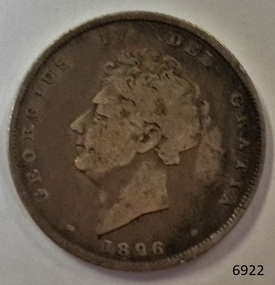
... Coins for circulation in the Kingdom of England, Great Britain and most of the British Empire were produced here until the 1960’s when the Royal Mint shifted location to Wales. The obverse side of the coin’s inscription translation is “George IV by the Grace of God”. ...Coins for circulation in the Kingdom of England, Great Britain and most of the British Empire were produced here until the 1960’s when the Royal Mint shifted location to Wales. The obverse side of the coin’s inscription translation is “George IV by the Grace of God”. ...This Great Britain shilling is dated 1826. There were over 6 million of these coins minted during the reign of King George IV, 1820-1830 This coin’s denomination is not inscribed on the coin but it has been identified as a shilling from information about the King George III currency 1816-1820. - This Shilling is 24mm (the same size as this coin) British coins such as this one shilling were in circulation in the colony of Australia until 1910, when the Commonwealth of Australia began producing its own coinage. This coin was minted by the Royal Mint at Royal Mint Court, in Little Tower Hill, London, England. Coins for circulation in the Kingdom of England, Great Britain and most of the British Empire were produced here until the 1960’s when the Royal Mint shifted location to Wales. The obverse side of the coin’s inscription translation is “George IV by the Grace of God”. The engraver of the obverse image was William Wyon. The reverse side’s inscription on the coin is translated " King of The British territories, Defender of the Faith” The engraver of the reverse image was William Wyon. AUSTRALIAN CURRENCY The early settlers of Australia brought their own currency with them so a wide variety of coins, tokens and even ‘promissory’ notes (often called IOU’s) were used in the exchange of goods and services. In 1813 40,000 silver Spanish dollars, purchased by the English government, were delivered to Sydney to help resolve the currency problem reported by Governor Macquarie. The coins were converted for use by punching a hole in the centre of the coin. Both the outer ring, called the holey dollar, and the punched out ‘hole’, called the dump, were then used as the official currency. The holey dollars hold the place of being the first distinctively Australian coins. In 1825 the British Government passed the Sterling Silver Currency Act, making the British Pound the only legal form of currency in the Australian colonies. Not enough British currency was imported into the colony so other forms of currency were still used. In the mid 1800’s Australia entered the Gold Rush period when many made their fortunes. Gold was used for trading, often shaped into ingots, stamped with their weight and purity, and one pound tokens. In 1852 the Adelaide Assay Office, without British approval, made Australia’s first gold coin to meet the need for currency in South Australia after the Gold Rush began. In 1855 the official Australian Mint opened in Sydney, operating as a branch of the Royal Mint in London, and the gold was turned into coins called ‘sovereigns’. Other branches also opened in Melbourne and Perth. Up to the time of Australia becoming a federation in 1901 its currency included British copper and silver coins, Australian gold sovereigns, locally minted copper trade tokens, private banknotes, New South Wales and Queensland government treasury notes and Queensland government banknotes. After Federation the Australian government began to overwrite privately issued notes and prepared for the introduction of its own currency. In 1910 a National Australian Currency was formed, based on the British currency of ‘pounds, shillings and pence’ and the first Commonwealth coining was produced. In 1966, on February 14th, Australia changed over to the decimal currency system of dollars and cents. Australia did not have its own currency in the colonial times. Settlers brought money from other countries and they also traded goods such as grain when currency was scarce. For a long time there was no standardised value for the different currencies. In 1825 British currency became the only official currency in the colony of Australia and coins such as this silver shilling were imported into Australia to replace the mixture of foreign currency. Australia became a Federated nation on 1st January 1901. In 1910 National Australian Currency was formed and Australia produced its own currency, based on the British ‘pounds, shillings and pence’. The British currency was no longer valid. This silver shilling is of national significance as it represents the British currency used in Australia from 1825-1910. Coin, Great Britain shilling. 1826. Silver coin, round. Obverse; King George IV bare head, looking left. Reverse; crowned lion; below, a large crown; below are a shamrock, rose and thistle united. Inscriptions on both sides of coin (denomination not inscribed).Obverse “GEORGIUS IV DEI GRATIA” and “1826” Reverse “BRITANNIARUM REX FIDEI DEFENSOR” flagstaff hill, warrnambool, shipwrecked coast, flagstaff hill maritime museum, maritime museum, shipwreck coast, flagstaff hill maritime village, great ocean road, coin, currency, money, legal tender, australian currency history, royal mint, great britain shilling 1826, king george iv currency, colonial australia currency, william wyon, numismatics -
 Flagstaff Hill Maritime Museum and Village
Currency - Coin, 1826
... Coins for circulation in the Kingdom of England, Great Britain and most of the British Empire were produced here until the 1960’s when the Royal Mint shifted location to Wales. The obverse side of the coin’s inscription translation is “George IV by the Grace of God”. ...Coins for circulation in the Kingdom of England, Great Britain and most of the British Empire were produced here until the 1960’s when the Royal Mint shifted location to Wales. The obverse side of the coin’s inscription translation is “George IV by the Grace of God”. ...This Great Britain shilling is dated 1826. There were over 6 million of these coins minted during the reign of King George IV, 1820-1830 This coin’s denomination is not inscribed on the coin but it has been identified as a shilling from information about the King George III currency 1816-1820. - This Shilling is 24mm (the same size as this coin) British coins such as this one shilling were in circulation in the colony of Australia until 1910, when the Commonwealth of Australia began producing its own coinage. This coin was minted by the Royal Mint at Royal Mint Court, in Little Tower Hill, London, England. Coins for circulation in the Kingdom of England, Great Britain and most of the British Empire were produced here until the 1960’s when the Royal Mint shifted location to Wales. The obverse side of the coin’s inscription translation is “George IV by the Grace of God”. The engraver of the obverse image was William Wyon. The reverse side’s inscription on the coin is translated " King of The British territories, Defender of the Faith” The engraver of the reverse image was William Wyon. AUSTRALIAN CURRENCY The early settlers of Australia brought their own currency with them so a wide variety of coins, tokens and even ‘promissory’ notes (often called IOU’s) were used in the exchange of goods and services. In 1813 40,000 silver Spanish dollars, purchased by the English government, were delivered to Sydney to help resolve the currency problem reported by Governor Macquarie. The coins were converted for use by punching a hole in the centre of the coin. Both the outer ring, called the holey dollar, and the punched out ‘hole’, called the dump, were then used as the official currency. The holey dollars hold the place of being the first distinctively Australian coins. In 1825 the British Government passed the Sterling Silver Currency Act, making the British Pound the only legal form of currency in the Australian colonies. Not enough British currency was imported into the colony so other forms of currency were still used. In the mid 1800’s Australia entered the Gold Rush period when many made their fortunes. Gold was used for trading, often shaped into ingots, stamped with their weight and purity, and one pound tokens. In 1852 the Adelaide Assay Office, without British approval, made Australia’s first gold coin to meet the need for currency in South Australia after the Gold Rush began. In 1855 the official Australian Mint opened in Sydney, operating as a branch of the Royal Mint in London, and the gold was turned into coins called ‘sovereigns’. Other branches also opened in Melbourne and Perth. Up to the time of Australia becoming a federation in 1901 its currency included British copper and silver coins, Australian gold sovereigns, locally minted copper trade tokens, private banknotes, New South Wales and Queensland government treasury notes and Queensland government banknotes. After Federation the Australian government began to overwrite privately issued notes and prepared for the introduction of its own currency. In 1910 a National Australian Currency was formed, based on the British currency of ‘pounds, shillings and pence’ and the first Commonwealth coining was produced. In 1966, on February 14th, Australia changed over to the decimal currency system of dollars and cents. Australia did not have its own currency in the colonial times. Settlers brought money from other countries and they also traded goods such as grain when currency was scarce. For a long time there was no standardised value for the different currencies. In 1825 British currency became the only official currency in the colony of Australia and coins such as this silver shilling were imported into Australia to replace the mixture of foreign currency. Australia became a Federated nation on 1st January 1901. In 1910 National Australian Currency was formed and Australia produced its own currency, based on the British ‘pounds, shillings and pence’. The British currency was no longer valid. This silver shilling is of national significance as it represents the British currency used in Australia from 1825-1910. Coin, Great Britain shilling. 1826. Silver coin, round. Obverse; King George IV bare head, looking left. Reverse; crowned lion; below, a large crown; below are a shamrock, rose and thistle united. Inscriptions on both sides of coin (denomination not inscribed).Obverse “GEORGIUS IV DEI GRATIA” and “1826” Reverse “BRITANNIARUM REX FIDEI DEFENSOR” flagstaff hill, warrnambool, shipwrecked coast, flagstaff hill maritime museum, maritime museum, shipwreck coast, flagstaff hill maritime village, great ocean road, coin, currency, money, legal tender, australian currency history, royal mint, great britain shilling 1826, king george iv currency, colonial australia currency, william wyon, numismatics -
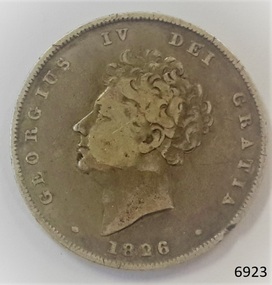 Flagstaff Hill Maritime Museum and Village
Currency - Coin, 1826
... Coins for circulation in the Kingdom of England, Great Britain and most of the British Empire were produced here until the 1960’s when the Royal Mint shifted location to Wales. The obverse side of the coin’s inscription translation is “George IV by the Grace of God”. ...Coins for circulation in the Kingdom of England, Great Britain and most of the British Empire were produced here until the 1960’s when the Royal Mint shifted location to Wales. The obverse side of the coin’s inscription translation is “George IV by the Grace of God”. ...This Great Britain shilling is dated 1826. There were over 6 million of these coins minted during the reign of King George IV, 1820-1830 This coin’s denomination is not inscribed on the coin but it has been identified as a shilling from information about the King George III currency 1816-1820. - This Shilling is 24mm (the same size as this coin) British coins such as this one shilling were in circulation in the colony of Australia until 1910, when the Commonwealth of Australia began producing its own coinage. This coin was minted by the Royal Mint at Royal Mint Court, in Little Tower Hill, London, England. Coins for circulation in the Kingdom of England, Great Britain and most of the British Empire were produced here until the 1960’s when the Royal Mint shifted location to Wales. The obverse side of the coin’s inscription translation is “George IV by the Grace of God”. The engraver of the obverse image was William Wyon. The reverse side’s inscription on the coin is translated " King of The British territories, Defender of the Faith” The engraver of the reverse image was William Wyon. AUSTRALIAN CURRENCY The early settlers of Australia brought their own currency with them so a wide variety of coins, tokens and even ‘promissory’ notes (often called IOU’s) were used in the exchange of goods and services. In 1813 40,000 silver Spanish dollars, purchased by the English government, were delivered to Sydney to help resolve the currency problem reported by Governor Macquarie. The coins were converted for use by punching a hole in the centre of the coin. Both the outer ring, called the holey dollar, and the punched out ‘hole’, called the dump, were then used as the official currency. The holey dollars hold the place of being the first distinctively Australian coins. In 1825 the British Government passed the Sterling Silver Currency Act, making the British Pound the only legal form of currency in the Australian colonies. Not enough British currency was imported into the colony so other forms of currency were still used. In the mid 1800’s Australia entered the Gold Rush period when many made their fortunes. Gold was used for trading, often shaped into ingots, stamped with their weight and purity, and one pound tokens. In 1852 the Adelaide Assay Office, without British approval, made Australia’s first gold coin to meet the need for currency in South Australia after the Gold Rush began. In 1855 the official Australian Mint opened in Sydney, operating as a branch of the Royal Mint in London, and the gold was turned into coins called ‘sovereigns’. Other branches also opened in Melbourne and Perth. Up to the time of Australia becoming a federation in 1901 its currency included British copper and silver coins, Australian gold sovereigns, locally minted copper trade tokens, private banknotes, New South Wales and Queensland government treasury notes and Queensland government banknotes. After Federation the Australian government began to overwrite privately issued notes and prepared for the introduction of its own currency. In 1910 a National Australian Currency was formed, based on the British currency of ‘pounds, shillings and pence’ and the first Commonwealth coining was produced. In 1966, on February 14th, Australia changed over to the decimal currency system of dollars and cents. Australia did not have its own currency in the colonial times. Settlers brought money from other countries and they also traded goods such as grain when currency was scarce. For a long time there was no standardised value for the different currencies. In 1825 British currency became the only official currency in the colony of Australia and coins such as this silver shilling were imported into Australia to replace the mixture of foreign currency. Australia became a Federated nation on 1st January 1901. In 1910 National Australian Currency was formed and Australia produced its own currency, based on the British ‘pounds, shillings and pence’. The British currency was no longer valid. This silver shilling is of national significance as it represents the British currency used in Australia from 1825-1910. Coin, Great Britain shilling. 1826. Silver coin, round. Obverse; King George IV bare head, looking left. Reverse; crowned lion; below, a large crown; below are a shamrock, rose and thistle united. Inscriptions on both sides of coin (denomination not inscribed).Obverse “GEORGIUS IV DEI GRATIA” and “1826” Reverse “BRITANNIARUM REX FIDEI DEFENSOR” flagstaff hill, warrnambool, shipwrecked coast, flagstaff hill maritime museum, maritime museum, shipwreck coast, flagstaff hill maritime village, great ocean road, coin, currency, money, legal tender, australian currency history, royal mint, great britain shilling 1826, king george iv currency, colonial australia currency, william wyon, numismatics -
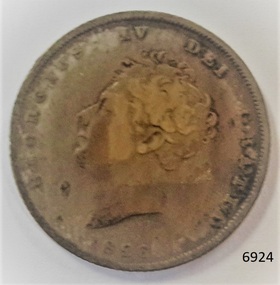 Flagstaff Hill Maritime Museum and Village
Currency - Coin, 1826
... Coins for circulation in the Kingdom of England, Great Britain and most of the British Empire were produced here until the 1960’s when the Royal Mint shifted location to Wales. The obverse side of the coin’s inscription translation is “George IV by the Grace of God”. ...Coins for circulation in the Kingdom of England, Great Britain and most of the British Empire were produced here until the 1960’s when the Royal Mint shifted location to Wales. The obverse side of the coin’s inscription translation is “George IV by the Grace of God”. ...This Great Britain shilling is dated 1826. There were over 6 million of these coins minted during the reign of King George IV, 1820-1830 This coin’s denomination is not inscribed on the coin but it has been identified as a shilling from information about the King George III currency 1816-1820. - This Shilling is 24mm (the same size as this coin) British coins such as this one shilling were in circulation in the colony of Australia until 1910, when the Commonwealth of Australia began producing its own coinage. This coin was minted by the Royal Mint at Royal Mint Court, in Little Tower Hill, London, England. Coins for circulation in the Kingdom of England, Great Britain and most of the British Empire were produced here until the 1960’s when the Royal Mint shifted location to Wales. The obverse side of the coin’s inscription translation is “George IV by the Grace of God”. The engraver of the obverse image was William Wyon. The reverse side’s inscription on the coin is translated " King of The British territories, Defender of the Faith” The engraver of the reverse image was William Wyon. AUSTRALIAN CURRENCY The early settlers of Australia brought their own currency with them so a wide variety of coins, tokens and even ‘promissory’ notes (often called IOU’s) were used in the exchange of goods and services. In 1813 40,000 silver Spanish dollars, purchased by the English government, were delivered to Sydney to help resolve the currency problem reported by Governor Macquarie. The coins were converted for use by punching a hole in the centre of the coin. Both the outer ring, called the holey dollar, and the punched out ‘hole’, called the dump, were then used as the official currency. The holey dollars hold the place of being the first distinctively Australian coins. In 1825 the British Government passed the Sterling Silver Currency Act, making the British Pound the only legal form of currency in the Australian colonies. Not enough British currency was imported into the colony so other forms of currency were still used. In the mid 1800’s Australia entered the Gold Rush period when many made their fortunes. Gold was used for trading, often shaped into ingots, stamped with their weight and purity, and one pound tokens. In 1852 the Adelaide Assay Office, without British approval, made Australia’s first gold coin to meet the need for currency in South Australia after the Gold Rush began. In 1855 the official Australian Mint opened in Sydney, operating as a branch of the Royal Mint in London, and the gold was turned into coins called ‘sovereigns’. Other branches also opened in Melbourne and Perth. Up to the time of Australia becoming a federation in 1901 its currency included British copper and silver coins, Australian gold sovereigns, locally minted copper trade tokens, private banknotes, New South Wales and Queensland government treasury notes and Queensland government banknotes. After Federation the Australian government began to overwrite privately issued notes and prepared for the introduction of its own currency. In 1910 a National Australian Currency was formed, based on the British currency of ‘pounds, shillings and pence’ and the first Commonwealth coining was produced. In 1966, on February 14th, Australia changed over to the decimal currency system of dollars and cents. Australia did not have its own currency in the colonial times. Settlers brought money from other countries and they also traded goods such as grain when currency was scarce. For a long time there was no standardised value for the different currencies. In 1825 British currency became the only official currency in the colony of Australia and coins such as this silver shilling were imported into Australia to replace the mixture of foreign currency. Australia became a Federated nation on 1st January 1901. In 1910 National Australian Currency was formed and Australia produced its own currency, based on the British ‘pounds, shillings and pence’. The British currency was no longer valid. This silver shilling is of national significance as it represents the British currency used in Australia from 1825-1910. Coin, Great Britain shilling. 1826. Silver coin, round. Obverse; King George IV bare head, looking left. Reverse; crowned lion; below, a large crown; below are a shamrock, rose and thistle united. Inscriptions on both sides of coin (denomination not inscribed).Obverse “GEORGIUS IV DEI GRATIA” and “1826” Reverse “BRITANNIARUM REX FIDEI DEFENSOR” flagstaff hill, warrnambool, shipwrecked coast, flagstaff hill maritime museum, maritime museum, shipwreck coast, flagstaff hill maritime village, great ocean road, coin, currency, money, legal tender, australian currency history, royal mint, great britain shilling 1826, king george iv currency, colonial australia currency, william wyon, numismatics -
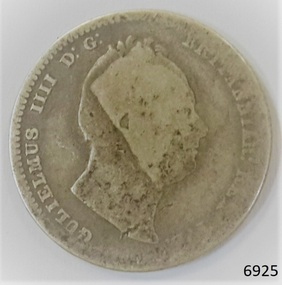 Flagstaff Hill Maritime Museum and Village
Currency - Coin, 1835
... Coins for circulation in the Kingdom of England, Great Britain and most of the British Empire were produced here until the 1960’s when the Royal Mint shifted location to Wales. The obverse side of the coin’s inscription translation is “William IV by the Grace of God, King of the British territories, Defender of the Faith”. ...Coins for circulation in the Kingdom of England, Great Britain and most of the British Empire were produced here until the 1960’s when the Royal Mint shifted location to Wales. The obverse side of the coin’s inscription translation is “William IV by the Grace of God, King of the British territories, Defender of the Faith”. ...This Great Britain shilling is dated 1835. There were over 3 million of these coins minted during the reign of King William IV, 1830-1837. British coins such as this one shilling were in circulation in the colony of Australia until 1910, when the Commonwealth of Australia began producing its own coinage. This coin was minted by the Royal Mint at Royal Mint Court, in Little Tower Hill, London, England. Coins for circulation in the Kingdom of England, Great Britain and most of the British Empire were produced here until the 1960’s when the Royal Mint shifted location to Wales. The obverse side of the coin’s inscription translation is “William IV by the Grace of God, King of the British territories, Defender of the Faith”. The engraver of the obverse image was William Wyon. The reverse side’s inscription on the coin is translated " King of The British territories, Defender of the Faith” The engraver of the reverse image was Jean Baptiste Merlen. AUSTRALIAN CURRENCY The early settlers of Australia brought their own currency with them so a wide variety of coins, tokens and even ‘promissory’ notes (often called IOU’s) were used in the exchange of goods and services. In 1813 40,000 silver Spanish dollars, purchased by the English government, were delivered to Sydney to help resolve the currency problem reported by Governor Macquarie. The coins were converted for use by punching a hole in the centre of the coin. Both the outer ring, called the holey dollar, and the punched out ‘hole’, called the dump, were then used as the official currency. The holey dollars hold the place of being the first distinctively Australian coins. In 1825 the British Government passed the Sterling Silver Currency Act, making the British Pound the only legal form of currency in the Australian colonies. Not enough British currency was imported into the colony so other forms of currency were still used. In the mid 1800’s Australia entered the Gold Rush period when many made their fortunes. Gold was used for trading, often shaped into ingots, stamped with their weight and purity, and one pound tokens. In 1852 the Adelaide Assay Office, without British approval, made Australia’s first gold coin to meet the need for currency in South Australia after the Gold Rush began. In 1855 the official Australian Mint opened in Sydney, operating as a branch of the Royal Mint in London, and the gold was turned into coins called ‘sovereigns’. Other branches also opened in Melbourne and Perth. Up to the time of Australia becoming a federation in 1901 its currency included British copper and silver coins, Australian gold sovereigns, locally minted copper trade tokens, private banknotes, New South Wales and Queensland government treasury notes and Queensland government banknotes. After Federation the Australian government began to overwrite privately issued notes and prepared for the introduction of its own currency. In 1910 a National Australian Currency was formed, based on the British currency of ‘pounds, shillings and pence’ and the first Commonwealth coining was produced. In 1966, on February 14th, Australia changed over to the decimal currency system of dollars and cents. Australia did not have its own currency in the colonial times. Settlers brought money from other countries and they also traded goods such as grain when currency was scarce. For a long time there was no standardised value for the different currencies. In 1825 British currency became the only official currency in the colony of Australia and coins such as this silver shilling were imported into Australia to replace the mixture of foreign currency. Australia became a Federated nation on 1st January 1901. In 1910 National Australian Currency was formed and Australia produced its own currency, based on the British ‘pounds, shillings and pence’. The British currency was no longer valid. This silver shilling is of national significance as it represents the British currency used in Australia from 1825-1910. Coin, Great Britain shilling. 1835. Silver coin, round. Obverse; King William IV bare head, looking right. Reverse; crown above denomination, surrounded by wreath, year below wreath. Inscription on both sides.Obverse “GULIELMUS IIII D : G : BRITANNIAR : REX F : D :” Reverse “ONE SHILLING” and “1835” flagstaff hill, warrnambool, shipwrecked coast, flagstaff hill maritime museum, maritime museum, shipwreck coast, flagstaff hill maritime village, great ocean road, coin, currency, money, legal tender, australian currency history, royal mint, great britain shilling 1835, king william iv currency, colonial australia currency, william wyon, jean baptiste merlen, numismatics
