
Showing 38 items matching "lexicon"
-
 Flagstaff Hill Maritime Museum and Village
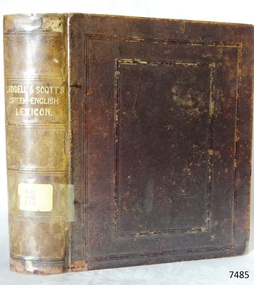
Book, The Greek-English Lexicon
... The Greek-English Lexicon...The Greek-English Lexicon Author: H G Liddell Publisher: Oxford University Press Date: 1852...Warrnambool Shipwrecked-coast Flagstaff-Hill Flagstaff-Hill-Maritime-Museum Maritime-Museum Shipwreck-coast Flagstaff-Hill-Maritime-Village Shipwrecked-artefact Book Warrnambool Mechanics’ Institute Pattison Collection Warrnambool Library Ralph Eric Pattison Warrnambool City Librarian Mechanics’ Institute Library Victorian Library Board Warrnambool books and records Warrnambool Children’s Library The Greek-English Lexicon H G Liddell Label on spine cover with typed text PAT 480 LID Pastedown end page has sticker from Warrnambool Mechanics Institute and Free Library covered by a sticker from Corangamite Regional Library Service The Greek-English Lexicon Author: H G Liddell Publisher: Oxford University Press Date: 1852 The Greek-English Lexicon Book ...This item is from the ‘Pattison Collection’, a collection of books and records that was originally owned by the Warrnambool Mechanics’ Institute, which was founded in Warrnambool in 1853. By 1886 the Warrnambool Mechanics’ Institute (WMI) had grown to have a Library, Museum and Fine Arts Gallery, with a collection of “… choice productions of art, and valuable specimens in almost every branch and many wonderful national curiosities are now to be seen there, including historic relics of the town and district.” It later included a School of Design. Although it was very well patronised, the lack of financial support led the WMI in 1911 to ask the City Council to take it over. In 1935 Ralph Pattison was appointed as City Librarian to establish and organise the Warrnambool Library as it was then called. When the WMI building was pulled down in 1963 a new civic building was erected on the site and the new Warrnambool Library, on behalf of the City Council, took over all the holdings of the WMI. At this time some of the items were separated and identified as the ‘Pattison Collection’, named after Ralph Pattison. Eventually the components of the WMI were distributed from the Warrnambool Library to various places, including the Art Gallery, Historical Society and Flagstaff Hill. Later some were even distributed to other regional branches of Corangamite Regional Library and passed to and fro. It is difficult now to trace just where all of the items have ended up. The books at Flagstaff Hill Maritime Village generally display stamps and markings from Pattison as well as a variety of other institutions including the Mechanics’ Institute itself. RALPH ERIC PATTISON Ralph Eric Pattison was born in Rockhampton, Queensland, in 1891. He married Maude Swan from Warrnambool in 1920 and they set up home in Warrnambool. In 1935 Pattison accepted a position as City Librarian for the Warrnambool City Council. His huge challenge was to make a functional library within two rooms of the Mechanics’ Institute. He tirelessly cleaned, cleared and sorted a disarrayed collection of old books, jars of preserved specimens and other items reserved for exhibition in the city’s museum. He developed and updated the library with a wide variety of books for all tastes, including reference books for students; a difficult task to fulfil during the years following the Depression. He converted all of the lower area of the building into a library, reference room and reading room for members and the public. The books were sorted and stored using a cataloguing and card index system that he had developed himself. He also prepared the upper floor of the building and established the Art Gallery and later the Museum, a place to exhibit the many old relics that had been stored for years for this purpose. One of the treasures he found was a beautiful ancient clock, which he repaired, restored and enjoyed using in his office during the years of his service there. Ralph Pattison was described as “a meticulous gentleman whose punctuality, floorless courtesy and distinctive neat dress were hallmarks of his character, and ‘his’ clock controlled his daily routine, and his opening and closing of the library’s large heavy doors to the minute.” Pattison took leave during 1942 to 1942 to serve in the Royal Australian Navy, Volunteer Reserve as Lieutenant. A few years later he converted one of the Museum’s rooms into a Children’s Library, stocking it with suitable books for the younger generation. This was an instant success. In the 1950’s he had the honour of being appointed to the Victorian Library Board and received more inspiration from the monthly conferences in Melbourne. He was sadly retired in 1959 after over 23 years of service, due to the fact that he had gone over the working age of council officers. However he continued to take a very keen interest in the continual development of the Library until his death in 1969. The Pattison Collection, along with other items at Flagstaff Hill Maritime Village, was originally part of the Warrnambool Mechanics' Institute’s collection. The Warrnambool Mechanics’ Institute Collection is primarily significant in its totality, rather than for the individual objects it contains. Its contents are highly representative of the development of Mechanics' Institute libraries across Australia, particularly Victoria. A diversity of publications and themes has been amassed, and these provide clues to our understanding of the nature of and changes in the reading habits of Victorians from the 1850s to the middle of the 20th century. The collection also highlights the Warrnambool community’s commitment to the Mechanics’ Institute, reading, literacy and learning in the regions, and proves that access to knowledge was not impeded by distance. These items help to provide a more complete picture of our community’s ideals and aspirations. The Warrnambool Mechanics Institute book collection has historical and social significance for its strong association with the Mechanics Institute movement and the important role it played in the intellectual, cultural and social development of people throughout the latter part of the nineteenth century and the early twentieth century. The collection of books is a rare example of an early lending library and its significance is enhanced by the survival of an original collection of many volumes. The Warrnambool Mechanics' Institute’s publication collection is of both local and state significance. The Greek-English Lexicon Author: H G Liddell Publisher: Oxford University Press Date: 1852Label on spine cover with typed text PAT 480 LID Pastedown end page has sticker from Warrnambool Mechanics Institute and Free Library covered by a sticker from Corangamite Regional Library Servicewarrnambool, shipwrecked-coast, flagstaff-hill, flagstaff-hill-maritime-museum, maritime-museum, shipwreck-coast, flagstaff-hill-maritime-village, shipwrecked-artefact, book, warrnambool mechanics’ institute, pattison collection, warrnambool library, ralph eric pattison, warrnambool city librarian, mechanics’ institute library, victorian library board, warrnambool books and records, warrnambool children’s library, the greek-english lexicon, h g liddell -
 Linton Mechanics Institute and Free Library Collection
Book - Lexicon, Shelton, Edward, The historical finger-post: a handy book of terms, phrases, epithets, cognomens, allusions, &c in connection with universal history, 1865
... Lexicon......Lexicon...English Literature Lexicon Edward Shelton Language A lexicon of terms, phrases, epithets, cognomens, allusions, &c in connection with universal history; including politics, theology, law, commerce, literature, army and navy, arts and sciences, geography, tradition, national, social and personal characteristics. ...A lexicon of terms, phrases, epithets, cognomens, allusions, &c in connection with universal history; including politics, theology, law, commerce, literature, army and navy, arts and sciences, geography, tradition, national, social and personal characteristics.vi, 360p. ; inc. Preface, Table of Contents, p.361-376 index ; appendix p.1-8 lists 'Popular works published by Lockwood & Co.' ; light brown cover with title and geometric design embossed on front cover; title and public=sher embossed in gold on spine.non-fictionA lexicon of terms, phrases, epithets, cognomens, allusions, &c in connection with universal history; including politics, theology, law, commerce, literature, army and navy, arts and sciences, geography, tradition, national, social and personal characteristics.english literature, lexicon, edward shelton, language -
Phillip Island and District Historical Society Inc.
Book, Blackie & Son, popular encyclopedia or conversations lexicon : being a general dictionary of arts, sciences, literature, biography, and history
... popular encyclopedia or conversations lexicon : being a general dictionary of arts, sciences, literature, biography, and history...Stamped 'Phillip Island & District Historical Society'. popular encyclopedia or conversations lexicon : being a general dictionary of arts, sciences, literature, biography, and history Book Blackie & Son ...Stamped 'Phillip Island & District Historical Society'. -
Victorian Aboriginal Corporation for Languages
Book, Koormundum Ida Bishop, Ngun? Koongurrukun? =? Speak Koongurrukun?, 2000
... Gives Phonology, grammatical interpretations and lexicon. Provides complex detail of the above....Fitzmaurice Daly River Muluk Muluk Colour photographs, word lists Gives Phonology, grammatical interpretations and lexicon. Provides complex detail of the above. ...Gives Phonology, grammatical interpretations and lexicon. Provides complex detail of the above.Colour photographs, word listskoongurrukun?, fitzmaurice, daly river, muluk muluk -
 Bendigo Historical Society Inc.
Newspaper - JENNY FOLEY COLLECTION: YOUNG STARS
... Jorgenson. ''In the lexicon of youth there is no such word as fail''. ...Jorgenson. ''In the lexicon of youth there is no such word as fail''. ...BHS CollectionBendigo Advertiser ''the way we were'' from 2002. Young stars: champion junior footballers E. Fleming and F. Jorgenson. ''In the lexicon of youth there is no such word as fail''. Picture taken from the South Bendigo Football Club's 1921 premiership souvenir program. The clip is in a folder.newspaper, bendigo advertiser, the way we were -
Victorian Aboriginal Corporation for Languages
Book, Peter Sutton et al, Revised linguistic fieldwork manual for Australia, 1979
... Excellent fieldwork manual detailing methods of collecting and analysing Australian languages, including chapters on phonology, lexicon & semantics, grammatical categories, and syntax. ...linguistics language fieldwork audio recording word lists Excellent fieldwork manual detailing methods of collecting and analysing Australian languages, including chapters on phonology, lexicon & semantics, grammatical categories, and syntax. ...Excellent fieldwork manual detailing methods of collecting and analysing Australian languages, including chapters on phonology, lexicon & semantics, grammatical categories, and syntax. Contains an English target wordlist of basic vocabulary (with scientific names of flora and fauna). Information on phonological transcription uses symbols that are now generally obsolete, but are found in many key studies conducted around the time of publication.word listslinguistics, language fieldwork, audio recording -
 Flagstaff Hill Maritime Museum and Village
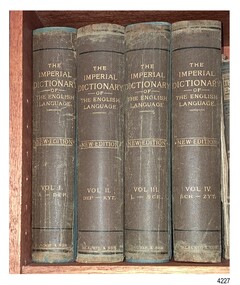
Book - Reference, John Ogilvie, The Imperial Dictionary of The English Language Vol 1, 1882
... The Imperial Dictionary of The English Language: a complete encyclopedic lexicon, literary, scientific and technological, Volume 1 by John Ogilvie, LL.D., Author of "The Comprehensive English Dictionary," "The Student's English Dictionary," &c. ...Gray] The Imperial Dictionary of The English Language: a complete encyclopedic lexicon, literary, scientific and technological, Volume 1 by John Ogilvie, LL.D., Author of "The Comprehensive English Dictionary," "The Student's English Dictionary," &c. ...A newspaper article was published at the time of the donation of this four-volume set of The Imperial Dictionary of The English Language. The article refers to the Geelong Maritime Society donating the funds to purchase the set of books. The Geelong Maritime Society Inc. was formed to save the Steam Tug Victor from being scrapped. Its public appeal raised funds for this purpose, but its efforts to stop the tug's destruction were unsuccessful. The Society was disbanded in February 1990 and generously donated the raised funds to Flagstaff Hill Maritime Museum and Village. Flagstaff Hill used the funds to purchase the four-volume set of The Imperial Dictionary of the English Language by John Ogilvie. The books are appropriately housed in the library cabinet of the Common School in Flagstaff Hill's village. Each book has a label with an inscription acknowledging the Geelong Maritime Society Inc.'s donation. STEAM TUG VICTOR: The steam tug Victor, built in 1951 at Gainsborough, UK, was said to be the most powerful tug in Victoria. It was once used in Geelong. A private party, currently, in 2025, researching the steam tug Victor, discovered the information that connected the vessel to the books in Flagstaff Hill's library. This set of reference books was published in 1882. The volumes are typical of books used for education in the late 19th and early 20th centuries. The publisher used both print and illustrations for explanations.The Imperial Dictionary of The English Language: a complete encyclopedic lexicon, literary, scientific and technological, Volume 1 by John Ogilvie, LL.D., Author of "The Comprehensive English Dictionary," "The Student's English Dictionary," &c. &c. New edition, carefully revised and greatly augmented. Edited by Charles Annandale, M.A. Illustrated by above [by Charles Annandale, M.A.]. Three thousand engravings printed in the text. Vol. IV. SCREAM-ZYTHUM. With supplement and appendix. Publisher: Blackie & Son, 49 AND 50 Old Bailey, E.C. London, Glasgow, Edinburgh and Dublin Printer: W. G. Blackie and Co., Villafield, Glasgow. UK. Volumes Dated: 1882 and 1883 Publisher's logo on the Fly page. Large book, brown covered board, gold embossed details on spine, and front cover impressed with a decorative diamond logo of Blackie and Sons and its motto, within a rectangle. A label inside the front cover acknowledges the donor, Geelong Maritime Society Inc. Inside this first volume was a newspaper clipping, undated. Logo and motto: "(Shield Infront of a ribbon) with entwined letters "B & S" [Blackie & Son] and "Lucem Libris Disseminamus" [Laten: We disseminate light through books] Label: "Donated by Geelong Maritime Society Inc which was disbanded in February 1990" with blue rope border, and logos of a sailing ship and an anchor. Titles of newspaper clippings: "Queer Beasts of the Bush: The Legend of the Bunyip, by J. C. Le Souef" "Nature's Puzzle World: How Lillies Close Their Petals" "In the Forties: A Pastoral Pioneer" [about Charles M. Gray] flagstaff hill, warrnambool, shipwrecked-coast, flagstaff-hill, flagstaff-hill-maritime-museum, maritime-museum, shipwreck-coast, flagstaff-hill-maritime-village, book, the imperial dictionary of the english language vol 1, john ogilvie, blackie & son, 1882, dictionary, encyclopedia, geelong maritime society inc., reference books, common school, steam tug victor, 1942 -
 Flagstaff Hill Maritime Museum and Village
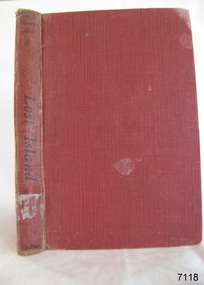
Book - Fictional Novel, James Norman Hall, Lost Island, 1945
... William Collins had been a millworker before establishing the printing and publishing business, which went on to produce pamphlets, sermons, hymn books, prayer books and a wide range of office products, and by 1824 had produced the firm's first dictionary, the Greek and English Lexicon. By 1841 the company was established as a printer of Bibles, and in 1846 William Collins retired, with his son Sir William Collins taking over the business. ...William Collins had been a millworker before establishing the printing and publishing business, which went on to produce pamphlets, sermons, hymn books, prayer books and a wide range of office products, and by 1824 had produced the firm's first dictionary, the Greek and English Lexicon. By 1841 the company was established as a printer of Bibles, and in 1846 William Collins retired, with his son Sir William Collins taking over the business. ...Lost Island is a short novel about a Polynesian atoll untouched by World War II. George Dodd, an American engineer from Detroit, lands on the island with a blueprint in his pocket. Seabees and bulldozers follow him to turn the atoll into a coral-built base for American bombers. One reader describes the book as a bitter account of an American military base corrupting a traditional island culture, focused more on island society than on the war. Another notes that Hall had made clear in earlier works that he detested the automobile and the machine age, a theme that runs through the book.Hard cover book. Lost Island Author: James Norman Hall Publisher: William Collins, Sons & Co. Date: 1945 Further Information: Red Cloth hardcover with lettering and patterning to spine in black. The spine has a Library label with an inscription.fictionLost Island is a short novel about a Polynesian atoll untouched by World War II. George Dodd, an American engineer from Detroit, lands on the island with a blueprint in his pocket. Seabees and bulldozers follow him to turn the atoll into a coral-built base for American bombers. One reader describes the book as a bitter account of an American military base corrupting a traditional island culture, focused more on island society than on the war. Another notes that Hall had made clear in earlier works that he detested the automobile and the machine age, a theme that runs through the book.flagstaff-hill-maritime-museum, book, lost island, james norman hall, shipwrecked-coast, flagstaff-hill, warrnambool, maritime-museum, shipwreck-coast, flagstaff-hill-maritime-village, shipwrecked-artefact, pattison collection, warrnambool library, warrnambool mechanics’ institute, ralph eric pattison, corangamite regional library service, warrnambool city librarian, mechanics’ institute library, victorian library board, warrnambool books and records, warrnambool children’s library, great ocean road -
 Flagstaff Hill Maritime Museum and Village
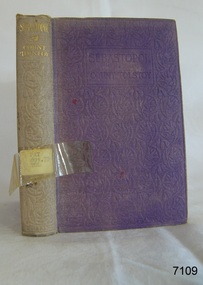
Book - Short Story Collection, Count Leo Tolstoy, Sebastopol, Circa 1932
... William Collins had been a millworker before establishing the printing and publishing business, which went on to produce pamphlets, sermons, hymn books, prayer books and a wide range of office products, and by 1824 had produced the firm's first dictionary, the Greek and English Lexicon. By 1841 the company was established as a printer of Bibles, and in 1846 William Collins retired, with his son Sir William Collins taking over the business. ...William Collins had been a millworker before establishing the printing and publishing business, which went on to produce pamphlets, sermons, hymn books, prayer books and a wide range of office products, and by 1824 had produced the firm's first dictionary, the Greek and English Lexicon. By 1841 the company was established as a printer of Bibles, and in 1846 William Collins retired, with his son Sir William Collins taking over the business. ..."Sebastopol" is the English title given to Tolstoy's Sevastopol Sketches, which consist of three connected short stories: "Sevastopol in December," "Sevastopol in May," and "Sevastopol in August." These stories record Tolstoy's own experiences during the 1854–55 siege of Sevastopol in Crimea, published in 1855. Tolstoy served as an artillery officer at the siege, and the sketches move from a second-person guided "tour" of the besieged city through an increasingly unsentimental, often brutal picture of battle. The second sketch examines the senselessness and vanity of war, and Tolstoy famously closes by declaring truth itself the only hero of the account.Hard cover book. Sebastopol Author: Leo Tolstoy Editor/Translator: Ivan Lepinski Publisher: Collins Clear-Type Press Date: Circa 1932 Further Information: Mauve Cloth hardcover & brown spine with lettering and patterning to spine in gilt. The spine has a Library label with an inscription.fiction"Sebastopol" is the English title given to Tolstoy's Sevastopol Sketches, which consist of three connected short stories: "Sevastopol in December," "Sevastopol in May," and "Sevastopol in August." These stories record Tolstoy's own experiences during the 1854–55 siege of Sevastopol in Crimea, published in 1855. Tolstoy served as an artillery officer at the siege, and the sketches move from a second-person guided "tour" of the besieged city through an increasingly unsentimental, often brutal picture of battle. The second sketch examines the senselessness and vanity of war, and Tolstoy famously closes by declaring truth itself the only hero of the account.book, sebastopol, tolstoy, shipwrecked-coast, flagstaff-hill, flagstaff-hill-maritime-museum, warrnambool, maritime-museum, shipwreck-coast, flagstaff-hill-maritime-village, shipwrecked-artefact, pattison collection, warrnambool library, warrnambool mechanics’ institute, ralph eric pattison, corangamite regional library service, warrnambool city librarian, mechanics’ institute library, victorian library board, warrnambool books and records, warrnambool children’s library, great ocean road -
 Flagstaff Hill Maritime Museum and Village
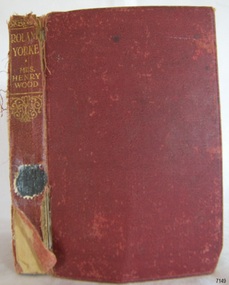
Book - A Fictional Story, Ellen (Mrs Henry) Wood, Roland Yorke, 1903-1920s
... William Collins had been a millworker before establishing the printing and publishing business, which went on to produce pamphlets, sermons, hymn books, prayer books and a wide range of office products, and by 1824 had produced the firm's first dictionary, the Greek and English Lexicon. By 1841 the company was established as a printer of Bibles, and in 1846 William Collins retired, with his son Sir William Collins taking over the business. ...William Collins had been a millworker before establishing the printing and publishing business, which went on to produce pamphlets, sermons, hymn books, prayer books and a wide range of office products, and by 1824 had produced the firm's first dictionary, the Greek and English Lexicon. By 1841 the company was established as a printer of Bibles, and in 1846 William Collins retired, with his son Sir William Collins taking over the business. ...Roland Yorke is a Victorian sensation and mystery novel. It was written as a sequel to Wood’s The Channings (1862), which contrasts the virtuous Channing siblings with the unprincipled Yorkes. The sequel focuses on Roland, the irrepressible second Yorke boy, and shows him making good after the theft of a cheque in the earlier novel. The main interest lies in the murder sub-plot. John Ollivera, a young barrister, is shot through the heart while lodging at Mrs Jones’s house in Helstonleigh. The detective Butterby, who also appears in The Channings, investigates. One reviewer described the book as a murder mystery in which several characters are suspected in turn. It ran monthly in Wood’s magazine The Argosy throughout 1869.Hard cover book. Roland Yorke Author: Ellen (Mrs Henry) Wood Illustrator: Joseph Finnemore Publisher: Collins Clear-Type Press Date: 1903-1920s Further Information: Red Cloth hardcover with lettering and patterning to spine in gilt. The spine has a Library label with an inscription.fictionRoland Yorke is a Victorian sensation and mystery novel. It was written as a sequel to Wood’s The Channings (1862), which contrasts the virtuous Channing siblings with the unprincipled Yorkes. The sequel focuses on Roland, the irrepressible second Yorke boy, and shows him making good after the theft of a cheque in the earlier novel. The main interest lies in the murder sub-plot. John Ollivera, a young barrister, is shot through the heart while lodging at Mrs Jones’s house in Helstonleigh. The detective Butterby, who also appears in The Channings, investigates. One reviewer described the book as a murder mystery in which several characters are suspected in turn. It ran monthly in Wood’s magazine The Argosy throughout 1869.shipwrecked-coast, flagstaff-hill, flagstaff-hill-maritime-museum, warrnambool, maritime-museum, shipwreck-coast, flagstaff-hill-maritime-village, shipwrecked-artefact, book, pattison collection, warrnambool library, warrnambool mechanics’ institute, ralph eric pattison, corangamite regional library service, warrnambool city librarian, mechanics’ institute library, victorian library board, warrnambool books and records, warrnambool children’s library, roland yorke, mrs henry wood -
 Flagstaff Hill Maritime Museum and Village
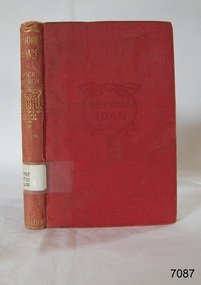
Book - A Fictional Story, Jack London, Before Adam, 1910s–1920s
... William Collins had been a millworker before establishing the printing and publishing business, which went on to produce pamphlets, sermons, hymn books, prayer books and a wide range of office products, and by 1824 had produced the firm's first dictionary, the Greek and English Lexicon. By 1841 the company was established as a printer of Bibles, and in 1846 William Collins retired, with his son Sir William Collins taking over the business. ...William Collins had been a millworker before establishing the printing and publishing business, which went on to produce pamphlets, sermons, hymn books, prayer books and a wide range of office products, and by 1824 had produced the firm's first dictionary, the Greek and English Lexicon. By 1841 the company was established as a printer of Bibles, and in 1846 William Collins retired, with his son Sir William Collins taking over the business. ...Before Adam (1906–07) is one of Jack London's more unusual novels. It's narrated by a modern man who is a "freak of heredity" through recurring, vivid dreams, he relives the memories of a prehistoric ancestor he calls "Big-Tooth." The story was first serialised in Everybody's Magazine before being published as a book, and tells of a man who dreams he lives the life of an early hominid. Most of the narrative unfolds through the eyes of Big-Tooth, one of the more primitive "Cave People," set against the more advanced "Fire People" and the animal-like "Tree People." Supporting characters include the hominid's father, a love interest, and Red-Eye, a savage "atavism" who terrorises the Cave People, with a sabre-toothed cat also playing a role.Hard cover book. Before Adam Author: Jack London Publisher: Collins Clear-Type Press Date: 1910s–1920s Further Information: A plain volume bound in red cloth, with a stuck-on library classification label ("PAT FIC LON") on the spine and no visible date, edition statement, or printer's imprint on the pages shown the copyright/date page. Gilt decoration and lettering to spine, no illustrated boards, and no dust jacket. fictionBefore Adam (1906–07) is one of Jack London's more unusual novels. It's narrated by a modern man who is a "freak of heredity" through recurring, vivid dreams, he relives the memories of a prehistoric ancestor he calls "Big-Tooth." The story was first serialised in Everybody's Magazine before being published as a book, and tells of a man who dreams he lives the life of an early hominid. Most of the narrative unfolds through the eyes of Big-Tooth, one of the more primitive "Cave People," set against the more advanced "Fire People" and the animal-like "Tree People." Supporting characters include the hominid's father, a love interest, and Red-Eye, a savage "atavism" who terrorises the Cave People, with a sabre-toothed cat also playing a role.shipwrecked-coast, flagstaff-hill, flagstaff-hill-maritime-museum, warrnambool, maritime-museum, shipwreck-coast, flagstaff-hill-maritime-village, shipwrecked-artefact, book, pattison collection, warrnambool library, warrnambool mechanics’ institute, ralph eric pattison, corangamite regional library service, warrnambool city librarian, mechanics’ institute library, victorian library board, warrnambool books and records, warrnambool children’s library, before adam, jack london -
 Flagstaff Hill Maritime Museum and Village
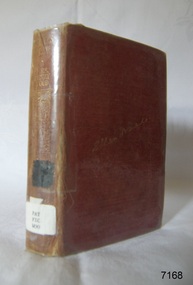
Book - A Fictional Story, Ellen (Mrs Henry) Wood, Verners Pride, 1900s–1910s
... William Collins had been a millworker before establishing the printing and publishing business, which went on to produce pamphlets, sermons, hymn books, prayer books and a wide range of office products, and by 1824 had produced the firm's first dictionary, the Greek and English Lexicon. By 1841 the company was established as a printer of Bibles, and in 1846 William Collins retired, with his son Sir William Collins taking over the business. ...William Collins had been a millworker before establishing the printing and publishing business, which went on to produce pamphlets, sermons, hymn books, prayer books and a wide range of office products, and by 1824 had produced the firm's first dictionary, the Greek and English Lexicon. By 1841 the company was established as a printer of Bibles, and in 1846 William Collins retired, with his son Sir William Collins taking over the business. ...Verner’s Pride is a Victorian domestic novel published in 1863. It opens with the mysterious death of a young servant in the small town of Deerham. Stephen Verner, owner of the estate, then suspects his nephew Lionel, the designated heir. Stephen’s stepsons, John and Frederick Massingbird, also have a stake in the estate, but Lionel is his favourite. Fred dies in Australia and Lionel takes over the estate. Fred’s widow, Sibylla, then arrives, and Lionel proposes to her in a moment of passion. The marriage that follows is a strained one. The book explores gender relations, money and the role of wealth in a community, including quarrels over a milliner’s bill and a French novel. The opening murder mystery fades, and the story becomes mainly about the estate changing hands.Hard cover book. Verners Pride Author: Ellen (Mrs Henry) Wood Illustrator: Harold Piffard Publisher: Collins Clear-Type Press Date: 1900s–1910s. Further Information: Red Cloth hardcover with lettering and patterning to spine in gilt. The spine has a Library label with an inscription.fictionVerner’s Pride is a Victorian domestic novel published in 1863. It opens with the mysterious death of a young servant in the small town of Deerham. Stephen Verner, owner of the estate, then suspects his nephew Lionel, the designated heir. Stephen’s stepsons, John and Frederick Massingbird, also have a stake in the estate, but Lionel is his favourite. Fred dies in Australia and Lionel takes over the estate. Fred’s widow, Sibylla, then arrives, and Lionel proposes to her in a moment of passion. The marriage that follows is a strained one. The book explores gender relations, money and the role of wealth in a community, including quarrels over a milliner’s bill and a French novel. The opening murder mystery fades, and the story becomes mainly about the estate changing hands.verners pride, mrs henry wood, ellen price, shipwrecked-coast, flagstaff-hill, flagstaff-hill-maritime-museum, warrnambool, maritime-museum, shipwreck-coast, flagstaff-hill-maritime-village, shipwrecked-artefact, book, pattison collection, warrnambool library, warrnambool mechanics’ institute, ralph eric pattison, corangamite regional library service, warrnambool city librarian, mechanics’ institute library, victorian library board, warrnambool books and records, warrnambool children’s library, great ocean road -
 Flagstaff Hill Maritime Museum and Village
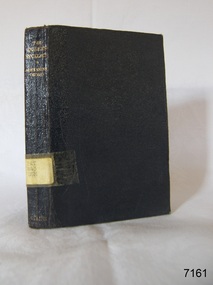
Book - A Fictional Story, Alexandre Dumas et al, The Queens Necklace, 1910-1920s
... William Collins had been a millworker before establishing the printing and publishing business, which went on to produce pamphlets, sermons, hymn books, prayer books and a wide range of office products, and by 1824 had produced the firm's first dictionary, the Greek and English Lexicon. By 1841 the company was established as a printer of Bibles, and in 1846 William Collins retired, with his son Sir William Collins taking over the business. ...William Collins had been a millworker before establishing the printing and publishing business, which went on to produce pamphlets, sermons, hymn books, prayer books and a wide range of office products, and by 1824 had produced the firm's first dictionary, the Greek and English Lexicon. By 1841 the company was established as a printer of Bibles, and in 1846 William Collins retired, with his son Sir William Collins taking over the business. ...The novel is loosely based on the Affair of the Diamond Necklace, a fraud and royal scandal at the court of Louis XVI in the 1780s. It was published in 1849–50, just after the French Revolution of 1848, and first appeared as a serial in La Presse. The story is set in 1784–85 and follows the impoverished Countess Jeanne de La Motte, a descendant of the Valois dynasty, who catches Queen Marie-Antoinette’s attention. Jeanne senses that the queen secretly wants a necklace made by the jewellers Boehmer and Bossange, and persuades Cardinal de Rohan that giving it to her would win the queen’s favour. The cardinal, believing himself the queen’s secret admirer, is drawn into the deceit. The mysterious Count Cagliostro pulls the strings behind the fraud and intrigue. The prologue is borrowed from La Harpe’s ‘Prophétie de Cazotte’, but Dumas gave it much more life. The book is a sequel to Joseph Balsamo (Memoirs of a Physician) in Dumas’s Marie Antoinette cycle.Hard cover book. The Queens Necklace Author: Alexandre Dumas Co Author: Auguste Maquet Editor: Alfred Thomas Baker Translator: Henry Llewellyn Williams Illustrator: Paul Hardy Publisher: Collins Clear Type Press Date: 1910-1920s Further Information: Black embossed patterning Cloth hardcover with lettering and patterning to spine in gilt. The spine has a Library label with an inscription.fictionThe novel is loosely based on the Affair of the Diamond Necklace, a fraud and royal scandal at the court of Louis XVI in the 1780s. It was published in 1849–50, just after the French Revolution of 1848, and first appeared as a serial in La Presse. The story is set in 1784–85 and follows the impoverished Countess Jeanne de La Motte, a descendant of the Valois dynasty, who catches Queen Marie-Antoinette’s attention. Jeanne senses that the queen secretly wants a necklace made by the jewellers Boehmer and Bossange, and persuades Cardinal de Rohan that giving it to her would win the queen’s favour. The cardinal, believing himself the queen’s secret admirer, is drawn into the deceit. The mysterious Count Cagliostro pulls the strings behind the fraud and intrigue. The prologue is borrowed from La Harpe’s ‘Prophétie de Cazotte’, but Dumas gave it much more life. The book is a sequel to Joseph Balsamo (Memoirs of a Physician) in Dumas’s Marie Antoinette cycle.shipwrecked-coast, flagstaff-hill, flagstaff-hill-maritime-museum, warrnambool, maritime-museum, shipwreck-coast, flagstaff-hill-maritime-village, shipwrecked-artefact, book, pattison collection, warrnambool library, warrnambool mechanics’ institute, ralph eric pattison, corangamite regional library service, warrnambool city librarian, mechanics’ institute library, victorian library board, warrnambool books and records, warrnambool children’s library, the queens necklace, alexandre dumas -
 Flagstaff Hill Maritime Museum and Village
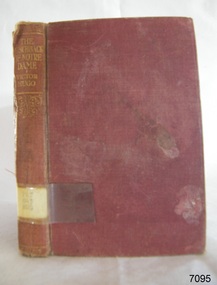
Book - A Fictional Story, Collins Clear Type Press et al, The Hunchback of Notre Dame, 1910-1925
... William Collins had been a millworker before establishing the printing and publishing business, which went on to produce pamphlets, sermons, hymn books, prayer books and a wide range of office products, and by 1824 had produced the firm's first dictionary, the Greek and English Lexicon. By 1841 the company was established as a printer of Bibles, and in 1846 William Collins retired, with his son Sir William Collins taking over the business. ...William Collins had been a millworker before establishing the printing and publishing business, which went on to produce pamphlets, sermons, hymn books, prayer books and a wide range of office products, and by 1824 had produced the firm's first dictionary, the Greek and English Lexicon. By 1841 the company was established as a printer of Bibles, and in 1846 William Collins retired, with his son Sir William Collins taking over the business. ...The Hunchback of Notre-Dame is Victor Hugo's 1831 historical novel set in fifteenth-century Paris. It follows Quasimodo, the deformed bell-ringer of Notre-Dame Cathedral; Esmeralda, a beautiful Romani street dancer; Claude Frollo, the tormented archdeacon obsessed with her; and Captain Phoebus, the soldier she loves. The novel is as much a portrait of the cathedral itself and medieval Paris as it is a story of its characters. Hugo used the book partly as a plea for the preservation of Gothic architecture, which was being neglected and demolished in his own era. The novel's success is credited with sparking renewed public interest in Notre-Dame and Gothic buildings generally, which contributed to the eventual restoration campaign led by Eugène Viollet-le-Duc in the 1840s.Hard cover book. The Hunchback of Notre Dame Author: Victor Hugo Illustrator: Arthur A Dixon Publisher: Collins Clear-Type Press Date: 1910-1925 Further Information: Red Cloth plain hardcover with lettering and patterning to spine in gilt. The spine has a Library label with an inscription.fictionThe Hunchback of Notre-Dame is Victor Hugo's 1831 historical novel set in fifteenth-century Paris. It follows Quasimodo, the deformed bell-ringer of Notre-Dame Cathedral; Esmeralda, a beautiful Romani street dancer; Claude Frollo, the tormented archdeacon obsessed with her; and Captain Phoebus, the soldier she loves. The novel is as much a portrait of the cathedral itself and medieval Paris as it is a story of its characters. Hugo used the book partly as a plea for the preservation of Gothic architecture, which was being neglected and demolished in his own era. The novel's success is credited with sparking renewed public interest in Notre-Dame and Gothic buildings generally, which contributed to the eventual restoration campaign led by Eugène Viollet-le-Duc in the 1840s.warrnambool, shipwrecked-coast, flagstaff-hill, flagstaff-hill-maritime-museum, maritime-museum, shipwreck-coast, flagstaff-hill-maritime-village, shipwrecked-artefact, book, the hunchback of notre dame, victor hugo -
 Flagstaff Hill Maritime Museum and Village
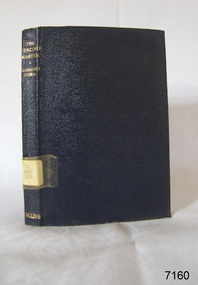
Book - A Fictional Story, Alexandre Dumas, The Fencing Master, 1959
... William Collins had been a millworker before establishing the printing and publishing business, which went on to produce pamphlets, sermons, hymn books, prayer books and a wide range of office products, and by 1824 had produced the firm's first dictionary, the Greek and English Lexicon. By 1841 the company was established as a printer of Bibles, and in 1846 William Collins retired, with his son Sir William Collins taking over the business. ...William Collins had been a millworker before establishing the printing and publishing business, which went on to produce pamphlets, sermons, hymn books, prayer books and a wide range of office products, and by 1824 had produced the firm's first dictionary, the Greek and English Lexicon. By 1841 the company was established as a printer of Bibles, and in 1846 William Collins retired, with his son Sir William Collins taking over the business. ...The novel is set in Russia and draws on the 1825 Decembrist revolt, along with behind-the-scenes court stories that the government preferred to keep hidden. It is narrated in the first person by Augustin Grisier, a friend of Dumas who goes to Russia to make his fortune as a swordsman. He teaches young aristocrats in the capital and becomes entangled in the Decembrist plot of the time. The love story is the best-known thread, a well-born young Frenchwoman, Pauline, travels to Russia and falls in love with a Decembrist officer (Ivan Annenkov, called Waninkoff in the novel). After the rebellion is crushed, she follows him to Siberian exile and eventually marries him. The book was based on notes from Dumas’s own fencing teacher, Grisier, and Dumas borrowed much of his Russian scenery and court detail from Ancelot’s Six mois en Russie. It first appeared serialised in the Revue de Paris in 1840 and then in book form the same year.Hard cover book. The Fencing Master Author: Alexandre Dumas Translator: Alfred Richard Allinson Illustrator: Alan J. Bowyer Publisher: Collins Clear Type Press Date: 1959 Further Information: Black embossed patterning Cloth hardcover with lettering and patterning to spine in gilt. The spine has a Library label with an inscription. fictionThe novel is set in Russia and draws on the 1825 Decembrist revolt, along with behind-the-scenes court stories that the government preferred to keep hidden. It is narrated in the first person by Augustin Grisier, a friend of Dumas who goes to Russia to make his fortune as a swordsman. He teaches young aristocrats in the capital and becomes entangled in the Decembrist plot of the time. The love story is the best-known thread, a well-born young Frenchwoman, Pauline, travels to Russia and falls in love with a Decembrist officer (Ivan Annenkov, called Waninkoff in the novel). After the rebellion is crushed, she follows him to Siberian exile and eventually marries him. The book was based on notes from Dumas’s own fencing teacher, Grisier, and Dumas borrowed much of his Russian scenery and court detail from Ancelot’s Six mois en Russie. It first appeared serialised in the Revue de Paris in 1840 and then in book form the same year.shipwrecked-coast, flagstaff-hill, flagstaff-hill-maritime-museum, warrnambool, maritime-museum, shipwreck-coast, flagstaff-hill-maritime-village, shipwrecked-artefact, book, pattison collection, warrnambool library, warrnambool mechanics’ institute, ralph eric pattison, corangamite regional library service, warrnambool city librarian, mechanics’ institute library, victorian library board, warrnambool books and records, warrnambool children’s library, the fencing master, alexandre dumas -
 Flagstaff Hill Maritime Museum and Village
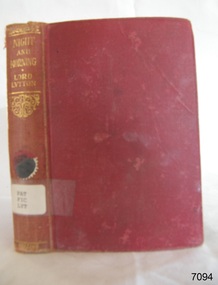
Book - A Fictional Story, Victor Prout (Illustrator) et al, Night And Morning, 1905 or 1913
... William Collins had been a millworker before establishing the printing and publishing business, which went on to produce pamphlets, sermons, hymn books, prayer books and a wide range of office products, and by 1824 had produced the firm's first dictionary, the Greek and English Lexicon. By 1841 the company was established as a printer of Bibles, and in 1846 William Collins retired, with his son Sir William Collins taking over the business. ...William Collins had been a millworker before establishing the printing and publishing business, which went on to produce pamphlets, sermons, hymn books, prayer books and a wide range of office products, and by 1824 had produced the firm's first dictionary, the Greek and English Lexicon. By 1841 the company was established as a printer of Bibles, and in 1846 William Collins retired, with his son Sir William Collins taking over the business. ...Night and Morning is a novel by Edward Bulwer-Lytton (later Lord Lytton), originally published in three volumes in 1841, although the preface reproduced in most later editions, including the subject volume, is dated 1845 and refers to a revised edition. The story centres on two orphaned siblings, Philip and Sidney, who are separated by misfortune and a scheming relative after their father's death, and who endure hardship and social injustice as they fight to reclaim their family's name and honour. The novel explores social justice, moral dilemmas and class distinctions, opening in a small Welsh village where Reverend Caleb Price grapples with his own failures, before a mysterious stranger arrives revealing plans for a secret marriage he wants kept quiet because of his wealthy uncle's likely disapproval. The plot turns heavily on inheritance law and the legitimacy of the brothers' birth; Lytton reportedly consulted a real lawyer on the legal plot points to get the details right in his novel.Hard cover book. Night and Morning Author: Lord Lytton Illustrator: Victor Prout Publisher: Collins Clear-Type Press Date: 1890s–1910s Further Information: Red Cloth plain hardcover with lettering and patterning to spine in gilt. The spine has a Library label with an inscription.fictionNight and Morning is a novel by Edward Bulwer-Lytton (later Lord Lytton), originally published in three volumes in 1841, although the preface reproduced in most later editions, including the subject volume, is dated 1845 and refers to a revised edition. The story centres on two orphaned siblings, Philip and Sidney, who are separated by misfortune and a scheming relative after their father's death, and who endure hardship and social injustice as they fight to reclaim their family's name and honour. The novel explores social justice, moral dilemmas and class distinctions, opening in a small Welsh village where Reverend Caleb Price grapples with his own failures, before a mysterious stranger arrives revealing plans for a secret marriage he wants kept quiet because of his wealthy uncle's likely disapproval. The plot turns heavily on inheritance law and the legitimacy of the brothers' birth; Lytton reportedly consulted a real lawyer on the legal plot points to get the details right in his novel.warrnambool, shipwrecked-coast, flagstaff-hill, flagstaff-hill-maritime-museum, maritime-museum, shipwreck-coast, flagstaff-hill-maritime-village, shipwrecked-artefact, book, night and morning, lord lytton, victor william prout, edward george earle bulwer-lytton -
 Victorian Aboriginal Corporation for Languages
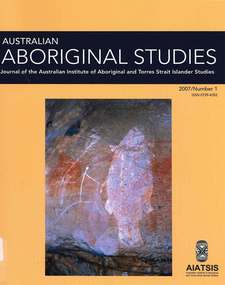
Periodical, Australian Institute of Aboriginal and Torres Strait Islander Studies, Australian Aboriginal studies : journal of the Australian Institute of Aboriginal and Torres Strait Islander Studies, 2007
... 1. The moral lexicon of the Warlpiri people of central Australia LR Hiatt This paper discusses words that match ?...Warlpiri sociology Daisy Bates substance abuse narrative therapy rock art technology and art Murray Black collection Pleistocene sites Watarrka Plateau maps, b&w photographs, colour photographs, illustrations, graphs, charts 1. The moral lexicon of the Warlpiri people of central Australia LR Hiatt This paper discusses words that match ? ...1. The moral lexicon of the Warlpiri people of central Australia LR Hiatt This paper discusses words that match ?Good? and ?Bad?; examples of ?Good? and ?Bad? behaviour; morality and law; and egalitarianism and dominance. It also presents a comparison with Gidjingarli (Burarra). 2. Mobs and bosses: Structures of Aboriginal sociality Patrick Mullins (Mount Druitt, NSW) A commonality of Aboriginal social organisation exists across the continent in communities as different as those from the Western Desert across to Cape York, from the towns of New South Wales and Western Australia to cities like Adelaide. This is found in the colloquial expressions ?mob? and ?boss?, which are used in widely differing contexts. Mobbing is the activity where relatedness, in the sense of social alliances, is established and affirmed by virtue of a common affiliation with place, common experience and common descent, as well as by the exchange of cash and commodities. Bossing is the activity of commanding respect by virtue of one?s capacity to bestow items of value such as ritual knowledge, nurturance, care, cash and commodities. Mobbing and bossing are best understood as structures in Giddens? sense of sets of rules and resources involved in the production of social systems, in this case social alliances. Mobbing and bossing imply a concept of a person as a being in a relationship. Attention needs to be given to the way these structures interact with institutions in the wider Australian society. 3. Recognising victims without blaming them: A moral contest? About Peter Sutton?s ?The Politics of Suffering: Indigenous Policy in Australia since the 1970s? and Gillian Cowlishaw?s replies Ma�a Ponsonnet (Universit� Paris- 8-Saint-Denis) Peter Sutton?s texts on Aboriginal violence, health and their politicisation are replied to using his methodology, and acknowledging his convincing points. Sutton rightly denounces a lack of lucidity and scientific objectivity in anthropological debates. These inadequacies impede identification of what Aboriginal groups can do to improve their situations for fear that this identification would lead to blame the victims. At the other end of the ethical spectrum, those who advocate a broader use of what I will call a ?resistance interpretation? of violence fail to recognise victims as such, on the implicit grounds that seeing victims as victims would deprive them of any agency, on the one hand, and entail blame, on the other hand. I aim to define a middle road between those views: the idea that victims should be acknowledged as such without being denied their agency and without being blamed for their own condition. This middle road allows identification of the colonisers? responsibilities in the contemporary situation of Indigenous communities in Australia, and to determine who can do what. Secondly, I show that Sutton?s texts convey, through subtle but recurrent remarks, an ideology of blame rather than a mere will to identify practical solutions. As a consequence, some of his proposals do not stand on a solid and objective causal analysis. 4. 'You would have loved her for her lore?: The letters of Daisy Bates Bob Reece (Murdoch University) Daisy Bates was once an iconic figure in Australia but her popular and academic reputation became tarnished by her retrograde views. Her credibility was also put in doubt through the exposure of her fictionalised Irish background. In more recent times, however, her ethnographic data on the Aborigines of Western Australia has been an invaluable source for Native Title claims, while her views on Aboriginal extinction, cannibalism and ?castes? are being seen as typical of her time. This article briefly reviews what has been the orthodox academic opinion of her scientific achievement before summarising what is reliably known of her early history and indicating what kind of person is revealed in the 3000 or more letters that she left behind. 5. What potential might Narrative Therapy have to assist Indigenous Australians reduce substance misuse? Violet Bacon (Curtin University of Technology) Substance misuse is associated with adverse consequences for many Australians including Aboriginal and Torres Strait Islander peoples. Extensive research has been conducted into various intervention, treatment and prevention programs to ascertain their potential in reducing substance misuse within Aboriginal and non-Aboriginal communities. I explore the potential of Narrative Therapy as a counselling intervention for assisting Indigenous Australians reduce the harm associated with substance misuse. 6. Bone points from the Adelaide River, Northern Territory Sally Brockwell (University of Canberra) and Kim Akerman (Moonah) Large earth mounds located next to the vast floodplains of the lower Adelaide River, one of the major tropical rivers draining the flat coastal plains of northern Australia, contain cultural material, including bone points. The floodplains of the north underwent dynamic environmental change from extensive mangrove swamps in the mid-Holocene, through a transition phase of variable estuarine and freshwater mosaic environments, to the freshwater environment that exists today. This geomorphological framework provides a background for the interpretation of the archaeology, which spans some 4000 years. 7. A different look: Comparative rock-art recording from the Torres Strait using computer enhancement techniques Liam M Brady (Monash University) In 1888 and 1898, Cambridge University?s Alfred C Haddon made the first recording of rock-art from the Torres Strait islands using photography and sketches. Systematic recording of these same paintings and sites was carried out from 2000 to 2004 by archaeologists and Indigenous Torres Strait Islander and Aboriginal communities as part of community-based rock-art recording projects. Computer enhancement techniques were used to identify differences between both sets of recordings, to reveal design elements that Haddon missed in his recordings, and to recover images recorded by Haddon that are today no longer visible to the naked eye. Using this data, preliminary observations into the antiquity of Torres Strait rock-art are noted along with recommendations for future Torres Strait region rock-art research and baseline monitoring projects. 8. Sources of bias in the Murray Black Collection: Implications for palaeopathological analysis Sarah Robertson (National Museum of Australia) The Murray Black collection of Aboriginal skeletal remains has been a mainstay of bio-anthropological research in Australia, but relatively little thought has been given to how and why this collection may differ from archaeologically obtained collections. The context in which remains were located and recovered has created bias within the sample, which was further skewed within the component of the collection sent to the Australian Institute of Anatomy, resulting in limitations for the research potential of the collection. This does not render all research on the collection unviable, but it demonstrates the importance of understanding the context of a skeletal collection when assessing its suitability for addressing specific research questions.maps, b&w photographs, colour photographs, illustrations, graphs, chartswarlpiri, sociology, daisy bates, substance abuse, narrative therapy, rock art, technology and art, murray black collection, pleistocene sites, watarrka plateau -
 Victorian Aboriginal Corporation for Languages
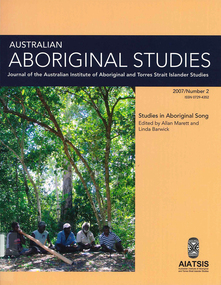
Periodical, Australian Institute of Aboriginal and Torres Strait Islander Studies, Australian Aboriginal studies : journal of the Australian Institute of Aboriginal and Torres Strait Islander Studies, 2007
... Their formal structures constitute the overarching order of all ceremonial actions, and their lyrics comprise sacred esoteric lexicons held nowhere else in the Yol?u languages. ...Their formal structures constitute the overarching order of all ceremonial actions, and their lyrics comprise sacred esoteric lexicons held nowhere else in the Yol?u languages. ...1. Musical and linguistic perspectives on Aboriginal song Allan Marett and Linda Barwick Song brings language and music together. Great singers are at once musicians and wordsmiths, who toss rhythm, melody and word against one another in complex cross-play. In this paper we outline some initial findings that are emerging from our interdisciplinary study of the musical traditions of the Cobourg region of western Arnhem Land, a coastal area situated in the far north of the Australian continent 350 kilometres northeast of Darwin. We focus on a set of songs called Jurtbirrk, sung in Iwaidja, a highly endangered language, whose core speaker base is now located in the community of Minjilang on Croker Island. We bring to bear analytical methodologies from both musicology and linguistics to illuminate this hitherto undocumented genre of love songs. 2. Iwaidja Jurtbirrk songs: Bringing language and music together Linda Barwick (University of Sydney), Bruce Birch and Nicholas Evans (University of Melbourne) Song brings language and music together. Great singers are at once musicians and wordsmiths, who toss rhythm, melody and word against one another in complex cross-play. In this paper we outline some initial findings that are emerging from our interdisciplinary study of the musical traditions of the Cobourg region of western Arnhem Land, a coastal area situated in the far north of the Australian continent 350 kilometres northeast of Darwin. We focus on a set of songs called Jurtbirrk, sung in Iwaidja, a highly endangered language, whose core speaker base is now located in the community of Minjilang on Croker Island. We bring to bear analytical methodologies from both musicology and linguistics to illuminate this hitherto undocumented genre of love songs. 3. Morrdjdjanjno ngan-marnbom story nakka, ?songs that turn me into a story teller?: The morrdjdjanjno of western Arnhem Land Murray Garde (University of Melbourne) Morrdjdjanjno is the name of a song genre from the Arnhem Land plateau in the Top End of the Northern Territory and this paper is a first description of this previously undocumented song tradition. Morrdjdjanjno are songs owned neither by individuals or clans, but are handed down as ?open domain? songs with some singers having knowledge of certain songs unknown to others. Many morrdjdjanjno were once performed as part of animal increase rituals and each song is associated with a particular animal species, especially macropods. Sung only by men, they can be accompanied by clap sticks alone or both clap sticks and didjeridu. First investigations reveal that the song texts are not in everyday speech but include, among other things, totemic referential terms for animals which are exclusive to morrdjdjanjno. Translations from song language into ordinary register speech can often be ?worked up? when the song texts are discussed in their cultural and performance context. The transmission of these songs is severely endangered at present as there are only two known singers remaining both of whom are elderly. 4. Sung and spoken: An analysis of two different versions of a Kun-barlang love song Isabel O?Keeffe (nee Bickerdike) (University of Melbourne) In examining a sung version and a spoken version of a Kun-barlang love song text recorded by Alice Moyle in 1962, I outline the context and overall structure of the song, then provide a detailed comparative analysis of the two versions. I draw some preliminary conclusions about the nature of Kun-barlang song language, particularly in relation to the rhythmic setting of words in song texts and the use of vocables as structural markers. 5. Simplifying musical practice in order to enhance local identity: Rhythmic modes in the Walakandha wangga (Wadeye, Northern Territory) Allan Marett (University of Sydney) Around 1982, senior performers of the Walakandha wangga, a repertory of song and dance from the northern Australian community of Wadeye (Port Keats), made a conscious decision to simplify their complex musical and dance practice in order to strengthen the articulation of a group identity in ceremonial performance. Recordings from the period 1972?82 attest to a rich diversity of rhythmic modes, each of which was associated with a different style of dance. By the mid-1980s, however, this complexity had been significantly reduced. I trace the origin of the original complexity, explore the reasons why this was subsequently reduced, and trace the resultant changes in musical practice. 6. ?Too long, that wangga?: Analysing wangga texts over time Lysbeth Ford (University of Sydney) For the past forty or so years, Daly region song-men have joined with musicologists and linguists to document their wangga songs. This work has revealed a corpus of more than one hundred wangga songs composed in five language varieties Within this corpus are a few wangga texts recorded with their prose versions. I compare sung and spoken texts in an attempt to show not only what makes wangga texts consistently different from prose texts, but also how the most recent wangga texts differ from those composed some forty years ago. 7. Flesh with country: Juxtaposition and minimal contrast in the construction and melodic treatment of jadmi song texts Sally Treloyn (University of Sydney) For some time researchers of Centralian-style songs have found that compositional and performance practices that guide the construction and musical treatment of song texts have a broader social function. Most recently, Barwick has identified an ?aesthetics of parataxis or juxtaposition? in the design of Warumungu song texts and musical organisation (as well as visual arts and dances), that mirrors social values (such as the skin system) and forms 'inductive space' in which relationships between distinct classes of being, places, and groups of persons are established. Here I set out how juxtaposition and minimal contrast in the construction and melodic treatment of jadmi-type junba texts from the north and north-central Kimberley region similarly create 'inductive space' within which living performers, ancestral beings, and the country to which they are attached, are drawn into dynamic, contiguous relationships. 8. The poetics of central Australian Aboriginal song Myfany Turpin (University of Sydney) An often cited feature of traditional songs from Central Australia (CA songs) is the obfuscation of meaning. This arises partly from the difficulties of translation and partly from the difficulties in identifying words in song. The latter is the subject of this paper, where I argue it is a by-product of adhering to the requirements of a highly structured art form. Drawing upon a set of songs from the Arandic language group, I describe the CA song as having three independent obligatory components (text, rhythm and melody) and specify how text is set to rhythm within a rhythmic and a phonological constraint. I show how syllable counting, for the purposes of text setting, reflects a feature of the Arandic sound system. The resultant rhythmic text is then set to melody while adhering to a pattern of text alliteration. 9. Budutthun ratja wiyinymirri: Formal flexibility in the Yol?u manikay tradition and the challenge of recording a complete repertoire Aaron Corn (University of Sydney) with Neparr? a Gumbula (University of Sydney) Among the Yol?u (people) of north-eastern Arnhem Land, manikay (song) series serve as records of sacred relationships between humans, country and ancestors. Their formal structures constitute the overarching order of all ceremonial actions, and their lyrics comprise sacred esoteric lexicons held nowhere else in the Yol?u languages. A consummate knowledge of manikay and its interpenetrability with ancestors, country, and parallel canons of sacred y�ku (names), bu?gul (dances) and miny'tji (designs) is an essential prerequisite to traditional leadership in Yol?u society. Drawing on our recordings of the Baripuy manikay series from 2004 and 2005, we explore the aesthetics and functions of formal flexibility in the manikay tradition. We examine the individuation of lyrical realisations among singers, and the role of rhythmic modes in articulating between luku (root) and bu?gul'mirri (ceremonial) components of repertoire. Our findings will contribute significantly to intercultural understandings of manikay theory and aesthetics, and the centrality of manikay to Yol?u intellectual traditions. 10. Australian Aboriginal song language: So many questions, so little to work with Michael Walsh Review of the questions related to the analysis of Aboriginal song language; requirements for morpheme glossing, component package, interpretations, prose and song text comparison, separation of Indigenous and ethnographic explanations, candour about collection methods, limitations and interpretative origins.maps, colour photographs, tablesyolgnu, wadeye, music and culture -
 Flagstaff Hill Maritime Museum and Village
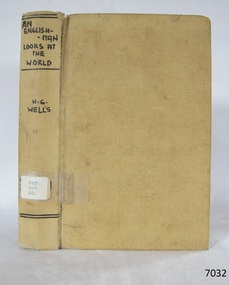
Book - A Collection of Essays, H G Wells, An Englishman Looks At the World, 1914
... That's precisely why it still turns up in footnotes of academic work on Edwardian intellectual history, even though it's a minor title in the popular Wells lexicon. Pattison Collection see item 3678 Flagstaff Hill collections) https://victoriancollections.net.au/items/5580c7e72162f114d8b758db warrnambool shipwrecked-coast flagstaff-hill flagstaff-hill-maritime-museum maritime-museum shipwreck-coast flagstaff-hill-maritime-village shipwrecked-artefact book an englishman looks at the world h g wells warrnambool mechanics’ institute pattison collection warrnambool library ralph eric pattison corangamite regional library service warrnambool city librarian mechanics’ institute library victorian library board warrnambool books and records warrnambool children’s library Published in 1914, this is a collection of essays by H.G. ...Published in 1914, this is a collection of essays by H.G. Wells consisting of journalistic pieces written between 1909 and 1914, spanning twenty-six pieces ranging from five to sixty-two pages in length. Roughly half of the essays were originally printed in the Daily Mail between 1904 and 1913, with ten more appearing in nearly as many weekly and monthly papers, and three others having had prior publication in volume form. The subjects range widely flight and aviation with the opening with Blériot's Channel crossing, the monarchy, imperialism, labour and socialism, modern warfare, sociology, divorce, education, motherhood, the future of civilisation, and more. It's essentially Wells thinking aloud in print opinionated, topical journalism rather than fiction, reflecting a period when he was consciously stepping back from novel-writing to comment directly on contemporary affairs. A companion American edition was published the same year by Harper and Brothers under the different title Social Forces in England and America.Hard Cover Book. An English Man Looks At The World Author: HG Wells Publisher: Cassell & Co Date: 1914 Further Information: Yellow Cloth hardcover with lettering and patterning to spine in black. The spine has a Library label with an inscription.fictionPublished in 1914, this is a collection of essays by H.G. Wells consisting of journalistic pieces written between 1909 and 1914, spanning twenty-six pieces ranging from five to sixty-two pages in length. Roughly half of the essays were originally printed in the Daily Mail between 1904 and 1913, with ten more appearing in nearly as many weekly and monthly papers, and three others having had prior publication in volume form. The subjects range widely flight and aviation with the opening with Blériot's Channel crossing, the monarchy, imperialism, labour and socialism, modern warfare, sociology, divorce, education, motherhood, the future of civilisation, and more. It's essentially Wells thinking aloud in print opinionated, topical journalism rather than fiction, reflecting a period when he was consciously stepping back from novel-writing to comment directly on contemporary affairs. A companion American edition was published the same year by Harper and Brothers under the different title Social Forces in England and America.warrnambool, shipwrecked-coast, flagstaff-hill, flagstaff-hill-maritime-museum, maritime-museum, shipwreck-coast, flagstaff-hill-maritime-village, shipwrecked-artefact, book, an englishman looks at the world, h g wells, warrnambool mechanics’ institute, pattison collection, warrnambool library, ralph eric pattison, corangamite regional library service, warrnambool city librarian, mechanics’ institute library, victorian library board, warrnambool books and records, warrnambool children’s library -
 Flagstaff Hill Maritime Museum and Village
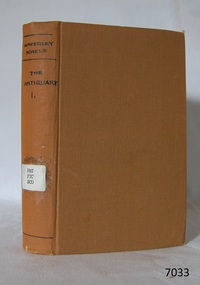
Book - Fictional stories, Sir Walter Scott, Waverley Novels Vol 5 The Antiquary-1, 1836
... Scott's poems like “The Lady of the Lake” (1810) boosted Scottish tourism and folklore, while phrases such as "cold shoulder" entered the English lexicon. He orchestrated George IV's 1822 Scotland visit, promoting unity over division. ...The subject volume of Waverley Novels Vol 5 published by Fisher Son & Co (1836) is part of a collected 48 volume set of Sir Walter Scott's works, containing various stories. Vol 5 in the 1836 Fisher edition reprints later entries from the fourth series, as these stories originally appeared in Scott's Magnum Opus collected 48 volume editions, the first from 1816. With the influential “Magnum Opus” editions from 1829–1833 by Robert Cadell, serving as the basis for later reprinted published sets like Fisher's. The Antiquary is one of Sir Walter Scott’s best known Scottish novels of the set, first published in 1816, and it mixes social comedy, mystery, romance, and historical atmosphere. It centres on Jonathan Oldbuck, an obsessive collector of antiquities, and follows a tangled story involving old family secrets, financial trouble, buried treasure schemes, and questions of identity. The story is set in late 18th century Scotland, mainly around Fairport and nearby estates, and brings together several linked families.Scott uses the novel to explore the tension between the past and the present, showing how antiquarian obsession can be both comic and revealing. He also deals with inheritance, class, old guilt, false appearances, and the way history shapes personal lives.Waverley Novels Vol 5 The Antiquary-1, Light brown hardcover lettering in black text. Author: Sir Walter Scott Publisher: Fisher Son & Co Date: 1838fictionThe subject volume of Waverley Novels Vol 5 published by Fisher Son & Co (1836) is part of a collected 48 volume set of Sir Walter Scott's works, containing various stories. Vol 5 in the 1836 Fisher edition reprints later entries from the fourth series, as these stories originally appeared in Scott's Magnum Opus collected 48 volume editions, the first from 1816. With the influential “Magnum Opus” editions from 1829–1833 by Robert Cadell, serving as the basis for later reprinted published sets like Fisher's. The Antiquary is one of Sir Walter Scott’s best known Scottish novels of the set, first published in 1816, and it mixes social comedy, mystery, romance, and historical atmosphere. It centres on Jonathan Oldbuck, an obsessive collector of antiquities, and follows a tangled story involving old family secrets, financial trouble, buried treasure schemes, and questions of identity. The story is set in late 18th century Scotland, mainly around Fairport and nearby estates, and brings together several linked families.Scott uses the novel to explore the tension between the past and the present, showing how antiquarian obsession can be both comic and revealing. He also deals with inheritance, class, old guilt, false appearances, and the way history shapes personal lives.warrnambool, shipwrecked-coast, flagstaff-hill, flagstaff-hill-maritime-museum, maritime-museum, shipwreck-coast, flagstaff-hill-maritime-village, shipwrecked-artefact, book, waverley novels vol 46 tales of my landlord, sir walter scott, pattison collection, warrnambool library, warrnambool mechanics’ institute, ralph eric pattison, corangamite regional library service, warrnambool city librarian, mechanics’ institute library, victorian library board, warrnambool books and records, warrnambool children’s library -
 Flagstaff Hill Maritime Museum and Village
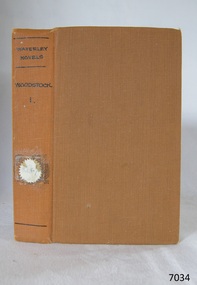
Book - Fictional stories, Sir Walter Scott, Waverley Novels Vol 39 Woodstock or The Cavalier, 1838
... Scott's poems like “The Lady of the Lake” (1810) boosted Scottish tourism and folklore, while phrases such as "cold shoulder" entered the English lexicon. He orchestrated George IV's 1822 Scotland visit, promoting unity over division. ...The subject volume of Waverley Novels Vol 39 published by Fisher Son & Co (1838) is part of a collected 48 volume set of Sir Walter Scott's works, containing various stories. Vol 39 in the 1836 Fisher edition reprints later entries from the fourth series, as these stories originally appeared in Scott's Magnum Opus 48 volume editions, the first from 1816. With the influential “Magnum Opus” editions from 1829–1833 by Robert Cadell, serving as the basis for later reprinted published sets like Fisher's. Scott's "Woodstock," or “The Cavalier” is a historical novel originally published in 1826 as the 22nd in the Waverley series. Set in 1651 at Woodstock Manor during the English Commonwealth after the Battle of Worcester, it dramatises Charles II's daring escape from Cromwell's forces. The story is about a royalist Sir Henry Lee and his daughter Alice, they lose their Woodstock home to Colonel Markham Everard, a sympathetic round head relative, who seeks protection for them from Cromwell, who suspects the site as a hideout for fugitive Charles II (disguised as a royal page "Louis Kerneguy"). Charles as the page courts Alice, sparking jealousy with Everard, amid duels, haunting in secret passages, and Cromwell's siege. Charles escapes with help from allies like Wildrake and Albert Lee, who impersonates him. The key themes to this novel are that it contrasts Cavalier loyalty and Puritan zeal, loyalty across divides, romance amid politics, and supernatural folklore masking intrigue. In the Fisher Son & Co edition, it reprints this story from Scott's revised collected original work in 1826.Waverley Novels Vol 39 Woodstock or the Cavalier, Light brown hardcover lettering in black text. Author: Sir Walter Scott Publisher: Fisher Son & Co Date: 1838fictionThe subject volume of Waverley Novels Vol 39 published by Fisher Son & Co (1838) is part of a collected 48 volume set of Sir Walter Scott's works, containing various stories. Vol 39 in the 1836 Fisher edition reprints later entries from the fourth series, as these stories originally appeared in Scott's Magnum Opus 48 volume editions, the first from 1816. With the influential “Magnum Opus” editions from 1829–1833 by Robert Cadell, serving as the basis for later reprinted published sets like Fisher's. Scott's "Woodstock," or “The Cavalier” is a historical novel originally published in 1826 as the 22nd in the Waverley series. Set in 1651 at Woodstock Manor during the English Commonwealth after the Battle of Worcester, it dramatises Charles II's daring escape from Cromwell's forces. The story is about a royalist Sir Henry Lee and his daughter Alice, they lose their Woodstock home to Colonel Markham Everard, a sympathetic round head relative, who seeks protection for them from Cromwell, who suspects the site as a hideout for fugitive Charles II (disguised as a royal page "Louis Kerneguy"). Charles as the page courts Alice, sparking jealousy with Everard, amid duels, haunting in secret passages, and Cromwell's siege. Charles escapes with help from allies like Wildrake and Albert Lee, who impersonates him. The key themes to this novel are that it contrasts Cavalier loyalty and Puritan zeal, loyalty across divides, romance amid politics, and supernatural folklore masking intrigue. In the Fisher Son & Co edition, it reprints this story from Scott's revised collected original work in 1826. warrnambool, shipwrecked-coast, flagstaff-hill, flagstaff-hill-maritime-museum, maritime-museum, shipwreck-coast, flagstaff-hill-maritime-village, shipwrecked-artefact, book, waverley novels vol 46 tales of my landlord, sir walter scott, pattison collection, warrnambool library, warrnambool mechanics’ institute, ralph eric pattison, corangamite regional library service, warrnambool city librarian, mechanics’ institute library, victorian library board, warrnambool books and records, warrnambool children’s library -
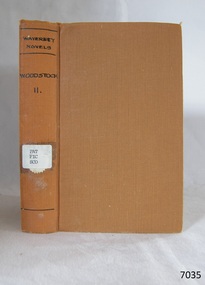 Flagstaff Hill Maritime Museum and Village
Book - Fictional stories, Sir Walter Scott, Waverley Novels Vol 40 Woodstock or the Cavalier-2, 1838
... Scott's poems like “The Lady of the Lake” (1810) boosted Scottish tourism and folklore, while phrases such as "cold shoulder" entered the English lexicon. He orchestrated George IV's 1822 Scotland visit, promoting unity over division. ...The subject volume of Waverley Novels Vol 40 published by Fisher Son & Co (1838) is part of a collected 48 volume set of Sir Walter Scott's works, containing various stories. Vol 40 in the 1838 Fisher edition reprints later entries from the fourth series, as these stories originally appeared in Scott's Magnum Opus 48 volume editions, the first from 1816. With the influential “Magnum Opus” editions from 1829–1833 by Robert Cadell, serving as the basis for later reprinted published sets like Fisher's. Scott's "Woodstock," or “The Cavalier” is a historical novel originally published in 1826 as the 22nd in the Waverley series. Volume 40 continues Woodstock, or The Cavalier from Vol 39 in the Fisher Son & Co edition. It picks up the 1651 story line at Woodstock Manor, where disguised Charles II hides amid escalating tension with Cromwell's forces. The plot continues with Cromwell storming the lodge after suspecting Charles's presence disguised as "Louis Kerneguy", arresting Colonel Everard and searching secret passages haunted by "ghosts". Albert Lee impersonates the king to aid his escape, while Alice guides Charles away; dramatic confrontations ensue with duels, revelations, and Cromwell's rage continuing. As in volume 39 the tale resolves family divisions, loyalty, and supernatural folklore masking political intrigue during the Commonwealth era. This split-volume format is standard in collected 1830 s editions like Fisher's, reprinting of Scott's 1826 original with revisions.Waverley Novels Vol 40 Woodstock or the Cavalier-2, Light brown hardcover lettering in black text. Author: Sir Walter Scott Publisher: Fisher Son & Co Date: 1838fictionThe subject volume of Waverley Novels Vol 40 published by Fisher Son & Co (1838) is part of a collected 48 volume set of Sir Walter Scott's works, containing various stories. Vol 40 in the 1838 Fisher edition reprints later entries from the fourth series, as these stories originally appeared in Scott's Magnum Opus 48 volume editions, the first from 1816. With the influential “Magnum Opus” editions from 1829–1833 by Robert Cadell, serving as the basis for later reprinted published sets like Fisher's. Scott's "Woodstock," or “The Cavalier” is a historical novel originally published in 1826 as the 22nd in the Waverley series. Volume 40 continues Woodstock, or The Cavalier from Vol 39 in the Fisher Son & Co edition. It picks up the 1651 story line at Woodstock Manor, where disguised Charles II hides amid escalating tension with Cromwell's forces. The plot continues with Cromwell storming the lodge after suspecting Charles's presence disguised as "Louis Kerneguy", arresting Colonel Everard and searching secret passages haunted by "ghosts". Albert Lee impersonates the king to aid his escape, while Alice guides Charles away; dramatic confrontations ensue with duels, revelations, and Cromwell's rage continuing. As in volume 39 the tale resolves family divisions, loyalty, and supernatural folklore masking political intrigue during the Commonwealth era. This split-volume format is standard in collected 1830 s editions like Fisher's, reprinting of Scott's 1826 original with revisions.warrnambool, shipwrecked-coast, flagstaff-hill, flagstaff-hill-maritime-museum, maritime-museum, shipwreck-coast, flagstaff-hill-maritime-village, shipwrecked-artefact, book, waverley novels vol 46 tales of my landlord, sir walter scott, pattison collection, warrnambool library, warrnambool mechanics’ institute, ralph eric pattison, corangamite regional library service, warrnambool city librarian, mechanics’ institute library, victorian library board, warrnambool books and records, warrnambool children’s library -
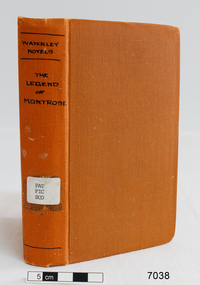 Flagstaff Hill Maritime Museum and Village
Book - Fictional stories, Sir Walter Scott, A Legend of Montrose Vol 15, 1837
... Scott's poems like “The Lady of the Lake” (1810) boosted Scottish tourism and folklore, while phrases such as "cold shoulder" entered the English lexicon. He orchestrated George IV's 1822 Scotland visit, promoting unity over division. ...The subject volume of Waverley Novels Vol 15 published by Fisher Son & Co (1837) is part of a collected 48 volume set of Sir Walter Scott's works, containing various stories. Vol 15 in the 1836 Fisher edition reprints later entries from the fourth series, as these stories originally appeared in Scott's Magnum Opus 48 volume editions, the first from 1816. With the influential “Magnum Opus” editions from 1829–1833 by Robert Cadell, serving as the basis for later reprinted published sets like Fisher's. The story is a historical novel set in Scotland in the 1640s, during the wars of the three Kingdoms. Its main story follows Allan M’Aulay, his friend the Earl of Menteith, and Annot Lyle, against the backdrop of Montrose’s Royalist campaign and clan feuds in the Highlands. The plot combines romance, revenge, and civil war. Annot, who was raised by the M’Aulays after being taken during a clan feud, becomes the focus of a love triangle between Allan M’Aulay and Menteith; The mystery of Annot's birth holds both back from pressing their claims buy eventually her marriage to Menteith is made possible But Allan’s jealousy drives him to attack the groom. A large subplot follows with Dugald Dalgetty, a comic professional soldier whose practical, mercenary outlook contrasts with the passions and loyalties of the other characters.Waverley Novels Vol 15 A Legend of Montrose, Light brown hardcover lettering in black text. Author: Sir Walter Scott Publisher: Fisher Son & Co Date: 1837fictionThe subject volume of Waverley Novels Vol 15 published by Fisher Son & Co (1837) is part of a collected 48 volume set of Sir Walter Scott's works, containing various stories. Vol 15 in the 1836 Fisher edition reprints later entries from the fourth series, as these stories originally appeared in Scott's Magnum Opus 48 volume editions, the first from 1816. With the influential “Magnum Opus” editions from 1829–1833 by Robert Cadell, serving as the basis for later reprinted published sets like Fisher's. The story is a historical novel set in Scotland in the 1640s, during the wars of the three Kingdoms. Its main story follows Allan M’Aulay, his friend the Earl of Menteith, and Annot Lyle, against the backdrop of Montrose’s Royalist campaign and clan feuds in the Highlands. The plot combines romance, revenge, and civil war. Annot, who was raised by the M’Aulays after being taken during a clan feud, becomes the focus of a love triangle between Allan M’Aulay and Menteith; The mystery of Annot's birth holds both back from pressing their claims buy eventually her marriage to Menteith is made possible But Allan’s jealousy drives him to attack the groom. A large subplot follows with Dugald Dalgetty, a comic professional soldier whose practical, mercenary outlook contrasts with the passions and loyalties of the other characters. warrnambool, shipwrecked-coast, flagstaff-hill, flagstaff-hill-maritime-museum, maritime-museum, shipwreck-coast, flagstaff-hill-maritime-village, shipwrecked-artefact, book, waverley novels vol 46 tales of my landlord, sir walter scott, pattison collection, warrnambool library, warrnambool mechanics’ institute, ralph eric pattison, corangamite regional library service, warrnambool city librarian, mechanics’ institute library, victorian library board, warrnambool books and records, warrnambool children’s library, quentin durward, quinten durward -
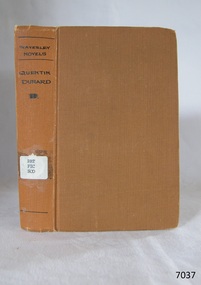 Flagstaff Hill Maritime Museum and Village
Book - Fictional stories, Sir Walter Scott, Waverley Novels Quentin Durward Vol 32, 1838
... Scott's poems like “The Lady of the Lake” (1810) boosted Scottish tourism and folklore, while phrases such as "cold shoulder" entered the English lexicon. He orchestrated George IV's 1822 Scotland visit, promoting unity over division. ...The subject volume of Waverley Novels Vol 32 published by Fisher Son & Co (1838) is part of a collected 48 volume set of Sir Walter Scott's works, containing various stories. Vol 32 in the 1836 Fisher edition reprints later entries from the fourth series, as these stories originally appeared in Scott's Magnum Opus 48 volume editions, the first from 1816. With the influential “Magnum Opus” editions from 1829–1833 by Robert Cadell, serving as the basis for later reprinted published sets like Fisher's. Quentin Durward, often listed as volume 32 in some Waverley Novels editions, is a historical novel set in 15th century France and Burgundy. Its story follows a young Scottish archer who gets drawn into the power struggle between Louis XI and Charles the Bold, while also escorting the Burgundian heiress Isabelle de Croye and eventually winning her hand. The story centres around Quentin arriving in France seeking service, he joins Louis XI’s Scottish Guard, and is pulled into court intrigue, kidnapping plots, and the violent conflict around Liege. The novel’s main historical drama is Louis XI using covert politics to weaken Burgundy, while Quentin’s personal plot tracks loyalty, danger, and romance.Waverley Novels Vol 32 Quentin Durward, Light brown hardcover lettering in black text. Author: Sir Walter Scott Publisher: Fisher Son & Co Date: 1838fictionThe subject volume of Waverley Novels Vol 32 published by Fisher Son & Co (1838) is part of a collected 48 volume set of Sir Walter Scott's works, containing various stories. Vol 32 in the 1836 Fisher edition reprints later entries from the fourth series, as these stories originally appeared in Scott's Magnum Opus 48 volume editions, the first from 1816. With the influential “Magnum Opus” editions from 1829–1833 by Robert Cadell, serving as the basis for later reprinted published sets like Fisher's. Quentin Durward, often listed as volume 32 in some Waverley Novels editions, is a historical novel set in 15th century France and Burgundy. Its story follows a young Scottish archer who gets drawn into the power struggle between Louis XI and Charles the Bold, while also escorting the Burgundian heiress Isabelle de Croye and eventually winning her hand. The story centres around Quentin arriving in France seeking service, he joins Louis XI’s Scottish Guard, and is pulled into court intrigue, kidnapping plots, and the violent conflict around Liege. The novel’s main historical drama is Louis XI using covert politics to weaken Burgundy, while Quentin’s personal plot tracks loyalty, danger, and romance.warrnambool, shipwrecked-coast, flagstaff-hill, flagstaff-hill-maritime-museum, maritime-museum, shipwreck-coast, flagstaff-hill-maritime-village, shipwrecked-artefact, book, waverley novels vol 46 tales of my landlord, sir walter scott, pattison collection, warrnambool library, warrnambool mechanics’ institute, ralph eric pattison, corangamite regional library service, warrnambool city librarian, mechanics’ institute library, victorian library board, warrnambool books and records, warrnambool children’s library, quentin durward, quinten durward -
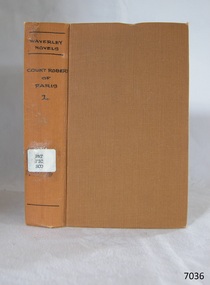 Flagstaff Hill Maritime Museum and Village
Book - Fictional stories, Sir Walter Scott, Waverley Novels Vol 47 Count Robert of Paris-2, 1838
... Scott's poems like “The Lady of the Lake” (1810) boosted Scottish tourism and folklore, while phrases such as "cold shoulder" entered the English lexicon. He orchestrated George IV's 1822 Scotland visit, promoting unity over division. ...The subject volume of the Waverley Novels Vol 47 published by Fisher Son & Co (1838) is part of a collected 48 volume set of Sir Walter Scott's works, containing various stories. Vol 47 in the 1838 Fisher edition reprints later entries from the fourth series, as these stories originally appeared in Scott's Magnum Opus 48 volume editions, the first from 1816. With the influential “Magnum Opus” editions from 1829–1833 by Robert Cadell, serving as the basis for later reprinted published sets like Fisher's. Volume 47 "Count Robert of Paris-2" completes the novel in the Fisher Son & Co edition. It continues the 1097 Constantinople intrigue from Vol 47's first part (or prior volume), resolving crusader-Byzantine clashes. The plot concludes with Count Robert freed by Hereward, fights in Brenhilda's duel against Nicephorus. Hereward reunites with Bertha (Brenhilda's attendant), regains English lands via Robert's influence, and joins him in Palestine as a vassal; crusaders depart after Alexius out maneuvers various plots. Volume 47 often splits Count Robert of Paris Part two before starting Castle Dangerous part one, matching 1830 s collected formats like Fisher's revisions of Scott's 1832 original.Blending chivalry, conspiracy, and cultural satire.Waverley Novels Vol 47 Count Robert of Paris- 2, Light brown hardcover lettering in black text. Author: Sir Walter Scott Publisher: Fisher Son & Co Date: 1838fictionThe subject volume of the Waverley Novels Vol 47 published by Fisher Son & Co (1838) is part of a collected 48 volume set of Sir Walter Scott's works, containing various stories. Vol 47 in the 1838 Fisher edition reprints later entries from the fourth series, as these stories originally appeared in Scott's Magnum Opus 48 volume editions, the first from 1816. With the influential “Magnum Opus” editions from 1829–1833 by Robert Cadell, serving as the basis for later reprinted published sets like Fisher's. Volume 47 "Count Robert of Paris-2" completes the novel in the Fisher Son & Co edition. It continues the 1097 Constantinople intrigue from Vol 47's first part (or prior volume), resolving crusader-Byzantine clashes. The plot concludes with Count Robert freed by Hereward, fights in Brenhilda's duel against Nicephorus. Hereward reunites with Bertha (Brenhilda's attendant), regains English lands via Robert's influence, and joins him in Palestine as a vassal; crusaders depart after Alexius out maneuvers various plots. Volume 47 often splits Count Robert of Paris Part two before starting Castle Dangerous part one, matching 1830 s collected formats like Fisher's revisions of Scott's 1832 original.Blending chivalry, conspiracy, and cultural satire.warrnambool, shipwrecked-coast, flagstaff-hill, flagstaff-hill-maritime-museum, maritime-museum, shipwreck-coast, flagstaff-hill-maritime-village, shipwrecked-artefact, book, waverley novels vol 46 tales of my landlord, sir walter scott, pattison collection, warrnambool library, warrnambool mechanics’ institute, ralph eric pattison, corangamite regional library service, warrnambool city librarian, mechanics’ institute library, victorian library board, warrnambool books and records, warrnambool children’s library -
 Flagstaff Hill Maritime Museum and Village
Book - Fictional stories, Sir Walter Scott, Waverley Novels The Monastery- 1 Vol 18, 1838
... Scott's poems like “The Lady of the Lake” (1810) boosted Scottish tourism and folklore, while phrases such as "cold shoulder" entered the English lexicon. He orchestrated George IV's 1822 Scotland visit, promoting unity over division. ...The subject volume of Waverley Novels Vol 18 published by Fisher Son & Co (1838) is part of a collected 48 volume set of Sir Walter Scott's works, containing various stories. Vol 18 in the 1836 Fisher edition reprints later entries from the fourth series, as these stories originally appeared in Scott's Magnum Opus 48 volume editions, the first from 1816. With the influential “Magnum Opus” editions from 1829–1833 by Robert Cadell, serving as the basis for later reprinted published sets like Fisher's. Scott’s “The Monastery” is a historical romance set in Scotland during the early Reformation, centred on Kennaquhair Abbey and the Glendinning family. The plot follows Halbert and Edward Glendinning, both in love with Mary Avenel, while religious conflict, local politics, and the eerie White Lady of Avenel shape the action.Waverley Novels Vol 18 The Monastery-1, Light brown hardcover lettering in black text. Author: Sir Walter Scott Publisher: Fisher Son & Co Date: 1837fictionThe subject volume of Waverley Novels Vol 18 published by Fisher Son & Co (1838) is part of a collected 48 volume set of Sir Walter Scott's works, containing various stories. Vol 18 in the 1836 Fisher edition reprints later entries from the fourth series, as these stories originally appeared in Scott's Magnum Opus 48 volume editions, the first from 1816. With the influential “Magnum Opus” editions from 1829–1833 by Robert Cadell, serving as the basis for later reprinted published sets like Fisher's. Scott’s “The Monastery” is a historical romance set in Scotland during the early Reformation, centred on Kennaquhair Abbey and the Glendinning family. The plot follows Halbert and Edward Glendinning, both in love with Mary Avenel, while religious conflict, local politics, and the eerie White Lady of Avenel shape the action.warrnambool, shipwrecked-coast, flagstaff-hill, flagstaff-hill-maritime-museum, maritime-museum, shipwreck-coast, flagstaff-hill-maritime-village, shipwrecked-artefact, book, waverley novels vol 46 tales of my landlord, sir walter scott, pattison collection, warrnambool library, warrnambool mechanics’ institute, ralph eric pattison, corangamite regional library service, warrnambool city librarian, mechanics’ institute library, victorian library board, warrnambool books and records, warrnambool children’s library, quentin durward, quinten durward -
 Flagstaff Hill Maritime Museum and Village
Book - Fictional stories, Sir Walter Scott, Waverley Novels Vol 20 The Abbot- 1 (Sequel to the Monastery), 1837
... Scott's poems like “The Lady of the Lake” (1810) boosted Scottish tourism and folklore, while phrases such as "cold shoulder" entered the English lexicon. He orchestrated George IV's 1822 Scotland visit, promoting unity over division. ...The subject volume “The Abbot- 1 (Sequel to the Monastery) Vol 20” published by Fisher Son & Co (1837) is part of a collected edition of Sir Walter Scott's works, containing stories from the "Tales of My Landlord" series. "Tales of My Landlord" forms a key subset of Scott's Waverley Novels, presented as fictional tales gathered by characters like Peter Pattieson from the landlord of the Wallace “Inn at Gandercleugh”. The series spans multiple books across four sub-series, including “The Black Dwarf” (1707 setting), “Old Mortality” (1679–1689), “The Heart of Midlothian” (1736), “The Bride of Lammermoor” (1709–1711), “A Legend of Montrose” (1644–1645), “Count Robert of Paris” (1097), and “Castle Dangerous” (1307). Vol 46 in the 1838 Fisher edition reprints later entries like “Count Robert of Paris” or “Castle Dangerous” from the fourth series, as these stories originally appeared in Scott's Magnum Opus collected volume editions, the first from 1816. With the influential 48-volume “Magnum Opus” edition from 1829–1833 by Robert Cadell, serving as the basis for later collected published sets like Fisher's. The Abbot is Walter Scott’s sequel to The Monastery, set in 1567–1568 during the turmoil around Mary, Queen of Scots. The story follows Roland Græme and other characters around Lochleven Castle, where Mary is imprisoned, and builds toward her escape attempt and the political crisis that ends with her defeat and flight to England. Like the other novels in the Waverley series it mixes historical events with fictional characters: Roland Græme, the Avenel household, and the mysterious “Abbot” figure are woven into the real struggle between Protestant and Catholic factions in Scotland. A central thread is Roland’s divided loyalties, his attraction to both the Catholic and Protestant worlds, and his involvement in helping Mary’s cause. The climax comes with Mary’s attempted escape from Lochleven, the fighting that follows, and her eventual loss of power in Scotland.Waverley Novels Vol 20 The Abbot- 1 Vol 20 (Sequel to the Monastery), Light brown hardcover lettering in black text. Author: Sir Walter Scott Publisher: Fisher Son & Co Date: 1837fictionThe subject volume “The Abbot- 1 (Sequel to the Monastery) Vol 20” published by Fisher Son & Co (1837) is part of a collected edition of Sir Walter Scott's works, containing stories from the "Tales of My Landlord" series. "Tales of My Landlord" forms a key subset of Scott's Waverley Novels, presented as fictional tales gathered by characters like Peter Pattieson from the landlord of the Wallace “Inn at Gandercleugh”. The series spans multiple books across four sub-series, including “The Black Dwarf” (1707 setting), “Old Mortality” (1679–1689), “The Heart of Midlothian” (1736), “The Bride of Lammermoor” (1709–1711), “A Legend of Montrose” (1644–1645), “Count Robert of Paris” (1097), and “Castle Dangerous” (1307). Vol 46 in the 1838 Fisher edition reprints later entries like “Count Robert of Paris” or “Castle Dangerous” from the fourth series, as these stories originally appeared in Scott's Magnum Opus collected volume editions, the first from 1816. With the influential 48-volume “Magnum Opus” edition from 1829–1833 by Robert Cadell, serving as the basis for later collected published sets like Fisher's. The Abbot is Walter Scott’s sequel to The Monastery, set in 1567–1568 during the turmoil around Mary, Queen of Scots. The story follows Roland Græme and other characters around Lochleven Castle, where Mary is imprisoned, and builds toward her escape attempt and the political crisis that ends with her defeat and flight to England. Like the other novels in the Waverley series it mixes historical events with fictional characters: Roland Græme, the Avenel household, and the mysterious “Abbot” figure are woven into the real struggle between Protestant and Catholic factions in Scotland. A central thread is Roland’s divided loyalties, his attraction to both the Catholic and Protestant worlds, and his involvement in helping Mary’s cause. The climax comes with Mary’s attempted escape from Lochleven, the fighting that follows, and her eventual loss of power in Scotland. warrnambool, shipwrecked-coast, flagstaff-hill, flagstaff-hill-maritime-museum, maritime-museum, shipwreck-coast, flagstaff-hill-maritime-village, shipwrecked-artefact, book, waverley novels vol 46 tales of my landlord, sir walter scott, pattison collection, warrnambool library, warrnambool mechanics’ institute, ralph eric pattison, corangamite regional library service, warrnambool city librarian, mechanics’ institute library, victorian library board, warrnambool books and records, warrnambool children’s library -
 Flagstaff Hill Maritime Museum and Village
Book - Fictional stories, Sir Walter Scott, Waverley Novels Vol 46-1 Tales of My Landlord, 1838
... Scott's poems like “The Lady of the Lake” (1810) boosted Scottish tourism and folklore, while phrases such as "cold shoulder" entered the English lexicon. He orchestrated George IV's 1822 Scotland visit, promoting unity over division. ...The subject volume “Waverley Novels Vol 46” published by Fisher Son & Co (1838) is part of a collected edition of Sir Walter Scott's works, containing stories from the "Tales of My Landlord" series. "Tales of My Landlord" forms a key subset of Scott's Waverley Novels, presented as fictional tales gathered by characters like Peter Pattieson from the landlord of the Wallace “Inn at Gandercleugh”. The series spans multiple books across four sub-series, including “The Black Dwarf” (1707 setting), “Old Mortality” (1679–1689), “The Heart of Midlothian” (1736), “The Bride of Lammermoor” (1709–1711), “A Legend of Montrose” (1644–1645), “Count Robert of Paris” (1097), and “Castle Dangerous” (1307). Vol 46 in the 1838 Fisher edition reprints later entries like “Count Robert of Paris” or “Castle Dangerous” from the fourth series, as these stories originally appeared in Scott's Magnum Opus collected volume editions, the first from 1816. With the influential 48-volume “Magnum Opus” edition from 1829–1833 by Robert Cadell, serving as the basis for later collected published sets like Fisher's.Waverley Novels Vol 46 Tales of My Landlord, Light brown hardcover lettering in black text. Author: Sir Walter Scott Publisher: Fisher Son & Co Date: 1838fictionThe subject volume “Waverley Novels Vol 46” published by Fisher Son & Co (1838) is part of a collected edition of Sir Walter Scott's works, containing stories from the "Tales of My Landlord" series. "Tales of My Landlord" forms a key subset of Scott's Waverley Novels, presented as fictional tales gathered by characters like Peter Pattieson from the landlord of the Wallace “Inn at Gandercleugh”. The series spans multiple books across four sub-series, including “The Black Dwarf” (1707 setting), “Old Mortality” (1679–1689), “The Heart of Midlothian” (1736), “The Bride of Lammermoor” (1709–1711), “A Legend of Montrose” (1644–1645), “Count Robert of Paris” (1097), and “Castle Dangerous” (1307). Vol 46 in the 1838 Fisher edition reprints later entries like “Count Robert of Paris” or “Castle Dangerous” from the fourth series, as these stories originally appeared in Scott's Magnum Opus collected volume editions, the first from 1816. With the influential 48-volume “Magnum Opus” edition from 1829–1833 by Robert Cadell, serving as the basis for later collected published sets like Fisher's. warrnambool, shipwrecked-coast, flagstaff-hill, flagstaff-hill-maritime-museum, maritime-museum, shipwreck-coast, flagstaff-hill-maritime-village, shipwrecked-artefact, book, waverley novels vol 46 tales of my landlord, sir walter scott, pattison collection, warrnambool library, warrnambool mechanics’ institute, ralph eric pattison, corangamite regional library service, warrnambool city librarian, mechanics’ institute library, victorian library board, warrnambool books and records, warrnambool children’s library -
 Flagstaff Hill Maritime Museum and Village
Book - Fictional stories, Sir Walter Scott, Waverley Novels The Monastery- 2 Vol 19, 1837
... Scott's poems like “The Lady of the Lake” (1810) boosted Scottish tourism and folklore, while phrases such as "cold shoulder" entered the English lexicon. He orchestrated George IV's 1822 Scotland visit, promoting unity over division. ...The subject volume of Waverley Novels Vol 19 published by Fisher Son & Co (1838) is part of a collected 48 volume set of Sir Walter Scott's works, containing various stories. Vol 19 in the 1836 Fisher edition reprints later entries from the fourth series, as these stories originally appeared in Scott's Magnum Opus 48 volume editions, the first from 1816. With the influential “Magnum Opus” editions from 1829–1833 by Robert Cadell, serving as the basis for later reprinted published sets like Fisher's. Volume 2 is linked to the earlier volume through its shared setting, families, and historical conflict, but it is not a direct continuation of the same protagonist’s journey. It follows the Glendinning brothers and Mary Avenel in the same Scottish Borders world of the Reformation, with the same abbey, the same political tensions, and the same supernatural “White Lady”. In Volume 1 of “The Monastery” the story sets up the core relationships and tensions between Halbert and Edward Glendinning as they grow up near Kennaquhair with Mary Avenel. While the monastery itself becomes a battleground between old Catholic power and the new Protestant order. The second volume picks up those same threads and pushes them toward resolution through Halbert’s rise, Mary’s marriage, and Edward’s shift toward monastic life.Waverley Novels Vol 19 The Monastery-2, Light brown hardcover lettering in black text. Author: Sir Walter Scott Publisher: Fisher Son & Co Date: 1837fictionThe subject volume of Waverley Novels Vol 19 published by Fisher Son & Co (1838) is part of a collected 48 volume set of Sir Walter Scott's works, containing various stories. Vol 19 in the 1836 Fisher edition reprints later entries from the fourth series, as these stories originally appeared in Scott's Magnum Opus 48 volume editions, the first from 1816. With the influential “Magnum Opus” editions from 1829–1833 by Robert Cadell, serving as the basis for later reprinted published sets like Fisher's. Volume 2 is linked to the earlier volume through its shared setting, families, and historical conflict, but it is not a direct continuation of the same protagonist’s journey. It follows the Glendinning brothers and Mary Avenel in the same Scottish Borders world of the Reformation, with the same abbey, the same political tensions, and the same supernatural “White Lady”. In Volume 1 of “The Monastery” the story sets up the core relationships and tensions between Halbert and Edward Glendinning as they grow up near Kennaquhair with Mary Avenel. While the monastery itself becomes a battleground between old Catholic power and the new Protestant order. The second volume picks up those same threads and pushes them toward resolution through Halbert’s rise, Mary’s marriage, and Edward’s shift toward monastic life. warrnambool, shipwrecked-coast, flagstaff-hill, flagstaff-hill-maritime-museum, maritime-museum, shipwreck-coast, flagstaff-hill-maritime-village, shipwrecked-artefact, book, waverley novels vol 46 tales of my landlord, sir walter scott, pattison collection, warrnambool library, warrnambool mechanics’ institute, ralph eric pattison, corangamite regional library service, warrnambool city librarian, mechanics’ institute library, victorian library board, warrnambool books and records, warrnambool children’s library, the monastery -
 Flagstaff Hill Maritime Museum and Village
Book - Fictional stories, Sir Walter Scott, Waverley Novels Peveril of the Peak- 3 Vol 30, 1838
... Scott's poems like “The Lady of the Lake” (1810) boosted Scottish tourism and folklore, while phrases such as "cold shoulder" entered the English lexicon. He orchestrated George IV's 1822 Scotland visit, promoting unity over division. ...The subject volume “Waverley Novels Vol 30” published by Fisher Son & Co (1838) is part of a collected edition of Sir Walter Scott's works, containing stories from the "Tales of My Landlord" series. "Tales of My Landlord" forms a key subset of Scott's Waverley Novels, presented as fictional tales gathered by characters like Peter Pattieson from the landlord of the Wallace “Inn at Gandercleugh”. The series spans multiple books across four sub-series, including “The Black Dwarf” (1707 setting), “Old Mortality” (1679–1689), “The Heart of Midlothian” (1736), “The Bride of Lammermoor” (1709–1711), “A Legend of Montrose” (1644–1645), “Count Robert of Paris” (1097), and “Castle Dangerous” (1307). Vol 46 in the 1838 Fisher edition reprints later entries like “Count Robert of Paris” or “Castle Dangerous” from the fourth series, as these stories originally appeared in Scott's Magnum Opus collected volume editions, the first from 1816. With the influential 48-volume “Magnum Opus” edition from 1829–1833 by Robert Cadell, serving as the basis for later collected published sets like Fisher's. Peveril of the Peak is Walter Scott's longest novel, published in 1823 and set during the late 17th century amid the Popish plot hysteria under Charles II. It follows young Cavalier Julian Peveril's forbidden romance with Alice Bridgenorth a Puritan's daughter. The story covers political intrigue, family feuds, and conspiracies drawing the characters into events spanning Derbyshire's Peak District, the Isle of Man, and London. The story continues on the Peveril family's royalist loyalties clashing with the Bridgenorths' Puritan resentment, fuelled by past Civil War grievances like the execution of William Christian. Julian and Alice's love is tested when Julian's parents face Popish Plot accusations with subplots involving a scheming dwarf, the Countess of Derby, and court figures like the Duke of Buckingham. It resolves with royal intervention, exposing intrigues and eventually uniting the lovers.Waverley Novels Peveril of the Peak- 3 Vol 30, Light brown hardcover lettering in black text. Author: Sir Walter Scott Publisher: Fisher Son & Co Date: 1838fictionThe subject volume “Waverley Novels Vol 30” published by Fisher Son & Co (1838) is part of a collected edition of Sir Walter Scott's works, containing stories from the "Tales of My Landlord" series. "Tales of My Landlord" forms a key subset of Scott's Waverley Novels, presented as fictional tales gathered by characters like Peter Pattieson from the landlord of the Wallace “Inn at Gandercleugh”. The series spans multiple books across four sub-series, including “The Black Dwarf” (1707 setting), “Old Mortality” (1679–1689), “The Heart of Midlothian” (1736), “The Bride of Lammermoor” (1709–1711), “A Legend of Montrose” (1644–1645), “Count Robert of Paris” (1097), and “Castle Dangerous” (1307). Vol 46 in the 1838 Fisher edition reprints later entries like “Count Robert of Paris” or “Castle Dangerous” from the fourth series, as these stories originally appeared in Scott's Magnum Opus collected volume editions, the first from 1816. With the influential 48-volume “Magnum Opus” edition from 1829–1833 by Robert Cadell, serving as the basis for later collected published sets like Fisher's. Peveril of the Peak is Walter Scott's longest novel, published in 1823 and set during the late 17th century amid the Popish plot hysteria under Charles II. It follows young Cavalier Julian Peveril's forbidden romance with Alice Bridgenorth a Puritan's daughter. The story covers political intrigue, family feuds, and conspiracies drawing the characters into events spanning Derbyshire's Peak District, the Isle of Man, and London. The story continues on the Peveril family's royalist loyalties clashing with the Bridgenorths' Puritan resentment, fuelled by past Civil War grievances like the execution of William Christian. Julian and Alice's love is tested when Julian's parents face Popish Plot accusations with subplots involving a scheming dwarf, the Countess of Derby, and court figures like the Duke of Buckingham. It resolves with royal intervention, exposing intrigues and eventually uniting the lovers. warrnambool, shipwrecked-coast, flagstaff-hill, flagstaff-hill-maritime-museum, maritime-museum, shipwreck-coast, flagstaff-hill-maritime-village, shipwrecked-artefact, book, waverley novels vol 46 tales of my landlord, sir walter scott, pattison collection, warrnambool library, warrnambool mechanics’ institute, ralph eric pattison, corangamite regional library service, warrnambool city librarian, mechanics’ institute library, victorian library board, warrnambool books and records, warrnambool children’s library
