
Showing 357 items matching "life line"
-
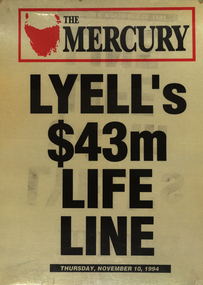 Federation University Historical Collection
Newspaper - Newspaper poster, The Mercury Poster - 'Lyell's $43m Life Line', November 10, 1994
... The Mercury Poster - 'Lyell's $43m Life Line'.......life line...Laminated newspaper poster dated Thursday, November 10 1994 from The Mercury. 'Lyell's $43m Life Line'....'Lyell's $43m Life Line'. The Mercury Poster - 'Lyell's $43m Life Line'. ...Laminated newspaper poster dated Thursday, November 10 1994 from The Mercury. 'Lyell's $43m Life Line'.the mercury, tasmania, lyell, life line, poster -
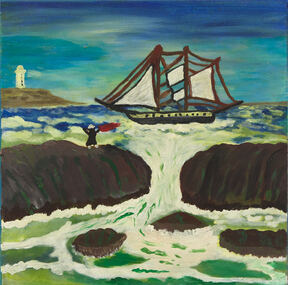 Darebin Art Collection
Painting, Aunty Frances Gallagher, 'Life Line', 2010
... 'Life Line'...painting 'Life Line' Painting Aunty Frances Gallagher ...Aunty Frances Gallagher (1926-2026) is a respected Gunditjmara Elder who was born in Bendigo. She studied at RMIT University and received her Diploma at the age of 87. Within her landscape depictions of her Gunditjmara tribal lands and ancestral memories, Aunty Frances contemplates the significance of place, family connection, spirituality and social displacement.painting -
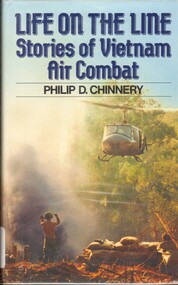 National Vietnam Veterans Museum (NVVM)
Book, Chinnery, Philip, Life On The Line: stories of Vietnam air combat (Copy 1)
... Life On The Line: stories of Vietnam air combat (Copy 1)...Air Force Vietnam Pilots This is the first serious attempt to chronicle in one book the life and times of the pilot at war in Vietnam between 1961 and 1972. Life On The Line: stories of Vietnam air combat (Copy 1) Book Book Chinnery, Philip ...This is the first serious attempt to chronicle in one book the life and times of the pilot at war in Vietnam between 1961 and 1972.This is the first serious attempt to chronicle in one book the life and times of the pilot at war in Vietnam between 1961 and 1972.united states. air force, vietnam pilots -
 National Vietnam Veterans Museum (NVVM)
Book, Chinnery, Philip, Life On The Line: stories of Vietnam air combat (Copy 2)
... Life On The Line: stories of Vietnam air combat (Copy 2)...Air Force Vietnam War This is the first serious attempt to chronicle in one book the life and times of the pilot at war in Vietnam between 1961 and 1972. Life On The Line: stories of Vietnam air combat (Copy 2) Book Book Chinnery, Philip ...This is the first serious attempt to chronicle in one book the life and times of the pilot at war in Vietnam between 1961 and 1972.This is the first serious attempt to chronicle in one book the life and times of the pilot at war in Vietnam between 1961 and 1972.united states. air force, vietnam war -
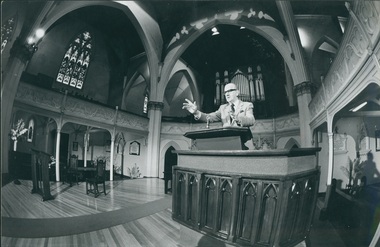 Uniting Church Archives - Synod of Victoria
Photograph, 1981
... Arthur Preston, Methodist, minister, Wesley Church, Life Line...During his ministry in Adelaide he established and directed the Life Line Telephone Counselling Service. During 1966 and 1968 he was Associate Minister in the Glen Iris Circuit, Victoria. ...During his ministry in Adelaide he established and directed the Life Line Telephone Counselling Service. During 1966 and 1968 he was Associate Minister in the Glen Iris Circuit, Victoria. ...Arthur William Preston was born in 1912. Following his ordination into the Methodist Church he was stationed in Mareeba and Townsville in North Queensland. From 1944 to 1948 he was Field Secretary for the Queensland Methodist Centenary Celebrations, conducting evangelistic missions throughout Queensland and assisting in raising the sum of 100,000 pounds for development work within the Queensland Methodist Church. From 1948 to 1963 he was superintendent of the West End Methodist Mission in Brisbane. In 1963 he was awarded the O.B.E. From 1963 - 1966 he was Associated Minister at the Adelaide Central Mission. During his ministry in Adelaide he established and directed the Life Line Telephone Counselling Service. During 1966 and 1968 he was Associate Minister in the Glen Iris Circuit, Victoria. From 1968 until his retirement at the end of 1981, Arthur Preston was the Superintendent of what is now Wesley Central Parish Mission (Central Methodist Mission prior to Church Union in 1977. In 1982 he was awarded the Order of Australia. Arthur Preston died on 19 March 1985.B & W gloss fish eye photograph of the Rev Arthur Preston preaching from the pulpit in Wesley Church, Lonsdale St. Melbourne. arthur preston, methodist, minister, wesley church, life line -
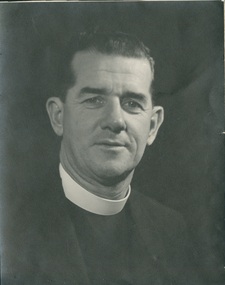 Uniting Church Archives - Synod of Victoria
Photograph, 1956
... Arthur Preston, Methodist, Minister, Wesley Church, Life Line...During his ministry in Adelaide he established and directed the Life Line Telephone Counselling Service. During 1966 and 1968 he was Associate Minister in the Glen Iris Circuit, Victoria. ...During his ministry in Adelaide he established and directed the Life Line Telephone Counselling Service. During 1966 and 1968 he was Associate Minister in the Glen Iris Circuit, Victoria. ...Arthur William Preston was born in 1912. Following his ordination into the Methodist Church he was stationed in Mareeba and Townsville in North Queensland. From 1944 to 1948 he was Field Secretary for the Queensland Methodist Centenary Celebrations, conducting evangelistic missions throughout Queensland and assisting in raising the sum of 100,000 pounds for development work within the Queensland Methodist Church. From 1948 to 1963 he was superintendent of the West End Methodist Mission in Brisbane. In 1963 he was awarded the O.B.E. From 1963 - 1966 he was Associated Minister at the Adelaide Central Mission. During his ministry in Adelaide he established and directed the Life Line Telephone Counselling Service. During 1966 and 1968 he was Associate Minister in the Glen Iris Circuit, Victoria. From 1968 until his retirement at the end of 1981, Arthur Preston was the Superintendent of what is now Wesley Central Parish Mission (Central Methodist Mission prior to Church Union in 1977. In 1982 he was awarded the Order of Australia. Arthur Preston died on 19 March 1985.B & W matte head and shoulders studio portrait of the Rev. Arthur Preston."To my dearest Claire - happy birthday wishes and love from Arthur"arthur preston, methodist, minister, wesley church, life line -
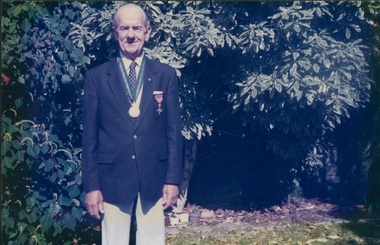 Uniting Church Archives - Synod of Victoria
Photograph, 1982
... arthur preston, methodist, minister, wesley church, life line...During his ministry in Adelaide he established and directed the Life Line Telephone Counselling Service. During 1966 and 1968 he was Associate Minister in the Glen Iris Circuit, Victoria. ...During his ministry in Adelaide he established and directed the Life Line Telephone Counselling Service. During 1966 and 1968 he was Associate Minister in the Glen Iris Circuit, Victoria. ...Arthur William Preston was born in 1912. Following his ordination into the Methodist Church he was stationed in Mareeba and Townsville in North Queensland. From 1944 to 1948 he was Field Secretary for the Queensland Methodist Centenary Celebrations, conducting evangelistic missions throughout Queensland and assisting in raising the sum of 100,000 pounds for development work within the Queensland Methodist Church. From 1948 to 1963 he was superintendent of the West End Methodist Mission in Brisbane. In 1963 he was awarded the O.B.E. From 1963 - 1966 he was Associated Minister at the Adelaide Central Mission. During his ministry in Adelaide he established and directed the Life Line Telephone Counselling Service. During 1966 and 1968 he was Associate Minister in the Glen Iris Circuit, Victoria. From 1968 until his retirement at the end of 1981, Arthur Preston was the Superintendent of what is now Wesley Central Parish Mission (Central Methodist Mission prior to Church Union in 1977. In 1982 he was awarded the Order of Australia. Arthur Preston died on 19 March 1985.Informal gloss coloured photograph of the Rev Arthur Preston standing in the grounds of Government House, Melbourne. He is wearing his Order of Australia Award medallionarthur preston, methodist, minister, wesley church, life line, order of australia -
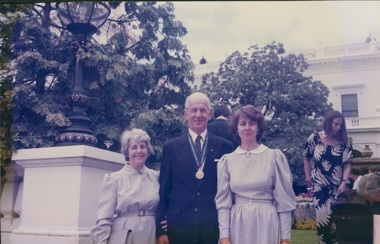 Uniting Church Archives - Synod of Victoria
Photograph, 1982
... arthur preston, methodist, minister, wesley church, life line...During his ministry in Adelaide he established and directed the Life Line Telephone Counselling Service. During 1966 and 1968 he was Associate Minister in the Glen Iris Circuit, Victoria. ...During his ministry in Adelaide he established and directed the Life Line Telephone Counselling Service. During 1966 and 1968 he was Associate Minister in the Glen Iris Circuit, Victoria. ...Arthur William Preston was born in 1912. Following his ordination into the Methodist Church he was stationed in Mareeba and Townsville in North Queensland. From 1944 to 1948 he was Field Secretary for the Queensland Methodist Centenary Celebrations, conducting evangelistic missions throughout Queensland and assisting in raising the sum of 100,000 pounds for development work within the Queensland Methodist Church. From 1948 to 1963 he was superintendent of the West End Methodist Mission in Brisbane. In 1963 he was awarded the O.B.E. From 1963 - 1966 he was Associated Minister at the Adelaide Central Mission. During his ministry in Adelaide he established and directed the Life Line Telephone Counselling Service. During 1966 and 1968 he was Associate Minister in the Glen Iris Circuit, Victoria. From 1968 until his retirement at the end of 1981, Arthur Preston was the Superintendent of what is now Wesley Central Parish Mission (Central Methodist Mission prior to Church Union in 1977. In 1982 he was awarded the Order of Australia. Arthur Preston died on 19 March 1985.Informal gloss coloured photograph of the Rev Arthur Preston standing in the grounds of Government House, Melbourne with his wife Mrs Claire Preston and his daughter Miss Adel Preston. He is wearing his Order of Australia Award medallion.arthur preston, methodist, minister, wesley church, life line, order of australia, claire preston, adele preston -
 Uniting Church Archives - Synod of Victoria
Photograph, Undated c.1980s
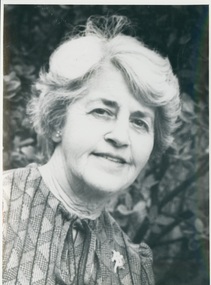
... arthur preston, methodist, minister, wesley church, life line...During his ministry in Adelaide he established and directed the Life Line Telephone Counselling Service. During 1966 and 1968 he was Associate Minister in the Glen Iris Circuit, Victoria. ...During his ministry in Adelaide he established and directed the Life Line Telephone Counselling Service. During 1966 and 1968 he was Associate Minister in the Glen Iris Circuit, Victoria. ...Arthur William Preston was born in 1912. Following his ordination into the Methodist Church he was stationed in Mareeba and Townsville in North Queensland. From 1944 to 1948 he was Field Secretary for the Queensland Methodist Centenary Celebrations, conducting evangelistic missions throughout Queensland and assisting in raising the sum of 100,000 pounds for development work within the Queensland Methodist Church. From 1948 to 1963 he was superintendent of the West End Methodist Mission in Brisbane. In 1963 he was awarded the O.B.E. From 1963 - 1966 he was Associated Minister at the Adelaide Central Mission. During his ministry in Adelaide he established and directed the Life Line Telephone Counselling Service. During 1966 and 1968 he was Associate Minister in the Glen Iris Circuit, Victoria. From 1968 until his retirement at the end of 1981, Arthur Preston was the Superintendent of what is now Wesley Central Parish Mission (Central Methodist Mission prior to Church Union in 1977. In 1982 he was awarded the Order of Australia. Arthur Preston died on 19 March 1985.B & W gloss head and shoulders photograph of Mrs Claire Preston, wife of the Rev. Arthur Preston.arthur preston, methodist, minister, wesley church, life line, order of australia, claire preston, adele preston -
 Glen Eira Historical Society
Document - CAULFIELD RED CROSS UNIT
... ... Life Line...(mayor) Campbell AJ ANZAC Day Heart Foundation Community Services Voluntary Workers Welfare Establishments Accidents and Disasters Emergency Services Fundraising Charitable Organisations Remembrance Day Red Cross Calling Markets Disabled People Local Government Blood Bank Life Line Telecross Service Fires Central Citizens’ Appeal Committee Document CAULFIELD RED CROSS UNIT ...This file contains one item about this organisation: 1/Original copy of typewritten document titled ‘Forty Eighth Annual Report of the Caulfield ‘F’ Red Cross Unit from 01/07/1986 to 30/06/1987.’ This document includes details of members’ activities during the aforesaid year such as first aid training, fundraising, voluntary aid emergencies.caulfield, caulfield ‘f’ red cross unit, caulfield citizens’ advice bureau, caulfield welfare department, caulfield royal district nursing service, chisholm institute of technology, red cross, salvation army, caulfield council, caulfield hospital, caulfield racecourse, caulfield citizens’ red cross appeal committee, district citizens’ appeal committee of red cross, southern memorial hospital, elsternwick, mayor, mayoress, campbell jack cr. (mayor), campbell aj, anzac day, heart foundation, community services, voluntary workers, welfare establishments, accidents and disasters, emergency services, fundraising, charitable organisations, remembrance day, red cross calling, markets, disabled people, local government, blood bank, life line, telecross service, fires, central citizens’ appeal committee -
 Uniting Church Archives - Synod of Victoria
BW photo, Undated
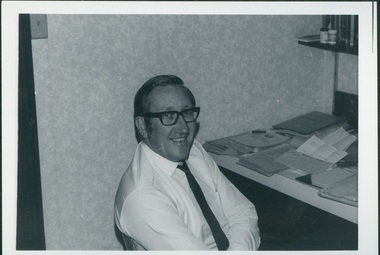
... Dr Charles Noller; Director of Telephone Counselling, Life Line Brisbane...Dr Charles Noller; Director of Telephone Counselling, Life Line Brisbane Rev Dr Charles Noller Director Lifeline Brisbane Rev. ...Reverend Dr Charles Noller was ordained in 1968 and served at New Lambton, Mayfield Tighes Hill in New South Wales, and Valley New Farm, and Minister in Association Valley-New Farm-Merthyr. He is shown in the photograph as Director Telephone Counselling at Lifeline Brisbane.Rev. Dr Charles Noller; bw photo; upper body; seatedRev Dr Charles Noller Director Lifeline Brisbane rev. dr charles noller; director of telephone counselling, life line brisbane -
 Magnet Galleries Melbourne Inc
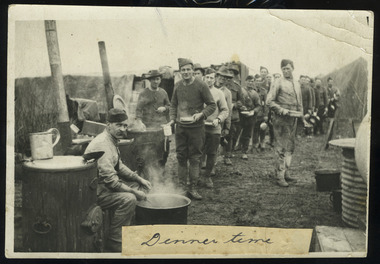
soldiers waiting for dinner
... world war 1, anzac, ww1, soldiers, australian, uniform, camp, life, dinner, line...world war 1, anzac, ww1, soldiers, australian, uniform, camp, life, dinner, line soldiers waiting for dinner ...world war 1, anzac, ww1, soldiers, australian, uniform, camp, life, dinner, line -
 Federation University Art Collection
Artwork, 'Nude Figure' by Rupert Bunny
... Life drawing using line depicting a female figure turned away from the onlooker. ...The Art Collection features over 1000 works and was listed as a 'Ballarat Treasure' in 2007. art artwork rupert bunny life drawing nude available (in march 2018) Signed lower third with artist's initials. Life drawing using line depicting a female figure turned away from the onlooker. ...Rupert BUNNY (1864-1947) One of the most successful expatriate artists of his generation Rupert Bunny was superb colourist and fine draughtsman, with a strong interest in rhythmic composition. This item is part of the Federation University Art Collection. The Art Collection features over 1000 works and was listed as a 'Ballarat Treasure' in 2007.Life drawing using line depicting a female figure turned away from the onlooker. Gift of William Ritchie, 1965Signed lower third with artist's initials.art, artwork, rupert bunny, life drawing, nude, available (in march 2018) -
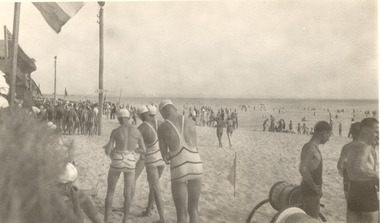 Chelsea & District Historical Society Inc
Photograph - Aspendale Life Saving Carnival 1940_50s, Clubs - Life Savings, 1940's - 1950
... Life Saving Carnival - Aspendale Beach, showing large pole in centre of photo. Sign - Grove's St to Aspendale Station. Flag pole, reel & line...Life Saving Carnival - Aspendale Beach, showing large pole in centre of photo. Sign - Grove's St to Aspendale Station. Flag pole, reel & line ...Life Saving Carnival - Aspendale Beach, showing large pole in centre of photo. Sign - Grove's St to Aspendale Station. Flag pole, reel & line, life savers & spectators, people swimming. -
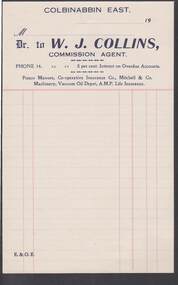 Bendigo Historical Society Inc.
Document - CAMBRIDGE PRESS COLLECTION: ACCOUNT - W. J. COLLINS
... Agents for Fresco Manure, Co-operative Insurance Co., Mitchell & Co Machinery, Vacuum Oil Depot and A.M.P. Life Insurance, Date line ends 19--. Printed in dark blue with red lines....Agents for Fresco Manure, Co-operative Insurance Co., Mitchell & Co Machinery, Vacuum Oil Depot and A.M.P. Life Insurance, Date line ends 19--. Printed in dark blue with red lines. ...Account page from W. J. Collins, Commission Agent, Colbinabbin East. Agents for Fresco Manure, Co-operative Insurance Co., Mitchell & Co Machinery, Vacuum Oil Depot and A.M.P. Life Insurance, Date line ends 19--. Printed in dark blue with red lines.business, printers, cambridge press, cambridge press collection, w j collins, fresco manure, co-operative insurance co., mitchell & co machinery, vacuum oil depot, a.m.p. life insurance -
Eltham District Historical Society Inc
Document - Folder, Metcher, Jed
... Contents Newspaper article: ""Jed enjoys his life in the fast line", Diamond Valley Leader, 12 September 2007. ...Contents Newspaper article: ""Jed enjoys his life in the fast line", Diamond Valley Leader, 12 September 2007. ...Jed Metcher, a Warrandyte High School year 12 student living in Eltham, has competed as a motorcycle racer. Contents Newspaper article: ""Jed enjoys his life in the fast line", Diamond Valley Leader, 12 September 2007. Describes Jed Metcher motorcycle riding.Newspaper clippings, A4 photocopies, etcjed metcher, warrandyte high school -
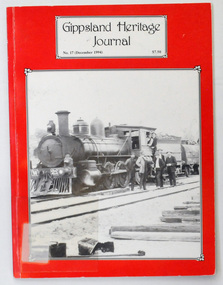 Orbost & District Historical Society
journals, E-Gee Printers, Gippsland Heritage Journal, December 1994
... It contains an article , "Tent Life on the Orbost Line" with photographs and history of the Bairnsdale - Orbost railway line....It contains an article , "Tent Life on the Orbost Line" with photographs and history of the Bairnsdale - Orbost railway line. ...This magazine was edited by Meredith Fletcher.This journal is a useful reference for the history of the Bairnsdale to Orbost Railway. Two copies of a 64 pp magazine, titled Gippsland Heritage Journal. It has a red cover with a b/w photograph of a special train taking workers to Melbourne for a Christmas break c 1915. The journal is No 17, December 1994 and cost $7.50. It contains an article , "Tent Life on the Orbost Line" with photographs and history of the Bairnsdale - Orbost railway line.2426.1 has a call no. on front cover 994.56 and a bar code on the back cover GIP journal-gippsland-heritage-journal history-railway -
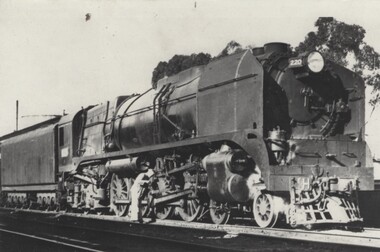 Wodonga & District Historical Society Inc
Photograph - Fred Rochow Railways Collection - Eric Molloy preparing Heavy Harry H220, C. 1943 - 1956
... The war put an end to plans to strengthen the line and to build the other two locomotives. As a result, the locomotive spent its entire service life on the Northeast line as this was the only other line on which it could operate. ...The war put an end to plans to strengthen the line and to build the other two locomotives. As a result, the locomotive spent its entire service life on the Northeast line as this was the only other line on which it could operate. ...The Fred Rochow Railways Collection incorporates photos related to the operation of the Wodonga Railway Station including different types of trains and railways staff C. 1930 – 1990. It was donated to the Wodonga Historical Society by Fred Rochow, a railwayman who spent many years based in Wodonga. He joined the Victorian Railways on 17th June l947 and retired in 1988. For some time, he was a member of the Australian Federated Union of Locomotive Enginemen and served a term as a member of the Trades Hall Council. He had an extensive knowledge of the struggles that took place to achieve better conditions for railway workers. Fred worked for many years as a fireman and then worked his way up the ranks to driver, experiencing many changes from the days of steam locomotives through to diesel trains, locomotives and even the modern XPT train. He worked throughout Victoria at different stages of his career, with his final working years focused on the northeast of Victoria and the Albury to Melbourne line. After his retirement, Fred continued to share his love of steam miniature trains with the community.This collection has local and statewide significance as it captures images of trains, locomotives and personnel who operated the railway services in Wodonga and throughout Northeast Victoria. The railways played a critical role in opening up Victoria and connecting Australia for trade, business, social communication and transport.Eric Molloy preparing Locomotive H220 "Heavy Harry" for another run. Eric was born on 11 August 1906. He started cleaning with the Victorian Railways on 26 November 1926. Eric passed his Driver qualification on 1 December 1943. "Heavy Harry" - H220 was the only locomotive constructed in this class. The H class is the largest locomotive built to operate on the Victorian Railways. He was built at Newport in 1941 as the first of three mighty locomotives to haul the Overland Express to Adelaide, each to take the place of two ordinary locomotives. H220 entered service on 7 February 1941. Known as “Heavy Harry”, he never fulfilled his destiny, because bridges and tracks were not strong enough to carry his 260 tons (with tender). The war put an end to plans to strengthen the line and to build the other two locomotives. As a result, the locomotive spent its entire service life on the Northeast line as this was the only other line on which it could operate. It was used mainly on fast goods trains with an occasional run on an express passenger train and typically completed five return trips a week between Melbourne and Wodonga, covering around 1,875 miles per week. H220 continued in service until it was withdrawn for an overhaul on 20 May 1956. H220 was stored rather than overhauled, and never returned to service. It was written off the VR locomotive register on 30 April 1958. and was put on display in the Newport Railway Museum in 1962. In April 2008, 50 years after its official withdrawal from service, H220 was added to the Victorian Heritage Register. railways wodonga, fred rochow, wodonga railwaymen, locomotive h220, "heavy harry", eric molloy -
 Flagstaff Hill Maritime Museum and Village
Ceramic - Tile, circa 1878
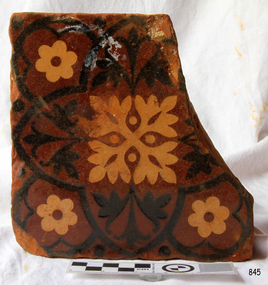
... Line was heading for Port Phillip from London when it ran into the cliffs of Mutton Bird Island near Port Campbell and was wrecked on June 1st, 1878. The LOCH ARD was laden with high-value cargo including luxury goods intended for display at the Melbourne International Exhibition in 1880. One notable survivor from the ship’s freight manifest was the well-packed Minton porcelain peacock, a two-metre-high ceramic masterpiece of vivid glazed colours. The almost total loss of life...Line was heading for Port Phillip from London when it ran into the cliffs of Mutton Bird Island near Port Campbell and was wrecked on June 1st, 1878. The LOCH ARD was laden with high-value cargo including luxury goods intended for display at the Melbourne International Exhibition in 1880. One notable survivor from the ship’s freight manifest was the well-packed Minton porcelain peacock, a two-metre-high ceramic masterpiece of vivid glazed colours. The almost total loss of life ...This Minton floor tile is from the wreck of the LOCH ARD along with other examples of this manufacture recovered from the wreck site and form part of the collection at Flagstaff Hill. The iron-hulled clipper ship from the Loch Line was heading for Port Phillip from London when it ran into the cliffs of Mutton Bird Island near Port Campbell and was wrecked on June 1st, 1878. The LOCH ARD was laden with high-value cargo including luxury goods intended for display at the Melbourne International Exhibition in 1880. One notable survivor from the ship’s freight manifest was the well-packed Minton porcelain peacock, a two-metre-high ceramic masterpiece of vivid glazed colours. The almost total loss of life and property from the LOCH ARD registered as a shocking tragedy for the Colony of Victoria, at a time when social confidence and economic optimism were otherwise high. The wealth generated from Gold and Wool was increasingly being spent on grandiose private residences and imposing public buildings. The demand for quality furnishings and fittings was therefore strong. Among the products consigned to burgeoning colonial markets by the Milton Pottery at Stoke upon Trent, were their new range of colourfully patterned but very durable floor tiles – ideal for the high-traffic spaces in the large civic buildings then being constructed in Australia and America. These new floor tiles were “encaustic”, meaning that their designs and colours were encased “within” the depth of the tile. Rather than their decorative patterns being glazed onto the surface of the tile, their inlaid designs were created during the manufacturing process, as “coloured slips” (or liquid clay) were poured into a deep pre-moulded casting. When fired, the resulting tile was colour-fast and design-fast. A brief history of the Loch Ard (1873-1878): - The sailing ship Loch Ard was one of the famous Loch Line ships that sailed from England to Australia. Barclay, Curdle and Co. built the three-masted iron vessel in Glasgow in 1873. It had sailed three trips to Australia and one trip to Calcutta before its fateful voyage. Loch Ard left England on March 2, 1878, under the command of recently married, 29-year-old Captain Gibbs. It was bound for Melbourne with a crew of 37, plus 17 passengers. The general cargo reflected the affluence of Melbourne at the time. Onboard were straw hats, umbrellas, perfumes, clay pipes, pianos, clocks, confectionery, linen and candles, and a heavier load of railway irons, cement, lead and copper. Other cargo included items intended for display in the Melbourne International Exhibition of 1880. The Loch Ard had been sailing for three months and was close to its destination on June 1, 1878. Captain Gibbs had expected to see land at about 3 am but the Loch Ard ran into a fog that greatly reduced visibility and there was no sign of land or the Cape Otway lighthouse. The fog lifted at 4 am and the sheer cliffs of Victoria's west coast were much closer to them than Captain Gibbs expected. He tried to manage the vessel but failed and the ship struck a reef at the base of Mutton Bird Island, near Port Campbell. The top deck loosened from the hull, and the masts and rigging crashed down, knocking passengers and crew overboard. The lifeboat was launched by Tom Pearce but crashed into the side of Loch Ard and capsized. He clung onto its overturned hull and sheltered under it. He drifted out to sea and the tide brought him back to what is now called Loch Ard Gorge. He swam to shore and found a cave for shelter. A passenger, Eva Carmichael, had raced onto the deck to find out what was happening and was confronted by towering cliffs above the ship. She was soon swept off the ship by a huge wave. Eva saw Tom Pearce on a small rocky beach and yelled to attract his attention. He swam out and dragged her to the shelter of the cave. He revived her with a bottle of brandy from a case that had washed up on the beach. Tom scaled a cliff in search of help and followed some horse hoof prints. He came from two men from Glenample Station, three and a half miles away. He told the men of the tragedy and then returned to the gorge while the two men rode back to the station to get help. They reached Loch Ard Gorge and took the two shipwreck survivors to Glenample Station to recover. Eva stayed at the station for six weeks before returning to Ireland by steamship. In Melbourne, Tom Pearce received a hero's welcome and was presented with a medal and some money. Of the 54 crew members and passengers on board, only two survived: the apprentice, Tom Pearce and the young woman passenger, Eva Carmichael, who lost her family in the tragedy. One of the most unlikely pieces of cargo to have survived the shipwreck was a Minton porcelain peacock - one of only nine in the world. The peacock was destined for the Melbourne International Exhibition in 1880. It had been well packed, which gave it adequate protection during the violent storm. Today, the Minton peacock can be seen at the Flagstaff Hill Maritime Museum in Warrnambool. From Australia's most dramatic shipwreck, it has now become Australia's most valuable shipwreck artefact and is one of very few 'objects' on the Victorian State Heritage Register. The Minton floor tile is significant for its hard-wearing yet attractive design. The shipwreck of the LOCH ARD is of State significance. Victorian Heritage Register S417. Flagstaff Hill’s collection of artefacts from LOCH ARD is significant for being one of the largest collections of artefacts from this shipwreck in Victoria. It is significant for its association with the shipwreck, which is on the Victorian Heritage Register (VHR S417). The collection is significant because of the relationship between the objects, as together they have a high potential to interpret the story of the LOCH ARD. The LOCH ARD collection is archaeologically significant as the remains of a large international passenger and cargo ship. The LOCH ARD collection is historically significant for representing aspects of Victoria’s shipping history and its potential to interpret sub-theme 1.5 of Victoria’s Framework of Historical Themes (living with natural processes). The collection is also historically significant for its association with the LOCH ARD, which was one of the worst and best-known shipwrecks in Victoria’s history. A square Minton floor tile with a black and apricot pattern against a chocolate brown background. There is a large chip missing. This decorative floor tile was recovered from the shipwreck of the LOCH ARD. On the back, or base, of the tile is inscribed the number “46” and the letters “Minton & Co Patent Stoke upon Trent”.flagstaff hill, warrnambool, shipwrecked coast, flagstaff hill maritime museum, maritime museum, shipwreck coast, flagstaff hill maritime village, great ocean road, loch line, loch ard, captain gibbs, eva carmichael, tom pearce, glenample station, mutton bird island, loch ard gorge, encaustic tile, melbourne international exhibition, floor tile, minton floor tile -
 Flagstaff Hill Maritime Museum and Village
Ceramic - Tile, circa 1878
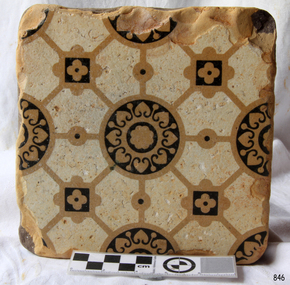
... Line was heading for Port Phillip from London when it ran into the cliffs of Mutton Bird Island near Port Campbell and was wrecked on the early morning of June 1, 1878. The LOCH ARD was laden with high-value cargo including luxury goods intended for display at the Melbourne International Exhibition in 1880. One notable survivor from the ship’s freight manifest was the well-packed Minton porcelain peacock, a two-metre-high ceramic masterpiece of vivid glazed colours. The almost total loss of life...Line was heading for Port Phillip from London when it ran into the cliffs of Mutton Bird Island near Port Campbell and was wrecked on the early morning of June 1, 1878. The LOCH ARD was laden with high-value cargo including luxury goods intended for display at the Melbourne International Exhibition in 1880. One notable survivor from the ship’s freight manifest was the well-packed Minton porcelain peacock, a two-metre-high ceramic masterpiece of vivid glazed colours. The almost total loss of life ...This Minton floor tile is from the wreck of the LOCH ARD. Other examples of this manufacture have been recovered from the wreck site and form part of the collection at Flagstaff Hill. The iron-hulled clipper ship from the Loch Line was heading for Port Phillip from London when it ran into the cliffs of Mutton Bird Island near Port Campbell and was wrecked on the early morning of June 1, 1878. The LOCH ARD was laden with high-value cargo including luxury goods intended for display at the Melbourne International Exhibition in 1880. One notable survivor from the ship’s freight manifest was the well-packed Minton porcelain peacock, a two-metre-high ceramic masterpiece of vivid glazed colours. The almost total loss of life and property from the LOCH ARD registered as a shocking tragedy for the Colony of Victoria, at a time when social confidence and economic optimism were otherwise high. The wealth generated from gold and wool was increasingly being spent on magnificent private residences and imposing public buildings. The demand for quality furnishings and fittings was therefore strong. Among the products consigned to burgeoning colonial markets by the Milton Pottery at Stoke upon Trent were their new range of colourfully patterned but very durable floor tiles – ideal for the high-traffic spaces in the large civic buildings then being constructed in Australia and America. These new floor tiles were “encaustic”, meaning that their designs and colours were encased within the depth of the tile. Rather than their decorative patterns being glazed onto the surface of the tile, their inlaid designs were created during the manufacturing process, as “coloured slips” (or liquid clay) that were poured into a deep pre-moulded casting. When fired, the resulting tile was colour-fast and design-fast.The Minton encaustic floor tile is significant for its method of manufacture which makes it durable as well as decorative. The shipwreck of the LOCH ARD is of State significance. Victorian Heritage Register S417. Flagstaff Hill’s collection of artefacts from LOCH ARD is significant for being one of the largest collections of artefacts from this shipwreck in Victoria. It is significant for its association with the shipwreck, which is on the Victorian Heritage Register (VHR S417). The collection is significant because of the relationship between the objects, as together they have a high potential to interpret the story of the LOCH ARD. The LOCH ARD collection is archaeologically significant as the remains of a large international passenger and cargo ship. The LOCH ARD collection is historically significant for representing aspects of Victoria’s shipping history and its potential to interpret sub-theme 1.5 of Victoria’s Framework of Historical Themes (living with natural processes). The collection is also historically significant for its association with the LOCH ARD, which was one of the worst and best-known shipwrecks in Victoria’s history.A square Minton floor tile with a black and beige pattern against a white base. This encaustic floor tile was recovered from the shipwreck of the LOCH ARD. On the back, or base, of the tile is inscribed the number “46” and the letters “Minton & Co Patent Stoke upon Trent”.flagstaff hill, warrnambool, shipwrecked coast, flagstaff hill maritime museum, maritime museum, shipwreck coast, flagstaff hill maritime village, great ocean road, loch line, loch ard, mutton bird island, loch ard gorge, minton floor tile, encaustic tile, melbourne international exhibition, floor tile -
 Flagstaff Hill Maritime Museum and Village
Equipment - Rocket set, John Dennett, ca. 1860s
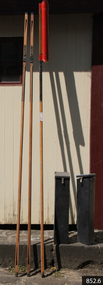
... line throwing...beach cart...hand barrow...sand anchor...hawser cutter...life...Rocket Rescue Method - The first use of a lifesaving rocket rescue system is often credited to Captain Manby and his invention of a life mortar, first used in 1808 to fire a line onto a ship to rescue lives. ...Rocket Rescue Method - The first use of a lifesaving rocket rescue system is often credited to Captain Manby and his invention of a life mortar, first used in 1808 to fire a line onto a ship to rescue lives. ...This rescue line-throwing rocket set was made for the Dennett rocket system, which was used by the Rocket Rescue crews in South West Victoria from around the 1860s to the 1890s. John Dennett - John Dennett was from Carisbrooke, in the Ilse of Wight, UK. In 1826 he invented, patented and demonstrated an improved method of rocket powered, line firing rescue equipment for saving lives. The rockets had a longer range than the mortars being used, they were lighter, needed less preparation time, only needed one line for repeated shots, and fewer people were needed to move the equipment. Very favourable reports of Dennett’s rockets were received by those in charge of His Majesty’s Naval and Military services. In 1832, Dennett’s rocket-thrown line was sent out to the wreck of the ‘Bainbridge’, and was responsible for nineteen survivors coming ashore in two boatloads, along the fired line. Dennett’s rocket received national fame, and a one-year contract to supply rockets to the Coastguards. He became known as ‘Rocket Man’ and his rockets were used in rescues at least until 1890, when his son Horatio was running the business. A rocket weighing 23 lb would have a range of about 250 yards (228 metres), on average. Saving lives in Warrnambool – The coastline of South West Victoria has had over 600 shipwrecks and many lost lives; even in Warrnambool’s Lady Bay there were around 16 known shipwrecks between 1850 and 1905, with eight lives lost. In 1859 the first Government-built lifeboat arrived at Warrnambool Harbour and a shed was soon built to house it, followed in 1864 by a rocket house to safely store the Rocket Rescue equipment. In 1878 the buildings were moved to the Breakwater area, and in 1910 the new Lifeboat Warrnambool arrived with its ‘self-righting’ design. For almost one hundred years the lifeboat and rocket crews, mostly local volunteers, trained regularly to maintain and improve their skills, summoned when needed by alarms, gunshots, ringing bells and foghorns. Some became local heroes but all served an important role. By the end of the 1950s the lifeboat and rescue equipment had become obsolete. Rocket Rescue Method - The first use of a lifesaving rocket rescue system is often credited to Captain Manby and his invention of a life mortar, first used in 1808 to fire a line onto a ship to rescue lives. Henry Trengrouse’s invention of 1820 was the first to use a sky rocket’s power to throw a line, and his invention included a chair for carrying the shipwrecked victims to shore. In 1832 John Dennett invented a rocket specifically for shore to ship rescue. It had an iron case and an 8 foot pole attached and could shoot the line as far as 250 yards (about 230 metres). From the 1860s the rocket rescue apparatus was in use. It comprised a breeches buoy and traveller block that was suspended on a line and manually pulled to and from the distressed vessel carrying passengers and items. Colonel Boxer, who had invented an early line-thrower, designed a rocket in 1865 with a range from 300 to 470 yards. It was the first two-stage rocket, with two rockets placed one in front of the other in a tube that carried the rescue line. The hemp line was faked, or coiled, in a particular way in a faking box to prevent twists and tangles when fired, and the angle of firing the rocket was measured by a quadrant-type instrument on the side of the rocket machine. Schermuly invented the line-throwing pistol around 1920, which used a small cartridge to fire the rocket. Victoria’s Government adopted lifesaving methods based on Her Majesty’s Coast Guard in Great Britain, which used Colonel Boxer’s rocket apparatus rescue method. The British Board of Trade published instructions in 1850 for both the beach rescue crew and ship’s crew. It involved setting up the rocket launcher on shore at a particular angle measured by the quadrant, inserting a rocket that had a light-weight line attached, then firing it across the stranded vessel. A tally board was then sent out with instructions in four languages. The ship’s crew would haul on the line to bring out the continuous whip line and attach the whip block to a mast or sturdy part the ship. The rescue crew on shore then hauled out a heavier hawser line, which the ship’s crew fixed above the whip block. The hawser is then tightened using the block on the shore end of the whip. The breeches buoy and endless whip are then attached to the traveller block on the hawser, allowing the shore crew to haul the buoy to and from the vessel, rescuing the stranded crew one at a time. The rocket system could also be used from one ship to another.The Dennett rocket set is quite rare - there are not many examples in existence and little information is available. This Dennett's rocket set is significant for its connection with local history, maritime history and marine technology. Lifesaving has been an important part of the services performed from Warrnambool's very early days, supported by State and Local Government, and based on the methods and experience of Great Britain. Hundreds of shipwrecks along the coast are evidence of the rough weather and rugged coastline. Ordinary citizens, the Harbour employees, and the volunteer boat and rescue crew, saved lives in adverse circumstances. Some were recognised as heroes, others went unrecognised. In Lady Bay, Warrnambool, there were around 16 known shipwrecks between 1850 and 1905. Many lives were saved but tragically, eight lives were lost.A Dennett rocket set in six parts; the rocket head, three shafts (poles) and two rocket-head toting boxes. The rocket head, mounted on one of the shafts, is a long, red painted, iron tube with rounded ends and a protruding fitting around each end. The wooden rocket shafts are octagonal, with a metal sheath at the ends, carved elongated slots towards each end, and a scribed channel above the black foot. The rocket head toting boxes are thick timber, covered in fabric and painted black. They have a hinged wooden lid that slants downwards from back to front, and a metal closure. Small deliberate holes, in groups of four, on the box’s sides, indicate missing attachments, likely to have been handles. Impressed one a shaft "8"flagstaff hill maritime museum & village, flagstaff hill, maritime museum, maritime village, warrnambool, great ocean road, shipwreck, life-saving, lifesaving, rescue crew, rescue, rocket rescue, maritime accidents, shipwreck victim, rocket crew, beach rescue, line rescue, rescue equipment, rocket firing equipment, rocket rescue equipment, rocket apparatus, beach apparatus, petticoat breeches, breeches buoy, rocket house, rocket shed, lifeboat men, rocket equipment, rocket machine, rocket head, rocket launcher, rocket line, marine technology, william schermuly, line-firing pistol, line throwing gun, schermuly pistol, pistol rocket apparatus, beach rescue set, traveller, block, running block, pulley, hawser, faking, faking box, faked line, rescue boat, lifeboat, lady bay, warrnambool harbour, port of warrnambool, tramway jetty, volunteer lifesavers, volunteer crew, breakwater, lifeboat warrnambool, rocket rescue method, rocket rescue apparatus, captain manby, mortar, henry trengrouse, sky rocket, john dennett, shore to ship, colonel boxer, two-stage rocket, italian hemp, quadrant, schermuly, line-throwing pistol, line throwing cartridge, rocket apparatus rescue, stranded vessel, tally board, light line, whip line, endless whip, petticoat buoy, traveller chair, traveller block, her majesty’s coast guard, harbour board, line thrower, line throwing, beach cart, hand barrow, sand anchor, hawser cutter, life jacket, faking board, irish hand barrow, rocket head toting box, explosives, rocket shaft, rocket pole -
 Flagstaff Hill Maritime Museum and Village
Equipment - Rocket Launcher, John Dennett, 1860s
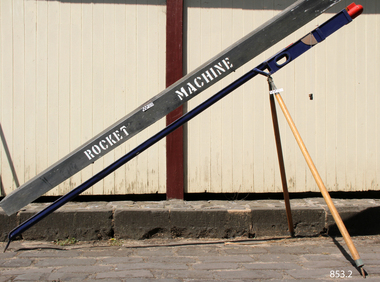
... line throwing...beach cart...hand barrow...sand anchor...hawser cutter...life...Flagstaff Hill Maritime Museum & Village Flagstaff Hill Maritime Museum Maritime Village Warrnambool Great Ocean Road shipwreck Life-saving lifesaving rescue crew rescue rocket rescue maritime accidents shipwreck victim rocket crew beach rescue line rescue rescue equipment rocket firing equipment rocket rescue equipment rocket apparatus beach apparatus petticoat breeches breeches buoy Rocket house rocket shed lifeboat men Rocket equipment rocket machine rocket head rocket launcher rocket line Marine technology William Schermuly line-firing pistol line throwing gun Schermuly pistol pistol rocket apparatus Beach Rescue Set Traveller block running block pulley hawser faking faking box faked line rescue boat lifeboat Lady Bay Warrnambool Harbour Port of Warrnambool Tramway Jetty volunteer lifesavers volunteer crew Breakwater Lifeboat Warrnambool rocket rescue method rocket rescue apparatus Captain Manby mortar Henry Trengrouse sky rocket John Dennett shore to ship Colonel Boxer two-stage rocket Italian hemp quadrant protractor Schermuly line-throwing pistol line throwing cartridge rocket apparatus rescue stranded vessel tally board light line whip line endless whip petticoat buoy traveller chair traveller block Her Majesty’s Coast Guard Harbour Board line thrower line throwing beach cart hand barrow sand anchor hawser cutter life jacket faking board Welsh hand barrow rocket set On box “ROCKET MACHINE” On quadrant “10” “20” “30” “40” Rocket launcher, named a Rocket Machine, and storage box. ...This rocket launching machine is used in conjunction with the Dennett Rocket Set. Both are part of the rocket rescue equipment that launches the line-throwing rescue rockets. A light line is threaded through the carved holes in the 8 foot long shaft and attached to the scribed channel at the base of the shaft. The rocket head is fitted to the shaft and inserted into the machine. The machine is set at an angle determined by the person in charge of the rescue crew, and the legs and base of the machine are adjusted accordingly with the use of the quadrant, or protractor, and plumb-bob on the side of the machine. The rocket is then ignited and fired across the vessel in distress. John Dennett - John Dennett was from Carisbrooke, in the Ilse of Wight, UK. In 1826 he invented, patented and demonstrated an improved method of rocket powered, line firing rescue equipment for saving lives. The rockets had a longer range than the mortars being used, they were lighter, needed less preparation time, only needed one line for repeated shots, and fewer people were needed to move the equipment. Very favourable reports of Dennett’s rockets were received by those in charge of His Majesty’s Naval and Military services. In 1832, Dennett’s rocket-thrown line was sent out to the wreck of the ‘Bainbridge’, and was responsible for nineteen survivors coming ashore in two boatloads, along the fired line. Dennett’s rocket received national fame, and a one-year contract to supply rockets to the Coastguards. He became known as ‘Rocket Man’ and his rockets were used in rescues at least until 1890, when his son Horatio was running the business. A rocket weighing 23 lb would have a range of about 250 yards (228 metres), on average. Saving lives in Warrnambool – The coastline of South West Victoria is the site of over 600 shipwrecks and many lost lives; even in Warrnambool’s Lady Bay there were around 16 known shipwrecks between 1850 and 1905, with eight lives lost. In 1859 the first Government-built lifeboat arrived at Warrnambool Harbour and a shed was soon built to house it. In 1858 the provision of rocket and mortar apparatus was approved for lifeboat stations in Victoria, and in 1864 a rocket house was built to safely store the rocket rescue equipment. In 1878 the buildings were moved to the Breakwater area, and in 1910 the new Lifeboat Warrnambool arrived with its ‘self-righting’ design. For almost a hundred years the lifeboat and rocket crews, mostly local volunteers, trained regularly to maintain their rescue skills. They were summoned when needed by alarms, gunshots, ringing bells and foghorns. Some became local heroes but all served an important role. By the end of the 1950s the lifeboat and rescue equipment had become obsolete. Rocket Rescue Method - The Government of Victoria adopted lifesaving methods based on Her Majesty’s Coast Guard in Great Britain. It authorised the first line-throwing rescue system in 1858. Captain Manby’s mortar powered a projectile connected to rope, invented in 1808. The equipment was updated to John Dennett’s 8-foot shaft and rocket method that had a longer range of about 250 yards. From the 1860s the breeches buoy and traveller block rocket rescue apparatus was in use. It was suspended on a hawser line and manually pulled to and from the distressed vessel carrying passengers and items. In the early 1870s Colonel Boxer’s rocket rescue method became the standard in Victoria. His two-stage rockets, charged by a gunpowder composition, could fire the line up to 500-600 yards, although 1000 yards range was possible. Boxer’s rocket carried the light line, which was faked, or coiled, in a particular way between pegs in a faking box to prevent twists and tangles when fired. The angle of firing the rocket to the vessel in distress was measured by a quadrant-type instrument on the side of the rocket machine. Decades later, in about 1920, Schermuly invented the line-throwing pistol that used a small cartridge to fire the rocket. The British Board of Trade published instructions for both the beach rescue crew and ship’s crew. It involved setting up the rocket launcher on shore at a particular angle measured by the quadrant, inserting a rocket that had a light-weight line threaded through its shaft, and then firing it across the stranded vessel, the line issuing freely from the faking board. A tally board was then sent out to the ship with instructions in four languages. The ship’s crew would haul on the line to bring out the heavier, continuous whip line, then secure the attached whip block to the mast or other sturdy part the ship. The rescue crew on shore then hauled out a stronger hawser line, which the ship’s crew fixed above the whip block. The hawser was then tightened using the block on the shore end of the whip. The breeches buoy and endless whip are then attached to the traveller block on the hawser, allowing the shore crew to haul the breeches buoy to and from the vessel, rescuing the stranded crew one at a time. This rocket launcher machine is significant for its connection with local history, maritime history and marine technology. Lifesaving has been an important part of the services performed from Warrnambool's very early days, supported by State and Local Government, and based on the methods and experience of Great Britain. Hundreds of shipwrecks along the coast are evidence of the rough weather and rugged coastline. Ordinary citizens, the Harbour employees, and the volunteer boat and rescue crew, saved lives in adverse circumstances. Some were recognised as heroes, others went unrecognised. In Lady Bay, Warrnambool, there were around 16 known shipwrecks between 1850 and 1905. Many lives were saved but tragically, eight lives were lost.Rocket launcher, named a Rocket Machine, and storage box. Launcher has a long open metal channel with a spike at the base, and narrow, rectangular device, which is the line-firing rocket machine, at the top, all painted blue. Two hinged wooden legs are attached where the channel and machine meet. The side of the machine has an oval cut-out window and an attached quadrant, or protractor, with a plumb-bob on it. The quadrant has angles marked in degrees. The long protective box has white stencilled letters along the side. Its lid has three hinges and is fastened with two metal latches.On box “ROCKET MACHINE” On quadrant “10” “20” “30” “40”flagstaff hill maritime museum & village, flagstaff hill, maritime museum, maritime village, warrnambool, great ocean road, shipwreck, life-saving, lifesaving, rescue crew, rescue, rocket rescue, maritime accidents, shipwreck victim, rocket crew, beach rescue, line rescue, rescue equipment, rocket firing equipment, rocket rescue equipment, rocket apparatus, beach apparatus, petticoat breeches, breeches buoy, rocket house, rocket shed, lifeboat men, rocket equipment, rocket machine, rocket head, rocket launcher, rocket line, marine technology, william schermuly, line-firing pistol, line throwing gun, schermuly pistol, pistol rocket apparatus, beach rescue set, traveller, block, running block, pulley, hawser, faking, faking box, faked line, rescue boat, lifeboat, lady bay, warrnambool harbour, port of warrnambool, tramway jetty, volunteer lifesavers, volunteer crew, breakwater, lifeboat warrnambool, rocket rescue method, rocket rescue apparatus, captain manby, mortar, henry trengrouse, sky rocket, john dennett, shore to ship, colonel boxer, two-stage rocket, italian hemp, quadrant, protractor, schermuly, line-throwing pistol, line throwing cartridge, rocket apparatus rescue, stranded vessel, tally board, light line, whip line, endless whip, petticoat buoy, traveller chair, traveller block, her majesty’s coast guard, harbour board, line thrower, line throwing, beach cart, hand barrow, sand anchor, hawser cutter, life jacket, faking board, welsh hand barrow, rocket set -
 Flagstaff Hill Maritime Museum and Village
Ceramic - Floor Tile, circa 1878
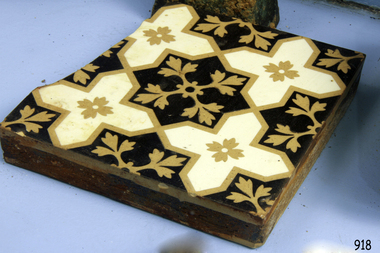
... Line was heading for Port Phillip from London, when it ran into the cliffs of Mutton Bird Island near Port Campbell. The Loch Ard was laden with a high value cargo including luxury goods intended for display at the Melbourne International Exhibition in 1880. One notable survivor from the ship’s freight manifest was the well packed Minton porcelain peacock, a two meter high ceramic masterpiece of vivid glazed colours. (This is also on display in the Great Circle Gallery). The almost total loss of life...Line was heading for Port Phillip from London, when it ran into the cliffs of Mutton Bird Island near Port Campbell. The Loch Ard was laden with a high value cargo including luxury goods intended for display at the Melbourne International Exhibition in 1880. One notable survivor from the ship’s freight manifest was the well packed Minton porcelain peacock, a two meter high ceramic masterpiece of vivid glazed colours. (This is also on display in the Great Circle Gallery). The almost total loss of life ...This Minton floor tile is from the wreck of the Loch Ard and is currently on display in the Great Circle Gallery at Flagstaff Hill. The iron hulled clipper ship from the Loch Line was heading for Port Phillip from London, when it ran into the cliffs of Mutton Bird Island near Port Campbell. The Loch Ard was laden with a high value cargo including luxury goods intended for display at the Melbourne International Exhibition in 1880. One notable survivor from the ship’s freight manifest was the well packed Minton porcelain peacock, a two meter high ceramic masterpiece of vivid glazed colours. (This is also on display in the Great Circle Gallery). The almost total loss of life and property from the Loch Ard registered as a shocking tragedy for the Colony of Victoria, at a time when social confidence and economic optimism were otherwise high. Wealth generated from Gold and Wool was increasingly being spent on grandiose private residences and imposing public buildings. The demand for quality furnishings and fittings was therefore strong. Among the products consigned to burgeoning colonial markets by the Milton pottery at Stoke upon Trent, were their new range of colourfully patterned but very durable floor tiles ideal for the high-traffic spaces in the large civic buildings then being constructed in Australia and America. These new floor tiles were “encaustic”, meaning that their designs and colours were encased “within” the depth of the tile. Rather than their decorative patterns being glazed onto the surface of the tile, their inlaid designs were created during the manufacturing process, as “coloured slips” (or liquid clay) were poured into a deep pre-molded casting. When fired, the resulting tile was colours-fast and design-fast. The Minton floor tile is significant for its hard-wearing yet attractive design. The shipwreck of the Loch Ard is of significance for Victoria and is registered on the Victorian Heritage Register ( S 417). Flagstaff Hill has a varied collection of artefacts from Loch Ard and its collection is significant for being one of the largest accumulations of artefacts from this notable Victorian shipwreck of which the subject items are a small part. The collections of objects give us a snapshot of how we can interpret the story of this tragic event. The collection is also archaeologically significant as it represents aspects of Victoria's shipping history that allows us to interpret Victoria's social and historical themes of the time. Through is associated with the worst and best-known shipwreck in Victoria's history. A square Minton floor tile with a dark brown, beige and white pattern. The tile has a piece broken off along one side and some chipping along the edges. This ‘encaustic’ floor tile was recovered from the shipwreck of the LOCH ARD. Branded "... MINTON&CO Patent ..."flagstaff hill, warrnambool, flagstaff hill maritime museum, shipwreck coast, flagstaff hill maritime village, great ocean road, loch line, loch ard, captain gibbs, eva carmichael, tom pearce, glenample station, mutton bird island, minton floor tile, encaustic tile, melbourne international exhibition, floor tile -
 Flagstaff Hill Maritime Museum and Village
Equipment - Hand Barrow, 1860s
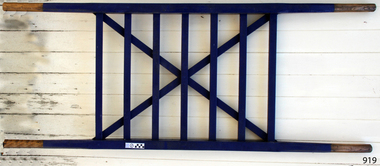
... life-saving...lifesaving...rescue crew...rescue...rocket rescue...rocket crew...lifeboat men...beach rescue...line...Flagstaff Hill Maritime Museum and Village Flagstaff Hill Maritime Museum Maritime Village Warrnambool Great Ocean Road Lady Bay Warrnambool Harbour Port of Warrnambool Tramway Jetty Breakwater shipwreck life-saving lifesaving rescue crew rescue rocket rescue rocket crew lifeboat men beach rescue line rescue rescue equipment rocket firing equipment rocket rescue equipment maritime accidents shipwreck victim rocket equipment Marine technology rescue boat lifeboat volunteer lifesavers volunteer crew life saving rescue crew lifesaving rescue crew rocket apparatus rocket rescue method shore to ship rocket apparatus rescue stranded vessel line throwing mortar mortar rocket rescue apparatus line thrower line throwing Lifeboat Warrnambool hand barrow manual transport Welsh hand barrow Hand barrow; a transporting device carried between two people walking one in front of the other. ...This hand barrow, sometimes called a Welsh hand barrow, was used to transport a load of marine rescue equipment from the beach cart to the rescue site, particularly over hilly, uneven or rough terrain. Hand barrows were in common use in the 19th century. Saving lives in Warrnambool – The coastline of South West Victoria is the site of over 600 shipwrecks and many lost lives; even in Warrnambool’s Lady Bay there were around 16 known shipwrecks between 1850 and 1905, with eight lives lost. Victoria’s Government responded to the need for lifesaving equipment and, in 1858, the provision of rocket and mortar apparatus was approved for the lifeboat stations. In 1859 the first Government-built lifeboat arrived at Warrnambool Harbour and a shed was soon built for it on the Tramway Jetty, followed by a rocket house in 1864 to safely store the rocket rescue equipment. In 1878 the buildings were moved to the Breakwater (constructed from 1874-1890), and in 1910 the new Lifeboat Warrnambool arrived with its ‘self-righting’ design. For almost a hundred years the lifesaving and rescue crews, mostly local volunteers, trained regularly to rehearse and maintain their rescue skills. They were summoned when needed by alarms, gunshots, ringing bells and foghorns. In July 1873 a brass bell was erected at Flagstaff Hill specifically to call the rescue crew upon news of a shipwreck. Some crew members became local heroes but all served an important role. Rocket apparatus was used as recently as the 1950s. Rocket Rescue Method - Rocket rescue became the preferred lifesaving method of the rescue crews, being much safer that using a lifeboat in rough seas and poor conditions. The Government of Victoria adopted lifesaving methods based on Her Majesty’s Coast Guard in Great Britain. It authorised the first line-throwing rescue system in 1858. Captain Manby’s mortar powered a projectile connected to rope, invented in 1808. The equipment was updated to John Dennett’s 8-foot shaft and rocket method that had a longer range of about 250 yards. From the 1860s the breeches buoy and traveller block rocket rescue apparatus was in use. It was suspended on a hawser line and manually pulled to and from the distressed vessel carrying passengers and items. In the early 1870s Colonel Boxer’s rocket rescue method became the standard in Victoria. His two-stage rockets, charged by a gunpowder composition, could fire the line up to 500-600 yards, although 1000 yards range was possible. Boxer’s rocket carried the light line, which was faked, or coiled, in a particular way between pegs in a faking box to prevent twists and tangles when fired. The angle of firing the rocket to the vessel in distress was measured by a quadrant-type instrument on the side of the rocket machine. Decades later, in about 1920, Schermuly invented the line-throwing pistol that used a small cartridge to fire the rocket. . The British Board of Trade regularly published instructions for both the beach rescue crew and ship’s crew. It involved setting up the rocket launcher on shore at a particular angle, determined by the Head of the crew and measured by the quadrant, inserting a rocket that had a light-weight line threaded through its shaft, and then firing it across the stranded vessel, the line issuing freely from the faking board. A continuous whip line was then sent out to the ship’s crew, who hauled it in then followed the instructions – in four languages - on the attached tally board. The survivors would haul on the line to bring out the heavier, continuous whip line with a tail block connected to it. They then secured the block to the mast or other strong part the ship. The rescue crew on shore then hauled out a stronger hawser line, which the survivors fixed above the whip’s tail block. The hawser was then tightened by the crew pulling on it, or by using the hooked block on the shore end of the whip and attaching it to a sand anchor. The breeches buoy was attached to the traveller block on the hawser, and the shore crew then used the whip line to haul the breeches buoy to and from the vessel, rescuing the stranded crew one at a time. The rescue crew wore scarlet, numbered armbands and worked on a numerical rotation system, swapping members out to rest them. This hand barrow is significant for its connection with local history, maritime history and marine technology. Lifesaving has been an important part of the services performed from Warrnambool's very early days, supported by State and Local Government, and based on the methods and experience of Great Britain. Hundreds of shipwrecks along the coast are evidence of the rough weather and rugged coastline. Ordinary citizens, the Harbour employees, and the volunteer boat and rescue crew, saved lives in adverse circumstances. Some were recognised as heroes, others went unrecognised. In Lady Bay, Warrnambool, there were around 16 known shipwrecks between 1850 and 1905. Many lives were saved but tragically, eight lives were lost.Hand barrow; a transporting device carried between two people walking one in front of the other. A wooden ladder-like frame with two handles at each end, blue painted body with unpainted handles. Seven equal-length slats are joined at equal distance between two parallel poles, and two longer slats are attached diagonally between the first and last slats as a brace. flagstaff hill maritime museum and village, flagstaff hill, maritime museum, maritime village, warrnambool, great ocean road, lady bay, warrnambool harbour, port of warrnambool, tramway jetty, breakwater, shipwreck, life-saving, lifesaving, rescue crew, rescue, rocket rescue, rocket crew, lifeboat men, beach rescue, line rescue, rescue equipment, rocket firing equipment, rocket rescue equipment, maritime accidents, shipwreck victim, rocket equipment, marine technology, rescue boat, lifeboat, volunteer lifesavers, volunteer crew, life saving rescue crew, lifesaving rescue crew, rocket apparatus, rocket rescue method, shore to ship, rocket apparatus rescue, stranded vessel, line throwing mortar, mortar, rocket rescue apparatus, line thrower, line throwing, lifeboat warrnambool, hand barrow, manual transport, welsh hand barrow -
 Flagstaff Hill Maritime Museum and Village
Craft - Ship Model, Mary Campbell, circa 1940
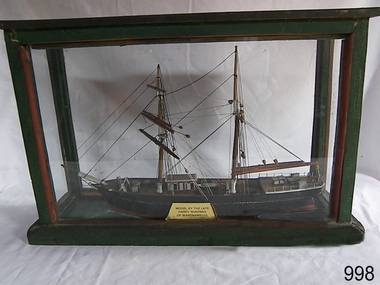
... line. On one trip, it hit a storm, the cargo shifted, and the ship was wrecked along the NSW coast. After this, Captain Robilliard exchanged sea life for farming in Peterborough. ...line. On one trip, it hit a storm, the cargo shifted, and the ship was wrecked along the NSW coast. After this, Captain Robilliard exchanged sea life for farming in Peterborough. ...This ship model is of the sailing brigantine MARY CAMPBELL, which once belonged to Captain James Arthur Robilliard. The model was made by Harry McKenna, a well-known ship model maker and Warrnambool resident. CAPTAIN ROBILLIARD James Arthur Robilliard, sea captain and tent maker, was born in 19th April 1843 in St. Helier, Jersey, Channel Islands. He trained there in his father’s sail loft as a sailmaker. He later became a skipper. His first job was as a sailor in Liverpool, England. In 1875, James Robilliard migrated to Australia as a mate on the “E.M. Young”. Captain Robilliard and his family were amongst the early settlers along the Curdies River in the Heytesbury district. In 1877, he became a Captain. On 14th November 1879, Captain Robilliard married Helen Beckett. James and Helen had ten children: James Arthur (Jnr), Henry William, Nellie Jessie, Alfred Albert, Rubena Nellie, De Jersy Norman, Clifford Beckett, Olive Ida, Frances Ridley Havergal and Nellie Elvie, all born in Victoria. THE MARY CAMPBELL The ship “Mary Campbell” was built by Alexander Newton Jr. She was carvel-planked, of iron bark and blue gum timber. The family shipyard was at Pelican, on the Manning River, NSW, and “Mary Campbell” was first launched by her builder in 1869 as “The Son”. Three months later, she was renamed “Mary Campbell’ by her purchaser J. Campbell in Sydney. She was used to carry equipment for the Sydney Sugar Refinery’s Mill in Southgate, NSW. She then traded for the next 20 years between Australian ports and rivers along the east coast, as well as regular ports in New Zealand. She was “recognised as one of the best carrying little vessels in the timber trade” (Sydney Morning Herald). She had several owners over this time, the last one being Captain James A. Robilliard. On 29th April 1889, “Mary Campbell”, in the charge of her owner, Captain James A Robilliard, was on her way from Clarence River, NSW to Melbourne, Victoria with a cargo of railway girders for the Melbourne Harbour Trust. Captain Robilliard encountered a storm off Port Macquarie. He sailed the vessel south to 25 miles (about 40km) east of Cape Hawke, near Tuncurry and Forster. At 7 pm, he discovered that the cargo had shifted during the stormy seas and the heavy girders had damaged the hull, causing a leak. The pumps were inadequate to stem the fast-flowing leak, and over a meter of water filled the hull during the next 2 hours. Some of the crew began throwing the cargo overboard to lighten the vessel, hoping to keep it afloat until daylight. When the water reached over 2 meters in the hull, they realised their efforts were in vain. At 1:30 am on 30th April 1889, the crew left the vessel. They stood by in the lifeboat until 3 am. The ship was sinking fast, so they left for the shore, looking for a safe place to beach their boat. While still miles off Cape Hawke, all 7 crew members, including the Captain, were rescued by the Government Tug “Rhea” and taken to Port Macquarie hospital, then returned to Sydney in the “Wellington”. Captain Robilliard managed to rescue his ship’s compass, but no cargo was saved from the vessel. It had been under-insured, only covered for half its value, due to a lack of funds. Many years later, in 1976, an anchor was caught up in the net of a trawler south of Forster and thought to be from the “Mary Campbell”. It was donated and installed in the Great Lakes Museum, Tuncurry, NSW. (The same museum also has a half-model of the hull of “Mary Campbell”.) The name of the last ship Captain Robilliard sailed is currently unknown; however, he sailed that ship from the port of Marlborough, Queensland, carting steel railway girders for the Geelong-to-Camperdown line. On one trip, it hit a storm, the cargo shifted, and the ship was wrecked along the NSW coast. After this, Captain Robilliard exchanged sea life for farming in Peterborough. In about 1897, verging on retirement, Capt. Robiilliard superintended the Melbourne Sailors’ Home in Spencer Street, Melbourne, before being asked to leave this position in 1902 for trying to shut down the local hotel! At this time, the Melbourne Sailors’ Home was about to change its location. On 6th May 191,7, Captain James Arthur Robilliard J.P. died at Blackwood Park, in the Cobden district of Brucknell, which is now considered the first official Robilliard family homestead in Australia. He was buried in the Melbourne General Cemetery, Victoria. His wife, Helen, passed away in 1947. The Becket and Robilliard family names continue to be well known in the Western District. Flagstaff Hill Maritime Village also has a ship’s compass in the collection that was owned by Capt. J. Robilliard and used on the ship Mary Campbell.This ship model of the MARY CAMPBELL is of local significance for its association with well well-known Warrnambool resident and ship model maker. The model is also significant for its association with the brigantine MARY CAMPBELL, a trading vessel that brought railway girders to the Melbourne Harbour Trust.Ship model "Mary Campbell": a two-masted vessel with black hull, brown masts and black rigging, displayed in a glass case with a timber frame painted green. Made by Harry McKenna.Painted on the bow in white “MARY CAMPBELL” Gold label with black print attached to display case “MODEL BY THE LATE HARRY McKENNA OF WARRNAMBOOL”flagstaff hill, warrnambool, shipwrecked coast, flagstaff hill maritime museum, maritime museum, shipwreck coast, flagstaff hill maritime village, great ocean road, marine artwork, model making, captain james arthur robilliard, j.a. robilliard, vessel mary campbell, ship mary campbell, melbourne sailors home, vessels, harry mckenna, mary campbell -
 Flagstaff Hill Maritime Museum and Village
Award - Certificate of Service, F. W. Strahle, James Patten, 23-08-1907
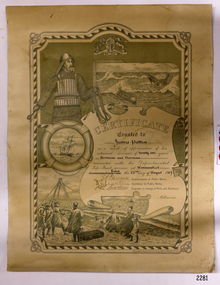
... The images on the Certificate show a collage of rescue events performed by the lifesavers; a shipwreck rescue in progress, lifeboat conveying five boatmen using two oars each, and a bowman standing at the bow, a linesman wearing a life jacket and holding a rescue line, a lifesaver ring with images of three sailing ships inside it, a shipwreck near shore, a woman and girl in shallow water, a rescue using a breeches buoy on the lifeline, two rescuers walking towards the survivor, rescue crew wearing waterproof clothing, a rocket machine with a pulley to bring the survivor in a breaches buoy to shore, and a rescue crew member holding a flare. ...The images on the Certificate show a collage of rescue events performed by the lifesavers; a shipwreck rescue in progress, lifeboat conveying five boatmen using two oars each, and a bowman standing at the bow, a linesman wearing a life jacket and holding a rescue line, a lifesaver ring with images of three sailing ships inside it, a shipwreck near shore, a woman and girl in shallow water, a rescue using a breeches buoy on the lifeline, two rescuers walking towards the survivor, rescue crew wearing waterproof clothing, a rocket machine with a pulley to bring the survivor in a breaches buoy to shore, and a rescue crew member holding a flare. ...This certificate acknowledges 21 years of service given by James Patten, one of the original 1859 Lifeboat Warrnambool as a boatman and bowman. At the time, all retiring Volunteer lifeboatmen were honoured with this award. It was made as a lithograph that was created by F. W. Strahle at the request of the Department of Lands & Survey, Melbourne, Victoria. During his time of service, James Patten was awarded a medal and certificate by the Royal Humane Society of Australasia for his bravery. Patten and his friend Joseph Lowe, who couldn't swim, were with their friend James Ferrier in a boat on the Hopkins River, Warrnambool, when their boat capsized. Ferrier made it to shore, and Patten tried unsuccessfully to hold onto Lowe and bring him to shore. The event occurred on 18th April 1890. The images on the Certificate show a collage of rescue events performed by the lifesavers; a shipwreck rescue in progress, lifeboat conveying five boatmen using two oars each, and a bowman standing at the bow, a linesman wearing a life jacket and holding a rescue line, a lifesaver ring with images of three sailing ships inside it, a shipwreck near shore, a woman and girl in shallow water, a rescue using a breeches buoy on the lifeline, two rescuers walking towards the survivor, rescue crew wearing waterproof clothing, a rocket machine with a pulley to bring the survivor in a breaches buoy to shore, and a rescue crew member holding a flare. Volunteers at the time received a small payment, or 'retainer'', for their practices and a payment of gratitude for the rescues they attended. Across the years between 1856 to 1979 the combined service in Victoria saved 260 lives. Amazingly, some of the volunteers could not even swim.This certificate shows the State and Local Government's appreciation for the years of service spent by in the endeavour to save lives in peril in and on the local waters in the early 20th Century. The lithographed design depicts the many skills and services performed by the lifesavers of the era.Certificate of Service, unframed, awarded to James Patten on 23rd August 1907, recognising his 21 years of service with the original Warrnambool Life Boat Service as a Boatman and Bowman. Certificate is on rectangular, cream paper, lithographed design, printed and handwritten. Letterhead with the Royal Coat of Arms of the United Kingdom and a French motto. Images depict lifesaving crew, lifeboat, rescue equipment and a rescue in progress. The border is waves inside of frame of looped rope. Signatures of Commissioner of Public Works, Secretary of Public Works, and Engineer in charge of Ports and Harbours, Melbourne. Printed from a lithograph produced by F.W. Strahle on 23rd June 1907.MOTTO: "Dieu Droit Et Mon, Ni Soit Qui Mal y" TREXT: "Certificate granted to James Patten as a mark of appreciation of his esteemed services of 21 years as Boatman and Bowman connected with the Departmental Life-Boat service at Warrnambool - dated the 23rd day of August 1907." SIGNATURES: [Commissioner of Public Works], [Secretary of Public Works], [Engineer in charge of Ports and Harbours Melbourne] "Lithographed at the Dept of Lands & Survey - Melb/ by F.W. Strahle, 23.6.07"flagstaff hill, warrnambool, flagstaff-hill, maritime museum, maritime village, shipwreck-coast, flagstaff hill maritime museum & village, james patten, life-saving, lifesaving, rescue, bravery, drowning, joseph lowe, james ferrier, hopkins river, boat accident, certificate of service, 1890, 1907, bowman, boatman, departmental life-boat service, life-boat service, lifeboat service, august 1907, commissioner of public works, public works, ports and harbours melbourne, lands & survey melbourne, f w strahle, lithograph, 1856-1979, 260 lives saved, victorian volunteers, lifeboatmen, retired lifeboatmen -
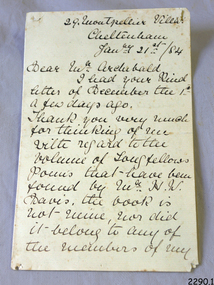 Flagstaff Hill Maritime Museum and Village
Letter
... life to save her. In the months after the shipwreck, an excited public press speculated of a romantic connection between the two survivors, but this was clearly not the case. HISTORY OF THE LOCH ARD The LOCH ARD belonged to the famous Loch Line...life to save her. In the months after the shipwreck, an excited public press speculated of a romantic connection between the two survivors, but this was clearly not the case. HISTORY OF THE LOCH ARD The LOCH ARD belonged to the famous Loch Line ...This original letter was handwritten and dated 21 January 1884. The author is Eveline V. Carmichael, of 29 Montpellier Villa, Cheltenham. Eva Carmichael was the only woman survivor of the iron clipper LOCH ARD, which was wrecked on 1 June 1878, at the subsequently named Loch Ard Gorge near Port Campbell. The letter was written to Mr J Archibald, first curator of the Warrnambool Mechanics Institute Museum, and was in response to a letter he wrote to Miss Carmichael on 1 December 1883. A complete transcript of Eva’s letter is attached as a Hard Copy Supplementary File. The letter first addressed the subject of her reply. She writes, “Thank you very much for thinking of me with regard to the volume of Longfellows Poems that have been found by Mr HW Davis [at Loch Ard Gorge], the book is not mine, nor did it belong to any members of my family. We had a ‘Longfellows’, but our book had a green cover.” The rescued book is on display at Flagstaff Hill (541) and has a blue cover. Another interesting aspect to her letter is its reference to the only other survivor from the LOCH ARD. As a postscript she writes, “You will be glad to hear that Tom Pearce is now on board the HMS Solvent. I heard from him last month he wrote from the West-Indies and seemed well and in good spirits. I have not seen him since we parted in Melbourne. I believe he is to be married next year, or perhaps this, but I do not know the young lady.” Tom Pearce was the young, male, able seaman who had risked his life to save her. In the months after the shipwreck, an excited public press speculated of a romantic connection between the two survivors, but this was clearly not the case. HISTORY OF THE LOCH ARD The LOCH ARD belonged to the famous Loch Line which sailed many ships from England to Australia. Built in Glasgow by Barclay, Curdle and Co. in 1873, the LOCH ARD was a three-masted square rigged iron sailing ship. The ship measured 262ft 7" (79.87m) in length, 38ft (11.58m) in width, 23ft (7m) in depth and had a gross tonnage of 1693 tons. The LOCH ARD's main mast measured a massive 150ft (45.7m) in height. LOCH ARD made three trips to Australia and one trip to Calcutta before its final voyage. LOCH ARD left England on March 2, 1878, under the command of Captain Gibbs, a newly married, 29 year old. She was bound for Melbourne with a crew of 37, plus 17 passengers and a load of cargo. The general cargo reflected the affluence of Melbourne at the time. On board were straw hats, umbrella, perfumes, clay pipes, pianos, clocks, confectionary, linen and candles, as well as a heavier load of railway irons, cement, lead and copper. There were items included that intended for display in the Melbourne International Exhibition in 1880. The voyage to Port Phillip was long but uneventful. At 3am on June 1, 1878, Captain Gibbs was expecting to see land and the passengers were becoming excited as they prepared to view their new homeland in the early morning. But LOCH ARD was running into a fog which greatly reduced visibility. Captain Gibbs was becoming anxious as there was no sign of land or the Cape Otway lighthouse. At 4am the fog lifted. A man aloft announced that he could see breakers. The sheer cliffs of Victoria's west coast came into view, and Captain Gibbs realised that the ship was much closer to them than expected. He ordered as much sail to be set as time would permit and then attempted to steer the vessel out to sea. On coming head on into the wind, the ship lost momentum, the sails fell limp and LOCH ARD's bow swung back. Gibbs then ordered the anchors to be released in an attempt to hold its position. The anchors sank some 50 fathoms - but did not hold. By this time LOCH ARD was among the breakers and the tall cliffs of Mutton Bird Island rose behind the ship. Just half a mile from the coast, the ship's bow was suddenly pulled around by the anchor. The captain tried to tack out to sea, but the ship struck a reef at the base of Mutton Bird Island, near Port Campbell. Waves broke over the ship and the top deck was loosened from the hull. The masts and rigging came crashing down knocking passengers and crew overboard. When a lifeboat was finally launched, it crashed into the side of LOCH ARD and capsized. Tom Pearce, who had launched the boat, managed to cling to its overturned hull and shelter beneath it. He drifted out to sea and then on the flood tide came into what is now known as LOCH ARD Gorge. He swam to shore, bruised and dazed, and found a cave in which to shelter. Some of the crew stayed below deck to shelter from the falling rigging but drowned when the ship slipped off the reef into deeper water. Eva Carmichael had raced onto deck to find out what was happening only to be confronted by towering cliffs looming above the stricken ship. In all the chaos, Captain Gibbs grabbed Eva and said, "If you are saved Eva, let my dear wife know that I died like a sailor". That was the last Eva Carmichael saw of the captain. She was swept off the ship by a huge wave. Eva saw Tom Pearce on a small rocky beach and yelled to attract his attention. He dived in and swam to the exhausted woman and dragged her to shore. He took her to the cave and broke open case of brandy which had washed up on the beach. He opened a bottle to revive the unconscious woman. A few hours later Tom scaled a cliff in search of help. He followed hoof prints and came by chance upon two men from nearby Glenample Station three and a half miles away. In a state of exhaustion, he told the men of the tragedy. Tom returned to the gorge while the two men rode back to the station to get help. By the time they reached LOCH ARD Gorge, it was cold and dark. The two shipwreck survivors were taken to Glenample Station to recover. Eva stayed at the station for six weeks before returning to Ireland, this time by steamship. In Melbourne, Tom Pearce received a hero's welcome. He was presented with the first gold medal of the Royal Humane Society of Victoria and a £1000 cheque from the Victorian Government. Concerts were performed to honour the young man's bravery and to raise money for those who lost family in the LOCH ARD disaster. Of the 54 crew members and passengers on board, only two survived: the apprentice, Tom Pearce and the young woman passenger, Eva Carmichael, who lost all of her family in the tragedy. Ten days after the LOCH ARD tragedy, salvage rights to the wreck were sold at auction for £2,120. Cargo valued at £3,000 was salvaged and placed on the beach, but most washed back into the sea when another storm developed. The wreck of LOCH ARD still lies at the base of Mutton Bird Island. Much of the cargo has now been salvaged and some was washed up into what is now known as LOCH ARD Gorge. Cargo and artefacts have also been illegally salvaged over many years before protective legislation was introduced. One of the most unlikely pieces of cargo to have survived the shipwreck was a Minton porcelain peacock - one of only nine in the world. The peacock was destined for the Melbourne International Exhibition in 1880. It had been well packed, which gave it adequate protection during the violent storm. Today, the Minton peacock can be seen at the Flagstaff Hill Maritime Museum in Warrnambool. From Australia's most dramatic shipwreck it has now become Australia's most valuable shipwreck artefact and is one of very few 'objects' on the Victorian State Heritage Register. The LOCH ARD shipwreck is of State significance – Victorian Heritage Number S417 Flagstaff Hill’s collection of artefacts from LOCH ARD is significant for being one of the largest collections of artefacts from this shipwreck in Victoria. It is significant for its association with the shipwreck, which is on the Victorian Heritage Register (VHR S417). The collection is significant because of the relationship between the objects, as together they have a high potential to interpret the story of the LOCH ARD. The LOCH ARD collection is archaeologically significant as the remains of a large international passenger and cargo ship. The LOCH ARD collection is historically significant for representing aspects of Victoria’s shipping history and its potential to interpret sub-theme 1.5 of Victoria’s Framework of Historical Themes (living with natural processes). The collection is also historically significant for its association with the LOCH ARD, which was one of the worst and best known shipwrecks in Victoria’s history. A photocopy of a letter, handwritten in ink on both sides of 4 small sheets of thick, light blue paper. The letter is in neat cursive script. The writing originally covered 7 sides of the note paper and has been reproduced as 7 separate pages. It is dated 21 January 1884, five and a half years after the LOCH ARD shipwreck. The letter is from Eva Carmichael, one of only 2 survivors from that disaster, and is addressed to J. Archibald, first curator of the Warrnambool Mechanics Institute Museum. The copies include the reproduction of a typed index card which accompanies the original letter. The card states: “Photographic copy of the letter written by Eva Carmichael to Mr J Archibald, first Curator of the Warrnambool Museum. The original letter is kept with other documents, but the writing being on both sides of the note-paper it was not possible to read in its entireity when on display”.flagstaff hill, warrnambool, shipwrecked coast, flagstaff hill maritime museum, maritime museum, shipwreck coast, flagstaff hill maritime village, great ocean road, loch line, loch ard, captain gibbs, eva carmichael, tom pearce, glenample station, mutton bird island, loch ard gorge, loch ard, survivor’s letter, eva carmichael, longfellow’s poems, warrnambool mechanics institute museum, joseph archibald, henry davis -
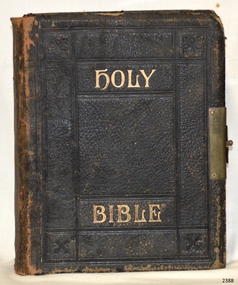 Flagstaff Hill Maritime Museum and Village
Book - Religious, University Press, The Holy Bible, Ca. 1850s
... This Bible was once used as a family record, similar to Bibles printed in modern times, with lined blank pages in the centre for the owners to record their own, their ancestors' and their descendants' life events. ...This Bible belonged to the Bell family. Joseph Bell was born on May 9th 1829. He married Elizabeth, who was born on October 22nd, 1833. Their marriage was conducted on September 12th, 1854, at St Pauls, Bristol, England. On the front pages of the bible there used to be a list of their ten children and their birthdates but there are only remnants of a heavy weight paper; the opposite Fly page with publication details is also missing, along with the Family Records section, which no longer has pages for Births and Marriages, only precise edges of two pages . The Bible is the King James Version, named after James Charles Stuart (1556-1625) who was King James VI of Scotland from 24 July 1567, and who was crowned King James I of England, France and Ireland from 24 March 1603 until his death in 1625. The Hampton Court Conference of 1604 commissioned a new and more accurate version of the Holy Bible that was translated from the original Sacred Scriptures and that included only the approved books. This task was undertaken be a group of learned scholars who worked in teams and compared notes, working to ensure a true and accurate version. It was completed in 1611 and became widely known as the King James Version (KJV) of the Bible and is still widely used and greatly respected for its poetic language. The first printed page of this Bible is the Translators Speech at the completed work which was handed over to King James I in 1611.This Bible was published after 1611, and likely to have been purchased at the time of the marriage of the previous owners, Joseph and Elizabeth Bell, in 1854, so it is possibly a century and a half old. The decorative cover and metal clasp are a sign that the Bible was a book to be treasured,. Indeed, our Collection included several Bibles brought to Australia by immigrants, even though luggage was tightly restricted. This Bible was once used as a family record, similar to Bibles printed in modern times, with lined blank pages in the centre for the owners to record their own, their ancestors' and their descendants' life events. Sadly, these pages are no longer within the Bible.Book, black textured leather front and back covers, gold leaf page edges, metal clasp on centre edge of front and back covers holds them together. The title is inscribed in gold embossing on the front cover. The Bible has coloured illustrations, cross references and maps. The front inside cover has remnants of a previous stuck-down page, the Fly page, and the Family Records pages for Births and Marriages has been cut out of the book. TITLE: The Holy Bible. PRINTER: University Press, London, England PREVIOUS OWNERS; Joseph and Elizabeth Bell, married in Bristol, England in 1854.Embossed in gold on cover: "HOLY BIBLE"warrnambool, shipwreck coast, flagstaff hill, flagstaff hill maritime museum, flagstaff hill maritime village, religious book, bible, holy bible, king james bible, king james vi, king james i, 1611, kjv, joseph bell, elizabeth bell, st paul's church bristol, 1829, 1833, 1854, authorised king james version, authorised version, av, sacred scriptures -
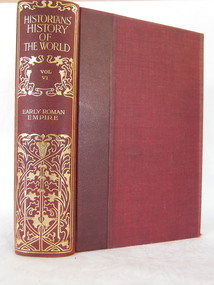 Flagstaff Hill Maritime Museum and Village
Book - Reference Book/History, Henry Smith Williams, The Historians History of the World Vol 6 set 1 - Edited by Henry Smith Williams L.L.D. Published by “The Times” 1908, 1908
... life of citizens during this "Golden Age." The Rise of Christianity, focusing on the early stages of the Christian movement within the context of the Roman state. Williams organises the structure of Volume 6 to show that the early empire was a period of complex transition rather than just a slow decay. Further sections explore the Age of Augustus and the reorganization of the state culminating in the birth of the Empire. The Julian Claudian era with the successes and scandals of that first dynastic line...life of citizens during this "Golden Age." The Rise of Christianity, focusing on the early stages of the Christian movement within the context of the Roman state. Williams organises the structure of Volume 6 to show that the early empire was a period of complex transition rather than just a slow decay. Further sections explore the Age of Augustus and the reorganization of the state culminating in the birth of the Empire. The Julian Claudian era with the successes and scandals of that first dynastic line ...The 1908 edition of The Historians' History of the World is a monumental work of Edwardian scholarship, representing a specific era of "universal history" where the goal was to synthesise all human knowledge into a single narrative. Volume 6 focuses on the period where Rome moved away from internal civil strife toward a unified, centralised rule. Major topics include, the reign of Augustus, the transition from the Republic to the Principate and the establishment of the Pax Romana (Roman Peace).The Book is part of a 25 volume set with red cloth bindings and gold filigree design to rib. non-fictionThe 1908 edition of The Historians' History of the World is a monumental work of Edwardian scholarship, representing a specific era of "universal history" where the goal was to synthesise all human knowledge into a single narrative. Volume 6 focuses on the period where Rome moved away from internal civil strife toward a unified, centralised rule. Major topics include, the reign of Augustus, the transition from the Republic to the Principate and the establishment of the Pax Romana (Roman Peace). flagstaff hill, warrnambool, shipwrecked-coast, flagstaff-hill-maritime-museum, flagstaff-hill-maritime-village, book, the historians history of the world vol 6 set 1, henry smith williams -
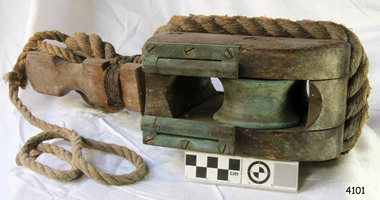 Flagstaff Hill Maritime Museum and Village
Equipment - Traveller pulley block, 1860s
... life-saving...lifesaving...rescue crew...rescue...rocket rescue...rocket crew...lifeboat men...beach rescue...line...Flagstaff Hill Maritime Museum and Village Flagstaff Hill Maritime Museum Maritime Village Warrnambool shipwreck life-saving lifesaving rescue crew rescue rocket rescue rocket crew lifeboat men beach rescue line rescue rescue equipment rocket firing equipment rocket rescue equipment maritime accidents shipwreck victim rocket equipment Marine technology rescue boat lifeboat volunteer lifesavers volunteer crew life saving rescue crew lifesaving rescue crew rocket apparatus rocket rescue method shore to ship rocket apparatus rescue stranded vessel line throwing mortar mortar rocket rescue apparatus line thrower line throwing Lifeboat Warrnambool beach apparatus breeches buoy petticoat breeches petticoat buoy traveller chair life jacket Traveller traveller block running block block pulley hawser faking faking box faked line faking board Italian hemp quadrant protractor tally board light line whip line endless whip beach cart hand barrow sand anchor Welsh hand barrow Her Majesty’s Coast Guard Harbour Board Government of Victoria Harbour Master L.S.R.C. ...The life saving breeches buoy was attached to a traveller block such as this one. The assembly was sent from shore to ship and back to transport the stranded people and goods safely to shore. Saving lives in Warrnambool – The coastline of South West Victoria is the site of over 600 shipwrecks and many lost lives; even in Warrnambool’s Lady Bay there were around 16 known shipwrecks between 1850 and 1905, with eight lives lost. Victoria’s Government responded to the need for lifesaving equipment and, in 1858, the provision of rocket and mortar apparatus was approved for the lifeboat stations. In 1859 the first Government-built lifeboat arrived at Warrnambool Harbour and a shed was soon built for it on the Tramway Jetty, followed by a rocket house in 1864 to safely store the rocket rescue equipment. In 1878 the buildings were moved to the Breakwater (constructed from 1874-1890), and in 1910 the new Lifeboat Warrnambool arrived with its ‘self-righting’ design. For almost a hundred years the lifesaving and rescue crews, mostly local volunteers, trained regularly to rehearse and maintain their rescue skills. They were summoned when needed by alarms, gunshots, ringing bells and foghorns. In July 1873 a brass bell was erected at Flagstaff Hill specifically to call the rescue crew upon news of a shipwreck. Some crew members became local heroes but all served an important role. Rocket apparatus was used as recently as the 1950s. Rocket Rescue Method - Rocket rescue became the preferred lifesaving method of the rescue crews, being much safer that using a lifeboat in rough seas and poor conditions. The Government of Victoria adopted lifesaving methods based on Her Majesty’s Coast Guard in Great Britain. It authorised the first line-throwing rescue system in 1858. Captain Manby’s mortar powered a projectile connected to rope, invented in 1808. The equipment was updated to John Dennett’s 8-foot shaft and rocket method that had a longer range of about 250 yards. From the 1860s the breeches buoy and traveller block rocket rescue apparatus was in use. It was suspended on a hawser line and manually pulled to and from the distressed vessel carrying passengers and items. In the early 1870s Colonel Boxer’s rocket rescue method became the standard in Victoria. His two-stage rockets, charged by a gunpowder composition, could fire the line up to 500-600 yards, although 1000 yards range was possible. Boxer’s rocket carried the light line, which was faked, or coiled, in a particular way between pegs in a faking box to prevent twists and tangles when fired. The angle of firing the rocket to the vessel in distress was measured by a quadrant-type instrument on the side of the rocket machine. Decades later, in 1920, Schermuly invented the line-throwing pistol that used a small cartridge to fire the rocket. . The British Board of Trade regularly published instructions for both the beach rescue crew and ship’s crew. It involved setting up the rocket launcher on shore at a particular angle, determined by the Head of the crew and measured by the quadrant, inserting a rocket that had a light-weight line threaded through its shaft, and then firing it across the stranded vessel, the line issuing freely from the faking board. A continuous whip line was then sent out to the ship’s crew, who hauled it in then followed the instructions – in four languages - on the attached tally board. The survivors would haul on the line to bring out the heavier, continuous whip line with a tail block connected to it. They then secured the block to the mast or other strong part the ship. The rescue crew on shore then hauled out a stronger hawser line, which the survivors fixed above the whip’s tail block. The hawser was then tightened by the crew pulling on it, or by using the hooked block on the shore end of the whip and attaching it to a sand anchor. The breeches buoy was attached to the traveller block on the hawser, and the shore crew then used the whip line to haul the breeches buoy to and from the vessel, rescuing the stranded crew one at a time. The rescue crew wore scarlet, numbered armbands and worked on a numerical rotation system, swapping members out to rest them.This traveller block is significant for its connection with local history, maritime history and marine technology. Lifesaving has been an important part of the services performed from Warrnambool's very early days, supported by State and Local Government, and based on the methods and experience of Great Britain. Hundreds of shipwrecks along the coast are evidence of the rough weather and rugged coastline. Ordinary citizens, the Harbour employees, and the volunteer boat and rescue crew, saved lives in adverse circumstances. Some were recognised as heroes, others went unrecognised. In Lady Bay, Warrnambool, there were around 16 known shipwrecks between 1850 and 1905. Many lives were saved but tragically, eight lives were lost. Wood and brass pulley block or 'traveller', used in conjunction with the Breeches Buoy. The block has double brass inline sheaves and brass rollers on each cheek of the pulley. Each shell is scored for the strop. The thimble on the strop has a wooden slat attached for quick release of the Breeches Buoy. A portion of rope is connected.flagstaff hill maritime museum and village, flagstaff hill, maritime museum, maritime village, warrnambool, shipwreck, life-saving, lifesaving, rescue crew, rescue, rocket rescue, rocket crew, lifeboat men, beach rescue, line rescue, rescue equipment, rocket firing equipment, rocket rescue equipment, maritime accidents, shipwreck victim, rocket equipment, marine technology, rescue boat, lifeboat, volunteer lifesavers, volunteer crew, life saving rescue crew, lifesaving rescue crew, rocket apparatus, rocket rescue method, shore to ship, rocket apparatus rescue, stranded vessel, line throwing mortar, mortar, rocket rescue apparatus, line thrower, line throwing, lifeboat warrnambool, beach apparatus, breeches buoy, petticoat breeches, petticoat buoy, traveller chair, life jacket, traveller, traveller block, running block, block, pulley, hawser, faking, faking box, faked line, faking board, italian hemp, quadrant, protractor, tally board, light line, whip line, endless whip, beach cart, hand barrow, sand anchor, welsh hand barrow, her majesty’s coast guard, harbour board, government of victoria, harbour master, l.s.r.c., lsrc
