
Showing 65 items matching "light house home"
-
 Vision Australia
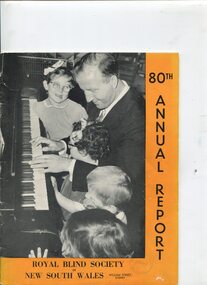
Administrative record - Text, 80th Annual Report Royal Blind Society of N.S.W. (1960), 1960
... ...Light House Home...Albert's appointment as Vice President, the unexpected demolition of 'Heathfield; in Woollahra due to it's condition and a rethinking of strategy given the demand for a kindergarten in the western suburbs, intention to rebuild the lower hall in William St to accommodate studios, offices, repair and storage facilities to satisfy the growing demand for tapes, outline of the Blind Book Society and how it became an auxiliary to the Society so that the assets and goodwill of the BBS were transferred to the RBS, support for this action by Frank Clune and other authors, transcription work done by the Braille Writers Association of NSW includes Leaving Certificate exams, knitting patterns, recipes and musical compositions, references to the change in talking book machines and teachers checking transcribers work to ensure mild censorship does not occur, two examples of how the support can change the life of a blind person, the assembling of a giant flower basket (10 x 15 feet) for the Town Hall Float in the Waratah Festival which was filled with 25,000 sweet peas and a bow of 6 foot wide satin - sadly the truck carrying this would not start and the float was not seen, dropping of sales due to plastic goods and imported products, 17 First Prizes and 12 Second Prizes in various handicrafts at the Royal Easter Show, the work of Margaret Green in providing services to blind children across the state, a visit by world-famous blind pianist George Shearing, pictures of the opening of the "Light House" home for Aged Blind Women and the Alexis Albert Hostel for Aged Blind Men, renovations have occurred at the Helen Keller Hostel and drama and singing classes are held as well as the local choir Waimea Singers directed by Nellie Sweeney, cricketer Ken Curtis took a hat trick - the first in Australian blind cricket history - in the third match between NSW and Victoria at Kooyong in December 1960, three musicians (Julian Lee, Percy Roberts and George Herrmann) were in contact with pianist Percy Shearing before his television appearance, drama classes provided by Irene Alexander have been well attended with some students giving dramatic presentations on radio stations, monthly musical concerts continue to be held in the Society's hall, the continued success of the Black and White Ball, the huge success of the 2UW Blind Appeal providing much needed funds, the addition of the Silver Lighthouse to the group of Auxiliaries, the passing of E K Gordon who was a Foundation Member of the Committee as well as roles with the Newcastle branch and Nursery for Blind Babies, the ACT Liaison Group obtained free passes for bus services within the Territory, the 'Glow Worm' sessions ended in its 21st year on 2GB with Goodie Reeve now reading news excerpts and Betty Hatherley's session on 2UW have been replaced by recorded announcements....Davis Alexis Albert Noel McCaw Buildings Talking books Blind Book Library Kenneth Bruce Frank Clune Dame Mary Gilmore Roy Young Braille Writers Association of New South Wales Transcription T Brockhoff Zita Ainsworth L Farrell A Faulks Percy Cooper M Duncan Dorothy Juleff Margaret Green Victor Maxwell Kindergarten Light House Home Alexis Albert Hostel Helen Keller Hostel Waimea Singers Nellie Sweeney Ken Curtis Cricket Julian Lee Percy Roberts George Herrmann Irene Alexander Maurice Chevalier Nola Dekyvere Betty Hatherley L C Haynes Fundraising L Atkins L A Maurer J Lamond J Wishart Jill Hamer W. ...Articles in the annual report include: a brief history of the organisation on it's 80th anniversary, resignation of Herbert Thompson who had provided over 50 years of voluntary service in the library, Braille teacher and Council member with a plaque commemorating him in the Library, the addition of Reverend Noel McCaw on the Council as Mr Thompson's replacement and A.F. Albert's appointment as Vice President, the unexpected demolition of 'Heathfield; in Woollahra due to it's condition and a rethinking of strategy given the demand for a kindergarten in the western suburbs, intention to rebuild the lower hall in William St to accommodate studios, offices, repair and storage facilities to satisfy the growing demand for tapes, outline of the Blind Book Society and how it became an auxiliary to the Society so that the assets and goodwill of the BBS were transferred to the RBS, support for this action by Frank Clune and other authors, transcription work done by the Braille Writers Association of NSW includes Leaving Certificate exams, knitting patterns, recipes and musical compositions, references to the change in talking book machines and teachers checking transcribers work to ensure mild censorship does not occur, two examples of how the support can change the life of a blind person, the assembling of a giant flower basket (10 x 15 feet) for the Town Hall Float in the Waratah Festival which was filled with 25,000 sweet peas and a bow of 6 foot wide satin - sadly the truck carrying this would not start and the float was not seen, dropping of sales due to plastic goods and imported products, 17 First Prizes and 12 Second Prizes in various handicrafts at the Royal Easter Show, the work of Margaret Green in providing services to blind children across the state, a visit by world-famous blind pianist George Shearing, pictures of the opening of the "Light House" home for Aged Blind Women and the Alexis Albert Hostel for Aged Blind Men, renovations have occurred at the Helen Keller Hostel and drama and singing classes are held as well as the local choir Waimea Singers directed by Nellie Sweeney, cricketer Ken Curtis took a hat trick - the first in Australian blind cricket history - in the third match between NSW and Victoria at Kooyong in December 1960, three musicians (Julian Lee, Percy Roberts and George Herrmann) were in contact with pianist Percy Shearing before his television appearance, drama classes provided by Irene Alexander have been well attended with some students giving dramatic presentations on radio stations, monthly musical concerts continue to be held in the Society's hall, the continued success of the Black and White Ball, the huge success of the 2UW Blind Appeal providing much needed funds, the addition of the Silver Lighthouse to the group of Auxiliaries, the passing of E K Gordon who was a Foundation Member of the Committee as well as roles with the Newcastle branch and Nursery for Blind Babies, the ACT Liaison Group obtained free passes for bus services within the Territory, the 'Glow Worm' sessions ended in its 21st year on 2GB with Goodie Reeve now reading news excerpts and Betty Hatherley's session on 2UW have been replaced by recorded announcements.1 volume of text and imagesroyal blind society of new south wales, annual report, justice maxwell, paul cullen, h.f. benning, herbert thompson, c d darvall, ken bunn, e t herford, roy kippax, k. g hunter-kerr, phyllis bourke, w.a. davis, alexis albert, noel mccaw, buildings, talking books, blind book library, kenneth bruce, frank clune, dame mary gilmore, roy young, braille writers association of new south wales, transcription, t brockhoff, zita ainsworth, l farrell, a faulks, percy cooper, m duncan, dorothy juleff, margaret green, victor maxwell kindergarten, light house home, alexis albert hostel, helen keller hostel, waimea singers, nellie sweeney, ken curtis, cricket, julian lee, percy roberts, george herrmann, irene alexander, maurice chevalier, nola dekyvere, betty hatherley, l c haynes, fundraising, l atkins, l a maurer, j lamond, j wishart, jill hamer, w. cannington, e k gordon, j blair, b macleay, lions club of mayfield, lions club of sydney, lions club of burwood, apex, lions club of bondi, n g wilson, j v brickwood, goodie reeve, 2uw, 2gb -
 Vision Australia
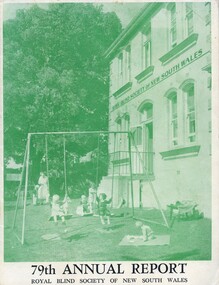
Administrative record - Text, 79th Annual Report Royal Blind Society of N.S.W. (1959), 1959
... ...Light House Home...Articles in the annual report include: the RNIB approving the use of Clarke and Smith talking book players, appointment of Margaret Green as a social worker at Victor Maxwell House, the passing of Polly Thompson who visited the Society in 1949 with Helen Keller, the election of Justice Maxwell as the Chairman and re-appointment of Ken Bunn as Secretary to the Australian National Council for the Blind, the demolishing of 'Heathfield' due to disrepair and possible use as a Youth Hostel or Adjustment Centre for people who are newly blind, the opening of the Light House as a home for Aged Blind Women by NSW Governor Sir Eric Woodward, appointment of Freida Goon as manager of the Light House, update on Alexis Albert House, continued impact on decreased sales of workshop products, high demand for musicians trained or supported by the Society, music and singing lessons with Gordon Lavers, success of monthly concerts given at the Hall by various musicians, introduction of judo lessons, the cricket team led by Barry Ward played matches against the Queensland Blind Cricket Team at Wylie Park, indoor bowling clubs enjoyed both social and competitive matches with many members also joining the Balmain Blind Bowling Combination, the prized addition of a Braille duplicator to the library, listing of Transcribers, Pupil Subscribers (Transcribers), Voluntary Braille Instructors, Voluntary Car Drivers and Library Workers, Newcastle and Hunter River chairman W.M. ...Royal Blind Society of New South Wales Annual Report Victor Maxwell Kindergarten Justice Maxwell Helen Keller Hostel Library Braille Writers Association of New South Wales 2UW Goodie Reeve Black and White Committee Cricket NSW Blind Cricket NSW Blind Bowling Club William Street Blind Women's Bowling Club Polly Thompson Margaret Green Ken Bunn Australian National Council of and for the Blind Light House Home Alexis Albert Hostel Gordon Lavers Balmain Blind Bowling Combination W. ...Articles in the annual report include: the RNIB approving the use of Clarke and Smith talking book players, appointment of Margaret Green as a social worker at Victor Maxwell House, the passing of Polly Thompson who visited the Society in 1949 with Helen Keller, the election of Justice Maxwell as the Chairman and re-appointment of Ken Bunn as Secretary to the Australian National Council for the Blind, the demolishing of 'Heathfield' due to disrepair and possible use as a Youth Hostel or Adjustment Centre for people who are newly blind, the opening of the Light House as a home for Aged Blind Women by NSW Governor Sir Eric Woodward, appointment of Freida Goon as manager of the Light House, update on Alexis Albert House, continued impact on decreased sales of workshop products, high demand for musicians trained or supported by the Society, music and singing lessons with Gordon Lavers, success of monthly concerts given at the Hall by various musicians, introduction of judo lessons, the cricket team led by Barry Ward played matches against the Queensland Blind Cricket Team at Wylie Park, indoor bowling clubs enjoyed both social and competitive matches with many members also joining the Balmain Blind Bowling Combination, the prized addition of a Braille duplicator to the library, listing of Transcribers, Pupil Subscribers (Transcribers), Voluntary Braille Instructors, Voluntary Car Drivers and Library Workers, Newcastle and Hunter River chairman W.M. Cannington joining the Committee, a list of Prize Winners for the 1959 Royal Agricultural Show in the Handicrafts Section, the work undertaken by the fundraising auxiliaries including the Black and White Committee, the 2UW Blind Appeal and the 21st Birthday of the 'Glow Worm' radio show on 2GB.1 volume of text and imagesroyal blind society of new south wales, annual report, victor maxwell kindergarten, justice maxwell, helen keller hostel, library, braille writers association of new south wales, 2uw, goodie reeve, black and white committee, cricket, nsw blind cricket, nsw blind bowling club, william street blind women's bowling club, polly thompson, margaret green, ken bunn, australian national council of and for the blind, light house home, alexis albert hostel, gordon lavers, balmain blind bowling combination, w. cannington, 2gb, major general paul cullen, herbert thompson, h.f. benning, c d darvall, e t herford, phyllis burke, k. g hunter-kerr, freida goon, barry ward, sir eric woodward, hrh princess alexandra of kent, roy kippax, b button, w dunn, c j delaney, n allen, matron scott, marno parsons, charles jobson, billie sinclair, c green, john o'connor, donald debus, george herrmann, joyce herrmann, bert hussey, neville smart, john irvine, jacky myers, percy warner, frank lindburg, sir james bissett, c.r. rae, hal hennessey, w.a. davis, d ferrier, reginald camp, l maurer, joyce grenfell, googie withers, alexis albert, l hynes, phyllis shillito, bruce macleay, n kinnaird, billy matthews -
 Flagstaff Hill Maritime Museum and Village
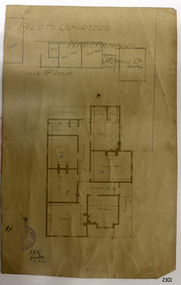
Document - Plan, Pilots Quarters Warrnambool
... light (lighthouse). The new Pilot and Harbourmaster’s house would be built on the site at 88 Merri Street, overlooking Lady Bay and right beside the Flagstaff and the Lady Bay Upper Lighthouse. Other Pilot and Harbourmasters were - - James Menzies was the Pilot and Harbourmaster at Warrnambool in 1929 . In 1932, he was appointed to the position of Acting Secretary to the Warrnambool Harbour Board. A hundred or so years later Flagstaff Hill Maritime Village has fully renovated the former Harbourmaster’s quarters, changed the name to Lighthouse Lodge, and is now allowing guests to stay in the home...light (lighthouse). The new Pilot and Harbourmaster’s house would be built on the site at 88 Merri Street, overlooking Lady Bay and right beside the Flagstaff and the Lady Bay Upper Lighthouse. Other Pilot and Harbourmasters were - - James Menzies was the Pilot and Harbourmaster at Warrnambool in 1929 . In 1932, he was appointed to the position of Acting Secretary to the Warrnambool Harbour Board. A hundred or so years later Flagstaff Hill Maritime Village has fully renovated the former Harbourmaster’s quarters, changed the name to Lighthouse Lodge, and is now allowing guests to stay in the home ...Warrnambool was officially made a Port of Entry in 1855 and by the 1870s had became the dominant port in the Western District. Sadly, due to an increasing problem with silting in the harbour, by the 1890s only small vessels could navigate the harbour. Men with the position of Pilot and Harbourmaster in Warrnambool were employed by the government to enforce government regulations and to help guide vessels safely into the port of Lady Bay, which was difficult to navigate. Some of the Pilots and Harbour Masters of Warrnambool were – - Captain Christopher Gwatkin, the first Harbourmaster for Warrnambool (1857 - his death in 1859). - Captain Helpman was Warrnambool’s second Harbourmaster 1859-1869 - James Nicol was Harbourmaster in Warrnambool for a time, including 1906 (b. 1840 – d. 1926) - Thomas Smith Drewett (1853 - 15-3-1905) past Captain of the Helen Nicoll, Pilot and Harbourmaster of Warrnambool. Warrnambool’s Tourist Guide of 1888 advises that “At the Port of Warrnambool there are two Leading Lighthouses. A licensed sea pilot, Captain Drewett, is stationed at the Port.” In 1915 plans for the Pilot’s Quarters were drawn up for the Department of Public Work. It was at that time, when personnel was short due to the First World War, that apparently the Pilot and Harbourmaster was also responsible for maintaining the light (lighthouse). The new Pilot and Harbourmaster’s house would be built on the site at 88 Merri Street, overlooking Lady Bay and right beside the Flagstaff and the Lady Bay Upper Lighthouse. Other Pilot and Harbourmasters were - - James Menzies was the Pilot and Harbourmaster at Warrnambool in 1929 . In 1932, he was appointed to the position of Acting Secretary to the Warrnambool Harbour Board. A hundred or so years later Flagstaff Hill Maritime Village has fully renovated the former Harbourmaster’s quarters, changed the name to Lighthouse Lodge, and is now allowing guests to stay in the home, which is still neighbour to the operational Lady Bay Lighthouses, now over 150 years old. The association of the old Pilot and Harbourmaster’s Quarters (currently renamed as Lighthouse Lodge) with the Port of Warrnambool, and its maritime activities, is historically significant. The Pilot’s quarters are connected to a time when access to Warrnambool’s Port was important to the colonial settlers for income and supplies. Plan of Pilots Quarters, Warrnambool. Printed and handwritten plan shows house, garage, out buildings and maid's room. The plan's lower left corner has an official stamp and text beside the stamp. Department of Public Works, Melbourne, Victoria, March 11th, 1915. "PILOTS QUARTERS WARRNAMBOOL" "Department of Public works, Melbourne, Victoria I.P.K. , 11.3.15"flagstaff hill, warrnambool, shipwrecked-coast, flagstaff-hill, flagstaff-hill-maritime-museum, maritime-museum, shipwreck-coast, flagstaff-hill-maritime-village, plan, pilot's quarters warrnambool, pilot and harbourmaster's quarters warrnambool, pilot and harbour master's quarters warrnambool, port of warrnambool, department of public works victoria, lady bay lighthouses, warrnambool ports and harbours, light keeper -
 Flagstaff Hill Maritime Museum and Village
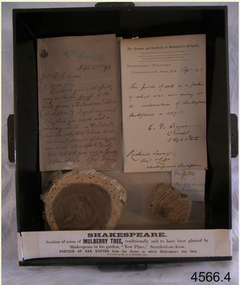
Wood Samples, 1891
... home "New Place", Stratford-upon-Avon. The outer section is light brown coloured while the centre is dark grain. The right wood sample in the case is a section of oak rafter from the house where Shakespeare was born in 1564. ...home "New Place", Stratford-upon-Avon. The outer section is light brown coloured while the centre is dark grain. The right wood sample in the case is a section of oak rafter from the house where Shakespeare was born in 1564. ...The timber display case was presented to Mr Richard Standcombe Harris of Warrnambool (1831-1923). He was a councillor (1875-1891) and predominant businessman. Mr C F Loggin had met Mr Harris while on a trip to Stratford upon Avon in the United Kingdom. Upon his return to Warrnambool, Mr Harris donated the item to the Warrnambool Museum and Art Gallery, (established 1886) where Joseph Archibald was Curator: he catalogued the case in 1894. THE LETTERS IN THE CASE The two letters contained within the display case confirm the authenticity of the oak wood sample. The first letter in the case includes the text; "[Stamped Header on banner] High Street, Stratford on Avon [Hand written] Sept. 22nd / 91. Mr. R. S. Harris, Dear Sir, Enclosed you will find [underlined next 3 words] every authentic proof of the Oak from Shakespeare's House (Birth place). I regret very much Sir, that you made a short-day at S. on A. I should have been delighted to have had the honour, & pleasure, of showing you around our Beautiful Country. You did not give [next 3 words underlined] me or yourself a fair chance. But however I hope that we may again some day have more time to go quietly around. With kind regards, and wishing you, Sir, a pleasant voyage, I remain, Dear Sir, Yours very truly, C.F. Loggin. P.S. A paper will be always acceptable to be as how you Jolly Warrnamboolites are desporting yourselves. “ The second letter includes text; “[Printed Letterhead with stamped impression] The Trustees and Guardians of Shakespeare’s Birthplace Incorporated by Act of 54 and 55, Vict. 1891 Secretary and Librarian - Richard Savage Shakespeare’s Birthplace Stratford-upon-Avon [handwritten] 22 Sept 1891 This piece of oak is a portion of what was cut away at at the restoration of Shakespeare’s Birthplace in 1857-58. C. F. Loggins Chemist 3 High Street Richard Savage Sec. – Shakespeare’s Birthplace Mr C F Loggin was connected with the Shakespeare Trust as the person who had originally donated a scion of Shakespeare's mulberry tree to the "Shakespearean Birthday Committee" in 1842. (The scion that was given to the Shakespearean Birthday Committee, from which the Mulberry sample is derived, still grows today in "New Place" garden.) Mr Richard Savage was the Secretary and Liberian of the then renamed “Trustees and Guardians of Shakespeare’s Birthplace when the display case was given to Mr Harris in 1891 by Mr Loggin. WILLIAM SHAKESPEARE Shakespeare was born in 1564 in Stratford-upon-Avon, where he also grew up. He married at 18 years and he and his wife, Anne Hathaway, had three children: They moved to London where he became successful as an actor, writer, and part-owner of a playing company. He later returned to Stratford and purchased his last home, which he called "New Place" in 1602 where he later died in 1616. For the next 150 years, it was known that there existed a black mulberry tree in the garden. At the time there was a fashion for planting mulberry trees. It was the early 17th century after King James had come to the throne, and he imported tens of thousands of saplings in an attempt to get landowners to start a silk industry in England. Unfortunately for posterity, Shakespeare's mulberry was felled around 1756, by the then owner of “New Place" the Reverend Francis Gastrell, who was apparently tired of continual visits by pilgrims asking to see the tree, so he chopped it down. Gastrell had applied for local permission to extend the garden but the application was rejected and his tax was increased. Gastrell retaliated by demolishing the house in 1759, this greatly outraged the local inhabitants. Gastrell was eventually forced to leave town having provoked the wrath of Stratford residents for committing such an act. Today only the garden remains where “New House" used to stand with a scion from the original mulberry tree still growing there. The wood from the felled mulberry tree at “New House" was purchased by an enterprising local clock-maker Thomas Sharp and he spent the next 40 years or so years making souvenirs from the wood. These became early tourist souvenirs and subsequently developed into a profitable sideline for various other makers, including George Cooper and John Marshall. These objects range from relatively small domestic wooden objects, such as snuff boxes and weight scales to large tea caddies and even tables. C. F. Loggin donated a scion or cutting from Shakespeare's mulberry tree to the Shakespeare Birthplace Trust in 1862, he was a chemist who lived and worked in Stratford. There is a note on the frame of the donation that the mulberry sample is from this scion, research shows that from Richard Savage's diary notes that there must have been a lot of wood taken from that scion over the years which was planted in the garden of “New Place” and is still growing there today. The "Trustees and Guardians of Shakespeare’s Birthplace" (1847 -1964) was formed after the house where Shakespeare is believed to have been born fell into disrepair. Subsequently in 1846 after the death of Thomas Court's widow the last owner. Interest in the house was revived when PT Barnum, the American showman, wanted to buy it and ship the house back to America. In response to this, the Shakespeare Birthday Committee was established (by a private Act of Parliament) with the help of such luminaries as Charles Dickens, the Committee of Trustees raised the necessary £3,000 and purchased the house the following year. Once the Committee had acquired the building, restoration work began. Originally the Birthplace formed part of a terrace with later houses built either side. The first stage in its conservation was their destruction. At the time it was thought necessary to avoid the risk of fire spreading to Shakespeare's birthplace. Reconstruction was carried out by the Shakespeare Trust between 1857 and 1864 that restored the outside of the building to its original 16th-century state. It is from this restoration that the donated piece of oak is derived, originally from a beam that was in the house. Communication from The Shakespeare Birthplace Trust, dated April 11th, 2019, confirms that the pieces displayed in this case have good provenance. The wood samples are significant for their association with the history of William Shakespeare. The display case and its content is significant to Warrnambool local history for its association with the establishment in 1886 of the Warrnambool Museum and Art Gallery. However, it should be noted that the letters of authentication that accompany the wood samples are only applicable to the oak sample. None the less, all the pieces have very good provenance, with Richard Savage's certificate of authenticity for the oak, and the mulberry sample with the letter to Mr Harris from Mr CF Loggin having also been the donor of the scion of mulberry in 1862 to the Shakespeare Birthplace Trust. This scion was then established at Shakespeare's garden at "New Home" that had been demolished by Rev Francis Gastrell in 1759. Two wood samples associated with William Shakespeare, presented in a hanging, timber and glass display case with metal trim around the frame. The case also contains two letters and a label printed on a card that refers to the contents, their origins and the donor. A card label with a printed number and a round adhesive label are attached on the back of the case. The left round section of wood is from a donated scion (or shoot) derived from the original mulberry tree planted by William Shakespeare at his last home "New Place", Stratford-upon-Avon. The outer section is light brown coloured while the centre is dark grain. The right wood sample in the case is a section of oak rafter from the house where Shakespeare was born in 1564. The wood is mid brown with a distinct grain. The included letters, each dated 22/9/1891, refer to only the oak sample. - The letter on the left comprises two handwritten pages from Mr CF Loggin to Mr Richard Standcombe Harris. The paper has the printed letterhead address of High Street, Stratford on Avon. - The letter on the right is a handwritten certificate of authenticity signed by Mr CF Loggin and counter signed by Mr Richard Savage, Secretary and Liberian of the Shakespeare Trust. It is on the printed letterhead of The Trustees and Guardians of Shakespeare’s Birthplace Cardboard label inside the glass case “Shakespeare Section of Mulberry Tree, traditionally said to have been planted by Shakespeare in his garden, “New Place,” Stratford-on-Avon. PORTION OF OAK RAFTER from the house in which Shakespeare was born. (Presented by R S Harris 1891.) Printed label on the back of the case “3 2 “ The handwritten adhesive label “0566” flagstaff hill, warrnambool, shipwrecked coast, flagstaff hill maritime museum, maritime museum, shipwreck coast, flagstaff hill maritime village, great ocean road, shakespeare display case, wood samples, oak from shakespeare's birthplace, mulberry from shakespeare's home "new place", stratford-upon-avon, shakespeare's birthplace, the trustees and guardians of shakespeare's birthplace &c., shakespeare trust, shakespeare birthday committee, r.s. harris, brunswick, victoria, richard s harris, brunswick, victoria, c.f. loggins, chemist, 3 high street stratford-on-avon, richard savage, warrnambool museum and art gallery, thomas court, pt barnum, charles dickins, anne hathaway, black mulberry tree, reverend francis gastrell -
 Federation University Historical Collection
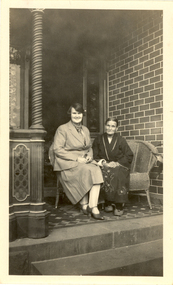
Photograph - Photograph - Black and White, Laura Ritchie and Sarah Wright at 214 Armstrong (Nth) Street, Ballarat, late 1920's
... house. The older woman is wearing a dressing gown and slippers and the younger woman is wearing a light coloured suit. The women are Sarah Wright and her daughter Laura Ritchie. The house is Laura's home...house. The older woman is wearing a dressing gown and slippers and the younger woman is wearing a light coloured suit. The women are Sarah Wright and her daughter Laura Ritchie. The house is Laura's home ...Sarah Wright was married to a gold miner named William. They lived at Laura Villa, Smeaton. Their family won many singing and instrumental awards. Frank Wright their son was born and attended Smeaton State School and was a renown resident of Smeaton. Frank was tutored by Percy Code and was awarded a gold medal for the highest marks in the ALCM examinations in the British Colonies at the age of seventeen years. He became the Australian Open Cornet Champion by the age of eighteen. A year later, Frank conducted the City of Ballarat Band, and later the Ballarat Soldiers’ Memorial Band. He formed the Frank Wright Frisco Band and Frank Wright and his Coliseum Orchestra. These bands won many South Street awards, and Frank as conductor won many awards in the Australian Band Championship contest. In 1933 Frank Wright sailed to England to conduct the famous St Hilda’s Band and was later appointed Musical Director of the London County Council, where he organized many amazing concerts in parks, in and around the London district. He was made Professor of Brass and Military Band Scoring and conducted at the Guildhall of Music and Drama. Frank was often invited to adjudicate Brass Band Championships around Europe, in Australia, including South Street and in New Zealand. The Frank Wright Medal at the Royal South Street competition is awarded to an individual recognized as making an outstanding contribution to brass music in Australia. Laura Ritchie was his sister and lived in Ballarat with her family. A black and white photo of two women sitting on a wicker couch on the verandah of a brick house. The older woman is wearing a dressing gown and slippers and the younger woman is wearing a light coloured suit. The women are Sarah Wright and her daughter Laura Ritchie. The house is Laura's home at 214 Armstrong Street Nth, BallaratWritten in pencil 214 Armstrong St Nth, Laura and Sarah Wrightsarah wright, laura ritchie, frank wright, cornet, ballarat -
 Mission to Seafarers Victoria
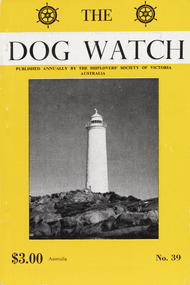
Journal (item) - Periodicals-Annual, Shiplovers' Society of Victoria, The Annual Dog Watch
... Light Houses - C. E. Bonwick - 58 The Forlorn Hope - N. S. Smith - 59 Robert Louis Stevenson in The South Seas - Captn. Fred Klebingat - 68 Eastward-Ho! - Charles E. Howlett, B.A, LL.B. - 73 Commonwealth Government Rewards for School Boys - I. Wilson, M.P., Minister for Home...Light Houses - C. E. Bonwick - 58 The Forlorn Hope - N. S. Smith - 59 Robert Louis Stevenson in The South Seas - Captn. Fred Klebingat - 68 Eastward-Ho! - Charles E. Howlett, B.A, LL.B. - 73 Commonwealth Government Rewards for School Boys - I. Wilson, M.P., Minister for Home ...This journal provides the reader with glimpses of the adventures and hardships of a seaman's life. Many of the stories are of sailing ships.Contributes to our knowledge of the importance of shipping and places on record those stories of the sea which would otherwise be lost.Contents Foreword - Commander R. S. .Veale, C.M.G. V.R.D. - 5 Editorial - - 7 Light Houses - N. S. Smith - 11 On Passing for Second Mate - R. Thiele - 18 Passenger Steamers on the Tasman Sea - I. Mackay - 22 Dune Ship - Dr. Philip Martin - 37 The Rum Runners - S. A. E. Strom - 38 To Australia Amongst Emigrants - S. Duncan - 43 The Persian Gulf or "Hells Kitchen" - K. Bull - 49 Monkey Business - Captn. James Gaby - 51 Anchor Hardy - Capt. R. G. Edwards - 52 Light Houses - C. E. Bonwick - 58 The Forlorn Hope - N. S. Smith - 59 Robert Louis Stevenson in The South Seas - Captn. Fred Klebingat - 68 Eastward-Ho! - Charles E. Howlett, B.A, LL.B. - 73 Commonwealth Government Rewards for School Boys - I. Wilson, M.P., Minister for Home Affairs - 78 Protection of Historic Wrecks off Queensland Coast - I. Wilson, M.P. - 79 The s.s. New Texas --Elder Dempster Line - Captn. L. Gibson - 83 Carmichael's Golden Fleece Line - L. Holmes - 89 Passing the Buck - - 95 Ice Barrier - D. M. Fyfe - 96 A Dream Come True - W. P. Shemmeld - 97 Homeward Bound - R. W. Rudd - 105 More of the Wreck of The City of York - A. T. Wreford and E. M. Christie - 110 A Fortunate Rescue - Captn. J. Gaby - 112 More About Sail - Capt. W. J. Cowling - 113 Book Reviews - 120sailing ships, steamships, shipping, seafaring life, shiplovers' society of victoria, dog watch -
 Flagstaff Hill Maritime Museum and Village
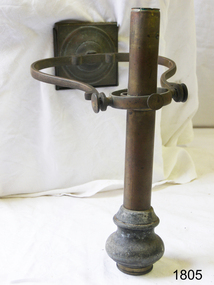
Functional object - Carbide Lamp, Powell & Hanmer, Late 19th to early 20th century
... home, with water piped to the container and allowed to drip on the pellets releasing acetylene. This gas was piped to lighting fixtures inside the house, where it was burned, creating a very bright flame. Carbide lighting was inexpensive but was prone to gas leaks and explosions. Early models of the automobile, motorbike and bicycles used carbide lamps as headlamps. Acetylene gas, derived from carbide, enabled early automobiles to drive safely at night. Thick concave mirrors combined with magnifying lenses projected the acetylene flame light ...Francis Powell (1861-) and Francis Hanmer (1858-1925) founded Powell and Hanmer Ltd in the Summer of 1885 for the manufacturer of bike and carriage lamps. Their first advertisements began to appear in November of 1885. In 1890 they lodged a Patent for “velocipede” lamps to be used by lightweight wheeled vehicles propelled by a rider, such as a bike, tricycle and railroad handcar. In April of 1913, they were selling headlamps for cars and in 1914 built their second factory manufacturing dynamo lighting sets in Rocky Lane Birmingham, also for the production of dynamos for motor cars. Then in 1929 Powell and Hanmer Ltd, was acquired by the Lucas company which was at that time the main competitor for the manufacture of non-electrical equipment for cycles and motorcycles. When a director of Powell and Hanmer joined the board of Austin motor cars, Lucas feared that Austins might encourage Powell and Hanmer to start to produce electrical equipment for supply to the company and as a result this association might affect Lucas's business with other large vehicle manufacturers. As a result, Lucas made an offer to Powell & Hanmer and purchased the business for £500,000. Carbide lighting was used in rural and urban areas of Australia which were not served by electrification. Its use began shortly after 1900 in many countries and continued past the 1950s. Calcium carbide pellets were placed in a container outside the home, with water piped to the container and allowed to drip on the pellets releasing acetylene. This gas was piped to lighting fixtures inside the house, where it was burned, creating a very bright flame. Carbide lighting was inexpensive but was prone to gas leaks and explosions. Early models of the automobile, motorbike and bicycles used carbide lamps as headlamps. Acetylene gas, derived from carbide, enabled early automobiles to drive safely at night. Thick concave mirrors combined with magnifying lenses projected the acetylene flame light. These type of lights were used until reliable batteries and dynamos became available, and manufacturers switched to electric lights. Acetylene lamps were also used on riverboats for night navigation. The National Museum of Australia has a lamp made in about 1910 that was used onboard the PS Enterprise, an 1878 Australian paddle steamer, currently owned by the National Museum of Australia in Canberra. It is still operational, and one of the oldest working paddle steamers in the world, listed on the Australian Register of Historic Vehicles.Acetylene Carbide lamp, marine pattern burner housing and reflector missing Carbide Lamp, metal. Has plate for attaching to wall, & gimbal to allow lamp to remain vertical. Noneflagstaff hill, warrnambool, flagstaff-hill-maritime-museum, maritime-museum, shipwreck-coast, flagstaff-hill-maritime-village, carbide lamp, motor vehicle, bike lamp, lighting, vehicle lighting, powell, hanmer, acetylene gas lamp, early lighting, marine lighting -
 Greensborough Historical Society
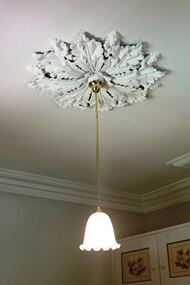
Photograph - Digital image, Marilyn Smith, Scotland House: bedroom light and ceiling rose, 03/12/2016
... home retains many original architectural elements. It was sold in December 2016. john scotland scotland avenue greensborough Digital copy of colour photograph Scotland House: bedroom light and ceiling rose. ...Formerly the home of Greensborough pioneer, John Scotland, this renovated home retains many original architectural elements. It was sold in December 2016.Digital copy of colour photographjohn scotland, scotland avenue greensborough -
 Glenelg Shire Council Cultural Collection
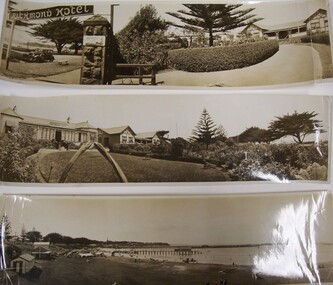
Photograph - Photograph - Entrance to Richmond Hotel Centenary Celebrations Portland 1934, 1934
... Home of Stephen George Henty. To E.... Hall from Marg...." Black and white photograph showing, from left, a sign reading "Richmond Hotel", a gateway post with sign "Beware of cars", a driveway leading to two light-coloured houses. ...Photographs taken by Esther Winifred Hall (nee Smallpage) - great grand-daughter of Stephen George Henty. Taken in 1934 Centenary Celebrations in Portland.Back: "Original Home of Stephen George Henty. To E.... Hall from Marg...."centenary celebrations portland 1934 -
 Greensborough Historical Society
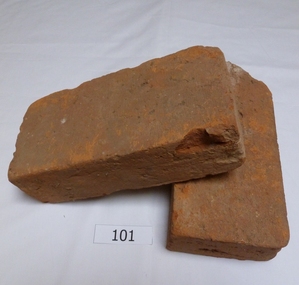
Functional object - Bricks, Hand made bricks from Partington house (Willis Vale) Greensborough, 1840c
... house was vandalised shortly after. It was destroyed by fire in the 1960s. The bricks are a link to pioneer homes and farms in the area. willis vale partington family greensborough alan partington bricks Accompanying note: Hand made bricks from Partington house in Greensborough. Donated by Alan Partington. Hand made clay bricks, light ...Bricks from "Willis Vale' home of the Partington family of Greensborough. Built in 1840, Willis Vale was owned by the Partington family from 1878 to 1947. It was a 2 storey house overlooking the Plenty River and set in 150 acres of farmland. The Partingtons moved out in 1947 and the house was vandalised shortly after. It was destroyed by fire in the 1960s.The bricks are a link to pioneer homes and farms in the area.Hand made clay bricks, light red in colour. All faces are flat.. One brick is chipped. Accompanying note: Hand made bricks from Partington house in Greensborough. Donated by Alan Partington.willis vale, partington family, greensborough, alan partington, bricks -
 Flagstaff Hill Maritime Museum and Village
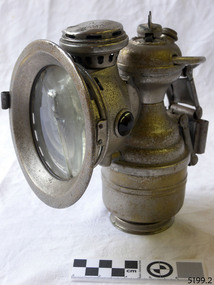
Functional object - Carbide Lamp, Powell & Hanmer, 1920s
... home, with water piped to the container and allowed to drip on the pellets releasing acetylene. This gas was piped to lighting fixtures inside the house, where it was burned, creating a very bright flame. Carbide lighting was inexpensive but was prone to gas leaks and explosions. Early models of the automobile, motorbike and bicycles used carbide lamps as headlamps. Acetylene gas, derived from carbide, enabled early automobiles to drive safely at night. Thick concave mirrors combined with magnifying lenses projected the acetylene flame light ...Francis Powell (1861-) and Francis Hanmer (1858-1925) founded Powell and Hanmer Ltd in the Summer of 1885 for the manufacturer of bike and carriage lamps. Their first advertisements began to appear in November of 1885. In 1890 they lodged a Patent for “velocipede” lamps to be used by lightweight wheeled vehicles propelled by a rider, such as a bike, tricycle and railroad handcar. In April of 1913, they were selling headlamps for cars and in 1914 built their second factory manufacturing dynamo lighting sets in Rocky Lane Birmingham, also for the production of dynamos for motor cars. Then in 1929 Powell and Hanmer Ltd, was acquired by the Lucas company which was at that time the main competitor for the manufacture of non-electrical equipment for cycles and motorcycles. When a director of Powell and Hanmer joined the board of Austin motor cars, Lucas feared that Austins might encourage Powell and Hanmer to start to produce electrical equipment for supply to the company and as a result this association might affect Lucas's business with other large vehicle manufacturers. As a result, Lucas made an offer to Powell & Hanmer and purchased the business for £500,000. Carbide lighting was used in rural and urban areas of Australia which were not served by electrification. Its use began shortly after 1900 in many countries and continued past the 1950s. Calcium carbide pellets were placed in a container outside the home, with water piped to the container and allowed to drip on the pellets releasing acetylene. This gas was piped to lighting fixtures inside the house, where it was burned, creating a very bright flame. Carbide lighting was inexpensive but was prone to gas leaks and explosions. Early models of the automobile, motorbike and bicycles used carbide lamps as headlamps. Acetylene gas, derived from carbide, enabled early automobiles to drive safely at night. Thick concave mirrors combined with magnifying lenses projected the acetylene flame light. These type of lights were used until reliable batteries and dynamos became available, and manufacturers switched to electric lights. Acetylene lamps were also used on riverboats for night navigation. The National Museum of Australia has a lamp made in about 1910 that was used onboard the PS Enterprise, an 1878 Australian paddle steamer, currently owned by the National Museum of Australia in Canberra. It is still operational, and one of the oldest working paddle steamers in the world, listed on the Australian Register of Historic Vehicles.Acetylene Carbide lamp, Model “Panther” distinct patterned side red and green lenses. These lamps were also known as acetylene gas lamps. They work off a chemical reaction between calcium carbide and water.Model 75flagstaff hill, warrnambool, flagstaff-hill-maritime-museum, maritime-museum, shipwreck-coast, flagstaff-hill-maritime-village, carbide lamp, motor vehicle, bike lamp, lighting, vehicle lighting, powell, hanmer, acetylene gas lamp, early lighting -
 Greensborough Historical Society
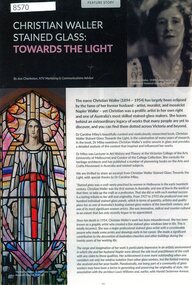
Article - Article, Newsletter, Christian Waller stained glass: towards the light
... Ms Waller's Ivanhoe home "Waller House" is operated by the National Trust open, but not to the public in 2024 while undertaking restoration. christian waller stained glass artists ivanhoe national trust of australia (victoria) 2 p., text and colour images Christian Waller stained glass: towards the light Article Article, Newsletter ...Article on female stained glass artist Christian Waller, published in the National Trust of Victoria newsletter. Ms Waller's Ivanhoe home "Waller House" is operated by the National Trust open, but not to the public in 2024 while undertaking restoration.2 p., text and colour imageschristian waller, stained glass, artists, ivanhoe, national trust of australia (victoria) -
 Eltham District Historical Society Inc
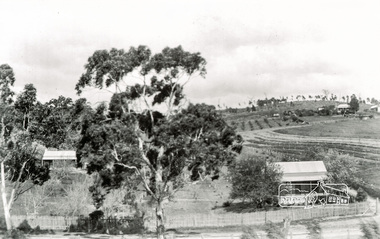
Photograph, Tom Prior, Blashik family home, Ingrams Road, Research
... home for many years at 106 Thompson Cres Research. Ivy's father, Ernst Richard Reynolds and grandfather, Richard Reynolds, lived at the same address. Ivy's father Richard worked for Mr. Trail on his property in Research. Reynolds Road is named after the family. Mr Tom Prior (wife Eva) worked at the Melbourne zoo. He was very innovative and made his own camera, using the black cloth hood to exclude the light. The photographs are a reminder of the rural nature of Research and Eltham and its rich heritage. blashik family home, houses ...The Blashiks were a German family and friends of the Brinkkotters. The son was Len Blashik. The family had a rough time during the First World War. They made tanks.The Reynolds family were early settlers in Research. The Reynolds/ Prior collection of photographs were taken by Tom Prior, the maternal uncle of Ivy Reynolds, around 1900 and the 60 photos in the album give a fine overview of many of the landmarks of Research and Eltham over 100 years ago. lvy lived in the family home for many years at 106 Thompson Cres Research. Ivy's father, Ernst Richard Reynolds and grandfather, Richard Reynolds, lived at the same address. Ivy's father Richard worked for Mr. Trail on his property in Research. Reynolds Road is named after the family. Mr Tom Prior (wife Eva) worked at the Melbourne zoo. He was very innovative and made his own camera, using the black cloth hood to exclude the light. The photographs are a reminder of the rural nature of Research and Eltham and its rich heritage. Black and white photograph mounted in an album, the Reynolds/Prior Photograph Collection, this being one of 53 reproduced black and white images of early Eltham.The Reynolds/Prior Photograph Collection, Presented to the Eltham District Historical Society, 14 June 2006 by Ross McDonald. A second copy was also presented to the Andrew Ross Museum, Kangaroo Groundblashik family home, houses, ingrams road, len blashik, research (vic.), reynolds prior collection -
 Eltham District Historical Society Inc
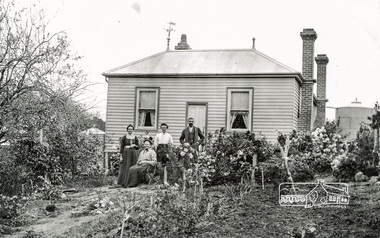
Photograph, Tom Prior, The two houses built by Richard Reynolds, Research
... home for many years at 106 Thompson Cres Research. Ivy's father, Ernst Richard Reynolds and grandfather, Richard Reynolds, lived at the same address. Ivy's father Richard worked for Mr. Trail on his property in Research. Reynolds Road is named after the family. Mr Tom Prior (wife Eva) worked at the Melbourne zoo. He was very innovative and made his own camera, using the black cloth hood to exclude the light. The photographs are a reminder of the rural nature of Research and Eltham and its rich heritage. houses ...Ivy Reynolds' grandfather, Richard Reynolds built these two houses at Research. The house on the left remained in tact for many years. The Masons lived in the house at top right.The Reynolds family were early settlers in Research. The Reynolds/ Prior collection of photographs were taken by Tom Prior, the maternal uncle of Ivy Reynolds, around 1900 and the 60 photos in the album give a fine overview of many of the landmarks of Research and Eltham over 100 years ago. lvy lived in the family home for many years at 106 Thompson Cres Research. Ivy's father, Ernst Richard Reynolds and grandfather, Richard Reynolds, lived at the same address. Ivy's father Richard worked for Mr. Trail on his property in Research. Reynolds Road is named after the family. Mr Tom Prior (wife Eva) worked at the Melbourne zoo. He was very innovative and made his own camera, using the black cloth hood to exclude the light. The photographs are a reminder of the rural nature of Research and Eltham and its rich heritage. Black and white photograph mounted in an album, the Reynolds/Prior Photograph Collection, this being one of 53 reproduced black and white images of early Eltham.The Reynolds/Prior Photograph Collection, Presented to the Eltham District Historical Society, 14 June 2006 by Ross McDonald. A second copy was also presented to the Andrew Ross Museum, Kangaroo Groundhouses, mason family, research (vic.), reynolds prior collection, richard reynolds -
 Eltham District Historical Society Inc
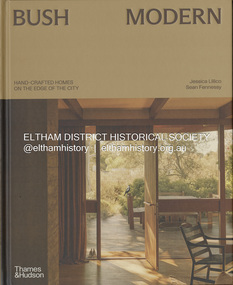
Book, Jessica Lillico, Bush Modern: Hand-crafted homes on the edge of the city, 4 Nov. 2025
... homes: tactile, grounded and deeply in tune with their environment." Contents: Bush modern locations (map) Grounded in simplicity by Jessica Lillico and Sean Fennessy Time and place by Morag Fraser Houses featured - Stonygrad 1940, North Warrandyte Fraser-Jackson House 1947/1977, Montmorency Busst House 1948, Eltham Burstall House 1950, Montmorency Wright House II 1960, North Warrandyte Collis House 1966, Eltham Diskin House 1967, Eltham Redfern House 1967, North Warrandyte River Bend 1968/2022, Garambi Baan, Eltham Fisher House 1969, Warrandyte Borrack House 1970, Plenty Valley Fiddlers Elbow 1970, North Warrandyte Light Well House 1972, Donvale Birrarung House 1974, Garambi Baan, Eltham High Noon 1974, North Warrandyte Monty Sibbel 1975/2022, Montmorency Provan House 1976/2021, North Warrandyte Pizzey House 1977, Eltham Pittard House 1978, Eltham Gray House 1980, Eltham Carol Ann House 1989, Bend of Islands Wattle Glen 1999, Wattle Glen Big Hill 2001, Christmas Hills ...homes: tactile, grounded and deeply in tune with their environment." Contents: Bush modern locations (map) Grounded in simplicity by Jessica Lillico and Sean Fennessy Time and place by Morag Fraser Houses featured - Stonygrad 1940, North Warrandyte Fraser-Jackson House 1947/1977, Montmorency Busst House 1948, Eltham Burstall House 1950, Montmorency Wright House II 1960, North Warrandyte Collis House 1966, Eltham Diskin House 1967, Eltham Redfern House 1967, North Warrandyte River Bend 1968/2022, Garambi Baan, Eltham Fisher House 1969, Warrandyte Borrack House 1970, Plenty Valley Fiddlers Elbow 1970, North Warrandyte Light Well House 1972, Donvale Birrarung House 1974, Garambi Baan, Eltham High Noon 1974, North Warrandyte Monty Sibbel 1975/2022, Montmorency Provan House 1976/2021, North Warrandyte Pizzey House 1977, Eltham Pittard House 1978, Eltham Gray House 1980, Eltham Carol Ann House 1989, Bend of Islands Wattle Glen 1999, Wattle Glen Big Hill 2001, Christmas Hills Stonygrad Fraser-Jackson House Busst House Burstall House Wright House II Collis House Diskin House Redfern House River Bend Fisher House Borrack House Fiddlers Elbow Light Well House Birrarung House High Noon Monty Sibbel Provan House Pizzey House Pittard House Gray House Carol Ann House Wattle Glen Big Hill Inside front cover in ink: "Enjoy! ...From the publisher Thames & Hudson Australia's website: "In the bushy north-eastern fringe of Melbourne, an enduring, uniquely Australian architectural aesthetic has been quietly gaining recognition. Emerging out of necessity in the post-war years, it reimagined the sleek ideals of modernism through the lens of the local landscape. Simple homes built 'of the land' from mud bricks and recycled timber captured the mood of those searching for an alternative way of life close to nature. The movement gathered momentum in the counter-cultural 1960s and culminated in near-mainstream popularity in the 1970s. After a few decades where brown lost appeal in favour of white-washed minimalism, the style in all its warm, earthy glory is once again being embraced and revived by a new generation Through evocative photography by Sean Fennessy, personal stories and architectural insights, Bush Modern explores the timeless appeal of these character-filled homes: tactile, grounded and deeply in tune with their environment." Contents: Bush modern locations (map) Grounded in simplicity by Jessica Lillico and Sean Fennessy Time and place by Morag Fraser Houses featured - Stonygrad 1940, North Warrandyte Fraser-Jackson House 1947/1977, Montmorency Busst House 1948, Eltham Burstall House 1950, Montmorency Wright House II 1960, North Warrandyte Collis House 1966, Eltham Diskin House 1967, Eltham Redfern House 1967, North Warrandyte River Bend 1968/2022, Garambi Baan, Eltham Fisher House 1969, Warrandyte Borrack House 1970, Plenty Valley Fiddlers Elbow 1970, North Warrandyte Light Well House 1972, Donvale Birrarung House 1974, Garambi Baan, Eltham High Noon 1974, North Warrandyte Monty Sibbel 1975/2022, Montmorency Provan House 1976/2021, North Warrandyte Pizzey House 1977, Eltham Pittard House 1978, Eltham Gray House 1980, Eltham Carol Ann House 1989, Bend of Islands Wattle Glen 1999, Wattle Glen Big Hill 2001, Christmas Hills Inside front cover in ink: "Enjoy! Jess & Sean"stonygrad, fraser-jackson house, busst house, burstall house, wright house ii, collis house, diskin house, redfern house, river bend, fisher house, borrack house, fiddlers elbow, light well house, birrarung house, high noon, monty sibbel, provan house, pizzey house, pittard house, gray house, carol ann house, wattle glen, big hill -
 Bendigo Military Museum
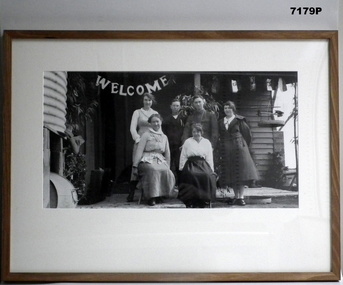
Photograph - FRAMED WW1 PHOTOGRAPH, Wayne Eels, C.2008/09
... Home". Photograph - framed. Photograph - black and white photograph on paper depicts an informal group portrait of two men and four women; two women seated. 3rd left, Bert Grinton. Background - verandah of timber house with a "WELCOME" banner suspended from verandah posts. Frame - timber, light ...Photo taken at the Grinton home at Tragowel near Kerang in 1919. JACK GRINTON. Refer Cat No. 1280 for his service history. BERT GRINTON No. 5024 38th Bn - Refer to Cat No. 1320P for service history.Photograph - framed. Photograph - black and white photograph on paper depicts an informal group portrait of two men and four women; two women seated. 3rd left, Bert Grinton. Background - verandah of timber house with a "WELCOME" banner suspended from verandah posts. Frame - timber, light varnish finish, Perspex front, cardboard backing."Group 6: Life after 1919". "C. Welcome Home". framed accessories, camera on the somme, ww1, 38th bn, grinton -
 Eltham District Historical Society Inc
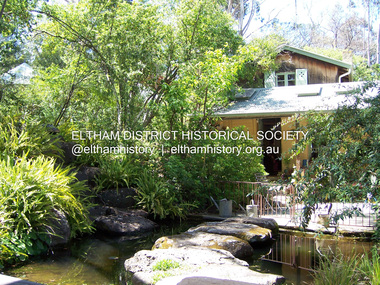
Photograph - Digital Photograph, Marguerite Marshall, Gordon Ford's Garden, 'Fulling', Pitt Street, Eltham, 10 November 2006
... house was constructed as a joint venture with friends, including artist Clifton Pugh, who built Ford’s bedroom for £10. The polished floorboards and solomite (compressed straw) ceilings, interspersed with heavy beams, exude warmth. The result is a home of snug spaces, with soft light...house was constructed as a joint venture with friends, including artist Clifton Pugh, who built Ford’s bedroom for £10. The polished floorboards and solomite (compressed straw) ceilings, interspersed with heavy beams, exude warmth. The result is a home of snug spaces, with soft light ...'Fulling', the half-hectare property at Pitt Street, Eltham was the home of landscape designer Gordon Ford and his wife Gwen. Ford bought the property in 1948, originally part of an orchard. The garden encapsulates the major trends of Australian garden design in the second half of the 20th century. The garden design is based on mass (plants) and void (paths and pools), textures and forms. It epitomises the Eltham style because of its relaxed informality and attraction to native wildlife. The mud brick house and designed and built by Ford commenced in 1948. Several extensions were added up to 1970 and were built by Graham Rose (Source: information panel for exhibition, n.d.) Covered under Heritage Overlay, Nillumbik Planning Scheme. Published: Nillumbik Now and Then / Marguerite Marshall 2008; photographs Alan King with Marguerite Marshall.; p147 A narrow timber gate opens onto a garden that has had a huge impact on natural garden development in Australia since the 1950s.1 Fulling, the half-hectare property at Pitt St, Eltham, was the home of the landscape designer, Gordon Ford, who died in 1999. The garden ‘encapsulates the major trends of Australian garden design in the second half of the 20th century...and epitomises the Eltham style of garden’.2 It in turn, was influenced by several Victorian major landscape designers of the mid 20th century – Ellis Stones, Peter Glass and Edna Walling. The gate opens onto a sandy gravel path, one of several, which wind around dramatic pools and what appear to be natural bush, but on close inspection are carefully integrated native, indigenous and exotic plantings. Retaining walls and steps of rock through the garden link different terrace levels. Lichen-covered boulders serve as steps across a pool, leading to the triple level mud-brick house. Ford bought the property, which was originally part of an orchard, in 1948. As the son of a Presbyterian minister, Ford received a good education, which included learning Latin. This was advantageous when he worked in plant sales for the Forestry Commission, before the Second World War. In the late 1940s, however, Ford turned to building and landscape gardening. He worked on the Busst house, an early mud-brick building designed by Alistair Knox and at the same time, Ford was employed by Ellis Stones. Knox described Ford as, ‘one of the funniest men of the district. ...Rocky’s (Ellis Stones) Depression stories and Gordon’s memory and quick tongue made the jobs the most enjoyable of all those hysterical times that made Eltham the centre of the eternal laugh, between the years of 1945 and 1950’.3 Ford’s house, like so many after the war, was built progressively, as more space was needed and formerly scarce materials became available. It began with an army-shed of timber-lined walls, now used as the kitchen. Ford then built what is now the lounge room, and the house grew ‘like topsy and on a shoestring,’ says his widow Gwen. A lot of second-hand materials such as window frames were used, a style made famous particularly with their extensive use at Montsalvat, the Eltham Artists’ Colony. The house was constructed as a joint venture with friends, including artist Clifton Pugh, who built Ford’s bedroom for £10. The polished floorboards and solomite (compressed straw) ceilings, interspersed with heavy beams, exude warmth. The result is a home of snug spaces, with soft light and garden vistas. Several other mud-brick buildings were constructed as needed, including a studio and units for bed-and-breakfast clients. The garden, which has been part of the Open Garden Scheme since the mid 1980s, is based on a balance of mass (plants) and void (paths and pools), textures and forms. It epitomises the Eltham style because of its relaxed informal ethos and attracts native animals. Wattlebirds, scrub wrens, pardalotes, currawongs, owls and even kangaroos, have been seen at Fulling. Gwen, a former English teacher who has worked on the garden since around 1970, urged and helped Ford write his book, The Natural Australian Garden.4 Several of Ford’s favourite trees are in the garden, including the native Casuarina or She-Oak. In spring, the garden is dusted with the purple Orthrosanthus multiflorus or blue native irises and rings with the calls of birds attracted to plants like the callistemons, correas and grevilleas.This collection of almost 130 photos about places and people within the Shire of Nillumbik, an urban and rural municipality in Melbourne's north, contributes to an understanding of the history of the Shire. Published in 2008 immediately prior to the Black Saturday bushfires of February 7, 2009, it documents sites that were impacted, and in some cases destroyed by the fires. It includes photographs taken especially for the publication, creating a unique time capsule representing the Shire in the early 21st century. It remains the most recent comprehenesive publication devoted to the Shire's history connecting local residents to the past. nillumbik now and then (marshall-king) collection, eltham, fulling, gordon ford garden, pitt street, eltham mud brick buildings, mud brick house -
 Kiewa Valley Historical Society
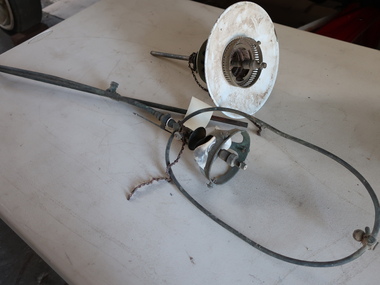
Gas Light x2
... houses. Before the 1800s most homes, workplaces and streets were lit by candles or oil lamps.The cities had gas before the country areas. Gas lighting was available in the Kiewa Valley before electricity was installed. gas lights home lighting Early 20th century. Gas light ...Lighting was by gas before electricity was installed in houses. Before the 1800s most homes, workplaces and streets were lit by candles or oil lamps.The cities had gas before the country areas.Gas lighting was available in the Kiewa Valley before electricity was installed.Early 20th century. Gas light used indoors and made of copper tubing, brass, and bakelite.gas lights, home lighting -
 Kiewa Valley Historical Society
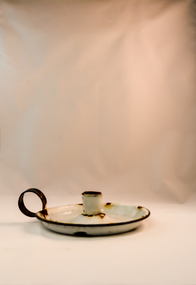
Candle Holder x2, circa early 1900
... house environment. It could be easily moved from room to room but would have insignificant "candle power" to lighten more than a few metres around it. This item was before kerosene lamps, gas lighting and electric/battery lamps This candle holder would have been used within the homes of Kiewa residences to illuminate the way from room to room where there were no other forms of lighting available. As it is relatively light ...Historically this item was before electricity lighting was available. There is no protection around the candle to prevent wind or air movement from extinguishing the candle flame therefore this means of night illumination was used within a house environment. It could be easily moved from room to room but would have insignificant "candle power" to lighten more than a few metres around it. This item was before kerosene lamps, gas lighting and electric/battery lamps This candle holder would have been used within the homes of Kiewa residences to illuminate the way from room to room where there were no other forms of lighting available. As it is relatively light in weight and with a finger/s grip it is highly portable and was in time replaced by battery powered torches. It was used in a period where home, or local made candles were a necessity of living. This Item was used before battery powered torches were invented. Although candles are still used in the late 20th and after, their fundamental use has changed and they function more as a mood enhancement item or as a back up for an electrical power failure and the alternative battery powered torch also runs out of power.1. This small basin shaped candle holder is formed of metal and sealed with a pale grey enamel skin. It has a black painted edge and finger holder. It has a raised vertical spout for the securing of the candle. The bottom of the basin is contoured from the candle base to the outer edge to allow for melted candle wax to be safely held within the basin. 2. As above. The handle is rusty but otherwise in good condition. candle-holder, portable light enamel household goods -
 Eltham District Historical Society Inc
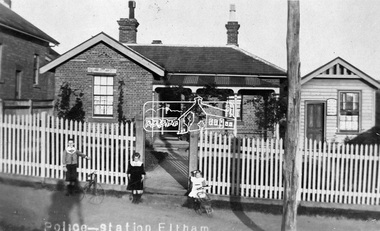
Photograph, Tom Prior, Police Station and Residence, Maria Street, Eltham, c.1900
... home for many years at 106 Thompson Cres Research. Ivy's father, Ernst Richard Reynolds and grandfather, Richard Reynolds, lived at the same address. Ivy's father Richard worked for Mr. Trail on his property in Research. Reynolds Road is named after the family. Mr Tom Prior (wife Eva) worked at the Melbourne zoo. He was very innovative and made his own camera, using the black cloth hood to exclude the light. The photographs are a reminder of the rural nature of Research and Eltham and its rich heritage. children Court House ...Situated near the top of what was known as 'Policeman's Hill' according to Miss Ivy Reynolds, neice of the photographer, Tom Prior. From the left, Eltham Court House, Police Residence and Police station on Main Road and corner of Brougham Street. These buildings formed part of Little Eltham and still stand (without the front fence) today though the Police Station was demolished in 1986 due to termite damage. A replica was built circa 1989. The institutions of law and order in Colonial Victoria included the police, courts and prisons. The 1852 report of the Snodgrass Select Committee appointed to "identify the policing needs of the colony” noted there existed seven independent police forces that did not co-operate or regularly communicate. Following the committee's report all these police entities were merged into the Victoria Police, founded on 8 January 1853, to implement law and order responsibilities throughout the Colony of Victoria. The Eltham Courthouse (1860) and adjacent Police Residence (1859) formed a justice precinct established in the immediate aftermath of the 1852 police inquiry and the effects of the gold rush. The physical presence of these buildings, in the centre of the early Eltham township, defined centralised control over law and order. In the early days the Police Constable in charge would conduct his duties travelling around the district by horse; a stable was located at the rear of the residence. At times the horse would be grazed on the paddocks across the road. Horseshoes were forged by the blacksmith beside the Courthouse on the high side of “Policeman’s Hill”. Along with the stable, there was a two-cell bluestone lockup where prisoners were held awaiting trial in the adjacent Courthouse. Their meals were usually provided by the policeman’s wife or from the hotel just up the road. With the arrival of the railway in 1902 the town centre gradually shifted towards the railway station. The Police Station and operations were moved into the town centre in 1961 to a renovated house in Pryor Street, which was later replaced by the current Police Station. From 1961-1981 the residence was occupied by the Vermin and Noxious Weeds Destruction Section of the Department of Crown Lands and Survey. Prior to August 1967 the former Police Station was dragged to the rear of Police Residence to make way for the construction of a driveway and access from Main Road. The building was placed on the site of a former Scullery and modified for Lands Department use. In 1981 the Shire of Eltham took over management of the former Police Residence in Eltham. It remained unoccupied for a period whilst its future was discussed in Council. It was then used for a community job creation scheme until 1985. In 1985 the Shire of Eltham Parks and Environment occupied the residence. Council improved the driveway but later added a second rear access from Brougham Street due to the dangerous nature of the Main Road entrance. Additionally, a rear toilet facility between the Police Residence and the relocated former Police Station, which was doubling up as a lunchroom. Council also commenced discussions to re-establish a replica Police Station. Around November 1986 the former Police Station was demolished; believed to have been suffering termite damage. About 1989, after some years of discussion, a replica Police Station was built, based on photographs, to act as a lunchroom and meeting room for the Parks and Environment staff and volunteers doing community service. In 1996 Eltham District Historical Society held discussions with Nillumbik Shire Council commissioners throughout the year regarding a home for the Society. A proposal was put forward by the Society in October to occupy the former Police Residence. In March 1997 Eltham District Historical Society gained access to former Police Residence and on July 12, 1998, moved into its Local History Centre. In July 2018, Eltham District Historical Society gained access to the replica Police Station (which had been used as a music library and storage for the Eltham Concert Band) for use as part of regular heritage tours for schools and community-based groups.This photo forms part of a collection of photographs gathered by the Shire of Eltham for their centenary project book,"Pioneers and Painters: 100 years of the Shire of Eltham" by Alan Marshall (1971). The collection of over 500 images is held in partnership between Eltham District Historical Society and Yarra Plenty Regional Library (Eltham Library) and is now formally known as 'The Shire of Eltham Pioneers Photograph Collection.' It is significant in being the first community sourced collection representing the places and people of the Shire's first one hundred years. The Reynolds family were early settlers in Research. The Reynolds/ Prior collection of photographs were taken by Tom Prior, the maternal uncle of Ivy Reynolds, around 1900 and the 60 photos in the album give a fine overview of many of the landmarks of Research and Eltham over 100 years ago. lvy lived in the family home for many years at 106 Thompson Cres Research. Ivy's father, Ernst Richard Reynolds and grandfather, Richard Reynolds, lived at the same address. Ivy's father Richard worked for Mr. Trail on his property in Research. Reynolds Road is named after the family. Mr Tom Prior (wife Eva) worked at the Melbourne zoo. He was very innovative and made his own camera, using the black cloth hood to exclude the light. The photographs are a reminder of the rural nature of Research and Eltham and its rich heritage.Digital imagechildren, court house, courthouse, eltham, eltham district historical society, eltham justice precinct, little eltham, local history centre, main road, police residence, police station, reynolds prior collection, sepp, shadow, shire of eltham pioneers photograph collection -
 Eltham District Historical Society Inc
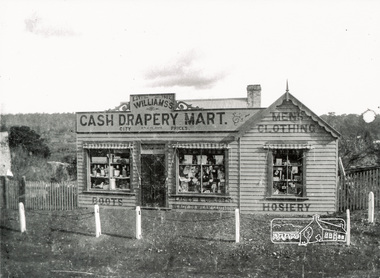
Photograph, Williams's Cash Drapery Mart, Main Road, Eltham, 1906-1907
... home for many years at 106 Thompson Cres Research. Ivy's father, Ernst Richard Reynolds and grandfather, Richard Reynolds, lived at the same address. Ivy's father Richard worked for Mr. Trail on his property in Research. Reynolds Road is named after the family. Mr Tom Prior (wife Eva) worked at the Melbourne zoo. He was very innovative and made his own camera, using the black cloth hood to exclude the light. The photographs are a reminder of the rural nature of Research and Eltham and its rich heritage. reynolds prior collection drapery store williams shops Eltham House ...Situated on the west side of Main Road, near corner of Bridge Street. Note the horse tethering posts out front. Miss Harriet (Minnie) Williams's Cash Drapery Mart (est. 1902 and enlarged in 1906), also known as Eltham House. Harriet (Minnie) Williams was born London, 1857, the daughter of George John Williams (1812-1895) and Jane Mansfield (1812-1895). In September 1885 she was operating Williams’s Drapery Establishment in premises on Main Road owned by R. Wallis who advertised them to let in September 1885. In 1902 she opened Williams’s Cash Drapery Mart at the southwest corner of Bridge Street and Main Road (opposite the Post Office), owned by W.J. Taylor. In 1906 she bought the premises and one quarter acre of land and expanded the business with a re-opening in April 1906. Harriet was also well-known and esteemed as an active worker in Methodist circles and also Superintendent of the Sunday School. Harriet fell ill in August 1907 and died 15 August. She is buried in Eltham Cemetery with her good friend Ada Ford. Evelyn Observer and Bourke East Record (Vic. : 1902 - 1917), Friday 30 March 1906, page 5 ________________________________________ ELTHAM. (FROM OUR OWN CORRESPONDENT.) For over three years Miss Williams has carried on a drapery business in very small and inconvenient premises opposite the Eltham post-office. Recently she bought the building and a quarter-acre of land from Mr. W. J. Taylor. Thus having a free hand, she at once matured plans to enlarge and improve the premises to make them suitable for her growing business. The result being that she consulted Mr Roach, contractor, of Heidelberg, put the matter in his hands, and now he has completed in a very satisfactory manner and up-to-date style extensive improvements. A large addition, of very neat and attractive design, with three large windows, has been built right along the front of the old building, and the counters and inside fittings are very neat and convenient, harmonizing well with the attractive outside appearance. Miss Williams has now got in a large now stock of goods, and is making extensive arrangements for a “reopening week," commencing 2nd April, during which time she will make 10 per cent reduction on all cash purchases in the form of gifts of that value. Miss Williams has gone to considerable expense and liability both, in the enlargement and improvement of the premises and in purchasing additional stock. We therefore trust that the public will stand by her by heartily and en masse patronizing her re-opening effort to show their appreciation of pluck in this advance movement.The Reynolds family were early settlers in Research. The Reynolds/ Prior collection of photographs were taken by Tom Prior, the maternal uncle of Ivy Reynolds, around 1900 and the 60 photos in the album give a fine overview of many of the landmarks of Research and Eltham over 100 years ago. lvy lived in the family home for many years at 106 Thompson Cres Research. Ivy's father, Ernst Richard Reynolds and grandfather, Richard Reynolds, lived at the same address. Ivy's father Richard worked for Mr. Trail on his property in Research. Reynolds Road is named after the family. Mr Tom Prior (wife Eva) worked at the Melbourne zoo. He was very innovative and made his own camera, using the black cloth hood to exclude the light. The photographs are a reminder of the rural nature of Research and Eltham and its rich heritage. Black and white photograph mounted in an album, the Reynolds/Prior Photograph Collection, this being one of 53 reproduced black and white images of early Eltham.The Reynolds/Prior Photograph Collection, Presented to the Eltham District Historical Society, 14 June 2006 by Ross McDonald. A second copy was also presented to the Andrew Ross Museum, Kangaroo Groundreynolds prior collection, drapery store, williams, shops, eltham house, harriet (minnie) williams, williams's cash drapery mart -
 Eltham District Historical Society Inc
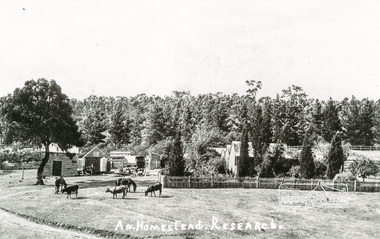
Photograph, Tom Prior, A Homestead, Research
... home for many years at 106 Thompson Cres Research. Ivy's father, Ernst Richard Reynolds and grandfather, Richard Reynolds, lived at the same address. Ivy's father Richard worked for Mr. Trail on his property in Research. Reynolds Road is named after the family. Mr Tom Prior (wife Eva) worked at the Melbourne zoo. He was very innovative and made his own camera, using the black cloth hood to exclude the light. The photographs are a reminder of the rural nature of Research and Eltham and its rich heritage. houses ...Near the aqueduct on Ingrams Road looking northwards.The Reynolds family were early settlers in Research. The Reynolds/ Prior collection of photographs were taken by Tom Prior, the maternal uncle of Ivy Reynolds, around 1900 and the 60 photos in the album give a fine overview of many of the landmarks of Research and Eltham over 100 years ago. lvy lived in the family home for many years at 106 Thompson Cres Research. Ivy's father, Ernst Richard Reynolds and grandfather, Richard Reynolds, lived at the same address. Ivy's father Richard worked for Mr. Trail on his property in Research. Reynolds Road is named after the family. Mr Tom Prior (wife Eva) worked at the Melbourne zoo. He was very innovative and made his own camera, using the black cloth hood to exclude the light. The photographs are a reminder of the rural nature of Research and Eltham and its rich heritage. Black and white photograph mounted in an album, the Reynolds/Prior Photograph Collection, this being one of 53 reproduced black and white images of early Eltham.The Reynolds/Prior Photograph Collection, Presented to the Eltham District Historical Society, 14 June 2006 by Ross McDonald. A second copy was also presented to the Andrew Ross Museum, Kangaroo Groundhouses, ingrams road, research (vic.), reynolds prior collection -
 Bendigo Historical Society Inc.
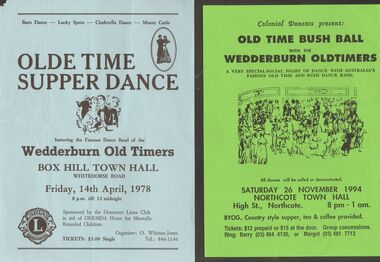
Document - PETER ELLIS COLLECTION: WEDDEBURN OLD TIMERS
... ENTERTAINMENT Dance ball Peter Ellis Collection Wedderburn Old Timers Box Hill Town Hall Doncaster Lions Club ONEMDA Home for Mentally Retarded Children O Whitten-Jones Northcote Town Hall Sir Roger de Coverley Government House NSW The Graphic - February 1880 St Ambrose's Hall Brunswick Talk Song & Dance Society Victoria Inc Seven advertising notices for dances and balls featuring the Wedderburn Old Timers. The light ...Seven advertising notices for dances and balls featuring the Wedderburn Old Timers. The light blue one was held at the Box Hill Town Hall on 14/4/1978 and was sponsored by the Doncaster Lions Club in aid of ONEMDA Home for Mentally Retarded Children and organised by W Whitten-Jones. The bright green on was held at the Northcote Town Hall on 26/11/1994. The two yellow and the white one was held at the Northcote Town Hall on 24/6/1995 and the two darker green ones were for the St Patrick's Eve Old Time-Colonial Ball held at St Ambrose's Hall, Brunswick on 16/3/1996 and was presented by Talk, Song & Dance Society Victoria Inc.entertainment, dance, ball, peter ellis collection, wedderburn old timers, box hill town hall, doncaster lions club, onemda home for mentally retarded children, o whitten-jones, northcote town hall, sir roger de coverley, government house nsw, the graphic - february 1880, st ambrose's hall brunswick, talk song & dance society victoria inc -
 Bendigo Historical Society Inc.
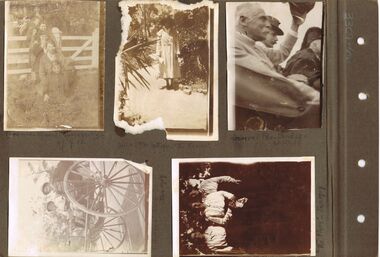
Photograph - HILDA HILL COLLECTION: BLACK AND WHITE PHOTOS, 1918-1919
... Victorian home, verandah with lacework named the Ranch. The house has lacework below the gutter of the front . Medium light...Victorian home, verandah with lacework named the Ranch. The house has lacework below the gutter of the front . Medium light ...Hilda Hill Collection. Black & White Photograph Collection Double Sided Card 10 Individual Photographs, Family Life During World War 1. Five Children enjoying day out at Pyramid Mineral Springs in Kyneton 27/09/1918 white gate in background. Female in white coat standing in a garden, Dec 30th 1918 The Ranch. General Pau Bendigo 21/10/1918. Two Gentlemen in a gig at Bendigo's Botanical Gardens Jan 1919. Three ladies in white blouses and black dresses 'The Pines' Jan 1919. Mistress Alma Northcote 1918. Easter Monday 1918 Lieutenant King in uniform at the 'The Ranch'. Small dog standing on white chair in front of a fern. Two men sitting on ground with football goal post in background, one dressed in white clothing with tennis racket at his side and the other man in slightly darker clothing with a hat at his feet. Victorian home, verandah with lacework named the Ranch. The house has lacework below the gutter of the front . Medium light coloured picket fence. Paved footpath with narrow nature strip. Tree on nature strip enclosed by a medium height picket fence.history, australian, world war 1 family life, https://en.wikipedia.org/wiki/paul_pau -
 Port Melbourne Historical & Preservation Society
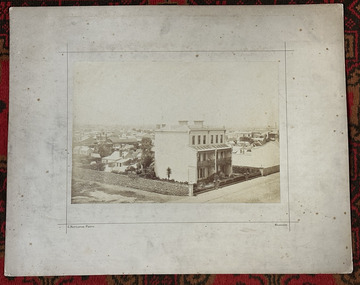
Photograph - Two houses in Rouse Street, Port Melbourne belonging to Thomas SWALLOW and T H ARIELL, Charles Nettleton, c. 1871-73
... house (and partnership) was taken over after his death by Frederick DERHAM. Appears to be photographed from original Swallow home across the street. A building on the left of the photo bears the words "W KENYON / HAPPY HOME HOTEL". William Kenyon was licensee of the Happy Home Hotel in 1871-72 and W Kenyon was listed as the occupier 1872-73. (See Hotels research by Peter Libbis, Cat No 2978). Built Environment - Domestic Thomas Harris ARIELL Frederick Thomas DERHAM Thomas SWALLOW Charles NETTLETON "9" on back in very light ...ARIELL's house (and partnership) was taken over after his death by Frederick DERHAM. Appears to be photographed from original Swallow home across the street. A building on the left of the photo bears the words "W KENYON / HAPPY HOME HOTEL". William Kenyon was licensee of the Happy Home Hotel in 1871-72 and W Kenyon was listed as the occupier 1872-73. (See Hotels research by Peter Libbis, Cat No 2978).Large B&W photo of two houses on the north east corner of Rouse and Stokes Streets belonging to Thomas SWALLOW and T.H. ARIELL c1871-73 in a grey cardboard mount with a border consisting on thin overlapping black lines. "C NETTLETON PHOTO" at bottom left and "MELBOURNE" at bottom right."9" on back in very light pencil.built environment - domestic, thomas harris ariell, frederick thomas derham, thomas swallow, charles nettleton -
 Victorian Interpretive Projects Inc.
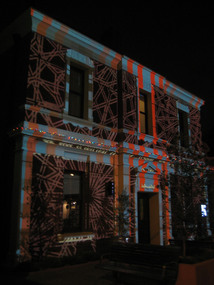
photograph- colour, Clare Gervasoni, Former Kew Court House - Light Show, 24/03/2012
... House is now home to the Kew Historical Society. Kew Court House Lighting A colour photo in digital format, showing a lit building. For the 2012 Kew Community Festival the former Kew Court House was lit with changing coloured lights each night. Former Kew Court House - Light ...The former Kew Court House is now home to the Kew Historical Society.A colour photo in digital format, showing a lit building. For the 2012 Kew Community Festival the former Kew Court House was lit with changing coloured lights each night. kew, court house, lighting, -
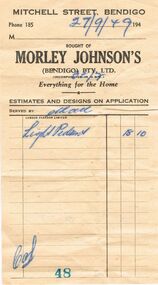 Bendigo Historical Society Inc.
Document - MORLEY JOHNSON'S INVOICE, 27/09/1949
... BUSINESS Retail house furnishings Morley Johnson's Morley Johnson's Invoice: Cream coloured with Mitchell Street, Bendigo Phone 185 27/09/1949. Bought of Morley Johnson's (Bendigo) Pty Ltd. (Incorporated in N.S.W. Everything for the Home. Estimates and Designs on Application. Served By Mall for a light ...William Morley Johnson established a stock and general auctioneers business in Kyneton in 1886 before opening a furniture store in Bendigo in 1897. The initial business operated from Pall Mall opposite the Post Office and then moved to 23 Mitchell Street in 1898. In 1906 the business moved to Sydney. It became a public company in 1952 and ceased business in 1964.Morley Johnson's Invoice: Cream coloured with Mitchell Street, Bendigo Phone 185 27/09/1949. Bought of Morley Johnson's (Bendigo) Pty Ltd. (Incorporated in N.S.W. Everything for the Home. Estimates and Designs on Application. Served By Mall for a light pendant. No 48. Box 625business, retail, house furnishings, morley johnson's -
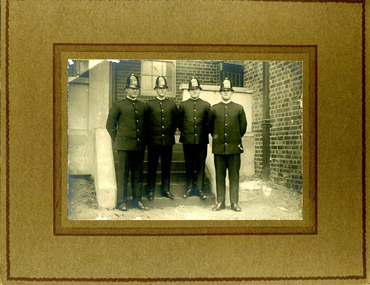 Victoria Police Museum
Photograph (Victoria Police Group Photo), Police Officers group in depot, 1920s
... HOME // P. J. DWYER // Onr. Harding & Salisbury Sts. // COBURG // PHOTOGRAPHS COPIED // AND ENLARGED Black and white photograph mounted on light brown frame. 4 Police Officers in 1920s uniform pose in uniforms with helmets. Standfing in a terrace with an open brick house ...Black and white photograph mounted on light brown frame. 4 Police Officers in 1920s uniform pose in uniforms with helmets. Standfing in a terrace with an open brick house with windows and a set of stairs on the background. On the right is William Arthur Poulter.Handwritten: ON THE RIGHT SIDE // 8060 // W.A. POULTER Stamp: PHOTOGRAPH TAKEN // AT YOUR OWN HOME // P. J. DWYER // Onr. Harding & Salisbury Sts. // COBURG // PHOTOGRAPHS COPIED // AND ENLARGEDpoulter, william, william arthur poulter, victoria police museum, dwyer, p. j., police officers -
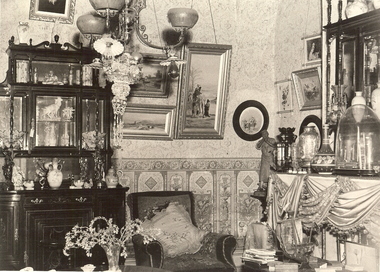 Bendigo Historical Society Inc.
Photograph - LANCEWOOD HOUSE, MCLAREN ST., BENDIGO
... black and white photo; Lancewood House, home of late Ernest Mueller and family, interior of rooim in house, showing cupboards, shelves, chair, pictures on wall. Light...BUILDINGS Fittings & materials lancewood house black and white photo; Lancewood House, home of late Ernest Mueller and family, interior of rooim in house, showing cupboards, shelves, chair, pictures on wall. Light ...black and white photo; Lancewood House, home of late Ernest Mueller and family, interior of rooim in house, showing cupboards, shelves, chair, pictures on wall. Light fitting, many ornaments, wall papered walls. On bottom in pencil, V ( ? ) I 589.4buildings, fittings & materials, lancewood house -
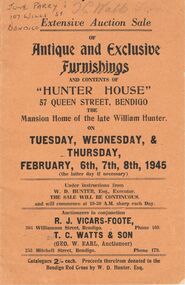 Bendigo Historical Society Inc.
Book - BOOKLET: EXTENSIVE AUCTION SALE OF ANTIQUE AND EXCLUSIVE FURNISHINGS AND CONTENTS OF HUNTER HOUSE
... light brown Booklet - 'Extensive Auction Sale of Antique and Exclusive Furnishings and contents of Hunter House 57 Queen St Bendigo , The mansion Home of the late William Hunter on Tuesday , Wednesday , & Thursday , February , 6th , 7th , 8th , 1945 , Proceeds donated to the Bendigo Red cross / written on first page top left - 'June Parry 107 wills St Bendigo / printed in Bendigo , the Cambridge Press 214 Hargreaves St...BOOKS Catalogues light brown Booklet - 'Extensive Auction Sale of Antique and Exclusive Furnishings and contents of Hunter House 57 Queen St Bendigo , The mansion Home of the late William Hunter on Tuesday , Wednesday , & Thursday , February , 6th , 7th , 8th , 1945 , Proceeds donated to the Bendigo Red cross / written on first page top left - 'June Parry 107 wills St Bendigo / printed in Bendigo , the Cambridge Press 214 Hargreaves St Book BOOKLET: EXTENSIVE AUCTION SALE OF ANTIQUE AND EXCLUSIVE FURNISHINGS AND CONTENTS OF HUNTER HOUSE ...light brown Booklet - 'Extensive Auction Sale of Antique and Exclusive Furnishings and contents of Hunter House 57 Queen St Bendigo , The mansion Home of the late William Hunter on Tuesday , Wednesday , & Thursday , February , 6th , 7th , 8th , 1945 , Proceeds donated to the Bendigo Red cross / written on first page top left - 'June Parry 107 wills St Bendigo / printed in Bendigo , the Cambridge Press 214 Hargreaves Stbooks, catalogues
