
Showing 54 items matching "loading at the wharf"
-
 Bendigo Historical Society Inc.
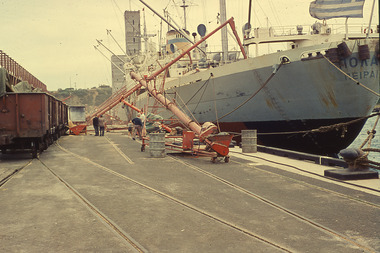
Slide - Mouat Crawford Collection: Farming Life in the Wimmera, c1960s
... ...loading at the wharf...Loading at the wharf. Portland. Used as a teaching aid....wimmera portland loading at the wharf mouat crawford collection PERUTZ Loading at the wharf. ...Loading at the wharf. Portland. Used as a teaching aid.PERUTZwimmera, portland, loading at the wharf, mouat crawford collection -
 Glenelg Shire Council Cultural Collection
Photograph - Photograph - loading grain, n.d
... Black and white photograph, showing loading facilities on wharf from ship....Port of Portland Authority Archives Port of Portland Archives Portland wharf Black and white photograph, showing loading facilities on wharf from ship. Photograph Photograph - loading grain ...Port of Portland Authority Archivesport of portland archives, portland, wharf -
Glenelg Shire Council Cultural Collection
Photograph - Photograph - cargo handling, Loading rice, n.d
... Man in a hand trolley loading rice on a wharf....Port of Portland Archives cargo cargo handling Portland Harbour Front: (no inscriptions) Back: (no inscriptions) Man in a hand trolley loading rice on a wharf. Loading rice Photograph Photograph - cargo handling ...Port of Portland Authority archives.Front: (no inscriptions) Back: (no inscriptions)port of portland archives, cargo, cargo handling, portland harbour -
Glenelg Shire Council Cultural Collection
Photograph - Photograph - Test loading piles on wharf, n.d
... Black and white photo showing test loading on piles on wharf...Port of Portland Authority Archives Port of Portland Archives Black and white photo showing test loading on piles on wharf Photograph Photograph - Test loading piles on wharf ...Port of Portland Authority Archivesport of portland archives -
Glenelg Shire Council Cultural Collection
Photograph - Photograph - Test loading piles on Wharf, n.d
... Black and white photo showing test loading on piles on wharf....Port of Portland Authority Archives Black and white photo showing test loading on piles on wharf. Photograph Photograph - Test loading piles on Wharf ...Port of Portland Authority Archives -
 Lakes Entrance Historical Society
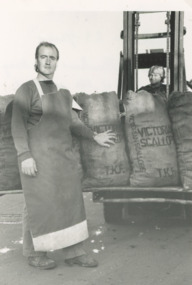
Photograph - Scallop wharf Lakes Entrance Victoria 1993, Lakes Post Newspaper
... Malcolm Hawkins and Wayne Darcy loading bags of scallops at scallop wharf Lakes Entrance Victoria...Black and white photograph showing Malcolm Hawkins and Wayne Darcy loading bags of scallops at scallop wharf Lakes Entrance Victoria...Malcolm Hawkins and Wayne Darcy loading bags of scallops at scallop wharf Lakes Entrance Victoria Fishing Industry Businesses Black and white photograph showing Malcolm Hawkins and Wayne Darcy loading bags of scallops at scallop wharf Lakes Entrance Victoria Photograph Scallop wharf Lakes Entrance Victoria 1993 Lakes Post Newspaper ...Malcolm Hawkins and Wayne Darcy loading bags of scallops at scallop wharf Lakes Entrance VictoriaBlack and white photograph showing Malcolm Hawkins and Wayne Darcy loading bags of scallops at scallop wharf Lakes Entrance Victoriafishing industry, businesses -
Glenelg Shire Council Cultural Collection
Photograph, Grain loading at K.S. Anderson wharf, 1960s
... View of grain loading at K.S. Anderson wharf. Unframed....View of grain loading at K.S. Anderson wharf. Unframed. Grain loading at K.S. ...Port of Portland Authority archives.Front: (no inscriptions) Back: (no inscriptions) -
 Port Fairy Historical Society Museum and Archives
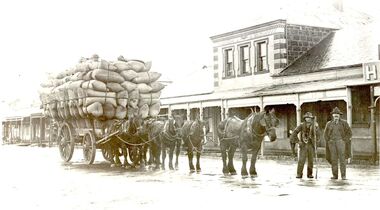
Photograph
... black and white photograph of a wagon load of wool being transported to wharf...This photograph was taken in Sackville Street in front of Cheapside Warehouse transport rail road Alec Watson Grasslands Shipping Sackville Street Jim Bragg property wagon horses cargo wool wool bales Cheapside warehouse black and white photograph of a wagon load of wool being transported to wharf Photograph Photograph ...Jim Bragg and Alec Watson carting wool probably from Alec Watson's property "Grasslands" to the port for shipping. This photograph was taken in Sackville Street in front of Cheapside Warehouseblack and white photograph of a wagon load of wool being transported to wharftransport, rail, road, alec watson, grasslands, shipping, sackville street, jim bragg, property, wagon, horses, cargo, wool, wool bales, cheapside warehouse -
Glenelg Shire Council Cultural Collection
Photograph - Photograph - Loading 'Grecian Isles' at K.S. Anderson wharf, c. 1960
... Loading 'Grecian Isles' at K.S. Anderson wharf. Unframed and laminated on rear....Loading 'Grecian Isles' at K.S. Anderson wharf. Unframed and laminated on rear. ...Port of Portland Authority archives.Front: (no inscriptions) Back: Bulk grain ship ready for loadingport of portland archives, portland harbour, ship berthed -
Glenelg Shire Council Cultural Collection
Photograph - Photograph - Loading wool from K. S. Anderson Wharf onto ship 'Patonga', 1960s
... Black and white photograph mounted on cardboard. Loading wool from K. S. Anderson Wharf onto ship 'Patonga'. ...Loading wool from K. S. Anderson Wharf onto ship 'Patonga'. ...Port of Portland Authority archives.Front: (no inscriptions) Back: (no inscriptions)port of portland archives, loading wool, k s anderson wharf, patonga -
 Port Fairy Historical Society Museum and Archives
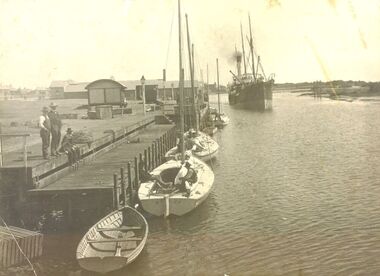
Photograph
... DAWN) would ever be able to get up the river and reap the cost savings of loading against a wharf. It was not unusual for four steamers to be anchored in the bay at once and for seven or eight different steamers to call during a week. ...DAWN) would ever be able to get up the river and reap the cost savings of loading against a wharf. It was not unusual for four steamers to be anchored in the bay at once and for seven or eight different steamers to call during a week. ...The steamer S.S.CASINO was much loved by the whole Port Fairy community- with the possible exception of some of the fishermen whose boats she ran down! Transport of the large quantities of wool, potatoes, onions, grain, sheep, cattle and other produce grown on the rich lands of the Western District Belfast was served by a plethora of shipping, both sail and steam, but only one of the steamers then in the regular trade (S.S. DAWN) would ever be able to get up the river and reap the cost savings of loading against a wharf. It was not unusual for four steamers to be anchored in the bay at once and for seven or eight different steamers to call during a week. A number of inter-colonial steamers also called to pick up produce for delivery to Melbourne, Sydney and Adelaide. Production in the Western District was increasing and virtually all of that production had to go through one of the western ports in order to reach markets. By 1882 a meeting 15ft. March, 1882, in the office of auctioneer, J.B. HoIden in Cox Street took action and it was unanimously resolved - that the Belfast & Koroit Steamship Company be formed with a capital of £20,000 in 10,000 shares of £2 each". A number of steamers were offered by letter to the fledgling company, including the new and almost sister ships, CASINO and HELEN NICHOLL. The CASINO was on her delivery voyage from England was due to arrive in Warrnambool to load potatoes for Sydney and, initially, arrangements were made for her to call into Port Fairy for inspection by the BKNS Co directors. She eventually proceeded direct to Warrnambool and the Directors inspected her there. Without hesitation they purchased her even though they had to raise a large bank loan to do so. The CASINO arrived in Port Fairy on Saturday, 29th. July, 1882, steaming triumphantly up the Moyne River, and was greeted by crowds, many of whom had driven in from the surrounding countryside, which gave her “loud ringing English cheers". By 1884 the CASINO could not carry all the cargoes available to her and in December of that year the company purchased the new steamer BELLINGER to provide additional capacity. She helped to open up the intermediate ports of Lorne, Apollo Bay and Port Campbell, but the BELLINGER was not really suitable for the trade and she was sold in 1887, leaving the CASINO to operate alone -as she was to do for almost all of the next 45 years. The opening of the railway in 1890 decreased the cargo available to the steamers and the economic depression of the early 1890's worsened the situation. The weak soon began to fall by the wayside and when the Portland & Belfast SN Co. decided to go into liquidation in April 1895, the Belfast & Koroit Company bought the Portland Company's steamer DAWN on advantageous terms, a substantial part of the payment being in BKSN Co shares. The BKNS Co and the Howard Smith Line came into direct head to head competition and nearly forced the BKNS Co out of existence. Cargo dropped to such an extent that in 1899, they reached agreement that only one ship would run and that the ship which ran would pay a weekly amount to the competitor to stay out of the trade. This controlled service ceased in1909, and competition intensified when Howard Smith placed the newly built, larger steamer EUMERALLA on the run. The BKNS Co survived this competition and even prospered during it partly by extending on a more regular basis, the CASINO'S voyages to South Australian ports Port Macdonnell, Kingston, Beachport, Robe and, on occasions Adelaide. There were setbacks when, on 20 October 1924, CASINO went ashore at the Kennett River, near Apollo Bay, and again, in February l929, when she struck a submerged object at Warrnambool and had to be beached. The railways placed great competitive pressure on the small steamship company and this pressure was intensified when the Great Depression slashed the market for Western District produce, BKNS Co struggled on, paying dividends in most years, and the company planned a big celebration for the CASINO'S fiftieth anniversary in the trade on 29th July, 1932. Disaster struck soon after 9 o'clock on the morning of Sunday I0 July, 1932 when the CASINO was lost at Apollo Bay together with the lives of 10 crew members. Black and white photograph of s.s.Casino steaming down to berth at her wharf on the left fishing boats in foregroundship, boat, industry, belfast and koroit steam navigation company, moyne river, river, s.s.casino, wharf -
 Port Fairy Historical Society Museum and Archives
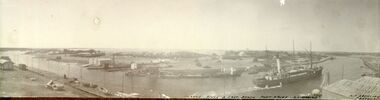
Photograph - Panoramic Photograph, A.C. Aberline, Moyne River East Beach Port Fairy. SS Casino
... DAWN) would ever be able to get up the river and reap the cost savings of loading against a wharf. It was not unusual for four steamers to be anchored in the bay at once and for seven or eight different steamers to call during a week. ...DAWN) would ever be able to get up the river and reap the cost savings of loading against a wharf. It was not unusual for four steamers to be anchored in the bay at once and for seven or eight different steamers to call during a week. ...The steamer S.S.CASINO was much loved by the whole Port Fairy community- with the possible exception of some of the fishermen whose boats she ran down! Transport of the large quantities of wool, potatoes, onions, grain, sheep, cattle and other produce grown on the rich lands of the Western District Belfast was served by a plethora of shipping, both sail and steam, but only one of the steamers then in the regular trade (S.S. DAWN) would ever be able to get up the river and reap the cost savings of loading against a wharf. It was not unusual for four steamers to be anchored in the bay at once and for seven or eight different steamers to call during a week. A number of inter-colonial steamers also called to pick up produce for delivery to Melbourne, Sydney and Adelaide. Production in the Western District was increasing and virtually all of that production had to go through one of the western ports in order to reach markets. By 1882 a meeting 15ft. March, 1882, in the office of auctioneer, J.B. HoIden in Cox Street took action and it was unanimously resolved - that the Belfast & Koroit Steamship Company be formed with a capital of £20,000 in 10,000 shares of £2 each". A number of steamers were offered by letter to the fledgling company, including the new and almost sister ships, CASINO and HELEN NICHOLL. The CASINO was on her delivery voyage from England was due to arrive in Warrnambool to load potatoes for Sydney and, initially, arrangements were made for her to call into Port Fairy for inspection by the BKNS Co directors. She eventually proceeded direct to Warrnambool and the Directors inspected her there. Without hesitation they purchased her even though they had to raise a large bank loan to do so. The CASINO arrived in Port Fairy on Saturday, 29th. July, 1882, steaming triumphantly up the Moyne River, and was greeted by crowds, many of whom had driven in from the surrounding countryside, which gave her “loud ringing English cheers". By 1884 the CASINO could not carry all the cargoes available to her and in December of that year the company purchased the new steamer BELLINGER to provide additional capacity. She helped to open up the intermediate ports of Lorne, Apollo Bay and Port Campbell, but the BELLINGER was not really suitable for the trade and she was sold in 1887, leaving the CASINO to operate alone -as she was to do for almost all of the next 45 years. The opening of the railway in 1890 decreased the cargo available to the steamers and the economic depression of the early 1890's worsened the situation. The weak soon began to fall by the wayside and when the Portland & Belfast SN Co. decided to go into liquidation in April 1895, the Belfast & Koroit Company bought the Portland Company's steamer DAWN on advantageous terms, a substantial part of the payment being in BKSN Co shares. The BKNS Co and the Howard Smith Line came into direct head to head competition and nearly forced the BKNS Co out of existence. Cargo dropped to such an extent that in 1899, they reached agreement that only one ship would run and that the ship which ran would pay a weekly amount to the competitor to stay out of the trade. This controlled service ceased in1909, and competition intensified when Howard Smith placed the newly built, larger steamer EUMERALLA on the run. The BKNS Co survived this competition and even prospered during it partly by extending on a more regular basis, the CASINO'S voyages to South Australian ports Port Macdonnell, Kingston, Beachport, Robe and, on occasions Adelaide. There were setbacks when, on 20 October 1924, CASINO went ashore at the Kennett River, near Apollo Bay, and again, in February l929, when she struck a submerged object at Warrnambool and had to be beached. The railways placed great competitive pressure on the small steamship company and this pressure was intensified when the Great Depression slashed the market for Western District produce, BKNS Co struggled on, paying dividends in most years, and the company planned a big celebration for the CASINO'S fiftieth anniversary in the trade on 29th July, 1932. Disaster struck soon after 9 o'clock on the morning of Sunday I0 July, 1932 when the CASINO was lost at Apollo Bay together with the lives of 10 crew members. black and white panaramic photograph mounted on cardboardMoyne River & East Beach Port Fairy- s.s.Casino-A.C.Aberline-Canterburyship, boat, sea, river, training walls, wharf, moyne river, s.s.casino, steamer -
 Port Fairy Historical Society Museum and Archives
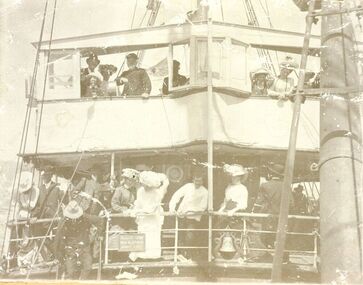
Photograph
... DAWN) would ever be able to get up the river and reap the cost savings of loading against a wharf. It was not unusual for four steamers to be anchored in the bay at once and for seven or eight different steamers to call during a week. ...DAWN) would ever be able to get up the river and reap the cost savings of loading against a wharf. It was not unusual for four steamers to be anchored in the bay at once and for seven or eight different steamers to call during a week. ...S.s.Casino 1910. The people on the decks are tourists coming from Terang and surrounding areas to spend the day at the seaside. The steamer S.S.CASINO was much loved by the whole Port Fairy community- with the possible exception of some of the fishermen whose boats she ran down! Transport of the large quantities of wool, potatoes, onions, grain, sheep, cattle and other produce grown on the rich lands of the Western District Belfast was served by a plethora of shipping, both sail and steam, but only one of the steamers then in the regular trade (S.S. DAWN) would ever be able to get up the river and reap the cost savings of loading against a wharf. It was not unusual for four steamers to be anchored in the bay at once and for seven or eight different steamers to call during a week. A number of inter-colonial steamers also called to pick up produce for delivery to Melbourne, Sydney and Adelaide. Production in the Western District was increasing and virtually all of that production had to go through one of the western ports in order to reach markets. By 1882 a meeting 15ft. March, 1882, in the office of auctioneer, J.B. HoIden in Cox Street took action and it was unanimously resolved - that the Belfast & Koroit Steamship Company be formed with a capital of £20,000 in 10,000 shares of £2 each". A number of steamers were offered by letter to the fledgling company, including the new and almost sister ships, CASINO and HELEN NICHOLL. The CASINO was on her delivery voyage from England was due to arrive in Warrnambool to load potatoes for Sydney and, initially, arrangements were made for her to call into Port Fairy for inspection by the BKNS Co directors. She eventually proceeded direct to Warrnambool and the Directors inspected her there. Without hesitation they purchased her even though they had to raise a large bank loan to do so. The CASINO arrived in Port Fairy on Saturday, 29th. July, 1882, steaming triumphantly up the Moyne River, and was greeted by crowds, many of whom had driven in from the surrounding countryside, which gave her “loud ringing English cheers". By 1884 the CASINO could not carry all the cargoes available to her and in December of that year the company purchased the new steamer BELLINGER to provide additional capacity. She helped to open up the intermediate ports of Lorne, Apollo Bay and Port Campbell, but the BELLINGER was not really suitable for the trade and she was sold in 1887, leaving the CASINO to operate alone -as she was to do for almost all of the next 45 years. The opening of the railway in 1890 decreased the cargo available to the steamers and the economic depression of the early 1890's worsened the situation. The weak soon began to fall by the wayside and when the Portland & Belfast SN Co. decided to go into liquidation in April 1895, the Belfast & Koroit Company bought the Portland Company's steamer DAWN on advantageous terms, a substantial part of the payment being in BKSN Co shares. The BKNS Co and the Howard Smith Line came into direct head to head competition and nearly forced the BKNS Co out of existence. Cargo dropped to such an extent that in 1899, they reached agreement that only one ship would run and that the ship which ran would pay a weekly amount to the competitor to stay out of the trade. This controlled service ceased in1909, and competition intensified when Howard Smith placed the newly built, larger steamer EUMERALLA on the run. The BKNS Co survived this competition and even prospered during it partly by extending on a more regular basis, the CASINO'S voyages to South Australian ports Port Macdonnell, Kingston, Beachport, Robe and, on occasions Adelaide. There were setbacks when, on 20 October 1924, CASINO went ashore at the Kennett River, near Apollo Bay, and again, in February l929, when she struck a submerged object at Warrnambool and had to be beached. The railways placed great competitive pressure on the small steamship company and this pressure was intensified when the Great Depression slashed the market for Western District produce, BKNS Co struggled on, paying dividends in most years, and the company planned a big celebration for the CASINO'S fiftieth anniversary in the trade on 29th July, 1932. Disaster struck soon after 9 o'clock on the morning of Sunday I0 July, 1932 when the CASINO was lost at Apollo Bay together with the lives of 10 crew members. Black and white photograph of tourists crowded on the decks of s.s.Casino during a sail around the bay for Terang dayship, boat, sea, river, s.s.casino 1910, transport, 1910, wool, onions, grain, sheep, cattle, steam, terang day -
 Port Fairy Historical Society Museum and Archives
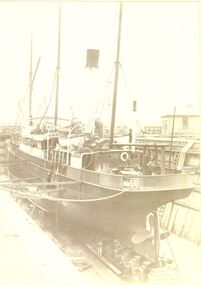
Photograph, s.s.Casino
... DAWN) would ever be able to get up the river and reap the cost savings of loading against a wharf. It was not unusual for four steamers to be anchored in the bay at once and for seven or eight different steamers to call during a week. ...DAWN) would ever be able to get up the river and reap the cost savings of loading against a wharf. It was not unusual for four steamers to be anchored in the bay at once and for seven or eight different steamers to call during a week. ...This photograph show the ship in dry dock (possibly Melbourne) for maintenance. The steamer S.S.CASINO was much loved by the whole Port Fairy community- with the possible exception of some of the fishermen whose boats she ran down! Transport of the large quantities of wool, potatoes, onions, grain, sheep, cattle and other produce grown on the rich lands of the Western District Belfast was served by a plethora of shipping, both sail and steam, but only one of the steamers then in the regular trade (S.S. DAWN) would ever be able to get up the river and reap the cost savings of loading against a wharf. It was not unusual for four steamers to be anchored in the bay at once and for seven or eight different steamers to call during a week. A number of inter-colonial steamers also called to pick up produce for delivery to Melbourne, Sydney and Adelaide. Production in the Western District was increasing and virtually all of that production had to go through one of the western ports in order to reach markets. By 1882 a meeting 15ft. March, 1882, in the office of auctioneer, J.B. HoIden in Cox Street took action and it was unanimously resolved - that the Belfast & Koroit Steamship Company be formed with a capital of £20,000 in 10,000 shares of £2 each". A number of steamers were offered by letter to the fledgling company, including the new and almost sister ships, CASINO and HELEN NICHOLL. The CASINO was on her delivery voyage from England was due to arrive in Warrnambool to load potatoes for Sydney and, initially, arrangements were made for her to call into Port Fairy for inspection by the BKNS Co directors. She eventually proceeded direct to Warrnambool and the Directors inspected her there. Without hesitation they purchased her even though they had to raise a large bank loan to do so. The CASINO arrived in Port Fairy on Saturday, 29th. July, 1882, steaming triumphantly up the Moyne River, and was greeted by crowds, many of whom had driven in from the surrounding countryside, which gave her “loud ringing English cheers". By 1884 the CASINO could not carry all the cargoes available to her and in December of that year the company purchased the new steamer BELLINGER to provide additional capacity. She helped to open up the intermediate ports of Lorne, Apollo Bay and Port Campbell, but the BELLINGER was not really suitable for the trade and she was sold in 1887, leaving the CASINO to operate alone -as she was to do for almost all of the next 45 years. The opening of the railway in 1890 decreased the cargo available to the steamers and the economic depression of the early 1890's worsened the situation. The weak soon began to fall by the wayside and when the Portland & Belfast SN Co. decided to go into liquidation in April 1895, the Belfast & Koroit Company bought the Portland Company's steamer DAWN on advantageous terms, a substantial part of the payment being in BKSN Co shares. The BKNS Co and the Howard Smith Line came into direct head to head competition and nearly forced the BKNS Co out of existence. Cargo dropped to such an extent that in 1899, they reached agreement that only one ship would run and that the ship which ran would pay a weekly amount to the competitor to stay out of the trade. This controlled service ceased in1909, and competition intensified when Howard Smith placed the newly built, larger steamer EUMERALLA on the run. The BKNS Co survived this competition and even prospered during it partly by extending on a more regular basis, the CASINO'S voyages to South Australian ports Port Macdonnell, Kingston, Beachport, Robe and, on occasions Adelaide. There were setbacks when, on 20 October 1924, CASINO went ashore at the Kennett River, near Apollo Bay, and again, in February l929, when she struck a submerged object at Warrnambool and had to be beached. The railways placed great competitive pressure on the small steamship company and this pressure was intensified when the Great Depression slashed the market for Western District produce, BKNS Co struggled on, paying dividends in most years, and the company planned a big celebration for the CASINO'S fiftieth anniversary in the trade on 29th July, 1932. Disaster struck soon after 9 o'clock on the morning of Sunday I0 July, 1932 when the CASINO was lost at Apollo Bay together with the lives of 10 crew members. Black and white photograph of ship in dry dockship, boat, sea, river, industry, belfast and koroit steam navigation company -
 Mission to Seafarers Victoria
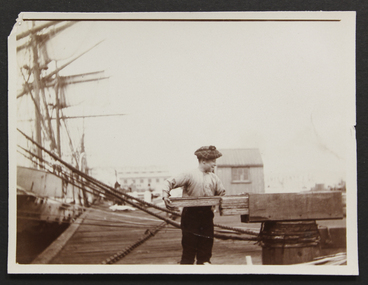
Photograph - Photograph, Sepia, Mr and Mrs Gurney Goldsmith, Landing lumber on the South Side of the Yarra - Apprentice measuring wood, 1906
... Dockside photograph of young man loading/measuring wood apprentice wood lumber timber wharf yarra river Written in pencil on verso "12" Small monochrome photograph depicting an apprentice on the wharf holding planks of wood Landing lumber on the South Side of the Yarra - Apprentice measuring wood Photograph Photograph, Sepia Mr and Mrs Gurney Goldsmith ...Dockside photograph of young man loading/measuring wood Small monochrome photograph depicting an apprentice on the wharf holding planks of woodWritten in pencil on verso "12"apprentice, wood, lumber, timber, wharf, yarra river -
 Flagstaff Hill Maritime Museum and Village
Photograph - Vessels, Sailing Ships, Circa 1910 - 1913
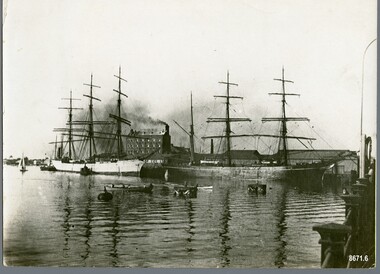
... On February 25th 1916, the two ships (the "Ainsdale" and "Lobo") were both in the Port of Adelaide at the same time, but the "Ainsdale" was loading at Outer Harbor and the "Lobo" was discharging timber at Corporation Wharf. ...On February 25th 1916, the two ships (the "Ainsdale" and "Lobo") were both in the Port of Adelaide at the same time, but the "Ainsdale" was loading at Outer Harbor and the "Lobo" was discharging timber at Corporation Wharf. ...This photograph was one of ten photographs donated to Flagstaff Hill Maritime Museum and Village by Fred Trewartha. Frederick John Fox Trewartha (Fred) was a well-known Warrnambool businessman. He was born in Beeac near Geelong in 1920 and came to Warrnambool with his family as a very young child. He was apprenticed to his father John, as a saddler and later opened his own shop on Raglan Parade. He then moved into working with tarpaulins and canvases for the trucking industry. Fred was keenly interested in photography (and was a member of the Warrnambool Cine Club), yachting and boat building. He kept his yacht moored at Port Fairy for many years and participated in sailing events locally and interstate. He also built boats with his sons. He had the opportunity to meet many older sailors and it's thought this photo (and others in the set) may have been given to him by one of these men. Fred Trewartha died in 2016 in Warrnambool. There is some conflict re the identity of the ship in the foreground of this photograph. It has been identified as the "Dimsdale" by the original owner of this photograph and by the website "Photos of the Past" which have an identical copy of the photo, however the State Library of South Australia (who also have an identical copy of the photograph) have identified the date of the photograph as 1910 and the ship as the "Ainsdale". The "Dimsdale" and the "Lobo" were recorded several times in the local shipping news as being docked at the Port of Adelaide, at the same time, during the years 1912 and 1913, whereas the "Ainsdale" wasn't in Adelaide very often but was recorded as coming in and out of the Port of Adelaide in the years 1915 and 1916. On February 25th 1916, the two ships (the "Ainsdale" and "Lobo") were both in the Port of Adelaide at the same time, but the "Ainsdale" was loading at Outer Harbor and the "Lobo" was discharging timber at Corporation Wharf. The "Ainsdale" was owned by the same firm that had owned the "Dimsdale". The Dimsdale was a three masted steel ship built in 1890 by C. J. Bigger of Londonderry. It became notorious when it struck the Wonga Shoal lighthouse near Port Adelaide on the night of 17th November 1912, destroying the structure and killing two lighthouse keepers. The accident was investigated by the Marine Board, the Coroner, the Police Court, the Admiralty Court and by the Criminal Courts of South Australia where the Captain (John Jones) was charged with manslaughter and found "not guilty". The Dimsdale was sold to a Norwegian firm and its name was changed to "Kwango". It sank in 1915 near the Magdalen Islands in the Gulf of St. Lawrence. The "Lobo" was a well known "windjammer" trading from the Port of Adelaide to other parts of the world. For a number of years it was employed in the New Zealand and Tasmanian services, after which it made several voyages to North America. It was an iron barque of 945 tons, built at Sunderland in 1877 by Osbourne, Graham and Company. On October 18th 1916, the Lobo (owned by Walter and Morris, timber merchants) was on a voyage from Parapato (Mozambique) to New York with a cargo of mango bark and ebony, when it struck rocks and ran aground 30 miles east of the Angoche River in Portuguese East Africa. A detailed account of the incident, written by Mrs Murchison (the Captains wife who was on board with her two year old son) was published in the Adelaide newspaper "The Mail" on Saturday 9th December 1916. She, and several of the crew were put in a boat early in the morning and sent away from the wreck. Several hours later, they were joined by Captain Murchison and the remainder of the crew. They were in their small open boats for several hours before landing on a small uninhabited island where they remained for several days before being picked up by another vessel and taken back to Parapato. The captain was able to obtain a position on a steamer which took him and his wife and child back to England.This photograph is significant as a record of the world wide mercantile trade Australia was engaged in at the end of the nineteenth century and beginning of the twentieth century and as a record of the dangers faced by the crews of these ships.A black and white photograph showing two large sailing ships moored at a dock. There are industrial buildings in the background (one has smoke coming from its chimney) and several smaller craft (a rowing boat, two small boats that may be tugs and a little yacht) at the side of the ships. Pylons can be seen in the water and a metal fence is in the bottom right corner. On the back of the photo the words "Ship Dimsdale" and "Bk Lobo" are written diagonally across the top left corner in pencil. A beige paper label has been attached to the top right corner with the words "Dimsdale at Port Adelaide" and "Port Adelaide Historical Society may be interested" written in black ballpoint pen."Ship Dimsdale" / "Bk Lobo" ""Dimsdale" / at Port Adelaide" "- Port Adelaide Historical /Society may be / interested"warrnambool, dimsdale, lobo, barque lobo, port of adelaide, kwango, wonga shoal lighthouse, fred trewartha, ainsdale, frederick john fox trewartha, captain john jones, windjammer, iron barque, parapato -
 Glenelg Shire Council Cultural Collection
Photograph - Photograph - Loading Golden Castle bagged rice, 1876
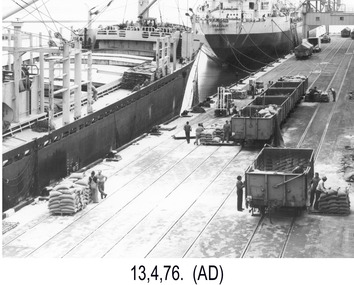
... wharf. Some of the trucks have filled sacks in them. Over a dozen men are standing near the trucks or unloading the sacks. Two large ships are berthed, one of them (in background) with the name "GRAIGAUR, CARDIFF". Photograph Photograph - Loading ...Port of Portland Authority archives.Front: (no inscriptions) Back: (no inscriptions)port of portland archives -
 Glenelg Shire Council Cultural Collection
Photograph - Photograph - Loading Golden Castle bagged rice, 1976
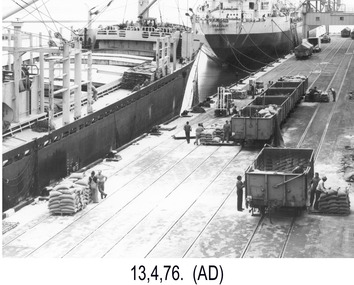
... wharf. Some of the trucks have filled sacks in them. Over a dozen men are standing near the trucks or unloading the sacks. Two large ships are berthed, one of them (in background) with the name "GRAIGAUR, CARDIFF". Photograph Photograph - Loading ...Port of Portland Authority archives.Front: (no inscriptions) Back: GOLDEN CASTLE BAGGED RICE 13-4-76 (centre, pencil)port of portland archives -
 Glenelg Shire Council Cultural Collection
Photograph - Photograph - Loading bagged goods, n.d
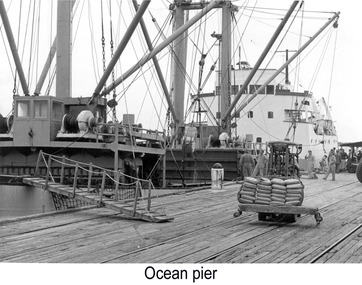
... A ship is berthed at the wharf (on left) and several men are working in background (mid-right) with a forklift and possibly a large truck. Photograph Photograph - Loading ...Port of Portland Authority archives.Front: (no inscriptions) Back: 4 40 cms W_ 1335 cm (?) (centre right, pencil)port of portland archives -
Glenelg Shire Council Cultural Collection
Film - Film - Henty Groyne Fishermans B/W, n.d
... Front: Colour Tape 2 Iron Barron loading/unloading cargo at KS Anderson wharf (black pen and white sticky tape, top of reel) B & W - Henty Groyne Fishermans B/W Tape 2 (black pen and white sticky tape, top of reel)...Port of Portland Authority Port of Portland Archives Front: Colour Tape 2 Iron Barron loading/unloading cargo at KS Anderson wharf (black pen and white sticky tape, top of reel) B & W - Henty Groyne Fishermans B/W Tape 2 (black pen and white sticky tape, top of reel) Unedited black & white film. ...Port of Portland AuthorityFront: Colour Tape 2 Iron Barron loading/unloading cargo at KS Anderson wharf (black pen and white sticky tape, top of reel) B & W - Henty Groyne Fishermans B/W Tape 2 (black pen and white sticky tape, top of reel)port of portland archives -
Glenelg Shire Council Cultural Collection
Film - Film - Iron Barron loading/unloading cargo at KS Anderson wharf, n.d
... Front: Colour Tape 2 Iron Barron loading/unloading cargo at KS Anderson wharf (black pen and white sticky tape, top of reel) B & W - Henty Groyne Fishermans B/W Tape 2 (black pen and white sticky tape, top of reel)...Film Film - Iron Barron loading/unloading cargo at KS Anderson wharf ...Port of Portland AuthorityFront: Colour Tape 2 Iron Barron loading/unloading cargo at KS Anderson wharf (black pen and white sticky tape, top of reel) B & W - Henty Groyne Fishermans B/W Tape 2 (black pen and white sticky tape, top of reel)port of portland archives -
Glenelg Shire Council Cultural Collection
Photograph - Photograph - Ship Berthed, n.d
... On wharf is a pallet of sacks being carried by a forklift. Background are men and loading machinery....On wharf is a pallet of sacks being carried by a forklift. Background are men and loading machinery. ...Port of Portland Authority archives.Front: (no inscriptions) Back: (no inscriptions)port of portland archives -
 Glenelg Shire Council Cultural Collection
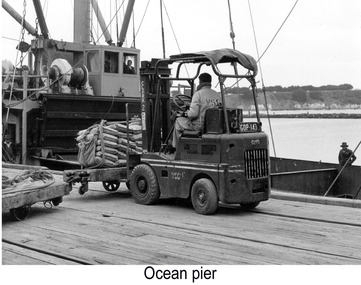
Photograph - Photograph - Loading cargo with forklift, n.d
... Port of Portland Archives Front: (no inscriptions) Back: (no inscriptions) Man in a forklift on a wharf. Photograph Photograph - Loading cargo with forklift ...Port of Portland Authority archives.Front: (no inscriptions) Back: (no inscriptions)port of portland archives -
Glenelg Shire Council Cultural Collection
Photograph - Photograph - Portland Harbour Construction, n.d
... Osgood crane loading Euclid truck, on left. On right, dredging harbour. Wharf in background...Osgood crane loading Euclid truck, on left. On right, dredging harbour. Wharf in background Photograph Photograph - Portland Harbour Construction ...Port of Portland Authority ArchivesBack: PG 3 /11/11-62 -biroport of portland archives -
Glenelg Shire Council Cultural Collection
Photograph - Photograph - Bulk grain carrier berthed at K.S. Anderson Wharf, Portland, c. 1960
... Port of Portland Archives Portland Harbour Ship Berthed Front: (no inscriptions) Back: Bulk grain ship ready for loading Black and white photograph. View of Bulk grain carrier berthed at K.S. Anderson Wharf, Portland. ...Port of Portland Authority archives.Front: (no inscriptions) Back: Bulk grain ship ready for loadingport of portland archives, portland harbour, ship berthed -
Glenelg Shire Council Cultural Collection
Photograph - Photograph - Harbour Construction, n.d
... Black and white photo of a crane loading rubble onto a tip truck. Another truck is waiting on the right. Large sheds on wharf in background...Port of Portland Authority Archives Port of Portland Archives Portland Harbour Back: Pencil border - 8mm wide '(16) ' pencil ruled around edges. '28 1/2 ems wide' - in pencil.' 60%' - in pencil Black and white photo of a crane loading rubble onto a tip truck. Another truck is waiting on the right. Large sheds on wharf in background Photograph Photograph - Harbour Construction ...Port of Portland Authority ArchivesBack: Pencil border - 8mm wide '(16) ' pencil ruled around edges. '28 1/2 ems wide' - in pencil.' 60%' - in pencilport of portland archives, portland harbour -
Glenelg Shire Council Cultural Collection
Photograph - Photograph - Dredging Trawler Wharf, n.d
... Black and white photo showing a dredge at work on the Trawler Wharf. It is about to place a load on a truck. Fishermen's Breakwater in background...Port of Portland Authority Archives Port of Portland Archives Trawler Wharf Black and white photo showing a dredge at work on the Trawler Wharf. It is about to place a load on a truck. Fishermen's Breakwater in background Photograph Photograph - Dredging Trawler Wharf ...Port of Portland Authority Archivesport of portland archives, trawler wharf -
Glenelg Shire Council Cultural Collection
Photograph - Photograph - Wharf Construction, n.d
... Port of Portland Authority Archives Black and white photo of crane loading rocks onto a euclid Photograph Photograph - Wharf Construction ...Port of Portland Authority Archives -
Glenelg Shire Council Cultural Collection
Photograph - Photograph - Loading Wool, n.d
... wharf, silos in background. Forklift and pallets of wool bales in foreground. Four bales being loaded onto ship with crane Photograph Photograph - Loading Wool ...Port of Portland Authority Archivesport of portland archives -
 Glenelg Shire Council Cultural Collection
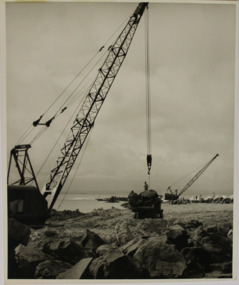
Photograph - Photograph - Portland Harbour Construction, n.d
... KS Anderson Wharf. Crane on left foreground loading / unloading large rocks from truck. ...KS Anderson Wharf. Crane on left foreground loading / unloading large rocks from truck. ...Con Kroker Private CollectionBlack & white photo showing early construction work on ? KS Anderson Wharf. Crane on left foreground loading / unloading large rocks from truck. Man standing on truck. Another crane left, putting rocks into sea. Several people watching.
