
Showing 17 items matching "locomotive hotel"
-
 Port Melbourne Historical & Preservation Society
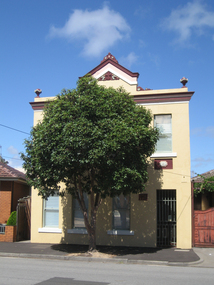
Photograph - former Locomotive Hotel, Port Melbourne, David Thompson, c2006
... former Locomotive Hotel, Port Melbourne......Locomotive Hotel...Digital colour photograph of the former Locomotive Hotel at 176 Princes Street....Business and Traders - Hotels Built Environment - Commercial Built Environment - Domestic Locomotive Hotel Princes Street Yacht Club Hotel Digital colour photograph of the former Locomotive Hotel at 176 Princes Street. ...Digital colour photograph of the former Locomotive Hotel at 176 Princes Street.business and traders - hotels, built environment - commercial, built environment - domestic, locomotive hotel, princes street, yacht club hotel -
 Port Melbourne Historical & Preservation Society
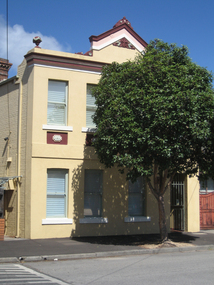
Photograph - former Locomotive Hotel, Port Melbourne, David Thompson, c2006
... former Locomotive Hotel, Port Melbourne......Locomotive Hotel...Digital colour photograph of the former Locomotive Hotel at 176 Princes Street....Business and Traders - Hotels Built Environment - Commercial Built Environment - Domestic Locomotive Hotel Princes Street Yacht Club Hotel Digital colour photograph of the former Locomotive Hotel at 176 Princes Street. ...Digital colour photograph of the former Locomotive Hotel at 176 Princes Street.business and traders - hotels, built environment - commercial, built environment - domestic, locomotive hotel, princes street, yacht club hotel -
 Port Melbourne Historical & Preservation Society
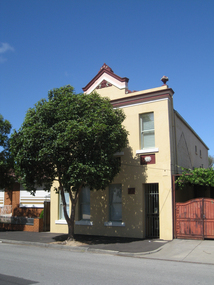
Photograph - former Locomotive Hotel, Port Melbourne, David Thompson, c2006
... former Locomotive Hotel, Port Melbourne......Locomotive Hotel...Digital colour photograph of the former Locomotive Hotel at 176 Princes Street....Business and Traders - Hotels Built Environment - Commercial Built Environment - Domestic Locomotive Hotel Princes Street Yacht Club Hotel Digital colour photograph of the former Locomotive Hotel at 176 Princes Street. ...Digital colour photograph of the former Locomotive Hotel at 176 Princes Street.business and traders - hotels, built environment - commercial, built environment - domestic, locomotive hotel, princes street, yacht club hotel -
 Port Melbourne Historical & Preservation Society
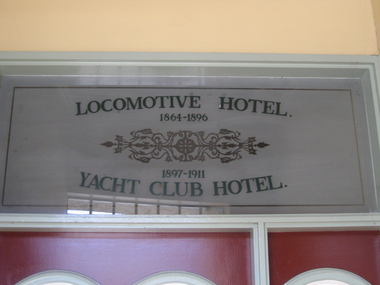
Photograph - Fanlight window, former Locomotive Hotel, Port Melbourne, David Thompson, c2006
... Fanlight window, former Locomotive Hotel, Port Melbourne......Locomotive Hotel...Digital colour photograph of the fanlight window of the former Locomotive Hotel at 176 Princes Street....Business and Traders - Hotels Built Environment - Commercial Built Environment - Domestic Locomotive Hotel Princes Street Yacht Club Hotel Digital colour photograph of the fanlight window of the former Locomotive Hotel at 176 Princes Street. ...Digital colour photograph of the fanlight window of the former Locomotive Hotel at 176 Princes Street.business and traders - hotels, built environment - commercial, built environment - domestic, locomotive hotel, princes street, yacht club hotel -
 Port Melbourne Historical & Preservation Society
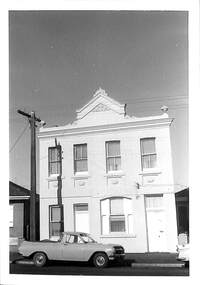
Photograph - 176 Princes Street, Port Melbourne, Janet and Allen Walsh, 1973
... ...Locomotive Hotel...The building was originally the Locomotive Hotel(1864-96), then the Yacht Club Hotel (1897-1909). ...Set of 31 photographs taken in June and July 1973 Former Locomotive Hotel (then Yacht Club Hotel), then a boarding house since 1909 at 176 Princes St...The building was originally the Locomotive Hotel(1864-96), then the Yacht Club Hotel (1897-1909). ...The building was originally the Locomotive Hotel(1864-96), then the Yacht Club Hotel (1897-1909). From 1909 it was a boarding house until restoration as a family home in the 1980s Shot in 1973 with particular interest in architectureSet of 31 photographs taken in June and July 1973 Former Locomotive Hotel (then Yacht Club Hotel), then a boarding house since 1909 at 176 Princes StIdentified and dated on back in inkjanet walsh, allen walsh, built environment - commercial, built environment - domestic, princes street, locomotive hotel, yacht club hotel, business and traders - hotels -
 Port Melbourne Historical & Preservation Society
Document - List of Port Melbourne Hotels & Licencees 1872, 1872
... ...Locomotive Hotel...BARTLETT Edward SUFFOLK Martin CLASBY Mrs PEATT W KINYON William SPIRE Thomas TURVILLE Charles PEACOCK J WILLIAMS William CANNON J BELL Michael FLANAGAN William CARROLL J W CARR John ALLEN J E CROCKFORD Charles SHARP Henry O'BRIEN G T POTTER F JOHNSON All England Eleven Hotel Auld Reekie Hotel Australian Hotel Bay View Hotel Brunswick Pier Hotel Chequers Inn Chusan Hotel Commercial Hotel Cosmopolitan Hotel Customs House Hotel Exchange Hotel Fitzjames Hotel Floodgate Hotel Foresters Arms Hotel Foundry Hotel Fountain Inn Freemasons Hotel Happy Home Hotel Hibernian Hotel Kent Hotel Locomotive Hotel Lord Raglan Hotel Marine Hotel Naval Brigade Hotel New Great Britain Hotel Pier Hotel President Lincoln Hotel Prince Alfred Hotel Retreat Inn Royal Hotel Ship Hotel Station Hotel Victoria Hotel W CRUIKSHANK Army and Navy Hotel A4 size handwritten sheet with names, addresses and licencees of Port Melbourne hotels in 1872. ...Handwritten list of hotels & their licencees in 1872 believed to have been complied by donor's ancestor, a member of the LOBB family.A4 size handwritten sheet with names, addresses and licencees of Port Melbourne hotels in 1872.business and traders - hotels, built environment - commercial, lobb, h. fonseca, harry hall, william hays, j mcculloch, wm reynolds, g sefton, mrs crockford, andrea lagogiannis, g braithwaite, v sanderson, j carter, g w hall, j michie, t cowling, jas. bartlett, edward suffolk, martin clasby, mrs peatt, w kinyon, william spire, thomas turville, charles peacock, j williams, william cannon, j bell, michael flanagan, william carroll, j w carr, john allen, j e crockford, charles sharp, henry o'brien, g t potter, f johnson, all england eleven hotel, auld reekie hotel, australian hotel, bay view hotel, brunswick pier hotel, chequers inn, chusan hotel, commercial hotel, cosmopolitan hotel, customs house hotel, exchange hotel, fitzjames hotel, floodgate hotel, foresters arms hotel, foundry hotel, fountain inn, freemasons hotel, happy home hotel, hibernian hotel, kent hotel, locomotive hotel, lord raglan hotel, marine hotel, naval brigade hotel, new great britain hotel, pier hotel, president lincoln hotel, prince alfred hotel, retreat inn, royal hotel, ship hotel, station hotel, victoria hotel, w cruikshank, army and navy hotel -
Port Melbourne Historical & Preservation Society
Book - Borough of Sandridge, temporary liquor licenses, 1872
... ...Locomotive Hotel...Celebrations Fetes and Exhibitions Port Melbourne Town Hall Sport - Recreational Grounds James John BARTLETT Foresters Arms Hotel James MICHIE Fitzjames Hotel Spiro WILLIAMS Hibernian Hotel Charles Cooling SHARP Royal Hotel George SEFTON John BELL Pier Hotel Patrick MACAULAY Chusan Hotel James MEAGHER Boundary Hotel John William MARTIN Globe Hotel Michael Tarver QUINN Council Club Hotel Robert Urquhart MILLER Miller's Cafe Jeremiah HENNESSY Phoenix Hotel Martin JESSELL St Osyth Hotel Romulus DETHRIDGE George Hotel John William DARAN Commercial Hotel William STOWE Locomotive Hotel Thomas TURVILLE John McKENZIE Floodgate Hotel Ellen Maria HOWARD Marine Hotel Edward QUIGLEY Alfred Hotel George William FENNER Australian Eleven Hotel William Josh GLIFFORD Royal Mail Hotel Richard Walter WATTS Thomas DEGRUCHY George JULIAN Clare Castle Hotel James McELROY Brunswick Pier Hotel Business and Traders - Hotels Borough of Sandridge temporary license book: 79 stubs recording temporary liquor licenses issued 1873 to 1885 for balls etc., plus 21 unused licenses Book Borough of Sandridge, temporary liquor licenses A T Mason ...Borough of Sandridge temporary license book: 79 stubs recording temporary liquor licenses issued 1873 to 1885 for balls etc., plus 21 unused licensescelebrations fetes and exhibitions, port melbourne town hall, sport - recreational grounds, james john bartlett, foresters arms hotel, james michie, fitzjames hotel, spiro williams, hibernian hotel, charles cooling sharp, royal hotel, george sefton, john bell, pier hotel, patrick macaulay, chusan hotel, james meagher, boundary hotel, john william martin, globe hotel, michael tarver quinn, council club hotel, robert urquhart miller, miller's cafe, jeremiah hennessy, phoenix hotel, martin jessell, st osyth hotel, romulus dethridge, george hotel, john william daran, commercial hotel, william stowe, locomotive hotel, thomas turville, john mckenzie, floodgate hotel, ellen maria howard, marine hotel, edward quigley, alfred hotel, george william fenner, australian eleven hotel, william josh glifford, royal mail hotel, richard walter watts, thomas degruchy, george julian, clare castle hotel, james mcelroy, brunswick pier hotel, business and traders - hotels -
 Ballarat Tramway Museum
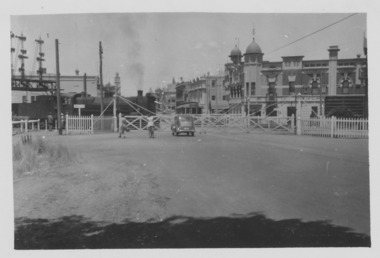
Photograph - Tram 26 - Lydiard St Level Crossing, Ken McCarthy, 6/1/1951
... Locomotive...Provincial Hotel...Also shows a car and pedestrians waiting while an A2 class locomotive occupies the crossing. In the background is the Provincial Hotel....Ballarat Lydiard St Lydiard St Level Crossing Tram 26 A2 Class Locomotive Provincial Hotel Has details of photograph and date on rear and number "760". #26 at Railway X ing Lydiard St Ballarat 6-1-51 Black and white photograph on plain paper Photograph Tram 26 - Lydiard St Level Crossing Ken McCarthy ...Photo of the Lydiard St Level Crossing showing #26 waiting at the closed gates. Also shows a car and pedestrians waiting while an A2 class locomotive occupies the crossing. In the background is the Provincial Hotel.Yields information about Lydiard St level Crossing in 1951.Black and white photograph on plain paperHas details of photograph and date on rear and number "760". #26 at Railway X ing Lydiard St Ballarat 6-1-51ballarat, lydiard st, lydiard st level crossing, tram 26, a2 class locomotive, provincial hotel -
 Kiewa Valley Historical Society
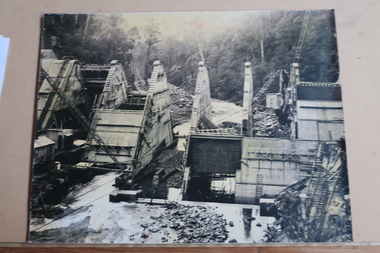
Photos: SECV Construction
... hotel when the building was the SEC Workmans Club KHES Construction of KHES x12 Most of them framed. Large black and white photos of construction of the Kiewa Hydro Electric Scheme: 1. Clover Dam Construction 2. Clover Dam Construction suspended on a crane 3. Power Station Clover Dam 4. Hauling tunnel muck. Tunnel "Ruston" locomotive ...The SECV constructed the Kiewa Hydro Electric Scheme from the late 1940s to the early 1960s. Dams, Power Stations, towns, etc. were built during this timeThese photos show a lot of detail of the work involved in constructing large structures eg. power stations, dams etc. Also they give an insight into safety eg. clothing etc. at the time. These photos were displayed on the walls of the hotel when the building was the SEC Workmans Club x12 Most of them framed. Large black and white photos of construction of the Kiewa Hydro Electric Scheme: 1. Clover Dam Construction 2. Clover Dam Construction suspended on a crane 3. Power Station Clover Dam 4. Hauling tunnel muck. Tunnel "Ruston" locomotive on rail entrance.5. McKay Power Station 6. Connecting the headrace pipe to turbo turbines - large pipes and workman (double pipe) bifurcate pipes. 7. Installing a generator - seven workmen with hard hats (assembling). 8. V3536 number plate - fire fighting truck - filling up with water. 9. 1939 after bushfire. 10. West Kiewa Power Station - labelled. 11. Lining the portal of a tunnel 12. Camp and offices on left, tunnel entrance on right.khes, construction of khes -
 Bendigo Historical Society Inc.
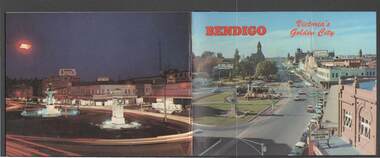
Book - BENDIGO: VICTORIA'S GOLDEN CITY
... Hotel... City Hall... Post Office... Law Courts... Home for the Aged... Victoria's 'White House'... Sacred Heart Cathedral... St Paul's... Specimen Cottage... Log Lock-up... Chinese Joss House... Charing Cross... Cenotaph... Alexandra Fountain... Centra Deborah Gold Mine... Army Cartographic Unit... Miner's Cottage... Harvey Town... Victoria Hill... Look-out Tower Rosalind Park... Conservatory Gardens... Conservatory... Bendigo Pottery... Bendigo Municipal Offices... Bendigo Institute of Technology... Mt Alvernia Hospital... Cobb & Co Coach... R Class Locomotive...The coloured pictures inside are: The Central Deborah Gold Mine, Fortuna, Miner's Cottage, The Gold Mines Hotel, Victoria Hill, Bendigo Law Courts, Eaglehawk Log Lock-up, Look-out Tower Rosalind Park, Alexandra Fountain - Charing Cross, Conservatory Gardens with Law Courts in background, Inside the Conservatory, Bendigo Home & Hospital for the Aged - Victoria's 'White House', Sacred Heart Cathedral, Chinese Joss House, Chinese Joss House - Interior of the Main Temple, Bendigo Pottery - Potter at work, Bendigo Municipal Offices, Bendigo Institute of Technology at Flora Hill, Mt. Alvernia Hospital, Cobb & Co Coach, R Class Locomotive...BENDIGO Tourism photographs of bendigo icons Bendigo - Victoria's Golden City Fortuna Shamrock Hotel Gold Mines Hotel City Hall Post Office Law Courts Home for the Aged Victoria's 'White House' Sacred Heart Cathedral St Paul's Specimen Cottage Log Lock-up Chinese Joss House Charing Cross Cenotaph Alexandra Fountain Centra Deborah Gold Mine Army Cartographic Unit Miner's Cottage Harvey Town Victoria Hill Look-out Tower Rosalind Park Conservatory Gardens Conservatory Bendigo Pottery Bendigo Municipal Offices Bendigo Institute of Technology Mt Alvernia Hospital Cobb & Co Coach R Class Locomotive Bendigo Railway Station Bendigo Tramcar Lake Weeroona Lake Eppalock Pumping Station Art Gallery Historical Museum Eaglehawk Melville's Caves Whitehall Cenotaph Nucolorvue Productins Pty Ltd National Library of Australia Nucolorvue Productions Pty Ltd Coloured booklet of various scenes and buildings in and around Bendigo, titled Bendigo Victoria's Golden City. ...Coloured booklet of various scenes and buildings in and around Bendigo, titled Bendigo Victoria's Golden City. The front cover has a scene of Charing Cross looking towards Pall Mall. Inside the front cover is a very brief history and some Historical Buildings are mentioned. They are: Fortuna, Shamrock Hotel, Gold Mines Hotel, City Hall, Post Office, Law Courts, the Home for the Aged, Sacred Heart Cathedral, St. Paul's, Specimen Cottage, Log Lock-up and the Chinese Joss House. The coloured pictures inside are: The Central Deborah Gold Mine, Fortuna, Miner's Cottage, The Gold Mines Hotel, Victoria Hill, Bendigo Law Courts, Eaglehawk Log Lock-up, Look-out Tower Rosalind Park, Alexandra Fountain - Charing Cross, Conservatory Gardens with Law Courts in background, Inside the Conservatory, Bendigo Home & Hospital for the Aged - Victoria's 'White House', Sacred Heart Cathedral, Chinese Joss House, Chinese Joss House - Interior of the Main Temple, Bendigo Pottery - Potter at work, Bendigo Municipal Offices, Bendigo Institute of Technology at Flora Hill, Mt. Alvernia Hospital, Cobb & Co Coach, R Class Locomotive, Bendigo Tramcar, Lake Weeroona and Lake Eppalock Pumping Station. Some more attractions are mentioned inside the back cover. On the back cover is the Cenotaph - the only scale replica of the Whitehall Cenotaph - and Alexandra Fountain by night.Nucolorvue Productions Pty Ltdbendigo, tourism, photographs of bendigo icons, bendigo - victoria's golden city, fortuna, shamrock hotel, gold mines hotel, city hall, post office, law courts, home for the aged, victoria's 'white house', sacred heart cathedral, st paul's, specimen cottage, log lock-up, chinese joss house, charing cross, cenotaph, alexandra fountain, centra deborah gold mine, army cartographic unit, miner's cottage, harvey town, victoria hill, look-out tower rosalind park, conservatory gardens, conservatory, bendigo pottery, bendigo municipal offices, bendigo institute of technology, mt alvernia hospital, cobb & co coach, r class locomotive, bendigo railway station, bendigo tramcar, lake weeroona, lake eppalock pumping station, art gallery, historical museum eaglehawk, melville's caves, whitehall cenotaph, nucolorvue productins pty ltd, national library of australia -
 Bendigo Historical Society Inc.
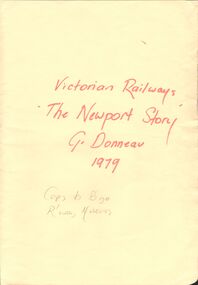
Document - VICTORIAN RAILWAYS - THE NEWPORT STORY
... Locomotive Co... Walter Stinton... Thomas Smith... Peter Alexander...Peter Alexander... Robert Ferguson... King George V... English Railway Gazette... Harry Nunn May... Merz & MacLellan... Arthur Lowe... R H Roach... W H Chapman... L C Rolls... G A Swift... John McRae... Caledonian Society... Thistle Club... Bristol Hotel...DOCUMENT Victorian Railways The Newport Story G Donneau Melbourne and Geelong Railway Co Melbourne & Hobson's Bay United Railway Co Mr William Meikle Solomon Mirls Richard Speight Sir james Allport Midland Railway Mr Allison Dalrymple Phoenix Foundry North Melbourne Loco Depot Beyer Peacock & CO Mr A E Smith Roger Barnes Thomas Tait BHP F J Shea Commonwealth Ordnance Department James Rooks London Times Mr Merz Mr McLellan Bendigo North Railway Workshops Ballarat Shops James Taylor Donald McGregor Julius Aurelian Sylvester Barber Victor Lethlean Melbourne Institute of Technology Prince of Wales Queen Victoria W M Shannon Sir Thomas Bent Puffing Billy Harold Winthrop Clapp Francis Boardman Clapp Melbourne Tramway & Omnibus Co Austral Otis Engineering Co Melbourne University Franklin Supply Co E H Brownbill Heavy Harry Locomotive Mausoleum North Melbourne North British Locomotive Co Walter Stinton Thomas Smith Peter Alexander Peter Alexander Robert Ferguson King George V English Railway Gazette Harry Nunn May Merz & MacLellan Arthur Lowe R H Roach W H Chapman L C Rolls G A Swift John McRae Caledonian Society Thistle Club Bristol Hotel James Taylor George Allibon Walter Grimshaw Robert Maybin Roy Hodge Walter Biddle John Ramsbottom Robert Hewitt James Green Thomas Waldhuter Giles Dobney Mr Richardson Mr Arthur Sydney Express The Age Mr Speight David Syme Father Gapon Typed history of the Newport Railway Workshops. ...Typed history of the Newport Railway Workshops. Mentions the men who worked at the workshop, the locomotives that were built there, the different classes of locomotives, the equipment they used, and some of the work they did. Written by G. Donneau (who worked there) and dated 19-3-79.document, victorian railways, the newport story, g donneau, melbourne and geelong railway co, melbourne & hobson's bay united railway co, mr william meikle, solomon mirls, richard speight, sir james allport, midland railway, mr allison dalrymple, phoenix foundry, north melbourne loco depot, beyer peacock & co, mr a e smith, roger barnes, thomas tait, bhp, f j shea, commonwealth ordnance department, james rooks, london times, mr merz, mr mclellan, bendigo north railway workshops, ballarat shops, james taylor, donald mcgregor, julius aurelian sylvester barber, victor lethlean, melbourne institute of technology, prince of wales, queen victoria, w m shannon, sir thomas bent, puffing billy, harold winthrop clapp, francis boardman clapp, melbourne tramway & omnibus co, austral otis engineering co, melbourne university, franklin supply co, e h brownbill, heavy harry, locomotive mausoleum north melbourne, north british locomotive co, walter stinton, thomas smith, peter alexander, peter alexander, robert ferguson, king george v, english railway gazette, harry nunn may, merz & maclellan, arthur lowe, r h roach, w h chapman, l c rolls, g a swift, john mcrae, caledonian society, thistle club, bristol hotel, james taylor, george allibon, walter grimshaw, robert maybin, roy hodge, walter biddle, john ramsbottom, robert hewitt, james green, thomas waldhuter, giles dobney, mr richardson, mr arthur, sydney express, the age, mr speight, david syme, father gapon -
 Otway Districts Historical Society
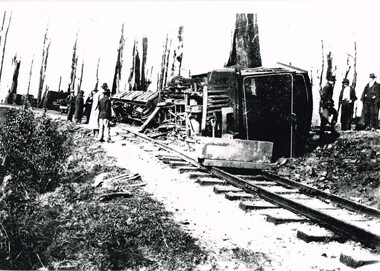
Photograph, Victorian Railways, Derailment at Beech Forest, 1904, 4 October 1904
... They fired the boiler on locomotive 3A, attached two trucks to the locomotive and moved out of the station. When they arrived opposite the Ditchley Park Hotel they stopped the engine and adjourned to the bar for some refreshments before beginning work. ...They fired the boiler on locomotive 3A, attached two trucks to the locomotive and moved out of the station. When they arrived opposite the Ditchley Park Hotel they stopped the engine and adjourned to the bar for some refreshments before beginning work. ...On Tuesday, 4 October 1904, the first serious railway accident occurred on the Colac-Beech Forest line near Beech Forest. As no train was scheduled that day in the afternoon the crew decided to fetch some wood from down the line. They fired the boiler on locomotive 3A, attached two trucks to the locomotive and moved out of the station. When they arrived opposite the Ditchley Park Hotel they stopped the engine and adjourned to the bar for some refreshments before beginning work. While they were engaged some local children boarded the unattended engine, started it, panicked when it began moving and jumped out leaving in to speed away and tip on a curve in a cutting at Ditchley. The engine was severely damaged. However, its cause remained an Otways secret. The official reason given for the accident is that the driver had fallen out of the engine while engaged in shunting allowing it to run away out of control.Locomotive No. 3A and goods wagons following their derailment at Beech Forest, 4 October 1904.beech forest; railways; narrow gauge; derailment; -
 Ballarat Tramway Museum
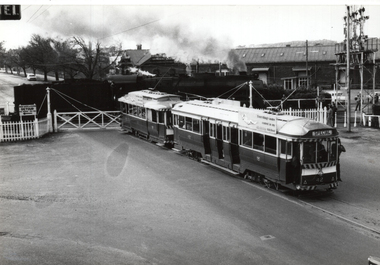
Photograph - Tram tour - TMSV & ARHS, Richard Gilbert, 21/8/1971
... locomotive using the crossing. Both trams have SEC advertising. Tram 42 is running a special tour. .2 - tram 39, running a special tram service, loading passengers at the railway station tram stop. In the background is awning for the Provincial Hotel...locomotive using the crossing. Both trams have SEC advertising. Tram 42 is running a special tour. .2 - tram 39, running a special tram service, loading passengers at the railway station tram stop. In the background is awning for the Provincial Hotel ...A. Cook Tours database that the tour by the ARHS and TMSV using trams 11, 26, 39 and 42 and was a farewelll tour, with the first of the Ballarat tram lines closing the following day. See also item 9442 for other photographs. .1 - two trams (27 and 42) at the gates with an R class locomotive using the crossing. Both trams have SEC advertising. Tram 42 is running a special tour. .2 - tram 39, running a special tram service, loading passengers at the railway station tram stop. In the background is awning for the Provincial Hotel and SF Motors Mercedes Benz. .3 - tram 27 northbound crossing the level crossing. Yields information about the use of the Lydiard St Nth line prior to closure and the use of the level crossing. Series of 3 Black and white photographs of trams using the Lydiard St North level crossing.trams, tramways, lydiard st north, level crossings, railways, locomotives, ballarat station, special trams, tram 27, tram 42, tram 39 -
 Ballarat Tramway Museum
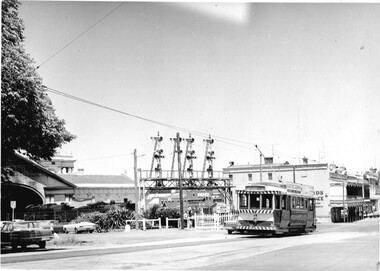
Photograph - Black & White Photograph/s - set of 6, Charles Craig, 1950s
... Set of six black and white photographs of trams at the railway level crossing, Ballarat, Lydiard St North featuring the railway station, gates and signals, Reeds Coffee Palace and the Provincial Hotel. .1 - 28 heading south, with an R class and a K class locomotive in the view. .2 - 11, heading north - taken during the 1950's. .3 - 17 parked right up to the gates while K184 shunts at the station. .4 - single trucker (number obscured) - most likely 17 giving the passengers in the previous photo. .5 - Photo with two single truckers in the view and the gates being closed after the tram has passed. .6 - 11, at the gates with a bogie tram behind. ...Trams tramways Lydiard St North Railway Station Signals Level Crossings tram 28 tram 11 tram 17 Set of six black and white photographs of trams at the railway level crossing, Ballarat, Lydiard St North featuring the railway station, gates and signals, Reeds Coffee Palace and the Provincial Hotel. .1 - 28 heading south, with an R class and a K class locomotive in the view. .2 - 11, heading north - taken during the 1950's. .3 - 17 parked right up to the gates while K184 shunts at the station. .4 - single trucker (number obscured) - most likely 17 giving the passengers in the previous photo. .5 - Photo with two single truckers in the view and the gates being closed after the tram has passed. .6 - 11, at the gates with a bogie tram behind. ...Yields information about the appearance and use of the Ballarat Railway Station level crossing by trams prior to closure.Set of six black and white photographs of trams at the railway level crossing, Ballarat, Lydiard St North featuring the railway station, gates and signals, Reeds Coffee Palace and the Provincial Hotel. .1 - 28 heading south, with an R class and a K class locomotive in the view. .2 - 11, heading north - taken during the 1950's. .3 - 17 parked right up to the gates while K184 shunts at the station. .4 - single trucker (number obscured) - most likely 17 giving the passengers in the previous photo. .5 - Photo with two single truckers in the view and the gates being closed after the tram has passed. .6 - 11, at the gates with a bogie tram behind. No. 11 has a Briquettes roof advert and a Twin Lakes sign. Photo by Charles Craig - during 1971, except for .2, taken during the 1950's. trams, tramways, lydiard st north, railway station, signals, level crossings, tram 28, tram 11, tram 17 -
 Melbourne Tram Museum
Photograph - Set of 2 Black & White Photograph/s, 1900s
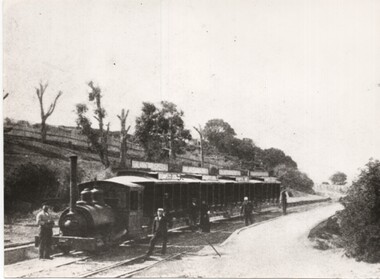
... Set of two black and white photographs of The Sorrento Steam Tram. .1 - Steam locomotive and four carriages at the Bay Road Station with men standing and a lady passenger standing alongside. .2 - Postcard with the Sorrento Hotel in the background - station fence and platform in the foreground - "view from Bay Road Station to town's main corner and big Hotel"...Trams tramways Sorrento Steam Trams Bay Road Set of two black and white photographs of The Sorrento Steam Tram. .1 - Steam locomotive and four carriages at the Bay Road Station with men standing and a lady passenger standing alongside. .2 - Postcard with the Sorrento Hotel in the background - station fence and platform in the foreground - "view from Bay Road Station to town's main corner and big Hotel" Photograph Set of 2 Black & White Photograph/s ...Set of two black and white photographs of The Sorrento Steam Tram. .1 - Steam locomotive and four carriages at the Bay Road Station with men standing and a lady passenger standing alongside. .2 - Postcard with the Sorrento Hotel in the background - station fence and platform in the foreground - "view from Bay Road Station to town's main corner and big Hotel"trams, tramways, sorrento, steam trams, bay road -
 Melbourne Tram Museum
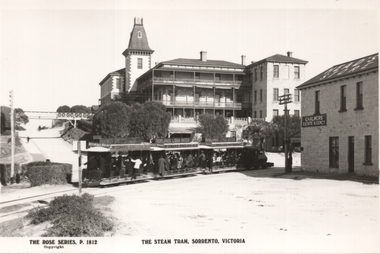
Postcard, Rose Stereograph Co, "The Steam Tram, Sorrento, Victoria", c1900
... Photograph shows a train of three carriages and one of the Baldwin-built locomotives with the Sorrento Continental Hotel in the background. ...Photograph shows a train of three carriages and one of the Baldwin-built locomotives with the Sorrento Continental Hotel in the background. ...Photograph shows a train of three carriages and one of the Baldwin-built locomotives with the Sorrento Continental Hotel in the background. All the cars have advertising boards on the roof's advertising Rowland's water and Evans English Ales. Two conductors with caps can be seen with one collecting fares from the footboard. The tram is well loaded as it enters Ocean Beach Road bound for the back beach. Yields information about the Sorrento steam tram.Black and White postcard, divided back type unused, Rose Series P.1812.sorrento, steam trams, baldwin, tramways, ocean beach road, rose series -
 City of Melbourne Libraries
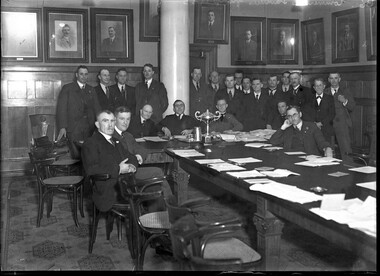
Photograph, Bull, Hugh Jones, 1897-1993, Commercial Travellers' Association, Victoria, Board Room
... Hotel, 24 Elizabeth Street on 1 December 1880. Their charter was to advocate for better working conditions for commercial travelling salesmen, including improved accommodation at discounted rates and travel concession fares. At first by locomotive...Hotel, 24 Elizabeth Street on 1 December 1880. Their charter was to advocate for better working conditions for commercial travelling salesmen, including improved accommodation at discounted rates and travel concession fares. At first by locomotive ...Seven seated and fifteen standing men dressed in suits around a long table in a panelled room hung with formal portraits of men. A trophy sits on the long table amongst loose paper sheets. Research by project volunteer, Fiona Collyer: The Commercial Travellers’ Association of Victoria (CTA) was formed at a meeting of 40 commercial travellers held at the Duke of Rothesay Hotel, 24 Elizabeth Street on 1 December 1880. Their charter was to advocate for better working conditions for commercial travelling salesmen, including improved accommodation at discounted rates and travel concession fares. At first by locomotive, horse and buggy, steamers and horseback, later also by motor car and motorcycle, “The Man on the Road” went into the back-blocks of the country to extend the interests of commerce to the stores and households of Australian regional towns and isolated settlements. Affiliated organisations existed in all states and New Zealand and in 1895 they integrated to form the United Commercial Travellers’ Association of Australasia (UCTAA). By the turn of the 20th century, the Victorian branch of the CTA had 421 Association Members and 520 Club members. The CTA continued to hold meetings in leased rooms in hotels and offices until 1898 when they commissioned purpose-built premises at 190-192 Flinders Street (extant, now the Macstore, next to former Metropolitan Gas Company Buildings). Designed by leading architectural firm of brothers H.W. & F.B.Tompkins (Dimmey’s Model Store, Swan Street, London Stores, Herald and Weekly Times, Myer building, Diamond House, Centreway Arcade, Manton’s Store) in the Queen Anne Revival style at the cost of £20,000, the four storey building had a facade of red Northcote bricks and an entrance of Pyrmont stone. It was very modern for the time, featuring elevators, offices, bars, kitchen, dining, card and billiard rooms and 31 bedrooms with shared bathrooms for the footsore travellers. However, despite adding two storeys in 1901, and another storey and a basement in 1905, they soon outgrew their premises, and in 1912 the CTA commissioned a new building at 328 Flinders Street. At this time, buildings in Melbourne were constrained by the city height limit of 132 feet (40 metres)- the maximum height of firefighting ladders. The new CTA building was the tallest building in Melbourne until 1932 when regulations changed allowing the Manchester Unity Building to be built. The new CTA headquarters was the epitome of comfort and luxury with cutting edge facilities to ease the fatigued salesman and prepare him for another stint on the road. General Secretary, James Davies travelled to Britain and America to acquire the very best and latest innovations. After visiting the new premises, Punch magazine 11 June 1914 reported “furnishings, appliances, and labour-saving conveniences which were more than up to date- they were up to-morrow.” The Edwardian Baroque style building was again designed by architects H.W. & F.B. Tompkins at the cost of £100,000 and built by contractors F.E. Shillabeer and Sons (Nicholas Building, Kellow-Falkiner Pty Ltd car showroom). The nine storey plus basement building is of steel frame construction with concrete floors. The ground floor facade is of grey granite and above that it is faced with cream glazed bricks chosen to combat discolouration from the pollution emitted by Flinders Street Station trains across the road. The facade is decorated with mascarons, gum leaf trim and balconies with classical style balustrade. The club was entered through revolving doors into a two storey high, circular, domed lobby with white columns, American oak panelled walls and intricate mosaic flooring. The ceiling is festooned with plaster gum leaf and gum nut detail, a theme that is repeated throughout the building. The basement kitchen had modern, labour saving appliances that would be the envy of any Edwardian housewife, including an electric toaster, a potato peeling machine, heated dumb waiter, dishwashing machine and electric refrigeration and cooking. It serviced the commodious second floor dining room which seated 200 people and the cafe/breakfast room, 80 people. Members were permitted to entertain their lady friends there for afternoon tea between the hours of 3 and 5 pm every day, except Sunday. The members’ facilities included a barbershop, clothes pressing machine, boot cleaning chair, pipe and cigar stall with electric humidor, public telephones, lockers and safe deposit. The building was serviced with five elevators, a built in vacuum cleaning plant, hot water radiators and linen and postal chutes. The first floor was devoted to business and relaxing, containing the Board, Writing, Reading and four Business Rooms. The board room had Queensland maple panelling with huge blackwood tables topped with blue morocco and golden tortoise-shell trim and cane bottomed chairs. Large framed photographs of past presidents since 1884 lined the walls. The Reading Room ran the whole width of the building. Arthur Streeton’s painting “Between the Lights, Princes Bridge 1888” and Frederick McCubbin’s “Looking North from Mount Macedon” were hung there, as well as paintings by renowned Australian artists Hans Heysen, Walter Withers, John Mather, Jan Hendrik Scheltema. The Argus 30 May 1914 quipped “Around the walls hang evidences that the commercial traveller's soul has not been killed in his pursuit of commerce”. The blackwood panelled room was furnished with Queen Anne style tables and chairs and green leather armchairs with inviting rocker foot rests allowing weary travellers to relax after traversing the railways and dusty roads of Victoria while planning their next sales trip. “The Australasia Traveller” Volume 10, Number 2, April 1914 page 35 noted “An attendant will be constantly employed on this floor to take care of the stationary supply, to tidy up newspapers, and generally study the convenience of members.” The third floor was for amusements with billiards, a bar and four rooms for playing cards, dominoes and chess. The huge billiard room had seven Alcock billiard tables including a table in a partitioned match-room for tournaments, exhibitions and matches. The walls were lined with members’ cues and for spectators, comfortable lounges with marble topped tables and electric bell pushes for drinks service. There were 150 bedrooms over five floors, each with their own telephone and wash basin and five suites with a private sitting room attached. There were four bathrooms per bedroom floor and capacious, well-lighted shaving rooms. Top rate club tariff for bed and breakfast - 6 shillings, if called for a country train leaving Melbourne before 8am - 4 shillings, suite and breakfast- 9 shillings, sixpence. “The Australasia Traveller” Volume 10, Number 2, April 1914 page 35 reported “All “early calls” will be made from the Club Office to Bedrooms by means of the Telephone, so that instead of waking everybody else up on the corridor, only the member concerned will know that it is his unpleasant duty to get up.” The new CTA premises was widely regarded as the finest club in the Southern Hemisphere. The CTA also built the adjacent six storey Commerce House with 52 sample rooms for travellers to display their wares with the remainder rented to retail businesses and a post and telegraph office. After the CTA moved into their new, larger premises in 1914, neighbouring department store Ball & Welch expanded into the former CTA. The CTA saw themselves in a nation building role and were an influential lobby group to the Government. They advocated for inter city trunk telephone lines, standard gauge railway lines between NSW and Victoria, improved roads and highways, the Murray River water scheme and maintaining the White Australia Policy. They were very active in fund raising for the war efforts. The CTA offered its members support in other ways with benevolent funds for widows and orphans, mortuary, accident, sickness and an annuities fund for members over 65 years. There were scholarships for members’ children and home purchase scheme to assist with home ownership. A secondary membership scheme provided access to non commercial travellers (men only) to its exclusive club premises. They also organised social events and activities such as billiard tourneys, golf tournaments, dances and an annual “Smoke Social” which was a social event where men gathered for a formal dinner, community singing, lectures, speeches and of course, to smoke! Daylesford born James Davies OBE, (1865-1931) worked at the CTA for 50 years, starting as an office boy and working his way up to General Secretary and editor of the monthly trade journal for UCTAA members, “The Traveller” (1890-1905, later “The Australasian Traveller” 1905-1924 and then “The Australian Traveller” 1925-1976) and the annual colour supplement magazine “Australia To-Day” (1904-1973). “The Australasia Traveller” featured commentary on the issues of the day like wars, tariffs and trade, articles on new products and hotel recommendations and their rates and lots of advertising, especially alcohol, tobacco and accommodation in regional hotels. There were regular columns, each illustrated with a line drawing and these included “Our Immigration Record” a state by state summary of arrivals of “desirable immigrants” to Australia, while bemoaning the declining (white) birth rate. The column followed the arrival of British boys sent to Australia as agricultural apprentices to work on rural properties which were short of labour. Between 1913-1928, 1750 “Barwell Boys”, some as young as 14 years of age arrived in South Australia to work. NSW had a similar program known as the Dreadnaught Boys Scheme where 5595 boys immigrated between 1911-1939. The boys were considered of “good British stock”. There was a “Home Page For The Ladies” showcasing the latest fashions in women’s clothing, millinery and hairstyles and tips and trends in home furnishings.“Children’s Corner for Dear Little Folks” which featured puzzles, jokes and stories and members could send in photographs of their children. “Road Echoes” devoted to “The Man On The Road” and his doings. “Face Massage, Smiling is the Best Face Massage”, the humour page full of jokes and funny stories. “Railway Rumbles” news of innovations, timetables, tickets and grumbles about lavatories, food and drinking water on trains and at railway stations. And in case we forget that members had a home away from their CTA home, gardening tips with “The C.T. as Gardener”column. The annual magazine “Australia To-Day” was a vehicle to promote Australia here and overseas as a modern, prosperous country with abundant opportunities and pleasant climate. It sought to showcase its manufacturing, agriculture and tourism and encourage British immigration to Australia. The magazine featured articles about recently arrived migrants at work, quirky native flora and fauna, beach culture, recreation and the Australian way of life in the settler nation. Many of the articles were written by politicians of the day, including Robert Menzies. The UCTAA commissioned original artwork for the front covers and feature articles of “Australia To-day” from leading Australian artists. These included Norman Lindsay, Frederick McCubbin, Napier Waller, Lionel Lindsay, Hans Heysen, C Dudley Wood, Louis McCubbin, Penleigh Boyd, Louis Buvelot, Christian Waller and Ellis Rowan and her Australian wildflowers. Some of the photographs in “Australia To-Day” were provided by state and federal government departments as well as manufacturers, newspapers and mining companies. Amongst of the credited photographers was Helmut Newton who later earned world acclaim as a fashion photographer and architectural and industrial photographer Wolfgang Sievers (unfortunately their photographs remain in copyright and aren’t available online). Also featured was Richard C. Strangman, a professional photographer from Canberra, William Howieson of Melbourne, who has 22 photographs in the collection of NGV, Tasmanian wilderness photographer Frederick Smithies, Athol Shmith, portrait photographer and educator from Melbourne, Gordon de Lisle, a Melbourne commercial, industrial, aerial and society portrait photographer. (One of Gordon’s assignments was as the stills photographer for the 1959 movie “On The Beach” filmed in Melbourne). Photographs taken by acclaimed Antarctic and official war photographer Captain Frank Hurley OBE for Adelaide’s Centenary were also featured. The Australian Government was keenly aware of the influence and quality of the UCTAA publications. On 1 June 1914 The Age reported that to advertise Australia in Great Britain and elsewhere, the Department of External Affairs purchased 6500 copies of “Australia To-Day” magazine for £515 to distribute free to “places where they are most likely to come under the notice of a desirable class of immigrants.” In 1950, the office of Prime Minister Robert Menzies ordered 2550 copies of that year’s issue of “Australia To-Day” for the Department of Commerce and Information to distribute. The CTA donated their archives to University of Melbourne Archives which includes original artworks and photos used in “Australia To-Day” (Melbourne University has digitised 1114 photos) and sundry items including trophies, ashtrays, commemorative souvenirs, menus, a rare “Safechek” sovereign changer, a bust of James Davies and even a CTA embossed wash bowl and chamber pot. After the death of General Secretary James Davies in 1931, the CTA held the annual “James Davies Memorial Cup” golf tournament at various Melbourne golf courses, the winner receiving a splendid silver cup. “Table Talk” magazine photographs from 29 June 1933 depict the travellers beautifully (and I would say correctly) attired in tweedy plus fours, Fair Isle knitwear, flat caps and of course fringed brogues. I have been unable to ascertain whether the trophy in our photo is for golf or another CTA social activity. The CTA Victoria membership peaked in 1951 with 4,672 Aassociation members and 3,693 Club members. In 1959, Hollywood came to Melbourne when film stars Gregory Peck, Ava Gardner, Anthony Perkins and Fred Astaire descended to film ‘On the Beach,’ directed by Stanley Kramer. The film is based on the bestselling Neville Shute novel about the aftermath of World War Three, a nuclear war that has obliterated most of the Northern Hemisphere. Radioactive dust is heading toward Australia and everyone is preparing for death. Scenes with Anthony Perkins were filmed in the CTA billiards room as the exclusive Pastoral Club. Anthony Perkins’ character, Lieutenant Commander Peter Holmes of RAN tells Gregory Peck’s character, Commander Dwight Lionel, that The Pastoral Club is…”A mahogany and polished brass sort of place-some people claim it was the stuffiest club in the Commonwealth” before assuring him that despite shortages, the club is likely to have some Scotch left. In a scene at the Pastoral Club two, old (probably red faced) codgers discuss the challenge of drinking all of the 400 bottles of Gould Campbell vintage port in the club wine cellar before they succumb to radiation sickness in five months time. The NGV has 12 photographs in their collection of wardrobe stills of Ava Gardner modelling costumes designed by the Fontana Sisters of Rome for “On The Beach”, taken by Italian photographer G.B.Poletto. During the filming, Gregory Peck and his family stayed at “Kurneh” 206 Domain Road, South Yarra, the former home of three times Grand Slam winner Norman Brookes. Through the decades, Australian society was changing and in order to stay relevant, the CTA had to change too. In 1971, two women were elected for club membership, although they were only granted limited access to the club’s facilities and in 1972, women were invited for the first time to participate in the previously men only annual “Smoke Social”. In 1975, dwindling membership forced the closure of The Commercial Travellers’ Association building and in 1977, the building was sold, with the CTA ceasing to operate in 2014. It was the end of the road for the “Knights of the Road”. In 1992, the CTA building at 328 Flinders Street was placed on the Victorian Heritage Register in recognition of its architectural and cultural significance. The building has been meticulously restored with many of the original fittings, decorative plasterwork, mosaic flooring, stained glass windows, columns, chandeliers and the panelling made from Australian timbers retained. After renovations the building became first the Euro Asia Hotel, then the Duxton Hotel and in 2005 The Rendezvous Hotel, Melbourne. In tribute to the history of the building and the film “On The Beach”, the Rendezvous Hotel has the Ms Ava Bar, Perkins room, Mr Tompkins restaurant, Commerce Room and the Davies Room. References: COMMERCIAL TRAVELLERS' ASSOCIATION OF VICTORIA. (1899, May 27). The Australasian (Melbourne, Vic. : 1864 - 1946), p. 25. Retrieved February 21, 2025, from http://nla.gov.au/nla.news-article138615498 COMMERCIAL TRAVELLERS. (1914, May 30). The Argus (Melbourne, Vic. : 1848 - 1957), p. 8. Retrieved February 13, 2025, from http://nla.gov.au/nla.news-article7272511 NEWS OF THE DAY. (1914, June 1). The Age (Melbourne, Vic. : 1854 - 1954), p. 8. Retrieved February 19, 2025, from http://nla.gov.au/nla.news-article189414314 COMMERCIAL TRAVELLERS' "AT HOME." (1914, June 11). Punch (Melbourne, Vic. : 1900 - 1918; 1925), p. 32. Retrieved March 19, 2025, from http://nla.gov.au/nla.news-article129699692 https://archives.library.unimelb.edu.au/nodes/view/69669 https://vhd.heritagecouncil.vic.gov.au/places/757 http://www.pikitiapress.com/blog/2015/1/26/australia-today Commercial Travellers at Yarra Yarra (1933, June 29). Table Talk (Melbourne, Vic. : 1885 - 1939), p. 6. Retrieved February 28, 2025, from http://nla.gov.au/nla.news-article149547845 https://archives.library.unimelb.edu.au/nodes/view/537460 https://viewer.slv.vic.gov.au/?entity=IE7420895&file=FL19171568&mode=browse https://www.history.sa.gov.au/wp-content/uploads/2021/03/Barwell_Boys_Catalogue-compressed-compressed-compressed.pdf Australia Today," 1927 (1926, December 11). Weekly Times (Melbourne, Vic. : 1869 - 1954), p. 15. Retrieved March 17, 2025, from http://nla.gov.au/nla.news-article223844810 https://blogs.unimelb.edu.au/librarycollections/2020/12/19/an-inhabited-space-helmut-newtons-lovers/ https://www.ngv.vic.gov.au/explore/collection/artist/2075/ https://www.ngv.vic.gov.au/?s=Poletto+&type=collection https://rendezvousmelbourne.com.au/digital-history-tour/Photographer notations on slide: "Commercial Travellers Group B6".clubs, department stores, 1930-1939, commerce, manufacturing, federation/edwardian style architecture, railways, tourism, games, agriculture
