
Showing 15 items matching "locomotives - london "
-
 Victorian Railway History Library
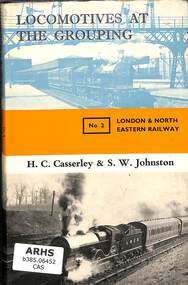
Book, Casserley, H.C. et al, Locomotives At The Grouping No.2 London & North Eastern Railway, 1966
... Locomotives - London & North Eastern Railway - history...Locomotives - London & North Eastern Railway - history The railway grouping - Great Britain - history A listing of the locomotives on the roster of The London & North Eastern Railway company at the time of the grouping of railway companies in Great Britain in 1923. ill, p.128. ...A listing of the locomotives on the roster of The London & North Eastern Railway company at the time of the grouping of railway companies in Great Britain in 1923.ill, p.128.non-fictionA listing of the locomotives on the roster of The London & North Eastern Railway company at the time of the grouping of railway companies in Great Britain in 1923.locomotives - london & north eastern railway - history, the railway grouping - great britain - history -
 Victorian Railway History Library
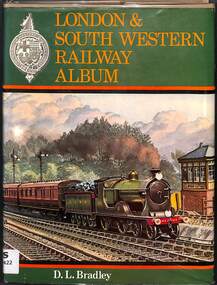
Book, Bradley, D.L, London & South Western Railway Album, 1976
... Locomotives - London & South Western Railway - history...Locomotives - London & South Western Railway - history Railroads - London & South Western Railway - history A pictorial album of the locomotives of The London & South Western Railway company before the grouping of railway companies in Great Britain in 1923. ill, p.96. ...A pictorial album of the locomotives of The London & South Western Railway company before the grouping of railway companies in Great Britain in 1923.ill, p.96.non-fictionA pictorial album of the locomotives of The London & South Western Railway company before the grouping of railway companies in Great Britain in 1923.locomotives - london & south western railway - history, railroads - london & south western railway - history -
 Bendigo Historical Society Inc.
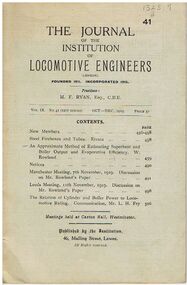
Document - BADHAM COLLECTION: THE JOURNAL OF THE INSTITUTION OF LOCOMOTIVE ENGINEERS (LONDON )
... BADHAM COLLECTION: THE JOURNAL OF THE INSTITUTION OF LOCOMOTIVE ENGINEERS (LONDON )...J Badham/THE JOURNAL OF THE INSTITUTION OF LOCOMOTIVE ENGINEERS(LONDON ) M F Ryan...The journal of the institution of locomotive engineers (London) with grey cover and black text. ...COTTAGE Miners J Badham/THE JOURNAL OF THE INSTITUTION OF LOCOMOTIVE ENGINEERS(LONDON ) M F Ryan M F Ryan The journal of the institution of locomotive engineers (London) with grey cover and black text. ...The journal of the institution of locomotive engineers (London) with grey cover and black text. The journal president is M. F. Ryan Esq CBE. Publisher: the institution, 46 Malling St , Lewes Sussex , England. The contents include: new members, steel fireboxes and tubes, superheat estimation, Manchester meeting, Leeds meeting, relation of cylinder and boiler power to locomotive rating, writing on page 2 'J Badham 16 Abbott St Bendigo', item date 1919.M F Ryancottage, miners, j badham/the journal of the institution of locomotive engineers(london ) m f ryan -
 Federation University Historical Collection
Book, Mechanics' Magazine vol. 3, 1825 (exact)
... locomotive...ballaarat east public library...ballarat east public library...ballarat east library...henry brougham...potassium...meridian lines...pit saw...self moving carriage...lord worcestor...steam engine...cameron s...soda water...astronomy...royal mint...mechanical geometry...lifting ships by steam...voltaic mechanic agent...steam navigation...hand mill...brown s pneumatic engine...triple pump...cycloidal chuck...potato washer...sand clock...galvanic electricity...perpetual motion...hadley s quadrent...wollaston s night bolt...rope bridges...boring machinery...steam engines...new london...Contents include: new pit-saw, self-moving carriage (car), Lord Worcestor's steam engine, extinction of fires, Cameron's Soda Water Apparatus, Newton's Lectures on Astronomy, coining at the Royal Mint, mechanical geometry, lifting ships by steam, voltaic-mechanic agent, steam navigation, portable hand-mill, Brown's pneumatic engine, Bell's invention for saving lives from shipwreck, triple pump, cycloidal chuck, potato-washer, sand clock, Galvanic electricity, perpetual motion, Hadley's Quadrent, Wollaston's Night-Bolt, rope bridges, boring machinery, locomotive steam-engines, new London Bridge, naval architecture, steam and water wheel, Spencer's Patent Forge, boat with wings, ivory profile portraits, Jenning's Gas burner, Ramage's Telescope, washing machine, tallow lamp, iron masts, self regulating pendulum, prismatic compass, simple blowpipe. ...Contents include: new pit-saw, self-moving carriage (car), Lord Worcestor's steam engine, extinction of fires, Cameron's Soda Water Apparatus, Newton's Lectures on Astronomy, coining at the Royal Mint, mechanical geometry, lifting ships by steam, voltaic-mechanic agent, steam navigation, portable hand-mill, Brown's pneumatic engine, Bell's invention for saving lives from shipwreck, triple pump, cycloidal chuck, potato-washer, sand clock, Galvanic electricity, perpetual motion, Hadley's Quadrent, Wollaston's Night-Bolt, rope bridges, boring machinery, locomotive steam-engines, new London Bridge, naval architecture, steam and water wheel, Spencer's Patent Forge, boat with wings, ivory profile portraits, Jenning's Gas burner, Ramage's Telescope, washing machine, tallow lamp, iron masts, self regulating pendulum, prismatic compass, simple blowpipe. ...Hardcovered book, half leather bound with marbled paper. Formerly book number 4040 from the Ballaarat East Public Library. Contents include: new pit-saw, self-moving carriage (car), Lord Worcestor's steam engine, extinction of fires, Cameron's Soda Water Apparatus, Newton's Lectures on Astronomy, coining at the Royal Mint, mechanical geometry, lifting ships by steam, voltaic-mechanic agent, steam navigation, portable hand-mill, Brown's pneumatic engine, Bell's invention for saving lives from shipwreck, triple pump, cycloidal chuck, potato-washer, sand clock, Galvanic electricity, perpetual motion, Hadley's Quadrent, Wollaston's Night-Bolt, rope bridges, boring machinery, locomotive steam-engines, new London Bridge, naval architecture, steam and water wheel, Spencer's Patent Forge, boat with wings, ivory profile portraits, Jenning's Gas burner, Ramage's Telescope, washing machine, tallow lamp, iron masts, self regulating pendulum, prismatic compass, simple blowpipe. Includes image of Henry Brougham, and many drawings of inventions.non-fictioncar, newton, fire, shipwreck, bell, naval architecture, locomotive, ballaarat east public library, ballarat east public library, ballarat east library, henry brougham, potassium, meridian lines, pit saw, self moving carriage, lord worcestor, steam engine, cameron s, soda water, astronomy, royal mint, mechanical geometry, lifting ships by steam, voltaic mechanic agent, steam navigation, hand mill, brown s pneumatic engine, triple pump, cycloidal chuck, potato washer, sand clock, galvanic electricity, perpetual motion, hadley s quadrent, wollaston s night bolt, rope bridges, boring machinery, steam engines, new london bridge, steam and water wheel, spencer s patent forge, boat with wings, ivory profile portraits, jenning s gas burner, ramage s telescope, washing machine, tallow lamp, iron masts, self regulating pendulum, prismatic compass, simple blowpipe, bookplate -
 Flagstaff Hill Maritime Museum and Village
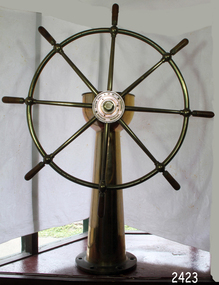
Equipment - Ship's Wheel, John Hastie et al, Early 20th Century
... locomotive works of the North British Railway Company at St. Margaret's. During his apprenticeship, he attended the evening classes at Watt College. subsequently going to Manchester to study chemistry. He went to London...locomotive works of the North British Railway Company at St. Margaret's. During his apprenticeship, he attended the evening classes at Watt College. subsequently going to Manchester to study chemistry. He went to London ...John Hastie Engineer and millwright John Hastie opened small manufacturing works in Greenock in 1845 and 1853 patented the first self-holding steering gear. The firm became known as John, Hastie and Co. Ltd. in 1898 after taking on limited liability status and their main works were at Kilblain Street, Greenock, where they specialised in ships' steering gear. The company also occupied works at Rue End Street, Greenock. Plans of this unit depict a stockyard to the east, with areas for welding; fitting and assembly; flame, cutting and fabrication; and a machine bay. The company was dissolved in 1991. Brown Brothers Brown Bros Rosebank Ironworks made the steering gears for many large ship's, including The Titanic. Andrew Betts Brown the founder was born in 1741 and closely associated with many improvements in marine engineering. He was educated in his native city and served his apprenticeship as an engineer in the locomotive works of the North British Railway Company at St. Margaret's. During his apprenticeship, he attended the evening classes at Watt College. subsequently going to Manchester to study chemistry. He went to London around 1863 and took over an old brewery, which he converted into an engineering works. During his time there he invented an overhead travelling crane, which was used on the construction of Blackfriars Bridge London. He went on to develop plant which used steam and hydraulic power for discharging ships as a result the company was contracted to install this equipment in Hamburg Docks. By around 1870 he continued to construct machinery in London but realised that conditions were more favourable in Edinburgh. He acquired land at Rosebank adjoining the North British Railway Company's line to Granton, and the necessary infrastructure was completed allowing him to finish the Hamburg contract. The works at Rosebank were eventually extended and added to until they became one of the largest engineering works in the East of Scotland. Mr Brown was a member of numerous engineering institutions, the best known at the time being the Institution of Naval Architects. He was also a Fellow of the Royal Society of Edinburgh, a member of the Institute of Mechanical Engineers and of the Institution of Marine Engineers he died in 1906 at the age of 67.An item made by two marine innovators of marine auxiliary machinery, equipment and itemsShip's wheel, brass, attached to brass pillar. The base has six holes in it for securing it in place. Top of the ship's wheel pillar has a brass, adjustable arrow pointer that is positioned over a dial etched into the flat brass surface. The dial reads " PORT STABD". Lines and degrees are marked, with '0' in centre and every 5 degrees, from 0-35, in both Port and Starboard sidesInscription to wheel hub "Brown Brothers & Co. Ltd, Rosebank Ironworks, Edinburgh"flagstaff hill, warrnambool, shipwrecked-coast, flagstaff-hill, flagstaff-hill-maritime-museum, maritime-museum, shipwreck-coast, flagstaff-hill-maritime-village, john hastie, john hastie, andrew betts brown, ships wheel, ship steering gear, marine equipment, instrument, navigation -
 Flagstaff Hill Maritime Museum and Village
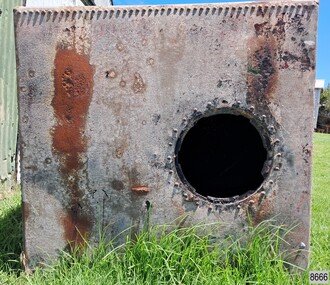
Container - Ship Tank, Early 20th century
... He was a famous British engineer and inventor during the Industrial Revolution, known for his invention of the first full-scale working railway, the high-pressure steam locomotive, which he demonstrated hauling a railway train in 1804. He set up a small workshop in 1808 at 72 Fore Street, Limehouse, London, to make iron ship tanks, and this invention was instrumental in replacing the wooden casks formerly used for storage on ships. ...He was a famous British engineer and inventor during the Industrial Revolution, known for his invention of the first full-scale working railway, the high-pressure steam locomotive, which he demonstrated hauling a railway train in 1804. He set up a small workshop in 1808 at 72 Fore Street, Limehouse, London, to make iron ship tanks, and this invention was instrumental in replacing the wooden casks formerly used for storage on ships. ...Cubed iron ship tanks were invented by Richard Trevithich in 1808, in partnership with Robert Dickson, and the design was patented that year. The invention eventually replaced the wooden casks or barrels used at the time, as the ship tanks were more secure and their shape was much more economical in storage space. The robust metal tanks were originally made to transport water, but their preserving quality enabled them to transport perishable dry goods such as grain on long voyages, as well as other forms of liquid and solid cargo. The first ship tanks were made from sheets of iron, and later mild steel sheets, with double riveted edges and corners. A round cast iron lid with handle grips was fitted snugly into the top opening, providing an air-tight and water-tight seal. Brass taps were often fitted into the base, which could have been the case with this tank, but it now has a wooden bung in the hole. Sailing ships began using the new ship tanks on Australian voyages from around the 1830s, storing food and water for those on board, and filling them with other cargo. A large number of the ship tanks were repurposed in 1838 for the Victoria Settlement at Port Essington, N.T., as they were able to protect the food, clothing and other stores from termite and insect damage. Other ‘recycled’ ship tanks were cut in half and used as washing tubs or cookers. A 1929 catalogue from Hudson’s Tank Stores advertised square tanks that contained around 600 litres – 160 gallons – which equals an internal measurement of 33.25 inches – 84.5 centimetres – per side ship tanks are still made and sold in 1952 by the Globe Tank and Foundry in Wolverhampton, England, which was incorporated in 1922. Today, ship tanks can be seen around Australia. Wilsonson’s Promontory Lightstation has the lid from a ship tank that was used on site for the storage of water. Some have been repurposed as domestic water tanks and dog kennels, others for eucalyptus distilleries. Flagstaff Hill has two ship tanks. The Campaspe Port at Echuca, once a bustling river port, has a ship tank beside the locomotive yard. The lids of ship tanks are collectible items. Richard Trevithick (1771-1833): - Trevithick was born in 1771 in Cornwall, England. He was a famous British engineer and inventor during the Industrial Revolution, known for his invention of the first full-scale working railway, the high-pressure steam locomotive, which he demonstrated hauling a railway train in 1804. He set up a small workshop in 1808 at 72 Fore Street, Limehouse, London, to make iron ship tanks, and this invention was instrumental in replacing the wooden casks formerly used for storage on ships. He was involved with mining technology, iron foundry and ship equipment. Ship tanks changed the way that cargo was transported on ships and other vehicles from the 1830s and were used into the mid-20th century. The ship tanks’ advantages were that they could store more content, lasted longer, were waterproof and airtight, stackable and could be repurposed for many uses other than water, such as fuel, dry goods and domestic cargo. They have even been used aa dog kennels and cookers. Ship tanks were part of the evolving methos to transport water, food and cargo, which changed in 1956 when Malcolm McLean invented the large, rectangular shipping containers that are in use today; they speed up the process of loading on and off the ships, saving time and money. Ship tank: a cubed iron container with an offset hole on one side. The hole has cutouts for securely attaching a lid. This tank is on its side on the ground with the opening facing sideways. The side facing upwards has a wooden bung in a round hole. The ship tank is made from six square, thick iron sheets, rolled and riveted along the edges. The inside has a black sticky coating, possibly bitumen, and a strong creosote odour. There are small remnants of green paint on the outer surface.flagstaff hill, flagstaff hill maritime museum and village, warrnambool, maritime museum, maritime village, great ocean road, shipwreck coast, iron cube, water tank, shipping container, ship tank, ship's tank, ship tanks, marine container, richard trevithich, 1808, robert dickson, water transport, water storage, iron foundry, steel sheets, iron sheets, revets, victoria settlement, port essington, globe tank and foundry, wolverhampton, british engineer, british inventor, wooden casks -
 Flagstaff Hill Maritime Museum and Village
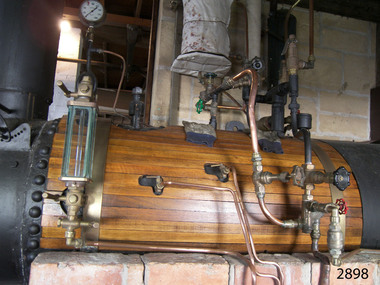
Equipment - Boiler, T & F Johnson, boilermakers, late 19th century
... London...steam engine...steam locomotive...The connected pressure gauge, made in London by Dewrance, measures 0 to 400 pounds per square inch. John Dewrance is renowned as a pioneer of the steam locomotive in the early 19th century. ...The connected pressure gauge, made in London by Dewrance, measures 0 to 400 pounds per square inch. John Dewrance is renowned as a pioneer of the steam locomotive in the early 19th century. ...A steam boiler like this late 18th century boiler, is often called a colonial boiler. Steam boilers were used in factories throughout Australia, mounted over similar designs of brick furnaces. This heat from the fire travels through the tubes in this fire tube boiler and the water heats as it circulates around them. Another kind of boiler is a water tube boiler, in which the water is inside the tubes and the heat of the combustion surrounds the tubes. The boiler in our collection burned wood as fuel but others of this design could also burn coal, coke, gas and liquid fuels. The boiler was made by T & F Johnson, boilermakers. In 1922 their factory was located at Coventry Street, South Melbourne. They were still advertising their 'Colonial, multi, vertical boilers, all sizes' at the same address in 1934. The connected pressure gauge, made in London by Dewrance, measures 0 to 400 pounds per square inch. John Dewrance is renowned as a pioneer of the steam locomotive in the early 19th century. He founded John Dewrance & Co. in South London in 1844. His son Sir John Dewrance took over in 1879. In 1939 the company became a subsidiary of Babcock & Wilcox, and was eventually owned by Emerson. How the boiler works: - A boiler is about two-thirds filled with water and heat is applied, in this case in the form of burning wood. The heat is transferred through the metal of the boiler to the water. When the water boils the steam rises to the top, and as it escapes from the boiler the steam pressure builds up in the steam space to later be released to do work; drive machinery such as ship and train engines, turbines, presses, wheels, and driving belts to operate looms and saws. The heat associated with the boiler can be used for preserving food, sterilising, factory manufacturing processes, and steaming wood for shipbuilding. Every boiler has several components fitted for safe operation: - - Safety valves - Gauge glass - Pressure gauge - Main steam stop valve - Water check valve - Blowdown valve - Manhole doorThe boiler is a significant item that gives us a snapshot of early Melbourne's industrial history. It is an example of the technological advancement during the Industrial Revolution where steam-driven machinery and motors could perform tasks more efficiently than manual labour. The makers were one of many boilermaker businesses in Melbourne during the early late-19th andearly 20th centuries. The maritime trade and skills of boilermaking are still learned and applied today. The Dewrance steam pressure gauge connected to the boiler was made by the London firms foundered by John Dewrance. He was renowned for developing the steam locomotive in the early 19th century.Boiler; a horizontal cylindrical underfired steam boiler. It is a multi-tubular design and is timber plank-clad, with brass fittings and pressure gauges. The boiler has an iron door at one end with a metal chimney above it. It is installed over a brick-enclosed solid fuel furnace. Two large, wood-mounted pressure gauges are connected to the boiler and have inscriptions. An inscription is on a red, cast iron plaque above the boiler door. The boiler's maker is T & F Johnson, South Melbourne. One of the pressure gauges was made by Dewrance, London..Maker's plate: "T & F JOHNSON / BOILERMAKERS / SOUTH MELBOURNE" Pressure gauge: "POUNDS PRESSURE / PER [square] INCH / DEWRANCE LONDON"flagstaff hill, warrnambool, maritime museum, shipwreck coast, flagstaff hill maritime village, great ocean road, boiler, multi tube boiler, steam boiler, steam technology, underfired boiler, horizontal boiler, timber clad boiler, steam power, industrialisation, boilermakers, south melbourne, dewrance, john dewrance, pressure gauge, dewrance pressure gauge, t & f johnson, london, steam engine, steam locomotive, pounds per square inch, 19th century, steam machine, johnson tyne foundry, colonial boiler, fire tube boiler -
 Bendigo Historical Society Inc.
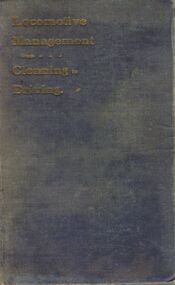
Book - BADHAM COLLECTION: LOCOMOTIVE MANAGEMENT FROM CLEANING TO DRIVING
... A blue hard covered book titled ''Locomotive Management from Cleaning to Driving'' by Jas. T. Hodgson and John Williams. London...Hodgson, John Williams A blue hard covered book titled ''Locomotive Management from Cleaning to Driving'' by Jas. T. Hodgson and John Williams. London ...A blue hard covered book titled ''Locomotive Management from Cleaning to Driving'' by Jas. T. Hodgson and John Williams. London. The Proprietors of 'The Railway Engineer,'' 15 Farringdon Avenue, E.C. 529 pages. (ill.) Some questions related to the railways have been attached to the inside of the book and a sheet titled, 'Everyday essentials in railway working.'Jas. T. Hodgson, John Williamsbooks, technical, railways, book, books, trains, railways, engines, locomotives, badham collection, collection, collections -
 Bendigo Historical Society Inc.
Document - VICTORIAN RAILWAYS - THE NEWPORT STORY
... London Times... Mr Merz... Mr McLellan... Bendigo North Railway Workshops... Ballarat Shops... James Taylor... Donald McGregor... Julius Aurelian Sylvester Barber... Victor Lethlean... Melbourne Institute of Technology... Prince of Wales... Queen Victoria... W M Shannon... Sir Thomas Bent... Puffing Billy... Harold Winthrop Clapp... Francis Boardman Clapp... Melbourne Tramway & Omnibus Co... Austral Otis Engineering Co... Melbourne University... Franklin Supply Co... E H Brownbill... Heavy Harry... Locomotive...DOCUMENT Victorian Railways The Newport Story G Donneau Melbourne and Geelong Railway Co Melbourne & Hobson's Bay United Railway Co Mr William Meikle Solomon Mirls Richard Speight Sir james Allport Midland Railway Mr Allison Dalrymple Phoenix Foundry North Melbourne Loco Depot Beyer Peacock & CO Mr A E Smith Roger Barnes Thomas Tait BHP F J Shea Commonwealth Ordnance Department James Rooks London Times Mr Merz Mr McLellan Bendigo North Railway Workshops Ballarat Shops James Taylor Donald McGregor Julius Aurelian Sylvester Barber Victor Lethlean Melbourne Institute of Technology Prince of Wales Queen Victoria W M Shannon Sir Thomas Bent Puffing Billy Harold Winthrop Clapp Francis Boardman Clapp Melbourne Tramway & Omnibus Co Austral Otis Engineering Co Melbourne University Franklin Supply Co E H Brownbill Heavy Harry Locomotive Mausoleum North Melbourne North British Locomotive Co Walter Stinton Thomas Smith Peter Alexander Peter Alexander Robert Ferguson King George V English Railway Gazette Harry Nunn May Merz & MacLellan Arthur Lowe R H Roach W H Chapman L C Rolls G A Swift John McRae Caledonian Society Thistle Club Bristol Hotel James Taylor George Allibon Walter Grimshaw Robert Maybin Roy Hodge Walter Biddle John Ramsbottom Robert Hewitt James Green Thomas Waldhuter Giles Dobney Mr Richardson Mr Arthur Sydney Express The Age Mr Speight David Syme Father Gapon Typed history of the Newport Railway Workshops. ...Typed history of the Newport Railway Workshops. Mentions the men who worked at the workshop, the locomotives that were built there, the different classes of locomotives, the equipment they used, and some of the work they did. Written by G. Donneau (who worked there) and dated 19-3-79.document, victorian railways, the newport story, g donneau, melbourne and geelong railway co, melbourne & hobson's bay united railway co, mr william meikle, solomon mirls, richard speight, sir james allport, midland railway, mr allison dalrymple, phoenix foundry, north melbourne loco depot, beyer peacock & co, mr a e smith, roger barnes, thomas tait, bhp, f j shea, commonwealth ordnance department, james rooks, london times, mr merz, mr mclellan, bendigo north railway workshops, ballarat shops, james taylor, donald mcgregor, julius aurelian sylvester barber, victor lethlean, melbourne institute of technology, prince of wales, queen victoria, w m shannon, sir thomas bent, puffing billy, harold winthrop clapp, francis boardman clapp, melbourne tramway & omnibus co, austral otis engineering co, melbourne university, franklin supply co, e h brownbill, heavy harry, locomotive mausoleum north melbourne, north british locomotive co, walter stinton, thomas smith, peter alexander, peter alexander, robert ferguson, king george v, english railway gazette, harry nunn may, merz & maclellan, arthur lowe, r h roach, w h chapman, l c rolls, g a swift, john mcrae, caledonian society, thistle club, bristol hotel, james taylor, george allibon, walter grimshaw, robert maybin, roy hodge, walter biddle, john ramsbottom, robert hewitt, james green, thomas waldhuter, giles dobney, mr richardson, mr arthur, sydney express, the age, mr speight, david syme, father gapon -
 Bendigo Historical Society Inc.
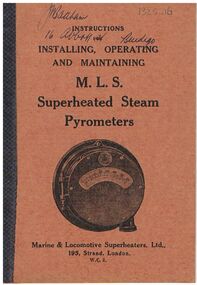
Document - BADHAM COLLECTION: INSTALLING, OPERATING AND MAINTAINING M.L.S. SUPERHEATED STEAM PYROMETERS
... Marine and Locomotive Superheaters Ltd ... 195 Strand ... London...Superheated Steam Pyrometers, Marine and Locomotive Superheaters Ltd , 195 Strand, London wc2. Owner J Badham, 16 Abbott St Bendigo. ...BOOK Engineering pyrometers Marine and Locomotive Superheaters Ltd 195 Strand London wc2 / owner J Badham 16 Abbott St Bendigo / 'The Superheated Company (Australia ) Ltd Manchester Unity Building 185 Elizabeth St. ...Instructions for installing, operating and maintaining M.L.S. Superheated Steam Pyrometers, Marine and Locomotive Superheaters Ltd , 195 Strand, London wc2. Owner J Badham, 16 Abbott St Bendigo. Small booklet with brown cover in black binding shows picture of Pyrometer on front. On page 1 rubber stamp 'The Superheated Company (Australia ) Ltd Manchester Unity Building, 185 Elizabeth St. Sydney NSW - phone MA 5886'.book, engineering, pyrometers, marine and locomotive superheaters ltd , 195 strand , london wc2 / owner j badham , 16 abbott st bendigo / 'the superheated company (australia ) ltd manchester unity building , 185 elizabeth st. sydney nsw - phone ma 5886 -
 Ballarat Tramway Museum
Document - Technical pamphlet/s, Knorr Brake Co. London, "Knorr Quick Action Automatic Air Brake", c1900
... locomotives and carriages. Details the action of the brakes, operation and equipment. Published by the Knorr Brake Co. of London, Steam Railway Dept. ...locomotives and carriages. Details the action of the brakes, operation and equipment. Published by the Knorr Brake Co. of London, Steam Railway Dept. ...Technical pamphlet, titled ""Knorr Quick Action Automatic Air Brake" consisting of printed cover (folded sheet, printing only on front cover and two inset folded sheets plate III and plate IV with technical notes and diagrams of the brakes on locomotives and carriages. Details the action of the brakes, operation and equipment. Published by the Knorr Brake Co. of London, Steam Railway Dept. Sheets have been punch with two holes along the left hand edge - probably at a later date. Scanned to the COTMA Website 4-10-2015."Colin Rutledge" stamped on top of page 1.trams, tramways, knorr brakes, train brake systems -
 Ballarat Tramway Museum
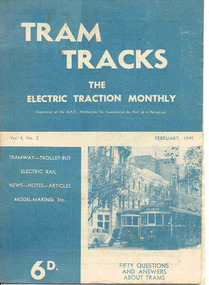
Magazine, Jack Richardson, "Tram Tracks - The Electric Traction Monthly", Feb. 1949 to August 1949
... locomotives. 2467.2 - Vol 4, No. 5 - May 1949 - 20 pages - red cover, 4th year, article by Peter Duckett with photos of Board members, "PCC Trucks here", MMTB advert for staff, news from Sydney, Newcastle, Melbourne (applications for new Chairman to replace Mr. Bell), Bendigo, Perth, Christchurch, Wellington, Wanganui, Bourke St construction work (photo of poles), Brisbane tramway history, map of CBD Melbourne, Melbourne and Sydney suburban railways, AETA News. 2467.3 - Vol 4, No. 6 - June 1949 - 16 pages - green pages, tramways and private cats, news from Sydney, Newcastle, Melbourne, Launceston, Hobart, article "Scrap Sydney Tams by 1960 - Newcastle this years say London experts", buses tackle football crowds (Sydney), Fremantle (Wal Jack letter), and Melbourne and Sydney suburban railways, AETA News. 2467.4 - Vol 4, No. 7 - July 1949 - 16 pages - tramways and the public, news from Sydney, Newcastle, Melbourne, appointment of R. ...locomotives. 2467.2 - Vol 4, No. 5 - May 1949 - 20 pages - red cover, 4th year, article by Peter Duckett with photos of Board members, "PCC Trucks here", MMTB advert for staff, news from Sydney, Newcastle, Melbourne (applications for new Chairman to replace Mr. Bell), Bendigo, Perth, Christchurch, Wellington, Wanganui, Bourke St construction work (photo of poles), Brisbane tramway history, map of CBD Melbourne, Melbourne and Sydney suburban railways, AETA News. 2467.3 - Vol 4, No. 6 - June 1949 - 16 pages - green pages, tramways and private cats, news from Sydney, Newcastle, Melbourne, Launceston, Hobart, article "Scrap Sydney Tams by 1960 - Newcastle this years say London experts", buses tackle football crowds (Sydney), Fremantle (Wal Jack letter), and Melbourne and Sydney suburban railways, AETA News. 2467.4 - Vol 4, No. 7 - July 1949 - 16 pages - tramways and the public, news from Sydney, Newcastle, Melbourne, appointment of R. ...2467.1 - Vol. 4 No. 2, February 1949 of "Tram Tracks - The Electric Traction Monthly" of the Australian Electric Traction Association. Magazine consists of 16 printed pages with a 12 page supplement titled "Fifty Questions and Answers about trams in Australia". Has a single staple on the saddle. Incorporated within the magazine are articles or editorials on Tramways and Tramway Experts (Sydney and bus replacement), Interurban to St Kilda (conversion of VR St. Kilda line). General news items on Brisbane, Geelong, Launceston closure, Hobart, Bourke St routes, Perth, Adelaide, NSW, Christchurch, Overseas tramways and railways. Also has letters to the Editor, plans of a Birney tram for model makers and AETA Notes. Issue has advertisements for the Model Dockyard, ARLHS, The Hobby Shop, Barnes Tennis Centre, Fleet, Christie Model Railway Equipment of Sydney, Meadmore Model Engineering, Austral Bronze, Wattle Park, Traction Publications and Robilt "O" gauge locomotives. 2467.2 - Vol 4, No. 5 - May 1949 - 20 pages - red cover, 4th year, article by Peter Duckett with photos of Board members, "PCC Trucks here", MMTB advert for staff, news from Sydney, Newcastle, Melbourne (applications for new Chairman to replace Mr. Bell), Bendigo, Perth, Christchurch, Wellington, Wanganui, Bourke St construction work (photo of poles), Brisbane tramway history, map of CBD Melbourne, Melbourne and Sydney suburban railways, AETA News. 2467.3 - Vol 4, No. 6 - June 1949 - 16 pages - green pages, tramways and private cats, news from Sydney, Newcastle, Melbourne, Launceston, Hobart, article "Scrap Sydney Tams by 1960 - Newcastle this years say London experts", buses tackle football crowds (Sydney), Fremantle (Wal Jack letter), and Melbourne and Sydney suburban railways, AETA News. 2467.4 - Vol 4, No. 7 - July 1949 - 16 pages - tramways and the public, news from Sydney, Newcastle, Melbourne, appointment of R. Risson as new chairman, Perth, Adelaide, Launceston, tramcar solenoid brakes, National City Lines USA, and Melbourne and Sydney suburban railways, AETA News. 2467.5 - Vol 4, No. 8 - August 1949 - 8 pages - tramways and politics, photo of new points for Latrobe and William Sts, East Hills Line by C. C. Singleton, general tramway news, and advertisement for Robilt model railways. .2 to .4 added 15-2-2016 from the collection of Ian Stanley. .5 added 24-3-18 - from consolidation of Melbourne Tram Museum and BTM collections)trams, tramways, electric traction, aeta, australian tramways, mmtb, pcc, closure, sydney, newcastle, brisbane -
 Puffing Billy Railway
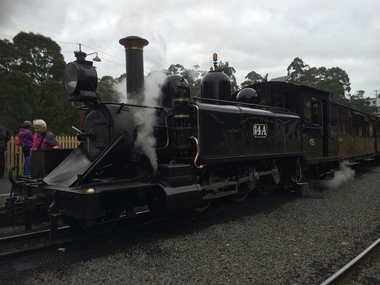
14A - Victorian Railways NA class Steam Locomotive, 1914
... London Tan” & dark brown. In 1996 it received a more correct Canadian red livery. This “temporary” trial livery has now given way to 14A’s designated livery of all-over black. Its physical configuration will match the late 1940s era with the extended bunker, guard irons, etc. Loco: 14A In service Thursday, 25th June 1914 Withdrawn April 1962 Livery Canadian red & dark brown Owner Puffing Billy Gauge 762mm / 2' 6" Status Preserved - Operational - Converted to running on Light Oil in 2018 Service History: Jun 1914 - Colac - initial allocation of a new locomotive Jun 1914 - May 1921 Colac Aug 1921 - UFTG. ...London Tan” & dark brown. In 1996 it received a more correct Canadian red livery. This “temporary” trial livery has now given way to 14A’s designated livery of all-over black. Its physical configuration will match the late 1940s era with the extended bunker, guard irons, etc. Loco: 14A In service Thursday, 25th June 1914 Withdrawn April 1962 Livery Canadian red & dark brown Owner Puffing Billy Gauge 762mm / 2' 6" Status Preserved - Operational - Converted to running on Light Oil in 2018 Service History: Jun 1914 - Colac - initial allocation of a new locomotive Jun 1914 - May 1921 Colac Aug 1921 - UFTG. ...14A Built in 1914 and painted Canadian red & dark brown, this locomotive was issued to the Colac to Crowes line and saw service on all four lines, but mostly on the Colac to Crowes line. It was withdrawn from service in 1962 at Colac and sent to Newport Workshops for storage where it remained, except for a brief time at Bendigo North Work-shops in 1963. After overhaul, it was brought to Belgrave in 1965 where it has seen almost continuous service since. In 1978, it became the first of the preserved NA’s to trial a historic colour scheme for which the Canadian red & dark brown was chosen, but ended up mistakenly being painted a “London Tan” & dark brown. In 1996 it received a more correct Canadian red livery. This “temporary” trial livery has now given way to 14A’s designated livery of all-over black. Its physical configuration will match the late 1940s era with the extended bunker, guard irons, etc. Loco: 14A In service Thursday, 25th June 1914 Withdrawn April 1962 Livery Canadian red & dark brown Owner Puffing Billy Gauge 762mm / 2' 6" Status Preserved - Operational - Converted to running on Light Oil in 2018 Service History: Jun 1914 - Colac - initial allocation of a new locomotive Jun 1914 - May 1921 Colac Aug 1921 - UFTG. Sep 1921 - Feb 1923 Moe May 1923 - Apr 1927 Colac Jul 1927 - Apr 1929 UFTG. Apr 1929 - May 1932 Other May 1932 - Nov 1934 Moe Dec 1934 - Jan 1940 Wangaratta Jun 1940 - Workshops Oct 1940 - Mar 1947 Colac May 1948 - Nov 1960 Colac - Stored Apr 1962 - Jul 1962 Workshops - Stored Dec 1965 - Belgrave - In active service at Puffing Billy Railway Belgrave Victorian Railways - Narrow Gauge NA class steam locomotive number 14A Dates that 14A worked on the Gembrook Line Aug-1921 to Sep-1921 Jul-1927 to Apr-1929 Dec-1965 - Returned to service Oct-1977 - Transferred to ETRB ownership Steam Locomotive with wrought iron frame with cast iron cylinders - Converted to running on Light Oil in 201814Apuffing billy, 14a, victorian railways, narrow gauge, steam locomotive -
 Puffing Billy Railway
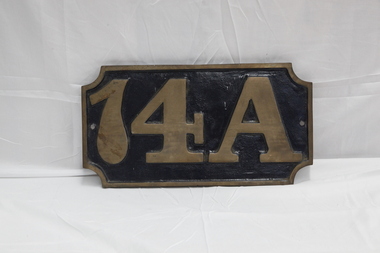
14A Number Plate
... London Tan” & dark brown. In 1996 it received a more correct Canadian red livery. This “temporary” trial livery has now given way to 14A’s designated livery of all-over black. Its physical configuration will match the late 1940s era with the extended bunker, guard irons, etc. Historic - Victorian Railways Locomotive ...Number Plate 14A Loco: 14A In service Thursday, 25th June 1914 Withdrawn April 1962 Livery Red Owner Puffing Billy Gauge 762 Status Preserved - Operational 14A Built in 1914 and painted Canadian red & dark brown, this locomotive was issued to the Colac to Crowes line and saw service on all four lines, but mostly on the Colac to Crowes line. It was withdrawn from service in 1962 at Colac and sent to Newport Workshops for storage where it remained, except for a brief time at Bendigo North Work-shops in 1963. After overhaul, it was brought to Belgrave in 1965 where it has seen almost continuous service since. In 1978, it became the first of the preserved NA’s to trial a historic colour scheme for which the Canadian red & dark brown was chosen, but ended up mistakenly being painted a “London Tan” & dark brown. In 1996 it received a more correct Canadian red livery. This “temporary” trial livery has now given way to 14A’s designated livery of all-over black. Its physical configuration will match the late 1940s era with the extended bunker, guard irons, etc.Historic - Victorian Railways Locomotive Number Plate used on Steam Locomotive 14ANumber Plate 14A Rectangular black and brass number plate. Cast brass number board.14Apuffing billy, 14a, number plate -
 Victorian Railway History Library
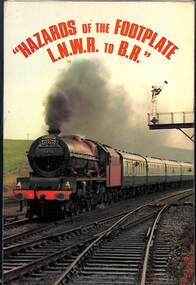
Book, Roberts, John Easter, "Hazards of the Footplate L.N.W.R. to B.R.", 1981
... Railroads - London & North Western Railway - history Railroads - British Railways - history A brief history of the hazards of being a locomotive driver from the days of the London & North Western Railway to British Railways in the United Kingdom. ill, p.142. ...A brief history of the hazards of being a locomotive driver from the days of the London & North Western Railway to British Railways in the United Kingdom.ill, p.142.non-fictionA brief history of the hazards of being a locomotive driver from the days of the London & North Western Railway to British Railways in the United Kingdom.railroads - london & north western railway - history, railroads - british railways - history
