
Showing 10 items matching "manpower shortages"
-
 Melbourne Tram Museum
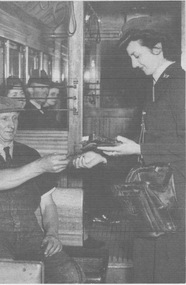
Photograph - VR Conductress, 1942
... ...manpower shortages...Before WWII women were not employed as tram crew in Victoria or other states. With manpower shortages during the war, the Melbourne & Metropolitan Tramways Board followed by the Victorian Railways employed women as conductresses from 1941, despite many male colleagues objecting. ...Before WWII women were not employed as tram crew in Victoria or other states. With manpower shortages during the war, the Melbourne & Metropolitan Tramways Board followed by the Victorian Railways employed women as conductresses from 1941, despite many male colleagues objecting. ...Photograph shows a Victorian Railways conductress accepting money from a passenger in the smoker section of a VR bogie tramcar at night. Before WWII women were not employed as tram crew in Victoria or other states. With manpower shortages during the war, the Melbourne & Metropolitan Tramways Board followed by the Victorian Railways employed women as conductresses from 1941, despite many male colleagues objecting. This conductress is Miss T Thompson.Yields information about introduction of women as conductressesSepia photograph with hand written text on rear. On rear: 'VR conductress St Kilda line'victorian railways, conductress, smoker section, vr bogie tramcar, wwii, manpower shortages, melbourne & metropolitan tramways board, 1941, male colleagues objecting -
 Wangaratta RSL Sub Branch
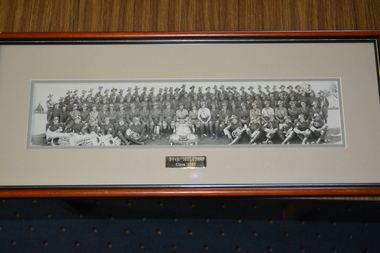
Photograph - Framed photograph, 59th Battalion
... They remained in existence until 1942 when, due to a manpower shortage in the Australian economy, the decision was made to amalgamate the battalion with the 58th Battalion to form the 58th/59th Battalion. ...They remained in existence until 1942 when, due to a manpower shortage in the Australian economy, the decision was made to amalgamate the battalion with the 58th Battalion to form the 58th/59th Battalion. ...The 59th Battalion was an infantry battalion of the Australian Army. Initially raised for service during World War I, the battalion fought on the Western Front in France and Belgium between 1916 and 1918, before being disbanded in 1919. In 1921, it was re-raised as a part-time unit of the Militia in Victoria. They remained in existence until 1942 when, due to a manpower shortage in the Australian economy, the decision was made to amalgamate the battalion with the 58th Battalion to form the 58th/59th Battalion. Together they remained linked throughout World War II, serving in New Guinea and Bougainville in 1943–1945. In 1952, the 59th Battalion was re-raised and subsequently was absorbed into the Royal Victoria Regiment in 1960.Brown timber frame containing cream coloured mount and photograph of large group of soldiers and bandsmenPlaque -59th Militia Circa 193959th militia, ww1, ww2, 1939 -
 Bendigo Historical Society Inc.
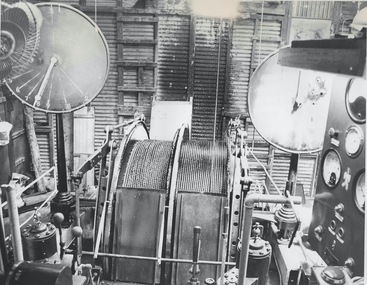
Photograph - AUSTIN COLLECTION: Wattle Gully Gold Mine, Chewton, Not dated but possibly 1980's
... The company continued to mine profitably through the Second World War, though it struggled due to a shortage of manpower. After the war, the mine continued to develop - in the early 1950s new plant including a winding engine, steel poppet head, and twenty-head battery was added. ...The company continued to mine profitably through the Second World War, though it struggled due to a shortage of manpower. After the war, the mine continued to develop - in the early 1950s new plant including a winding engine, steel poppet head, and twenty-head battery was added. ...Wattle Gully Mine holds a pivotal position in the history of the State's quartz mining industry. The rich strike at Wattle Gully mine in 1937 helped revive the State's gold mining industry that had been in the doldrums since the First World War. Wattle Gully, and a handful of other 'new' companies - the Maude and Yellow Girl, Morning Star, A 1, and North Deborah - were the flagships of the revived industry and sustained the State's gold production for some 30 years. Wattle Gully mine, with a yield of 350,000 ounces, was the richest mine of its era. By 1940, the Wattle Gully Company had paid out £207,000 in dividends to its shareholders. The company continued to mine profitably through the Second World War, though it struggled due to a shortage of manpower. After the war, the mine continued to develop - in the early 1950s new plant including a winding engine, steel poppet head, and twenty-head battery was added. The plant was obtained from the Central Nell Gwynne Company, Bendigo. On 13 March 1969, the Wattle Gully Company closed down the mine, laying off 62 men. Since 1970 Wattle Gully mine has worked intermittently. Recent additions to the mine's infrastructure has been a new ore processing plant and a decline tunnel. The ore processing plant was operated by Newmont mining from 1987 to 1990 and subsequently operated by Consolidated Victorian Mines and Duketon Goldfields. The mine site has retained evidence of its development since 1937 with its most recent periods of equipment upgrades in the 1950s and 1980s being documented by buildings, structures and intact and working machinery. Heritage Council Victoria: https://vhd.heritagecouncil.vic.gov.au/places/2380 Black and white photograph: view of engine room. Wattle Gully Gold Mine winding gear, two winding wheels in centre of image.gold mining, underground, wattle gully gold mine, chewton, winding gear -
 Bendigo Historical Society Inc.
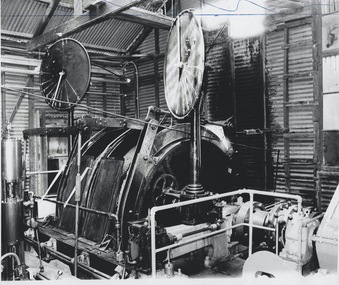
Photograph - AUSTIN COLLECTION: Winding Gear, Wattle Gully Gold Mine, Chewton, 1982
... The company continued to mine profitably through the Second World War, though it struggled due to a shortage of manpower. After the war, the mine continued to develop - in the early 1950s new plant including a winding engine, steel poppet head, and twenty-head battery was added. ...The company continued to mine profitably through the Second World War, though it struggled due to a shortage of manpower. After the war, the mine continued to develop - in the early 1950s new plant including a winding engine, steel poppet head, and twenty-head battery was added. ...Wattle Gully Mine holds a pivotal position in the history of the State's quartz mining industry. The rich strike at Wattle Gully mine in 1937 helped revive the State's gold mining industry that had been in the doldrums since the First World War. Wattle Gully, and a handful of other 'new' companies - the Maude and Yellow Girl, Morning Star, A 1, and North Deborah - were the flagships of the revived industry and sustained the State's gold production for some 30 years. Wattle Gully mine, with a yield of 350,000 ounces, was the richest mine of its era. By 1940, the Wattle Gully Company had paid out £207,000 in dividends to its shareholders. The company continued to mine profitably through the Second World War, though it struggled due to a shortage of manpower. After the war, the mine continued to develop - in the early 1950s new plant including a winding engine, steel poppet head, and twenty-head battery was added. The plant was obtained from the Central Nell Gwynne Company, Bendigo. On 13 March 1969, the Wattle Gully Company closed down the mine, laying off 62 men. Since 1970 Wattle Gully mine has worked intermittently. Recent additions to the mine's infrastructure has been a new ore processing plant and a decline tunnel. The ore processing plant was operated by Newmont mining from 1987 to 1990 and subsequently operated by Consolidated Victorian Mines and Duketon Goldfields. The mine site has retained evidence of its development since 1937 with its most recent periods of equipment upgrades in the 1950s and 1980s being documented by buildings, structures and intact and working machinery. Heritage Council Victoria: https://vhd.heritagecouncil.vic.gov.au/places/2380 Black and white photograph: view of engine room. Wattle Gully Gold Mine winding gear, two winding wheels in centre of image.gold mining, underground, wattle gully gold mine, chewton, winding gear -
 Bendigo Historical Society Inc.
Photograph - AUSTIN COLLECTION: Wattle Gully Gold Mine, Chewton, 1982
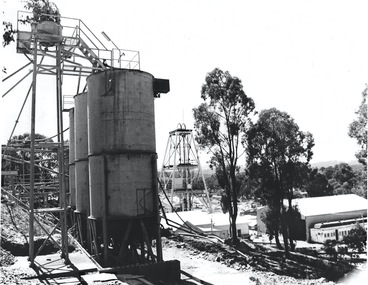
... The company continued to mine profitably through the Second World War, though it struggled due to a shortage of manpower. After the war, the mine continued to develop - in the early 1950s new plant including a winding engine, steel poppet head, and twenty-head battery was added. ...The company continued to mine profitably through the Second World War, though it struggled due to a shortage of manpower. After the war, the mine continued to develop - in the early 1950s new plant including a winding engine, steel poppet head, and twenty-head battery was added. ...Wattle Gully Mine holds a pivotal position in the history of the State's quartz mining industry. The rich strike at Wattle Gully mine in 1937 helped revive the State's gold mining industry that had been in the doldrums since the First World War. Wattle Gully, and a handful of other 'new' companies - the Maude and Yellow Girl, Morning Star, A 1, and North Deborah - were the flagships of the revived industry and sustained the State's gold production for some 30 years. Wattle Gully mine, with a yield of 350,000 ounces, was the richest mine of its era. By 1940, the Wattle Gully Company had paid out £207,000 in dividends to its shareholders. The company continued to mine profitably through the Second World War, though it struggled due to a shortage of manpower. After the war, the mine continued to develop - in the early 1950s new plant including a winding engine, steel poppet head, and twenty-head battery was added. The plant was obtained from the Central Nell Gwynne Company, Bendigo. On 13 March 1969, the Wattle Gully Company closed down the mine, laying off 62 men. Since 1970 Wattle Gully mine has worked intermittently. Recent additions to the mine's infrastructure has been a new ore processing plant and a decline tunnel. The ore processing plant was operated by Newmont mining from 1987 to 1990 and subsequently operated by Consolidated Victorian Mines and Duketon Goldfields. The mine site has retained evidence of its development since 1937 with its most recent periods of equipment upgrades in the 1950s and 1980s being documented by buildings, structures and intact and working machinery. Heritage Council Victoria: https://vhd.heritagecouncil.vic.gov.au/places/2380 Black and white photograph: view of Wattle Gully mine site with ore bins, poppet head and mining sheds. Eucalypt trees in centre of image. gold mining, underground, wattle gully gold mine, chewton, ore bins, poppet head, mine sheds -
 Bendigo Historical Society Inc.
Photograph - AUSTIN COLLECTION: Wattle Gully Gold Mine, Chewton, 1980's
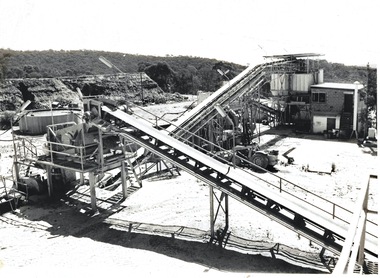
... The company continued to mine profitably through the Second World War, though it struggled due to a shortage of manpower. After the war, the mine continued to develop - in the early 1950s new plant including a winding engine, steel poppet head, and twenty-head battery was added. ...The company continued to mine profitably through the Second World War, though it struggled due to a shortage of manpower. After the war, the mine continued to develop - in the early 1950s new plant including a winding engine, steel poppet head, and twenty-head battery was added. ...Wattle Gully Mine holds a pivotal position in the history of the State's quartz mining industry. The rich strike at Wattle Gully mine in 1937 helped revive the State's gold mining industry that had been in the doldrums since the First World War. Wattle Gully, and a handful of other 'new' companies - the Maude and Yellow Girl, Morning Star, A 1, and North Deborah - were the flagships of the revived industry and sustained the State's gold production for some 30 years. Wattle Gully mine, with a yield of 350,000 ounces, was the richest mine of its era. By 1940, the Wattle Gully Company had paid out £207,000 in dividends to its shareholders. The company continued to mine profitably through the Second World War, though it struggled due to a shortage of manpower. After the war, the mine continued to develop - in the early 1950s new plant including a winding engine, steel poppet head, and twenty-head battery was added. The plant was obtained from the Central Nell Gwynne Company, Bendigo. On 13 March 1969, the Wattle Gully Company closed down the mine, laying off 62 men. Since 1970 Wattle Gully mine has worked intermittently. Recent additions to the mine's infrastructure has been a new ore processing plant and a decline tunnel. The ore processing plant was operated by Newmont mining from 1987 to 1990 and subsequently operated by Consolidated Victorian Mines and Duketon Goldfields. The mine site has retained evidence of its development since 1937 with its most recent periods of equipment upgrades in the 1950s and 1980s being documented by buildings, structures and intact and working machinery. Heritage Council Victoria: https://vhd.heritagecouncil.vic.gov.au/places/2380 Black and white photograph: view of Wattle Gully mine site with two elevators, centre of image. gold mining, underground, wattle gully gold mine, ore elevators -
 Bendigo Historical Society Inc.
Photograph - AUSTIN COLLECTION: Wattle Gully Gold Mine, Chewton, 1980's
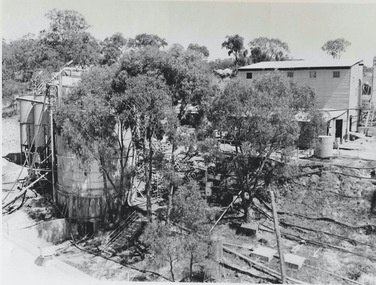
... The company continued to mine profitably through the Second World War, though it struggled due to a shortage of manpower. After the war, the mine continued to develop - in the early 1950s new plant including a winding engine, steel poppet head, and twenty-head battery was added. ...The company continued to mine profitably through the Second World War, though it struggled due to a shortage of manpower. After the war, the mine continued to develop - in the early 1950s new plant including a winding engine, steel poppet head, and twenty-head battery was added. ...Wattle Gully Mine holds a pivotal position in the history of the State's quartz mining industry. The rich strike at Wattle Gully mine in 1937 helped revive the State's gold mining industry that had been in the doldrums since the First World War. Wattle Gully, and a handful of other 'new' companies - the Maude and Yellow Girl, Morning Star, A 1, and North Deborah - were the flagships of the revived industry and sustained the State's gold production for some 30 years. Wattle Gully mine, with a yield of 350,000 ounces, was the richest mine of its era. By 1940, the Wattle Gully Company had paid out £207,000 in dividends to its shareholders. The company continued to mine profitably through the Second World War, though it struggled due to a shortage of manpower. After the war, the mine continued to develop - in the early 1950s new plant including a winding engine, steel poppet head, and twenty-head battery was added. The plant was obtained from the Central Nell Gwynne Company, Bendigo. On 13 March 1969, the Wattle Gully Company closed down the mine, laying off 62 men. Since 1970 Wattle Gully mine has worked intermittently. Recent additions to the mine's infrastructure has been a new ore processing plant and a decline tunnel. The ore processing plant was operated by Newmont mining from 1987 to 1990 and subsequently operated by Consolidated Victorian Mines and Duketon Goldfields. The mine site has retained evidence of its development since 1937 with its most recent periods of equipment upgrades in the 1950s and 1980s being documented by buildings, structures and intact and working machinery. Heritage Council Victoria: https://vhd.heritagecouncil.vic.gov.au/places/2380 Black and white photograph: landscape view of Wattle Gully mine site. Eucalypt trees in foreground, mining sheds in background. Ore bins on left hand side of image.gold mining, underground, wattle gully gold mine, mine sheds, ore bins -
 Bendigo Historical Society Inc.
Photograph - AUSTIN COLLECTION: Bill Williamson, 1980's
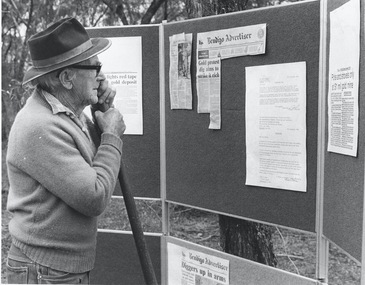
... The company continued to mine profitably through the Second World War, though it struggled due to a shortage of manpower. After the war, the mine continued to develop - in the early 1950s new plant including a winding engine, steel poppet head, and twenty-head battery was added. ...The company continued to mine profitably through the Second World War, though it struggled due to a shortage of manpower. After the war, the mine continued to develop - in the early 1950s new plant including a winding engine, steel poppet head, and twenty-head battery was added. ...Wattle Gully Mine holds a pivotal position in the history of the State's quartz mining industry. The rich strike at Wattle Gully mine in 1937 helped revive the State's gold mining industry that had been in the doldrums since the First World War. Wattle Gully, and a handful of other 'new' companies - the Maude and Yellow Girl, Morning Star, A 1, and North Deborah - were the flagships of the revived industry and sustained the State's gold production for some 30 years. Wattle Gully mine, with a yield of 350,000 ounces, was the richest mine of its era. By 1940, the Wattle Gully Company had paid out £207,000 in dividends to its shareholders. The company continued to mine profitably through the Second World War, though it struggled due to a shortage of manpower. After the war, the mine continued to develop - in the early 1950s new plant including a winding engine, steel poppet head, and twenty-head battery was added. The plant was obtained from the Central Nell Gwynne Company, Bendigo. On 13 March 1969, the Wattle Gully Company closed down the mine, laying off 62 men. Since 1970 Wattle Gully mine has worked intermittently. Recent additions to the mine's infrastructure has been a new ore processing plant and a decline tunnel. The ore processing plant was operated by Newmont mining from 1987 to 1990 and subsequently operated by Consolidated Victorian Mines and Duketon Goldfields. The mine site has retained evidence of its development since 1937 with its most recent periods of equipment upgrades in the 1950s and 1980s being documented by buildings, structures and intact and working machinery. Heritage Council Victoria: https://vhd.heritagecouncil.vic.gov.au/places/2380 Black and white photograph: former miner from Castlemaine, Bill Williamson, leaning on a shovel, reading newspaper clippings pinned on trifold noticeboard. One notice ' Bendigo Advertiser, 'Gold protest dig aims to strike it rich'. Photo probably taken near Chewton.Written on back of photo in blue pen: Bill Williamson, old miner from Castlemaine, (mined through depression yrs) gold mining, underground, wattle gully gold mine, mine sheds, ore bins -
 Bendigo Historical Society Inc.
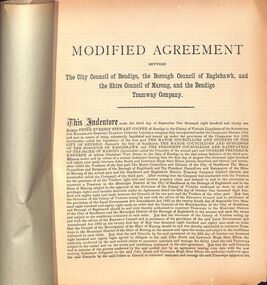
Booklet - Bendigo Tramways Agreement between City of Bendigo, Borough of Eaglehawk, Shire of Marong and Bendigo Tramway Company
... Additionally, shortages in manpower and materials due to wartime economies caused difficulties. ...Additionally, shortages in manpower and materials due to wartime economies caused difficulties. ...The Sandhurst and Electric Tramway Company was the first to blaze a trail when it introduced battery trams to Bendigo in June 1890. Unfortunately they had made a serious miscalculation, as the batteries quickly proved inadequate for the hilly terrain of Bendigo. After a couple of months battery trams ceased running and were later replaced by steam trams in February 1892. Steam trams were a reliable means of transport and successfully moved Bendigonians around for ten years, but the onset of the recession forced the Bendigo Tramways Company to sell up in 1899 to the Electric Supply Company of Victoria (ESCo) who continued to run steam trams until 1902. This turn-of-the-century sale led to the introduction of electric trams to Bendigo in April 1903. These were a success from the very beginning. During peak hour people would be standing in the aisles, in the doorways, even on the running boards on the outside of the tram. In addition, the trams were also the first option for deliveries. Parcels, newspapers, movie reels for the picture theatres and even mail bags found their way onto the trams; sent from outlying post offices to the GPO in the city centre. At the end of World War I the Victorian Government constituted the new semi-government instrumentality, the State Electricity Commission of Victoria (SEC). The SEC was to take over all privately owned power generating companies in Victoria and operate as a state owned monopoly ... Bendigo's tramway system was an integral part of the deal. The outbreak of World War II was a testing time. Revenue and passenger numbers were declining as automobiles became more popular. Additionally, shortages in manpower and materials due to wartime economies caused difficulties. As a result, the SEC made several attempts at closing the tramways and handing over the passenger services to private bus operators. It took some time, but in July 1970 the Victorian Parliament finally granted the SEC's application for abandonment of the tramways. April 1972 marked the closure of the Bendigo Tramways as a commuter service and an estimated 20,000 people gathered to say an emotional farewell.Booklet concerning Modified Agreement between City of Bendigo, Borough of Eaglehawk, Shire of Marong and Bendigo Tramway Company. Lime green paper cover without any text. Five pages. Agreement made September, 1891. Stapled at the spine to join cover and pages together. marong shire, city council of bendigo, council of bendigo, bendigo tramway company -
 Wangaratta RSL Sub Branch
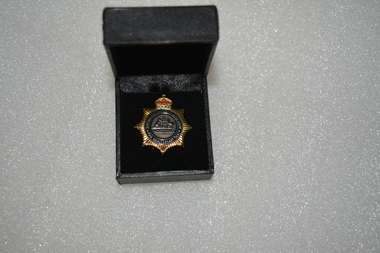
Badge - Boxed badge, 2012
... shortages in the farming sector. From December 1941, when Japan entered the war, the nation’s need to build up its armed forces was placed above the needs of other industries. Agricultural labour was steadily diverted to the armed services and war industry To meet the shortfall in rural labour, State and private women’s land organisations were organised, modelled on those established in Great Britain during the First and Second World Wars. A national body was formed on 27 July 1942 under the jurisdiction of the Director General of Manpower...shortages in the farming sector. From December 1941, when Japan entered the war, the nation’s need to build up its armed forces was placed above the needs of other industries. Agricultural labour was steadily diverted to the armed services and war industry To meet the shortfall in rural labour, State and private women’s land organisations were organised, modelled on those established in Great Britain during the First and Second World Wars. A national body was formed on 27 July 1942 under the jurisdiction of the Director General of Manpower ...Badge received by Dorothy Kiely in 2012 on the 70th anniversary of the Australian Women's Land Army. The Australian Women’s Land Army (AWLA) was formed during the Second World War to combat rising labour shortages in the farming sector. From December 1941, when Japan entered the war, the nation’s need to build up its armed forces was placed above the needs of other industries. Agricultural labour was steadily diverted to the armed services and war industry To meet the shortfall in rural labour, State and private women’s land organisations were organised, modelled on those established in Great Britain during the First and Second World Wars. A national body was formed on 27 July 1942 under the jurisdiction of the Director General of Manpower. While policy was devised by the Commonwealth Government, the organisation of the AWLA remained State-based. An extensive recruiting campaign was undertaken for new members. Most members of the existing land armies were later incorporated into the AWLA as well. Black box containing gold star shaped badge with red crown above Australian coat of arms Badge:-Australian Women's Land Army 70th Anniversary 2012 Box:- top in gold lettering 70th Anniversary of the Australian Women's Land Armyawla, ww2, dorothy kiely
