
Showing 267 items matching "manufacturing -- ballarat"
-
 Federation University Historical Collection
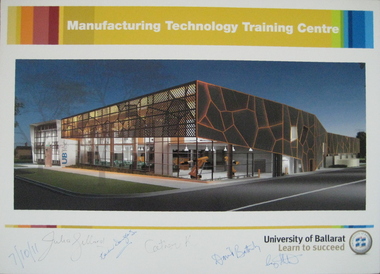
Photograph - Poster, University of Ballarat Manufacturing Technology Training Centre poster signed by Prime Minister Julia Gillard, 07/10/2011 (approx 11.15am)
... University of Ballarat Manufacturing Technology Training Centre poster signed by Prime Minister Julia Gillard...A colour poster prepared for the 'turning of the sod' at the site of the proposed University of Ballarat Manufacturing Technology Training Centre (MTTC), Grant Street, Ballarat. ...David Battersby (Vice Chancellor); Craig Fletcher (Mayor, City of Ballarat) A colour poster prepared for the 'turning of the sod' at the site of the proposed University of Ballarat Manufacturing Technology Training Centre (MTTC), Grant Street, Ballarat. ...The new Manufacturing Technology Training Centre (MTTC), a part of the proposed Building Construction Training Centre (BCTC), will be a purpose-built, stand-alone, fully fitted-out industry-standard facility. This new space will accommodate current course provision along with specialist training spaces for developing skill requirements in manufacturing technology such as robotics, mechatronics, engineering and industrial automation. Project funding was provided by the Education Investment Fund from the Australian Government Department of Education, Employment and Workplace Relations. The project budget is $18.09m, and the resulting building will have a floor space of 4,755m2. The Manufacturing Technology Training Centre is being built in conjunction with the Technical Education Centre (UBTec). While the buildings will have separate street identities the buildings will be joined with shared amenities areas. UBTec will provide a facility including individual learning spaces, learning studios, administration/office space, circulation, open plan learning space, staff common areas, computer rooms, meeting rooms, staff work areas and kitchen areas as well as car parking and site-wide amenities. While the buildings will have separate street identities the buildings will be joined with shared amenities areas. Funding for the UBTec component of the building is provided by Maintaining the Advantage: Skilled Victorians from the Victorian State Government. A colour poster prepared for the 'turning of the sod' at the site of the proposed University of Ballarat Manufacturing Technology Training Centre (MTTC), Grant Street, Ballarat. The poster was signed on Friday 7 October 2011 at about 11:15 am at the Building Construction Training Centre (BCTC), Grant Street, Ballarat by: Hon. Julia Gillard MP Hon. Catherine King MP (Ballarat ) Prof. David Battersby, Vice Chancellor, University of Ballarat Mayor, Cr Craig Fletcher, Mayor of the City of Ballarat appointed in December 2010 Mrs. Karen Douglas, Chair University of Ballarat Building & Infrastructure Committee The poster is signed by the Prime Minister of Australia, the Hon. Julia Gillard MP; Karen Douglas; the Hon. Catherine King MP (Ballarat ); Prof. David Battersby (Vice Chancellor); Craig Fletcher (Mayor, City of Ballarat)university of ballarat, david battersby, julia gillard, prime minister, catherine king, ubtec, karen douglas, manufacturing technology training centre, grant street, architecural feature -
 City of Ballarat Libraries
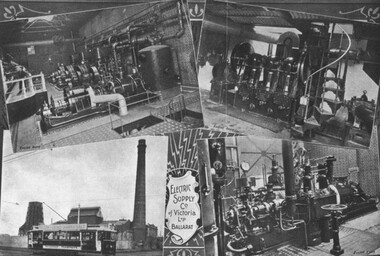
Photograph - Card Box Photographs, Electric Supply Company of Victoria Ltd, Ballarat c1915
... ...manufacturing...ballarat...This appeared in the Ballarat Homecoming publication. electric supply company ltd building manufacturing ballarat ballarat homecoming wendouree parade Electric Supply Company of Victoria Ltd, Ballarat c1915. ...The Electric Supply Company Ltd was located in Wendouree Parade. This appeared in the Ballarat Homecoming publication.electric supply company ltd, building, manufacturing, ballarat, ballarat homecoming, wendouree parade -
 City of Ballarat Libraries
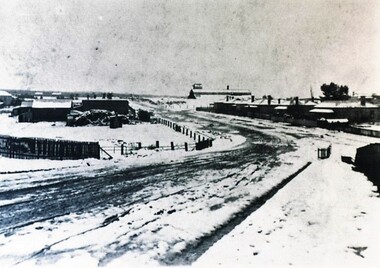
Photograph - Card Box Photographs, Snow covers the L. Scarffe Woodyard, Ballarat 1902
... ...Manufacturing...Ballarat...Scarffe Woodyard Rodier Street Streetscape Building Manufacturing Ballarat Snow covers the L. Scarffe Woodyard, Ballarat 1902. ...The woodyard was located in Rodier Street.l. scarffe woodyard, rodier street, streetscape, building, manufacturing, ballarat -
 City of Ballarat Libraries
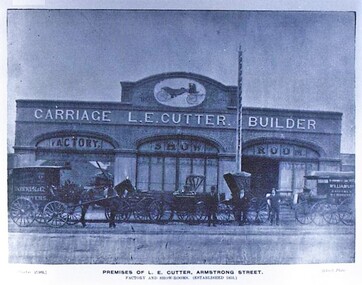
Postcard - Card Box Photographs, Premises of L.E. Cutter, Armstrong Street
... ...Manufacturing...Ballarat...Cutter Armstrong Street Building Manufacturing Ballarat Premises of L.E. Cutter, Armstrong Street. ...Factory Show-Rooms. Established 1853? Carriage Builders. Plate 236 Chuck Photo Series.l.e. cutter, armstrong street, building, manufacturing, ballarat -
 Kew Historical Society Inc
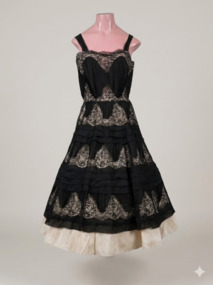
Clothing - Cocktail Dress, House of Lucas, 1950s
... ...Manufacturing -- Ballarat...Founded in Ballarat, Victoria in 1888 by Eleanor Lucas, by the mid-20th century, the Lucas Clothing Factory employed hundreds of local workers (popularly known as the "Lucas Girls"). The company was a pioneer in Australian textiles, producing the country's very first knitted nylon tricot and manufacturing luxury Vanity Fair lingerie under license for the domestic market. ...Fashion -- 1950s Cocktail Dresses Manufacturing -- Ballarat Label" 'LUCAS / Jill Heriote / in pure silk fabric' This bias-cut silk and lace cocktail dress sold under the label 'Jill Heriote' for the House of Lucas, Ballarat, features a narrow waist and a dramatically flared skirt. ...Founded in Ballarat, Victoria in 1888 by Eleanor Lucas, by the mid-20th century, the Lucas Clothing Factory employed hundreds of local workers (popularly known as the "Lucas Girls"). The company was a pioneer in Australian textiles, producing the country's very first knitted nylon tricot and manufacturing luxury Vanity Fair lingerie under license for the domestic market. As Lucas shifted from utility wear and intimate apparel into upscale daytime and evening wear during the 1940s and 1950s, they launched specialised fashion lines. The Jill Heriote line was created as their signature high-end ready-to-wear and cocktail range. The line became widely celebrated for its elite tailoring, structure, and use of both premium local and imported fabrics Designers working under this line, such as Eve Ogilvie, translated sophisticated European aesthetic trends directly to the Australian market.This garment represents a pinnacle of mid-century regional Australian fashion manufacturing. Operating from Ballarat, Victoria, E. Lucas & Co. utilised elite local designers to compete directly with imported European couture houses. The gown showcases the firm’s pioneering expertise in fine, permanent textile pleating, applied here to luxury pure silk rather than everyday synthetics.This bias-cut silk and lace cocktail dress sold under the label 'Jill Heriote' for the House of Lucas, Ballarat, features a narrow waist and a dramatically flared skirt. The overdress is constructed from intricate, black imitation Valenciennes machine-made lace. It layers over a cream silk taffeta underdress that shows through the openwork and extends structurally past the hemline. The bodice is designed with shoulder straps leading into a sweetheart neckline. Its form-fitting structure showcases panels of finely pleated black silk, creating texture across the bust. Below, the full skirt alternates between sheer black lace segments and contrasting horizontal bands of smooth black silk.Label" 'LUCAS / Jill Heriote / in pure silk fabric'jill heriote, house of lucas -- ballarat (vic.), fashion -- 1950s, cocktail dresses, manufacturing -- ballarat -
 Federation University Historical Collection
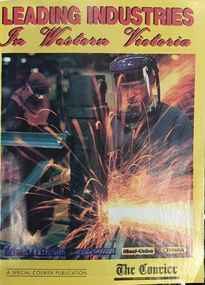
Magazine, The Courier, Leading Industries in Western Victoria: A Special Courier Publication, 19/03/1999
... manufacturing...drake...Ballarat...The Greenhill Enterprise Centre is on the Ballarat Technology Park, Mount Helen. industry ballarat techcast coonara c.e. bartlett haymes paint skilled equipment manufacturing drake Ballarat group training wiltronics research greenhill enterprise centre university of Ballarat powercor workcover maxitrands macain foods ballarat meat company hakabaku mars confectionary Sunicrust bakeries hancock Victorian PLantations john valves valcor Australia f.j.& A.M. ...The Greenhill Enterprise Centre is on the Ballarat Technology Park, Mount Helen.Soft covered booklet featuring a number of Ballarat Industriesindustry, ballarat, techcast, coonara, c.e. bartlett, haymes paint, skilled equipment manufacturing, drake, ballarat group training, wiltronics research, greenhill enterprise centre, university of ballarat, powercor, workcover, maxitrands, macain foods, ballarat meat company, hakabaku, mars confectionary, sunicrust bakeries, hancock victorian plantations, john valves, valcor australia, f.j.& a.m. benney, learmonth road smash repairs, david miller, greenwaste, -
 Ballarat Tramway Museum
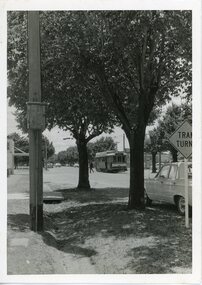
Photograph - Ballarat Tram 19, Ballarat Tram 19 shown through trees
... manufacturing...sydney...ballarat...Manufacturing Sydney. It was a single truck drop end closed combination. It came to Ballarat in 1931 and then tranferred to Bendigo in 1960 and became their tram number 7....Manufacturing Sydney. It was a single truck drop end closed combination. It came to Ballarat in 1931 and then tranferred to Bendigo in 1960 and became their tram number 7. tram 19 1915 meadowbank manufacturing sydney ballarat 1931 bendigo 1960 number 7 campbell duncan photographer Date 16 Jan 71 on back Black and white photograph Ballarat Tram 19 shown through trees Photograph Ballarat Tram 19 ...Tram 19 was built in 1915 by Meadowbank Manufacturing Sydney. It was a single truck drop end closed combination. It came to Ballarat in 1931 and then tranferred to Bendigo in 1960 and became their tram number 7.Black and white photographDate 16 Jan 71 on backtram 19, 1915, meadowbank manufacturing, sydney, ballarat 1931, bendigo 1960, number 7, campbell duncan, photographer -
 City of Ballarat Libraries
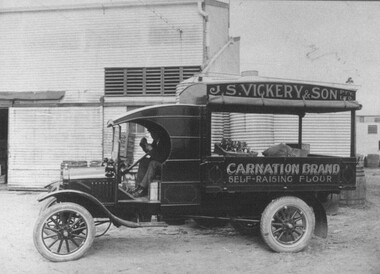
Photograph - Card Box Photographs, J.S. Vickery & Son Ptd Ltd delivery van, Ballarat c1915
... ...manufacturing...work...ballarat...Mr Bill Wallis is the driver. vehicle building manufacturing work ballarat king street morres street bill wallis j.s. vickery & son J.S. ...J.S. Vickery & Son Pty Ltd delivery van parked outside their factory on the corner of Morres and King Streets. Mr Bill Wallis is the driver.vehicle, building, manufacturing, work, ballarat, king street, morres street, bill wallis, j.s. vickery & son -
 City of Ballarat Libraries
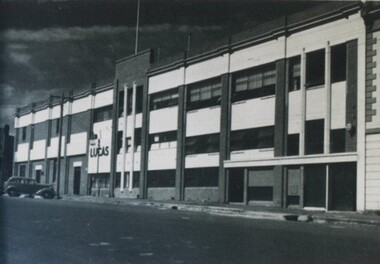
Photograph - Card Box Photographs, E. Lucas & Co Clothing Factory, Ballarat circa 1955. From Bartrop's Consultants File
... Manufacturing...Commerical...Ballarat...Lucas & Co Doveton Street South Building Manufacturing Commerical Ballarat E. Lucas & Co Clothing Factory, Ballarat circa 1955. ...The factory was located in Doveton Street South and made high quality design clothing.e. lucas & co, doveton street south, building, manufacturing, commerical, ballarat -
 City of Ballarat Libraries
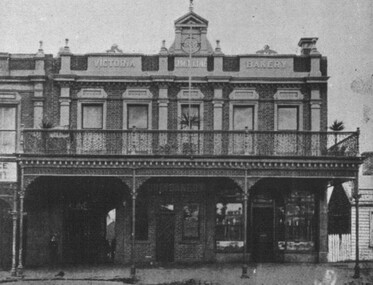
Photograph - Card Box Photographs, Advertisement for J.M. Kline Bakery. Ballarat Courier Supplement 15/12/1909
... Manufacturing...Building...Ballarat...Kline Bakery Manufacturing Building Ballarat Advertising Advertisement for J.M. ...The bakery was located on Oak Avenue. j.m. kline bakery, manufacturing, building, ballarat, advertising -
 City of Ballarat Libraries
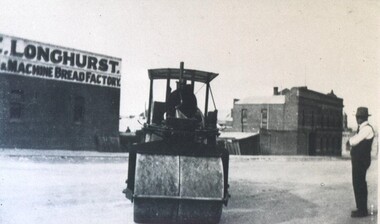
Photograph, Jelbart Road Roller & Longhurst Bakery circa 1930s
... ballarat...manufacturing...In the background is the Longhurst Bakery which became The Highlander Pub, then the Peter Lalor and now the Pub with Two Names. jelbart road roller ballarat manufacturing doveton street north longhurst bakery highlander hotels pubs peter lalor pub with two names Jelbart Road Roller & Longhurst Bakery circa 1930s. ...Jelbart Road Roller in Doveton Street North. In the background is the Longhurst Bakery which became The Highlander Pub, then the Peter Lalor and now the Pub with Two Names.jelbart, road roller, ballarat, manufacturing, doveton street north, longhurst bakery, highlander, hotels, pubs, peter lalor, pub with two names -
 City of Ballarat Libraries
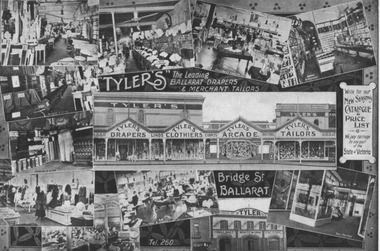
Photograph, Advertisement for Tylers
... manufacturing...bridge street...ballarat...Advertising commerical building manufacturing bridge street ballarat Advertisement for Tylers. ...Tylers were the leading drapers and merchant tailors. They were situated over several stores in Bridge Street. This advertisement is from 1917.advertising, commerical, building, manufacturing, bridge street, ballarat -
 City of Ballarat Libraries
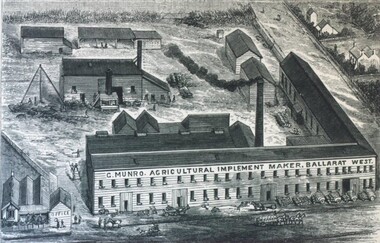
Photograph - Card Box Photographs, George Munro's Engineering Works, Ballarat 1888
... Manufacturing...Building...Alfredton...Ballarat...Munro Agricultural Implement Maker Ballarat West. George Munro Agricultural Implements Manufacturing Building Alfredton Ballarat West Engineering George Munro's Engineering Works, Ballarat 1888. ...Sketch of the George Munro Engineering Works in Alfredton. Sign on front of building reads G. Munro Agricultural Implement Maker Ballarat West.george munro, agricultural implements, manufacturing, building, alfredton, ballarat west, engineering -
 City of Ballarat Libraries
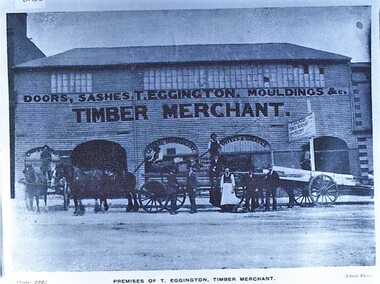
Photograph - Card Box Photographs, Premises of T. Eggington, Timber Merchant
... Ballarat...Manufacturing...Eggington Ballarat Manufacturing Commerical Building Premises of T. ...Plate 222 Chuck Photo Seriest. eggington, ballarat, manufacturing, commerical, building -
 City of Ballarat Libraries
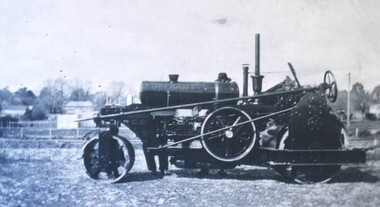
Photograph, Jelbart Road Roller circa 1930s
... This roller was manufactured in Ballarat by Jelbarts, whose foundry was located in Mair Street....This roller was manufactured in Ballarat by Jelbarts, whose foundry was located in Mair Street. jelbart ballarat mair street manufacturing road roller northcote foundry Jelbart Road Roller circa 1930s. ...Jelbart Road Roller property of Northcote Council, circa 1930. This roller was manufactured in Ballarat by Jelbarts, whose foundry was located in Mair Street.jelbart, ballarat, mair street, manufacturing, road roller, northcote, foundry -
 City of Ballarat Libraries
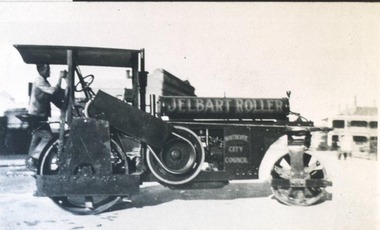
Photograph, Jelbart Road Roller circa 1930s
... This roller was manufactured in Ballarat by Jelbarts, whose foundry was located in Mair Street....This roller was manufactured in Ballarat by Jelbarts, whose foundry was located in Mair Street. jelbart ballarat mair street manufacturing foundry northcote road roller Jelbart Road Roller circa 1930s. ...Jelbart Road Roller property of Northcote Council, circa 1930. This roller was manufactured in Ballarat by Jelbarts, whose foundry was located in Mair Street.jelbart, ballarat, mair street, manufacturing, foundry, northcote, road roller -
 City of Ballarat Libraries
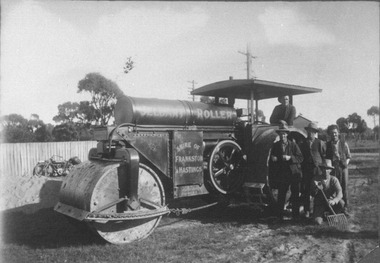
Photograph, Jelbart Road Roller circa 1930s
... Manufacturing...foundry...Frankston...Hasting...Ballarat...This roller was manufactured in Ballarat by Jelbarts, whose foundry was located in Mair Street. ...This roller was manufactured in Ballarat by Jelbarts, whose foundry was located in Mair Street. ...Jelbart Road Roller property of Shire of Frankston and Hastings circa 1930. This roller was manufactured in Ballarat by Jelbarts, whose foundry was located in Mair Street. jelbart, road roller, mair street, manufacturing, foundry, frankston, hasting, ballarat -
 Unions Ballarat
Love Your Feet More : The Oliver Story, Roberts, Phil, 2012
... The history of a Ballarat footwear manufacturing firm, Oliver's Shoes - over 125 years of business....The history of a Ballarat footwear manufacturing firm, Oliver's Shoes - over 125 years of business. ...The history of a Ballarat footwear manufacturing firm, Oliver's Shoes - over 125 years of business.Relevant to history of manufacturing industries in Ballarat. The Oliver's Shoes worksite is the only known TCFU site currently operating in Ballarat.Paper; book; 194 pagesbtlc, ballarat trades hall, ballarat trades and labour council, shoes, manufacturing, oliver's shoes, tcfu, oliver family, footwear, history -
 Orbost & District Historical Society
magazine, McLaren & Co Pty Ltd, 1939 1945, C1945
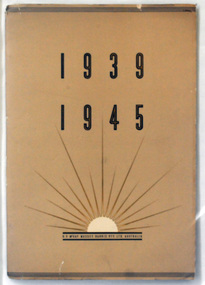
... McKay moved his manufacturing operations from Ballarat to Braybrook Junction (later Sunshine) on the western outskirts of Melbourne. ...McKay moved his manufacturing operations from Ballarat to Braybrook Junction (later Sunshine) on the western outskirts of Melbourne. ...This book/magazine is a record of the company's tasks in WW11. It acknowledges the "debt owed to the armed forces involvement and role in defeating the enemy". The Australian operations of this company were originally founded by Hugh V. McKay in the 1890s. In 1906, H.V. McKay moved his manufacturing operations from Ballarat to Braybrook Junction (later Sunshine) on the western outskirts of Melbourne. In 1921 the company became H.V. McKay Pty Ltd. In 1930 it merged with the Australian operations of the Canadian agricultural implement and tractor manufacturer Massey Harris, to become H.V. McKay Massey Harris Pty Ltd. Throughout World War II H.V. McKay Massey Harris exported over 20,000 Sunshine drills, disc harrows and binders to England to facilitate the increase in food production. (ref Museum Victoria, Wickipedia)Inside this magazine is a photograph of a sprocket similar to that made by Orbost Motor Works during WW11. (Registration No 2001)A large stapled cardboard covered magazine with a tan coloured cover. On the front cover in dark brown print at the bottom is a rising sun with "H. V. McKay Massey Harris Pty Ltd Australia" underneath it. At the top in large font is 1939 1945. It contains coloured photographs and text. massey-harris -
 Flagstaff Hill Maritime Museum and Village
Functional object - Stove, 1960 - 1983
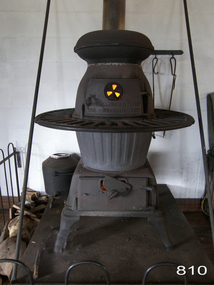
... The manufacture of The Mont Eltham Pot Belly continued in Victoria as The Mont Eltham Stove Co. by Barry and Glenda Burrowes in Montmorency and later in Thomastown. The castings were produced by leading Melbourne foundries, Cox & Rosetti , and Anderson & Ritchie. They were also made in Ballarat...The manufacture of The Mont Eltham Pot Belly continued in Victoria as The Mont Eltham Stove Co. by Barry and Glenda Burrowes in Montmorency and later in Thomastown. The castings were produced by leading Melbourne foundries, Cox & Rosetti , and Anderson & Ritchie. They were also made in Ballarat ...The Mont Eltham Pot Belly Stove History The Mont Eltham Pot Belly Stoves were first manufactured in the 1960s at the Burrowes family business The Lyn Iron Foundry in Coburg Victoria by Barry and his father Charles Thomas Burrowes. The manufacture of The Mont Eltham Pot Belly continued in Victoria as The Mont Eltham Stove Co. by Barry and Glenda Burrowes in Montmorency and later in Thomastown. The castings were produced by leading Melbourne foundries, Cox & Rosetti , and Anderson & Ritchie. They were also made in Ballarat by The Harding Bros Foundry, and in Shepparton by The Furphy Foundry. The Mount Eltham pot belly stoves were manufactured until the late 1980s. Stove; cast iron pot belly stove. Very large cylinder shape with square base, grate shelf around centre, on 4 legs. Inscription on door. "Swagman" model. Made by Mont Eltham Stoves, Victoria. "Mont Eltham Stoves Vic Swagman Aust"flagstaff hill, warrnambool, shipwrecked-coast, flagstaff-hill, flagstaff-hill-maritime-museum, maritime-museum, shipwreck-coast, flagstaff-hill-maritime-village, domestic heating, domestic heating, stove, pot belly stove, wood fired stove, old world stove, the mont eltham stove co., the lyn iron foundry, barry and glenda burrowes -
 Flagstaff Hill Maritime Museum and Village
Machine - Steam Engine, Tangyes engineering, Mid-1880s
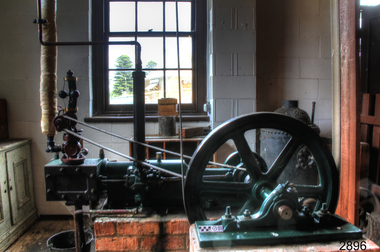
... manufactured in England around the mid-1880s. It was distributed by Melbourne machinery merchants Cameron & Sutherland, which also operated in Bendigo and Ballarat. ...manufactured in England around the mid-1880s. It was distributed by Melbourne machinery merchants Cameron & Sutherland, which also operated in Bendigo and Ballarat. ...This Tangye B-size, single-cylinder, horizontal steam engine was likely manufactured in England around the mid-1880s. It was distributed by Melbourne machinery merchants Cameron & Sutherland, which also operated in Bendigo and Ballarat. A local cheese maker once used the engine to drive factory equipment. It was later donated to the Warrnambool Technical School, which then donated it to Flagstaff Hill to add to its historical steam engine collection. Between its manufacture and its donation to Flagstaff Hill, the governor had been replaced by the current Pickering governor. This engine design was very popular in the late 19th and early 20th centuries. When connected and powered up, the engine could drive an overhead line shaft via a flat belt off its flywheel. The line shaft would then drive the machinery via flat belts. It could drive virtually any type of machinery, such as water and sewerage pumps, mine elevators, winches, cranes, metal forges, air blowers, and marine machinery. This engine features a mechanical governor, which controls the speed of the engine regardless of whether it is under load. It also has a water pump built into the valve rod, which is used to supply the boiler with water. Steam enters the cylinder via a slide valve and applies pressure to the piston; it is like a modern internal combustion engine, but in the case of the steam engine, the pressure is exerted in turn on either side of the piston. In other words, the connecting rod is pushed by steam via the piston and piston rod and then pulled back again by steam pushing on the opposite side of the piston. Thus, power is exerted almost continuously, except at the end of each piston stroke, when it reverses direction. In the 1880s, many local butter and cheese manufacturers installed Tangye steam engines to power their machinery. A comprehensive article in the Gippsland Mercury in September 1889 extolled the magnificence of the Farnham Butter Factory in Dennington, Warrnambool, and described how one Tangye engine was used to drive several machines in the cheese- and butter-making processes. A report in the Warragul Guardian in December 1890 notes that the newly opened Warrnambool Butter Factory used a Tangye steam engine to pump water from a 60-foot well. Tangye: Richard Tangye (1833–1906) and four of his brothers—James, Joseph, Edward, and George—were the sons of Joseph Tangye, a Quaker Cornish miner. In 1857, they founded the engineering firm Richard Tangye & Brothers in Birmingham, UK. In 1860, the firm became Tangye Brothers and moved to Cornwall Works in Birmingham. The business encouraged inventors to join the company and develop their patents there, as happened with Weston’s differential pulley block, invented by the Englishman Thomas Aldridge Weston in 1854. Tangye bought the patent in 1858, giving the firm the sole right to manufacture it. The design received a medal for “original application, practical utility and success” at the 1862 International Exhibition in London. Also in 1858, the Tangye firm was commissioned by Brunel’s shipping company to manufacture hydraulic lifting jacks, or rams, to launch the steamship SS Great Eastern. The success of this project brought favourable attention to the firm, and it became involved in other notable projects, including the erection of Cleopatra’s Needle in London in 1878 and work on the Forth Road Bridge in Scotland. The firm underwent several name changes over the years, including James Tangye and Brothers (1857), Tangye Brothers and Price (1859), Tangye Brothers (1860), Tangye Brothers & Holman (1876), Tangye Brothers (by 1878), Tangye Ltd. (1881), and then simply Tangye. Its machinery and equipment were exported worldwide. In 1884, a branch with showrooms, offices, and a warehouse was opened in Melbourne at Cornwall House, Collins Street West. The firm was well known for producing high-quality machinery for agriculture and industry. Even today, new Tangye machinery is available for a subsidiary of Allspeeds. An extensive account of the firm’s history, names, inventions, and further references is available in Grace’s Guide, which also includes references to and diagrams of the Tangye horizontal steam engine. The horizontal steam engine was made by the well-known engineering firm Tangye, known for its high quality of manufacture. It was an important development in machinery because it helped improve productivity. Engines of this type are still used in some parts of the world today. This engine is a good example of a late 19th-century steam engine used in industry and agriculture and adapted for many different purposes. It is also important locally because it was connected to a local cheese making business and part of the thriving western district dairy industry. It may have been one of the Tangyes engines used at the Farnham butter factory or the Warrnambool Butter Factory, which was reported to be one of the most important in the Colony. It is also connected to the Warrnambool Technical School, established in 1968. Steam engine: stationary Tangye Size B, single-cylinder, horizontal Mill type steam engine. It has a 4-inch diameter cylinder with an 8-inch stroke. The body is painted green, and the Pickering governor is red. It was manufactured in Birmingham, England, in accordance with Tangye's Patent 238930, and distributed by Cameron and Sunderland, Melbourne, in the mid-1880s. TANGEYS PATENT BIRMINGHAM B SIZE 238930 CAMERON & SUTHERLAND MELBOURNE THE PICKERING PORTLAND . GOVERNOR . CONN. U.S.A.flagstaff hill, warrnambool, maritime village, maritime museum, flagstaff hill maritime museum and village, shipwreck coast, great ocean road, machine, invention, engine, steam, steam engine, horizontal steam engine, tangyes horizontal steam engine, stationary steam engine, single cylinder steam engine, manufacturing, farming, pumps, lifting equipment, engines, machine tools, hydraulic rams, hydraulic pumps, steam pumps, differential pulleys, mill type steam engine, 4 inch cylinder, weston’s differential pulley, thomas aldridge weston, 1862 international exhibition in london, brunel, ss great eastern, cleopatra’s needle, forth road bridge, cornwall house, collins street melbourne, agricultural machinery, industrial machinery, allspeeds, dairy, pump, richard tangye & brothers, james tangye and brothers, tangye brothers and price, tangye brothers, tangye brothers & holman, tangyes ltd., tangye, richard tangye, james tangye, joseph tangye, edward tangye, george tangye, cornwall works, birmingham, pickering governor, pickering portland connecticut usa, 19th century, dairy plant, steam power, tangye's patent 238930, tangye b size engine, cameron & sutherland, machine merchants, 1880s, mid-1880s, cheese manufacturer, butter manufacturer, diary industry, warrnambool technical school, belt driven machinery, agriculture, mechanical governor, farnham butter factory, warrnambool butter factory -
 Flagstaff Hill Maritime Museum and Village
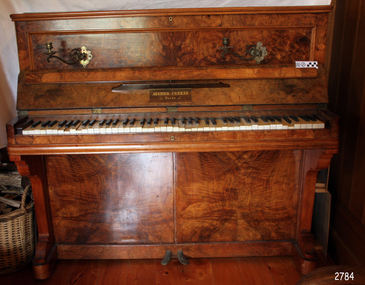
Instrument - Musical, Piano, Aucher Freres, circa 1880-1920
... Ballarat, Mr Henry Bell, was presented both with a “illuminated address” and a piano. The piano was made by Aucher Freres of Paris and was purchased for sixty guineas (which converts to around $7,500 Au in 2019). The gift was criticised for encouraging foreign industry rather than native Australian products, thus going against what the Loyal Liberals own protectionist policy. The writer goes on to state that several pianos made in the Colony compared very favourably at the International Exhibition with those manufactured...Ballarat, Mr Henry Bell, was presented both with a “illuminated address” and a piano. The piano was made by Aucher Freres of Paris and was purchased for sixty guineas (which converts to around $7,500 Au in 2019). The gift was criticised for encouraging foreign industry rather than native Australian products, thus going against what the Loyal Liberals own protectionist policy. The writer goes on to state that several pianos made in the Colony compared very favourably at the International Exhibition with those manufactured ...This piano was made by Aucher Freres of Paris, said to be famous for its pianos in the mid-late 1800s. Aucher Freres (Aucher Brothers) produced a model of piano that was built specifically for use on sailing vessels, the upright yacht-style piano. Pianos were amongst the domestic goods brought to Australia by many colonial immigrants. They were also imported by Australian distributors by the shipload and sought after by settlers. A piano was often found in a Missions to Seamen club room, where visiting seafarers would entertain or be entertained by music and song as part of their relaxation in port. A sarcastically written news article of January 2nd 1869 reported that the Secretary of the Loyal Liberals of Ballarat, Mr Henry Bell, was presented both with a “illuminated address” and a piano. The piano was made by Aucher Freres of Paris and was purchased for sixty guineas (which converts to around $7,500 Au in 2019). The gift was criticised for encouraging foreign industry rather than native Australian products, thus going against what the Loyal Liberals own protectionist policy. The writer goes on to state that several pianos made in the Colony compared very favourably at the International Exhibition with those manufactured by the English or French. He then says that “… the secretary … might learn a lesson from his piano ... the name Aucher Freres, Paris emblazoned on its front should be … a perpetual reminder of the hollowness of that protectionist imposture …” [Refer to Intercolonial News, Victoria, originally published in The Argus, was repeated in the Wallaroo Times and Mining Journal of South Australia 2-1-1869.] Aucher Freres pianos were still around in 1930. A second-hand model was advertised for sale as a good practice piano. The advertisement was placed by the Mount Gambier, SA, agents for Saver’s Pianos Ltd of Adelaide. The piano was described as “a sound little instrument of good tone and appearance”. The asking price in November 1930 was 32 pounds and ten shillings (which converts to about $2,500 Au in 2019). [Refer to Savery’s advertisement, Mt Gambier Border Watch 11-11-1930]This piano is significant for its connection with the time period of chapel and club room at Flagstaff Hill's St Nicholas Seamen's Church. It represents the form of entertainment enjoyed by seafarer's world wide, which is appropriate for a maritime village. The maker of the piano is famous for its quality pianos of the 19th and early 20th century.Piano, upright, polished wood. The wooden hinged keyboard cover lifts up to allow access to the keyboard. The piano also has two brass candlesticks. The top of the piano is hinged and lifts up to allow access to the piano mechanic's inside for tuning and maintenance. The inside flap has a music stand incorporated into it. It also has the usual two hard-soft pedals at the base. There are two brass decorated hooks at each end to allow for ease of movement when the position of the piano is changed. Maker's name inscribed inside keyboard lid in gold lettering. Made in Paris by Aucher Freres (Aucher Brothers)."AUCHER FRERES / Paris" (NOTE: the "C" is sometimes mistaken for a "G")flagstaff hill, warrnambool, shipwrecked-coast, flagstaff-hill, flagstaff-hill-maritime-museum, maritime-museum, shipwreck-coast, flagstaff-hill-maritime-village, piano, music, upright piano, paris, france, aucher freres -
 Federation University Historical Collection
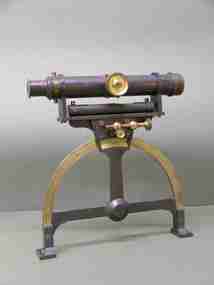
Instrument - Scientific Equipment, Miner's Dial, c1893 - 1901
... The 1893 Ballarat School of Mines Calendar states that mine surveying instruments "always at the disposal of the students" including "one miner's dial". ballarat school of mines surveying scientific instruments scientific objects otto boettger optician Miner's Dial On suppliers label: "Instrument maker to the surveying and engineering departments of her Majesty's Government of South Australia" A surveying instrument consisting of theodolite with single crosshair(.1) mountable on a magnetic compass (.2), designed to sit inside a polished wood carry box. Serial Number 4470 Miner's Dial Instrument Scientific Equipment Otto Boettger, Manufacturing ...Used for surveying classes at the Ballarat School of Mines. Purchased/acquired during Queen Victoria's reign. The 1893 Ballarat School of Mines Calendar states that mine surveying instruments "always at the disposal of the students" including "one miner's dial".A surveying instrument consisting of theodolite with single crosshair(.1) mountable on a magnetic compass (.2), designed to sit inside a polished wood carry box. Serial Number 4470On suppliers label: "Instrument maker to the surveying and engineering departments of her Majesty's Government of South Australia"ballarat school of mines, surveying, scientific instruments, scientific objects, otto boettger, optician, miner's dial -
 Federation University Historical Collection
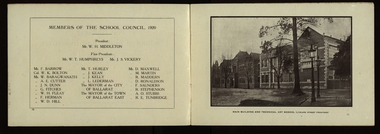
Booklet, The Ballarat School of Mines and Industries 1870-1920 Jubilee Booklet, 1920 (estimated)
... Ballarat School would be left without rivals, its very success inspiring competition. Mining Schools were started in other parts of Australia, and, at the same time, Victoria ceased to hold first place as a mining state. On the other hand there was a great advance in manufacturing...Ballarat School would be left without rivals, its very success inspiring competition. Mining Schools were started in other parts of Australia, and, at the same time, Victoria ceased to hold first place as a mining state. On the other hand there was a great advance in manufacturing ...The first school of Mines in Australia was established at Ballarat in 1870. At the time of its jubilee (1930) the following people were members of the School Council: W.H. Middleton (President), W.T. Humphreys (VP), J.S. Vickery (VP), F. Barrow, Col. W.K. Bolton, William Baragwanath, A.E. Cutter, J.N. Dunn, G. Fitches, W.H. Fleay, F. Herman. W.D. Hill, T. Hurley, K. Kean. J. Kelly, L. Lederman, Mayor of Ballarat, Mayour of Ballarat East, D. Maxwell, M. Martin, R. Maddern, D. Ronaldson, F. Saunders, R. Stephenson, A.O. Stubbs, R.E. Tunbridge. The School Staff in 1920 comprised: Herbert H. Smith, Walter Rowbotham, Reginald L. Cutter, M.C. Young, Hilda Wardle, M. Wiliamson, P.S. Richards, L.H. Archibald, J. Woods, Ken Moss, W. Kenneth, Mrs McIlvena. B. Robinson, S. Rowe, E. Hope-Jones, Miss Abrams, L.St.G.P. Austin, Alfred Mica Smith, J.R. Pound, Herbert R. Murphy, N.H. Junner, Maurice Copland, L.H. Archibald, E.J.A. McConnon, Newton King, D.m. Hull, T.R. Gordon, John M. Sutherland, T.K. Jebb, Dick Richards, C. Tonkin, A.W. Steane, J. Paterson, H.W. Malin, R.V. Maddison, S.M. Mayo, F.A. King, W.H. Steane, T.R. Gordon, T.A. Williams, H. Waldron, G. Black, E.J. McConnon, R.V. Duncan. R. Cutter, E.G. Vawdrey, Hilda WardleWhite stapled booklet - landscape format - 20pp + soft covers with blue writing. Includes an historical sketch of the Ballarat School of Mines. Contains images of the school from around 1920. The history outlined in the booklet follows: 'Ballarat has helped to influence the life and destinies of Australia in many ways, the recital of which would perhaps prove tedious to the citizens of less favoured localities! However, it can be said, without much fear of contradiction, that only less known thought Australia than its fame as a gold field is the reputation won for it by its school of Mines, ... Ballarat was still quite a new place when the School was founded, but a very propserous and popular place all the same, with a go-ahead lot of citizens brim full of the spirit of enterprise which seemsto animate mining populations generally. Money was plentiful, and they launched out into ventures, which later, were to develop and take the place of the gold mines, while what is more to the point, they understood the value of education. the old digging days were passing away. So far as Ballarat itself was concerned the day of the cradle and tin dish had already passed into an antiquity "as dead and distant as the age of the Tubal Caon," said dir redmond Barry on declaring the School open. Mining had become a serious business, and the mining engineer, the metallurgist, and the geologist had become a power in the land. In these circumstances the suggestions to found a School of Mines met with ready acceptance. The late Mr James M. Bickett had the honor of bringing forward the proposition at a meeting of the Ballarat Mining Board in October, 1869. it was agreed to, and the Government, having been approached for assistance, granted a lease of the old Supreme Court buildings at a nominal reantal. A modest sum, including 100 pounds from the Borough Council of Ballarat West, was subscribed by a number of sympathisers, and on the 26th October, 1870, the inaugural address was delivered by Sir Redmond Barry, the first President of the School. Classes were commenced on the 23rd January, 1871. The students at first were mostly adults. They were chiefly men emloyed at the mines, who had the wisdom and energy to devote their spare time to study, and, though their attendance was somewhat irregular, they made very good progress. Old prints which have been preserved show them at work at furnaces, big bearded men of the old-fashioned type of miner. It is interesting to note that among those who gave evidence and encouragement was Sir Roderick Murchison, who many years before had advised Cornish miners to emigrate to Australia to search for gold, and who in 1848 was in possession of gold ore sent from this country. Sir Roderick sent a parcel of books for the library, and gave useful advice as to the curriculum which should be adopted. The Museum, which now contains a most valuable collection of minerals, was one of the first things attended to, and the reports presented to the Council from time to time speak of additions being made from all parts of the world. New equipment was constantly being added to the School, a good deal of assay work was done, and some specimens were sent from the East Indies for examination as far back as 1873. By this time there was a difficulty in providing accomodation for the students who wished to enrol, and the number of instructors had grown from two to four. In 1882 the first building was being erected on what was then part of the gaol reserve. A little more than ten years afterwards a buildnig formerly serving as a Methodist Church was absorbed, while later on, the demand for accomodation increasing, the attack upon the gaol was renewed. The School continued to grow in reputation and size, and became the science centre of the district, and in 1889 a learge new building was opened by Sir Alexander Peacock. Students came from over seas as well as from all the States of Australia, and after going through their courses they took with them the name and fame of the old School to all parts of the globe. School of Mines boys have played a great part in developing the mining fields of Western Australia, South Australia, and africa, while old students who have made a name in their profession are constantly dropping in to see how the old place is getting along. It was not to be expected, however, that the Ballarat School would be left without rivals, its very success inspiring competition. Mining Schools were started in other parts of Australia, and, at the same time, Victoria ceased to hold first place as a mining state. On the other hand there was a great advance in manufacturing, and the demand for technicaly trained men became a great and as insistent as ever it had been for trained mining men. The Council was quick to adapt the school to the new conditions, and the result is seen in the institution, which is one of Ballarat's proudest possession. Instruction is given in all branches of technical work, and the classes are filled with students who are building up for Ballarat a reputation as an industrial centre, which promises to equal that which it formerly held as a mining town. Owing to its bracing climate, its abundant opportunities for recreations, and its accessibilty, Ballarat as a city is an ideal place for educational purposed, and is yearly becoming more and more appreciated throughout the State. The chairman of one of Ballarat's biggests industries claims that the workman can do twice the day's work here that he can do in Melbourne. he was a little enthusiastic over it, perhaps, but it is a well-known fact that the healthy and invigourating Ballarat climate is conducive to both physical and mental activity, and the records of the School provide ample proof of it. One of the most interesting and successful branches of the School of Mines and Industries - if the name be enlarged with the enlargement of its scope - is the Technical Art School. "The City of Statues" has from its earliest days been a stronghold of art. Art schools have flourised here, and in 1905 the Education Department came to the conclusion that the best thing to do with them was to place them under the management of the School of Mines Council. A magnificent new Technical Art School was built at a cost of some 12,000 pounds on the site of the old Supreme Court building, and was formally opened on the 23rd July, 1915. The results have not only been justified but surpassed all anticipations. The most comprehensive list of subjects is taught, and this list is constantly added to. Students have flocked to the art School, which may be said to occupy a unique position in Australia, and its record of success is really astonishing. Its students supply art teachers for the newer schools that are being built, and many occupy leading positinos in important business houses. So well is its reputation known that orders are constantly being received, not only from Victoria, but from other States, for honor boards and challenge shields to be designed and made. The most recent addition to the School of Mines and Industries is the Junior Technical School, for which a new building is now being erected on a portion of the gaol site, transferred to the School of Mines Counci by the Government. At the present moment temporary quarters are being occupied. Some students after passing through the Junior School go straight to employment, continuing perhaps to attend the evening trade classes, while others move on to the senior School. In a review of the work of the School of Mines mention must be made of a series of industrial research carried out under supervision of the Principal. One in particular, regarding the suitability of the local ores for the manufacture of pigments attracted much attention, while the experiemtns on the manufacture of white potery from Victorian clayes were considered of sufficient importance by the Federal Advisory Council of Science and Industry to warrant the appointment of a special investigator. The results of these have been most encouraging, and may have far-reaching consequences. The vocational training of returned soldiers also should not be overlooked. The work was taken in hand from the first, before the Repatriation Department gave assistance, and now with the help of the department of the School has become one of the largest vocational training centres in Victoria outside of Melbourne. The soldiers, trained in a variety of occupations, have made remarkable progress, and already considerable numbers have found employment in local workshops and factories. To sum up, the School is divided into the following departments, each well staffed and equipped: - The School of Mines, science, and Engineering; the Techncial Art School, the Boys' Junior Technical School, the Girl's Preparatory Technical Classes, Trade Classes, and the Commercial School. The school of Mines, science and Engineering, comprises the following branches: - Mining, Metallurgy, Geology, Electrical Engineering, Civil Engineering, Mechanical Engineering, Applied Chemistry, and Pharmacy. Battery treatments, Cyanide Testing, Smelting, Assays, and Clay Testing from a regular part of the School's work. Students gaining qualifications obtain concession in their courses at the university, should they proceed there to continue their studies. The technical Art school curriculum includes training in all branches of pictorial and applied art, an Architectural Diploma Course, a Draughtman's Course, technical Art teachers' Course, Photography,Ticket Writing, Art Metal Work, Woodcarving, Needlework, and Leather work. The Trade Classes give instruction in Telephone Mechanics, telegraphy, Carpentry, Cabinet Making, Plumbing, Blacksmithing, Fitting, Electric Wiring, and Printing. Numerous Scholarships are offered every year, and altogether students will find few places to equal the Ballarat School of Mines and Industries as a training place for their life's work. One of the first in the continent to be established, its Jubilee finds it still in the front rank, keeping pace with the times, and offering to the youths of this country the means of taking advantage of Australia's teeming opportunities. william, battery, smith, herbert, drawing from the antique, ballarat school of mines botanical gardens, ballarat school of mines, redmond barry, alfred mica smith, james bickett, museum, dick richards, ballarat junior technical school, s m b, ballarat school of mines and industries, ballarat technical art school, model mine, james m bickett, j m bickett, roderick murchison, vocational training rooms, wesley church, methodist church, alexander peacock, lathes, repatriation, repatriatin department, war service, school council, baragwanath, gold mining, mining laboratory, plaster cast, r.w. richards, anniversary, jubilee -
 Federation University Historical Collection
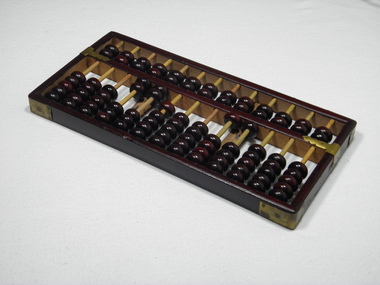
Equipment - Object, Abacus, c.1963
... Ballarat College of Advanced Education. This abacus was purchased while Helen was visiting Asia. http://www.youtube.com/watch?v=CvsnftXXKdw Usage: check wikipedia abacus abacus chinese rosewood stained helen burgess mathematics Manufacturing stamp on lower RHS inside frame: "1963 6" Unidentified Chinese characters on the framework behind the lower beads on both central vertical supports, on the LHS framework and on the centre portion of the lower framework. ...Donated by Helen Burgess former lecturer in Craft at the Ballarat School of Mines and the Ballarat College of Advanced Education. This abacus was purchased while Helen was visiting Asia. http://www.youtube.com/watch?v=CvsnftXXKdw Usage: check wikipediaRectangular abacus, Chinese style rosewood or blackwood with brass fittings on corners and dividing framework,13 rods, 65 lower beads, 26 upper beads. Gift of Helen BurgessManufacturing stamp on lower RHS inside frame: "1963 6" Unidentified Chinese characters on the framework behind the lower beads on both central vertical supports, on the LHS framework and on the centre portion of the lower framework.abacus, abacus chinese, rosewood stained, helen burgess, mathematics -
 Federation University Historical Collection
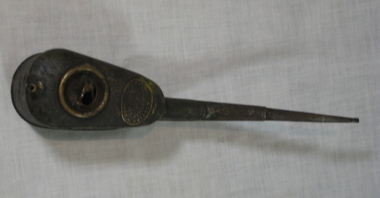
Tool - Object, Oil Can
... Probably used at the Ballarat School of Mines. Fisher and Ludlow was a British car body manufacturing company based in Castle Bromwich, Birmingham....Probably used at the Ballarat School of Mines. Fisher and Ludlow was a British car body manufacturing company based in Castle Bromwich, Birmingham. oil tools ballarat school of mines whites motor mechanics Fisher and Ludlow Two oil cans (or brass oil feeders) with flat base and long neck. ...Probably used at the Ballarat School of Mines. Fisher and Ludlow was a British car body manufacturing company based in Castle Bromwich, Birmingham.Two oil cans (or brass oil feeders) with flat base and long neck. (a) Miniature cylindrical body with flat base, and long narrow spout. Head of flow adjuster is missing. Made by Fisher & Ludlow, Birmingham. (b) Has a miniature plug with chain attached, and a decorative scrolled handle. Made by Whites. oil, tools, ballarat school of mines, whites, motor mechanics, fisher and ludlow -
 Federation University Historical Collection
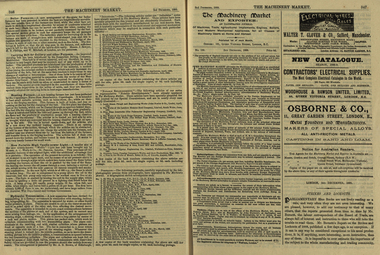
Newspaper, The Machinery Market, 02/12/1889
... It's assumed that this journal was read at the Ballarat School of Mines machinery boiler cohran and co birkenhead stern cowles syndicate company electric smelting works aluminium manufacturing w t glover and co rope machine steam travelling crane webster wood fibre machine automatic govenor expansion gear international exhibition edinburgh beacon light air propeller well boring tools and pumps cochran and co.' ...It's assumed that this journal was read at the Ballarat School of MinesA small illustrated journal with advertisements and pictures. pages 328-356 (and 26 pages of illustrated advertisements). Illustrations include machinery, corn crushers, condensers, chlorination plants. stea, hammers, steam engines, steam pumps, lamps, saw bench, leather belting, casks, barrels, machinery, boiler, cohran and co, birkenhead, stern, cowles syndicate company, electric smelting works, aluminium manufacturing, w t glover and co, rope machine, steam travelling crane, webster wood fibre machine, automatic govenor expansion gear, international exhibition edinburgh, beacon light, air propeller, well boring tools and pumps, cochran and co.'s launch, tug and boat building yard, s.s. jeanette, cochran boiler, cochran and co's boiler shop, stern wheel steamer, s.s. esperanca, cowles syndicate co, milton, w.t. glover & co.'s patent compound rope making machine, bendh drilling machine, steam launch, bicycle, well-boring tools -
 Federation University Historical Collection
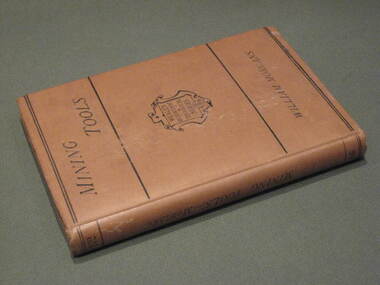
Book, Manual of Mining Tools, 1871, 1871
... The owner of the book, William Baragwanath, was a former student of the Ballarat School of Mines who held the following positions: Department of Mines (1897-1922); director of the geological survey (1922-24); chief mining surveyor (1924-32); secretary for mines (1932-34); chief mining surveyor (1934-43); consultant to the Department of Mines (1943-50); President, Royal Society of Victoria (1943-44), councillor of the Ballarat School of Mines (1916-50). mining tools ballarat school of mines geology bristol school of mines government geologist william baragwanath Title page handwritten in ink 'W.B.' [William Baragwanath] Hard cover book of 207 pages with buff cloth cover. The books covers materials andf processes used in the manufacture ...The author, William Morgans, was a lecturer on mining at the Bristol School of Mines. The owner of the book, William Baragwanath, was a former student of the Ballarat School of Mines who held the following positions: Department of Mines (1897-1922); director of the geological survey (1922-24); chief mining surveyor (1924-32); secretary for mines (1932-34); chief mining surveyor (1934-43); consultant to the Department of Mines (1943-50); President, Royal Society of Victoria (1943-44), councillor of the Ballarat School of Mines (1916-50).Hard cover book of 207 pages with buff cloth cover. The books covers materials andf processes used in the manufacture of tools, special uses, qualities and efficiciency. It includes 235 wood engravings of mining tools drawn to scale. Tools include borers, hammers, sledges, picks, shovels, spades, saws, helves and handles.Title page handwritten in ink 'W.B.' [William Baragwanath]mining, tools, ballarat school of mines, geology, bristol school of mines, government geologist, william baragwanath -
 Federation University Historical Collection
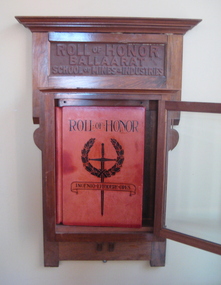
Book - Honour Board (hanging bookcase), Ballarat School of Mines Honor Book and Bookcase, c1920
... The Ballarat Technical Art School and was involved with the design and manufacture of numerous WW1 memorials. ...The Ballarat Technical Art School and was involved with the design and manufacture of numerous WW1 memorials. ...The Ballarat Technical Art School made many honour boards for schools and organisation in Victoria and interstate. Their own was made, but the names were not listed. The Ballarat School of Mines Annual Report for 1921 states: 'It has been decided, for the present, to record the names of our students who served in the warm, in an Honor Book, and to defer the erection of an Honor Board until we can feel assured that the Roll is complete. the wide spread occupations of our students has rendered it very difficult for us to secure detailed information of their service. A handsome Honor Book and Case has been designed and executed by the staff and students of the Technical Art School, and the engrossing of the names and military records will be proceeded with as soon as possible. The Technical Art School was quite busy with commissions. The SMB Annual Report of 1918 states: 'under the direction of the Art principal (Mr H.H. Smith), the work of the Art School continues to receive wide public recognition. Handsome Honor Boars have been designed and executed for the Sydney Sports' Club, the St Arnaud High School, the Birregurra State School, the Wendouree State School and the Ballarat Old Colonists' Club. The School also designed the certificates for the Young Workers' Patriotic Guild, the 'Herald" Shield for perpetual competition at the technical Schools' athletic meetings, the "Hansen" Shield for competition among the Northern District High Schools, two metal tablets for the Castlemaine high School, and a certificate for the Grampians Secondary Schools' Association. Numerous Honor Books and Mural cases have also been designed for State Schools.' Over 400 former students and staff of the Ballarat School of Mines served during World War One. The 1920 SMb Students' Magazine said' 'Many students left Australia with the first Contingent, and since then, the School has been represented on every field where Australians have fought, from the first landing at Gallipoli to the decisive victory on the 8 August 1918.' The influence of the school was appropriately shown in the fact that at least 13 of its students were officers in the Australian Mining Corps. The title page has the initials 'D.J.' which most probably stands for Donald I. Johnston, a teacher with the Ballarat Technical Art school from 1920 to 1949. The Ballarat School of Mines World War 1 Honor Book remained uncompleted for more than 90 years. The names of over 400 SMB staff and students who served their country were not inscribed until 2012, despite names, ranks and service records being compiled. A restoration project was instigated as part of the 140th anniversary of the Ballarat School of Mines in 2010. Names were inscribed into the book by Calligrapher Lyn Forrester. The University of Ballarat believed this project is important not only to SMB's history, but the families and descendants of those who served while studying or teaching at SMB. The restoration project involved names being hand written in calligraphy into the Honor Book and was funded with the assistance of the 'Restoring Community War Memorial Grant'. The memorial was designed and made by the staff and students of the Ballarat School of Mines Technical Art School under the direction of Principal Herbert H. Smith. In 1921 the Ballarat School of Mines Annual Report recorded: "It has been decided, for the present, to record the names of our students who served in the war, in an Honor Book, and to defer the erection of an Honor Board until we can feel assured that the roll is complete. The wide spread occupations of our students has rended it very difficult for us to secure detailed information of their service. A handsome Honor Book and case has been designed and executed by the staff and students of the Technical Art School, and the engrossing of the names and miliatary records will proceed with as soon as possible. The Ballarat Technical Art School and was involved with the design and manufacture of numerous WW1 memorials. When it came time to complete their own memorial, the Principal died, and the Honor Roll must have been overlooked in the confusion that ensued. There have been numerous theories about why the Honor Roll was never completed, one being that it was because the SMB Principal, Maurice Copland, literally worked himself to death organising repatriation classes for ex-soldiers who attended SMB. The Courier of 18 November 1922 said of Maurice Copland: “He put his very best into the work for the welfare of the soldiers; in fact, he did too much for the good of his physique, for he wore himself out in the services of the returned men. If ever there was a war victim the late Mr Copland was one. But for the stress of work entailed by those repatriation classes and the amount of general war work which he performed Mr Copland would probably have been with them today." Understandably, SMB was thrown into some disarray by their Principal's death and the Honor Book was not completed. The University of Ballarat would like to finally honor its SMB war veterans by completing the Honor Book and as a further mark of respect, dedicate the project to Maurice Copland. The Ballarat Technical Art School undertook many honor boards. The Ballarat School of Mines Annual Report 1918 states: "Under the direction of the Art Principal (Mr H.H. Smith), the work of the Art School continues to receive a wide public recognition. handsome Honor Boards have been designed and executed for the Sydney Sports' Club, the St Arnaud High School, the Birregurra State School, the wendouree State School and the Ballarat Old Colonists' Club. The School also designed certificates for the Young Workers' patriotic Guild, the "Herald" Shield for perpetual Competition at the Technical schools athletics meetings, the "Hansen" Shield for competition in the northern District High Schools, two metal tablets for the Castlemaine High School, and a certificate for the Grampians Secondary Schools' Association. Numerous Honor Gooks and mural cases have also been designed for State Schools." The 1920 Ballarat School of Mines Annual Report stated: Public appreciation of the High standard of design and artistic craft work produced by the students of the Art School, under the direction of the Principal (Mr Herbert H. Smith), continues to be demonstrated by the lage number of important commissions entrusted to the school, not only by the public bodies and business firms by the Education Department and public bodies all over the State." "Amongst the important local commissions received during the year was the designing and supplying of the Municipal Council's Address of Welcome Casket for presentation to His Royal Highness the Prince of Wales, the designing and supervising of a large four-light stained glass window for the Lydiard Street Methodist Church, ... and supply numerous honor books, honor boards, etc., for public institutions and school." "The School has been honored by, and has acceded to the request of the Education Department to supply designs for the title page, chapter headings and initial letters for the War Service Book which it is about to publish, Mr F. Tate, director of Education, recognising the students' work in this direction by an appreciative letter of thanks. The Education Department has also been instrumental in directing to the School applications from all parts of the State, including Melbourne, for the School to supply competitive sports shields, honor boards, books and designs for certificates, and various decorative objects. The School has therefor been responsible for much work coming to local Ballarat firms which would otherwise have found its way to Melbourne or other centres. In 2011, as the result of a 'Restoring Community War Memorials Grant' calligrapher Lynton Forrester was commissioned to record over 400 names into the honor book. A Victorian Blackwood World War I Honor Board holds a red leatherbound Ballarat School of Mines Honor Book. The book includes a title page relating to the Ballarat School of Mines and Industries. The Ballarat School of Mines Honor Book and case was not finally inscribed with names until 2012. world war one, ww1, ballarat school of mines, world war 1, world war i, honour roll, calligraphy, don johnston, honor book, honor roll, copeland, maurice copeland, honour book, roll of honour, percy coltman, arthur e. tandy, leslie coulter -
 Federation University Historical Collection
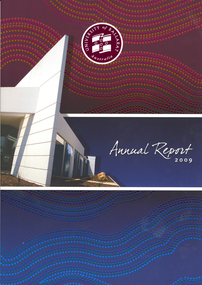
Book, University of Ballarat Annual Report, 2009, 2009
... Contents include: University of Ballarat Charter, About the University, TravelSmart Program, Prospects Restaurant judged Best Training Restaurant in Victoria, IMB Services Centre opening, 'Learn to Succeed' branding, grant Street Foot Bridge,Manufacturing Technology Training Centre, riding for the Disabled, Equine Centre Images include: Grant Paulson, Robert H.T. ...Contents include: University of Ballarat Charter, About the University, TravelSmart Program, Prospects Restaurant judged Best Training Restaurant in Victoria, IMB Services Centre opening, 'Learn to Succeed' branding, grant Street Foot Bridge,Manufacturing Technology Training Centre, riding for the Disabled, Equine Centre Images include: Grant Paulson, Robert H.T. ...Soft covered book with a building and details from an Aboriginal dot painting on the cover. Contents include: University of Ballarat Charter, About the University, TravelSmart Program, Prospects Restaurant judged Best Training Restaurant in Victoria, IMB Services Centre opening, 'Learn to Succeed' branding, grant Street Foot Bridge,Manufacturing Technology Training Centre, riding for the Disabled, Equine Centre Images include: Grant Paulson, Robert H.T. Smith, David Battersby, Christine Nixon, Angela Carey, Andrew Allen, John Brumby, Jacinta Allan, Mathew Hall, Rowan Waina, Ronnie Smith, Alsion Nguyen, Grant Hackett, Frank Stagnitti, Sam Kameer, Rowena Coutts, Barbara Webb, Trevor Ferguson, Peter Gell, University of Ballarat Council .3) Financial Statementsuniversity of ballarat, battersby, webb, coutts, gell, annual report, david battersby, barabara webb, reconciliation action plan, grant paulson, robert h.t. smith, honorary doctorate - christine nixon, angela carey, andrew allen, geoff howard, dale boucher, frank stagnitti, rowena coutts, sovereign hill, jacinta allan
