
Showing 112 items matching "marking tool"
-
 City of Moorabbin Historical Society (Operating the Box Cottage Museum)
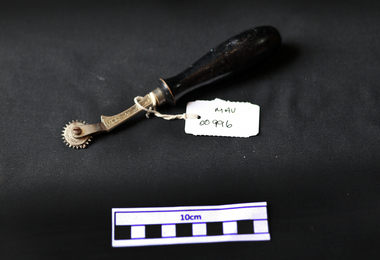
Craftwork, leatherwork marking tool, c1900
... Craftwork, leatherwork marking tool...This leather marking tool is rolled along leather to mark the spacing of stitches for smooth, even results. ...A leather working marking tool with a steel wheel and shaft and a carved wooden handle. ...Craftwork, leatherwork marking tool ...This leather marking tool is rolled along leather to mark the spacing of stitches for smooth, even results. Early settlers and pioneers had to be self reliant and made and repaired their own equipment eg Saddles, reins, as well as wallets, pouches and bags. A leather working marking tool with a steel wheel and shaft and a carved wooden handle. craftwork, pioneers, early settlers, moorabbin, bentleigh, cheltenham, leather, tools, saddles, wallets, personal effects, horses, drays, -
 City of Moorabbin Historical Society (Operating the Box Cottage Museum)
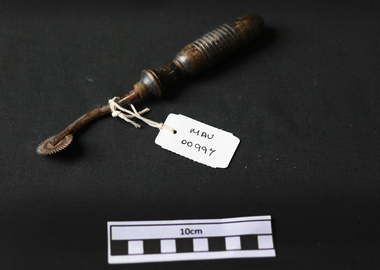
Craftwork, leatherwork marking tool, c1900
... Craftwork, leatherwork marking tool...This leather marking tool is rolled along leather to mark the spacing of stitches for smooth, even results. ...This leather marking tool is rolled along leather to mark the spacing of stitches for smooth, even results. ...This leather marking tool is rolled along leather to mark the spacing of stitches for smooth, even results. Early settlers and pioneers had to be self reliant and made and repaired their own equipment eg Saddles, reins, as well as wallets, pouches and bags. A leather working tool marker with steel wheel and shaft and a carved wooden handlecraftwork, cheltenham, moorabbin, early settlers, pioneers, leather, tools, saddles, wallets, personal effects, horses, drays, -
 Kiewa Valley Historical Society
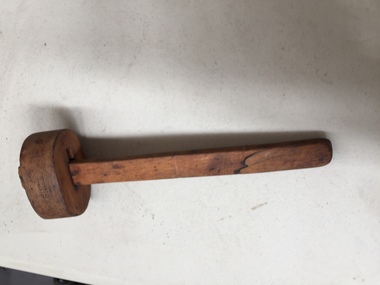
Woodworking Tool - Marking Guage
... Woodworking Tool - Marking Guage...tool...marking guage...Wooden scribe - marking tool. A marking gauge is a measuring tool used in woodworking projects. ...Used by carpenters and/or cabinet makers living in the Kiewa Valley. Woodworkers tool marking guage Wooden scribe Wooden scribe - marking tool. ...Very old. Made of wood possibly beech wood.Used by carpenters and/or cabinet makers living in the Kiewa Valley.Wooden scribe - marking tool. A marking gauge is a measuring tool used in woodworking projects. It is ideal for marking out lines or scribing on various surfaces before sawing, chiseling, or cutting. Most models have a radius bottom edge ideal for sliding along the wood being marked, making it an easy tool to use.woodworkers tool, marking guage, wooden scribe -
 Kiewa Valley Historical Society
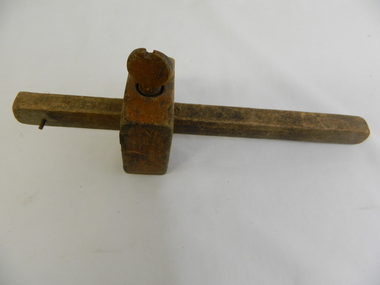
Marking Gauge - Carpenter's Tool, c1925
... Marking Gauge - Carpenter's Tool...tool...marples...marking...There is a nail through one end. Marking Gauge - Carpenter's Tool Marples English marking Guage, plated ...Used from the mid 1920s to mark timber so that it could be cut with a saw. It was an essential tool for carpenters.Used by Alan Tyers who worked for the State Electricity Commission of Victoria on the Kiewa Hydro Electric Scheme.Carpenter's essential equipment. Used for marking timber so it can be cut with a saw. Wooden screw on the side allows the square wooden block to slide along the length of wood which is almost square at the end but with 2 flat sides and 2 rounded sides. Plated with 2 strips of brass on the square block. Sold for 1/3 in the 1920s. There is a nail through one end. carpenter, cabinet maker, secv, tool, marples, marking gauge -
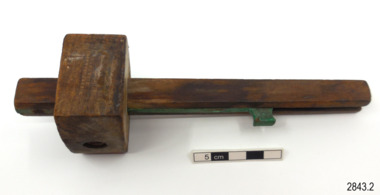 Flagstaff Hill Maritime Museum and Village
Tool - Marking Gauge
... tool...woodwork...marking...marking gauge has an adjustable sliding arm. The gauge is used for scribing two lines on a flat surface such as timber for measuring and cutting. It is a hand-powered tool...Its maker was well known for his good quality tools and his business grew because of his reputation. flagstaff hill warrnambool maritime museum maritime village shipwreck coast hand tool woodwork marking gauge measuring tool mortice gauge mortice marking gauge William Marples W Marples & Sons Hibernia Shamrock trifoil tripple shamrock carpenter's tool cabinet maker woodworking tool Drawing planning tool wooden scribe vintage carpenter marking tool antique marking out joiner Stamped into block “W. ...This mortice marking gauge has an adjustable sliding arm. The gauge is used for scribing two lines on a flat surface such as timber for measuring and cutting. It is a hand-powered tool that would have been used by a tradesperson such as a cabinet maker, woodworker or carpenter. The hand tool shows signs of much use. The ‘W. Maples & Sons, Hibernia’s catalogue of 1867 had a very similar tool, called a Mortice Gauge, column 2, page 15. W. MARPLES & SONS- William Marples Snr. had a business on the Sheffield Moor in 1773/74. In 1821 his son William Jnr. At 12 years old began in his father’s joinery business. 1833 the firm was known as a tool manufacturer. In 1838 Marples called his business Hibernian Works and moved to 67-69 Spring Lane, Sheffield. When he moved to Westfield Terrace in 1856, he called his business Hibernia Works (no ‘n’ on the end). The business remained at this address for 116 years. In about 1859 the firm began using the Lyre (Irish harp) mark. In 1860 or so the two brothers, Edwin and William Marples, became partners and the firm became William Marples and Sons. The firm introduced the single shamrock symbol in 1860-61. The boys’ brother Albert joins the firm in 1863. In 1875 the company registered both the name ‘Hibernia’ and the trade mark symbol of a Triple Shamrock and the use of these trademarks continued for many decades, into the 1940 and the firm, with many changes, was still in business in the early 21st century. About Shamrock and Hibernia, both are related to Ireland and W. Marples named his products the Shamrock brand.The marking gauge is an example of a hand powered woodworking tool used over the past few centuries. Its maker was well known for his good quality tools and his business grew because of his reputation.Mortice marking gauge: wooden staff with block and green, adjustable sliding arm within the staff. The end of the staff has a facility for holding the scribe marker. The block has a hole into which a peg or wedge would be inserted to hold the sliding arm in place. Inscription with maker's name and almost indecipherable mark is stamped onto one side of the block. Made by W Marples & Sons, Sheffield.Stamped into block “W. MARPLES & SONS / HIBERNIA WORKS” above Logo of ‘Trefoil’ image [three, three-leafed clovers on the same stem]flagstaff hill, warrnambool, maritime museum, maritime village, shipwreck coast, hand tool, woodwork, marking gauge, measuring tool, mortice gauge, mortice marking gauge, william marples, w marples & sons, hibernia, shamrock, trifoil, tripple shamrock, carpenter's tool, cabinet maker, woodworking tool, drawing, planning, tool, wooden scribe, vintage, carpenter, marking tool, antique, marking out, joiner -
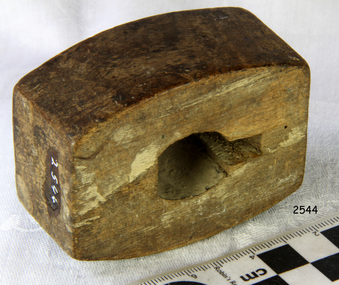 Flagstaff Hill Maritime Museum and Village
Tool - Gauge
... tool...marking gauge...A marking gauge is used to scribe marks onto the timber of a woodworker's job. Flagstaff Hill Maritime Museum and Village Warrnambool Great Ocean Road woodworking tool marking gauge hand tool Stamped "JB" on two ends. ...A marking gauge is used to scribe marks onto the timber of a woodworker's job.Gauge, wooden; block section of a marking gauge. Inscription impressed into wood.Stamped "JB" on two ends.flagstaff hill maritime museum and village, warrnambool, great ocean road, woodworking tool, marking gauge, hand tool -
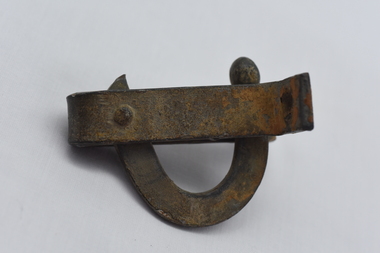 Stanley Athenaeum & Public Room
Functional object - Gate latch, Gate latch arm
... Handmade cast iron with markings of tooling. ...Handmade cast iron with markings of tooling. cast iron, hand tooled, with movement up and down. ...cast iron, hand tooled, with movement up and down. Originally had a strike plate. Possibly from the Athenaeum front gate when the Athenaeum was fenced. A 1930's photograph shows a picket fence with a front gate.Handmade cast iron with markings of tooling. -
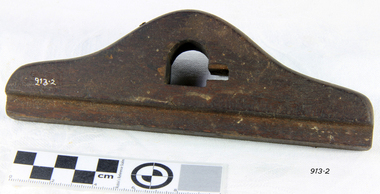 Flagstaff Hill Maritime Museum and Village
Panel Gauge
... Panel Gauge marking tool used for scribing a line parallel with the edge of a large work piece such as a panel. ...flagstaff hill warrnambool shipwrecked-coast flagstaff-hill flagstaff-hill-maritime-museum maritime-museum shipwreck-coast flagstaff-hill-maritime-village panel gauge gauge Panel Gauge marking tool used for scribing a line parallel with the edge of a large work piece such as a panel. ...Panel Gauge marking tool used for scribing a line parallel with the edge of a large work piece such as a panel. Only have the "Block" of the gaugeflagstaff hill, warrnambool, shipwrecked-coast, flagstaff-hill, flagstaff-hill-maritime-museum, maritime-museum, shipwreck-coast, flagstaff-hill-maritime-village, panel gauge, gauge -
 Flagstaff Hill Maritime Museum and Village
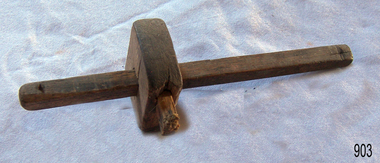
Tool - Marking Gauge, Believed to be homemade around the 1940s given no makers marks and the naivety of its construction
... Tool...Marking Gauge...Tool Marking Gauge ...A marking gauge, also known as a scratch gauge, is used in woodworking and metalworking to mark out lines for cutting or other operations. The purpose of the gauge is to scribe a line parallel to a reference edge or surface. It is used in joinery and sheet metal work operations. The gauge consists of a beam, a headstock, and a scribing or marking implement, typically a pin, knife, pen or wheel. The headstock slides along the beam and is locked in place by various means: a locking screw, cam lever, or a wedge. The marking implement is fixed to one end of the beam. These types of gauges have been in use for many centuries and have not changed much in their design.An item that has not changed in use since its inception many hundreds of years ago. These types of marking gauges used by cabinet and joinery makers to mark or scribe their work for cutting are still produced and used today in many sizes by professional cabinet makers and individuals.Cabinet makers marking gauge, wooden, adjustable staff secured be a wedge through the block. Noneflagstaff hill, warrnambool, shipwrecked-coast, flagstaff-hill, flagstaff-hill-maritime-museum, maritime-museum, shipwreck-coast, flagstaff-hill-maritime-village, cabinet makers tools, woodworking tool, marking gauge, mortise gauge -
 Kew Historical Society Inc
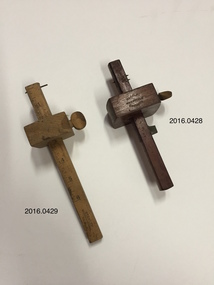
Tool - Measuring Tool, Stanley, Wooden Marking Gauge, 1900-1950
... marking gauge...stanley -- tool manufacturer...marking gauge stanley -- tool manufacturer measuring tools Manufacturer's name Marking gauge. ...Marking gauge. Manufactured by Stanley. A marking gauge, also known as a scratch gauge, is used in woodworking and metalworking to mark out lines for cutting or other operations. The purpose of the gauge is to scribe a line parallel to a reference edge or surface. The gauge consists of a beam, a headstock, and a scribing or marking implement, typically a pin, knife, pen or wheel. The headstock slides along the beam, and is locked in place by various means: a locking screw, cam lever, or a wedge.Manufacturer's namemarking gauge, stanley -- tool manufacturer, measuring tools -
 National Wool Museum
Elastrator Kit, 1944
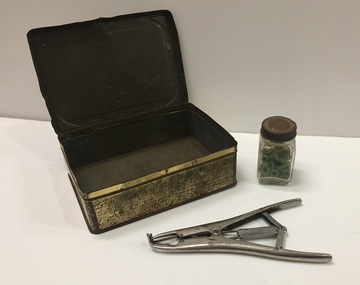
... Elastrator Kit containing a metal box, elastrator tool and marking rings. Used for the castration and docking of livestock....No. 24946 On Glass Bottle - Part No Elastrator Kit containing a metal box, elastrator tool and marking rings. Used for the castration and docking of livestock. ...Elastrator Kit containing a metal box, elastrator tool and marking rings. Used for the castration and docking of livestock.On Tool - Elastrator Reg. Trade Mark Aus. Pat. No. 122217 Des. App. No. 24946 On Glass Bottle - Part No -
 The Beechworth Burke Museum
Photograph, c 1900's
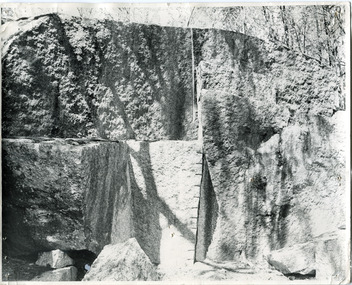
... large black and white photograph of a cut rock face with tool markings on some of the rocks. a quarry face....large black and white photograph of a cut rock face with tool markings on some of the rocks. a quarry face. ...large black and white photograph of a cut rock face with tool markings on some of the rocks. a quarry face.Black and white rectangular photograph printed on matte photographic paperfiddes quarry, rock face -
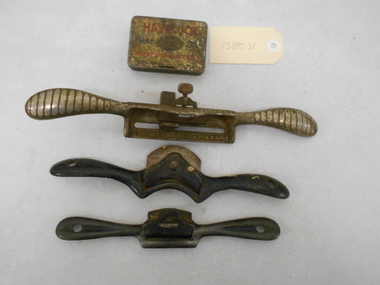 Bendigo Historical Society Inc.
Tool - PITTOCK COLLECTION: THREE WOOD SPOKEHAVES
... Pittock collection: three wood spokeshaves, metal construction * one straight spokeshave, marked 64, 230 mm L x 40 mm W * one rounded spokeshave, marked B, 250 mm L x 60 mm W * one specialised marking/shaping tool, wide guide, marked Stanley No. 66 Pat'd Feb 9.86, 300 mm L x 50 mm W x 55 mm D * variety of shaping tool blades for Stanley tool, 60 mm x 15 mm blades. ...Pittock collection: three wood spokeshaves, metal construction * one straight spokeshave, marked 64, 230 mm L x 40 mm W * one rounded spokeshave, marked B, 250 mm L x 60 mm W * one specialised marking/shaping tool, wide guide, marked Stanley No. 66 Pat'd Feb 9.86, 300 mm L x 50 mm W x 55 mm D * variety of shaping tool blades for Stanley tool, 60 mm x 15 mm blades. ...Pittock collection: three wood spokeshaves, metal construction * one straight spokeshave, marked 64, 230 mm L x 40 mm W * one rounded spokeshave, marked B, 250 mm L x 60 mm W * one specialised marking/shaping tool, wide guide, marked Stanley No. 66 Pat'd Feb 9.86, 300 mm L x 50 mm W x 55 mm D * variety of shaping tool blades for Stanley tool, 60 mm x 15 mm blades. Stored in Havelock Flake Cut Pure Virginia Tobacco tin, 80 mm L x 55 mm W x 15 mm D Items stored in Pittock coach builder's box, reference 13000.1. -
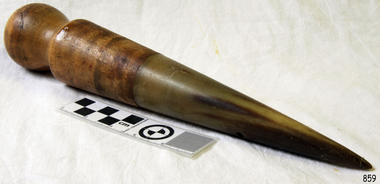 Flagstaff Hill Maritime Museum and Village
Tool - Fid, Late 19th to early 20th century
... markings for precise measurements in a variety of sizes of rope. The length of these fid’s is typically 21 or 22 times the diameter of rope to be spliced. Fids have been used since sailing vessels were first used to travel the worlds seas the tool was invented to be used to splice rope and with working with canvas sails. ...A Fid is a conical tapered wooden tool used for separating the strands of rope for splicing. They were a tool traditionally made of wood or bone used to work with rope and canvas in marlinespike seamanship. A Fid differs from a marlinspike in material and purposes. A marlinspike is used in working with wire rope, natural and synthetic lines also may be used to open shackles, and is made of metal. A Fid is used to hold open knots and holes in the canvas, and to separate the "lays" (or strands) of synthetic or natural rope for splicing. A variation of the Fid, the gripfid, is used for ply-split braiding. The gripfid has a jamming cleat to pull a cord back through the cord split by the fid's point. Modern Fids are typically made of aluminium, steel, or plastic. In addition to holding rope open to assist the creation of a rope splice, modern push fid's have markings for precise measurements in a variety of sizes of rope. The length of these fid’s is typically 21 or 22 times the diameter of rope to be spliced. Fids have been used since sailing vessels were first used to travel the worlds seas the tool was invented to be used to splice rope and with working with canvas sails. A Fid is a sailors tool that has maintained its general design for hundreds of years and gives a snapshot into what the working life was like for sailors on board sailing ships for hundreds of years. The tool in its original design is still in regular use today by recreational sailors all over the world to splice and join lengths of rope.Fid with Horn body and wood top.Noneflagstaff hill, warrnambool, shipwrecked-coast, flagstaff-hill, flagstaff-hill-maritime-museum, maritime-museum, shipwreck-coast, flagstaff-hill-maritime-village -
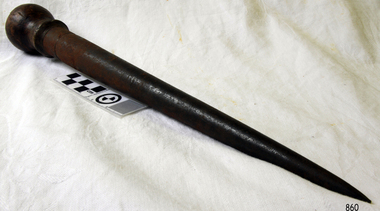 Flagstaff Hill Maritime Museum and Village
Tool - Fid, Mid 20th Century
... markings for precise measurements in a variety of sizes of rope. The length of these fid’s is typically 21 or 22 times the diameter of rope to be spliced. Fids have been used since sailing vessels were first used to travel the worlds seas the tool was invented to be used to splice rope and with working with canvas sails. ...A Fid is a conical tapered wooden tool used for separating the strands of rope for splicing. They were a tool traditionally made of wood or bone used to work with rope and canvas in marlinespike seamanship. A Fid differs from a marlinspike in material and purposes. A marlinspike is used in working with wire rope, natural and synthetic lines also may be used to open shackles, and is made of metal. A Fid is used to hold open knots and holes in the canvas, and to separate the "lays" (or strands) of synthetic or natural rope for splicing. A variation of the Fid, the gripfid, is used for ply-split braiding. The gripfid has a jamming cleat to pull a cord back through the cord split by the fid's point. Modern Fids are typically made of aluminium, steel, or plastic. In addition to holding rope open to assist the creation of a rope splice, modern push fid's have markings for precise measurements in a variety of sizes of rope. The length of these fid’s is typically 21 or 22 times the diameter of rope to be spliced. Fids have been used since sailing vessels were first used to travel the worlds seas the tool was invented to be used to splice rope and with working with canvas sails. A Fid is a sailors tool that has maintained its general design for hundreds of years and gives a snapshot into what the working life was like for sailors on board sailing ships for hundreds of years. The tool in its original design is still in regular use today by recreational sailors all over the world to splice and join lengths of rope.Metal Fid with a wooden bulb on top metal body tapering to a point. Noneflagstaff hill, warrnambool, shipwrecked-coast, flagstaff-hill, flagstaff-hill-maritime-museum, maritime-museum, shipwreck-coast, flagstaff-hill-maritime-village -
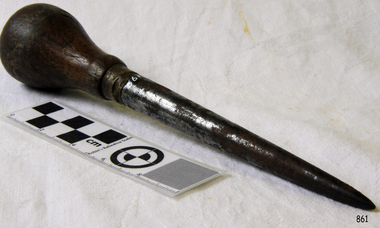 Flagstaff Hill Maritime Museum and Village
Tool - Fid, Early 20th century
... markings for precise measurements in a variety of sizes of rope. The length of these fid's is typically 21 or 22 times the diameter of rope to be spliced. Fids have been used since sailing vessels were first used to travel the worlds seas the tool was invented to be used to splice rope and with working with canvas sails. ...A Fid is a conical tapered wooden tool used for separating the strands of rope for splicing. They were a tool traditionally made of wood or bone used to work with rope and canvas in marlinespike seamanship. A Fid differs from a marlinspike in material and purposes. A marlinspike is used in working with wire rope, natural and synthetic lines also may be used to open shackles, and is made of metal. A Fid is used to hold open knots and holes in the canvas, and to separate the "lays" (or strands) of synthetic or natural rope for splicing. A variation of the Fid, the gripfid, is used for ply-split braiding. The gripfid has a jamming cleat to pull a cord back through the cord split by the fid's point. Modern Fids are typically made of aluminium, steel, or plastic. In addition to holding rope open to assist the creation of a rope splice, modern push fid's have markings for precise measurements in a variety of sizes of rope. The length of these fid's is typically 21 or 22 times the diameter of rope to be spliced. Fids have been used since sailing vessels were first used to travel the worlds seas the tool was invented to be used to splice rope and with working with canvas sails. A Fid is a sailors tool that has maintained its general design for hundreds of years and gives a snapshot into what the working life was like for sailors on board sailing ships for hundreds of years. The tool in its original design is still in regular use today by recreational sailors all over the world to splice and join lengths of rope.Fid, Metal and Wood top with brass ferrule between the two.Noneflagstaff hill, warrnambool, shipwrecked-coast, flagstaff-hill, flagstaff-hill-maritime-museum, maritime-museum, shipwreck-coast, flagstaff-hill-maritime-village -
 Flagstaff Hill Maritime Museum and Village
Tool - Fid, Late 19th- early 20th Century
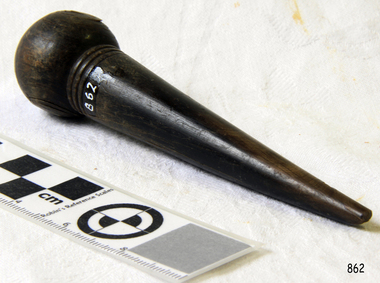
... markings for precise measurements in a variety of sizes of rope. The length of these fid's is typically 21 or 22 times the diameter of rope to be spliced. Fids have been used since sailing vessels were first used to travel the worlds seas the tool was invented to be used to splice rope and with working with canvas sails. ...A Fid is a conical tapered wooden tool used for separating the strands of rope for splicing. They were a tool traditionally made of wood or bone used to work with rope and canvas in marlinespike seamanship. A Fid differs from a marlinspike in material and purposes. A marlinspike is used in working with wire rope, natural and synthetic lines also may be used to open shackles, and is made of metal. A Fid is used to hold open knots and holes in the canvas, and to separate the "lays" (or strands) of synthetic or natural rope for splicing. A variation of the Fid, the gripfid, is used for ply-split braiding. The gripfid has a jamming cleat to pull a cord back through the cord split by the fid's point. Modern fid's are typically made of aluminium, steel, or plastic. In addition to holding rope open to assist the creation of a rope splice, modern push fid's have markings for precise measurements in a variety of sizes of rope. The length of these fid's is typically 21 or 22 times the diameter of rope to be spliced. Fids have been used since sailing vessels were first used to travel the worlds seas the tool was invented to be used to splice rope and with working with canvas sails. A Fid is a sailors tool that has maintained its general design for hundreds of years and gives a snapshot into what the working life was like for sailors on board sailing ships for hundreds of years. The tool in its original design is still in regular use today by recreational sailors all over the world to splice and join lengths of rope.Wooden Fid with 3 rings around base of knob at the top of fid. Noneflagstaff hill, warrnambool, shipwrecked-coast, flagstaff-hill, flagstaff-hill-maritime-museum, maritime-museum, shipwreck-coast, flagstaff-hill-maritime-village -
 Flagstaff Hill Maritime Museum and Village
Tool - Marking Gauge, Believed to be homemade between 1900 to 1940s given no makers marks and the naivety of its construction
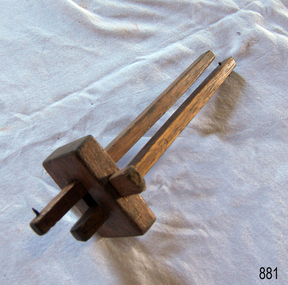
... These types of marking gauges used by cabinet and joinery makers to mark or scribe their work for cutting are still produced and used today in many sizes by professional cabinet makers and individuals. flagstaff hill warrnambool shipwrecked-coast flagstaff-hill flagstaff-hill-maritime-museum maritime-museum shipwreck-coast flagstaff-hill-maritime-village None Cabinet makers marking gauge, wooden, two adjustable staffs secured be a wedge through the block. Each staff has a metal nail in the end. Tool ...A marking gauge, also known as a scratch gauge, is used in woodworking and metalworking to mark out lines for cutting or other operations. The purpose of the gauge is to scribe a line parallel to a reference edge or surface. It is used in joinery and sheet metal work operations. The gauge consists of a beam, a headstock, and a scribing or marking implement, typically a pin, knife, pen or wheel. The headstock slides along the beam and is locked in place by various means: a locking screw, cam lever, or a wedge. The marking implement is fixed to one end of the beam. These types of gauges have been in use for many centuries and have not changed much in their design.An item that has not changed in use since its inception many hundreds of years ago. These types of marking gauges used by cabinet and joinery makers to mark or scribe their work for cutting are still produced and used today in many sizes by professional cabinet makers and individuals.Cabinet makers marking gauge, wooden, two adjustable staffs secured be a wedge through the block. Each staff has a metal nail in the end.Noneflagstaff hill, warrnambool, shipwrecked-coast, flagstaff-hill, flagstaff-hill-maritime-museum, maritime-museum, shipwreck-coast, flagstaff-hill-maritime-village -
 Flagstaff Hill Maritime Museum and Village
Tool - Marking Gauge
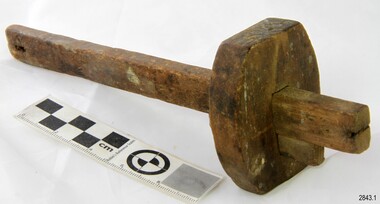
... tool...woodwork...marking...This marking gauge has a round head. It is a hand-powered tool and is used to measure and mark a scribed line onto the surface of the wood for the purpose of cutting or aligning. ...Marking gauge: wooden staff with half-round block secured by a wedge. there is a metal marker on one end. Inscription "WS" crudely engraved in end of block. Tool ...This marking gauge has a round head. It is a hand-powered tool and is used to measure and mark a scribed line onto the surface of the wood for the purpose of cutting or aligning. It would have been used by a tradesperson such as a cabinet maker, wood worker or carpenter. The hand tool shows signs of much use. It appears to be appreciated as a tool due to the initials carved into the side of the block. The marking gauge is an example of a hand powered woodworking tool used over the past few centuriesMarking gauge: wooden staff with half-round block secured by a wedge. there is a metal marker on one end. Inscription "WS" crudely engraved in end of block.Carved "W.S."flagstaff hill, warrnambool, maritime museum, maritime village, shipwreck coast, hand tool, woodwork, marking gauge, w.s., measuring tool -
 Flagstaff Hill Maritime Museum and Village
Tool - Plane, 20th century
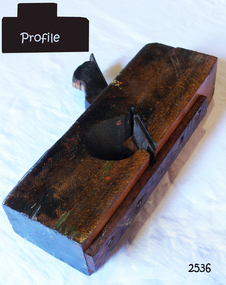
... tool Rabbet plane. Has a makeshift piece of wood screwed to base to protect it. Made by Sherman Nth York. Blade size 2". A square piece of leather is tacked to top of plane. Red paint markings ...A special version of the rebate plane, the keel and stem rabbet plane. This was a wider than the usual rebate or rabbet plane, and the blade was set askew to the side to give a slicing action. It was used for cleaning out the rabbet cut from the head of the stem, and along the keel, to take the ends and edges of the planking - its angle varied according to the ship.Rabbet plane. Has a makeshift piece of wood screwed to base to protect it. Made by Sherman Nth York. Blade size 2". A square piece of leather is tacked to top of plane. Red paint markings are on one side.flagstaff hill, warrnambool, shipwrecked-coast, flagstaff-hill, flagstaff-hill-maritime-museum, maritime-museum, shipwreck-coast, flagstaff-hill-maritime-village, rabbet plane., wood working, wood working tools, hand tool -
 Flagstaff Hill Maritime Museum and Village
Tool - Marking Gauge, Prior to 1950
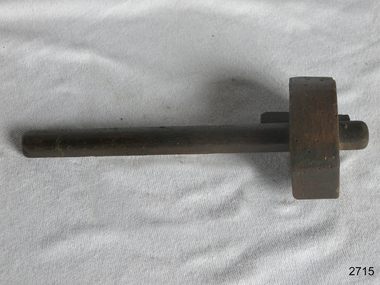
... Marking Gauge...Woodworking...Carpenters Tools...Tool...Its use to scribe a line in various material as a cutting guide and is still in use today by many trades. warrnambool flagstaff-hill flagstaff-hill-maritime-museum maritime-museum shipwreck-coast flagstaff-hill-maritime-village Marking Gauge Woodworking Carpenters Tools Tool None Wooden marking Gauge, small Tool Marking Gauge ...A marking gauge, also known as a scratch gauge, and] is used in woodworking and metalworking to mark out lines for cutting or other operations. The purpose of the gauge is to scribe a line parallel to a reference edge or surface. It is used in joinery and sheet metal operations. The gauge consists of a beam, a headstock, and a scribing or marking implement, typically a pin, knife, pen or wheel. The headstock slides along the beam, and is locked in place by various means: a locking screw, cam lever, or a wedge. The marking implement is fixed to one end of the beam.A tool that has been in use since woodworking began for hundreds if not thousands of years without much change to the design or how the tool is used. Its use to scribe a line in various material as a cutting guide and is still in use today by many trades. Wooden marking Gauge, smallNonewarrnambool, flagstaff-hill, flagstaff-hill-maritime-museum, maritime-museum, shipwreck-coast, flagstaff-hill-maritime-village, marking gauge, woodworking, carpenters tools, tool -
 Flagstaff Hill Maritime Museum and Village
Tool - Brace, 1859-1866
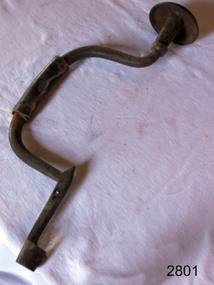
... No contextual information available at this time give the items usual design and no makers markings writer believes item is from the 1860s either American, British or could be of continental origin. An early tool ...No contextual information available at this time give the items usual design and no makers markings writer believes item is from the 1860s either American, British or could be of continental origin.An early tool significant because of it's unique design writer cannot find one like it during researching the item.Metal Brace possibly for gas fitter has leather in centre, (owner installed)Noneflagstaff hill, warrnambool, shipwrecked-coast, flagstaff-hill, flagstaff-hill-maritime-museum, maritime-museum, shipwreck-coast, flagstaff-hill-maritime-village -
 Flagstaff Hill Maritime Museum and Village
Tool - Plane, late 19th to early 20th century
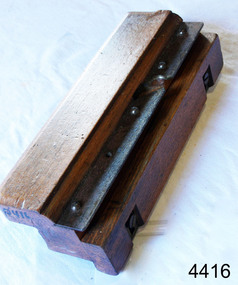
... Flagstaff Hill Maritime Museum Maritime Village Warrnambool Great Ocean Road woodworking tool plane rabbit plane hand tool Plane Rabbet type, no blade no markings. Tool Plane ...Plane Rabbet type, no blade no markings.flagstaff hill, maritime museum, maritime village, warrnambool, great ocean road, woodworking tool, plane, rabbit plane, hand tool -
 Flagstaff Hill Maritime Museum and Village
Marker
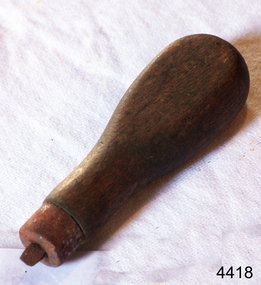
... Small tool with wooden handle small with small flat metal screw driver type piece set in ferrule, possibly used for marking. 95mmL x 20mmW...flagstaff hill warrnambool shipwrecked-coast flagstaff-hill flagstaff-hill-maritime-museum maritime-museum shipwreck-coast flagstaff-hill-maritime-village Small tool with wooden handle small with small flat metal screw driver type piece set in ferrule, possibly used for marking. 95mmL x 20mmW Marker ...Small tool with wooden handle small with small flat metal screw driver type piece set in ferrule, possibly used for marking. 95mmL x 20mmWflagstaff hill, warrnambool, shipwrecked-coast, flagstaff-hill, flagstaff-hill-maritime-museum, maritime-museum, shipwreck-coast, flagstaff-hill-maritime-village -
 Flagstaff Hill Maritime Museum and Village
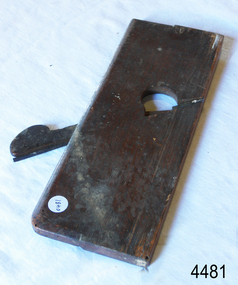
Plane
... John Heath tool box flagstaff hill warrnambool shipwrecked-coast flagstaff-hill flagstaff-hill-maritime-museum maritime-museum shipwreck-coast flagstaff-hill-maritime-village Plane Rabbet plane rabbet plane Plane Rabbet type no markings Plane ...John Heath tool boxPlane Rabbet type no markingsflagstaff hill, warrnambool, shipwrecked-coast, flagstaff-hill, flagstaff-hill-maritime-museum, maritime-museum, shipwreck-coast, flagstaff-hill-maritime-village, plane rabbet, plane, rabbet plane -
 Flagstaff Hill Maritime Museum and Village
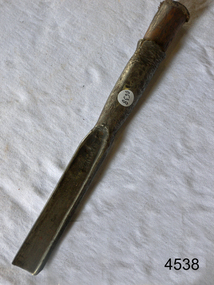
Gouge
... James S Steele tool box Flagstaff Hill Warrnambool Shipwrecked-coast Flagstaff-Hill Flagstaff-Hill-Maritime-Museum Maritime-Museum Shipwreck-coast Flagstaff-Hill-Maritime-Village Socket Firmer Gouge has a piece of wood in handle for hitting. Markings ...James S Steele tool boxSocket Firmer Gouge has a piece of wood in handle for hitting. Markings on blade not clear. 252mm long blade 24mm wideflagstaff hill, warrnambool, shipwrecked-coast, flagstaff-hill, flagstaff-hill-maritime-museum, maritime-museum, shipwreck-coast, flagstaff-hill-maritime-village -
 Flagstaff Hill Maritime Museum and Village
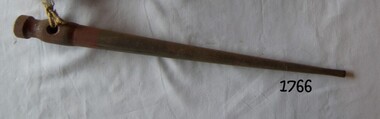
Tool - Fid, 1940s
... markings for precise measurements in a variety of sizes of rope. The length of these fid’s is typically 21 or 22 times the diameter of rope to be spliced. Fids have been used since sailing vessels were first used to travel the worlds seas the tool was invented to be used to splice rope and with working with canvas sails. ...A Fid is a conical tapered wooden tool used for separating the strands of rope for splicing. They were a tool traditionally made of wood or bone used to work with rope and canvas in marlinespike seamanship. A Fid differs from a marlinspike in material and purposes. A marlinspike is used in working with wire rope, natural and synthetic lines also may be used to open shackles, and is made of metal. A Fid is used to hold open knots and holes in the canvas, and to separate the "lays" (or strands) of synthetic or natural rope for splicing. A variation of the Fid, the grip fid, is used for ply-split braiding. The grip fid has a jamming cleat to pull a cord back through the cord split by the fid's point. Modern Fids are typically made of aluminium, steel, or plastic. In addition to holding rope open to assist the creation of a rope splice, modern push fid's have markings for precise measurements in a variety of sizes of rope. The length of these fid’s is typically 21 or 22 times the diameter of rope to be spliced. Fids have been used since sailing vessels were first used to travel the worlds seas the tool was invented to be used to splice rope and with working with canvas sails. A Fid is a sailors tool that has maintained its general design for hundreds of years and gives a snapshot into what the working life was like for sailors on board sailing ships for hundreds of years. The tool in its original design is still in regular use today by recreational sailors all over the world to splice and join lengths of rope.Metal Fid painted brown, flattened point turned end and hole for a lanyardNoneflagstaff hill, warrnambool, shipwrecked-coast, flagstaff-hill, flagstaff-hill-maritime-museum, maritime-museum, shipwreck-coast, flagstaff-hill-maritime-village, marlinspike -
 Flagstaff Hill Maritime Museum and Village
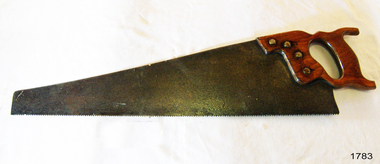
Tool - Wood Saw, Mid to late 20th century
... The subject item at this time cannot be associated with an historical event, person or place, provenance is unknown, as the maker is unknown but the pattern or design and type of wood used indicate it is a tool of modern manufacture around the mid to late 20th century. flagstaff hill warrnambool flagstaff-hill flagstaff-hill-maritime-museum maritime-museum shipwreck-coast flagstaff-hill-maritime-village handsaw Wood Saw Carpenders Tools Cabinet Makers Tools Wood Cutting None Wood hand saw with wooden handle attached to saw by 4 rivets. No blade markings Tool Wood Saw ...A saw is a tool consisting of a tough blade, wire, or chain with a hard-toothed edge. It is used to cut through material, very often wood, though sometimes metal or stone. The cut is made by placing the toothed edge against the material and moving it forcefully forth and less vigorously back or continuously forward. This force may be applied by hand, or powered by steam, water, electricity or other power sources. An abrasive saw has a powered circular blade designed to cut through metal or ceramic. In ancient Egypt, open (unframed) saws made of copper are documented as early as the Early Dynastic Period, circa 3,100–2,686 BC. Many copper saws were found in tombs dating to the 31st century BC. Models of saws have been found in many contexts throughout Egyptian history. As the saw developed, teeth were raked to cut only on the pull stroke and set with the teeth projecting only on one side, rather than in the modern fashion with an alternating set. Saws were also made of bronze and later iron. In the Iron Age, frame saws were developed holding the thin blades in tension. The earliest known sawmill is the Roman Hierapolis sawmill from the third century AD used for cutting stone. The subject item at this time cannot be associated with an historical event, person or place, provenance is unknown, as the maker is unknown but the pattern or design and type of wood used indicate it is a tool of modern manufacture around the mid to late 20th century.Wood hand saw with wooden handle attached to saw by 4 rivets. No blade markings Noneflagstaff hill, warrnambool, flagstaff-hill, flagstaff-hill-maritime-museum, maritime-museum, shipwreck-coast, flagstaff-hill-maritime-village, handsaw, wood saw, carpenders tools, cabinet makers tools, wood cutting -
 Upper Yarra Museum
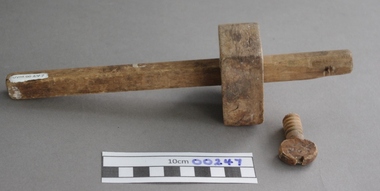
Wooden Marking Gauge
... Marking Gauges have been around for centuries in wood working shops, and is used to mark parallel lines on wood, either along the grain or across the grain, across the grain leaves a more jaggard line. This simple tool ...Marking Gauges have been around for centuries in wood working shops, and is used to mark parallel lines on wood, either along the grain or across the grain, across the grain leaves a more jaggard line.This simple tool allowed Crafts or Trades people to consistently and accurately make parallel lines.Wooden Marker Part 1 - Marker Part 2 - Wooden screw Part 3 - Moving .....wood worker, carpenter, cabinet maker, gauge, mark, joints, mortice & tennon -
 Federation University Historical Collection
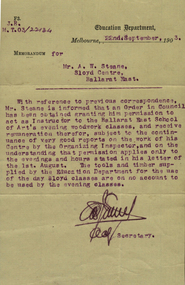
Correspondence, Education Department Memorandum: A W Steane, 1903, 22/09/1903
... education department sloyd centre ballarat east a w steane a james order in council ballarat east school of arts evening classes woodwork tool equipment Signed; A James on behalf of the Secretary Markings on top left corner: 'F3' 'J.B' 'M.T.03/22134 Cream coloured paper with Education Department letterhead Education Department Memorandum: A W Steane, 1903 Correspondence ...Cream coloured paper with Education Department letterheadSigned; A James on behalf of the Secretary Markings on top left corner: 'F3' 'J.B' 'M.T.03/22134 education department, sloyd centre, ballarat east, a w steane, a james, order in council, ballarat east school of arts, evening classes, woodwork, tool, equipment
