
Showing 7 items matching "mary delany"
-
 Bendigo Historical Society Inc.
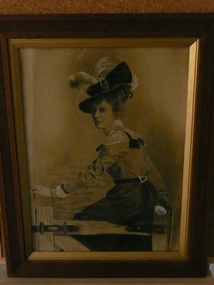
Photograph - MARY ELLEN DELANY (JACKSON)
... MARY ELLEN DELANY (JACKSON)...mary ellen delany...Sepia & hand tinted photograph of Mary Ellen Delany, born Bendigo 1877, died Bendigo 1915. ...mary ellen delany portrait Mary Jackson Frank Langdon Jackson Ironbark Sepia & hand tinted photograph of Mary Ellen Delany, born Bendigo 1877, died Bendigo 1915. ...Sepia & hand tinted photograph of Mary Ellen Delany, born Bendigo 1877, died Bendigo 1915. Mary married Frank Langdon Jackson 1900. Above details contained on separate square sheet pf paper. Photograph shows a female figure with large feathered hat seated on a hinged gate. On back of photo, envelope attached ' Dorothy Goodall, 8 Rassin Crescent, Callinvale, Queensland.' in brackets (grand daughter)mary ellen delany, portrait, mary jackson, frank langdon jackson, ironbark -
 Women's Art Register
Book, British Museum Publications Ltd, Looking at Prints, Drawings and Watercolours. A Guide to Technical Terms, 1988
... ...Mary Delany...Complements other material held in the Women's Art Register watercolour printmaking drawing Mary Delany Beatrix Potter Collection in A-Z of technical terms used for artworks on paper. ...Collection in A-Z of technical terms used for artworks on paper.non-fictionCollection in A-Z of technical terms used for artworks on paper.watercolour, printmaking, drawing, mary delany, beatrix potter -
 Bendigo Historical Society Inc.
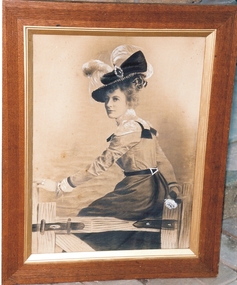
Photograph - FEMALE PORTRAIT - MARY (DELANEY) JACKSON
... Mary Ellen Delany, Birth Date 1877, Ballarat East, Victoria. ...Mary Ellen Delany, Birth Date 1877, Ballarat East, Victoria. ...Mary Ellen Delany, Birth Date 1877, Ballarat East, Victoria. Registration Year 1877. Father: Charles Delany. Mother Mary Frank. Registration Number 278. Mary Ellen Delaney married Frank Jackson, 1899, in Bendigo. The Bendigo Electoral Roll 1909, records that Mary and Frank Jackson were living in Barnard Street, Bendigo. Mary had two children, Frank 1900 and Allan 1903. She is buried in the White Hill Cemetery, Bendigo. Grave Number 160926583.Photograph - of a photograph - colour. This portrait is of Mary (Delaney) Jackson, she was my grandmother and I (Deidre Goddard) am the end of the Jackson line. Mary Jackson's husband was Frank Henry Langdon Jackson, he had a Hardware shop opposite the Fountain. Mary was born 1877 died 1915mary delaney, mary jackson, frank jackson -
 Glen Eira Historical Society
Document - Glenhuntly Road, Elsternwick
... Delany Edward... Drapers... Herbenstreit Huldreich... Butcher shops... Sincock John... Plumbers... Allen T... Greengrocers... Coppel George... Painters... Dickinson F H... Dickinson V... Johnson Thomas... Cole Constance... Hairdressers... Ortner Frank... Drycleaners... Gaffney Elodie... Ward Andrew... Long MR... Robinson Mr... Le Page Mr... Byers Robert... Carter Mary...Glen Huntly Road Moore’s Buildings 1891 Italianate style Architectural styles Architectural features Verandahs Elsternwick Moore Hugh Selwyn Street St Georges Road Glenmoore Glenmoore Estate Corkill French and Pugh Jamieson W W Thompson A G Eddy Henrietta Valey Frank Allen Thomas Saddlers Dairy products Green W I Undertakers Delany Edward Drapers Herbenstreit Huldreich Butcher shops Sincock John Plumbers Allen T Greengrocers Coppel George Painters Dickinson F H Dickinson V Johnson Thomas Cole Constance Hairdressers Ortner Frank Drycleaners Gaffney Elodie Ward Andrew Long MR Robinson Mr Le Page Mr Byers Robert Carter Mary Millar C Smythe F C Crook Thomas Stancy H Crook’s National Stores Pty Ltd E J Buckeridge’s Buildings 1911 Kelly Walter Staniland Grove Buckeridge Edward Hannon John Kellett Frances Beck Miss Armstrong Miss Tuck Mary Milliners Doherty John Adams Herbert Bakeries Perry Robert Picture framers Adams Clifford Arches Windows Shops Land subdivision Retail trade Property developers Advertising signs Document Glenhuntly Road, Elsternwick ...Three three page extracts from Andrew Ward’s 1994 Caulfield Conservation Study on commercial buildings in Glen Huntly Road, Elsternwick. The three studies concern Moore’s Buildings 1891 shops at 305-313 Glen Huntly Road, shops at 323-329 Glen Huntly Road and E J Buckeridge’s Buildings 1911 shops at 357-371 Glen Huntly Road. The studies describe the buildings’ architectural features, provide a historical overview and statements of the buildings’ significance, especially in relation to the Land Boom and commercial development between 1890 to the 19020s. All three studies include a black and white photograph (109mm x 152mm; 114mm x 150mm; 110mm x 151mm) of the shop fronts.glen huntly road, moore’s buildings 1891, italianate style, architectural styles, architectural features, verandahs, elsternwick, moore hugh, selwyn street, st georges road, glenmoore, glenmoore estate, corkill french and pugh, jamieson w w, thompson a g, eddy henrietta, valey frank, allen thomas, saddlers, dairy products, green w i, undertakers, delany edward, drapers, herbenstreit huldreich, butcher shops, sincock john, plumbers, allen t, greengrocers, coppel george, painters, dickinson f h, dickinson v, johnson thomas, cole constance, hairdressers, ortner frank, drycleaners, gaffney elodie, ward andrew, long mr, robinson mr, le page mr, byers robert, carter mary, millar c, smythe f c, crook thomas, stancy h, crook’s national stores pty ltd, e j buckeridge’s buildings 1911, kelly walter, staniland grove, buckeridge edward, hannon john, kellett frances, beck miss, armstrong miss, tuck mary, milliners, doherty john, adams herbert, bakeries, perry robert, picture framers, adams clifford, arches, windows, shops, land subdivision, retail trade, property developers, advertising signs -
 Surrey Hills Historical Society Collection
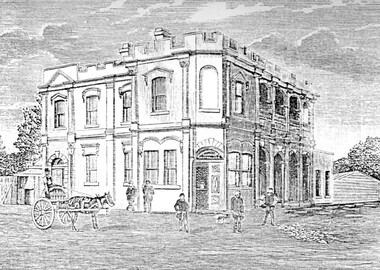
Photograph, Humberstone's Royal Hotel Surrey Hills
... Delany's Hotel) built further east in 1856. It was de-licensed in 1921 after a "Local Option Poll" and became Tower House Day & Boarding School under Miss Marion Beetson from 1922 until 1932. It was demolished in 1932. There were 25 students in the 1920's, mostly boarders from outside Surrey Hills and all primary school students. The school room was detached from the main building and there was 6 acres of playing area. The old bar was the business office, the girls' dormitory the old dining room. Marion Beetson was the teacher, Mary...Delany's Hotel) built further east in 1856. It was de-licensed in 1921 after a "Local Option Poll" and became Tower House Day & Boarding School under Miss Marion Beetson from 1922 until 1932. It was demolished in 1932. There were 25 students in the 1920's, mostly boarders from outside Surrey Hills and all primary school students. The school room was detached from the main building and there was 6 acres of playing area. The old bar was the business office, the girls' dormitory the old dining room. Marion Beetson was the teacher, Mary ...Humberstone's Royal Hotel was a substantial 2-storey building on the corner of Canterbury and Broughton Road. The hotel was built in 1887 to replace an older hotel (Delany's Hotel) built further east in 1856. It was de-licensed in 1921 after a "Local Option Poll" and became Tower House Day & Boarding School under Miss Marion Beetson from 1922 until 1932. It was demolished in 1932. There were 25 students in the 1920's, mostly boarders from outside Surrey Hills and all primary school students. The school room was detached from the main building and there was 6 acres of playing area. The old bar was the business office, the girls' dormitory the old dining room. Marion Beetson was the teacher, Mary Beetson managed the household. Their father was an Indian Army officer. The younger children wore a school blazer with the T.H.C. badge on the pocket. Miss Susan Kelsall visited to give piano lessons and Prof. Kelsall taught French. Miss Marion Beetson died in Castlemaine on 8 February 1952. Information courtesy of Mrs Louise Bell, Castlemaine, ex-student. See SHP0867a and SHP0867b, photos of Louisa in T.H.C. uniform. Photograph of line sketch of Humberstone's Royal Hotel, Surrey Hills. In the foreground is a horse and cart with 5 men standing in front of the hotel. Main entrance is on the corner of the intersection with large windows. There are 8 on one side and 3 on the other with 4 arches on both upper and ground floors. Turret style edging hides the rooftop with two chimneys visible. Pencilled on back "Spare - have in/ our photo files"delany's hotel, miss marion beetson, humberstone's royalhotel, surrey hills, canterbury road, broughton road, hotels, accommodation, royal hotel, tower house day and boarding school, 1880-1890, mary beetson -
 Melton City Libraries
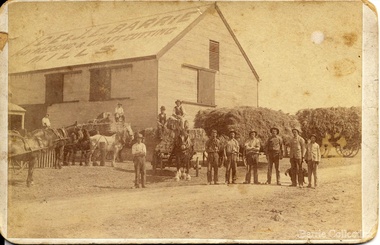
Photograph, 'Melton South Chaff Mill employees, Unknown
... Mary born October 1907) at the house beside the mill. Trethowan’s Chaff mill in Brooklyn road was also destroyed by fire, which stated in the evening on Tuesday April 28th 1987. It was established in 1910 by Dixon Brothers, followed by, Ebbot & Kebby, Robinson, Trethowan and Butler and was with the Trethowan family when it burnt down. Melton South was small a community referred to as Melton Railway Station. Member of the community raised the idea to have a public hall. In 1909 Cr Barrie, Mr Nesbitt and Delany...Mary born October 1907) at the house beside the mill. Trethowan’s Chaff mill in Brooklyn road was also destroyed by fire, which stated in the evening on Tuesday April 28th 1987. It was established in 1910 by Dixon Brothers, followed by, Ebbot & Kebby, Robinson, Trethowan and Butler and was with the Trethowan family when it burnt down. Melton South was small a community referred to as Melton Railway Station. Member of the community raised the idea to have a public hall. In 1909 Cr Barrie, Mr Nesbitt and Delany ...Charles E “Ernie” Barrie started constructing a Chaff mill on the corner of Brooklyn and Station road in 1900. It soon became a thriving business and was ideally located close to the railway line. Ernie and his father William and other Barrie brothers had been operated travelling chaff cutters in the district of Melton and Werribee. Within a short time the mill expanded into two big sheds in partnership with his brother James E known as “Ted”. The eldest brother William was in the Manager living in Melton South. In 1906 Ernie applied for a railway crossing on Brooklyn Road to have direct access for railway trucks to be shunted to the mill to be loaded. The Mill was also had the first phone to be connected, No 1, and No’s 2, 3 were the Golden Fleece and Macs Hotels. In 1906 Ernie married Jessie Lang daughter of the Head Teacher at Melton State School No 430 (1896 –1917). The Barrie house on the north side of the mill was completed in August 1906. It survived for almost 60 years until demolition. Chaff mills were very susceptible to fires and often burnt down and would be rebuilt again ready for the peak of the harvesting season. The final demise of the Mill occurred in a spectacular blaze on the night of Friday 2nd December 1977, just before the earth tremor as reported in the local paper. Brian Dobson the local photographer lived close by and captured the night blaze. A video was also taken of the action by the fire brigade. My parents Bon and Edna Barrie were living at 19 First Avenue, and took colour slides of the smouldering ruins in the half -light. Ironically Bon had spent the first year of his life (born in April 1909 and sister Mary born October 1907) at the house beside the mill. Trethowan’s Chaff mill in Brooklyn road was also destroyed by fire, which stated in the evening on Tuesday April 28th 1987. It was established in 1910 by Dixon Brothers, followed by, Ebbot & Kebby, Robinson, Trethowan and Butler and was with the Trethowan family when it burnt down. Melton South was small a community referred to as Melton Railway Station. Member of the community raised the idea to have a public hall. In 1909 Cr Barrie, Mr Nesbitt and Delany formed a committee to build a community hall. Cr Barrie donated the land and The Exford Hall was completed in September 1910 later to be named Victoria Hall. It was demolished in 1992. Colour slide in Barrie archive. In April 1910 the Ernie sold the Mill to Glover Onians (HSK Ward) family moved away to a property in Trundle NSW. Ernie had acquired 640 acres (a square mile) and leased a further 1920 acres of adjoining land. It was the practise of the farmers in the area at the time to buy up or lease the surrounding land from the 640 acre crown land blocks to make up acerage for a viable wheat farm. His wife Jessie found the climate to be very hot and when the Darlingsford property at Melton was put up for sale in the latter part of 1910 and was passed in at the auction. My grandfather saw this an opportunity to return to Melton. The negotiations to Darlingsford were finalised on May 11th 1911. Barrie bothers with connections to Chaff mills and farming in Melton from the 1900s William Henry, Charles Ernest, James Edwin, Samuel John, Robert, Arthur Roger, Albert Walter. Three grandsons and a great-grandson are in business earthmoving and farming in Melton today. (2013) Memoirs by Wendy BarrieEmployees at Chaff Mill, it was located on the corner of Brooklyn and Station Road, Melton South. local identities, agriculture -
 Embroiderers Guild, Victoria
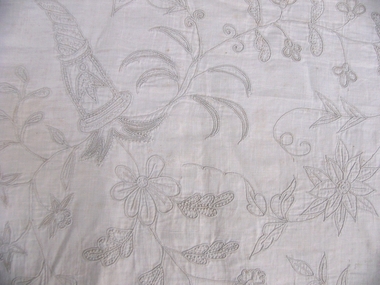
Domestic Object - Irish Knotted Work Bed Cover, 18th Century
... Mrs Mary Delaney enjoyed knotting and preferred linen thread which was stronger. The Ulster Museum in Belfast holds an embroidered bedcover by Delany, one of the few complete pieces of embroidery made by her. ...Donor's mother brought this from the west of Ireland in 1950. Said to have been embroidered by her grandmother and her ladies in 1780-1800. (This may be a later rather than actual date). Knotting was a genteel pastime for leisured ladies requiring little concentration, so conversation could be carried out. Favoured at Court and practised in England in the late 17th C in William and Mary's reign and Queen Anne's reign in the early 18th C. Addit: Old article written by Lady Geraldine Amies states "the cover was designed and embroidered by the donor's great grandmother, with the help of her attendants, in Westport, County Mayo, Ireland about 1830 and completed during the long voyage to Australia in 1850".Knotting was a genteel pastime for leisured ladies requiring little concentration, so conversation could be carried out. Favoured at Court and practised in England in the late 17th C in William and Mary's reign and Queen Anne's reign in the early 18th C. A knotting shuttle, larger than a tatting shuttle, made knots at every quarter inch or 6 mm intervals in string, linen, silk or wool. Mrs Mary Delaney enjoyed knotting and preferred linen thread which was stronger. The Ulster Museum in Belfast holds an embroidered bedcover by Delany, one of the few complete pieces of embroidery made by her. The threads between the knots was dependent on the thickness of the thread. This fashionable occupation was often mocked by men, Sir Charles Sedley, a wit and libertine wrote a verse mocking Queen Mary, the dull Protestant wife of William 111: "Blest we, who from such queens are freed/ Who, buy vain superstition led,/ Are always telling beads;/But here's a queen now, thanks to God/ Who, when she rides in Coach abroad/ Is always knotting threads. In the Spectator of 1712 it was suggested that men might take up knotting. Dr Johnson attempted to learn the skill but told Boswell "I once tried knotting: Dempster's sister undertook to teach me, but I could not learn it." Knotted linen thread couched onto white linen bed cover. embroidery, whitework, bedcover, 18th century, ireland
